Category: Telecom

Retail News Asia is committed to providing both local and global retailers with the latest Telecom & Telco news throughout the Asian market. This on a daily base.

  • KT and Samsung to develop 5G-powered medical service

    KT and Samsung to develop 5G-powered medical service

    KT Corporation, along with with Samsung Medical Center (SMC), has announced the launch of a 5G-enabled medical service as an initial step to set up a 5G-based smart hospital. The pilot project, which is developed by the Seoul-based South Korean telecom giant, developed service environments in operating and proton therapy rooms and performed a test operation.

    Based on the results from the pilot, both KT, formerly Korea Telecom, and SMC are planning to continue the development of smart patient care and 5G-powered new medical practices and better the hospital operational efficiency. Park In-Young, vice president of KT’s ICT convergence business department, said: “KT, in partnership with the Samsung Medical Center, is pioneering innovative medical services for the new 5G era. We will continue to further refine 5G-powered medical technology by applying VR and AR technologies for real-time education.”

    In the coming years, 5G-enabled medical services would, in theory, speed up surgery and other treatment processes by allowing uninterrupted access to surgeons that will help them obtain pathological data that is critical in determining the serious conditions of patients. The network would also provide quick access to CT and MRI data on proton therapy.

    Last September, KT entered into roaming agreements with Italy’s TIM, Switzerland’s Sunrise, and Finland’s Elisa, allowing the company’s 5G subscribers to use the 5G networks provided by the three European operators. The Korean operator has standing agreements with operators in 185 countries for 3G and LTE roaming and now is extending those contracts to 5G as soon as 5G services go live in those countries.

    According to reports from the South Korean Ministry of Science and ICT, the country hit the milestone of four million 5G subscribers last December. As of October, the Ministry reported 3.98 million 5G subscribers in the country and in September, it said that 516,000 more people subscribed to the 5G services.


  • New Digi partnership introduces VR experiential tourism using 5G

    New Digi partnership introduces VR experiential tourism using 5G

    Visitors to the launch enjoyed a 360-degree view of Gunung Machinchang, one of the island’s most popular mountains and tourist destinations, using a cable car gondola and a virtual reality (VR) experiential zone.

    A camera that was installed at the Langkawi Skycab middle station enabled the event to be live-streamed from 20 kilometers away.

    The Digi 5G showcase, part of the 5G Demonstration Projects, have been made successful thanks to the tireless efforts of the Malaysian Communications and Multimedia Commission (MCMC) to encourage, develop and organize 5G use cases in a live but controlled environment.

    Digi’s CEO Albern Murty explained that the Langkawi 5G virtual tourism pilot is part of the telco’s objective in creating a 5G ecosystem with the support of its partners.

    “We are excited at the possibilities of 5G bringing next-gen virtual tourism to many other local destinations and connect more people to experiences that matter most to them. In partnership with Malaysia Airports and Panorama, we are pleased to bring a piece of Langkawi’s heritage to tourists from the moment they arrive at the airport,” Murty said.

    Panorama Langkawi acting COO Ir. Abu Hashim Abdul Rahman said, “We believe that 5G has the potential to deliver new and engaging digital activities that can improve tourist experiences and enhance the appeal of Langkawi and Malaysia in the eyes of foreign tourists.”

  • Ooredoo Myanmar prioritises CSP via donation to non-profit organization

    Ooredoo Myanmar prioritises CSP via donation to non-profit organization

    “This is a remarkable event for Ooredoo Myanmar and we are very glad to have the opportunity to help the community that we work in. We have set out our Corporate Social Responsibility efforts to help promote the need for the health and education sector. We, as a responsible business, strive to help close the gap of demands for these two sectors. Daw Khin Kyi Foundation is an outstanding exemplary when it comes social works. We are hereby acknowledging their efforts and lending a helping hand with ways we can contribute,” said U Tint Naing Htut, Head of Corporate Communications Ooredoo Myanmar.

    The donated vehicles are well equipped with extensive electrical, plumbing and furniture such as air-conditioning and heating systems, patient attendance seats, storage cabinet, folding work table, work-light, wash hand basin and 110/220V electrical inverter system. It also has an intercom system for communications and medical equipment required for the Emergency Response Unit. Daw Khin Kyi Foundation plans to use the vehicles to respond to medical emergencies and humanitarian assistance works in Myanmar.

    Ooredoo Myanmar believes that immediate medical and humanitarian assistance should be inclusive regardless of ethnicity, race or religion. Daw Khin Kyi Foundation also works towards the same goal by reaching out and providing assistance where and when necessary. They believe that improvement in one place at a time creates a better future for all.

  • Telenor Group welcomes new leadership for Asian divisions

    Telenor Group welcomes new leadership for Asian divisions

    Sharad Mehrotra, CEO of Telenor Myanmar, has been appointed the new CEO of dtac, Telenor Group’s mobile operator in Thailand. He replaces Alexandra Reich, who is seeking new leadership opportunities. Hans Martin Hoegh Henrichsen, currently Chief Corporate Affairs Officer in Telenor Myanmar, will become acting CEO after Mehrotra. Grameenphone’s Deputy CEO and CMO, Yasir Azman has been appointed the new CEO of the Bangladeshi operation, with current CEO Michael Foley relocating to Africa, where his family is based.

    “After leading our Thai mobile operator through a challenging transition including new spectrum and network rollout and a renewed focus on customer satisfaction and distribution excellence, Alexandra Reich has delivered solid results according to the back-to-growth strategy outlined in dtac’s Capital Markets Day in June 2019. We are grateful to Reich for her willingness to step in and support dtac in the very important transformational phase, and we wish her all the best in her next leadership role. With Reich seeking new opportunities, we are pleased that Sharad Mehrotra will join dtac and bring valuable insights and knowledge to Thailand from Myanmar and India, where he has managed a strong commercial turnaround,” says Sigve Brekke, President and CEO of Telenor Group.

    “I am also pleased Yasir Azman has accepted the challenge to lead our operations in Bangladesh. While also serving as deputy CEO, he has run one of our best performing sales and distribution organizations in Telenor Group. Having risen through the ranks, it’s extra special to welcome Azman as the first home-grown CEO of Grameenphone. I’d like to take this opportunity to thank Michael Foley for leading the company through an impressive digital transformation as well as his valuable contributions also in Pakistan and Bulgaria,” adds Brekke.

    The changes are effective as of 1st February 2020.

  • Vietnam eyes 5G equipment sale to US

    Vietnam eyes 5G equipment sale to US

    Vietnam hopes to sell locally-made 5G equipment to the U.S. as it prepares the commercial launch of the telecom technology this year.

    Information and Communications Minister Nguyen Manh Hung proposed to a delegation of the U.S. House of Representatives Monday that they initiate discussions of 5G technical standards to see if made-in-Vietnam equipment could enter the U.S. market.

    Vietnam plans to commence commercial operations of 5G this year, becoming among the first countries in ASEAN to do so, he said.

    The minister had set the stage for launching the new telecommunications technology by making the first 5G phone call on January 17, using equipment manufactured by Vietnamese telecom giant Viettel.

    The military-run Viettel is set to become the sixth firm in the world to launch its own 5G equipment after Ericsson, Nokia, Huawei, Samsung, and ZTE.

    Viettel plans to commercially launch 5G services this June. It has been testing and installing equipment since last year.

    Hung, a former Viettel CEO, has been pushing 5G research in Vietnam since taking over as communications minister towards the end of 2018. He asked local firms to produce their own equipment so that Vietnam is among the first countries in the world to launch 5G technology.

    The number of 5G subscriptions in Vietnam could hit 6.3 million by 2025 or 6 percent of total mobile subscriptions, technology conglomerate Cisco has forecast.

    In ASEAN, Singapore is expected to lead the way in launching 5G in 2020, followed by Vietnam, the Philippines, Malaysia, and Thailand, according to U.S. consulting firm AT Kearney.

    5G is said to offer speeds 100 times faster than 4G and support new applications like remote medical procedures and autonomous driving.

  • Smartphone shipments will grow thanks to 5G

    Smartphone shipments will grow thanks to 5G

    It’s no big secret that the smartphone market has gone through an extended rough patch in the last few years, but as repeatedly predicted in 2019 by multiple research firms, global shipments should get a healthy boost in 2020 largely thanks to the advent of 5G.

    While the world’s first 5G-enabled handsets came out last year, scarce availability, high prices, and perhaps most importantly, slow network rollouts made it essentially impossible for their sales numbers to count for much in the grand scheme of things. Of course, Gartner’s top analysts expect the status quo to be gradually altered, as the overall market share of 5G smartphones could rise from 12 percent in 2020 to as much as 43 percent “by 2022”, and finally, more than 50 percent in 2023.
    In other words, at least one in two smartphones shipped worldwide just three years down the line should be able to achieve those vastly improved 5G download speeds envisioned by both device manufacturers and mobile network operators. Hopefully, Verizon will manage to cover more than small portions of dense metropolitan areas with its 5G network “built right” by then, while T-Mobile may or may not close its highly publicized Sprint merger in these next few years.
    Keeping the focus on the immediate future, it’s definitely worth highlighting that Gartner doesn’t expect global mobile phone shipments to grow by a large margin this year compared to 2019. The latest forecast calls for a modest 1.7 percent hike to 1.77 billion units, followed by a tiny decline predicted for 2021 and a bigger one in 2022, when sales could drop as low as 1.75 billion units.
    Otherwise put, the overall market boost generated by the spread of 5G-capable handsets will be short-lived, but at least the sales total is not forecasted to fall as abruptly as it did in the last couple of years. When looking at phones and computers together, the situation is unsurprisingly a bit bleaker, as the PC market is expected to continue shrinking through 2022 after unexpected progress of 0.6 percent reported for 2019 compared to 2018.
  • Cheap phones are about to get a lot better with Qualcomm’s new chips

    Cheap phones are about to get a lot better with Qualcomm’s new chips

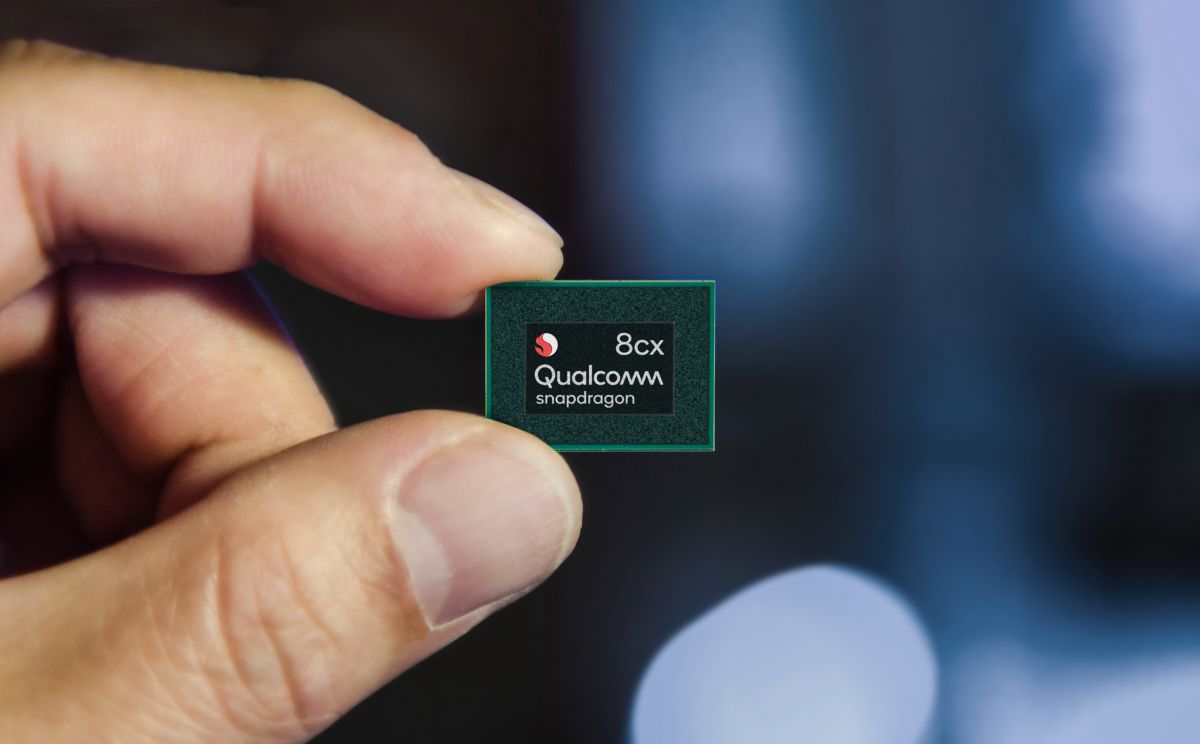
    5G might be what everyone is talking about but the reality is that 4G will remain the backbone of our wireless communications for at least a few more years. Besides that, many markets haven’t even begun implementing 5G. Keeping that in mind, Qualcomm has released three new chips to suit the needs of manufacturers and users that are still shying away from the new technology.

    The three chips span from the upper mid-range to the low end. They follow Qualcomm’s familiar naming scheme making it easy to recognize which is which: Snapdragon 720G, 660 and 460.

    All three get features we’re used to seeing on high-end phones. When it comes to connectivity, that means Wi-Fi 6, Bluetooth 5.1 with Qualcomm FastConnect for better audio experience and of course, higher 4G max speeds.

    GPS improvements are also present with support for Dual-Frequency. And we can’t forget about our other favorite buzz word: AI. Even Qualcomm’s low-end chips will now have AI capabilities that will help with “user experiences across photography, voice assistants, and virtually always-on scenarios for increased contextual awareness.” Now, the help of AI can often be hard to measure, but let’s trust Qualcomm on this one that there will be noticeable benefits for the users.

    That being said, let’s briefly check what each of the new chips has to offer.

    The Snapdragon 720G is meant to satisfy the needs of mobile gamers that don’t quite have the budget for a Snapdragon-865-powered phone. The chip has 8 Kryo 465 cores that can boost up to 2.3GHz and are paired with the Adreno 618 GPU. With the 720G, consumers will get “HDR gameplay, dynamic color range and contrast, realistic and immersive in-game environments and high-quality, synchronized sound.”

    Not everything is about gaming, however, the new and improved ISP now supports photo capture up to 192MP, in case there’s a manufacturer that wants to go all out with megapixels.

    Naturally, Qualcomm has also crammed a bunch of its own tech goodies we won’t bore you with, but you can check at the chip’s information page.

    What we will mention, however, is that the 720G is manufactured using an 8nm process, which means it will have not only better performance, but lower power consumption as well

    The Snapdragon 662 is perhaps the most boring chip of this lineup. It’s a slightly less powerful octa-core chip (Kryo 260, up to 2GHz) that has all the expected improvements but nothing particularly noteworthy. The 662 a cookie-cutter mid-range chip that will quietly do what it’s supposed to without any thrills or headaches. There’s no 4K video recording, cameras can only go as high as 48MP and it’s made using the 11nm Process Technology. That’s not to say it’s a bad chip, it’s just kind of bland.

    The Snapdragon 460, on the other hand, has the most potential for making an impact. Sure, it’s a chip for budget devices that won’t wow anyone, but the improvements Qualcomm has achieved with this little guy are impressive.

    The 8 Kryo 240 cores perform 70% better and the GPU is only slightly behind with 60% improvement, according to Qualcomm. When all other upgrades are considered, the company says this chip delivers twice the performance compared to the previous generation. That’s a big win for budget smartphones.
    The Qualcomm Spectra 340 ISP that comes with the Snapdragon 460 should not only improve the image quality of photos but also supports triple cameras.
    Better performance and better cameras, what more can you want? This chip seems perfect for Nokia’s budget phones and it will be interesting to see how well it does in the real world.
    Speaking of the real world, when can you expect o see phones with these new chips? Well, Qualcomm says the Snapdragon 720G will make an appearance in Q1 of 2020. This means in two months max we should see at least one smartphone powered by it.
    The timeline for the 662 and 460 is a bit foggier, but devices based on them are expected by the end of the year.
  • Indosat Ooredoo provides relief to employees affected by Jakarta floods

    Indosat Ooredoo provides relief to employees affected by Jakarta floods

    The Indonesia telco giant organized a number of programs to help ensure the safety and wellbeing of employees and their families.

    Just to name a few, the objectives of this campaign would be to register and identify all employees affected by the floods, get in touch with employees believed to be impacted and assist in emergency logistics to medical centers or provide evacuation assistance if necessary.

    According to the Communication and Information Minister Johnny G. Plate, he said that power cuts had occurred in response to the disaster. He said that “most customers were able to use cellular services despite power cuts because the BTSs had backup power and providers deployed mobile backup power and portable generators.”

    Jakarta is currently experiencing one of the worst periods of heavy rainfall and flooding in recent years.

    Local reports state that downpours began last Tuesday and continued into the next day, essentially flooding the city and rendering large areas of the city underwater, causing communication disruptions and endangering lives, with at least 53 people already reported dead.

  • China Mobile looks to India for future cloud service opportunities

    China Mobile looks to India for future cloud service opportunities

    Reports have stated that the Chinese telco giant has shown immense interest in working with the Indian operators to bring unparalleled cloud networking services.

    Through this, China Mobile could potentially own a substantial stake in the business via a holding company framework.

    This means that while the China-based telecoms major would not be directly involved in the venture’s day-to-day operations, it would still be eligible for board seats and voting rights within the Indian telecom companies.

    According to an unnamed source, reports had surfaced that “top executives of China Mobile met senior management of Bharti Airtel and Vodafone Idea separately in December.”

    “China Mobile is interested in the Indian market” and has expressed its desire to become a holding company “with either of these two companies or even both,” the source said.

  • ZTE acquires significant chunk of NFV network equipment

    ZTE acquires significant chunk of NFV network equipment

    Moreover, in this bidding, ZTE has also won the bidding for the user plane in Shandong, Anhui, Fujian, Yunnan and other 12 provinces in China, demonstrating ZTE’s leading position in the fields of NFV cloudification and the next-generation core network.

    The phase-1 project of China Mobile’s NFV network includes six parts: PS network VNFs of eight regions and 31 provinces, IMS network VNFs, virtual-layer software, distributed storage, MANO, and system integration. This purchase marks the beginning of the large-scale construction of the NFV cloud network of China Mobile, the world’s largest operator.

    As a technology leader and provider of cloudified products and solutions, ZTE has partnered with China Mobile to build a secure, reliable, mature, and stable end-to-end cloudified network, by means of four years and five stages of pilot and verification in NFV field.

    Furthermore, ZTE’s NFV infrastructure TECS, Ceph-based carrier-grade distributed and unified storage platform CloveStorage, carrier-grade server operation system CGSL, 2/3/4/5G fully integrated cloud core network Common Core and the AI-based automatic O&M management system CloudStudio have also been put into commercial use in global operators’ networks and government & enterprise networks, laying solid foundation for 5G commercialization and vertical industry applications.

  • Telstra Australia waives firefighters’ phone bills in unprecedented show of support

    Telstra Australia waives firefighters’ phone bills in unprecedented show of support

    Exacerbated by prolonged drought, intense heat and the overall global climate change, the bushfires have had catastrophic consequences on people, their livelihoods as well as the myriad of native animal species that call the Australian bush home. It is now estimated that billions of native wildlife have perished in the deadly blazes.

    Australian telco giant Telstra has responded immediately to the crisis by showing their support for the countless firefighters who have left their families to battle the fierce fires. Earlier this year, Telstra announced that they will be waiving all mobile phone bills for firefighters as a show of thanks for their heroic efforts.

    “Today we’re doing our part to thank our volunteer firefighters by providing them with free mobile bills over December and January,” said Telstra CEO Andrew Penn.

    Penn added, “”We’re doing everything we can to get these communities back up and connected as quickly as possible, but given the horrific conditions we have seen over the past few days, this may take some time.”

    Not long after Telstra made the announcement, both Optus and Vodafone joined in by waving their own mobile service costs for volunteer firefighters doing their part to protect the lives of all Australians.

  • One-Third of Chinese Tourist Payments Made Through Mobile

    One-Third of Chinese Tourist Payments Made Through Mobile

    The mobile payment’s penetration of the Chinese tourist market continues to grow with 3.4 times out of 10 transactions made through the channel in 2019.

    Whilst the user base remained stable, usage increased compared to 2018 when 3.2 out of 10 transactions were made through a mobile payment platform, according to a report jointly released by Nielsen and Alipay. This was in spite of the fact that Chinese tourist was increasingly shifting travel destinations from popular East Asian countries in favor of more distant locations where cash is more prominent.

    «In contrast to Asian tourism markets where Chinese mobile payment solutions were adopted earlier, some European countries are witnessing an acceleration of the acceptance of Chinese mobile payment solutions,» the report explained.

    In the U.K. and France, for example, the percentage of Chinese tourists who used mobile payments increased to 65 percent in 2019 while per capita mobile-based spending rose about 10 percent.

    Despite only being ranked as the sixth most popular travel destination for the Chinese in 2019 (9 percent), Singapore was a leader in mobile payments (77 percent).

    Unsurprisingly, the city-state is reaping the rewards from its early and collective efforts including the government’s decision to name e-payments as a national priority in its 10-year plan for a «Smart Nation». And 66 percent of the surveyed merchants in Singapore hopes to run more digital retail operations and improve marketing through mobile payments platforms, the report added.

    Rounding out the remaining top five Chinese tourist mobile payment leaders are South Korea, Japan, Australia and Thailand.

  • Qualcomm has started a price war that will impact prices of 5G phones

    Qualcomm has started a price war that will impact prices of 5G phones

    A report issued by reliable analyst Ming-Chi Kuo says that a price war has begun in the 5G chip industry. Kuo’s note to clients, says that Qualcomm has cut pricing for its mid-range 5G Snapdragon 765 chipset after sales of high-end 5G smartphones fell short of expectations. By cutting the cost of its mid-range 5G chips to manufacturers, Qualcomm is trying to get these firms to produce more affordable 5G handsets to entice the public. The price cuts will also extend to Qualcomm’s low-end chips as well.
    As a result of the price cut, Kuo sees MediaTek facing pricing pressure for its Dimesnity line of 5G chips three to six months earlier than expected. Instead of achieving gross margins of 40% to 50% for its chips as the consensus expects, the analyst sees MediaTek’s margins dropping to less than 30%-35%.
    Qualcomm has reportedly cut the price of the 5G Snapdragon 765 chipset (SD7250) by $25-$30 to $40. MediaTek’s Dimensity 1000 5G chipset costs the company $45-$50 to make and it sells for $60-$70 per chip. As a comparison, Qualcomm’s top-of-the-line Snapdragon 865 Mobile Platform with the Snapdragon X55 5G modem costs $120-$130 and has not had its price cut. The company’s flagship chip outperforms the MediaTek Dimensity 1000 and Qualcomm sees no need to drop the price of its high-end chipset.
    The recently announced MediaTek Dimensity 800 chipset, which supports only the slower sub-6GHz 5G signals, is due to be released in May. This chip, developed for lower-priced 5G handsets, is expected to be sold at a price of $40-$45 per chip and costs MediaTek $30-$35 to make. There might not be that much room for MediaTek to maneuver in response to Qualcomm’s pricing actions.
    The pricing shakeup could cost MediaTek some business. The company’s major 5G chip customers like Oppo, Vivo, and Xiaomi are said to be switching orders for 20 million to 25 million chips from MediaTek to Qualcomm. These components are scheduled to be shipped next month.
    The Snapdragon 765 SoC is equipped with eight Kryo 475 CPU cores running at a clock speed as fast as 2.4GHz. It features an integrated Snapdragon X52 5G modem that supports both mmWave and sub-6GHz 5G signals, and sports the Adreno 620 graphics processor. There is also a Snapdragon 765G for gaming phones that is equipped with an enhanced version of the GPU offering 10% faster graphics rendering compared to the standard Snapdragon 765 chipset.
    The Dimensity 1000 also has an integrated 5G modem and is packed with four performance Cortex-A77 CPU cores running at a clock speed of up to 2.6GHz. Four efficiency Cortex-A55 CPU cores are also included. This SoC is equipped with the ARM Mali-G77 MC9
    Qualcomm’s salvo would have less of an impact on the market if MediaTek’s margins were a little wider. A larger margin would allow the company to take a hit and still thrive. But the Dimensity 1000 brings $10-$25 per chip to MediaTek’s bottom line and the Dimensity 800 garners profits of $5-$15 per chip.
    MediaTek’s Dimensity 1000 and Dimensity are manufactured by TSMC using its 7nm process. The Snapdragon 765/765G will be manufactured by Samsung using its 7nm process. The flagship Snapdragon 865 Mobile Platform is also a 7nm chip, and it also will be produced by TSMC. Qualcomm originally planned to have Samsung’s foundry roll out the Snapdragon 865, but the chipmaker was concerned about allowing Samsung to get a peek under the hood of its top chipset for 2020.
    Chip prices might also run into pressure halfway through this year when TSMC starts producing more powerful and energy-efficient 5nm chips. Among the first to be manufactured will be Apple’s A14 Bionic and Huawei’s next high-end IC expected to be named the Kirin 1020.
  • Mobile phone retailer Vien Thong A shuts up shop

    Mobile phone retailer Vien Thong A shuts up shop

    Vien Thong A, one of Vietnam’s earliest mobile phone retail chains, has shut all outlets after two decades of operation.

    All its Ho Chi Minh City shops were closed as of Thursday, some featuring “property for lease” signs while others held nothing but empty shelves.

    Vien Thong A, established in November 1997, operated 240 outlets nationwide at its peak, some inside supermarkets like Big C, alongside 100 maintenance stations.

    The chain was listed among Asia Pacific’s top 500 retailers by market researchers Euromonitor and business magazine Retail Asia, with revenues quadrupling from $102 million in 2013 to $416 million in 2017.

    In the same year, CEO Hoang Ngoc Vy announced a plan to restructure the company, seeking investors to expand the business.

    In September 2018, the company’s legal representative was replaced by Mai Thu Thuy, a senior Vingroup employee.

    Vingroup, Vietnam’s largest private conglomerate, confirmed it had acquired the chain in November 2018, managing a total 242 Vien Thong A shops as well as electronics chain VinPro as of September last year.

    However, Vien Thong A outlets started to close down soon after Vingroup announced it would dissolve VinPro to focus on technology and manufacturing in December last year.

    Vietnam’s consumer electronics retail market reached revenues of $609 million last year, a year-on-year increase of 15 percent, and is estimated to expand by 11.7 percent this year, according to German data portal Statista.

  • AT&T continues to expand its 5G+ network to 10 more cities

    AT&T continues to expand its 5G+ network to 10 more cities

    AT&T is the US carrier that calls its 5G network for business customers 5G+. Until earlier today, the 5G+ service was available in 25 cities, but AT&T announced 10 more cities benefit from 5G+ network coverage starting today.

    Unlike 5G network that runs on the carrier’s 600MHz spectrum, 5G+ runs over ultra-high band mmWave spectrum, which has both benefits and downsides. While 5G+ offers blazing-fast download data speeds, it has issues penetrating buildings.

    Here are the 10 cities that are now partially covered by AT&T’s 5G+ network: Cleveland, OH, Menlo Park, CA, Miami, FL, Miami Gardens, FL, Oakland, CA, Ocean City, MD, Phoenix, AZ, Philadelphia, PA, Redwood City, CA, and San Bruno, CA.

    These add to the 25 cities that already benefit from AT&T’s 5G+ service: Atlanta, Austin, Baltimore, Charlotte, Dallas, Detroit, Houston, Indianapolis, Jacksonville, King of Prussia, Las Vegas, Los Angeles, Louisville, Nashville, New Orleans, New York City, Oklahoma City, Orlando, Raleigh, San Antonio, San Diego, San Francisco, San Jose, Waco, and West Hollywood.

    If you’re not a business customer, you can get 5G data speeds on AT&T’s network in 19 cities: Baltimore, Birmingham, Ala., Bridgeport, Conn., Buffalo, Detroit, Indianapolis, Las Vegas, Louisville, Ky., Los Angeles, Milwaukee, New York City, Philadelphia, Pittsburgh, Providence, R.I., Rochester, N.Y., San Diego, San Francisco, San Jose, Calif., and Washington D.C.