Category: Telecom

Retail News Asia is committed to providing both local and global retailers with the latest Telecom & Telco news throughout the Asian market. This on a daily base.

  • Qualcomm’s new Snapdragon 690 chipset brings 5G to the masses

    Qualcomm’s new Snapdragon 690 chipset brings 5G to the masses

    As more carriers expand 5G services to more markets, demand for 5G-enabled smartphones starts to increase. In theory, that’s supposed to increase prices as well, but only if there are few offerings. Qualcomm is making sure that you will no longer have to pay a fortune for a 5G smartphone going forward.

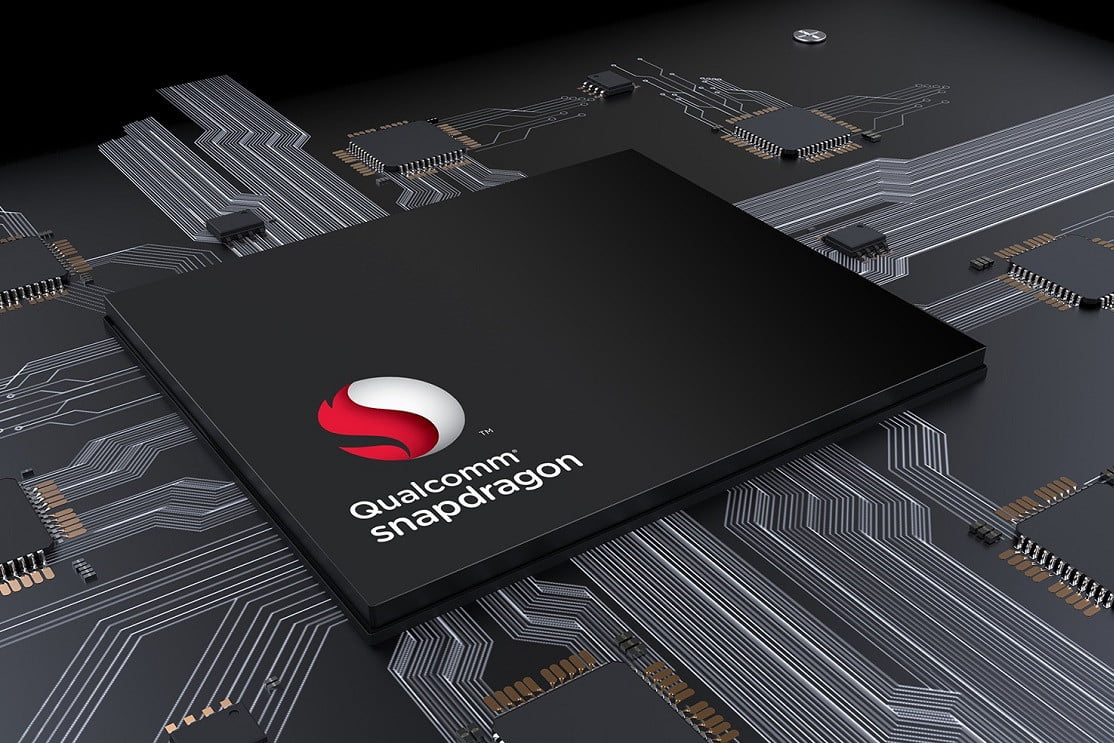
    The new Snapdragon 690 chipset fully supports 5G connectivity and is meant to be embedded in mid-range devices. With the new SoC (system-on-chip), Qualcomm plans to make 5G broadly available worldwide with the help of smartphone makers.

    The first companies to confirm they will launch smartphones equipped with the new Qualcomm Snapdragon 690 chipset are Motorola, LG, HMD Global, Sharp, and TCL. Other important players in the market are likely to embrace this new piece of tech, but they’ll probably wait for the first wave of devices to hit the market.

    Qualcomm’s new Snapdragon 690 5G is the first mid-range chipset to feature 4K HDR support to capture pictures at up to 192 megapixels. Moreover, the chipset includes support for 120hz displays for very fast refresh rates.

    Hardware-wise, the Snapdragon 690 chipset accommodates a Qualcomm Kryo 560 processor that should provide up to 20% performance improvement compared to its predecessor. The included Snapdragon X51 5G modem is optimized for the 6-series platform and offers blazing-fast speeds and superior 5G coverage.

    Also, the chipset comes with an Adreno 619L GPU (graphics processing unit) that delivers up to 60% faster graphics rendering. Last but not least, the Snapdragon 690 is fully compatible with Qualcomm’s Quick Charge 4+ technology that charges up to 4x faster than conventional charging.

    If you’re dying to get your hands on the new devices equipped with the Snapdragon 690 5G chipset, you’ll be pleased to know that the first smartphones are expected to be commercially available in the second half of the year.

  • Korean telcos developing unmanned stores

    Korean telcos developing unmanned stores

    Major South Korean telcos are looking to launch unstaffed outlets as they try to provide business services without face-to-face contact amid the novel coronavirus pandemic.

    According to the sources, SK Telecom Co, the nation’s top mobile carrier, is planning to offer unmanned services at a store in Seoul in October.

    Instead of opening a new store without clerks, the company is likely to implement the system at existing stores and operate it during certain time periods, such as late at night, the sources said.

    At the unmanned store, customers will be able to select pay plans and a device through kiosk machines and use their mobile service. When entering the store, customers will need biometric certification.

    For those who struggle to use the store on their own, the company plans to provide a video chat with sales clerks, according to sources.

    “We are reviewing our plans to set up a new type of retail channel that can meet the social needs in the era of non-face-to-face life,” a SK Telecom official said.

    Other mobile carriers said they are also planning to expand unmanned services using their technologies.

    LG Uplus said it will provide more kiosk machines to its stores in the second half so that customers can handle mobile services, such as changing monthly pay plans, on their own.

    KT Corp said it is currently running kiosks at stores in major cities. It plans to expand stores with “contactless zones,” where customers can experience their services without sales clerks’ help.

  • U.S. actions killed Huawei’s 2020 dream

    U.S. actions killed Huawei’s 2020 dream

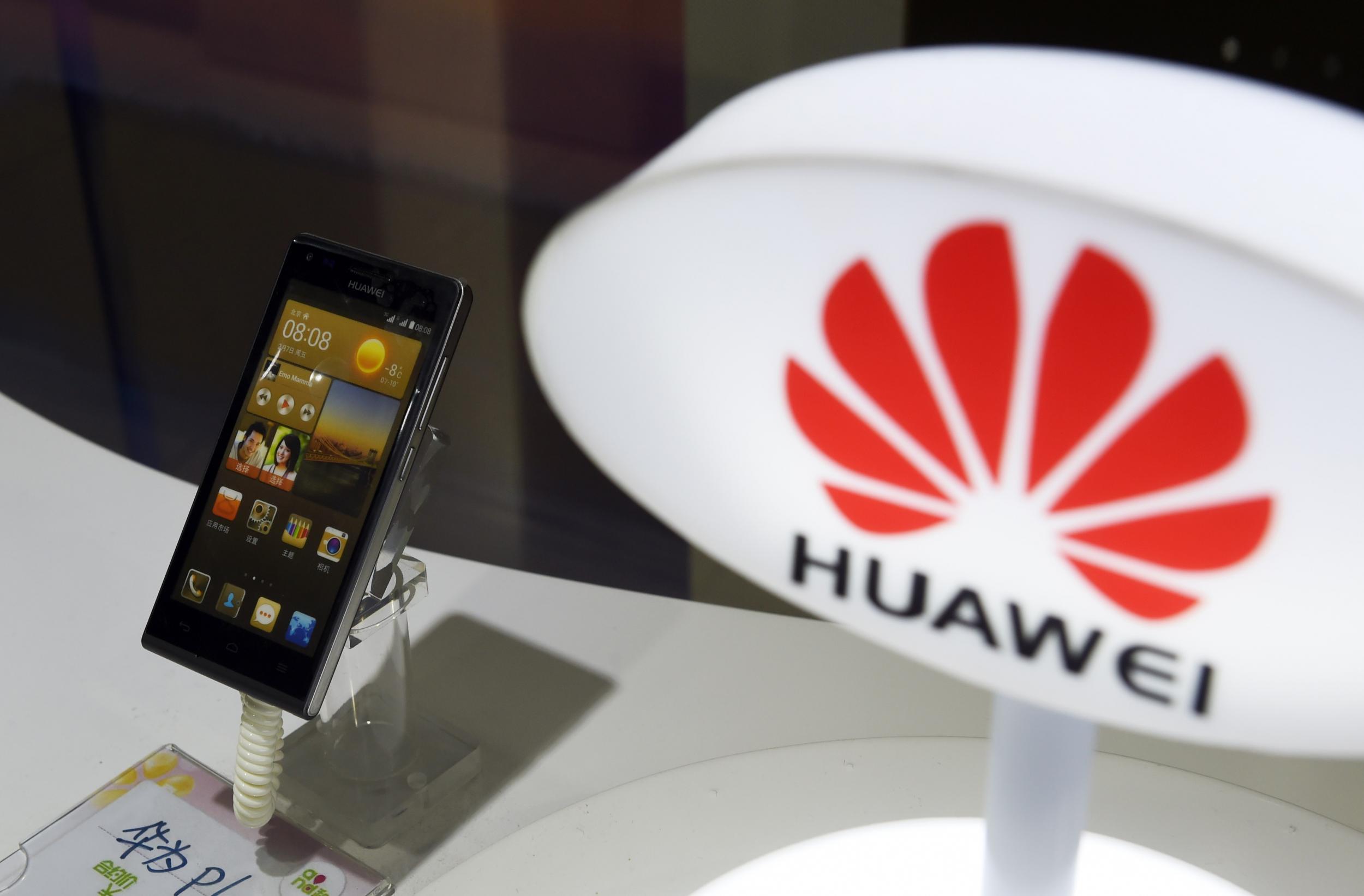
    Back in early 2016, the head of Huawei’s consumer division, Richard Yu, said that in five years Huawei would be the top smartphone manufacturer in the world. In 2015, the company had delivered 104.1 million handsets worldwide and had become more familiar to Americans thanks to the Nexus 6P. Huawei and Google teamed up to produce the device. Things did not go well for Nexus 6P users as they suffered from a boot looping problem and another issue that drained the battery so fast that the device would just shut down.

    Thanks to a settlement of a class-action lawsuit, Nexus 6P owners who suffered through both issues received $400 while owners of the phone who had no issues received $29.11 each. In retrospect, the Nexus 6P release was the start of Huawei’s problems in America. But Huawei still had its eyes on the prize; in November 2018, Yu once again expressed Huawei’s goal of topping Apple and Samsung and had it not been for the actions taken by the U.S. to quash Huawei’s momentum over the last year, the company could be on the way to replacing Samsung on the throne.

    Because of Huawei’s perceived ties to the communist Chinese government, last year the company was placed on the Commerce Department’s Entity List which prevents Huawei from accessing its U.S. supply chain; in 2018, Huawei spent $18 billion buying supplies in the U.S. While Huawei is able to find workarounds for many of the components it once sourced from the U.S., it cannot find a replacement for the Google Mobile Services version of Android. Unable to sign a licensing deal with Google, the latter’s core Android apps like Search, Gmail, Maps and YouTube are not allowed to run on Huawei’s domestic models including last year’s Mate 30 flagship line and this year’s P40 series. This doesn’t matter inside China where Google’s apps are banned anyway but does hurt sales of global models.

    Huawei’s rotating chairman Eric Xu said that in 2019, the company fell short of its internal revenue estimate by $12 billion dollars. Most of that shortfall came in the consumer division which includes smartphones. Still, last year Huawei shipped 240 million handsets, 17% more than the 205 million it delivered in 2018 allowing it to top Apple and become the second-largest smartphone manufacturer in the world. But the Chinese manufacturer’s market share declined from the 18.9% it achieved during the first quarter of 2019 to 15.2% during the fourth quarter of 2019. Huawei’s slice of the global smartphone pie rose to 17.8% during this year’s first three months, but it was still lower than the company’s share during the same quarter one year earlier.

    And then on the anniversary of its inclusion on the Entity List, the U.S. landed an even harder blow to Huawei by changing an export rule. Now, any foundry that uses American technology to produce chips for Huawei and its HiSilicon unit must obtain a license to ship those chips to the company. This is aimed mostly at TSMC, the largest independent foundry in the world. The company can still ship chips to Huawei made from wafers in production on May 15th but they must be delivered by the end of the second week of September. Huawei hopes that this will allow it to receive enough cutting-edge chips for it to build enough units of its flagship Mate 40 series to carry it through the year.

    Data indicates that Huawei’s game plan is to aim for huge success in its home market where its Q1 2020 share has risen to 42.6% from 35.5% during last year’s first quarter. And it also has found success selling older models outside of China; these models are old in the sense that they were originally released prior to the bans and are allowed to run Google’s Android apps. This has allowed the firm to raise its market share in central and eastern Europe according to Counterpoint Research. And IDC says that during the second quarter, Huawei increased its market share in Latin America on an annual basis. IDC’s Bryan Ma, vice president of devices research for the researcher says, “In mature markets outside of China, the lack of Google services is a big problem for its flagship phone ambitions. Huawei can temporarily get around it by focusing on older, lower-end models in selected developing markets, but that can only go so far.”

    Already, there are signs that in Western Europe, Huawei’s homegrown competitors like Oppo and Xiaomi are taking advantage of the fact that their newer and more powerful phones can run Google apps and Google Mobile Services. In Western Europe, Huawei’s market share fell during the first quarter from 24.3% last year to 18.2% this year. During the second quarter in India, Huawei’s share declined from 3.4% in 2019 to 0.4% in 2020.

    With this in mind, it would appear that Samsung won’t have to worry about its reign as the top global smartphone manufacturer coming to an end this year.

  • AT&T starts rolling out a potentially game-changing 5G technology

    AT&T starts rolling out a potentially game-changing 5G technology

    There’s been a lot of talk over the last few months about T-Mobile’s great progress in terms of 5G coverage and speeds, as well as Verizon’s early (and impressive) lead in the latter department. Meanwhile, Sprint’s own early 5G rollout efforts and development resources are now in Magenta’s hands, positioning “New T-Mobile” as an industry trendsetter and possible market leader in the not-so-distant future.

    But where does that leave AT&T in the grand scheme of the nation’s 5G deployment equation? The short answer is… in a pretty awkward place. We’re talking about a carrier that technically offers three different flavors of commercial 5G services, nonetheless ranking behind Verizon and Sprint in average download speeds and behind T-Mobile and Sprint in 5G availability in the latest in-depth Opensignal report.

    That’s because Ma Bell’s 5G Evolution technology is little more than a publicity stunt (and a misleading one at that), the “standard” 5G signal is based on low-band spectrum and therefore not very fast, while the 5G+ network suffers from the same coverage limitations and problems as Verizon’s 5G “Ultra-Wideband” service. On top of everything, AT&T also doesn’t own as much dedicated 5G low-band spectrum as T-Mobile, making it impossible for America’s second-largest carrier for the time being to challenge Magenta’s 5G availability numbers.

    Fortunately, that’s where a groundbreaking technology dubbed Dynamic Spectrum Sharing (DSS) comes in. Unfortunately, this is not ready for nationwide primetime just yet either. The way DSS works is essentially by allowing mobile network operators to, well, dynamically share spectrum. In other words, AT&T can now use the same “channel” for both 4G and 5G users “dynamically”, aka simultaneously.

    Even simpler put, the carrier doesn’t need to permanently switch off its 4G LTE signal and repurpose said spectrum to exclusively serve 5G-enabled smartphones. Instead, DSS is what AT&T calls a “traffic-aware” technology, instantly responding to changes on its network to allocate and split 4G and 5G resources depending on demand.

    In theory, that sounds like an absolute game-changer with the potential to significantly shorten AT&T’s path to nationwide 5G, but in reality, there are still a number of kinks to iron out, as well as many important unanswered questions.

    Although both Verizon and T-Mobile plan to embrace Dynamic Spectrum Sharing… eventually to help with their own 5G support expansion efforts, the “Un-carrier” has been very vocal about its skepticism regarding the technology’s wide-scale implementation in the short run.

    T-Mobile President of Technology Neville Ray anticipated “a tough year on DSS” back in February, further highlighting that the potential industry game-changer was “still bumpy” just last month due to a previously unforeseen delay in the rollout schedule of one unnamed major network equipment vendor.

    While AT&T didn’t care to elaborate what equipment vendors made its recent DSS launch possible, it’s definitely worth pointing out that the software-based technology is currently only live in “parts” of Ma Bell’s network in North Texas.

    Obviously, the carrier hopes to “continue expanding” its 5G coverage “throughout the year, bringing the power of 5G to more customers from coast to coast”, but at least for the time being, there are no other details to share on actual dates or places.

    The list of “5G devices already upgraded in the field” to support Dynamic Spectrum Sharing is also disappointingly short, merely including Samsung’s Galaxy S20, S20+, S20 Ultra, and Galaxy Note 10+ 5G, as well as LG’s V60 ThinQ.

    Last but certainly not least, there’s the question of the actual user benefits DSS is expected to facilitate. The answer is unlikely to make AT&T customers very happy, as the mobile network operator anticipates significant improvements in speed… further down the line. Until the technology is refined, upgraded, and deployed on a larger scale, you’ll have to settle for pretty much the same download numbers you usually get on LTE.

  • Huawei announces a breakthrough in 5G antenna design

    Huawei announces a breakthrough in 5G antenna design

    While many of you know Huawei as the world’s second-largest smartphone manufacturer, it is also the leading provider of networking equipment on the planet. And no matter what you think of the company and its perceived ties to the communist Chinese government, Huawei does produce some outstanding handsets. Its networking gear is said to be 12 to 18 months ahead of the competition which includes companies like Nokia and Ericsson, and this technological superiority comes at a cheaper price.

    Over the weekend, Huawei announced a breakthrough in the design of 5G antennas. Called CableFree, the new design improves the capabilities of 5G base station antennas. With 5G, new bands have been introduced and more antenna connections are used. The new design improves high-band coverage for 5G. According to the company, “…high-band coverage is essential for ensuring 5G experience consistency. CableFree improves antenna radiation efficiency by approximately 20%, boosting high-quality coverage of the 5G era.”

    To support the higher capacity and additional antenna connections used for 5G, the antennas deployed must be able to work with 1 KW of power; previous generations of wireless connectivity required only 500 to 600 Watts. CableFree increases the antenna power capacity by more than 80% to meet these requirements. CableFree also reduces the weight of the antennas making them easier to install. A six-band antenna using CableFree is over 22 pounds lighter and by keeping the weight of multi-band antennas under 110 pounds, a crane is not required during installation. This not only saves time, but it also saves money as well.

    CableFree reduces the use of screws and soldering points by 80% reducing the chance of passive intermodulation, or signal distortion and interference caused by large metal objects. The reduction in the use of these components makes it easier to automate the production of antennas while keeping their quality consistent. Zhang Jiayi, President of Huawei Antenna Business Unit, said: “Antennas are crucial for 5G networks. Higher performance and integration are the main trends of antenna innovation in the 5G era. CableFree breaks the antenna design bottleneck, representing an inevitable trend of the antenna industry. Huawei always innovates based on customer requirements for 5G target networks to help customers build efficient and high-performance networks and achieve business success in the 5G era.”

    Huawei says that CableFree “features a number of revolutionary technologies and techniques” that will increase the integration of an antenna improving its performance. CableFree has been used with Huawei’s Munich Pro, Golden Mini, and London Pro series antennas, as well as 32T32R Massive MIMO products. MIMO (multiple-input and multiple-output) allows for multiple signals to be simultaneously sent over the same radio channel. This creates extra data-carrying capacity allowing signals to be sent at faster data rates.

    The bottom line is that Huawei says CableFree will help its customers build efficient and high-performance 5G networks to help their businesses succeed. While this all sounds promising, recently Huawei has had a slight set back. Conservative party members in the U.K. are asking for Huawei’s networking gear to be removed from 5G networks in the region due to national security threats. Reportedly, this would be done using a three-year plan that results in the removal of Huawei from 5G networks in the U.K. and all other networks by 2023. The Trump administration had been pressuring allies not to use the company’s gear in their 5G networks and while Japan and Australia heeded the warning, Germany and the U.K. originally did not. This past January the U.K. agreed to use Huawei’s parts for its 5G networks after Prime Minister Boris Johnson said that he felt that he had no choice. Originally, a U.K. spokesman said that Huawei’s parts would not be allowed near “sensitive functions.”

  • Comprehensive new report highlights the pretty terrible state of US 5G networks

    Comprehensive new report highlights the pretty terrible state of US 5G networks

    We were warned well in advance of the world’s first 5G rollouts not to expect the game-changing wireless technology to, well, instantly change the game in terms of widespread download speeds, but obviously, some progress was made over the last year or so pretty much everywhere around the globe.

    Because not all 5G mobile networks are created equal and many countries haven’t even started the transition from 4G LTE, you shouldn’t be surprised to find out there are major geographical differences to report as far as everything from raw speeds to video experience and the availability of the “outdated” aforementioned cellular standard is concerned.

    While it’s clearly not easy to collect enough data to get a full and accurate picture of the way everyday smartphone users regularly connect to 4G LTE and 5G networks worldwide, especially during a pandemic, OpenSignal impressively managed to perform more than 87 billion measurements on over 43 million devices between January 1 and March 30, 2020.

    After comparing all that information with similar data gathered in the first three months of last year, the mobile analytics company released an in-depth report full of interesting findings and detailed examinations of regional differences. Here are just a few of the conclusions that captured our attention:

    While all 20 “leading” 5G countries assessed by OpenSignal for its latest report saw their download speed “experience” index grow between Q1 2019 and Q1 2020, said growth was far from impressive in places like Kuwait, Romania, the UK, Spain, and… the US.

    Due to T-Mobile’s initial nationwide focus on low-band 5G technology, which is barely faster than 4G LTE across many areas, and the modest footprint covered by Verizon’s blazing fast mmWave 5G network, it’s hardly surprising to see the US ranked below Germany, Sweden, Finland, Qatar, UAE, Denmark, Switzerland, Australia, Norway, Japan, and South Korea in this key metric.

    Believe it or not, US users are getting less than half the average 5G download speeds of their South Korea-based counterparts, although for what it’s worth, the 26.7 Mbps score is 25 percent higher than the regional speed result from the same period last year.

    If you thought ranking 12th out of the aforementioned 20 leading 5G countries for download speed experience was bad, wait until you see where the US is positioned in OpenSignal’s latest 5G video experience chart. With 56 points (on a scale to 100), the “land of the free” managed to edge out Puerto Rico and finish the global competition second to last.

    Although the 56 score does technically put the US in the “Good” category, 5G users in seven countries enjoyed an “excellent” average mobile video experience during the first quarter of 2020, while another 11 countries earned a “very good” rating.

    Adding other countries into the equation paints an even more embarrassing picture for the US wireless industry, as the nation sits in the 73rd spot of the overall top 100 charts for mobile video experience, making far too little year-on-year progress to raise any hopes for short-term future improvement.

    Canada doesn’t need widespread 5G connectivity to rule the general download speed hierarchy, incredibly jumping from 42.5 to 59.6 Mbps in the space of 12 months and totally crushing the 26.7 Mbps US score, which saw a modest surge from 21.3 Mbps a year ago.

    If it makes you feel any better, the US did manage to defeat two G7 countries (Italy and the UK) in download speeds while ranking dead last in the group as far as the video experience is concerned. Overall, the US sits in the 25th spot out of 100 countries in the download speed experience chart, which is a little better than the nation’s abysmal video performance.

    On the other hand, the US continues to shine when it comes to 4G availability (which is not the same as coverage, mind you), with a remarkable 96.1 percent score that’s only surpassed by Japan and South Korea. At least in theory, that should allow the nation’s largest wireless service providers to deploy a 5G signal faster than carriers in many other countries. Unfortunately, that’s not enough to also guarantee remarkable nationwide speeds… yet.
  • Indosat Ooredoo Reports Revenue Growth of 8% for Q1 2020 Year-on-Year

    Indosat Ooredoo Reports Revenue Growth of 8% for Q1 2020 Year-on-Year

    President Director and CEO Indosat Ooredoo, Ahmad Al-Neama, said, “Building on the growth momentum from 2019, Indosat Ooredoo has delivered a strong performance in Q1’20. We are on track with our 3 years’ turnaround plan and see positive momentum continuing in the coming quarters. We all are facing unprecedented challenges and Indosat Ooredoo has been taking proactive & progressive steps to ensure that we support our employees, customers, and community in this challenging situation. We were amongst the first to implement virtual ways of working for our employees to ensure their health and safety. We have accelerated our network rollout plan to make sure that people can stay connected during these times. Steps have been taken to support business continuity for enterprise customer and Indosat Ooredoo continues to support government initiatives in these tough times. Indosat Ooredoo remains committed to accelerating Indonesia’ digital economy agenda and will continue to support to navigate our country through this pandemic.”

    Revenues of IDR6,523.1 billion were recorded for 1Q 2020, an increase of IDR476.9 billion or 7.9% higher compared to 1Q 2019. Indosat Ooredoo’s Cellular, MIDI, and Fixed Telecommunication business each contributed 82%, 15%, and 3% respectively to the consolidated operating revenues for the period ended 31 March 2020. Indosat Ooredoo recorded net loss of IDR605.6 billion, increased by IDR313.1 billion over net loss recorded in 1Q 2019 primarily driven by one-off impact of organization rightsizing and loss on foreign exchange.

    The Company operated 133,186 BTSs as of 31 March 2020, adding 51,680 BTSs compared to last year. To date, the Company has operated 52,174 4G BTS.


  • AT&T offers three months free service to medical professionals with priority over other service plans

    AT&T offers three months free service to medical professionals with priority over other service plans

    The coronavirus pandemic is still ongoing and as we all know, tech giants are trying to help as much as they can. Phone carriers are on it as well. Now, CNET reports that AT&T has announced it is going to give three months of free service of its FirstNet program to doctors and medical professionals.

    According to the announcement, in order to be able to benefit from the program’s free service, you have to be registered on AT&T FirstNet first responder plans. However, the service is available to all state-licensed nurses and doctors in America and American territories, even if they are existing AT&T customers or new ones. The doctors and nurses, who are already AT&T customers, will have to switch to FirstNet subscription and send proof of their profession within a 30-day activation period and all of this can be done online.

    The FirstNet plan, that is now offered for free for medical practitioners, is usually $40 a month and offers one line of unlimited talk, text and mobile data. Additionally, users desiring unlimited mobile hotspot have to pay $45 per month for the subscription.

    In addition to the free service, AT&T is also offering a $200 discount on a FirstNet-ready smartphone. At the moment, iPhone 11, 11 Pro and 11 Pro Max, as well as Samsung Galaxy S20 5G series can benefit from FirstNet, however, other 5G phones are still limited to the 4G LTE network, offered by AT&T.

    The service also offers medical professionals priority to the carrier’s 4G LTE network and their service will be prioritized during times of emergency. Reportedly, FirstNet phones are going to be faster, connectivity-wise, than normal AT&T phones.

  • Singtel’s NFC Partners Nets for Central Bank Payments

    Singtel’s NFC Partners Nets for Central Bank Payments

    The partnership leverages NCS’ capabilities in building government applications and infrastructure, and Nets’ experience as Singapore’s national payments provider and facilitating cross-border payments.

    NCS and the Network for Electronic Transfers (Nets) group will jointly develop a new real-time electronic payment and securities settlement platform for central banks in Asia Pacific, according to a memorandum of understanding (MOU) signed on Monday.

    The ceremony took place via video conferencing in light of enhanced safe distancing measures against the Covid-19 outbreak.

    The platform will be secure, resilient and robust by design to allow interoperability with current and future payment systems and facilitate high-value inter-bank fund transfers, a statement said. According to the partners, this will enhance the way central banks deliver monetary policies and critical market infrastructure to support financial stability.

    NCS and Nets will also develop a «next-generation suite of central banking products» that can be customized to the regulatory needs of different financial markets.

    This will allow the firms to expand their footprints in markets in Southeast Asia, as well as Hong Kong and China, the announcement said.

    NCS is an information, communications and technology (ICT) service provider that works with governments and firms in the Asia Pacific region on digital infrastructure projects, and global and regional banks to support their front and back-end operations.

    While we continue to strengthen our core services, we are also investing in our digital capabilities to develop local-IP fintech products and platforms to fuel our growth in the financial services sector, said Ng Kuo Pin, CEO, NCS, about the partnership.

  • Here’s how much of an impact 5G has on battery life

    Here’s how much of an impact 5G has on battery life

    Just how much of an impact does 5G have on a phone’s battery life over 4G? Lu Weibing, general manager of Xiaomi sub-brand Redmi, took to Chinese microblogging site Weibo to explain. In his post, he points out that the power consumption of Qualcomm’s 800 series of chips is about 20% greater than that of the 700 series, and a 5G phone consumes 20% more power than a 4G phone.

    Mr. Weibing’s statement comes only days after the 5G-capable Redmi K30 Pro was announced. The phone is powered by a Snapdragon 865 chip, and despite that huge 4700mAh battery inside it, Redmi’s estimates are rather modest, saying that the phone is designed to last one day.

    The Samsung Galaxy S20, Galaxy S20+, and Galaxy S20 Ultra are also among the newest Snapdragon 865 phones with 5G support. They have battery capacities of 4000, 4500, and 5000mAh respectively – a significant boost compared to last year’s S10 series, and surely one related to increased power demand by the 5G hardware inside them.

    As 5G is making great global progress compared to 4G LTE in its early days, phone manufacturers will need to start adapting to the overall increase of power consumption required for this new technology. And while 5G matures and Qualcomm strives to optimize the power consumption of their 5G chips, things are bound to get better with time.

  • Qualcomm partners with video enhancing company Imint for future smartphones’ superior video capabilities

    Qualcomm partners with video enhancing company Imint for future smartphones’ superior video capabilities

    These days consumer demand for higher quality videos grows exponentially and people expect more and more from upcoming smartphones. Now, Sweden-based software company Imint, a firm offering video enhancements and analysis, has announced that it will collaborate with chip manufacturer Qualcomm for better video capabilities in future Snapdragon-powered devices.

    Imint’s CEO, Andreas Lifvendahl, stated that the collaboration with Qualcomm will bring a great possibility for the software company to take advantage of the AI-powered chip core technology offered by Qualcomm, and therefore be able to develop a next-gen video enhancement software. The two have already collaborated, developing the Vidhance algorithm, which provides a selfie mode that ensures the user’s face stays in the frame when using the video capabilities of the phone (video calls, chats and recordings).

    Additionally, Lifvendahl believes that Qualcomm’s latest breakthroughs, given the fact that Qualcomm is a world leader in the chip manufacturing market, become a higher stepping-stone for Imint’s software. The two companies have even created a technology to help lower power consumption when processing videos with Vidhance algorithms. The aforementioned power-saving tech is available for devices equipped with Qualcomm’s Snapdragon 865 mobile platform.

  • Once again, ZTE is in trouble with the U.S.

    Once again, ZTE is in trouble with the U.S.

    Before Huawei was banned from its U.S. supply chain last May, fellow Chinese manufacturer ZTE was blocked from its state-side supply chain in 2018. While Huawei was able to thrive despite its placement on the U.S. Commerce Department’s entity list, ZTE almost went out of business. Surprisingly, a tweet from President Donald Trump set the wheels in motion for a settlement that ultimately saved the company.
    But ZTE is once again in the Trump administration’s crosshairs. The smartphone and networking equipment manufacturer is being investigated for allegedly bribing foreign officials to help its global operations. The Justice Department has not revealed any information about the investigation. In 2016, the Commerce Department fined ZTE $1.19 billion for selling goods and services to Iran and North Korea despite U.S. trade sanctions against both countries.
    As part of the punishment, ZTE was banned from its U.S. supply chain for seven years; the Commerce Department suspended the ban as long as the manufacturer was following all of the penalties placed on it by the U.S. government. But once the Trump administration realized that ZTE was paying bonuses to some employees in violation of that agreement, the supply chain ban was initiated in April 2018 running through March 2025.
    Unlike Huawei, which rode a wave of Chinese patriotism and still managed to deliver approximately 240 million handsets last year (second behind Samsung and ahead of Apple), ZTE does not design its own chips and did not prepare for a ban as Huawei had done by stockpiling chips. ZTE, which was the fourth-largest smartphone manufacturer in the U.S. prior to the 2018 ban, was running into trouble. But out of nowhere, President Trump disseminated a tweet expressing concern for the jobs being lost in China because of the supply chain ban. Trump wrote that he had instructed the Commerce Department to reach a deal with ZTE. Weeks later, a deal was made. ZTE paid the U.S. $1 billion and put $400 million into an escrow account in case it committed any illegal acts in the future (like the new charges). The Chinese manufacturer also agreed to overhaul its Board of Directors and replace its executive team. A compliance team from the U.S. was placed inside the company.
    ZTE was never able to regain its position as a top smartphone vendor in the states. Motorola took over its spot as the fourth most popular brand in the U.S. and that continues. The U.S. still considers ZTE to be a national security threat. Back in November, the FCC voted to block the Universal Service Fund (USF) from purchasing networking equipment from ZTE and Huawei. The $8.5 billion fund is managed by the regulatory agency and is funded through a fee tacked on to consumers’ wireless bills. The USF is charged with helping rural carriers provide internet service to rural Americans. Many of these operators used Huawei and ZTE gear for their 3G and 4G networks.
    The FCC and the U.S. government want these rural operators to remove any Huawei and ZTE equipment that is embedded in their networks. The FCC has already estimated that this will cost nearly $2 billion to accomplish over a two-year period. Congress has approved a resolution offering rural carriers $1 billion to remove this gear from their networks. Both Huawei and ZTE are considered national security threats because of their ties to the communist Chinese government. U.S. lawmakers are concerned that the two companies place backdoors in their equipment that gather intelligence and send it to Beijing. ZTE and Huawei have repeatedly denied these allegations.
  • Huawei lawsuit against ‘unconstitutional’ ban in the US is thrown out

    Huawei lawsuit against ‘unconstitutional’ ban in the US is thrown out

    A judge has ruled against a lawsuit filed by Huawei in the US relating to a ban on government personnel using the company’s devices.

    Huawei filed the lawsuit on the basis that the ban was “unconstitutional” back in 2018. Since then, Huawei has faced increased US-led scrutiny globally over claims the company is controlled by Beijing – an allegation the company denies.

    US District Court Judge Amos Mazzant ruled that Congress has the right to ban federal agencies from using equipment manufactured by specific firms.

    In a 57-page ruling on Tuesday, Mazzant wrote: “Contracting with the federal government is a privilege, not a constitutionally guaranteed right—at least not as far as this court is aware.”

    Huawei is now considering its options and said in a statement the “approach taken by the US Government in the 2019 NDAA provides a false sense of protection while undermining Huawei’s constitutional rights.”

    Earlier this month, the Department of Justice charged Huawei and its subsidiaries with racketeering and conspiracy to steal trade secrets.

    Last week, a bipartisan US delegation voiced their concerns about Huawei during this year’s Munich Security Conference.

    Secretary of State Mike Pompeo claimed that Huawei, and other firms backed by Beijing, are “trojan horses for Chinese intelligence”. Meanwhile, Defense Secretary Mark Esper said China is conducting a “nefarious strategy” through companies like Huawei.

    From the other side of the House, Republican Speaker Nancy Pelosi said the use of Chinese telecoms equipment would be “choosing autocracy over democracy” and “putting the state police in the pocket of every consumer in these countries”.

    February is typically a great month for those in telecoms as it’s a time when everyone convenes at MWC in Barcelona to show off their latest technologies, make deals, and celebrate the industry. Of course, this year’s MWC has been canceled over fears about the spread of the deadly coronavirus.

    The best recent news for Huawei arrived last month when the UK government announced it will be allowing the company to have a “limited role” in national 5G networks following a comprehensive security review.

    Huawei will be hoping for fewer months like February for the rest of 2020.

  • Nokia to enable Rakuten Mobile’s automated network operations

    Nokia to enable Rakuten Mobile’s automated network operations

    Nokia and Japan’s newest mobile network operator Rakuten Mobile are working together to enable the operator’s implementation of a fully automated operations environment for the 5G era. Nokia will operate Rakuten Mobile’s virtualized core network to manage total cost of ownership (TCO). The agreement will allow Rakuten Mobile to focus on developing its portfolio of disruptive services and expanding its service footprint while developing operational maturity and automation capabilities.

    Rakuten Mobile is a disruptive new player in the Japanese mobile marketplace with ambitious objectives for the launch of its network and services, simultaneously deploying an innovative cloud-native greenfield LTE network which will rapidly evolve to enable 5G services. Nokia’s operational support services enable Rakuten Mobile to maintain their focus on growing LTE coverage footprint and 5G service capabilities while ensuring the reliability of launched services.

    Nokia is enabling groundbreaking levels of automation in network and service lifecycle management within the Rakuten Mobile cloud environment. This will accelerate the pace of service innovation and deployment while controlling OPEX. This managed services deal will ensure predictable OPEX costs to minimize financial risk while guaranteeing a secure, best-in-class cloud, incorporating network and IT operations. This will allow Rakuten Mobile to bring new services to market in the fastest possible way while assuring service reliability through a highly reliable telco cloud.

    Nokia is supporting over 160 virtual network function instances across two data centers in an industry-leading multivendor cloud environment. As an essential part of Rakuten Mobile’s operations organization, Nokia’s domain expertise and value-add will be incorporated into the core of Rakuten’s business.

    Friedrich Trawöger, Head of Operate & Managed Services Unit at Nokia, said: “By managing its telco cloud we can help Rakuten Mobile to focus on its objectives; to launch its mobile LTE network and to rapidly realize its vision as a 5G digital service provider. We support Rakuten Mobile in bringing new services to market quickly by utilizing the latest innovations in automated operations while focusing on the total cost of ownership.”

    Tareq Amin, Chief Technology Officer of Rakuten Mobile, Inc., said: “With Nokia supporting the operation of our cloud-native network, we can focus on service launch and expansion. Nokia is an integral partner in our network operations, and we look forward to future business opportunities that this partnership brings.”

  • Shocking AGR debts could spell doom for Vodafone Idea

    Shocking AGR debts could spell doom for Vodafone Idea

    Following a Supreme Court ruling made last week, India’s Vodafone Idea could be facing potential bankruptcy for failing to pay billions in outstanding government fees in the next few days.

    Vodafone Idea, the brainchild of a collaboration between Britain’s Vodafone Group Plc and India’s Idea Cellular has been hit the hardest by the court’s order that telcos would need to clear their AGR fees; a ruling made last October which resulted in unpaid debts for operators going back a few years.

    Vodafone Idea has stated that it is unable to pay the $3.9 billion owed but is assessing the amount and is hoping for a timeline extension to keep their business afloat.

    Additionally, the multi-billion-dollar debt incurred by the telco could put a dampener on India’s economy and reputation as an investment hub for multinationals, unless business continuation was secured.

    The company announced, “As disclosed in the company’s financial statements for the quarter ending December 31, 2019, the company’s ability to continue as a going the concern is essentially dependent on a positive outcome of the application for modification of the Supplementary Order.”

    An anonymous spokesperson for Vodafone Idea said, “”They have been beaten down by the environment here. We’re sending investors a very negative signal – it says the trust factor between the government and the industry doesn’t exist.”

    Since news of the ailing telco broke, analysts have already begun to predict the growth of Bharti Airtel’s and Reliance Jio’s opex and capex levels if Vodafone Idea were to shut down permanently.