Category: Telecom

Retail News Asia is committed to providing both local and global retailers with the latest Telecom & Telco news throughout the Asian market. This on a daily base.

  • Huawei, Qualcomm, and Oppo are arguably the three most innovative firms in wireless technology

    Huawei, Qualcomm, and Oppo are arguably the three most innovative firms in wireless technology

    This might not come as a surprise to some people living in China, or to those who make a living by following the goings on of the wireless world, but there is a good case for calling Huawei the most innovative outfit in this realm. The company’s Mate series phones are traditionally one of the top technologically based smartphones in the world each year. However, the powerful 5nm chips it designed for this year’s Mate 40 line can no longer be shipped to the company because of a new U.S. export rule. The rule bans foundries like TSMC from shipping cutting-edge chips to Huawei without a license if said chips were produced using American technology.

    An industry report cited by the South China Morning Post states that from the beginning of this year through the end of October, Huawei filed 8,607 patent applications related to wireless technology. That put the firm at the top of the pack, well ahead of San Diego, California based chip designer Qualcomm; the latter sought 5,807 patents during the same January to October time period. Chinese smartphone manufacturer Oppo was third with 5,353 patent applications. Database provider incoPat, headquartered in Beijing, is responsible for the data used to compile the list.

    According to incoPat, both China and the U.S. led the way with each making up 32% of the patents filed from January through October. Japan was next with 15% followed by the 7% submitted by South Korea. IncoPat says that the information it uses comes from patent filings available to the public in the field of wireless communications. This includes patents filed to protect inventions related to 5G technology. The report issued by incoPat notes “As a key area of modern communications, wireless communication network technology has always been a very important part in the 5G research and development process. With the new technological competition and new globalisation situation, wireless communication network technology is becoming an important strategic choice for enterprises to face international competition.”

    5G is the next generation of wireless connectivity and the countries that control 5G will have an advantage economically. That is why, seeing how innovative Huawei is and not wanting to be left behind, back in June the U.S. Commerce Department amended the entity list ruling that prevents Huawei from working and doing business with U.S. based firms. Now, American tech companies are allowed to work alongside Huawei to help create global 5G standards. The U.S. feared that being left out of the meetings attended by Huawei would hold the U.S. back in terms of the development of 5G.

    Huawei is also the leader in helping the 3GPP develop standards for 5G. 3GPP (the 3rd Generation Partnership Project) is a term that covers standards organizations that help create protocols for mobile telecom. After Huawei, Ericsson and Qualcomm provide the most contributions to 3GPP for 5G standards. According to SCMP, this year 3GPP completed its next set of standards for 5G which include possible applications for 5G such as autonomous driving, smart factories, and remote surgery.

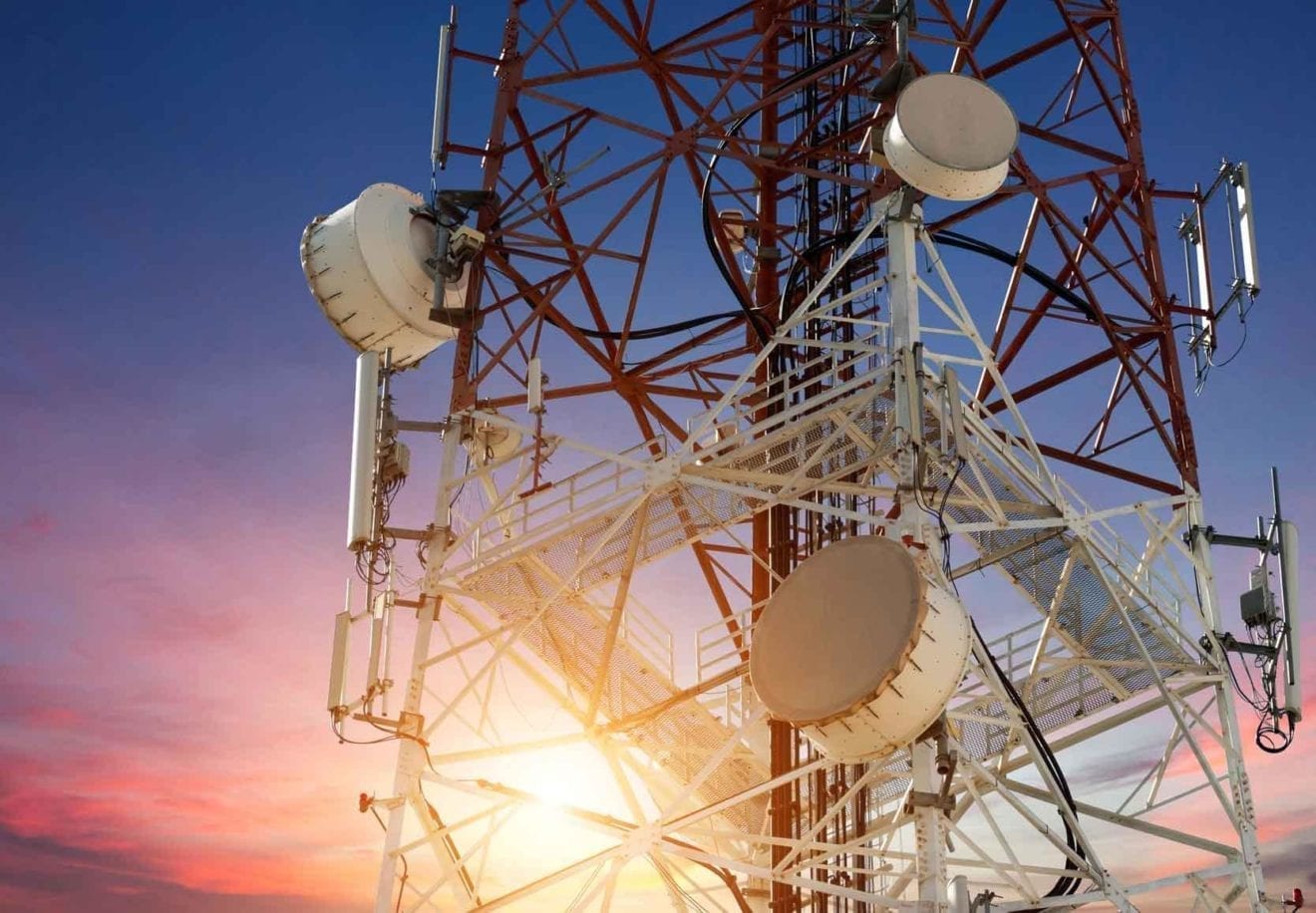
    Earlier this month, China’s Ministry of Industry and Information Technology (MIIT) said that the country has built nearly 700,000 base stations in 2020 topping its original target of 500,000 for the whole year. As the world’s leading provider of networking equipment, Huawei is also an important supplier of 5G base stations. In fact, published reports indicate that Huawei will replace Ericsson this year to become number one in 5G base stations. Ericsson is expected to see its market share decline from 30% last year to 26.5% in 2020. Huawei, on the other hand, should see its 5G base station share rise from 27.5% last year to a leading 28.5% in 2020. That is, along as it can find enough 5nm Kirin 9000 chipsets to power these base stations. As we mentioned earlier in this article, the U.S. is preventing Huawei from receiving cutting-edge chips from TSMC.

  • Singapore and Philippines to Boost Data Connectivity

    Singapore and Philippines to Boost Data Connectivity

    Bangko Sentral ng Pilipinas and the Monetary Authority of Singapore have agreed to promote the adoption and implementation of policies to aggregate, store, process, and transmit data across borders for banks and non-bank financial institutions.

    While the increasing use of data in financial services and the increasing use of technology to supply financial services offer a range of benefits, they also pose new and complex risks for markets and challenges for policymakers and regulators, the two sides said in a joint announcement on Monday.

    Data mobility in financial services supports economic growth and the development of innovative financial services, and benefits risk management and compliance programs, by enabling stronger supervision of cross-border money laundering, terrorist financing patterns, and proliferation financing while strengthening defense against cyberattacks and allowing the regulators to manage and assess risk on a global basis, the statement noted.

    The two regulators said that covered institutions should be allowed to transfer data, including personal information, across borders by electronic means to facilitate business activities, and the location where covered institutions can store and process their data should not be restricted as long as BSP and MAS have full and timely access to the data necessary to fulfill their regulatory and supervisory mandate.

  • SK Telecom’s 11Street to let shoppers buy from Amazon

    SK Telecom’s 11Street to let shoppers buy from Amazon

    SK Telecom Co., South Korea’s largest mobile carrier, said Monday it is partnering with Amazon.com, Inc. to allow South Koreans to have easier access to products on the U.S. e-commerce giant’s platform.

    The carrier said users of its e-commerce unit 11Street Co. can directly purchase the U.S. company’s products on its platform. It did not provide a specific time frame for the service’s launch.

    SK Telecom said it has also made an agreement with Amazon so that the U.S. tech giant has the right to acquire a stake in 11Street based on the South Korean e-commerce company’s progress in the local market.

    The announcement comes as SK Telecom is currently planning an initial public offering (IPO) for 11Street.

    The carrier said in its third-quarter conference call that the e-commerce unit is among its list of subsidiaries, such as new mobility spinoff T map Mobility Co., that will pursue IPOs.

    The e-commerce unit’s sales reached 135.7 billion won (US$122.7 million) in the third quarter, up 8 percent from a year earlier, according to SK Telecom.

  • Vietnamese startup acquires US mobile testing platform

    Vietnamese startup acquires US mobile testing platform

    Vietnamese tech startup Kobiton has acquired U.S.-based mobile testing platform Mobile Labs Inc after raising $14 million for the purpose. Kobiton, which provides a platform for app developers to test their products, said in a statement that the acquisition would help customers deliver apps of higher quality faster by utilizing artificial intelligence.

    The acquisition was funded by U.S.-based investment funds BIP Capital and Fulcrum Equity Partners.

    Ha Ngoc Vinh Du, director of Kobiton in Vietnam, said that the acquisition was also positive news for the Vietnam tech industry as it confirms the talent of Vietnamese tech engineers among the global tech community.

    Jim Douglass, the partner at Fulcrum Equity Partners, said that companies are increasingly reliant on their mobile channels to improve revenues, and they need new ways to test their apps on real devices without sacrificing quality.

    Kobiton, with offices in Ho Chi Minh City and Atlanta, U.S., was founded by Vietnam-based KMS Technology in 2016. It has over 50 IT engineers and developers in its employ. Its platform is used by over 60,000 developers worldwide.

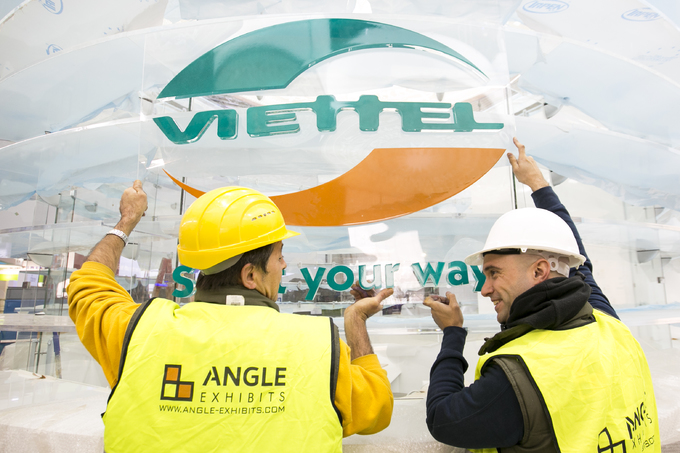
  • Viettel, MobiFone licensed to commercially test 5G

    Viettel, MobiFone licensed to commercially test 5G

    Telecom giants Viettel and Mobifone have received licenses to commercially test 5G broadcast in Vietnam’s two largest cities.

    Military-owned Viettel has been allowed to test in Hanoi with a maximum of 140 base transceiver stations while state company MobiFone can do so in Ho Chi Minh City with 50 stations.

    The tests will help the companies evaluate their technology and market size before beginning commercial operations.

    The companies need to follow cybersecurity safety and privacy regulations while running the tests, the ministry said.

    The first 5G phone call in the country was made on January 17 using equipment manufactured by Viettel, which has been conducting non-commercial tests and installing equipment since last year.

    The number of 5G subscriptions could hit 6.3 million by 2025 or 6 percent of total mobile subscriptions, technology conglomerate Cisco has forecast.

    5G is said to offer speeds 100 times faster than 4G and support new applications like remote medical procedures and autonomous driving.

  • Vietnam to close 2G services by 2022

    Vietnam to close 2G services by 2022

    Vietnam plans to bring the number of 2G subscribers to under 5 percent by 2022 so that it can stop this service and push the development of higher-technology cellular networks.

    There are 24 million 2G subscribers in the country or 18.5 percent of the total, and the Ministry of Information and Communications aims to bring the figure down to 5-7 million, or around 5 percent by early 2022 towards stopping the 2G service by then.

    Closing 2G will leave more bandwidth for 3G, 4G, and the upcoming 5G network and help accelerate the establishment of a digital economy, the ministry said.

    It is working to boost the sales of low-cost smartphones so more people will be familiar with 3G and higher networks, it added.

    Among 24 million 2G subscribers, 12.4 million are using feature phones. Hoang Minh Cuong, head of the telecommunications department under the ministry, said these are the users that telecom operators need to help transition to smartphones.

    The number of 2G subscribers has dropped by 6 million since last year, showing that the goal to bring the ratio to under 5 percent is possible, he added.

    The telecommunications department plans to lower the rates of regular phone calls, which will reduce their revenues to telecom operators and urge them to rely more on data calls.

    It also plans to require all smartphones produced or imported into Vietnam to support 3G network or higher.

    There are 630,000 2G subscribers age 70 or more, and some say this group of people lack the tech-savvy needed to use smartphones.

    However, Cuong said Vietnamese companies were capable of making 4G feature phones for around VND600,000, and these would serve this user group.

  • Huawei’s breakthrough Petal Search app helps users install content banned by the U.S.

    Huawei’s breakthrough Petal Search app helps users install content banned by the U.S.

    You might remember that back in May, we told you about Huawei’s plan to work around the manufacturer’s inclusion on the U.S. Commerce Department’s Entity List. The U.S. put the company on this list because it considers the firm to be a national security threat. Placed on the Entity List, Huawei is not allowed to access its U.S. supply chain which means that it cannot license the Google Mobile Services version of Android. It also means that Google’s Android apps like Search, Maps, YouTube, the Play Store, Drive, and Gmail can not be installed on a Huawei phone. Most of Google’s apps are banned in China anyway, so only the international variant of the company’s phones are impacted.

    The Entity List placement also means that Huawei cannot work with U.S. firms including app developers. So Huawei’s phones, both inside and outside China, do not give users a selection of popular U.S. based apps to use. For example, in Huawei’s own AppGallery Android app distribution platform, you won’t find apps like Amazon, Snapchat, Speedtest.net, and AccuWeather. But as we pointed out in May, Huawei developed a new search engine called Petal Search. Petal Search will not only list “daily weather forecasts and top news; live sports scores and schedules; video, image, and music searches; and financial news and stock market updates.” When it comes to travel, it will “search millions of hotels worldwide and book rooms; and check flights and travel info for top global destinations.” Petal Search will also “look up local services and businesses with comprehensive directories.” But that isn’t the exciting cool feature.

    When you open up Petal Search and tap in the name of an app, the search engine looks for the one that you have in mind. If it finds the title in the AppGallery, it will be installed on your Huawei handset. If Petal Search can’t find a listing, it will search for it on third-party app stores. If it finds the app, a simple tap of the Install button will handle the task of downloading it on your phone.

    When we first heard about Petal Search, we told you that the idea behind it was to help Huawei customers find and install apps that are blocked due to the U.S. ban. These include Google’s own Android apps and U.S. developed social media and entertainment apps. And now, according to Forbes, Petal Search has become a full-service search engine as well. Petal even got some promotion during last week’s unveiling of the new flagship Mate 40 series.

    With the U.S. continuing to be offended by Huawei’s will to survive, the company could end up having to leave the smartphone industry and concentrate on providing an ecosystem to other phone manufacturers. Huawei created its own Mobile Services ecosystem that has over 700 million users, a 32% annual gain from last year. More importantly, the number of app developers registered by Huawei has risen 76% year-over-year to 1.6 million. This is of major importance because the larger the number of developers working on content for HMS, the more of a challenge Huawei becomes to other phone manufacturers.

    The main challenge that Huawei has at the current time is finding a foundry that can produce cutting-edge chips without using American-made technology. Back in May, the U.S. Commerce Department changed its export rules preventing foundries like TSMC from shipping chips to Huawei without a special license issued by the U.S. Recently it was discovered that the Chinese manufacturer ordered 15 million units of its 5nm Kirin 9000 chipset but received only 8.8 million of them. The new export rule started to take effect on September 15th.

  • NASA awards Nokia a $14.1 million contract to build a 4G LTE network on the Moon

    NASA awards Nokia a $14.1 million contract to build a 4G LTE network on the Moon

    If you’re planning on taking a trip to the Moon in the near future to escape the madness of this planet, we have some good news and some bad news. The good news is that Nokia has been awarded a $14.1 million contract from NASA to build the first 4G network on the Moon. The bad news is that for now, the Moon will not have 5G service. NASA’s current plans call for a sustainable human presence on the Moon by 2028. Elon Musk’s SpaceX, Jeff Bezo’s Blue Origin, and a company named Dynetics will develop the human landers that will deliver humans to the Moon.

    In late 2022, Nokia Bell Labs will “build and deploy the first ultra-compact, low-power, space-hardened, end-to-end LTE solution on the lunar surface.” Nokia will integrate the network into Intuitive Machines’ lunar lander and when deployed, the network will self-configure to produce the first LTE system on the Moon. The network isn’t being made just so astronauts can use TikTok. Nokia says, “The network will provide critical communication capabilities for many different data transmission applications, including vital command and control functions, remote control of lunar rovers, real-time navigation and streaming of high definition video. These communication applications are all vital to long-term human presence on the lunar surface.”

    Nokia says that its LTE network is perfect for any activity that astronauts might need it for including “voice and video communications capabilities, telemetry and biometric data exchange, and deployment and control of robotic and sensor payloads.” The lunar LTE network is designed to survive the harsh conditions of the launch and the landing on the moon. NASA says that “the system could support lunar surface communications at greater distances, increased speeds, and provide more reliability than current standards.”

    If you’re bummed out that connectivity on the Moon is limited to 4G, don’t fret. Nokia says that it will work on developing space applications for 5G connectivity. Imagine how fast you’ll be able to download Apollo 13 on your 5G handset to prepare for your space flight to the Moon. The manufacturer is the second-largest networking equipment supplier to Huawei.

    In its blog post, Nokia says “As a market leader in end-to-end communication technologies for service provider and enterprise customers globally, Nokia develops and provides mission-critical networks adopted by airports, factories, industrial, first-responders, and the harshest mining operations on Earth, for automation, data collection and reliable communications. By deploying its technologies in the most extreme environments, Nokia Bell Labs will validate the solution’s performance and technology readiness level, and further, optimize it for future terrestrial and space applications.”

  • Singtel launches Singapore’s first 5G standalone trial network for enterprises

    Singtel launches Singapore’s first 5G standalone trial network for enterprises

    Singtel has deployed the nation’s first 5G standalone (SA) trial network at its 5G Garage testing facility. The network, which utilizes 3.5GHz spectrum and Ericsson’s advanced Massive MIMO (Multiple-input multiple-output) technology to deliver ultra-fast speeds and low-latency or response times, provides enterprises with early access to 5G to develop and trial 5G solutions.

    Mr Bill Chang, Chief Executive Officer of Group Enterprise at Singtel said, “COVID-19 has brought a new urgency to digital transformation for many sectors. Having unveiled our first 5G use case with our 24/7 unmanned pop-up retail store in September, our 5G SA trial network offers enterprises from across industries the opportunity to develop and test applications to accelerate automation and digitalization. With 5G’s low latency and scalability, enterprises can not only drive efficiencies and make better and more cost-effective decisions but also deliver richer customer experiences. The launch of this 5G SA trial network is also an important step as we get ready for commercial 5G SA. We welcome enterprises to harness the power of 5G to future-proof their businesses and catalyze their digital transformation at 5G Garage.”

    Global cloud gaming provider, Ubitus, is the first enterprise to use Singtel’s 5G SA network for a 5G cloud gaming trial. The trial demonstrated a 5G cloud gaming experience that consistently delivered 85% lower latency of between 8 to 11 milliseconds compared to cloud gaming on 4G. It was conducted on Singtel’s multi-access edge computing (MEC) platform which integrates 5G’s ultra-low latency and high bandwidth capabilities with powerful cloud computing performance. This allows rich graphics to be processed on dedicated servers and transferred directly to devices, significantly cutting lag times, which is critical to the gaming experience.

    “We are very excited about the potential of Singtel’s 5G SA and MEC to push the envelope on cloud gaming. The trials will inform our designs for exciting games which will test gamers’ reflexes and instincts. We will leverage the ultra-low latency of 5G and MEC to offer immersive, hyper-realistic gaming experience,” said Mr Wesley Kuo, Ubitus’ Chief Executive Officer.

    5G and MEC’s ability to integrate with technologies such as Internet of Things, analytics, robotics, artificial intelligence and augmented, virtual or mixed reality enables enterprises across industries to leverage the low latency in applications requiring little or no lag times. These include remote surgery, smart manufacturing, autonomous driving, remote robotic repair and maintenance and virtual reality-enabled live concerts. By removing the need for data to be sent all the way to public clouds to be processed and sent back, MEC is not only able to better serve mission-critical data connectivity, it also enables enterprises to optimize their total cost of ownership for hosting, dedicated link provisioning and data transfer.

    Since the launch of 5G Garage with Ericsson and Singapore Polytechnic in January 2019, Singtel has successfully developed ten 5G use cases together with more than 20 start-ups and enterprises in areas such as robotics, virtual reality, artificial intelligence and drones. Singtel has also collaborated with PSA to trial maritime 5G use cases to optimize port operations at the future Tuas Port. In addition, Singtel is working with the Agency for Science, Technology and Research’s Advanced Remanufacturing and Technology Centre, and JTC to enable enterprises to develop and test advanced 5G-powered manufacturing solutions.

    Singtel’s 5G SA cloud gaming trial follows the recent unveiling of UNBOXED, its 5G-powered unmanned pop-up retail store, and the launch of Singtel’s 5G NSA network trial that offers consumer and enterprise customers an early taste of ultra-fast 5G mobile speeds.

  • Qualcomm Snapdragon 875 will be unveiled in December

    Qualcomm Snapdragon 875 will be unveiled in December

    Qualcomm has started sending out invites for a two-day digital event that will kick off on December 1 and although the chipmaker hasn’t confirmed this, it’s a given that the Snapdragon 875 will be unveiled during the Tech Summit.

    Per rumors, the Snapdragon 875 will be Qualcomm’s first SoC to employ the 5nm manufacturing process. It is expected to have one Cortex-X1 core, three Cortex-A78 cores, and four Cortex-A55 cores. The chip will reportedly be manufactured by Samsung.

    We can expect it to be around 20 percent more power-efficient than the Snapdragon 865. Performance could get a 10 percent boost.

    The Snapdragon X60 5G modem will apparently be integrated within the chip.

    It is not clear at the moment if Qualcomm also plans to announce other chips during the event. The company is apparently working on its first 6nm chip dubbed Snapdragon 775G which will succeed the Snapdragon 765G. Another 5nm silicon and an entry-level chip are also in the pipeline reportedly.

    A couple of reports suggest that Snapdragon 875 powered phones will be faster than the iPhone 12. While Android users may rejoice at the prospect, the alleged high price of the chip could prevent some Android manufacturers from equipping their 2021 phones with the SoC.

    For instance, the grapevine has it that only the highest-end Samsung Galaxy S21 model will be powered by the Snapdragon 875, and the rest will either employ an in-house chip or settle for the Snapdragon 865.

  • Huawei welcomes a thorough examination of its 5G technology to prove it’s not a security threat

    Huawei welcomes a thorough examination of its 5G technology to prove it’s not a security threat

    Since 2012, Chinese phone and networking equipment manufacturer Huawei has been considered a national security threat. Perceived ties with the Communist Chinese government have the current administration concerned that Huawei collects personal and corporate data using back doors placed inside the company’s handsets and networking gear. Even though this has never been proven and has been denied by the company, President Donald Trump cited “security” for placing Huawei on the Entity List last year preventing the firm from accessing its U.S. supply chain.

    Being placed on the Entity List forced Huawei to scramble to find replacement suppliers for some of the key parts it needs to build phones and networking gear. Losing the ability to license the Google Mobile Services version of Android also meant that Google’s Android apps like Search, Maps, YouTube, Gmail, Drive, and others could not be installed on Huawei phones. In China, where Google’s apps are banned anyway, the absence of these apps wouldn’t affect sales of the manufacturer’s phones. But outside of the firm’s home country, sales of the International Models were reportedly impacted by Huawei’s inability to license Google’s Android ecosystem.

    On the first anniversary of its placement on the Entity List, the U.S. tightened the screws a little more by changing certain export rules. Now, a foundry anywhere in the world must obtain a license before shipping chips made with U.S. technology to Huawei. That includes new cutting-edge 5nm Kirin 9000 semiconductors that are supposed to power Huawei’s most technologically advanced phones this year, the Mate 40 series. These chips are also vital to the production of two-way radios and other gear required for the firm’s 5G networking equipment. The number one provider of such equipment worldwide, the U.S. had asked its allies last year not to use Huawei gear for their 5G networks. Some countries followed the U.S. request while others, like Britain, did not. But now Britain is feeling buyer’s remorse and is thinking about stripping Huawei’s parts out of its new networks.

    According to Reuters, the head of Huawei’s Italian unit, President Luigi De Vecchis, said that the company is ready and willing to have its facilities examined with a fine-tooth comb to prove that its technology does not create a security risk to those countries that use Huawei’s gear in their 5G networks. In Rome on Wednesday, De Vecchis spoke at the opening of the company’s new cyber-security center and stated, “We will open our insides, we are available to be vivisected to respond to all of this political pressure. I am speechless that a country the size of the United States attacks another country through the demolition, via groundless accusations, of a company of that country.”

    Coincidentally, U.S. Secretary of State Mike Pompeo arrived in Italy to begin a two-day visit to the country at the same time that Huawei was opening its cyber-security center. De Vecchis added that the company will not leave the Italian market and in fact is looking to create products for the country in different fields including the energy industry. The Huawei executive said, “It’s extremely unlikely Huawei will leave the market because of the current situation.”

    The U.S. continues to put pressure on Chinese tech firms. U.S. companies now need a license to export certain materials to SMIC, China’s largest foundry (SMIC). And the Trump administration is thinking about adding SMIC to the Entity List as well. Of course, we’ve been closely following what is going on between the White House, short-form video app TikTok, and the latter’s parent ByteDance. Once again it comes down to the same fear over the safety of personal data belonging to American consumers and corporations. And yet, there has been no smoking gun to date.

  • MobiFone offers customers free data, calls to make up for disruption

    MobiFone offers customers free data, calls to make up for disruption

    Telecom operator MobiFone has promised free data, calling, and text credit to customers affected by a network error lasting hours on Tuesday. It will offer 7.5 gigabytes of data for free to subscribers using smartphones and 1,000 minutes of calls in case of feature phones.

    On Tuesday many subscribers complained they were unable to make phone calls, send text messages or access the Internet from around 4.30 p.m. The issue was fixed the same evening. A spokesperson for the state-owned company said Wednesday it was still trying to determine how many subscribers were affected by the issue.

    Many people have expressed indignation that the problem occurred and the fact the operator was slow in notifying them about it. They were unable to contact the operator either during the disruption. In 2005, 2010, 2011, and 2016 too similar problems occurred.

    On December 6, 2018, many MobiFone subscribers in Hanoi and Ho Chi Minh City were unable to connect to the Internet. MobiFone is the third-largest network operator in Vietnam behind Viettel and VNPT.

  • Samsung to manufacture Qualcomm’s upcoming 5G chipset for premium phones

    Samsung to manufacture Qualcomm’s upcoming 5G chipset for premium phones

    Samsung is the sole manufacturer of Qualcomm’s upcoming Qualcomm Snapdragon 875 chipset, South Korean media reports. Apparently, the South Korean giant is about to ink a deal with the US chipset maker for the manufacture of the premium chipsets that will power flagships launching in 2021 and beyond.

    The deal worth about $1 billion elevates Samsung from a relatively large chipset supplier for the smartphone market to a major position. Reports claim Samsung’s offer was slightly better than TSMC’s, but no numbers were revealed in the report.

    Qualcomm’s Snapdragon 875 chipset (tentative name) is manufactured using a 5-nanometer process and it’s aimed at premium smartphones. The new chipset is expected to be unveiled in December, but the first devices powered by Snapdragon 875 won’t be ready until next year.

    Samsung Galaxy S21 and other flagships from Xiaomi and Oppo will be among the first to pack Qualcomm’s new Snapdragon 875 processor, which also includes 5G support. Samsung Electronics has already started the mass production of the new chipset at its foundry line in South Korea.

  • Huawei says that it will release a HarmonyOS phone next year

    Huawei says that it will release a HarmonyOS phone next year

    Last year, after the U.S. Commerce Department banned Huawei from its U.S. supply chain, the Chinese phone and networking equipment manufacturer scrambled to find new sources. The one stateside supplier that it missed the most was Google since the ban prevented the latter from delivering the Google Mobile Services version of Android to Huawei. While it didn’t matter in China where most of Google’s Android apps are banned, not being able to equip its international models with the Google ecosystem might have cost the manufacturer some sales.

    In August of 2019, Huawei announced that it had developed a new operating system called Harmony. Many assumed that this new operating system would be immediately used by Huawei to replace Android. This turned out not to be the case. Richard Yu, CEO of Huawei’s consumer group, pointed out that Harmony is based on a microkernel allowing it to be used on a wide range of devices such as smart speakers, tablets, smartwatches, computers, autos, and smartphones. Huawei also noted that HarmonyOS will work on devices equipped with a small amount of RAM and those requiring hundreds of gigabytes of memory. Thus far, Harmony OS has been available for consumers only on television sets.

    Mr. Yu said today that in 2021, Huawei will ship its first handset powered by HarmonyOS. What set off this announcement by the long-time Huawei executive was the word that the company plans on introducing a second version of Harmony OS this coming Thursday, September 10th, during the 2020 HDC Developers Conference. Several new devices powered by the operating system will soon be announced and this year Huawei says that its new smartwatches will be driven by HarmonyOS.

    Yu did admit that Huawei has been sitting on a phone running HarmonyOS, but the company has had to wait because of an agreement it has with Google. But that doesn’t mean that the company doesn’t have high hopes for the platform in the future. The executive says that HarmonyOS will eventually become a worldwide platform.

    In a previous speech, Yu said that the upcoming Huawei Mate 40 series will be powered by a new series of 5nm Kirin chips, the Kirin 9000. Not only will these components be produced using the new 5nm process, but they will also have more powerful 5G and AI capabilities, CPUs, and GPUs. But a new export rule put into place by the U.S. prevents foundries from shipping chips to Huawei that were made using U.S. technology. Yu notes, “Unfortunately, under the sanctions of the United States, TSMC only accepted orders before September 15th. By September 15th, it will not be able to produce chips for Huawei. So Kirin 9000 may be our last generation of Huawei Kirin high-end chips.”

    Huawei was TSMC’s second-largest customer after Apple last year but the world’s largest individual foundry will not be allowed to ship to the Chinese manufacturer after September 14th. Until that date, TSMC is reportedly running its assembly line 24 hours a day to produce as many as chips that it can until it isn’t allowed to ship to Huawei. China’s largest foundry, SMIC, is not a viable replacement since it is several process nodes behind TSMC. Chip designer Mediatek has reportedly been seeking permission to develop cutting-edge chips for Huawei. It would seem unlikely for the company to get that permission from the U.S., especially considering that Mediatek relies on TSMC to produce its chips. Additionally, administration officials in the U.S. have complained about Huawei’s ability to skirt the Entity List ban.

    Assuming that Huawei has been able to stock up on 5nm chips, the company has a little time-not much mind you-to find a new source of 5nm SoCs.

  • Qualcomm’s new Snapdragon gaming chip is official and we know which phone it will debut on

    Qualcomm’s new Snapdragon gaming chip is official and we know which phone it will debut on

    On Monday, Qualcomm introduced its latest gaming chipset the Snapdragon 732G. This is a sequel to the Snapdragon 730G and comes with an upgraded GPU and CPU compared to the older chip. The 2.2GHz clock speed on the Kryo 470 CPU Prime core on the previous generation’ chip is surpassed by the 2.3GHz clock speed on the Snapdragon 732G and the “bolstered” Adreno 618 GPU delivers a 15% improvement in graphics rendering.

    The first phone to use the Snapdragon 732G will be an upcoming Poco phone set to be released in India soon. Kedar Kondap, vice president of product management at Qualcomm Technologies said that the “Snapdragon 732G will deliver a powerful gaming experience, sophisticated on-device AI, and superior performance. We’re excited to work with Poco on the new Poco smartphone powered by the enhanced Snapdragon 732G globally.”

    Poco’s head of products, Sam Jiang, states, “We are extremely excited about the upcoming Poco smartphone and our collaboration with Qualcomm Technologies that allowed us to create the first device on the market with the latest Snapdragon 732G Mobile Platform. We believe the device will set a new benchmark in the mid-range category, completely redefining the relationship between a phone’s price and its capabilities.”

    The Snapdragon 732G allows certain “players to experience seamless and ultra-realistic gameplay in over a billion shades of color” thanks to True HDR Gaming. Thanks to the Qualcomm Game Jank Reducer and Physically Based Rendering (PBR), gameplay is more realistic and smooth. The Snapdragon X15 LTE modem delivers download LTE speeds of up to 800Mbps. The Computer Vision ISP will support images from a single camera of up to 192MP and 4K HDR Video at 30fps.