Category: Telecom

Retail News Asia is committed to providing both local and global retailers with the latest Telecom & Telco news throughout the Asian market. This on a daily base.

  • Nokia partners University of Technology Sydney for 5G innovation facility

    Nokia partners University of Technology Sydney for 5G innovation facility

    The 5G Innovation Lab will enable Nokia, UTS and their partners to push the boundaries of 5G technology by testing exciting new 5G use cases with real world applications, including Industry 4.0, IoT and smart cities. While providing a live 5G test bed for commercial partners, the 5G Innovation Lab will also serve as an environment for new research opportunities within the ICT sector.

    This multi-year, multi-million-dollar investment by Nokia reflects the company’s commitment to Australian innovation and the essential role telecommunication plays in both securing critical infrastructure and fostering economic growth.

    Researchers and commercial partners will undertake projects to explore the capabilities of 5G and 6G technologies for Industry 4.0 applications such as industrial automation, agriculture and human-robot interactions, as well as ‘Internet of Things’ capabilities for Internet of Energy applications in smart grid, energy storage and management and wireless power transfer.

    The facility will include a 5G lab and a 5G use case demonstration area, with campus-wide 5G coverage planned to allow for the development & testing of potential 5G use cases in both the lab and the field. The new lab will also connect directly into the university’s anechoic radio frequency test chamber – the largest of its kind in the southern hemisphere – allowing researchers to test the potential of Nokia’s Massive MIMO and other innovative antenna technologies.

    Nokia and UTS are very excited to be partnering together to lead the way for 5G innovation in Australia.

    Ray Kirby, Associate Professor, Director of UTS Tech Lab said: “UTS Tech Lab is a unique facility that supports collaboration with industry on research and development projects, such as this partnership with Nokia, which will drive innovation and growth in 5G and 6G network infrastructure. Our cutting-edge equipment and world-class research talent combined with Nokia’s commitment to innovation and technology leadership, is a strong partnership to facilitate the development of new applications to unlock the huge potential of 5G and 6G.”

    Robert Joyce, Chief Technology Officer at Nokia Oceania, said: “We are pleased to collaborate with UTS on this exciting 5G adventure. This partnership builds upon the existing innovative facilities at the university’s Tech Lab and will enable researchers to develop, test and demonstrate innovative uses of 5G here in Australia. We are already exploring some exciting 5G use cases unique to Australia and look forward to demonstrating these soon.”

  • Vodafone Idea acquires spectrums in five telecom circles to enhance 4G capacity

    Vodafone Idea acquires spectrums in five telecom circles to enhance 4G capacity

    Being India’s third-largest telecom operator in the 4G spectrum auctions, Vodafone Idea entered with the largest quantum of spectrum with a very small fraction. “This was administratively allocated and used for GSM services, coming up for renewal,” the company said.

    With the telecom industry gearing up for the 5G revolution, VI hopes that a large quantum of spectrum would be made available for all operators in the future at fair prices. The operator had reportedly submitted an earnest money deposit of Rs 475 crore. Yet, the company did not disclose the exact quantity of spectrum bought.

    In line with the government’s effort to innovate the country’s telecom sector, Vodafone Idea claimed that the Indian telecom segment is well-positioned to drive the Digital India agenda, as long as sufficient spectrum availability and an adequate number of market players are involved.

    Broadly speaking, India has 22 telecom circles. All major telecom operators — Reliance Jio Infocomm Ltd, Bharti Airtel Ltd, and Vodafone Idea — participated in the auction. According to the department of telecommunication (DoT), they put on the block 2,308.8MHz of spectrum at a base price of ₹3.92 trillion in the auction. Moreover, spectrum in the 700MHz, 800MHz, 900MHz, 1,800MHz, 2,100MHz, 2,300MHz, and 2,500MHz bands were put up for sale.

  • Optimizing Potential of Digital Advertising,  Indosat Ooredoo Launches iAds Service Based on Augmented Reality

    Optimizing Potential of Digital Advertising, Indosat Ooredoo Launches iAds Service Based on Augmented Reality

    The COVID-19 pandemic, which has been going on for over a year, has increased our reliance on digital in our daily lives. This has an impact on the business sector, where enterprises are “forced” to adapt to focus on digital marketing strategies as consumer behavior shifts to digital and online. Therefore, the strategy of running promotions through digital advertising is becoming attractive to enterprise in order to increase brand and product awareness, targeting the right consumers, and increase sales of product.

    As an experienced trusted digital partner, Indosat Ooredoo Business presents an innovative service “iAds” at the 4th Connex Webinar today to answer the promotional needs of these enterprise. iAds is a digital ad platform that is designed by utilizing Augmented Reality (AR), interactive messaging, and mobile video. iAds offers the excitement of advertising and the convenience of using innovative telecommunication media.

    Chief Business Officer of Indosat Ooredoo, Bayu Hanantasena said, “Indosat Ooredoo Business is committed to support the growth of Indonesia’s business sector by utilizing digital technology. Today we launched iAds to support the promotional needs of enterprise to be more innovative through social media and relevant to the current situation. We hope that through the 3 iAds services that we launched today, it will help enterprise not only survive, but also growing rapidly so that they can compete in both local and global markets, as well as supports Indonesia’s digital economy.”

    Through iAds, promotional activities can be more varied and attractive because Indosat Ooredoo Business offers several choices of digital promotion mediums, namely iAds, iAds Biz, and iAds MGram.

    • iAds

    Augmented Reality (AR) technology.

    • iAds Biz

    A broadcast and interactive SMS service solution that responds more precisely to promotional needs for target customers and is easily controlled through a dashboard by enterprise. Regular SMS, Premium SMS, and Interactive SMS are all promotional options provided by iAds Biz.

    • Ads MGram

    Consumers can engage with interactive promotion and digital transformation solutions through images and videos that can be viewed on a variety of mobile phones, feature phone or smartphone. The other benefit of iAds MGram is that it does not require a specific application and can be accessed without internet connection or data packages. Thus, it unlocks vast reach, customer engagement and business possibilities.

    iAds can target more than hundreds of thousands of large and medium-sized companies in Indonesia to inform their products to millions of mobile users as potential targeted consumers. This service is also in line with Indosat Ooredoo’s vision as the Indonesia’s leading digital telecommunication company that encourages a more rapid and effective growth of the digital economy.

    Indosat Ooredoo Connex: Maximizing the Potential of Digital Advertising and Innovation Augmented Reality

    This time, Indosat Ooredoo Company conducted a Connex Webinar with the theme “Maximizing the Potential of Digital Ads and Innovation in Augmented Reality,” continuing the previous series of Connex (Creating Innovation with Expert)

    In addition to presented Bayu Hanantasena (Chief Business Officer Indosat Ooredoo) and Linggajaya Budiman (SVP-Head of Marketing & Channel Management), this webinar also featured a Digital Marketing Specialist who has successfully elevated brand-it’s to the forefront of every industry field, including Levita Ginting (Chair of the Indonesian Chamber of Commerce’s Standing Committee on Franchising, Licensing, & Partnerships), R. Andi Kartiko Utomo (Digital Specialist, former Vice President of QNB Indonesia), and Irawan Soemardjo (Senior Partner of PINC Group).

    The speakers offered insight and addressed the effect of the pandemic on the business sector, shifts in consumer behavior, how Digital Advertising can optimize marketing strategies, the potential for Virtual Reality to improve consumer interaction, and iAds solutions to address consumer needs of promotion for enterprise and marketers during the panel discussion.

    “Hopefully today‘s Connex Webinar can provide a lot of positive information so that we all remain optimistic to survive and grow together in the future even in difficult situations,” Bayu concluded.

  • Chinese Telecoms Firm ZTE Preparing Electric Vehicle Product Line

    Chinese Telecoms Firm ZTE Preparing Electric Vehicle Product Line

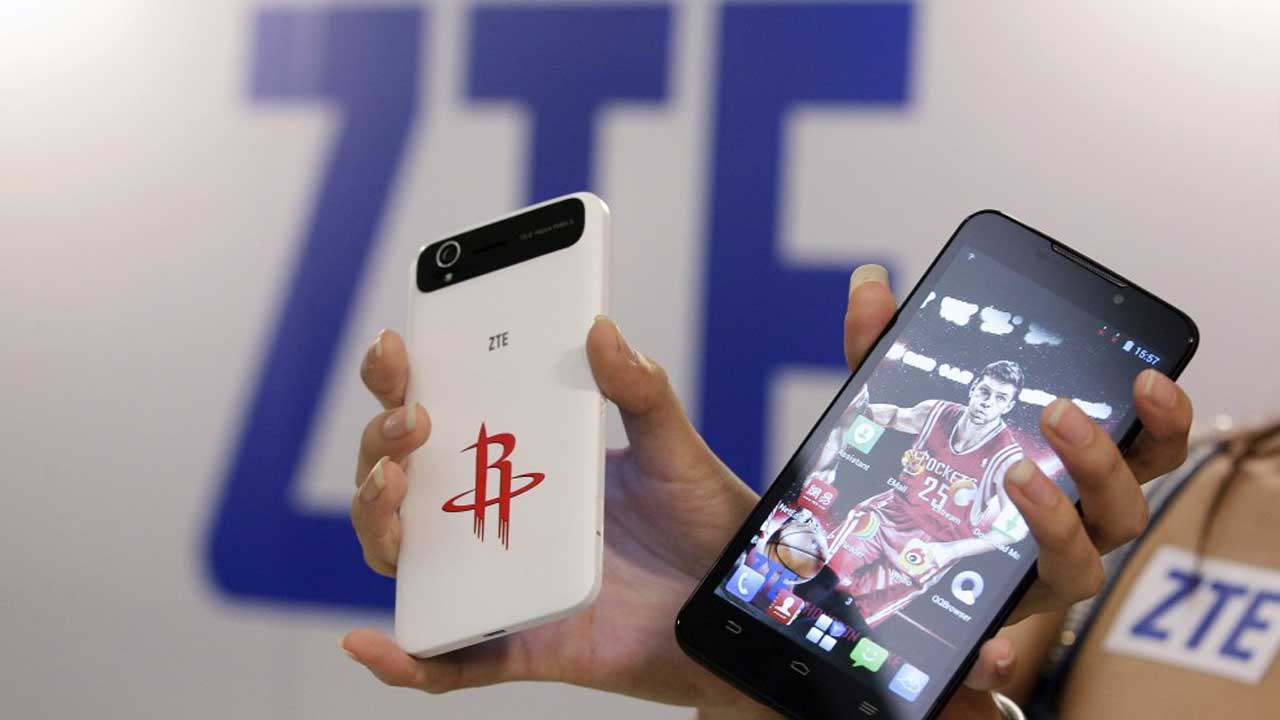
    Telecoms equipment maker ZTE Corp is joining a number of Chinese technology companies entering the electric vehicle market as it looks to build a team for a new product line, a company spokeswoman told Reuters.

    The Shenzhen-based company did not say whether the product line will supply parts for partner companies, or whether the company would be producing its own branded vehicles.

    Chinese technology firms have been stepping up their focus on electric vehicles (EVs) in the world’s biggest car market, as Beijing promotes greener vehicles as a means of reducing air pollution.

    Earlier this month Reuters reported that ZTE’s rival Huawei Technologies Co Ltd is planning to make EVs under its own brand and could launch some models this year.

    A Huawei spokesman denied it had EV ambitions of its own, beyond supplying technology to partners.

    Asian technology companies, including Baidu, have announced plans to make their own cars, while Shenzhen-based dronemaker DJI is building an engineering team to work on self-driving technologies.

    Sales of new energy vehicles (NEVs), including pure battery electric vehicles as well as plug-in hybrid and hydrogen fuel cell vehicles, are expected to make up 20% of China’s overall annual auto sales by 2025.

    Industry forecasts put China’s NEV sales at 1.8 million units this year, up from about 1.3 million in 2020.

  • Huawei AppGallery is rising fast, attracting millions of developers

    Huawei AppGallery is rising fast, attracting millions of developers

    Huawei’s AppGallery seems to have done quite well for itself this past year despite everything, according to recently released numbers. In a press release this week, Huawei revealed that the platform boasts 2.3 million registered developers today—nearly 80% more than last year. Globally, 530 million users are using the platform on a monthly basis, spread over 42 countries compared to 25 in 2019.

    Huawei’s fast-growing mobile ecosystem has been particularly attractive to Chinese developers, who have released over 10,000 apps to the world, many of which are known titles such as Clash of Kings, Game of Thrones, and Asphalt 9.

    In fact, gaming has been at the forefront of Huawei’s expansion initiatives, with the AppGallery boasting five times more games than last year. App downloads in total reached 384.4 billion in 2020, nearly doubling the previous year’s numbers.

    “We continue to see strong growth across markets in Europe, Latin America, Asia Pacific, Middle East, and Africa.” -Mr. Zhang Zhe

    Having established itself solidly in the top three app marketplaces in the world, Huawei has developed its own HMS Core mobile service framework to provide basic infrastructure services such as HUAWEI ID and in-app purchases, allowing for smooth app integration across different devices. Now, Huawei has announced that it offers 120,000 apps integrated with HMS Core on the AppGallery: a 118% increase from last year. One of Huawei’s main objectives is to maximize the relevant apps it offers in every area of news, entertainment, social media, and productivity.

    They have also spoken out about their 1+8+N strategy—а vision for developing a full-fledged mobile ecosystem consisting of the smartphone (1), Huawei-developed peripherals (8) and third-party IoT devices that are connected using Huawei HiLink and Huawei Share technologies. Huawei is essentially striving to be able to offer an all-in-one package to equal what Samsung and Apple can provide, and its exponential growth this past year has at least proved it can stand on its own two feet.

  • Huawei launches 5GtoB solution to facilitate industry digitalisation

    Huawei launches 5GtoB solution to facilitate industry digitalisation

    The 5G industry has been developing faster than expected, with operators already seeing commercial returns from the first wave of 5G rollouts. The 5G user base and the number of 5G devices in commercial use have exploded since 2019. By the end of 2020, 380 5G devices had hit the market, 8 times more than there were the year before. The mobile 5G user base had also reached 220 million and wireless home broadband connections reached 1.05 million, a 17 and 21 times YoY increase, respectively. Ding claims these numbers will triple in 2021.

    The prices of 5G phones are also dropping rapidly. There are already multiple units on the market priced at under US$150 and about 30 mid-range and low-end phones priced below US$300. According to Ding, the 5G mobile phone ecosystem will become as mature as 4G over the next one to two years as network rollouts continue and the user base keeps growing.

    In the markets that deployed 5G first, operators have already begun reaping commercial returns. In China and South Korea, operator revenue continued to increase as their 5G user base grew faster than in other countries. Finnish operator DNA and Saudi operator Zain also achieved impressive financial results in the early phases of their commercial 5G deployment.

    At the event, Huawei also officially released its 5GtoB solution which is aimed at creating new value for every player across the industry value chain. Ding stated that building on its experience in connectivity, computing, and industry digitalization, Huawei has worked with operators and other industry partners to develop a one-stop solution that covers sales, operations, and services – the 5GtoB solution. This solution will simplify transactions for enterprise users, help operators monetize their network capabilities, and allow partners to innovate more efficiently, creating new value for every player involved.

    The Huawei 5GtoB Solution includes four parts: 5GtoB Network, 5GtoB NaaS, 5GtoB App Engine, and 5GtoB Marketplace. With 5GtoB Network serving as the infrastructure of the 5G solution, Huawei will continue building its capabilities in providing scenario-based 5GtoB services, including network planning, construction, maintenance, and optimization.

    With 5GtoB NaaS, network capabilities can be orchestrated into offerings before they are released, making it easier for enterprise users and application developers to use 5G networks and enabling enterprise users to manage 5G campus networks themselves.

    The 5GtoB App Engine is an application innovation center, where application developers and system integrators can access operators’ 5G network capabilities. It makes 5GtoB application development more efficient and application integration easier. It also serves as a bridge between 5G network capabilities and 5GtoB applications, enabling agile service development and launch.

    The 5GtoB Marketplace is an all-in-one digital supermarket on the cloud, where enterprise users can purchase the industrial 5G solutions they need.

    Ding said that Huawei has worked with operators, partners, and enterprise users to apply the 5GtoB solution first in the steel industry. With their capabilities and experience embedded into this platform, industrial 5G solutions like automated billet rotation, AR-assisted remote assembly, and steel surface quality inspection, can be standardized and rapidly replicated.

    At the end of his speech, Ding emphasized that industry digitalization will be a huge market, but that digital infrastructure developments vary greatly across industries and application scenarios also vary. In addition, related digital standards are not in place yet. As such, he called on all industry players to work together to establish comprehensive 5GtoB standards and ecosystem to drive further industry digitalization. He closed his speech by reiterating Huawei’s commitment to investing in the ecosystem and standards and supporting industry digitalization.

  • Indosat Ooredoo earns 11.6% cellular revenue growth in 2020

    Indosat Ooredoo earns 11.6% cellular revenue growth in 2020

    President Director and CEO Indosat Ooredoo, Ahmad Al-Neama said: “Despite the challenges created by the COVID-19 pandemic and pricing pressure, Indosat Ooredoo has continued to deliver on our three-year strategy and maintained growth momentum. We are grateful for the on-going support of our loyal subscribers that have encourage us to continue to invest in our 4G network and launch innovative new digital offerings to ensure that our customers have the best mobile experience possible.

    Our commitment to our customers and to provide simple and relevant products has contributed to an increase in our subscriber base and data traffic volume. This growth has translated into an above market increase in cellular revenue and a significant and accelerating gain in market share.”

    “Looking ahead, we anticipate that the shift to online lifestyles and remote working and learning, which have increased sharply by the pandemic, are here to stay. Indosat Ooredoo is fully committed to supporting our cellular and business customers adapt to the new normal by continuing to improve network performance to meet growing demand for data. We believe our new digital solutions will enrich and enable our customer’s digital lives. Through these initiatives we will support Indonesia’s digital transformation agenda and create value for all our stakeholders.”

    Indosat Ooredoo has recorded solid performance for the full year ended 31 December 2020, with total revenue increasing by 6.9% YoY to IDR 27.9 trillion, cellular revenue increasing by 11.6% YoY to IDR 23.1 trillion.

    EBITDA reaching IDR 11.4 trillion, an increase of 16% YoY due to resilient revenue growth and a focus on operational efficiencies. EBITDA margin increased by 3.2 ppt to 40.9%.

    Cellular subscriber numbers grew by 1.7% to 60.3 million by end of 2020, and Average Revenue per User (ARPU) increased to IDR 31.9 thousand from previously IDR 27.9 thousand, driven mainly by a substantial data traffic increase of 52.8% YoY.

    Indosat Ooredoo also delivered strong operational performance, including improving our video experienced by 55.8% YoY, doubling our 4G download speed, and significantly improving our upload speed by 88.4% YoY.

    During the year Indosat Ooredoo has successfully partnered with global digital players like Facebook, Google, Cisco and Ericsson to bring advanced technologies and capabilities to fast-track digitalization of the customer experience and deliver network improvements to Indonesia.

    We have continued to introduce new innovative products to help customers stay connected as well as business and education to continue to operate during the pandemic. Through IM3 Ooredoo we launched a new IMPreneur package, a business package specially designed for SMEs and through Indosat Ooredoo Business, we recently introduced the “iDo Voice” solution, which consists of 3 new voice services for corporate customers.

    Indosat Ooredoo’s investment in 4G network infrastructure and commitment to our customers continued to be recognized by prestigious international business awards. At the Opensignal Global Mobile Network Experience Awards 2020, we received the “Global Rising Star” award in Video Experience. We have also recently won the Corporate Excellence category in Telecommunications & ICT Industry at the Asia Pacific Enterprise Awards (APEA) 2020 Regional Edition.

    In 2021, Indosat Ooredoo will continue the upgrade and expansion of our network, focusing on 4G/LTE and the Video Grade Network capable of providing improved internet services to customers. Our networks enhancement is part of our effort to enable digital transformation of Indonesia, in-line with the digital economy plan of Indonesian government and to accelerate national economy recovery.

    “We are confident for our growth momentum to continue in 2021. However, due to uncertainties associated with the economic recovery from the pandemic, we are cautiously optimistic in guiding revenue growth to be in-line with the industry, EBITDA margin to be in the low 40s, and Capex at approximately IDR 8 trillion.”

  • ZTE launches i5GC to support private 5G networks for vertical industries

    ZTE launches i5GC to support private 5G networks for vertical industries

    The solution introduces 5G capabilities such as large bandwidth, low latency, high reliability and multiple connections into various industries, and integrates technologies such as AI, IoT, cloud computing, big data and MEC to enable the digitalisation of whole industries and build fully-connected intelligent private 5G networks for vertical industries.

    At present, public 5GC is oriented to consumer applications, so it cannot meet industry users’ ultra-high requirements for security, latency, reliability, network control rights, energy consumption and usage environment. ZTE i5GC addresses this by deeply integrating and optimising 5GC functions. It uses 2U general servers to achieve the integration of multiple network functions (NF) and a plug-and-play one-stop deployment mode to achieve minimal space, minimal energy consumption and minimal operation and maintenance (O&M).

    This solution provides non-professional industry users with rapid and accurate 5G network access deployment and excellent service experience. In addition, ZTE i5GC can be flexibly customised according to a user’s diversified requirements for security, traffic processing and autonomy, and provide different function combinations and deployment forms for different scenarios. For instance, the user plane function (UPF) is deployed to the edge, traffic is forwarded nearby, and user data is locally managed. In addition, ZTE i5GC employs a 3GPP service-based architecture (SBA) to seamlessly interconnect with a 5G public network. It can integrate third-party multi-access edge-computing (MEC) applications through open interfaces to achieve flexible expansion and rapid iteration of edge applications, so as to explore and breed 5G killer applications in the vertical field.

    Towards the construction of business-grade 5G networks, ZTE has implemented in-depth 5G applications for use in vertical fields such as mines, medical treatments and ports. For example, for a 5G smart mine project, ZTE uses i5GC to deploy a complete set of 5G networks underground, meeting the mine’s compact space and explosion-proofing requirements, and achieving full coverage from key 5G networks. ZTE i5GC will continue to focus on industry projects, promote the understanding of industry requirements, work with enterprises and operators to build a 5G application ecosystem, help expand the ‘blue ocean market’ opportunity for 5G for business, and drive 5G large-scale commercial use and value monetisation.

  • StarHub and Software AG partner for new 5G IoT platform service

    StarHub and Software AG partner for new 5G IoT platform service

    As Internet of Things (IoT) plays an increasingly important role in driving digital economies and business success, Singapore’s StarHub and Germany-based Software AG have teamed up to offer an end-to-end 5G-ready IoT service to help organizations in Singapore accelerate IoT implementations on a massive scale.

    Through this partnership, StarHub is proud to offer 5G IoT platform service, a new one-stop solution that provides IoT connectivity including StarHub’s 5G, device management, professional services to integrate existing or new systems, and managed services to run the entire IoT environment for any organization.

    As a comprehensive platform, the 5G IoT platform service intelligently connects, manages, and monitors millions of IoT devices deployed for different applications, creates customizable analytics, and provides APIs to integrate with existing and new systems. This will help organizations to accelerate their IoT implementations. It is offered to companies as a service on a subscription model, allowing full flexibility, instant scalability, and financial prudence.

    Charlie Chan, Chief of Enterprise Business Group at StarHub, said: “Amid digital disruption and rapid changes in the economy, StarHub’s call remains the same – Our customers are transforming to remain globally competitive, and we want to be our customers’ enabling partner of choice when it comes to both core connectivity and innovative managed solutions. We are pleased to collaborate with Software AG to provide an advanced, 5G-ready IoT solution that helps our customers across multiple industries including property, retail, and transport, speed up or scale IoT implementations to boost productivity and innovation as well as realize cost-saving.”

    Bernd Gross, CTO of Software AG added: “Data is so fundamentally important for businesses to succeed in the future that they must master how to collect and analyze it if they are to be competitive. 5G brings more speed, lower latency, and support for a massive amount of endpoints, which means that data can flow between the edge and the core of any organization. Once you know what’s happening in every part of your business, you can understand how to make it better – and that is the opportunity we will bring to customers alongside StarHub.”

    StarHub’s 5G IoT platform service allows organizations to aggregate all of its existing IoT applications and connected devices for a real-time, clear overview on a single aggregator platform, without a need for platform migration. New IoT applications and connected devices can also be integrated easily with this aggregator platform. With that, enterprise customers can acquire and analyze massive volumes of data from its existing independent IoT systems to gain new, accurate, in-depth understanding of how well their assets operate, in a consolidated manner.

    In the case of a public transport operator, StarHub’s 5G IoT platform service can provide real-time vehicle tracking, automated inspection of the vehicle condition and predict potential issues of the vehicles to take precautionary measures, improve fleet operational efficiency and reduce downtime. With additional data such as weather, traffic conditions, the operations director can view and analyze these insights from the same dashboard and act accordingly to optimize the fleet.

    For a facility management company, it can use StarHub’s 5G IoT platform service to develop smart building maintenance strategies to serve building owners better, differentiate their services from competition or improves operational efficiencies. This is because the service can bring together separate IoT systems that manage different areas of the facility – electricity consumption, rubbish bin usage, washroom cleanliness, footfall, and more, presenting a complete picture of all IoT data. With the right information and context about what is going on in the building, the facility manager can pinpoint issues and trace faults quickly or carry out preventive maintenance responsibly.

  • Looking to replace lost smartphone sales, Huawei turns to pig farming

    Looking to replace lost smartphone sales, Huawei turns to pig farming

    Huawei should have been the top smartphone manufacturer in the world last year. The company had a plan in place to take over the top spot by 2021 and despite losing access to its U.S. suppliers (including Google) in 2019, by early 2020 the company had topped Samsung and Apple to become the largest smartphone manufacturer in the world. But then the other shoe dropped. Exactly one year to the day that the U.S. Commerce Department put Huawei on the entity list forcing the Chinese firm to stop doing business with Google, the U.S. made an export rule change. All of a sudden, foundries using American sourced tech were no longer allowed to ship to Huawei without a license.

    Obtaining the most cutting-edge chipsets for its phones and 5G base stations became impossible. In an ironic twist, even chips designed by Huawei were off-limits to it and the firm’s smartphone sales plunged 42% during the fourth quarter when the ban started. The U.S. considered Huawei, ZTE, and some other Chinese firms to be national security threats due to its alleged ties with the Communist Chinese government.

    In November, Huawei sold its Honor sub brand so that the latter would not be banned from obtaining chips and U.S. components because of its association with Huawei. The $15 billion that Huawei received in the sale was certainly needed and now the company could end up the seventh-largest smartphone manufacturer this year. Huawei’s smartphone production could drop by 60% this year although the company could not confirm the figure. A Huawei spokesman said, “The issue here is not like there’s any problems with our quality or experiences of the Huawei products. It’s not a level playing field for Huawei as Huawei is caught in between the geopolitical tensions.”

    The company has been looking for other sources of income which has led it to the pig farming industry. That’s right, Huawei, the company behind one of the most technologically advanced smartphone lines in the world, is in the business of farming pigs. This is a major industry in China where 50% of the world’s live hogs are located. Huawei is actually bringing tech to the industry with facial recognition used to identify individual pigs. Farms are using other technology to monitor pigs’ diet, weight and exercise. A Huawei spokesman, discussing the tech firm’s entry into pig farming, said, “The pig farming is yet another example of how we try to revitalize some traditional industries with ICT (Information and Communications Technology) technologies to create more value for the industries in the 5G era.”

    Besides pig farming, Huawei wants to branch out into the mining industry. Company founder and CEO Ren Zhengfei introduced a mining lab earlier this month. Using Huawei technology, Ren wants to turn miners into white collar workers allowing them to wear suits and ties to work. With the company’s technology, the mining industry will see “fewer workers, greater safety, and higher efficiency.” The executive added that Huawei will continue expanding its television, tablet, and computer lines.

    This is important because Ren doesn’t see the U.S. removing his company from the entity list. Even so, he states that “We can still survive even without relying on phone sales.” And even though the company is looking at new sources to bring in revenue, it hasn’t given up on the phone business. Huawei is still expected to release its two flagship models this year, the P50 and the Mate 50 lines. The company is expected to use its home-grown HarmonyOS for both models.

    While Huawei might be losing market share in smartphones, it still remains the top provider of networking equipment in the world. Still, Huawei needs to be careful with how it proceeds. After all, there is a long-time saying on Wall Street: “Bears make money, bulls make money and pigs get slaughtered.”

  • Infinet Wireless expands footprint with new regional office in Delhi

    Infinet Wireless expands footprint with new regional office in Delhi

    Infinet Wireless, the global leader in fixed wireless broadband connectivity, has opened a new regional office in India in line with the company’s growth strategy of accessing emerging markets. This new presence will be managed by Hari Shanker Pandey, a Regional Director. Mr. Pandey has considerable experience in the telecom and high-tech industry has been in charge of business development and sales growth in various companies. He will steer the strategic growth directions of Infinet Wireless by applying his knowledge and skills to work on expanding Infinet Wireless’ presence in India and nearby countries.

    Infinet Wireless’ office in this region was opened at the beginning of 2021. At the moment, the company is actively preparing the ground for testing deployment of its equipment and dealing with local partners and integrators. Infinet Wireless’ goals in the market are to reach out to local telecom segment, including connection provision to corporate and municipal clients, as well as middle-scale and large-scale operators; organizing radio links with mobile objects in the mining industry and deployment of technological lines for customers of different types.

    Infinet Wireless is planning the launch of its innovative solutions to a completely new market for the company, starting with its Quanta 5 / Quanta 6 product family aimed at organizing PtP radio links. In addition, Infinet Wireless can offer base stations and subscriber terminals of InfiMAN Evolution product family. These provide excellent throughput for PtMP radio links, and are compatible with Infinet Wireless products of previous generation, enabling operators to both deploy new infrastructures and expand coverage of existing networks in the 4.9–6.5 GHz range.

    One of the most outstanding features of Infinet Wireless devices is that it can work in the harshest weather conditions, as are typical for India, which is famous for its extremely high humidity and heavy rains, while in the highlands, low temperatures and strong winds can be a feature as well.

    Infinet Wireless products are also well-known for having one of the world’s longest mean times between failures, which is almost 10 years. It can be said that Infinet Wireless solutions represent carrier-grade products, whose quality is assured by Service Level Agreement (SLA).

    ‘India is a very prominent market for Russia, and we’re proud of the fact that Infinet Wireless, being a company of Russian origin, has an opportunity to enter this market and open a regional office there. Taking into account the close and cordial relationship between Russia and India, we count on a warm welcome for our solutions. India is a huge market with a developing infrastructure, and we’re sure that our products will be integrated perfectly into this strategically important sector for country’s economy ‘, said Roman Smirnov, Commercial Director at Infinet Wireless.

    Currently the company’s representatives are actively negotiating a certification of Infinet Wireless solutions and building the first testing zones.

    Established in 1993, Infinet Wireless is the global developer and manufacturer of reliable Broadband Wireless Access solutions used to create carrier-grade wireless backbones and access networks for service providers. The products are also a natural choice for global communication providers, corporations and municipalities who require uncompromised connectivity.

  • Viettel leaps 32 places in global brand ranking

    Viettel leaps 32 places in global brand ranking

    Vietnam’s largest telecommunication service provider Viettel has climbed 32 positions to rank 325th most valuable brand in the world in 2021.

    Currently valued at $6.01 billion, up 3.4 percent from the previous year, Viettel is the only telecom brand in Southeast Asia to break into the global ranking compiled by Brand Finance, a London-based branded business valuation consultancy.

    The military-owned firm reported revenues of VND264 trillion ($11.47 billion) last year, up 4.4 percent from 2019, and a pre-tax profit of VND39.8 trillion, up 4.1 percent.

    Viettel attributed the results to digital transformation and its switch from being a telecom services provider to a digital services provider. In 2020, the platforms it developed included digital infrastructure, solutions, content, finance, and cybersecurity.

    By manufacturing 5G equipment and trialing 5G services, the company made Vietnam one of only six countries in the world to master the technology.

    The Brand Finance Global 500 list covers 20 sectors in 29 markets, using a sample size of 55,000 adults over 18 years old.

    There are just 34 telecom companies in the 2021 listing of the world’s top 500 brands by value. Most of them saw their values fall last year.

  • Nepal selects frequency to embark on 5G services

    Nepal selects frequency to embark on 5G services

    Nepal’s National Telecommunication Authority (NTA) has determined its 5G frequency as the country prepares to deploy 5G service. NTA will follow the recommendations set out by the National Frequency Management Forum, a body initiated by the NTA, the Ministry of Communications & Information Technology (MoCIT) and telecommunications operators.

    According to NTA’s spokesperson, Meen Prasad Aryal, the National Radio Frequency Policy Determination Committee has received a proposal with recommendations using 700 MHz, 900 MHz, 2300 MHz and 2600 MHz for the low-band spectrum, 3300 MHz, 3400 MHz, 3600 MHz and 4100 MHz for the mid-band spectrum, and 26 GHz for the high-band spectrum.

    Established to manage existing and new spectrums, the National Frequency Management Forum performed studies for 5G spectrums before recommending a suitable spectrum for allocation. The National Radio Frequency Policy Determination Committee must now approve NTA’s proposed frequencies before spectrums will be allocated to operators.

  • High band 5G mmWave takes 5G to the next level

    High band 5G mmWave takes 5G to the next level

    As 5G technology becomes increasingly widespread, attention is veering towards high band 5G mmWave spectrum to deliver greater capacity and faster performance levels for data-intensive 5G mobile communications such as video communications, as well as virtual and augmented reality.

    With mobile experiences become more sophisticated, networks are pressured to expand wireless spectrums to support large bandwidths and high data rates for 5G systems to drive technology evolution. For mobile operators, 5G mmWave presents an opportunity to deliver unparalleled performance benefits for fixed wireless, enterprises and industrial applications for a broad set of use cases such as smart factories, supply chain visibility and indoor navigation.

    Even though high band mmWave is not new, it fell short previously owing to challenges such as high propagation losses and sensitivity to blockages by human bodies and buildings. But these issues can be resolved as mmWave combines line-of-sight (LOS) and non-line-of-sight (NLOS) signals with distributed antenna designs and advanced beamformers to expand a network’s coverage.

    While 5G low bands deliver 5G coverage over long distances, 5G high bands or mmWave deliver optimal coverage over short distances, and best complemented with low and mid bands for improved capacity and coverage. The earliest adopter of 5G mmWave is the US, which opted for high band spectrum first in its 5G strategy. This is contrary to most countries, which opted for mid-band spectrums first, before pursuing high band mmWave.

    For mmWave to pick further momentum now, stakeholders such as regulators, mobile operators and vendors must come together. For regulators, it means embracing 5G and freeing up mmWave bands to mobile operators to grow their coverage beyond low- and mid-band spectrums, and hence enable high capacity delivery and enhanced handling of peak rates. By fuelling 5G performance levels, countries that make digital transformation a priority can yield greater economic benefits in the long run. Likewise, vendors must support this evolution by continuing to roll out suitable and even improved mobile devices and customer premises equipment (CPE) that are accessible and affordable.

    According to GSA, about 106 operators in 20 countries and/or territories hold public licenses of 5G networks utilizing mmWave spectrum. Of which, only about 24 operators in 15 countries and/or territories are using mmWave to power deployed 5G networks. In November 2019, World Radiocommunication Conference (WRC-19) identified new frequencies for IMT. While 5G mmWave is more predominant in the US and Europe, Asia Pacific is slowly coming into the picture, with Japan being the earliest adopter, followed by South Korea.

    Other countries such as Singapore and Thailand have just awarded mmWave allocations last year. Of which, Singapore Infocomm Media Development Authority (IMDA) awarded three mobile operators 800 MHz of 26 GHz and 28 GHz mmWave. One of the operators, Singtel, has switched on mmWave in certain areas in the city, with dedicated experiences zones to provide users 3.2 Gbps streamed content powered by 5G mmWave. The mobile operator will also be working with enterprise customers to develop autonomous guided vehicles and mixed reality.

    Meanwhile, Thailand’s National Broadcasting and Telecommunications Commission (NBTC) auctioned 26 GHz to three mobile operators, namely AIS, Dtac and TrueMove H. In the region, Australia is the latest to open applications for auction of 26 GHz and 28 GHz mmWave spectrums. India is very likely to carry out 5G spectrum auctions soon.

    On the other hand, in anticipation of the rise of mmWave in the region, Taiwan-based semiconductor firm MediaTek recently unveiled M80, its first mmWave-capable modem. Launched in the same month, M80 will be in direct competition with Qualcomm’s new Snapdragon 5G modem.

    Also competing in the emerging mmWave space, NEC leverages on its expertise in digital beamforming technology and Massive-MIMO in launching a distributed-MIMO technology that delivers three times the number of simultaneous connections and transmission capacity in the 28 GHz mmWave frequency band – using a large number of distributed antennas rather than in a single tray.

    It also helps that there are new technologies to support a denser and more cost-effective 5G mmWave network to deliver the desired low latency and high speed. Using integrated access and backhaul (IAB), base stations not only provide wireless access for users, but also wirelessly backhaul from nearby base stations using the same mmWave spectrum. This results in improved performance, greater efficiency of spectrum resources and lower costs, thereby allowing operators to expand their mmWave networks readily and more affordably.

    Even though APAC is behind in terms of mmWave adoption, when compared to the US, some countries are quick in catching up. Taiwan, for instance, claims the first spot in launching a smart factory powered by a private 5G mmWave network.

    According to Research and Markets, the global mmWave technology market is predicted to grow from US$1 billion in 2020 to US$3.4 billion by 2025. During this time, APAC is projected to grow at the fastest rate. Clearly, 5G mmWave is an important criterion worldwide, and particularly in APAC as countries grow their network bandwidth and capacity to enable full-fledge 5G services and experiences.

  • Tata Communications partners Google Cloud India for public cloud services

    Tata Communications partners Google Cloud India for public cloud services

    Tata Communications, a global digital ecosystem enabler, announced its partnership with Google Cloud to drive cloud adoption and transform Indian businesses. With this partnership, Tata Communications has further expanded its managed public cloud services portfolio to include capabilities for Google Cloud.

    The partnership between Tata Communications and Google Cloud India will enable organizations to deploy and access Google Cloud services through Tata Communications’ IZO™ Managed Cloud while providing them ease-of-use coupled with end-to-end services, including cloud architecture planning, workload migration and ongoing operational support.

    As a Google Cloud India Partner, Tata Communications will support organizations with services across infrastructure modernization, data center transformation, application modernization, smart analytics, multi-cloud deployments and more.

    Tata Communications IZO™ Managed Cloud provides the right expertise, infrastructure, and support services to drive business growth and improve performance. Tata Communications’ IZO™ Cloud Command portal offers a single-pane-of-glass orchestration tool that integrates different enterprise IT environments into a single dashboard and simplifies the management and orchestration of the IT estate, offering a unified cloud experience. It provides a comprehensive view of IT resource utilization (across on-premise, private, Google Cloud), thus enabling greater control for the customer, resulting in cost efficiencies and improved productivity.

    With the current global scenario, there is wider recognition for business resilience and agility that cloud enables; most businesses are now beginning to explore a cloud-first model. DevOps, a set of practices that combine software development and IT operations, has become an important requirement for enterprises. To make applications future-ready, businesses are modernizing them by leveraging Containers and Kubernetes (an open-source platform for container orchestration), as they offer businesses the scalability and portability they need to be agile and build a competitive edge, enabling self-service provisioning and capacity-on-demand with ease.

    Tata Communications’ services can manage Kubernetes on Google Cloud platform that can enable application modernization seamlessly, which is an essential need as enterprises graduate in the hybrid multi-cloud environments.

    According to an IDC survey, more than 60 percent of Indian organizations plan to leverage cloud platforms for digital innovation, as they re-strategize their IT spending plans. Tata Communications and Google Cloud India together have market-leading capabilities across a spectrum of services for customers looking to reframe their business blueprint.

    “The current demands on enterprises to manage and optimize their cloud solutions has never been more important, especially in the wake of COVID-19 and our increasing reliance on cloud infrastructure,” says Rajesh Awasthi, Global Head of Cloud and Managed Hosting Services at Tata Communications. “As organizations migrate to Google Cloud, they need a partner that will support them across their entire IT ecosystem and deliver a unified cloud management platform that offers greater transparency, control and security of their data and applications.”

    “The true test of 2021 will be how organizations adopt a cloud-first approach. Through our partnership with Tata Communications, we will be able to provide our customers with a unified, end-to-end experience that will remove the complexity in cloud management and help them transform at speed and scale”, said Amitabh Jacob, Head of Partners and Alliances at Google Cloud India.