Category: Telecom

Retail News Asia is committed to providing both local and global retailers with the latest Telecom & Telco news throughout the Asian market. This on a daily base.

  • Nepal to debut Internet and telecom services on international airlines

    Nepal to debut Internet and telecom services on international airlines

    The Nepal Telecommunications Authority (NTA), an autonomous telecommunications regulatory body, together with the Civil Aviation Authority of Nepal has approved international airlines to use Nepal’s Internet and telecom services for its passengers.

    Airlines would need to apply to NTA, on top of obtaining permission from the International Civil Aviation  Organisation to tap into internet and telecom services above 10,000 feet in Nepal.

    Nepal is the latest country in South Asia to allow such services to passengers, following the footsteps of India and Afghanistan. Last September, Vistara was India’s first airline to offer in-flight Wi-Fi Internet connectivity onboard international flights.

  • Nokia demonstrates record Optus’ 5G mmWave capabilities

    Nokia demonstrates record Optus’ 5G mmWave capabilities

    Nokia and Optus announced that they achieved a record-breaking aggregate site throughput of 10 Gbps during a downlink speed demonstration using 800 MHz of millimeter Wave (mmWave) spectrum at a live 5G site in Brisbane. Powered by Nokia AirScale Radio, the site demonstrates the huge potential of 5G as it is introduced across future spectrum bands. Once deployed, the speed and a capacity boost from the 5G mmWave layer will unleash lightning-fast speeds for consumers and enterprises alike to support a range of new low-latency, high-bandwidth services.

    The recent demonstration showcased the capabilities of Nokia’s 5G mmWave technology and the benefits of adding it on top of an existing 5G/4G site. The demonstration showed how Nokia’s 5G mmWave technology delivers on the promise of super-fast data rates by boosting the site capacity to 10 Gbps and beyond.

    Nokia’s 5G mmWave technology will allow Optus to focus on scalability, automation, and performance by supporting services that utilize the full capability of 5G. Leveraging Nokia’s solutions, Optus can also harness 5G mmWave to serve the enterprise market and explore new use cases in healthcare, mining, port operations, and smart manufacturing, among other industries.

    The decision to select this mixed commercial and industrial area of Brisbane was made keeping these new use cases in mind as they sought to showcase the many real-world benefits of mmWave to the enterprise; thereby gaining early insights into this new exciting technology before wider rollout in the future.

    This achievement further strengthens the long-standing and collaborative partnership between Nokia and Optus. In early 2019, Optus became the first operator globally to deploy Nokia’s FastMile 5G indoor gateway in a live 5G network. Recently, the two companies also successfully launched 5G services at the Optus Stadium in Perth, Australia.

    Lambo Kanagaratnam, Managing Director of Networks at Optus, said: “We’re committed to keeping Australia connected and at the forefront of 5G. By partnering with global technology leaders like Nokia, we’ve taken an exciting step towards unlocking the massive potential that 5G mmWave will bring to the consumers, enterprises and industries in Australia. Reaching 10 Gbps per site is a crucial step in our 5G development and validates the progress we’ve made with the technology together with Nokia.”

    Anna Wills, Head of Oceania at Nokia, said: “This is another milestone in the development of 5G services and demonstrates the confidence operators have in our 5G solutions. Today’s achievement with Optus shows the potential of mmWave deployments, particularly at a time when connectivity and capacity are so crucial. We’re proud of our long-standing relationship with Optus and the great strides we continue to make together in this new era of connectivity.”

  • Nokia debuts innovative public cloud charging for CSPs on AWS

    Nokia debuts innovative public cloud charging for CSPs on AWS

    Nokia has today announced the deployment of its cloud-native convergent charging solution on Amazon Web Services (AWS) to accelerate communications service providers (CSPs) migration of business-critical, high-frequency charging applications to the public cloud, and to deliver the benefits of the cloud for 5G.

    This announcement, which builds on an existing relationship with AWS, enables CSPs to efficiently run workloads on AWS and pioneer new monetization schemas as part of their journey towards deploying business support systems (BSS) in the public cloud.

    As a containerized network function (CNF) on AWS, Nokia Converged Charging (NCC) provides true continuous availability, supporting the high frequency, low latency demands of an always-on, real-time convergent charging system built for the needs of the 5G economy. This enables CSPs to tap new revenue streams from 5G capabilities, including differentiated pricing, network slicing, and flexible product offerings, such as IoT and B2B2X.

    According to Analysys Mason, “SaaS and public cloud will make inroads into the market for monetization platforms by growing more than 6.5X from 2019 to 2025 and increase its share to over 14% of the total spend.” NCC’s architecture can support CSPs at every step of their public cloud journey, from the deployment of greenfield sub-brands as a first step towards hosting testing environments to full production workloads of the main brand on the public cloud.

    Fabio Cerone, EMEA Telco Managing Director at AWS, said: “We are pleased that Nokia is expanding its relationship with AWS by offering its cloud-native convergent charging system on AWS and connecting it to various services, such as with analytics to pioneer new monetization schemas. As the world becomes increasingly cloud-centric, it’s important that our customers can leverage cloud-native solutions to unleash the potential benefits of the cloud and 5G.”

  • China’s Geely sets sights on aerospace

    China’s Geely sets sights on aerospace

    China’s Zhejiang Geely Holding Groups, a global mobility technology group has plans to set up a commercial aerospace company, as announced by the local government.

    The company will develop and advance satellite and communications technologies in Guangzhou, by building low-orbit satellites to deliver high-speed connectivity. Geely will also be partnering with other rocket companies in Guangzhou.

    Geely owns Volvo Cars and 9.7 percent of Daimler AG. Last month, Geely posted a profit of US$850 million in 2020, representing a 32 percent drop in net profit as compared to the previous year as auto sales took a hit amid the pandemic.

  • Huawei and China Mobile support one-of-a-kind 5G smart port in China

    Huawei and China Mobile support one-of-a-kind 5G smart port in China

    Ningbo is a time-honored international port city in east China’s Zhejiang province. Its port, the Ningbo-Zhoushan Port, is the largest port in the world. Recently, the port worked with China Mobile Ningbo and Huawei to showcase the hybrid platooning of 5G smart and traditional container trucks. The platooning is a stride towards realizing the goal of becoming a world-class port. With this solution, in berth 8 of its busy Meishan container terminal, 13 5G smart container trucks run automatically and smoothly, greatly improving automation and safety in the port.

    Due to the collaboration of Zhejiang Seaport Group, China Mobile Zhejiang, Huawei, and other leading players, the Ningbo-Zhoushan Port has been transformed into a smart 5G port. To date, the port has reached a number of milestones, becoming the first in the industry to integrate 5G automated rubber-tired gantry (RTG) cranes into routine operation and implement 5G network slicing and 5G Super Uplink in port businesses.

    Smart container trucks represent a new breakthrough in the smart port transformation. Their scaled application offers an effective solution to driver shortage and fatigue while improving efficiency and reducing safety risks. They will play an important role in replacing intensive labor in the port with unmanned, automated, and intelligent operations.

    Smart container trucks require real-time 5G smart sensing, truck-road and truck-truck synergy, and video transmission. One container truck requires an uplink bandwidth of 20 to 30 Mbps and a low latency of below 20 ms. During peak hours, more than 40 container trucks will be working at the same time. This requires the network to ensure an uplink bandwidth of 1,200 Mbps.

    5G can provide better network support for these applications. Based on 3GPP Release 16, China Mobile and Huawei have developed a 5GtoB solution for port applications. Ample verification tests have been conducted, with results showing that the solution meets the requirements of smart container trucks on both network performance and stability. With CPEs deployed to support dual feeding and selective receiving solution, the network further improves the quality and latency stability of smart container trucks’ signal transmission. As such, 5G has become a preferred network solution for full-function applications of smart container trucks.

    In the Ningbo-Zhoushan Port, container trucks no longer have drivers — an important indicator of the automated logistics of 5G smart trucks in modern ports. Powered by 5G and AI, upon detecting that containers unloaded from bridge cranes are properly loaded, container trucks automatically power on to move the containers to their destinations. During this process, they automatically identify nearby objects, machinery, and lighthouses and respond intelligently, such as decelerating, braking, steering, bypassing, and parking. They can also accurately move to the RTG-specified positions along optimal routes provided by the smart dispatching system, meeting the demand for horizontal transfer in closed areas.

    Looking to the future, the Ningbo-Zhoushan Port will continue to work with China Mobile Ningbo and Huawei as well as other industrial partners to further integrate upstream and downstream resources and promote the pilot and promotion of remote device control, smart tallying, unmanned driving, online AI port monitoring, and trunking communication based on 5G networks so as to build a comprehensive benchmark of 5G smart port.

  • South Korea to release low-cost 5G through MVNO mobile data plans

    South Korea to release low-cost 5G through MVNO mobile data plans

    South Korea’s Ministry of Science and ICT has announced plans to release low-cost 5G mobile data plans to raise the competitiveness of the country’s 5G market.

    The ministry reported that tariffs will be announced, with mobile data rates offered by mobile virtual network operators (MVNOs) priced below those offered by the country’s major carriers SK Telecom, KT and LG Uplus.

    According to data from the Ministry of Science and ICT, 5G subscribers in South Korea totaled at 13.66 million in February, nearly doubling from just 792,118 subscribers from the previous month. The top carrier, SK Telecom, had 6.35 million 5G subscribers.

  • PCCW Global selects Telco Systems to expand managed SD-WAN services

    PCCW Global selects Telco Systems to expand managed SD-WAN services

    Telco Systems, a leading provider of innovative Network Edge solutions for communications infrastructure and service management, announced that PCCW Global has selected Telco Systems’ NFVTime uCPE solution to enrich its managed SD-WAN service portfolio and VNF-based service offerings.

    PCCW Global is a leading global telecommunications carrier, providing scalable, reliable and cost-effective software-defined networking solutions to multinational enterprises and communication service providers.PCCW Global will use Telco Systems’ NFVTime uCPE solution to offer managed SD-WAN, router, and firewall services through its global network of nearly 200 wholesale partners operating in over 160 countries. NFVTime will provide PCCW Global with a complete environment for quick service deployments, centralized management and ongoing orchestration of virtualized network functions (VNFs) running on a diverse range of white-box devices.NFVTime features zero-touch provisioning that ensures all new white box devices and third-party VNFs are configured, up-to-date and fully operational within minutes. With a rapid BYOD onboarding process for any white box, PCCW Global will be able to select devices based on the local availability, reducing the time to activation. For PCCW Global, this will ensure diversity in sourcing, lowering overall costs and improving performance over time.

    “We are proud to welcome PCCW Global as a new customer and provide the technology innovation for its ambitious strategic plans for rolling out NFV services across its international operations,” explained Ariel Efrati, CEO at Telco Systems. “We are confident that as we continue to develop industry-leading virtualized edge solutions, we will further enable PCCW Global to deliver additional innovative services for connectivity, edge computing and 5G applications.”

    “We are excited about the expansion of our SD-WAN services to include uCPE and NFV technologies and the benefits they will bring to our users,” said Jordick Wong, Senior Vice President of Innovation, Planning and Procurement at PCCW Global. “Our service already brings a true end-to-end managed global SD-WAN solution that is fully supported by our international network.”

    In addition, Telco Systems reports that the analyst firm STL Partners recently recognized the company as one of the top Edge computing companies to watch in 2021. Telco Systems was recognized by STL Partners for its NFVTime uCPE solution for allowing service providers to rapidly deploy scalable and customized VNF services from the Network Edge.

  • Ooredoo Group Announces USD750 million Deal for Sale of More Than 4,200 Telecoms Towers in Indonesia

    Ooredoo Group Announces USD750 million Deal for Sale of More Than 4,200 Telecoms Towers in Indonesia

    Ooredoo  today announced that its Indonesian operating company, PT Indosat Tbk. (“Indosat Ooredoo”), has signed a sale and leaseback agreement with PT EPID Menara AssetCo (“Edge Point Indonesia”) for more than 4,200 telecommunications towers.

    PT EPID Menara AssetCo is an Indonesian subsidiary of Edge Point Singapore, which is wholly owned by Digital Colony, a leading global digital infrastructure investor with extensive experience owning and operating cellular towers.

    Indosat Ooredoo has agreed to sell this portfolio of towers in a transaction valued at USD 750 million, including a supplementary offer, making it one of the largest deals of its kind in Asia. The sale will unlock capital to create value for shareholders and continue to build Indosat Ooredoo’s strong growth momentum through improvements to network performance and the launch of innovative new digital solutions to enhance the customer experience.

    The sale is part of Ooredoo Group’s strategy to move to a more efficient and flexible asset light model and unlock the trapped value of its infrastructure portfolio. Prior to this deal, Ooredoo had a global portfolio of approximately 27,000 owned towers, representing an infrastructure portfolio of significant value for the Group. Monetising these assets to create more value for both shareholders and customers is a key focus of Ooredoo’s current strategy.

    Aziz Aluthman Fakhroo, Managing Director of Ooredoo Group, said: “Congratulations to Indosat Ooredoo on this sale and leaseback agreement with Edge Point Indonesia, which aligns perfectly with our new strategy and its focus on creating more value for shareholders and customers. This strategy incorporates a shift towards an asset-light model that will help us unlock significant capital and enable us to focus on our core mission of delivering outstanding digital and enterprise services to our customer base. I extend our gratitude to the Government of Indonesia for its progressive policies that leave a positive impact on the industry, its operators and its people.”

    Edge Point Indonesia was declared the winning bidder of a competitive tender process conducted by Indosat Ooredoo. The transaction is expected to close in Q2 2021 subject to customary conditions, including shareholder approval by Indosat Ooredoo at an EGM, which is planned to be held on May 6th. Indosat Ooredoo will lease back space on the towers for a period of 10-years to meet its ongoing requirements.

    President Director and Chief Executive Officer of Indosat Ooredoo, Ahmad Al Neama, added: “I am delighted that Indosat Ooredoo has agreed this deal, which furthers our strategy to create more value from our infrastructure assets. The deal marks the third and final sale of assets from our high-quality tower portfolio and continues our transition into a leading digital telecoms company. We are confident the leaseback agreement, with its attractive terms, will continue to meet our ongoing tower needs, while the capital that we have unlocked will provide further fuel to power our growth momentum. Indosat Ooredoo and Edge Point Indonesia will work closely together going forward and build a strong and long-lasting strategic partnership.”

  • Facebook’s First transpacific subsea cable Echo and Bifrost

    Facebook’s First transpacific subsea cable Echo and Bifrost

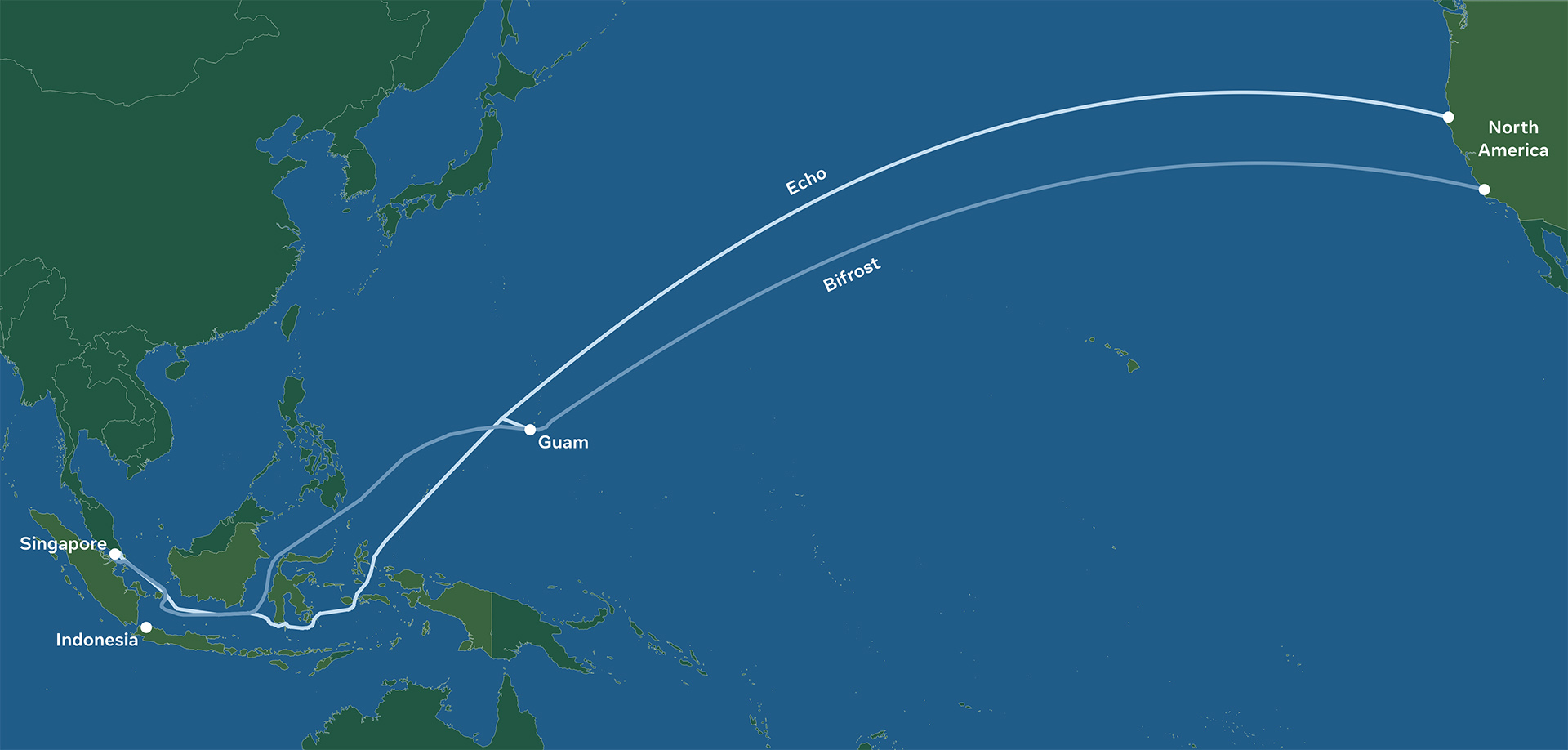
    Advancing connectivity between the Asia-Pacific and North America regions, Facebook is set to build two new subsea cables — Echo and Bifrost — with leading regional and global partners.

    These subsea cables will connect Singapore, Indonesia, and North America, making it the first transpacific cables through a new diverse route crossing the Java Sea. Moreover, it will increase the overall transpacific capacity by 70 percent and deliver increased internet capacity as well as network redundancy and reliability.

    The demand for 4G, 5G, and broadband access is rapidly increasing within the Asia-Pacific region. Thus, Echo and Bifrost will support further growth by ensuring a widely accessible internet for people and businesses.

    According to Facebook Vice President of Network Investments, Kevin Salvadori, Echo is being built in partnership with Alphabet’s Google and Indonesian telecommunications’ company XL Axiata while Bifrost is being done in collaboration with Telin, a subsidiary of Indonesia’s Telkom, and Singaporean conglomerate Keppel. These two are set to be completed between 2023-2024.

    “These new projects add to our foundational regional investments in infrastructure and partnerships to improve connectivity to help close the digital divide and strengthen economies,” the American technology conglomerate declared on its statement.

    As of the moment, the two new ventures are still subject to regulatory approvals.

  • Singtel and Hyundai Motor to develop Singapore’s smart manufacturing and mobility technologies

    Singtel and Hyundai Motor to develop Singapore’s smart manufacturing and mobility technologies

    Hyundai Motor Company and Singtel today signed a Memorandum of Understanding (MOU) to collaborate on a range of ventures to support smart manufacturing, connectivity for electric vehicle battery subscription service. The MOU follows Hyundai Motor Group’s announcement in October 2020 that it is setting up a new state-of-the-art Hyundai Motor Group Innovation Centre Singapore (HMGICS) to conduct studies on future mobility and explore innovative solutions, services and disruptive technologies to revolutionize commuters’ transport experience.

    Hyundai Motor will combine its expertise in developing innovative automotive and manufacturing solutions with Singtel’s capabilities in 5G, Internet of Things (IoT), and next-generation info-communications technologies and solutions to develop Industry 4.0 advanced digital solutions to   transform the way vehicles are currently manufactured. The parties will develop and pilot a 5G-enabled smart factory use case for HMGICS’ intelligent manufacturing platform, and potentially scaling it up for deployment across Hyundai’s manufacturing plants globally.

    “Hyundai is delighted to work with Singtel, implementing next-generation communication solutions that will enhance mobility experiences for our customers,” said Hong Bum Jung, Senior Vice President of HMGICS at Hyundai Motor Company. “We also hope to explore future innovative solutions and business opportunities with Singtel to help realise Singapore’s Smart Nation vision.”

    Hyundai and Singtel will also work together on an IoT communications solution for the batteries powering Hyundai’s electric vehicles (EVs) in Singapore. The IoT system enables Hyundai to monitor the telemetry, or automatic data transmission, of the batteries’ real-time status and performance.

    The data-driven insights can enhance the EVs’ reliability, advancing Singapore’s EV ecosystem and Smart Nation vision of connected and sustainable mobility solutions.

    Andrew Lim, Managing Director, Government and Large Enterprise, Group Enterprise at Singtel said, “Our collaboration with Hyundai Motor is timely given the Singapore Government’s decision to phase out internal combustion engine vehicles by 2040 and the recent Budget announcement on new policies to encourage more Singaporeans to switch to driving electric vehicles. By pushing the boundaries of what is possible with 5G, IoT and other advanced technologies, we also want to build up Singapore’s smart manufacturing and Industry 4.0 capabilities and strengthen its innovation ecosystem.”

  • ZTE assists in first 5G local traffic offloading pilot in China’s mining industry

    ZTE assists in first 5G local traffic offloading pilot in China’s mining industry

    ZTE Corporation, a major international provider of telecommunications, enterprise and consumer technology solutions for the Mobile Internet, together with China Unicom and Shandong Energy Beidou Tiandi, today has completed the first 5G local traffic offloading pilot in the mining industry in Shandong Province, China.

    With private network coverage as the test target, the pilot employs “5G+NodeEngine” base station-level local offloading, customized for China Unicom Shandong Branch, to bring the mining services a private network. The pilot, in bid to ensure data transmission security and nearest local access, has tested and verified two major functions of ZTE’s NodeEngine solution: local traffic offloading of base station and local inter-connection with eBridge.

    The video monitoring data is sent to the underground integrated control center directly through the intelligent offloading module, so as to reduce the latency by more than 50%. At the same time, ZTE’s NodeEngine solution, combined with the air-interface keep-alive strategy, ensures that the core production services will not be affected when the underground and ground optical fibers are disconnected. Moreover, local inter-connection with eBridge can realize control and equipment management among production devices and between the control end and remote terminals.

    By virtue of ZTE’s NodeEngine solution, ZTE’s 5G base station has been empowered with powerful computing capability to offload the local traffic. Meanwhile, the NodeEngine solution helps further strengthen the data transmission security, safeguard the production when the optical fibers are disconnected, and realize the fast and low-cost service provisioning.

    Moving forward, the three parties will be committed to the customer and demand-oriented innovation investment, expecting to accelerate the in-depth development and expansion of 5G technology in the mining industry and assist enterprises achieve fast deployment of digital application.

  • Qualcomm supports SoftBank’s fastest-ever 5G mmWave in Japan

    Qualcomm supports SoftBank’s fastest-ever 5G mmWave in Japan

    Qualcomm Technologies, Inc. announced that SoftBank Corp. has launched its 5G millimeter (mmWave) service in Japan – using devices based on Qualcomm® Snapdragon™ 5G Mobile Platforms and Modem-RF Systems. 5G mmWave allows Japanese users to enjoy the fastest possible multi-Gigabit download speeds in the country. Along with the launch, SoftBank is making the “Pocket WiFi 5G A004ZT” 5G mmWave mobile hotspot available for sale. All initial 5G mmWave-compatible mobile devices in SoftBank’s portfolio, including soon-to-be announced 5G smartphones, are expected to be powered by Qualcomm Technologies’ 5G mmWave products.

    The deployment of 5G mmWave is critical to unleashing the full potential of 5G and addressing the massive increase in mobile data demand. 5G mmWave allows leading operators such as SoftBank to take advantage of the large amount of spectrum resources available in higher bands, enabling them to deliver the world’s fastest multi-gigabit cellular speeds and low latency connectivity.

    5G mmWave is also a cost-effective way for mobile operators to increase the network capacity needed to meet the increasing demand for data in dense urban, fixed wireless access and enterprise environments – with savings up to 35% in total cost of ownership compared to sole use of sub-6 GHz bands.

    “5G mmWave is critical for mobile operators to stay competitive and to realize the full potential of 5G to transform many industries,” said Francesco Grilli, vice president, product management, Qualcomm Technologies, Inc. “Japan is at the forefront in deploying the most advanced 5G technologies such as mmWave, and we are honored by working with SoftBank to bring the fastest mobile experiences to Japanese consumers and businesses.”

    “SoftBank is pleased to collaborate with Qualcomm Technologies and use its leading 5G mmWave technology to offer world-class 5G service to our subscribers,” said Keigo Sugano, senior vice president, head of product division, SoftBank Corp. “We look forward to continuing our long-standing collaboration with Qualcomm Technologies to support Japan’s growth and leadership using the most advanced wireless innovations.”

    This announcement follows SoftBank’s commercial launch of 5G Sub-6 GHz service with smartphones powered by Snapdragon 5G Mobile Platforms in March 2020. The commercial launch of 5G mmWave significantly strengthens SoftBank’s 5G network capabilities, with more mmWave capable mobile devices to be launched going forward.

  • Nokia deploys first 5G standalone RAN in Southeast Asia to M1-Starhub JV in Singapore

    Nokia deploys first 5G standalone RAN in Southeast Asia to M1-Starhub JV in Singapore

    Nokia announced the first 5G standalone (“SA”) Radio Access Network (“RAN”) Sharing network in South East Asia. The company has been selected by Antina Pte. Ltd. (“Antina”), a joint venture formed by mobile network operators M1 and StarHub, following a competitive tender process, to deploy 5G SA networks across Singapore. The commercial deployment of a 5G SA network will introduce compelling new use cases and cater for the growing data demand in the country, putting Singapore at the forefront of 5G standalone technology in the region.

    The partnership will enable Antina’s customers – M1, StarHub and other mobile service providers on wholesale arrangements – to benefit from a game-changing ultra-high speed, low-latency and highly secure 5G SA network that will reduce complexity and increase cost efficiencies. It will also enable new use cases across entertainment, cloud gaming, transportation, education and healthcare.

    Nokia will provide equipment from its comprehensive AirScale portfolio and CloudRAN solution to build the Radio Access Network (RAN) for the 5G SA infrastructure, utilizing the 3.5GHz spectrum band. Nokia will supply 5G base stations and its small cells solution for indoor coverage, as well as other radio access products. Nokia’s 5G SA technology will provide Singaporean enterprises with the opportunity to explore multiple new use cases due to the network’s higher bandwidth, higher uplink speeds and lower-latency.

    Nokia CloudRAN solution is designed to enable Antina to build a more agile business, meet new traffic demands, make better use of spectrum as well as optimize performance and mitigate costs. Nokia’s CloudRAN technology is expected to provide Antina with the flexibility to meet customer demands in the evolving 5G era. Nokia’s NetAct network management, CloudBand Application Manager and CloudBand Infrastructure Software will streamline operations and securely manage Antina’s networks.

    The commercial launch of this 5G SA network in Singapore will underpin the infrastructure for a vibrant 5G ecosystem.

    Tommi Uitto, President of Mobile Networks, Nokia, said: “This is an important win for Nokia that demonstrates our leadership in commercial-grade Cloud RAN as well as mobile operators’ trust in our capabilities for rapidly transitioning to 5G standalone networks. We look forward to supporting Antina in the deployment of a successful rollout of the 5G SA network in Singapore which aligns with the country’s vision of creating a world-class 5G infrastructure. We hope other global markets considering making the move to 5G SA will take note of Antina’s success.”

  • Rakuten to boost mobile activities with $2.2 billion capital injection

    Rakuten to boost mobile activities with $2.2 billion capital injection

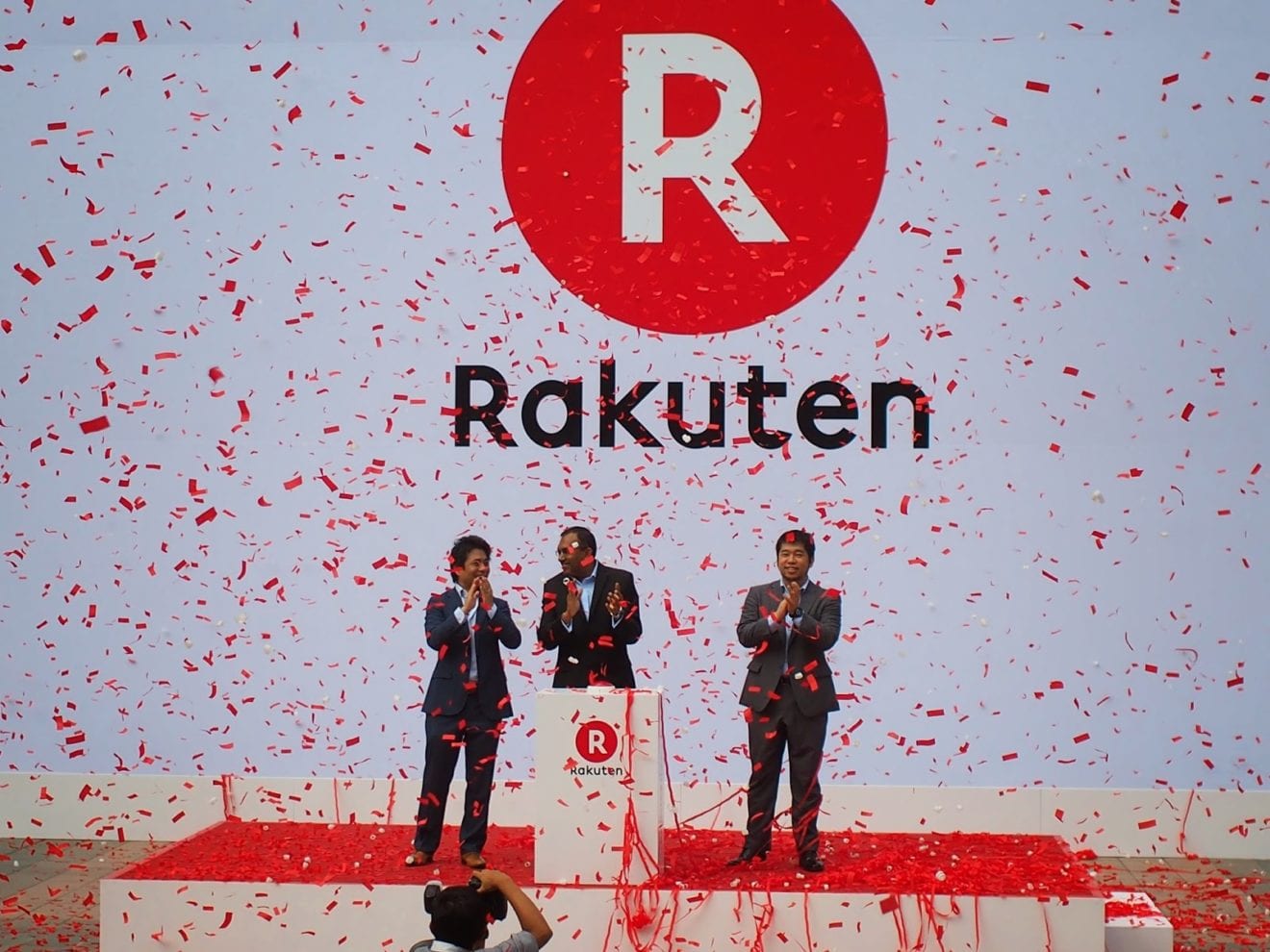
    Japanese e-commerce and tech company Rakuten has sold a 13% share amounting to $2.2 billion to Japan Post, Tencent and Walmart. Japan Post will invest $1.4 billion into Rakuten, thereby owning 8.3% of the company’s total share to become its fourth-largest investor. Tencent will invest $0.6 billion to own 3.6% of the company’s total share, while Walmart will invest $0.15 billion to own a 0.9% share.

    Japan Post’s investment in Rakuten is aimed at strengthening ties between the two Groups and maximizing synergies by leveraging the resources and expertise of both Groups. The alliance will branch into mobile, logistics and digital transformation, with consideration to enter into financial services and e-commerce together.

    There are plans to create shared logistics centers, seeking new collaborations and initiatives between the pair to expand usage of Rakuten Fulfillment Centers and Japan Post’s “Yu-Pack” parcels.

    For the mobile sector, Rakuten will tap onto Japan Post’s nationwide chain of post offices to create customer counters to accept new signup applications for Rakuten Mobile’s marketing campaigns. Meanwhile, Rakuten Group will dispatch specialists to Japan Post to bolster its digital transformation plans.

    Last week, Rakuten Mobile announced that the total number of applications for its UN-LIMIT service plan launched on 8 April 2020 has surpassed 3 million. This week, Rakuten Mobile announced the signing of a Memorandum of Understanding with Airspan Networks for the latter to offer its complete vRAN hardware and software platform OpenRANGE on the Rakuten Communications Platform (RCP).

  • Chinese manufacturer will reportedly use Huawei’s ecosystem in case it too loses access to Google

    Chinese manufacturer will reportedly use Huawei’s ecosystem in case it too loses access to Google

    In May 2019, the U.S. placed Huawei on the Entity List. Not only did this ban Huawei from accessing its U.S. supply chain, it also banned Huawei from using Google’s Android apps on Huawei handsets. Not that this really mattered since many of these apps such as YouTube, Search, Google Maps, Drive, and others were already banned from the Chinese versions of Huawei’s phones by the government. Google’s apps were allowed on the international versions of Huawei’s phones.

    Huawei’s Entity List placement means that Google Mobile Services is not allowed on Huawei handsets and had to be replaced. Huawei developed its own ecosystem called Huawei Mobile Service (HMS). As of last December, HMS covered 500 million monthly active users in over 170 countries; the buzz around the water cooler is that a non-Huawei handset will soon be available with HMS pre-installed (more on this below).

    Huawei also had to replace the Google-licensed version of Android with the open-source version of Android and will now switch to its homegrown HarmonyOS. The company’s first 2021 flagship, the camera-centric Huawei P50 series, could be the first smartphones to run HarmonyOS. According to Huawei staff member Akiba Ziluo, Chinese smartphone manufacturer Meizu will have the first non-Huawei handset to support HMS Core through the Huawei Mobile Service. According to Huawei, “HMS Core offers a rich array of open device and cloud capabilities, which facilitate efficient development, fast growth, and flexible monetization. This enables global developers to pursue groundbreaking innovation, deliver next-level user experiences, and make premium content and services broadly accessible.”

    Each Chinese phone manufacturer has a secret fear; they worry about becoming the next Huawei and ending up in a similar predicament. That is why many of them are looking for Chinese technology that could be used in a jiff to replace American software in case they are banned from using U.S. technology like Huawei is.