Category: Telecom

Retail News Asia is committed to providing both local and global retailers with the latest Telecom & Telco news throughout the Asian market. This on a daily base.

  • SK Telecom, Shinsegae Group among bidders for eBay’s Korean business

    SK Telecom, Shinsegae Group among bidders for eBay’s Korean business

    South Korea’s SK Telecom, retailer Shinsegae Group and private equity firm MBK Partners were among those that entered non-binding, preliminary bids for the sale of eBay Inc’s South Korean business, the telecom company, and two sources with knowledge of the matter said on Tuesday.

    EBay Korea operates open market e-commerce platforms Gmarket, Auction and G9, and was South Korea’s third-largest e-commerce firm in 2020 with 12.8% market share, according to Euromonitor.

    The sources declined to be identified as not authorized to talk to the media. MBK Partners, Shinsegae Group, and eBay Korea declined to comment.

    Seoul-based analysts said that eBay hopes to fetch up to 5 trillion won (S4.42 billion) with the sale.

    However, they said the actual sale price may be lower, due to its recent drop in market share compared to rivals such as Korea’s No. 1 e-commerce firm Coupang, and disadvantages of the unit’s traditional “open market” form of e-commerce which simply connects sellers with buyers.

    EBay Korea’s market share has been overtaken in recent years by Coupang, which directly handles inventory, differentiated itself with speedy delivery and raised around $4.6 billion in a blockbuster New York listing earlier this month, as well as Naver Corp, which operates South Korea’s dominant online search portal.

    EBay Korea’s 2020 revenue was estimated to be about 1.3 trillion won, with a 5.3% on-year increase in transactions, compared to a 19% growth in South Korean e-commerce market, KTB Investment & Securities analyst Kim Jin-woo said.

  • Huawei Pushes for HSBC Disclosure in Hong Kong

    Huawei Pushes for HSBC Disclosure in Hong Kong

    After being rejected in the U.K., Huawei lawyers seek to make a similar push to pressure HSBC to unveil documents they claim will disprove accusations of fraud against chief financial officer Meng Wanzhou.

    After a 30-minute hearing at Hong Kong High Court, no ruling was deliberated on whether or not HSBC must provide specific documents related to accusations that Meng misled the British lender about business dealings with Iran during a 2013 meeting.

    If proven true, this could help prevent the Huawei CFO and daughter of founder Ren Zhengfei from being extradited to the U.S. to face trial.

    The information that Meng is seeking will «go to the heart of her ability to demonstrate that there were material omissions and misstatements» made in the attempt to extradite her to the U.S., according to a report citing a Huawei spokesperson, and that she has no other means to obtain them other than through court approval.

    The legal pressure against HSBC to disclose the allegedly revealing documents follow similar attempts made in the U.K. by Huawei lawyers which were rejected by a high court judge.

    Another one-day hearing for the case in Hong Kong is scheduled for April 12.

  • Nokia and LG Uplus to test 5G B2B digital platform in South Korea

    Nokia and LG Uplus to test 5G B2B digital platform in South Korea

    Nokia has today announced that it will conduct a 5G Business-to-Business (B2B) digital platform trial for LG Uplus. Once deployed, the platform will allow LG Uplus to reduce time-to-market for launching 5G-powered services to its enterprise and business vertical customers. The platform will also enable LG Uplus to address new business segments, including Industry 4.0, and smart factory. After deployment, the solution will promote the use of 5G by enterprises and verticals to grow their business, aligning with the Korean Government’s Digital New Deal initiative.

    The proof-of-concept test of the 5G B2B digital platform will be completed in two phases starting in February. While the first phase involves a demonstration in the Nokia Lab, the second phase with a field trial is planned in the LG Uplus Regional Operation Center in KyungNam.

    Nokia’s solution is based on multi-domain technology and ensures full automation and near real-time delivery of services. The solution includes a service platform powered by Nokia’s Digital Operations software, Cloud Operations Manager, Network Exposure Function, Registers, Cloud Packet Core, Software Defined Networking, and gNB (5G version of eNodeB), across Nokia’s cloud platform.

    LG Uplus will use the platform to cost-efficiently automate the design and deployment of 5G network slices for the delivery of new services. In addition, LG Uplus’ enterprise customers will be able to leverage 5G capabilities to enhance their business and operational efficiency leading to overall economic gain.

    The service will give LG Uplus customers the flexibility to directly control and manage the platform to meet their needs. Further, it will help LG Uplus offer newer use cases such as Smart Factory and Smart Harbor with 5G wireless connectivity and associated services like network slicing.

    Jaeyong Seo, Vice President of Smart Infrastructure Business Unit, LG Uplus, said: “We are committed to providing best-in-class and innovative services to our customers and this trial is a crucial step in this direction. Once deployed, Nokia’s 5G B2B digital platform will help us expand our enterprise business by allowing us to provide new use cases rapidly. Nokia is our trusted partner and we look forward to working with them on this important trial.”

    Kevin Ahn, Head of Korea, Nokia, said: “We are excited to conduct this pathbreaking trial for LG Uplus to enable its enterprise customers to improve business processes with 5G. Nokia’s 5G B2B digital platform will allow LG Uplus to transform its B2B service creation with agility and automation and delight its enterprise customers with new use cases and operational excellence.”

  • Indosat Ooredoo partners Play2Pay to boost mobile gamification experience

    Indosat Ooredoo partners Play2Pay to boost mobile gamification experience

    Indosat Ooredoo and Play2Pay, Inc. have entered a partnership to launch Adsgift, a platform that provides a unique, exciting, and personalized gamification experience for its users. Adsgift enables users to find out about the latest trends in the market, gets the latest updates on content and games, and provides an opportunity for users to gain various attractive rewards.

    This partnership is in line with Indosat Ooredoo’s efforts to become Indonesia’s leading digital telecommunications company that supports the digital economy, enabling producers and customers to gain more digitization benefits through platforms provided.

    Ritesh Kumar Singh, Chief Commercial Officer of Indosat Ooredoo, said, “Indosat Ooredoo is committed to providing the best digital experience for users and offering products that have an added value. We understand that customers face challenges of going outside due to this pandemic, but they can still be productive by utilizing digital technology. Therefore, through Adsgift, we hope that people can get an added value through mobile gamification experience.”

    Adsgift combines personalized offers or promotions with a fun gamification experience for customers. Through Adsgift, customers can get an internet quota of up to 5 GB per month to support their digital activities.

    Customers can download Adsgift through the Google Play Store, then use the application to collect points. The points collected can later be exchanged for IM3 Ooredoo internet packages. Customers can even obtain a free internet quota after completing the registration process using an IM3 Ooredoo number.

    Besides, the Adsgift application allows full control by users through various options to redeem the offers given. Users will still feel comfortable and safe without the risk of disrupting their activities when accessing their gadgets.

    Chris Liveing, VP Carrier Sales at Play2Pay™, said, “Indonesia has a fairly leading mobile and telecommunications industry, making it the right place for Play2Pay™ to launch this innovation for the first time in Asia by partnering with Indosat Ooredoo. By expanding our gamification-based payments platform to Indonesia, it enables even more people having an option to play and participate in making bill payments to service providers.”

  • ZTE joins China Mobile in Xinfengming Group’s 5G intelligent manufacturing upgrade

    ZTE joins China Mobile in Xinfengming Group’s 5G intelligent manufacturing upgrade

    ZTE Corporation, a major international provider of telecommunications, enterprise and consumer technology solutions for the Mobile Internet, in partnership with China Mobile, has upgraded Xinfengming Group’s 5G intelligent manufacturing, following the completion of the test and verification of the “i – wireless 5G intelligent and one-stop local network” project.

    Leveraging ZTE’s NodeEngine solution, this Xinfengming 5G manufacturing platform has been upgraded to accelerate the comprehensive digital transformation. This is the first commercial deployment of NodeEngine solution by ZTE and China Mobile.

    Aiming to better serve manufacturing with 5G technologies and to offer enterprises with flexible and fast local services, ZTE, China Mobile Research Institute and the Zhejiang Branch of China Mobile have teamed up to provide industrial parks with the innovative solution, featuring functions of PRB resources reserved hard slicing, intelligent and simple local distribution, EdgeQoS service management and control, and enterprise self-service portal and more, based on the concept of i- wireless 5G intelligence and simplification. The NodeEngine solution is simple to deploy, quick to the commission, and excellent in performance and cost-effectiveness.

    In the 5G network of Xinfengming Group, most of the production equipment is dedicated to Xinfengming, such as AGV trucks, visual detection devices, and automatic assembly devices. PRB resources reserved hard slicing and local traffic offloading provide Xinfengming the 5G private network capability in a short time, enabling the access of this dedicated equipment and the local traffic offloading and clearly separating common mobile users from businesses, which ensures the access and network performance of different types of terminals. Compared with the existing solutions, this solution enables time delay improvement by 20%.

    ZTE’s NodeEngine solution also serves as an exclusive local O&M portal for enterprises, with which, the network can be dynamically adjusted to satisfy different application requirements. Meanwhile, the network performance can be viewed in real-time, thereby ensuring flexible management and control.

    In addition, ZTE’s NodeEngine solution provides sophisticated EdgeQoS management and control. With this, the QoS requirements of local services, on the one hand, can be intelligently identified and distributed through edge AI to trigger network adjustment parameters to match service requirements. On the other hand, according to the service model, the resources such as bandwidth, latency and reliability are dynamically scheduled to match and guarantee real-time requirements, thus realizing differentiated local network services.

    Through the sophisticated management and control of EdgeQoS, networks can truly be flexibly adjusted according to services, greatly improving the perception of private network services and the efficiency of network resources.

    Committed to empowering traditional industries with 5G, ZTE has made remarkable achievements in 5G industrial manufacturing. Besides the Xinfengming Group digital transformation, the Nanjing Binjiang Smart Manufacturing Base and Changsha Smart Factory, developed by ZTE also, have become the models in the industry. In addition, ZTE has built typical 5G applications together with leading manufacturers such as SANY Group and SUPCON.

    Moving forward, ZTE will be committed to helping industrial manufacturing develop towards a green ,low-carbon, digital, and intelligent future.
  • IronNet Cybersecurity adds new integrations to Collective Defense Platform

    IronNet Cybersecurity adds new integrations to Collective Defense Platform

    IronNet Cybersecurity, the leader in network detection and response and collective defense, announced new integrations with leading cloud, endpoint, and firewall platforms. These integrations enhance and expand the benefits of IronNet’s Collective Defense Platform for security operations teams.

    New capabilities in this release include integrations with:

    • Amazon Web Services (AWS): Adding new IronNet sensors that enable customers to leverage IronNet’s Collective Defense Platform to secure their AWS deployments.
    • Crowdstrike Falcon EDR: Enabling security analysts to seamlessly investigate threats detected by IronNet from the network to the host, and to contain compromised hosts.
    • Palo Alto Networks Strata Next-Generation Firewalls Native Response: Enabling security teams to generate firewall responses and stop threats detected by IronNet.
    • ZScaler Nanolog Streaming Service (NSS) Analysis: Enabling IronNet customers to apply IronNet’s IronDefenseⓇ NDR behavioral detection to HTTP/HTTPS logs.
    • Microsoft Office 365: Adding IronDefense behavioral detection of malicious login attacks targeting Microsoft’s productivity SaaS suite.

    In addition to these integrations, the new release includes:

    • New User & Entity Behavior Analytics (UEBA) to detect identity- and authentication-focused attack techniques.
    • Improved lateral movement and port-scanning detection.

    “The ability to correlate cloud, network, endpoint, and other security telemetry data into a richer, more complete picture of a risk-based event helps organizations more effectively evaluate and mitigate a threat. And that is the real value that network intelligence and threat analytics solutions like IronNet offer,” said Christopher Kissel, Research Director, Security & Trust Products, IDC. “IronNet’s additional capability to share information anonymously across a community of peers and enable security analysts to collaborate on threats is a noticeable differentiator in light of the rise of nation-state level cyber-attacks.”

    This expansion of IronNet’s capabilities continues the company’s momentum of growth in both technology and partnerships. David Lathrop, Vice President of the Utility Strategic Business Unit with Unlimited Technology, Inc., said, “IronNet’s latest release is exactly the kind of ecosystem support that helps us provide the unique, comprehensive cyber solutions we offer through the Enterprise Security Program Review.” Unlimited Technology is a founding partner, along with IronNet, DirectDefense, and Exero, of the ESPR, announced in January.

    “Empowering security teams and maximizing the effectiveness of their security investments against cyber threats targeting their enterprise, industry, or region is core to our Collective Defense mission,” said Don Closser, IronNet’s Chief Product Officer. “Together with our security ecosystem partners, IronNet can offer our customers a true, defense-in-depth approach that helps them reduce time to detection and scale up their ability to respond to cyber threats. This is especially important as factors like digital transformation and expanding supply chains are increasing the threat landscape exponentially.”

  • Indosat Ooredoo launches iAds based on augmented reality

    Indosat Ooredoo launches iAds based on augmented reality

    As an experienced trusted digital partner, Indosat Ooredoo Business presents an innovative service “iAds” at the 4th Connex Webinar to answer the promotional needs of these enterprises. iAds is a digital ad platform that is designed by utilizing Augmented Reality (AR), interactive messaging, and mobile video. iAds offers the excitement of advertising and the convenience of using innovative telecommunication media.

    Chief Business Officer of Indosat Ooredoo, Bayu Hanantasena said, “Indosat Ooredoo Business is committed to supporting the growth of Indonesia’s business sector by utilizing digital technology. Today, we launched iAds to support the promotional needs of enterprises to be more innovative through social media and relevant to the current situation. We hope that through the 3 iAds services that we launched today, it will help enterprise not only survive, but also growing rapidly so that they can compete in both local and global markets, as well as supports Indonesia’s digital economy.”

    Through iAds, promotional activities can be more varied and attractive because Indosat Ooredoo Business offers several choices of digital promotion mediums, namely iAds, iAds Biz, and iAds MGram.

    • iAds: Augmented Reality (AR) technology.
    • iAds Biz: A broadcast and interactive SMS service solution that responds more precisely to promotional needs for target customers and is easily controlled through a dashboard by enterprise. Regular SMS, Premium SMS, and Interactive SMS are all promotional options provided by iAds Biz.
    • Ads MGram: Consumers can engage with interactive promotion and digital transformation solutions through images and videos that can be viewed on a variety of mobile phones, feature phone or smartphone. The other benefit of iAds MGram is that it does not require a specific application and can be accessed without internet connection or data packages. Thus, it unlocks vast reach, customer engagement and business possibilities.

    iAds can target more than hundreds of thousands of large and medium-sized companies in Indonesia to inform their products to millions of mobile users as potential targeted consumers. This service is also in line with Indosat Ooredoo’s vision as the Indonesia’s leading digital telecommunication company that encourages a more rapid and effective growth of the digital economy.

  • Huawei launches “Make any room a data center” products

    Huawei launches “Make any room a data center” products

    In his opening remarks, Brandon Wu, Chief Technology Officer (CTO) of Huawei’s Asia Pacific Enterprise Business Unit, emphasized the need to ensure enhanced resiliency across all industries, given the impact of the global pandemic.

    Wu explored the key trends emerging in edge computing, namely: better-connected infrastructure, increased resiliency through the use of edge computing, and enhanced reliability through the use of Artificial Intelligence (AI).

    According to the estimation by Gartner, within four years, 75% of data generated by enterprises will be processed at the edge. Demand for real-time interaction is driving businesses to bring computing power closer to end-users.

    • Small and edge data center are therefore making an appearance in several industries and scenarios:Retail: Small and edge data centers can exist within retail outlets as retailers close the gap between online and offline sales.
    • Manufacturing: Edge data centers deployed in distribution warehouses are capable of managing growing volumes of inventory and shipping data; in factories, such data centers manage data generated from sensors as well as communications between equipment, contributing to a growing IIoT.
    • Telecoms: Central offices of telco companies are being converted to computing rooms and used as edge data centers to make networks more dynamic.

    Mahesh Choudhary, Solution Architect for the Huawei Digital Power Line, launched the new solution directly from the Huawei Digital Power Innovation Experience Center, offering a real-life demonstration for event attendees. Changing the game with SmartLi inside —Huawei’s smart lithium battery Uninterruptible Power Supply (UPS) —now any room can be made into a data center.

    With far lower requirements placed on ceiling height, the Huawei Modular Data Center Solution has no need for a traditional raised floor design. Instead, air conditioner pipes and strong-and weak-current cables are routed from top-down, meaning that equipment can be accommodated in ceiling heights as low as 2.6 m, far below the 3 m minimum height required for a traditional data center.

    At the Smart Modular Data Center Product Launch, Huawei’s partner — NetCraft Information Technology (Macau) Co., Ltd. — shared its experiences cooperating with Huawei. Benjiman Wong, the company’s Sales Director, said: “With the Huawei Modular Data Center Solution, all required components are modular. An easy way for customers to understand this solution is to consider that each component is like a building block: you can build up your castle by adding different blocks together, so you can add more blocks in the future when needed.”

  • Macquarie Telecom signs $34 million exclusive deal with Optus

    Macquarie Telecom signs $34 million exclusive deal with Optus

    The decision follows a comprehensive, strategic review of mobile solutions, and will see Macquarie offer numerous key services to Australian enterprises as the need for greater connectivity continues, including:

    • 5G Connectivity and Speeds: Providing flexibility, faster speeds, and greater capacity across multiple devices, fully managed and supported in Australia by Macquarie’s dedicated customer and engineering teams.
    • Wi-Fi Calling: Extends full coverage and network access across all Wi-Fi areas.
    • Voice over LTE (VoLTE): A network standard enabling businesses to use high-speed 4G data and voice in tandem on devices at any time.
    • Coverage: New tools to enable customers to make coverage decisions.

    Due to the increasing emphasis on mobility and 5G, Macquarie plans to expand its mobile business and hire new staff over the next three years. This continues the company’s unwavering commitment to only provide service from and hire in Australia.

    “2020 changed the way Australians work forever. By providing 5G connectivity along with business-grade NBN, we can ensure Australian businesses can work from more places than ever before,” said Luke Clifton, Group Executive, Macquarie Telecom.

    “The fact is that 5G is here. It is fast becoming a necessity and complimentary service to nbn for Australian businesses. This agreement will ensure we can continue to compete in a market that is still underserved and overcharged. These new mobile offerings will also enable the right tools, technologies and customer service to manage a mobile workforce.”

    Optus currently has more than 1,000 live 5G sites covering more than 830,000 households across Sydney, Melbourne, Adelaide, Canberra, Perth and Brisbane.

    With the agreement, Macquarie will end its wholesale mobile contract with Telstra. It chose Optus’ wholesale offering due to its focus on collaboration, rapidly evolving 5G network, and commitment to future technologies.

    “We’re backing a winner,” added Clifton. “This investment reflects our commitment to Australian businesses and providing the technologies they need today and into the future.

    “Based on our comprehensive review, Optus was the clear choice in terms of superior technology, flexibility to build the right solutions, and cooperation. It is leading Australia’s wholesale 5G market, offers incredibly fast 5G and continues to invest heavily in its 5G network. Crucially, it understands the value of partnership in Australia’s 5G future while others are actively inhibiting it.”

    “Macquarie has a great reputation for customer service and Optus is genuinely excited to be partnering with Macquarie to deliver mobility solutions that businesses need today more than ever.” says Ben White, Managing Director, Wholesale, Satellite and Strategy, Optus.

    The new agreement complements a series of partnerships and technology investments by Macquarie Telecom in recent months and years. This includes its mobile reseller agreement with Apple, a preferred networking agreement with the nbn, its first-to-market VeloCloud by VMware SD-WAN, and a complete core network upgrade and refresh with Juniper Networks.

    The mobile agreement is a multi-year agreement. Services will be available to all customers, with existing customers transitioning over the coming months. The process will be managed end-to-end by Macquarie’s dedicated and local mobile support team. 5G plans are available immediately to new and existing customers.

  • Nokia partners QTnet to launch local 5G network in Kyushu

    Nokia partners QTnet to launch local 5G network in Kyushu

    QTnet, which provides broadband and related services to customers, will now be able to launch new services using Nokia’s local 5G technology, thus creating a sizeable business opportunity. The private wireless network will be based on the Nokia Digital Automation Cloud, a high-performance, private wireless networking and edge computing platform that will power digital transformation across the Kyushu region.

    Together, Nokia and QTnet will also join forces with the Kyushu Institute of Technology to provide new local 5G-enabled services on the Institute’s university campus. This will be the first industry-academia collaboration in Japan to create a local 5G environment in a university campus setting. Services include self-operating stores, walking support for the visually impaired, cafeteria crowd monitoring, and new trials with partners and research labs.

    Sadao Mouri, Director and Senior Managing Executive Officer at QTnet, said: “Local 5G has the potential to enable new applications and business models while dramatically improving users’ quality of life. By deploying robust local 5G private wireless networks in Kyushu, we will enable anchor institutions like education, healthcare, and first responders to reach new levels of efficiency and productivity. Nokia’s track record in providing reliable local 5G networks will be an important milestone in creating new businesses.”

    Donny Janssens, Head of Nokia Enterprise Japan, said: “We are excited to work with QTnet on this 5G initiative, which is the first of its kind in Kyushu. With a high-performance 5G network, Kyushu institutions can take advantage of innovative new services and applications which will transform the way they operate. We look forward to expanding the local 5G private wireless ecosystem while delivering compelling 5G experiences.”

  • Singapore offers best mobile experience in South East Asia

    Singapore offers best mobile experience in South East Asia

    At a country-level, Singapore won in all metrics tested, with the most important win being the highest Excellent Consistent Quality in South East Asia, with 84.5% of connections having a network experience suitable for use-cases like 1080p video streaming, real-time mobile gaming and HD video calling. Singapore also had the highest Core Consistent Quality in the region at 94.4%.

    Consistent Quality is a set of metrics that Tutela has developed to objectively evaluate when connections are (or are not) enabling users to do the things they want to on their mobile devices. There are two sets of thresholds, Excellent and Core. A connection that hits the Excellent threshold is sufficient for use-cases like 1080p video streaming, HD video calling, and multiplayer gaming, while a Core connection should be sufficient to stream standard-definition video or handle day-to-day activities like web browsing or uploading photos to social media. The percentages seen in this report represent the percentage of tests for subscribers on a given operator that was above the Excellent or Core thresholds.

    Singapore also had the fastest download speed at 26.2 Mbps, the fastest upload speed at 14.7 Mbps, and the most responsive network with a latency result of 9.0 ms. However, Vietnam was always very close behind, with second-place winnings for both Excellent Consistent Quality (72.3%) and Core Consistent Quality (86.1%).

    The report was released by Tutela Technologies, a global crowdsourced mobile data company, and evaluated over 55 million speed and latency tests, conducted on the smartphones of real-world users of national mobile operators within Common Coverage Areas, between August 1st and January 31st, 2021.

    Per country findings were as follows:

    Singapore:

    • By operator in Singapore, StarHub dominated in four of the seven metrics tested, including the highest Excellent Consistent Quality with 87.3% of users having a network experience suitable for 1080p video streaming or HD group video calling.
    • StarHub also had the highest Core Consistent Quality, Tutela’s measure of whether a connection is good enough for everyday uses, like email, social media, and SD video streaming, the fastest download speeds, and the most responsive network in the country.

    Indonesia:

    • Telkomsel won six out of the seven metrics tested, with Indosat Ooredoo being the only other operator to make it onto the leaderboard in Indonesia with the fastest median upload speed.
    • Telkomsel was in first place for Excellent Consistent Quality with 65.0%, and also in first for Core Consistent Quality with 83.5%. However, there was only a 3% difference between the operator and second-place Indosat Ooredoo.

    Malaysia:

    • In Malaysia, the leaderboard was shared by at least four operators, with U Mobile offering its users the best mobile experience in the country. The operator won the highest Excellent and Core Consistent Quality, and fastest upload speed.
    • Digi had the fastest median download speed in Common Coverage Areas across Malaysia with 10.6 Mbps but came third in the upload speed test with 6.2 Mbps. Maxis had the most responsive network in the country, while Celcom had both the best 5G/4G coverage and total coverage.

    Thailand:

    • By operator in Thailand, AIS won in four of the seven categories tested, including the highest Excellent Consistent Quality and most responsive network. However, TrueMove was also on the leaderboard in three of the seven categories including the highest Core Consistent Quality and both the fastest download and upload speeds.
    • With only two operators in the Philippines to compare, Smart outperformed Globe in six out of the seven categories tested, with Globe taking out one category with the best total coverage.

    Vietnam:

    • Viettel Mobile in Vietnam offered the best mobile experience to its users, winning in five categories and tying for first place with Vinaphone for fastest median download speeds.
    • MobiFone was on the leaderboard in one category with the highest Core Consistent Quality.
  • Reliance Jio increases spectrum footprint by 55% in India

    Reliance Jio increases spectrum footprint by 55% in India

    Through this acquisition, RJIL’s total owned spectrum footprint has increased significantly, by 55%, to 1,717 MHz (uplink+ downlink). RJIL has the highest amount of sub-GHz spectrum with 2X10 MHz contiguous spectrum in most circles. It also has at least 2X10 MHz in 1800 MHz band and 40 MHz in 2300 MHz band in each of the 22 circles. RJIL has achieved complete spectrum derisking, with an average life of owned spectrum of 15.5 years. RJIL’s spectrum has been acquired in the most cost-efficient manner with an effective cost of Rs 60.8 crore per MHz.

    With the enhanced spectrum footprint, especially contiguous spectrum, and pan-India infrastructure deployed, RJIL has enhanced network capacity to service its existing users as well as hundreds of millions of more subscribers on its network.

    The acquired spectrum can be utilized for the transition to 5G services at the appropriate time, where Jio has developed its own 5G stack.

    Sh. Mukesh D Ambani, Chairman, Reliance Industries, said, “Jio has revolutionized the digital landscape of India with the country becoming the fastest adopter of Digital Life. We want to ensure that we keep on enhancing experiences, not only for our existing customers, but also for the next 300 million users that will move to digital services. With our increased spectrum footprint, we are ready to further expand the digital footprint in India as well as get ourselves ready for the imminent 5G rollout.”

  • Nokia chosen by Globe Telecom for 5G rollout in the Philippines

    Nokia chosen by Globe Telecom for 5G rollout in the Philippines

    Under the terms of the agreement, Nokia will provide equipment and services from its comprehensive 5G AirScale portfolio to build out the Radio Access Network (RAN), including base stations and other radio access products. Globe Telecom will also use Nokia’s high-capacity AirScale massive MIMO Adaptive Antenna solution, which utilizes the latest 64TR radios, to boost coverage and performance.

    Utilizing the new 3.5GHz spectrum band for dense urban coverage, Globe Telecom will be able to provide end-users with high peak speeds typical on 5G network. The deal will also see the expansion of the existing FDD/TDD LTE network infrastructure. These solutions will enable Globe Telecom to roll out 5G services across the two major islands of the Philippines and offer customers superior speeds, capacity, and lower latencies while reducing complexity.

    Nokia will provide its NetAct solution for network management and seamless daily network operations as well as deliver digital design and deployment and optimization and technical support services.

    Nokia is an existing partner of Globe Telecom and provides a wide range of solutions including wireless, IP, optical, and fixed network products, and services.

    Ernest Cu, President and CEO, Globe Telecom, said:“We’re pleased to continue our partnership with Nokia to deliver compelling 5G experiences to our customers. We are going full steam ahead in delivering 5G in more areas, as this technology brings us closer to our goal of providing #1stWorldNetwork in the Philippines.”

    Tommi Uitto, President of Mobile Networks, Nokia, commented: “It’s exciting to be part of this project to deliver 5G services to citizens across the Philippines and see our industry-leading 5G RAN solutions underpin the network. The expanded and upgraded 5G network will deliver exciting new solutions to even more people and businesses and our technology will play a fundamental role in delivering these compelling connectivity experiences.”

  • Here is where cities worldwide are hiding 5G towers

    Here is where cities worldwide are hiding 5G towers

    If you’re driving through some cities in Arizona, you might have noticed some large cactuses (or cacti) approximately 2-feet tall, along the sides of the road. But these are not real plants. They were constructed in order to cover up 4G LTE antennas; inside the fake cactuses you’ll find radio equipment. The idea is to make the gear blend in by disguising them with regionally-based plants and structures. Many think that cell towers look ugly and ruin the look of the environment (frankly, yours truly likes the look of cell towers but that puts me in the minority).

    4G towers are disguised as palm trees down south, evergreens in the Northeast, and cactuses in the West. Some 4G sites are disguised as church bell towers, historic landmarks, and water towers. CNN says that with the use of 5G towers, cities have to find another method of subterfuge. That’s because high-band mmWave 5G signals, as you’ve often seen us write, are easily blocked by structures. Wooden objects, certain materials, and yes-even leaves (T-Mobile wasn’t kidding) can block the progress of high-band mmWave 5G signals. And since high-band 5G signals can only travel short distances (something else we’ve mentioned often), 5G towers must be placed a couple hundred feet apart and even closer. And the antennas have to be exposed for 5G signals to be accessed by the public. With this in mind, some of the illusions used, like the cactuses, won’t be as effective. So for 5G sites, some cities are hiding the gear in street lights. Keith Niederer, telecom policy coordinator for Scottsdale says, “Design will be just as important moving forward with the 5G installations, but we will have a greater focus on street lights than the cacti. In Scottsdale, aesthetics are pretty important. Every street has a different theme and streetlights vary. We want them to blend in as much as possible and not stand out.” With 5G, the technology needs to be out in the open as opposed to 4G LTE.

    A company named Valmont Industries is one of the leading firms in the business of hiding 4G and 5G equipment. It recently finished delivering street lights to San Antonia, Texas that contain 5G gear. The outfit’s general manager of communication concealment, Mark Schmidt, said, “There’s no form factor we won’t consider using. Our goal is to bridge the gap between the aesthetics in a community, what a jurisdiction would like to see and what the wireless carrier requires as a form factor. … But the most natural fit here will be traffic lights and street lights.” With street lights sporting access to a power supply, and with a decent elevation, they can be used to house multiple technologies. Besides trying to hide the looks of a 5G tower, there is a security factor as well. You might recall that last April, thugs believing a conspiracy theory that 5G towers were the cause of coronavirus tried to knock down these towers in the U.K. and China.

    Tom Kuklo, a global product manager for Radio Frequency Systems (RFS), a firm that makes components for smart street lights, says that these lights are already rolling out in some areas. He states, “We’re already seeing this in China and some other locations where smart poles are very predominant. They’re becoming part of the landscaping; you walk right past them and don’t even know that’s what’s giving you a 5G signal unless you’re looking for it.”

    5G is expected to bring $17 trillion to economic growth by 2035 based on data from ABI Research. Eventually, data speeds will be 10 to 100 times 4G data speeds bringing a number of new technologies like self-driving cars to the public. Remote operations performed with the surgeon hundreds of miles away from the patient will be performed. Right now though, we are very early in the 5G era and many more towers need to be constructed throughout the world.

  • Future Nokia smartphones could adopt a new naming scheme

    Future Nokia smartphones could adopt a new naming scheme

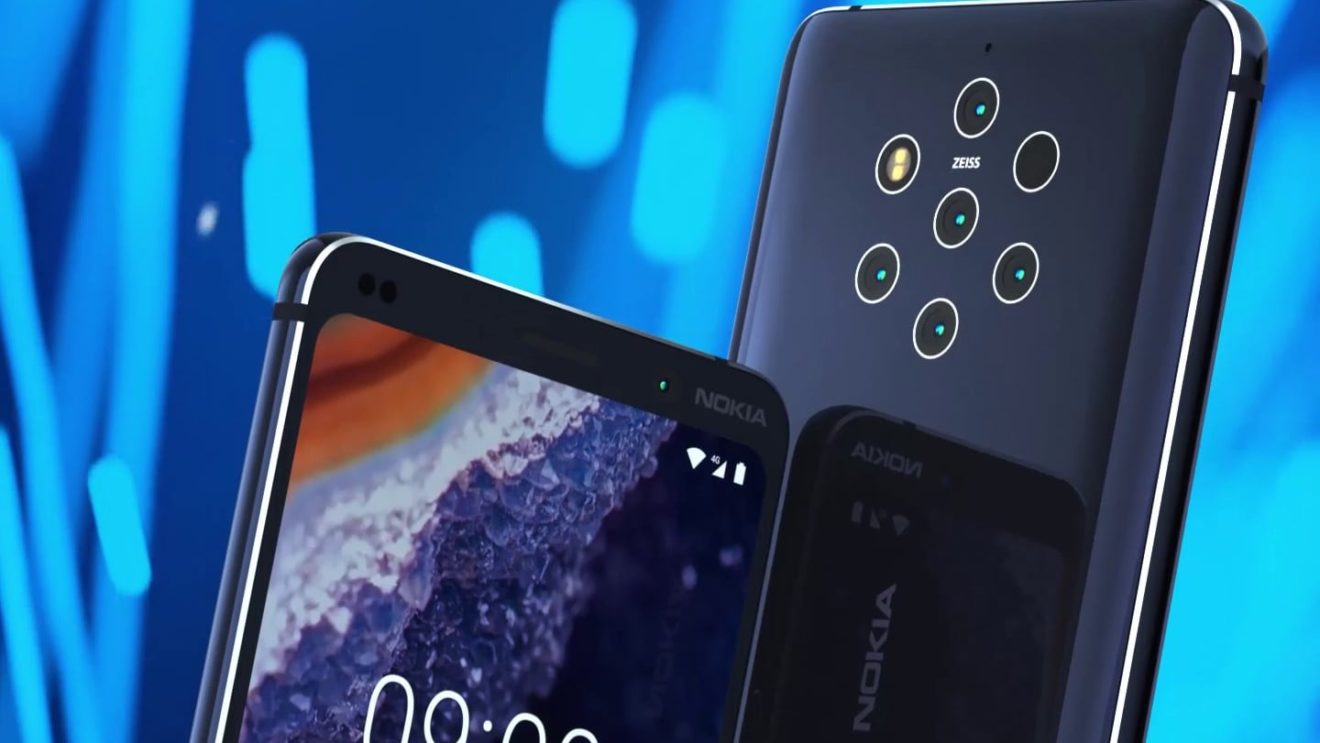
    A numerical branding scheme has been used for Nokia smartphones ever since the brand re-entered the market in 2017. This worked well in the early years but has become quite confusing in recent times, and soon it could be replaced.

    According to a trusted source starting this year HMD Global will shift Nokia smartphones over to a revised branding scheme that involves both letters and numbers.

    The end result should be similar to what Samsung and Motorola do with their devices. In fact, a leaked retail listing from Russia indicates that the first new model could be the Nokia G10, not to be confused with Motorola’s Moto G10.

    With subsequent model generations, HMD Global has two clear options. The most obvious one involves increasing the number, starting with Nokia G11 in 2022 and continuing that pattern for the rest of the decade.

    However, the source of this info seems to suggest that HMD might instead follow the branding pattern used by Nokia between 2009 and 2011. That could lead to models like the Nokia G10-01 in 2022 and Nokia G10-02 in 2023.

    Whether Nokia’s new branding scheme is going to be clearer than the current one will remain to be seen, but it certainly won’t be hard to achieve.

    At the moment, the latest model is known as the Nokia 5.4 But at the same time, the company is selling the Nokia 8.3 5G and Nokia 7.2, in addition to carrier variants like the Nokia C2 Tava and Nokia 2 V Tella, making it quite hard to determine when each model was launched.