Category: Telecom

Retail News Asia is committed to providing both local and global retailers with the latest Telecom & Telco news throughout the Asian market. This on a daily base.

  • Huawei and China Mobile deploy world’s first 4.9 Ghz 5G indoor network with peak rate exceeding 3Gbps

    Huawei and China Mobile deploy world’s first 4.9 Ghz 5G indoor network with peak rate exceeding 3Gbps

    Huawei and China Mobile Shanghai deployed the world’s first 4.9 GHz commercial LampSite network in Shanghai, China. This is the first time that an aggregate bandwidth of 200 MHz on the 2.6 and 4.9 GHz bands and distributed Massive MIMO have been simultaneously implemented in digital indoor networks. With the peak rate exceeding 3 Gbps, the performance is comparable to that of an active antenna unit (AAU), satisfying the network requirements to provide premium service experience at large stadiums where the traffic demand and user density are high.

    This deployment was completed at the Shanghai New International Expo Center (SNIEC) where Mobile World Congress (MWC) Shanghai, an annual telecom industry event, is hosted. In 2019, nearly 60,000 people attended this event. The latest 4.9 GHz LampSite units supporting a bandwidth of 100 MHz were adopted to work together with the incumbent 2.6 GHz band to ensure a bandwidth of 200 MHz through carrier aggregation. This enhances the coverage of indoor networks at capacity-demanding indoor hotspots, including stadiums, airports, and railway stations, to deliver premium experience to mobile users.

    China Mobile Shanghai has been a leading telecom carrier in developing 5G networks. To date, it has constructed more than 13,000 5G sites, basically achieving continuous coverage in the city.

    This telecom carrier boasts leading networks and evident technological advantages. It has been working with Huawei to explore innovative solutions to guarantee mobile excellent user experience in various scenarios. 4.9 GHz is an ideal option for telecom carriers to enhance coverage in indoor hotspots, ensuring premium indoor experience for toC services. This band is also important to ensure 5G coverage in high-quality toB applications.

    China Mobile Shanghai will continue to work with Huawei to accelerate the deployment of 5G sites to deliver the continuous coverage required to ensure premium service experience across the city. It will also continue to promote the collaboration of the telecom industry with other industries, such as finance, shipping, and trade to cement Shanghai’s leadership in applying 5G to vertical industries by leveraging their respective leading advantages.

  • ZTE partners China Telecom and MediaTek to complete industry’s first E2E commercial verification of FAST

    ZTE partners China Telecom and MediaTek to complete industry’s first E2E commercial verification of FAST

    ZTE Corporation, a major international provider of telecommunications, enterprise and consumer technology solutions for the Mobile Internet, announced that the Sichuan Branch of China Telecom, ZTE and MediaTek have jointly completed the industry’s first end-to-end commercial verification of FAST in Chengdu.

    Based on ZTE’s 5G-NR system and MediaTek’s UE imbedded with Dimensity chipsets, the Sichuan Branch of China Telecom has conducted the verification of FAST in commercial network of 2.1GHz and 3.5GHz. According to the verification result, FAST, compared to 3.5 GHz single carrier, increases the speed rate of uplink about 3 times for a single user at the cell edge.

    FAST, as the main solution of uplink enhancement technology, can deeply and effectively take full advantages of TDD-NR and FDD-NR to boost the 5G uplink performance. With FAST, uplink timeslot availability can be enhanced up to 100% under the condition of the dual-stream capability of UE, realizing the maximum spectrum utilization in both time domain and frequency domain.

    In 5G network commercialization and innovations, China Telecom, ZTE and MediaTek will continue to deepen their cooperation to explore new features and applications of 5G, so as to provide better services for their customers.

  • Growing 5G demand will drive major 2021 smartphone market recovery

    Growing 5G demand will drive major 2021 smartphone market recovery

    The global smartphone market was only one of the major industries to suffer a big and largely unexpected decline in 2020 as a direct consequence of the coronavirus pandemic, but while the COVID-19 threat is projected to linger this year and potentially even beyond that, 2021 should mark the beginning of a beautiful rebound.

    The first signs of an imminent recovery showed up during last year’s third calendar quarter, when shipments were down around the world by a measly four percent compared to the same period of 2019, becoming evident in the final three months of 2020, as the year-on-year sales decline further contracted to one percent according to Counterpoint Research. In contrast, the same market intelligence firm estimated the mobile industry’s Q1 and Q2 slumps at 13 and a record 26 percent respectively.

    Clearly, there’s no way to go but up now that people are slowly regaining their appetite for both mid-range and high-end handsets pretty much in all key regions, and according to a hot new report published by Gartner, worldwide sales could register a healthy total increase of 11 percent in 2021.

    While that’s unlikely to be enough to boost the market to its pre-pandemic levels, this year’s forecasted 1.53 billion units would come incredibly close to the 1.54 billion smartphones sold in 2019. The aforementioned 11 percent growth is expected to be mainly driven by “mature” markets across Western Europe, Asia Pacific, and Latin America on a regional level, as well as rising demand for 5G-enabled devices essentially everywhere.

    Affordable 5G models starting as low as $200 could be particularly successful in 2021, especially in emerging European and Asian countries. Overall, 5G smartphones are likely to exceed 500 million unit sales, accounting for around 35 percent of the entire market. In comparison, 2019 saw less than 20 million 5G-capable handsets reach the hands of their owners, with said number growing to more than 200 million last year.

    Unfortunately, Gartner’s latest report doesn’t go into any detail regarding the prospective evolution of the world’s top mobile device vendors this year, so it’s not entirely clear yet who will drive the 11 percent global hike from that perspective.

  • Chinese Telcom Giants Review New York Delisting

    Chinese Telcom Giants Review New York Delisting

    In the latest on U.S. delistings of Chinese firms, the three largest mainland telecommunications firms have requested for a review of the New York Stock Exchange’s decision to remove their shares from the bourse.

    In a filing to the Hong Kong Stock Exchange yesterday where they are also listed, China Mobile, China Unicom and China Telecom said that written requests have been filed with NYSE. The three telecom giants said they also asked for trading suspensions to be maintained during the review.

    The review will be scheduled at least 25 days from when the request was filed, the statement added, with no assurance for success.

    Near the end of the Trump administration, the New York bourse had already once reversed a decision to delist the stocks, deemed by the U.S. to be linked to China’s military, only to ultimately comply following an alleged phone call from U.S. Treasury Secretary Steve Mnuchin.

    But now, the three telecom giants will seek to push for a second reversal under a Joe Biden administration. Biden recently nominated ex-Fed chair Janet Yellen as the new incoming Treasury secretary.

  • Trump takes one last shot at maiming Huawei before he leaves the White House this week

    Trump takes one last shot at maiming Huawei before he leaves the White House this week

    Even though President Donald Trump will be leaving the White House this coming Wednesday, he took the time to spank the Chinese phone and networking equipment manufacturer Huawei one last time. In May 2019, Trump cited security issues for his decision to put Huawei on the Entity List. This move prevented the firm from accessing its U.S. suppliers without permission from the Commerce Department. Despite this move which resulted in the loss of Google as a supplier, Huawei persevered; for a brief period of time this year, it was the top phone manufacturer on the planet in terms of shipments.

    Exactly one year to the day that it was placed on the Entity List, Huawei received another big blow from the Trump administration. Starting last September, any foundry manufacturing chips using American-sourced technology needs a license from the U.S. to ship to Huawei. The latter was the second-largest customer of the world’s largest foundry, TSMC, and was blocked from receiving cutting-edge chips that it had designed itself. The U.S. also browbeat its allies over the last few years in an attempt to prevent them from using Huawei’s networking equipment on their 5G networks.

    American lawmakers were quick to call Huawei a national security risk because of the company’s alleged tie to the Communist Chinese government. Concerns that Huawei’s phones and base stations contain backdoors used to spy on U.S. consumers and corporations have never been proven. The U.S. also banned rural carriers from using the Universal Service Fund (managed by the FCC) to purchase networking gear from Huawei and is forcing these firms to remove any Huawei equipment used in their networks.

    In the final days of the Trump administration, licenses allowing U.S. firms to sell to the Chinese manufacturer are being revoked and applications from U.S. suppliers to obtain such licenses are being rejected. Reuters has seen an email sent from the Semiconductor Industry Association (SIA) that documents the Commerce Department’s recent actions. In the email, the SIA notes that the Commerce Department had released “intents to deny a significant number of license requests for exports to Huawei and a revocation of at least one previously issued license.” The SIA email stated that a broad range of products was included in the latest action and many U.S. companies have been waiting months to hear whether they would be allowed to sell to Huawei. More than 150 license requests were pending amounting to $120 billion worth of goods and technology.

    Just last week, the Trump administration blacklisted Chinese phone manufacturer Xiaomi by demanding that U.S. investors divest themselves from any investments made in the company by November 11th, 2021.

  • FCC sets record with auction of key spectrum for 5G use

    FCC sets record with auction of key spectrum for 5G use

    During 2021, U.S. carriers will take another huge step toward completing the build-out of their 5G networks. The FCC last week wrapped up an auction of mid-band spectrum in the C-band. These airwaves lie in the range of 3.7GHz-3.98GHz and heavy demand for the rare mid-band spectrum helped generate a record $80.9 billion in proceeds related to the auction. There were 57 bidders vying for a total of 5,684 licenses. Mid-band spectrum is very much in demand by U.S. carriers and T-Mobile has made these airwaves the key part of its layer-cake approach to 5G. The previous record for money generated by an FCC auction for spectrum was the $44.9 billion generated by the FCC’s 2014 AWS-3 auction.

    T-Mobile, the first U.S. carrier to launch nationwide 5G in the states, used its 600MHz low-band spectrum as the foundation for its nationwide 5G service. These signals travel great distances making them the perfect foundation for its network. But what they don’t do is deliver download data speeds much faster than 4G LTE. High-band spectrum can only travel short distances making them perfect for urban areas where the population is densely packed. While these signals do not easily penetrate buildings, they do deliver fast 5G download data speeds often hitting 1Gbps and faster.

    In between the two extremes is mid-band spectrum. Sprint’s mid-band holdings were exactly what T-Mobile was targeting when it offered $26.5 billion to buy its fellow wireless provider back in April 2018. The deal closed this past April giving T-Mobile control over Sprint’s 2.5GHz mid-band spectrum. These signals travel further than those of the high-band variety and are faster than low-band 5G. Many analysts expect T-Mobile to become the fastest 5G provider in the states thanks to its mid-band holdings once all the work is done.

    Other carriers wanted the opportunity to purchase mid-band spectrum for themselves. In November 2019, U.S. Cellular, Verizon, AT&T, Bluegrass Cellular, Pine Belt Wireless and the C-Band Alliance sent an electronic letter to the FCC requesting an auction of mid-band airwaves in the C-Band (3.7GHz-4.2GHz). At the time, U.S. Cellular President and CEO Ken Meyers says that it is “critical” for U.S. carriers to obtain as much mid-band spectrum as they can find. The executive made it clear that the FCC had to take action ASAP to make sure that there would be enough mid-band spectrum to go around.

    FCC Chairman Ajit Pai, who is leaving the regulatory agency this Wednesday afternoon when the transition to the Biden administration takes place, said, “These results represent a strong endorsement by the private sector of the service rules and transition plan put in place by the FCC to quickly make the C-band a critical part of 5G rollout in the United States. And they vindicate the hard choices the FCC made during the C-band proceeding—and that we made them. The FCC confronted a host of technical, legal, practical, and political challenges in structuring this auction. It would have been easy to delay. But we rightly pushed ahead and overcame every one of those obstacles. As a result, we significantly advanced United States leadership in 5G and have enabled America’s wireless consumers to more quickly benefit from 5G services.”

    Satellite owners who are giving up their spectrum in the auction are being transitioned to the upper 4.0-4.2 GHz range. To prevent interference from the satellite transmissions to impact the wireless providers, a 20MHz band will be used as a “guard band.”

    The next step in the process requires the auction winners to bid for licenses related to specific frequencies. The FCC will release a notice to the public containing the date and time when this assignment phase will take place.

  • Viettel profits grow despite pandemic

    Viettel profits grow despite pandemic

    Telecom giant Viettel managed to shrug off the effects of the Covid-19 pandemic and achieve its revenue and profit targets in 2020.

    The military-owned firm reported revenues of VND264 trillion ($11.47 billion), up 4.4 percent from 2019, and pre-tax profit of VND39.8 trillion, up 4.1 percent.

    Viettel attributed the results to its digital transformation and switch from being a telecom services provider to a digital services provider. In 2020, the platforms it developed included digital infrastructure, solutions, content, and finance, and cybersecurity.

    Its 10 overseas markets reported a 25 percent increase in profits to VND5.6 trillion in the first nine months of 2020, while at home it remained the leader in mobile services and fixed broadband with a 54.2 percent market share.

    By manufacturing 5G equipment and trialing 5G services, the company made Vietnam one of only six countries in the world to master the technology.

  • Samsung files with ITC to ban U.S. imports of Ericsson’s 5G base stations

    Samsung files with ITC to ban U.S. imports of Ericsson’s 5G base stations

    Samsung on Thursday filed a complaint with the International Trade Commission (ITC) demanding that U.S. imports of Ericsson’s 5G base stations be blocked. Just the week before, Ericsson had filed its own case with the ITC seeking to block U.S. imports of Samsung phones, tablets, and televisions. At the heart of this matter is a battle over a patent-licensing agreement that needs to be renewed. Cases are often filed with the ITC because, at an average of 15 months, final decisions are reached more quickly.

    Sammy’s argument is that Ericsson’s base stations, which connect mobile phone users to a network, employ equipment patented by Samsung. Both companies are arguing over whether a court in Texas or one in Wuhan will decide the royalties paid by Samsung for using Ericsson’s 4G and 5G inventions covered by the standard-essential patents. The latter are patents that a manufacturer must license in order for a product to comply with a technical standard. Rates charged for using these patents must be determined on a Fair, Reasonable, And Non-Discriminatory (FRAND) basis.

    Both companies have patents that the other one needs. Ericsson says that on balance it is owed money because it has more telecom patents than Samsung and the latter has more devices that require the licensing of Ericsson’s patents. If both firms can’t reach an agreement on a new licensing pact, Ericsson could end up taking something of a hit to its bottom line. After all, Samsung is the world’s largest shipper of smartphones.

    Samsung says that it is unfair to allow Ericsson to use its patents since the latter does business in the states and Samsung has yet to establish its base station business in the U.S. Ericsson filed a new lawsuit against Samsung on January 1st and Samsung filed a patent infringement suit against Ericsson in response. Ericsson spokeswoman Mikaela Idermark said the company is aware of Samsung’s new complaint and “willfully review what has been filed before deciding on any further comment.

  • Viettel revamps as it eyes to enter Cuba

    Viettel revamps as it eyes to enter Cuba

    Viettel Group, Vietnam’s largest mobile network operator, which is wholly owned and operated by the Ministry of Defense, has plans to expand to sister socialist countries Cuba and North Korea, both of which are in the early stages of building up mobile phone networks. Earlier plans to expand to Venezuela have been put on hold owing to the dismal economic state of the latter nation.

    According to Viettel executives, the company is seeking to hold negotiations with the two countries in order to gain a foothold in their underdeveloped wireless markets.

    In Cuba, the company is waiting for a decision by Empresa de Telecomunicaciones de Cuba, the state-owned telecom provider and operator of the sole mobile network Cubacel whether it would grant Viettel a license.

    In North Korea, where Koryolink, a joint venture between the North Korean state and Egypt’s Orascom Investment Holdings, has reached millions of subscribers since its 2008 launch, Viettel had sought permission to build a mobile network as early as in 2010 but is still waiting for sanctions to be lifted and for the country to open its market to foreign investors.

    Viettel in its international expansion has set sights on a number of otherwise overlooked destinations. It began its global expansion by setting up a joint venture in Laos in 2008 and became the largest mobile phone operator in Cambodia after launching operations there in 2009. Since that time Viettel has expanded its operations to Burundi, Cameroon, East Timor, Haiti, Mozambique, Peru, Tanzania and eventually Myanmar.

    Between 2015 and 2017, the company invested over $2.23 billion or its foreign expansion strategy and by 2017, Viettel’s international operations covered an area of more 350 million potential subscribers. The company has invested in heavily in infrastructure in Myanmar where it is seeking to double its five million-subscriber base by the end of this year.

    The company has said that it will stop investment in the African market where the company has struggled to make a profit due to poor economic growth. According to telecommunications industry insiders, Viettel is in talks to buy stakes in existing telecommunication firms in Indonesia and Malaysia and a 20% stake in an unnamed European mobile carrier. Plans are to expand further in Bangladesh, Nepal, Belarus and Ukraine in the near future.

  • Huawei will end up among the globe’s top smartphone manufacturers this year

    Huawei will end up among the globe’s top smartphone manufacturers this year

    Back in 2015, the head of Huawei’s consumer products unit, Richard Yu, made a bold forecast. He said that in two to three years, Huawei would surpass Apple to become the second-largest smartphone manufacturer in the world. He added that in five years, Huawei would top Samsung to become the world’s largest producer of smartphones. And sure enough, that is basically what happened. Huawei passed Apple and last year it finished second to Samsung. Earlier during the second quarter of this year, Huawei outshopped Samsung and for a brief period of time it was the top smartphone manufacturer on the planet.

    Despite meeting its goals for a short period of time, the long term outlook for the phone and networking equipment manufacturer is not good. That’s because the U.S., considering Huawei to be a national security threat, has made doing business difficult for the company. Last year, it placed Huawei on the Entity List preventing it from accessing its U.S. supply chain without permission from the Commerce Department. As a result, heavyweights like Micron and Google have stopped supplying memory chips and software to Huawei respectively.

    And the Trump administration aimed right at Huawei’s Achilles heel this year by adding new export rules that prevent foundries using American sourced technology from shipping chips to Huawei, The latter can’t even take delivery of cutting-edge chips that it designed itself. The U.S. actions against Huawei led it to sell its sub-brand Honor division for $15 billion. And even if President-elect Joe Biden, when he takes office in two-weeks, were to remove all sanctions against Huawei, the company will still see a sharp drop in shipments. Part of that will be due to Honor becoming a rival of Huawei instead of a sub-brand. Research firms IDC and Strategy Analytics estimated that in the first half of last year, Honor made up 28% and 38% of Huawei’s shipments respectively.

    So what is expected from Huawei this year? According to research firm TrendForce, Huawei will drop from its third-place finish last year to seventh place this year. That is a rather large fall for a company that has been considered one of the top smartphone manufacturers in the world. In 2018, Huawei delivered 208 million handsets. In 2020 that figure declined to 170 million and a further decline to 45 million is forecast for this year; that is a 73.5% decline for this year. The decline will also result in Huawei losing much of its share of the 5G market from 30% last year to 8% this year, also a 73.3% decline.

    TrendForce says that global smartphone shipments will rise 9% this year to 1.36 billion units, an anemic rebound from the 11% decline in smartphone production last year. The top six smartphone manufacturers this year could be, in order, Samsung, Apple, Xiaomi, Oppo, Vivo and Transsion. These six brands will make up 80% of global smartphone shipments this year. Transsion is a phone manufacturer based in Shenzhen, China and is popular in Africa. The researchers also say that the number of 5G phones produced will rise this year to 500 million units from the 240 million made in 2020. Chinese brands could make up as much as 60% of 5G phones produced in 2021.

    Huawei recently released its new Mate 40 flagship series and early next quarter we could see the unveiling of the photography-based P50 line. This year, Huawei could finish seventh with Honor right behind at number eight. Besides its one-time standing as a top global smartphone producer, the company is also the world’s top networking equipment manufacturer.

    The U.S. considers Huawei to be a national security threat because of its alleged ties to the Communist Chinese government.

  • The World’s largest wireless carrier is removed by the New York Stock Exchange

    The World’s largest wireless carrier is removed by the New York Stock Exchange

    This past Thursday, the New York Stock Exchange (NYSE) said that it would stop handling transactions involving the securities of China Mobile, China Unicom and China Telecom. The move by the securities exchange comes after U.S. President Donald Trump, back in November, banned American companies and consumers from investing in 31 outfits that Trump said are owned or controlled by the Chinese military.

    Among the three telecom firms mentioned by the NYSE last week, China Mobile is the world’s largest wireless provider. As of last October, the carrier had more than 946 million subscribers. Compare that figure with the 120 million+ subscribers that Verizon counted at the end of the last quarter; the latter is the largest mobile carrier in the states.

    As you might imagine, Chinese government officials are not pleased. The Chinese Ministry of Commerce said in a statement, “This kind of abuse of national security and state power to suppress Chinese firms does not comply with market rules and violates market logic. It not only harms the legal rights of Chinese companies but also damages the interests of investors in other countries, including the United States.” The Ministry not only said that it will take action to protect its firms, it also asked the U.S. to agree to a compromise over issues like trade and human rights. It isn’t clear exactly what actions China is considering against the U.S.

    Over the last two weeks the outgoing Administration has been even tougher on China than it has been. On January 20th at noon ET, the Biden era begins and China is hoping that the seating of the new U.S. president eases tensions between the two economic powers. Yesterday, China’s senior diplomat Wang Yi said that relations between China and the United States had reached a “new crossroads” and “a new window of hope” is on the way.

  • Ooredoo welcomes Maldives to a new digital age with the roll out of 5G Services & 5G AirFibre

    Ooredoo welcomes Maldives to a new digital age with the roll out of 5G Services & 5G AirFibre

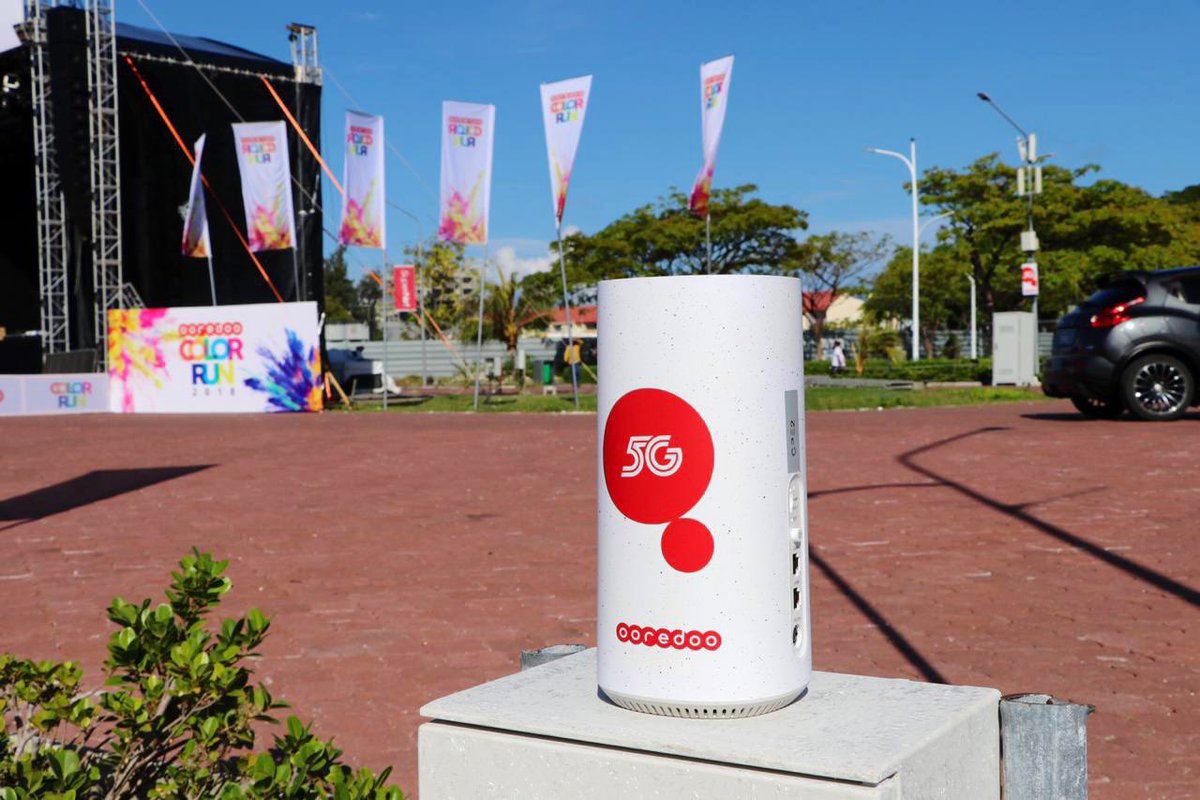
    Telecom giant Ooredoo announced the commercial launch of its 5G services in the Maldives, with the initial rollout covering a large percentage of the capital city of Male’, including key business hubs, hospitals, public spaces and more.

    At a special event held today to celebrate the kickstart of the 5G era for the company, Ooredoo Maldives also launched 5G AirFibre – the first 5G powered Home Broadband services in the Maldives providing speeds that are tenfold.

    The event was attended by the Minister of Communication, Science & Technology, Hon. Mohamed Maleeh Jamal who officially launched Ooredoo 5G services in the Maldives, the Minister of Economic Development, Uz. Fayyaz Ismail, Chief Executive of CAM, Ilyas Ahmed, Chief Technology Officer of Presidents Office, Mr. Hamid Shafeeu, as well as the Chairman of Ooredoo Maldives, Mr. Andrew Kvalseth, the Board of Directors and employees of Ooredoo Maldives who joined the event virtually to be part of this historic moment for the company.

    Speaking at the event, the Minister of Communication, Science & Technology, Hon. Mohamed Maleeh Jamal said: “5G technologies have the potential for extraordinary breakthroughs across industries, which is now being witnessed worldwide. As the role of internet connectivity continues to become more and more crucial for the country’s social and economic growth, the roll-out of 5G technologies in the Maldives creates a strong digital infrastructure on which creative new solutions can be built on for the betterment of our communities. I would like to thank the management and staff of Ooredoo Maldives for their strong commitment towards a Digital Maldives, by continuing to invest in creating a stronger and more capable network which can power new technologies and innovations, at a time when it is needed more than ever.”

    Najib Khan, Managing Director and CEO, Ooredoo Maldives said: “Over the past year, we have seen a huge shift towards digital across industries, from healthcare, education, communication, governance, e-commerce and more. Despite the challenges faced by the pandemic, our team has prioritized the roll-out of 5G services, understanding its unparalleled capabilities to unlock the full power of a connected society – something that is of pivotal importance in the new normal. We are equally proud to launch the first 5G broadband services in the Maldives, which overcomes the challenges faced in installation of fibre optic cables in congested areas such as Male’. A flexible alternative which offers comparable internet speeds to fiber broadband, 5G AirFibre services will accelerate fiberisation through airwaves of Ooredoo 5G. Today, we welcome a new digital age in the Maldives, enabling endless possibilities and innovative new digital services for people and businesses. We reaffirm our commitment to the people of Maldives, ensuring our support in transforming their digital lifestyles to achieve the full benefits of the digital world.”

    5G technology not only promises a fundamental boost in speed, but offers significantly lower latencies, increased capacities and is much more reliable. Paired with IoT Technologies, this unlocks a wave of advances such as intelligent homes, smart cars, drone deliveries and much more than can transform life as we know it and power healthcare services, education and even entertainment such as sporting events & gaming.

    Available for both prepaid and postpaid customers, Ooredoo 5G covers a large percentage of the capital city, on certified handsets. With the official launch of 5G, we are working with global operators to certify the network on additional handsets as soon as possible. The coverage map for Ooredoo 5G is available on Ooredoo Maldives website.

    In addition to 5G mobile services, customers in the capital city can also experience the superfast speeds of 5G via 5G AirFibre Home Broadband. The enhanced connectivity with 5G AirFibre will provide incredibly high speeds which is extremely positive news for local communities and businesses; especially for small and medium business working remotely or working from homes. Customers in Male’ can now check the eligibility of their area and pre-book their 5G AirFibre devices via Ooredoo Maldives website.

    Ooredoo Maldives also announced 5G Experience zones, for customers who are curious to test out 5G and 5G AirFibre services. This includes the first 5G powered VR Café’ in the Maldives and Ooredoo Club Premier Lounge.

    Ooredoo was the first operator in the world to have launched a live commercial 5G network in Qatar in early 2018 which marked a major technological breakthrough for Ooredoo and the global telecommunications industry. Following its vision to create communities powered by digital services, the company continuously made investments in North Africa, the Arabian Gulf to Southeast Asia to enhance customers’ digital experiences. Ooredoo Maldives will continue to enhance its network across the nation in order to connect customers to the best technologies and services that the digital world has to offer.
  • Singtel to Expand Mobile Financial Services Offerings

    Singtel to Expand Mobile Financial Services Offerings

    The robo-adviser, in partnership with UOB Asset Management, is expected to launch by the first half of 2021.

    Singtel and UOB Asset Management have signed an agreement to launch a robo-advisor to make digital investments more accessible to users of Singtel’s Dash mobile wallet, according to a joint announcement on Monday.

    The partnership paves the way for Dash to make its foray into wealth management and furthers its goals of digital and financial inclusion by expanding the app’s range of mobile financial services offerings, the announcement said. Dash customers will be able to invest in a portfolio of Exchange Traded Funds (ETFs), managed funds and/or other asset classes within the Dash app.

    The two sides will also explore opportunities to offer robo-advisory and other investment solutions through Singtel’s associates in the region, given the extensive presence of both companies in Asia including Indonesia and Thailand.

    We aim to democratize access to digital investments for our customers who value simplicity, affordability and convenience when managing their finances on a digital platform, Arthur Lang, Singtel International Group CEO, who noted the growing interest in online investing among its users.

    With over 1 million registered users, Dash is among the largest non-bank mobile wallets in Singapore. Since its launch in 2014, the app has expanded beyond payments and mobile remittance to include lifestyle services like restaurant bookings and insurance.

    Singtel, as part of a consortium with Grab, is one of two recipients of a full digital bank license from the Monetary Authority of Singapore. The consortium aims to formally launch the digital bank in early 2022.

  • Data from Qualcomm suggests that Apple could produce 176 million 5G iPhone units this year

    Data from Qualcomm suggests that Apple could produce 176 million 5G iPhone units this year

    With a little bit of math and plenty of fingers and toes, Sina Finance has calculated that Apple purchased approximately 176 million 5G modems from Qualcomm for this year. This calculation dovetails with estimates calling for Apple to produce 5G and non-5G iPhone models in the neighborhood of 190-200 million units for 2020. On the other hand, another report written by Taiwan’s Appledaily calls for Apple to roll out 120 million 5G iPhones this year indicating that the higher figures overestimate reality. Another possibility is that Apple expects strong sales for the iPhone 12 series this year and next year. One other option is that Apple ordered more modem chips than they needed because the company plans on using them on some future Apple devices. There has been talking about a 5G iPad tablet in the future and Apple might have ordered enough chips for such a device.

    Each 12-inch wafer that TSMC ships to Qualcomm can yield 2,211 modem chips for Apple; with 80,000 wafers shipped, we can estimate that Apple received 176 million 5G modem chips. This tells us that Apple expects to deliver 176 million 5G handsets this year. You might recall that Apple and Qualcomm were the Silicon Valley equivalent of the Hatfields and McCoys in 2019 with both firms taking each other to court for various patent infringements. Apple was frantically trying to find a source for 5G modem chips. On April 16th, 2019, just after Apple concluded its opening statement in a court battle with Qualcomm, a settlement between the two companies was announced. In return for a large sack of cash from Apple (estimated to be $4.5 billion), the chip designer gave Apple a six-year licensing agreement with an option for an additional two years. The settlement also included a supply agreement that covers the purchase by Apple of Qualcomm’s 5G modem chips. All legal action filed by both companies against the other was dropped.

    In more news related to this subject, Qualcomm is now TSMC’s largest customer for chips made used the 7nm process node. The process node is based on the number of transistors that fit in a square mm. TSMC’s 7nm process node sports 96.5 million transistors in that little space compared to 171.3 million with the latest 3nm process node. The larger the number of transistors inside a chip, the more powerful and energy-efficient it is. The 7nm process is used to manufacture the Snapdragon X55 modem chip and the current flagship Snapdragon 865 and Snapdragon 865+ chipsets.

    Apple does not ever want to be in the position again where it needs a specific component from a third-party supplier. So it has been working on developing its own modem chip. This would be dome similar to how Apple designs its own chipsets and has it built by a contract foundry such as TSMC or Samsung. Last year, Apple spent $1 billion to acquire most of Intel’s smartphone modem chip business. 2,200 Intel employees joined Apple with the transaction. Apple hopes to start using its own 5G modem chips perhaps by 2023. This could save Apple some money which in turn might allow the firm to cut pricing on future 5G enabled devices.

    That Apple went ahead and purchased Intel’s smartphone modem business suggests how strongly it wants to design its own chips. A $1 billion acquisition is unusual for Apple which usually involves itself in smaller transactions covering niche components that it plans on using for the iPhone or other devices within the next year or two. The largest acquisition made by Apple was its purchase of Beats Audio for $3 billion in 2014.

  • Vietnamese telcos begin testing 5G services in earnest

    Vietnamese telcos begin testing 5G services in earnest

    Vietnam’s three major telecom companies are racing to test 5G services to achieve the government’s goal of making the country one of the earliest to adopt the technology.

    State-owned Vinaphone last week became the first to conduct 5G commercial tests in both Ho Chi Minh City and Hanoi.

    In Hanoi, VnExpress reporters using 5G devices were able to reach download speeds of 721 megabit per second (Mbps), or 10 times higher than 4G speeds. In HCMC, it reached 1,000 Mbps, with downloading a 1.16 gigabyte (GB) app taking around 34 seconds.

    Vinaphone also unveiled its 5G routers developed in partnership with Finland’s Nokia.

    The device collects 5G waves and broadcasts it as wifi signals, enabling Internet use in households without the need for fiber-optic cables.

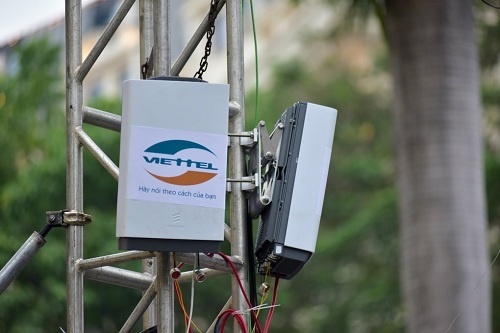
    Military-run Viettel commercially tested its 5G broadcast in Hanoi on November 30, achieving 10 times the download speeds of 4G when the user is in one place and five times when traveling in a vehicle.

    Viettel has put up 100 base stations in the city’s three downtown districts, and users with 5G devices can start experiencing the technology without the need to change their sim cards.

    Of the 100 stations, it produced 15 in-house and bought the rest from Sweden’s Ericsson.

    The company plans to expand to Da Nang and HCMC soon.

    Le Dang Dung, the chairman of the company, said when 5G transmission is stable it could help doctors perform surgeries through the Internet and factories could be completely automated.

    Another state-owned telecom firm, MobiFone, began commercially testing 5G services in HCMC on November 27, achieving average speeds of 600-800 Mbps, going up to 1,500 Mbps.

    The company plans to install 50 stations in the city this month.

    But it will take time for smartphone makers and networks to perfect 5G operations.

    Some Huawei, Xiaomi, Asus, Nokia, and Oppo devices can use 5G, but Samsung devices have to wait until the end of the year at least, and it is unclear when iPhone devices will be able to connect in Vietnam.

    The subscription rate is a concern among users. Currently, operators are providing free data to promote the new technology, but it is unclear what the tariffs will be.

    During the commercial test period, the Ministry of Information and Communications has limited the rates to the same level as for 4G, but operators can later change them.

    Pham Ngoc Tu, head of Vinaphone’s services research and development department, said it is still too early to determine 5G rates, and the company needs to establish around 50,000 stations to calculate prices.

    Communications minister Nguyen Manh Hung said in 2018 that Vietnam would be one of the first countries in the world to launch 5G services.

    It was seven or eight years behind in adopting 3G and 4G technologies, but not with 5G, he promised last month, adding that it would be widely available in the country from next year.