Category: Telecom

Retail News Asia is committed to providing both local and global retailers with the latest Telecom & Telco news throughout the Asian market. This on a daily base.

  • Singtel and Great Eastern partner to offer general insurance products with telco-centric benefits

    Singtel and Great Eastern partner to offer general insurance products with telco-centric benefits

    Singtel and Great Eastern today announced their partnership to launch a range of general insurance products spanning home, motor and travel, jointly developed by both companies. These innovative insurance offerings, underwritten by Great Eastern, seek to address customer needs arising from their increasingly digital lifestyles, featuring telco-centric benefits that are industry firsts. This collaboration expands Singtel’s foray into insurance, tapping its wide customer base to reach more than 60% of all households in Singapore, and valuable customer insights that help tailor insurance products to customers’ lifestyle needs.

    To start, Singtel and Great Eastern will be introducing Singtel Home Protect, a home insurance first that provides coverage for both telco bills and home contents. The plan reimburses Singtel broadband expenses besides covering renovation, furniture, appliances, valuables and personal effects, which most home owners do not insure today. Insurance that bundles both home contents and broadband is synergistic, as home owners typically sign up for or re-contract their broadband services when they shift or renovate their homes.

    Mr Yuen Kuan Moon, CEO of Consumer Singapore at Singtel said, “With the shift to work from home since the onset of COVID-19, many people have made home improvements to create a more conducive environment. This makes protecting their homes with Singtel Home Protect more important than ever. On top of better coverage for home belongings, we want to give our customers additional peace of mind by providing extra protection for their telco bills. We’ve worked closely with Great Eastern to enhance traditional insurance with the kind of telco benefits that speak to our reliance on technology and this will also be extended to motor and travel insurance.”

    In the coming weeks, Singtel and Great Eastern will also be offering car owners motor insurance. For travellers keen to tour the world once more travel restrictions lift, Singtel will be introducing travel insurance with mobile-related benefits. This is another first in Singapore as it includes unique benefits such as reimbursement of Singtel mobile bill during hospitalization due to an accident, and of additional Singtel mobile data expenses incurred due to delays in travel, as well as repair or replacement of mobile phone in case of loss.

    Mr Ryan Cheong, Managing Director of Digital for Business, Great Eastern, said, “The partnership with a trusted telco like Singtel is yet another milestone in our digital affinity strategy and expansion into new customer segments as a leading regional insurer. To provide value-added protection to augment Singtel’s existing customer offer, we leveraged data insights to develop affordable, relevant general insurance solutions with unique benefits to help protect their everyday needs. Through continuous engagement and a seamless consumer purchase journey, we are making customized protection solutions easily accessible to Singtel customers to LifeProof their assets through home, and later motor and travel insurance.”

    Singtel Home Protect is offered to Singtel broadband customers at launch and will be made available to all Singtel customers later. For as low as S$6.50 a month, they can sign up for the plan on the Singtel website or through My Singtel app. The plan covers reimbursement of Singtel bills of S$280 per month for up to three months, and up to S$80,000 for home contents and renovation in the event of a disruption to services due to a fire or other types of damage to the home. Available for S$84 for 12 months of coverage, or S$156 for 24 months of coverage, customers can enjoy 10% off Home Protect from now until 18 September 2020. For more details, visit singtel.com/homeprotect.

    The launch of these general insurance products adds to Singtel’s expanding range of insurance offerings for its customers. Singtel first made its foray into the local insurance market last July, when it launched free personal insurance cover for its prepaid customers as part of mobile data plans. Earlier in the year, Singtel extended free 30-day COVID-19 insurance coverage to prepaid and Dash customers. Singtel also introduced an insurance savings plan for Dash customers who wish to start saving regularly for the future.

  • Huawei is retreating from a key market

    Huawei is retreating from a key market

    Troubles continue to mount for Huawei as India joins the US and Europe in banning Chinese firms over espionage fears. The company has reportedly slashed its revenue target in India by 50 percent for the current year and is also laying off up to 70 percent of its staff in the country. The manufacturer will apparently be retaining employees in research and development and the Global Service Centre.

    Tensions between the two countries have been rising ever since a border clash resulted in the death of 20 Indian soldiers. Consumer sentiment has turned sour against China and there all calls to boycott goods such as smartphones originating from the country.

    Another setback for Huawei’s 5G plans

    The Indian government has already stopped state-run carriers from getting equipment from Huawei and ZTE and is seemingly requesting private telecoms to do the same. They have supposedly been requested to phase out Chinese equipment gradually so that consumer services are not disrupted.

    Reliance Jio, the country’s largest mobile network, sourced components from Samsung for its 4G network. The other two dominant companies, Bharti Airtel and Vodafone Idea, got their equipment from various vendors including Huawei. According to research, the Chinese giant’s gear makes up 40 percent of Vodafone Idea’s network and around 33 percent of Bharti Airtel’s existing network.

    All of these telecom companies have submitted applications to carry out 5G tests with different manufacturers including Huawei.

    Whether Huawei will make the cut remains to be seen, but it seems highly unlikely. According to an insider, the company currently has no new projects in India and there is no clarity on any new business from carriers.

    Huawei was earlier expecting India to generate nearly $700-800 million in revenue in 2020, a far cry from sales of $1.2 billion posted in 2017. Now, it has revised those expectations and is only forecasting sales of around $350-500 million.

    As grim as the situation may sound, experts believe it would be an uphill task for India to disengage from China as the later’s influence in investments, trade, and technology has grown significantly over the years. Per an estimate, Huawei’s India unit employs nearly 700 people and this figure doesn’t include the hundreds of people working for the company through third-party firms.

    That said, telecommunication is one sector where alternatives are available and thus Huawei will probably not be included in India’s 5G rollout.

  • Nokia will build U.S. Cellular’s 5G network throughout 2020

    Nokia will build U.S. Cellular’s 5G network throughout 2020

    U.S. Cellular, one of the smaller carriers in the country, has teamed up with Nokia to enhance its 5G network. Since Huawei is no longer an option, there are very few choices that US carriers have at their disposal whenever they need to deploy 5G equipment or upgrade new ones.

    Nokia and Ericsson would be the most obvious choices, but both offer more expensive services than Huawei did. In any case, U.S. Cellular wants to extend the capabilities of its 5G mmWave network with the addition of 24 GHz and 28 GHz spectrum bands, which are absolutely needed for 5G.

    In that regard, Nokia will be deploying its AirScale radio solution to support U.S. Cellular’s customers with 5G and IoT services. The discussion can get very technical going forward, so let’s just summarize and say that U.S. Cellular hopes to start providing 5G services to its customers in 2021.

    Nokia will work throughout 2020 on making sure that U.S. Cellular’s 5G network will meet the demand capacity and speed required. Good things are coming to U.S. Cellular customers, just not this year.

  • Ooredoo and Ericsson Reach a Record System Throughput of 4.2Gbps over a Bandwidth of 200MHzs

    Ooredoo and Ericsson Reach a Record System Throughput of 4.2Gbps over a Bandwidth of 200MHzs

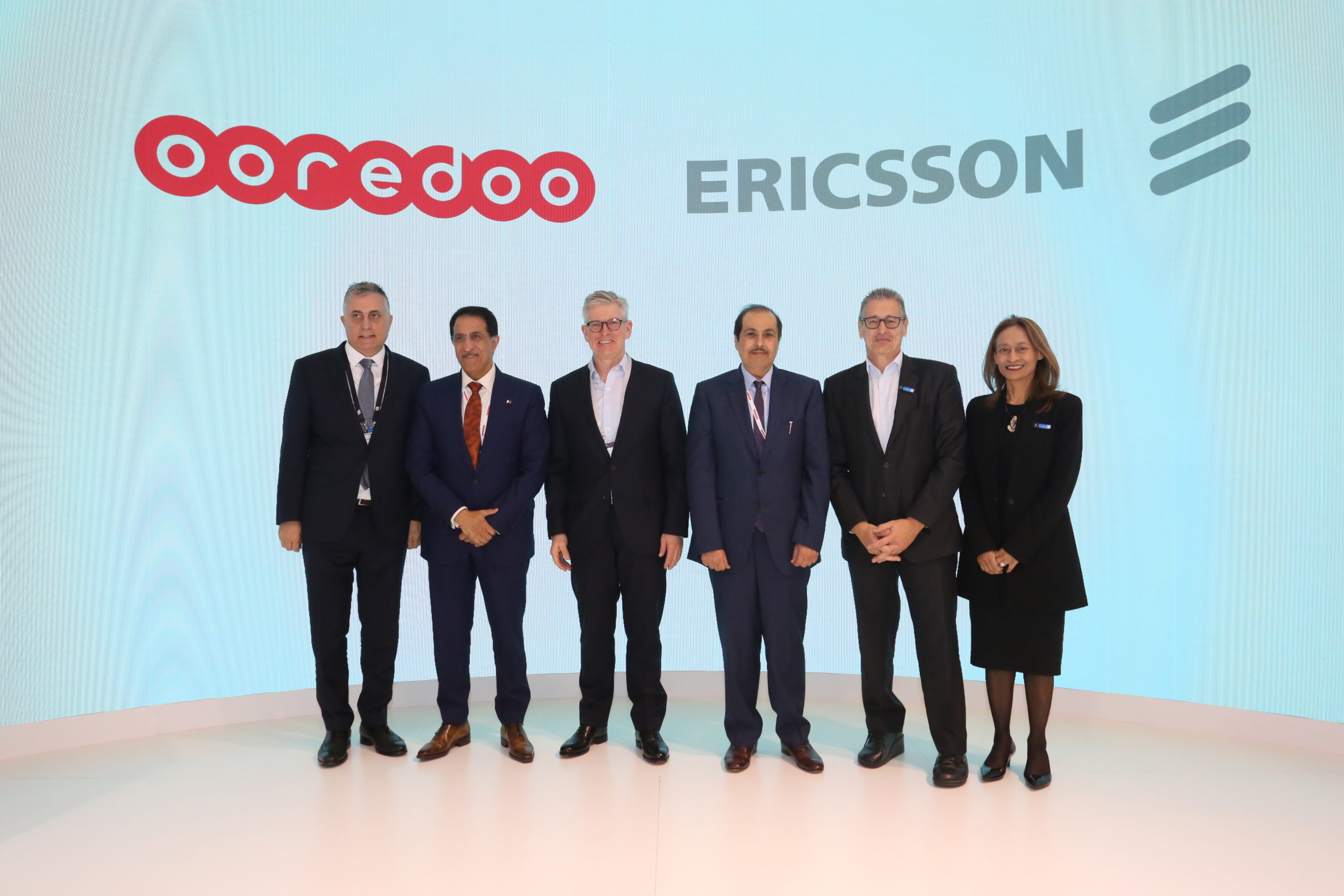
    Ooredoo Qatar, working with technology giant Ericsson, has successfully tested the 200MHz spectrum and achieved a record system throughput of 4.2Gbps, as part of the growing shift towards complete 5G delivery.

    The technology, deployed within Ooredoo’s network, uses advanced 5G and 4G carrier aggregation functionality, increasing the data rate per user by assigning multiple frequency blocks to the same user. This innovation is expected to play an important role in the build-up to achieving 90 percent 5G coverage throughout Qatar by the end of 2020.

    Increasingly, Ooredoo Qatar is positioned as a key digital enabler. With this recent breakthrough in both speed and delivery, customers will be able to maximize the benefits of streaming services, virtual learning environments, cloud gaming and augmented and/or virtual reality applications. Likewise, it will allow businesses to pursue new customer bases, while potentially streamlining their contribution to such endeavors as smart cities, telemedicine, and logistics.

    Sheikh Mohammed Bin Abdullah Al Thani, CEO at Ooredoo Qatar says: “5G is a phenomenal evolution that opens doors to a world of new possibilities — many of which we have already tested — and we are proud to be at the forefront of the 5G revolution amongst global telecom operators. Keeping our customers connected and enabling them to enjoy the best of the internet is at the core of what we do, and this partnership with Ericsson will enable us to achieve our strategic goals in network development and expansion. We are making use of the latest innovative technology to apply 5G in existing frequency bands and deploying the latest 5G radios to shift our subscriber experience to a whole new level; with the addition of 5G, we are committed to offering Qatar the best mobile digital infrastructure, which will result in enhanced user experience ahead of the major world sporting events set to be held in Qatar.”

    Fadi Pharaon, President of Ericsson Middle East & Africa, says: “We are pleased to be working with our long-standing partner Ooredoo Qatar helping them achieve the full potential of 5G. Today’s trial cements Ooredoo’s commitment to bring the latest technology and prepares its network for the new era of 5G use cases. This announcement highlights Ericsson’s 5G leadership enabling wider opportunities, innovative solutions, and applications that 5G will bring.”

    By reaching this milestone, Ooredoo Qatar is taking a crucial step forward for an efficient and seamless roll-out of the latest mobile technology, offering enhanced network performance.

  • T-Mobile isn’t the only U.S. carrier with a nationwide 5G network

    T-Mobile isn’t the only U.S. carrier with a nationwide 5G network

    Move over T-Mobile, you’re no longer the only nationwide 5G network in town. AT&T announced Thursday that it has added 5G in 40 more markets; as a result, the country’s second-largest wireless provider now covers 205 million Americans with its 5G signal. Helping AT&T speed up the process so quickly was the launch last month of dynamic spectrum sharing (DSS) in parts of Florida and Texas. DSS responds in real-time to demand on AT&T’s network for either 4G LTE or 5G spectrum. Thus the use of the word “Dynamic” in DSS.

    With DSS, the same channel can be employed for 4G and 5G users at the same time. The technology is “traffic-aware” so 4G LTE and 5G resources are allocated based on the makeup of the traffic. Using its 850MHz low-band spectrum, AT&T’s coast-to-coast 5G can be found in 395 markets. T-Mobile’s nationwide 5G uses the carrier’s 600MHz low-band spectrum and can be accessed by 225 million people, 20 million more than AT&T. Besides offering 5G over its low-band spectrum, in limited parts of 35 markets, AT&T’s 5G+ service employs its faster mmWave spectrum.

    On August 7th, AT&T will offer its 5G service to customers of its least expensive unlimited plan at no additional cost. The Unlimited Starter postpaid plan costs $140 for 4 lines ($35 per line/per month). Customers on more expensive unlimited plans already had 5G service. The wireless provider’s prepaid customers will also have access to 5G via the Unlimited Plus plan, which costs $75 per month or $50 with autopay. That service also begins on August 7th.

    Chris Sambar, Executive Vice President of Technology Operations said, “Our strategy of deploying 5G in both sub-6 (5G) and mmWave (5G+) spectrum bands will provide the best mix of speeds, latency and coverage that are needed to enable revolutionary new capabilities to fuel 5G experiences for consumers and businesses. Our competitors are still working to provide that same mix, which for them could take months or even years. What we offer is available to consumers and businesses today, and we’re not slowing down.”

    5G phones that AT&T sells include the Samsung Galaxy Note10+ 5G, the Galaxy S20 series, the Galaxy A71 5G, and the LG V60 ThinQ 5G. The LG Velvet 5G is now available and orders for the Galaxy Z Flip 5G will start shipping on August 7. Customers of AT&T’s Cricket Wireless prepaid brand will be able to activate 5G service on a Samsung Galaxy S20+ 5G starting on August 21st.

    While all three major carriers plan on using low-band, mid-band, and high-band spectrum to build-out their 5G networks, right now T-Mobile is the only one using mid-band airwaves for 5G thanks to the 2.5GHz spectrum it took control of after closing on the Sprint merger. Keep in mind that the merger was always about obtaining those assets from Sprint. Verizon is focusing on its mmWave spectrum which is why it is taking so long for it to complete. You see, the 600MHz and 850MHz airwaves used by T-Mobile and AT&T respectively, travel farther and penetrate structures better than mmWave spectrum. The latter, though, delivers faster data speeds and can handle larger amounts of traffic than low-band spectrum.

    While mid-band spectrum is rare in the states, all three carriers will take part in an auction of Priority Access Licenses (PALs) for 3.5GHz spectrum that is shared with the Navy in the Citizens Broadband Radio Service (CBRS). However, purchasing a PAL will allow a carrier to have first crack at using the spectrum.

    AT&T also announced today that it spent $1 billion to buy new spectrum that will be used for its 5G network. At the same time, the company said that it lost 151,000 postpaid subscribers during the second quarter. But that figure includes 338,000 subscribers that AT&T counts as a lost subscriber because they didn’t pay their bills. But AT&T continued to deliver service to these accounts during the quarter because of the Keep America Connected Pledge that the wireless firms agreed to in March. Under the pledge, customers who could not pay their bill were not given the boot, late charges were waived, and non-customers had access to a carrier’s mobile hotspot. The Keep America Connected Pledge expired on June 30th, the last day of the third quarter.

  • Forget 5G, Samsung says that now is the time to begin work on 6G

    Forget 5G, Samsung says that now is the time to begin work on 6G

    Just when you’ve finally been able to wrap your mind around 5G and understand the difference between sub-6GHz and mmWave airwaves, and know why low-latency is better than high-latency (which puts you way ahead of the average consumer by the way), Samsung throws you a curveball and releases a “White Paper” about 6G. A “White Paper” is supposed to make a complicated issue easier for the public to understand.

    The paper, titled “The Next Hyper-Connected Experience for All,” says that the company’s goal is to bring 6G “to every corner of life.” Samsung sees 6G standards completed by 2028 with mass commercialization starting two years later. While 5G is based on performance goals, Samsung says that three requirements must be met for 6G service to become available: For example, to be called 6G the download data speed must be no lower than 1,000 Gbps. As a comparison, Open Signal says that in the states Verizon currently has the fastest average 5G download data speed just shy of 500Mbps. With 6G, latency is expected to be less than 100 microseconds or one-tenth the latency of 5G.

    Samsung says that by 2030, the number of connected devices (500 billion) will exceed the human population (8.5 billion) by a factor of 59. Mobile devices will include AR glasses, VR headsets, and hologram devices. These screens will be connected to 6G networks and these networks will be built for machines rather than humans. The dominant users of 6G will be machines and Samsung’s report states that “the capability of human eye is limited to a maximum resolution of 1/150° and view angle of 200° in azimuth and 130° in zenith. On the other hand, machine vision capability is not constrained by such limitations, since it can take advantage of many cameras with various functions. Considering such high capabilities of machines, the performance requirements for the 6G system could be extremely high for relevant service scenarios.”

    6G will help the world by addressing social issues with its hyper-connectivity according to Samsung. “A wide deployment of 6G will reduce differences in regional and social infrastructure and economic opportunities and thereby provide alternatives to rural exodus, mass urbanization, and its attendant problems. We expect, in summary, that 6G mobile communications will…tremendously contribute to the quality and opportunities of human life.”

    The White Paper discusses technologies that are not available now due to the limitations of today’s technology. Truly Immersive XR, which combines AR, VR, and mixed reality, will be an important tool for entertainment, medicine, science, education, and manufacturing. But current mobile devices do not have the current processing power required and battery capacity needed.

    High-Fidelity Mobile Holograms will require data speeds hundreds of times faster than 5G is capable of delivering. Even at 5G’s peak data speed of 20Gbps, faster rates are required and 6G will be able to deliver this. In addition, a full-sized human hologram requires a large number of pixels. The paper also mentions Digital Replicas. Samsung explains what this is by saying, “With the help of advanced sensors, AI, and communication technologies, it will be possible to replicate physical entities, including people, devices, objects, systems, and even places, in a virtual world.” These are called digital twins and users will be able to interact with them using VR devices or holographic displays.

    Samsung says that improvements in technology have allowed standards for each new generation of wireless to be created in only eight years down from the 15 years that it used to take. The report says that as soon as next year, the International Telecommunication Union (ITU) could start working on its 6G vision. You might think that this is all crazy talk considering that 5G is far from finished. The company explains in its conclusion that it is actually the right time to start preparing for 6G.

  • Britain close to final decision on whether to ban Huawei from its 5G networks

    Britain close to final decision on whether to ban Huawei from its 5G networks

    Despite constant pressure applied by the U.S. not to allow Huawei’s networking equipment inside Britain’s 5G networks, in January the British announced that it would not heed the warning. Gear from the world’s largest networking equipment supplier would be used on the country’s 5G networks although the parts would be placed away from sensitive areas. At the time, a spokesman said, “The United States is disappointed by the U.K.’s decision.” British Prime Minister Boris Johnson felt that there was no other decision he could make because of Huawei’s technological and financial advantages over the competition.

    But according to the U.S. government, Huawei is a national security threat because of its rumored ties to the communist Chinese government. Huawei, of course, has denied this repeatedly. The U.S tried to convince Britain that it wouldn’t be able to pass along the intelligence to its allies if Huawei was involved in the country’s 5G network. And finally, there were some cracks in the prime minister’s resolve. Johnson could announce as soon as this coming Tuesday’s National Security Council meeting that Huawei equipment will be banned from British networks before the end of next year.

    In the U.S. Huawei products, including both phones and networking gear, are banned from use by the military and by telecom firms. Some rural wireless providers have Huawei equipment in their older networks which the current administration would like to see removed.

    While the U.S. did apply enough pressure to get the ball rolling in Britain, what really convinced the Brits to think twice about Huawei’s presence in its 5G networks was the recent export rule change by the U.S. Under the new rules, a foundry using American technology to produce chips cannot ship any product to Huawei without a license from the U.S. As a result, Huawei could be forced to use “untrusted” chips which greatly lessens the security of any 5G network that employs Huawei’s gear. A review in Britain concluded that under these conditions, the country will not be able to control the security of its 5G networks.

    The Conservative Party that Prime Minister Johnson belongs to has been pushing for a reversal of the decision to allow Huawei equipment to be used. Bob Seely, a member of the Conservative Party, praised the U.S. sanctions for getting Britain to revisit its initial decision. “The sanctions have changed the dynamic, he said. “The government is listening, and it’s important to give them credit for trying to do the right thing.” Seely said that Members of Parliament want a “no new kit date” and a “rip out date.” After the former date, no company would be able to install Huawei equipment in Britain. By the latter date, all Huawei equipment would have to be removed in the country. The politician would like to see the “no new kit date” set for late 2021 while there is a debate over where the “rip out date” should fall on the calendar. The range under consideration is a date between 2023 and 2025.

    Some Conservatives aren’t pushing for such draconian terms. Neil O’Brien said he wasn’t so concerned about the timing of the removal of Huawei gear and is also not terribly worried about the removal of equipment from older networks. That’s because the latter “will come to the end of its life over a couple of years.” That mirrors the comments made by Damian Green who also isn’t worried about older equipment. He simply wants to see a new equipment ban “in this parliament by 2024.

    The next generation of wireless connectivity, 5G will deliver download data speeds up to ten times faster than 4G LTE. Not only will it allow users to download movies in seconds instead of minutes, but it should also help to create new technologies and businesses.

  • Ooredoo Group Extends Working from Home until End of Year, Supports a More Agile Operational Culture

    Ooredoo Group Extends Working from Home until End of Year, Supports a More Agile Operational Culture

    In a pilot initiative aiming to adopt and support a more agile digital culture, Ooredoo Group has extended its Work-From-Home procedures, allowing employees whose work doesn’t require them to physically be in the office to continue working remotely until the end of 2020

    The company is one of the first in the region to make such a decision, paving the way to an innovative working environment that could reshape the contemporary workplace.

    Ooredoo Group employees and contractors will have the option to agree more flexible working arrangements from home or the office, subject to individual agreement and at management discretion. As for the Group’s operating companies around the world, each will have the flexibility to test more localized working arrangements in a way that works best for them and in line with the regulations and directions of the countries in which they operate.

    Based on key lessons learned in the recent period, the Group management team believes that this “experiment” will foster the creation of more agile and modern work culture. As a leader in technology and telecommunications, the Group aims to leverage the insights of the recent period into a competitive advantage.

    Sheikh Saud Bin Nasser Al Thani, Group Chief Executive Officer, Ooredoo, said: “Amid the COVID-19 situation, we are presented with a real opportunity for taking our digital transformation journey to a whole new level, which will see our company leverage digital solutions to ultimately adopt a more holistic digital culture. This will transform the organization and how we work. If colleagues found the combination of working off-site and socially distancing a challenge at first, we have emerged from this disruption empowered, able to get things done as a team – even when not sharing the same physical space, and even more dynamic. I’m both very excited and optimistic about the coming period.”

    Ooredoo Group has led the way among regional tech companies by providing a supportive environment for colleagues working from home. As business returns to normal, these new workplace relationships can be repurposed to strengthen the enterprise in its ability to meet the needs of its customers and the societies they live in.

    While the company will seek to incorporate and build upon the potential for improved work practices discerned in recent months, it will continue to operate within official public health guidelines, against a backdrop of rigorous emergency and business continuity planning. This will allow for changes of direction should the medical situation change.

    “All this requires commitment, responsibility, and accountability — but given the positive experience of the past few months, I’m convinced that together we can further transform the Ooredoo culture,” reflected Sheikh Saud Bin Nasser Al Thani.

    Enforced changes saw hundreds of staff members working from home since March — an unprecedented scenario that can now be built upon leading to a positive outcome. Ooredoo is now testing these exciting new ways of working going forward, amid the economic and medical uncertainties accompanying the novel coronavirus COVID-19 pandemic.

  • Vingroup produces first 5G smartphones

    Vingroup produces first 5G smartphones

    VinSmart, a subsidiary of Vietnam’s largest listed company Vingroup, has produced its first 5G smartphones in cooperation with the U.S.’s Qualcomm.

    The Vsmart Aris 5G model is equipped with a Snapdragon 765G 5G module platform and a quantum security chip, the company stated, adding it also features a Super Amoled 6.39″ display, 8GB RAM and a 4,000 mAh battery.

    Nguyen Phi Tuyen, director of the measurement center of the Department of Telecommunications under the Ministry of Information and Communications, said the unit has repeatedly tested Vsmart’s Aris 5G, showing the network speed was eight times higher than 4G.

    VinSmart has not yet announced the official price of the Aris 5G, nor when it would hit the market, or how many units it intended to produce.

    No 5G smartphone has been manufactured or officially distributed in Vietnam so far, instead, they are hand-carried on overseas flights.

    VinSmart’s move came as local telecom firms compete in the 5G race. Telecom giant Viettel for the first time broadcast from its network of 5G base transceiver stations in Ho Chi Minh City last September while competitor VNPT has announced similar plans.

    VinSmart, which launched its first products at the end of 2018, is currently focusing on the low-end segment of the market, with 12 Vsmart phones all priced at below VND5 million ($212).

  • France won’t ban Huawei gear from its 5G networks but will ask carriers not to install it

    France won’t ban Huawei gear from its 5G networks but will ask carriers not to install it

    Huawei is the world’s largest supplier of networking equipment although some countries like the U.S. are worried about how close the company is to the communist Chinese government. Just the other day we told you that England is now looking to stop the installation of Huawei gear in its 5G networks and also plans on pulling out the company’s equipment that has already been installed. The New York Post published a story about how France is going to handle the use of Huawei’s industry-leading technology in the country’s 5G pipelines.

    Guillaume Poupard, who runs French cybersecurity agency ANNSI, says that the country won’t “totally” ban Huawei from 5G networks in France although it will try to get French carriers not to use the Chinese manufacturer’s gear. Poupard said to a French newspaper, “What I can say is that there won’t be a total ban. (But) for operators that are not currently using Huawei, we are inciting them not to go for it.” He also said, “For those that are already using Huawei, we are delivering authorizations for durations that vary between three and eight years.”

    Earlier this year, sources told Reuters that while France wouldn’t ban Huawei, it would try to keep its gear out of the country’s core mobile networks. These networks carry the personal data belonging to customers of the country’s wireless companies which means that keeping Huawei equipment from these networks is of paramount importance. That’s because Huawei has been accused of using its networking gear to spy on consumers and corporations and send the data to Beijing. No evidence of this has ever been discovered and Huawei has repeatedly denied the allegations.

    What France decides to do will be critical to half of the country’s four major wireless providers; about 50% of the networks employed by carriers Bouygues Telecom and SFR use Huawei’s technology. Orange, which is controlled by the French government, has decided to use equipment supplied by Huawei rivals Nokia and Ericsson.

    The head of ANNSI said that starting next week, wireless operators who have yet to receive authorization to use Huawei equipment for their 5G networks should consider a non-response to be a rejection of their request. Poupard stated, “This is not Huawei bashing or anti-Chinese racism. All we’re saying is that the risk is not the same with European suppliers as with non-Europeans.”

  • Foxconn eyes development of $319 million workers housing

    Foxconn eyes development of $319 million workers housing

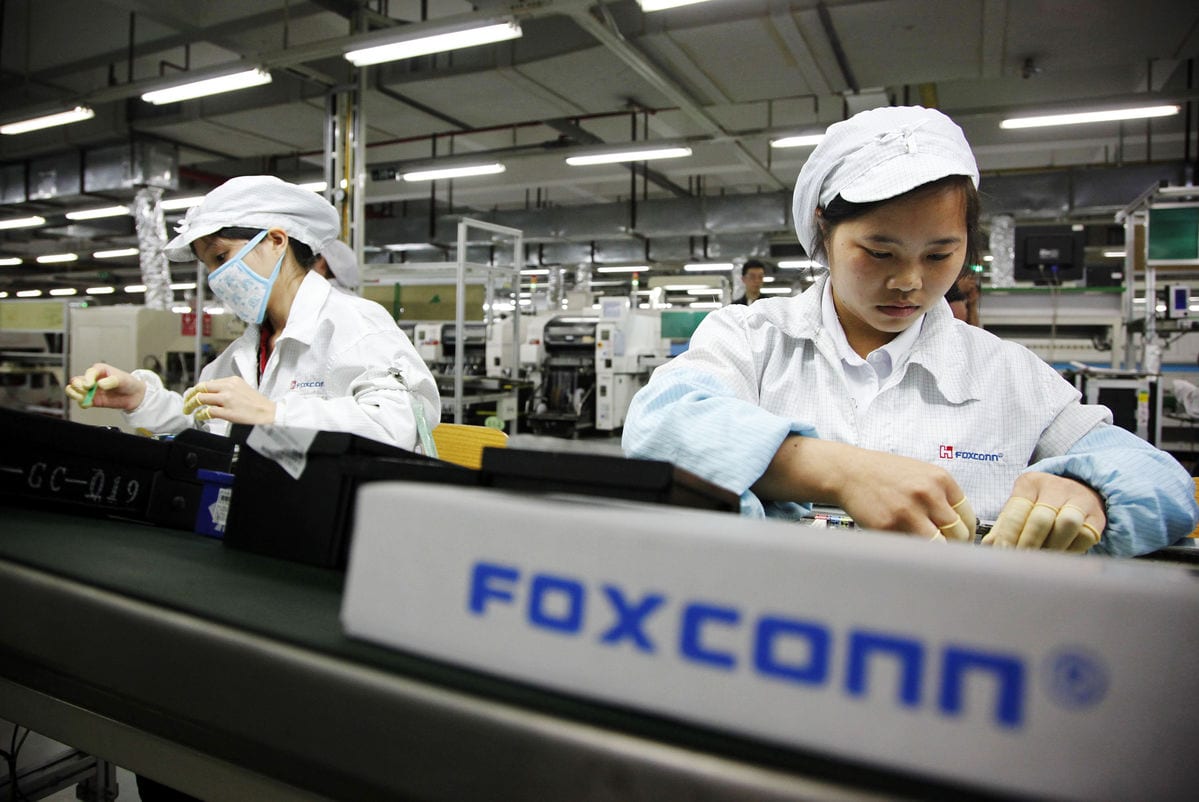
    Taiwan’s Foxconn wants to build housing for workers in northern Vietnam and has made a proposal to the government. The world’s largest contract manufacturer, a contractor for Apple and other global giants seeks to develop three housing projects at a cost of about VND7.4 trillion (nearly $319 million), and has apprised the Ministries of Construction and Planning and Investment of its interest.

    Foxconn wants to build them near industrial parks where it has its plants so that its own workers can also be housed in them.

    If approved by authorities, a project in Viet Yen District in Bac Giang Province will be the largest at 16.7 hectares and have the highest investment of VND3.42 trillion (about $147.4 million).

    Up to VND2.93 trillion ($126.3 million) will be invested in a 6.3-hectare project in Bac Ninh Province’s Que Vo District and the rest of the total investment will be poured into a 9.9-hectare project in Vinh Phuc Province.

    The company said besides apartments they would also have healthcare facilities, schools and shops.

    Since current policies pose certain hurdles, it plans to sell the houses to companies in the industrial zones for them to lease or sell to their employees.

    Foxconn came to Vietnam in 2007, and has been operating mainly in the northern provinces of Bac Ninh, Bac Giang and Vinh Phuc, manufacturing computers and other electronic products and car parts. Last year it expanded to the northern province of Quang Ninh.

    Last week it said for the first time that Vietnam is its largest manufacturing hub in Southeast Asia.

    This year Foxconn expects its exports from Vietnam to double to $6 billion.

  • Singtel Adds Insurance Savings to E-Wallet

    Singtel Adds Insurance Savings to E-Wallet

    Singtel is adding financial services to its mobile wallet Dash, in the form of offer an insurance savings solution underwritten by Etiqa.

    The Dash EasyEarn savings insurance is designed for investors who want to start saving regularly for their future but who may be concerned about cash flow, Singtel said in a statement on Monday announcing its launch.

    The insurance plan has a minimum initial premium of S$2,000, up to a maximum of S$20,000. Policyholders are automatically covered with a 105 percent death benefit of the account value.

    Other benefits include up to 2-percent per annum returns for the first policy year, no lock-in period and unlimited withdrawals with zero penalties. Customers can purchase, top-up and make withdrawals on their EasyEarn plan via the Singtel Dash app on their mobile phone.

    The offering represents the next steps for Dash as it grows to become a more inclusive everyday app that will play a bigger part in enabling our customers’ digital lifestyles, Gilbert Chuah, head of mobile financial services, International Group, Singtel, said.

    Dash is among the largest non-bank mobile wallets in Singapore. Since its launch in 2014, the app has expanded beyond payments and mobile remittance to include lifestyle services like restaurant bookings and travel insurance. The app now has over 1 million registered users.

  • Huawei opens its largest flagship store in Shanghai

    Huawei opens its largest flagship store in Shanghai

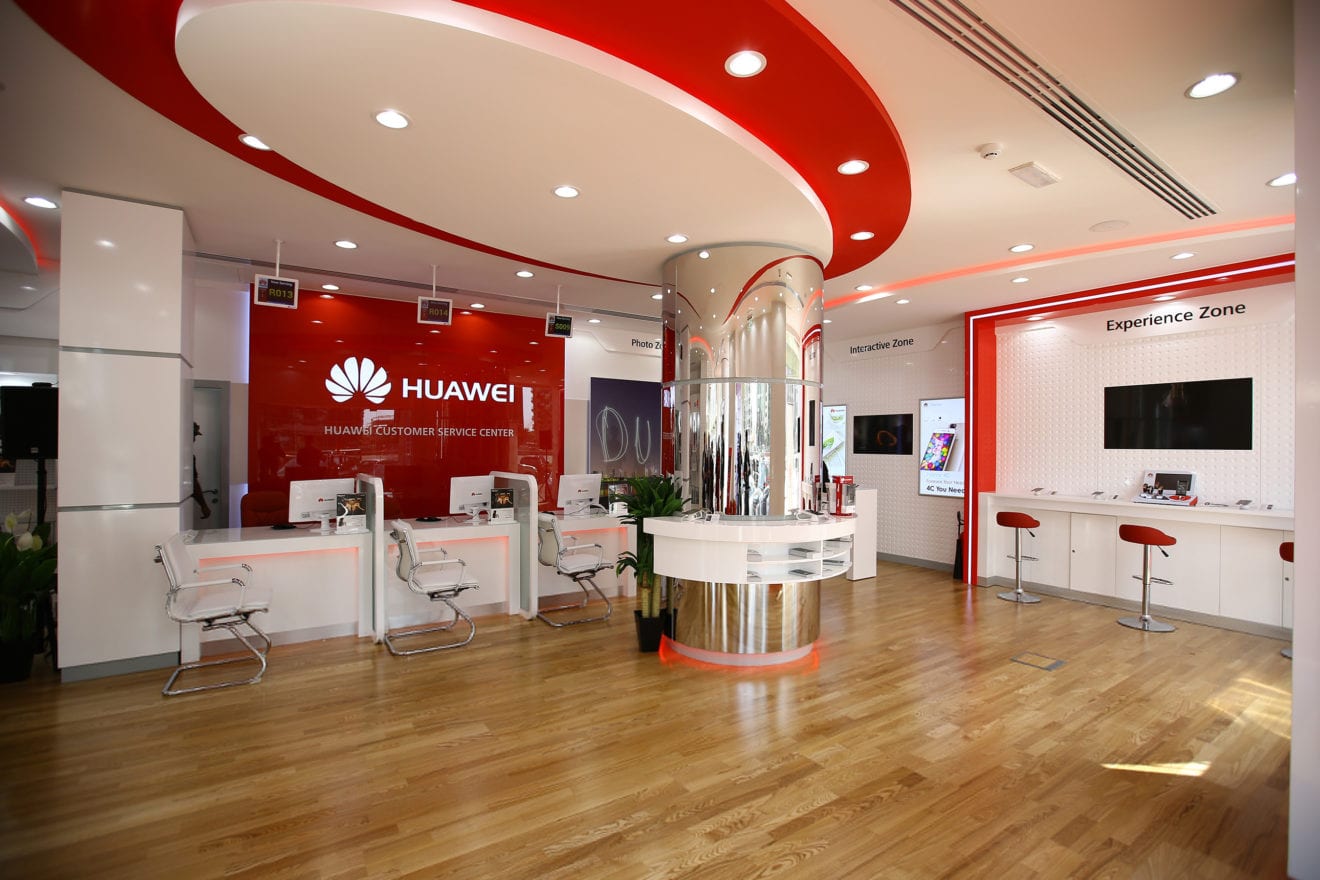
    The new Huawei Shanghai store, the Chinese smartphone and electronics brand’s largest yet, opened its doors this week. The three-story Huawei Shanghai flagship covers 50,000sqm – equivalent to the size of a small to medium shopping mall. It houses the full product range, experience zones and an exhibition area

    Construction of the flagship began during February and is said to have cost more than US$42 million to complete.

    Taking over the space once housing a giant Forever 21 store, the Huawei Shanghai flagship is built in an art deco-style building, incorporating modern design while preserving its original form.

    The store is adjacent to Apple and neighbor to Samsung and Gucci on the city’s oldest commercial street. Its location is part of the current Nanjing Road extension project, connecting the pedestrian mall to the Bund.

    Consumer products can be found on the first floor spanning 12 categories, from phones to smart wearables. Some 220 consultants work in the store, with skillsets including music, dance and v-logging. The theory is that by sharing common interests and hobbies with customers, they can offer suggestions on product use and technical support.

    Staff are able to provide services in more than 10 languages, including the local Shanghainese dialect. There are 19 checkout counters and 12 repair stations

    The second floor features a “Seamless AI Life Zone” encompassing smart experiences in different scenarios such as a smart home, mobile office, fitness and health, travel and entertainment. Products are placed in settings to enable guests to experience the Internet of Things paired with Huawei’s proprietary 5G technology.

    Meanwhile, the upper floor debuts a multi-functional experience zone as an exhibition space for films, paintings and art. Customers can also view Huawei’s first smart vehicle, HiCar.

    The flagship houses many public spaces with the patio of the building functioning as an atrium. Customers are invited to relax and roam around the store, socialise with friends and chat to consultant experts as part of the brand’s community-building initiative.

    More than 60 lectures every week will be available free, covering topics including video production, programming, fitness, and music. Creators and technology experts from around the world, as well as local artists, will be invited for art salons, sharing meetings, and developer talks every month.

    “Our relationship is not just a buyer-seller relationship. We have a deeper bond with our customers,” explains Richard Yu, CEO of Huawei’s consumer business group. “The flagship store is a place for consumers, customers, and developers to get together.”

    Tony Rong, global retail director of Huawei has hinted that more flagship stores will open in other major Chinese cities, including Beijing and Guangzhou. The brand will also soon debut in Germany, Russia and the UAE.

  • SoftBank sells T-Mobile shares at a 4 percent discount

    SoftBank sells T-Mobile shares at a 4 percent discount

    Back in July 2013, the battle between SoftBank and Dish Network over Sprint was won by SoftBank as the latter paid $21.6 billion for 78% of the company. Over time, SoftBank hiked its stake to 80% of Sprint and when T-Mobile closed on its purchase of Sprint on April 1st, SoftBank ended up with 304.6 million shares of T-Mobile.

    Perhaps at a different time, SoftBank might have held on to the 24.7% of T-Mobile’s stock that it received following the merger. But the company has been having difficulties; during its most recent fiscal year SoftBank was drowning in $13 billion worth of red ink. Positions it held in WeWork and Uber produced disastrous results and SoftBank had even considered selling as much as $11.5 billion of its stake in Chinese tech firm Alibaba.

    As part of the transaction, former Sprint CEO Marcelo Claure will purchase 5 million T-Mobile shares in a stock purchase that Claure will fund via a loan provided by SoftBank. Interestingly, Claure happens to be the current CEO of SoftBank Group International and is also a director on T-Mobile’s board. Not adding to its holdings in T-Mobile is Germany’s Deutsche Telekom. The latter owns a 43% stake in T-Mobile and some analysts expected it to add the additional 7% that would put it near the 50% mark. Instead, Deutsche Telekom has two options to purchase 101.5 million T-Mobile shares. If it exercises all of the options it has, the German telecom giant would own 51.8% of T-Mobile. Both options expire on June 22nd, 2024.

    SoftBank is selling as many as 198 million T-Mobile shares or 65% of its stake via the carrier. 133.5 million is going to the general investment public while the underwriters get a total of 10% to cover over-allotments. Existing T-Mobile holders get a crack at 19.75 million shares and 30 million more are being sold to a public trust. The transaction had an interesting effect on T-Mobile’s stock price over the last few days with increasing volatility. Today, with most shares getting hit by coronavirus fears in several states, the broad market was taking it on the chin. But after early weakness, T-Mobile moved ahead for the day and closed at $108.43 for a gain of $1.27.

    So what does the future hold for T-Mobile? With its cake-based 5G setup consisting of low-band 600MHz airwaves that travel great distances and penetrate buildings better than other signals; the 2.5GHz mid-band spectrum it acquired in the Sprint merger providing faster than expected 5G download speeds; and mmWave spectrum delivering zippy fast download data speeds, some believe that the carrier will end up as the fastest 5G wireless provider in the country. It is important to note that the number of T-Mobile shares outstanding will not increase due to the transaction which is actually positive for the carrier’s current stockholders.

    A week from today, on July 1st, Dish Network will close on its purchase of Boost Mobile and 14MHz of 800MHz spectrum for $6 billion. Dish will then sign a seven-year MVNO agreement with T-Mobile that will allow it to offer wireless service while it builds a standalone 5G wireless network. The goal is to make Boost the nation’s new fourth-largest wireless carrier replacing Sprint which was swallowed up by T-Mobile. The Justice Department was concerned that reducing the number of major carriers by 25% would lead to higher prices for consumers.

    The complex financial dealings happen to mark the end of the T-Mobile career of long time Chief Financial Officer Braxton Carter. The latter first became T-Mobile’s CFO back in 2005.

  • Singtel ushers in 5G era with 5G licence

    Singtel ushers in 5G era with 5G licence

    Singtel today was officially awarded the 3.5GHz and the millimeter wave spectrum as part of the 5G license issued by the Infocomm Media Development Authority. This paves the way for Singtel’s nationwide 5G rollout that will not only massively boost the quality of connectivity of its services but set the stage for extensive digital innovation that will prove transformative for industries, businesses, and how people work and live.

    “We are excited to get this greenlight to lead and shape 5G in Singapore by building a world-class, secure, and resilient 5G network that will serve as the backbone of Singapore’s digital economy. More than a business investment, we see this as a significant investment in Singapore’s digital future as 5G spurs innovation among enterprises and industries, creating new businesses, jobs, and economic value in the process,” said Singtel Group CEO Ms Chua Sock Koong. “This license is also very timely in light of Covid-19 and the ensuing reliance on robust infrastructure and connectivity. Our existing network capabilities have allowed us to pivot quickly to the needs of the public and businesses at this critical time and 5G will help extend and accelerate the digital adoption we’ve witnessed as we navigate our way out of Covid-19 towards recovery.”

    Singtel will build on the momentum created from ongoing 5G trials in the fields of port operations, manufacturing, and cloud gaming to offer the most transformative services and solutions to support Singapore’s digital economy.

    “As a company, we intend to move beyond access and connectivity to create new enterprise use cases and innovative platforms, applications, and services to reposition ourselves for growth in the converging eco-systems of tech and telecoms,” Ms Chua added. “As our subsidiary Optus in Australia and our regional associates forge ahead with their 5G strategies, the Group will leverage this experience and scale to build a robust 5G ecosystem with the right partners across our footprint.”

    After a rigorous tender process, Singtel has selected Ericsson to commence a period of negotiation to provide the 5G SA Core, RAN and mmWave network, with a view to finalising the contractual terms as soon as practicable.

    Singtel has been test-bedding new consumer and enterprise 5G solutions through various trials with key technology vendors and public service agencies. This includes working with the PSA on developing port-related 5G use cases such as drones and crane automation at the Pasir Panjang Terminal, exploring how 5G can enable Industry 4.0 manufacturing technologies at the Agency for Science, Technology and Research’s Advanced Remanufacturing and Technology Centre, and testing network readiness for 5G cloud gaming with IMDA and Razer. Singtel is also driving 5G innovation at the 5G Garage together with Ericsson and Singapore Polytechnic, a live facility where enterprises can develop and test 5G solutions. In the same vein, Singtel’s Centre of Digital Excellence helps enterprise customers realise the value and speed up the adoption of 5G in their digital transformation journeys.

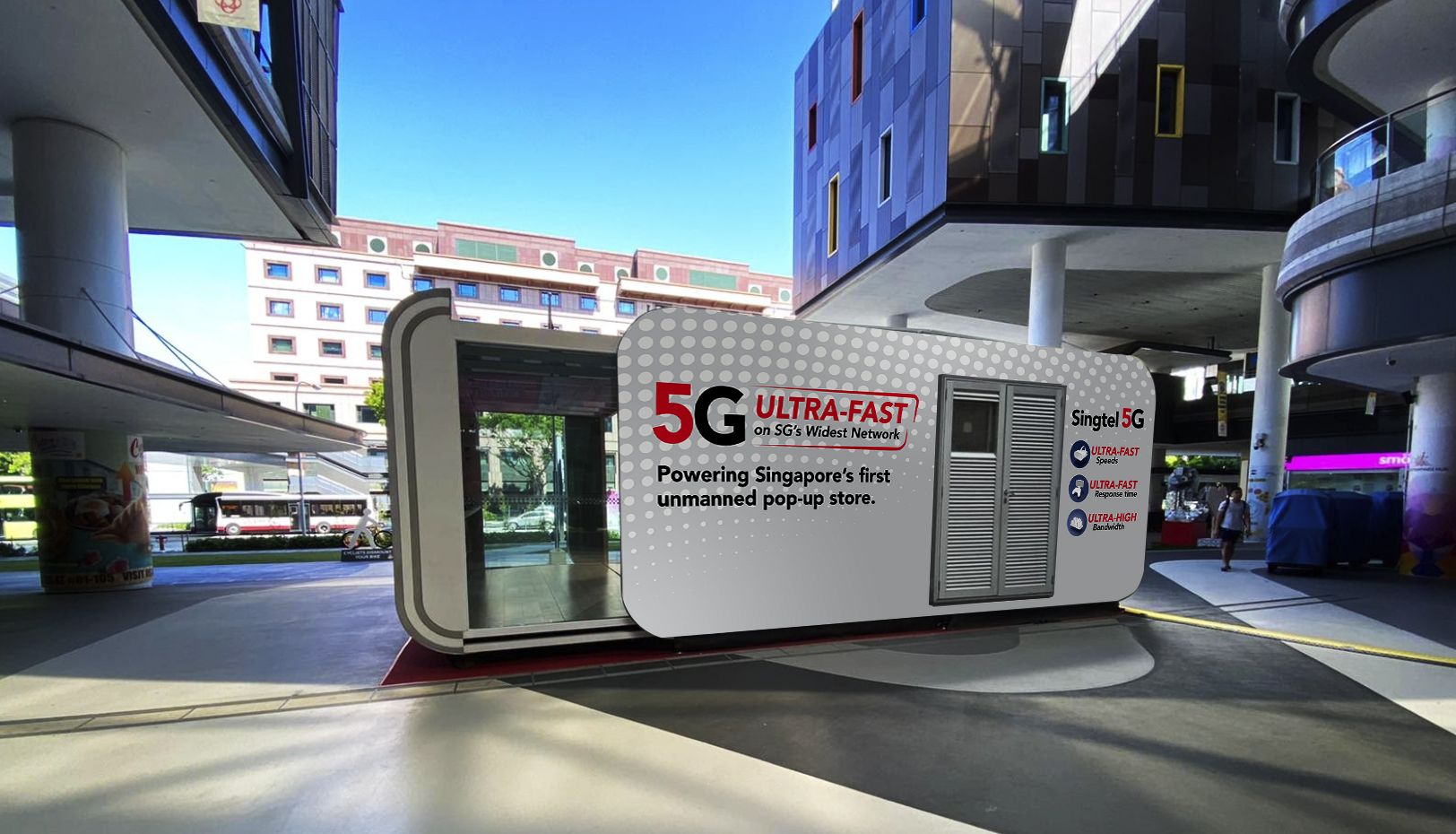
    In a first for Singapore, Singtel is bringing 5G to life for consumers at its unmanned 24/7 pop-up retail store, UNBOXED, which has been outfitted with live 5G connectivity. With 5G powering all self-serve Singapore Telecommunications Limited Company registration number: 199201624D

    kiosks and sentinel surveillance systems within the store, UNBOXED can now be relocated anywhere without laying fibre cables and serve customers with faster transactions. From late July, customers can get a taste of a 5G future while trying out applications such as cloud gaming, 360⁰ immersive entertainment, augmented reality education, as well as checking out the latest 5G mobile devices. Consumers will be able to visit UNBOXED at its current location at Tampines Hub or find out more about 5G at www.singtel.com/5g.