Category: Uncategorized

  • Google is ending support for its dedicated Street View app next year

    Google is ending support for its dedicated Street View app next year

    It appears that another app will soon see its demise. One of Google’s plans for the next year is to shut down its dedicated Street View application.

    The app does exactly what its name suggests: it lets you browse the world’s streets in 360-degree photos directly from your smartphone. However, if this sounds familiar, it’s because the more popular Google Maps app also lets you do that by just tapping on the image of the place you want to see.

    The dedicated Street View app is mostly used by people who want to contribute their own 360-degree shots, but since Google now offers a “Street View Studio” web app, the Street View app just becomes redundant. So, it’s no surprise that Google has decided to end it.

    The news of the Google Street View app’s demise first came from 9to5Google. The folks there found out that in version 2.0.0.484371618 of the app, the tech giant has composed a few — still hidden from the public — shutdown notices, which say that the application will be shut down on March 21st, 2023.

    A little after 9to5Google’s report, a spokesperson, Madison Gouveia, confirmed that Google is indeed planning to shut down the Street View app in March 2023. However, we must note that the Street View service will continue to function, so you will still be able to explore the streets of your favorite cities, but only through the Google Maps app.

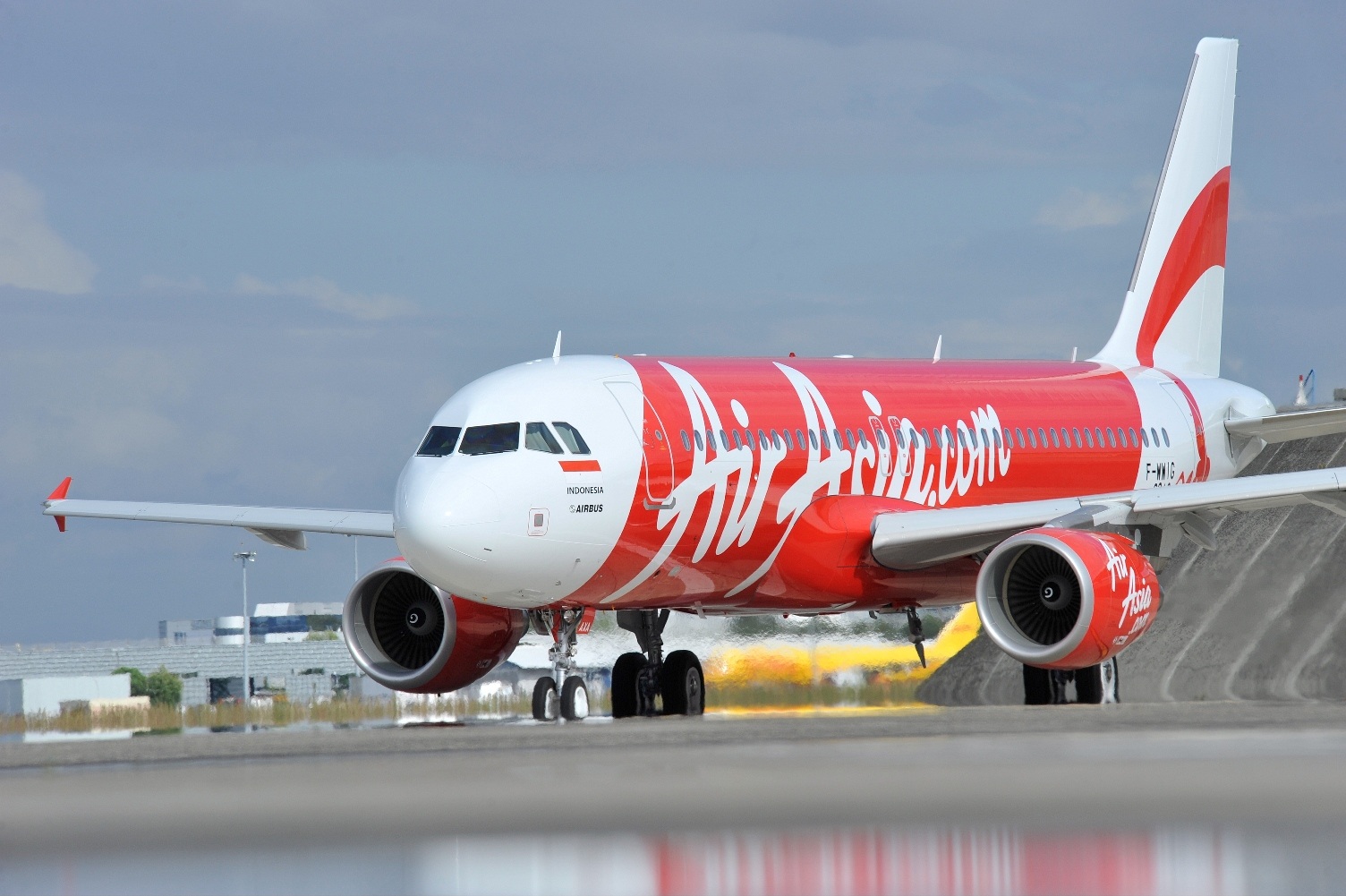
  • AirAsia X announces more medium-haul flights

    AirAsia X announces more medium-haul flights

    AirAsia X is increasing the number of its medium-haul Malaysian flights to 44 per week across 10 routes, while Thai AirAsia X will also be expanding its operations to 22 flights a week across five routes in the next two months.

    AirAsia X has recently launched direct services from Kuala Lumpur to South Korea (Seoul-Incheon) and India (New Delhi), and resumed services to Australia (Sydney, Melbourne and Perth), New Zealand (Auckland), and Japan (Tokyo-Haneda and Sapporo-Chitose).

    In a statement on Tuesday (Oct 18), the group also confirmed new flights to Saudi Arabia (Jeddah) and Taipei starting November.

    Meanwhile, Thai AirAsia X has launched services from Bangkok to Japan (Osaka and Tokyo-Narita) and South Korea (Seoul-Incheon), and is preparing to launch new direct flights to Australia (Melbourne and Sydney) and Japan (Sapporo-Chitose) in early December.

    AirAsia X said all furloughed pilots and retrenched cabin crew members will have the opportunity to be back in the sky by December.

    “Since the pandemic, AirAsia X has already reactivated 175 pilots and 285 cabin crew members, including rehiring 131 cabin crew members who were retrenched during the pandemic,” it said.

    AirAsia X Bhd chief executive officer Benyamin Ismail said the airline currently operates four widebody A330 aircraft, and expects to be operating up to 13 aircraft by the first quarter of 2023 (1Q2023) to meet strong and growing demand for medium-haul flights.

    “In December, we will not only be adding more destinations, but also increasing our flight frequencies on popular routes, such as moving to daily services between Kuala Lumpur and Seoul (Incheon), to fly a total of 53 flights weekly.

    “Medium-haul air travel is recovering fast, and we intend to leverage this opportunity to drive sustainable growth of AirAsia X, providing consumers with greater value and choice,” he said.

    According to Benyamin, the airline has been seeing strong forward bookings for the routes, and will be resuming more services in its core markets, such as Auckland, Melbourne, Perth, Taipei, Tokyo (Haneda) and Sapporo in the next two months.

    “Our forward-booking trends remain very encouraging across all key metrics, with higher year-on-year load factors and average fares through 1Q2023.

    “We also anticipate strong uptake of our new flights to Istanbul, Türkiye, which will be announced soon, and would like to thank Malaysia Airports for their support and cooperation.

    “We look forward to flying to the Istanbul Sabiha Gökçen International Airport in the near future,” Benyamin added.

  • Globe Deploys 252 More 5G-Ready Cell Sites on Philippines’ Southern Island

    Globe Deploys 252 More 5G-Ready Cell Sites on Philippines’ Southern Island

    Globe announced it has deployed 252 5G-ready cell sites on the Philippines’ southern island of Mindanao. The telco giant’s scaled-up deployment of 5G wireless technology across the country has yielded 933 cell sites in the first half of 2022.

    As of June 30, Globe’s 5G network had reached 85.8% of key cities in Visayas and Mindanao and 96.6% in the National Capital Region in terms of 5G outdoor coverage.

    Data showed a steady hike in 5G usage in Mindanao, particularly in Davao City, which almost tripled in June from the January figures. Likewise, hefty increases were registered in June by Cagayan de Oro and the town of Libona.

    Nationwide, Globe saw a 73.4% increase in 5G data traffic from January to June this year.

    “We continue to invest in the latest mobile technologies like 5G as part of our commitment to bring better mobile experiences that can uplift the lives of our customers no matter where they are in the country,” said Darius Delgado, head of Globe’s consumer mobile business.

    So far, Globe has already spent more than half, or 50.5 billion pesos, of its 89 billion-peso budget for capital expenditures this year. It was used to build new cell sites, upgrade existing sites to 4G/LTE, accelerate the rollout of 5G connectivity and ramp up the fiberization of Filipino homes nationwide, as part of Globe’s commitment to the United Nations Sustainable Development Goals.

    By the end of the first half of 2022, the number of devices serviced by Globe’s 5G network had increased by 52.6%, to 2.7 million, from 1.62 million in January.

    Globe 5G has fiber-fast download speeds of up to 156.84 Mbps (nationwide average) and even higher in Metro Manila at 167.63 Mbps on average as of May this year. These speeds peak at 342.7 Mbps nationwide and 347.2 Mbps in the capital region.

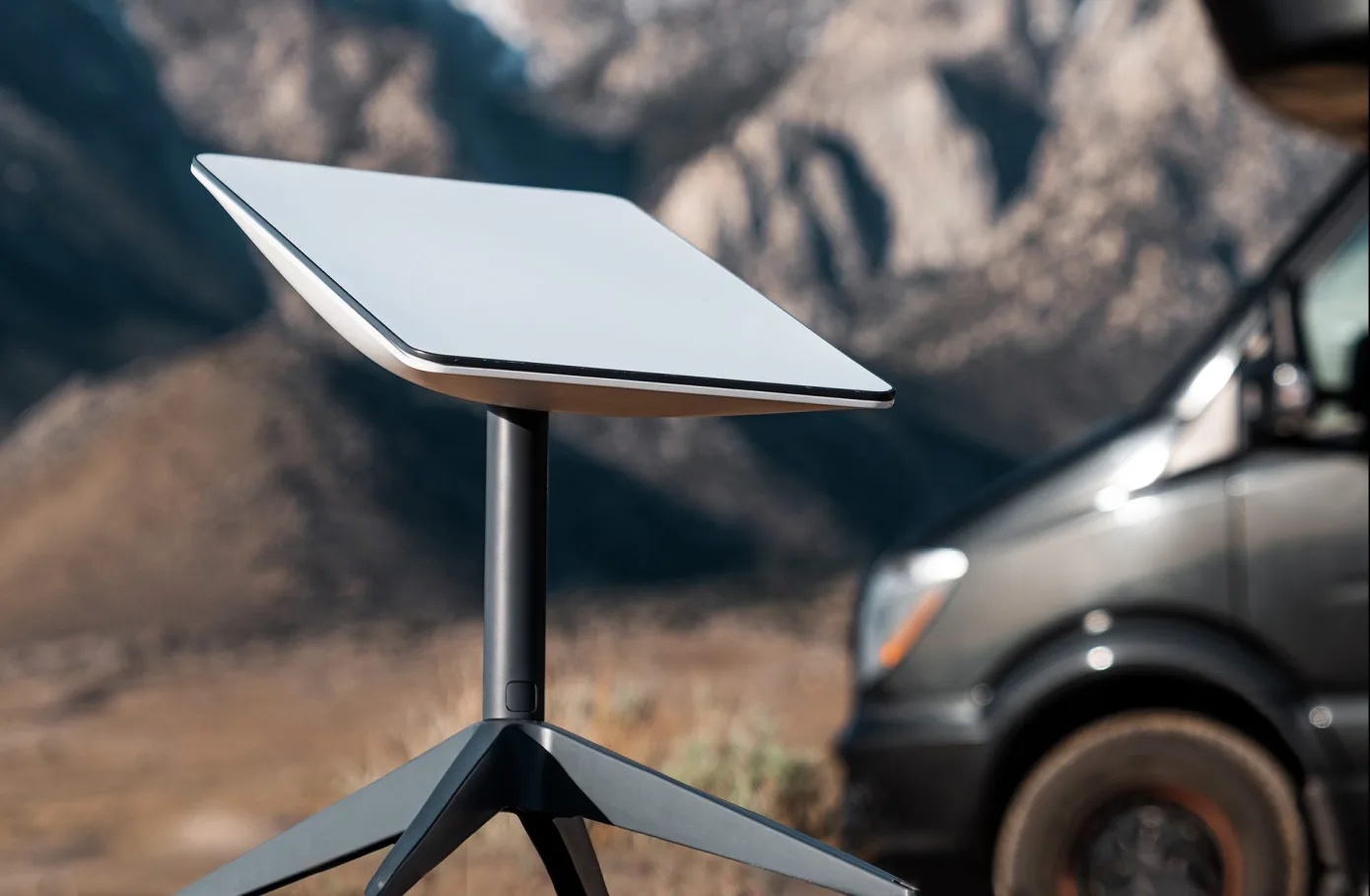
  • KDDI to Offer Starlink to Enterprise and Civil Government Clients

    KDDI to Offer Starlink to Enterprise and Civil Government Clients

    KDDI announced it will begin offering Starlink connectivity to its enterprise and civil government customers later this year as part of a deal recently completed.

    Starlink began offering service two years ago, and this summer it introduced its maritime service, which provides high-speed, low-latency internet while at sea.

    Under the agreement, the Japanese telecom giant will act as “authorized Starlink integrator,” enhancing the company’s ability to deliver best-in-class network service to its customers who require stable, reliable connectivity in rural and remote areas, even during events such as natural disasters.

    KDDI has been conducting technical demonstrations of Starlink in Japan since 2021, which have proven the service’s quality and performance, including for use in mobile backhaul.

    “Starlink’s unmatched performance is a great fit for our persistent endeavor to bring the urban mobile experience to rural customers,” said Makoto Takahashi, president of KDDI. “With Japan having more than 16,000 mountains and 6,000 islands, Starlink’s industry-leading satellite constellation is uniquely suited to provide Japanese enterprises with reliable, sustainable internet connectivity, even in times of natural disaster.”

    “We’re excited to provide a new dimension of connectivity to KDDI’s customers that require reliable, high-speed, low-latency internet on land and at sea,” said SpaceX Vice President of Starlink Sales, Jonathan Hofeller. “Having recently launched Starlink in the country, we look forward to offering a powerful solution that we’ve seen provide critical connectivity in the over 40 countries Starlink is available in.”

  • Vietnam collects $231 mln in taxes from online platforms

    Vietnam collects $231 mln in taxes from online platforms

    The Finance Ministry said online platforms including Facebook and Google have paid VND5.59 trillion (US$231.6 million) in taxes from 2018 to August this year.

    In a report sent to the National Assembly, the ministry said the tax was paid by cross-border and e-commerce platforms, with Facebook and Google contributing the most, at VND2.099 trillion and VND2.115 trillion, respectively.

    They were followed by Microsoft with VND714 billion.

    Last year’s collection of VND1.591 trillion was 39% more than in 2020.

    From the beginning of 2018 until the end of this August, tax authorities collected VND1.082 trillion in taxes from organizations and individuals earning income from doing business online, including VND261 billion collected last year and almost VND521 billion in the first eight months of this year.

    The ministry launched an electronic portal and a mobile application (eTax Mobile) in March for foreign suppliers to declare, register and pay taxes.

    So far, there have been nearly 70,000 transactions made through the portal and app, with more than VND308 billion of tax collected.

    Of this, $22.2 million was paid by 30 major foreign suppliers including Microsoft, Facebook, Netflix, Samsung, TikTok and eBay.

    In order to manage and avoid tax revenue losses in the digital platform business, the finance ministry is working to complete relevant legislation.

    At the end of August, the ministry submitted amendments to Decree 126 issued in 2020, stipulating that e-commerce platforms have to provide information, declare and paying taxes on behalf of sellers.

    The ministry also proposed amending a number of special regulations to ensure a consistent legal basis for the management of e-commerce platforms.

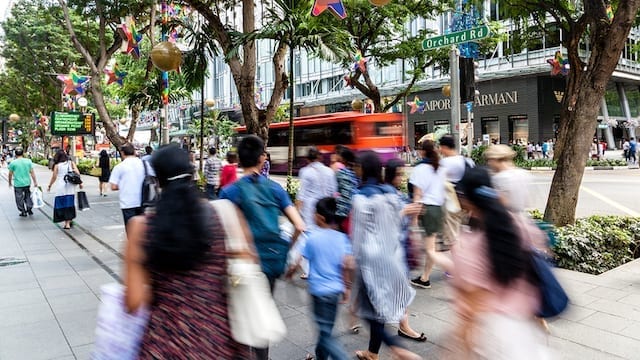
  • Singapore retail sales continue their strong post-Covid surge

    Singapore retail sales continue their strong post-Covid surge

    Takings at the till in Singapore grew faster in May, helped by a low year-ago base and the continued boost from tourist spending after travel restrictions were eased. Retail sales surged 17.8 percent year on year, extending the 12.1 percent growth in April, according to figures released by the Department of Statistics (SingStat) on Tuesday (July 5).

    This exceeded the expectations of analysts polled by Bloomberg, who projected sales to grow by 13.4 percent.

    Excluding motor vehicles, growth was even stronger, coming in at 22.6 percent.

    “The year-on-year increase in retail sales in May 2022 was mainly attributed to the low base in May 2021 when measures such as international travel restrictions were in place,” said SingStat in a press statement.

    Experts said this growth is expected to continue but might be moderated due to higher prices and inflation.

    RHB senior economist Barnabas Gan said: “The retail sales momentum will likely stay buoyed into the third quarter as Asia moves on from Covid-19-related fears. Tourism levels have been picking up across Asian economies, including Singapore.”

    He added that the tight labour market and reopening of Asia’s borders should support spending. “On the back of domestic demand and tourism-led spending, we think retail sales from an index perspective will likely return to pre-Covid levels by the end of this year,” he said.

    But the bright outlook might be muddied by any unexpected worsening of the Russia-Ukraine conflict and China’s economic slowdown, he noted.

    Maybank Kim Eng economist Lee Ju Ye added that the surge in inflation and rising mortgage rates will likely result in some belt tightening by consumers.

    “In particular, sales of discretionary items such as watches and jewellery and recreational goods may be the most affected,” she said.

    Consumers are also expected to lean towards lower-priced items as costs go up, added National University of Singapore business professor Lawrence Loh.

    “In the near term, retail may face a double whammy of moderation in demand and escalation of costs.”

    Within the retail trade sector, most industries recorded year-on-year growth in sales in May.

    Discretionary industries such as wearing apparel and footwear saw sales balloon by 98.2 per cent due to the low base in May 2021, when there was lower tourist spending due to travel curbs.

    Department stores, which were hard hit by Covid-19 restrictions, also saw sales jump by 73.1 per cent.

    This was followed by retailers of watches and jewellery, which recorded higher sales of 60.7 per cent.

    Retailers of food and alcohol saw sales rise by 47.3 per cent, while petrol service stations recorded sales increases of 45.8 per cent.

    In contrast, sales of motor vehicles fell 10.2 per cent.

    Supermarkets and hypermarkets recorded declines in sales of 10.3 per cent, while minimarts and convenience stores saw sales fall by 4.8 per cent.

    This was due to the higher demand for groceries in May 2021 when more people stayed home during the Phase 2 (Heightened Alert) period, SingStat noted.

    Meanwhile, the sales of food and beverage services grew by 40.1 per cent in May on a year-on-year basis, compared with the 11.6 per cent increase in April.

    “The significant growth in food and beverage sales in May 2022 was mainly attributed to the low base in May 2021, when Phase 2 (Heightened Alert) measures were in place, with dining in at food and beverage establishments not allowed for half of the month,” SingStat said.

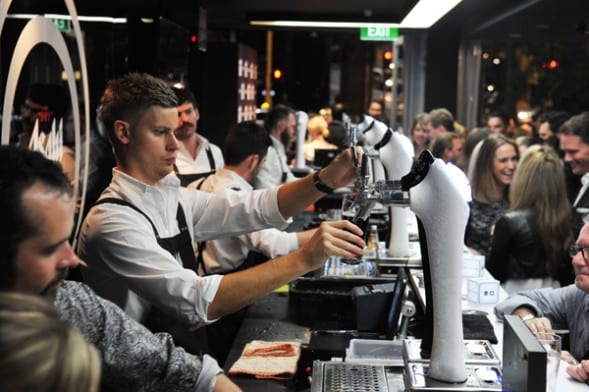
  • Asahi Beverages buys premium mixer brand Strangelove

    Asahi Beverages buys premium mixer brand Strangelove

    Founded by mates James Bruce and Stafford Fox in 2013, the adult soft drink, premium mixer and mineral water business “set out to revolutionise the Australian soft drink market with eclectic, sophisticated flavours and local ingredients”.

    StrangeLove claims that it has more than doubled in volume and revenue in the last two years. The brand is now stocked by many of Australia’s “best” restaurants, high-end grocers and, more recently, premium Woolworths stores.

    Asahi Beverages Group CEO Robert Iervasi says it’s clear Australians want more sophisticated and lower-sugar soft drinks, fuelling demand for StrangeLove’s products in recent years.

    “We are really excited about the impact that StrangeLove is going to have in restaurants, cafes, hotels and pubs,” he says.

    “We expect StrangeLove to really shake things-up in the on-premise premium mixer and adult soft drink space, with a high-quality, Australian-made brand.

    “This deal will also strengthen our offer to retailers, which are dedicating more shelf-space to premium non-alcohol beverages. StrangeLove complements our leading portfolio of beverages, and we are absolutely thrilled to add StrangeLove to the Asahi Beverages family.”

    Mr Bruce says the deal represents an amazing opportunity to speed up StrangeLove’s mission to revolutionise the adult soft drink market with more imaginative and high-quality beverages.

    “With their FMCG-expertise and long-standing customer relationships in retail, hospitality and beyond, Asahi Beverages will help grow StrangeLove in a way we couldn’t on our own,” he says. “They share our absolute commitment to quality and we’ve been impressed by how they’ve supported their other craft partners to retain their unique identity and foster innovation.

    “The StrangeLove management team and I will remain in our roles at the business, and we’re excited and committed to its long-term growth. This means the acquisition won’t affect day-to-day operations and nothing will change for our customers and consumers.

    “We’ll continue to challenge the status quo with imaginative, innovative and adult flavours, using real ingredients sourced, where possible, from local farmers and producers.”

  • UBS Partners With a US Investment Network

    UBS Partners With a US Investment Network

    UBS is teaming up with a network of alternative investment firms in the US that manages more than $300 billion in institutional assets.

    The US National Association of Investment Companies (NAIC), the nation’s largest network of diversely owned alternative investment firms, has signed up UBS as a partner. UBS will become a platinum sponsor of the Washington-domiciled NAIC to support its inclusive investing offering.

    Founded in 1971, the association counts more than 170 alternative investment firms that collectively manage more than $300 billion in institutional assets. NAIC member firms invest in more than 1028 portfolio companies worldwide, according to the association. As part of the sponsorship, UBS will support and participate in the NAIC’s virtual and in-person events and programs with NAIC member firms, partners, and investment plan and institutional decision makers.

    At UBS, we’re focused on driving more capital and investment to support diversity, equity, and inclusion, said Tom Naratil, president of UBS Americas and co-president of global wealth management at the firm. UBS and NAIC seek to build long-standing relationships with member firms, including high-performing diverse-owned alternative investment managers, the statement added.

    NAIC will introduce UBS to its member firms through virtual and in-person roadshows that will support UBS’ recently launched Inclusive Investing offering.

    Naratil will soon be ending his long career at the bank, retiring from UBS on October 3, when Iqbal Khan will take over as sole head of UBS’ flagship Global Wealth Management unit.

  • Wendy’s burgers are coming to Australia

    Wendy’s burgers are coming to Australia

    The US Wendy’s burgers brand is heading to Australia and is on the hunt for a master franchisee.

    The iconic brand is reportedly the world’s third largest quick service restaurant burger chain, with about 7000 outlets worldwide.

    Founder Dave Thomas opened the first Wendy’s restaurant in 1969. His mission was to serve well-priced, good quality food in a comfortable environment. The unique square burger has since become a mainstay of the Wendy’s menu.

    Now the chain is readying to hit the market Down Under, with consultancy firm DC Strategy tasked with recruiting master franchisees. You’ll also receive messages on behalf of our partners. You can opt-out at any time.

    The appointed master franchisee will need to have franchise and operations experience and a proven track record for growing brands in Australia.

    There is no set agenda for the first store location, nor a pre-determined number of outlets. These will be determined by the master franchisee, DC Strategy confirmed.

    Wendy’s burgers will be vying for customers within a highly competitive market. There are the familiar giants of burger business in Australia — McDonald’s and Hungry Jacks.

    US chains testing the waters in Australia include Five Guys, operated by franchisee Seagrass Hospitality. And Hollywood star Mark Wahlberg’s famed burger chain Wahlburgers unveiled its first Australian store in Circular Quay, Sydney late last year.

    American brand Carl’s Jr. has already made its mark along the east coast. Globally this brand has over 4000 restaurants; 35 outlets operate in Australia with a goal of 160 by 2032.

    And then there are local brands such as Pattysmiths Burgers offering a premium alternative to the traditional fast food options. There are now 29 outlets in the chain, under the umbrella of multi-brand franchisor, Concept Eight. Restaurants operate throughout Victoria, Queensland, Western Australia and the ACT.

  • Taiwan’s Miracle Coffee to launch in Singapore

    Taiwan’s Miracle Coffee to launch in Singapore

    Miracle Coffee will launch a 90-day pop-up café kiosk at the ArtScience Museum in Singapore’s Marina Bay Sands by the end of September 2022, ahead of a brick-and-mortar store launch in the museum’s lobby next year.

    Miracle Coffee said the kiosk will only serve beverages, including an exclusive for the location called Kaya Cloud. Further menu items and prices for the Singapore outlet are yet to be announced.

    Miracle coffee currently operates three stores in Taipei, Taiwan, and one in Shanghai, China.

    “I am thrilled to team up with Marina Bay Sands to bring Miracle Coffee to my home, Singapore. Since this is our first time setting up a pop-up for Miracle Coffee, we wanted a scenic location that can stage the intimate scene of coffee lovers revelling in a smooth cup of coffee while soaking in views of my beautiful city. There is no other location that is more suitable than the iconic ArtScience Museum,” said JJ Lin.

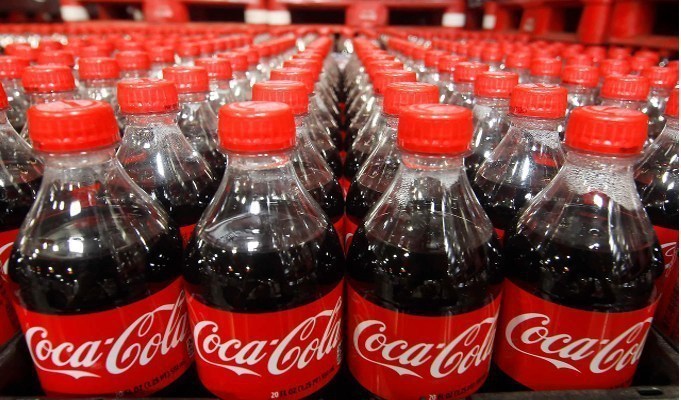
  • Coca-Cola teams with Berkley University to convert CO2 to sugar

    Coca-Cola teams with Berkley University to convert CO2 to sugar

    Coca-Cola Europacific Partners (CCEP) is partnering with the University of California Berkeley (UCB), US, to develop methods of converting captured carbon (CO2) into sugar. The collaboration hopes its work will slash the emissions of some of the world’s most polluting supply chains.

    Established between CCEP Ventures and UC Berkeley’s Peidong Yang Research Group, the project aims to create packaging and other essential raw materials from industrial waste.

    Last year, the Peidong Yang Group received a prize from NASA for a viable prototype for CO2 conversion to sugar for potential use on long-haul space missions.

    “Air to sugar conversion could significantly impact our ability to preserve the natural world,” says Dr. Peidong Yang.

    “This is a bold, scientific vision that would bring immediate environmental benefits, fundamentally transforming the production and distribution of goods across the world. We are pleased to be working with CCEP Ventures on research that could make a significant impact on our ability to create a more sustainable future.”

    CCEP Ventures’ initial investment with UCB will support foundational research that will focus on enabling the production of sugar from CO2 on-site and at an industrial level, with the expectation of future investments to drive scale – from lab to pilot phase.

    CCEP says the investment demonstrates the role innovation can play in its journey to reach net zero greenhouse gas emissions by 2040.

    The development of lab-scale prototypes could make the generation of essential raw and packaging materials more environmentally sustainable in the long term. It could also reduce some of the largest CO2 contributors in supply chains while saving material, transportation and logistics costs.

    “CCEP Ventures is helping us find solutions to industry challenges and provide funding to make these foundational technologies a reality,” says Craig Twyford, head of CCEP Ventures.

    “We’re excited to be involved in this project that could lead the industry in the development of transformational technology capable of converting CO₂ into more complex, usable goods.”

    If driven to an industrial scale, carbon capture could provide an answer to crop production issues by creating synthetic sugar – potentially for use in soft drinks like Coca-Cola. This, in turn, would cut related energy usage.

    Since agricultural ingredients, including sugar, amount to approximately a quarter of CCEP’s overall carbon footprint, the technology could not only reduce emissions associated with sugar manufacturing processes but also positively contribute to optimizing land usage as less arable land becomes available due to the global population growth.

    In the longer term, this technology may also make the conversion of CO2 into PET plastic more efficient by reducing the need for crude oil in the manufacturing process and significantly lowering costs.

    Earlier this month, CCEP launched a new supply chain financing program in collaboration with Rabobank. The duo is aiming to enhance their respective ESG performances by rewarding suppliers who enhance environmental sustainability across the board and include sustainability-related KPIs that, if attained, would result in discounts from the initial funding rate.

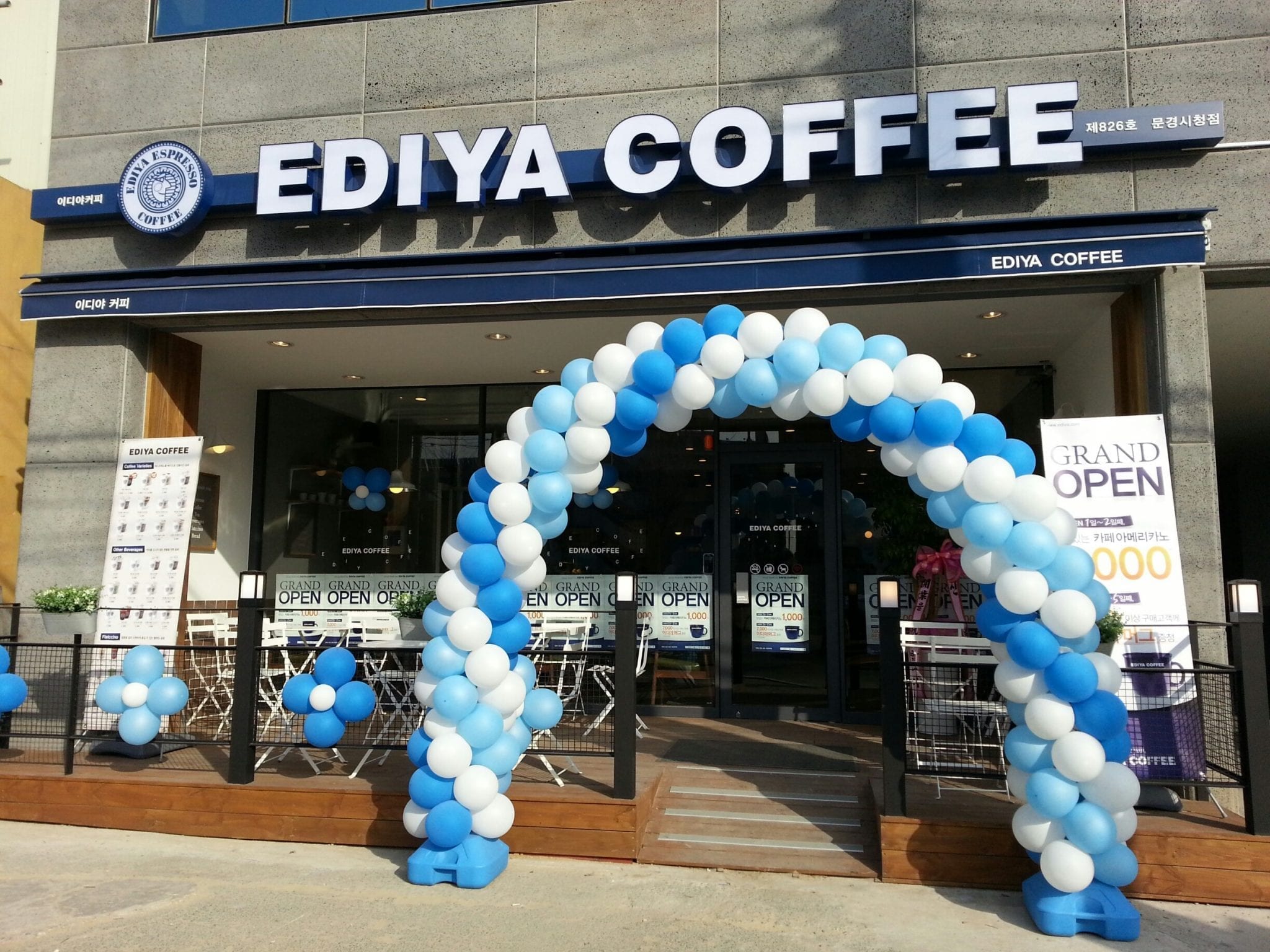
  • Ediya Coffee to open in Guam this year

    Ediya Coffee to open in Guam this year

    “Ediya Coffee will open an Ediya Coffee store in Guam, the U.S. autonomous territory, in December this year,” said Chairman Moon Chang-ki on Aug. 23. This is the company’s first overseas store. Ediya currently operates about 3,000 coffee shops in Korea.

    Chairman Moon said, “We will make it possible to taste Ediya Coffee anywhere in the world through Dream Factory, its own production base established in Pyeongtaek, Gyeonggi Province 2020.

    Chairman Moon Chang-ki of Ediya Coffee speaks at a press briefing held at the Ediya Dream Factory in Pyeongtaek, Gyeonggi Province, on Aug. 23, 2022.
    Meeting with reporters at Ediya Dream Factory, he said, “The Guam store has not been able to confirm the opening date due to a lack of electricity and other facilities, but it will open within December. The interior of the store is finished.”

    Introducing the Dream Factory as “the cradle of Ediya’s dream,” Chairman Moon said, “We built a production facility on a 4,000 pyeong (13,223㎡) site for the dream of allowing people to taste Ediya coffee wherever they go around the world.”

    He also said that the company purchased an additional 4,000 pyeong of land near the plant and now has a production base of 8,000 pyeong (26,446 square meters).

    Chairman Moon said, “The Taegeukgi (the Korean national flag) is hung in front of the Dream Factory. I will try until the day comes when everyone in the world can enjoy our Korean coffee.”

    Dream Factory, which Ediya Coffee first unveiled on the same day, is a production base established in 2020 at a cost of about 40 billion won.

  • Axiata Teams Up With Versa Networks To Deliver SASE Technology To Enterprises

    Axiata Teams Up With Versa Networks To Deliver SASE Technology To Enterprises

    Axiata Group Berhad announced it was teaming up with Versa Networks to provide Secure Access Service Edge (SASE) technology for rapidly digitalizing Asian enterprises.

    Under this agreement, Axiata Enterprise – the Group’s B2B unit – will collaborate with Axiata’s operating companies, Celcom in Malaysia and XL Axiata in Indonesia, to launch a wide variety of Versa SASE solutions covering Networking, Security and Cloud Access integration for enterprise customers in these markets.

    This latest partnership complements the expansion of Axiata’s existing enterprise offerings in areas of Managed Connectivity, Smart Services, Cloud and Cyber Security.

    In a statement, Axiata Enterprise’s CEO, Gopi Kurup, said, “Enterprises embarking on their digital transformation want to become more flexible, efficient and location-independent, as they embrace to new ways of working. With increasing connectivity, integration and security are critical to ensure uninterrupted business access. The Versa SASE innovation integrates security, networking, SD-WAN      and analytics to deliver scalable, secure and reliable enterprise-wide networking and security. This is done via adoption of a cloud-type gateway which can efficiently distribute and seamlessly offload between the private office network and the Internet to access other cloud services.”

    Versa SASE delivers tightly integrated services via the cloud, on-premises or a blended combination of both. This solution will be complementary to Managed Connectivity solutions offered by Celcom in Malaysia and XL Axiata in Indonesia.

    “This partnership with Versa Networks further cements Axiata Enterprise’s proposition to empower organisations across the region seeking to raise their digitalisation game. Our combined strengths in technology, capabilities and reach across emerging Asia markets positions us as the right transformation partner to Enterprises that are looking to adopt cloud-based applications and data to accelerate in the post-pandemic recovery phase,” Gopi said.

    Versa Networks’ vice president meanwhile also lauds this partnership.

    “Axiata, one of the leading telecommunications groups in Asia, continuously provides world-class communication services based on the most advanced technology available,” noted Tony Fallows, vice president, Versa Networks. “Versa is excited to be working with Axiata to expand Versa SASE further into the ASEAN and South Asia markets. Axiata, Celcom and XL Axiata will soon be able to deliver Versa’s industry-leading fully integrated and feature-complete SASE to support digitalisation in the regional markets.”

  • CTM to Launch 5G Services Upon Awarding of Macau Government License

    CTM to Launch 5G Services Upon Awarding of Macau Government License

    Macau’s telecoms regulator has accepted the bids for the city’s first 5G licenses, including that of major telecoms firms CTM and China Telecom (Macao) Limited.

    According to the Macau Post and Telecommunications Bureau, the operators to be awarded the licenses are expected to launch 5G services by the first quarter of 2023.

    In a press release, Vice President, Commercial of CTM, Ebel Cham, announced that the company has already realized indoor and outdoor 5G signal full coverage which supports both NSA and SA modes.

    She added that CTM looks forward to launching 5G services within short order after being awarded the 5G license by the Macau SAR Government.

    Cham said that CTM is open to discussing different forms of cooperation with other operators under full      compliance with the local laws and regulations.

    Cham added that CTM has reached dual agreements with 58 countries and regions for 5G roaming services, including mainland China and Hong Kong, the launch of which will provide residents and tourists a seamless 5G experience.

    If the 5G license is to be awarded this year, CTM said it will strive for rolling out 5G service with competitive pricing by year’s end.

  • Apple will ‘soon’ inundate the App Store with more ads

    Apple will ‘soon’ inundate the App Store with more ads

    While Apple froze third-party advertising cookies on its platform, resulting in the first revenue dip of Facebook since its inception, the App Store application shop has been showing ads in its search results as well as the respective tab for a while now.
    Brace yourselves, because these ads are now coming throughout the App Store, starting with the Today homepage tab, but they could also appear on each individual app page in the You Might Also Like section. The advertisement will allow developers to be promoting their own apps and Apple its own stuff as it sees fit according to its own privacy ground rules.
    The visible ads will be denoted as such and Apple won’t be targeting users below eighteen for personalized advertising, plus it won’t employ granular targeting by using your sensitive data like the other two ad behemoths Facebook and Google. That’s all part of Apple’s privacy and transparency policy, as it said in a dedicated statement:

    App Store developers are also happy with the ad development, as Ron Schneidermann of the app AllTrails states that “Apple Search Ads helped us attract new, more engaged customers across markets. We rely on Apple Search Ads for cost-effective customer acquisition – it’s a critical component of our growth strategy. As they become available, we plan to invest in new placements to reach even more customers on the App Store and continue to drive our business growth.”

    As for when will the new App Store advertising spree happen in earnest, Apple only said that the ad locations are now in their alpha state and it will “soon” start rolling out the testing phase, so don’t be surprised if ads appear on your iPhone application store in tabs where there were none of those pesky little nuggets were present before Apple’s move.