Blog

  • Malaysia’s Parkson may close fifth Vietnam mall

    Malaysia’s Parkson may close fifth Vietnam mall

    Malaysia’s Parkson is apparently shutting down its fifth mall in Vietnam after suffering serious losses in recent years. Although the company has not made any official announcement, its name-board has been taken down from the Cantavil An Phu builing in Ho Chi Minh City’s District 2.

    If it shuts down, it would be the second outlet in HCMC that the company is downing the shutters on this year, following Parkson Flemington in District 11, and would bring the number of Parkson stores in Vietnam down to five, of which three are in HCMC, one in northern Hai Phong City and one in central Da Nang City.

    Previously, the firm had shut down its two outlets in Hanoi.

    Parkson, the first international mall to open in HCMC, has been reporting losses in recent years. Among its four markets – Malaysia, Indonesia, Myanmar and Vietnam, the last mentioned has been the worst performer in the fourth quarter of the fiscal year ending June 30, according to a report by Parkson Retail Asia.

    Vietnam had a negative growth of -14.6 percent in the fourth quarter and -8.3 percent in the fiscal year ending June 30 this year, it said.

    “The operating environment in Vietnam remains challenging amidst a crowded retail scene, wherein intensive promotional activities had to be carried out to capture sales,” the report said.

    Vu Vinh Phu, former chairman of the Hanoi Supermarket Association, said that Parkson was able to operate well when it first came to Vietnam more than 10 years ago as the number of competing malls then in the country was low.

    But market has become much more competitive now, with many new malls offering more than just a shopping experience, making them a place for entertainment and food, Phu told local media.

    Even though Parkson is one of the earliest comers, without a change in strategy, it will have to leave Vietnam sooner or later, he added.

    Parkson, a premium retail group from Malaysia, entered Vietnam in 2005 and developed a premium shopping mall chain in the big cities of HCMC, Hanoi, Hai Phong and Da Nang.

    It was touted as one of the highest-potential players in the retail market, planning to open 2-3 malls a year in Vietnam’s big cities.

    The entrance of other foreign companies like Thailand’s Central Group, South Korea’s Lotte and Japan’s Aeon as well as Vietnamese firms like Vingroup, Bitexco and Sun Group has changed things.

    Japanese retailer Aeon owns a mall in Hanoi’s Long Bien District and has another one in Ha Dong District under construction. It is planning other malls in Hai Phong and HCMC.

    Vietnam’s Sun Group opened the Sun Plaza mall in April and is building another one in Hanoi.

    Vietnam was one of 30 countries with the most vibrant retail market in the world, with retail sales of $129 billion last year, an 11 percent growth over the previous year, according to the Ministry of Industry and Trade.

  • AirAsia plunges into thriving Malaysian dive destination

    AirAsia plunges into thriving Malaysian dive destination

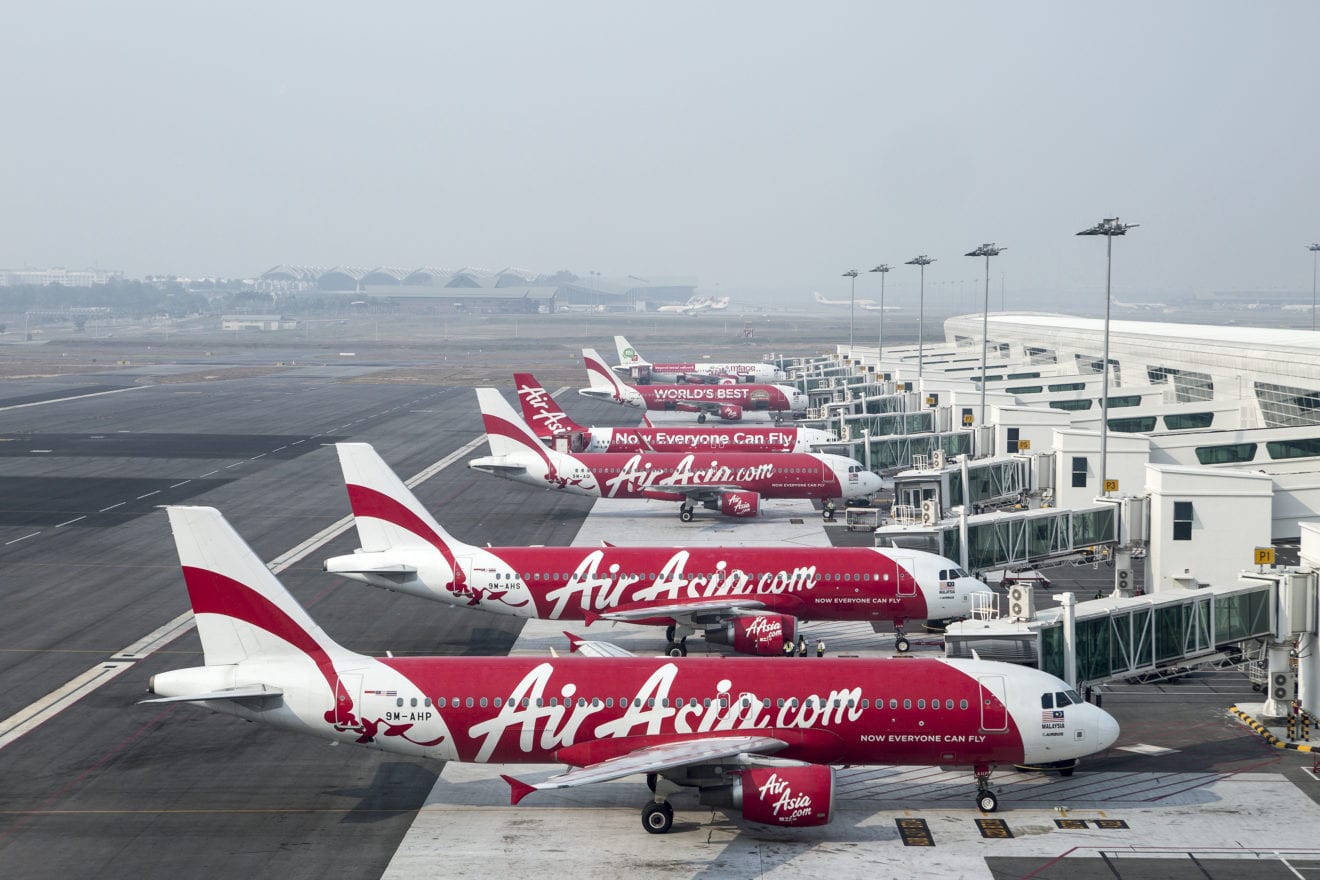
    Following the news in September that AirAsia is boosting the coverage of their Malaysia product with a new service between Kuala Lumpur and Kuantan, in Pahang, the airline has now announced another Malaysian connection with the launch of four-weekly flights from Kuching to Tawau starting 2 December 2018.

    AirAsia is currently the only airline in Malaysia to offer direct flights between the state capital city of Sarawak and Tawau, the third largest city in Sabah.

    “Tawau is gaining popularity as a gateway to the world’s best dive sites”

    Riad Asmat, AirAsia’s CEO in Malaysia, said: “We are excited to launch a new route from our ever-expanding Kuching hub. Our Kuching – Tawau route is a testament to our commitment to further boost the connectivity in East Malaysia and to expand economic opportunities in both cities. While Kuching is no stranger to tourists, Tawau is gaining popularity as a gateway to the world’s best dive sites, especially among Chinese tourists.

    90% of our Fly-Thru routes to Tawau are from cities in China and 76% of our guests visiting Tawau come from China. We believe we can further leverage on this direct route to attract more visitors to both Kuching and Tawau.”

    Flight schedule

    Table 1.jpg

    AirAsia Malaysia (flight code AK) now flies to 13 destinations from Kuching, namely Kuala Lumpur, Kota Kinabalu, Kota Bharu, Johor Bahru, Bintulu, Langkawi, Penang, Sibu, Tawau, Miri, Shenzhen, Pontianak and Singapore. The airline also flies to four destinations from Tawau to Kuala Lumpur, Kota Kinabalu, Johor Bahru and Kuching.

    To celebrate the new route, the airline is offering promotional all-in-fares from RM79 (USD 19.02) one-way from Kuching to Tawau. The promotional fare is available for booking on airasia.com and the AirAsia mobile app from now until 14 October 2018 for travel between 2 December 2018 and 26 November.

    On top of the new Malaysian expansion, AirAsia has also beefed up another Asian product with two direct new services between Thailand and India with a Bangkok-Visakhapatnam, running four times a week, departing from Don Mueang Airport every Monday, Wednesday, Friday and Sunday, as of 7 December. As well as Bangkok-Bhubaneswar, flying three times a week, departing Don Mueang Airport every Tuesday, Thursday and Saturday, starting 6 December.

  • Myanmar telcos launch mobile scam info campaign

    Myanmar telcos launch mobile scam info campaign

    Myanmar’s mobile operators have teamed up to increase awareness of the importance of mobile security in the wake of a rise in the number of mobile phone scams targeting the nation.

    MPT, Ooredoo Myanmar, Telenor Myanmar and MyTel have launched a join information campaign covering various types of mobile phone fraud and steps consumers can take to protect themselves.

    The operators said Myanmar’s rapid increase in mobile penetration over the last few years has made the market an attractive target for both local and international cybercriminals.

    Over the last few weeks, there has been an increase in the number of missed call scams, involving tricking consumers into dialling back premium rate services, as well as smishing scams, involving sending SMS to coerce users into filling their information into an online form believing they are updating their contact details or registering for a special offer from a legitimate business.

    The operators are advising their customers not to install applications or download files from untrusted sources, avoid answering calls from international numbers they do not know and hang up immediately on calls where nobody appears to be on the other end.

    The advice also covers tips including avoiding providing callers with PINs and one-time passwords, or SIMs from unknown sources, and conducting a factory reset before selling or giving away a phone.

  • Docomo launches prepaid Wi-Fi for travelers

    Docomo launches prepaid Wi-Fi for travelers

    Japan’s NTT Docomo has introduced a new prepaid Wi-Fi service for travelers to the nation, offering easy access to its national network of public wireless LAN hotspots.

    The new functionality is being added to the operator’s Japan Welcome SIM prepaid SIM service for tourists and business travelers.

    The service supports high-speed downloads at speeds of up to 988Mbps, and also provides access to Docomo’s LTE and 3G networks. It is offered through plans starting at 1,080 yen ($10) for no bundled data allowance, or 1,836 yen with 600MB of include data.

    Customers have the option to recharge their data allowance by viewing ads or answering questionnaires, and additional data can be purchased for rates starting at 100MB for 216 yen. A free plan with no bundled data allowance is available.

    Docomo is also extending the service period of the prepaid SIMs from five to 20 days, and has introduced an XL version of the plan for 3,024 yen with 2GB of data. As a promotion, the company will offer the XL plan at 1,944 yen for the first 999 customers using a coupon code.

  • AirAsia to become a travel technology company

    AirAsia to become a travel technology company

    AirAsia is integrating Google Cloud’s machine learning and AI (artificial intelligence) technologies into every aspect of its business, as part of its transformation into a travel technology company.

    Speaking at the Google Cloud Next London ‘18 event, AirAsia group chief executive officer Tan Sri Tony Fernandes said, “It’s a huge mission, but we’ve never done anything easy.”

    “We are now in our next phase of development where we are expanding beyond air transport, and digitalising our operations and processes to become more efficient.”

    Google Cloud will allow AirAsia to make full use of the mountain of data it already owns, opening up opportunities for the carrier to build new businesses.

    AirAsia is building two big platforms – airasia.com, its one-stop digital travel platform to meet the travel needs of customers for flight, accommodation, tours, ground transport and entertainment; and BigLife which it claims will be “like Kayak, Tripadvisor, Groupon and eBay rolled into one”.

    “BigLife will incorporate all the investments under our digital arm Redbeat Ventures, such as our money app BigPay, in-flight connectivity platform Rokki, online marketplace Ourshop and logistics services RedBox and RedCargo.

    “Both platforms will help drive more business into AirAsia with the help of data,” he said.

    According to Google Cloud chief executive officer Diane Greene, AirAsia started using Google’s services with G Suite to transform the way the company works.

    “Now, with our advanced analytics platform and machine learning services, AirAsia will be able to digitise every aspect of its business to better serve its customers,” she added.

    AirAsia also hopes to use Google Cloud to maximise operational efficiency and reduce risk through predictive maintenance, real-time weather forecasting and crew optimisation.

    On top of that it aims to improve demand forecasting and targeted marketing and provide more personalised experiences to increase customer loyalty.

    AirAsia will also be able to enroll its technical teams in the same programme Google Cloud uses to train its engineers, allowing the airline to build its own internal machine learning system.

    To view Tony’s presentation on how AirAsia will work with Google Cloud to become a travel technology company, visit g.co/cloud/nextonair18.

  • SmarTone launches smart building solution

    SmarTone launches smart building solution

    Hong Kong’s SmarTone has unveiled a new smart hotel and smart home solution, developed as part of the second wave of its Innovation Hub program.

    The new solution is an end-to-end, IoT-based solution aimed at helping property developers create a personalized and convenient experience for residence and hotel guests.

    It is designed to integrate existing property management systems into a single platform for providing services including check in and check out with mobile keys and app-based control of room facilities.

    SmarTone provides networking support for the solution via its mobile network, fiber broadband and Wi-Fi footprints.

    The solution will be made available to both property owners and consumers. It was developed at SmarTone’s Innovation Hub.

    “With the launch of our Innovation Hub last year, we have a dedicated open ecosystem to drive cross-industry collaboration and propel Hong Kong on its smart city journey,” SmarTone CEO Anna Yip said.

    “To cater for the trend of the hospitality industry and meet the needs of today’s digital-savvy consumers, at the outset SmarTone initiated partnerships with property developers at both the conceptualization and construction stages to deliver an intuitive and engaging experience.  This allows us to get closer to revolutionizing the quality of everyday life and achieving customer satisfaction throughout the smart journey.”

  • IoT malware grew threefold in H1

    IoT malware grew threefold in H1

    In the first half of 2018, IoT devices were attacked with more than 120,000 modifications of malware, according to the Kaspersky Lab IoT report. That’s more than triple the amount of IoT malware seen in the whole of 2017.

    Kaspersky Lab warns that the snowballing growth of malware families for smart devices is a continuation of a dangerous trend: 2017 also saw the number of smart device malware modifications rise to 10 times the amount seen in 2016.

    The market for IoT devices and their role in everyday life, is growing exponentially. But cybercriminals are seeing the financial opportunities too, and are multiplying and differentiating their attacks as a result.

    The danger for consumers who love their IoT gadgets, is that threats can strike unexpectedly, turning seemingly harmless devices into powerful machines for illegal activity. This can include malicious cryptocurrency mining, DDoS attacks, or the discreet inclusion of devices in botnet activities.

    Aware of these dangers, Kaspersky Lab experts regularly review the data collected from various sources including our honeypots – decoy devices used to attract the attention of cybercriminals and analyze their activities. The latest updates are striking: during the first half of 2018, the number of malware modifications aimed at IoT devices registered by researchers was more than three times higher than the number registered in the whole of 2017.

    The statistics show that the most popular method of IoT malware propagation is still the brute forcing of passwords – repetitive attempts at various password combinations. Brute forcing was used in 93% of detected attacks. In most of the remaining cases, access to an IoT device was gained using well-known exploits.

    The devices most often attacking Kaspersky Lab honeypots were routers (by a large margin). 60% of the registered attempts to attack our virtual devices were coming from them. The remaining share of compromised IoT gadgets included a variety of different technologies, such as DVR-devices and printers. The honeypots even registered an attack coming from 33 washing machines.

    Different cybercriminals may have different reasons to exploit IoT, but the most popular goal is to facilitate DDoS-attacks by creating botnets. Some malware modifications are also tailored to turn off competing malware, fix its own vulnerabilities and shutdown vulnerable services on the device.

    “Compared to personal computers and smartphones, IoT devices might not seem powerful enough to attract cybercriminals and be used in their illegal activity,” notes Mikhail Kuzin, security researcher at Kaspersky Lab. “However, their lack of performance is more than outweighed by their number, and the fact that some smart gadget manufacturers are still not paying enough attention to the security of their products.”

    Kuzin adds that even if vendors begin to provide their devices with better security now, it will be a while before old vulnerable devices have been phased out of our homes.

    “In addition, IoT malware families are customizing and developing very fast, and while previously exploited breaches have not been fixed, criminals are constantly discovering new ones. IoT products have therefore become an easy target for cybercriminals who can turn simple machines into a powerful device for illegal activity, such as spying, stealing and blackmailing.”

  • Bamboo Airways postpones maiden flight

    Bamboo Airways postpones maiden flight

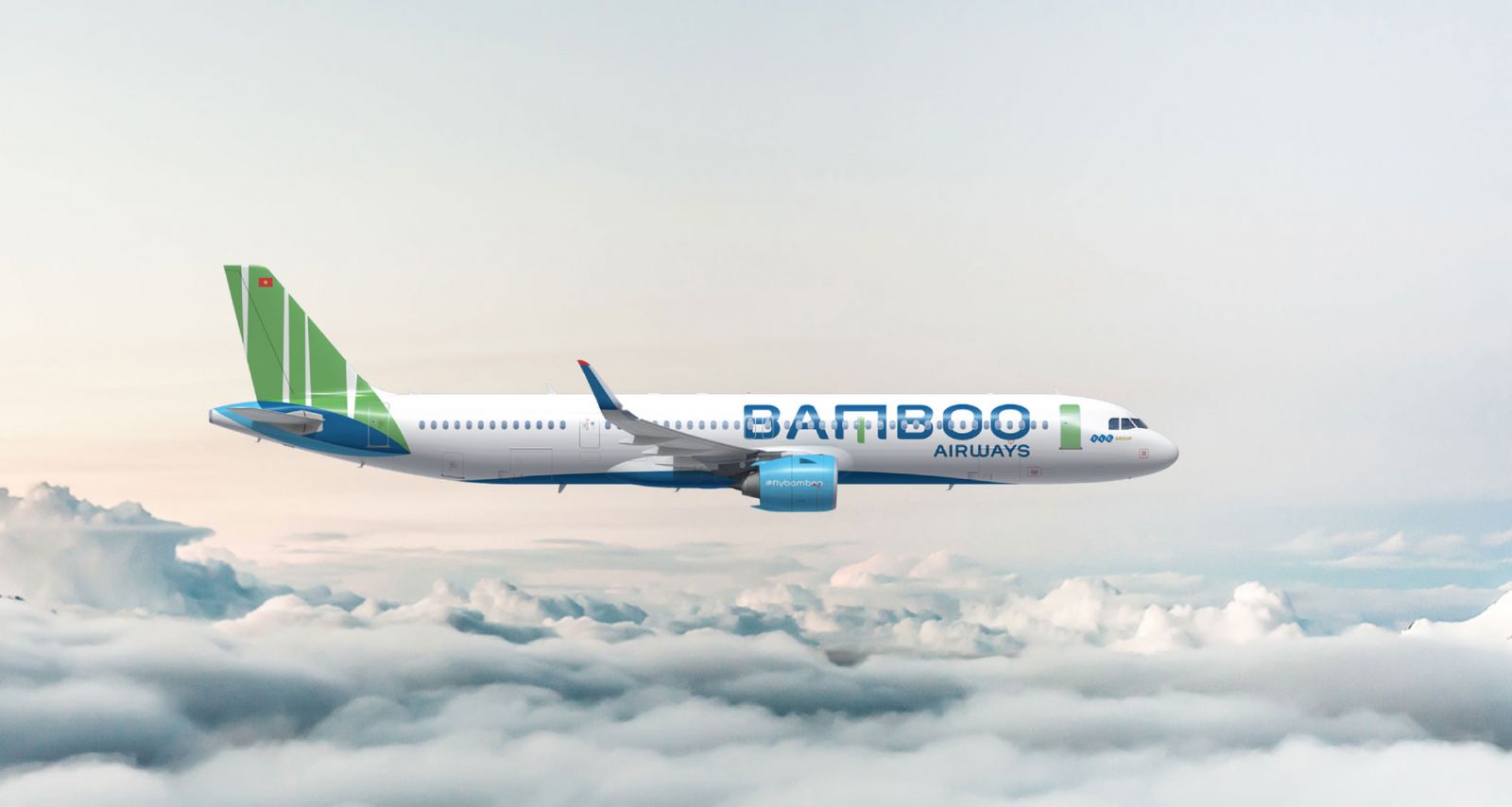
    The carrier, owned by Vietnamese private firm FLC Group, is yet to receive its license. The delay in getting its license meant that the airline also missed out on its plans to start selling tickets from September 2.

    A Ministry of Transport official, who declined to be named, told Monday that the licensing procedures for the airline have not been completed. An official of Vietnam Aviation Authority also confirmed that the flight permit could not be granted on time to the airline.

    The transport ministry had asked the Prime Minister to allow it to issue an air transportation business license to Bamboo Airways in late August. However, the ministry is yet to receive an official reply.

    No one elaborated on the reason for the delay. An FLC Group spokesperson told that the airline’s first flight will be moved to the end of the fourth quarter of this year.

    “We have to rearrange the original plan. However, Bamboo Airways’ business strategy and pre-designated flight network will not be affected by this adjustment,” the spokesperson said.

    Bamboo Airways’ general director Dang Tat Thang said the airline is currently in the process of finalizing its airfreight business license.

    This is the final legal basis for the company to officially enter the market.

    Thang said that all preparations for the first scheduled flight for the fourth quarter had been completed.

    Bamboo Airlines will become Vietnam’s fifth airline when it becomes operational.

    The other four airlines are flag carrier Vietnam Airlines; budget operator Jetstar Pacific Airlines, which is partly owned by Vietnam Airlines; budget carrier Vietjet Aviation and Vietnam Air Services Co.

    Hanoi-based FLC, whose main businesses include housing, resorts and golfing, had said it planned to operate international and domestic flights to tourist spots in Vietnam, including where FLC has major properties.

  • Huawei launches 5G power solutions

    Huawei launches 5G power solutions

    Huawei has launched what it says is the industry’s first full-range 5G power solutions for global operators to address an expected 100% increase in energy consumption with 5G compared to 4G.

    The 5G Power series of products are designed to deliver an end-to-end, scalable energy solution for both newly built and upgradeable cell sites.

    It has been designed utilizing technology including peak shaving, linked voltage boosting and energy slicing to provide a ‘one site one cabinet’ design.

    Huawei said its research suggests that more than 70% of cell sites will face challenges such as insufficient power, battery and distribution capacity, and more than 30% of sites need grid modernization to match the power demands of 5G.

    Its solution has been designed to help operators reduce capex and opex while improving energy reliability to meet the high reliability and low latency requirements of future mobile applications.

    “Based on deep understanding of pain points carriers are facing in the progress of network evolving, Huawei 5G Power Solution achieve end-to-end synergy from wireless network to telecom energy, which will further enable carriers to build networks quickly, reduce site energy consumption, and maximize their investment value,” Huawei president of telecom energy Tao Hongming said.

    “As a telecom energy supplier who is able to provide end-to-end ICT solutions, Huawei is willing to work with carriers and industry partners on continuous innovation and exploration, and jointly solve the energy challenges in 5G era.”

  • Temasek Foundation and Indonesia To Develop Fintech Talents

    Temasek Foundation and Indonesia To Develop Fintech Talents

    Temasek Foundation International (TF INTL) and Ngee Ann Polytechnic (NP) has partnered with Indonesia’s Ministry of Research, Technology and Higher Education (MoRTHE) on Wednesday to deliver a new programme that encourages an exchange of knowledge among academia, industry partners and regulators in the financial technology (FinTech) sphere.

    «The digital economy is disrupting work and indeed, lives. This means that educators need to collaborate to reinvent and update their skills to keep pace with industry developments,» said Benedict Cheong, chief executive of TF INTL in a press statement.

    Educators To Benefit

    This programme will enable educators from Indonesia and Singapore to exchange knowledge and develop new ways to train aspiring youths in financial technology, Cheong said.

    «We hope to develop lecturers with high performance and good understanding in Financial Technology, to supply talent who can compete in the industry’s 4.0 era. This MoU will give a lot of benefits to Indonesia’s Higher Education, especially in universities and polytechnics in Indonesia,» said Ir. Paristiyanti Nurwardani, director of learning of MoRTHE.

    Commitment

    TF INTL has committed a grant of about S$523,000 for this cross-border programme, which will include experiential learning through lab crawls, hackathons, seminars and workshops.

    The course participants will get to visit and network with FinTech developers and users to gain fresh insights into the emerging field, as well as take part in challenges that will inspire innovative applications for the financial sector.

    Collaboration

    Over the next three years, the three parties will collaborate to implement a FinTech learning programme for higher education providers in Indonesia.  Some 180 academic leaders and faculty from Indonesian tertiary institutions will work towards developing FinTech curriculum and capability.

    The programme will span over two runs, ending in 2020. The institutions confirmed for the first run include: Institute Teknologi Bandung (ITB), Politeknik Negeri Jakarta (PNJ), Universitas Indonesia (UI), Universitas Pendidikan Indonesia (UPI), Universitas Padjadjaran (UNPAD) and Univeristas Airlingga (UNAIR).

  • DBS Extends Support for Social Enterprises

    DBS Extends Support for Social Enterprises

    DBS said it is extending support for social enterprises via its Social Enterprise(SE) Support Programme on Tuesday specifically addressing their top three priorities. These include: improving their business model to achieve financial sustainability; sourcing for funding and; customer acquisition.

    «Social enterprises have big ambitions to make a positive impact in their community, and very often they struggle with limited resources. We want to support these social enterprises in their journey to create greater social impact,» said Joyce Tee, DBS’ group head of SME banking.

    Started A Decade Ago

    DBS pioneered the social enterprise banking package 10 years ago, but more than half of the social enterprises surveyed by the Singapore Centre for Social Enterprise said they lacked access to financial support.

    As such, DBS will continue to provide SEs access to virtually free banking services through its DBS Social Enterprise Package. With this package, SEs can open an account with a zero-minimum balance and enjoy unsecured loans at preferential rates.

    Three pillars

    The DBS Social Enterprise Support Programme has three pillars – mentoring, training and financing. Under the program, SEs will also receive a relationship managed account traditionally reserved for larger corporate customers. The programme will jointly be administered by the DBS SME Banking team and the DBS Foundation.

    To start, DBS will mentor the 12 social enterprises DBS Foundation awarded in its 2018 Social Enterprise Grant Programme. Over 28 senior SME relationship managers have committed at least of 8 hours a month to mentor social enterprises in their specialised industries. These industries include retail, F&B and healthcare.

  • Vinfast, set to be Vietnam’s first domestic carmaker, gains credit line

    Vinfast, set to be Vietnam’s first domestic carmaker, gains credit line

    VinFast aims to become Vietnam’s first domestic car manufacturer.

    The company, a unit of Vietnam’s largest conglomerate Vingroup JSC, plans to have its first production models built under its own badge hit the streets next August. Vingroup has earmarked about $3.5 billion for the project.

    Credit Suisse AG and HSBC were the lead arrangers and the financing agreement was guaranteed by German export credit agency Euler Hermes, Vingroup and Vinfast said in a statement.

    The statement also said that in August Vinfast completed syndication of a $400 million term loan facility led by four international banks.

  • Telenor Myanmar launches Asia 9 roaming package

    Telenor Myanmar launches Asia 9 roaming package

    Telenor Myanmar has launched a new international roaming package offering data roaming at local rates in nine Asian markets.

    The new Asia 9 plan offers data roaming at 9 kyats ($0.0058) per MB in Vietnam, Thailand, Malaysia, China, Singapore, Cambodia, Bangladesh, Pakistan and Indonesia.

    Aimed at prepaid and postpaid customers traveling to or working in the markets, the new plan has a weekly subscription fee of 900 kyats.

    Standard data rates in the nine countries start at 500 per MB. During a promotional period which will last until further notice, Telenor Myamnar will offer customers not subscribing to the new roaming package data roaming in the nine markets at 14 kyat per MB.

    “Telenor possesses one of the best data networks in the region and taking the best out of it, we created this new ‘ASIA 9’ promotion. Telenor customers in Myanmar can now browse the internet as if they are in their own country while they are traveling or working in those 9 Asian countries,” Telenor Myanmar CMO Amaresh Kumar said.

    “This would create the best chance for our customers to stay connected with their friends, families and even to run a virtual office. To offer the customers with the most affordable and innovative services that suit their needs is always on top of our priorities and we will continue to do so.”

  • Spark switches on second IoT network

    Spark switches on second IoT network

    New Zealand incumbent carrier Spark switched on a low power wide area (LPWA) IoT network using LTE Cat-M1 technology on Monday.

    The network, running in the 700-MHz and 1800-MHz bands, is now available in major centers and will be rolled out across the rest of the country over the next six months.

    The LTE Cat-M1 network is Spark’s second IoT network. Spark already has a LoRaWAN network for IoT applications, which now provides coverage to over 120 cities across the country and all major urban centers.

    Spark said the rollout of the LTE Cat-M1 network will connect a wide variety of new and existing IoT solutions and services including wearables, smart appliances, electricity, gas and water meters, asset monitoring, and industrial automation.

    Specifically, LTE Cat-M1 is best suited for LPWAN applications like smart metering, in which only small amount of data transfer is required. The network rollout will also enable IoT technologies like smart cities and connected cars from overseas to be adopted in New Zealand, said Michael Stribling, Spark’s digital services lead.

    “LTE Cat-M1 is a secure, high-quality network, where sensors and devices are transferring data regularly and near real-time access to that data is critical,” he said.

    Spark said Landis+Gyr is using the new IoT network for a progressive rollout of smart metering services in New Zealand.

    Landis+Gyr was the first in Australia to develop and demonstrate smart metering over the NB-IoT network, which is being used in their smart meter and communication modules.

    The company already had smart metering solutions in New Zealand and opted to switch to Spark’s IoT network to take advantage of its broader coverage.

    Rodney Chaplin, Landis+Gyr’s general manager of Australia and New Zealand, said rolling out smart metering over the new network will provide a robust solution for customers.

    “Landis+Gyr meters fitted with our flexible and modular communication modules are perfectly suited to take advantage of 4G networks with LTE-Cat M1 technology,” Chaplin said. “This allows us to get to market quickly and provide utilities with a robust coverage to ensure the success of the smart metering rollout.”

    Stribling said Spark is also working with customers on a broad range of use cases for IoT applications, including vehicle telematics, smart health devices and smart cities applications such as lighting and environmental monitoring.

  • Huawei insists it’s not a 5G espionage risk

    Huawei insists it’s not a 5G espionage risk

    Two Korean mobile carriers are trying to decide whether to choose Huawei as their next-generation 5G network equipment provider, and the Chinese electronics giant sent a press release Monday to downplay potential spying issues.

    Huawei said there has never been any information leakage over its devices and vowed to follow any Korean government demands for security verifications.

    “Huawei’s products and solutions are used by customers and consumers in over 170 countries, Fortune 500 companies and major mobile operators around the world,” said Huawei in the release. “Huawei is doing its best to offer stringent cyber security and has received zero complaints concerning the issue.”

    Huawei is now the world’s second-largest smartphone vendor after Samsung Electronics and the No. 1 maker of telecom network equipment. It noted in the release that it is “abiding by laws and regulations in the regions it offers ICT solutions.”

    The release came as KT and LG U+, the two smaller players in Korea’s mobile market, are set to announce which telecom equipment suppliers they have chosen for their 5G service. Announcements are expected this month.

    Given that LG U+ is already using 4G long-term evolution network devices from Huawei, it is highly likely Korea’s smallest telecom might choose the Chinese manufacturer for compatibility’s sake. It also uses network devices by Samsung, Nokia and Ericsson.

    LG is likely to choose all four, including Huawei, for its 5G networks.

    Sources say KT isn’t likely to opt for Huawei. The second-largest carrier in Korea has been using Samsung, Ericsson and Nokia equipment for its 4G LTE network.

    Deals involving trillions of won in orders were supposed to be closed by August but have been delayed. Korea aims to commercialize 5G network as early as next March, but Korean telecom authorities are in a dilemma over the Chinese issue.

    They realize Beijing could retaliate through trade sanctions if Korea decides not to choose the Huawei equipment.

    Korea’s top telecom, SK Telecom picked Samsung Electronics, Ericsson and Nokia as the suppliers for its 5G network equipment on Sept. 14 despite Huawei’s lower offer. Huawei is known to charge prices that are 20 to 30 percent lower than other global competitors for high-quality 5G equipment.

    Huawei’s security problem stems from its ties to the Chinese government, and the worry that its equipment being used for spying purposes isn’t confined to Korea. Britain’s National Cyber Security Centre said in July that it “is less confident” about the integrity of Huawei products.

    The U.S. and Australian governments in August banned Huawei and ZTE from supplying equipment to develop the country’s 5G wireless infrastructure for security reasons.

    One of the main reasons for the escalating trade war between the United States and China is their desire to win in the 5G race to become a global leader.

    Huawei is already a supplier of 4G networks in Australia and refuted the August decision, saying Canberra should not use the excuse of national security to erect trade barriers.