Blog

  • Korean restaurant Mom’s Touch to land in Singapore

    Korean restaurant Mom’s Touch to land in Singapore

    No Signboard Holdings has entered into a master franchise agreement with South Korean Haimarrow Food Service and US firm HFS Global to develop and operate Mom’s Touch chicken and burger restaurants in Singapore and Malaysia.

    The group has been granted the right to operate the South Korean chain in Singapore and Malaysia for a period of 10 years – with an option to renew for another 10 years – from the date the group’s first Mom’s Touch restaurant commences operations (or on 2 January 2019, whichever is earlier).

    The company’s initial plan is to launch eight Mom’s Touch restaurants in Singapore and Malaysia within the first three years of the franchise agreement.

  • French pâtissier Christophe Michalak to open his first store in Japan

    French pâtissier Christophe Michalak to open his first store in Japan

    French patisserie Christophe Michalak is about to open its first pastry store in Japan.

    The Michalak store opens tomorrow in Tokyo’s famous fashion district Omotesando.

    Michalak Omotesando will sell small desserts, cupcakes and items created to appeal to Japanese customers such as the Monkoeur which blends chocolate and passionfruit with the local citrus fruit the yuzu, in place of lime.

    A signature dish will be Kosmik, a small jar containing layers of mousse and sponge, which customers can customise.

    It will also serve savoury dishes such as quiche.

    Michalak operates four stores in Paris and chose Japan for his first overseas foray because he believes the nation to be home to some of the world’s best pastries.

  • Fung partners with French fashion label Ikks

    Fung partners with French fashion label Ikks

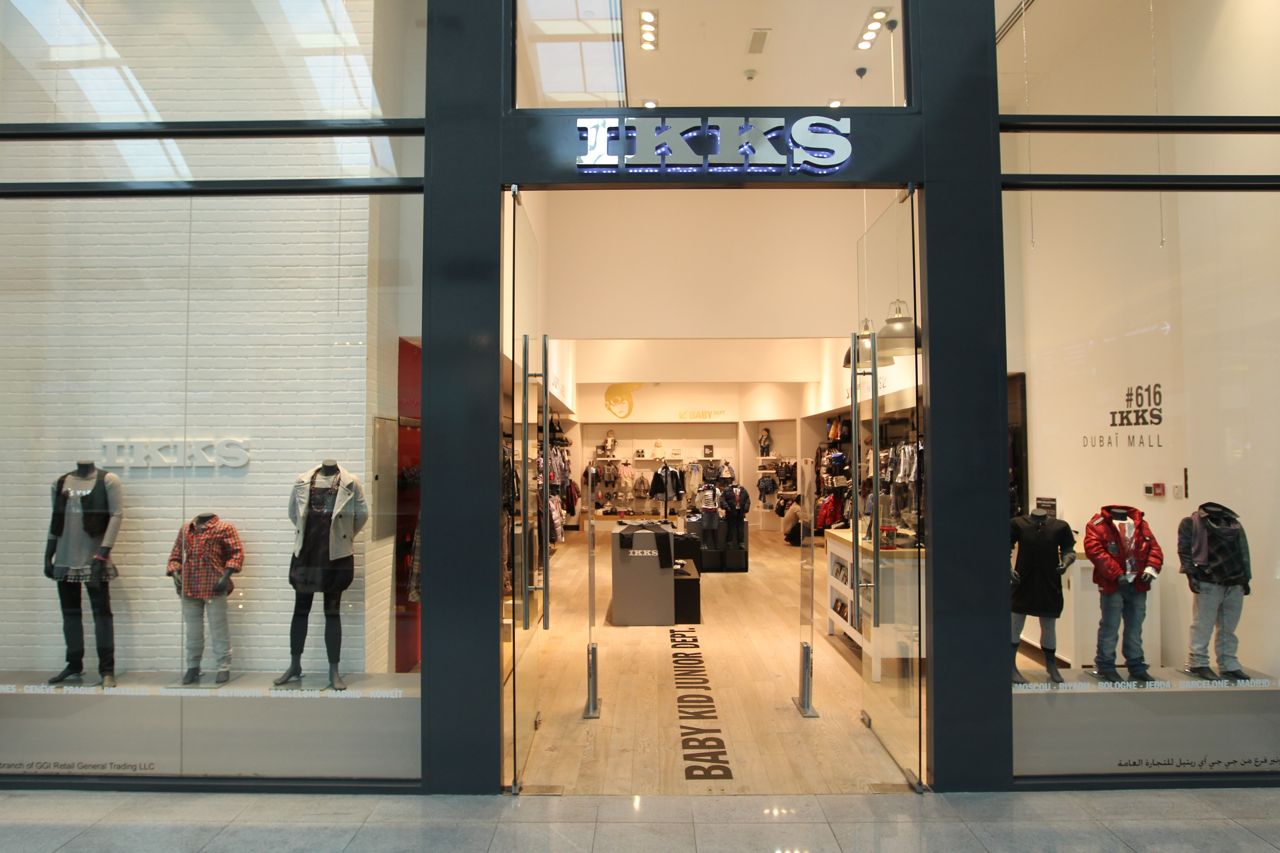
    French fashion label Ikks has launched in Mainland China after forming a partnership with Fung Kids.

    Four stores have been opened in Shanghai and Beijing focusing on the brand’s new childrenswear line, with more planned on both the mainland and in Hong Kong in advance of a wider Asian expansion.

    Ikks Group has 3600 outlets in 45 countries and reportedly plans to open 50 Ikks Paris Junior stores across China within the next four years.

    Childrenswear is a new category for Ikks, founded in 1987, which has previously specialised in womens fashion. The new range was launched last month, after being developed with the help of Fung Group.

    Ikks Group CEO Pierre-Andre Cauche said he hopes the Fung JV will help the brand expand its awareness in greater China.

    “Developing children’s clothing in China is a long-term project. We are certain that Chinese parents will appreciate the brand’s disruptive positioning which – it should be remembered – was the first label 30 years ago to have re-imagined kids fashion to copy the adult wardrobe,” he said.

  • Malaysia telco sector seen facing stiff headwinds

    Malaysia telco sector seen facing stiff headwinds

    The telecommunications (telco) sector is expected to face difficult headwinds given the heightened regulatory pressure and competition that is unlikely to abate anytime soon, said PublicInvest Research analyst Eltricia Foong.

    “We reckon that the operating landscape for both mobile and fixed-line operators will continue to be challenging. In the past, the fixed-line broadband market had been nonchalant but with the implementation of Mandatory Standard on Access Pricing (MSAP) following the change of federal government in May, this segment has since been hit by lower margin and greater competition,” she said in her report.

    With the implementation of MSAP, wholesale prices for network services are expected to be reduced by 8.7% to 12.1% between 2018 and 2020 while retail broadband prices are expected to decline 25% by end-2018.

    Although Telekom Malaysia (TM) currently monopolises the fixed-line fibre network, lower wholesale prices and the possible opening of its fibre network could mean greater competition in the future.

    Foong said the mobile segment has gone through a price war in recent years but judging from the relatively high profit margins enjoyed by operators, she believes that there is still room for further decline in prices, noting the risk of the regulator pressing for lower prices in the future.

    “We note that the mobile industry has been hit by price competition in recent years, particularly the postpaid segment where average revenue per unit (Arpu) has declined from a high of RM91 in 2013 to RM86 currently. Interestingly, prepaid Arpu has been holding up at around RM36 during the same period, though competition had temporarily brought down the rate to RM32 in 2016,” she said.

    She noted that Digi was hit the most, as its prepaid pricing was reduced from about RM40 in 2013 to RM32 currently.

    Operators in Malaysia continue to enjoy higher profit margin relative to regional peers, with net margins of between 10% and 24%. In Thailand, Indonesia and Singapore, operators’ net margins are between 2% and 20%.

    While the price competition that started in 2015 has led to lower profit for most telco players, Foong said, overall Arpu is not likely to improve but instead, may continue its downtrend, either due to market forces or regulatory pressure.

    “In an environment of falling revenues, cost optimisation will be the key for players to strive in this challenging telco industry. Digi and Maxis have proven track records in cost management while TM and Axiata are high-cost operators. This could also mean that there is limited scope for Digi and Maxis to extract greater cost efficiency going forward,” she said.

    For TM, the MSAP would result in lower revenue for its wholesale business and lower Arpu for Unifi services, and it is crucial for TM to achieve better cost efficiency in order to cushion the impact of further margin erosion.

    Foong said TM has the highest manpower cost as a percentage of revenue at 22% in FY17, compared to under 10% for the mobile operators. Although its high proportion of staff cost is justifiable with its extensive backhaul infrastructure, it is still lagging in terms of achieving optimal level of productivity.

    “Measured against revenue per employee, TM has the lowest count of RM500,000. Generally, we feel that any staff downsizing measures by TM would be costly and perhaps sensitive given the presence of labour union,” she said.

    Other costs that TM could potentially rationalise are supplies and materials, and maintenance costs.

    Given the weak prospect of declining revenue while cost rationalisation may be an uphill challenge for TM, Foong does not rule the possibility of TM being privatised in the future, which may make it easier for TM to restructure its operations.

    However, a merger between TM and Axiata is unlikely to materialise as the differences in corporate culture would impede a smooth integration process.

    Operators with good management track records like Digi and Maxis could still leverage on cost efficiency to minimise earnings decline in the near term, though the scope to do so is limited.

    Meanwhile, the less cost-efficient operators are likely to post a more significant drop in earnings in an environment of declining revenue, which would jeopardise their ability to maintain their historical dividend payout.

    “Prior to the onslaught of price competition in 2015, the telco sector had been paying attractive dividend but this has since deteriorated over the years. Between 2014 and 2019, our projected DPS CAGR for the sector is -12%.

    “In view of the unexciting earnings growth prospects, higher operating risk and lower dividend, we downgrade the telco sector to ‘underweight’. We cut our Arpu assumptions for FY19-20F for all the mobile operators and reduce terminal growth to 1.5%,” said Foong.

  • Hanoi plans second sports complex for SEA Games 2021

    Hanoi plans second sports complex for SEA Games 2021

    Capital city authorities have outlined this plan in a recent report to Prime Minister Nguyen Xuan Phuc, saying the upgrade is required because the condition of Hang Day stadium on Trinh Hoai Duc Street has severely deteriorated in recent years.

    The new complex would cost over VND6.3 trillion ($270.4 million), with funds raised from investors who operate the stadium for 50 years, the report said.

    The sports complex will be built on an area of 32,000 square meters, expanding the current area of 22,000 square meters.

    A deal for the upgrade was signed in March by domestic private firm T&T Group which manages the stadium, and French firm Bouygues Construction.

    The headquarters of the city’s Department of Planning and Investment nearby will be moved to another location to make space for the new complex.

    It will be the second international sports complex in Hanoi, after the My Dinh stadium in Nam Tu Liem District.The new stadium will have a capacity of 20,000 people, with several additional facilities including cinemas, event centers, parking basements and convenience stores.

    The Hang Day stadium is a multi-purpose facility which was first established for Hanoi’s École d’Education Physique (Hanoi’s School of Physical Education) in 1934. It was later expanded in 1958.

    In 2017, it was placed under the management of T&T Group, a corporation involved in finance, real estate and agriculture sectors.

    Hanoi will host the 31st edition of the Southeast Asian Games (SEA Games), which is scheduled to last 17 days, as well as the Para Games, for 11 days, from October to December in 2021.

    A total of 16,000 people are estimated to participate in the event, 11,000 of them athletes.

    This is the second time that Vietnam will be hosting the SEA Games after the first instance in 2003.

  • The digital opportunity for Coca Cola at Costa Coffee

    The digital opportunity for Coca Cola at Costa Coffee

    Coca-cola bought Costa Coffee for GBP3.9 billion (US$5.1 billion) recently. As a result of the deal, the US-based fizzy drink company will gain a strong cafe presence across Europe, Africa, the Middle East, and the Asia Pacific.

    So far, Costa has about 2,400 coffee shops in the UK, 1,400 coffee shops in 31 international markets, and more than 8,000 Costa Express self-serve units.

    Why your cash is no good at these bars and coffee shops

    On average, the brand has been in business for more than 40 years and has opened 289 new stores every year. In fact, prior to the deal, Costa was set on establishing a strong presence in China.

    The company also earned GBP1.167 billion (US$1.507 billion) in revenues in 2016. The figure pales in comparison to Starbucks’ revenues of US$22.39 billion (2017) but maybe in a couple of years, Costa might be in a position to lead the market.

    One of the biggest factors that will play to Coca-Cola’s advantage is that innovation is part of Costa’s DNA. “When I came to the business I could see the foundation was strong but we needed to invigorate and innovate. I want us to be famous for innovating,” said Costa MD Dominic Paul last year.

    The company even worked with startups in the UK to prepare itself for the digital world, and build the coffee shop of the future. “We want to build an experience that’s relevant in 2025,” said an executive at one of the company hackathons.

    Highlighting the digital opportunity

    Starbucks has access to plenty of data about its customers and their buying habits, and it does a fabulous job using technology to drive business growth — today.

    Costa Coffee, on the other hand, might not know as much about its customers but with Coca-Cola in the mix, the company has significant opportunities ahead of it.

    Coca-Cola owns brands like fairlife (milk), Dasani (water), Georgia (coffee), Nestea (ice-tea), Cappy (fruit juice) among several others.

    The company understands the beverage market and has data to map seasons, geographies, and other metrics to customer purchases — allowing Costa to enter new markets, draw up ideal customer personas to market to, and even create more targeted advertising.

    In fact, Costa Coffee could even follow in Starbucks’ footsteps and venture into the retail market, all on the strong shoulders of Coca-Cola.

    Here are a few technologies that Coca-Cola uses — that Costa could borrow and benefit from in the future:

    # 1 | AI-driven proof-of-purchase for loyalty program

    One reason why Starbucks has been able to collect mountains of customer data is that they offer a great loyalty program. In fact, since their loyalty program runs on an app, the company is able to send targeted messages and offers as well.

    Costa could ape the loyalty program that Starbucks offers, and it could make it better by incorporating features that award points for the purchase of ready to drink coffee products from supermarkets and retail outlets.

    In order to do so, the company could use the AI solution that Coca-Cola developed in partnership with Google last year — which is now part of most of the campaigns run by the fizzy drink company in the US.

    # 2 | AI-powered vending machine count

    In the digital age, vending machines are a good alternative to retail outlets, especially for the cafe industry.

    A large number of people across the globe wait in a queue every morning, only to take their coffee and bagel ‘to-go’. Having more vending machines could be a good way to solve the problem — especially if they’re stocked frequently.

    However, the problem then would be checking when a machine needs to be refilled. If Costa is to go down this route, it could leverage a solution that Coca-Cola developed in partnership with Salesforce.

    The ERP giant’s AI product had been trained to recognize, identify, and count the varieties and quantities of Coca-Cola bottles stored in one of its cooler display cabinets, simply by analyzing a photo taken with an iPad or iPhone.

    Further, using AI, the system can factor in seasonal variations, weather information, and upcoming promotions, to automatically calculate when the machines need to be restocked.

    # 3 | Big data to determine popular flavors

    Coca-Cola created Cherry Sprite based on data from hundreds of thousands of self-serve soft-drink fountains.

    It has developed strong big data capabilities and understand how to leverage data to determine how to create products that customers prefer.

    Using this knowledge, and data from Coca-Cola’s Georgia and other brands, Costa could create the perfect ready to drink beverages for customers, propelling itself ahead of the competition quite quickly — especially with Coca-Cola’s distribution and supply chain intelligence to support it.

  • Animal cafe trend a concern for wildlife experts in Cambodia

    Animal cafe trend a concern for wildlife experts in Cambodia

    As the trend to keep and display exotic animals in cafes in the Cambodian capital grows in popularity, wildlife experts have warned that the animal trade is largely unregulated and could be putting creatures at risk.

    Reptile Cafe, one of the city’s recent openings, is located on a quiet corner of Street 448 in Phnom Penh. Inside, a few cages filled with iguanas are displayed at the front door. On the left is a cage for a large red parrot, while further in, several other glass enclosures are filled with orange corn snakes, geckos and spiders.

    They are unlikely and unconventional coffee mates, but all of them have been brought into the country to spark the curiosity of customers, according to owner Chea Raty, 32.

    “Seeing the growing market for coffee shops, I had an idea and wanted to open a small cafe and show off the species that I love,” he said. He now has more than ten different species on show, which guests can freely interact with. And he plans to introduce more.

    “As some customers sip their coffee, they’ll see that others dare to hold these animals. And they too would want to try and touch them.”

    None of these animals, however, has proper documentation. Instead, they were registered as pets by the Ministry of Agriculture, Forestry and Fisheries.

    Similar to Raty, Nay Sokhondara, 25, said he started his Zoo Cafe four months ago after seeing the potential of combining coffee and animals.

    The species he keeps in his busy establishment include marmosets, guinea pigs, a chinchilla and a raccoon.

    “Many young people don’t know these animals, so I want to introduce them,” he said.

    Most of them were bought from a farm in Thailand, and some he brought back from Vietnam. He has no formal documents to bring them across the border and admitted to taking a risk in doing so.

    “I have some people there. I know them, so I can trust them. Then sometimes, I paid them also,” Sokhondara said. “I need to spend one day to transfer my pets individually.”

    None of the species, he added, is endangered and he too has registered them as house pets with a five-year licence. His next plan: To source a small kangaroo from Thailand and create a breeding farm.

    Sarah Brook, a technical adviser to Wildlife Conservation Society (WCS), said the trend of exhibiting wild animals is a worrying one.

    “Wild animals do not make good pets, so it not good to encourage this practice,” she said.

    “Even when bred in captivity they need a lot of care, a good diet and an environment similar to their natural habitat, and free of disturbance and stress.

    “I don’t think a cafe in Phnom Penh can provide that.”

    She added that Cambodia needs to take stronger legal action and implement better enforcement to prevent the illegal wildlife trade from thriving.

    “It is a very big problem in this region, for pets, meat, medicines and other products,” she said.

    However, Keo Omaliss, Director of Forestry Administration, played down the concerns and said these types of cases were inconsequential.

    “For Cambodia, I think there is not much cross-border illegal trade of wildlife. It is so little,” he said.

    He said there was no problem with the animals being registered inside Cambodia and put on display in captivity as long as they were not on the endangered species list, and that the purpose was to educate the general public.

    “Whether this activity affects the number of wild animals in the natural forest or not, this is something important we need to focus on. But if their activities are just to make people love animals, it’s a good thing,” he said.

    However, Nick Marx, Wildlife Alliance’s director of wildlife rescue and care, said these animals should be sent back to their natural habitats.

    “Keeping wild animals in small cages is unkind,” said Marx.

    “This kind of practice serves no benefit for conservation. It is clearly for entertainment to attract customers.”

    While Wildlife Alliance is working to combat the illegal trade of Cambodian wildlife within the country, he believed that these particular species were not indigenous to Cambodia and therefore not within his organisation’s jurisdiction to act and confiscate them.

    “It should be the job of the Cambodian government to make sure all these animals are kept properly and all these shop are acting legally.”

  • Blockchain, AI the next big thing for advertisers

    Blockchain, AI the next big thing for advertisers

    The integration of analytical and data-driven technologies with AI and Blockchain can help businesses better understand customers’ behaviors, habits, interests, and needs. Thus, direct advertisements are easy to access consumers at the right time and the right situation, experts say.

    “Blockchain can be a game changer when it comes to marketing. The technology will create transparency, reliability, and positive values,” said blockchain consultant David Lang.

    “While users can better manage their personal information, blockchain can help brands not only reach the right customers more effectively but also more accurately measure the performance of each advertising campaign,” he added.

    At present, certain weaknesses have become apparent in the advertising industry. Studies have shown that fraud in digital advertising costs $1 for every $3 in advertisement expenditure. Online advertisers estimate that total losses from fraudulent activities in the industry will reach $19 billion in 2018.

    Bigbom, an online advertising solution built on the blockchain platform, has clearly identified three major issues that the advertising industry needs to address.

    Second, manual advertisement management takes too much time and is inefficient.First is the building of trust between the advertisers and ad platforms or publishers. It takes a huge amount of time for advertisers to find and establish a partnership with absolute strangers.

    Third, the budget for advertisement campaigns is still poorly allocated.

    Bigbom, a Singapore company has rolled out Bigbom Ads, Bigbom Contract and Bigbom Marketplace as the promising solution to soothe the mentioned sore of this industry. The first one is a tool which helps advertisers optimize their ads in such an efficient and simple manner. Through their innovative algorithm, this is the flagship product in the journey to change the conversation of digital advertising and make the one-click optimization come true. Bigbom Marketplace powered by Bigbom Contract creates a transparent economy for advertising community to join by harnessing the power of blockchain technology.

    Those are Bigbom’s trinity force to revolutionize the online advertising industry. Currently, their products have been launched with the very first attributes and received positive feedback from the interested audience. According to their plan, these services will be up and running in the first two quarters of 2019 with more advanced features.

    More information regarding the project is available at bigbom.com as well as their whitepaper.

  • Singtel, affiliates sign eSports alliance

    Singtel, affiliates sign eSports alliance

    Singtel and four of its regional mobile associates have entered a collaboration agreement aimed at stimulating the gaming and eSports ecosystem in Southeast Asia, Australia and India.

    Singtel and wholly-owned Australian subsidiary Optus have signed agreements with India’s Bharti Airtel, Thailand’s AIS, the Philippines’ Globe Telecom and Indonesia’s Telkomsel covering areas including scaling up eSports, content creation and distribution.

    Singtel, Optus, Airtel, AIS, Globe and Telkomsel plan to jointly develop solutions and services for gamers and fans across the region, including providing access to local, regional and global eSports competitions, original content and exclusive programming.

    The agreement was signed at the Singtel Group’s first multi-title and regional eSports league championship – the PVP Esports Championship – over the weekend.

    The Singtel Group has announced plans to leverage its telco assets and regional mobile customer base of more than 700 million to pursue opportunities to encourage eSports development.

    Singtel also used the championship event to unveil its new ultra-fast fiber broadband service  for Singapore gamers, which includes 1Gbps of dedicated gaming bandwidth and another 1Gbps for general internet usage.

    “Gaming is part of a digital world without borders, where fast network speeds, connectivity and local market knowledge are critical. It is a natural and perfect fit for Singtel and our partners,” Singtel International CEO Arthur Lang said.

    “We are committed to working as a group to better serve the gamers in our networks, and in the region. We hope to play a major regional role as an enabler of eSports, to collectively grow the gaming ecosystem, and give gamers the support and recognition they deserve.”

  • Consumers watch almost 7 hours of online video per week

    Consumers watch almost 7 hours of online video per week

    Consumers worldwide are watching more online video than ever, with average consumption growing to of 6 hours and 45 minutes per week, according to a new survey.

    This figure is even higher in Singapore, with the average Singaporean watching eight hours and 13 minutes of online video content each week.

    This were the findings of the new “State of Online Video” report from Limelight Networks, which was based on 5,000 responses from consumers living in Europe, Asia (Japan, Philippines, Singapore, South Korea) and the US. Only those who watch one hour or more of online video content per week were polled.

    Insights from report

    What are some insights that could be gleaned? For one, performance issues with online video continue to turn Singaporean viewers off. Specifically, the experience of video buffering was cited as the most frustrating aspect of watching a video online (46%) followed by poor video quality of online content (32%), with more than half (59%) reporting they will stop watching a video if it re-buffers twice.

    Singaporeans are also price-sensitive and will cancel services due to price increases. Some 63% of Singaporean respondents said that price is the reason why they would cancel a subscription video on-demand (SVOD) service. This is second to only Italy (70%) and exceeds the global average (55%).

    Marketers will be glad to know that Singaporeans are tolerant of advertising in online videos. Indeed, 87% are not opposed to a short advertisement before an online video if the content they are viewing is free. However, they are less accepting of mid-roll ads in free content, and only 24% willing to accept multiple advertisements.

    “Singaporean viewers are very savvy when it comes to exploring online mediums, especially for their entertainment needs. We expect this trend to continue in the coming years, especially in the area of growing video on-demand adoption,” said Jaheer Abbas, the senior director of Southeast Asia and India at Limelight Networks.

    “Yet, service providers should be aware that factors such as price and quality have strong influence on viewers. To encourage viewers to make the switch from traditional television options, the issue of latency and quality at a competitive price need to be addressed. At Limelight, we seek to partner with businesses to make this possible, by enabling live broadcast streaming in less than a second, providing online viewers with the same experience enjoyed by broadcast viewers,” he said.

  • Hong Kong companies see the importance of Wi-Fi

    Hong Kong companies see the importance of Wi-Fi

    “Wi-Fi is critical to deliver multimedia content to a proliferation of connected devices to enable a connected global economy,” said Linda Hui from Ruckus Networks at an early October press conference in Hong Kong.

    “If IT departments need to spend considerable time fixing Wi-Fi issues, this puts severe pressure on the organization to digitally transform, reduce operational costs and hinders their ability to deliver new products, services and revenue models,” said Hui, the firm’s managing director for Hong Kong and Taiwan.

    In the survey of eight Asia-Pacific markets by Ruckus—which was acquired by Arris last year—76% of Hong Kong enterprises said they intend to upgrade their Wi-Fi equipment in the next 12 months. “This is to meet demands for enhanced Wi-Fi security, improve overall user experiences, and provide a stable high-speed connection [that can handle] the rise in multimedia content,” said Ruckus in a statement.

    The firm said “an equipment overhaul is long due in many [Hong Kong] businesses as 35% said they estimated HK$400,000 per year ($51,300) is lost annually due to connectivity issues.

    Survey stats & specs
    This is according to the firm’s first “Asia Pacific State of Wi-Fi Study, which surveyed 1,200 business and IT leaders in Australia, China, Hong Kong, India, Indonesia, Japan, Singapore and Taiwan to identify Wi-Fi usage trends and expectations.” “Respondents ranged from mid- to large-sized organizations and are in decision-making or implementation roles for IT-related initiatives.”

    “From a corporate perspective, implementing Wi-Fi in the workplace meant better productivity (74%), flexibility (55%), and improved collaboration (44%),” said Ruckus. “Yet over half (51%) had experienced at least six instances of connectivity downtime, and 9% indicated they had over 20 instances in the last twelve months.”

    More importantly, Ruckus said their survey indicates that “half of all businesses said a bad Wi-Fi experience can negatively impact a brand image.”

    Wi-Fi security…rock-solid?
    As usual, security concerns top the list. When rating the current state of Wi-Fi security in their organizations, 47% of Hong Kong firms said it was good or very good—compared to 53% across Asia Pacific. However, 61% also said they only used basic usernames and passwords to provide Wi-Fi access, while 16% indicated they have an open Wi-Fi network with no secure log-in measures.

    The survey also found that Hong Kong businesses suffered losses of HK$37 million ($4.8 million) in total over the past year due to Wi-Fi downtime. Apart from monetary losses, 48% of Hong Kong respondents said their IT departments needed to spend about a week or more each month to manage Wi-Fi or network-related issues.

    “Today, Hong Kong people expect a seamless, reliable and fast Wi-Fi experience and accessibility whether at home, at work, on the move or at a public venue,” said Hui. “When there is a connectivity issue or other disruption to the Wi-Fi experience, this dampens accessibility by throttling the ability to work anywhere, at any time with productivity taking a hit.”

    Wi-Fi wonderland
    Ruckus said the survey demonstrates “how ingrained Wi-Fi has become in Hong Kong society,” as 51 percent of respondents said they carry at least four Wi-Fi enabled devices including smartphones, smart watches, laptops, and tablets.

    But work & home setups are preferred by Hong Kongers. Respondents voiced concerns about the Wi-Fi service offered in public places with 81% saying slow Wi-Fi connection speeds top their list of concerns with connection drops and limited coverage area close behind. Only 17% said they had enjoyed a good or very good experience using public Wi-Fi.

  • Logistics startup Expedito wins Seedstars Jakarta

    Logistics startup Expedito wins Seedstars Jakarta

    Seedstars Jakarta, the Indonesian round of global seed-stage startup competition Seedstars World, on Friday named logistics startup Expedito as its first winner at Ruang & Tempo, South Jakarta.

    Expedito is a price comparison website and online booking service for international shipping.

    Selected out of nine finalists, Expedito will take part in the week-long Seedstars Summit in Switzerland in April 2019. The startup will have an opportunity to meet more than 65 winners from other Seedstars competitions, as well as investors and mentors from around the world. At the final day of the summit, the startups will pitch for an opportunity to win up to US$1 million in equity investment and other prizes.

    In addition to Expedito, sharia-based P2P lending platform Ammana has been named as second prize winner while equity crowdfunding platform Bizshare has been named as third prize winner.

    The finalists are include retail solutions provider Do-Cart, recruitment startup for blue collar jobs Pakaruto, GPS-tracking solutions provider Lacak, agritech startup Aglonera, queueing app Qiwii, and healthtech platform for patients of varicose vein disease Varises Indonesia.

    The panel of jury for this event includes Arum Kalbuadi Putri (Openspace Ventures), Melina Subastian (Alpha JWC Ventures), Paul Luo (BStartup), Joseph de Leon (Gravitas Prime), Octa Ramayana (Digitaraya), and Gaby Fernandez Scala (Seedstars).

    For this year’s event, Seedstars World Asia partners with Merck Accelerator to support early stage startups with a focus on life sciences.

    To organise the Jakarta event, Seedstars work with Digitraraya, Kumpul, Prosehat and Ruang & Tempo, with support by Kibar, Greenhouse, FlySpaces, Freak Out, Bat Ventures, RASI, Asosiasi Tech Startup Indonesia, ANGIN and media partner Daily Social.

    The event stated that it had attracted interest from over 110 startups and around 70 attendees.

  • Asian banks tear down brick-and-mortar expansion model

    Asian banks tear down brick-and-mortar expansion model

    Just a few years ago, starting a retail banking operation in Indonesia, a nation teeming with islands stretched across a distance as wide as the U.S., would require investing in thousands of physical branches and on an army of bank tellers.

    But Singapore’s largest banking group DBS Group Holdings is attempting to disrupt that business expansion model by wielding its own branchless smartphone banking platform.

    The bank launched digibank in Indonesia in August last year, the biggest selling point being accounts that can be opened without visiting a bank branch. Although other banks offer similar digital services, almost all of them require customers to open accounts at physical locations.

    DBS sales associates can be found in over 50 coffee shops and malls in the cities of Jakarta, Bandung, Surabaya and Jogjakarta. Signing up takes about 15 to 30 minutes — or “as long as it takes to drink a coffee,” as the digibank salesforce promotes. The accounts check fingerprints through e-KTP, the Indonesian electronic identification card.

    New applicants can verify their biometric identities on the spot at coffee shops, or they can wait at home for digibank agents to come visit them. Through their mobile phones, customers can accept deposits, transfer funds, and an artificial intelligence program answers most basic queries, such as those regarding balances and account histories.

    After DBS rolled out digibank in India in 2016, it captured over 2 million customers, yet only 60 to 70 people run that operation. “In the last five years since 2013, the whole world has changed,” said Pearlyn Phau, deputy group head of the consumer banking group and wealth management at DBS.

    The fact that smartphones handle almost all aspects of life, especially among the younger demographic, have paved the way for this moment. Advances in financial technology and flexible government regulations were also tail winds. “With the digital model, what we’re trying to do is to re-enter the retail space, but without the high cost of brick-and-mortar,” said Phau.

    DBS plans to add lending functions to digibank by the end of this year. In Indonesia, digibank drew about 600,000 users over the past year. “In the next five years, we want to book around 3.5 million customers,” said Wawan Salum, managing director of the consumer banking group at PT Bank DBS Indonesia.

    Another Indonesian bank, Bank BTPN, is attempting to eliminate the face-to-face verification step altogether. The company is applying for government permission to verify new accounts for Jenius, the smartphone-based financial service platform, via video calls.

    “Once that is approved, we will not even send someone on a motorbike to come and visit you for identification,” said Peterjan van Nieuwenhuizen, BTPN’s head of digital banking. “You can just do a video call on your phone.”

    Jenius, which went live in 2016, began offering unsecured loans last month. Lending limits are set based on an individual’s financial profile, such as the transaction history, and the financing includes instant-access credit lines. Jenius could offer insurance and wealth management products later on.

    “We started consumer retail banking…from scratch,” said Nieuwenhuizen. “We started from the concept of how we can be a life finance tool rather than a bank. Traditionally, it would have been very difficult for us, or any new player, to enter [Indonesia] because you’re building a thousand branches across more than 13,000 islands.”

    Jakarta, Indonesia’s capital, suffers from traffic snarls like other major metropolises across Southeast Asia. The extra effort to travel to a bank branch has contributed to the lack of foot traffic to bank branches. But the spread of smartphones has granted youth tools to easily fulfill bank transactions. Only 20% of adult Indonesians held accounts in 2011, but the share has risen to 49% last year, World Bank data shows.

    Globally, about 1.7 billion adults have neither opened an account, nor transferred money with a mobile phone, the World Bank estimates. However, two-thirds of unbanked adults have mobile phones. That shows digital banking could be ripe for explosion in places like the Philippines and Vietnam.

    Innovative financial services open the door for small to mid-tier banks, as well as foreign players, to expand market shares — more so than large, established banks. Go-Jek, the Indonesian ride-hailing app, also poses a threat to traditional banks since it runs an online payment service.

  • StarHub to cut jobs in efficiency drive

    StarHub to cut jobs in efficiency drive

    Singapore’s StarHub has announced plans to cut around 300 jobs and pursue other cost-cutting measures as part of a plan to respond to intense competition and shrinking core telecoms revenues.

    The strategic transformation plan will also see the operator invest in growing new digital businesses such as its recently created cyber-security company Ensign InfoSecurity, in the development of ICT solutions for enterprise customers, and in digitalization initiatives aimed at improving the customer experience.

    StarHub’s planned headcount reductions will concentrate on non-customer facing functions, the operator revealed. The company also plans to make additional roles redundant through natural attrition and tighter management of contractor roles.

    Affected employees will be notified by no later than the end of the month. StarHub will take a $25 million one-off charge to fund restructuring costs including the provision of support for laid off employees.

    Through the headcount reductions and planned improved operational efficiencies, StarHub aims to generate S$210 million ($152.1 million) in savings over the three years from 2019.

    The operator is targeting savings in areas including procurement activities, leasing costs, maintenance and sales and distribution expenses, but plans to funnel a portion of these savings into the investments in new growth areas.

    “The intense competitive ferocity right across the market, new entrants, lower voice revenues, thinning margins for fixed broadband services, high content costs for Pay TV operations and high market penetration for mobile and fixed services, has necessitated efficiency optimization initiatives as part of the strategic transformation plan,” StarHub CEO Peter Kaliaropoulos said.

    “Technological innovation and competition are redefining how we deliver services to our customers and we at StarHub need to transform our operating model, otherwise we will face greater risks in the future. Our revised operating structure will be best placed to meet our strategic intent, enhance customer experience, increase accountability and effectiveness and improve competitiveness and agility.”

  • Jollibee expanding in Hong Kong

    Jollibee expanding in Hong Kong

    “It feels like you’re back home,” said Filipino Joanna Galabay, a long-time foreign domestic worker in Hong Kong, as she munched on a drumstick at a Jollibee’s branch on Connaught Road.

    Singaporean bags-and-shoes chain Charles & Keith opened its first branch in the upscale New Town Plaza in Sha Tin last month, and will open its second outlet – at Parker House in Central – in November. It has committed to opening another store in the city, and told it plans to “expand cautiously to 10 locations in the next five years.” It has branches in the Philippines and Indonesia so is well known to the city’s domestic helpers

    Potato Corner, which now has four outlets in Hong Kong, said a branch in Central is in the pipeline. The restaurant chain started in the Philippines but, as part of its international expansion, took off as well in Indonesia.

    “For Southeast Asian brands in particular, Hong Kong has a unique advantage for having a long-established Southeast Asian population,” said retail analyst Lawrence Wan of CBRE Hong Kong. “ … You can see their restaurants opening in prime areas. The lifestyle and trendy fast fashion brands from Southeast Asia are also gaining steam.”

    The number of Southeast Asian companies in Hong Kong rose 17 per cent between 2013 and 2017, with the city now having 586 such businesses, according to the government’s Census & Statistics Department. In addition to players like J. CO Donuts & Coffee of Indonesia, and Bread Talk and Irvins Salted Egg, both from Singapore, they include big multinationals, such as the Development Bank of Singapore and the United Overseas Bank, also from the Southeast Asian city state.

    Hundreds of thousands of maids fan out on their Sunday day off in this city of 7.4 million people. Filipino maids often meet their friends at Jollibee, for example, chatting, eating, snapping selfies and calling family back home. In April, visiting Philippine President Rodrigo Duterte created quite a stir when he sat down at the Hung Hom outlet of Jollibee and chatted with a Filipino maid. Indonesian helpers are also fans of Jollibee.

    The women have expanded the customer base of the brands by bringing home drumsticks, doughnuts and other treats with them when they return to their employers’ homes on Sunday nights. The Southeast Asian businesses have also simply grown by word of mouth.

    “We initially entered Hong Kong because of the large Filipino population in the market,” Jollibee’s media office said. “However, we are now seeing that our new stores have majority local customers, with more Hong Kong locals loving our Chickenjoy [chicken meals].”

    Potato Corner, which markets itself as the maker of the “world’s best flavoured fries”, said its Hong Kong stores achieved the “all-time record for highest single day sales” in the brand’s 25 years of operation. It didn’t give specifics.

    “Potato Corner is popular among Filipinos, and some of our most loyal regulars are Filipinos. Indonesians [are our loyal customers], too, as Potato Corner has a strong presence in Indonesia,” said Ryan Asis Maniago, managing director of UpFive Corporation Ltd., the master franchisee in Hong Kong.

    As Hong Kong’s population ages, its need for foreign domestic helpers will grow, with the number of helpers expected to jump to 600,000 over the next three decades, the government says. While their wages are modest – HK$4,520 (US$577) a month, plus living space in their employer’s home and food – their sheer number makes them a serious consumer base. They spend about a quarter of their wages in Hong Kong, according to a study by NGO Mission for Migrant Workers released in August. That would mean they are dropping about HK$5 billion (US$640 million) a year in the city.

    The number of Southeast Asian businesses is expected to grow under two free trade agreement between Hong Kong and the Association of Southeast Asian Nations, which represents the 10 countries of the region: Indonesia, Thailand, Vietnam, Singapore, Malaysia, Philippines, Myanmar (also known as Burma), Cambodia, Laos and Brunei. The agreements go into effect next year.

    Consulate officials from the Philippines, Singapore and Thailand also noted that Hong Kong serves as a strategic gateway to China’s huge number of consumers, elevating its importance to businesses of the Asean member countries.

    However, businesses said in interviews that expansion is hampered by the city’s high rents. Also, some complained that it is difficult for them to set up bank accounts for their operations.

    “The cost of doing business in Hong Kong is more expensive compared with other countries, especially in rent,” Irvins Salted Egg said.

    The snack company said it is negotiating with a few landlords for some prime retail spaces in popular shopping malls.

    In 2017, Hong Kong’s Causeway Bay, home to one of Potato Corner’s branches, had the most expensive retail space in Asia, and second in the world behind New York.

    Property consultant Cushman & Wakefield said annual retail rentals in the trendy and popular shopping district on Hong Kong Island reached HK$21,255 (US$2,712) per square foot, just behind Upper 5th Avenue’s HK$23,400 (US$2,986) per square foot.

    While rents are high, the Thai Consulate applauded the city’s business-friendly tax system.

    “The simple tax system with no VAT and importing tax is also a selling point to Thai exporters,” the Thai Consulate-General said.

    There were 154 existing trademark registrations from Thailand in Hong Kong as of last year, a 77-per cent increase compared to 2016. Leading Thai brands in Hong Kong include Bangkok Bank, spa and spa products retailer Thann, and restaurant Blue Elephant.

    Thais have opened many small business in the city, including massage parlours and beauty and nail salons.

    The city’s attractiveness has grown to Southeast Asian businesses, some of which were quick to thank Filipino and Indonesian domestic helpers for getting them off to a solid start.

    Noemi Morgado, a Filipino maid working in Pok Fu Lam, is one such helpful ambassador. “Ever since I brought my employer’s family a bucket of Jollibee fried chicken on New Year’s, they have regularly asked me to bring some home after my day off,” said Morgado, holding three buckets of the chain’s fried chicken.