Blog

  • Singtel launches ultra-fast broadband for gamers

    Singtel launches ultra-fast broadband for gamers

    Singtel has launched a new ultra-fast fiber broadband service targeted at gamers, which comes bundled with a dedicated gaming Wi-Fi modem.

    The new 1+1 Gbps Fibre Pro Gamer Bundle comes with the newly launched Razer Sila gaming router and a subscription to the WTFast Gamer Private Network service, which is designed to automatically connect gamers to the fastest servers.

    The bundle is priced at S$69.60 ($50.41) on a 24-month contract, and connects to a dual network which comprises 1Gbps of dedicated bandwidth for gaming and another 1Gbps for regular internet usage.

    The dedicated bundle is being launched today at the opening day of Singtel’s first PVP Esports Championship in Suntec City, a three day event featuring teams from Australia, India, Indonesia, the Philippines and Thailand competing for a $300,000 prize pool.

    “We are pleased to offer our customers this broadband bundle that’s specially designed for online gaming during our inaugural PVP Esports Championship event,” Singtel CEO consumer Singapore and group chief digital officer Yuen Kuan Moon said.

    “Online gaming is extremely popular with our customers. This requires high connectivity performance and specialized devices to optimize the gaming experience. By bringing together Singtel’s superior network connectivity and Razer’s Sila gaming router, we believe the 1+1 Gbps Fibre Pro Gamer Bundle will provide the ultimate performance for gamers.”

  • DHL E-commerce Makes it Easier to Ship from China to Australia

    DHL E-commerce Makes it Easier to Ship from China to Australia

    DHL eCommerce has partnered with AuMake, an ASX listed retailer connecting Australian suppliers directly with Chinese consumers, to enable quality deliveries direct from Australia to China, starting today. AuMake’s growing database of over 80,000 members will now be able to ship direct to China with DHL eCommerce Parcel International Direct shipping solution, a high quality and affordable tracked solution with fast transit times of 5-7 days.

    “We’re proud to partner with AuMake to offer Parcel International Direct China to their customers and provide reliable and high quality direct shipping solutions. We understand that trust is highly important for Chinese shoppers particularly in the delivery process. Our shipping solution offers great transit times, high quality handling and tracking visibility to connect Australian brands to Chinese consumers,” said Denise McGrouther, Managing Director, DHL eCommerce Australia.

    Australian products are highly sought after by Chinese online shoppers, contributing to 20% of cross-border purchases into China in 2017, up 9% from 2016[1]. In addition, there are an estimated 400,000 ‘daigous’ operating in Australia who act as an overseas personal shopper to buy and ship products from Australia to China.

    Through its growing footprint of showroom-style stores, AuMake and Kiwi Buy across Sydney, Australia, customers can easily make purchases and arrange a pick up by DHL eCommerce for international deliveries from AuMake’s retail stores with the launch of the new service.

    “The demand for Australian products from China is insatiable and through AuMake’s retail stores and the collaboration with DHL eCommerce, we are making it easier to ship from Australia to China. AuMake’s customers can shop and ship with the additional choice of using a well known and trusted logistics provide like DHL eCommerce, providing peace of mind that their purchases will be safely and quickly delivered,” said Joshua Zhou, Managing Director, AuMake International Limited.

  • Thai Lion Air launches Dhaka-Bangkok direct flights

    Thai Lion Air launches Dhaka-Bangkok direct flights

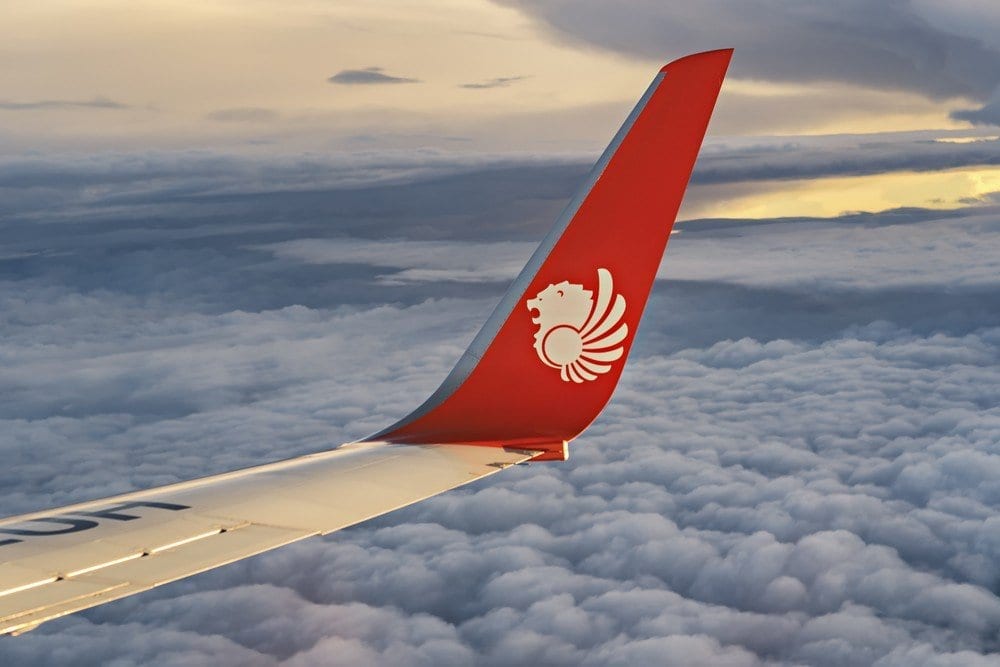
    Budget airline Thai Lion Air launched direct flights between Dhaka and Bangkok, in an event at Lakeshore hotel on Saturday.

    They will be flying from Bangkok’s Don Mueang Airport to Dhaka’s Hazrat Shahjalal International Airport.

    At the event, Malindo General Manager (Commercial Strategy) Saravanan Ramasamy said: “The company will play a pivotal role in connecting Bangladesh with Bangkok, China, Nepal, Vietnam, India, and Myanmar.

    “As the second largest Low cost carrier in Thailand, we have already conquered the South East Asian and South Asian market. Soon we will be offering flights to Japan.”

    The airline is offering round trips from Dhaka to Bangkok at a starting price of Tk16,083.

    At the event, the head of sales delivered a presentation on the journey and future expansion plans of the company.

    Thai Ambassador to Bangladesh Panpimon Suwannapongse and Thai Lion Air Managing Director Phillip Pang cut a cake at the launch ceremony.

    In a press statement, chairman of the Board of Thai Lion Air Captain Darsito Hendro Seputro said they will be launching their inaugural flight from Bangkok to Dhaka on October 1 this year.

    “Travelers will be attracted by amazing architectural marvels such as the Ahsan Manjil,” said Capt Septuro. “They will also be able to experience the handicrafts, spices, herbs, gift shops, and local food of the country.”

    The company currently operates aircraft including the Boeing 737-900 ER, with 215 seats, Boeing 737-800, with 189 seats, Boeing 737 MAX 9, with 215 seats, and the Airbus A330-300, with 392 seats.

    Passengers choosing to fly with Thai Lion Air will also be able to enjoy free baggage allowance of 10kg and free allowance for sports equipments of 10kg on domestic flights.

    As per the international flight policy of Thai Lion Air, Dhaka-Bangkok round trips will have free baggage allowance of 20kg.

    Currently, the airlines are offering a new service called Lion Seat Selection, which will let passengers choose their preferred seat locations, either beside a window or the aisle. For passengers who do not use the Lion Seat Selection service, the system will automatically assign a random seat number at check-in.

    Using this service, bookings can be made at least four hours prior to departure via the call centre or through the company’s official website.

    Thai Lion Air is a low cost carrier of Lion Group, founded in 2013, with 12 domestic flights, 2 cross region flights and more than 20 international flights. The airline will provide an alternative travel option for passengers travelling to Bangkok and beyond at very affordable price.

  • Rakuten completes 5G trials in 28-GHz with Nokia

    Rakuten completes 5G trials in 28-GHz with Nokia

    Japan’s Rakuten Mobile Network said it has completed over-the-air 5G trials in the 28-GHz frequency band using equipment provided by Nokia and Intel.

    The trials were carried out from June in a shielded room at the Nokia Kawasaki Technology Center located in Kanagawa Prefecture in Japan, using Nokia AirScale base station and the Intel 5G Mobile Trial Platform.

    During the trials, Rakuten Mobile Network and Nokia verified a number of 5G applications including 4K video and 3D 360-degree VR live streaming, the Japanese mobile carrier said in a company statement.

    Rakuten Mobile Network, which is the newly created mobile subsidiary of Japanese e-commerce giant, secured government approval to deploy 4G mobile services in the 1.7-GHz frequency band in April 2018. The company aims to launch its first mobile services as a mobile network operator in October 2019.

    Rakuten Mobile Network is teaming with a number of vendors including Nokia on the design and construction of its nationwide mobile network. The two companies will also work closely together on 5G technology testing and evaluation, Rakuten said.

    “The next generation of mobile broadband and the Internet of Things, enabled by 5G, will transform virtually all sectors of society and industry, and further accelerate the opportunities to advance in healthcare, education, energy services and agriculture, and within new industry applications,” Rakuten Mobile Network CTO Tareq Amin said.

    “The results of our trials highlight the importance of realistic 5G OTA testing and reinforce the potential of 5G networks, taking us a step closer towards actual deployment,” he added.

  • T-Mobile to launch 5G prepaid 5G next year

    T-Mobile to launch 5G prepaid 5G next year

    T-Mobile’s prepaid brand will launch 5G services at roughly the same time the operator launches the technology for its main T-Mobile brand, according to carrier executives.

    T-Mobile’s Chief Technology Officer Neville Ray said the carrier’s pending 5G launch will be sold through all of the operator’s outlets, including its prepaid brand.

    T-Mobile is using equipment from Ericsson and Nokia to build a 5G network across the carrier’s 600 MHz, 28 GHz and 39 GHz spectrum in 30 cities—including New York, Los Angeles, Dallas and Las Vegas—during 2018. However, T-Mobile’s Ray said earlier this year the operator won’t be able to offer compatible smartphones for the service until early 2019.

    And yesterday, T-Mobile rebranded its prepaid service MetroPCS as Metro by T-Mobile. The action is partly an attempt by T-Mobile to tell customers the brand is powered by T-Mobile’s network.

    In conjunction with the rebranding effort, T-Mobile’s prepaid service is also refreshing its pricing options to include Google One cloud storage services and an Amazon Prime account with its $60-per-month unlimited option.

    T-Mobile’s 5G launch in the US will be relatively unique, at least based on operators’ initial commentary around their 5G launch plans. Specifically, T-Mobile plans to primarily use its 600-MHz spectrum for its initial 5G build-out.

    The carrier spent roughly $8 billion on those licenses during the FCC’s recent incentive spectrum auction of TV broadcasters’ unwanted spectrum licenses. To be clear, though, T-Mobile has also said it will use other spectrum bands including its millimeter-wave spectrum holdings for its forthcoming 5G service.

    The upshot for T-Mobile is that low-band spectrum like 600-MHz will allow the carrier to quickly cover large geographic areas of the US with 5G due to the propagation characteristics of the spectrum.

    Meantime, Verizon is initially using its 28-GHz spectrum for its own 5G efforts. Indeed, the operator’s newly launched 5G Home service uses 28-GHz spectrum.

    AT&T also plans to use its own millimeter-wave spectrum holdings for 5G, though the operator has hinted that it will refarm its midband holdings for 5G as well. And Sprint has said its 5G launch will primarily use its vast 2.5-GHz holdings.

  • TCB, Visa launch QR code payment in Taiwan

    TCB, Visa launch QR code payment in Taiwan

    This month, the Taiwan Cooperative Bank (TCB) and Visa have implemented what both call Taiwan’s first standardized and EMV-compliant QR code payment.

    Part of Financial Information Service Co.’s “Standardized QR Code Solutions,” the new EMV solution will be among the first large-scale deployments of standardized QR Code payments in Taiwan, initially covering more than 8,000 TCB acceptance points. In the future consumers can link their TCB Visa debit or credit cards with the Taiwan Mobile Payment mobile app to experience the security and convenience of mobile payment.

    Visa announced plans to introduce QR code payment in Taiwan in July last year. It was meant as a response to the introduction of Apple Pay, Samsung Pay and Google Pay in March, May and June of the same year.

    At the time, Visa said it had 35 million credit cards issued by 20 banks in Taiwan – presenting both a threat and opportunity for the card company with the introduction of alternative payment platforms for consumer retailers hooked to their smartphones.

    In January 2018, mobile payment in Taiwan stood at just 13% – low for a highly developed economy renowned for leading innovation. In contrast, mobile payment in China accounted for 61.2% of the global user base in 2018. With the encouragement of Taiwan Premier, Lai Ching-te, the government is aiming to have 90% of mobile phone users using mobile payment by 2025.

    “This roll-out will boost the bank’s already extensive acceptance footprint due to standardized QR Code’s cost-effectiveness as a payment method. We hope to help further advance Taiwan’s mobile payment for the benefits of all.” TCB chairman Chung-Dar Lei.

    Marco Ma, General Manager of Visa Taiwan, added that “the EMV QR Code Specifications are intended to be globally interoperable, and with the right mobile application local consumers, as well as overseas travelers will be able to use the same QR Code to make payments everywhere the specifications have been adopted, opening up more revenue sources beyond Taiwan.”

    TCB’s EMV QR code solution offers extensive payment applications including payments for credit card bills, utilities, insurance premiums, tuition fees, air tickets, taxes, food and e-commerce purchases.

  • Dtac welcomes extension of 900-MHz bid decision deadline

    Dtac welcomes extension of 900-MHz bid decision deadline

    Thailand’s Dtac has welcomed the decision by regulator NBTC to extend the submission deadline for applying to participate in an upcoming 900-MHz auction if no bids come in today.

    The deadline extension will allow Dtac to complete its feasibility study before making a final decision on whether to participate.

    Dtac is the only operator to pick up bid documents for the upcoming auction by the deadline yesterday, and rivals AIS and True Corp have already indicating that they will not be participating.

    Dtac was expected to use the spectrum to replace its expiring 850-MHz spectrum and ensure continuity of service for customers still using the spectrum. The feasibility study is evaluating whether the 900-MHz spectrum is required, as well as the criteria and procedures of the license being auctioned.

    The operator will now have until October 16 to decide whether to participate in the bid, which will be held later in the month. The date will be October 20 if there are multiple participants, and October 28 if there is only one bidder.

    The NBTC recently rejected a request from Dtac for a remedy period allowing it to use its expiring spectrum now its license has expired, but the court had issued an emergency injunction while a hearing on the matter was before the courts.

  • AirAsia strengthens east Malaysia network

    AirAsia strengthens east Malaysia network

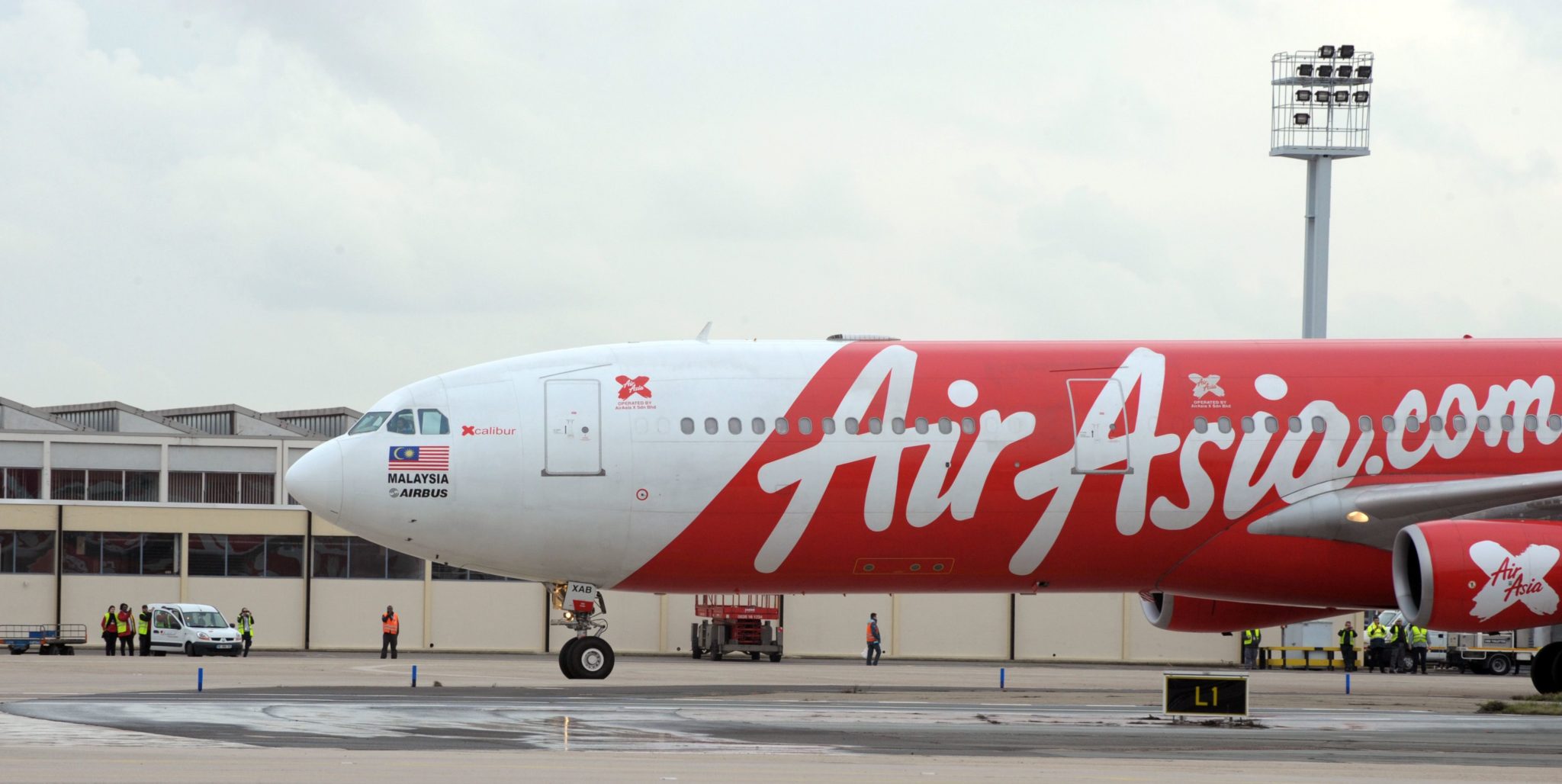
    AirAsia is strengthening its connectivity in East Malaysia with four-weekly flights from Kuching to Tawau starting 2 December.

    AirAsia is the only Malaysian airline to offer direct flights between the capital city of Sarawak and the third largest city in Sabah state.

    AirAsia Malaysia CEO Riad Asmat said:  “To launch a new route from our Kuching hub to Tawau is a testament to our commitment to further boost the connectivity in East Malaysia.”

    Tawau is gaining popularity as a gateway to the Sabah’s dive sites, especially among Chinese tourists.

    The airline said 99% of passengers on Fly-Thru routes to Tawau were from cities in China and 76% of all passengers visiting Tawau come from China.

    AirAsia Malaysia (flight code AK) now flies to 13 destinations from Kuching, namely Kuala Lumpur, Kota Kinabalu, Kota Bharu, Johor Bahru, Bintulu, Langkawi, Penang, Sibu, Tawau, Miri, Shenzhen, Pontianak and Singapore. The airline also flies to four destinations from Tawau to Kuala Lumpur, Kota Kinabalu, Johor Bahru and Kuching.

    To promote the new route, the airline is offering an all-in-fares from MYR79* one-way from Kuching to Tawau.

    The promotional fare is available for booking on airasia.com and the AirAsia mobile app from now until 14 October 2018 for travel between 2 December and 26 November 2019.

  • Telkom Indonesia taps Brightcove to support OONA launch

    Telkom Indonesia taps Brightcove to support OONA launch

    Telkom Indonesia subsidiary Metranet has contracted Brightcove to provide technology for the launch of the OONA live and VOD mobile video app in Indonesia.

    Brightcove, which provides cloud solutions for managing, delivering and monetizing multi-screen video experiences, will provide its video platform to support the launch of the OONA app for Telkom Indonesia’s 135 million subscribers.

    OONA will stream 60 live TV channels and offer on-demand content, as well as serving video advertising with server side ad insertion technology.

    It integrates features including chat bots, chat with other viewers, offline caching, parental controls, screen captures, a virtual wallet and a 360-degree video player.

    “Metranet is excited to be the first to launch OONA for Indonesian market as part of our goal to bring first-class entertainment to Telkom Indonesia’s mobile customer base,” Metranet CEO Widi Nugroho said.

    “With 135 million potential viewers, we understand the pressure is intense to ensure that even with free content, the streaming experience for the user needs to be exceptional and the advertising experience should be seamless. This is why we selected Brightcove for their robust and scalable OTT video streaming architecture, industry-leading server-side ad insertion technology, proven track record of working with some of the world’s top OTT service providers, and established in-region technical support team.”

  • Huawei invited to participate in India’s 5G use case trials

    Huawei invited to participate in India’s 5G use case trials

    Huawei has reportedly received an invitation from the Indian government to participate in the telecom ministry’s 5G technology trials, after being initially left out of the list of vendors asked to take part.

    Huawei India CEO Jay Chen told that the company has received an invitation after approaching the government to express an interest in taking part.

    The telecom ministry’s earlier decision to exclude Huawei and ZTE from the list of vendors approached to take part in the trials led to speculation that India could follow Australia and the US in preventing Chinese vendors from participating in their respective nation’s 5G rollouts.

    But after Huawei expressed an interest in participating in the trials, the telecoms ministry announced that it will evaluate the vendor’s proposal and consider including Huawei in the planned 5G field trials.

    According to Huawei’s Chen, Huawei has a collaborative relationship with the Indian government and has already been working with various Indian operators in laying the groundwork for 5G deployments.

    The vendor has expressed an interest in running 5G trials in two Indian cities, including Delhi, and plans to partner with operators, academia and companies in adjacent industries to identify relevant 5G use cases for the Indian market.

    According to the report, ZTE has yet to receive an invitation from the ministry.

  • Nokia demonstrates smart city solution for Viettel

    Nokia demonstrates smart city solution for Viettel

    Nokia has completed a demonstration of its smart city management solution IOC for Vietnamese military-run operator Viettel in support of the government’s smart city ambitions.

    Nokia demonstrated its Integrated Operations Center to the operator during a trial in Hanoi.

    The IOC solution is designed to orchestrate smart city operations providing a unified real-time management of all smart city assets and services. Using a combination of automation and analytics, the solution aims to help cities improve productivity and identify new revenue and efficiency opportunities.

    Viettel will be able to use the solution to more effectively manage traffic in Hanoi by leveraging video analytics and video management solutions.

    The Vietnamese government plans to leverage Nokia smart city technologies to address a number of common city problems such as waste management, energy management and traffic management, while enabling better utilization of resources.

    “We are honored to help Viettel conduct this important demonstration. Nokia’s IOC is a proven solution to manage smart city infrastructure efficiently. This end-to-end solution provides a real-time view of the different applications, devices and systems used in the smart city. Its integrated analytics capability further opens up new revenue opportunities for the service providers,” Nokia Global Services head of public sector practice Alexander Van Overveld said.

    “Smart cities promise to provide sustainable living, and we are committed to enabling Viettel to deliver world-class use cases and solutions to its customers.”

  • HKBNES launches free public Wi-Fi at tram shelters

    HKBNES launches free public Wi-Fi at tram shelters

    HKBN Enterprise Solutions (HKBNES) has formally launched a free high-speed public Wi-Fi network on tram shelters across Hong Kong in association with Hong Kong Tramways and Cody Out of Home (Cody OOH).

    The HEREWIFIFREE service provides public free Wi-Fi with unlimited sessions on nine key tram shelters located along the busiest commercial and residential centers on Hong Kong Island.

    HKBN launched a pilot of the new service in May, and usage levels have grown 40% by the end of August. The unlimited usage session enhancement meanwhile launched in June.

    “We are happy to support this high-speed free Wi-Fi service to bring Hong Kongers speedy and convenient online connectivity,” HKBN director Mikron Ng said.

    “Our partnership with Tramways and Cody OOH is another example of how we showcase our win-win-win model in which Tramway passengers, Cody OOH customers and our corporate customers can all benefit.”

    “Hong Kong Tramways is pleased to collaborate with HKBNES and Cody OOH in order to offer innovative services,” added Hong Kong Tramways commercial and corporate affairs manager Antoine Sambin.

    “The high quality and the user-friendly experience of the free Wi-Fi solution are valued by the tram passengers, pedestrians and retail communities in the near vicinity. We aim to keep contributing to a smarter city thanks to our Tram Shelters network.”

  • Wi-Fi Alliance introduces new Wi-Fi naming scheme

    Wi-Fi Alliance introduces new Wi-Fi naming scheme

    The Wi-Fi Alliance has introduced a new naming scheme for the various generations of Wi-Fi technology in a bid to reduce confusion among consumers and increase sales of next-generation equipment.

    Through the initiative, devices supporting the upcoming IEEE 802.11ax standard will be labeled as Wi-Fi 6. The naming convention will also be applied retroactively, with 802.11ac Wi-Fi to be renamed Wi-Fi 5 and 802.11n Wi-Fi to be designated as Wi-Fi 4.

    Product vendors will be able to use the Wi-Fi 6 designation to identify the latest generation of Wi-Fi that a device supports, while service providers will be able to identify the capabilities of a Wi-Fi network for their customers.

    In support of the new naming scheme, Wi-Fi Alliance will adopt the generational naming scheme for its certification programs. The Wi-Fi Certified 6 certification program will launch next year.

    “For nearly two decades, Wi-Fi users have had to sort through technical naming conventions to determine if their devices support the latest Wi-Fi,” Wi-Fi Alliance president and CEO Edgar Figueroa said.

    “Wi-Fi Alliance is excited to introduce Wi-Fi 6, and present a new naming scheme to help industry and Wi-Fi users easily understand the Wi-Fi generation supported by their device or connection.”

    The new naming scheme has widespread industry support, with vendors including Intel, Netgear, Qualcomm, Ruckus Networks, Aruba and Boingo Wireless having already issued statements endorsing the new convention.

  • Bharti Airtel buys AI startup AuthMe

    Bharti Airtel buys AI startup AuthMe

    Indian telecoms operator Bharti Airtel has acquired AuthMe ID Services (AuthMe), a Bengaluru-based start-up focused on artificial intelligence (AI) based solutions, in a bid to bloster its AI portfolio.

    Financial details of the deal were not disclosed.

    As part of the deal, the core team of AuthMe will join Airtel and be a part of Airtel X Labs in Bengaluru.

    Airtel set up Airtel X Labs to drive innovation in the areas of AI, IoT, AR and VR and is “building a world-class team” for the facility, the operator said in a statement released on Wednesday.

    “We are thrilled to bring on board a bunch of highly talented people who share our passion for building exciting digital solutions that benefit our customers,” Bharti Airtel global CIO Harmeen Mehta said.

    “We are rapidly scaling up Airtel X Labs, our digital innovation factory, and these new solutions will accelerate our journey towards rolling out intuitive digital products, particularly in vernacular languages, for our 430 million plus customers.”

    In addition, Airtel has acquired the intellectual proprietary rights for two flagship solutions developed by AuthMe.

    One of the solutions is called Callup AI, which has created a chat and voice assistant that uses AI to quickly and effectively resolve customer queries over email, chat and phone calls. The solution is used by 10 companies across three countries in banking, finance, payments and housing domains.

    The other solution, the “Fintech OCR”, is an end to end Optical Character Recognition (OCR) pipeline built for financial documents. The application is designed for processing KYC docs, bank/credit card/loan statements, mark sheets, and can be customized to process known formats of other documents. It can pick up any language with standard fonts, Airtel said.

    In a separate announcement, Airtel said it has launched its VoLTE services to Bengal and Sikkim to enable customers in all towns across the two states to enjoy HD quality voice calls with faster call setup time.

  • Nokia, UTS to establish 5G skills accelerator in Australia

    Nokia, UTS to establish 5G skills accelerator in Australia

    Nokia has teamed up with Australia’s University of Technology Sydney (UTS) to launch a new training facility aimed at broadening the skills base of Australia’s communications industry in 5G and other advanced communications technologies.

    The new Nokia 5G Skills Accelerator will provide UTS students, staff, industry personnel and Nokia customers, business partners and employees with access to cutting edge 5G technologies and training practices.

    It will focus on technology domains that will underpin the delivery of fixed and mobile high speed communications. These areas will include radio access, IP routing, optical and core networks, fixed broadband access, security and IoT platforms.

    More than 1,000 students and industry personnel are expected to attend the Nokia 5G Skills Accelerator at UTS next year, Nokia said.

    “Australia will be among the world leaders in 5G adoption and can be a pacesetter in the development of new mission-critical services in areas like industrial IoT,” Nokia head of Oceania Zoltan Losteiner said.

    “We need to accelerate the development of the right skills and knowledge to ensure Australia can reap the full benefits, and Nokia is proud to partner with UTS in this new national training facility.”

    Nokia is also a member of the UTS Rapido program, a collaboration of more than 200 researchers in areas such as data analytics, cyber security, 5G and IoT. Nokia is also a key member of Nokia’s Australian graduate program.