Blog

  • High-powered Mustang marks a Thai first for Ford

    High-powered Mustang marks a Thai first for Ford

    Ford has officially launched the Mustang sports car in Thailand with prices ranging from Bt3.599 million for the 2.3-litre EcoBoost Coupe to Bt4.799 million for the 5.0-litre V8 GT.

    The iconic Mustang, imported from the US, is the first high-powered model offered by the American automaker in Thailand. Other models offered in the Thai market include the Fiesta, Focus, Ecosport, Ranger pickup and Everest PPV (Pickup Passenger Vehicle).

    The Mustang takes on the form of a fastback and is available in four exterior colour choices along with different wheel options. For the 2018 model, the 5.0-litre V8 engine with Ford’s new dual-fuel, high-pressure direct injection and low-pressure port fuel injection for better low-end torque, has been beefed up to 460hp and 556Nm. Acceleration from 0-100km/h is claimed at 4.3 seconds.

    The turbocharged 2.3-litre motor develops 300hp and 440Nm and features overboost function. Both are equipped with a newly developed 10-speed automatic that Ford claims has been tested over a distance of more than 10 million kilometres. Last month the American automaker was ordered by a Thai court to pay compensation worth Bt23 million to 296 customers of the Ford Fiesta, Focus and Ecosport for its defective Powershift dual-clutch transmission.

    As for the Mustang, Ford engineers highlighted the various settings available for each drive mode, saying that the new gearbox allows the engine to maintain peak power and torque while upshifting, resulting in faster acceleration and seamless shifts. Both models also get the electronic line lock system that brakes the front wheels so drivers can burn the rear tires in order to achieve optimal temperature for quick standing starts.

    The drag strip mode also optimises all systems for each of the many driving modes, while the exhaust volume can also be adjusted (to keep the neighbours happy).

    The 2018 model gets suspension improvements for better grip and handling, including thicker anti-roll bars. Inside there’s a 12-inch digital instrument cluster and a pulsating red engine start button, gearshift paddles behind the multi-function steering wheel, along with aluminium finish and soft touch materials on the door panel. There’s also a full driver assistance package and infotainment system compatible to both Android and iOS.

    The Mustang is available at only 19 selected Ford dealerships in the country. The cars come with Ford Premium Care package that includes five-year/100,000km warranty, five complimentary service checks in 60 months/75,000km, and 24-hour roadside assistance for five years.

  • Hertz appoints former Burger King chief to new role

    Hertz appoints former Burger King chief to new role

    Hertz International has appointed Tracy Gehlan as chief operations officer. Reporting to group president Michel Taride, Gehlan is based at the car rental company’s International headquarters near London.

    In this newly created position Gehlan has assumed overall responsibility for delivering sustained growth, efficiency and customer service across the company’s wholly owned operations in Europe and Asia Pacific.

    Gehlan brings 23 years of operating expertise in a fast-moving retail environment from her leadership roles including Smashburger Master, Burger King Corporation and The Restaurant Group.

    Previously, as managing director/CEO of Smashburger UK, Gehlan led the entry of the US Smashburger fast food hamburger chain into the UK market and developed the company’s plans to expand across Europe.

    In her 11 year career with Burger King, Gehlan most recently served five years as COO, EMEA, where she optimised the business across the region’s franchised and wholly owned restaurants throughout 42 countries.

    Prior to joining Burger King, Gehlan served in operational management positions over a nine year period at The Restaurant Group. Gehlan has also held a non-executive directorship with the British Retail Consortium as Board Member, Scottish Retail Consortium (2008-2011).

  • Telstra previews “cell on wings” for emergency coverage

    Telstra previews “cell on wings” for emergency coverage

    Telstra has previewed new drone swarm and mobile “cell on wings” technology designed to provide mobile connectivity and search and rescue functionality in natural disasters and other emergency situations.

    The company has developed a mobile small cell mounted on a drone to temporarily boost mobile network coverage in a local area.

    As well as providing critical communications capabilities, the mounted small cell can ensure Telstra’s mobile network is capable of supporting the use of drones in emergency situations.

    The new drone swarm is meanwhile a group of drones flying in formation and controlled by a single pilot, designed to use computer vision to map an area affected by fires or floods.

    It uses computer vision capability to help identify specific objects, such as people in need of rescuing, and assess the overall scale of damage over a large area.

    “In the future, 5G will allow operators using this type of technology to run missions end-to-end with an extensive data uplink capability,” Telstra CTO Håkan Eriksson said in a blog post.

    “This would mean being able to stream large sets of live data (such as high resolution video) back to operators in real time, and back to the server for even more intelligent decision making.”

    Telstra has already been using drones to inspect the damage to its network in the wake of natural disasters and assist with the repair process.

  • Singtel launches VIA cross-border mobile payment alliance

    Singtel launches VIA cross-border mobile payment alliance

    Singtel and Thai mobile affiliate AIS have jointly launched a cross-border mobile payment alliance known as VIA, introducing Singapore-Thailand cross border mobile payments in collaboration with Thailand’s Kasikornbank.

    Through the collaboration, Singtel and AIS will offer QR code based mobile payments through their respective mobile wallets – Singtel Dash, as well as AIS Global Pay and Rabbit Line Play.

    The service can be used at all merchants displaying the new VIA brand as well as the more than 1.6 million Kasikornbank merchants displaying the Thai QR Code.

    Singtel said the VIA Alliance in the first cross-border initiative to connect both telco and non-telco mobile wallets.

    The alliance will be progressively expanded to include more of Singtel’s regional associates, including Airtel in India, Globe Telecom and the Philippines and Telkomsel in Indonesia, as well as more non-telco partners such as China’s Ping An Insurance Group.

    “This is a game changer for the Singtel Group and the region. The VIA alliance is aimed at unifying Asia’s fragmented payments scene by connecting different mobile wallet systems across the region. As more people travel around the region, we want them to be able to enjoy the ease and familiarity of using their local mobile wallets abroad,” Singtel International CEO Arthur Lang said.

    “VIA will enhance the payment experience for millions of consumers including our Group’s customer base of more than 700 million. We see a tremendous opportunity to drive the adoption of mobile payments which supports ASEAN’s push towards financial inclusion and vision of a single digital market.”

  • AirAsia to launch Vizag-Bangkok flights from Dec 8

    AirAsia to launch Vizag-Bangkok flights from Dec 8

    AirAsia, a low-cost air carrier, is linking Visakhapatnam and Bangkok and the flights would begin from Dec 8.

    Making the announcement at a media conference here on Monday, Rajkumar Paranthaman, the head of marketing, said there would be flights on four weekdays from here to Bangkok (Monday, Tuesday, Thursday and Saturday) and the return flights from Bangkok to Vizag would be on Monday, Wednesday. Friday and Sunday.

    He said the travel to Bangkok would be hassle-free and visa on arrival would be given to tourists at Bangkok. Further, the airlines has air-connection from Bangkok to 21 destinations within that country. It is also a major hub with international flights to different destinations in the country.

    He said the promotional fare to Bangkok would be Rs 2,999 one way and the tourists and visitors to Thailand could book the tickets up to Oct. 21 to avail themselves of the promotional offer. Visa on arrival would be arranged for Indians, for a fee of roughly Rs 4,000 or so.

    He said, “AirAsia is operating flights to Bangkok from five Indian cities – Chennai, Bengaluru, Kolkata, Jaipur and Kochi – and Vizag would be added to the list in December.

    Cholada Siddhivarn, the Director of the Tourism Authority of Thailand, said India was very important for Thailand. “Last year, 1.2 tourists from India visited Thailand and the number is likely to go up to 1.4 million this year,” she said and added that Indians should go to different parts of Thailand and not merely confine themselves to Bangkok. “Thailand is a friendly country to tourists, specially Indians,” she added.

  • New CEO for DHL Global Forwarding to drive Growth in North Asia

    New CEO for DHL Global Forwarding to drive Growth in North Asia

    Charles Kaufmann has been appointed by DHL Global Forwarding as CEO, DGF North Asia South Pacific with effect from 1 October 2018.

    Kaufmann brings more than 40 years of logistics experience to the new regional cluster, most recently serving as the leader of DHL Global Forwarding’s operations in North Asia and Japan as well as Head of Value-Added Services in the Asia Pacific region.

    “Charles understands the nuances of trade and freight forwarding in North Asia like no one else, and has shown remarkable ability to continuously improve operational standards and customer satisfaction with each passing year,” said Kelvin Leung, CEO, DHL Global Forwarding Asia Pacific.

    “His experience lies at the intersection of logistics innovation and sustainable, efficient freight solutions, making him our obvious choice to tackle the rapidly evolving needs of both North Asia and the South Pacific.”

    Since joining Deutsche Post DHL in 1973, Kaufmann’s expertise has steadily broadened from air and ocean freight into fields like customs brokerage, integrated warehousing, and international supply chain solutions. As CEO of DHL Global Forwarding North Asia, he led the enhancement of innovative products in the division’s core businesses of air and ocean freight, as well as the development of new multimodal services by sea and rail from Korea and Japan via China to Europe.

    “Despite volatile rumblings in the global trade environment, the future for North Asia’s economic powerhouses like South Korea and Japan continues to look bright, and I’m looking forward to further building on the strong network and service standards that we’ve established in the past few years to give the region’s industries a stable platform for growth no matter the headwinds,” said Kaufmann. “At the same time, we see significant opportunities to help businesses in the South Pacific to grow internationally in a sustained and cost-effective manner.

    “Even as Australia and New Zealand remain on track for steady economic growth, emerging countries like Papua New Guinea and Fiji are beginning to build stronger links to the world’s biggest markets, giving us a clear mandate to support these developments with more cost-effective freight connections, streamlined logistics solutions, and market-leading service at every customer touchpoint. I’m excited about taking up this expanded remit, and look forward to working with our extremely accomplished teams in North Asia and the South Pacific as best I can.”

    Kaufmann takes over from Tony Boll, outgoing CEO of DHL Global Forwarding South Pacific and Country Manager for DHL Global Forwarding Australia, who enters retirement in February 2019 after more than 52 years in the Deutsche Post DHL Group.

  • Indonesia’s online travel startup Traveloka in talks to raise US$400M

    Indonesia’s online travel startup Traveloka in talks to raise US$400M

    Jakarta-based online travel startup Traveloka is in talks with existing and new investors to raise about US$400 million in funding, citing multiple people privy to the development.

    The company intends to use the capital to “push beyond traditional airline tickets and hotel bookings into activities for travellers like concerts or amusement parks”, according to this report.

    When contacted, a Traveloka spokesperson said: “At this moment we cannot make a confirmation because as part of our corporate policy, we do not comment on rumor or speculation in the market. We will give updates at the soonest if we have new information.”

    Over a year ago, global online travel agency Expedia infused US$350 million primary minority investment into Traveloka. Its other investors are East Ventures and Global Founders Capital.

    Traveloka provides services including flights, hotels and trains booking services, besides tour packages for attractions and activities, connectivity products, airport transports, and buses.

    It has established partnerships with more than 100 domestic and international airlines, serving more than 200,000 routes worldwide, according to its website. It also has a direct accommodation inventory, varying from hotels, apartments, guest houses, homestays, to villas and resorts.

    Traveloka provides more than 40 payment options for customers in Indonesia, Thailand, Vietnam, Malaysia, Singapore and the Philippines. Its app has registered over 30 million downloads so far.

    Last May, the startup launched several new features, including car rental services. It already provides Traveloka Eats, and lending service PayLater.

  • Japan’s TOKAI taps into Telstra’s global network

    Japan’s TOKAI taps into Telstra’s global network

    Japanese fixed line operator TOKAI Communications has contracted Australia-based Telstra to provide connectivity to help pursue an international expansion.

    TOKAI Communications has arranged to use the Telstra Programmable Network (TPN) to access Telstra’s networks.

    The Japanese operator will also to tap into Telstra’s subsea cable infrastructure spanning 230 countries and territories, as well as its Ethernet Private Line services, to directly connect TOKAI’s business locations on point-to-point subsea cables linking Singapore and Tokyo.

    According to the companies, the partnership will give TOKAI Communications the capability to compete in new markets and to connect customers to new overseas opportunities.

    “Telstra developed TPN to empower enterprises to meet the challenges of the future, embrace digital transformation and to quickly respond to changing market and customer demands,” Telstra head of international Oliver Camplin-Warner said.

    “With TPN, employees at TOKAI Communications will operate on a single, integrated and intelligent platform that provides flexible and dynamic access to Telstra’s high bandwidth, low latency and secure networks that allow the enterprise adapt faster to changing demands.”

  • Reckitt Benckiser partners up with Shopee to hold “Super Brand Day” event

    Reckitt Benckiser partners up with Shopee to hold “Super Brand Day” event

    Reckitt Benckiser and Shopee have joined hands organizing the ‘Super Brand Day’ event, offering up-to-70% discounts on products from 10 famous brands, including Enfagrow, Durex, Dettol, Veet, Scholl, Finish, Vanish, Airwick, Shieldtox, and Brasso. The promotion also includes 10% cashback and Apple iPad giveaway (worth 11,290THB) for the top spender. The campaign, which will be held under the concept “Healthier Lives, Happier Homes,” will be live from 3rd – 9th October 2018.

    Mr. Faraz Siddiqui, E-Commerce Director, Marketplace, of Reckitt Benckiser Healthcare Manufacturing (Thailand) Co., Ltd., stated that Reckitt Benckiser, the world’s leading manufacturer and distributor of consumer and health products, has partnered up with Shopee, the leading eCommerce marketplace in Southeast Asia and Taiwan, to introduce the campaign “Super Brand Day” which includes more than 10 leading brands such as Enfagrow, Durex, Dettol, Veet and Scholl listed online with up-to 70% discounts, 10% cashback, and a chance to win an Apple iPad as a biz price for the top spender. Moreover, the campaign includes getting free shipping for all orders to fit the lifestyle of new-generation online shoppers.

    Mr. Siwakorn Siriwongpanupong, Business Development Division Chief of Shopee (Thailand) Co. Ltd., said, “Shopee is delighted to be a partner of Reckitt Benckiser to launch the Super Brand Day campaign. This collaboration brings online shopping experience to a whole new level by transforming the whole Shopee application into Reckitt Benckiser’s theme for 24 hours on the 9th of October. Special promotions and deals will the available to users through Reckitt Benckiser official shops in Shopee Mall.We believe this partnership will truly enhance the online shopping experience for Thai shoppers.”

    Additionally, Reckitt Benckiser has teamed up with the leading e-commerce provider, N-SQUARED eCommerce Co. Ltd., led by Nuttapon Boonpinon, Managing Director, to ensure campaign success and deliver the greatest online shopping experience to customers.

    The Super Brand Day special campaign will be held under the concept of “Healthier Lives, Happier Homes” with discounts up to 70% as a special gift to online shoppers.

    The collaboration strengthens Shopee’s position as the leader of eCommerce marketplaces in Southeast Asia and Taiwan. Shopee’s user-friendly platform, which has amassed more than 23 million app downloads in Thailand, is trusted by consumers as a source of quality products with competitive prices. Numerous worldwide brands have listed their products on Shopee. Reckitt Benckiser’s Super Brand Day, which will be held this 3-9 October, is certainly a remarkable campaign that online shoppers must not miss.

  • Public cloud demand to drive data center infra market

    Public cloud demand to drive data center infra market

    Synergy Research Group (SRG) revealed that over the last 24 months, quarterly spend on data center hardware and software has grown by 28%, driven by burgeoning demand for cloud services and increased prices for more fully featured servers.

    The main beneficiaries have been vendors supplying public cloud infrastructure, who have seen a 54% growth in revenues over the period. Growth for enterprise data center infrastructure has been much lower and spending was actually in slow decline until the recent spike in server demand and pricing gave vendor revenues a boost.

    Within the enterprise it is private cloud infrastructure that is driving spending with a 45% increase since the second quarter of 2016. In terms of market share, ODMs in aggregate account for the largest portion of the public cloud market, with Dell EMC being the leading individual vendor, followed by Cisco and HPE. The Q2 market leader in private cloud was Dell EMC, followed by Microsoft and HPE. The same three vendors led in the non-cloud data center market, though with a different ranking.

    Total data center infrastructure equipment revenues, including cloud and non-cloud, hardware and software, were $38 billion in the second quarter, with public cloud infrastructure accounting for a third of the total. Private cloud or cloud-enabled infrastructure accounted for over a third of the total. Servers, OS, storage, networking and virtualization software combined accounted for 96% of the Q2 data center infrastructure market, with the balance comprising network security and management software.

    Dell EMC leads in both server and storage revenues, while Cisco dominates the networking segment. Microsoft features heavily in the rankings due to its position in server OS and virtualization applications. Outside of these three, the other leading vendors in the market are HPE, IBM, VMware, Lenovo, Huawei, Inspur and NetApp.

    “We are seeing cloud service revenues continuing to grow by 50% per year, enterprise SaaS revenues growing by over 30%, search/social networking revenues growing by over 25%, and e-commerce revenues growing by over 40%, all of which are driving big increases in spending on public cloud infrastructure,” said John Dinsdale, a Chief Analyst at Synergy Research Group.

    “That is not a new phenomenon. But what has been different over the last three quarters is that enterprise spending on data center infrastructure has really jumped, driven primarily by hybrid cloud requirements, increased server functionality and higher component costs,” concluded Dinsdale.

  • Huawei says US ban would delay 5G deployment

    Huawei says US ban would delay 5G deployment

    China’s Huawei is now arguing that US regulators should allow the company to sell its equipment to US telecom companies because not doing so could “ultimately delay 5G deployment.”

    The argument is contained in Huawei’s latest filing with the FCC, detailing a series of meetings between top US Huawei executives, including Tom Dowding, SVP of the company’s US wireless business, and FCC officials including Kris Anne Monteith, chief of the agency’s Wireline Competition Bureau.

    “Huawei’s lack of presence in the US would raise prices, harm competition, hinder innovation, and ultimately delay 5G deployment,” the company summarized in a filing to the FCC.

    “Huawei’s entry into the US market provided much-needed competition,” argued Huawei’s Dowding in the filing. “As a result of the lack of competition, equipment prices in the US market in general tend to be about 20-30% higher than they are in other developed regions, for example in Europe. However, various studies have shown that the United States’ telecommunication infrastructure is falling behind those in other developed countries … In [Speedtest’s] 2018 rankings, the US ranked #44 for mobile network speed and #9 for fixed broadband. A 2016 report shows the mobile network speed of United States is about 2/3 of China’s.”

    Huawei’s filing stands as opposition to an attempt by the FCC to block sales of its equipment to US telecom operators that receive government funding. The FCC embarked on a proposal to tacitly block any network operator—big and small—from using Universal Service Funds to purchase equipment from companies that may pose a security threat. That proceeding at the FCC is widely seen as an attempt by the US government to block Chinese network equipment vendors Huawei from competing in the market.

    Critics of Huawei argue that, if the Chinese company sells its equipment to US telecom companies, that would open a backdoor into US networks for Chinese espionage. Huawei, for its part, has strenuously argued against that notion.

    “A blacklist on certain equipment vendors does not address the reality that cybersecurity risks arise from various points of vulnerabilities in an international supply chain,” Huawei wrote in its filing. “In response to a staff question as to the FCC’s role in securing US telecommunications equipment, Huawei emphasized that the global and complex nature of the telecommunications supply chain necessitates a comprehensive security framework to protect against threats. This framework should be developed as part of an inter-agency effort involving government entities with the authority and expertise to consider security issues. Huawei has been active in promoting cybersecurity both internally and alongside government bodies, and welcomes the opportunity to continue contributing to the development and promulgation of security standards and best practices.”

    Importantly, Huawei has noted that roughly half a dozen rural wireless network operators—including United TelCom and SI Wireless—have come out in support of Huawei.

    Huawei’s use of 5G as leverage in its argument is particularly noteworthy considering officials from the FCC and the wireless industry have been warning that China could embark on significant 5G deployments, and would thus beat the United States in the “race to 5G.” Now Huawei, a major Chinese company, is urging officials to allow it to sell its equipment in the United States so that the nation can more quickly build out 5G networks.

    Verizon, AT&T, T-Mobile and Sprint have all announced 5G deployments, using equipment from the likes of Ericsson, Nokia and Samsung.

  • Indonesian fintech startup Moka raises $24M

    Indonesian fintech startup Moka raises $24M

    Indonesia’s Moka, a startup that helps SMEs and retailers manage payment and other business operations, has pulled in a $24 million Series B round for growth.

    The investment is led by Sequoia India and Southeast Asia — which recently announced a new $695 million fund — with participation from new backers SoftBank Ventures Korea, EDBI — the corporate investment arm of Singapore’s Economic Development Board — and EV Growth, the later stage fund from Moka seed investor East Ventures. Existing investors Mandiri Capital, Convergence and Fenox also put into the round.

    The deal takes Moka  to $27.9 million raised to date.

    Moka was started four years ago primarily as a point-of-sale (POS) terminal with some basic business functionality. Today, it claims to work with 12,500 retailers in Indonesia and its services include sales reports, inventory management, table management, loyalty programs, and more. Its primary areas of focus are retailers in the F&B, apparel and services industries. It charges upwards of IDR 249,000 ($17) per month for its basic service and claims to be close to $1 billion in annual transaction volume from its retail partners.

    That’s the company’s core offering, a mobile app that turns any Android  or iOS device into a point-of-sale terminal, but CEO and co-founder Haryanto Tanjo — who started the firm with CTO Grady Laksmono — said it harbors larger goals.

    “Our vision is to be a platform, we want to be an ecosystem,” he told TechCrunch in an interview.

    That’s where much of this new capital will be invested.

    Tanjo said the company is opening its platform up to third-party providers, who can use it to reach merchants with services such as accounting, payroll, HR and more. The focus is initially on local services that cater to SMEs in Indonesia, but as Moka targets larger enterprises as clients, he said that it will integrate larger, global solutions, too.

    Moka offers services beyond point-of-sale, but the core offering is turning any smart device into a cash machine

    Moka itself is expanding its capabilities on the payment side.

    Indonesia, the world’s fourth largest country based on population and Southeast Asia’s largest economy, is in the midst of a fintech revolution with numerous companies pioneering mobile-based wallet services aimed at ending the country’s fixation on cash-based transactions. That’s mean that there are a plethora of options available today. Tanjo said Moka is working to support them all in order to help its merchants grow their businesses and consumers to have easier lives.

    There are so many wallets here in Indonesia,” he said. “There are more than 10 right now and maybe in the next few months there’ll be 15-20, we want to be the platform that works with all of them.”

    Already it works with the likes of OVO, T-Cash and Akulaku, and e-wallets including DANA and Kredivo. The startup is also working in another area of fintech: loans.

    As an extension of its platform, it has tied up with SME loan companies who can reach out to Moka businesses using its platform. With the merchant’s consent, Moka can provide business data — including revenue, profit, etc — to help provide data to assess a loan application. That’s important because the process is particularly challenging in Southeast Asia, where few organized credit checking facilities exist — it makes sense that Moka — which has built its business around encouraging business growth and management — uses the information it has access to help its partners.

    Tanjo said the company takes an undisclosed cut of the loan in cases where it has successfully connected the two parties. He said that he doesn’t expect that to initially become a major revenue stream, but over time he anticipates it will help its customer base grow and become a more important source of income for the startup.

    Sequoia India has some experience in POS startups having backed Pine Labs in India, which recently landed a big $125 million round from PayPal and Singapore sovereign fund Temasek. Still, there are plenty of local players across various markets in Southeast Asia, including StoreHub, which is backed by Temasek subsidiary Vertex Ventures, and Malaysia’s SoftSpace.

    While those two competitors have established a presence in multiple markets in Southeast Asia, Tanjo — the Moka CEO — said there are no plans to venture overseas for at least the next 12 months.

    “We’re still scratching the service,” he said. “So it doesn’t make sense to expand too soon.”

  • PLDT taps Amdocs for IT infrastructure automation

    PLDT taps Amdocs for IT infrastructure automation

    The Philippines’ PLDT has contracted Amdocs to transform its IT infrastructure under an expanded six-year service agreement.

    The new contract builds on a seven year master transformation agreement that will see Amdocs modernize PLDT’s IT applications and help introduce new digital technologies.

    Under the new deal, Amdocs will consolidate, modernize and manage the IT infrastructure of both PLDT and wireless subsidiary Smart.

    Amdocs plans to provide the operators with automation capabilities enabling the self-healing of errors and systems. PLDT and Smart plan to use operation automation to prepare for a journey to the cloud while reducing their operational costs.

    “Our successful collaboration with Amdocs gets stronger as we continue our digital journey,” PLDT president and CEO Manuel V. Pangilinan said.

    “This agreement will further boost our efforts to enhance customer experience and engagement. With Amdocs running and automating our IT operations, we will be better equipped to quickly launch innovative products and services to deliver a compelling digital experience to our customers.”

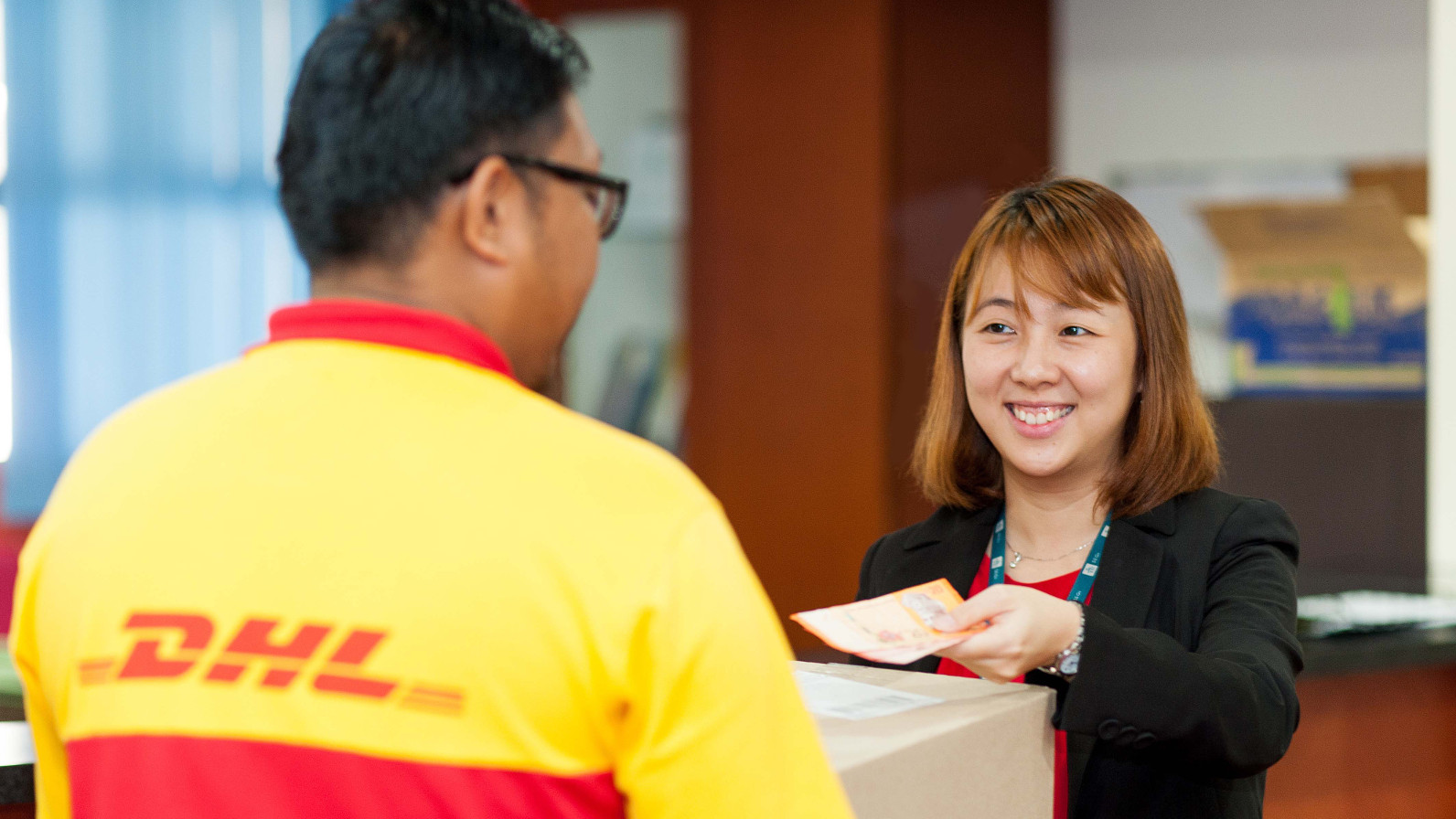
  • DHL brings “Cash on Delivery” to Malaysia, Thailand, & Vietnam

    DHL brings “Cash on Delivery” to Malaysia, Thailand, & Vietnam

    E-commerce exporters in China and Australia, consumers in Malaysia, Thailand and Vietnam, and DHL eCommerce are all expecting benefits from the introduction of a Cross Border Cash-on-Delivery (COD) system by Deutsche Post DHL Group.

    The DHL e-Commerce Cash on Delivery (COD) service will allow consumers in the three Asean countries to pay in cash when they receive their online purchases.

    With more than 73 per cent of Southeast Asia’s population unable to access credit cards or internet banking services, DHL is realising that reverting to low-tech cash has the potential to see significant increases in volume (and revenue), as the regions burgeoning middle-class looks further afield for their purchases.

    “The low level of credit card penetration has forced e-commerce retailers to offer alternative modes of payment methods, such as cash on delivery, digital payments, and in some cases paying in-store”, said Charles Brewer, CEO of DHL eCommerce.

    “This opens up a huge potential by reaching out to a new group of unbanked consumers, and also meeting the needs of consumers who prefer to pay in cash.

    “With our fully-owned domestic delivery network in Malaysia, Thailand and Vietnam, we are able to deliver on-time with secure features like cash-on-delivery”, Mr Brewer added.

    The DHL eCommerce COD service allows sellers, specifically in China and Australia, to collect cash on delivery in the three Asean member states, with payment status tracking available on the DHL portal. Vendors receive their money every 14 days.

    Comprising a total solution, DHL eCommerce offers parcel pick-up, easy IT integration of the seller’s inventory into the DHL shipping process, end-to-end tracking, dynamic routing and distribution, returns management, and more.

    DHL Vietnam to truck Sendo’s local sales

    Meanwhile in Vietnam, DHL recently announced a partnership with Sendo, Vietnam’s leading local e-commerce platform.

    The deal will see the German logistics giant provide delivery to Sendo customers in Ho Chi Minh City (HCMC), Hanoi, and other primary markets in the country.

    Describing the deal as delivering benefits to everyone, Tran Hai Linh, CEO of Sendo said the international standard delivery service will boost the confidence of the country’s eCommerce shoppers, and deliver increased business to the 300,000  vendors, micro-entrepreneurs, and small businesses who sell their products online.

    To kick-start the arrangement DHL eCommerce has placed more than 300 ServicePoints in locations that provide easy access to Sendo’s sellers.

    Vendors can either drop off their parcels and receive discounts of up to 20 per cent, or arrange for a pickup by DHL for direct door-to-door delivery.
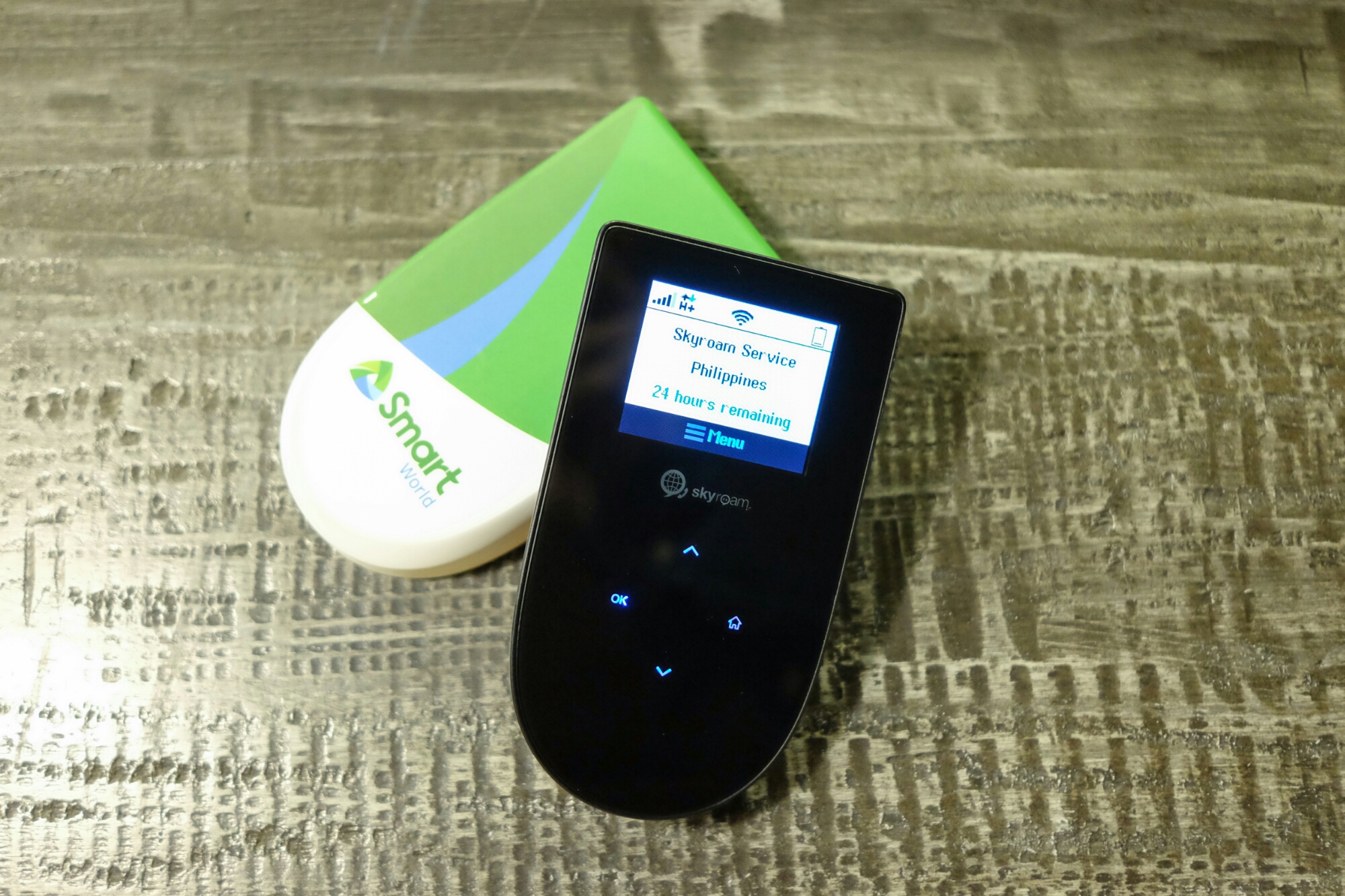
  • Smart taps Samsung for VoWiFi service launch

    Smart taps Samsung for VoWiFi service launch

    PLDT’s mobile subsidiary Smart Communications has teamed up with Samsung for the launch of its voice over WiFi (VoWiFi) service.

    Smart said the service will initially available to selected subscribers by October after Samsung releases its latest firmware over-the-air update.

    Smart customers can make VoWiFi calls using Samsung smartphones such as the Samsung Galaxy S8 and S8+, Galaxy S9 and S9+, Note 8, and Note 9 via any WiFi connection like Smart WiFi and PLDT Home WiFi.

    VoWiFi, also known as WiFi calling, lets customers make and receive calls and text messages over a WiFi connection using their smartphone’s native dialer, without having to install a third-party app.

    Smart said WiFi calling will also be available soon to other select Samsung devices.

    Earlier this month, Smart made its first successful VoWiFi call over a live network in Cebu, in partnership with its technology partners Huawei and Samsung.

    Mario G. Tamayo, PLDT-Smart senior vice president for network planning and engineering, said the call is the first of its kind outside metro Manila, and “a key part of PLDT and Smart’s integrated efforts to continuously improve and evolve our voice services.”

    Last year, Smart also made the country’s first voice over LTE (VoLTE) mobile call, which uses LTE or 4G to conduct calls.

    Smart is also deploying carrier-grade Smart WiFi in high-traffic public places across the country, such as transportation hubs like MRT-3 and LRT-1 stations, major airports, bus terminals and seaports across the country, as well as in schools, government buildings, hospitals, malls and entertainment centers.