Blog

  • Ooredoo demonstrates 5G aerial taxi

    Ooredoo demonstrates 5G aerial taxi

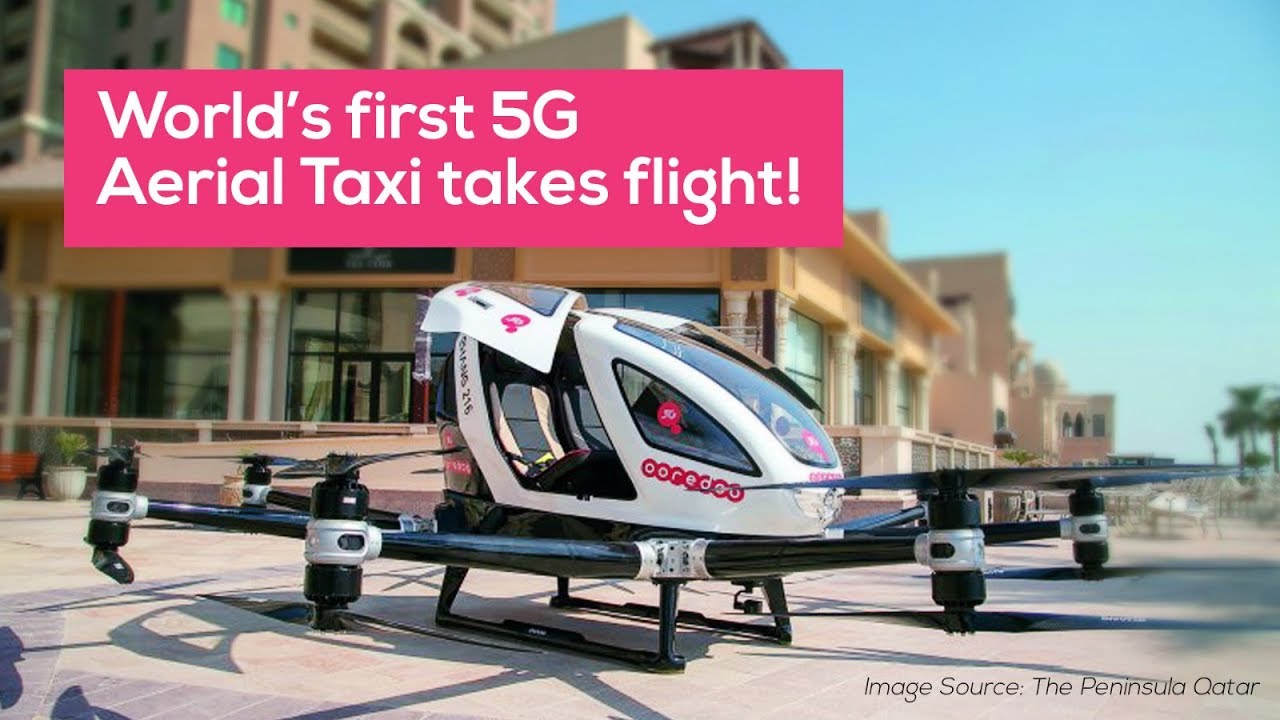
    Qatar-based Ooredoo has acted to showcase the power of 5G to enable smart city applications with a trial of the world’s first self-driving 5G connected autonomous aerial taxi.

    During an event at The Pearl artificial island in Doha, Ooredoo also showcased technologies including a 5G experience bus to allow visitors to experience the potential of 5G while commuting and a 5G house boat.

    The 5G connected aerial taxi is a large drone-like vehicle large enough to transport two people to a destination up to 20 minutes away at speeds of 130km/h. The autonomous vehicle runs on Ooredoo’s commercially-ready 5G network.

    Meanwhile Ooredoo’s 5G bus experience provided passengers with the ability to browse the internet with 5G speeds of up to 2.6Gbps while in transit.

    Finally the 5G house boat was equipped with 8K VR streaming gaming technology to demonstrate 5G’s potential to usher in the future of entertainment.

    “The Ooredoo 5G roll-out is growing daily, but as our customers cannot yet access the speeds and benefits of our ongoing investment, we wanted to demonstrate the true power of 5G and showcase what our technology will do for Qatar in the near future and in the years to come,” Ooredoo CEO Waleed Al Sayed said.

    “Ooredoo is leading global Internet of Things innovation thanks to our world-class 5G networks and we are the clear partner for Qatar’s growing Smart City technological needs. Thanks to our Supernet network and IoT solutions, Qatar will soon be able to offer the futuristic experiments shown today to everyone connected to Ooredoo 5G.”

  • Grab secures e-money license in the Philippines

    Grab secures e-money license in the Philippines

    Ride-hailing company Grab is expanding its mobile wallet services in the Philippines following receipt of an e-money license from the Bangko Sentral ng Pilipinas (BSP).

    Statistics from the central bank revealed that more than 98% of transactions in the Philippines still happen in cash, whereas 86% of people remain unbanked. Cash handling and services also cost millions of pesos a year to the banking industry.

    Besides its existing payments functions for ordering rides, express delivery and peer-to-peer credit transfer, Grab will soon be able to order food, pay their bills and purchases from their favorite stores and restaurants.

    As with rides, new services may help customers earn points with its GrabRewards loyalty program, with offers from partners such as SM Cinema, Cebu Pacific flights, McDonalds or Globe prepaid.

    The GrabPay mobile wallet built into the Grab app is designed to offer a low-entry barrier to secure cashless payment options for both consumers and merchants.

    The first feature to be launched by Grab under the e-money license will be the option to top-up prepaid load from the Grab app. Users in the Philippines who wish to top up their prepaid load, can tap the ‘Load Now’ bar below the GrabPay mobile wallet bar alongside other features including send, request and top up wallet.

    After entering the phone number to be topped up, they can select their top-up product. The request is sent to the telco service provider and receipt provided.

  • Myanmar Net taps Ruckus Networks for carrier-grade Wi-Fi

    Myanmar Net taps Ruckus Networks for carrier-grade Wi-Fi

    Myanmar’s largest pure-play ISP Myanmar Net contracted Ruckus Networks to deploy a carrier-grade Wi-Fi network across all major townships in Yangon and Mandalay.

    Through the deployment, Myanmar Net is offering consumers and businesses internet access at speeds of up to 62Mbps and prices competitive with the mobile operators’ existing data plans.

    Ruckus Networks provided Wi-Fi access points that use its smart antenna system with 180-degree and 120-degee antenna patterns to provide wider coverage and more stable connectivity.

    Allen Miu, CTO of Myanmar Net parent company Frontiir, said the company was facing a number of unique challenges with the deployment, associated with Myanmar’s extreme weather, power fluctuations from the nation’s old and unstable power grid and high population density.

    “Besides AP density, the high population density is also a challenge as we anticipate huge demand for our services due to the very affordable prices we offer. One of the key initial concerns we had was whether Wi-Fi technology could hold up to the growth and demands on our network,” he said.

    “Being the first in Myanmar to deploy a wireless network for the general populace is no easy feat, and we are only able to make this a reality with Ruckus’ engineering expertise and knowledge.”

  • Vietnam’s first car-hailing app FastGo heads overseas

    Vietnam’s first car-hailing app FastGo heads overseas

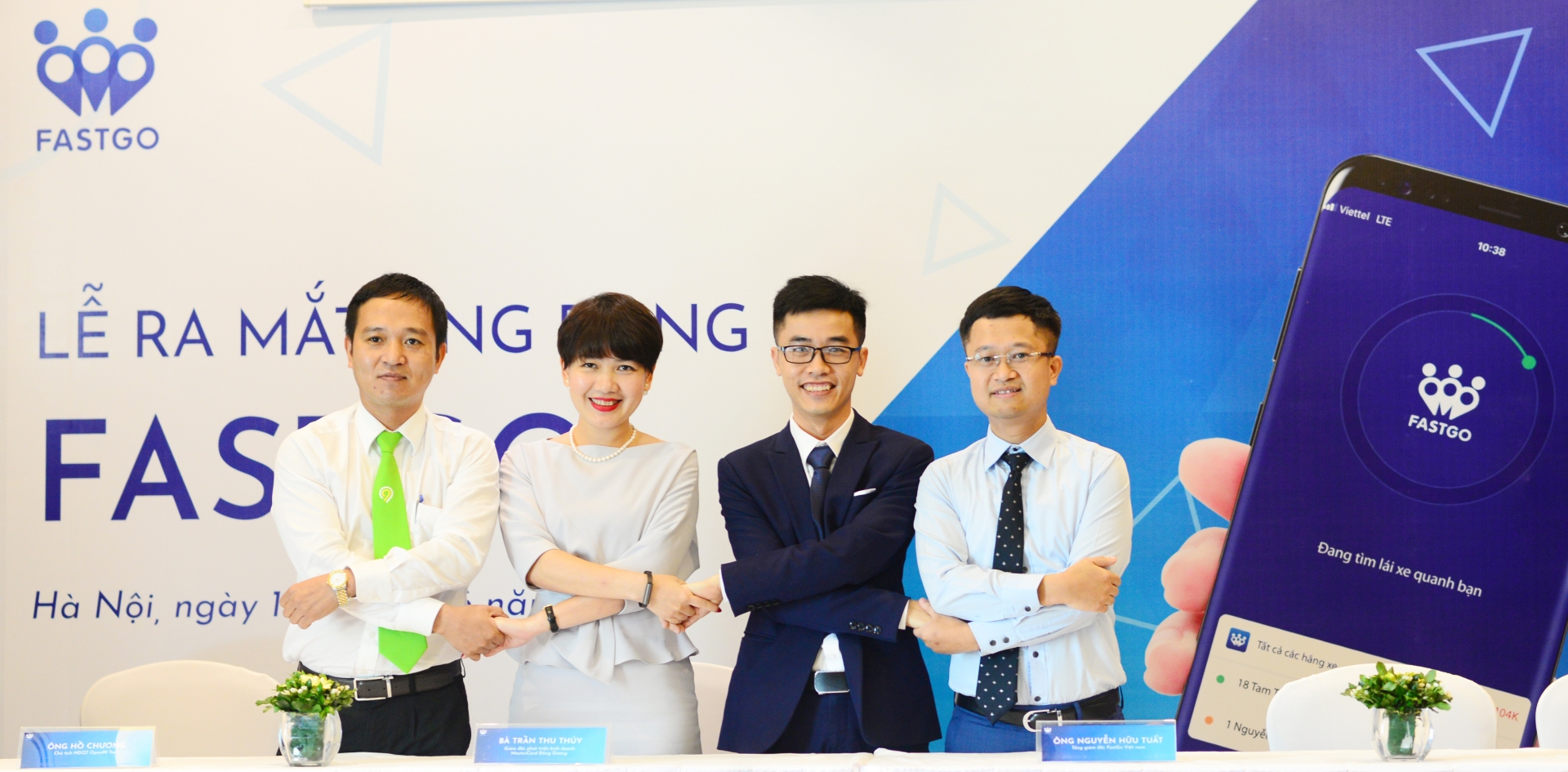
    FastGo, a Vietnamese ride-hailing app, plans to launch its service in Indonesia and Myanmar in December as it hopes to become one of the top companies in the field in Southeast Asia.

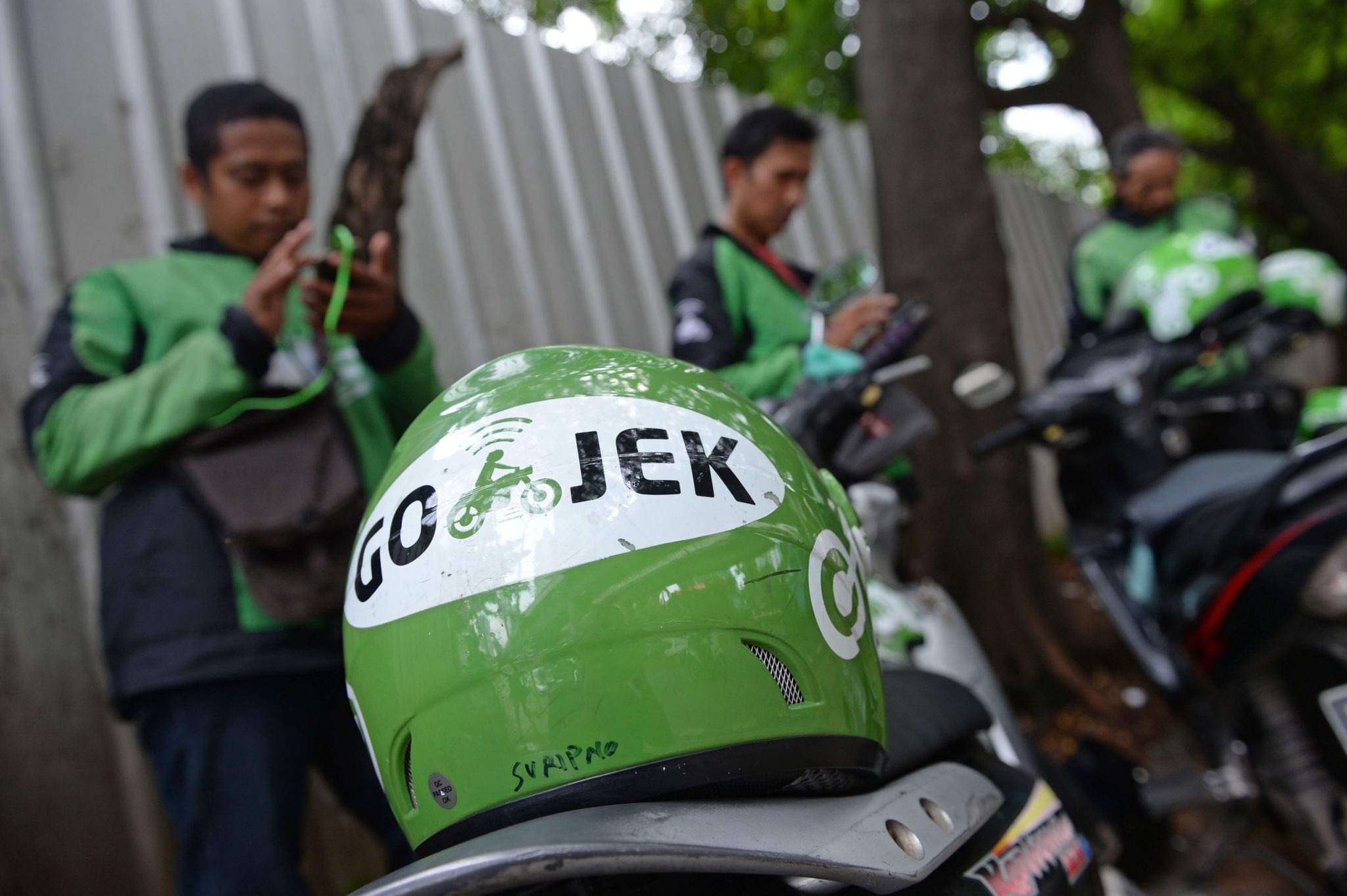
    This move abroad comes just five months after it launched in Vietnam, positioning itself as the company’s answer to Singapore-based Grab, the biggest player in Southeast Asia, and Indonesia’s Go-Jek, which launched its first overseas operation in Vietnam last month, GoViet.

    FastGo offers a private car and taxi service in Hanoi, Danang and Ho Chi Minh City. As of early October, it claimed to have reached 20% of the local market with some 30,000 drivers registered on its system. The app was developed by MPOS Vietnam Technology, a tech startup created by FastGo’s co-founder and chief executive Nguyen Huu Tuat. MPOS set up Vietnam’s first mobile payment solution in 2013 and has links with many local partners including banks and insurers.

    “Although the Southeast Asian ride-hailing sector is dominated by Grab and Go-Jek, FastGo has strategic partners, networks and relevant strategies for the Indonesia and Myanmar markets in place,” Tuat told in an interview on Thursday.

    Tuat said this background would allow FastGo to expand in both domestic and regional markets and balance the ride-hailing market. This is currently dominated by the two big names who are busy expanding their ecosystems. FastGo is aiming to reach 30% market share in Malaysia and Myanmar after six months, Tuat said.

    MPOS has some experience in the ride-hailing business, providing the technology and platforms used by two taxi companies — Mailinh in Vietnam and Blue Bird in Indonesia — since 2016.

    “FastGo is not a competitor of taxi companies but a partner. We provide technical solutions and the platform to both taxi companies and private car owners, while giving more options for consumers,” Tuat explained.

    FastGo does not collect commission from its drivers, but charges them 30,000 dong ($1.30) each if they earn more than 400,000 dong per day.

    FastGo is committed to keeping passenger tariffs unchanged, but suggests they offer tips (ranging from 10,000 dong to 100,000 dong) to drivers to help secure a ride during peak hours. FastGo’s target passengers are white-collar workers and young people who are willing to use credit cards or mobile payment, but it also accepts cash.

    Tuat said the company’s main revenue and profit would not come from ride-hailing but from planned services including deliveries and finance lending.

    Hanoi-based FastGo is a member of NextTech Group, formerly known as PeaceSoft, with sister companies pioneers in financial technologies, e-commerce, e-logistics and investment across Southeast Asia. The group operates in eight countries and serves more than 12 million customers and 40,000 enterprise partners.

    The 35-year-old founder of FastGo has more than 15 years’ experience working in the Vietnam technology industry and has co-founded three startups, including PeaceSoft. Tuat led these companies through fundraising rounds from investors such as data group IDG, Japanese tech company SoftBank, online retailer eBay, Malaysia-based MOL AccessPortal and U.K. fund ACTIS.

    NextTech is also behind one of Vietnam’s first e-marketplaces, ChoDienTu, e-payment platform NganLuong and mobile wallet Vimo. It is also involved with two cryptocurrency trading platforms.

    FastGo will focus on working with existing partners and clients in each of NextTech’s current markets.

    “Unlike Grab or Go-Jek, the two biggest players in the region which built ecosystems from their ride-hailing services, the FastGo app is a value-added service to NextTech’s existing ecosystem and we will optimize all the advantages of that system,” Tuat added.

    FastGo secured at least $3 million from the tech-focused venture arm of private equity group VinaCapital in its first round of fundraising in August. The company is hoping to raise $50 million in the next round — scheduled for the first quarter of 2019 — to help accelerate regional expansion. FastGo plans to raise funds every six months.

    It hopes to make its service available in 20 cities in Vietnam and five other Southeast Asian markets, including the Philippines, Cambodia and Thailand, by the end of next year.

  • Air New Zealand and Singapore Airlines’  continuing their alliance for another five years

    Air New Zealand and Singapore Airlines’ continuing their alliance for another five years

    The New Zealand government has given the green light to Air New Zealand and Singapore Airlines’ (SIA) continuing their alliance for a further five years. Under the partnership, which began in 2015, the pair codeshares on routes between New Zealand and Europe, India and Southeast Asia via Singapore. The partnership also includes revenue sharing and coordination of capacity and pricing.

    New Zealand transport minister Phil Twyford said reauthorisation of the alliance would result in more benefits to passengers.

    “Reauthorisation of the alliance will result in more benefits to travellers. These benefits include a wider range of flight times, more seats and reciprocal frequent flyer schemes,” Twyford said in a statement on October 5.

    “The services the airlines provide through the alliance strengthens New Zealand’s ties with our close neighbours in South East Asia and with other emerging markets throughout Asia.

    When the alliance was first approved in late 2014, it paved the way for Air New Zealand to resume nonstop flights between Auckland and Singapore.

    There has been further capacity increases since then, with SIA starting Singapore-Canberra-Wellington flights in 2017 and adding extra flights on the Singapore-Christchurch route. In May 2018, SIA tweaked its Wellington services, switching the mid-point stopover from Canberra to Melbourne.

    Meanwhile, the pair has added more frequencies on the Auckland-Singapore route and will have three nonstop flights a day from October 28 2018.

    The two carriers said in a joint statement the alliance had increased seat capacity by more than 25 per cent between New Zealand and Singapore.

    Further, it noted there would be 35 return flights a week between the two countries in the peak months.

    “The decision to re-authorise the alliance reinforces the benefits it has delivered to the New Zealand market in its first four years,” SIA senior vice president for marketing and planning Tan Kai Ping said.

    “We look forward to continue working closely with our alliance partner Air New Zealand, to provide even more travel options for our customers.”

    Air New Zealand chief strategy, networks and alliances officer Nick Judd said the partnership with SIA had been “key to successfully growing Air New Zealand’s international network and delivering important benefits to our customers”.

    “Singapore Airlines has been a strong alliance partner and we are excited at the opportunities the re-authorisation provides our two airlines,” Judd said.

  • Philippines-based tech startup CloudSwyft just got backed by WSI Group

    Philippines-based tech startup CloudSwyft just got backed by WSI Group

    The IT firm WSI Group has infused an undisclosed amount of funding into the tech skills-focused learning platform. Philippines’ IT distribution giant Wordtext Systems, Inc. Group (WSI Group) has announced today that it has backed tech skills learning platform CloudSwyft. The undisclosed amount raised will be used for supporting the market expansion plan across the Asia Pacific.

    With the IT-Labs-as-a-Service approach that has served companies in creating and managing IT training and assessments, so far the company has managed to generate its revenue through platform subscription and certificate vouchers.

    The platform offers the verified certification in the IT industry for students or employees with names like Microsoft backs it up. The company was founded in 2015 by Dann Angelo De Guzman and in the past had raised US$736,000 from Future Now Ventures, an Australia- and Philippines-based venture capital firms in 2015 and 2016.

    “The partnership with Microsoft helped us kick-start significant traction bundling our platform with hundreds of learning content in Data Science, AI and other modern technology skills. We were able to bring CloudSwyft into Singapore, Malaysia, Indonesia, Thailand and of course, the Philippines. We have been focusing on bringing results. Now, this is where we are heading and we are just getting started,” said De Guzman said on their Asia Pacific expansion plan after raising the funding.

    Beside closing an investment deal with WSI Group, CloudSwyft has also locked in a major partnership with IBPAP (IT Business Process Association of the Philippines) to capture and channel through hundreds of ITO and BPO companies in the Philippines to support the upskilling and reskilling talent of their workforce.

  • Indonesia’s Go-Jek invests in online media startup

    Indonesia’s Go-Jek invests in online media startup

    Indonesian ride-hailing and online payment company Go-Jek has invested in digital media startup Kumparan as part of its expansion into online content, it said.

    Go-Jek, whose backers include Alphabet’s Google and China’s Tencent Holdings, has grown rapidly since launching eight years ago in Indonesia, a country with a population of more than 250 million people.

    The company already offers a wide range of app-based services outside ride-hailing, such as food delivery and movie tickets, as it competes with the other main ride-hailing app operating in Indonesia, Singapore-based Grab, which bought the Southeast Asian business of Uber this year.

    Go-Jek said the investment in Jakarta-based media startup Kumparan had been done through its recently launched venture capital arm Go-Ventures, but did not disclose the size of its funding.

    Kumparan is a hybrid news and social media platform that enables users to create content. “There will be a series of strategic collaborations that we are exploring with Kumparan in supporting Indonesia’s technological developments,” said Go-Jek’s corporate affairs chief Nila Marita.

    Go-Jek is betting heavily on becoming an online multimedia content provider for Indonesia and set up its own in-house studio in 2018 to produce original films, in partnership with local film production houses. The company plans to eventually launch a subscription-based original content service.

    “At present, we are still in the exploration phase of the concept related to the creation of creative content,” a spokesperson for Go-Jek said. “As a local company, Go-Jek will continue to support local content creators.”

  • An overview of the Vietnam’s startup scene

    An overview of the Vietnam’s startup scene

    When you think of the startup scene in Southeast Asia, places like Singapore and Indonesia may come to mind, but Vietnam is another tech ecosystem on the rise. With a domestic market of over 95 million people and an economy that has grown 6% on average in the past 10 years, the population is becoming increasingly wealthy. In addition, the talent pool in Vietnam is young and increasingly educated with a growth mentality. Costs of operating are relatively low and there is a high rate of internet penetration—approximately 50 million users in 2017.

    It will come as no surprise then that Vietnam’s startups grew 14% in the first quarter of 2017 alone, with 39,580 startups entering the market. A Topica Founder Institute report stated that startup investments in Vietnam were $291 million USD in 2017, a 42% increase from 2016. However, there are still significant hurdles to foreign investment, such as the need for a stronger legal framework to protect venture capitalists and a more streamlined licensing and tax structure. Moreover, although Vietnam has significant technological expertise as an outsourcing hub, the startup scene could benefit from greater business acumen.

    In response, Viet Kieu, or Vietnamese people who have studied or worked overseas, have taken on leadership roles, accounting for more than half of the founders out of the 26 firms that 500 Startups Vietnam has funded. Their experience with multinational corporations, understanding of cultural differences, and English proficiency have been instrumental to the success of the Vietnamese startup scene. Still, the country itself is finding ways to support its startups.

    The Government and Accelerators Are Fueling Growth

    The Vietnamese government is aggressively promoting small enterprises. In 2017, deputy prime minister Vuong Dinh Hue announced the goal of doubling the number of businesses in Vietnam from half a million to one million by 2020. Vietnam Silicon Valley is a government-sponsored initiative to provide legal and financial support to 2,600 startups over the next 10 years. Lastly, the government has relaxed visa programmes for Viet Kieu, allowed them to regain citizenship under specific conditions, and exempted them from certain foreign investment requirements.

    Tech accelerators are also pushing the growth in startups. Topica Founder Institute is a 14-week programme with an impressive track record of 60 graduate startups, $20 million USD in funds raised, and $100 million USD in valuation since 2011. VIISA, the Vietnam Innovative Startup Accelerator, is an accelerator programme and seed stage fund of $6 million USD. Launched in 2013, Vietnam Silicon Valley is a government-sponsored bootcamp that includes a $20,000 USD investment and access to 60 mentors and 52 startup alumni. Lastly, TechFest is an annual event showcase of over 200 startups, hosted by the Ministry of Science and Technology and broadcast over live television.

    With major resources behind them and a positive climate for tech businesses, here are four Vietnamese startups showing immense promise.

    Logivan

    Based out of Hanoi, Logivan is a web-based platform that connects businesses with a fleet of over 5,000 trucks, which are constantly tracked and optimised. The logistics industry makes up approximately one quarter of Vietnam’s GDP, and in 2016 logistics firms earned approximately $8.5 billion USD in revenue, owing in part to the country’s underdeveloped transport infrastructure which causes prices to rise. Logivan plans to disrupt and digitise this industry, centralise and automate logistics, increase capacity, and improve supply chain efficiency.

    In November 2017, the up-and-comer won “Best Startup” at RISE Pitch Battle, the largest technology conference in Asia, and earned a sponsorship from Uber Chief Technology Officer, Thuan Pham. In August 2018, Ethos Partners, Insignia Ventures Partners, and VinaCapital Ventures funded a $1.75 million USD Series A round to expand Logivan’s logistics services in four major economic hubs across Vietnam. The startup previously received a $600,000 investment in March 2018 from Insignia, which the company matched during its time at the Topica Founder Institute accelerator programme.

    The company was founded by Linh Pham, a former Goldman Sachs technology analyst and Cambridge University graduate who previously founded Snappetite, a time-dependent platform for deals. Pham’s vision is to reduce prices, offer transparency, and provide real-time tracking for shippers and cargo owners.

    Foody

    Founded in 2012 in Ho Chi Minh City, Foody is a gourmet media company and user-submitted review platform for any location food-related, including restaurants, bars, cafes, bars, bakeries, and resorts. The company boasts hundreds of thousands of locations, images, and comments.

    One of Vietnam’s most successful startups, Foody has received numerous rounds of funding by an array of investors. Seed and Series A funding was provided by Japanese VC firm, Cyberagent Ventures, and Pix Vine Capital. In 2017, Singapore-based consumer internet group, Sea Limited, acquired an 82% controlling interest in the company for approximately $64 million USD, the largest investment of the year. Sea, one of Southeast Asia’s first unicorns, is valued at about $3.75 billion USD and previously funded a Series B round in 2015, which was followed by a Series C investment by Tiger Global Management less than a month later.

    Like many other startup leaders in Vietnam, Foody’s founder and CEO, Dang Hoang Minh, spent time abroad. Born in Vietnam, he went to Australia for university and studied Software Engineering and Information Systems before returning to his home country. Foody has expansion plans in Indonesia and Thailand.

    Ami

    Based in Ho Chi Minh City, Ami is capitalising on Vietnam’s booming real estate market by developing a suite of software and hardware products that will help owners and property managers connect with residents and digitise their information. Based upon blockchain, internet of things, and artificial intelligence technologies, the company’s products include:

    • Ami A Biz, a supply chain logistics to verify authenticity in goods and ownership
    • Ami Citizen, a digital record of individuals used by landlords and businesses
    • Ami University, a data management tool for universities to track students and professors
    • Ami Building, a condominium management platform
    • Ami Electricity, a web-based metre tool
    • Ami Fingerprint, an online storage space for fingerprints

    In the past couple of years, the startup has had an incredible growth trajectory. It won the top prize at the 2017 TechFest competition, and subsequently received $9 million in funding from the Vietnamese real estate corporation, Binh Minh Group. Between October 2017 and April 2018, the number of tenants in its property management product tripled. With approximately 1,500 rooms in its marketplace, the company’s target for 2019 is 100,000 rooms across the entire country. Looking forward, Ami plans to create a digital community between Vietnam’s citizens and their residences, schools, and businesses.

    Tiki

    Established in March 2010 as an online book dealer, Tiki is a business-to-consumer e-commerce company and the fastest-growing retail company in Vietnam. With more than 300,000 products in 12 categories, the company posted 2016 revenue of approximately $2.7 million USD and a loss of about $7.8 million USD after high operational expenditures needed to entrench itself in the consumer marketplace.

    Despite its losses, Tiki has been an attractive investment, especially as the e-commerce sector grew by more than 25 percent in 2017. The startup received initial funding in 2013 from Seedcom, CyberAgent Venture, and Sumitomo Corporation. In 2016, the startup was valued at $45 million and subsequently received $17 million USD for a 38% stake by VNG Corporation, which specialises in digital content, online entertainment, social networking, and e-commerce. Most recently, Chinese megaretailer JD.com Inc. and South Korea’s STIC Investment funded a Series C round of $54 million USD to help consolidate Tiki’s market presence.

    As one of the top four general e-commerce retailers in Vietnam, Tiki is well-positioned to leverage the influx of foreign investments that are flooding the sector.

  • Indonesian coffee startup Fore Coffee has bagged seed funding

    Indonesian coffee startup Fore Coffee has bagged seed funding

    Fore Coffee’s seed funding will be East Ventures’ third insider-incubated project after EV Hive and Warung Pintar.

    Early-stage venture fund East Ventures has announced today its third incubation, which is Fore Coffee, an on-demand high-quality coffee startup from Indonesia. East Ventures invested seed funding to the company, which aims to make specialty coffee easily available for customers.

    The company is now on its way to opening its second flagship store at Plaza Indonesia in October and is looking to open more branches in both malls and offices. The first outlet is at the second floor of Otten Coffee outlet in the heart of Jakarta.

    “We are leveraging from the network and expertise from our predecessor Otten, and we are equipped with machine and technology to deliver the finest quality coffee to our customer. Our goal is to have the day where everyone has access to affordable specialty coffee close to them every day,” said Robin Boe, CEO of Fore Coffee.

    Wilson Cuaca, Managing Partner of East Ventures, who also becomes the chairman of the startup, added that the country’s vastly growing tech ecosystem has changed the way consumers get their food. Cuaca gave an example of Luckin Coffee in China, which manages to serve a new demand for food consumption with a new bottoms-up startup design

    Fore Coffee started serving its first cup on August 8, 2018, and as of today, is serving 1,000 cups a week.

  • Indonesia still a draw for startups despite rupiah

    Indonesia still a draw for startups despite rupiah

    The recent free-fall of the rupiah could have led to jitters among investors and Singapore companies exposed to Indonesia, but analysts say the country remains attractive for businesses – in particular, startups – to venture into on the back of strong fundamentals.

    More Singapore startups are also actively looking at opportunities in Indonesia, with about 30 of them currently seeking help from Enterprise Singapore to enter the market – a number that the government agency said has been ramped up in the last 18 months.

    “Coming into Indonesia is both risk and opportunity. It is a large market with demographics in its favour, but the risk is mainly on the financial depth of the market – currency is just one of them,” said UOB’s Indonesia economist Enrico Tanuwidjaja.

    Despite the risks involved, he noted a “sustained momentum” in interest from global investors and startups to enter the Indonesia market in the past few years through joint ventures with domestic partners.

    This is because key ingredients to spur innovation in Indonesia have remained intact, with a market seen to be large enough to allow more players in the innovation space, said Khairul Anwar, regional group director (Jakarta), Enterprise Singapore.

    These include a young and growing population of 260 million with half below of them below 25 years old, growing demand to get products and services across the sprawling archipelago, as well as cash-flushed firms looking to deploy their capital into startups.

    With four unicorns – Go-Jek, Tokopedia, Traveloka and Bukalapak – in its bag, Indonesia today boasts a “lively” startup scene that has rekindled a spirit of entrepreneurship and drawn interest from both major domestic and international players, said Mr Anwar. A unicorn is a startup with a valuation of US$1 billion.

    Investments have skyrocketed from US$50 million five years ago to US$3 billion in the first half of 2017.

    For Singapore startups to seize opportunities in Indonesia, Mr Anwar identified five in-demand areas: e-commerce services, logistics and fulfilment, fintech, e-health services, and deep tech.

    With the rise of e-commerce brings the need for related services that attract more SMEs and consumers to buy and sell online, such as fraud detection, e-commerce on-boarding and digital marketing.

    But the e-commerce market remains “highly fragmented and under- developed”, he said. The lack of locally-developed solutions presents an opportunity for Singapore solutions to be integrated with existing Indonesian service providers and platforms.

    The growth of e-commerce has also created new issues in terms of logistics and fulfilment due to Indonesia’s geography and low infrastructure provision.

    “Last-mile fulfilment is a crowded field with low profitability. It is better to work with existing distribution networks and provide the platform, algorithms, services and financing, rather than to own the trucks directly,” advised Mr Anwar.

    “We should work on our strengths in cross-border logistics and Singapore’s strength as a sourcing, distribution and logistics hub to serve Indonesia cost effectively.”

    Fintech in the form of e-payments is another area that local startups can look at as people need to pay for e-commerce and there is still no clear winner in the market, he added, urging Singapore businesses to explore being a gateway or integrator instead of creating a new form of e-payment, due to the difficulty of obtaining required licenses for foreign entities.

    But despite the abundance of opportunity, Indonesia remains a tough nut to crack, noted analysts.

    As an emerging market, the country comes with risks as seen in the latest currency crisis, where the rupiah fell to its lowest level since the Asian Financial Crisis in 1998.

    UOB’s Mr Tanuwidjaja said that the currency challenge can be mitigated through financial products such as hedging and options to take into account future movements.

    Joongshik Wang, EY Asean Digital Strategy – M&A Leader, also noted that a depreciating rupiah might not always work against startups looking to invest in Indonesia.

    “With the falling rupiah, market entry cost will be lower for startups to consider an aggressive approach to entering the market,” he said.

    “But they should be mindful that exiting may become more expensive, as valuation is dependent on the assets’ stability and visibility in the country.”

    Singapore startups currently in Indonesia say they are keeping a close watch on the situation, but most are not overly concerned as risks are part and parcel of venturing into emerging markets.

    Darius Cheung, CEO of 99.Co, said some steps that the business has taken to manage the currency crisis was to keep cash mainly in Singdollar or US dollar, and to change only when needed. He suggested that startups lock as much of their expense contracts in rupiah, while locking in as much revenue in either US dollar or Singdollar as possible.

    Indonesia accounts for half of 99.co’s business, and it is growing 20-25 per cent each quarter.

    Mr Cheung said the political uncertainty surrounding the Indonesian elections due next year is also something to look at. “It is hard to predict what can happen. We generally have to be ‘switched on’ and strategise around it,” he said. “For example, we are currently focused more on the ‘own-stay’ segment of properties because many investors are holding off buying luxury property until elections are over.”

    Carlson Lau, CEO and co-founder of co-working space operator Cocowork (formerly EV Hive), acknowledged that macroeconomic risks “exist in any country” and are often beyond the control of businessmen.

    Cocowork is Indonesia’s largest co-working space operator, with 21 co-working spaces and 30,000 square metres of space.

    Mr Lau’s advice for startups looking to successfully venture into Indonesia regardless of headwinds is to forge strong local partnerships to scale and customise products to fit the market.

    “What can be controlled is having a great product, a strong distribution network, good local partners and a committed team driving the business – and any business could ride out economic cycles,” he said.

    Enterprise Singapore’s Mr Anwar emphasised that if startups “tread wisely”, the upside of investing in Indonesia can be very high. With more unicorns expected to spring from Indonesia in the next few years, local startups need to catch this wave.

    “Singapore companies cannot be absent from this market if they are serious about the startup and tech sector, and be serious about growing big,” he added.
  • Adidas Thailand Enjoys 40% Growth Online Thanks to DHL E-Commerce

    Adidas Thailand Enjoys 40% Growth Online Thanks to DHL E-Commerce

    DHL eCommerce, a division of the world’s leading logistics company Deustche Post DHL Group, has facilitated growth of over 40% for adidas Thailand’s retail revenue by enabling deliveries for the adidas.co.th site.

    The e-commerce channel launched in June 2015 and since co-operating with DHL in May 2017, Thai consumers are able to have their purchases delivered same-day or next-day within greater Bangkok and 2-3 days to other remote areas.

    adidas.co.th offers a wide range of adidas products including limited edition items which may not be available in the physical stores. Customers can browse online and shop for unique styles and sizes without having to hop from store to store. With 18 physical stores across Thailand, DHL eCommerce will begin to leverage adidas’ retail footprint for e-commerce fulfilment by picking up orders from adidas stores and delivering to customers by Q2 2019.

    Jirot Paowisit, adidas’ Senior Manager of Operations for Thailand said, “E-Commerce is making a true impact not only in the way we sell and deliver our products, but also in how we engage our consumers. We are pleased to make adidas products more easily and conveniently available and we are excited to work with a strong logistics partner like DHL. Besides the excellent delivery service to our customers, their solutions have enabled us to fulfil more orders a day by optimizing our operations for fast e-commerce fulfillment.”

    “E-Commerce is a growing channel for adidas and with Thailand’s increasing e-commerce adoption with the total share of e-commerce expected to more than double in the coming years, we are certain that there will be more adidas fans choosing to shop on our online store. We are pleased with DHL eCommerce’s high quality delivery performance which plays an important role in our e-commerce strategy.” said Suphalada Chalitpattanangkune, E-Commerce Manager for adidas Thailand.

    “Over 57% of shoppers will likely not shop with a retailer again if they had a bad delivery experience, showing how important the quality of delivery is for a retailer’s brand image and customer loyalty. We are proud to enable adidas to deliver quickly and conveniently to their consumers with a successful delivery performance of 99% consistently since we started shipping for them in 2017,” said Kiattichai Pitpreecha, Managing Director, Southeast Asia, DHL eCommerce.

    “With DHL’s fully-owned domestic delivery network with full nationwide coverage across Thailand, adidas fans from anywhere in Thailand will be able to shop online easily with the assurance of a great delivery experience.”

  • Foreigners Dominate the E-commerce market in Philippines

    Foreigners Dominate the E-commerce market in Philippines

    Local players in the Philippine e-marketplace reach more Filipinos in terms of social media activity. However, they struggle to establish a stronghold in terms of actual selling activity as international players are still the preferred choice for most Filipinos. It comes as a surprise that only a few international players dominate the country’s e-marketplace traffic activity.

    Based on Kuala Lumpur-based iPrice Group’s Map of eCommerce in the Philippines during the second quarter of 2018, there were more local active players.

    However, international players fueled market activity. In fact, the share of foreign players in the overall traffic accounted for 93 percent of the overall e-marketplace activity. Local players, on the other hand, only led in social media activity as they accounted for 75 percent of e-commerce activity from Facebook, Instagram and Twitter platforms.

    Foreign players

    There were only eight foreign players engaged in e-commerce traffic in the Philippines: Lazada, Shopee, Zalora, eBay, Sephora, Sophie Paris, My Sale and Melissa Philippines. Of these eight players, Lazada, Shopee, Zalora and eBay were the top four most visited e-marketplaces in the country. Of the four, Lazada had a dominant 68-percent market share, at least triple the size of its closest competitor, Shopee.

    This trend is unique to the Philippine market because in its regional counterparts Malaysia, Vietnam and Thailand, foreign players have less than half of the overall e-marketplace traffic activity with 45, 20 and 47 percent, respectively.

    For Indonesia and Singapore, local players Tokopedia and Qoo10 were the most visited e-marketplaces. The reason behind the dominance of international players in the Philippine e-marketplace was traced to the Filipinos’ online shopping preference that is mainly based on brand familiarity.

    In fact, according to a Kantar Worldpanel survey, 84 percent of Filipinos (out of 3,000 household surveyed) preferred to buy from established companies despite the alternatives available in the market.

    This specific Filipino consumer behavior affected the local e-commerce players as majority of them have just started operating in the e-marketplace.

    Another factor that influenced the dominance of international players in the Philippine e-marketplace was that majority of big local brick-and-mortar companies such as SM and Ayala malls were amplifying their online presence with e-marketplace partnerships with the more established players such as Lazada and Zalora instead of creating their own e-marketplaces.

    Meanwhile, the government’s project—road map of e-commerce—is mostly tied with international e-marketplaces wherein local brick-and-mortal companies and brands as well as MSMEs are encouraged to sell.

    More pressure

    While this will result in more customers and more jobs especially for MSMEs, it is putting pressure on the local players.

    The most visited local e-marketplace in the country is BeautyMNL, placing fifth overall with less than a million traffic. Meanwhile, Kimstore, a tech marketplace, placed ninth.

    The general e-marketplaces—Galleon, O Shopping and Takatack (which were previously in Q1 2018’s top e-commerce) all fell a notch, placing seventh, eighth and 11th, respectively.

    The only local e-commerce that accelerated in terms of ranking was Argomall as it jumped two notches to sixth in the overall e-commerce ranking.

    Interestingly, the majority of local players experienced inconsistency in traffic as there were occasions of leaps and slips. The e-marketplaces that saw increased traffic were Seek the Unique, Apartment 8 Clothing, Zeus, Straight Forward Clothing, Great Value Plus, Bayan Mall, TV Shop, Mall Hallo Hallo and CesaPH, which on the average rose in ranking by about seven notches.

    E-marketplaces that slipped in traffic were Adobomall, Watch Portal, Goods, Mommy Mundo, Bigmk, Abubot, which on the average declined in ranking by about eight notches.

    Despite the low market penetration and inconsistency in traffic of local players, the majority of local players found their market in social media.

    Overall, the local players dominated Instagram and Twitter as they attracted 70 and 51 percent, respectively, of the e-marketplace social media followers.

    Local marketplace

    The local fashion and beauty e-marketplaces: Apartment 8 Clothing, Sunnies Studios, BeautyMNL, Kimstore and CesaPH topped Instagram placing first, second, fifth, seventh and ninth, respectively.

    Meanwhile, social media activity for Facebook was taken over by international players as their share of social media followers in this platform accounted for 77 percent.

    Filipino consumers are among the most active on social media, spending an average of four hours a day.

    As such, Filipino consumers are highly exposed to brands leveraging their products in social media. Clearly, the popularity of social media is a huge opportunity marketplace for e-commerce and independent merchants alike.

  • Security concerns inhibiting m-payment adoption in Hong Kong

    Security concerns inhibiting m-payment adoption in Hong Kong

    More than half (53%) of Hong Kong residents polled during a recent survey conducted by the Hong Kong Internet Registration Corporation (HKIRC) said concerns over cybersecurity and privacy risks are major barriers to greater adoption of mobile payments.

    Other barriers that have been cited in the survey include technical instability and the lack of support for mobile payment from most local merchants in the city

    In speaking about the survey, HKIRC deputy CEO Bonnie Chun allayed the primary fear of using mobile payment, pointing out that the government ‘has already put a lot of regulations in place to ensure the industry strictly follow their guidelines. We suggest the government promote its policies via different channels such as social media among others,” said Chun.

    She added that the government should keep on educating the public about the different ways of maintaining safe online hygiene such as changing one’s passwords regularly, using two-factor authentication, not using public Wi-Fi connections for making payment transaction and downloading mobile apps only from reliable sources.

    “Also, mobile payment providers should increase their transparency on how they handle personal data. They should try not to collect too much personal data during the registration process to increase users’ confidence.”

    Mobile payment gets a foothold in Hong Kong

    The survey polled 1,200 residents in the city between the ages of 18 and 65, who belong to various industry sectors.

    Survey results showed that mobile payment is now gaining a foothold in the city with 23% of respondents using mobile payment and is now in the top three payment methods in Hong Kong after credit cards (37%) and Octopus Card (25%).

    While 93% of respondents between the ages of 18 to 25 have used it before, a high percentage – 77% – of older respondents aged 56 to 67 have also used mobile payments.

    More than a quarter of respondents or 28% have been using mobile payments two to three times a week. About 88% of respondents use their mobile phone for transactions of less than HK$500 ($64).

    The survey showed that respondents want to be able to use mobile payment in three areas: public transport, government bills and clinic,

    “The future of mobile payment in Hong Kong is very positive. When we start using mobile payment in public transport, people will become more familiar with it and the adoption rate will increase,” Chun said

  • Electric vehicles on the fast track in Thailand

    Electric vehicles on the fast track in Thailand

    Experts see bright prospects for electric vehicles (EV) in Thailand with all concerned agencies pursuing the government’s goal of getting 1.2 million units on the road by 2036.

    There are many reasons and data behind the confidence of success, a seminar was told yesterday. The rising number of registered EVs, the development of a locally made EVs, as well as research and development of some EV parts are indications that it could have a major role in Thai society, said Amonrat Kaewpradap, a committee member of the Electric Vehicle Association of Thailand (EVAT), at a panel discussion yesterday titled “The future of Electric Vehicle in Thailand”.

    The discussion was held as part of the Delta Future Industry Summit, organised by Delta Electronics (Thailand), as a venue for exchanging innovative ideas for a sustainable future.

    Amornrat said the number of EVs in use in Thailand was gradually increasing, leading to the continuous growth of infrastructure of charging stations.

    “More stations will boost the confidence for consumers in using EVs and so far, there are 500 charging stations in the country, she said. In 2016, there were 80,194 registrations but the number surged to 102,700 in 2017, or an increase of 20,000 units.She pointed out that the accumulated number of EV registrations in Thailand for Battery Electric Vehicles [BEV] and Plug-in Hybrid Electric Vehicles (PHEV) sharply increased from 2016 to 2017.Incentives will bring down priceAnother indication is the higher imports of EVs, she said, adding that more BEV motorcycles were sold these days, pointing to its popularity.

    Moreover, EV manufacturers are hiking production amid increasing demand from buyers. Also, educational institutions have launched development projects for EV battery, motors and the structure of a light-weight car.She believes the price of EVs could come down in the future as the government will support its usage with incentives.

    Jumpote Himacharoen, director of research and development, Metropolitan Electricity Authority [MEA], said the power agency would provide sufficient electricity to serve the targeted number of EVs. MEA has recently launched an online application on the locations of EV charging stations for the convenience of drivers.

    In a separate panel discussion titled “A Decade into the Future: Predictions for Thai Cities”, participants said smart cities would be the cornerstone of the country’s future urban landscape, with significant investment from the government and private sector.

    Pansak Siriruchatapong, the vice minister of the Ministry of Digital Economy and Society, said the government would expand its smart city project to three more provinces – Chon Buri, Rayong and Chaochengsao – on the Eastern Economic Corridor this year.Currently, Phuket, Chiang Mai, Khon Kaen and Bangkok are the cities earmarked for the pilot program.

    “Within the next five years, Thailand will develop smart cities in all 77 provinces,” he said.He added the two factors driving the development of smart cities are the engagement of community and local government and the connectivity and sharing information with technology solutions.However, Piyapan Tayanithi, Bangkok Bank’s executive vice president, warned that smart or high-technology is a double-edged sword, and back-up measures were needed in the event of malfunctions.

    Piyapan cited an incident late last month when banks’ electronic money transfers, withdrawals and payment services crashed for several hours. The banks attributed the cause to heavy interbank money transfers at the end of the month at large banks.“Simplicity or convenience of a group of people could come along with difficulty or complexity for another group [of people],” he said.

    Hsieh Shen-yen, president of Delta Electronics (Thailand), said: “We are currently witnessing the decline of old technologies such as gasoline cars and the gradual shift to smarter, cleaner technologies to power our lives and manage our cities.“But the shift to the future will only gain real momentum when the public and private sectors work together and get serious about action for climate change and managing urbanization,” he said.

  • AirAsia to launch flights from Taiwan to Boracay

    AirAsia to launch flights from Taiwan to Boracay

    Low cost airline AirAsia announced on Monday that it will launch flights from Taiwan’s Taoyuan International Airport and Kaohsiung International Airport to Boracay, as scheduled to reopen on Oct 26.

    AirAsia said the flights from Taiwan to Boracay will stop over in Manila, adding that it will offer at least 20% discount flight tickets to customers in the Taiwan market, the report said.

    Discounted tickets for flights between Nov 6, 2018 and Mar 21, 2019 will be available for sale from now to Oct 21, with a one-way ticket selling for NT$2,696 before tax, the carrier announced.

    Boracay, an internationally famous island resort, was closed by the Philippines government on April 26 to rectify the environmental pollution problem that was caused by overdevelopment and tourism. The government has recently announced that the island will be reopened to visitors on Oct. 26 and there will be a limit on the number of visitors, according to the report.