Blog

  • Apple buys song recognition app Shazam

    Apple buys song recognition app Shazam

    Apple said Monday that it would buy leading song recognition app Shazam in a fresh bid to secure an edge in the intensifying battle of streaming services.

    Apple, whose streaming service has rapidly grown but still has only half the paid subscribers of Spotify, said that Shazam has consistently been one of the most popular items on its App Store.

    The two companies did not disclose financial terms. The technology news sites Recode and TechCrunch, quoting unnamed sources, both put the deal at around $400 million.

    The market signaled its approval, with Apple share prices jumping 2.0 percent, well outpacing the 0.2 percent rise on the Dow Jones Industrial Average.

    “Apple Music and Shazam are a natural fit, sharing a passion for music discovery and delivering great music experiences to our users,” Apple said in a statement.

    London-based Shazam said in a separate statement: “We can’t imagine a better home for Shazam to enable us to continue innovating and delivering magic for our users.”

    Shazam, which was founded in 1999 in the early age of online music, has offered a solution to a longtime agony of listeners — putting a name to elusive songs. With a click, the app identifies tracks playing on the radio, at parties or as background music.

    But Shazam has struggled to find a way to make money off its technology, even as it said that it had reached one billion downloads on smartphones last year.

    Shazam only recently announced it had become profitable, thanks to advertising and steering traffic to other sites such as Spotify and Apple Music.

    The technology is also no longer quite as novel, with Shazam facing rivals such as SoundHound and with smartphones capable of ever more advanced recognition functions.

    Mark Mulligan, who writes a popular blog on the music industry, described Shazam as “cool tech without a business model” and said Apple was a rare player that could bring out the app’s value.

    Facing tough competition

    The world’s most valuable publicly traded company, Apple earns most of its revenue from iPhones but has also found it vital to be seen on the cutting edge culturally.

    Apple, which revolutionized online music a generation earlier with iTunes, in 2015 launched Apple Music as the market turns to streaming, which offers unlimited on-demand listening.

    Apple said in September that the service had more than 30 million subscribers — a quick rise, but still trailing Spotify.

    Spotify — which has emphasized a barebones, user-friendly interface instead of unique features — said it had 60 million paying users as of July and 80 million more on its free tier.

    And with streaming experiencing rapid growth, competition has become even fiercer.

    Retail giant Amazon seized on its vast consumer reach as it launched its own streaming service last year.

    YouTube, the video-sharing behemoth owned by Apple’s rival Google, also has its own music streaming platform and recent reports said it was looking to launch a new paid subscription package next year.

    Tech battle turns to services

    Shazam has already proven it can be woven into another service. A year ago, it formed a partnership with SnapChat, the youth-driven social media platform whose videos evaporate, with users able to “snap” to friends the music they discover around them on Shazam.

    Neil Saunders, managing director of GlobalData Retail, said the Shazam sale “underlines the fact that the battle of the technology companies is firmly moving beyond hardware and into services.”

    “This is a good move for Apple that helps to consolidate its already strong position in music content. It won’t be the last takeover of a tech firm by these big giants,” he said.

    Apple has already invested in buying big-name music brands, in 2014 paying an eye-popping $3 billion for Beats Electronics, the headphones, speaker and streaming brand of rapper Dr. Dre.

    Soon afterward, it bought Semetric, a British company that tracks music consumption on behalf of labels and artists.


  • Things you might not know about ballistic bitcoin

    Things you might not know about ballistic bitcoin

    Bitcoin rocketed to another record high close of $16,000 on the Luxembourg-based Bitstamp exchange on Thursday after gaining more than $4,000 in just 48 hours, stoking concerns that a rapidly swelling bubble could be set to burst.

    There were huge disparities between prices across different exchanges. On GDAX, one of the biggest, the price reached $19,500.

    Here are some facts that you might not know about the largest and best-known cryptocurrency.

    How many are there? Bitcoin’s supply is limited to 21 million – a number that is expected to be reached around the year 2140. So far, around 16.7 million bitcoins have been released into the system, with 12.5 new ones released roughly every 10 minutes via a process called “mining”, in which a global network of computers competes to solve complex algorithms in reward for the new bitcoins.

    Energy drain These mining computers require a vast amount of energy to run. As the price increases, more miners enter the market, driving up the energy consumption further. A recent estimate by tech news site Motherboard put the energy cost of a single bitcoin transaction at 215 kilowatt-hours, assuming that there are around 300,000 bitcoin transactions per day. That’s almost enough energy as the average American household consumes in a whole week.

    Bits of Bitcoin If you want to buy bitcoin, you do not need to buy a whole one. Bitcoin’s smallest unit is a Satoshi, named after the elusive creator of the cryptocurrency, Satoshi Nakamoto. One Satoshi is one hundred-millionth of a bitcoin, making it worth around $0.0002 at current exchange rates.

    Bitcoin billionaires Bitcoin has performed better than every central bank-issued currency in every year since 2011 except for 2014, when it performed worse than any traditional currency. So far in 2017, it is up more than 1,400 percent. If you had bought $1,000 of bitcoin at the start of 2013 and had never sold any of it, you would now be sitting on around $1.2 million. Many people consider bitcoin to be more of a speculative instrument than a currency, because of its volatility, high transaction fees, and the fact that relatively few merchants accept it.

    Exchange heists More than 980,000 bitcoins have been stolen from exchanges, either by hackers or insiders. That’s a total of more than $15 billion at current exchange rates. Few have been recovered.

    Mystery creator Despite many attempts to find the creator of bitcoin, and a number of claims, we still do not know who Satoshi Nakamoto is, or was. Australian computer scientist and entrepreneur Craig Wright convinced some prominent members of the bitcoin community that he was Nakamoto in May 2016, but he then refused to provide the evidence that most of the community said was necessary. It is not clear whether Satoshi Nakamoto, assumed to be a pseudonym, was a name used by a group of developers or by one individual. Nor is it clear that Nakamoto is still alive – the late computer scientist Hal Finney’s name is sometimes put forward. Developer Nick Szabo has denied claims that he is Nakamoto, as has tech entrepreneur Elon Musk more recently.

    Inflated Chinese trading Until earlier this year, it was thought that Chinese exchanges accounted for around 90 percent of trading volume. But it has become clear that some exchanges inflated their volumes through so-called wash trades, repeatedly trading nominal amounts of bitcoin back and forth between accounts. Since the Chinese authorities imposed transaction fees, Chinese trading volumes have fallen sharply, and now represent less than 20 percent, according to data from website Bitcoinity.

    “Market cap” The total value of all bitcoins released into the system so far has now reached as high as $283 billion. That makes its total value – sometimes dubbed its “market cap” – greater than that of Visa, and bigger than the market cap of BlackRock and Citigroup combined.

    Crypto-rivals Bitcoin is far from the only cryptocurrency. There are now well over 1,000 rivals, according to trade website Coinmarketcap.

    “Shorting” It is already possible to short bitcoin on a number of retail platforms and exchanges, via contracts for difference (CFDs), leveraged-up margin trading or by borrowing bitcoin from exchanges without leverage. But a number of big financial institutions – including CME Group, CBOE and Nasdaq – have recently announced that they will offer bitcoin futures, which will open up the possibility of shorting the cryptocurrency to the mainstream professional investment universe.

    Lost Bitcoins Many fewer than the 16.7 bitcoins that have been mined are actually in circulation and accessible, because of forgotten passwords, accidental losses, hoarding, owners forgetting about coins or even dying. It is impossible to know for sure how many bitcoins have been permanently lost, because those that have are still in the system, in dormant addresses. But according to a December 2013 research paper by the University of San Diego and George Mason University, 64 percent of the 12 million bitcoins that had by then been mined had never been spent. Bitcoin developer Sergio Lerner estimates that almost 1 million unspent bitcoins belong to the cryptocurrency’s mysterious creator.

    Rich list There are 5,638,155 bitcoins in the 1,000 biggest wallets – more than a third of all bitcoins in circulation. That makes the 1,000 biggest wallet-holders worth a collective $87 billion, at current rates.

    High fees The average fee paid to process bitcoin transactions has soared over the past year, outpacing even the staggering price increase of the cryptocurrency itself. Each bitcoin transaction now costs around $7.30 to process, up from around 30 cents at the start of the year, according to trade website BitInfoCharts.

    Forking off If you owned bitcoin prior to Aug. 1, 2017, you also own Bitcoin Cash – a clone of the original. That is because on that date bitcoin underwent a so-called “fork”, in which the underlying software code was split into two. One unit of Bitcoin Cash is now worth more than $1,300. That adds roughly another 135 percent to the returns from a bitcoin investment at the start of the year.

  • Calvin Klein Underwear Shops in Hong Kong finally Opens

    Calvin Klein Underwear Shops in Hong Kong finally Opens

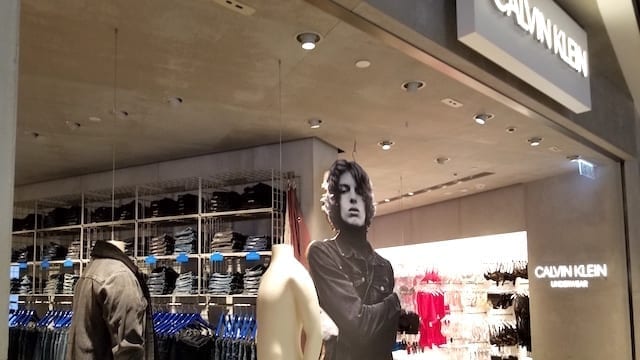
    Calvin Klein Hong Kong has opened a new store in IFC Mall showcasing its underwear collection.

    The 1700sqft (160sqm) store’s minimalist-style design features concrete floors with concrete-style ceilings and walls giving it an edgy, urban feel. The service counter is placed on a scarlet red rug which creates a stark contrast to the grey look.

    Calvin Klein store - IFC

    Stock is displayed on walls which defy traditional square-box store layouts. Mannequins hang from the ceiling without touching the floor and there is a bold wall-mounted LED display creating a focal point towards the front of the space.

    Besides men’s and women’s undergarments, the store sells denim jeans, jackets, accessories, sunglasses and fragrances.

    The company says the interior design is aimed at creating a unique setting to convey the brand’s “sexy, seductive and modern identity”.

  • Shiru Cafe will be launched in the US

    Shiru Cafe will be launched in the US

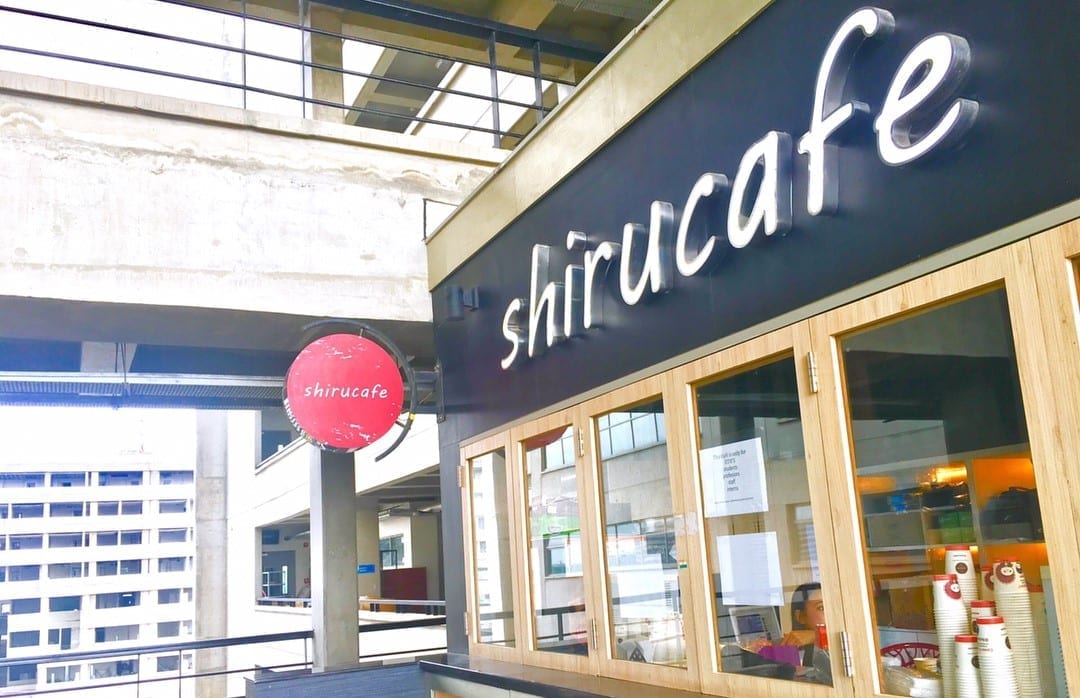
    Japan’s Shiru Cafe concept is about to launch in the US, on a university campus in Providence.

    It is being introduced by Enrission America, a cafe company that specialises in free coffee for university students.

    Following the opening on the Brown campus, other branches will be launched at Harvard University, Yale University, Princeton University and Amherst College.

    Especially for university students, Shiru Cafes are financed primarily through the sponsorship of companies that aim to improve student life. Students and staff members all receive free coffee, tea and juice while being provided with sponsors’ promotional materials. The cafes provide study spaces equipped with electrical outlets and free Wi-Fi internet access.

    Sponsorship allows companies to advertise on paper coffee cups, on digital displays in the cafes and on the cafe’s website. Company representatives can also meet and interact with students in the cafes, as well as run recruitment activities.

    Enrission America has opened more than 20 Shiru Cafes around the world. “It is an essential part of our vision,” says CEO Yusuke Kakimoto.

    Enrission, based in Kyoto, was founded in 2013 and is firmly established in India and Japan with support from 130 companies including Microsoft JP and PWC JP.

  • Time to win for Vietnam Tax Department on Facebook e-commerce case

    Time to win for Vietnam Tax Department on Facebook e-commerce case

    Ho Chi Minh City’s tax department has handed a bill of VND9.1 billion ($401,300) to a Facebook retailer in a rare successful attempt to levy sales on social media.

    A source from the department said that the tax declaration submitted by the cosmetics retailer was millions of dollars short compared to information acquired from the retailer’s banks.

    Le Thi Thu Huong, deputy director of the department, said the sum was the biggest amount ever to be claimed by her agency from an online retailer for tax evasion.

    The department contacted nearly 13,800 Facebook accounts earlier this year asking them to pay tax for businesses they were running on the social network, but few complied.

    Facebook is the most popular social network in Vietnam with more than 52 million active accounts, and is also used as an e-commerce platform that tax authorities have struggled to keep track of.

    Vietnam levies a 0.5 percent income tax and a 1 percent value added tax on sales of more than VND100 million ($4,400) per year.

    Local tax authorities have recently stepped up efforts to collect taxes from online businesses that use Facebook and other social media sites such as Instagram and YouTube.

    Tax departments in both Hanoi and Ho Chi Minh City have sent out tax demands to around 27,000 Facebook retailers in a move to target tax avoidance by online businesses.

    Online sales in Vietnam have expanded rapidly in recent years, currently accounting for 3.39 percent of the country’s retail market. The total retail market grew 10.2 percent last year to $118 billion, mainly fueled by a growing middle-class with expanding disposable incomes and an increasing number of internet users.

    In an effort to minimize tax losses, the Ministry of Finance is considering a plan to impose value added tax and income tax on sales with a value of VND1 million ($44) upwards, or multiple sales of a lesser value.

  • Philippines rejects all bids for T-bills amid weak demand

    Philippines rejects all bids for T-bills amid weak demand

    The Philippines’ Bureau of the Treasury rejected all bids for T-bills at an auction on Monday amid weak demand.

    Tenders totalled 7.576 billion pesos ($150.6 million) against the government’s offer of 20 billion pesos worth of 91-day, 182-day and 364-day T-bills, the bureau said.

    It also rejected all bids at the Nov. 27 T-bill auction, while raising 255.4 billion pesos from its latest retail treasury bond offering. For previous auction results, click on ($1 = 50.3000 Philippine pesos)


  • Baseus Opens Flagship Store in the Philippines at Trinoma

    Baseus Opens Flagship Store in the Philippines at Trinoma

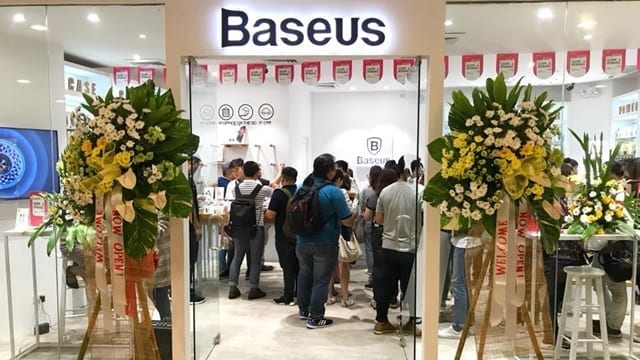
    Chinese tech accessory brand Baseus has opened its first flagship store in the Philippines.

    Baseus PH 1


    Baseus PH 2

    The Shenzhen company has partnered with Digits CEO Charles Paw for its outlets in the Philippines, and opened its first store in Trinoma, Quezon City.

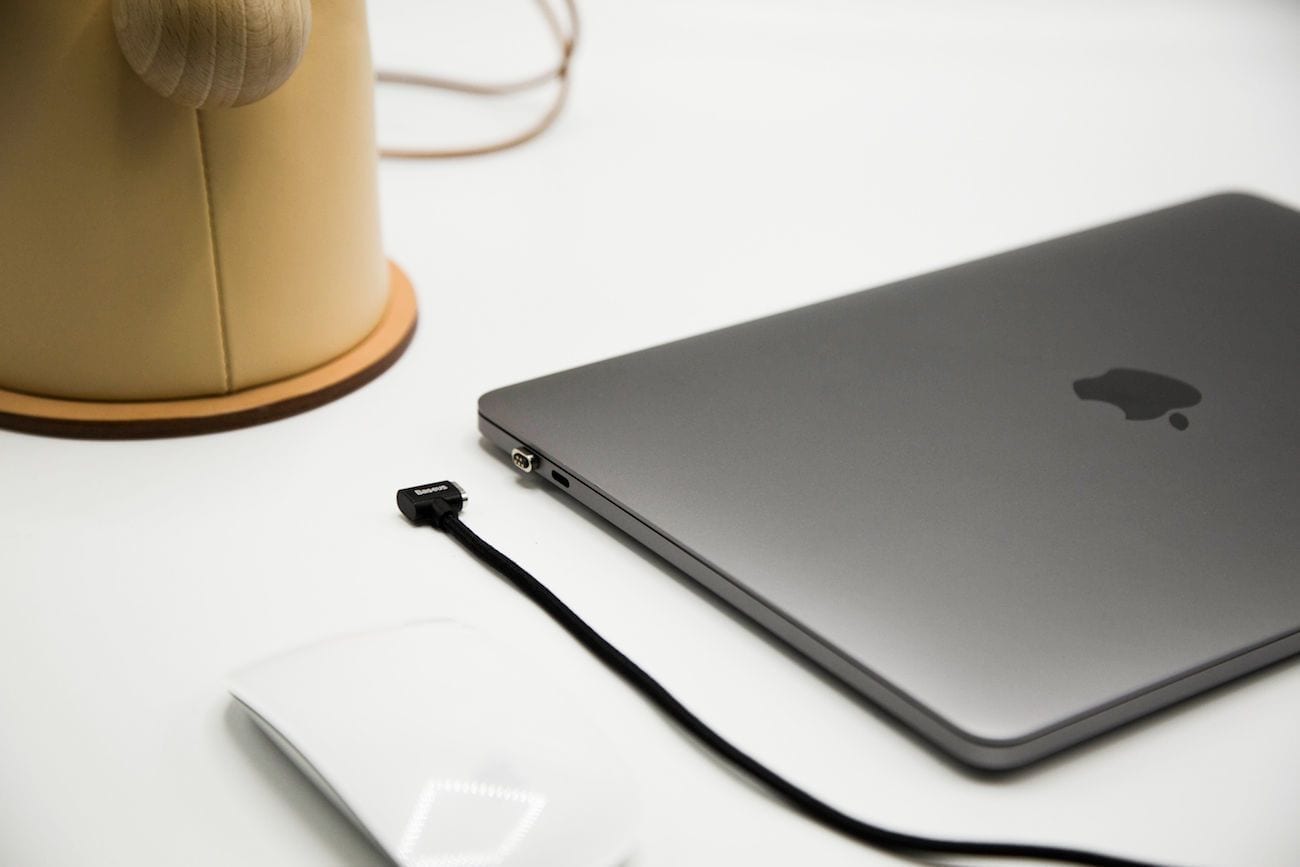
    Baseus makes cellphone accessories and gadgets such as car chargers, multi-use cables, car mounts, flash drives, wireless chargers and power bank cases. It has received such accolades as the IF Design Award, and plans to open 10 stores a year in the Philippines.

    It is offering special deals to mark the store launch.

  • Is e-commerce taking over sales in Indonesia?

    Is e-commerce taking over sales in Indonesia?

    The growth rate for retail stores is now at single-digit levels, falling from above 10% in recent years. Online shopping is shouldering part of the blame, but the main culprit is a slowdown in overall consumer spending — long the driver of Indonesia’s economy — due to sluggish wage growth.

    Since the busy Ramadan shopping season ended in the summer, Indonesian consumers apparently have tucked away their wallets, at least at brick-and-mortar establishments. Retail store sales in October 2017 grew by an anemic 1.3% from a year earlier, according to preliminary data released by Bank Indonesia, the country’s central bank.

    This is causing store closures across the country, where the modern retail business model had entrenched itself over the years. At the end of June, all Indonesian 7-Eleven convenience stores closed their doors. In September 2017, Matahari Department Store, the nation’s largest department store chain, shuttered two southern Jakarta stores.

    Same-store sales of the chain over the first nine months of the year fell 2.7% from the same period last year.

    The recent lack of foot traffic at a major Jakarta department store typified the trend. As some 40 clerks stood idly chatting away, a nearby supermarket swarmed with shoppers.

    Many of the vacant store fronts in the country’s commercial centers are due to the increase in e-commerce. According to one survey, online sales surged 22% in 2017 from the previous year to around $7 billion.

    A bevy of powerful e-commerce sites — among them Tokopedia, one of Indonesia’s largest online marketplaces, and Alibaba Group Holding’s Lazada — are siphoning shoppers away from stores, a trend that shows no sign of abating. Online sales are projected to keep climbing at a brisk annual rate of around 20% for the foreseeable future.

    The growth in smartphone usage has also spurred online shopping, especially in rural areas where modern retail shops are still few and far between.

    But the rise in online shopping tells only part of the story. The main reason for tepid consumer spending is weak wage growth. The minimum wage growth rate will slow to 8.71% in 2018, the lowest in recent years, according to the government, noting that relatively low-income earners will be hit particularly hard.

    As recently as 2013, minimum wages had soared more than 40%, fueling the country’s free-spending ways. Now, consumers are being forced to cut back in order to save for future outlays, such as on housing and education. This has put a crimp on spending for even daily products.

    With a population of over 250 million, Indonesia is the largest consumer market in Southeast Asia. Many economists say the country’s consumption will continue to rise over the long term.

    There is little doubt, however, that Indonesian’s retail industry is facing a crisis of sorts, and the government is not helping with the situation.

    If this trend continues, the ensuing shock waves may hit other sectors of the economy, possibly dampening foreign direct investment in the country’s consumer market.

  • Samsung Pay Extends Through Many Arms of Hong Kong’s Octopus

    Samsung Pay Extends Through Many Arms of Hong Kong’s Octopus

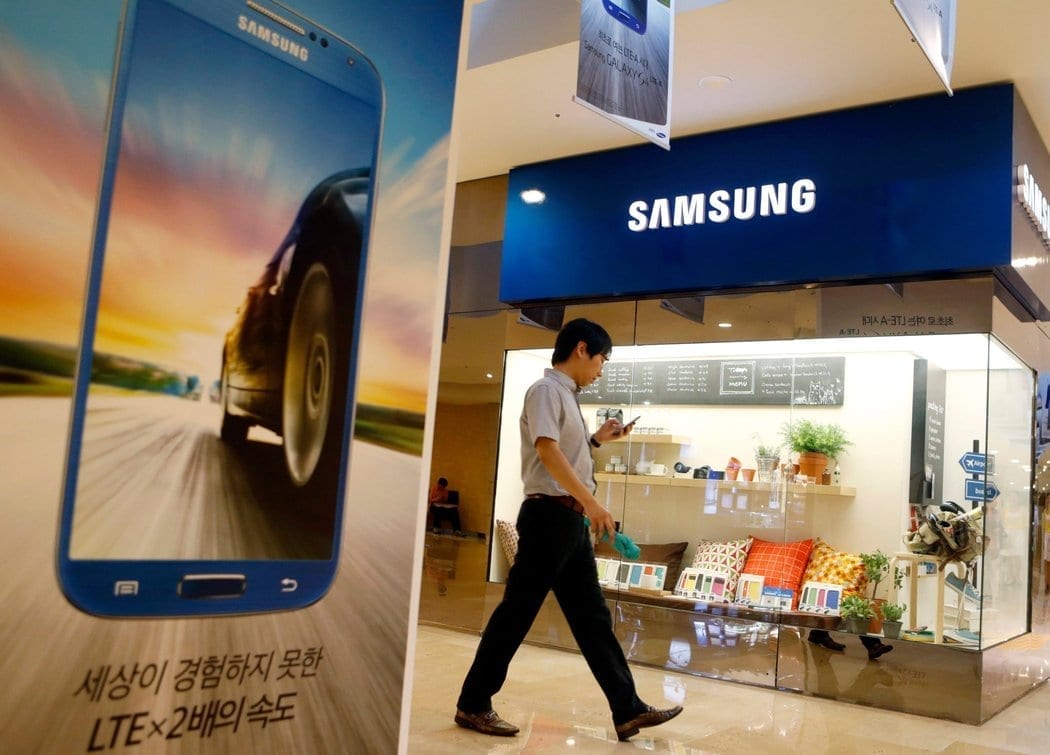
    A big new partnership could help to dramatically extend Samsung Pay’s presence in Hong Kong: Samsung has teamed up with Octopus to enable its ubiquitous Octopus Cards in its mobile payments platform.

    The Octopus Card is essentially a reloadable electronic payment card, but what makes it special is its extensive reach throughout Hong Kong society. In addition to being a popular payment method at a range of retail stores and restaurants, the Octopus Card can also be used at vending machines and pay parking meters, on public transportation, at tunnel tolls, and even for access control in buildings. There’s even a whole page about it on Hong Kong’s official tourism website.

    As such, its integration into Samsung Pay represents a big win for Samsung in Hong Kong. Dubbed ‘Smart Octopus’, a virtual Octopus Card will be available to Samsung Pay users, and consumers will also be able to transfer their current Octopus Cards into the app. Summing up the partnership’s prospects in a statement, Samsung Electronics H.K. Co. Head of IT and Mobile Communication Business Yiyin Zhao asserted, “Together with Octopus, the go-to payment method for most transportation operators and retail stores, Samsung hopes to bring a revolutionary smart mobile payment service to Hong Kong.”

    It’s a win for Octopus, too, with CEO Sunny Cheung pointing out that the Samsung Pay partnership “represents a significant milestone for Octopus to introduce NFC payment via smartphones, offering our customers a fast, simple and seamless over-the-air mobile payment solution.”

    Smart Octopus will go live at 9:00 a.m. on December 14th, and will be supported wherever the Octopus Card is accepted.

  • LUMINE opened in Singapore

    LUMINE opened in Singapore

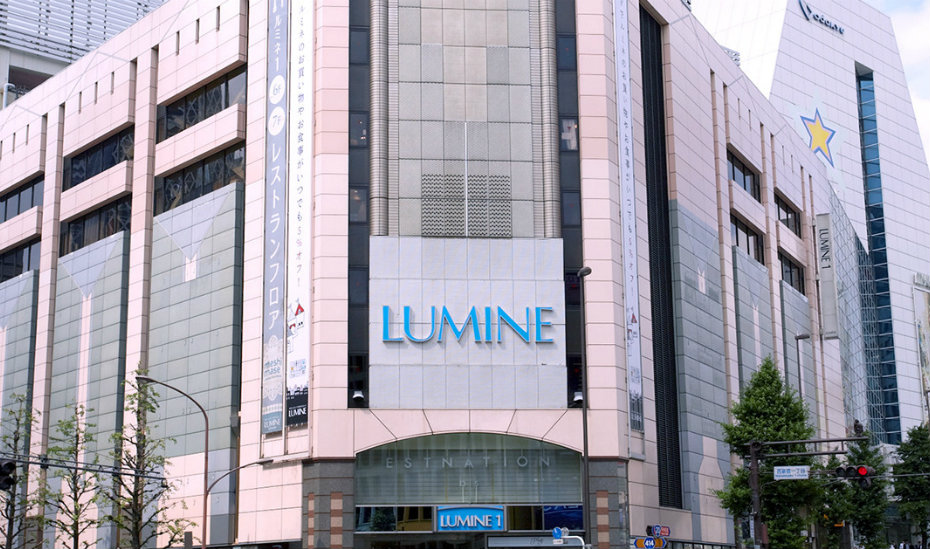
    LUMINE  opened in Singapore’s Clarke Quay Central with an exciting new shopping experience.

    Visitors to the mall found a mall-in-mall experience in LUMINE, where they can have their pick of Japan — and eat it too. Both established and younger brands will be available, as well as an in-house café that is the first of its kind. To kickstart the festivities, LUMINE introduces a guiding philosophy, I Am Who I AM, which is derived from LUMINE’s aim to inspire the sense of taste and value via variability in fashion from Japan for Singaporean women.

    I Am Who I AM promotes self-confidence and encourages women to be as beautiful inside as they are on the outside, through one’s personal journey of growth. As part of the launch in Singapore, the brand presents popular individuals from Singapore and Japan who strive on being different and are not afraid to express themselves.

    “Opening in Singapore is a very important milestone in our business plan because it is an important gateway to the Asian market and pivotal in positioning the brand on the world map. LUMINE chose to be in Singapore because of its vibrant business climate and strategic positioning. Having a presence in Singapore opens doors to many new opportunities. We have also set our sights on other Southeast Asian markets,” said Mr Naokazu Kozakai, Managing Director of LUMINE Singapore.

    With expertise in direct management and subleasing, and an unprecedented access to more than 2,200 tenants in its malls, LUMINE Singapore aims to be the platform in which Japanese brands can jumpstart their entry and successfully penetrate into the local market, and subsequently other markets in the region.

    Kozakai says, “Singapore’s market is a strong indicator of the Southeast Asian retail climate. She is a renowned shopping paradise and consumers here have a cosmopolitan mix. We believe the data acquired from our research and experience in Singapore will be an important model case study for our future business plans.”

    The 10,000 square feet specialty lifestyle store is targeted at independent and sophisticated women; Clarke Quay Central was chosen for her prime geographical location in the city centre. In addition to replicating the first-class shopping experience offered by LUMINE’s 15 malls in Japan, LUMINE Singapore aims for its store to be a place where fashion, art and people interact. This results in the birth of LUMINE café which will be operated by Create Restaurants Asia Pte. Ltd.

    Set in a clean, simple and modern space design, the new store presents a collective of 20 on-trend wardrobe must-have fashion brands targeted at sophisticated women with a strong sense of individuality. The selected brands are iconic in Japan and enjoy immense popularity within LUMINE Japan; they are: TOMORROWLAND, IÉNA, Spick & Span, snidel, FRAY I.D., Lily Brown, Mila Owen, MOUSSY, SLY, Ungrid, LAGUNAMOON, shoes and accessories brands Le Talon, drama H.P.FRANCE, roomsSHOP and exclusive offerings from the popular Japanese eyewear brand Zoff (which recently also launched in Hong Kong).

    The brands’ offerings range from wardrobe fundamentals such as classic, quality wear and timeless basics with modern twists, to interesting and unique designs that give an outfit that necessary flair. With a price range of SGD$15 to SGD$850, shoppers can certainly expect a wide variety with quality Japanese craftsmanship.

    Apart from the success of its exciting shopping concept, sound brand curation ethos and high-quality product offerings, the retail company also invests heavily in market research and a brand incubation programme is introduced, as part of its business strategy.

    “We have created a space as a testbed for Japanese brands in the new store called LUMINE LAB. It aims to share and explore the diversity in Japanese fashion and craftsmanship to Singapore with a vision to create a new fashion culture in Singapore.” Kozakai shares.

    An exciting line-up of influencer-based Japanese brands including EMODA, MURUA, MERCURYDUO, rienda and And Couture, was the first collection of brands to be under the LUMINE LAB concept space.

    For the opening, LUMINE Singapore partnered with strong, independent women from Singapore and Japan who strive on being different and are not afraid to show it. This includes musician and entrepreneur, Aarika Lee, entrepreneur Savina Chai, food artist Suwa Ayako, model and DJ Una, musician Yuuki (YJY), and many others.

    These partnerships are a perfect symbolism of LUMINE Singapore’s I Am Who I AM philosophy and aims to encourage a new fashion conversation in Singapore, thereby illustrating and reinforcing and the mix-and-match shopping concept LUMINE aims to offer.

  • PTT earmarks P500 million for coffee-fuel expansion mix

    PTT earmarks P500 million for coffee-fuel expansion mix

    PTT Philippines expects to spend PHP500 million (US$9.9 million) on beefing up its retail network, including a foray into the Japanese market.

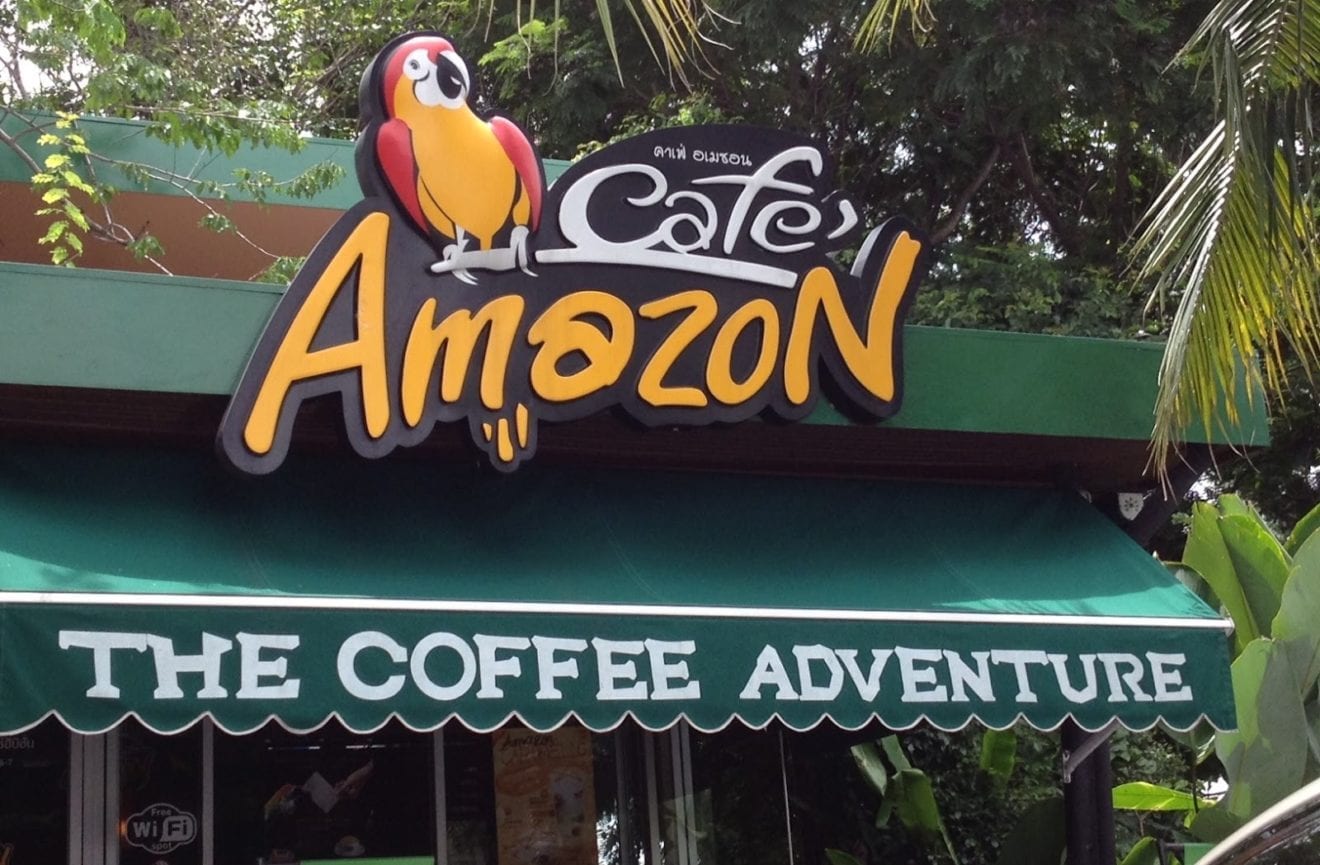
    President/CEO Sukanya Seriyothin says that while the bulk of the expansion for the Thai oil and gas giant PTT subsidiary will be gasoline stations, it includes about 12 Cafe Amazon outlets, mainly in Luzon.

    Following its diversification into the coffee business, PTT has started investing in the Philippines to complement its more than 1850 stores in Thailand and other parts of Asia, including one in Japan, says the company.

    With a “notable landscape change” in its investment plan, the company aims to open 100 cafes in the near term, with six to be up and running by year end.

  • Foreign convenience store chains expansion plans

    Foreign convenience store chains expansion plans

    Nguyen Thu Ha has abandoned traditional markets on her afternoon shopping trips in favor of a more convenient option.

    Uncomfortable with the crowds and dubious origins of the food, the 35-year-old from Hanoi now prefers to spend her money in the convenience stores that are mushrooming across the city.

    “The quality in convenience stores is guaranteed, unlike grocery shops and traditional markets,” she said. “That’s why I go to them now.”

    Like Ha, many shoppers are turning to convenience stores, encouraging foreign retailers to expand their presence in the market.

    The number of convenience stores had increased to over 1,500 as of June 2016, according to market research firm Nielsen Vietnam. Famous foreign brands now occupy 70 percent of the market.

    In June, Seven & i Holdings, which operates Japan’s biggest convenience store chain 7-Eleven, opened its first outlet in Ho Chi Minh City.

    A company representative said that it plans to open 100 stores in Vietnam within three years and expand the number to 1,000 in the next decade.

    American chain Circle K has around 250 stores, mostly in the country’s two biggest cities, Ho Chi Minh and Hanoi.

    FamilyMart, Japan’s second largest convenience store chain, has a combined 130 stores in Ho Chi Minh City, the nearby resort town of Vung Tau and Binh Duong Province.

    Southeast Asian chains Shop&Go and B’s mart are running another 300 stores.

    South Korea’s GS Retail also plans to enter the market in the near future with the first outlet bearing its GS25 convenience store brand in Ho Chi Minh City.

    GS25, which will be the first Korean convenience store chain operator to enter the Vietnamese market, is expected to open 2,500 outlets in the next 10 years.

    “We have received requests from many countries, including China and other Southeast Asian countries, to export our brand,” said a GS Retail spokesman. “After months of research, we concluded that Vietnam had the largest potential for growth.”

    A.T. Kearney’s Global Retail Development Index this month named Vietnam the sixth most attractive retail market in the world. The country made headlines worldwide when it topped the list in 2008.

    International market research organization IGD forecasts double-digit compound annual growth rate over the next four years in Vietnam, reaching 37.4 percent in 2021.

    “Convenience stores in Vietnam have become popular destinations for young consumers to shop and hang out, as the stores provide them with an air-conditioned environment, well-organized shelves and seating areas, high quality products and, in some stores, free Wi-Fi,” said Nick Miles, head of Asia-Pacific at IGD. “It is also easier to get licenses for stores under 500sq.m, which is why retailers have been expanding to gain market share.”

    Vu Vinh Phu, former chairman of the Hanoi Association of Supermarkets, said convenience stores have expanded with the growing middle class, who are increasingly willing to pay a little more for the convenience of mini-marts that are open for longer hours and can be found in more locations.

    Economists say Vietnam has great potential for convenience store expansion, considering the number of existing stores now is still small compared to the population.

    There is one convenience store for every 2,100 residents in South Korea, 2,300 in Japan, and 24,900 in China. The ratio in Vietnam is one per 54,400 residents, according to a recent report by international property research firm Savills.

    Vietnam’s trade ministry has projected the country’s retail market will hit $179 billion by 2020, a jump of 52 percent from last year.

    Uneasy to earn

    Despite bright prospects for convenience stores in Vietnam, their development has not always been smooth, as in the case of FamilyMart. Japan’s second largest convenience store chain plans to stay focused on its domestic market after reporting losses in several Southeast Asian countries, including Vietnam.

    Koji Takayanagi, the company’s president, said the firm is reviewing its loss-making businesses in Indonesia, Thailand and Vietnam. “If we can get them to rally we will, but we cannot continue to pour in resources,”

    Another example is the case of a joint venture between Ministop, an affiliate of Japan’s second largest retailer AEON, and G7, an arm of local coffee producer Trung Nguyen. The joint venture aimed to develop 500 convenience stores across the country within five years from 2011. However, the partnership ended in 2015 when Trung Nguyen withdrew from the deal after only 17 stores had been opened. The venture reportedly failed to reach the target because of difficulties in finding premises in Hanoi and Ho Chi Minh City.

    Ministop now has only 80 convenience stores in Ho Chi Minh City and Binh Duong Province.

    As well as the difficulties they face finding retail space, convenience stores must also compete with other retail channels, which are also expanding rapidly, especially online shopping, said head of the Association of Vietnam Retailers, Dinh Thi My Loan.

    Explaining why retailers are continuing to expand in the convenience store market, despite losses, an industry insider said their current goals is to stretch their influence in the market. Retailers often suffer losses in the first four to seven years, he said. “It’s not time to make a profit yet. It’s time to grab more market share.”

  • Ferragamo and Versace watches to innovate

    Ferragamo and Versace watches to innovate

    It is no secret that retailers, distributors and manufacturers need to find new ways to meet consumers’ changing expectations in the luxury and fashion markets.

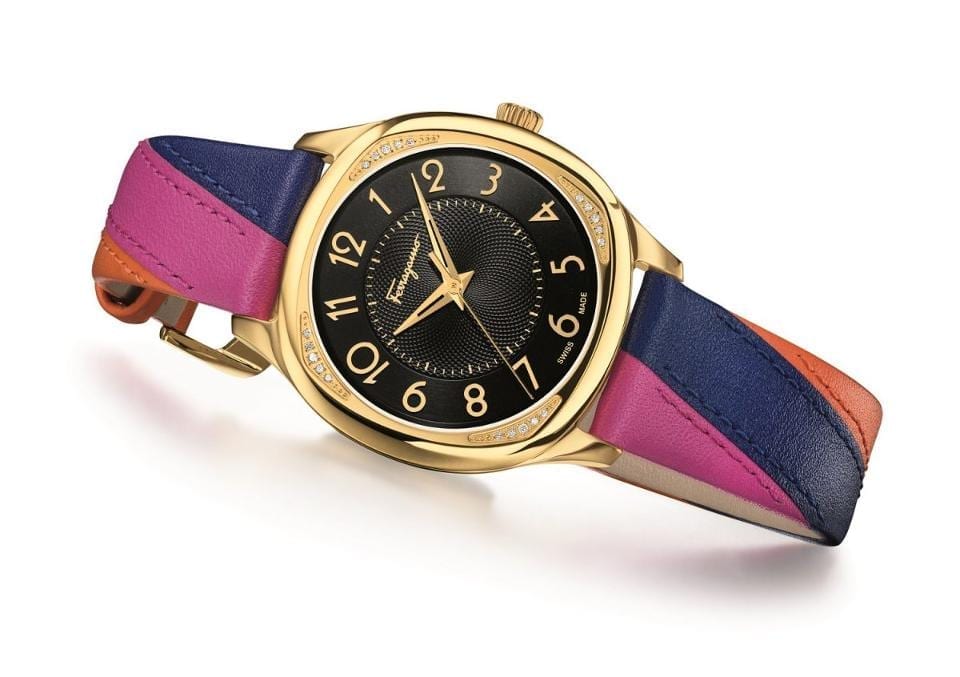
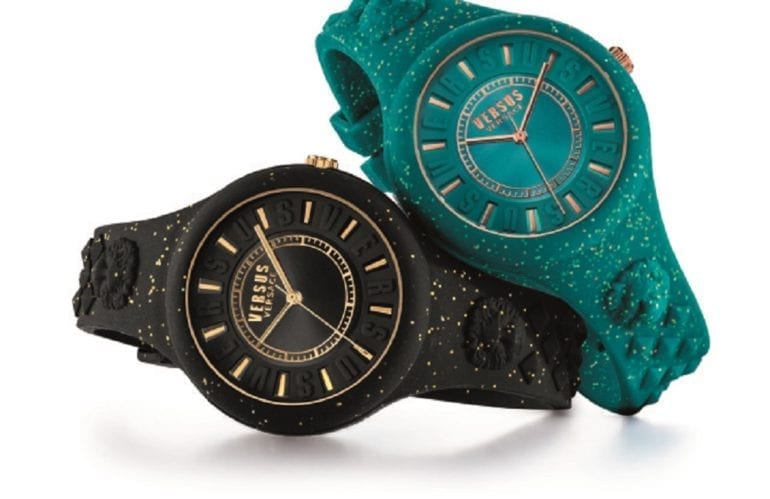
    These changes in consumer behavior led Paolo Marai, president and CEO of the Timex Group Luxury Division, which manages the timepiece business for Salvatore Ferragamo, Versace and Versus Versace, to appoint the MadaLuxe Group as its U.S. and Caribbean distributor.

    This new arrangement was actually announced in January 2017 but the two companies have spent almost a year formulating a strategy before truly making the partnership known in November 2017. It is a multi-tiered approach that ultimately focuses on the in-store experience for consumers.

    “We started in January 2017, but we really wanted to have a kind of honeymoon period and develop an understanding of the way we need to work and the way we need to develop and that is why we decided not to make it a big event in the very beginning. Let’s work a few months together and get a really strong team,” Marai said in a recent interview.

    The companies have spent this year hiring people in management roles experienced in both the fashion and the Swiss watch industry, including people who used to work with Fossil, Burberry, Tom Ford and Tag Heuer.

    They are working on sales training, product pricing, inventory management at the store level, in-store displays and after-sales service that are all uniform in the experience they provide. It’s not an easy task as the watch brands are sold in department stores, independent specialty stores and in branded boutiques. So relationship building is vital for this effort to be successful.

    “This year has been a transition year but we are seeing very positive signs that 2018 will be a strong year. First of all because we have a bunch of new products coming that we feel good about; and second, we organized ourselves to have this smooth transition not to disrupt the market,” he said. “I feel that 99% of the time we are absolutely aligned at what needs to be done.”

    MadaLuxe Group is a 30-year-old family-owned business that is one of the largest distributors of luxury fashion and accessories. It designs, produces, buys, sells, markets and distributes apparel, accessories and home goods from well-known luxury and contemporary brands. This is the company’s first time in the watch business, which is one reason why it has been on a hiring spree looking for talent. However, this is a company well-experienced in providing solutions for luxury fashion brands with a distribution network of about 300 retail stores in the U.S.

    The company, which has seven divisions, was co-founded by the mother and son team of Sandy Sholl, CEO, and Adam Freede, president. They created the luxury segment of their business seven years ago and see it as a growth business because of younger consumers who are well-educated and curious when it comes to luxury.

    “We just believe many more Americans understand what luxury is,” Sholl said during the same interview with Marai. “In the past they may have been intimidated to walk into a luxury store but now they are a lot more knowledgeable. We penetrated the luxury market very aggressively and spent a lot of time with all types of luxury lifestyle products.”

    Freede added, “We see the American market as a very big growth area in all categories, not just timepieces, because of the quality and craftsmanship of heritage brands. These timepieces go right into what we believe are major trends in the U.S.”

    Marai said MadaLuxe has long-term relationships with department stores. He believes MadaLuxe will increase their presence of Ferragamo and Versace watches, ensure the sales staff is well trained and properly manage the inventory.

    “We needed a partner who knows luxury and who has a distribution-enhanced approach with department stores. They know the heads when going from one department store to another. This helps a lot. We chose someone with tremendous luxury experience and with a very open-minded approach.”

    Marai is also happy that MadaLuxe has created a division just for the management of the Ferragamo and Versace watch business.

    “There is a complete new team dedicated to watches, which is something that makes us feel good,” he said. “We really hired a bunch of people who are expert in the watch category.”

    Marai, a native of Milan, has seen first-hand the changes in the fashion and luxury watch businesses since he began to lead the Timex Group Luxury Division in 2005, headquartered nearby in Lugano, Switzerland.

    “It is a new type of consumer that wants to buy in a different way and we have to learn how to process this new consumer,” he said. “It’s not just about new products because new products mean nothing if you don’t have the entire marketing story around it. I’m not even talking about marketing as it has been done in the past. It is a completely different story right now.

    “What is happening is that when people are entering a store they don’t want to buy a product. They want to have an experience, which involves the quality of service and the way you display your story inside the store,” Marai continued. “There is a lot of history behind a brand and there’s a new generation of people who want to know more about it in order to feel that they’re not just buying a product. Instead, they want to buy something that pertains to their world.”

    Much of the strategy is dealing with how young people digest fashion today and what appeals to them. Some fashion brands, such as Versace, have an identity based on its enormous popularity in the 1990s. When asked if young people still identify with this esthetic, Sholl said that in her experience Versace is as relevant today as it ever was and she points to her Versace watch as an example.

    “Versace is the most recognized and the most popular brand. It’s actually astounding how good Versace does in general as a brand,” she said. “When you look at this watch I would buy this as jewelry. It’s more than just a timepiece. It’s just a great fashion statement.”

    Marai pointed to Milan Fashion week, where Versace was the highlight with its tribute to its founder, Gianni Versace, who was tragically killed 20 years ago. For the runway show, the fashion house brought back supermodels of the ’90s: Cindy Crawford, Naomi Campbell, Claudia Schiffer, Carla Bruni and Helena Christensen. But Marai also noted that the show was a statement about the future of the brand.

    “The strength of the brand is not from a position of the past. It must show that it has a capacity of what it says for the future generations. Definitely, Versace as a brand is showing they are really turning the page. The last show they did in Milano was in honor of Gianni. But it also was statement that said, ‘You did it, now it’s time to move forward.’ It was a very important message.”

  • Singapore Retail Sales Rebound In October

    Singapore Retail Sales Rebound In October

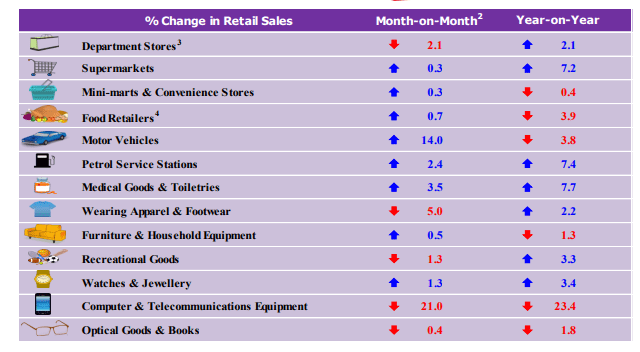
    October Singapore retail sales rose a meagre 0.8 per cent over the same month last year, falling 1 per cent from September.

    Those figures exclude motor vehicles which typically skew Singapore’s data. Including those, retail sales declined 0.1 per cent year on year.

    Month on month, real retail sales fell 1 per cent, but they rose 1.5 per cent including vehicles.

    The total retail sales value in October 2017 was estimated at S$3.6 billion.

    The greatest negative contributor to year on year October Singapore retail sales data was the computer and telecommunications category, which slumped 23.4 per cent. Sales by food retailers, of optical goods and books, furniture and household equipment and at mini-marts and convenience stores decreased between 0.4 per cent and 3.9 per cent.

    However, sales of medical goods and toiletries, at supermarkets, of watches and jewellery, recreational goods, clothing and footwear and sales of goods at department stores rose by between 2.1 per cent and 7.7 per cent in October.


    Sales of food and beverage services at restaurants, cafes and fast-food outlets increased 0.7 per cent in October.

  • German burger chain Hans Im Gluck opens in Singapore

    German burger chain Hans Im Gluck opens in Singapore

    Following a holiday in Singapore last year, a restaurateur couple has returned to open a casual gourmet burger restaurant, Hans Im Gluck, in Orchard Road.

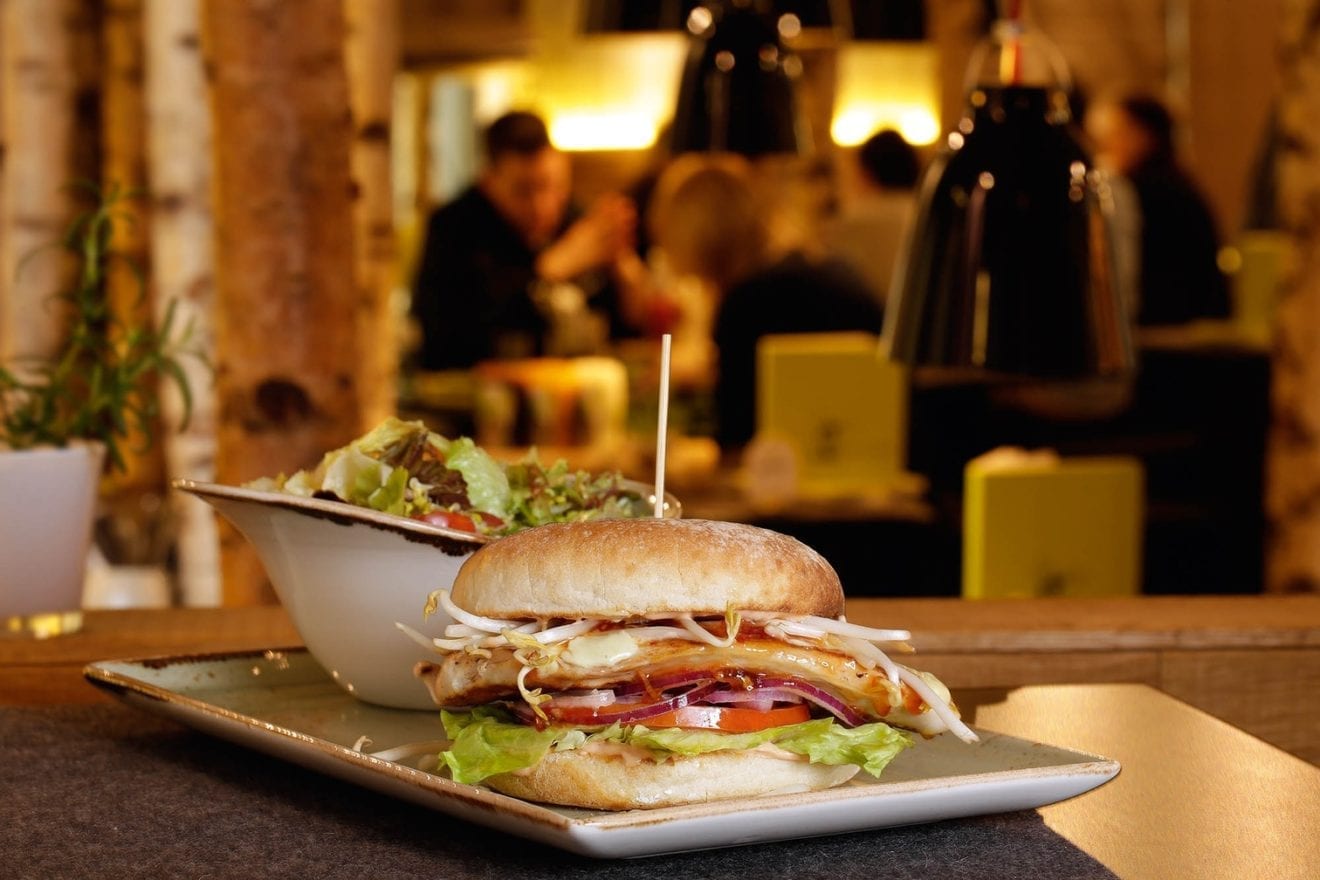
    The brand’s 50th outlet and first outpost in Asia, it specialises in vegan, vegetarian, beef and chicken burgers served alongside salads, tea infusions and cocktails.


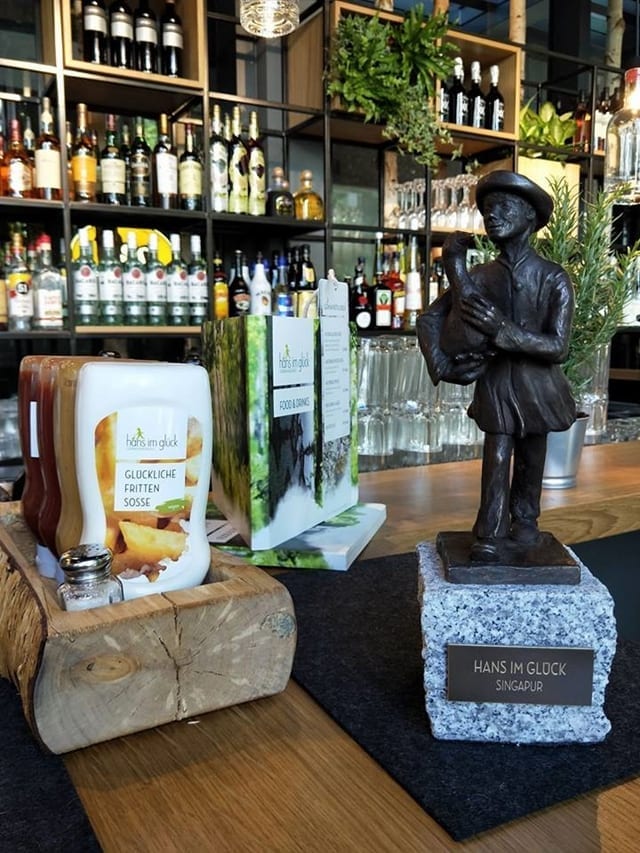
    Hans Im Gluck was launched seven years ago by Gunilla Hirschberger, a vegan, who set herself the goal of shaking up Germany’s meat-focused dining scene. The 53-year-old Munich-based Swede saw a gap in the market for vegan-friendly offerings at burger restaurants, and with her German husband Thomas Hirschberger opened the first Hans Im Gluck in 2010, named after a German fairytale by the Brothers Grimm.

    They now run 49 outlets in Germany and Austria, with more coming up in Italy and Switzerland.

    Meanwhile, the Singapore restaurant is in a purpose-built outlet between International Building and the Royal Thai Embassy. Next year, the couple will open two more outlets – at Boat Quay and at Republic Plaza, Raffles Place.

    For 15 years, the Hirschbergers ran a Californian-Mexican restaurant chain with 40 outlets across Germany, which they have since sold. When they visited Singapore they say they felt an instant connection to the city.

    “Singapore has a good spirit and is full of different kinds of cultures. People here are open-minded and happy to see new things,” says Gunilla. “The city is innovative and has a good flow.”

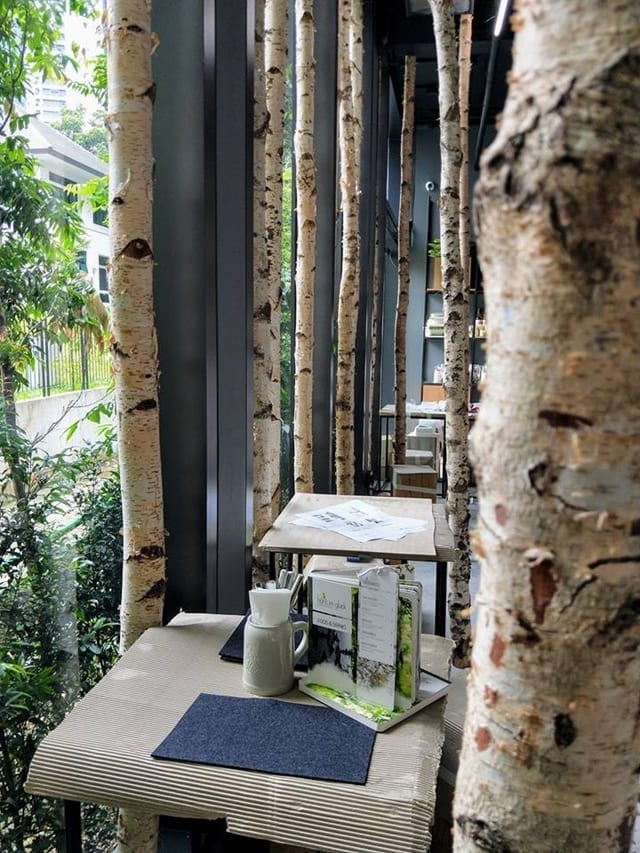
    Their Singapore store features imported German-made oak furniture and 180 birch logs, installed throughout the restaurant to resemble a German forest. The menu, which looks like a children’s storybook, features 30 burgers.

    It has its own sauces including vegan mayonnaise and orange mustard, as well as multigrain and sourdough buns made exclusively for the chain and sent frozen from Germany.

    At 4000sqft (370sqm) and seating 180 diners, the restaurant is small compared with the German outlets, of which 23 are family-owned. Those restaurants are usually about 10,000sqft with about 400 seats, excluding the terrace.

    The Singapore restaurants are wholly owned by the Hirschbergers, and the chain is looking to expand into other parts of Asia, including Hong Kong and Taipei.