Blog

  • South Korean Amore Pacific’s profit suffers from extended domestic slump

    South Korean Amore Pacific’s profit suffers from extended domestic slump

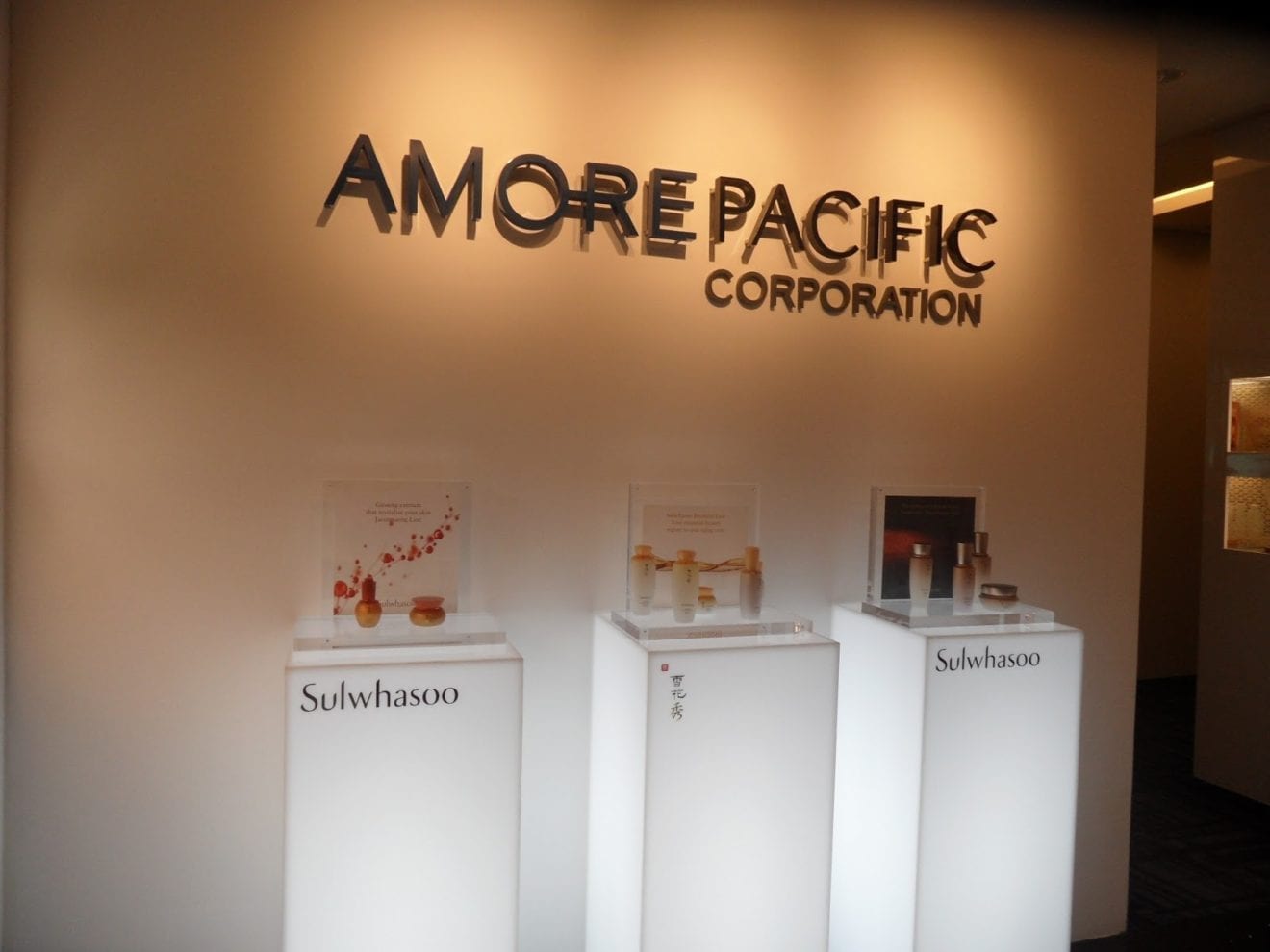
    Amore Pacific‘s first-quarter net profit shrank 15 percent from a year earlier, due largely to a protracted slump in the domestic market amid a rapid drop in Chinese tourists.

    Its net income came to 223.5 billion won (US$197.1 million) in the January-March period, compared with 262.9 billion won the previous year. The operating profit for January-March also slipped 6.2 percent on-year to 316.8 billion won, but sales gained 5.7 percent to 1.56 trillion won in the cited period from a year earlier.

    The company cited a drawn-out slump in its domestic sales, along with a decrease in inbound tourist inflow from China, which followed the ban on trip sales to South Korea by its authorities from mid-March as the main factors that weigh on the profit amid a slow economy. An increase in sales in other foreign markets, however, helped cushion a fall in sales stemming from Chinese consumers.

    South Korea has seen its tally on Chinese tourists plunge by nearly 40 percent since March 15, when travel agencies in China stopped selling tours to Korea on the behest of its government. Such a move by Beijing is seen as part of a string of apparent retaliatory measures against Seoul for the decision to station a U.S. anti-missile system, known as THAAD, on its soil.

    Its operating income from domestic sales, which include the revenue from duty-free stores, dropped 13 percent on-year to 234 billion won as of end-March. Market analysts predicted earlier that AmorePacific may suffer a blow from its mainstay duty-free sales as a result of China’s trip ban. Chinese tourists accounted for half of the foreigners who came into the country last year.

    In contrast, its overseas business posted an operating income of 88 billion won in the first quarter, up 11 percent from a year earlier, with the sales advancing 17 percent to 447 billion won over the cited period. AmorePacific will strive to improve the profitability by realigning the brand portfolio and sales channels in different markets, citing its European unit that logged a 7-percent on-year growth after it bolstered its fragrance lineup, drawing a contrast to the U.S. business which suffered a 16-percent decline in sales.

    The combined operating income of AmorePacific Group, which includes its smaller brands like Innisfree, Etude and other household products, reached 378.5 billion won in the first quarter, down 9.7 percent from a year ago. The sales on a consolidated basis also dropped 5.5 percent on-year to 1.75 trillion won.

  • Ikea gets approval to enter the Philippines

    Ikea gets approval to enter the Philippines

    The Philippine Board of Investments (BOI) has approved Ikea’s entry into the Philippines, following a bid from Ikano Ltd, the operator and franchise-rights owner of the Swedish furniture giant in Asia.

    The ready-to-assemble furniture and appliance maker first mentioned it had plans to enter the Philippines as early as 2013, but has so far failed to do so.

    According to BOI documents, Ikea has prequalified under the Retail Trade Liberalization Act of 2000 last November to open stores in the Asian market, as reported by Business Mirror.

    All foreign retailers must have a net worth of either $200 million or $50 million, depending on its classification as a foreign retailer under the Act, before retail trade can commence.

    The firm must also have five operating retail stores in other global locations or own at least one store worth $25 million, and a five-year track record in retailing, which Ikea does.

    Ikea is also said to be registering with the Securities and Exchange Commission for its capitalisation requirement.

    No further information on store locations or manufacturing has been revealed.

    Speaking at a media roundtable held on the occasion of the 70th year of Sweden-Philippine Diplomatic Relations in March, the Swedish ambassador to the Philippines, Harald Fries confirmed in March that Ikea will be setting up in the Philippines soon, bringing employment to the region.

    “There would be great opportunities for Filipinos to find work and there would be investment in putting up stores,” Fries said.

    “I won’t be surprised that once they have set their camp here, they’ll be looking for local manufacturing. I think that would be wonderful and interesting for the Philippines,” Fries added.

    Launching in 1943, Ikea — Ingvar Kamprad Elmtaryd was founded by 17-year-old Swede Ingvar Kamprad.

    Ikano owns and operates home furnishing stores in South East Asia and under the franchise rights from the Swedish firm IKEA Systems BV. The company was incorporated in 1980 and is based in Singapore.

    The BOI is an attached agency of Department of Trade and Industry (DTI). It is the lead government agency responsible for the promotion of investments in the Philippines.

  • 25 cellcos test 5G in Q1, says GSA

    25 cellcos test 5G in Q1, says GSA

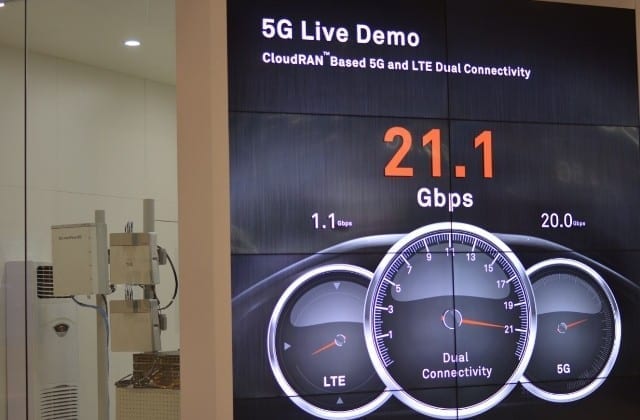
    The GSA (Global mobile Suppliers Association) has said that in the first quarter alone at least 25 operators from 15 countries have demonstrated 5G technologies, or announced 5G tests, or trials.

    And 18 operators are currently committed to the implementation of services based on pre-standards 5G technology by or before 2019, says the GSA quarterly “Evolution from LTE to 5G” report.

    Although the GSA does not name all the specific pre-5G operators within the report, it does mention Etisalat, Telia Sonera, TIM and Verizon as four examples.

    A further 26 operators are trialling, deploying or planning LTE-Advanced Pro networks exhibiting multiple Rel-13 features such as those related to carrier aggregation, modulation scheme, MIMO, latency and MCPTT (mission-critical push-to-talk).

    An important milestone was reached in March 2017 when the 3GPP agreed on an intermediate target for early completion of Non-Standalone (NSA) 5G NR mode for enhanced mobile broadband. NSA mode anchors connections in 3G, using 5G NR carriers to augment data rates and reduce latency where needed. It was agreed to work towards finalization of the NSA standard by March 2018.

    At the same time, the group said it was still committed to completing the standard for Standalone (SA) 5G NR mode by September 2018. In February 2017, a large group of operators and vendors had lent their public support to this new approach, expressing the view that it will enable standards-based field trials to begin in 2019.

  • Lotte refashions outlet to target families and kids

    Lotte refashions outlet to target families and kids

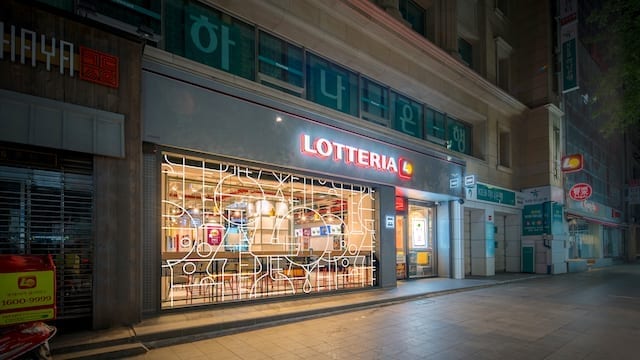
    The renovated branch of Lotte Premium Outlets in this suburban city about 30 miles south of Seoul looks more like an amusement park than a shopping mall for bargain hunting.

    At its Incheon outlet location, Lotte has opened a three-story complex catering to families with children. There are cafes with ball pits and slides, job experience zones where kids can pretend to be doctors and firefighters, and a large Toys ”R” Us store that anchors it all. The Incheon branch is not just for shopping but also for outdoor activities for families.

    Since opening the location in 2013, Lotte found that 75 percent of visitors were in their 30s and 40s. That’s 6 percentage points higher than the share of people who visit other outlet branches outside Seoul. The company figured that more shops and facilities for family visitors, especially kids, be better for customers.

    Another factor was the growing popularity of children’s products in Korea. Between 2012 and 2016, the industry’s revenue expanded from 27 trillion won (US$24 billion) to 39 trillion won. A good portion of the outlet’s new building is dedicated to play. On the third floor, a job experience zone lets kids experience diverse occupations, from veterinarian to firefighter and even urban planner. There is a fee – 22,000 won for kids between 5 and 13 and an extra 4,000 won for an accompanying adult – but there is no limit on time.

    In another play space, called Doctor Balance, children can test their physical strength, including muscle endurance and responsiveness, on playground sets that resemble gym equipment. Next to the job experience zone is a Toys “R” Us. Lotte is the Korean operator of the U.S.-based toy store, but so far, it’s only installed stores in its supermarket chain Lotte Mart.

    The location in the Incheon outlet is the first time Lotte is running a Toys “R” Us outside the mart. An outlet spokesman said the toy store will have about 6,000 products. The building’s second floor has more shopping areas, but even they’re dedicated to kids. Outdoor brands Nepa and Blackyak, for instance, are selling swimsuits and backpacks for children. Out of 47 brands in the new space, 32 are specifically kids’ brands.

    There’s something for the parents, too. Various fast fashion brands, including Uniqlo and Topten, have set up shop, and automaker BMW has opened one of its Motorrad cafes where car aficionados can enjoy coffee while browsing BMW-themed apparel.

    Lotte Premium Outlets’ Incheon location holds the title of biggest outlet in Asia with a floor space of 53,000 square meters (570,000 square feet). An average 15,000 people visit daily, and it has generated 1.2 trillion won in revenue since opening. The company expects the new Fashion & Kids Mall building to boost the number of visitors by 20 percent.

  • The KAfe, Coffee Inn died young, but milk-tea chains thriving

    The KAfe, Coffee Inn died young, but milk-tea chains thriving

    The KAfe, Coffee Inn and Saigon Café recently shut down, following the closure of big foreign chains Gloria Jean’s and NYDC in recent months.

    Discouraged by the departure of such chains, many investors have postponed their plans to open new shops.

    Meanwhile, more and more milk tea chains have been established, especially in the north and in Hanoi. This has been a surprise to analysts, as the north is a conservative market where people prefer coffee to sweet drinks like milk tea.

    It is estimated that 170 milk tea brands have appeared in the market so far this year, both privately branded and franchised ones.

    Unlike the ‘milk tea waves’ in previous years, this year witnesses the mushrooming of  milk tea shops in non-Hanoi provinces, especially in Bac Ninh, Hai Phong, Quang Ninh and Phu Tho.

    In Bac Ninh alone, 30 milk tea brands turned up in the market in March and April with hundreds of shops, both small kiosks to larger shops (15-20 tables).

    Ding Tea is the best known brand with 100 sale points, followed by Toco Toco with 50 shops. Other brands have been present in the market for a long time, such as Chatime, ChaGo and ChaChaGo.

    Other milk tea chains, franchised ones, such as Bobapop, Citea Fund and Blackball, have been expanding rapidly in the capital city. GongCha and TraTien Huong originated from HCMC, and have also landed in Hanoi.

    Amy Truong, the owner of Toco Toco, said milk tea is suitable to different groups of consumers, from youth to office workers.

    Two brands, which have just appeared, have been developing at a fast pace – Goky and Mr.Good Tea. Goky has more than 100 shops after five months of operation, while it plans to open six more shops in May.

    Meanwhile, Mr. Good Tea has more than 20 sale points after half a year of making its debut, not only in Hanoi, but in many other northern provinces.

    Analysts said there were two reasons that had made milk tea become the favorite investment field.

    First, investors don’t have to spend too much money on shop decoration, setup, staff and formula. Second, milk tea is said to bring big profits. Sources said VND2,000 worth of tea powder is used in a glass of milk tea priced at VND20,000.

    “It seems that it is now easiest to sell milk tea,” the CEO of a beverage chain said. However, he warned that those who want to jump into the market will have to compete with dozens of existing brands.

  • Nearly one in five smartphones shipped are fake

    Nearly one in five smartphones shipped are fake

    Nearly one in five mobile phones and one in four video game consoles shipped internationally are fake, according to a new OECD report.

    Trade in Counterfeit ICT Goods finds that a growing trade in counterfeit IT and communications hardware is impacting consumers, manufacturers and public finances.

    Smartphone batteries, chargers, memory cards, magnetic stripe cards, solid state drives and music players are also increasingly falling prey to counterfeiters.

    On average, 6.5% of global trade in ICT goods is in counterfeit products, according to analysis of 2013 customs data. That is well above the 2.5% of overall traded goods found to be fake in a 2016 report.

    The high value of smartphones and ICT accessories and insatiable demand makes them a lucrative target for counterfeiters, and cautions that the number and range of affected products is growing.

    Counterfeit ICT goods entail health and safety risks, service outages and loss of income for companies and governments. China is the primary source of fake ICT goods, and US manufacturers are the most hit by lost revenue and erosion of brand value. Almost 43% of seized fake ICT goods infringe the IP rights of US firms, followed by 25% for Finnish firms and 12% for Japanese firms.

    Counterfeits are goods that infringe trademarks. In an industry that relies heavily on intellectual property rights, ICT counterfeiting preys on consumers’ trust in established brands and poses risks to their health, safety and privacy. Counterfeit phones can contain more hazardous substances like lead and cadmium, while fake phone chargers can mean fire and electric shock risks. Fake intermediary ICT devices and components, including transistors, printed circuits and radio masts, are also being shipped.

    The report estimates the value of global trade in counterfeit ICT goods at $143 billion as of 2013, based on data from nearly half a million customs seizures around the world over 2011-13. Almost two-thirds of counterfeit ICT goods are shipped by express and postal services, significantly complicating the screening and detection process.

    The ICT sector accounted for 5.5% of total value added in the OECD area in 2013, equivalent to about USD 2.4 trillion. World exports of manufactured ICT goods grew 6% per year from 2001 to 2013 to USD 1.6 trillion, with China exporting almost a third of the total.

  • Bitcoins are to be accepted in more than 260,000 stores in Japan

    Bitcoins are to be accepted in more than 260,000 stores in Japan

    Major bitcoin exchanges in Japan are teaming up with retailers to start a transaction revolution that would allow stores to accept Bitcoin payments.

    Bitcoin is an example of a cryptocurrency, i.e., a digital currency that’s based on a data structure called Blockchain. A blockchain is a digital ledger that allows for recording and keeping transactions in a decentralized and cryptographically secured manner.

    Each block in a blockchain is maintain by so-called “miners” through servers spread all over the world. These miners then receive cryptocurrencies in exchange. While most markets have been slow to accept cryptocurrencies, some retailers are beginning to test the new form of payment.

    According to the Nikkei Asian Review, Japanese consumer electronics retail chain Bic Camera is going to try out a payment system using Bitcoin in two of its stores in Tokyo. To do this, it will partner with Bitflyer, which is the largest bitcoin exchange by volume in Japan. At the same time, Recruit Holdings’ retail support arm Recruit Lifestyle plans to work with Coincheck bitcoin exchange to implement a similar system: “Bitcoin will be accepted at 260,000 shops by this summer,” the company stated.

    Currently, about 4,500 stores in Japan accept Bitcoin as payments. Furthermore, in a Bitcoin.com interview this January, said Kagayaki Kawabata, Coincheck’s Business Development Lead, disclosed that there are already more than 5,000 merchants and websites in Japan that accept Bitcoin payments using the company’s system.

    The move to adapt Bitcoin isn’t an arbitrary one, of course. Aside from security, another reason for opting for cryptocurrency is the relative ease with which transactions can be conducted. Bitcoin allows tourists to make purchases in Japan without having to go through currency exchange rates. Additionally, if more outlets accepted Bitcoin, more individual consumers would likely be persuaded to get Bitcoin accounts.

    The rise of cryptocurrencies like Bitcoin may be ushering in a new way of conducting financial transactions. To date, over 20 million people worldwide now use Bitcoin. Bitcoin is no longer seen as something to be hoarded — it’s used for shopping. As Japanese stores adapt Bitcoin, this cryptocurrency is steadily making its way into mainstream financial transactions.

  • Lacoste opens boutique at Indira Gandhi International Airport

    Lacoste opens boutique at Indira Gandhi International Airport

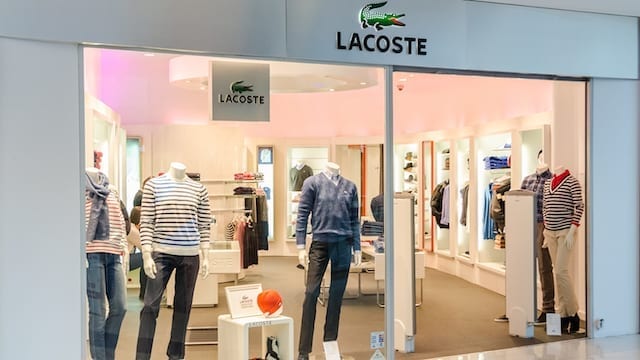
    Lacoste has opened a 1076sq ft store at Indira Gandhi International Airport Terminal 3, Delhi, India.

    The brand said the boutique aims to offer a premium shopping experience to both local and international travellers.

    Lacoste said it reinforces the consumer experience in travel retail through channel specific products and visual merchandising

    Lacoste has more than 170 travel retail boutiques worldwide. The company said it will continue to leverage the travel retail channel to strengthen or expand in new areas, develop new channels, such as e-commerce and cruise, and new ways of connecting with consumers before, during and after their trips.

  • DoCoMo wins Indian court case over TTSL exit

    DoCoMo wins Indian court case over TTSL exit

    India’s Delhi High Court has found in favor of Japan’s NTT DoCoMo and local holding company Tata Sons in their dispute with the Reserve Bank of India (RBI) over an international arbitration settlement.

    With the verdict DoCoMo will be entitled to collect the $1.18 billion award reached in a settlement agreement in the London Court of International Arbitration, associated with DoCoMo’s planned exit of the Tata DoCoMo Indian telecoms joint venture.

    When DoCoMo first entered the joint venture in 2008 via an investment in Tata Teleservices, it was with the condition that the operator would be entitled to sell its stake in the venture at a predetermined sum if it chose to leave the venture.

    DoCoMo attempted to exercise this option in 2014 after the joint venture failed to perform as desired, and when Tata Sons failed to find a buyer the holding company applied to the RBI to make the acquisition.

    But the RBI blocked the transaction on the grounds that it violates Indian regulations restricting the sale of shares at a price higher than market value.

    DoCoMo entered international arbitration with Tata Sons and Tata Teleservices in an attempt to break this deadlock, and the court awarded DoCoMo with $1.17 billion in damages.

    But the RBI objected to this transaction, and DoCoMo accordingly brought the case before the Delhi High Court. DoCoMo and Tata entered a settlement agreement in February, but the RBI once again sought to block the enforcement of this agreement on the grounds that it would be circumventing Indian regulations.

    Tata Sons was required to deposit the $1.18 billion with the court while the case was being held. The settlement can now be transferred to DoCoMo in exchange for the operator’s shares in Tata Teleservices..

  • Metro to open first store in Jinan

    Metro to open first store in Jinan

    European supermarket chain Metro plans to open its first store in Jinan, Shandong province in August 2017.

    Located in Jinan’s Huaiyin district, Metro’s new supermarket started construction on November 15, 2016. So far, its main steel structure has been completed and main ceiling installation is nearly completed. With an area of 7,900 square meters, this new store is expected to open in August 2017.

    Metro’s entry into Jinan will boost Jinan’s business community and its cash and carry business model will lift the grade and competitiveness of the service industry of the city.

    Metro entered Shandong province in 2001; however, the company only opened one store in Qingdao over the following ten years. After 2010, Metro accelerated its development in Shandong and opened stores in cities like Yantai, Zibo, Linyi, and Weifang.

    At the same time, Ikea‘s new store in this area of Jinan will also start operation in August 2017.

  • Ericsson, MTS test new 5G features

    Ericsson, MTS test new 5G features

    Ericsson have built a prototype 5G network and completed a successful test of new radio network features.

    The scope of the trial covered features such as massive and multi-user MIMO (multiple input multiple output), beam tracking and dynamic TDD (time division duplex), concepts and technologies that are available in Ericsson’s commercial portfolio, and included stationary and mobile test cases.

    The prototype system comprises a base station with integrated multiple antennas and two sets of user equipment, and is located in Moscow.

    The massive and multi-user MIMO features are based on hardware including up to 512 smart antennas with integrated transceivers per cell, which significantly improves throughput for subscribers.

    Also, the multi-user MIMO feature enables operators to serve multiple subscribers in one sector of a cell with the same spectrum, and thus increase the efficiency of frequency use and the cell capacity.

    “With a scalable and dynamic 5G network as a base, an array of new services and revenue streams will be available to operators,” said Hannes Ekstrom, head of customer unit MTS in Europe & Latin America. “It will enable the automation and business transformation required for the Internet of Things, as well as services like virtual and augmented reality.”

    Ericsson and MTS plan to further develop the 5G prototype system to an extended 5G demo zone in time for the 2018 international soccer competition in Russia.

  • India is among the world’s fastest growing chocolate markets

    India is among the world’s fastest growing chocolate markets

    While the global chocolate confectionery market posts slow growth, new research from global market intelligence agency Mintel reveals that India is defying the odds. Indeed, India is now one of the world’s fastest growing chocolate confectionery markets.

    Sales of chocolate confectionery in retail markets grew by 13% between 2015 and 2016 in India, followed by Poland which saw sales growth of 2%. In comparison to the rest of the world, Poland and India were the only two markets to see sales of chocolate grow in 2016, with sales in the United States (US), United Kingdom (UK), Germany and France flat over this period, while sales fell in Russia (-2%), Brazil (-6%), and China (-6%).

    Data from Mintel also reveals India’s chocolate confectionery market has had a strong CAGR (compound annual growth rate) of 19.9%, in retail market value, between 2011 and 2015, and is expected to grow at a CAGR of 20.6% from 2016 to 2020.

    When it comes to chocolate confectionery consumption (volume sales), it seems India is a nation of chocolate lovers, as Mintel research reveals that India consumed 228 thousand tonnes worth of chocolate in 2016. Other markets that have consumed in excess of 200,000 tonnes of chocolate last year include France (251 thousand tonnes), Brazil (236 thousand tonnes), and China (202 thousand tonnes). Meanwhile, Australia and Indonesia consumed 95 thousand tonnes and 94 thousand tonnes worth of chocolate in 2016 (respectively). The US and the UK, on the other hand, consumed 1.3 million tonnes and 555 thousand tonnes of chocolate (respectively).

    Marcia Mogelonsky, Director of Insight, Mintel Food and Drink, said: “Chocolate confectionery had an uneven year in 2016. Volume sales in developed markets remained flat, while the picture was a bit brighter in emerging markets, like India, where sales generally fared better.”

    Indeed, according to a consumer study by Mintel, 42% of Indian consumers have eaten sweet or sugary snacks (other than biscuits) like chocolates and cakes in the past three months, rising to 53% of consumers aged 18 to 24. On the benefits of chocolates, Mintel research reveals over two in five Indian consumers (44%) find sweet or sugary snacks like chocolates and cakes to be healthy, while over one in three (35%) Indians believe these snacks provide them with energy.

    Meanwhile, as many as one in two (49%) Indian consumers associate sweet or sugary snacks like chocolates with convenience. Data from Mintel also reveals 43% of Indians consume sweet or sugary snacks like chocolate and cake between lunch and dinner, with over half (53%) of Indian consumers reporting that they tend to snack in between meals because they get hungry.

    “Our research shows that seasonal chocolate tops all chocolate new product development, a testament to the popularity of seasonal treats among consumers across the globe. This reflects the fact that these products are typically bought to help celebrate holidays or special occasions. With this in mind, seasonal chocolate is somewhat immune to recessionary pressures as these products are bought on an occasional basis.”

    Proving chocolate lovers have a heart, interest in ethical products remains relatively strong, with 17% of new products claiming some sort of “ethical-human” positioning, which could include fair trade, Rainforest Alliance, or some other independent “bean-to-bar” certification. Although still a small part of the category, accounting for less than 6% of global new product introductions in 2016, launches of chocolate confectionery with an organic claim increased 6% between 2014 and 2016.

    Finally, Mintel research shows that consumer demand is likely to be the major impetus for more conversion to organic offerings. In India, as many as 19% of Indian consumers would like to see a wider variety of natural snacks that have no additives or preservatives, for instance.

  • Luxury spenders defy Japan’s tight-fisted reputation

    Luxury spenders defy Japan’s tight-fisted reputation

    Tight-fisted shoppers, unsteady economic growth and a shrinking population: Japan doesn’t exactly fit the image of a spending powerhouse these days.

    But you would never know it in Ginza — Tokyo’s answer to the Champs-Elysees or Fifth Avenue — where a new 13-storey upscale mall is proving that Japan is still a whale in the luxury business. The country logs some $22.7 billion in annual spending on top-end goods made by brands including Chanel, Dior, and Prada, ranking it as the world’s number two luxury market behind the United States.

    “Luxury products may be more expensive, but they are very well-made,” said 79-year-old Toshiko Obu, carrying her longtime Fendi bag outside the Ginza Six building, which has been drawing big crowds since last week’s opening.

    Japan is renowned among the world’s priciest retailers for its discriminating clientele — Chanel tries to keep local customers physically separated from tourists packing more cash than class.

    “You shouldn’t forget that a big portion of the luxury clientele is here in Japan,” Sidney Toledano, chairman and CEO of Christian Dior Couture, told at the opening of the 241-store building.

    “It remains a strategic market for luxury and, I’d say, true luxury.”

    – ‘Biting their fingernails’ –

    Dior is counting on Japan’s luxury market to rise this year, while rival Chanel is also expecting an upbeat 2017, after global sales of personal luxury goods barely grew last year.

    “We did not lose our character,” said Richard Collasse, head of Chanel in Japan. “There are brands that are suffering — the ones that at some stage stopped investing in Japan because China was the new El Dorado. And today they are biting their fingernails.”

    Few brands predicted that deep-pocketed Chinese shoppers visiting Japan would support its luxury market — tourists account for about one-third of top-end spending.

    Japan is hoping to land 40 million visitors in 2020, the year that Tokyo hosts the Olympics. Last year, some six million Chinese visited, compared with 2.4 million in 2014.

    “Historically, (Japan has) been a very insular luxury market where 90 to 95 percent of the spending was by locals,” said Joëlle de Montgolfier, Paris-based director of consumer and luxury product research at consultancy Bain & Company.

    But now some 30 percent of sales are generated by foreign visitors owing to tourism, she added. A stronger yen dented visitors’ purchasing power last year, with luxury sales down one percent, after a 9.0 percent rise in 2015.

    Dior’s Toledano said it is an opportunity to refocus on Japanese clientele. “We don’t ignore tourists, of course, but we’re not a duty-free shop,” he added.

    – ‘Touching everything’ –

    Some other Chanel shops in Tokyo have a separate cosmetics and perfume section reserved for top Japanese customers, in a bid to keep them away from the nouveau riche crowd.

    It also tips off local clientele about the expected arrival time of tourist buses so they can avoid them.

    “The loyal Japanese clients tend to run away from customers who were not very well raised and are wearing whatever or lying all over the sofa, touching everything,” said Chanel’s Collasse.

    Dior’s haute couture show at the new mall’s opening featured Japanese-inspired dresses, underscoring a focus on the local market. But warning signs lurk behind smiling clerks and glitzy interiors at the new property on one of the world’s priciest shopping streets.

    Japan has struggled to reverse a decades-long economic slump while a falling population continues to shrink its labour force — and the pool of future luxury consumers.

    Younger people, many on tenuous work contracts, don’t have the money or the same interest in luxury brands anymore, especially since top-end goods can now be rented online instead, said Naoko Kuga, a consumer lifestyle analyst at Tokyo’s NLI Research Institute.

    “When you look at consumer purchasing behaviour, younger people put less value on luxury brand products” than previous generations, she said.

  • IoT fleet management market worth US$8.28bn by 2021

    IoT fleet management market worth US$8.28bn by 2021

    The global IoT fleet management market is estimated to grow from US$3.16 billion in 2016 to US$8.28 billion by 2021, at a CAGR of 21.26% during the forecast period. According to a report published by MarkesandMarkets, the key factors driving the growth of the market are increased demand for optimised business operations, real-time fleet monitoring, and growing number of government mandates for fleet safety.

    Routing management
    Routing management accounted for the largest share of the IoT fleet management market, by solutions. The growth of this segment can be attributed to rising global road freight traffic and constant R&D activities to develop innovative products.

    According to the Road Freight Transport Statistics of European Commission (EC), the road freight transport of European countries increased by 2.2% in 2015, as compared to 2014, and was the highest in the last five years. Also, the continuous R&D activities by fleet solution providers to develop advanced products help the fleet companies to provide the shortest and less crowded route to fleet vehicles to avoid unnecessary overtime cost.

    Managed services
    The managed services segment is expected to dominate the IoT fleet management market, by services, from 2016 to 2021. Managed services not only offer flexibility but also allow multiple function handling efficiently and, hence, reduce the overall operational cost. These also help to provide the desired operation as per the client’s specific needs, resulting in enhanced customer satisfaction. Further, these services allow work allocation as per the expertise and centralisation of various applications with the data center. The increasing role of IoT in fleet management along with the integration of IoT is resulting in the increased usage of these services. The difficulty for companies to focus on other support functions other than their core business processes has also increased the significance of managed services.

    The Americas region is expected to hold the largest share in the IoT fleet management market. The growth of the market in this region can be attributed to increasing sales of fleet vehicles, high adoption rate of advanced technological products, and regulatory developments by the government. For instance, according to the U.S. Bureau of Transportation Statistics, the number of fleet vehicles includes vans, SUVs, and trucks had increased from 11,550 thousand units in 2010 to 12,276 thousand units in 2015. The increasing number of fleet vehicles propels the demand for IoT fleet management solutions. Also, some of the Original Equipment Manufacturers (OEM) in this region such as Volvo Trucks and Daimler Trucks North America, LLC started offering telematics solutions either independently or in partnership with fleet solution providers. Further, in 2015, Daimler Trucks had successfully completed the testing of truck platooning concept. Also, the U.S. government regulations of Electronic Logging Devices (ELD) mandate makes fleet management solutions a necessary tool for commercial trucks.

  • Singapore leads region by online video consumption

    Singapore leads region by online video consumption

    Singaporeans lead the region in online video consumption, spending two hours every day tuning into video content, according to the results from a new YouTube Consumer Insights study conducted by Google Singapore and Kantar TNS.

    The survey of 1,035 Singaporeans aged 16 to 60 found that 78% of Singaporeans are turning to YouTube as their first stop for their daily dose of video. And perhaps not surprisingly, 6 in 10 agree that they visit YouTube for one video and end up looking at others.

    The study also found that Singaporeans are watching videos away from a desktop, with more than half of YouTube watch-time originating from mobile devices. Moreover, more than half are finding more content that they want to watch on YouTube than on TV, according to the study.

    Google pointed to recent research that it conducted with Ipsos that found attention to paid advertising on YouTube is 84% higher than advertising on TV. In addition, 95% of video ads on YouTube are also played with sound on, ensuring brands’ messages reach their audiences as intended.

    There is no question that the popularity of online video is at an all-time high; Google says that the hours of YouTube content uploads from Singapore has doubled compared to the previous year.

    “YouTube is popular with Singaporeans of all ages – who come to YouTube for entertainment, education, shopping and much more. With Singaporeans using YouTube to search for products, businesses looking to grow should use YouTube to tell their story and build their brands,” said Joanna Flint, country director of Google Singapore.