Blog

  • Vietjet offers millions of promotional tickets for “Free Summer, Fly for FREE”

    Vietjet offers millions of promotional tickets for “Free Summer, Fly for FREE”

    To celebrate the coming summer, Vietjet launches its most outstanding campaign ever – “Free summer, Fly for FREE” from April 25 to June 15, 2017, offering one million promotional tickets priced from only HKD0 within the golden hours 13:00 – 15:00 at www.vietjetair.com together with some very interesting activities.

    During the campaign’s first week, Vietjet will run a three-golden-day promotion from April 25 to 27, 2017. This applies for all Vietnam domestic and international routes from Vietnam to Hong Kong, Seoul and Busan (South Korea), Kaohsiung, Taipei, Taichung and Tainan (Taiwan), Singapore, Bangkok (Thailand), Kuala Lumpur (Malaysia), Yangon (Myanmar) and Siem Reap (Cambodia) with travel period between May 15, 2017 and December 31, 2017 (excluding national holidays).

    The promotional tickets are available for booking within the golden hours from 13:00 to 15:00 at www.vietjetair.com or at www.facebook.com/vietjethongkong (just click the “Booking” tab). Payment can be easily made with debit and credit cards of Visa, MasterCard, JCB, KCP and American Express.

    Especially from May 8, 2017 to June 4, 2017, participants of the “Free Summer – Fly for FREE” game at Vietjet’s microsite: freesummer.vietjetair.com will have the chances of winning a weekly award of 5 free return flights, each flight with 5 free tickets for a five-person group and a grand award of a free package tour to an optional destination.

    Also, all customers successfully booking tickets at www.vietjetair.com with instant payment within the golden hours (13:00-15:00) from May 8, 2017 to June 15, 2017 will also have the chances to join the lucky draw for the gifts of mobile phone top-up cards and air ticket promotion codes (*) at www.summerwin.vietjetair.com. Besides, the summer campaign will feature a series of activities including interactive games, amazing performances by Vietnamese and international celebrities, “Vietjet Bikini” challenge at some domestic airports and onboard Vietjet flights, which are expected to “heat up” the coming summer.

  • Apple self-driving car testing plan gives clues to tech program

    Apple self-driving car testing plan gives clues to tech program

    Apple Inc outlined a plan to train operators of self-driving cars in documents submitted to California regulators earlier this month, the latest clues to the company’s autonomous vehicle technology aspirations.

    Apple was granted a permit to test self-driving cars on April 14 by the California Department of Motor Vehicles but the company has never said anything about its plan.

    The state released 41 pages of Apple application documents to Reuters that give some clues about the company’s highly secret self-driving effort, which it has never openly acknowledged.

    The iPhone maker joins a long list of carmakers, start-ups and technology rivals, including Alphabet’s Waymo, that are testing cars on state roads. Apple is looking for new hit products and autonomous car technology is expected to revolutionize the traditional auto industry.

    As part of the application, Apple included a 10-page training plan that appeared to be related to operators taking back manual control of the car during automated driving exercises of the system, which it calls a development platform.

    Apple declined comment beyond the filing.

    The plan includes a document called “Automated System: Development Platform Specific Training Overview” whose objective is “to train safety drivers in various automated driving conditions.”

    “Development platform will be controlled electronically (e.g. joystick) and safety drivers must be ready to intervene and take control,” the document reads.

    The document highlights different scenarios to be tested, from high speed driving and tight U-turns to lane changes.

    One letter sent from Apple to the state Department of Motor Vehicles noted that Apple’s development platform “will have the ability to capture and store relevant data before a collision occurs.”

    The document does not include detail on how Apple’s self-driving platform actually works or other technical details. It also does not say what kind of sensors are found on Apple’s three permitted vehicles, all 2015 Lexus model RX450h.

    The permit does not necessarily mean that Apple itself is building a full car. Apple could instead be designing a self-driving platform that can be integrated into other manufacturer’s cars.

  • Delhi leads India by internet readiness

    Delhi leads India by internet readiness

    The state of Delhi leads India in internet readiness, according to a new report from the Internet and Mobile Association of India (IAMAI) and Nielsen.

    In the report titled Index of internet readiness of Indian states, Delhi has overtaken last year’s winner Maharashtra and is followed by Karnataka, Maharashtra, Kerala and Tamil Nadu.

    According to the report, Delhi has won top spot because of its superior infrastructure and online participation.

    Releasing the report, Aruna Sundararajan, Secretary, Ministry of Electronics & Information Technology (MeiTy), Government of India said: “We are hopeful that India will leapfrog from the present 155th position to world’s top fifth in connectivity, within the next 5-6 years. India today is one of the most rapidly digitizing economies in the world with the telecom industry leading the change. Things have improved multifold with state governments of Chattisgarh, Andhra Pradesh and Telangana among others taking proactive steps to improve connectivity and internet reach.”

    “The combination of various indigenous digital platforms along with innovative and disruptive startups holds the greatest scope for digital transformation in India. Post demonetization, the country today has 3 million POS as compared to 1.5 lakhs POS earlier which is clearly a transformation and going forward, the infrastructure for digital payments will grow 3X within a span of one year,” she added.

    The North East has ranked low in terms of overall internet readiness. Much more needs to be done in the form of investment and infrastructure development in the region. Among the north eastern states, Nagaland tops the list, closely followed by Manipur and Tripura. Nagaland leads in IT environment and performs moderately well in other categories to get to the top.

    Internet readiness index is a composite benchmark of four components: e-Infrastructure index, e-Participation index, IT-Environment and government e-services index. All four components have equal weightage in this model. Separately, a fifth Index (named the Core Internet Index) has been created this year, consisting of select variables already used in constructing the above indices.

    The purpose of the index is to give a sharper perspective for digital industries looking to expand their business in India.

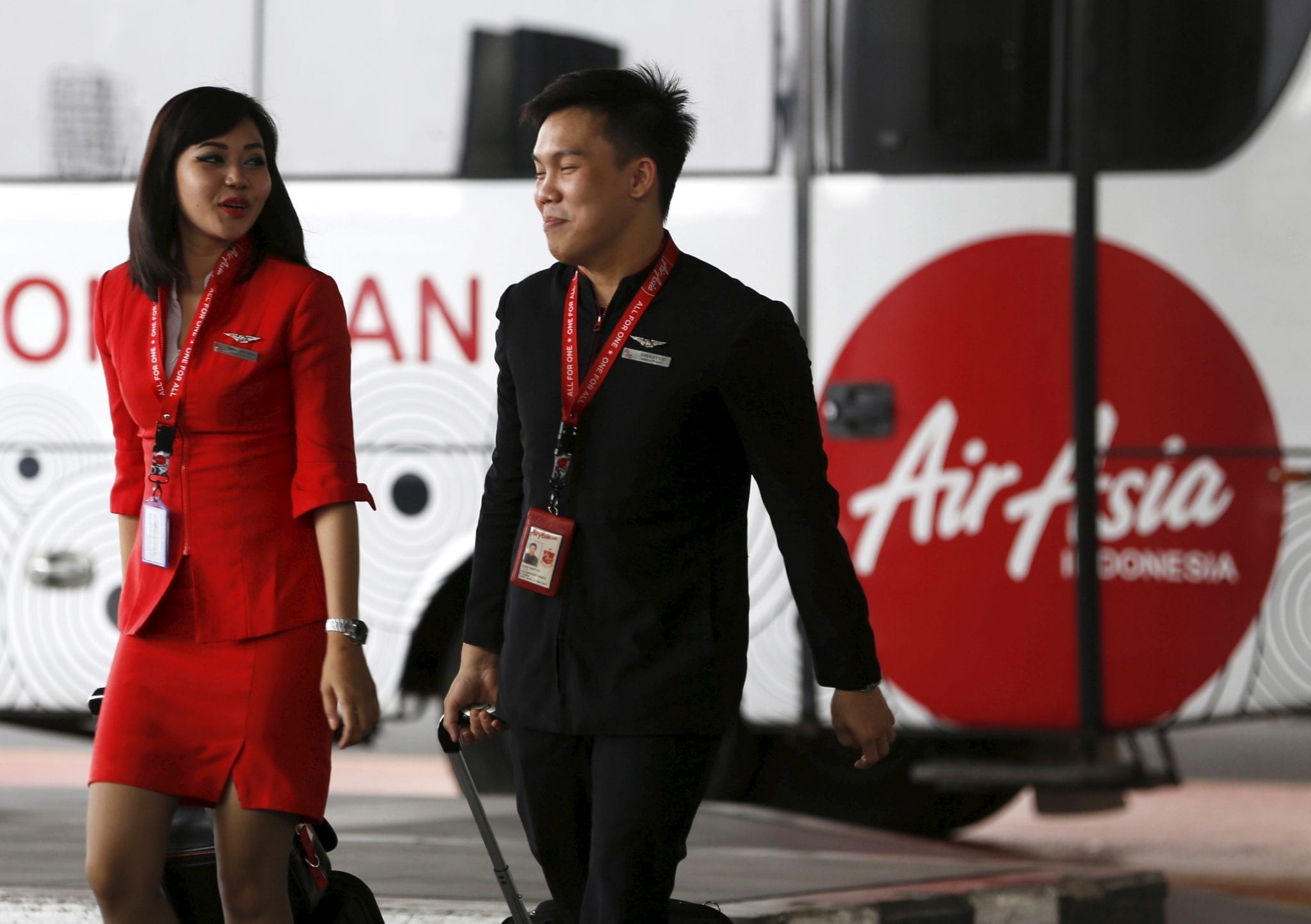
  • Air Asia: Cebu is a priority

    Air Asia: Cebu is a priority

    TO aid in the decongestion of the Manila airport, an airline executive disclosed that Cebu will be his company’s priority as it expands its fleet and increases the number of flights to various domestic and international destinations. “Cebu is a priority of AirAsia…We are looking at expanding our routes in Cebu,” said Philippines AirAsia director of flight operations captain Gomer Monreal in a press conference last Saturday.

    The airline company launched on Saturday new routes connecting Cebu to three domestic destinations, namely Davao, Boracay via Caticlan airport, and Puerto Princesa. AirAsia has added two new daily flights from Cebu to Davao, and to Puerto Princesa and Caticlan. This is on top of its existing routes Cebu-Singapore, Cebu-Taipei, Cebu-Kuala Lumpur, and Cebu-Incheon/Seoul. Aside from Cebu, AirAsia has also expanded its Davao routes to Cebu twice daily, added daily flights to Boracay, three times weekly to Palawan, and four times weekly to Clark.

    “The plans are on the table but these are variable. We already have a hub here. All we have to do is expand the frequency,” said Monreal. With AirAsia’s interest for expansion in Cebu, GMR-Megawide Cebu Airport Corp. (GMCAC) chief commercial adviser Ravishankar Saravu said this will make Cebu a more popular destination. “With more Cebu routes, this will reduce the congestion in Manila. (In Cebu airport) we are trying to improve the transfer of domestic and international flights,” said Saravu. Presently, MCIA is connected to 27 domestic destinations and 16 international destinations.

  • IMDA warns StarHub over October outages

    IMDA warns StarHub over October outages

    Singapore’s Infocomm Media Development Authority (IMDA) has issued StarHub a warning over two brief home broadband outages from October last year, after finding that the disruptions were caused by a surge in legitimate DNS traffic.

    StarHub Online’s home broadband network was disrupted on October 22 and October 24, causing fiber customers in parts of the market to lose connectivity intermittently for around 130 minutes and 55 minutes respectively.

    The initial symptoms of the outage bore the hallmarks of a DDoS attack, and the timing coincided with the massive DDoS attacks on DNS provider Dyn in the US.

    But IMDA said an in-depth investigation involving reviewing logs of StarHub DNS servers and consumer devices identified as responsible for the disruptions did not uncover any evidence to suggest that the cause was a DDoS attack.

    Instead, a higher-than-usual build-up in StarHub DNS traffic just prior to the disruption appears to be to blame, as these mostly legitimate DNS requests eventually overloaded part of StarHub’s home broadband infrastructure.

    IMDA and the Cyber Security Agency of Singapore (CSA) identified areas of improvement in StarHub’s network infrastructure during the investigations, and said StarHub has taken steps to mitigate the risks of further outages, including boosting home broadband DNS server capacity and enhancing traffic monitoring.

    In an emailed statement, StarHub said it noted the findings that the outages did not fit typical DDoS patterns.

    “The authorities have acknowledged the fact that we have increased our DNS processing capacity and taken additional security measures to better avert similar incidents,” the statement reads.

    “We assure our customers and the regulator that we will continuously review our security posture and enhance network resilience in partnership with network and security providers.”

  • Budget airliner cuts fares to Rs 1,099 in new summer scheme

    Budget airliner cuts fares to Rs 1,099 in new summer scheme

    AirAsia offer: Summer holidays are here and airlines are looking to lure with their low-fare schemes. Budget airliner AirAsia India has slashed ticket prices for travelers on flights to Bengaluru, Chandigarh, Goa, Hyderabad, Jaipur, Pune and Visakhapatnam, to as low as Rs 1,099 in its summer scheme. However, the offer is available for the limited period and fares are not available during the embargo period. The offers are available for the period between September 5, 2017 to February 8, 2018. Bookings will stop on April 30.

    The fares for New Delhi-Srinagar and New Delhi-Bagodogra routes have been reduced to a starting Rs 1,699 and Rs 2, 499 respectively. Similarly, the airliner has reduced fares from Bengaluru to Kochi and to Rs 1,299. The ticket prices from Bengaluru to Pune and Visakhapatnam will start at Rs 1,499. It has also kept fares from Bengaluru to New Delhi at Rs 2,999 during the given period.

    The airliner has slashed fares of its international flights too. If a passenger plans to take a flight from Bengaluru to Kuala Lumpur, then he has to pay a fare starting from Rs 2,399. For connecting flights from Bengaluru to Kuala Lumpur and from there to Jakarta, the fare is starting from Rs 4,352.

    Similarly, air fares of connecting flights from Kolkata to Bangkok, and then to Phuket will start from Rs 5,949 during the given period. Air tickets for flights connecting Kolkata to Bangkok and after that to Singapore are starting from as low as Rs 6,061.

    During the period, fares of AirAsia flights departing from Chennai to Singapore via Kuala Lumpur will start from Rs 7,137. For those passengers who are planning to go to Yangon from Chennai during the period, airfares will begin from Rs 7,371. They will have to change from Kuala Lumpur.

  • M1 shareholders may seek sale to China Mobile

    M1 shareholders may seek sale to China Mobile

    Major shareholders in Singapore’s M1 have reportedly approached China Mobile with an offer to sell their majority stake in the operator.

    Malaysia’s Axiata Group, Singapore Press Holdings and Keppel T&T – which together hold a controlling 61% stake in M1 – are reviewing their investments in the operator in the wake of lackluster financial results and intensifying competition.

    The shareholders have now reached to China Mobile as well as other prospective bidders with a proposal to sell the stake, citing unnamed sources.

    Negotiations are still at an early stage and it is unclear whether China Mobile was receptive to the offer, the report notes.

    M1 is worth around S$1.9 billion ($1.36 billion), and has long been considered an acquisition target due to its smaller size and diverse shareholder base. Rumors were circulating last month that rival StarHub may be considering acquiring or merging with M1, but later reports disputed those rumors.

    The report adds that Singapore trading rules would require the purchaser of the stake to make an offer to buy out the rest of M1.

    The review comes ahead of the arrival to the market of new entrant TPG Telecom, the Australian fixed line operator that recently won the auction to become Singapore’s fourth mobile operator. TPG is also planning a mobile foray in its home market.

  • PT Telkom launches TV-based video calling

    PT Telkom launches TV-based video calling

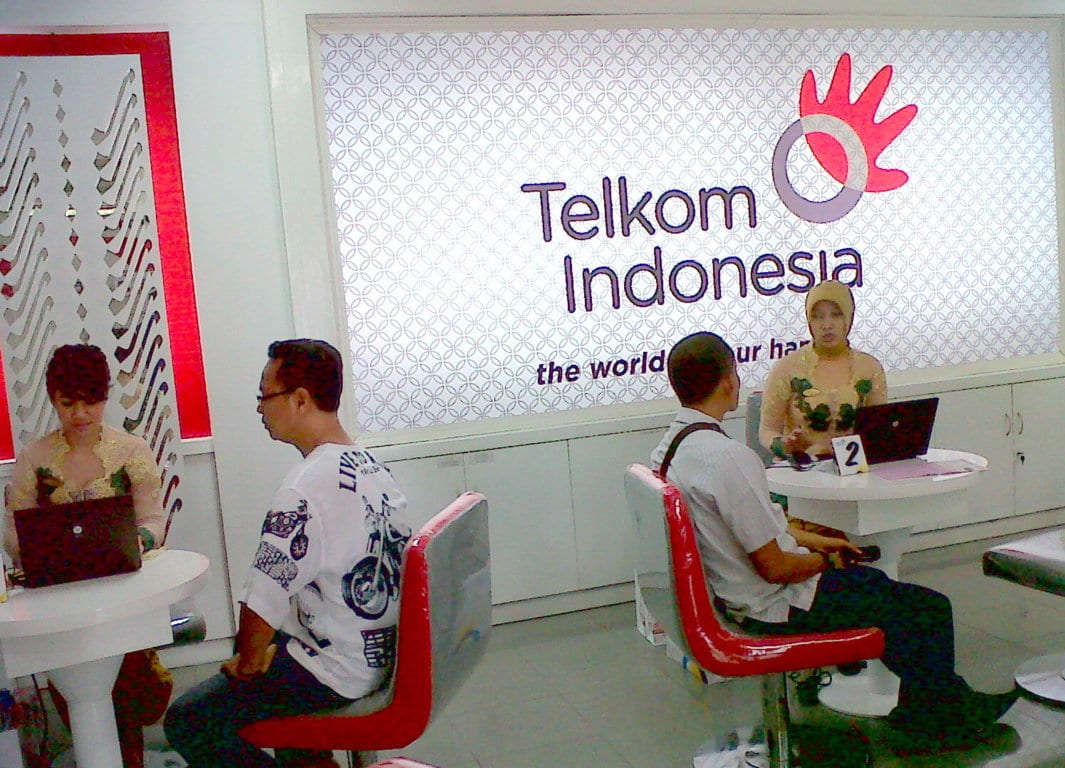
    Indonesia’s PT Telkom has soft-launched the market’s first TV-based video communications service, in collaboration with Huawei.

    The IndiHome Video Call service will allow subscribers to PT Telkom’s triple-play IndiHome fiber broadband, telephony and TV service to also use their TV to place video calls.

    The service combines IPTV and IMS functionality, incorporating a set-top box with integrated video communication capabilities and a webcam to support video communication between TV and TV, TV and smartphone as well as smartphone and smartphone.

    IndiHome Video Call supports high-definition video with a resolution up to 720p as well as HD voice.

    PT Telkom plans to launch the service commercially in the East Java, Bali and Nusa Tenggara area by the middle of next month.

    “With the soft launching of IndiHome Video Call, we hope that the presence of IndiHome may be useful to the community of East Java, Bali, and Nusa Tenggara,” PT Telkom’s district executive vice president for the region Suparwiyanto said.

    “IndiHome is easy and practical, a complete digital solution as well as a positive entertainment.”

  • Furla to buy back Australian distribution from Luxury Retail Group

    Furla to buy back Australian distribution from Luxury Retail Group

    Furla Group announced the buyback of the Australian distribution network from its distributor, Luxury Retail Group (LRG). Furla opened the first boutique in Westfield Sydney in December 2013, and now has 15 stores in Melbourne, Sydney, Brisbane and Gold Coast.

    Furla acquires 100% of the distribution network, reaffirming the brand’s vision of further strengthening its presence in Australia and New Zealand. This year, Furla plans to open 5 more stores in Australia and New Zealand, beside enlarging the existing Westfield Sydney boutique: by the end of 2017, the network will be made up of 20 Furla stores.

    “Australian market is very important for Furla and crucial in our expansion plan. Since 2013, Luxury Retail Group has been the best key partner to work with as it perfectly embodies the Furla vision, values and DNA: this is the reason why the two LRG directors will remain as board members of Furla Australia” said Alberto Camerlengo, Furla Group CEO, “We expect that in 2017 Australian business will represent the 5% of the global revenues, we are very proud to announce this acquisition. We aim to enhance the distribution in this Country given the success of the Furla retail strategy and the very positive response of Australian customers”.

    “We believe the timing makes sense for Furla to reacquire its distribution.” Nelson Mair, Managing Director of LRG also added, “After having achieved 95% sales growth in 2016, this vertical integration of Furla Australia will better equip the business for the next phase of its growth. I am extremely proud of my team and what they have been able to achieve in such a short space of time and thankful to Furla for trusting their wonderful brand to us”.

    Furla has a direct presence in 100 countries; with 444 monobrand stores that are split evenly between directly-owned boutiques and franchises. The Company also has distribution in multibrand and department stores in 1,200 international locations.

  • Vietnam in gradual shift to exporting more roast and ground coffee

    Vietnam in gradual shift to exporting more roast and ground coffee

    A decade ago most of the country’s coffee exports were semi-processed beans. The TNI King Coffee Factory that recently opened in Vietnam’s southern province of Binh Duong is the latest player to join the race to ship more finished coffee products from the world’s second-biggest producer.

    With an investment of $15 million, the factory aims to produce 9,000 tons of roast and ground coffee and nearly 20,000 tons of instant coffee annually for export, according to Le Hoang Diep Thao, director of TNI Corporation and the co-founder of Trung Nguyen Coffee. She has also helped build five plants for Trung Nguyen, one of Vietnam’s biggest coffee makers.

    TNI Corporation, which has recently gained a foothold in China’s online market for instant coffee and plans to start distribution through a supermarket chain there, did not give the size of its annual green bean demand for the new factory.

    But to reach the targeted annual output, the Binh Duong-based facility will need at least 13,000 tons of green beans for roast and ground coffee and another 50,000 tons for the instant variety, according to a Vietnamese coffee expert at a European firm based in Ho Chi Minh City.

    TNI’s factory will have to compete with 200 plants already in operation or which will be going into operation this year and the next, before the government puts a stop to new coffee processing plants in 2020 to ensure quality.

    In December 2016, India’s Tata Coffee said it will set up a freeze dried coffee plant in Vietnam to expand its market. In mid-January 2017, Tin Nghia Coffee Co began construction of a $28 million instant coffee plant in the southern province of Dong Nai, which is slated to open in early 2018.

    Demand for raw materials from the new plants will eat into exportable green bean stocks in Vietnam, the world’s largest exporter of semi-processed robusta beans, which has seen a smaller harvest this season due to adverse weather.

    “Demand is rising about 10 percent a year, and with a higher ratio of bad-quality beans from the last harvest due to bad weather, Vietnam may face shortages in the third quarter,” said the expert, who declined to be identified by name, referring to the three-month period starting this July.

    Top exporter Intimex expects the supply crunch to emerge in May or June, citing Vietnam’s fast export pace in the first months of 2017.

    Smaller harvest

    Vietnam’s 2016/2017 output has dropped 8 percent to an estimated 26.7 million bags (1.6 million tons) due to high temperatures and dry conditions brought by El Nino, the U.S. Department of Agriculture (USDA) said in its December 2016 report. One bag contains 60 kilograms of beans.

    Green coffee bean shipments are forecast to drop 13 percent from the previous 2015/2016 season to 23.5 million bags due to smaller output and more beans being used for domestic consumption or processed for export, the USDA said in its latest report.

    As such, green beans accounted for 90 percent of Vietnam’s total export volume, while roast and ground beans and instant coffee – or finished products – made up the rest. Vietnam’s crop year lasts from October through September.

    The forecasts mark a slow change to the country’s coffee export structure. Five years ago, finished products made up only 2 percent of Vietnam’s coffee shipments, the government said.

    Exports of roast and ground beans in the current 2016/2017 season are projected at 550,000 bags, unchanged from 2015/2016, but above the 457,000 bags shipped in the 2014/2015 season, based on the USDA report. The forecast volume represents 2 percent of Vietnam’s total projected shipments.

    The USDA also forecasts instant coffee exports to remain steady at 2 million bags, which shows a surge of 56 percent from the 2014/2015 season, while it said domestic consumption of roast and ground coffee would rise nearly 10 percent from the previous season to 2.5 million bags.

    Consumption of green beans in Vietnam is estimated at 2.87 million bags, up 9 percent from a year earlier, the USDA said.

    Vietnam does not publish breakdowns for its coffee exports.

    The Vietnamese government has plans to raise the output of roast, ground coffee and instant coffee to 25 percent of total output by 2020, while the output of instant coffee alone will increase to 5.83 million bags by 2030 from the 255,000 tons targeted for 2020.


  • New BMW M4 CS revealed

    New BMW M4 CS revealed

    High-performance coupe gets more power to level the 0-100kph time with the two-door Audi RS5 and Mercedes-AMG C63 S. Thanks to an improving competition, BMW has made a fourth version of the M4 called CS (Club Sport) following the regular model, Competition Package and GTS.

    As seen in these first official pictures, the M4 CS highlights some sporty details like front splitter and rear spoiler made from carbonfibre. Inside, there’s a steering wheel clad with Alcantara and the handles on the slimmed-down door panels have been replaced with loops.

    BMW has tweaked the 3.0-litre twin-turbo inline-six engine to 460hp and 600Nm for the M4 CS. That’s 10hp and 50Nm more than in the M4 Competition Package.

    As a result, the M4 CS goes from 0-100kph in 3.9sec – a tenth of a second quicker than the M4 Competition Package. And because the M4 CS comes with the M Driver’s pack as standard, the electronically limited top speed has been raised from 250kph to 280kph.

    Speaking of the acceleration time, the M4 CS is now level with Audi’s latest RS5 Coupe and Mercedes-AMG C63 S Coupe.

    The M4 GTS is faster with a 3.8sec time. However, BMW’s intention with the M4 CS is to create a go-faster model suited for public roads; the M4 GTS has been developed with the race track in mind.

    That’s one reason why the M4 CS still has rear seats and omits the roll-cage fitted in the two-seat M4 GTS. BMW says the M4 CS’s 7min 38sec lap time around the Nurburgring falls in between the M4 Competition Package and M4 GTS.

    According to BMW, the exhaust sound in the M4 CS can be adjusted by a mode selector. As well, drifts can be made easier in the M4 CS thanks to the M Dynamic diff being modified to allow greater wheel slip.

    Standard in the M4 CS is seven-speed dual-clutch automatic with paddle-shift, M adaptive suspension and Michelin Pilot Sport Cup 2 tyres. Carbon-ceramic brakes, however, are optional.

    The M4 CS will only be built in limited numbers and is expected to command a slight premium over the lesser M4s at just over 10 million baht.

  • SATS unveils a brand new US$21mn eCommerce AirHub

    SATS unveils a brand new US$21mn eCommerce AirHub

    SATS, a provider of Gateway Services and Food Solutions, unveiled its new eCommerce AirHub, at a ceremony officiated by S Iswaran, Minister for Trade and Industry (Industry).

    The $21 million facility, co-funded by the Civil Aviation Authority of Singapore (CAAS), enhances Changi’s eCommerce mail sorting capability to support the growing eCommerce market. This new 6,000 sqm facility also features new innovations that will improve productivity and enable airport workers to acquire new skills.

    By deploying state-of-the-art technology, SATS has multiplied mailbag processing capacity by more than three times and streamlined the mail sortation process to deliver quicker turnaround for international eCommerce mail. Processing time is now reduced by 50 per cent. At the same time, automation has provided opportunity for employee upskilling. SATS is currently the only ground handler in the region to operate such an automated airside facility.

    Alex Hungate, president and CEO of SATS said, “eCommerce is expected to continue on its growth trajectory in the region and beyond with continued strong consumer demand. The SATS eCommerce AirHub enhances the competitiveness of the whole airfreight industry in Singapore by offering greater speed and transparency, as well as higher capacity to handle future growth.”

    Kevin Shum, director-general of CAAS, said, “CAAS is pleased to support the establishment of the eCommerce AirHub under the Aviation Development Fund. We are delighted that this initiative has enabled SATS staff to benefit from an enlarged job scope, higher pay, and a more comfortable and conducive workplace. Such collaborations are part of our efforts to transform Singapore Aviation, make the  2 sector more efficient and competitive, create better jobs and improve productivity using technology.”

    Tapping on technology for greater efficiency
    At the official opening of the SATS eCommerce AirHub this afternoon, the company unveiled several new innovations. These include a fully automated mail sortation system that increases the mailbag processing capacity of SATS to more than 1,800 an hour – up from 500 previously.

    Additionally, due to interface integration with SingPost’s airmail consignment operations and the facility’s locality within the free trade zone on the airside, mail sortation operation is streamlined to eliminate the need for mailbags to be transported to and from the hub.

    The combination of these factors has enabled faster mailbag processing that reduces turnaround time by 50 percent – from six hours to three – thus allowing international eCommerce mail to connect to an earlier flight for faster delivery.

    Traceability is also improved at the SATS eCommerce AirHub, as customers, such as SingPost, can now better track and trace their mail via the data interface, for example checking connection status by confirming arrival and departure times.

    Woo Keng Leong, chief executive officer, Postal Services, SingPost, said: “The improved efficiency and tracking from our collaboration with SATS will enhance SingPost’s international mail operations amid Singapore’s growing importance as an eCommerce logistics hub.”

    As well as improving service, SATS eCommerce AirHub will also be more productive: airmail consignment operations are targeted to be at least 30 per cent more efficient with full automation.

  • Startup community lends a hand to women entrepreneurs in Vietnam

    Startup community lends a hand to women entrepreneurs in Vietnam

    Woomentum will launch its first event in Ho Chi Minh City to connect women-founded startups and investors.

    Woomentum, a Singapore-based startup community and crowdfunding platform, will launch its first event in Vietnam this month to support female entrepreneurs and their startups, by connecting them with investors and consultants.

    “CrowdFundHer Live!” will take place from 6:30 p.m. to 10:30 p.m. on April 25 at Dreamplex 2, 195 Dien Bien Phu Street in Ho Chi Minh City’s Binh Thanh District.

    The fourth CrowFundHer Live! event held in Singapore in June last year. Photo courtesy of Woomentum

    The fourth “CrowFundHer Live!” event held in Singapore in June last year.

    Six women-founded startups chosen for the event operate in different sectors including education, Internet of things, lifestyle, hi-tech agriculture and fintech. This is a chance for them to showcase their work and vision to investors, seek funding and see how experts respond to their products.

    Each of them will have eight minutes to present their projects and convince investors to back them. Woomentum will also facilitate discussions between the startups and interested investors.

    Guests include Adrian Tan, director of Vietnam Innovative Startup Accelerator (VIISA), Ngo Thuy Ngoc Tu, co-founder of YOLA Language Center, Nguyen Ngoc Dung, Vice President of the Vietnam E-commerce Association (VECOM), Violet Lim, CEO of Lunch Actually, and Michael Blakey, managing partner of Cocoon Capital, a renowned investor in UK.

    Woomentum had organized four “CrowdFundHer Live” events in Singapore with support from Bloomberg, Google, the Hub Singapore and other organizations.

    Thanks to such events, which drew 600 attendants, 23 tech startups have received S$200,000 ($143,200).

    For the upcoming event in Vietnam, Woomentum will work with the Vietnam E-commerce Association, Startup Vietnam Foundation, Mat Bao Corporation, Baker McKenzie, Citylinks, VnExpress, among others.

    Startups with Mouna Aouri (sitting), CEO of Woomentum. Photo courtesy of Woomentum

    Startups with Mouna Aouri (sitting), CEO of Woomentum.

    Founder Mouna Aouri said Woomentum will make its official debut in Vietnam this summer, offering opportunities for startups with female founders to approach new knowledge, access capital and receive valuable feedback to create better products. The April event will also allow members of the startup community to share their ideas.

    She said Woomentum wants to work as a bridge to link Vietnamese startups with investors, entrepreneurs and consultants in Southeast Asia and more importantly, to connect male and female entrepreneurs.

    Women are the emerging power of the economy in Asia, she said, adding that once they get access to technology and a good environment, female entrepreneurs will become an undeniable force.

      Program  
      6:30 p.m.

    7:00 p.m.

    7:30 p.m.

    9:30 p.m.

    9:30-10:30 p.m.

     Opening

     Exchange of startups, investors and Vietnamese entrepreneurs

     Fundraising

     Presentation of startups and results

     Entertainment

    Click here for tickets.

  • Global vendor revenue from cloud hits $32.6b in 2016

    Global vendor revenue from cloud hits $32.6b in 2016

    Vendor revenue from sales of infrastructure products (server, storage, and Ethernet switch) for cloud IT, including public and private cloud, grew by 9.2% year over year to $32.6 billion in 2016, IDC estimates.

    Vendor revenue for the fourth quarter meanwhile grew at 7.3% year-on-year to $9.2 billion, the research firm said.

    Cloud IT infrastructure sales as a share of overall worldwide IT spending climbed to 37.2% in 4Q16, up from 33.4% a year ago. Revenue from infrastructure sales to private cloud grew by 10.2% to $3.8 billion, and to public cloud by 5.3% to $5.4 billion.

    In comparison, revenue in the traditional (non-cloud) IT infrastructure segment decreased 9.0% year over year in the fourth quarter. Private cloud infrastructure growth was led by Ethernet switch at 52.7% year-over-year growth, followed by server at 9.3%, and storage at 3.6%.

    Public cloud growth was also led by Ethernet switch at 30.0% year-over-year growth, followed by server at 2.4% and a 2.1% decline in storage. In traditional IT deployments, storage declined the most (10.8% year over year), with Ethernet switch and server declining 3.4% and 9.0%, respectively.

    “Growth slowed to single digits in 2016 in the cloud IT infrastructure market as hyperscale cloud datacenter growth continued its pause,” said Kuba Stolarski, research director for Computing Platforms at IDC.

    “Network upgrades continue to be the focus of public cloud deployments, as network bandwidth has become by far the largest bottleneck in cloud datacenters. After some delays for a few hyperscalers, datacenter buildouts and refresh are expected to accelerate throughout 2017, built on newer generation hardware, primarily using Intel’s Skylake architecture.”

    From a regional perspective, vendor revenue from cloud IT infrastructure sales grew fastest in Japan at 42.3% year over year in 4Q16, followed by Middle East & Africa at 33.6%, Canada at 16.6%, Western Europe at 15.6%, Asia/Pacific (excluding Japan) at 14.5%, Central and Eastern Europe at 11.6%, Latin America at 9.9%, and the United States at 0.1%.

  • SoftBank taps Ericsson to improve indoor coverage

    SoftBank taps Ericsson to improve indoor coverage

    Japan’s SoftBank plans to deploy Ericsson’s Radio Dot system across Japan to improve indoor coverage for its large subscriber base.

    The operator will target medium to large buildings in high-density urban areas including Tokyo, Osaka and Nagoya with the deployment, Ericsson said. Deployment will commence in the densest areas of the three cities, in buildings including office towers, shopping malls and train stations

    SoftBank began testing Radio Dot technology in Japan in June 2015 as the company explored ways to better meet the huge demand for improved indoor coverage in urban areas. Now after extensive testing and verification, the operator is ready to enter the mass deployment stage.

    “We are always interested in adopting the latest technologies to ensure our subscribers receive the best possible network service,” SoftBank SVP Hideyuki Tsukuda said.

    “After evaluating a number of options, we concluded that the Ericsson Radio Dot System was the most cost-efficient solution for large buildings. Its deployment in crowded urban indoor environments will enable us to meet user expectations for a consistently high quality of network coverage.”