Blog

  • Birde flu force cull of 22 million poultry pieces

    Birde flu force cull of 22 million poultry pieces

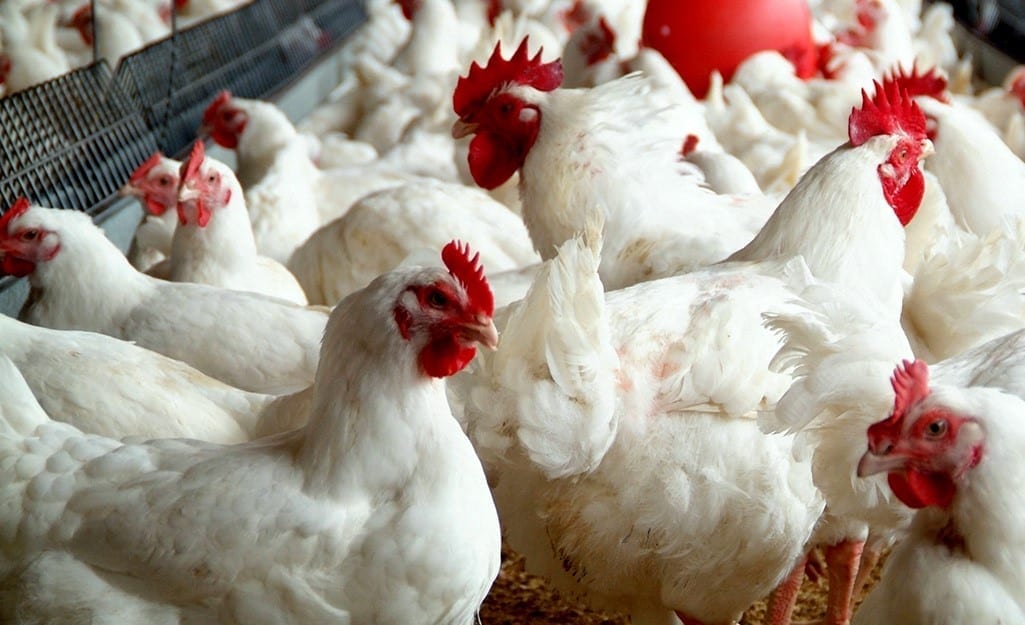
    South Korean authorities have culled more than 22.5 million poultry this winter, according to an official, as part of intense efforts to contain its worst bird flu epidemic in recent history that has affected farms across the country.

    The total number slaughtered since November 18 accounts for about 15 percent of the country’s poultry stock. The first outbreak was reported at a chicken farm in Haenam, about 420km south of the capital Seoul.

    Authorities also plan to kill an additional 2.97 million chickens and ducks across the country in coming days, reported on Saturday.

    “Korea has suffered from several bird flu outbreaks since 2003. I can tell you this year is the worst year ever,” Oh Se-ul, chairman of the Korea Poultry Association said.

    The outbreak – the first in nearly seven months – was caused by the highly pathogenic H5N6 strain of bird flu, a new type of virus that was first detected in South Korea.

    Previous cases

    In 2014 South Korea had culled 14 million birds amid a bird flu outbreak.

    As of the end of March this year, the country had killed more than 156 million chickens and more than 9.5 million ducks, according to government data.

    Because most of the birds culled since last month are egg-laying hens, the consequential shortage in eggs has caused their prices to rise sharply.

    In South Korea, the average retail price for 30 eggs has risen nearly 25 percent to $5.68 since November 18 – the highest in more than three years, according to state-run Korea Agro-Fisheries & Food Trade Corp.

    According to data from the institution, it is the highest month-on-month increase in egg prices in nearly a decade. Besides the price increases, some stores are restricting egg purchases.

    To ease the shortage, South Korea’s agriculture ministry is seeking to import egg-laying chickens and eggs from the US, Spain and New Zealand.

    Analysts say the egg shortage is expected to last at least one year as it could take up to two years for egg and poultry industry to raise baby chickens and rebuild flocks.

    Yoon Se-young, a farmer in Seoul said that he was worried because the government has not yet announced any plans to compensate farmers who had to cull their poultry.

    “It has been a month since I had to kill all my chickens and bury them. However, I have never heard of any clear explanation on how the government will compensate for my loss,” he said.

    Jeong In-Hwa, a member of South Korea’s Parliamentary Agriculture Committee said that as the issue of President Park Geun-hye’s impeachment takes the spotlight, the media has failed to highlight the bird flu epidemic.

    “As President Park’s impeachment becomes the most important national issue, protesters at candlelight rallies are dominating the headlines,” he said.

    “Because of that, the avian flu isn’t getting much attention.”

    Japan and China tackle outbreak

    Japan and China have also taken serious measures to control the bird flu outbreak that spread across northeast Asia.

    Japan launched a new chicken cull on a southern island, days after gassing hundreds of thousands of birds about 2,400km to the north.

    Tackling Japan’s sixth outbreak since end-November, Kyushu authorities said they will gas just over 120,000 chickens after the H5 virus was detected on a farm.

    The outbreak in Japan’s Miyazaki prefecture follows the gassing of more than 200,000 chickens at a farm in the northern island of Hokkaido last weekend and brings the country’s cull this season to nearly a million chickens and ducks.

    The cases in Japan – outbreaks before Miyazaki were all confirmed as H5N6 bird flu – are the first in nearly two years, with the bird cull now standing at its highest in six years.

    In China, chickens are being fed more vitamins and vaccines while farmers also ramp up henhouse sterilisation in an effort to protect their flocks.

    As part of its protection drive, China now has bans in place on poultry imports from more than 60 countries, including South Korea and Japan as well as parts of Europe now also experiencing a bird flu outbreak.

    The last major outbreak in mainland China in 2013 killed 36 people and caused about $6.5bn in losses to the agriculture sector.

    According to the website of China’s agriculture ministry, delegations from Japan, South Korea and China gathered in Beijing last week for a symposium on preventing and controlling bird flu and other diseases in East Asia.


  • 11street launches online marketplace

    11street launches online marketplace

    The South Korean e-commerce leader 11street has opened an online marketplace in Thailand during the festive season to capitalise on rapid growth in online shopping. The wholly owned subsidiary of the mobile operator SK Telecom aims to become Thailand’s biggest e-commerce player by 2020.

    Hong Cheol-jeon, chief executive of 11street (Thailand), said he was excited about giving Thai shoppers the chance to experience the innovative platform from Korea. On its soft opening day last Weddnesday, 11street beat its target with more than 10 million baht in transactions.

    More than 600,000 customers have experienced the platform so far. The 11street platform has attracted more than 6,000 local sellers and aims to have 20,000 by the end of 2017.

    Earlier in August, the company opened its first “sellers’ campus” to train Thai entrepreneurs interested in conducting business online. The 11street platform is designed to work across different operating systems with a seamless experience from desktops to tablets and mobile devices. One feature is a Korea Street, offering products from Korea for sale in Thailand at competitive prices.

    Mr Hong said that in the digital era where data and people are connected, security is one of the most important elements for the platform developer. “Our platform is equipped with latest technology for escrow to ensure the security of online transactions,” he said. Online sales account for lees than 2% of the total retail market in Thailand, meaning there is still huge potential room for growth.

    “Compare that with South Korea where the e-commerce market is worth approximately US$47 billion, which is 18% of the $252-billion retail market,” he said.

  • China Mobile 4G sub reaches 510m in November

    China Mobile 4G sub reaches 510m in November

    China Mobile, the country’s largest mobile carrier, said its 4G subscriber base reached almost 510 million in November. This represents more than 30% of the world’s total 4G subscribers.

    Compared to a net increase of 16.6 million 4G users in October, China Mobile added over 12.5 million TD-LTE subscribers only last month, its slowest monthly growth this year.

    By comparison, China Unicom added over 5 million 4G customers in November, taking its 4G LTE subscribers base to 99 million. Smallest rival China Telecom added 4.3 million 4G users in November, bringing the total 4G subscriber base to 117.3 million. The operator added 58.84 million 4G customers in the last 11 months.

    Together the three Chinese mobile carriers had over 720 million 4G subscribers in November.

    In a separate announcement, China Mobile has signed a letter of intent with Vodafone, Ericsson and Lenovo to cooperate on the development of IoT.

    China Mobile will connect its IoT connection management platform with Ericsson’s DCP platform and Vodafone’s IoT platform to provide its enterprise customers with a unified global network access, portal experience and Service Level Agreements (SLAs).

    This will help drive China Mobile’s overseas market expansion and enhance the company’s service capabilities, the operator said.

    The partnership with Lenovo will see the Chinese PC maker launch a range of notebooks with built-in 4GLTE modules to offer customers with China Mobile’s high-speed 4G mobile internet services.

    China Mobile said there are currently almost 100 million devices connected to the operator’s IoT platform and the number is expected to double to 200 million by the end of 2017.

  • President Jokowi wants Jakarta to become world sharia financial center

    President Jokowi wants Jakarta to become world sharia financial center

    President Joko Widodo (Jokowi) has said Jakarta should aim to become the global sharia financial center as Indonesia has the worlds largest Muslim population.

    “Ive ever conveyed (it) to chairman of the Financial Services Authority (OJK) that it is natural if we make Jakarta as the world sharia financial center,” Jokowi said, at a gathering of stakeholders related to the eight-year issuance of state sharia-based bonds at the state palace here on Friday.

    According to Jokowi, he had heard that an effort to make Jakarta as the world sharia financial center was being discussed by the OJK.

    “We have the potential and power, why we do not use (that), not only sharia financial services such as banks, insurance companies, I think many other things that can be developed, including sharia travel, and halal restaurants,” the president pointed out.

    The president stated that Indonesia should focus on its great market potential.

    “It will trigger economic growth in our country and eliminate issues that often appear such as rumors of 10 million to 20 million Chinese laborers coming into Indonesia, while actually it was only 21,000 of them,” he explained.

    On state sharia-based bonds for the national state budget, the president said that the essence of the budget is that it will be used for the welfare of the people, meaning to eradicate poverty, reduce unemployment, and social inequality.

    “Therefore, the government uses various ways to strengthen the state budget such as strengthening the tax base for instance through the tax amnesty, state sharia securities (SBSN) or the state bonds,” he disclosed.

    The president also declared that Indonesia should be proud that it is the issuer of the largest state bonds in US dollars.

    Up to November 2016, the issuance of SBSN in the international market reached US$10.15 billion with outstanding US$9.5 billion.

    “This means that we have huge potential and it plays an important role in the development and improvement of the welfare of the Indonesian people,” he cited.

    The president further said that Indonesia has a variety of sharia-based bonds (Sukuk), so there are many alternatives to invest.

    Jokowi also pointed out that in 2015 and 2016 as much as Rp20.8 trillion of Sukuk has been used to construct railway lines, including bridges that are beneficial for the people.

    “Then (the sukuk) is also to construct facilities of higher learning institutes and rehabilitate various buildings including those for preparation of Hajj Pilgrimage rituals” Jokowi added.

  • Nokia expands litigation against Apple to 9 more countries

    Nokia expands litigation against Apple to 9 more countries

    Nokia said Thursday it has increased the number of patent suits launched against Apple from 32 to 40, spread across 11 countries in US, parts of Asia and Europe.

    The move comes a day after Nokia revealing it was suing Apple for a number of patent infringements in the US and Germany, covering display, user interface, software, antenna, chipsets, video coding and other technologies used in devices such as the iPhone.

    On Wednesday, Nokia filed lawsuits in three German courts and two lawsuits in a US court in Texas.

    Nokia claimed Apple agreed to license some of its patents in 2011, but declined subsequent offers made by Nokia to license others of its technologies used by Apple products.

    “After several years of negotiations trying to reach agreement to cover Apple’s use of these patents, we are now taking action to defend our rights,” said Ilkka Rahnasto, head of patent business at Nokia.

    Nokia’s move comes a day after Apple filed on Tuesday an antitrust lawsuit against Acacia Research Corp and Conversant Intellectual Property Management, accusing them of colluding with Nokia to extract and extort exorbitant revenues unfairly from Apple.

    The lawsuits now extend to Finland (3 patents), UK (3 patents), Italy (4 patents), Sweden (3 patents), Spain (1 patent), The Netherlands (3 patents), France (1 patent), Hong Kong (1 patent) and Japan (2 patents), Nokia revealed on Thursday.

    In addition, Nokia has filed a complaint against Apple with the US International Trade Commission, which has the power to block the importation of products to the US if they are found to infringe patents. The USITC complaint covers eight patents.

  • BMW to recall over 1.93 lakh vehicles in China over defective airbags

    BMW to recall over 1.93 lakh vehicles in China over defective airbags

    German automaker BMW will recall 1,93,611 cars in China over a defect in their airbags, a quality watchdog here said today.

    About 1,68,861 imported cars manufactured between December 9, 2005 and December 23, 2011 as well as 24,750 sedans made between July 12, 2005 and December 31, 2011 will be recalled from August 1, 2017, the General Administration of Quality Supervision, Inspection and Quarantine said.

    When the driver and front passenger airbags of the affected vehicles inflate, the gas generators inside may become damaged and cause flying debris, posing safety risks to passengers, the statement said.

    BMW has promised to replace the defective parts free of charge, state run Xinhua news agency reported.

  • Bank Negara signs MoUs with Indonesian, Thai counterparts

    Bank Negara signs MoUs with Indonesian, Thai counterparts

    Bank Negara Malaysia, Bank Indonesia and the Bank of Thailand (BoT) signed two bilateral memoranda of understanding (MoUs) yesterday to facilitate the use of local currencies for settlements of trade and investments.

    A joint statement said Bank Negara and BOT, respectively, signed MoUs with Bank Indonesia on a framework of cooperation to promote the settlement of bilateral trade and direct investment in their local currencies.

    “Following the successful implementation of a similar arrangement between Bank Negara and BoT earlier this year, these bilateral arrangements will efficiently facilitate economic and financial activities among the three countries,” the statement said.

    “The enabling environment will benefit businesses by reducing transaction costs and enhancing efficiency of trade and investment settlements. Amid the current volatile global financial market conditions, this will offer businesses more options in choosing currencies for trade settlement.”

    The local currency settlement framework is expected to pave the way for wider usage of local currencies in the Asean Economic Community and spur further development of the regional foreign exchange and money markets, in support of wider economic and financial integration.

    The bilateral MoUs were signed by Bank Negara governor Datuk Muhammad Ibrahim, Bank Indonesia governor Agus D.W. Martowardojo, and BoT governor Veerathai Santiprabhob.

    Muhammad said in a separate statement that the arrangements signed yesterday were part of their continuous efforts to provide the institutional and policy framework to promote orderly financial market conditions and support the efficient management of financial risks.

    “In particular, these arrangements will enable exporters and importers in our countries to better manage foreign exchange risks by using local currencies to settle trade and investment activities,” he said.

    “In addition to improving cost efficiencies for businesses, the increased demand for local currency financial products will also contribute towards deepening the region’s financial markets.”

  • China Slaps GM With $29 Million Fine

    China Slaps GM With $29 Million Fine

    China slapped a $29 million fine on General Motors for antitrust violations, a sign of the growing tensions between the U.S. and the Asian nation.

    The largest U.S. automaker is accused of setting minimum prices on some models in its SAIC General Motors joint venture. The Shanghai Municipal Development & Reform Commission, which imposed the 201 million yuan fine, alleged in a statement that GM punished dealers who sold cars for less than the prices set by the Detroit-based automaker. This is the first time China has fined GM, the second-largest foreign carmaker in China by sales.

    China-U.S. relations have become strained after President-elect Donald Trump proposed tariffs on Chinese goods, questioned the One-China policy regarding Taiwan and accused the Asian nation of stealing an American naval drone in international waters in the South China Sea. A Communist Party newspaper in November said a “tit for tat” retaliation could follow proposals by Trump for tariffs on the world’s largest trading nation, which had $627 billion in U.S. trade in 2015.

    “GM fully respects local laws and regulations wherever we operate,” Irene Shen, a company spokeswoman, said in a text message referring to the penalty. “We will provide full support to our joint venture in China to ensure that all responsive and appropriate actions are taken with respect to this matter.”

    Shares of SAIC Motor Corp. fell 1.2 percent to 23.17 yuan in Shanghai, before the penalty was announced. They have declined 3.3 percent since Dec. 14 when reported that GM’s joint venture in China was being investigated for possible antitrust violations. In trading in New York, GM shares fell 0.2 percent to $35.61 at 10:50 a.m.

    Last year, China fined Daimler AG’s Mercedes-Benz unit $56 million for monopolistic pricing practices. In 2014, the government penalized Volkswagen AG and Fiat Chrysler Automobiles NV for similar practices as well as a dozen parts makers. The auto component suppliers were fined $200 million collectively.

    Since 2011, the National Development and Reform Commission, China’s main economic planner, has pressured carmakers to cut prices as part of an investigation into the auto industry. The NDRC said the probe was meant to ensure market order and protect consumers.

    Chinese media have reported that penalties on American companies may be coming. The China Daily reported earlier this month that the government would soon penalize a U.S. automaker for price fixing, citing an interview with Zhang Handong, director of the NDRC’s price supervision bureau. The Global Times wrote in an editorial that orders for Boeing Co. planes could be replaced with models from Airbus Group SE, and that Apple Inc.‘s iPhone sales may suffer a setback.

    GM’s retail sales in China rose 8.5 percent this year through November to 3.44 million vehicles, trailing only Volkswagen among foreign automakers. Its German rival boosted deliveries 12 percent to 3.59 million units.


  • Bali`s economy  grows faster than national average

    Bali`s economy grows faster than national average

    Balis economy grew 6.17 percent in the third quarter of this year, exceeding the national average growth of 5.02 percent year-on-year in the third quarter of this year.

    “The growth, however, was slowed than 6.54 percent in the previous quarter,” head of the Bali representative office of Bank Indonesia Causa Iman Karana said here on Saturday.

    Iman Karana attributed the slower growth in the third quarter of this year to poor performance in government, non profit agency and household consumption, and investment, as well as in construction and in mining sector.

    Decline was also recorded in the procurement of electricity, gas and water, in whole sale and retail trade, in information , communication , financial and health services, he said.

    Iman Karana predicted that in the fourth quarter of this year Balis economy would grow 6.06-6.46 percent.

    The tourism sector is expected to grow in the last quarter of this year especially toward the end of the year.

    Winter in Europe would cause more holiday makers from that continent to visit Bali.

  • StarHub launches services over APG submarine cable

    StarHub launches services over APG submarine cable

    Singapore operator StarHub has announced the launch of services over the new Asia-Pacific Gateway (APG) submarine cable network, which connects nine countries in the region.

    The APG is a 10,900 kilometre cable network system with capacity exceeding 54Tbps, the highest of any similar network in Asia.

    It has connection points in Mainland China, Hong Kong, Japan, Korea, Malaysia, Singapore, Taiwan, Thailand and Vietnam.

    There are three landing points in China – Shanhgai Nanhui, Chongming and Hong Kong – operated by major Chinese providers.

    “Singapore is China’s largest foreign investor. To serve Singapore enterprises expanding to China, we are pleased to provide them with a new international connectivity on APG, catering for the growing economic activities between China and Southeast Asia,” Benjamin Tan, vice president of international business at StarHub, said in a media release.

    StarHub has partnered with operators in each country to provide services for its enterprise customers requiring international connectivity to any of these overseas markets.

    APG also enhances StarHub’s international connectivity by providing traffic routing diversity to submarine cable systems such as Asia-Pacific Cable Network 2 (APCN2), Asia Submarine-cable Express (ASE) and Asia-America Gateway (AAG).

    This will provide Singapore based enterprises more options to connect to other parts of Asia Pacific as well as minimise impact of any service disruption resulting from submarine cable damage, which can be caused by accidents or natural disasters.

  • House of Fraser China opens first store

    House of Fraser China opens first store

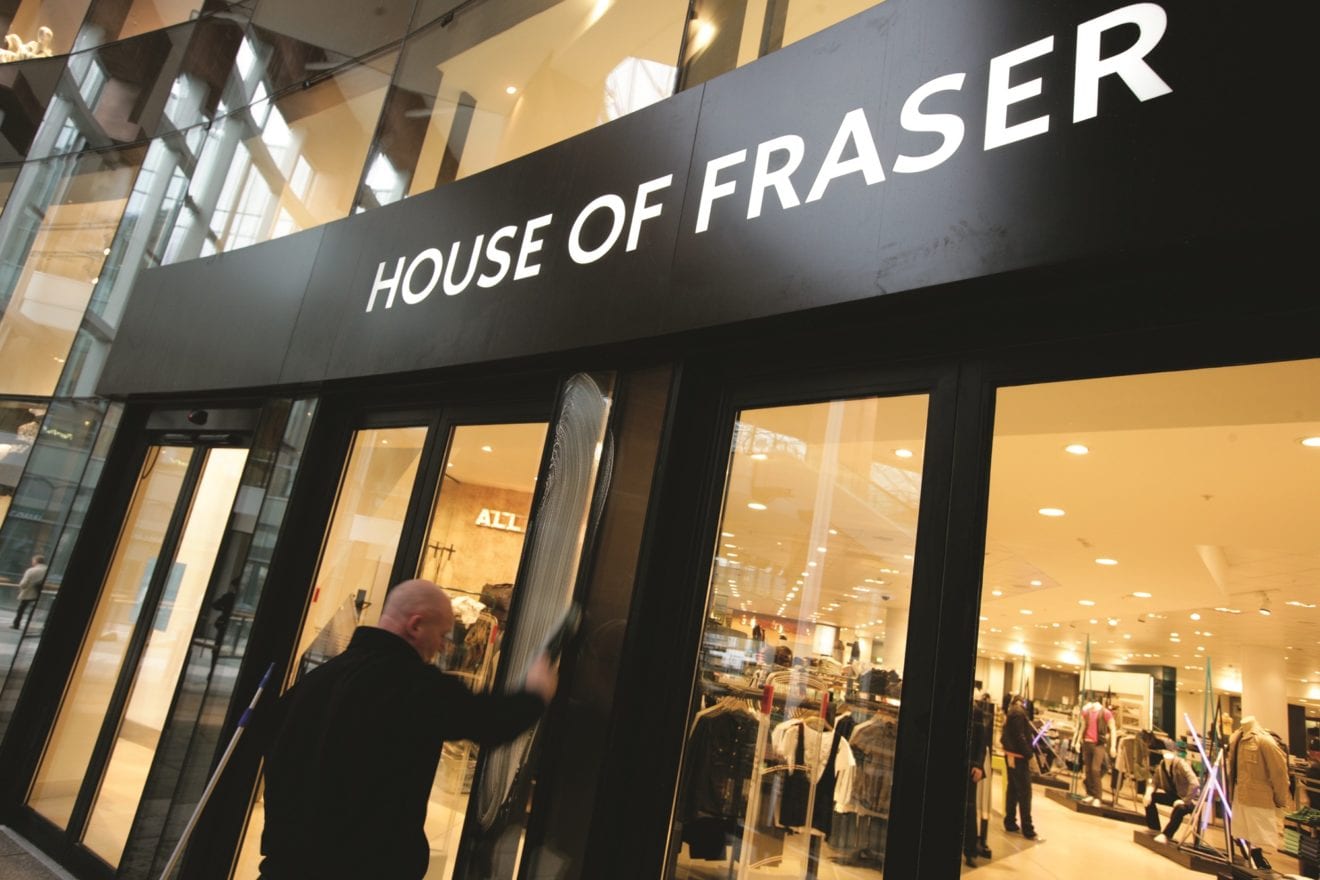
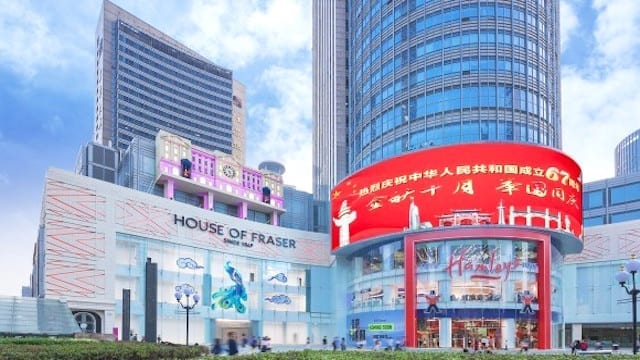
    British department store chain House of Fraser has opened its first standalone store in China, in Sanpower Plaza in Nanjing, the capital of Jiangsu province.

    Owned by Chinese conglomerate Sanpower Group, the House of Fraser China store spans six floors with more than 425,000 sqft (39,483 sqm) of retail space. It is introducing such brands as Cambridge Satchel Company, Peter Werth and Radley into the Chinese market.

    House of Fraser chairman Frank Slevin says the chain will look to benefit from the strong demand by Chinese consumers for UK brands.

    In September, the company described trading in the UK as “very challenging”. It said the retail sector there was facing significant change in “structural dynamics as consumers’ shopping habits and delivery expectations continue to evolve”.

    “The opening of the store in Nanjing is a strong way to finish the year,” says Slevin.

  • Tencent Singapore office targets tourists

    Tencent Singapore office targets tourists

    Chinese-based online social media platform parent Tencent has opened a Singapore office to help drive Asian brands improve their reach to Chinese consumers.

    Tencent, which owns the WeChat messaging and browsing platform, has created an International Business Group charged with raising awareness of the opportunities offered by WeChat, especially targeting people who live outside China.

    While WeChat is as mainstream in the mainland as facebook is outside China, its takeup across the rest of Asia is limited.  The new Tencent Singapore team believes there are huge opportunities marketing to Chinese when they are travelling outside their home country.

    A growing number of luxury brands are establishing a presence on Wechat – Gucci even sells handbags worth several thousand US dollars on the platform, and BMW reaches out to prospective customers. Other consumer retailers like Hong Kong’s Sa Sa have developed extensive interactive eCommerce platforms which work across channel and drive customers in-store.

    Benny Ho, senior director of business development at Tencent, told The Drum that inbound marketing is a big opportunity in Singapore, especially.

    “These tourists are setting their own itinerary and they know precisely what store to buy from and in what colour before they arrive; they come to buy, not to shop. This means you need to build all the brand consideration and purchase intent way before they arrive and that is part of the core service we are trying to offer,” he said.

    WeChat alone has just over 800 million monthly active users.

    “That’s a huge number,” said Ho. “Every market we go to, we educate the market and tell them the numbers and it’s mind blowing. Our role is to make something that big [more] understandable.”

  • Nike sales saved by basketball sector

    Nike sales saved by basketball sector

    A rebound in basketball drove strong Nike sales and profit growth in the last quarter.

    The US-headquartered sports giant has reported a profit rise of 7.3 per cent to US$842 million in the three months to November 30, with sales up 6.4 per cent, to $8.18 billion. Excluding the impact of currency rates, profit rose 8 per cent.

    Sales in the basketball category, which includes its Jordan brand, accounted for 15 per cent of wholesale revenue in 2016. And even greater growth is expected in the next quarter after the brand lost momentum in the core category in previous periods.

    “We’re seeing incredible momentum in basketball,” said Trevor Edwards, president of Nike Brand. “To be clear, basketball is back.”

    Sales in China rose 12 per cent, and in the US by 3 per cent.

    Nike has moved to drive more direct sales, improved its online sales apps and adjusted pricing on some of its marquee products, including basketball shoes.

  • Hong Kong is the new target for J.Co Indonesia

    Hong Kong is the new target for J.Co Indonesia

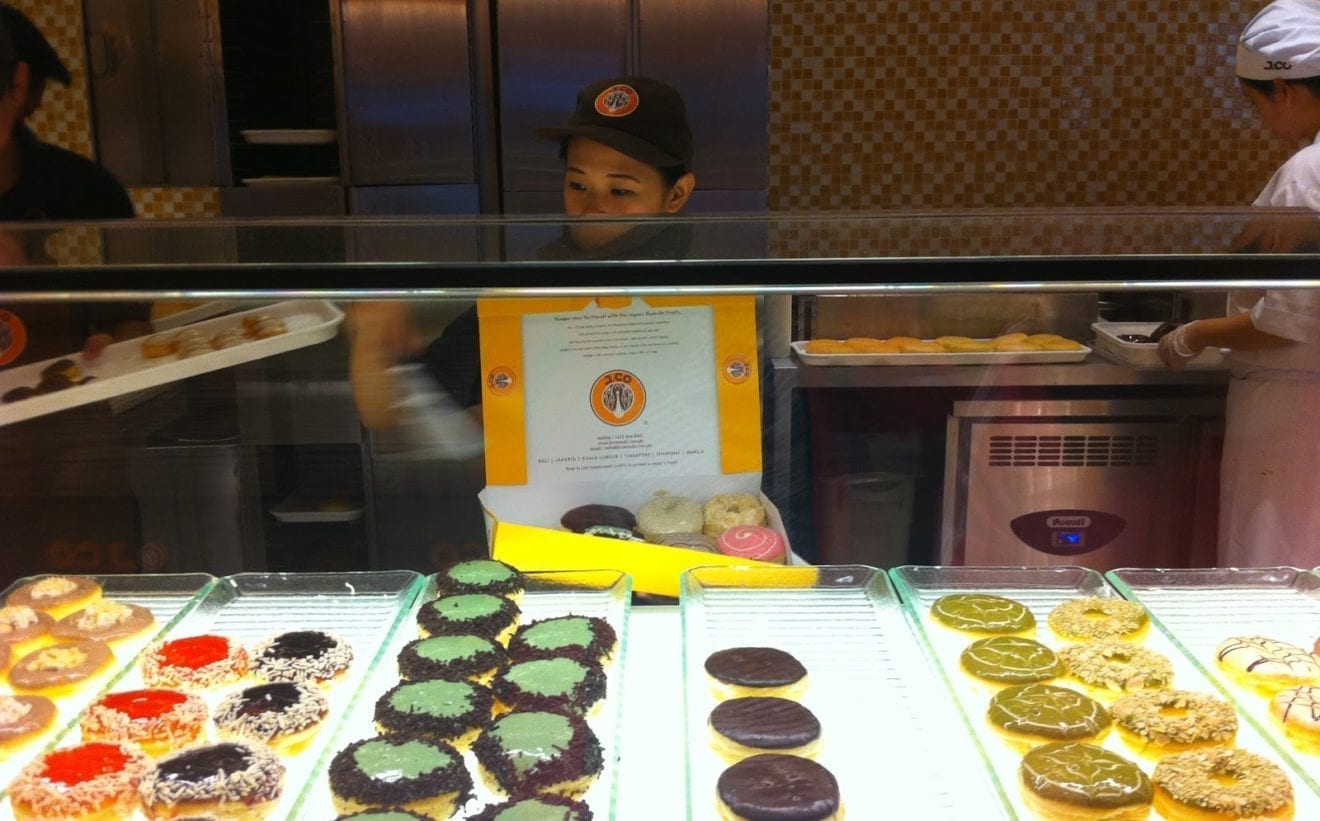
    J.Co Donuts & Coffee, the Indonesian ‘lifestyle cafe’ chain has further expanded its Asian footprint, opening its first store in Hong Kong this week.

    The 11 year-old brand now has 250 stores in its home market,Malaysia, Singapore and the Philippines – and now on Hennessy Road in Wan Chai.

    A review in Coconuts Hong Kong describes the new store as “an indecisive person’s worst nightmare”, because customers can either select their own combinations or let the staff suggest donut-coffee pairings, “like wine pairings, but actually acceptable for children and teetotallers”.

    The store has a core range of 24 flavours – and the indecisive can order a box of mini donuts (one of each flavour) to take away fro HKD98. Standard-sized ones sell for HKD15 each, or HKD88 for six.

    In keeping with the brand’s quirky, unique market positioning which sets it apart from US donut store brands, the food comes in celebrity-inspired names, such as strawberry-and-cream cheesy Berry Spears, the nutty, chocolate Jackie Chunk and the fruity Blueberrymore.

    J.Co Donuts & Coffee also offers an extensive coffee menu, frappes and even a ‘Hot Tiramisu’ drink.


  • Foreign tourist arrivals in Bali reach 4.07 mln

    Foreign tourist arrivals in Bali reach 4.07 mln

    The tourist resort province of Bali, which had received 4.07 million foreign tourist arrivals up to October, is expected to have attracted more than 4.4 million more tourists by the end of the year.

    “Foreign tourist arrivals account for 40 percent of the national target of about 15 million tourists,” said the Head of the Bali Provincial Tourism Office, A.A. Yuniartha Gede Putra, here on Friday.

    He added that the foreign tourist arrivals in Bali are expected to go up to 5.5 million in 2017.

    Putra said foreign tourists in Bali mainly came from ten countries, namely Australia, China, Japan, Britain, France, India, Malaysia, the United States, Germany and South Korea.

    “Given the uniqueness of Balinese art and culture, it attracts tourists from various countries around the world,” Putra noted.

    He noted that he promoted the region in various countries to lure more travelers to Bali. The Ministry of Tourism also made similar efforts.

    Besides, steps were taken to improve cultural tourism as Bali has a regional identity.

    He urged everyone to ensure that the local tourism department works well so that tourists in Bali feel safe and comfortable as they enjoy their holidays.

    Referring to Australian governments travel advisory, tourism observer Putu Gede Perma claimed it will not affect tourist visits to Bali.

    “Based on our observations and the results of the academic studies on the impact of this travel advisory, we have deduced that the advisory did not have any impact on the number of Australian tourists visiting Bali,” Putu Gede Perma informed here on Thursday.

    Australian tourists were of the view that bomb attacks can happen anywhere in the world and were not unique to Bali, he stated.

    “They will not delay or cancel their planned trips to Bali,” remarked Gede.

    Gede, who is also an academician at the Ganesha Education University, hoped that Australian tourists would not blindly follow their governments recommendation.

    “We found that Australian tourists had continued to come to Bali, irrespective of how serious the advisory was,” he recalled, adding that the situation was unlike what had happened more than a decade ago when Bali was crippled by bomb attacks.

    “Yes, it did affect tourism. After the Bali 1 and Bali 2 bombings, a travel advisory had significantly reduced the influx of Australian tourists,” he conceded.

    He called upon the police and military officers to remain alert to terror threats, particularly after the arrest of terrorists in South Tangerang, Banten, by the polices anti-terror squad, Densus 88, on Wednesday (Dec 21).

    “Bali will always remain a target. Security officers and the people should, therefore, continue to maintain security and order. We should be watchful of suspicious visitors,” the tourism observer stressed.