Blog

  • Mobile e-commerce to fuel Chinese retail

    Mobile e-commerce to fuel Chinese retail

    Despite the slowdown in China’s GDP growth, the Alibaba Group believes the country’s consumer economy will weather the storm and grow handsomely, largely fuelled by mobile e-commerce.

    According to a recent report titled The New China Playbook by he Boston Consulting Group (BCG) in association with the with AliResearch, Alibaba Group’s research arm, even if China’s GDP growth slows to 5.5 per cent, which is a full point below the 6.5 per cent government target, the country’s consumer economy will expand by more than half to $6.5 trillion in 2020 from $4.2 trillion in 2015.

    According to the report, e-commerce is expected to play a major role in the development of China as a consuming nation, a transition that is being accelerated by the growth of shopping via smartphones and other mobile devices.

    “One of the most revolutionary changes in the Chinese consumer economy has been the astounding growth of e-commerce,” the BCG said. In 2010, online transactions made up only 3 per cent of total private consumption in China; online channels today account for 15 per cent of the total, a share that BCG projects will rise to 24 per cent in 2020 (in contrast, online shopping currently accounts for about 7.5 per cent of private consumption in the US).

    The BCG does not foresee a marked slowdown in the growth of e-commerce. Over the next five years, private online consumption is expected to surge at a compound annual growth rate of 20 per cent, compared with 6 per cent annual growth in offline retail sales. Chinese consumption will grow by more than half to $6.5 trillion over the next five years from $4.2 trillion in 2015. E-commerce on the whole will account for 42 per cent of that growth.

    BCG identified three distinct “megatrends.” First, rising incomes are fueling greater spending, and in new areas not seen before. Then there’s the growing prominence of China’s “young generation.” And finally, the shift from bricks-and-mortar retail to e-commerce will continue to play an ever-bigger role in China’s economy.

    Overall, an incremental $2.3 trillion in annual consumer spending that China is expected to add over the next five years is almost like adding another Japanese consumer market onto the global economy, the report said.

  • Staying with Courts through thick and thin

    Staying with Courts through thick and thin

    When retail boss Terry O’Connor first joined Courts Singapore, he looked at its first managing director Christopher Wade and felt he could never emulate his record. Yet, he has done just that.

    Mr Wade is something of a legend around Courts. He was sent here to open its first store in 1974 and ran the show until he left in 1990.

    “The idea that this guy was with the company for 16 years; I thought, ‘Wow, that will never be me’,” said Mr O’Connor.

    But he, too, has clocked up an impressive stint at Courts Singapore, beginning in 1993 as a director of electrical buying at the age of 25 before moving up the ranks to his present position as Courts Asia’s group chief executive.

    Mr O’Connor, now 47, left school at 17 to work. His career as a buyer began a year later, laying the foundation for his retail experience.

    Later, he took the risk to move here from Liverpool and has been with Courts for most of his life, through thick and thin.

    That is why he is sticking by the firm, even as rising costs, weak market sentiment and challenges from e-commerce attack the bottom line.

    Group revenue has been slipping in recent years, coming in at $384.3 million in the six months to Sept 30 last year, down from the $409.7 million recorded in the same period in 2012. Courts Asia has a market capitalisation of about $175.8 million.

    Singapore sales contributed 63.3 per cent of the group’s sales for the six months, and dipped 2.6 per cent in the three months to Sept 30 last year, compared with the same period a year earlier, mainly due to lower sales across the categories.

    Group net profit in the six months to Sept 30 last year was $12 million, down from $22.6 million in the same period in 2012.

    The share price of the furniture and electronics retail giant has fallen by around 40 per cent since relisting in 2012.

    Despite the middling figures, Mr O’Connor believes in the firm. After all, worse things have happened.

    The litmus test came in 2004 when its British parent firm, known as a furniture retailer, was facing bankruptcy.

    As Courts Singapore’s managing director – a role he assumed in 2000, at the age of 32 – Mr O’Connor took charge of overhauling the Singapore operations with a team of 10 senior managers.

    It included rebranding Courts as a consumer electronics retailer instead of just a furniture seller, and privatising and restructuring the company as Courts Singapore.

    During that period, he stopped seeing himself as a mere manager and more of an entrepreneur who needed to save his baby. “With the events of 2004, you don’t think like a corporate employee any more. It’s more of an owner’s mindset.

    “Really, from that point onwards, I felt like a parent in many aspects, the person who’s responsible for the family, and started to think more like an entrepreneur.”

    He fondly recalls what a long-time employee of Courts Singapore told him on the day he gathered the staff to share news of the parent firm’s distress. “The longest-term employee, a lady by the name of Ms Stephanie Fong, said to me, ‘You’re our ‘father’ now.’ That’s a key point, as one of the things important to me was to be in front of my own management team and say, ‘Look, I’m not going anywhere.’ This is an opportunity, not a crisis.”

    Ms Fong, 59, who has been with Courts Singapore since 1975 and is now its senior manager of distribution, remembers those tough times like it was yesterday.

    “Back then, it was the saddest news I heard,” she told The Straits Times. “I went to my desk and started crying silently because I had so much passion working with Courts and the British directors, especially the Cohen family (owners of the Courts PLC business, then a majority shareholder of Courts Singapore).

    “The feeling was similar to the loss of our parents. I told Terry that he had to be the father of Courts Singapore, and all of us would need his leadership to bring Courts to greater heights. I believed in him and saw his potential.”

    Ms Fong said Mr O’Connor lived up to that monicker, unleashing his potential as he demonstrated “leadership with care and passion, and remained committed to the business from that day onwards”.

    She called him a man of his word, and that “his assurance to lead the business to success together with us came true”.

    Mr O’Connor made sure to tell his team that the Asian operations were different from Britain’s, that they were operating in a more modern manner and “this was our opportunity to create the kind of business that potentially wouldn’t have been allowed before”.

    That was how, bit by bit, he and his management nursed Courts back to health, eventually relisting the company as Courts Asia on the Singapore Exchange in October 2012.

    Mr O’Connor has an easy camaraderie with employees, who cheerfully call him by his given name, as he moves around the Tampines store.

    Mutual respect is important to the group chief executive, something he never forgets, even during store visits. “When you go to a store, first of all, it’s important to connect with the manager and give the manager ‘face’. It’s his or her business.”

    Mr O’Connor, a Singapore permanent resident who is married with a son and daughter, is no micro manager. If he spots a problem with the store, he will let the manager know and let them make the changes required to improve.

    “I don’t think there’s any point in going to the store, and tearing people apart or ripping into people. That’s not my style. But I might, if I go back and they haven’t fixed it. Mistakes are allowable, but not addressing the mistake isn’t.”

    Under his watch, Courts operates more than 80 stores – 15 here – across three markets, with more than 1.6 million sq ft of retail space.

    There are 62 stores in Malaysia, with two new outlets opening there by the end of March. Indonesia welcomed two new stores in January and should have nine by the first quarter of 2017, he said.

    “We recognise that the share price will move up and down, sometimes based on performance, sometimes based on market sentiment. I think the healthiest thing for us to do is to just focus on the business.”

    He added: “The upturn in South-east Asian markets always comes. We’re in this game for the long term and we’re used to going through cycles. In the interim, we’ll focus on strong cost and margin management, people development and planting seeds for the long-term growth of the company.”

    He let slip a little secret that would have changed the course of Courts forever, if it had panned out.

    “I did resign in 1996. I did three years (in Courts) and said I wanted to go back to Britain.

    “But I was persuaded by the then group chief executive to rescind my resignation. He said there were long-term plans for me and I’d be given a bigger commercial role. So I did and I decided to stay.”

    And that is how Mr O’Connor came to call both Courts and Singapore home.

  • Uniqlo look to Muslim market

    Uniqlo look to Muslim market

    Amid the rows of blue jeans lining the walls of apparel chain Uniqlo are headscarves, baju kurung and kebaya – part of the Japanese retailer’s new section that caters mainly to Muslim shoppers.

    While these garments are usually sold at niche stores in Geylang Serai and Kampong Glam, they can now be found at Uniqlo stores in town or at neighbourhood centres.

    Uniqlo is one of the first mainstream retailers here to turn its focus to the Muslim market.

    The current selection is the second collection launched by Uniqlo following a successful initial run last July. The range is carried at five of its outlets – 313@Somerset, Causeway Point, Jem, One KM and Suntec City Mall – and its website.

    Another retailer that has jumped on the bandwagon is Singapore- based online store Zalora. Each month, it introduces about 50 to 60 products such as long and flowy tops and dresses under its “Zalia” collection. Managing director Dione Song described these as “trendy yet modest” pieces.

    The budding trend here mirrors the global boom in Islamic fashion in recent years. Muslims across the globe spent $266 billion on clothing in 2013 – more than the combined spending in Japan and Italy on fashion. This is set to almost double to $484 billion by 2019.

    Observers say the market potential here is large, with 15 per cent of the resident population being Muslims. Also, unlike certain ethnic or cultural wear that is seasonal, such as the cheongsam, this clothing is everyday wear for a substantial proportion of Muslim women.

    Uniqlo said that it is discussing expansion plans for upcoming fashion seasons. It “acknowledges that there is a need among the markets where we are present for stylish and comfortable modest wear”.

    The collection is also retailing in Malaysia, Indonesia and Thailand.

    There is yet to be a major international clothing brand for Muslim wear, but over the past two years brands such as DKNY, Tommy Hilfiger, Zara and Mango have started to offer Muslim-oriented collections in their Middle Eastern stores.

    Major retailers here like H&M, Topshop, Topman and Dorothy Perkins say they have not rolled out any cultural or religious products.

    Although many here have welcomed the greater diversity of choice for consumers, a handful of netizens have voiced their displeasure about Uniqlo’s sale of religious and ethnic wear.

    Associate Professor Ang Swee Hoon of the National University of Singapore’s business school said a secular chain offering religious wear could raise eyebrows.

    But Ustaz Firdaus Yahya, manager of an Islamic learning centre, said it “reflects their acknowledgement of diversity, and those who do not welcome it may be ignorant or have their own personal bias”.

    Prof Ang said it is a good move for Uniqlo to offer its technology to a larger market. Its hijab and headband, for instance, are made of the Airism fabric that wicks away moisture and has odour elimination, anti- bacterial and cooling functions.

    Editor Karimah Samsudin, 26, who owns a Uniqlo scarf, said: “It is good for mainstream brands to offer such attire because it is hard for us to find clothes that are not revealing or tight and clingy.”

    Singapore Polytechnic senior retail lecturer Sarah Lim said the sale of such clothing should not remain niche, a view retailers agree with.

    Zalora noted that although Zalia was launched to meet an increase in demand for modern ethnic wear, non-Muslim customers have also snapped up pieces from the range.

    Ms Song said: “The creation of Zalia was a natural inclination to offer stylish choices not just for the Malay-Muslim community but also to provide shoppers with modest, trendy alternatives.”

  • Apple’s Tim Cook confirms intent to set up retail stores in India

    Apple’s Tim Cook confirms intent to set up retail stores in India

    Weeks after we revealed that Apple has applied to the government to set up its fabled stores in India, its chief executive officer Tim Cook has confirmed the same, signaling India’s elevation in the Cupertino-based smartphone maker’s consciousness as one of its key growth markets.

    In a townhall meeting with Apple employees held at Infinite Loop headquarters in Cupertino in the days following the first quarter earnings, Cook said that Apple was in “early preparations” to bring its retail stores to India, according to report by 9to5Mac, which tracks developments at Apple very closely.

    Cook singled out India as “one of Apple’s most important growth areas for the next decade”, underlining its importance given its favourable demographics and surging smartphone sales.

    Apple’s top boss also said India unlike many emerging markets had 4G mobile services and it which therefore “gives Apple the opportunity to push its latest devices to regions like India”.

    Cook also fielded audience questions, attempting to reduce concerns related to the company’s iPhone dependence, and discussed porting more Apple services to Android and releasing cheaper iPhones to appease growing markets.

    India is the world’s fastest growing smartphone market, having surpassed the US in 2015 as the second largest by unique active users worldwide. This would make a strong case for Apple’s famed retail stores, distinct for its look, feel and customer experience, to come up as the brand enjoys a very strong aspiration value, especially among the youth.

    Apple has applied for the single brand retail license, which once granted, will allow it to open its own stores here. Currently, Apple sells its iPhone, iPad, Mac and other products through third-party resellers in the country. But with the government easing up foreign investment rules on single brands and relaxing mandatory local procurement conditions for high-tech companies, the doors are now open for Apple to make a direct foray.

    Apple posted its best ever quarterly sales in India recently, with volumes crossing 800,000 units for the three month period to end-December 2015. During this period, sales in developed markets faltered. Revenue in India surged 38%, albeit on a smaller base, compared with 11% growth in overall emerging markets and 14% in Greater China, its second-largest market after the US.

    iPhone sales volumes grew 76% in India compared with 45% in Korea, the Middle East and Africa, 20% in several western European countries and 18% in mainland China, in the October-December quarter.

    “During hard times like now, it provides an opportunity to invest in newer markets such as India where there are long-term prospects,” Cook said during the first quarter earnings last month, acknowledging the potential of the Indian market.

    “India is quickly becoming the fastest-growing BRIC nation, the third-largest smartphone market behind China and the US, and the median age of the population is 27 compared to 36-37 in China,” he added.

    Apple has been making aggressive price cuts on older devices such as iPhone 5s and even cut prices on iPhone 6s and 6s Plus models after consumers were deterred by the high cost of new models. It’s also increasing availability, including online besides giving greater flexibility to retailers and distributors on pricing.

  • Asian retail giants mull Big C bids

    Asian retail giants mull Big C bids

    At least three major Asian retailers are mulling bids for control of the Big C businesses in Thailand and Vietnam.

    But they all start as rank outsiders behind Thailand’s Central Group, which already has a 25 per cent share of the Thai Big C business.

    In a surprise move, France’s Casino group announced earlier this month it would sell its 58.6 per cent stake in the Thai hypermarket business in a bid to reduce debt. It had already put its struggling Vietnam business on the market in December.

    Reuters reports Hong Kong headquartered Dairy Farm International and Korea’s Lotte are in talks with their bankers about potential bids. Japan’s Aeon is also running the numbers.

    But as Reuters says, all three would need “punchy bids” to fight off frontrunner, Thailand’s Central Group.

    Casino Group will sell both businesses in an auction process – and has indicated it would prefer to sell the two operations to a single buyer.

    With a cornerstone stake in the Big C operation, Central would have to be frontrunner to secure Casino Group’s share. The company has already publicly declared its interest.

    “Whoever is going to buy this will have to pay a high price to get Central out or they will have to co-exist,” Reuters quoted an unnamed banking source “familiar with the matter”.

    The Thai stake is estimated to be worth about US$3.1 billion. The value of the Vietnam operation is less clear – bankers put it at between $800 million and $1 billion, although the business is not thought to be particularly profitable, despite recent media commentary to the contrary.

    Aeon, Lotte and Dairy Farm all declined to comment on the matter.

  • Criteo notes eCommerce spike

    Criteo notes eCommerce spike

    In the two weeks leading up to the Chinese New Year, eCommerce sales in Asia grew by 40 per cent with 25 per cent more consumers shopping online.

    Three in 10 transactions were completed on a mobile device, according to performance marketing technology company Criteo in Hong Kong. Its findings are based on an analysis of 174 million online transactions in Hong Kong, Malaysia, Singapore, Taiwan and Vietnam.

    “Because of the traditional practice of wearing new clothes to symbolise a new beginning, consumers are doing a tremendous amount of online shopping two weeks before Chinese New Year,” says Criteo South-east Asia/Hong Kong/India/Taiwan MD Yuko Saito. “Based on 2015 data, sales on mobile devices in particular have hit record numbers.”

    In its eCommerce Industry Outlook 2016, Criteo cites three trends impacting Asian shoppers during the Chinese New Year season…

    Smartphone shopping will keep gaining ground: Smartphones are the first point of internet access or brand interaction for many consumers. In South-east Asia, Hong Kong, India and Taiwan, on aggregate, more than 45 per cent of online transactions are happening on mobile devices, compared to 29 per cent in the second quarter of last year. Indonesia was the highest at 56 per cent, followed by Singapore at 45 per cent.

    Retailers will see a high web influence on their in-store sales: Most consumers are researching online before or while visiting a store. According to Google, 80 per cent of 10 shoppers use a smartphone inside the store to help them with product research and price comparisons. Criteo says retailers can acquire a better view of customer behaviour by connecting with them via branded apps or beacon technology, before matching each customer’s email ID with loyalty programs at in-store POS terminals.

    Instant delivery services will become common: Order fulfilment will be a big focus for retailers this year, with many offering delivery options to match Amazon’s Prime Now service. Both online and “click-and-brick” retailers will be trying this strategy through specialised third-party eCommerce logistics providers. Faster delivery at lower charges will also drive growth of cross-border shopping.

    “During special occasions like Chinese New Year, we observe instances of intensive, last-minute shopping, where consumers take less time to consider a purchase and require products to be delivered on short notice for personal use or gift-giving,” says Saito. “Taking a three pronged approach – engaging consumers on the mobile web or on mobile apps, leveraging consumers’ web-browsing data to deliver personalised in-store and mobile shopping experiences, and investing in instant delivery services will be crucial to increasing sales conversions.”

  • Harley-Davidson Hong Kong opens new flagship

    Harley-Davidson Hong Kong opens new flagship

    Harley-Davidson Hong Kong has unveiled a new showroom in Chai Wan as part of its expansion plan in the city.

    The new showroom, covering about 9000 sqft (840 sqm), showcases the latest Harley-Davidson motorcycles, clothing and related services and products. Harley-Davidson Hong Kong is intended as a lifestyle concept store that “fully presents the value of the brand” to its customers, according to its principal, David Neilsen.

    Harley-Davidson Hong Kong Chai Wan 5

    Harley-Davidson Hong Kong Chai Wan 1

    The company describes the new outlet as “unlike any motorcycle dealership yet built in Hong Kong in quality and design”.

    Harley-Davidson Hong Kong Chai Wan

    “Hong Kong is one of the most vibrant cities in the world,” said Neilsen. “It was an exciting opportunity for us to bring Harley-Davidson’s authentic full service to the community. We believe that there is great potential, especially in the affluent youth market, for this legendary brand here in Hong Kong.

    Harley-Davidson Hong Kong Chai Wan 6

    “We are already looking for the right moment to introduce Harley-Davidson’s new Black Label line which the company has developed to suit the taste of the young generation. We believe that the new line is a great fit for the Hong Kong market and in line with the company’s global expansion plan,” Neilsen concluded.

    Harley-Davidson Hong Kong Chai Wan 3

    Harley-Davidson Hong Kong Chai Wan 4

    InvestHK advised and assisted Harley-Davidson Hong Kong with its expansion in the territory.

    Harley-Davidson Hong Kong Chai Wan 2

  • Foodpanda India ‘likely to close’

    Foodpanda India ‘likely to close’

    Foodpanda India appears likely to be shut down after parent Rocket Internet failed to find a buyer at a bargain basement price.

    It’s the latest chapter for the increasingly troubled Asian operations of Foodpanda which last monthgave up in Vietnam after failing to win market share off rivals and in Hong Kong axed its upmarket spinoff brand Foodora, merging the two businesses into one.

    India’s Economic Times reports Foodpanda is “desperately searching for a buyer” for the troubled Indian business, despite setting the price tag at just US$10 – $15 million.

    “Both Zomato and Swiggy have been approached for a buyout, besides one larger horizontal company. But Rocket is yet to garner keen interest from possible suitors for Foodpanda,” another source told theTimes of India.

    At the end of December, Foodpanda India laid off 300 staff , about 15 per cent of its local workforce, as it faced increasing competition from Zomato. The company said the redundancies were the result of achieving near 98 per cent automaticon of its ordering process.

    The Economic Times reports Rocket’s problems in India are not restricted to Foodpanda.

    “The Samwer brothers-led Rocket Internet’s interest in its Indian portfolio has been waning with most of its flagship firms, including FabFurnish and PrintVenue, being put on the block,” the newspaper said.

    It concluded that if a buyer for the sites cannot be found the company would simply close them.

  • McDonald’s China plans 250 new stores in 2016

    McDonald’s China plans 250 new stores in 2016

    McDonald’s China is shifting its focus from tier 1 and 2 markets to smaller cities as it expands its footprint in the mainland.

    The US fast food operator plans to open 250 new stores in the lower-tier cities in 2016 which represents its biggest expansion plan in any international market.

    Phyllis Cheung, CEO of McDonald’s China, says the company will target third and fourth tier cities, along with developing digital ordering and offering customised burgers.

    Cheung says 150 stores in Beijing, Shanghai, Shenzhen and Guangzhou will have self-service kiosks introduced this year allowing customised ingredients. The build-your-own concept is called My Burger and has already been introduced in some Asian markets, including Thailand.

    “Within two to three years, we hope mobile ordering and other digital capabilities would cover all of our restaurants in China, and we will also launch our proprietary smartphone application for ordering by the end of this year,” Cheung said in an interview.

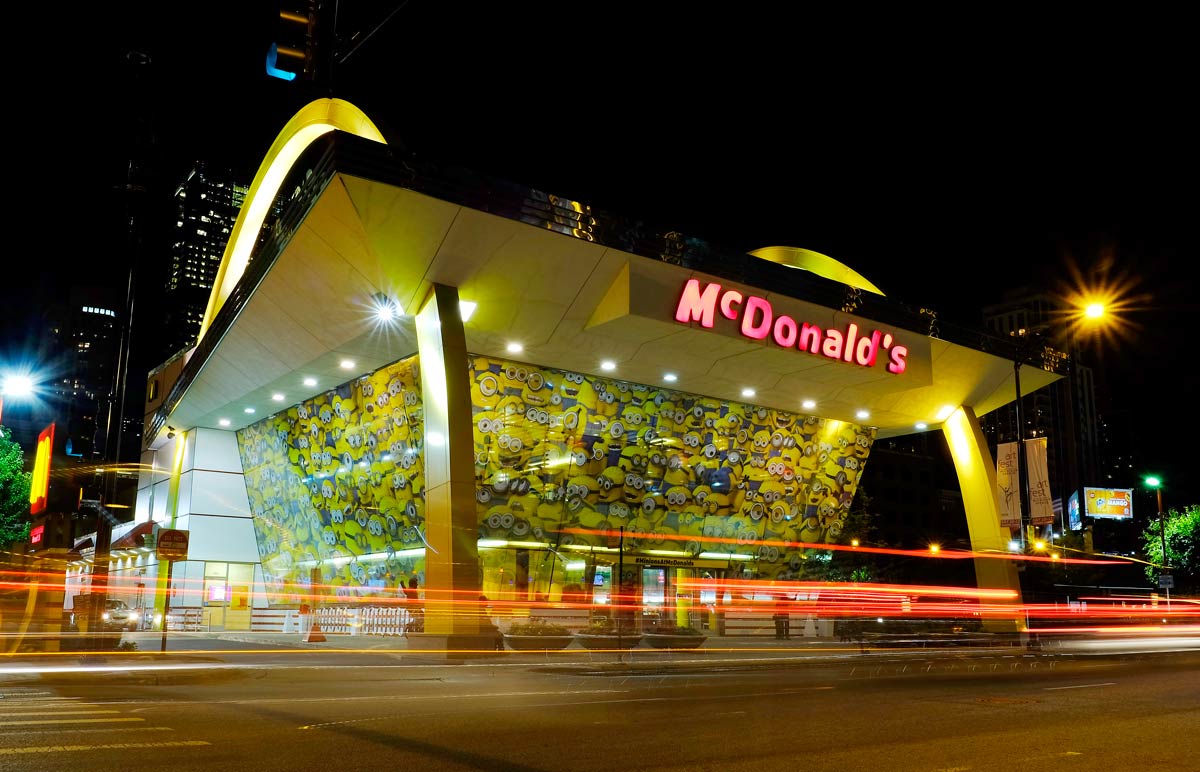
    The Us chain opened its ‘Experience of the future’ flagship restaurant in Beijing’s Wangfujing St this week which features table service for customers who order using the WeChat app.

    McDonald’s China boasts more than 2200 stores already.

  • Alibaba Group conquers China slowdown

    Alibaba Group conquers China slowdown

    Going into this quarter the main concern for Alibaba was that a slowdown in Chinese economic growth would damage its performance.

    Fortunately, this has not materialised with very solid uplifts in its Chinese retail marketplace proposition underpinning a respectable 32 per cent rise in overall revenues.

    Some of this uplift was undoubtedly aided by the company’s very strong performance over the Singles Day shopping festival in November. During this time, it attracted over 115 million visitors to its marketplaces and processed some 467 million orders across all of its platforms during a 24-hour period. The fact that its systems and infrastructure coped well with this volume, which is around 10 times more than the usual daily average, is a testament to Alibaba’s technological prowess, especially in areas like cloud computing.

    This focus on technology is also helping Alibaba to understand the habits and preferences of Chinese consumers as they browse and navigate the group’s various sites, news feeds, and entertainment options. This understanding puts Alibaba in a prime position when it comes to helping Western brands expand into China. In many ways Alibaba and its marketplaces are the ideal conduit through which foreign retailers can target and reach appropriate audiences. In our view this remains one of the main sources of commercial advantage for the company.

    Despite its success at home, Alibaba has struggled to gain traction in already established markets like the US. While this was once a stated ambition, and perhaps remains a long term goal, it is clearly not the main agenda for the year ahead. Indeed, over the latest quarter the proportion of revenue from international operations shrunk by 1 percentage point and the growth rate of 17 per cent, while respectable, was well below that of the Chinese operation.

    As much as this will no doubt come as a relief to many Western retailers, it is the right decision. Despite its dominance in the country, Alibaba’s growth potential in China remains enormous – especially as it expands operations into more rural areas. As such, chasing lower margin, profit eroding international gains for the sake of vanity makes little sense.

    That noted, over the longer term Alibaba would like to become more international. The route it will take, however, is likely to be one of investing in, and partnering with, local players in order to grow its share and presence. The company clearly has the financial muscle to undertake such corporate activity and we expect to see more of this in 2016 and the years beyond.

  • Index Living Mall plans ASEAN expansion

    Index Living Mall plans ASEAN expansion

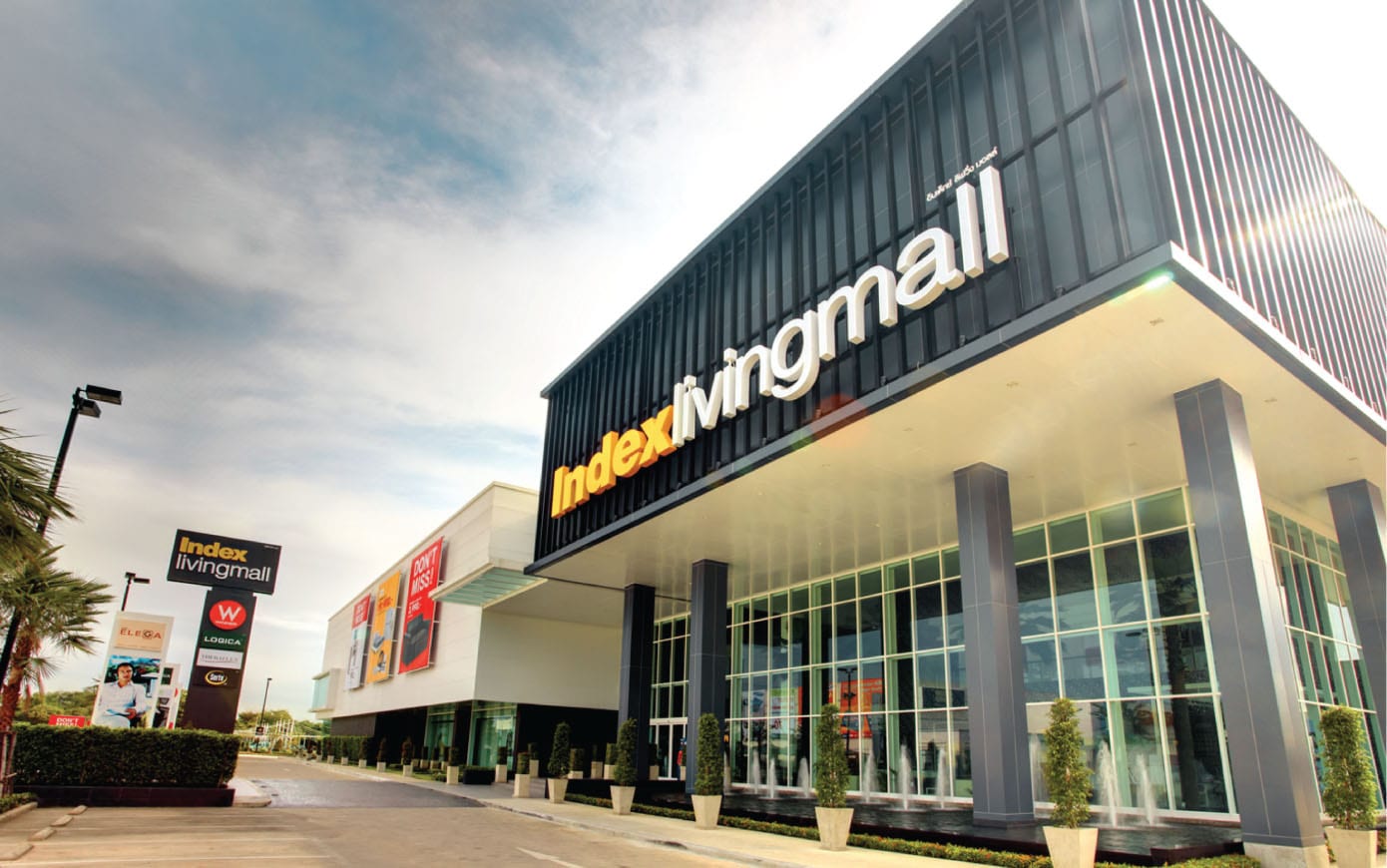
    Home-furnishing retailer Index Living Mall has announced its 2020 vision to continue its push beyond Thailand into other ASEAN countries.

    With franchised stores already trading in Malaysia, Thailand and Vietnam, the company believes the region’s urbanisation has shifted consumers toward a more modern lifestyle, including the way they buy and use home-furnishing products. It also notes a rise in the number of middle-income earners throughout the ASEAN Economic Community.

    MD Kridchanok Patamasatayasonthi says the company aims to double the present 5 per cent contribution to its total revenue from AEC markets by 2020. The company’s total revenue of Bt9.5 billion (US$264.8 million) last year was 5 per cent up on 2014.

    “Our market expansion through international franchisees is the result of growth in the home-furnishing and accessories sectors among ASEAN member countries,” says Kridchanok. “Other positive factors, including the bustling economic outlook, rising gross incomes and similar customer behaviour, helped accelerate our decision to look for investment opportunities in new markets.”

    She says the company has appointed VinDS, the retail investment arm of Vietnamese commercial property developer Vingroup, as its franchisee to tap into the home-furnishing and accessories retail market in that country. The first Index Living Mall under that partnership had a soft opening last month in Ho Chi Minh City, occupying 7000 sqm in Vincom Mega Mall Thao Dien. Costing more than Bt200 million, the store is expected to achieve Bt350 million in sales in its first year.

    Index Living Mall has had a store trading in Ho Chi Minh for more than four years, effectively testing the market. Now with VinDS it expects to open 10 more stores in major cities in Vietnam, including Ho Chi Minh, Hanoi and Da Nang, within five years.

    “Economic growth indicators show that the Vietnamese retail market is number two in Asia, after only China,” says Kridchanok.

    “During the first half of last year, the Vietnamese economy posted 6.28 per cent growth, the highest since 2008. With a population of 90 million, this will continue to grow, thanks to per capita income rising more than 10 per cent over the past decade.”

    Kridchanok says it is expected that the number of Vietnamese earning a median income of 15 million dong ($673) a month will grow to 33 million by 2020.

    Index Living Mall’s director for international business development Ekaridhi Patamasatayasonthi says the company’s venture into Vietnam highlights its marketing direction to tap into emerging CLMV (Cambodia, Laos, Myanmar and Vietnam) markets, aimed at strengthening its leadership position in the home-furnishings and accessories retail market in the ASEAN region.

    Ekaridhi says the company plans to open store in Manila in September via a joint venture with SM Retail, a Philippine business conglomerate involved in shopping mall, property development, banking and retailing. Index Living Mall has a 30 per cent stake in the venture.

    In Malaysia, Index Living Mall opened its first home-furnishing store in Putrajaya last year in a joint venture with AEON. Three more stores are planned for Malaysia this year – in Kuala Lumpur in March, Kota Bharu in April and Johor Bahru in the fourth quarter.

    Ekaridhi says there are six franchised stores in five countries – Malaysia, Russia, Maldives, Nepal and Vietnam – as well as dealers in Laos and Myanmar. In its home country, the company has 25 stores in 17 provinces, of which nine are in Bangkok. It plans to invest Bt470 million this year to open two stores, in Nakhon Pathom and Chachoengsao.

    Index Living Mall expects to post Bt10 billion in revenue this year and to grow its annual sales by 10 per cent over the next five years.

  • Siam Paragon innovative strategy to bait customer

    Siam Paragon innovative strategy to bait customer

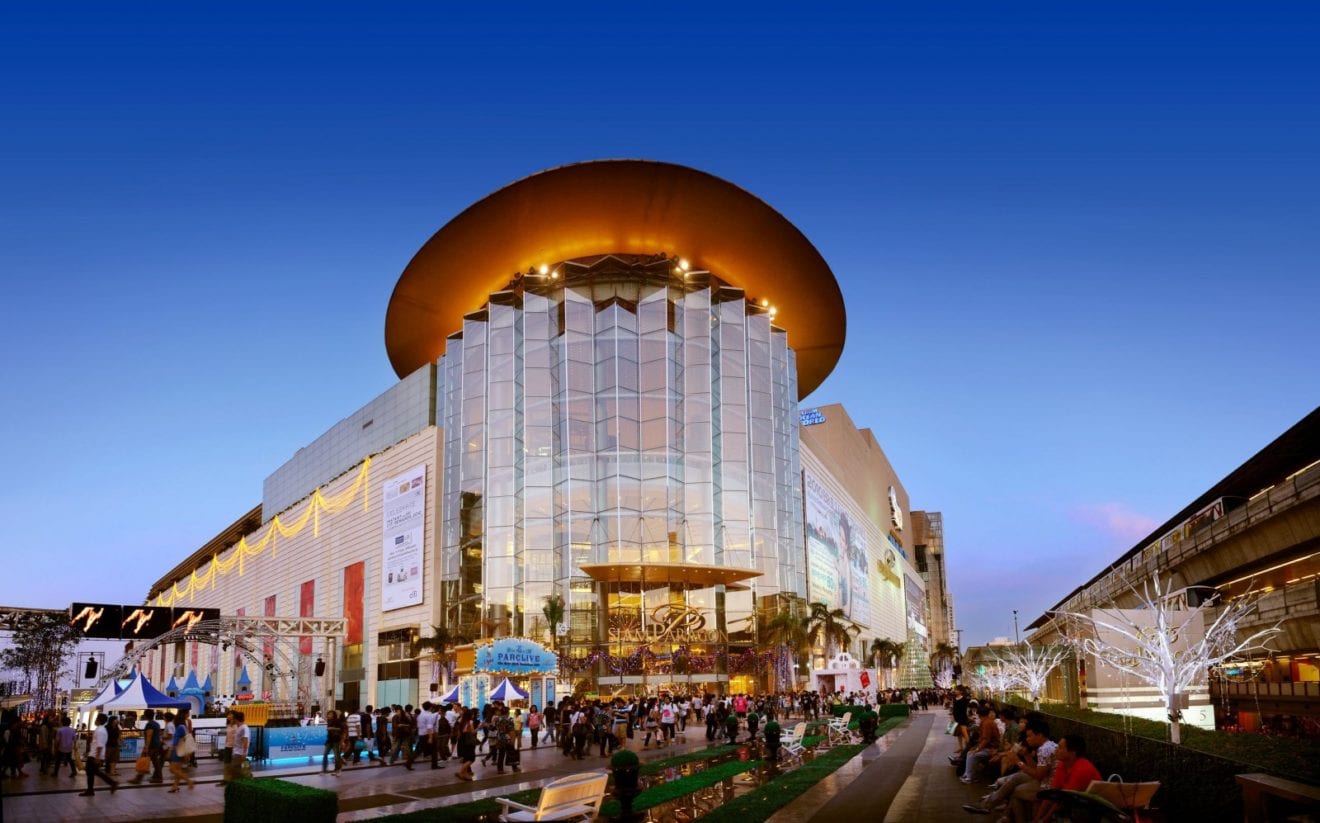
    Discounts of up to 80 per cent and a chance to win prizes – including gold bullion – are key elements in a Chinese New Year campaign at Siam Paragon and Siam Center in Bangkok.

    Running from February 3 to March 13, the Siam Prosperous Chinese New Year 2016 campaign is offering 7.5 million baht ($200,000) in prizes for lucky shoppers. The aim of the event is to attract both locals and international tourists to the two malls, which feature fashion and lifestyle brands.

    A feature of the campaign is a free daily performance of The Magic of Seven Animals of the Gods by Hong Kong performance troupe Lok Chee Fu, at the Parc Paragon events space, where the celebrations will be officially launched on February 4.

    Marketing executive Chanisa Kwewruen of Siam Piwat, which runs the two centres, says the annual festival attracts more tourists each year, especially from China, Hong Kong, Singapore, South Korea and Taiwan.

    Chanisa Kaewruen, Deputy Managin ... am Piwat (center) and model


    “Tourists of Chinese descent comprise nearly 50 per cent of the foreign tourists who visit the two shopping centres.

    “Also, this Chinese New Year marks the first time the ASEAN Economic Community is officially involved.”

    Shoppers will receive a lucky-draw coupon for every 2000 baht they spend. The main prizes at stake include gold bullion worth 1 million baht (one winner), a model of the Royal Barge Suphannahongmade of 99.9 per cent yellow gold by Prima Art (two winners) and eight propitious trees made of 99.9 per cent yellow gold by Prima Art (20 winners). The 24 top spenders of the week will each win a 100,000-baht treatment from The Scarlett Clinic.

    Privileges are also offered for holders of participating credit cards.

    Meanwhile, the Siam Chinese New Year Sale from February 3 to 14 offers discounts of up to 80 per cent on leading brands. Special Siam Ang Pao (also known as Siam red envelopes) are also given away to shoppers from February 6 to 8, enabling them to win gift vouchers and discount cards.

    Ten Siam Paragon customers who spend 300,000 baht on February 8 will each receive a TWG hamper worth 10,000 baht.

  • Celebrate Chinese New Year at the EM District with a giant flying dragon

    Celebrate Chinese New Year at the EM District with a giant flying dragon

    Ever wondered what would happen if you combined Chinese New Year with Game of Thrones? The EM Disctrict did, and the result is the world’s first 40 meter long flying dragon hovering over EmQuartier. Come gasp at its 10 meter tall head. Go gape at its humongous mirrored body.

    The majestic dragon, along with a Thai Hanuman monkey god, comes to life in performances of light, color, music and sound every day at 7pm and 8pm from Friday February 5, 2016 to Monday February 8, 2016.

    Legend has it that whoever lays eyes on the dragon will have good luck. (Good luck, more money, more shopping.) And good luck will come in handy indeed with all the giveaways going on.

    img_2207

    Spend 2,000 THB at participating stores, or 1,000 THB at the Dining Hall, and you could win 1 kilogram of gold. There are 9 kilograms to be won worth a total of 1.2 million THB. And with a Platinum M Card and True You membership you have an even bigger chance of winning.

    Be one of the first 1,000 people to spend 1,000 THB at restaurants at Emporium and EmQuartier and you’ll receive a special Fortune Cookie and a chance to win even more cash and vouchers.

    Plus, each day, the first 30 people will be eligible for a special fortune telling session with the famous Ajarn Han and Ajarn Panupong.

    As part of the celebration, the ground floor of EmQuartier has been turned into a chic and bustling Chinese Outdoor Market. Here you’ll find delicious Chinese food and snacks and all the CNY merch you could ask for. Stock up on special dishes and Chinese goodies. And with the cold weather we’ve been having it will feel even more like an open-air market in Hong Kong of Shanghai.

    Be sure to take a lucky selfie and EmQuartier’s lucky waterfall while you’re there. Ok it’s just a normal waterfall but it’s a great selfie spot anyway.

    img_2302

    Feeling lucky yet? Head on over to experience the Chinese Chronicle 2016 at EmQuartier and Emporium during the entire month of February. Don’t miss the Flying Dragon performances though. The show starts at 7pm and 8pm and will only go until Monday February 8, 2016.

    For more information check out The Em Disctrict’s Facebook page.

  • Indonesia to host 30th IAPH World Ports Conference 2017

    Indonesia to host 30th IAPH World Ports Conference 2017

    Indonesia will host the 30th World Ports Conference of the International Association of Ports and Harbors (IAPH) in 2017, the spokesperson of the state port operator PT Pelabuhan Indonesia (Pelindo) III Edi Prayitno noted here on Friday.

    “In 2017, Pelindo I, II, III, and IV will be active IAPH members to host and hold the biannual conference that will take place at the Bali Nusa Dua Convention Center on May 7-12, 2017,” Edi stated.

    The conference would serve as a platform to share experiences and common interests on certain issues faced by port officials globally.

    Currently, Pelindo I, II, and III are holding a preparation meeting in Bali, which is being attended by more than 1.5 thousand members and delegations from around the world.

    iaph-press-05-06

    “Pelindo, a state-owned enterprise involved in the management of Indonesian ports, must actively play an important role in local and global port activities, one of which is by participating in the IAPH,” he pointed out.

    The conference is considered as one of the measures to deepen business relations with other port officials in the world in addition to improving and updating their knowledge.

    “This conference is expected to be a potential forum for Indonesian seaport businesspersons to mutually promote ideas and products along with serving as a means of promotion and learning about port management in the country,” affirmed Edi.

    The IAPH, established in 1955, represents more than 200 ports in 90 countries, with total cargo being serviced reaching 60 percent of the global trade by sea, as well as nearly 80 percent of the flow of containers around the world.

    In addition, individuals and organizations that are interested or are involved in a variety of port and maritime businesses in this organization are the associate members.

    “The IAPH is a non-profit and non-governmental organization that is headquartered in Tokyo, Japan,” Edi added.

  • Japan retail sales tumble

    Japan retail sales tumble

    Japan retail sales fell more than expected in December, with data suggesting that sluggish household spending will keep fourth-quarter economic growth subdued.

    While analysts expect the Bank of Japan to hold off on any more monetary easing at its latest rate review, the weak data is expected to keep policy-makers under pressure to do more to help the fragile economy recover.

    Retail sales fell 1.1 per cent for the month compared with the previous December to mark the second straight month of declines, trade ministry data shows.

    “It seems households are tightening their purse strings because of rising food costs,” says SMBC Nikko Securities chief economist Junichi Makino.

    Japan’s economy has emerged from recession, but growth remains subdued with sluggish demand and a slow rate of growth rate for wages.