Blog

  • Apple standout winner in China’s luxury slowdown

    Apple standout winner in China’s luxury slowdown

    Chinese corporates and wealthy consumers are taking gift-giving down a notch this Lunar New Year, opting for iPhones instead of Birkin bags or Louis Vuitton wallets.

    The annual holiday, which falls on February 19-20 this year, is a time of gift exchange between family, colleagues and business contacts.

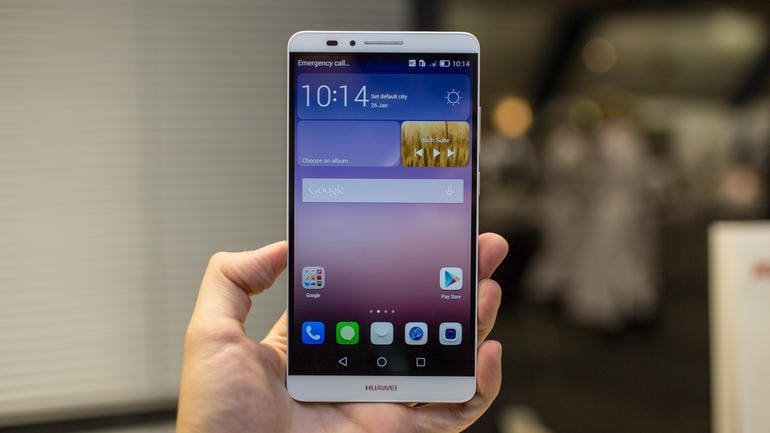
    “The iPhone 6 has replaced luxury items as a key gift this Chinese New Year,” Shaun Rein, founder and managing director of the China Market Research Group told CNBC. “Corporates, for example, used to buy luxury products to give their high performing employees, now they are giving iPhones because they more reasonably priced and still considered premium enough,” he said.

  • China Fruits boosts retail network

    China Fruits boosts retail network

    Chinese fruit wholesaler and exporter China Fruits Corporation expanded its store network to 64 shops in 2014.

    The franchised network, built and operated by its subsidiary Taina International Fruits, stood at just 13 at the end of 2013. Now the company is set to expand the branded store network nationwide.

    CFC specialises in tangerines, which it grows, as well as wholesaling and exporting produce. But it is find retailing a lucrative arm of the business, catering to the increasing number of Chinese seeking fresh produce from reliable sources in the wake of a growing number of food safety scares in recent years.

    Besides its physical store network, China Fruits is selling on more than 10 well-known e-commerce platforms, including Tmall, JingDong mall, Taobao, yhd.com, Gome.com.cn – and has built its own official online store.

    In 2014, the Taina Fruits eCommerce generated approximately $1 million in revenue, representing a growth rate of 100 per cent every month. It has been rated number one in online sales of fresh fruit in Beijing area since its launch in August 2014.

    China Fruits says it achieved a Chinese eCommerce record last year, selling 218 tons of winter jujube fruit within just 39 days.

    “We plan to devote into developing e-commerce in 2015, which is going to be a significant component of our business expanding strategies,” said Quanlong Chen, chairman and CEO of the US-listed China Fruits Corporation.

    “Being a leading company of fruit e-commerce in China is always our goal and direction.” The company has raised capital internationally to strengthen its branded franchise fruit retail stores and plans to “dig deeply in this niche”.

  • Chic Outlet malls chase Chinese

    Chic Outlet malls chase Chinese

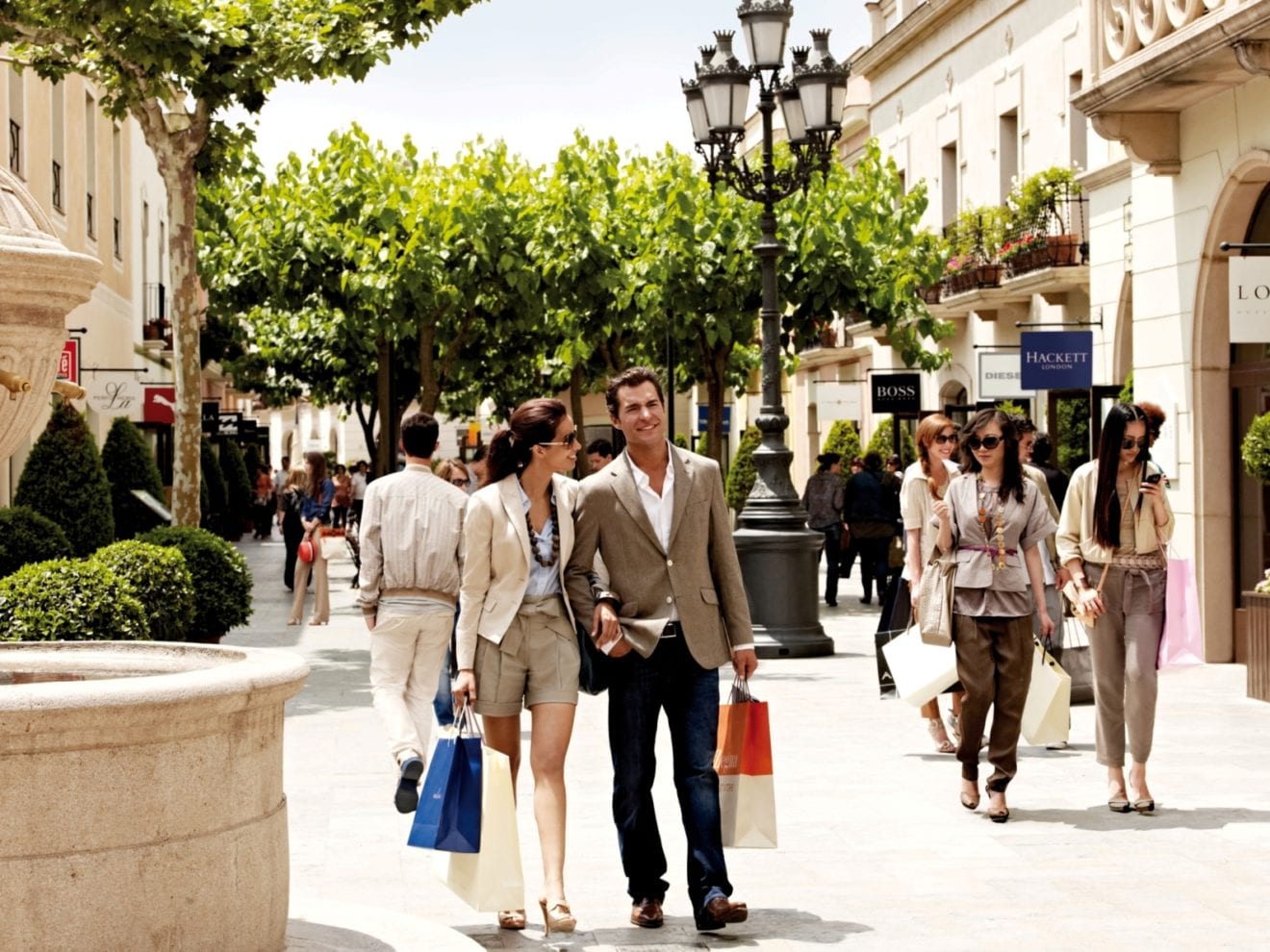
    European chain Chic Outlet Shopping Villages believes embracing the Lunar New Year festivities will boost engagement with Chinese tourists.

    The European-based network, which chose China for its 10th outlet centre and its first outside Europe, will celebrate Chinese New Year in partnership with China payment system UnionPay International throughout February.

    The nine Chic Outlet Shopping Villages in Europe will join the 10th – branded Village by Value Retail – in Suzhou Village in offering guests the chance to share wishes across the world, along with exceptional offers for Chinese guests.

    The Suzhou mall will also host a full calendar of Lunar New Year events, tailored to the local populace.

    The Chic Outlet Shopping Villages welcome thousands of Chinese guests every year, who are drawn to the Villages’ distinctive selection of brands, authentically European ambience, and exceptional value. In 2014, China accounted for 44 per cent of all tax-refunded (non-EU) sales in the Villages across Europe, with an increase in sales of 29 per cent year on year.* UnionPay International is now accepted at many boutiques in the Villages across Europe, making transactions easier than ever for international guests.

    Chinese guests of the European Villages can register their details online at ChicOutletShopping.com to receive a special Chinese New Year red envelope, which they can collect from the Welcome or Tourist Information Centre on arrival at their chosen Village. The envelope will include offers for participating boutiques in the Village, in addition to UnionPay International ‘wish’ tag for guests to add their very own wish to the Wishing Tree. These wishes will not stop at the Villages – they will travel the world via social media, as guests are invited to share their wishes and Wishing Tree photos with a dedicated hashtag for each Village.

    “A time for family, gift-giving, fireworks and festivities, Chinese New Year is celebrated by one in six people around the world,” the company said.

    “The festival is associated with the colour red and it is good luck to give and receive red packages during this time. Traditionally, those celebrating will cast red ribbons or tie wishes to a ‘Wishing Tree’, in the hope that their wish will come true and bring them good fortune in the coming year. The Villages in Europe each feature their own Wishing Tree for guests to cast their wishes for the coming year.”

    Suzhou Village in China is also helping make some of its visitors’ wishes come true with a lucky draw held in partnership with Suzhou TV. Guests will be invited to submit their wishes for the Year of the Ram while visiting the Village, and stay tuned for a film crew from the channel surprising them on their doorstep.  Each week, one lucky winner will receive 5000 RMB and 50 runners up will receive 500 RMB.

    A second Village by Value Retail China, Shanghai Village, will be located in the Shanghai International Tourism and Resorts Zone, which includes the Shanghai Disney Resort, and will open in the autumn of 2015.

    The existing 10 malls are home to more than 1000 boutiques of international fashion and luxury brands – all offering savings of up to 60 per cent on the recommended retail price.

    Chic Outlet Shopping is a unique concept in outlet shopping created by Value Retail, the only company to specialise in the development and operation of luxury outlet shopping destinations. The European malls are located within easy reach of some of Europe’s major gateway cities – London, Dublin, Paris, Madrid, Barcelona, Milan, Bologna, Brussels, Antwerp, Cologne, Frankfurt and Munich.

  • Korea’s E-mart tackles China – again

    Korea’s E-mart tackles China – again

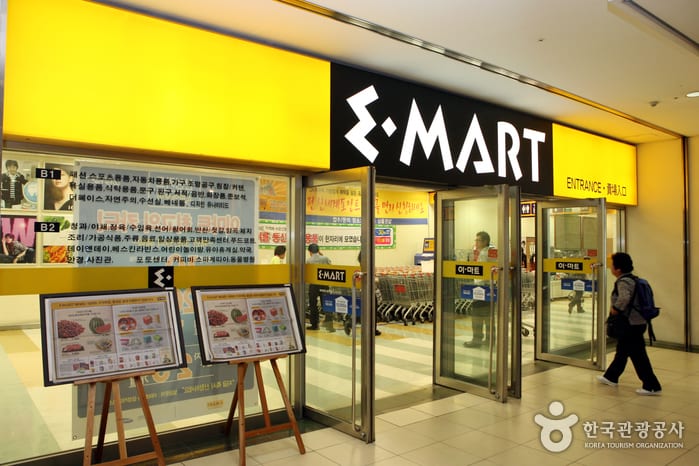
    South Korea’s largest discount chain, E-mart, is to start selling on Alibaba’s T-mall in a fresh attempt to break into China’s seemingly impenetrable online market.

    The Korean company believes the Alibaba-powered online shopping mall is the key to success after previous attempts to crack the China market flopped.

    From mid-March, E-mart will sell about 100 food and electronic products, including rice cookers and soybean paste on Tmall Global.

    E-mart would be joining other South Korean retailers including Interpark and G-market.

    E-mart said in a release that it plans to broaden its product offer to about 500 lines by June 30, focusing on products which have proven popular among Chinese tourists visiting Korea.

    It will use sales figures from its Jeju and Incheon stores – both popular destinations for Chinese tourists – to build its Tmall product offer.

    “We believe the move will enhance access to a new segment of customers, besides tourists, that are interested in Korean products,” said Kim Nam-gon, a PR executive with E-mart’s parent Shinsegae.

    E-mart will sell goods in China at a slightly higher price than in Korean stores, reflecting the distribution cost of getting the products to Chinese consumers.

    The retailer has struggled to gain any momentum in the China market to date through physical stores. Last December it closed five stores in Tianjin province, reducing its bricks and mortar network to just 10 from a peak of 27 at one time.

  • Taiwan convenience store boom

    Taiwan convenience store boom

    Taiwan convenience store sales are expected to hit a record US$9.52 billion in 2015 according to Taiwan’s Ministry of Economic Affairs.

    So fast is the growth, Taiwan’s convenience store network now has the highest density of any country in the world: overtaking even Japan.

    Taiwan’s c-store population rose from 9958 in 2013 to 10,131 at the end of last year, which equates to one store per 2300 people, compared with one per 2450 in Japan.

    The boom has been fuelled by an ongoing expansion of c-stores’ core lines, and diversification into services, such as bill paying, transportation tickets, phone top-ups and event ticketing.

    In 2014, Taiwan convenience stores achieved net sales of NT$289.2 billion, up by 4.8 per cent year-on-year. In 2013, the figure was NT$276.1 billion, 3.1 per cent higher than the previous year. Next year’s sales will top NT300 billion, a further 3.73 per cent increase.

    The ministry started compiling commercial sales data in 1999, and has tracked steady increases every year since.

    Taiwan convenience stores now account for 26.1 per cent of Taiwan’s total retail sales, up from 20 per cent in 1999.

    Department stores continue to account for the largest share of the nation’s retail sales – 27.7 per cent. But with the gap now so narrow, c-stores could well become the top retail category in 2015.

    Hypermarkets take third spot, with 15.9 per cent of the retail market, supermarket’s 15.1 per cent, the ministry’s data revealed.

    While the range of products and services offered by Taiwan convenience stores continues to grow, food and beverages still account for the vast majority of sales – 87.8 per cent by value in 2014.

  • Lowe’s opens India innovation centre

    Lowe’s opens India innovation centre

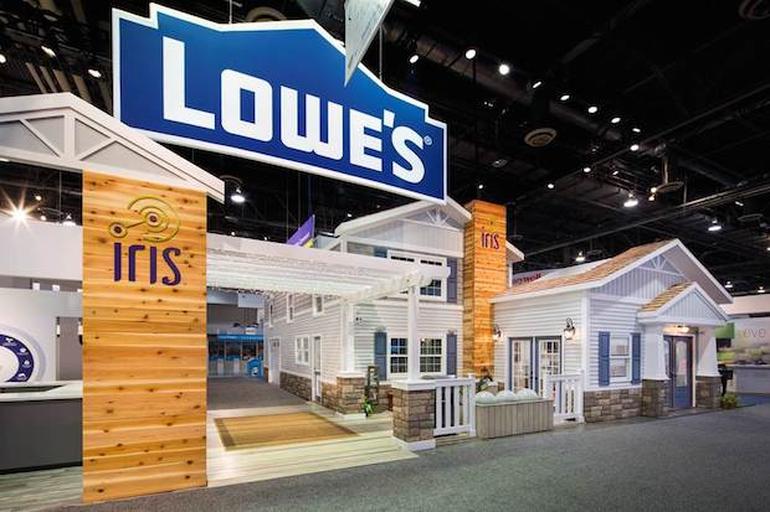
    Lowe’s Services India, a subsidiary of Lowe’s Companies US, has opened a Global Innovation Center in Bangalore, India.

    Lowes, the world’s second largest home improvement retailer, says the centre will focus on “the next-generation customer experience”, by emphasising technology and analytics to provide customers with a more personalised shopping experience.

    “This centre will work towards building a strong team to support Lowe’s efforts to become an omni-channel home improvement company,” the company said in a statement.

    The new GIC is led by Narayan Ram, MD of Lowe’s India and will provide Lowe’s with a strategic footprint to leverage Bangalore’s potential for technology-led innovation, in addition to engaging India’s growing talent pool. The facility, spread over 110,000 sqft, expects to employ approximately 500 people by the end of 2015.

    Robert Niblock, chairman, president & CEO of Lowe’s Companies, said,the centre will bring to fruition a valuable part of the company’s analytics and technology potential.

    “We feel confident that with this strengthening of our presence in India, we will be able to provide more personalised experiences to customers, helping us continue our pace of strategic growth.”

    Ram said the centre will employ the concept of ‘one team, multiple locations,’ as the company works across its global organisation to apply the power of analytics and technology to the Lowe’s business, “so customers can engage with us whenever and however they need support”.

    “We are planning to invest even more in our local teams and innovate omni-channel retail, which underlines our commitment to delivering a consistent experience to the customer, however they choose to shop with Lowe’s.”

    Lowe’s serves some 15 million customers a week in the US, Canada and Mexico at more than 1835 home improvement and hardware stores and online at lowes.com, lowes.ca and lowes.com.mx.

  • Atletico Madrid plans 200 China stores

    Atletico Madrid plans 200 China stores

    La Liga football league champions Atletico Madrid are set to cash in on growing Chinese fascination of European football by opening a retail store network in China.

    Atletico Madrid will open 200 retail outlets in China, according to Chinese news agency Xinhua.

    Such a network would be considerably larger than other football teams’ retail presence in China. Manchester United, Chelsea, Real, FC Barcelona and Arsenal all have a presence, on differing scales.

    The stores will be opened in Wanda Malls, owned by Chinese businessman Wang Jianlin, who took a 20 per cent stake in the Spanish club earlier this year.

    The club sees the stores as an important tool to broaden its brand awareness in Asia.

    Atletico already has a deal with Chinese football club Shanghai Shenhua and trains a number of Chinese youngsters as part of ‘Project Wanda’ to help develop young footballers.

    Atletico is expected to tour China between seasons.

  • Woolworths bolsters David Jones team

    Woolworths bolsters David Jones team

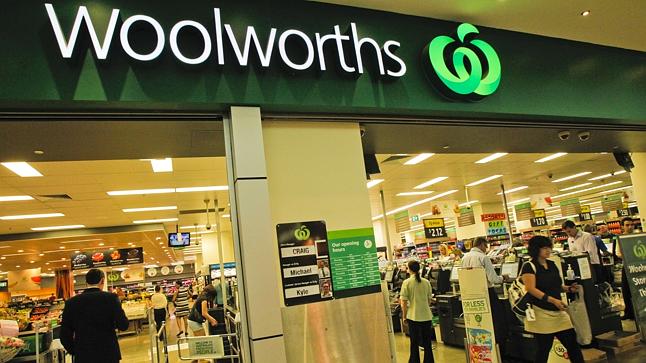
    South African retailer Woolworths has bolstered the board of its Australian subsidiary, Vela Investments, the vehicle for its AUD2.1 billion (USD1.63b) takeover of David Jones last year.

    Woolworths has appointed four new directors to the Vela Investments board – corporate adviser Patrick Allaway, David Jones acting chief financial officer John McRae, Woolworths’ finance director Reeza Isaacs, and Woolworths’ chief operating officer Daniel Ngumeni.

    They join Woolworths chief executive Ian Moir, David Jones chief executive Iain Nairn and David Jones chief operating officer David Thomas on the Vela board.

  • Sherri Hill wins Hong Kong copycat case

    Sherri Hill wins Hong Kong copycat case

    A Hong Kong retailer of knock-off designer dresses has been hit with a $2.25 million judgment by US-based Sherri Hill and order to shut down a string of online stores.

    Sherri Hill, a US designer and retailer of quality prom dresses and evening gowns, has won a permanent injunction against Dress Market , a Hong Kong-based dress retailer who had been operating a network of websites peddling cheap knockoff prom and pageant dresses.

    Additionally, after the injunction had been entered, Dress Market had committed contempt of court by defiantly re-posting Sherri Hill’s copyrighted images. In addition to imposing monetary damages, the court ordered all eight domain names and websites operated by the Hong Kong company be completely shut down and transferred to Sherri Hill.

    Gioconda Law Group Sherri Hill Dress

    In the original complaint filed in federal court in Manhattan in August 2013, Sherri Hill had accused Dress Market of selling hundreds of Sherri Hill dresses through multiple websites, including MerleDress.com, which, as a result of the case, now directs to Sherri Hill’s website.

    The complaint alleged that, by using Sherri Hill’s copyrighted images, Dress Market deliberately confused consumers into thinking they were getting the same style and quality products, when the actual quality of the dresses was much lower. Several dresses had been shipped to investigators in New York City by Dress Market’s employees, according to court papers.

    Dress Market’s lawyers unsuccessfully sought to have the case dismissed, arguing that the US federal courts lacked jurisdiction because Dress Market was operating its business entirely out of China and Hong Kong.

    But the court found that the sale and shipment of several dresses to the New York investigators, along with the unauthorised display of copyright images to New York consumers, were sufficient activities to warrant granting US federal courts jurisdiction over the infringing conduct occurring in China.

    After the preliminary ruling, Dress Market’s lawyers then sought to formally withdraw, claiming that the defendant had ceased communication.

    The federal lawsuit, filed by New York brand protection specialist Gioconda Law Group, successfully sought the statutory damages and a permanent injunction.

    “Sherri Hill will continue to protect her valuable trademarks and copyrights aggressively, both online and in the bricks-and-mortar context,” said Joseph C. Gioconda, her attorney for Sherri Hill.

  • Periwinkle childrens clothing targets ASEAN

    Periwinkle childrens clothing targets ASEAN

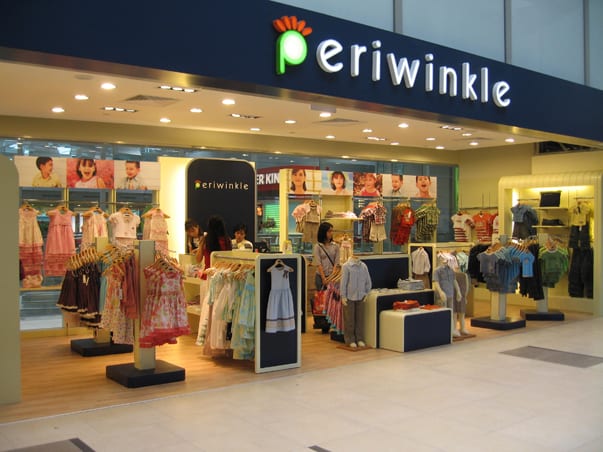
    Periwinkle childrens clothing has opened its first store in Indonesia through a licensing agreement with an Indonesian partner.

    The Philippines retailer, which already has a presence in Singapore and Canada, received support from the Department of Trade and Industry, as part of a program to help retailers from the Philippines expand into other ASEAN markets with the advent of the Asian Economic Community (AEC) this year.

    “We intend to assist local companies with established brands, expand in the international market by partnering with foreign companies, particularly in the Asean countries, and promote the Philippines as a reliable and competitive source of global fashion retail brands,” said Trade Undersecretary Ponciano C. Manalo Jr.

    Periwinkle’s first store is a concession at the newly opened Central Department Store at the Grand Indonesia East Mall in Jakarta.

    It will open a second concession at British department store Debenhams at the Senayan City Mall and is currently evaluating franchising in Indonesia.

    Periwinkle’s partner in Indonesia is the Boga Group, which is active in the food and beverage and retail sectors, operating some 1000 hundred restaurants and retail outlets in Jakarta, Bandung, Surabaya, Yogyakarta, Medan, Makassar and Bali.

    “Periwinkle’s presence in Indonesia is an excellent opportunity for the retail brand to aim for wider regional expansion in light of the AEC 2015,” said Alma Argayoso, Philippine Trade and Investment Center Jakarta commercial counsellor.

    “We are optimistic that Periwinkle’s high-quality design will be patronised by Indonesian society, particularly sophisticated mothers, who love dressing up their children,” he said.

    The DTI is providing support to retailers through business counselling, business matching and brand promotion.

    Periwinkle executive Allan Hao Chin said the Boga Group partnership is purely a licensing agreement and the company will consider a full scale franchise and other options including a joint venture, depending on the success of the initial stores.

    “It is a milestone for Periwinkle to be present in Indonesia, Southeast Asia’s largest economy, and being able to share our brand globally,” Chin said.

  • China tops tax free shopping rankings

    China tops tax free shopping rankings

    The Chinese remain the world’s biggest spenders on tax free shopping according to new rankings released by Global Blue.

    Travellers originating from China spent 18 per cent more in 2014 than the previous year, extended their lead over Russians whose spending fell 17 per cent in wake of the rouble’s dramatic devaluation.

    Global Blue, a specialist in international tax free shopping, operating duty refund concessions, runs a research unit monitoring duty free spending trends around the world. The company says China and Russia are by far the most lucrative countries of origin for globe shoppers, with Chinese shoppers now accounting for one third of all tax free shopping spend globally. Chinese residents account for 30 per cent of spending and Russians 14 per cent. It’s a long way back to the US, which accounts for just four per cent (perhaps reflecting while the US economy is massive, its citizens rarely travel internationally).

    Indonesia is a surprising fourth accounting for three per cent, then Japan with two per cent.  Five of the top 10 nationalities increased their Tax Free Shopping spend by more than 15 per cent in 2014 – Taiwan, Hong Kong, China, Kuwait and Saudi Arabia.

    Almost half of purchases were related to fashion and clothing – by far the largest category globally – followed by watches and jewellery at 17 per cent.

    “Clearly we are entering a new normal in terms of Tax Free Shopping growth, however it is important to remember that for the seventh consecutive year Chinese globe shoppers are still the biggest spending nationality, spending on average 736 euros per transaction,” said David Baxby, Global Blue’s CEO.

    Top 10 Shopper Nations in 2014, with growth vs. 2013:

    1 China  +18%

    2 Russia -17%

    3 USA +8%

    4 Indonesia -10%

    5 Japan -12%

    6 Taiwan +29%

    7 Hong Hong +25%

    8 Thailand -10%

    9 Saudi Arabia +15%

    10 Kuwait +18%

    Exchange rates impact

    Fuelling the spending growth of residents of Taiwan, Hong Kong and China in 2014 was a good exchange rate against the euro, which continues to improve with little sign of a forecasted EU economic recovery.

    “Essentially residents of these countries are getting better and better value compared to shopping at home with every month that passes. In 2014, the number of Chinese transactions increased by a significant 38 per cent,” said the report.

    While spending by Russian residents may be down, there are always new nations emerging. Storming into sixth place, Taiwan recorded an enormous 29 per cent growth compared to 2013. The emergence of Taiwanese globe shoppers was not just felt in Asia – they also made their presence felt in Europe’s leading destinations.

    During October 2014 in Paris, Taiwanese were the fourth most valuable tourist nation growing their spending by 15 per cent year-on-year, while in November they grew their spending by 65 per cent.

    At this rate, Global Blue predicts their spending will overtake that of the Japanese in 2015.

    In Seoul, fast becoming the shopping honey pot of Southeast Asia, Taiwanese grew their spending by 25 per cent in October and were outspent only by the Chinese. In November they grew their spending in Seoul by 30 per cent and in December by 44 per cent.

    Meanwhile, Paris topped the list of cities for spending by all nationalities, ahead of London, with Singapore the highest placed Asian city in third. Seoul was sixth, the only other Asian destination in the top 10.

  • “Fifty Shades of Grey” arouses sex toy boom

    “Fifty Shades of Grey” arouses sex toy boom

    The erotic bestselling novel “Fifty Shades of Grey” was devoured across the world by millions, from British housewives to Guantanamo Bay inmates. Now manufacturers and retailers are hoping that its Valentine’s Day movie release will fuel a boom in sex toy and bondage accessory sales.

    The books have been translated into 50 languages, and have sold more than 100 million copies worldwide, making it one of the fastest-selling book series ever. It’s perhaps so mainstream that US discount retail giant Target, which specialises in everyday items, is selling “Fifty Shades of Grey” lubricant, blindfolds and “love rings”.

    British company Lovehoney worked closely with the author E L James to design official “Fifty Shades” sex toys in late 2012 and before the movie release have branched out into luxurious items. Lovehoney co-owner Neal Slateford credited the books and growing acceptance of sexual openness with causing “the adult sex toy industry to explode”.

  • Matahari expands into Ketapang

    Matahari expands into Ketapang

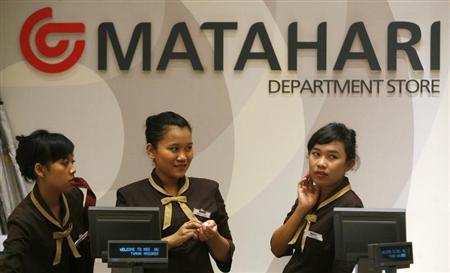
    Matahari Putra Prima has opened its 10th hypermarket – and its first in Ketapang, Kalimentan.

    The multi-format Indonesia Indonesian retailer operates Hypermart, Foodmart and Boston Health & Beauty stores. The new hypermarkets is located at Borneo City Mall, Ketapang, one of the largest shopping centres in West Kalimantan.

    It has a gross selling area of 5000 sqm and is the chain’s 11th in Kalimantan.

    An opening ceremony was attended by the Regent of Ketapang, Drs. Henrikus, MSi, Director of Hypermart, Gilles Pivon, VP Operational Hypermart, Anto Suwartono, representatives from suppliers, as well as invited guests.

    “The opening of Hypermart Borneo City Mall Ketapang is further strengthening the company’s commitment to continue the direction of its business expansion beyond the island of Java, in this case in the area of West Kalimantan,” said Danny Kojongian, director of PR and communications.

    “The Hypermart’s presence as one of the modern retail and the national pride is expected to boost the economy and urban lifestyle in Ketapang and the surrounding regions,” he said.

    Matahari Putra Prima has the widest store network among Indonesia’s hypermarket operators, located in more than 60 cities ranging from Tanjung Balai (Medan) to Jayapura (Papua).

  • Huawei in retail push

    Huawei in retail push

    Huawei Australia will rollout  ‘Experiential Zones’ at select Sydney Westfield shopping centres, showcasing its consumer product range in one location for the first time.

    Continuing its marketing push in Australia, the Huawei Experiential Zones offer customers the opportunity to explore the latest in mobile and mobile broadband technology.

    The Huawei Experiential Zones are located at Chatswood and Parramatta. An official launch will be held on February 7 and 8 at Westfield Chatswood and Westfield Bondi.

    Bondi Junction will launch on February 7, followed by Sydney City, February 9; and Miranda, March 16.

    To recognise the launch, Huawei ‘keys’ will be given to Westfield customers to access the Huawei Vault containing five Huawei Mate7 devices, with five to be won each day at each location.

  • Asians embrace Valentines Day

    Asians embrace Valentines Day

    Indonesians, Taiwanese and Singaporeans are far more likely to splurge on Valentine’s Day than shoppers in Germany or the UK, a survey reveals.

    Japan’s home-grown global online retailer Rakuten has surveyed 7000 people across the globe to gauge attitudes to Valentine’s Day and found that Asians embrace the concept much more than Europeans.

    The Rakuten Shopping Secrets survey found Indonesians (57 per cent), Taiwanese (53 per cent) and Singaporeans (45 per cent) placed top of the multi-national poll for being the most expectant to celebrate Valentine’s Day this year, heading off other countries in the poll – the US (where the tradition has been the most commercialised), the UK, Spain and Germany.  According to the survey, love is not in the air for Germans (18 per cent) or the British (36 per cent), who were least likely to celebrate the occasion.

    The survey also revealed that the majority of Singaporeans (59 per cent) do not expect to receive gifts on Valentine’s Day. But for those that are spirited enough to celebrate the occasion – receiving a trip or vacation (41 per cent), fashion accessories (27 per cent), chocolates wine and other food or drink (26 per cent) and jewellery (22 per cent) ranked highest among what they hoped to receive.

    The survey also asked respondents about choosing shopping as “a break-up therapy”. Singaporeans, not surprisingly given their penchant for shopping, were the most likely (39 per cent), followed by neighbours Indonesia (38 per cent). Germans ranked lowest at just 19 per cent.

    For those who hit the stores upon singlehood, fashion and accessories were the items most frequently bought post-breakup.

    More than half of Singaporeans who have gone through a bad breakup or relationship prefer to drown their sorrows by shopping online rather than offline in the one month after a breakup. Not feeling like going out and interacting with people (58 per cent), wanting more privacy (55 per cent) and not wanting to let people see that they look depressed (26 per cent) were the top three reasons cited.

    Launched in Singapore in January 2014, the Rakuten Singapore Marketplace currently carries over 200,000 goods from 300 merchants with a diverse mix of product categories, including fashion apparel and accessories, health and beauty products, consumer electronics, toys and games, food and beverages and home furniture.

    Rakuten is headquartered in Tokyo, with over 10,000 employees and partner staff worldwide.