
LVMH Moët Hennessy Louis Vuitton SA said on Tuesday that US consumers helped drive revenue gains last year, offsetting continued sluggish sales in China.
Blog
-

China online ad revenue soars
China’s online advertising revenues rose 40 per cent last year – to a record 154 billion Yuan.
(US$24.6 billion), according to iResearch Consulting Group.
The strong rise occurred despite slowing economic growth and subdued consumer spending. But it did come at a time online shopping rose by a similar rate.
iResearch said in a report that the rise was slightly lower in percentage terms than the previous year, predicting the sector might now be entering a new “maturity age”.
“Some traditional internet media faced slow growth… while some showed strong momentum driven by new advertising technology and emerging forms of advertising. Moreover, the brand advertisers’ spending flocked {from traditional media} to digital media.”
According to iResearch, keyword search advertising made up 28.5 per cent of the total spend, the share up two per cent on 2013.

Next was eCommerce advertising with market share of 26 per cent, a slight fall compared with 2013. Brand graphic advertising occupied 21.2 per cent.
Advertising on portals and social media increased, mainly due toTencent’s Guangdiantong advertising service and Sina’s Weibo.
“It reflected that internet enterprises more efficiently match advertising demand with advertising sources via data analysis and technology in order to raise their advertising revenues.”
In-video advertising revenues also maintained a high growth rate in China in 2014, due to widespread interest the World Cup in Brazil and popular variety shows such as I Am Singer II, Where are we going? Dad II, and Voice China III.
“Moreover, well-known brand advertisers attached more importance to online video and their increasing online video advertising budget contributed to growth of in-video advertising revenues,” said iResearch.
The biggest player in China’s online ad market remains Baidu’s, China’s equivalent of Google, which is blocked in the mainland. Baidu’s ad revenues surpassed 49 billion Yuan in 2014, increasing 53.5 per cent from 2013. Taobao gained 37.5 billion Yuan in revenues, ranking second. Together, Baidu and Taobao accounted for 56.2 per cent of the total online advertising market.
iQiyi & PPS, Qihoo 360 and Tencent all posted good revenue growth. iQiyi & PPS increased their investment in exclusive broadcast of quality content and kept adding more user-generated content. Moreover, it managed to monetise its mobile business and increase its advertising revenue.
Qihoo 360 raised brand awareness of its search business in 2014, increasing traffic, which boosted its market share. Search became the core contributor of Qihoo 360’s advertising revenue.
iResearch predicts a broadening of WeChat’s advertising sources and development of Guangdiantong mobile advertising networks will push up Tencent’s ad revenue.
-
Korean marketplace to launch in Malaysia
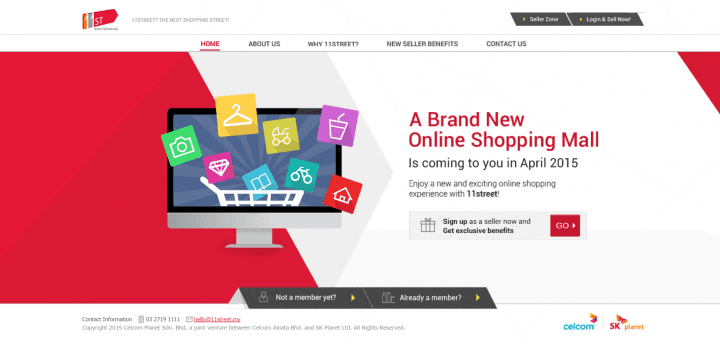
Korea’s largest online marketplace 11street says it will launch in Malaysia in April.
The company will invest more than RM35 million (US$10 million) to drive seller participation and aims to have 11,000 sellers on board by launch date. The site will be at
11street’s Malaysia CEO Hoseok Kim says the company wants the new site to become Malaysia’s largest online marketplace.
Established in Korea in 2008, 11street now has online marketplaces in Turkey and Indonesia as well as in its home market and boasted a combined network of 22 million sellers, serving 40 million consumers. Shoppers spend $6 billion annually on its sites.
“The online shopping paradise 11street in Malaysia is the company’s commitment to deliver local consumers a trustable and convenient e-commerce platform where they can shop for a variety of products across a broad range of categories available at anytime, anywhere,” said Kim.
“To deliver greater satisfaction and a more rewarding online shopping experience, it will be the first online marketplace in Malaysia that promotes not only physical products but also deal offerings such as e-vouchers under a single platform.”
Kim said the company’s $10 million investment would aim to encourage Malaysian sellers – including bricks and mortar businesses – to join 11street.
“We wish to foster continued eCommerce growth and elevate the maturity of the industry by empowering more local offline businesses particularly SMBs to break-through the traditional business model and explore the numerous eCommerce opportunities in the online space.”
Kim said that unlike other existing eCommerce websites, 11street has a hybrid eCommerce model whereby its ecosystem can support all types of sellers, including individual sellers, e-entrepreneurs, SMBs, retailers and service providers.
“Bolstered with expertise and know-hows gained through its worldwide ventures, 11street can empower the online sellers as well as traditional brick and mortar businesses to maximise sales and succeed in eCommerce – which in turn will accelerate Malaysia’s online shopping market growth.
“11street is equipped with unique and sophisticated online merchandising tools to support the complete online business set-up. Our ‘Seller Zone’ will be the first eCommerce education centre and support facility in Malaysia to advocate eCommerce sellers, where seminars and workshops will be given on a regular basis.
“Seller Zone is among the most significant investments that 11street has put in to grow the Malaysia’s eCommerce sector,” said Kim.
“In response to the mobility trends, we will also offer an integrated mobile interface and application upon 11 street’s official launch to support sellers in better managing their stocks, product marketing programs, payment settlements; and offer the analytics capability to help them retain customers with improved online shopping experience.”
As part of an early bird promotion to attract sellers prior to April, 11street will offer free stores, 50 per cent discount on transaction fees, complimentary use of Seller Zone facilities, promotion credits and product listing coupons. sellers who register before April 2015.
eC
“11street’s merchandising approach has a proven track record given that its worldwide ventures have grown remarkably well over the past few years. Against such backdrop, similar approach will be adopted to help Malaysian online sellers to excel in today’s increasingly competitive market.”11streeet in Malaysia will be hosted by Celcom Planet, established in November 2014 as a joint venture between Celcom Axiata Berhad and SK Planet – a leading Korean eCommerce open marketplace provider, which is also a wholly-owned subsidiary of mobile operator- SK Telecom.
-

Snapdeal gains a lot of weight, turns 5
After doing USD2 billion gross merchandise value of sales last year, Snapdeal seeks to hit USD3 billion in the next two months; Its seller base has grown to 100,000, from 1,000 in 2012.
-
Tata International to set up outlets for footwear brands
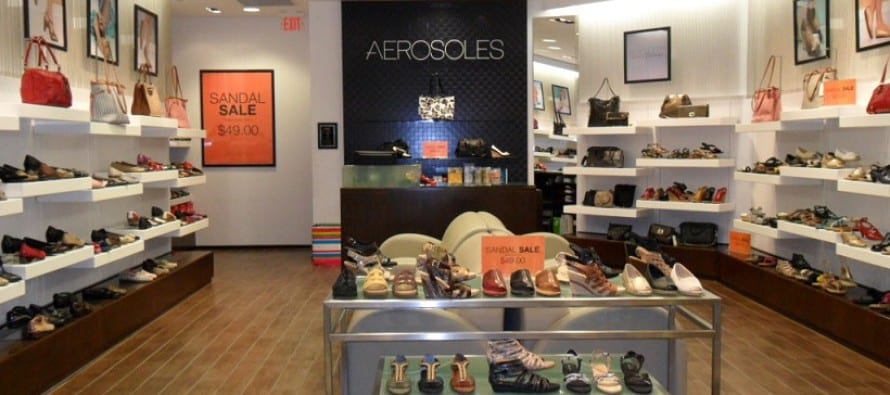
Tata International, the global trading and distribution company of the Tata group, is planning to set up exclusive branded outlets for four new footwear brands. The company will launch these for the domestic market by September this year.
-
Slumping sales, store closures hit Australian Esprit
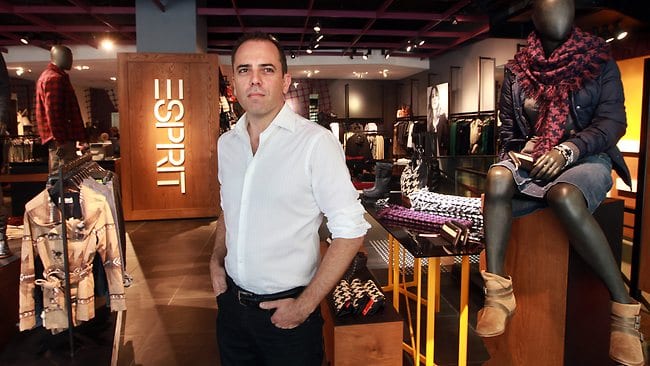
Slumping sales and store closures led to a small loss for the Australian arm of international fashion retailer Esprit, as its parent company’s shares come under attack from short sellers.
Esprit bills itself as the largest international fashion retailer in Australia and New Zealand, and has operated in Australia for more than 30 years.
It employs nearly 400 people and has dozens of stores throughout Australia as well as selling through department store Myer. But in recent years, Australia has become increasingly popular for international fashion retailers, with global giants Uniqlo, Zara, H&M and Topshop setting up more than a dozen stores in the past few years.
-
China retailers play poker in empty malls as shoppers go online
Property developer Dalian Wanda, owned by China’s second richest man Wang Jianlin, plans to close 10 malls across the country and redesign another 25 to cut retail space, China Business Newsreported last month.
Zong Qinghou, China’s fifth richest man with a beverage and chain-store conglomerate, said at a forum in August that online shopping businesses are “affecting China’s economic security” by suffocating stores that have to pay rents.Stores Close Li Ning Co., a sports-clothing maker, is expected to post losses for the third consecutive year and has closed more than a thousand retail outlets since 2012. Anta Sports Products Ltd., a maker of shoes, has also been shutting down stores partly due to competition from online shopping.
The internet helps improve productivity and efficiency, but it can be quite painful for traditional businesses, according to Cao Lei, director of the China E-Commerce Research Centre. “Bookstores fail first, then clothing chains, then consumer electronics stores, then air-ticket booking offices, and in the future, bank branches and other traditional services facilities may fail.”
-

Wendy’s to sell 500 more stores to franchisees in 2015
In pursuit of its goal to reduce company-operated restaurant ownership to approximately 5 percent of the total system by the middle of 2016, Wendy’s recently announced that it is planning to sell 500 additional restaurants to franchisees this year.
The company sold 237 company-operated restaurants to franchisees in 2014, including 29 restaurants under its Canadian system optimisation initiative to sell approximately 130 restaurants by the end of the second quarter of 2015.
“Going forward, we intend to buy and sell restaurants opportunistically to act as a catalyst for growth by further strengthening our franchisee base, driving new restaurant development and accelerating Image Activation adoption,” said President and Chief Executive Officer Emil Brolick in a statement.
Brolick also said that reducing ownership in company-owned restaurants will result in pretax cash proceeds of approximately USD400 to USD475 million and significantly reduce future capital expenditure requirements.
“We can achieve long-term average annual systemwide same-restaurant sales growth of approximately 2.25 to 3 percent beginning in 2016, along with our system goal for average annual unit sales volumes of USD2 million by 2020,” he added.
As part of its brand transformation, the company also recently announced a plan to reinvest its resources to focus on consumer-facing technology, including a Common Systemwide point-of-sale system.
It installed its POS solution in more than 2,600 restaurants and expects to have all its North America restaurants converted to the system by 2016.
Wendy’s is a member of the Merchant Customer Exchange (MCX), a coalition of approximately 40 merchants representing nearly 80 brands, including a number of top retailers and restaurant companies in the United States, dedicated to building a customer- and merchant-friendly mobile commerce solution. Wendy’s expects to begin a pilot test of the MCX mobile wallet solution, CurrentC, in the coming months.
“Platforms such as mobile payment, mobile ordering and loyalty programs are rapidly growing in the retail marketplace and provide potential benefits such as consumer convenience, increased transactions, higher check, faster speed of service and a seamless brand experience,” Brolick said.
-
Yum’s China sales fall less than expected, shares rise
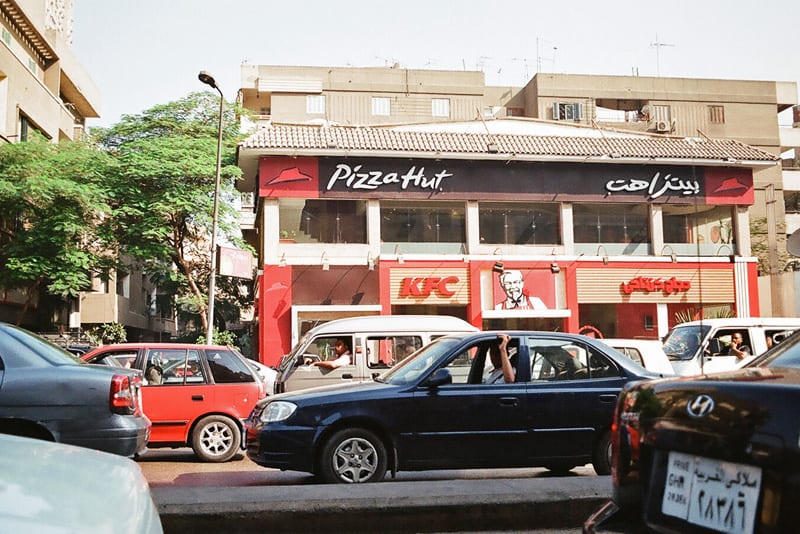
Yum Brands Inc, owner of KFC and Pizza Hut, said on Wednesday that sales at established restaurants in its biggest market China fell less than feared in the fourth quarter as it fights to recover from a food scandal involving a minor supplier, and its shares jumped 2.1 percent.
Same-restaurant sales in China, Yum’s number one market for revenue and profit, fell 16 percent for the quarter that ended on 27 December on continued fallout from allegations that a former supplier used expired meat.
But the decline was less severe than the 19.4 percent drop expected by analysts polled by Consensus Metrix, and shares in Yum rose USD1.51 to USD75.16 in extended trading.
-
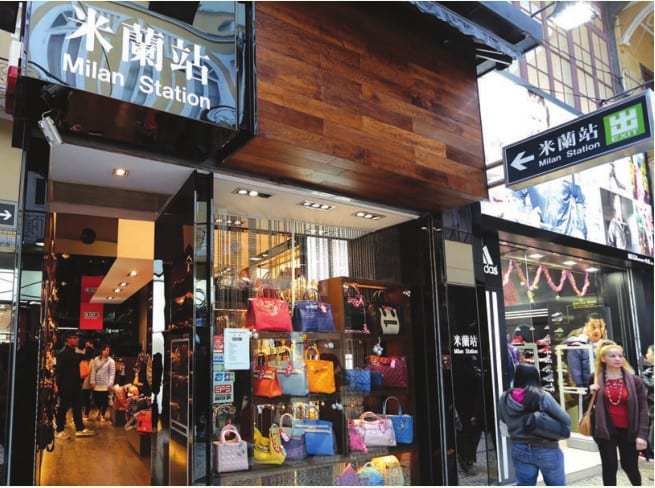
HK handbag chain buys e-store
Hong Kong listed handbag retailer Milan Station Holdings has acquired online retailer Chaodai.
Milan Station’s parent companies Standpoint and J&C will form a new entity to acquire Chaodai which will then trade under the Milan Station branding. As with their ownership of Milan Station, the two companies will hold 90 per cent equity and 10 per cent respectively.
“The parties… intend that through the acquisition and the proposed increase in capital, Chaodai will become well positioned in terms of financial and human resources and wider business networks to explore the cross-border online business under the brand name and the trademark of “Milan Station” for better return on their investments,” the company said in a regulatory filing to the Hong Kong Stock Exchange.
Milan Station had already revealed plans to expand its retail points in the Hong Kong’s ‘clubhouses’ due to booming sales.
It plans to expand its store network in Macau from six to 10 to further increase sales.
-

Hungry Foodpanda eats up rivals
Online food delivery service Foodpanda.com has gobbled up six rival services across Asia.
The Rocket Internet subsidiary recently secured US$60 million in a capital funding round and his wasted little time investing in rivals to boost its market share.
The businesses bought, with business descriptions provided by TechInAsia.com, are:
- Just Eat in India – This deal pertains only to the Indian segment of UK-based Just Eat. Along with Foodpanda’s recent TastyKhana buy-up, Foodpanda now claims to cover over 200 Indian cities and 12,000 restaurants. This gives the Rocket company a strong hold of the Indian market.
- EatOye in Pakistan – This startup came into life this time last year. It covers 1,000 partner restaurants in 15 cities.
- Food Runner in Malaysia and Singapore – This is the food delivery subsidiary of Singapore-based DealGuru. The acquisition also includes sister site Room Service.
- City Delivery in the Philippines – This is also a spin-off from DealGuru, so it’s technically the same deal that snapped up the above two sites.
- Koziness in Hong Kong – Foodpanda’s Hong Kong deal means it runs not only Koziness but also the related sites Dial-a-Dinner, SOHO Delivery, and Ring-a-Dinner.
- Food By Phone in Thailand – This started out in 1998 for phone-based orders, but later opened up on the web as well. It covers over 650 restaurants in three of Thailand’s biggest cities.
“With the recent acquisitions Foodpanda becomes the market leader across Southeast Asia,” said Ralf Wenzel, co-founder and CEO of Foodpanda in an announcement this afternoon.
-

Hotel Shilla in Korea duty free bid
Hotel Shilla is aiming to take over DFASS, the world’s largest in-flight duty-free specialty retailer, to expand its duty-free business to on-board duty-free shopping.
According to retail industry experts in Korea, Hotel Shilla selected Goldman Sachs as the managing underwriter for its acquisition of DFASS, and is now fine-tuning the detailed conditions for the purchase of controlling rights, such as the sales price.
The hotel currently runs its duty-free shop business through Shilla Duty Free Shop, and ranked seventh in terms of sales volume with US$1.9 billion in revenue as of 2013.
Founded in 1987, the US based retail group partners with approximately 30 airlines, including American Airlines, Air Canada, Singapore Airlines and Hong Kong Airlines, and supplies duty-free specialties. Along with the in-flight business, it also runs around 40 small-sized ground-based duty-free shops in the U.S. Its annual sales volume is around US$500 million.
It is reported that Hotel Shilla has been pushing to take over the DFASS Group to expand its Korea and Asia-focused business foothold across the globe. If it succeeds in acquiring DFASS, it can expand its duty-free business from ground-based and airport duty-free shops to in-flight shopping.
Last November, Bernard Benny Klepach, founder and CEO of DFASS, visited Seoul by himself and discussed the matter with Shilla officials.
An official at Hotel Shilla said: “Several other duty-free shop operators are interested in DFASS. As there are wide gaps between DFASS and us on the take-over terms, nothing can be confirmed right now.”
-

Metcash accused of unconscionable conduct by supplier
Less than two months after Coles agreed to settle unconscionable conduct claims, Metcash is embroiled in a legal stoush with a major supplier who has accused the food and liquor distributor of demanding excessive rebates and payments.
COFCO Distributors and Fasttrack Logistics, which are owned by a group of Indonesian businessmen, have accused Metcash of unconscionable conduct and using unfair tactics to force them to hand over more than AUD11 million in rebates and payments over the last six years.
In a statement of claim lodged in the Federal Court in Sydney in December, COFCO said it had paid Metcash AUD10.36 million in rebates on sales of AUD39.24 million over the six years to 30 June, 2014 and had been forced to pay AUD395,275 for “overseas study tours” for Metcash staff.
-
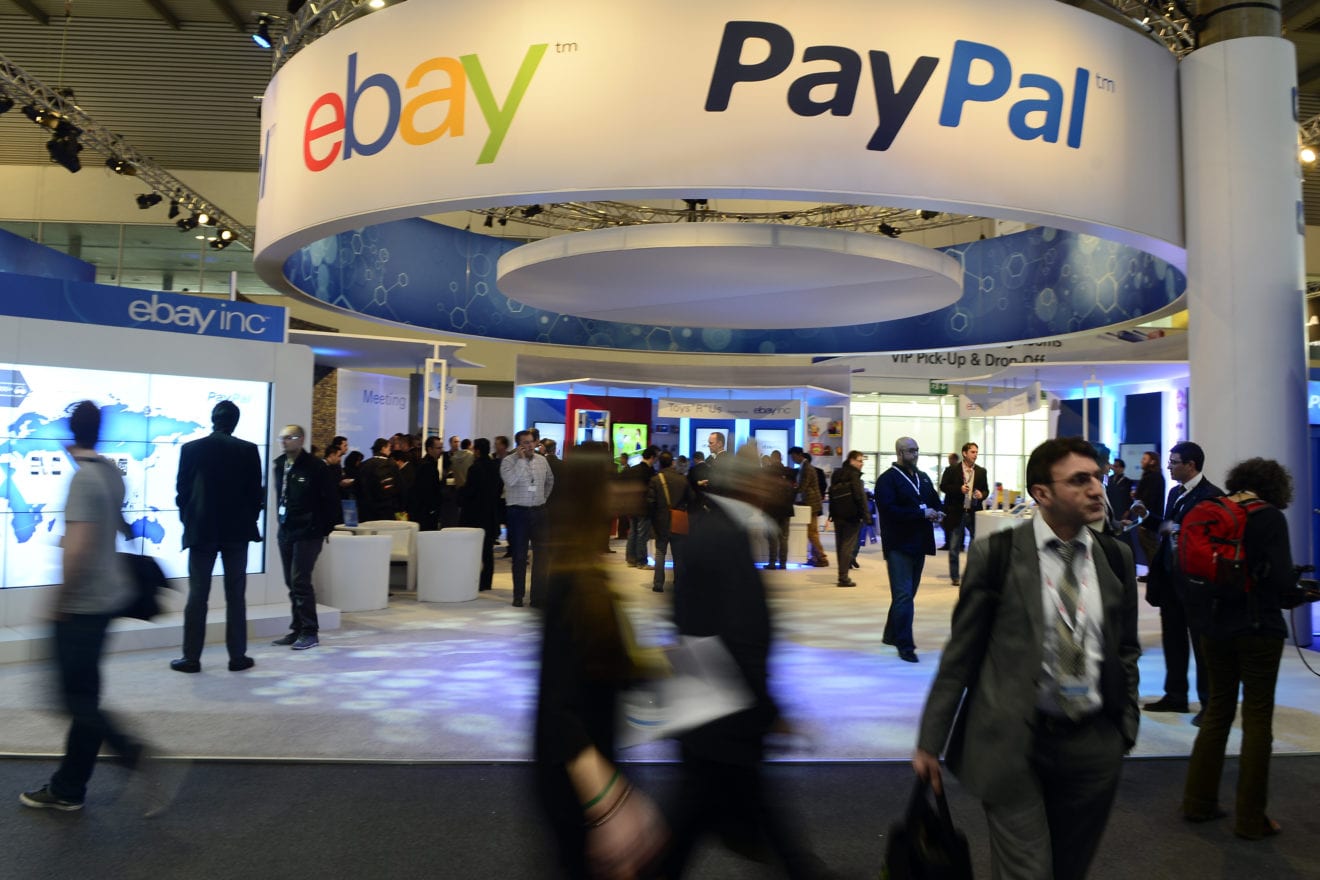
Paypal’s retail chief quits ahead of eBay split
Paypal executive Don Kingsborough, who helped orchestrate the payments company’s move into physical retail stores, stepped down in January, the company said on Wednesday.
His departure, which tech blog Re/code first reported, comes as the company competes with the likes of fast-growing startup Square to get its payments system adopted in more retail chains across the United States.
PayPal, which is slated to split from eBay Inc later this year, will keep testing and investing in various in-store payments systems, eBay spokeswoman Amanda Miller said in a statement.
-
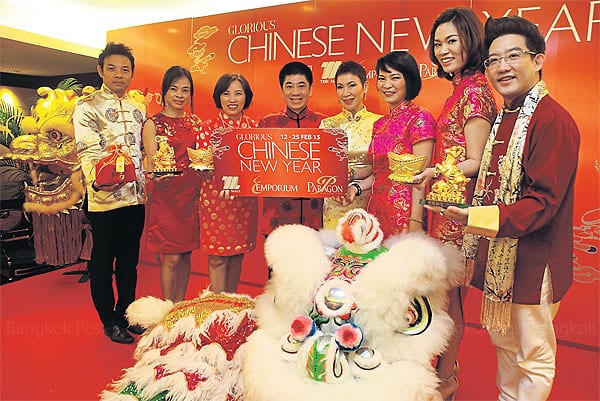
Mall Group budget focuses on media
The Mall Group, Thailand’s second largest retail group, will spend more than THB2 billion (USD61.3 million) to stimulate consumer spending and boost sales to reach THB53 billion (USD1.63b) this year.
Executive vice-president Chamnarn Maytaprechakul said that even though the economic and political outlooks had improved since last year, people remained cautious about spending.
The group will therefore put more focus on its media spending this year, relocating some advertising and promotional budgets to direct media that have an immediate impact on customer spending, and slashing the budget for mass media.