Blog

  • Alibaba invests in Indian mobile payment player One97

    Alibaba invests in Indian mobile payment player One97

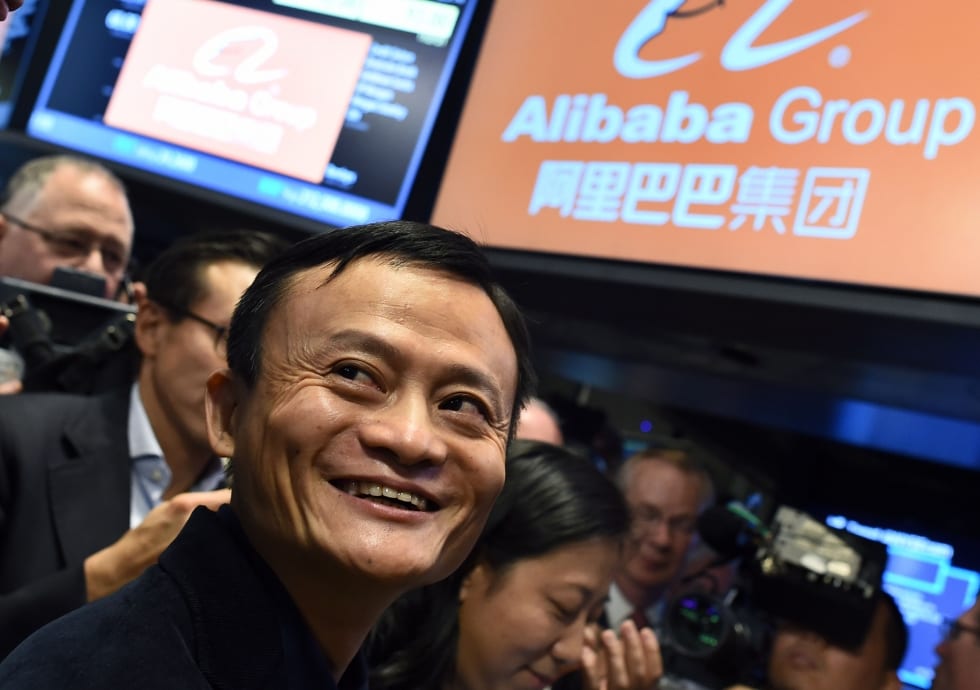
    ANT Financial Services Group, an affiliate of China’s Alibaba Group Holding Ltd, has agreed to buy 25 percent of Indian payment services provider One97 Communications, tapping into the country’s smartphone and online industry boom.

    The companies did not provide the value of the deal, but a person with knowledge of the matter called the investment a precursor to One97 listing on the stock exchange, and said the stake was worth more than USD500 million.

    The deal values One97 at more than USD2 billion, making it one of the most valuable startups in the country. One97 runs Paytm, an online platform through which users can shop or pay utility bills, whereas Ant runs Paytm’s Chinese peer Alipay.

  • China’s $1 trillion online future

    China’s $1 trillion online future

    Forrester Research predicts online retail spending in China will exceed US$1 trillion by 2019.

    That’s a massive increase on the $307 billion of 2013.

    In its report The China Online Retail Forecast 2014 – 2019, Forrester estimates spending via mobile will grow at 44.2 per cent compound annual growth rate (CAGR) – twice as fast as online sales, which are estimated to grow at 19.9 per cent CAGR.

    Mobile sales and online retailers’ expansion into new product categories will be the twin drivers for eCommerce growth in China over the next five years.

    “Successful organisations must drive innovation to deliver compelling shopping experience and focus on enhanced customer segmentation, offering seamless customer experience across touchpoints, and leverage mobile to drive overall online retail business,” Forrester advised.

    “To capture the opportunities in the increasingly competitive retail market, organizations must realize the importance of digital capabilities,” says Vanessa Zeng, senior analyst, Forrester Research.

    “Successful organisations must drive innovation to deliver compelling shopping experience and focus on enhanced customer segmentation, offering seamless customer experience across touchpoints, and leverage mobile to drive overall online retail business.”

    Forrester says Chinese consumers are increasingly shifting to mobile for online shopping.

    “The frequency with which online consumers in metropolitan China shop via their mobiles is increasing rapidly, while those in lower-tier cities use smartphones as their primary means of network access and for online shopping.”

    Major web players, Tmall and JD.com, will continue to dominate China’s eCommerce market – with market shares of 57 per cent and 21 per cent, respectively – and will try to seize control of the mCommerce market by enhancing their mobile investments and improving customer experience.

    And Forrester says more categories of products traditionally sold offline, such as pharmaceuticals and furniture, are now being made available online.

    “The growing number of middle-class and affluent Chinese consumers adds to online demand for a wide variety of high-end products, such as fresh food, imported goods, and automobiles.

    “The convenience, variety, and fast delivery associated with online purchase will boost eCommerce in these new categories.”

  • Michael Kors to join wearable tech movement

    Michael Kors to join wearable tech movement

    Fashion-savvy fans of wearable tech will need to keep their eyes peeled over the next few months.

    On Michael Kors’ fiscal third-quarter earnings call on Thursday, CEO John Idol told analysts and investors that the affordable luxury brand “will be in wearables,” and expects to deliver announcements on that front in coming months.

    “That is coming from Michael Kors,” Idol said, adding that the brand is not interested in being first to the market. Instead, he wants to take the time to develop a product that’s viable for shoppers’ everyday lives.

  • Cross-border eCommerce a boon for small retailers

    Cross-border eCommerce a boon for small retailers

    After years of tepid growth, sales at several Australian vitamins, minerals, and supplements companies suddenly shot up by 20, 30, or even 40 per cent in 2015.

    For those who know what happened in China in 2014, the source of this growth probably isn’t a big mystery: Regulators expanded a tax exemption to cross-border eCommerce.

    The resulting growth in trade has been dramatic, and for firms who have long eyed the big Chinese market but are too small to invest in finding a distribution partner or building a physical presence on their own, the boom of 2015 has delivered a revelation: They, too, can access the mainland market.

    eCommerce has of course been big in China for years, and in 2014 online retail sales totalled nearly US$430 billion, accounting for roughly 10 per cent of all retail sales.  (The same figures for the US were US$300 billion and 6.4 per cent, respectively.)  Until recently, however, this activity was nearly all domestic – i.e., goods produced in or already shipped to China being sold to Chinese consumers.

    That makes perfect sense in light of the retail explosion of recent years:  China has more than 300,000 pharmacies, more than 2000 mid-to-high end department stores, and supermarket catchment areas in urban areas are even smaller compared with the US because of smaller formats and the lack of parking (and, until recently, widespread car ownership). Within this rapidly-developing retail landscape, however, some factors are driving consumers to prefer foreign products, whether bought once in China or ordered from abroad.

    Driving demand

    Food scandals are well-known and heavily publicised, from the baby-killing melamine-laced formula scandal of 2008 to the discovery this year of decades-old “vampire” meat.  In September, fake rice made from tiny pieces of rolled-up paper was even uncovered in Guangdong.  In light of such underhanded tactics, it is understandable that consumers might perceive foreign brands as safer and of higher quality.

    Price pressures pushing up consumer prices is another key issue.  Commercial rents, especially in first-tier cities such as Shanghai and Beijing, rival those in developed nations. At the end of 2014, rents in Beijing’s Wangfujing averaged $480 per square foot per year vs $360 for Singapore’s Orchard Rd.  Wages, while still lower compared to western economies, are also rising quickly.

    Finally, Chinese consumers are becoming more sophisticated and better able to differentiate between local brands trying to pass themselves off as foreign and the real thing.  With travel increasing and the transparency in commerce that the internet can bring, tastes in products are becoming more global.

    Historic developments

    By as early as 2005, a Chinese consumer could order an album on Amazon and wait a few weeks for it to arrive—though naturally taxes and shipping often added to the price of the CD itself. But it wasn’t until the fourth quarter of 2014 that cross-border e-commerce really exploded. The impetus was the application of a previously obscure piece of the tax code to cross-border e-commerce, implemented in a number of pilot cities.

    The personal effects tax originally targeted Chinese travellers who had emigrated abroad and were bringing back gifts – such as small appliances – for relatives.  Small items were exempt, but the tax was set at 10 per cent for nearly everything else.  In late 2014, though, the government proclaimed that this personal effects tax also applied to cross-border eCommerce in certain pilot areas.  The effect was dramatic, as can be seen in the price differentials illustrated below.

    Obviously some costs, such as freight and insurance, are incurred whether selling through physical stores or cross-border eCommerce. However, the price differential can be observed in following key areas, demonstrated with VMS products as an example:

    The nuts and bolts

    Business models for cross-border eCommerce can be viewed across two main dimensions: Whether the site serves as a platform that aggregates multiple sellers or sells its own products, and whether delivery to the consumer is made from the source country or from a bonded warehouse.

    Each model has its own quirks (see graphic below), and it is not yet clear whether there is an obvious winner.  It is likely that multiple models will co-exist –for example, a self-run, bonded import model could work for goods with the highest turnover (such as diapers and infant formula), while direct shipment models might better suit the long tail of less-frequently ordered items.

    In terms of product flow, though, the bonded import model has the clear advantage in terms of speed. Consumers can receive product within days – sometimes only one or two – rather than weeks.

    With both models the seller can choose how much to take on internally, and how much to either outsource or hand over to a partner.  Hundreds of cross-border eCommerce companies have already sprung up in China, providing services that run the gamut from simple customs clearance all the way to a full consignment model.

    Local interests

    While eCommerce, including the cross-border variety, is here to stay, the advantages that it has over traditional imports may not last forever, depending on the product category.  In June of 2015, for example, China’s government lowered import duties on skin care products, which harmonised online and offline prices to an extent.  In 2016, import duties on additional products including handbags and suitcases are also slated to be slashed.

    Regulatory vacuums will likely be filled step-by-step as well.  For example, vitamin potency levels are regulated for products registered and sold in China, but currently these rules are not applied for cross-border eCommerce imports.  Local players are crying foul, and regulators will no doubt feel pressured to act.

    For now, though, cross-border eCommerce is helping to level the playing field by allowing smaller-scale companies to profitably access the vast China market while providing a huge boon in the form of savings and product diversity to Chinese consumers as well. Chalk one up for the little guys on both sides of the border.

    Editor: Hudson Lockett.

  • Under Armour CEO is calling out Nike and Adidas

    Under Armour CEO is calling out Nike and Adidas

    Under Armour is creating the world’s largest digital health and fitness community because the more people exercise, the more shirts and shoes they buy, the sports company founder and CEO Kevin Plank told CNBC on Thursday. He also said he wants Nike and Adidas to know what it feels like to be number two and to “get used to that.”

    Instead trying to play in the highly competitive wearables market, Plank said in a “Squawk Box” interview that he sees value in building a community that users can tap into with any device. “[It’s] a place where we weren’t tied to a consumer electronic but where we could be the destination regardless of what the best ‘widget’ on the market was,” he continued. “Whatever you had, it would plug in and we would read and synthesize that information as easy as possible.”

    Under Armour announced late Wednesday a deal to buy for USD475 million the San Francisco-based fitness app MyFitnessPal, a leading resource for healthy living and nutrition with over 80 million registered users. The company also said it completed in early January its USD85 million acquisition of Denmark-based Endomondo, with about 20 million registered users primarily in Europe.

  • Zara Australia to maintain prices as Australian dollar falls

    Zara Australia to maintain prices as Australian dollar falls

    Zara Australia has turned up the heat on domestic retailers by vowing to maintain prices despite a 17 percent fall in the dollar in the past five months.

    Zara’s plan to keep Australian prices on hold will limit the ability of domestic suppliers and retailers to raise prices across the board to recoup the cost of importing stock from countries such as China, India, Vietnam and Bangladesh.

    As reported in The Australian Financial Review last week, suppliers have warned retailers that prices for fashion clothing, underwear and basic apparel will rise significantly in the second half of calendar 2015 as currency hedges roll off and new ­season stock comes into stores.

  • Tinder isn’t feeling the love for Gap

    Tinder isn’t feeling the love for Gap

    Tinder just swiped left on Gap’s plan to use its dating app as a new means for promoting the brand.

    In a story posted on AdWeek Wednesday, the apparel retailer said that it intended to run provocative phrases such as “you’re invited to the pants party” on the platform, in what it called a form of guerrilla marketing.

    “We did a little something special on Tinder,” the Gap’s Tricia Nichols told the publication. “You’ll see a profile with clever messaging in the spirit of love and the perfect match. It’s the perfect fit for Tinder.”

  • New luxury outlet opens in Shanghai

    New luxury outlet opens in Shanghai

    Italian holding based in Florence, Gruppo Fingen/Rdm, inagurated last week Florentia, a 90.000 sqm mall in Shanghai in the Pudong district. The new mall features brands such as Armani, Bally, Brooks Brothers, Ck Jeans, Etro, Salvatore Ferragamo, It, Moncler, Michael Kors and Versace.

  • MBK plans lifestyle mall in Thailand’s Mae Sot to cash in on AEC

    MBK plans lifestyle mall in Thailand’s Mae Sot to cash in on AEC

    MBK Plc, the SET-listed operator of MBK shopping centre in Bangkok, is negotiating with local partners to co-develop a lifestyle shopping complex in Tak province to attract Myanmar shoppers.

    The 20,000-square-metre project will be used as a prototype to develop other malls in border towns to cash in on opportunities arising from the ASEAN Economic Community (AEC), which is set to kick off late this year.

    Sakchai Kengkijkosol, managing director for retail operations, said MBK would start constructing the project in the border town of Mae Sot once the government had a clear policy on infrastructure development in response to the AEC.

  • Singaporean shoppers enthusiastic about Valentine’s Day

    Singaporean shoppers enthusiastic about Valentine’s Day

    Valentine’s Day is a big deal for Indonesians (57 percent), Taiwanese (53 percent) and Singaporeans (45 percent). These three countries top a multi-market poll for being the most expectant to celebrate Valentine’s Day this year.

    In contrast, love is not in the air for Germans (18 percent) and the British (36 percent), who were least likely to celebrate the occasion.

    The Rakuten Shopping Secrets survey was conducted among consumers over seven markets with over 7,000 respondents from United States, United Kingdom, Spain, Germany, Indonesia, Singapore and Taiwan.

    The survey also revealed that the majority of Singaporeans (59 percent) do not expect to receive gifts on Valentine’s Day, but for thosecelebrating the occasion, receiving a hug/kiss (41 percent), a trip or vacation (41 percent), fashion accessories (27 percent), chocolates wine and other food or drink (26 percent) and jewellery (22 percent) ranked highest among what respondents wished to receive.

    And when it comes to choosing shopping as a break-up therapy, Singaporeans came in tops (39 percent), followed closely by their regional counterparts in Indonesia (38 percent) and Taiwan (30 percent).

    For those who hit the stores upon singlehood, fashion and accessories were the items most frequently bought post-breakup.

    More than half of Singaporeans who have gone through a bad breakup or relationship prefer to drown their sorrows by shopping online rather than offline in the one month after a breakup.

    Not feeling like going out and interacting with people (58 percent), wanting more privacy (55 percent and not wanting to let people see that they look depressed (26 percent) were the top three reasons cited.

  • Rakuten begins year-round hiring of engineers

    Rakuten begins year-round hiring of engineers

    Rakuten Inc. recently announced that it would discontinue its new-graduate hiring quota, and will begin to hire new-graduates and mid-career engineers throughout the year.

    Since 2010, the company has been accelerating its global expansion, and by making English the official corporate language, has begun attracting talented engineers from all over the world.

    It has also expanded its autumn hiring of new graduates, building an environment that makes it easier for exchange students and students from overseas to apply.

    To hire engineers that have a diverse set of values, the company believes that limits on the language, age, or experience of applicants, as well as on the time of entry when recruiting are unnecessary.

    Thus, Rakuten decided to change to a year-round hiring system that considers applicants regardless of whether they are new graduates or mid-career.

    The company plans to expand its internship program, so that people who aspire to join the company may get a better feeling for its technological strengths and corporate culture. This year, it said the program will offer over 30 positions in the Development Unit of Rakuten for students from within Japan and overseas.

  • Alibaba wins a battle against China but a war would have a different ending

    Alibaba wins a battle against China but a war would have a different ending

    Jack Ma, 1. China, 0. That seems to be the score in the unusually public tussle between the Alibaba billionaire and Beijing. Rarely does a mainland magnate push back when the Communist Party questions its business practices and ethics, and certainly not in the glare of the global news media.

    But Ma is standing his ground, and the government has toned down its criticism of Alibaba selling fake goods on its e-commerce site.

    This is not a sign that life is generally improving for private business in China, however. Alibaba is unique. Beijing loves a homegrown success story, and there’s none better than Ma’s fabled rise from schoolteacher to Asia’s richest man.

  • Samsung loses pole position in India smartphone market to Micromax

    Samsung loses pole position in India smartphone market to Micromax

    Indian budget smartphone maker Micromax leapfrogged South Korea’s Samsung Electronics Co Ltd to become the leading supplier in India’s booming smartphone market for the first time in the fourth quarter, research firm Canalys said.

    In a report issued on Tuesday, Canalys said Micromax, based near New Delhi, accounted for 22 percent of smartphone sales in India in the October-December quarter, ahead of Samsung’s 20 percent. In total, 21.6 million smartphones were sold in India in the period, a 90 percent surge from a year earlier.

    India, which has the world’s second highest number of mobile phone accounts after China, is the third-biggest market by number of smartphones sold. Low-priced smartphones are the top sellers in a country where many buyers are upgrading from feature phones.

  • Vietnamese consumer confidence rises in last quarter

    Vietnamese consumer confidence rises in last quarter

    Vietnamese consumer confidence continued to see rapid improvement in the fourth quarter of 2014, according to the latest Consumer Confidence Index released by Nielsen, a global information and measurement company.

    Nielsen said Vietnam had become the ninth most optimistic country globally, with an index score of 106, an increase of four points compared to the previous quarter.

    Vaughan Ryan, managing director of Nielsen Vietnam, said over the last two quarters there was a significant increase in the confidence of consumers in Vietnam.

  • Consumer confidence climbs in Indonesia

    Consumer confidence climbs in Indonesia

    Indonesian consumers grew more optimistic about their economic prospects in January, thanks to the recent fuel price cuts, according to surveys from the central bank and a state-controlled research institute.

    Bank Indonesia’s Consumer Confidence Index, which is based on a sample of 4,600 households in 18 major cities in Indonesia, increased by 3.7 points to 120.2 point in January.

    A level of more than 100 points generally means consumers are optimistic about the country’s economy.