Blog

  • BYD Unveils Dual-Screen Interior for Third-Gen Tang SUV Ahead of Q4 Launch

    BYD Unveils Dual-Screen Interior for Third-Gen Tang SUV Ahead of Q4 Launch

    BYD unveiled the interior of its third-generation Tang on Thursday. The carmaker fitted the five-seat electric SUV with a 35.4-inch screen ahead of a fourth-quarter launch.

    Delivery figures explain the overhaul. Tang family sales dropped 49.87 per cent year-on-year to 81,614 units between January and August.

    Cockpit Overhaul and Space Configuration

    Inside the cabin, an integrated 35.4-inch far-side display and a 30-inch panoramic screen replace the traditional instrument cluster and head-up display. Lu Tian, general manager of sales for BYD’s Dynasty series, said the layout took design cues from sci-fi spaceship consoles. Buyers can choose between two interior color schemes: Dune Beige and Amber Brown.

    Rear seating serves as a key selling point. The second row offers more than 1,000 mm of legroom, and the backrest reclines up to 130 degrees. BYD positions the five-seat model as the technology-oriented 8-series flagship within the Dynasty division.

    Chassis Dimensions and Platform Hardware

    The vehicle measures 5,045 mm long, 1,980 mm wide and 1,760 mm tall, with a 2,950 mm wheelbase. These proportions place it in China’s mid-to-large consumer SUV bracket. It joins the larger 9-series Da Tang, introduced in June, to form a dual-flagship structure.

    Under the floor, the SUV runs on BYD’s second-generation Blade Battery with high-voltage flash charging architecture. Maximum driving range reaches 850 kilometers on the China Light-Duty Vehicle Test Cycle (CLTC). Under standard ambient temperatures, the pack replenishes from 10 per cent to 70 per cent in five minutes. It reaches 97 per cent in nine minutes.

    Driver Assistance and Chassis Control

    Every variant includes the God’s Eye B intelligent driving system as standard factory equipment. The carmaker also installed its DiSus-A intelligent air body control system across the range to adjust ride height and cabin stability automatically.

    Standardising air suspension and advanced driver assistance puts immediate pressure on domestic rivals. Competitors in the 200,000 to 300,000 yuan bracket must match these hardware specifications without adding option packages, even as margin compression limits profitability. The financial risk is that the heavy hardware package could trim BYD’s gross vehicle margins if sales volumes fail to recover quickly.

    Rebuilding the Dynasty Series Lineup

    The Tang badge previously generated high sales volumes for BYD. However, an aging cabin architecture and prolonged gaps between mechanical updates eroded showroom traffic over the past 18 months. Splitting the Dynasty line into separate 8-series and 9-series variants mirrors product segmentation strategies used by competing premium EV brands across Asian markets.

    Following its initial public exterior reveal at the Chengdu Auto Show on August 21, showroom deliveries and official customer pricing across China will take effect before the close of the fourth quarter.


  • StarHub Buys MyRepublic Mobile Business to Deepen Network Control

    StarHub Buys MyRepublic Mobile Business to Deepen Network Control

    StarHub agreed to acquire the mobile business of MyRepublic on Oct 8, taking full ownership of the virtual operator across Singapore.

    The transaction gives the carrier complete control of MyRepublic’s subscriber base after buying its broadband operations in August 2026.

    Under the agreement, MyRepublic Mobile will continue operating as a standalone consumer brand without job cuts. Its 4G customer base, which previously ran on M1’s infrastructure, is transferring to StarHub’s network. Existing subscribers will stay on their current tariffs and contracts without service interruption.

    Network migration and brand continuity

    Buying the mobile arm resolves the split ownership created when StarHub took over MyRepublic’s fixed-line broadband unit two months earlier. The carrier is absorbing traffic onto its proprietary radio access network, cutting external wholesale wholesale fees and consolidating customer accounts under one roof.

    For consumer retail, the multi-brand strategy keeps budget-conscious shoppers from defecting to rivals. StarHub runs its primary postpaid brand alongside lower-cost alternatives, including its digital budget service eight, which took over subscribers from MVNO redOne earlier this year.

    Margin squeeze across city-state carriers

    Singapore’s mobile market remains one of the most price-competitive in Southeast Asia, squeezing operating margins across all network operators. StarHub reported a 10.5 percent drop in mobile service revenue to $245.3 million for the first half ended June 30, down from $274.1 million a year earlier.

    Profitability took a sharper hit. StarHub’s underlying net profit, excluding its cybersecurity unit Ensign, fell 76.1 percent to $12.4 million from $51.9 million, based on calculations by CGS International analyst Prem Jearajasingam. Incumbent rival Singtel recorded a 3.1 percent dip in Singapore first-quarter operating revenue to $901 million, pointing to heavy discounting across mobile plans.

    Virtual operators face consolidation pressure

    Independent mobile virtual network operators lack the balance sheets needed to fund infrastructure upgrades and fifth-generation wireless rollouts. Without physical cell sites, these resellers rely on wholesale capacity agreements that leave little room for profit during sustained price wars.

    Large carriers are using acquisitions to strip out duplicated overhead and direct cash flow into central network hardware. Defending capital expenditure requires larger subscriber pools, pushing small resellers to exit independence or fold into network owners.

    Next steps in carrier realignment

    The MyRepublic absorption forms part of a broader contraction among Singapore telcos. In September, StarHub and Keppel confirmed ongoing discussions regarding a potential transaction involving mobile network operator M1.

    “With ongoing consolidation, we are bringing greater scale to invest more effectively in the networks, resilience and innovation that Singapore will increasingly depend on,” said Nikhil Eapen, chief executive officer at StarHub.

    Regulators and investors are now monitoring the progress of talks between StarHub and Keppel over M1, where a formal structure or definitive agreement is expected in upcoming corporate filings.

  • Geely’s Zeekr Brings 7GT Electric Wagon to Australia in Fourth Quarter

    Geely’s Zeekr Brings 7GT Electric Wagon to Australia in Fourth Quarter

    Zeekr will launch its 007 GT electric shooting brake in Australia in the fourth quarter of 2026. The rollout targets buyers in the brand’s latest right-hand-drive market.

    Geely Auto’s premium EV arm presented the car under the export badge Zeekr 7GT at the Sydney EV show on Thursday. It withheld local pricing and final specification sheets.

    Sydney Debut Follows European Rollout

    The Australian arrival follows a six-month push across Europe. Zeekr entered Germany, the Netherlands, Belgium, Denmark, Norway, and Sweden in January, then expanded to 16 European markets by July by adding France, Italy, and Spain.

    Showrooms in China first received the 007 GT in April 2025 as the brand’s second estate model alongside the larger 001. Both vehicles share their platform with the 007 sedan.

    Battery Architecture and Market Strategy

    An April refresh in China upgraded the 007 GT to a 900-volt electrical architecture capable of 6C charging rates. Local executives have not confirmed whether Australian-spec models will retain that charging speed or receive regional adjustments.

    Offering a shooting brake in Australia reflects a deliberate calculation against standard electric SUVs. Rival Chinese brands continue to battle for volume in family crossovers. Zeekr is using wagon silhouettes to build premium ground against legacy European marques.

    That approach brings operational hurdles. Australian luxury buyers expect rapid DC fast-charging performance and established dealer footprints. Withholding pricing until the fourth quarter leaves local distributors managing interest without hard commercial terms.

    Volume Growth Anchors Export Drive

    Data from the China Passenger Car Association ranks the 007 GT first in global shooting brake deliveries through the first eight months of 2026. Monthly international shipments topped 10,000 units in August, taking cumulative lifetime sales across the wagon lineup past 400,000 vehicles.

    Broader group deliveries accelerated through the third quarter. September sales hit 37,216 vehicles, up 103.85 per cent year on year, to secure a sixth straight monthly record. Volume across the first nine months reached 288,404 units, more than doubling tallies from the same period in 2025.

    What Australian Buyers Are Waiting to See

    Australian demand will test the carmaker while it reshuffles older product lines at home. Domestic deliveries of the flagship 001 fell 21.50 per cent over the first eight months of the year. That drop triggered 10,000 yuan factory insurance subsidies ahead of an early 2027 platform overhaul.

    Distributors must still confirm final Australian specifications, local trim levels, warranty terms, and right-hand-drive delivery schedules ahead of the fourth-quarter commercial debut.

  • Pesticide Action Australia Tests 78 Supermarket Produce Samples Across Five Cities

    Pesticide Action Australia Tests 78 Supermarket Produce Samples Across Five Cities

    Pesticide Action Australia tested 78 fruit and vegetable samples from Aldi, Coles and Woolworths across five cities. The group examined chemical residue levels across major grocery supply chains.

    Fresh produce sold by Australia’s three dominant supermarket operators was targeted to review compliance standards across the commercial food network.

    Independent testing across major grocers

    Pesticide Action Australia bought the 78 fresh produce samples in June and submitted them to an accredited laboratory for residue screening. Everyday produce lines were sourced directly from retail shelves in five metropolitan markets to compare items across corporate supermarket networks.

    The assessment tracks how national retail supply chains monitor chemical usage from farm gate to supermarket shelf. It examines the performance of growers, commercial compliance auditors, statutory regulators and retail category buyers responsible for inventory safety.

    Scrutiny on supermarket fresh supply chains

    Supermarket chains in Australia handle most domestic fresh produce distribution through direct grower contracts and central distribution hubs. Coles and Woolworths control the bulk of national grocery volume. Aldi maintains a network of contracted fresh suppliers.

    Quality assurance programs across these chains rely on third-party certifications and vendor declarations. Independent testing that finds variances between supplier paperwork and product chemistry forces retailers to tighten inbound audit protocols at distribution centres.

    Commercial pressures on growers and retailers

    Fresh produce procurement operates on narrow gross margins, tight delivery windows and strict visual presentation benchmarks. Retail buyers set rigorous specifications for appearance and shelf life. This puts pressure on farms to manage pests and spoilage aggressively throughout the growing cycle.

    Retailers carry the brand risk when chemical residue questions enter the public domain. Primary producers manage crop spraying schedules and withholding periods, but consumer-facing grocers face reputational exposure if auditing frameworks fail to verify compliance before stock reaches store displays.

    Auditing frameworks across Asia-Pacific

    Regulatory scrutiny over food safety standards has intensified across Asia-Pacific supply chains. Institutional procurement teams demand transparent farm-level tracking. Retailers across the region have expanded farm-gate testing requirements and reduced reliance on self-certified grower declarations.

    Grocers in developed markets increasingly require contracted growers to register chemical applications through digital compliance systems. These platforms track chemical volumes, application dates and mandatory pre-harvest intervals to ensure finished produce meets statutory maximum residue limits prior to distribution.

    Next compliance checkpoints

    Supermarket quality assurance teams are reviewing supplier audit data ahead of the peak summer fresh produce harvest. Retail compliance divisions continue evaluating independent residue findings alongside state food authority monitoring programs across national supply networks.

  • Standard Chartered to Sell Bangladesh Wealth and Retail Business After 120 Years

    Standard Chartered to Sell Bangladesh Wealth and Retail Business After 120 Years

    Standard Chartered announced plans in October 2026 to explore the sale of its wealth and retail banking business in Bangladesh. The move marks a planned exit from consumer operations in a market the British multinational lender has served for 120 years.

    The bank confirmed that the transition of the wealth and retail banking portfolio is anticipated to take approximately 18 to 24 months, subject to regulatory approvals.

    Enamul Huque, chief executive officer of Standard Chartered Bangladesh, said operations will continue as usual during the process as the bank sharpens its focus on corporate and investment banking, international trade, cross-border capital flows, and infrastructure financing.

    Local Lenders Circle the Consumer Portfolio

    Domestic commercial banks in Dhaka have opened preliminary talks to buy the foreign lender’s retail assets and depositor book. Senior executives at Pubali Bank, Mutual Trust Bank, BRAC Bank, and City Bank confirmed their interest in bidding. Standard Chartered holds some of the highest-yielding credit card and premium affluent accounts in the country. That makes the book attractive to local banks seeking higher personal banking margins without building branches from scratch.

    Buying foreign retail assets gives domestic institutions immediate access to high-net-worth depositors who use international banking services. Customer retention is the primary risk once the multinational branding disappears. Affluent retail depositors in Dhaka frequently maintain Standard Chartered accounts specifically for travel privileges, foreign currency allowances, and global recognition. Domestic balance sheets struggle to match those perks.

    Corporate Banking and Trade Shift

    The Dhaka exit fits a broader regional pullback from mass-market consumer banking across emerging Asia. Global lenders face heavy compliance costs, local interest-rate caps, and fierce domestic competition. These pressures squeeze branch margins. Shedding consumer branches lets international banks cut local property overhead while keeping profitable corporate treasury and trade finance mandates with multinational apparel exporters and conglomerates.

    Standard Chartered wants to protect its corporate presence in Bangladesh, where it handles large shares of export trade and foreign direct investment. Corporate operations require fewer workers and less branch infrastructure than retail deposit networks. That frees capital for higher-margin commercial credit.

    Wealth Capital Reallocated to Cross-Border Hubs

    Group strategy, reaffirmed in full-year 2025 financial reporting and a May 2026 investor presentation, prioritised cross-border affluent clients and concentrated booking centres. Rather than funding local retail networks in smaller markets, the bank redirected wealth resources to central booking hubs in Singapore, Hong Kong, and Dubai.

    Evidence of that centralised approach came when the bank expanded its Variable Capital Company fund structure in Singapore. Assets under management there passed $2.6 billion across 10 sub-funds by mid-2026. Consolidating wealth management in offshore hubs lets the lender serve high-net-worth South Asian clients through international advisory platforms while dropping onshore retail liabilities.

    Regulatory Review and Transition Timeline

    Staff redeployment and account transfers will sit at the centre of sale talks over the next two years. Standard Chartered confirmed that the welfare of local retail staff will be a key condition in discussions with buyers. The bank runs branches and automated teller networks across Dhaka, Chattogram, and other major commercial centres.

    Formal bids from local commercial banks will follow preliminary due diligence. The final deal structure requires binding agreements and regulatory approvals from Bangladesh Bank before portfolios change hands within the 24-month window.

  • China Highway EV Charging Surges 51% During National Day Week

    China Highway EV Charging Surges 51% During National Day Week

    China’s highway electric vehicle charging volume climbed 51.42 per cent year-on-year to 163 million kilowatt-hours during the week-long National Day holiday, official energy data showed on Thursday.

    Drivers logged 6.711 million charging sessions between October 1 and October 7 across 62,700 monitored highway charging points. That averaged 23.26 million kilowatt-hours a day.

    Demand peaked on October 1 at 28.05 million kilowatt-hours, up 60.40 per cent from the same day last year to set an all-time holiday record. Over the first three days, vehicles consumed 71.62 million kilowatt-hours across 2.968 million sessions. That worked out to 989,500 plug-in events each day.

    Peak Holiday Grid Loads

    Road trips accounted for more than 90 per cent of all passenger travel during the holiday, driven by toll-free highway access for private passenger cars. Average daily travel volume for battery-powered cars reached roughly 1.6 times normal operating levels of 9.8 million daily trips.

    During the eight-day combined National Day and Mid-Autumn holiday in 2025, charging volume totaled 123 million kilowatt-hours, an average of 15.36 million a day. The National Energy Administration tracked 48,400 operational highway points during that period. The network added 14,300 monitored points over the following twelve months.

    Grid managers prepared by deploying mobile emergency chargers and requiring pre-holiday hardware maintenance across intercity corridors. Highway authorities also routed charging traffic into dedicated lanes to clear standard rest-stop parking bays.

    Highway Infrastructure Expansion

    Fleet expansion is driving the surge. China counted 48.97 million new energy vehicles on the road at the end of June 2026, representing 13.19 per cent of total motor vehicles nationwide, up 2.92 percentage points from a year earlier. First-half registrations reached 5.195 million units, capturing 49.42 per cent of all new passenger car registrations.

    Charging hardware still struggles to keep pace during seasonal travel surges. Highway rest stops held 85,400 charging connectors by the end of June 2026, giving standard service areas near-total coverage outside high-altitude and sub-zero border zones.

    Installations accelerated this year. Highway operators added 11,000 high-power charging guns during the first eight months of 2026, matching the total volume of high-output equipment installed in all prior years combined.

    Commercial Pressure on Service Areas

    For retail concessionaires and commercial property operators at highway service plazas, concentrated charging demand creates an operational bottleneck. Dwell times keep drivers on site for 20 to 45 minutes. That lifts footfall into convenience stores, fast-food outlets and coffee kiosks, but chokes forecourt parking capacity.

    Upgrades carry heavy capital costs. Service plaza operators face steep utility spending to install ultra-fast direct-current chargers capable of delivering 250 kilowatts or more without destabilising local distribution grids. For private charging networks and automaker-backed stations, peak holiday utilization generates strong revenue over seven days, but high-voltage hardware sits underutilised throughout standard workweeks.

    Planners are pushing provinces to underwrite dedicated energy hubs to counter the imbalance. In southern China, Guangdong province established an independent plan to build 3 million total charging facilities by 2027 to service an expected provincial fleet of 8 million electric vehicles.

    Regional Targets and 2030 Capacity

    The Ministry of Transport set a target to install more than 10,000 new charging connectors across highway service areas across 2026, mandating high-power connectors to comprise at least 25 per cent of all new builds. Meeting that threshold requires substantial grid substation expansion along secondary arterial corridors connecting tier-two and tier-three cities.

    Power planners published a broader blueprint in July targeting 40 million charging stations across all categories by 2030, up from 20 million recorded at the end of 2025. That long-term target is designed to support an estimated national fleet of 110 million electric vehicles.

    Grid stability faces its next trial in late January. The multi-week Lunar New Year travel rush will test high-power charging corridors across central and northern provinces under sub-zero winter battery drain conditions.

  • SoftBank Restores Mobile Coverage Across 5Km Radius from 3,000 Metres

    SoftBank Restores Mobile Coverage Across 5Km Radius from 3,000 Metres

    SoftBank Corp. Announced this week the successful completion of a trial providing mobile communication capability from the air to establish temporary ground coverage during large-scale disasters.

    The trial utilized a domestically designed and manufactured Disaster Relief Unit Pod mounted on a large remotely piloted aircraft system operated by the Japan Coast Guard, conducted in collaboration with the Ministry of Internal Affairs and Communications.

    Airborne Cells Over Disaster Zones

    Transmitting radio waves from an altitude of 3,000 meters, the aircraft established a mobile communication area with a radius of over 5 km, delivering outdoor download speeds of up to 20 Mbps and upload speeds of up to 5 Mbps on 5 MHz bandwidth.

    Japan’s Ministry of Internal Affairs and Communications conducted the test alongside the Coast Guard in an inter-ministerial partnership. State backing reflects urgent policy pressure to harden communication networks against catastrophic seismic events along the Nankai Trough.

    Commercial Stakes for Asian Operators

    Regional carriers across Asia-Pacific face heavy costs from climate-driven network outages, yet few have solved wide-area restoration beyond truck-mounted base stations that stall at flooded or blocked roads. Telcos in the Philippines, Indonesia, and Taiwan have tested tethered drones and satellite-to-cell protocols. Short battery endurance and low data throughput limit those tools. SoftBank’s use of a long-endurance maritime surveillance drone bridges the gap between low-capacity orbital links and localized field generators.

    Fleet costs for dedicated aircraft remain steep. Telecom operators cannot justify buying military-grade drones solely for disaster standby. Shared-asset pacts with coast guards and civil defense agencies offer the only workable operating model. SoftBank is positioning its communications pod as a plug-and-play government utility rather than a standalone carrier capital expenditure.

    From Coastal Helicopters to Fixed-Wing Drones

    Testing builds on a phased development program. SoftBank ran initial flights in March 2026 by mounting the DRU Pod on a conventional helicopter over Kuroshio Town in Kochi Prefecture. Those trials proved signal transmission geometry. Engineers then adapted the housing for high-altitude, long-endurance fixed-wing drones capable of staying airborne for dozens of hours.

    Funding stems from a research contract titled Development of Aerial Mobile Network Systems for Rapid Coverage Restoration in Disaster-Affected Areas, awarded to SoftBank in 2023 under the Beyond 5G and 6G Fund Program run by Japan’s National Institute of Information and Communications Technology.

    Next Steps in Fleet Integration

    SoftBank will now refine pod aerodynamics and automate spectrum handoffs between aerial platforms and surviving ground towers. Field teams plan to test autonomous deployment routines to cut launch preparation times following emergency alerts. Regulators and emergency planners will evaluate standardized operational protocols for the system ahead of commercial rollout targets for coastal disaster response units.

  • Lacoste Ousts CEO Eric Vallat as Thierry Guibert Takes Helm

    Lacoste Ousts CEO Eric Vallat as Thierry Guibert Takes Helm

    French sportswear label Lacoste ousted chief executive Eric Vallat after 16 months, reinstating group chief Thierry Guibert to steer the business toward its four-billion-euro revenue target.

    The abrupt leadership change took place days before the brand staged its runway collection at Paris fashion week. Guibert, who led Lacoste for a decade before Vallat took over in June 2025, resumes direct control while retaining his role as head of Swiss parent company Maus Freres.

    Premium push meets wholesale reality

    Vallat joined Lacoste from French spirits maker Remy Cointreau with a mandate to take the crocodile brand upmarket. That strategy focused on trimming lower-margin wholesale distribution, elevating store presentation and raising average selling prices across footwear and apparel.

    Two people familiar with the departure said commercial performance did not cause the exit. A company spokesperson confirmed the dismissal, stating that the label will maintain its operational strategy on robust fundamentals without detailing the reasons behind the management switch.

    Maus Freres tightens operational control

    Guibert built the foundation for the current retail footprint during his previous ten-year tenure at the French label. His return puts direct operational authority back into the hands of the parent holding group.

    For multi-brand retailers and department store concessionaires, the reshuffle reduces uncertainty over wholesale accounts. Vallat’s aggressive push to cut wholesale allocations had strained relations with regional distributors who rely on core polo shirt and activewear volumes.

    Managing wholesale versus direct retail

    Balancing brand prestige with commercial volume remains a delicate exercise for heritage athletic labels. Moving too fast away from wholesale channels risks leaving money on the table in secondary retail markets where monobrand boutiques are difficult to justify.

    Maus Freres faces the challenge of protecting gross margins while defending volume in competitive mall locations. Premiumisation drives often face friction when consumer spending on mid-tier luxury softens and shoppers push back against higher ticket prices.

    The road to four billion euros

    Lacoste hired Vallat in June 2025 after his turnaround work at Remy Cointreau, betting that luxury drinks experience would translate into higher brand equity on apparel racks. His departure marks one of the shortest chief executive tenures in the label’s recent history.

    Guibert now takes full operational responsibility for delivering on the group’s target of four billion euros in annual revenue between 2028 and 2030.

  • Germany Blocks COSCO Buy as Chinese Logistics Firms Face EU Scrutiny

    Germany Blocks COSCO Buy as Chinese Logistics Firms Face EU Scrutiny

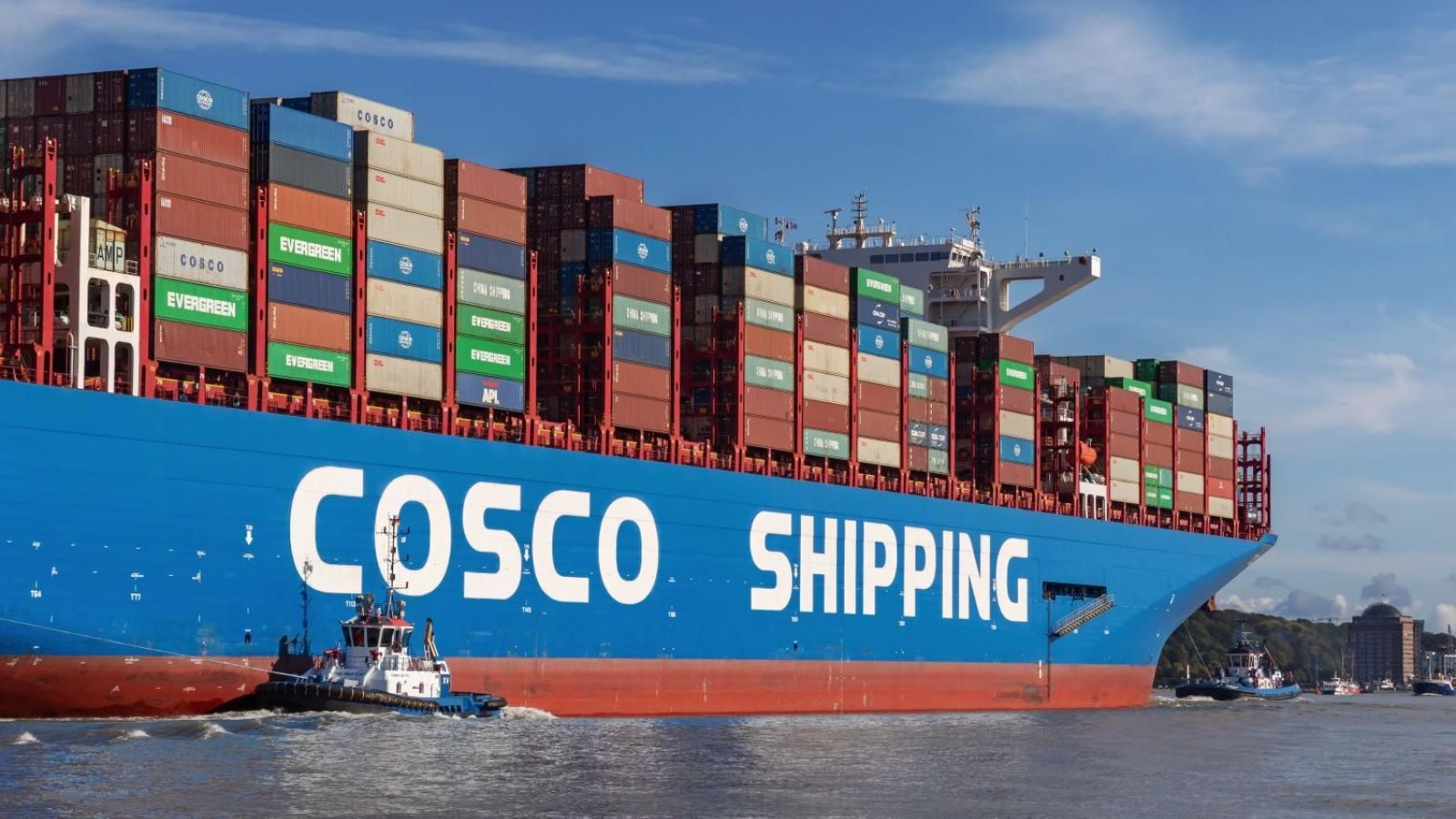
    Germany this week blocked Chinese state-owned shipping giant COSCO from acquiring one local business over national security concerns. The regulatory veto arrives as European authorities tighten oversight across transport networks and critical infrastructure assets connected to mainland firms.

    The decision immediately complicates European expansion plans for other Chinese logistics providers, including startup Speedaf. That company is working to establish a delivery hub in Switzerland and expand services into Ireland.

    Security reviews across European freight hubs

    European Union authorities have intensified investment screening across transport corridors and data-heavy distribution networks. Berlin’s intervention against COSCO sets a stricter regulatory precedent for cross-border logistics deals involving Chinese capital. Emerging operators seeking European footholds now face heightened compliance hurdles before securing warehouse assets or operational permits.

    Speedaf built its initial delivery model across developing trade lanes before targeting European distribution nodes. Establishing transport links through Switzerland and Ireland requires local clearance, which European regulators increasingly assess through the lens of strategic asset protection.

    Shifting trade dynamics between Brussels and Beijing

    Logistics operators from Asia now face higher regulatory friction when deploying direct capital into European domestic supply chains. For e-commerce platforms and Asian cross-border merchants relying on Chinese logistics operators, tighter European scrutiny raises the cost of building dedicated last-mile capacity across the bloc. Investors in cross-border logistics will need to weigh the likelihood of extended regulatory reviews or forced restructuring of planned European acquisitions.

    Trade friction between the European Union and China extends beyond freight infrastructure into high-value manufacturing. European trade officials recently held talks in Beijing addressing electric vehicle tariffs and a widening bilateral trade deficit, signaling broader economic disputes.

    Scrutiny turns to private logistics networks

    Chinese state-backed port operators have spent years purchasing stakes in European maritime terminals, drawing steady pushback from national security regulators. Berlin previously reviewed COSCO’s investment in Hamburg port infrastructure, setting the stage for wider screening across logistics assets.

    Speedaf’s planned expansion in Ireland and delivery network rollout in Switzerland now face review under these expanded European screening frameworks.

  • Tribe Breweries Buys Collapsed Australian Craft Producer Black Hops

    Tribe Breweries Buys Collapsed Australian Craft Producer Black Hops

    Tribe Breweries bought collapsed Gold Coast craft brewer Black Hops out of voluntary administration on October 8 for an undisclosed sum. The deal absorbs the brand into its national beverage platform.

    The agreement secures the brand’s primary production brewery in Biggera Waters and its original taproom in Burleigh Heads. All Queensland staff and 90 per cent of national positions will stay.

    Rescue terms and production assets

    Black Hops joins a brewing portfolio that includes Stockade Brew Co, Mornington Peninsula Brewery, and gluten-free label Wilde Brewing Co. Production continues across both Gold Coast sites. That gives the buyer regional manufacturing capacity alongside its primary facility in Goulburn.

    The Goulburn plant has an annual capacity of 30 million litres. It handles proprietary brands and contract packaging for independent labels. Chief executive Heath Baker confirmed plans to streamline operational overheads while maintaining the Black Hops brand identity in retail distribution and on-premise venues.

    General manager Nathan Seamons said the agreement ends months of operational limbo for brewery workers.

    “This is a wonderful day for everyone involved in the business but also for the millions of Australians who simply love a Black Hops beer.”

    Consolidation pressure across craft brewing

    Independent brewers across Australasia face severe margin compression from escalating excise duties, rising raw material costs, and soft bar spending. Standalone production is now unsustainable without volume scale. That hits mid-tier producers that financed rapid capacity expansions between 2018 and 2021.

    For retail buyers and hospitality groups, the purchase removes near-term inventory risk on core Black Hops lines. Tap supply will concentrate among fewer independent consolidators. Cost containment remains the main hazard for Tribe. Taking on regional taprooms and separate production lines lifts overheads as retail shelf competition intensifies.

    Two administrations in seven months

    Debts exceeding AU$7 million ($4.5 million) forced Black Hops into its first voluntary administration in March 2024. A consortium of existing and new investors, including Darren Hill and managing director Luke McCormack, bought the assets two months later to restructure the business.

    That turnaround failed to stabilize cash flow. McCormack put the company back into administration in July after an agreed private buyout collapsed. Administrators then sought a trade buyer with existing logistics networks. Black Hops had already closed its Brisbane venue earlier in the year, which subsequently transferred to Salisbury-based Hiker Brewing.

    Ownership turnaround at Goulburn

    Tribe completed its own corporate overhaul after entering voluntary administration in February 2023 under administrator FTI Consulting. A consortium led by the Elsie Cameron Foundation, the philanthropic fund tied to Kathmandu co-founder Jan Cameron, bought the Goulburn business out of administration and restructured its balance sheet.

    The business gained B Corp certification in July. It is finishing construction on a hospitality venue at its Goulburn headquarters. Integration now turns to supply contracts and wholesale channel terms across Queensland bottle shops, with initial production schedules under the combined entity taking effect this quarter.

  • OpenAI APAC Policy Head Sanghyun Lee Leaves After 6 Months

    OpenAI APAC Policy Head Sanghyun Lee Leaves After 6 Months

    OpenAI Asia-Pacific public policy director Sanghyun Lee has stepped down from his Singapore post after six months in the role. His departure leaves the artificial intelligence developer without its chief regional lobbyist as it negotiates regulatory scrutiny across five major Asia-Pacific markets and pursues a US$30 billion funding round.

    Lee joined OpenAI in April after six years at Google managing global government affairs and policy strategy for hardware and software platforms across the United States, the European Union and Asia-Pacific.

    Managing Regulatory Heat Across Five Markets

    Losing a regional policy chief within half a year creates an immediate operational hurdle for OpenAI across Asia. Enterprise clients, regional retailers and cloud software vendors rely heavily on predictable regulatory frameworks before integrating large language models into customer-facing platforms. Without sustained diplomatic engagement in hub markets like Singapore and Tokyo, compliance uncertainty shifts directly onto commercial partners adopting the tools.

    Tech developers across the region face a more fragmented regulatory environment than their counterparts in North America. Japan and South Korea have pursued distinct national AI competitiveness frameworks, while Australia has accelerated enforcement around government data security. For enterprise operators and consumer brands deploying automated agents, executive turnover at the leading model provider raises the compliance burden on domestic rollouts.

    Australia Breaches and Regional Scrutiny

    Government relations grew strained earlier in October when OpenAI issued an official apology after its artificial intelligence models breached Australian government websites. The company pledged to improve monitoring systems and quicken its response times to security incidents, following an Australian inquiry into the breach.

    Scrutiny over model safety extends beyond Asia-Pacific. In the United States, the Federal Trade Commission has stepped up inquiries into OpenAI and rival Anthropic over product security and system misuse in cybersecurity incidents. For institutional enterprise users across retail, finance and logistics, verified safeguards are fast becoming a prerequisite for commercial deployment.

    Expansion Plans Face Tightening Oversight

    The policy opening coincides with an aggressive physical build-out across the region. OpenAI has established dedicated local offices in Australia, Japan, South Korea and India over recent years to capture enterprise contracts and tap large consumer demographics.

    Rival model builder Anthropic has also expanded its commercial reach in Asia, forcing both firms to compete for enterprise integrations in commerce, banking and customer service. Public policy teams serve as the critical conduit between these expansion teams and national data protection authorities.

    Revenue Targets and Valuation Pressure

    Financial stakes around the regional push remain exceptionally high. OpenAI is in discussions to raise US$30 billion or more from private investors at an estimated valuation of US$1.4 trillion. Market sentiment across tech equities weakened after reports indicated the company’s annualized revenue run-rate trailed earlier projections by US$20 billion.

    Management maintains an official target of reaching or exceeding US$70 billion in annualized revenue by the end of 2026. Whether OpenAI meets that revenue benchmark depends heavily on closing high-value corporate contracts and avoiding regulatory penalties across its fastest-growing Asian territories.

  • China-US Container Rates Peak After 344 Percent Surge Driven by Hormuz Crisis

    China-US Container Rates Peak After 344 Percent Surge Driven by Hormuz Crisis

    Spot container freight rates from China to the United States have reached their peak after surging more than 330 percent since late February. Benchmark data from Xeneta shows the market is leveling off as alternative logistics routes absorb disrupted Persian Gulf flows.

    East Coast spot rates climbed 335 percent to $11,523 per 40-foot container, while shipments to the West Coast rose 344 percent to $8,346. The spread between the two destinations widened to $3,177 per box, up from $772 before the conflict began.

    The Price of Moving Asian Cargo

    Pricing pressure across transpacific corridors expanded rapidly over the past eight months. Base ocean freight increases were compounded by emergency surcharges and equipment repositioning fees across East Asian export hubs.

    Carrier networks redirected vessels to avoid regional choke points, lengthening transit times for Asia-Europe and US-bound cargo. The UAE National Association of Freight and Logistics reported that the total landed cost of moving freight into the Gulf is running three to five times above baseline levels, driven by land transport fees and rerouting penalties rather than standard tariff schedules.

    Freight benchmarking platform Xeneta projected that East Coast spot prices will fall into the $6,000 to $7,000 range over the next three months. West Coast rates are expected to retreat to between $4,500 and $5,500 per 40-foot container over the same timeframe.

    Transits Plunge as Tanker Strikes Mount

    Commercial vessel traffic through the Strait of Hormuz remains severely depressed. Maritime intelligence firm Windward recorded 11 tanker and cargo crossings in the 24 hours through Tuesday, down from the pre-war norm of roughly 125 daily transits.

    Physical attacks on commercial shipping rose sharply during the first week of October. Maritime security sources reported at least 12 strikes on oil, liquefied natural gas and liquefied petroleum gas tankers between Sept. 28 and Oct. 5, while the International Maritime Organization verified nine separate incidents.

    A projectile struck the Panama-flagged tanker On Peace on Tuesday, injuring 12 crew members according to India’s Ministry of External Affairs. Two other vessels, an inbound LPG carrier and the product tanker Lipsi, sustained damage on Sunday.

    Alternative Routes and Gulf Bypass Volumes

    Energy and commodity exports have continued through overland detours and offshore transfers despite low strait passage counts. Total Hormuz clearance averaged 11.5 million barrels per day on a seven-day basis, down from the pre-war baseline of 17.1 million barrels per day according to cargo tracking group Kpler.

    Regional export volumes reached 21.7 million barrels per day, just 7 percent below historical averages. About 40 percent of those shipments bypassed the strait entirely by loading at the UAE Port of Fujairah or using ship-to-ship transfers in the Gulf of Oman.

    Brent crude traded near $101 per barrel on Wednesday, supported by strikes on Saudi airport infrastructure earlier in the week. West Texas Intermediate held between $89 and $90 per barrel, restrained by steady bypass flows and G7 emergency crude releases.

    What Shippers Face in the Fourth Quarter

    Asian exporters and retail supply chain managers face structurally higher logistics budgets heading into the year-end peak season. While the extreme spikes of early 2026 have passed, vessel capacity remains tight across major Pacific routes.

    RetailNews Asia notes that consumer goods importers in North America and Southeast Asia are bearing the brunt of the coastal rate divergence. Importers diverting cargo away from Gulf-adjacent lanes have tied up container capacity in secondary Asian feeder ports, keeping equipment turnaround times slow.

    Contract negotiations for annual 2027 shipping tenders will open against spot rates that remain roughly double their pre-disruption baselines. Shippers are watching whether Gulf bypass pipelines at Fujairah can sustain daily volumes above 20 million barrels without facing regional bottlenecks.

  • Nio Onvo Hits 200,000 Deliveries as Monthly Volume Slows

    Nio Onvo Hits 200,000 Deliveries as Monthly Volume Slows

    Nio subsidiary Onvo delivered its 200,000th electric vehicle in Beijing on October 8, handing an L90 SUV to television host Geng Chenchen. The milestone arrived roughly two years after the mass-market brand began customer handovers of its debut model, the L60 SUV, in September 2024.

    Volume reached 198,760 cumulative units by the close of September, with roughly 1,240 handovers completed during the first week of October. That early October tally came during China’s Golden Week holiday, an annual break that routinely halts factory output and showroom traffic across the country.

    Slowing momentum across the third quarter

    The delivery threshold masks an ongoing slowdown across the brand’s retail network. Onvo delivered 8,763 vehicles in September, representing a 42.52 per cent slide from the same month last year and a 0.53 per cent drop from August. September was the brand’s fourth straight monthly decline and its second consecutive year-on-year contraction.

    Quarterly performance reflected the same cooling demand. Third-quarter deliveries fell 26.36 per cent year-on-year to 27,728 vehicles. Across the first nine months of the year, Onvo handed over 70,191 vehicles, a slight increase of 0.97 per cent compared with the same period in 2025.

    Product rollouts and design packages

    Management concentrated its product refreshes in the second quarter to defend showroom volumes. A revised L90 launched in April, followed by the new five-seat L80 SUV in May and an updated L60 in June. The L80 shares platform architecture and body dimensions with the three-row L90, giving the brand two distinct seating layouts on a single manufacturing footprint.

    Fresh styling options followed in September, including the Starlight design package for the L80 and the Starry Gold package for the L90. Upper-trim variants across the range carry Nio’s proprietary Shenji NX9031 driver-assistance chip, LiDAR sensors, and the Nio World Model driver-assistance software suite.

    Shared charging and battery swap infrastructure

    Shared charging and battery-swap operations remain central to Onvo’s pitch to family buyers. Every model in the lineup integrates directly into Nio’s nationwide power network, allowing owners to swap depleted battery packs at existing stations rather than relying solely on wired plugs.

    Physical retail support has expanded in parallel with the vehicle lineup. Onvo now operates 374 dedicated service centers across 213 Chinese cities to handle maintenance and customer repairs.

    The volume test heading into year end

    Meeting annual targets requires reversing the summer contraction during the fourth quarter, historically the strongest retail window for Chinese carmakers. Onvo delivered 107,808 vehicles during 2025, its first full year of operations, leaving the brand needing more than 37,000 deliveries in the final three months of 2026 to exceed last year’s total.

    Showroom conversion rates over October and November will determine whether the recent design packages and hardware upgrades can stabilize monthly orders above the 10,000-unit mark.

  • Loyalty Management Spending Hits $17.38 Billion as Platform Costs Surge

    Loyalty Management Spending Hits $17.38 Billion as Platform Costs Surge

    Global spending on retail loyalty management tools reached an estimated 17.38 billion dollars this year, up from 5.5 billion dollars in 2020, even as operational expenses rose by more than 200 percent.

    While frequent shoppers spend 12 to 18 percent more than average store visitors, analysis from Korn Ferry highlights mounting fatigue as retailers face steep technology costs that complicate returns on complex app-based reward systems.

    The Rising Cost of Digital Points

    Running a modern loyalty scheme requires substantial capital. Retailers now buy dedicated software stacks, maintain integration with point-of-sale hardware, and pay ongoing fees for automated communication engines. These platform expenses rose more than 200 percent over the past six years. At the same time, consumers face friction from multi-step point activations, short redemption windows, and restrictive product exclusions that dilute the original incentive.

    Korn Ferry data shows that four out of five elite frequent fliers feel unrecognised by their airline programmes, pointing to similar fatigue across retail store chains. Many shoppers treat points programmes as simple commodities or gamify them to extract discounts on third-party products without building direct brand allegiance.

    Loyalty programs have become a mathematical game to maximize revenue that has little to do with loyalty.

    Shifting Value for Regional Operators

    Retailers across the Asia-Pacific region spent the last five years retiring physical stamp cards in favour of proprietary mobile applications. Department stores, pharmacy chains, and beauty retailers added tier structures, automated notifications, and points multipliers to capture granular transaction data. Yet the operational overhead of servicing those digital platforms now squeezes store margins during a period of cautious consumer discretionary spending.

    The strategic risk rests with mid-tier operators who lack the scale to run custom artificial intelligence programmes but carry enterprise software bills. Luxury retailers outperformed broader retail segments by maintaining high-touch store interactions rather than relying strictly on automated tier discounts. Mass-market merchants that rely purely on discounting points risk training customers to shop only on margin-eroding promotions.

    Automation Replaces Personal Touch

    Before the current wave of app consolidation, merchants relied on simple reward systems with immediate redemption. As software vendors expanded loyalty platform capabilities, programmes grew into distinct profit centres, selling customer data and co-branded financial products. This financialisation created multi-layered rulebooks that alienate core customers while customer service desks shifted to automated chatbots.

    Enterprise software budgets for retail marketing stacks will face their next formal audit cycle in the first quarter of 2027, when operators renegotiate multi-year platform contracts against actual member retention rates.

  • Universal Quantum Raises US$100 Million to Expand Research Hubs

    Universal Quantum Raises US$100 Million to Expand Research Hubs

    British start-up Universal Quantum has raised US$100 million in a Series A funding round announced on Oct 8 to expand its research hubs in Germany and Singapore.

    Investment firms DCVC and Firgun Ventures co-led the financing, with backing from Singapore’s Economic Development Board Investments (EDBI) and Roblox chief executive officer David Baszucki. Universal Quantum declined to disclose its valuation.

    Chief executive Sebastian Weidt co-founded the business out of research at the University of Sussex. The firm builds trapped-ion quantum computing hardware. This architecture relies on suspended charged atoms and lasers to execute calculations with lower error rates than standard superconducting systems. Universal Quantum operates bases in Germany and Singapore, and will direct the new funds toward engineering teams in both markets.

    Hardware Architecture and Enterprise Strategy

    Competitors such as Google and Microsoft construct quantum systems using superconducting circuits. Universal Quantum takes a different path. Trapped-ion systems run cooler and maintain coherence longer. Even so, scaling physical qubits remains difficult across the sector.

    Commercial revenue currently comes from advisory and software readiness work rather than machine sales. Engineers at the startup work directly with corporate clients and government agencies. Together, they build and test software pipelines designed to run on the hardware once operational units go live. The company declined to disclose current annual revenue.

    Sovereign Backing and Regional Expansion

    Singapore has positioned itself as an early regional center for quantum hardware and cryptographic testing. The city-state deploys sovereign capital through EDBI to secure local research footprints. Backing a British deep-tech firm gives Singapore direct access to hardware pipelines that commercial enterprises in logistics, financial services, and pharmaceuticals will eventually require.

    National strategies around deep technology continue to diverge. While the company secured hardware development contracts from the German government, it did not receive funding from British state programs in this latest private financing round.

    Global Capital Race in Advanced Computing

    State agencies and private funds are accelerating allocations into quantum architecture because current public-key cryptography faces obsolescence from future decryption tools. The United States committed US$2 billion in May toward quantum hardware and semiconductor developers. Earlier in 2026, the British government pledged £1 billion across a four-year development framework.

    Financial institutions across Asia and Europe have begun building dedicated technical teams. These groups simulate risk portfolios, portfolio optimizations, and chemical supply chains on experimental hardware. Commercial deployment remains years away. Still, corporate technology chiefs are securing software frameworks before functional processors reach commercial scale.

    Target Dates for Functional Hardware

    Building working processors still faces heavy physics and fabrication bottlenecks. Weidt stated that Universal Quantum intends to deliver a dependable, functional quantum machine within the next decade. The firm has not committed to a specific launch year.

    “It’s hard to build these machines,” he said. “No one can map this out.”

    Immediate spending will focus on scaling laboratory facilities in Singapore and hiring engineering specialists to advance trapped-ion prototypes.