Blog

  • Inside Blue Bottle Coffee’s trendy new Osaka store

    Inside Blue Bottle Coffee’s trendy new Osaka store

    lue Bottle Coffee, the Nestle-owned American coffee chain, has entered Osaka with a trendy look designed by Tokyo-based studio, I In.

    Customers entering the store are welcomed by an open space filled with the essence of warm wood and bright light through floor-to-ceiling glass windows. In contrast with the wooden floor, the barista’s drip station is made of hairline polished stainless steel, resembling a stage.

    “I thought it would be great if the store could make the series of things that the barista makes and give to customers the most shining, so I lit up the area of ​​the drip station where the barista stands and made it shine like a stage,” said Yohei Terui, founding partner at I In, who is also in charge of designing the store.

    Throughout the cafe, special blue glass, inspired by Blue Bottle’s signature colour, is used to highlight the brand’s message. A coffee-coloured spherical glass chandelier is installed throughout the atrium at the staircase area leading to the second floor.

    Different from the ground floor, the upper floor is dominated by white-coloured materials. Centrestage is a special area stimulating the five senses of visitors. Customers sitting in this area will encounter a sensory experience where music and images, created in collaboration with Panoramatiks, ‘fall’ from the ceiling.

    “It is not just a concept, but a place that really stimulates the five senses of humans,” the design studio described.

  • Ikea expands Buy Back & Resell program as it eyes 2030 circularity goal

    Ikea expands Buy Back & Resell program as it eyes 2030 circularity goal

    Global furniture and homewares retailer Ikea has expanded its Buy Back & Resell concept into the US with a three-week trial in the Pennsylvania city of Conshohocken in suburban Philadelphia.

    Ikea piloted the concept in the UK in 2019 before launching two permanent stores in its home market Sweden last year. In Australia, a 10-day campaign last year saw more than 18,000 products returned to stores, but the initiative has not been introduced as a permanent feature yet.

    After the Ikea Conshohocken Ikea US said in a statement that it plans to roll the service out to additional select markets across the country, with the ultimate goal of making Buy Back & Resell a permanent service at all Ikea US stores in the future, without specifying a timeframe. The pilot began this week and ends on September 19.

    However the company earlier said the return and reuse strategy would help it meet its goal of becoming a circular business by 2030.

    Perhaps addressing one of the challenges of maintaining a service where it commits to buying back furniture, the company said it was offering “Ikea Family members the opportunity to sell back their gently used” furniture in exchange for store credit. It only covers fully assembled and functional Ikea furniture which the retailer hopes will provide a sustainable and affordable option for customers, especially those on tight budgets. The condition, age and functionality of products returned will be reviewed and any recalled products – along with particular categories of products such as chests of drawers – will not be accepted.

    “At Ikea, we are passionate about making sustainable living easy and affordable for the many, and want to be part of a future that’s better for both people and the planet,” says Jennifer Keesson, country sustainability manager at Ikea US. “We hope the Buy Back & Resell service inspires our customers to live a more sustainable life at home while giving their used furniture another life and a second home.”

    The company did not say what it would do with furniture returned that it believed could not be resold – consumers may have the perception that the company would recycle it on their behalf.

    Through its franchise partner Ingka Group, Ikea has 52 stores in the US.

    Ikea Australia sustainability manager Mellisa Hamilton said the success of last year’s trial proved “overwhelming demand” for the service.

    “Moving forward, we’re looking at ways to refine the service to be able to meet demand and continue to increase consumer awareness to promote and enable circularity both within our business and our customer’s life at home.”

  • Covid impact sees Vietnam retail sales drop

    Covid impact sees Vietnam retail sales drop

    Vietnam retail sales plunged 33.7 percent year-on-year in August as the country faced stricter restrictions due to the ongoing Covid-19 pandemic.

    According to the General Statistics Office, August’s retail sales plunged 10.5 percent compared to July. In the first eight months of this year, revenue from retail trade and service declined 4.7 percent year on year, reaching US$133.43 billion.

    The Covid-19 situation in the country has seen varying degrees of lockdown in Vietnam’s major cities including Hanoi and HCMC since June.

    In HCMC, retail revenue is estimated to reach US$1.5 billion, falling 15.9 percent month on month. The e-commerce sector, which had been expected to flourish as demand soared, recorded negative growth due to the restriction of delivery services under the Prime Minister’s Directive No.16.

    Restaurants – including online ordering with delivery or pickup – have been banned from trading for nearly two months in Ho Chi Minh City.

  • Vietnam stops selling domestic flight tickets

    Vietnam stops selling domestic flight tickets

    The Civil Aviation Authority of Vietnam (CAAV) on Monday requested airlines to stop selling tickets for domestic flights until further notice.

    Airlines would need to refund tickets for customers who’ve already purchased theirs from July 21, the CAAV added.

    The number of flights from cities and localities under Covid-19 social distancing orders as dictated by Directive 16 would be limited as well, it said.

    Since July, the CAAV has requested airlines to limit the number of flights from socially distancing localities to Hanoi amid concerning coronavirus threats. The Hanoi-HCMC flight route, an important one, has been limited to two flights a day at maximum.

    Domestic flight passengers must present effective negative coronavirus test papers.

    Vietnam closed its borders and canceled all international flights in March last year, and has since allowed only certain categories of visitors with strict Covid-19 quarantine requirements.

    The country has recorded 445,292 local Covid-19 cases since the fourth coronavirus wave hit Vietnam in late April.

  • UBS Replaces Veteran Intermediaries Head

    UBS Replaces Veteran Intermediaries Head

    The Swiss wealth manager is replacing the head of its business with financial intermediaries, after a 40-year veteran of the bank retires.

    Zurich-based UBS is appointing Thomas Frauenlob as the head of its business with other financial institutions such as independent asset managers, effective October 1, according to a memo seen by finews.com. The Swiss banker replaces Stefano Veri, who has overseen the so-called FIM business globally since 2015 and is retiring.

    Veri is uniquely heavyweight: he is a 40-year veteran of UBS’ private bank and part of a cadre of elite managing directors. A UBS spokesman confirmed the Ticino native’s retirement. Late last year, Veri was forced to postpone a push in Miami with intermediaries which is led by Mariana Gregori, who is responsible for international business.

    Frauenlob, Veri’s successor, is a former equities banker who moved into the wealth arm in 2016 when he was tasked with UBS’ business with Switzerland’s wealthy and family offices. The role was reduced to family office responsibilities in a restructuring 20 months ago. Frauenlob will be replaced by Josef «Joe» Stadler in this role, a spokesman said.

    In the wider FIM team, Andreas Moser last September replaced Severin Rupp in overseeing institutional intermediaries. Rupp defected to Vontobel, where he runs business with external asset managers.

    UBS’ remaining FIM management team besides Gregori is Claudio Scarfone for Switzerland, Beat Bachmann for Europe, and Hugo Kattendijke for Asia-Pacific.

    Frauenlob, who moves to the FIM business on Wednesday before taking over fully in October, will report to Anton Simonet, UBS head of wealth management in Switzerland as well as the FIM business, and to Iqbal Khan, who co-runs the wider wealth management unit together with Tom Naratil.

  • Shiseido to sell beauty brands BareMinerals, Buxom, Laura Mercier

    Shiseido to sell beauty brands BareMinerals, Buxom, Laura Mercier

    Shiseido Americas is selling cosmetics brands, BareMinerals, Buxom, and Laura Mercier to AI Beauty Holdings Ltd, a newly-formed affiliate of private equity investment firm, Advent International. The terms of the deal were not disclosed.

    Upon completion of the transaction, Pascal Houdayer, the former chief executive of NAOS (Bioderma, Esthederm, Etat Pur) will serve as CEO of the standalone business.

    Launched in 1995, BareMinerals is a leader in mineral-based cosmetics; Buxom, created in 2007, is a colour cosmetics brand ranked among the top five US brands across various lip categories. Prestige makeup brand Laura Mercier was founded in 1996.

    “We are strong believers in the BareMinerals, Buxom, and Laura Mercier brands,” said Tricia Glynn, a managing director at Advent. “They are clear leaders in prestige beauty and are widely recognised for their quality, authenticity, and innovation, with differentiated products and devoted customers.”

  • Japan’s retail sales extend gains but Covid-19 challenges persist

    Japan’s retail sales extend gains but Covid-19 challenges persist

    Japan’s retail sales rose for a fifth straight month in July, beating expectations as the consumer sector continued its recovery, although a coronavirus resurgence has cast doubts over the spending outlook.

    A surge in Delta variant cases this month forced the government to widen state of emergency restrictions, which are now threatening to hurt consumer spending and derail a fragile economic recovery.

    Retail sales advanced 2.4% in July from the same month a year earlier, government data showed on Monday, slightly faster than economists’ median forecast for a 2.1% rise in a Reuters poll. It followed a 0.1% increase in June.

    “The recent strength in retail sales is unlikely to last,” Marcel Thieliant, Senior Japan Economist at Capital Economics, said in a note.

    “The severe Delta wave now hitting the country coupled with an ever-expanding list of prefectures under states of emergency resulted in a renewed weakening in consumption this quarter,” Thieliant said.

    The better-than-expected rise in retail sales in July came as authorities struggled to get a defiant public to heed stay-at-home restrictions in major cities like Tokyo, which hosted the Olympics during the month.

    The trade ministry data found strong demand for a variety of items such as cars, clothing, general merchandise, and food while fuel was helped by higher petrol prices.

    Small retail establishments like convenience stores and drug stores saw the biggest sales growth from a year earlier.

    However, growth was also flattered by the comparison with last year’s steep slide, when consumer demand was hurt by the coronavirus pandemic.

    Compared with the previous month, retail sales gained a seasonally adjusted 1.1% as consumption continued the surprising growth seen in the second quarter, helped by the Tokyo Olympics.

    The world’s third-largest economy grew at a better-than-expected rate in the April-June quarter, thanks largely to private consumption, which makes up more than half of the country’s gross domestic product.

    But rebounding consumer activity poses a challenge to policymakers as the more contagious Delta variant of COVID-19 upends the nation’s healthcare system, with state of emergency curbs now covering nearly 80% of Japan’s population.

    “People’s mobility has been decreasing, and consumption may peak out in August,” said Atsushi Takeda, chief economist at Itochu Economic Research Institute, noting that the downward trend could drag until September.

  • Oil Falls In Biggest Weekly Decline In Months On Demand Worries

    Oil Falls In Biggest Weekly Decline In Months On Demand Worries

    Oil prices fell about 1% lower on Friday, posting to their steepest weekly losses in months, on worries that travel restrictions to curb the spread of the Delta variant of COVID-19 will derail the global recovery in energy demand. Crude futures also came under pressure as the dollar strengthened after monthly U.S. job growth came in higher than expected. A stronger dollar makes greenback-denominated oil more expensive for buyers in other currencies.

    Brent crude oil futures settled down 59 cents, or 0.8%, at $70.70, while U.S. West Texas Intermediate (WTI) crude futures fell 81, or 1.2%, to settle at $68.28 a barrel.

    For the week, global benchmark Brent shed more than 6%, its largest week of losses in four months, and WTI tumbled nearly 7% in its biggest weekly decline in nine months.

    “The price action we see now is really a function of the macro picture,” said Howie Lee, an economist at Singapore bank OCBC. “The Delta variant is now really starting to hit home and you see risk aversion in many markets, not just oil.”

    Growth in the rig count has slowed in recent months as drillers continue to focus on capital discipline.

    U.S. President Joe Biden said that COVID-19 cases in the United States, which have climbed to a six-month high, will go up before they come down and that the new Delta variant is taking a needless toll on the country.

    Japan is poised to expand emergency restrictions to more regions of the country, while China, the world’s second-largest oil consumer, has imposed curbs in some cities and canceled flights.

    “Increased travel restrictions in China have come under the microscope of traders and could become a key oil price mover as this month proceeds,” said Jim Ritterbusch, president of Ritterbusch and Associates LLC in Galena, Illinois.

    U.S. oil rigs rose two to 387 this week, energy services firm Baker Hughes Co said. Growth in the rig count has slowed in recent months as drillers continue to focus on capital discipline.

  • Singapore’s Shopee disrupts the Brazil’s e-commerce sector

    Singapore’s Shopee disrupts the Brazil’s e-commerce sector

    Shopee took just two years to become Brazil’s most downloaded shopping app, winning users to its low-cost marketplace with its game-changing approach to e-commerce: in-app mini-games offering coupons to winning users.

    The Singapore-based company has combined online shopping with the gaming nous of its separate mobile game arm Garena – creator of “Free Fire”, Brazil’s most downloaded title for eight consecutive quarters – to generate sales analysts estimated at almost a third of local champion Magazine Luiza.

    Back home, Shopee only needed five years to become Southeast Asia’s most-visited e-commerce website, overtaking the likes of Lazada, backed by China’s Alibaba Group Holding, and Tokopedia, backed by Japan’s SoftBank Group.

    “Shopee has a track record in Southeast Asia of coming into the market late, looking at how others have solved existing problems and then building a system to leapfrog those issues,” said analyst Jianggan Li at advisory firm Momentum Works.<

    Shopee’s early surge highlights the space left for foreign entrants to grow in a sector once dominated by regional firms like Magazine Luiza and Argentina’s MercadoLibre.

    To be sure, the startup’s timing was fortuitous, launching in Brazil just as the COVID-19 pandemic drove consumers away from physical stores, pushing up 2020 e-commerce sales by 44% to $42 billion, showed data from Brazilian payments company EBANX.

    Shopee – akin to Alibaba’s AliExpress, carrying Chinese-made knick-knacks – emerged as Brazil’s top app by downloads and time spent in use, showed data from analytics platform App Annie.

    Yet, in pursuit of growth, Shopee is still losing money, propped up by Sea’s profitable gaming division. In the second quarter of this year, Garena posted adjusted earnings before interest, tax, depreciation and amortization (EBITDA) of $740.9 million even as the e-commerce arm lost $579.8 million.

    “Money being generated by one side of the business, which is a cash cow, is being reinvested aggressively in Brazilian e-commerce – with success,” said Itau BBA analyst Thiago Macruz.

    Sea’s Brazil foray is just one element of its global ambition. Investment arm Sea Capital is also considering putting money into startups in Latin America and beyond, said a person with knowledge of the matter, who was not authorized to speak with media and so declined to be identified.

    The firm has also taken Shopee to Chile, Colombia and Mexico where, unlike Brazil, it has no locally based staff and so has partnered social media influencers to increase brand awareness, said two people familiar with the matter.

    Sea, whose shareholders include Chinese gaming leader Tencent Holdings, declined to comment.

    The firm has disclosed little data about Shopee Brazil, but Itau BBA analysts estimated the value of goods and services sold on the platform last year hit 12 billion reais ($2.27 billion).

    The average price on its marketplace is 40 reais, other estimates showed, less than a third that of e-commerce leader MercadoLibre, which often carries higher-value branded products.

    Sea’s biggest challenge for Shopee Brazil is delivery in such a vast country. It reduced its reliance on the local postal system this year in favor of private carriers, but is still competing against rivals with proprietary delivery services.

    Shopee aims to have one main logistics partner per country in the region, a company source said.<

    The company itself expects e-commerce growth in the region to spawn more delivery partnerships, as happened in Southeast Asia, Sea executives told analysts on a call this month.

    On the same call, Group Chief Corporate Officer Yanjun Wang called Brazil “a good market for continued investment.”

    Competition in Latin America’s largest economy stepped up this month when Shopee’s nearest rival in terms of product offering, AliExpress, opened up its marketplace to domestic sellers charging a single-digit commission. AliExpress had been in Brazil for 11 years; Shopee did similarly after its first year.

    Small-business owner Luciana Carvalho began selling plastic packaging products on Shopee in February, attracted by the free shipping and 6% commission – compared with MercadoLibre’s 17%.

    “It’s easy to sign up, calculate your commission, get your delivery tags, your receipts. It makes us invest more in the platform,” she said.

    In a move toward profitability, Shopee has since raised commission to 18% – as much as twice marketplaces can charge in some Southeast Asian countries, indicating Latin America’s potential profit margins. Carvalho continues to use Shopee, though she prefers MercadoLibre for its “unbeatable” delivery.

    To further improve profitability, Goldman Sachs analysts said Shopee could start selling higher-ticket items, as it has in Southeast Asia. Momentum Works’ Li expects Shopee to add financial services to its Brazil app as it has in Indonesia.

    “I wouldn’t be surprised,” if they reached number one, said Li, “Given what they have done in Singapore, Indonesia and Malaysia, Thailand.”

  • Kia Workers Accept Wage Deal Without Strike For The First Time In A Decade

    Kia Workers Accept Wage Deal Without Strike For The First Time In A Decade

    Workers’ Union at Kia Motors has voted to accept the company’s wage proposals without a strike for the first time in 10 years. According to a report from IANS, the carmaker said that 68 percent of 26,945 workers have voted in favor of the wage, which includes an increase of 75,000 won ($64.30) in monthly basic pay, two months of wages in performance-based pay, and cash bonuses worth 5.8 million won. The report also mentioned that over 1,600 out of the 28,604-member union abstained.

    The company has rejected the Union’s demand to extend the retirement age from current 60 to 65, however, the company reinstated fired workers.

    The automaker and the workers’ Union reached a tentative wage deal early this week without staging a strike amid the ongoing COVID-19 pandemic. This is the first time that Kia will sign a wage deal without industrial actions. They will sign the wage agreement on Monday.

    Last month, Hyundai Motor Company and its union signed this year’s wage deal without strikes for the third consecutive year.

  • Central Group takes control of Bangkok’s Mega Bangna parent

    Central Group takes control of Bangkok’s Mega Bangna parent

    When Vietnamese Prime Minister Nguyen Xuan Phuc visited Thailand in August, a red carpet was rolled out for him at Central Group’s Central Ladprao, a shopping complex in downtown Bangkok.

    The premier had been invited to attend the opening ceremony of a Vietnamese trade fair. He was greeted by members of Central Group’s founding Chirathivat family, including Chief Executive Tos Chirathivat, who reminded his guest that he wanted to invest more in Vietnam, the group’s biggest market outside Thailand.

    Tos introduced the premier to his youngest son, who had just graduated from a U.S. university and will join the family business in the group’s online operations.

    “He doesn’t know anything about retail,” Tos, laughing, said. “But the young generation, they know a lot about digital technology.”

    International expansion and e-commerce are two challenges that Tos, a grandson of group founder Tiang Chirathivat, has been tackling as the traditional retail business faces slowing growth.

    Like many other family businesses in Thailand, the Chirathivats are ethnic Chinese.

    Founder Tiang emigrated from Hainan Island to Bangkok in 1925. While many other Chinese immigrants chose to start businesses in the city’s Chinatown, he set up his first shop in the Thonburi district on the outskirts of Bangkok and across the Chao Phraya River from the city center.

    His shop was close to a large temple built by the royal family, so Tiang sold refreshments and provided a boat parking service for visitors.

    He moved across the Chao Phraya River to a location near the grand Oriental Hotel (now the Mandarin Oriental), where he opened a store with his eldest son, Samrit, in 1947. In 1956, the family opened Thailand’s first department store in Chinatown.

    Today, the 70-year-old group has become a dominant player in Thailand’s retail sector, with more than 60 department stores and shopping malls. It also operates hotels and restaurants, with a total of 5,000 outlets.

    In 2016, annual sales amounted to 332.7 billion baht ($9.98 billion), up 17% from a year earlier, confirming its status as the largest retailer in Thailand. Its closest rival is The Mall Group, which operates such major Bangkok shopping malls as Siam Paragon and Emporium, with estimated annual revenue of 50 billion baht. Central Group is also larger than other major regional peers, such as the retail operations of SM Investments in the Philippines.

    The Chirathivat family is the third-richest family in Thailand, with an estimated worth of $12.3 billion, according to Forbes.

    Central’s growth has been supported by an expanding economy, a rising middle class and demand for new goods and services. It built malls and stores in competitive locations offering a wide range of products. But Thailand’s population is starting to age at a more rapid rate than neighboring countries, while they are spending more abroad. This is causing domestic demand to stagnate as competition intensifies and becomes more diversified.

    “There are so many things that are happening now that affect department stores,” which account for about 40% of group revenue, Tos said in a recent interview. “The retail market is so much bigger than just department stores,” referring to various forms of retail operations from malls to discount stores and specialty stores.

    The 52-year-old Tos said it is “pretty simple” for him to grasp industry trends given his long experience in the family business. “I’m good at looking at the big picture, investing and expert at finding money.”

    Tos, the youngest of Samrit’s eight children, studied finance at Columbia University in New York and initially wanted to be an investment banker. He worked for a year at Citibank in Thailand. But he decided to return to the family business and launched a hypermarket chain, Big C, in 1994.

    He also oversaw an expansion into rural areas, which now account for around half of the group’s retail sales, although a similar venture in China proved less successful.

    Because of his largely successful track record in leading the group’s diversification, the board of directors strongly backed the appointment of Tos as chief executive in 2013, although he said he was reluctant to take up the post because he was already “personally satisfied” with retail. “He had outstanding talent and everyone in the family knew that,” one family member said.

    He has since then spearheaded an international expansion drive by buying several European department stores, including Italy’s La Rinascente and Germany’s KaDeWe, as well as the local arm of Big C in Vietnam. International operations now account for roughly 30% of group revenue.

    ONLINE AMBITIONS

    But Tos expresses less confidence about his ability to keep up with online operations, in contrast to his deep knowledge about traditional brick-and-mortar businesses.

    “Digital and e-commerce is the only unknown for me, but it is also the future,” he admitted. “I’m not sure in terms of execution and how to bring in growth. But you can see everywhere now that if it works, the value is incredible and crazy.”

    Pressure is mounting. Although Southeast Asia’s e-commerce market is still relatively small with no dominant player, like Alibaba Group Holding in China or Amazon in the West, the market is growing rapidly. Amazon recently entered Singapore, while Alibaba has invested in Lazada, the largest e-retailer in Southeast Asia, and is planning to build a large logistics center in Thailand.

    Tos has responded by bringing in outside experts to help. Last year, the group started recruiting non-family executives into top management posts that resulted in a team dominated by outsiders for the first time. The new team, which reports directly to Tos, is aimed at strengthening the group’s shift to online operations.

    Nicolo Galante, an Italian and former McKinsey consultant who has revamped online operations and created new marketing channels for European retailers, became the group’s chief operating officer. He is initiating reforms by adding online shopping channels for each retail business from department stores to sports specialty outlets and attracting talent to new posts, such as chief technology officer.

    “In the next two to three years, the picture of e-commerce in Thailand will change dramatically,” Galante said. Unlike Europe, where the traditional retailers found themselves far behind Amazon by the time they decided to shift online, the developing e-commerce market in Southeast Asia means that “we are not yet late,” he said. “We have the unique opportunity to write the history for ourselves. But it is going to happen very fast and very soon.”

    Former bankers have also joined the group to provide financial expertise essential for supporting e-commerce. Yol Phokasub, former head of Siam Commercial Bank, was appointed to the newly created post of president. Prasarn Trairatvorakul, a former Bank of Thailand governor, is serving as a senior advisor.

    “Central has been aggressively adopting experts and foreigners as executives under Tos,” said Natenapha Wailerdsak, a lecturer at Thammasat Business School. This is a positive move, she said, since relying heavily on insiders could “restrict the businesses from expanding beyond the abilities of its family members.”

    FAMILY DOMINANCE

    Nonetheless, Central is often seen as one of the most family-dominated conglomerates in Thailand compared with other groups, such as Charoen Pokphand Group, the agribusiness-to-retail-to-telecoms empire led by Dhanin Chearavanont.

    Family members fill all of Central’s 15-member board of directors and seven-seat executive committee. Most of its group companies are private, with a few exceptions like development unit Central Pattana.

    In contrast, most of CP’s major assets are listed and its management includes non-family executives who head core listed subsidiaries such as Charoen Pokphand Foods and 7-Eleven operator CP All.

    “My grandfather and father, we wanted all the family members to be in the company if they wished,” Tos said. “But CP, they say they don’t want family members in the group. They are more aggressive and want the best professional people to run the business.”

    Dhanin said in his autobiography last year that just before he became president of CP Group when he was 30, he asked his relatives, including his older sisters and the wives of his brothers, to leave the company and he replaced them with young professionals.

    He also forbade hiring the children of family members for CP core businesses. “Bringing a son on board could also jeopardize the company’s future,” Dhanin said. “Not only would the company lose valuable [outsider] executives [who feel they will not be able to get a promotion], it would have trouble ensuring a smooth transition from one leadership to the next.”

    The Chirathivats share “a different philosophy,” Tos said. The group has a “stricter” management selection process that requires at least 75% approval from the family-dominant board. “They must have a trust in you, think that you are capable and good for the family,” he explained.

    The extensive Chirathivat family provides plenty of potential candidates. Founder Tiang had 26 children with three wives that resulted in roughly 220 Chirathivat offspring, of which 51 are involved in the business.

    To keep the family bonds strong and avoid disputes, Samrit Chirathivat, the founder’s son who built the foundation of the retail business, insisted that the family should live together. He built a house in Bangkok’s central Sala Daeng district that housed nearly 50 Chirathivats across three generations.

    “We were brought up together and interacted with each other a lot,” said Suthiphand Chirathivat, another of the founder’s sons and a group executive. The children worked in the group’s shops as clerks during school holidays.

    Although the central Chirathivat residence is now old and too small to hold many family members, some of them still live together in three main compounds in Bangkok.

    Family members also keep in touch through an online messaging group. Every year on July 10, the anniversary of the founder’s death, the family gathers at a temple near where the group had its first shop.

    A family council headed by Suthichai Chirathivat, another son of the founder who was the group’s first CEO and current chairman of the board, discusses issues such as marriage, education and the family budget that is financed by income from unlisted group companies. “We provide funds for those that aren’t involved in the business, too,” said Suthiphand Chirathivat.

    Central Group has put in place a succession plan to avoid internal disputes, which includes family and outside candidates. “The more pressing challenge for the Central Group when it comes to top management is how to transform it from a tightly family-dominated group to a more open and professional one,” said Pavida Pananond, associate professor at Thammasat Business School. “They need to address the strategic need to become a more regional and global player in retail.”

    Tos certainly recognizes that. “The company is growing faster than our babies,” he said. “To keep growing, we will need outsiders to take care of the group.”

  • Ferrari Boss Has No Fears Over Electric Future

    Ferrari Boss Has No Fears Over Electric Future

    Ferrari, the sports car maker synonymous with roaring petrol engines, welcomes the shift to electric powertrains and is confident of retaining its lead in the market for high-performance cars, its chairman said on Monday.

    The European Union last month proposed an effective ban on the sale of new petrol and diesel cars from 2035 as part of its measures to combat global warming, posing a challenge to automakers that have made powerful engines a key selling point.

    But Ferrari Chairman and acting CEO John Elkann told analysts on Monday the company known for its ‘Prancing Horse’ logo saw the change in technology as an opportunity.

    “We see the regulation as welcome,” Elkann said, as Ferrari stuck to its main 2021 targets after reporting second-quarter core profits just ahead of expectations.

    “The opportunity set by electrification, electronics, and other technologies that are coming available will allow us to make even more distinct and unique products,” he said.

    Elkann, the scion of Italy’s Agnelli family which controls Ferrari through its investment company Exor, was speaking weeks before new CEO – technology industry veteran Benedetto Vigna – takes the helm on Sept. 1.

    One of Vigna’s tasks could be to forge new partnerships, along the lines of Ferrari’s existing tie-up with Britain’s Yasa, now part of Daimler, to help with the shift to an electric era, Elkann said.

  • Ireland recalls Vietnam’s Hao Hao noodles over food safety concerns

    Ireland recalls Vietnam’s Hao Hao noodles over food safety concerns

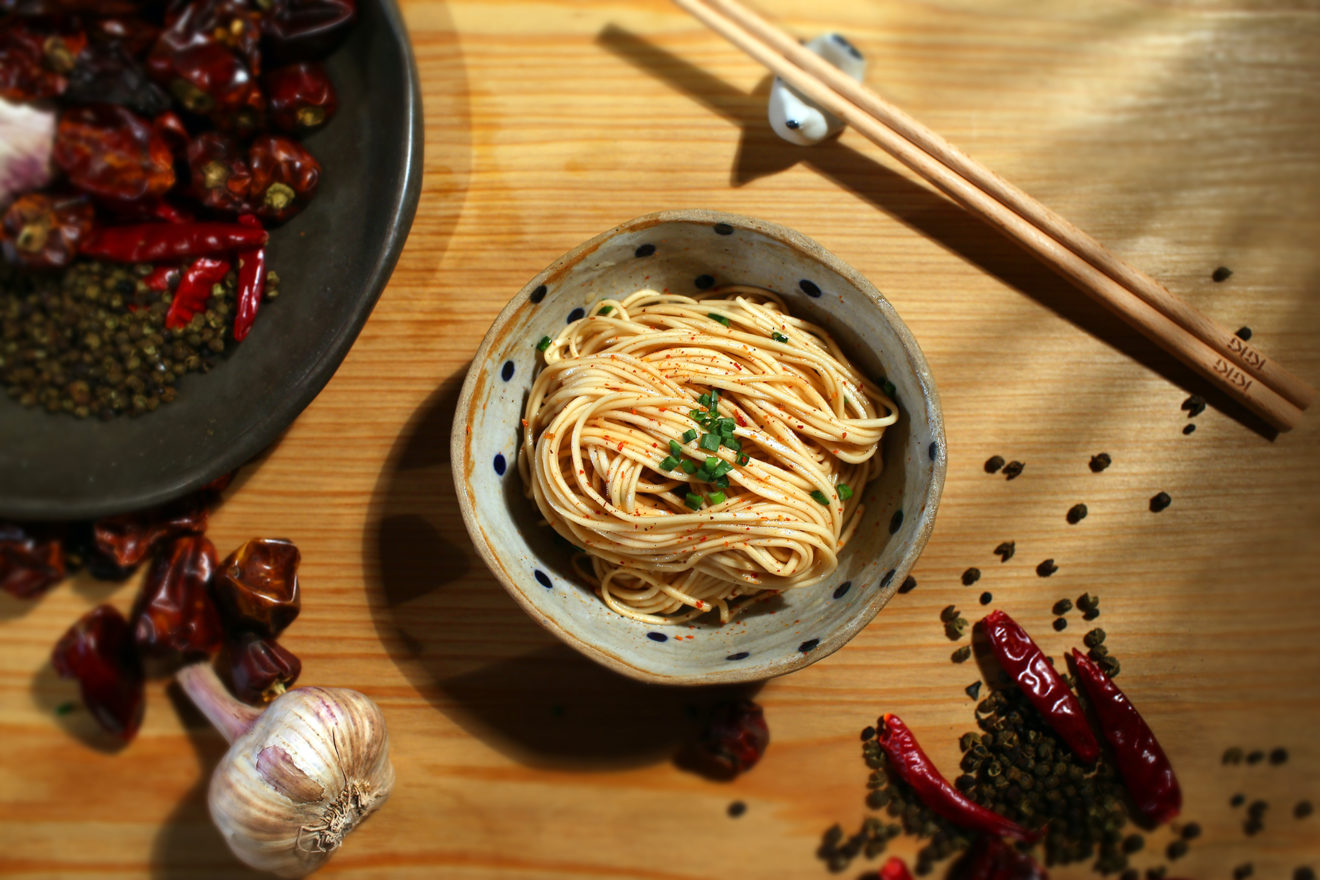
    The Food Safety Authority of Ireland has recalled some batches of Acecook Vietnam’s Hao Hao and ‘Good’ branded noodles for containing banned substances.

    On Aug. 20, the Food Safety Authority of Ireland (FSAI) announced that batches of Hao Hao and Good noodles are being recalled owing to the presence of ethylene oxide – an illegal pesticide.

    Ethylene oxide is not authorized for use in foods in the European Union (EU), of which Ireland is a member.

    There are three products in the FSAI’s recall list, two of which are from Acecook Vietnam, a shipment of Hao Hao spicy and sour shrimp noodles with an expiry date of Sept. 24, 2022 and Good noodles with an expiration date until Nov. 10, 2022.

    Besides, China’s Yato seafood noodles, with an expiration date of Nov. 30, 2022, were also revoked by Ireland.

    According to the FSAI, the consumption of products contaminated with ethylene oxide does not pose an acute hazard to the user, but could lead to other long-term health problems. Therefore, the agency recommends minimizing exposure to this substance.

    The Ministry of Industry and Trade (MoIT) on Saturday morning said it had sent a request to Acecook Vietnam JSC to promptly report on its production processes and procedures, and explain the difference between products consumed domestically and those exported.

    In addition, the MoIT is also reviewing the entire list of products distributed by Acecook Vietnam countrywide, checking and clarifying production processes and identifying violations.

    An Acecook representative said: “We are conducting a meeting and will have an official announcement for consumers soon.”

    Vietnam presently has approximately 50 companies producing instant noodles, including both domestic and foreign. Currently, instant pho and instant noodles made in Vietnam are present in more than 40 markets.

  • Vietnam Airlines aims to start first US route in October

    Vietnam Airlines aims to start first US route in October

    Vietnam Airlines is planning to operate regular flights between Vietnam and the U.S. starting October, seeking to fulfill a dream of nearly two decades.

    The state-owned carrier will use either Boeing 787 or Airbus SE A350 aircraft for its inaugural U.S. route from Ho Chi Minh City to San Francisco with one refueling stop, CEO Le Hong Ha said.

    Since last year, the airline has been operating irregular charter flights to repatriate Vietnamese from the U.S. during the Covid-19 pandemic.

    The airline will rely on transporting cargo to offset initial low passenger demand, Ha said.

    Vietnam Airlines has been the worst-Covid-19-hit carrier in Vietnam. It has recorded a loss of about VND7 trillion ($306.65 million) in the first half this year, Ha commented.

    The airline in 2003 was ordered by the Ministry of Transport to begin direct services to the U.S. by 2005. However, concerns about profitability kept the airline from realizing the goal.

    Other Vietnamese airlines like budget carrier Vietjet and startup Bamboo Airways have all voiced interest in flying directly to the U.S.

    Bamboo Airways in May acquired slots to operate regular direct flights from HCMC to San Francisco and Los Angeles starting Sep. 1. But it is unclear whether flights would commence given the current severity of Covid-19 in Vietnam.

    In the first seven months of this year, Vietnamese carriers served 13.7 million passengers, down 32 percent year-on-year, according to General Statistics Office

  • UOB Shuffles Board

    UOB Shuffles Board

    UOB has announced changes to its board, including the addition of a 40-year banking veteran as its new independent director.

    Tracey Woon joins UOB as an independent director as well as a member of its audit committee and board risk management committee, according to a statement, effective September 1.

    Woon, 65, is currently a director at Singapore Press Holdings, a member of the Securities Industry Council and the Listings Advisory Committee of the Singapore Exchange amongst other roles.

    Woon is a 40-year banking veteran in the region and was previously UBS’ APAC global wealth management vice-chair from 2016 until her retirement in 2020 and Citibank’s ASEAN corporate and investment banking vice-chair and UBS’ APAC global wealth management vice-chair.

    Other changes to UOB’s board include the addition of Dinh Ba Thanh and the exit of James Koh, 75, who will step down effective August 31 after nine years as an independent director since 2012.

    Thanh, 64, is the founder and chief executive of Vietnam’s largest integrated media tech group DatVietVAC Group Holdings, which was established in 1993 as the country’s first privately-owned advertising and media company. Thanh currently also serves on the board of trustees at the Asia Business Council and is also a member of the World Economic Forum.

    The appointment of the two new directors will further enhance the diversity of the board,» said UOB chairman Wong Kan Seng. In guiding the group in its regional strategy, the board will benefit from Tracey’s extensive background in banking across the region and Thanh’s insights in transforming his business into a successful media entertainment technology company in Vietnam.