Tag: 5G

  • DoCoMo to trial 5G self-driving vehicle monitoring

    DoCoMo to trial 5G self-driving vehicle monitoring

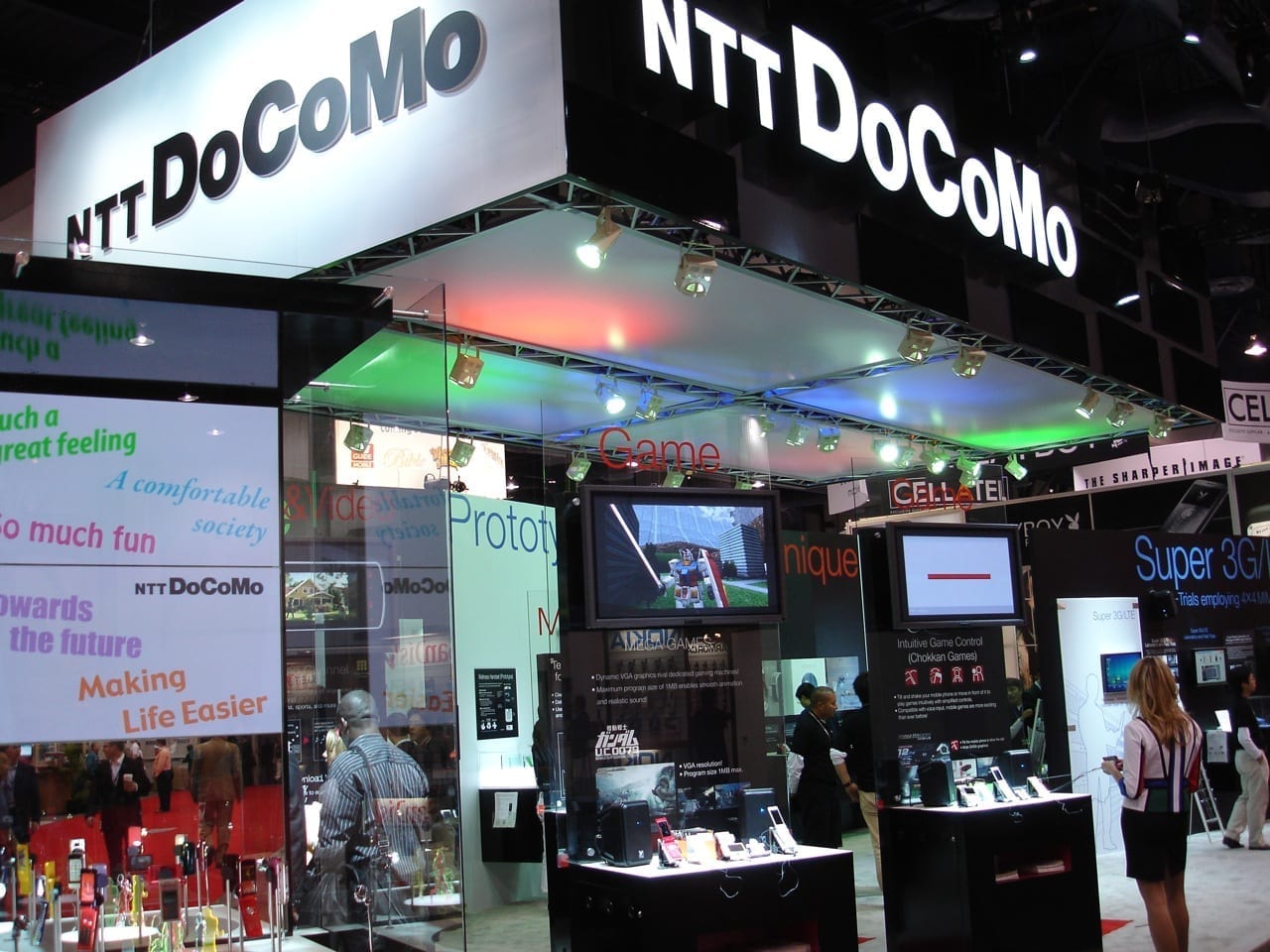
    Japanese operator NTT DoCoMo and mobile portal and online service provider DeNA Co have teamed up to trial a 5G communications system for remote monitoring of autonomous vehicles.

    The trial will involve connecting a vehicle and a remote center via a 5G network capable of data rates beyond 10Gbps.

    For the initial trial, high-resolution video images captured with HD cameras mounted on the vehicle will be transferred to the monitoring center in real time, to allow the center to check for any driving irregularities and assist passengers when needed.

    The trial will be demonstrated at the DoCoMo R&D Open House 2017, which will take place at the DoCoMo R&D Center in the Yokosuka Research Park near Yokohama on November 17-18.

    For the event, DeNA’s Robot Shuttle driverless bus will be used to showcase the transmission of live video from a connected vehicle via a demonstration 5G network.

    The collaboration is combining DoCoMo’s 5G technologies and DeNA’s experience building services for connected vehicles. DoCoMo is closely involved in the development of LTE and 5G systems for vehicle-to-everything communications.

  • SmarTone signs pre-5G partnership with Ericsson

    SmarTone signs pre-5G partnership with Ericsson

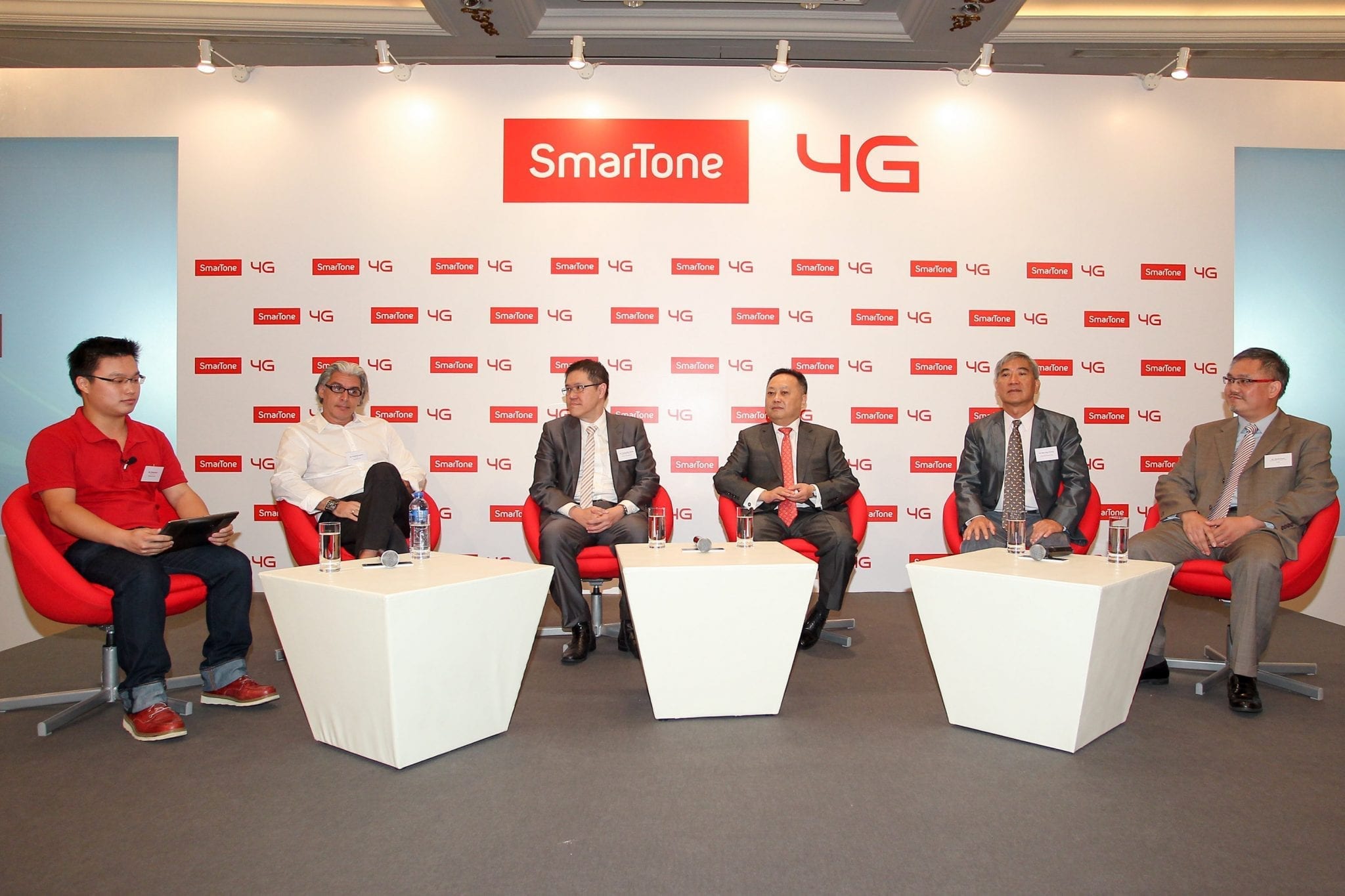
    Hong Kong’s SmarTone has contracted Ericsson as its sole supplier for core and RAN equipment over the next five years, as part of a partnership aimed at paving the way for 5G deployment.

    The companies plan to conduct early trials and pilot deployments of key pre-5G technologies from this quarter.

    Ericsson will help SmarTone upgrade and expand its network infrastructure and refarm more spectrum for LTE, and will deploy NFV and SDN technologies to improve network performance and efficiency.

    The companies have been working to introduce technologies including LTE-Advanced and LTE-Advanced Pro to the SmarTone network.

    “SmarTone is pleased to extend our strategic partnership with Ericsson to pave the way for 5G in Hong Kong,” SmarTone CTO Stephen Chau said.

    “[We] will continue to invest in spectrum and pre-5G technologies within the next few years to provide a superior customer experience and to evolve our network into an advanced, dynamic and cloud-based network architecture.”

    He said the deployment will help the company capture future business opportunities from new types of applications including VR and M2M applications such as the IoT.

    SmarTone was established in 1992 and publicly listed in 1996. The company provides voice, mobile and fixed broadband services in Hong Kong and Macau.

  • Nokia to supply Globe Telecom in the Philippines

    Nokia to supply Globe Telecom in the Philippines

    Nokia and Globe Telecom, a leading telecom operator in the Philippines, on 24 October signed two Memoranda of Confirmation frame agreements – one for wireless technologies and the other for IP, Optical and SDN technologies – under which Nokia will transform Globe Telecom’s current fixed and mobile networks into a more robust network that will help Globe meet the country’s burgeoning and future digital demands.

    This will enable Globe Telecom’s move to Cloud and IoT-ready networks and 5G.

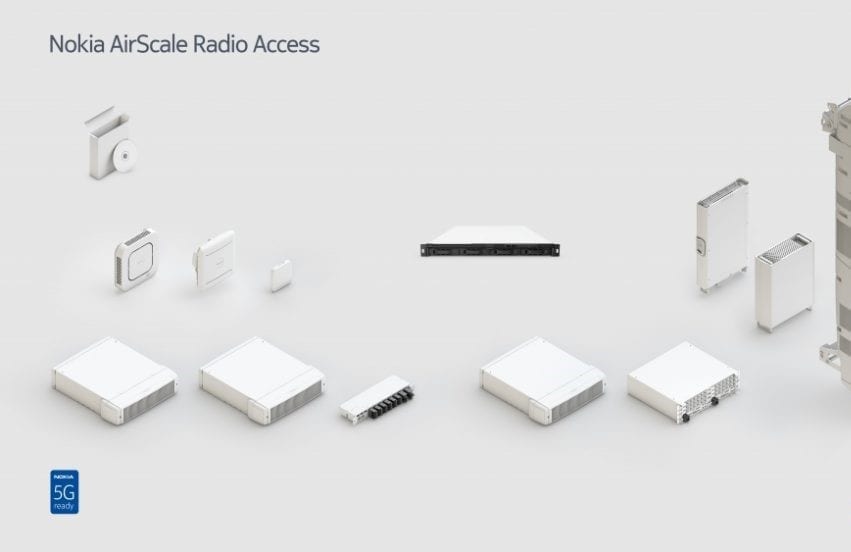
    Under the agreements, Globe Telecom will transition to a flexible cloud-based network infrastructure, with Nokia’s 5G-ready AirScale radio access and IP, optical and carrier SDN technology solutions providing seamless connectivity to consumers and enterprise customers. The modernized Globe network will also allow it to support the Philippine government’s initiative to further expand the availability of broadband services in the country.

    The mobile network frame agreement between Nokia and Globe Telecom follows the operator’s recent access to new LTE spectrum. Nokia will deploy its 4.5G Pro technology using the 5G-ready AirScale Base Station and Flexi Zone small cells, managed by NetAct, in the Visayas and Mindanao regions, providing broadband access to some areas in these regions for the first time. Globe will also be enabled to use Mobile Edge Computing and advanced carrier aggregation techniques to deliver virtually unlimited scalability and dramatic improvements in speeds and capacity that will deliver compelling new services. The technology will also enable lower power consumption, reduced operating costs, more network automation and enhanced network performance as it transforms Globe Telecom’s customer experience for a subscriber base growing at 10 percent annually, as well as meeting increasing demand from IoT devices.

    In the second frame agreement, Nokia will deliver its integrated IP and optical networking and carrier SDN technologies across the Philippines to enhance the agility, quality, performance, coverage and capacity of Globe Telecom’s enterprise data services network. This will allow Globe to deliver coverage to more regions including in the ARMM, such as Lanao del Sur, Maguindanao, Basilan, Sulu and Tawi-Tawi. Using Nokia’s carrier SDN platform, Globe will also be able to provide flexible data services such as bandwidth-on-demand nationwide, and expand its offer to thousands of enterprise customers, global service providers and local government agencies as well as those serving the Information Technology-Business Process Outsourcing (IT-BPO), hospitality, education, manufacturing, retail, healthcare, logistics and finance industries.

    “As the Philippines’ leading fixed and mobile service provider, we are devoted to improving people’s connected lives day-by-day. With Nokia’s innovative technologies, we are confident to lead the 5G and cloud network evolution,” said Ernest L. Cu, president and CEO of Globe Telecom.

    “This is a significant agreement with a longstanding technology partner, and strengthens Nokia’s position as Globe Telecom’s premier provider of end-to-end technology solutions. We are committed to delivering technologies that allow operators to transition smoothly to intelligent, future-proof networks, offering seamless connectivity and changing how people communicate and connect,” said Mike Wang, head of the joint management team in China at Nokia.
  • China Unicom developing 5G VR streaming tech

    China Unicom developing 5G VR streaming tech

    The China Unicom Network Technology Research Institute is working on a new use case for advanced technologies including 5G and VR – panoramic VR streaming of live video using drone technology.

    China Unicom and wireless broadband technology provider Baicells are developing a prototype mobile edge computing VR live video technology using Artesyn Embedded Technologies’ MaxCore mobile edge computing acceleration platform.

    The technology uses the emerging panoramic video collage algorithm and transmission protocol to provide VR video streaming from drones equiped with 360-degree high-definition cameras.

    Users can manipulate their perspective in real-time, providing a more immersive live VR experience.

    “This end-to-end solution can be applied not only to concerts, sporting events, films and other entertainment industries, such as the Mid-Autumn festival, live CCTV broadcasts using VR panoramic technology, but it can also be applied to public safety, emergency communication, UAV inspection, and much more,” Baicells research director Mingyu Zhou said.

    “We believe China Unicom and Baicells’ joint research and development can help users experience live HD VR video transmissions more quickly and smoothly.”

    “MEC provides a distributed computing environment for application and service hosting, bringing cloud technologies closer to the RAN and ultimately, closer to consumers,” Artesyn marketing VP Linsey Miller added.

    “Carriers are telling us that for these applications they need telco-grade features, which is Artesyn’s expertise.”

  • Qualcomm unveils 5G modem chipset solution

    Qualcomm unveils 5G modem chipset solution

    US chipset maker Qualcomm has announced what it says is the world’s first commercial 5G modem chipset solution to help accelerate the deployments of 5G networks globally.

    Announced at the Qualcomm 4G/5G Summit in Hong Kong on Tuesday, Qualcomm said the Snapdragon X50 5G modem is designed to support original equipment manufacturers (OEMs) in building 5G smartphones and other devices, as well as aid mobile operators with early 5G trials and deployments.

    The solution, with 800MHz bandwidth support, works in the millimetre-wave (mmWave) spectrum in the 28-GHz band and supports a peak download speed of 5Gpbs. It employs MIMO antenna technology with adaptive beam-forming and beam-tracking technology.

    “The Snapdragon X50 5G modem heralds the arrival of 5G as operators and OEMs reach the cellular network and device testing phase,” said Cristiano Amon, executive vice president at Qualcomm Technologies.

    “Utilizing our long history of LTE and Wi-Fi leadership, we are thrilled to deliver a product that will help play a critical role in bringing 5G devices and networks to reality. This shows that we’re not just talking about 5G, we’re truly committed to it.”

    The Snapdragon X50 5G platform includes the modem, the SDR051 mmWave transceivers, and the supporting PMX50 power management chip.

    The modem can be used for multi-mode 4G/5G mobile broadband, along with fixed-wireless broadband devices, when paired with a Qualcomm Snapdragon processor with an integrated Gigabit LTE modem and interwork cohesively via dual-connectivity.

    Sampling for the Snapdragon X50 5G modem is expected to begin in the second half of 2017, with the first commercial products integrated the modem expected in the first half of 2018.

    The company also introduced three new processors for mobile devices – the Snapdragon 653, Snapdragon 626 and Snapdragon 427 processors.

    The Snapdragon 653, Snapdragon 626 are expected to be available in the market by the end of this year, while the 427 processor will appear in commercial devices by early 2017, Qualcomm said.

  • Huawei achieves 27Gbps 5G speeds with Polar Code

    Huawei achieves 27Gbps 5G speeds with Polar Code

    Huawei announced it has achieved downlink speeds of 27Gbps using Polar Code, a new innovation in 5G channel coding technology.

    During a field trial in both static and mobile environments, Huawei was able to demonstrate that polar code technology can simultaneously meet the typical use cases of the ITU’s 5G definition, which involves speeds in the tens of gigabits, 1ms latency and billions of connections.

    The company said polar code demonstrated three times the spectrum efficiency compared to current RAN networks.

    Polar code is designed to allow significantly higher spectrum efficiency than current cellular access technologies and to enable decoding with linear complexity.

    On the encoding side, polar code can optimize channel capacity close to the Shannon Limit, the theoretical highest capacity of a communications channel before noise introduces faults.

    The field trial also took into account the use of millimeter-wave and multiple parallel sessions based on short and large packet sizes.

    Last week Huawei and Canada’s Telus also announced the results of 5G lab trialsachieving peak speeds of 29.3Gbps, close to 200 times faster than the current LTE standard. The trials at the Telus and Huawei 5G Living Lab in Vancouver were designed to simulate real-world conditions.

  • China plans 5G trials in over 100 cities

    China plans 5G trials in over 100 cities

    China reportedly plans to conduct 5G trials spanning more than 100 cities to help ensure the country plays a key role in 5G technology development.

    A spokesperson for ZTE told that China Mobile alone is planning pre-5G trials in more than 100 cities across more than 20 provinces. The operator plans to roll out 5G services in 2020 once the standard becomes finalized.

    It is unclear whether the two other state-owned operators are also involved in trials.

    According to the report, analysts believe “China Inc” has a strong interest in ensuring that a significant amount of Chinese technology is embedded into the 5G standard. This would free vendors of their need to pay royalties on foreign technologies.

    The telecoms sector is also trying to avoid a repeat of the fragmentation of the 4G standard into TDD and FDD LTE. A single standard would be hugely beneficial to the industry. China developed the TDD standard as an attempt to escape the royalty issue.

    Huawei and ZTE are closely involved in 5G technology development, and Japan’s SoftBank recently arranged to test 5G-ready equipment from the two vendors in Japan, which is expected to be one of the first markets to adopt 5G.

  • Nokia teams with Optus on 5G development

    Nokia teams with Optus on 5G development

    Nokia has signed an agreement with Australia’s Optus to collaborate on 5G development, and revealed it is working with KT to deploy the world’s first 5G commercial trial network in 2017.

    Optus announced that the two companies plan to jointly conduct a 5G trial using Optus’ 3500-MHz spectrum. Optus andNokia will develop an early 5G prototype in the spectrum by 2017.

    The companies have already conducted initial closed tests at Optus’ Sydney headquarters over a new 5G radio test bed on Nokia’s Airscale product, highlighting the capability of 5G to deliver virtual reality video content at the required speeds.

    “There is a global race to explore and develop 5G technology, and in Australia, Optus is well positioned to lead in this space with our ownership of 3.5GHz, and close partnerships with our vendors including Nokia,” commented Tay Soo Meng, CTO of Optus’ parent company Singtel.

    In a blog post, Nokia project manager for 5G development research Jani Moilanen separately detailed the steps Nokia and KT are taking to deploy a 5G commercial trial network in the 28-GHz band next year.

    Nokia Bell Labs and the Nokia Korea Advanced Technology Center have developed initial network plans using 3D maps, accurate ray-tracing simulations and other technologies to address the potential for blockages of the 28-GHz band, including human bodies blocking line of sight between device and base station.

    The company is also working to address other key network planning challenges, including sufficient non-line-of-sight coverage in outdoor areas.

  • Telstra conducts Australia’s first live 5G trial

    Telstra conducts Australia’s first live 5G trial

    Australia’s largest operator by subscribers Telstra has teamed up with Ericsson to conduct the nation’s first live 5G trial.

    The trial in Melbourne used a combined 800MHz of spectrum, achieving aggregate speeds of more than 20Gbps in a real-world, outdoor environment.

    Telstra said the trial used 10 times more spectrum than the operator currently uses with its 4G service.

    Ericsson’s 5G radio prototype equipment was used for the demonstration, which also achieved an indicative latency of at least half of that seen in current 4G networks.

    In a blog post,Telstra group managing director for networks Mike Wright said the tests also served to demonstrate the accuracy and improved signal quality of beam steering technology.

    Beam steering involves antenna arrays tracking a user’s location and sending data directly to the device, instead of out in all directions.

    “But what made this trial really significant is we took the test bed out of the laboratory and into real world, outdoor conditions,” he said.

    “Australia’s environment, size, and population density is unique, and it means we need to consider different things to other countries. We’re even trying to understand how radio signals propagate in through gumtrees.”

  • Huawei, ZTE launch pre-5G network components

    Huawei, ZTE launch pre-5G network components

    Huawei and ZTE have both announced the launch of pre-5G products to help operators prepare for the new technology.

    ZTE released its new Pre5G MIMO 2.0 product at the China International Information and Communication Exhibition in Beijing yesterday.

    The new product is aimed at the high-end market to help operators in developed countries meet the challenges of surging traffic demand and limited spectrum resources, by improving single-station spectral efficiency.

    ZTE announced it has started pre-5G network deployment for more than 20 operators in China and other counties.

    Huawei meanwhile unveiled what it said is the industry’s first 5G-oriented mobile edge computing (MEC) offering, MEC@CloudEdge.

    The vendor said the technology is designed to equip today’s mobile networks to meet the requirements of extremely low latency, content localization and ultra-high bandwidth that will need to be met in the 5G era.

    It relies on a cloud-based network architecture to optimize the user experience during activities such as augmented and virtual reality and ultra-HD video streaming

    “MEC@CloudEdge is the first 5G-oriented MEC solution emanating from our R&D labs. It uses new technologies that will enable operators to deploy 5G-oriented networks for sustainable development and to achieve best user experience and faster service innovation,” Huawei president of cloud packet product line Dai Jisheng said.

  • Softbank, Wireless City kick off 5G project

    Softbank, Wireless City kick off 5G project

    Softbank and its affiliate company, Wireless City Planning, have officially launched the ‘5G Project’.

    As the first phase of the project, which was announced in Tokyo last week, Softbank plans to roll out commercial services based on Massive MIMO technology from September 16, a move which Softbank says will make it the world’s first cellco to provide such services.

    Under the plan, SoftBank will be deploying the technology across 100 base stations in 43 cities across Japan, of which 30-40% will be deployed in downtown areas of the Tokyo capital.

    At the media conference for the launch last week, Shubun Kitahara, director of the network planning department of SoftBank’s mobile technology division, tested at four locations in downtown Tokyo, which showed that massive MIMO increased communications speed by 6.7 times on average.

    According to Softbank, corresponding terminals only need to support SoftBank 4G (compatible with TD-LTE). The service is also available on the SoftBank 4G terminals customized for Y!mobile.

    Aiming for 5G commercialization in 2020, Softbank last year signed separate research collaboration agreements with Huawei and ZTE covering the development of stopgap technologies on the road towards 5G.

    SoftBank has teamed with ZTE to help develop networking equipment based on ZTE’s Pre5G technology, such as the vendor’s Massive MIMO base stations.

    Massive MIMO base stations have the capacity to support more than 100 antenna elements, allowing up to eight users to transfer data simultaneously.

    SoftBank already has cooperation agreements covering Massive MIMO as well as ultra-dense networks and multi-user shared access technology.

  • Nokia launches 5G Acceleration Services

    Nokia launches 5G Acceleration Services

    Nokia has launched a new service designed to help operators develop a plan for their 5G transformation.

    The new Nokia 5G Acceleration Services will help operators carry out the required business, network and operational transformation to prepare for a 5G programmable world.

    Operators will be able to develop a tailored transformation plan, prepare and design multi-vendor 5G networks and define the pace of investment and adoption of new technologies.

    Services will include collaborative customer workshops, technical and economic analysis, a 5G spectrum assessment, technology workshops and radio access network design support.

    IDC research director for EMEA Telecommunications commented that industry adoption of 5G will take a different path compared to 4G.

    “For one thing, this time the use cases are developing ahead of the technical standard. That’s healthy for the industry, but will also require networks to support myriad performance profiles fairly rapidly,” he said.

    “Operators thus have to make sure that their 5G evolution plans incorporate both upgrades to their networks and advancements in their operational capabilities. If they can start to monetize new use cases while still migrating toward 5G, so much the better.”

    At CTIA Super Mobility 2016, tomorrow, Nokia CEO Rajeev Suri plans to lay out the ways the vendor is preparing operators for the coming of 5G – including by commercially launching 4.5G Pro network technologies – and to highlight emerging use-cases for 5G.

  • Ericsson to launch 5G New Radio in 2017

    Ericsson to launch 5G New Radio in 2017

    Ericsson has announced plans to commercially launch the first 5G New Radio (NR) equipment in 2017, a key enabling technology for future 5G networks.

    The 5G NR radio supports Ericsson’s Massive MIMO and Multi-User MIMO 5G plugins. It uses advanced antennas and a large number of steerable ports to support these new technologies, as well as beamforming, another expected component of 5G networks.

    In addition to being 5G ready the 5G NR supports LTE, so it will be deployable in today’s networks. They support Gigabit speeds for LTE and advanced TDD beamforming.

    New network builds will be supported by Ericsson’s new Industrialized Network Rollout Services offering, which involves providing configuration, installation, integration, shakedown and handover in a single site visit.

    China Mobile Research Institute deputy head Huang Yuhong has welcomed the planned launch.  “Massive-MIMO, also known as 3D MIMO, is an important milestone in China Mobile’s technology roadmap from 4G to 5G,” he said.

    “We are very happy that Ericsson’s new radio product is coming to market soon to meet our needs and enable us to integrate 5G technologies into our existing networks.”

    “Mobile operators, today, are clearly focused on the race to 5G commercialization, while also continuing to invest in their existing LTE networks,” Current Analysis VP of consumer and infrastructure services Peter Jarich added.

    “With a new 5G radio and LTE offerings which echo key 5G concepts – small cells, licensed-unlicensed band combinations, Cloud RAN, network densification, spectrum optimization – Ericsson’s new portfolio additions and Ericsson Radio System innovations provide a compelling way forward.”

  • 5G connections tipped to reach 690m by 2025

    5G connections tipped to reach 690m by 2025

    There will be around 690 million 5G connections by 2025, five years after the standard is expected to be approved, Strategy Analytics predicts.

    The research firm expects 5G to account for 7% of mobile connections by this time, driven by early adopters in the US, South Korea and Japan.

    China has also laid out a 2020 5G launch plan, Strategy Analytics notes, which will help accelerate adoption.

    Operators including NTT DoCoMo, SK Telecom, Verizon and AT&T are leading the charge

    Commercial 5G handset sales are meanwhile expected to exceed 300 million by 2025, according to Strategy Analytics director Ken Hyers.

    “While the first commercial 5G handsets will appear in small numbers in 2020 in South Korea and Japan, from 2021 more countries including the US, UK, Sweden, UAE and China will see their own launches,” he said.

    “By 2022 tens of millions of 5G handsets will be sold, and as a proportion of total handset sales will reach low single digit percentages.”

    The first trial 5G handsets expected to emerge in 2018 are expected to have issues including short battery life, no 4G handover or unstable connectivity, Strategy Analytics said. But these teething problems are expected to have been largely resolved once commercial handsets reach the market.

  • Ericsson and China Mobile trial 5G drone prototype

    Ericsson and China Mobile trial 5G drone prototype

    Ericsson and Nokia are both trialing using drones to dynamically improve coverage of next-generation mobile networks.

    Ericsson and China Mobile recently announced they have completed a 5G drone prototype field trial on the operator’s network.

    During the trial in Wuxi, a drone was flown using the operator’s mobile network with 5G-enabled technologies and handovers across multiple sites.

    In a statement, the companies said the trial marks “an important step toward 5G networks in which part of a network can be distributed and dynamically deployed at the cellular edge in order to reduce end-to-end latency, and to serve a range of 5G use cases at the same time.”

    Nokia has meanwhile been collaborating with EE to trial using drones to carry tine base stations to remote areas. Nokia said the testing showed that drones can help to very quickly establish mobile coverage over ranges of several kilometers.

    Mobile operators would be able to provide temporary 4G coverage in remote areas or rapidly extend capacity at large events such as sports matches or festivals.

    During the trial high-quality LTE calls, video streaming and a peak data throughput of 150Mbps were all achieved without the need to connect to an external core network.

    The development follows shortly after Nokia and SK Telecom announced that they had completed trials of an all-in-one portable public safety LTE system, which contains all the equipment needed to establish a temporary LTE network in hardware compact enough to fit in a backpack.