Retail News CRM

Tag: Advertising

  • Apple stops advertising on “X” again

    Apple stops advertising on “X” again

    Citing its sources, Axios says that Apple has stopped advertising on the platform for the second time since Elon Musk purchased Twitter. This time the decision to stop spending ad money on what is now known as “X” came after Musk endorsed an antisemitic conspiracy theory that was posted on the site. 164 Jewish rabbis and activists demanded that companies like Apple, Google, Amazon, and Disney stop advertising on “X”.

    Apple, a major advertiser on “X,” has joined IBM, Disney, Sony, Warner Bros. Discovery, Lionsgate, and Paramount Global. A report by Media Matters for America says that certain advertisers, including Apple, IBM, Amazon and Oracle, had their ads on “X” placed next to posts considered to be from far-right subscribers.

    In response to a post on “X” that claimed Jewish communities support “dialectical hatred against whites,” Musk replied, “[y]ou have said the actual truth,” The comment by Musk drew a rebuke from the White House. White House spokesperson Andrew Bates said, “It is unacceptable to repeat the hideous lie behind the most fatal act of Antisemitism in American history at any time, let alone one month after the deadliest day for the Jewish people since the Holocaust.”

    “X” CEO Linda Yaccarino responded to the criticism via a tweet in which she wrote, “X’s point of view has always been very clear that discrimination by everyone should STOP across the board — I think that’s something we can and should all agree on. Regarding this platform — X has also been extremely clear about our efforts to combat antisemitism and discrimination. There’s no place for it anywhere in the world — it’s ugly and wrong. Full stop.”

    Musk purchased Twitter last year paying $44 billion for the social media platform. After changing the name of the site from Twitter to “X,” the multi-billionaire revealed plans to turn “X” into a multi-functional “super app” like China’s WeChat which offers social media capabilities along with mobile payment features. But if “X” is unable to keep some of its high-spending advertisers, it will need to find some new sources of income besides X Premium.

  • Deliveroo Launches New Advertising Platform

    Deliveroo Launches New Advertising Platform

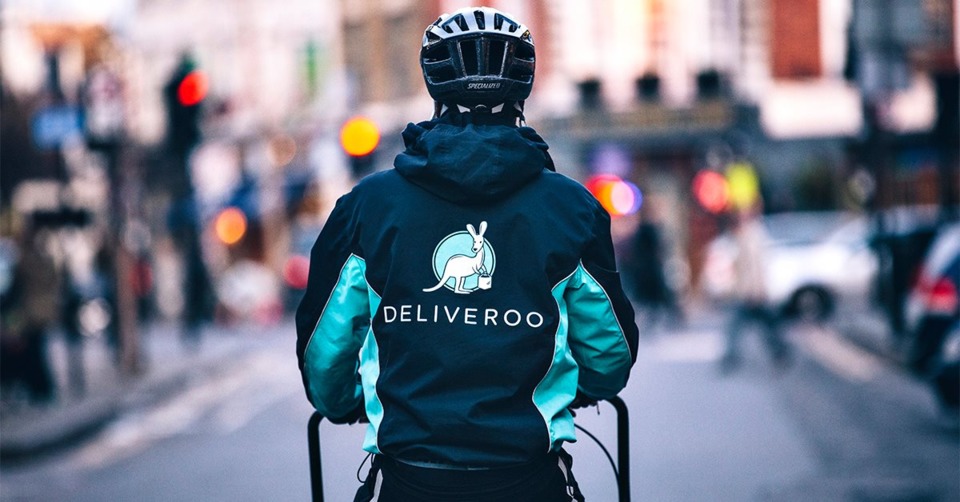
    Deliveroo today announced the launch of its new advertising platform, Deliveroo Media and Ecommerce, in Hong Kong. From now, brands will be able to advertise to Deliveroo customers with relevant offers across its app, on Deliveroo’s website and as part of social media, email and push notification campaigns.

    For the first time, advertising is planned for Deliveroo’s order tracker page, with new formats to launch over the coming months, alongside sponsored search listings.

    Currently Deliveroo partners are able to make use of Deliveroo’s advertising services, with sponsored positioning for restaurant or grocery partners for example. The new advertising platform means consumer FMCG brands will be able to advertise to millions of highly engaged Deliveroo customers.

    Deliveroo’s network of delivery-only ‘Editions’ kitchens and rapid grocery delivery ‘HOP’ stores are also part of Deliveroo’s new advertising proposition, enabling brands to get relevant content or samples into consumers’ hands as their meals and groceries are delivered to their door. 

    Nick Price, Interim General Manager of Deliveroo Hong Kong, said “Deliveroo has over seven million monthly active consumers globally, so we have an engaged and valuable audience for brands to connect with. Our new advertising platform will enable restaurant and grocery partners to tell their story emotionally and effectively whilst ensuring Deliveroo customers continue to receive a food-first experience. Done in the right way, both of our advertising activities can improve the customer experience by helping consumers to discover content they want in an engaging way, as well as helping merchants to drive incremental demand.”

    Advertising on Deliveroo will include partnerships with restaurant partners as well as FMCG companies. This will be done in a way that is mindful of the consumer experience, which is Deliveroo’s priority. Consumers will continue to receive a food-first experience in-app and Deliveroo intends to provide more space to enable restaurant and grocery partners to tell their story emotionally and effectively to Deliveroo consumers via the platform. The advertising solutions will sit within this context.

    With a food delivery marketplace in 10 markets, and with over 162,000 restaurants and 20,000 grocers on the platform, Deliveroo Media and Ecommerce is well positioned to connect brands with over seven million monthly active consumers.

    Deliveroo Media and Ecommerce was launched in the UK last Summer and has made an encouraging start, with advertising revenue reaching an annualised run-rate of £55 million or 0.8% of GTV in Q2 2023, reflecting that this is an effective way for merchants to drive incremental demand. Some of the popular brands that successfully utilised the advertising platform in the UK include Coca-Cola, Unilever, Reckitt and PepsiCo.

    Deliveroo is working with Criteo, the Commerce Media company, who will supply the advertising technology and media sales services.

  • Vietnamese tired of advertisements popping up online

    Vietnamese tired of advertisements popping up online

    Vietnamese Internet users find online advertisements tiresome and do not want to watch them, a survey by YouGov has found. In a poll of 2,429 digital users, last December the British online market research and data analytics firm found that 47 percent of respondents always skip or want to skip online ads and 43 percent find the ads “annoying.”

    Only 25 percent said they are “interesting.”

    Thue Quist Thomasen, CEO of YouGov Vietnam, said: “Our survey also shows that even though most people remember seeing online ads, they are significantly less likely to recall clicking on ads or buying products after seeing ads.

    “In my view, the online marketing industry in Vietnam is largely, and fairly, preoccupied with tracking ad frauds and viewability. But marketers often pay insufficient attention to the metrics that truly matter, such as impact and quality, which are the key elements that drive advertising success.”

    Soames Hines, CEO of Ogilvy Vietnam, one of Vietnam’s largest creative agencies, said:”The survey’s results confirm what I have been thinking about digital advertising in Vietnam: There are so many ads nowadays that it’s hard for scattered branded banners to be effective across different websites.

    “What brands want are great campaigns that win the hearts and minds of consumers. Tiny banners and seemingly haphazard five-second videos just won’t be enough for brands to get what they want.”

    With 21.5 percent average annual growth in 2020-25 digital advertising in Vietnam is a booming business, according to the ‘Vietnam Digital Marketing Trends’ report released last year by digital marketing firm Novaon Ads.

    Advertisers are expected to spend $934 million on digital advertising in 2022, according to Statista, a German company specializing in market and consumer data.

    Vietnam has among the highest number of Internet users in the Asia Pacific. According to Statista, as of January 2021 the country of 96 million had around69 million Internet users.

    “Advertisers are often too focused on delivering ads as efficiently as possible while forgetting about the creative aspect of digital advertising,” Carl Söderblom, vice president of operations & business development at Swedish company Adnami, said.

    “This, in turn, results in low impact, ineffective ads. With high-impact ads, advertisers can … ensure they… are effective at driving results as well.”

  • Samsung starts removing advertisements from its first-party apps

    Samsung starts removing advertisements from its first-party apps

    Samsung has started removing ads from its first-party apps. The company held a ‘town hall meeting’ back in August at which time we quoted Samsung’s mobile chief TM Roh who said, “We decided to delete ads from basic apps such as Weather, Samsung Pay, and Samsung Themes.” Samsung eventually released an official statement confirming the removal of the ads.

    The new versions of these apps sans advertisements were first spotted by Samsung customers in South Korea who posted the news in the company’s Community Forum. A comment from a Samsung executive announced that the ads were removed from the Health app on October 1st. The executive said, “This is the Samsung Health Operation Manager. Please note that the banner at the top of the Samsung Health app will not be provided from October 1.

    Even though Samsung has only confirmed that it was removing ads from the aforementioned first-party apps in its home country of South Korea, U.S. users have also seen ads disappear from these apps as well. Banner ads have been removed from Samsung Pay, the previously mentioned Health app (which used to show advertisements for Samsung’s line of smartwatches along with workout tips), and the Weather and Theme apps. For example, the Weather app has replaced the banner ads it used to show at the top of the screen with the temperature and forecast.

    It should be pointed out that while the banner ads are no longer seen on the Samsung Pay app, there is still a “Featured section” that includes offers. But that is in line with the app’s use as a mobile payment system. If the ads do not disappear from the first-party apps on your Samsung handset, you might need to “force stop” them to remove them from these apps.

    To force stop the app on your Samsung device, go to Settings > Apps and scroll to find the name of the app that you want to stop. Tap on the name of the app and tap on “Force stop” located in the bottom right corner. A pop-up menu will appear stating that if you stop the app, errors could occur. Tap on “OK.” Reopen the app and the ads should be gone.

    Samsung is not the only smartphone manufacture to include ads. Xiaomi and Oppo are two such companies to include them with their UI. But Samsung was hearing from customers who didn’t want to shell out $1,800 for a premium phone like the Galaxy Z Fold 3 only to feel that Samsung was trying to convince them to spend more money on their products. The removal of the ads is taking place via a server-side update which means you should not expect a new update to be sent your way OTA.

    While Samsung offers other first-party apps, the firm has yet to announce that ads will be dropped from these titles as well. Still, it would be a good look for Samsung if it were to finish the job and offer all of its own apps without ads on a global basis. Some Samsung customers also noted how cluttered first-party apps look with the ads included.

    At the time Samsung announced back in August its plan to drop the ads from the four basic first-party apps, the company said, “Our priority is to deliver innovative mobile experiences for our consumers based on their needs and wants. We value feedback from our users and continue our commitment to provide them with the best possible experience from our Galaxy products and services.”

  • McDonald’s hit with breach of advertising rules over Instagram mix-up

    McDonald’s hit with breach of advertising rules over Instagram mix-up

    Ad Standards has found that McDonald’s Australia breached rules for distinguishable advertising, as set out in the Australian Association of National Advertisers (AANA) Code of Ethics, Section 2.7.

    The breach occurred in an Instagram post by @southaussiewithcosi, which featured a man, woman and two children in matching McDonald’s pyjamas and holding McDelivery bags. Andrew ‘Cosi’ Costello, who fronts the Instagram account, is also a co-host of SAFM’s breakfast show on the Hit Network in Adelaide.

    The post, which has since been deleted, had the following caption: “Verified @maccas_sa have been serving South Australians for 50 years. How cool is that? Tonight we are celebrating their birthday with delivery and my girls are wearing the @peteralexanderofficial limited edition maccas PJ’s”.

    In one of the complaints submitted to Ad Standards’ community panel, it was noted that it was unclear whether it was a sponsored post or not as it did not contain the hashtags #ad or #sponsored.

    In McDonald’s initial response, the company argued that the code was not applicable in this case as the products provided were gifts, and there was no formal agreement with @southaussiewithcosi to post on social media.

    In its response, McDonald’s said: “McDonald’s has a partnership with SAFM, which is a commercial radio station that broadcasts to Adelaide. McDonald’s gifted the products as a gesture of goodwill and to support SAFM. The talent in question is part of the breakfast radio crew with SAFM and has his own personal brand/TV show called ‘South Aussie with Cosi’. McDonald’s does not have any commercial relationship with “South Aussie with Cosi” or the talent directly. As such the content posted on the account ‘South Aussie with Cosi’ is entirely outside of the McDonald’s reasonable control.”

    McDonald’s continued: “Unlike the previous cases that the panel has determined, in the current case it is not reasonable to assume that the motivation to provide free products is that they will post about the products or otherwise draw the attention of their followers to the brand given that McDonald’s does not have any affiliation with ‘South Aussie with Cosi’”.

    McDonald’s also highlighted that if the post was found to be advertising, it was distinguishable as another brand is mentioned, the caption refers to McDonald’s delivery service and 50th-anniversary celebrations, and both the products and label on the products are clearly visible.

    A majority of the panel found the post did meet the definition of advertising as while the advertiser did not have direct editorial control over the post, “the influencer was motivated to publish positive content about his employer’s sponsor, and in the context of the relationship would not, for example, have posted similarly about a competitor to the employer’s sponsor”.

    The panel further found that tagging the brand in the caption was not sufficient to distinguish the post as advertising, as per its Practice Note for the Code. The post needed to be clear, obvious, and upfront as sponsored content.

    McDonald’s responded to the finding: “McDonald’s takes its responsibility as an advertiser seriously. We are disappointed with the outcome of the complaint, however, we respect the final decision from the panel. We have communicated with the influencer, and the influencer has agreed to remove the post.”

  • The rise of location-based advertising in a digitalized world

    The rise of location-based advertising in a digitalized world

    With the rise of IoT and connected devices as companies innovate to drive profitable growth, location data is becoming an increasingly important asset across myriad industries such as retail and logistics, where consumers are reached out to based on location data to create enhanced customer experiences.

    Compounded by the pandemic, there has been a widespread interest in harnessing location data as countries fight to contain the spread of the virus through contact tracing. In many countries worldwide, telecom operators have been sharing aggregated location data with the health authorities to help them access the effectiveness of prevailing measures. Countries such as China and South Korea are even using mobile data locations to track the location of quarantined individuals.

    Dubbed the backbone of connectivity across industries during this pandemic, the telecommunications industry has been witnessing heightened traffic and has amassed vast location data that can add real value internally and externally in a digitalized world.

    Globally, the location-based services market in APAC will experience the highest growth in the coming years. Of which, location-based advertising (LBA) accounts for a large part of this market across all regions.

    According to the Location Based Marketing Association (LBMA), the public’s perception of location data now goes beyond selling to include raising public health awareness as governments rely on location data during this pandemic. In Asia-Pacific (APAC) for instance, 79% of surveyed companies viewed location-based services ad targeting data as valuable. Of the location-based technologies, APAC utilized Bluetooth technology the most, followed by beacon technologies, Wi-Fi and GPS.

    As e-commerce is beginning to replace more brick-and-mortar, and as we’re recording an increase in smartphone penetration along with a more robust app landscape as businesses embrace digital transformation, the location-based market will continue to note an upward trend.

    The popularity of social media by consumers has also contributed to LBS across all industries in recent years. In the retail industry, for instance, geofencing has been a popular marketing strategy to drive customer loyalty through mobile apps. Businesses can present ads, promotions and coupons based on where their consumers are geographically located.

    With the rapid digitalization across business verticals, progressive businesses are recognizing the increased value of combining both location and timing to support more advanced marketing strategies and new market opportunities, utilizing real-time location-based marketing to effectively reach out to consumers. According to Research and Market, the global LBA market is expected to reach US$163.5 billion by 2026, representing a CAGR of 18% between 2020 and 2026.

    Location-based marketing outperforms traditional marketing methods. In a saturated or highly competitive market, for instance, operators can leverage real-time messaging to upsell or cross-sell products or services, sending promotional messages to subscribers when they are near or enter a specific store. Using geo-targeting, well-timed advertising campaigns not only facilitates enhanced service delivery but also yields higher conversions, greater success and ultimately, maximum return on investments. This is also one way to drive consumers away from competition to gain a larger market share.

    With plans to scale as digital services become more intertwined in our lives than ever before, Uberall recently announced an acquisition of a location marketing company in the US to further scale its businesses.

    Driven by the same agenda, Telenor Pakistan announced a partnership with Starcom earlier this month to monetize postpaid and prepaid customers’ data using location-based marketing. Currently, Pakistan does not have a data protection law.

    Location-based advertising is effective throughout a consumer’s journey, from purchase, to engagement and retention. Needless to say, location is just one factor, albeit an important one. Augmenting location with human-centric data, such as consumption patterns, comes into play in advanced analytics to tailor personalized services experiences.

  • Optimizing Potential of Digital Advertising,  Indosat Ooredoo Launches iAds Service Based on Augmented Reality

    Optimizing Potential of Digital Advertising, Indosat Ooredoo Launches iAds Service Based on Augmented Reality

    The COVID-19 pandemic, which has been going on for over a year, has increased our reliance on digital in our daily lives. This has an impact on the business sector, where enterprises are “forced” to adapt to focus on digital marketing strategies as consumer behavior shifts to digital and online. Therefore, the strategy of running promotions through digital advertising is becoming attractive to enterprise in order to increase brand and product awareness, targeting the right consumers, and increase sales of product.

    As an experienced trusted digital partner, Indosat Ooredoo Business presents an innovative service “iAds” at the 4th Connex Webinar today to answer the promotional needs of these enterprise. iAds is a digital ad platform that is designed by utilizing Augmented Reality (AR), interactive messaging, and mobile video. iAds offers the excitement of advertising and the convenience of using innovative telecommunication media.

    Chief Business Officer of Indosat Ooredoo, Bayu Hanantasena said, “Indosat Ooredoo Business is committed to support the growth of Indonesia’s business sector by utilizing digital technology. Today we launched iAds to support the promotional needs of enterprise to be more innovative through social media and relevant to the current situation. We hope that through the 3 iAds services that we launched today, it will help enterprise not only survive, but also growing rapidly so that they can compete in both local and global markets, as well as supports Indonesia’s digital economy.”

    Through iAds, promotional activities can be more varied and attractive because Indosat Ooredoo Business offers several choices of digital promotion mediums, namely iAds, iAds Biz, and iAds MGram.

    • iAds

    Augmented Reality (AR) technology.

    • iAds Biz

    A broadcast and interactive SMS service solution that responds more precisely to promotional needs for target customers and is easily controlled through a dashboard by enterprise. Regular SMS, Premium SMS, and Interactive SMS are all promotional options provided by iAds Biz.

    • Ads MGram

    Consumers can engage with interactive promotion and digital transformation solutions through images and videos that can be viewed on a variety of mobile phones, feature phone or smartphone. The other benefit of iAds MGram is that it does not require a specific application and can be accessed without internet connection or data packages. Thus, it unlocks vast reach, customer engagement and business possibilities.

    iAds can target more than hundreds of thousands of large and medium-sized companies in Indonesia to inform their products to millions of mobile users as potential targeted consumers. This service is also in line with Indosat Ooredoo’s vision as the Indonesia’s leading digital telecommunication company that encourages a more rapid and effective growth of the digital economy.

    Indosat Ooredoo Connex: Maximizing the Potential of Digital Advertising and Innovation Augmented Reality

    This time, Indosat Ooredoo Company conducted a Connex Webinar with the theme “Maximizing the Potential of Digital Ads and Innovation in Augmented Reality,” continuing the previous series of Connex (Creating Innovation with Expert)

    In addition to presented Bayu Hanantasena (Chief Business Officer Indosat Ooredoo) and Linggajaya Budiman (SVP-Head of Marketing & Channel Management), this webinar also featured a Digital Marketing Specialist who has successfully elevated brand-it’s to the forefront of every industry field, including Levita Ginting (Chair of the Indonesian Chamber of Commerce’s Standing Committee on Franchising, Licensing, & Partnerships), R. Andi Kartiko Utomo (Digital Specialist, former Vice President of QNB Indonesia), and Irawan Soemardjo (Senior Partner of PINC Group).

    The speakers offered insight and addressed the effect of the pandemic on the business sector, shifts in consumer behavior, how Digital Advertising can optimize marketing strategies, the potential for Virtual Reality to improve consumer interaction, and iAds solutions to address consumer needs of promotion for enterprise and marketers during the panel discussion.

    “Hopefully today‘s Connex Webinar can provide a lot of positive information so that we all remain optimistic to survive and grow together in the future even in difficult situations,” Bayu concluded.

  • Microsoft reportedly not advertising on Facebook any longer but not for the reason you think

    Microsoft reportedly not advertising on Facebook any longer but not for the reason you think

    Microsoft has paused advertising on Facebook and Instagram, per a new Axios report. The outlet claims that US ad spending was suspended in May and Microsoft is now pulling out of marketing with Facebook on a global level. Axios is quick to note that the firm has not formally joined the #StopHateForProfit movement which is encouraging companies to halt spending on Facebook and Instagram to pressure CEO Mark Zuckerberg into taking a firmer stance to filter hate speech. Rather, Microsoft apparently has a problem with where its ads are displayed.

    According to an internal Yammer post, Microsoft CMO Chris Capossela said: Based on concerns we had back in May we suspended all media spending on Facebook/Instagram in the US and we’ve subsequently suspended all spending on Facebook/Instagram worldwide.

    While it’s hard to specifically point out what content the company found objectionable, the transcript refers to terrorist content, hate speech, and pornography.  Although the motive is somewhat similar to that of bigwigs like Coca-Cola, PepsiCo, Viber, and Starbucks, Microsoft has reportedly taken a much softer approach and is in talks with Facebook’s leadership to discuss its concerns and lay down the conditions that must be met in order for it to resume advertising.

    As things stand now, Microsoft expects the ad suspension to last through August.

    Facebook is surely feeling the heat. The company recently announced that it will start labeling posts that go against its rules, even if they are considered newsworthy. Previously, it did not touch posts that came from public figures like President Donald Trump.

    Facebook is financially too strong to be impacted by a boycott in the short term as much of its revenue is generated by small and medium-sized businesses, but its reputation can surely take a hit.

    In the long run, the financial situation could get messy too and the company’s shares have started tumbling already.

    Some brands had already stopped advertising on Facebook because of the pandemic and the new campaign will only make the matters worse. That said, some 8 million entities advertise on Facebook, and provided that ad pricing will likely reduce because of the current situation, other firms will likely step in to fill the gap and this will probably offset the financial loss.

    Some are also of the view that reduction in ad expenditure was already on the cards for many companies because of the pandemic and their support for the #StopHateForProfit campaign might very well be a PR stunt.

    Microsoft, on the other hand, supposedly likes to keep things private, something which Facebook will surely appreciate at a time when others are bailing on it publicly.

  • Apple takes a shot in the dark with its latest iPhone ad

    Apple takes a shot in the dark with its latest iPhone ad

    Apple also developed Deep Fusion which is similar to the Pixel’s HDR+. When a photo is snapped on the iPhone, nine different exposures are created including four short exposures, four standard exposures, and one long exposure. Three standard shots are combined with one long-exposure to create a “synthetic long-exposure” which is then combined with the sharpest of the four short-exposure images.
    Once that occurs, it takes just one second for the neural engine on the A13 Bionic chipset to select the best pixels to use from four different processing steps. The result is a sharper photograph with less-noise. Deep Fusion is used with most telephoto shots and when using the primary wide camera in medium to low light environments. The iPhone 11 series represents Apple’s entry into computational photography which Google had a head start on with the Pixel line.
    Remember when iPhone users were called “wall huggers” by Samsung? A commercial produced for the Galaxy S5 back in 2014 took place at an airport where iPhone users were all sitting on “stained carpeting” charging the battery in their phones. The Galaxy S5 not only had a replaceable battery, but it also featured Ultra Power saving mode that turned off all non-essential features and turned the screen to grayscale. Those days are now long gone, especially with the new batteries that Apple included with the iPhone 11 models. Ironically, based on our tests, the Apple iPhone 11 Pro Max provides 56% longer battery life than the Galaxy Note 10+.
    And you might recall that a 2017 ad from Samsung for the Galaxy Note 8  chronicled how a lifelong iPhone user ended up switching to the Galaxy Note 8. It’s the old story: boy meets girl and starts a relationship with her. We assume that they were compatible in most areas although she always had a Samsung phone. In one scene from that ad, both of their phones end up falling off a dock and into the water. Her phone was fine because of the IP68 rating on the Galaxy S7; his iPhone ended up in a bowl of white rice because it didn’t have official water protection back then. But now, Apple has enhanced the water protection on the iPhone 11 models. The iPhone 11 can be submerged to a depth of 2 meters (6.5 feet) for as long as 30 minutes while the “Pro” models can be submerged to a depth of 4 meters (13.12 feet) for as long as 30 minutes. The Galaxy Note 10+ can be submerged to a depth of 5 feet for up to half an hour.
    The 2019 iPhone models are also protected from splashes caused by soda, beer, coffee, tea, and juice. Just rinse it off with tap water and dry. Keep in mind that Apple, like all other phone manufacturers, still will not cover water damage with the iPhone’s warranty. Apple does note that “Liquid damage is not covered under warranty, but you might have rights under consumer law.”
    You’ll probably see the new ad for Night Mode plastered all over your television set this coming week.
  • Instagram users now allowed to decide who can follow them

    Instagram users now allowed to decide who can follow them

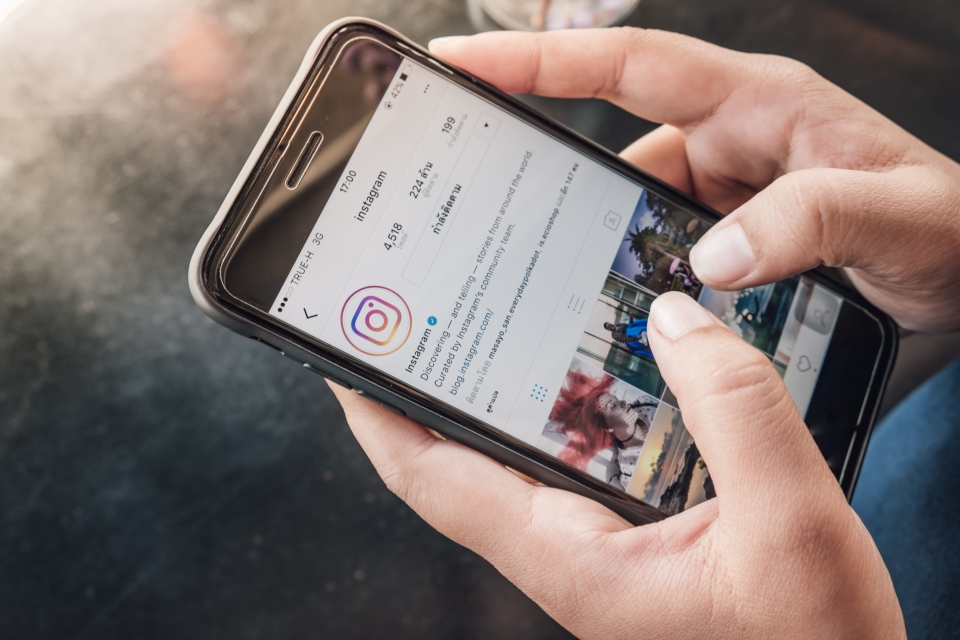
    If you think that Facebook-owned apps already get too much of your personal data, you’re not going to be happy when we tell you that starting today, Instagram wants to know your birthday. However, this data is only required when creating a new account. Instagram says that its Terms of Use call for account holders to be at least 13 years of age in most countries. By requesting a new account holder’s birthday, Instagram can make sure that no one underage has an account. Instagram also says that it will “help us keep young people safer and enable more age-appropriate experiences overall.” Of course, birthdays can be faked and this doesn’t prevent an older person from creating an account for someone under 13 years of age.

    If you open a new Instagram account and provide your birthday, other members will not be able to view your date of birth. You will be able to find it when viewing your own personal profile information. If your Facebook account is connected to your Instagram account, the birthday listed on your Facebook profile will be added to your personal profile on Instagram and again, only you will be able to see it. And if for some reason you need to edit your date of birth on Facebook, your birthday on Instagram will also reflect the edit.

    Instagram does state that it plans on using the birthday information in the coming months to provide “more tailored experiences” including recommending to younger members certain privacy controls they should use and teaching them about account controls. “These newest updates are part of our ongoing commitment to ensuring Instagram remains a safe and supportive place, especially for the youngest people in our community,” Instagram said today in a blog post.

    And Instagram is also cracking down by allowing you to decide who can send you a Direct Message. Under Message Controls, you’ll be able to choose from options like Everybody, which will allow you to receive new message requests from everyone except those who you have blocked, and Only People You Follow. With the latter setting selected, you won’t receive new message requests and story replies from people you do not follow. Those you do not follow and haven’t blocked will know that you don’t accept messages from everyone.

    You can also determine who can follow your Instagram account. Select Everyone and your account can be added by any Instagram member except those who you have blocked. Choose Only People You Follow and people you don’t know won’t be able to follow your Instagram account. Those you don’t follow and haven’t blocked will know that you don’t allow everyone to add you to groups if they try to do so.

    If you do not have the Instagram app installed on your mobile device, you can find it in the Apple App Store and the Google Play Store. The purchase of Instagram by Facebook for $1 billion back in 2012 turned out to be one of the most profitable investments in tech history. As of last year, Bloomberg estimated Instagram’s value as a standalone company north of $100 billion. The app has more than 1 billion active monthly users and is the second most popular social network following Facebook. Instagram originally provided filters for photographs before it borrowed the Stories feature from Snapchat helping it to become the immensely popular online destination that it now is. And with 71% of its users under 35, Instagram is demand by advertisers looking to reach a decidedly younger demographic.

  • Instagram announces ads will be served to users Explore feed

    Instagram announces ads will be served to users Explore feed

    Instagram has just confirmed it will bring ads to your Explore feed. As one of the go-to features for Instagram users who search for places, shops and connect with people businesses and creators, Explore looks like a great monetization tool.

    According to Instagram, more than 50% accounts on its social network use Explore every month to see photos and videos related to their interests from accounts they aren’t following. Apparently, the company considers brands an important part of the Instagram experience for its users, which is why over the next few months, it will introduce ads in Explore feed.

    Instagram says it will release ads in Explore “slowly and thoughtfully,” so not everyone will see them at the same time. Here is how it works for users: after tapping on a photo or video in Explore, you may see ads as part of your browsing experience just like in the main feed.

    For advertisers, it’s quite obvious that this is an opportunity to reach larger audiences in Explore. And they will be able to do that by extending their campaigns with a simple opt-in. So, there you have it, folks, expect to start seeing ads in your Explore feed pretty soon.

  • APAC mobile advertising market booming

    APAC mobile advertising market booming

    The Asia Pacific region is leading in mobile ad request with a growth of 44%. This is almost twice the average growth of the Americas and EMEA regions, both of which are pegged at 23%.

    This was the conclusion of the Global Trends in Mobile Advertising H2 2018 report by Smaato, which offers programmatic insights designed to help publishers and advertisers with their decision-making on ads.

    Among others, the report investigated in-app growth, advertising spending, mobile video and advertising fraud.

    The mobile ad market is healthy, according to Smaato, with significant growth across all key advertising metrics, including ad request volume and eCPMs. Demand and supply both increased year-over-year, as advertisers direct more money into mobile advertising.

    In the APAC, India stood out from the pack with a 425% growth in mobile ad requests. This was more than twice the growth rate of the fastest growing markets in EMEA and the Americas, which were led by Spain at 152% and the USA at 170% respectively.

    Smaato says India’s meteoric ad request growth is characteristic of an emerging mobile market in which the number of mobile device owners, their time spent on mobile, and overall app downloads all rise quickly.

    When it comes to the top countries for eCPM growth, Singapore (154%), Japan (125%), Australia (111%), Hong Kong (99%) and Indonesia (96%) topped the charts. As comparison, eCPMs increased in the United States by 79% and in Canada by 70%, while Switzerland (92%) and the United Kingdoms (66%) topped the chart in the EMEA.

    “The impressive ad request and eCPM growth in APAC are driven by app developers finding new ways to better monetize their content even as consumers are spending more time on apps. Advertisers from all verticals are realizing that apps are where consumers are — and they are directing more funds into this channel,” Smaato APAC managing director Alex Khan said.

    “With app usage increasing across the region, there will also be more monetization opportunities for mobile publishers.”

    The full report can be downloaded here (free registration).

  • Toyota fined W817 million for false advertising

    Toyota fined W817 million for false advertising

    Korea’s antitrust watchdog said Tuesday that it has fined Toyota Motor Korea 817 million won ($729,000) for deceptive advertising of its RAV4 sport utility vehicle (SUV). Toyota Motor Korea advertised that its RAV4 obtained a top safety pick in five test categories, including the driver’s side small overlap front and roof strength, from the U.S. Insurance Institute for Highway Safety (IIHS) in 2015.

    In 2016, the RAV4 earned the Top Safety Pick Plus rating from the independent nonprofit organization that aims to reduce deaths, injuries and property damage from motor vehicle crashes, according to the Fair Trade Commission.

    The commission said that RAV4 models sold in the United States in 2015 and 2016 were equipped with a bracket, or shock absorber, that allowed it to get the top rating.

    The same SUV model sold in Korea during the same period was not equipped with the bracket, but Toyota Motor Korea advertised the RAV4’s earning the Top Safety Pick rating from the IIHS.

    “Toyota Motor Korea concealed and omitted that there was a difference between RAV4 models sold in the United States and Korea,” the commission said.

    It said the advertisement could mislead Korean consumers into believing that RAV4 models sold in Korea had all the safety features covered by the Top Safety Pick rating.

    Toyota Motor Korea said it cannot give an immediate comment on the issue and that it is reviewing the commission’s decision.

    Toyota is the second foreign automaker to be fined this year. BMW Korea was fined 14.5 billion won last week for manipulating documents on emissions.

  • Online printing startup Gogoprint raises $7.7m to prepare new markets

    Online printing startup Gogoprint raises $7.7m to prepare new markets

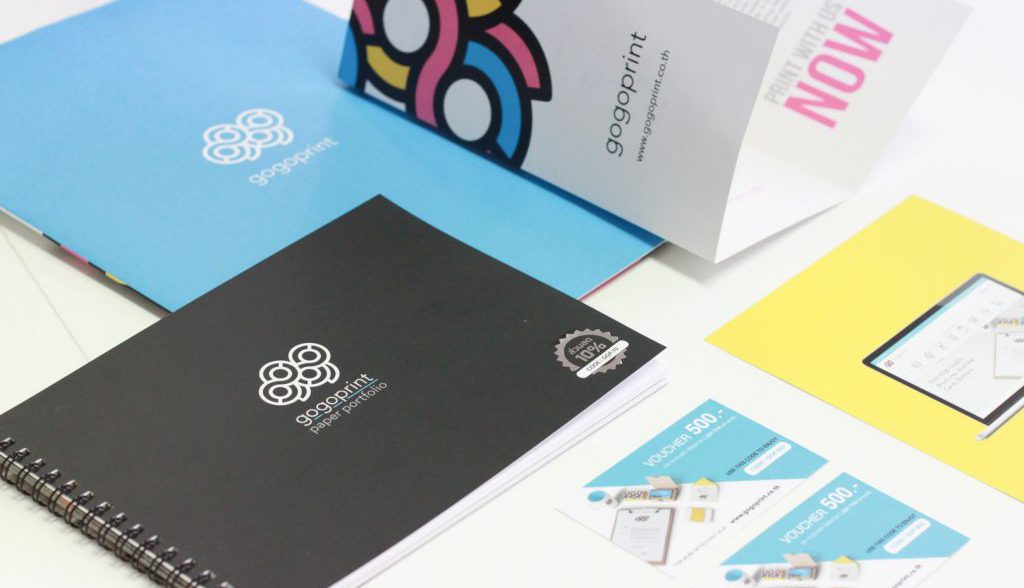
    Gogoprint, a startup that’s modernizing the printing industry, has raised US$7.7 million in series A funding to fuel its expansion into new markets like Australia, New Zealand, and South Korea in the next 12 months.

    Gogoprint is an online service for printing things like business cards, flyers, and leaflets. It uses algorithms that take into account parameters such as paper type, quantity, and delivery, and then aggregates those orders into a “print-run” or a batch of prints.

    This enables printers to make the most out of one printing sheet. Because each sheet carries fixed costs, maximizing it helps reduce prices and turnaround time for customers. It also allows printers to take in small orders from budget-conscious firms, instead of only focusing on large volume orders.

    Printers that partner with the company are able to tap new customers, helping offset the cost of any unused capacity.

    Gogoprint is active in four countries: Thailand, where it started, as well as Singapore, Malaysia, and Indonesia. In Indonesia, it faces competition from another online printing startup, Prinzio.

    To date, Gogoprint has experienced a 200 percent year-on-year growth in customer base, attracting more than 45,000 customers with over 250 million products printed. Its clients include Honda, Lazada, Lion Air, Yamaha, Singapore’s Nanyang Technological University, and Booking.com.

    Retail News reached out to the company for more financial details, but it declined to disclose figures.

    The series A round was led by its existing backer OPG (Online Printing Group), an investor and partner of Brazil-based Printi.