Tag: Advertising

  • Red Bull apologises to Indonesia over offensive ad

    Red Bull apologises to Indonesia over offensive ad

    Red Bull has publicly apologised for shooting a commercial in which an athlete performed acrobatic stunts across one of Indonesia’s ancient holy temples, an official said Thursday.

    Red Bull has issued an apology in Indonesia’s national newspapers admitting it shot an advert at the 9th-century Borobudur temple “without permission from the appropriate authorities”

    The energy drink manufacturer issued an apology in national newspapers admitting it shot the video at the 9th-century Borobudur temple “without permission from the appropriate authorities”.

    The video — in which a famous “free running” athlete is shown jumping between the temple’s stone stupas — triggered outrage in Indonesia, where Borobudur is a revered Buddhist site and national icon.

    In one scene, the athlete is seen walking past a sign clearly stating “No Climbing” in both English and Indonesian before performing acrobatics throughout the UNESCO-listed heritage site.

    The video was shot secretly despite the crew having been issued a warning by temple guards, Borobudur Conservation Agency head Marsis Sutopo told AFP.

    “They must have shot again while our guards were not looking,” he said.

    The video, uploaded online on March 18, sparked outrage within Indonesia and prompted the government to threaten a legal suit against Red Bull.

    Authorities later issued a warning to the drink company after determining no physical damage had been incurred.

    Red Bull met with government officials in early June and agreed to place formal apologies in national newspapers.

    “We want to set an example because we painstakingly try to conserve this historical site,” education ministry official Hilmar Farid told AFP.

    “It was obvious as there was a “No Climbing” sign there too.”

    Red Bull have also been asked to shoot a new video explaining the importance of protecting holy sites, Farid added.

  • Yooya exceeds 4b views

    Yooya exceeds 4b views

    Yooya said it has achieved over four billion lifetime views, with more than 2.75 billion added in the last seven months, driven by a combination of an increasing number of distribution partners and a growing stream of compelling new content.

    This development coincides with Yooya securing $3 million at a post-money valuation of $13 million in its Series Seed financing round.

    FastForward Innovations led the latest investment round, with previous investor Dream Incubator of Tokyo also joining the round.

    Yooya has been instrumental in helping content producers monetize China’s fragmented online video market by providing a single platform for content distribution, rights management, and advertising solutions.

    Yooya brings together many key components essential to the equation, including licensing at scale, automated ad sales, consolidated data and analytics, and simplified content distribution.

    For advertisers looking to tap into the large-scale engagement online video in China offers, Yooya provides a single point of contact to access distribution across all major video platforms and access to hundreds of channels, covering key advertising demographics and interest categories.

    “This growth means that finally there is a viable managed platform on which to build better monetization and more effective video-based advertising,” said Yooya CEO Rick Myers.

    Currently with over 200 million network views on average per month, Yooya predicts it will hit more than 800 million video views per month before the end of 2016, representing month-on-month growth of 40%.

  • Bluetooth Beacons – Malaysia’s Retail Future

    Bluetooth Beacons – Malaysia’s Retail Future

    Picture the following scenario: You walk into your favourite apparel store and your smartphone beeps with a push notification “Welcome back Linda! Only for today, we are giving you a 20% discount on all skirts”. You decide to finally get that blue skirt you have your eyes set on for weeks and decide to take a stroll through the accessories section when you stop to admire a particular necklace, after a few seconds of contemplation, your smartphone beeps again with the message “Hey Linda! Get a necklace to match your outfit, we’ll throw in a 30% discount on any necklace of your choice”. You leave the store with a new skirt and necklace at a bargain.

    You end up a happy customer, and the apparel store makes additional sales –  a win-win situation for all involved.

    The above situation may sound like a utopian future where the Internet of Things (IoT) have become a reality. However, the future is closer than we know it with the arrival of iBeacons by Apple in 2013 and Google unveiling Eddystone Beacons in July 2015.

    What Are Bluetooth Beacons?

    Beacons are transmitters which have the ability to sense nearby portable smart devices and “talk” to them via push notifications. Beacons are the most accurate form of locational based tracking device and may work with existing GPS and WiFi tracking capabilities to further enhance location tracking via triangulation.

    How Do They Work?

    Beacons use Bluetooth Low Energy (BLE) proximity sensing to broadcast universally unique identifiers (UUID) which are picked up by compatible apps and operating systems (OS). This means that users will need to have beacon-compatible apps (a relatively simple process can enable any app to be beacon-compatible) installed and have their Bluetooth switched on in order for their smartphones to interact with these beacons.

    Why Would Users Leave Their Bluetooth Switched On?

    This is a question which frequently surfaces during discussions with potential beacon adopters. It is true that a majority of smartphone users never and might even hesitate to turn on or leave their Bluetooth switched on due to the concern that the Bluetooth would contribute to a huge drain on their battery life.

    That is until 2011 when the new BLE technology were incorporated into the new iPhone 4S smartphones and subsequently, all smartphones released after that period. With the new Bluetooth Smart standard, worries of Bluetooth drainage on phone battery life were a thing of the past as the power needed to power Bluetooth is now so low that it is negligible.

    Other than that, most smart devices that are making their way into our everyday life such as smart wearables (e.g. FitbitJawboneApple Watch), Bluetooth-enabled car audios, and smart kitchen appliances require the use of Bluetooth-enabled smart devices.

    With over 10,000 Bluetooth-enabled products listed with Bluetooth SIG along with the immense growth (>100% in 2014) of the Smart Home, Consumer Electronics and Beacons markets, coupled with the growing number of users coming to understand the new Bluetooth technology as well as the growing need of users to have Bluetooth-enabled to run their everyday smart lifestyles, 24/7 Bluetooth-enabled devices will soon be a lifestyle choice much like the 24/7 WiFi-enabled devices which are part of everyday life now.

    What It Means For Retail Businesses

    With the ability to understand what interests consumers and know when they are in the proximity, brick and mortar retailers can now interact digitally with potential customers to encourage more foot traffic into their outlets and achieve higher sales conversion by sending the right message, to the right people, at the right time.

    However, the use of beacons in retail businesses does not stop at pushing promotional messages and general information. With beacons, retailers are also able to provide a personalised shopping experience to each individual customer as seen in the aforementioned story above. Depending on the nature of the business, beaconised businesses will have a a plethora of uses for beacons such as, helping customers navigate a store and providing in-store concierge services by utilising the tracking abilities of beacons. Think shopping on Amazon or Zappos, but in real life.

    press-beacon-product-2.ae0092e2

    The longer a retailer adopts the beacon technology, the more they will begin to understand their customers – who they are, what their preference is, where they like to shop, are they high or low spending customers. This is all possible as more and more data on these users are collected and analysed -allowing businesses to produce individualised ads and engage in behavioural retargeting.

    With the arrival of beacon technology, retailers with physical outlets will finally be able to gather data on their customers in real life in real time and run the most effective and efficient campaigns to target the most relevant consumer segments while providing a highly personalised shopping experience. The future of retail globally, especially here in the South East Asian region and in Malaysia, is in beacons and any retailer slow to adopt this breakthrough tech as part of their arsenal will be at a huge disadvantage moving into the future.

  • China brands favoured by domestic consumers in marketing, experts say

    China brands favoured by domestic consumers in marketing, experts say

    CHINESE brands are generally outperforming their multinational counterparts in terms of consumer preference as they’re quicker to catch up with latest media trends and bold with new marketing campaign formats, industry experts noted.

    “Chinese entrepreneurs and marketers have a better understanding of local consumers and are quick to adapt to new marketing trends and Chinese brands will enjoy a golden age in the next 10 years,” Tian Tao, deputy general manager of market research firm CTR China, told the China Insight Summit in Shanghai today.

    “Domestic brands are quicker to spot popular entertainment shows and they have a shorter decision making process than most multinational players, which gives them more opportunities to impress picky consumers,” general manager of CTR’s Media Intelligence unit Zhao Mei told Shanghai Daily.

    In the first quarter, almost all of the popular TV program sponsorship was dominated by domestic brands, according to CTR’s media monitoring data.

    Among the top 50 most frequently purchased consumer products of Chinese urban households, more than 30 of them are made by home grown manufacturers, according to data tracked by Kantar Worldpanel, CTR’s consumer research service.

    In the first quarter this year, total advertising expenditure calculated by published rate cards in China shrank 1.9 percent, with TV ad spending declining 2.9 percent from a year ago.

    Internet ad expenditure was the fastest growing segment, rising 33 percent from a year ago, while office building digital screen advertising added 16 percent and movie theaters’ video ads were up 31 percent.

    TV will stay play a major role in helping build a brand name and popular TV programs as well as some better performing regional TV stations are expected to enjoy a higher premium in the coming year, according to Zhao.

  • Woolworths ads not so cheap, but Coles ads down, down

    Woolworths ads not so cheap, but Coles ads down, down

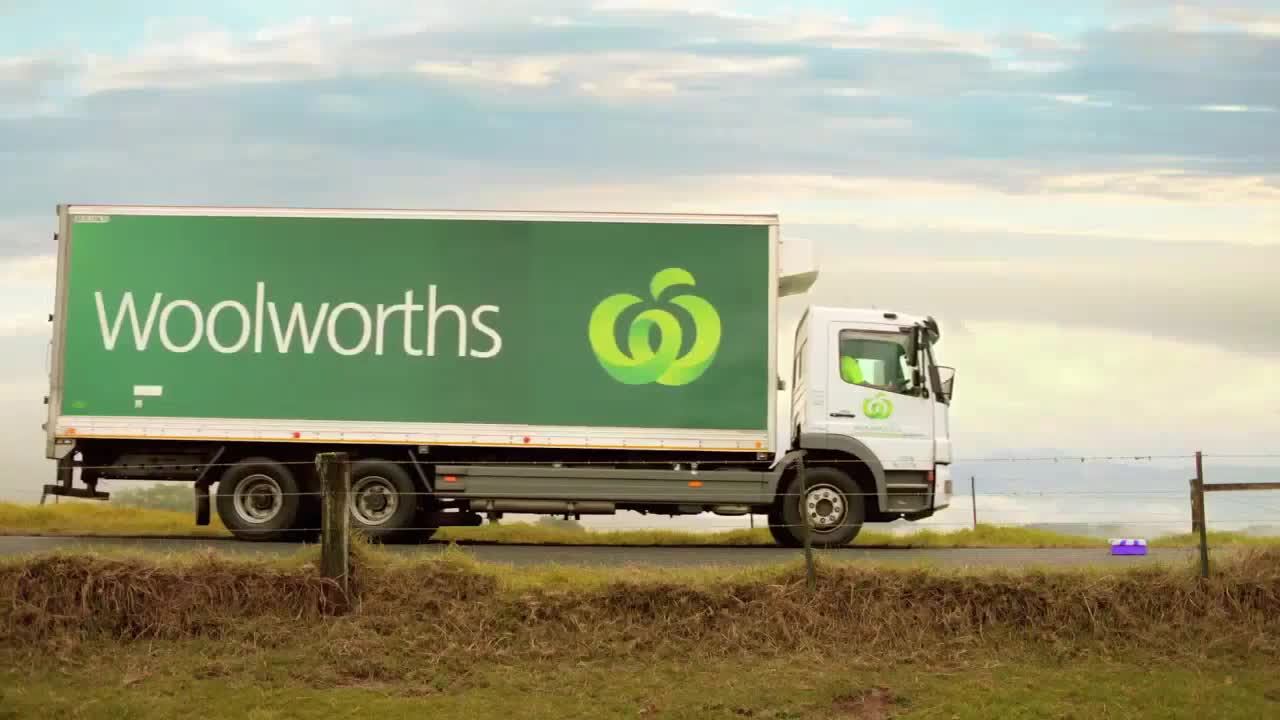
    The supermarket wars have pushed two of Australia’s big advertisers in different directions, with No. 1 supermarket Woolworths revving up its spending while Coles winds its down.

    Woolworths is estimated to have spent $18.8 million on traditional advertising from January to March this year. This was an 8 per cent increase on its $17.4 million supermarket spending in the first three months of last year.

    By contrast, Coles is estimated to have slashed its ad spend to $13.7 million from January to March. This is down 17 per cent from $16.5 million in the same period last year.

    The Nielsen advertising expenditure estimates cover the bulk of the supermarkets’ ad spend, across television, radio, print, outdoor, cinema and some online. It doesn’t cover advertising booked through exchanges, specialist press and social media.

    Credit Suisse analyst Grant Saligari said Woolworths had “increased advertising frequency [on TV] and has been running more promotions in the third quarter [from January 5] than in prior periods.”

    Woolworths and Coles declined to comment.

    Coles’s long-running “Down, Down” campaign, featuring rockers Status Quo, has been widely described as successful but annoying. Woolworths responded last year with a less lauded campaign featuring a “Cheap, Cheap” slogan, animated birds and singer Samantha Jade. Its ‘BrandZAC’ campaign for Anzac Day last month was widely panned.

    Sources have suggested Coles’s lower ad figures this year could be because it was working out its response to Woolworths’ campaign, or because its existing campaign was successful.

    Ben Willee of Spinach Advertising said: “Just because you spend more doesn’t necessarily mean your campaign is more effective. The hardest part is getting your creative right.”

    Woolworths – owner of major retailers including alcohol business Dan Murphy’s and discount department store Big W – and Wesfarmers – owner of Coles and hardware chain Bunnings – are two of Australia’s biggest advertisers.

    Responding to disappointing grocery sales and an improving Coles, Woolworths in February said it would spend at least $500 million on cutting its prices and improving its stores.

    Coles this week reported a marginal increase in market share in the third quarter and tipped independent and specialty retailers would continue to lose market share at the hands of foreign supermarkets Aldi and Costco. Coles has about 25 per cent of the Australian food market, Wesfarmers said.

    Excluding new store openings, Coles food and liquor sales grew by 3.8 per cent in the three months to March 31. Including new stores, Coles food and liquor grew by 5.4 per cent, to $7.1 billion.

    Woolworths is set to hold a strategy briefing day and store visits next week, and is tipped to post third-quarter sales growth of about 0.9 per cent.

  • Tiffany & Co debuts its first same-sex couple ad campaign

    Tiffany & Co debuts its first same-sex couple ad campaign

    American jeweler Tiffany & Co makes its first foray into featuring same-sex couples in its advertising with its new engagement campaign for 2015. A rep for the jeweler didn’t release the guys’ names because despite being extremely attractive, they are not professional models.