Retail News CRM

Tag: Advertising

  • Telstra wins $12.3m outdoor advertising contract

    Telstra wins $12.3m outdoor advertising contract

    Australian operator Telstra has secured an A$17 million ($12.3 million) contract with fleet operator P2P Transport to provide connectivity for a mobile digital advertising solution.

    Telstra will provide access to its mobile and IoT network and its digital media capabilities to support the project to provide advertising on 900 P2P vehicles as they travel throughout the nation, starting with an initial 300 taxis.

    P2P Transport leases vehicles including taxis and limousines to individual taxi drivers, ride-sharing drivers and limousine operators.

    The advertising solution will allow advertisers to deliver specific messaging for particular times and locations, such as by pushing out messages advertising food options during lunchtime.

    It uses Australian-developed GPS-enabled screens purpose built for the taxi industry, that use integrated power to prevent the need to drain the vehicle’s battery.

    “It’s getting more difficult for organizations to cut through the noise in the market today and P2P Transport’s solution is a fantastic example of forward-thinking that capitalizes on technology to create a smarter, more targeted way of reaching potential customers,” Telstra Enterprise chief customer officer John Ieraci said.

    “We’re really excited to work with P2P Transport to support this next generation mobile advertising solution using our comprehensive IoT offering and business-grade mobile network.”

  • Blockchain, AI the next big thing for advertisers

    Blockchain, AI the next big thing for advertisers

    The integration of analytical and data-driven technologies with AI and Blockchain can help businesses better understand customers’ behaviors, habits, interests, and needs. Thus, direct advertisements are easy to access consumers at the right time and the right situation, experts say.

    “Blockchain can be a game changer when it comes to marketing. The technology will create transparency, reliability, and positive values,” said blockchain consultant David Lang.

    “While users can better manage their personal information, blockchain can help brands not only reach the right customers more effectively but also more accurately measure the performance of each advertising campaign,” he added.

    At present, certain weaknesses have become apparent in the advertising industry. Studies have shown that fraud in digital advertising costs $1 for every $3 in advertisement expenditure. Online advertisers estimate that total losses from fraudulent activities in the industry will reach $19 billion in 2018.

    Bigbom, an online advertising solution built on the blockchain platform, has clearly identified three major issues that the advertising industry needs to address.

    Second, manual advertisement management takes too much time and is inefficient.First is the building of trust between the advertisers and ad platforms or publishers. It takes a huge amount of time for advertisers to find and establish a partnership with absolute strangers.

    Third, the budget for advertisement campaigns is still poorly allocated.

    Bigbom, a Singapore company has rolled out Bigbom Ads, Bigbom Contract and Bigbom Marketplace as the promising solution to soothe the mentioned sore of this industry. The first one is a tool which helps advertisers optimize their ads in such an efficient and simple manner. Through their innovative algorithm, this is the flagship product in the journey to change the conversation of digital advertising and make the one-click optimization come true. Bigbom Marketplace powered by Bigbom Contract creates a transparent economy for advertising community to join by harnessing the power of blockchain technology.

    Those are Bigbom’s trinity force to revolutionize the online advertising industry. Currently, their products have been launched with the very first attributes and received positive feedback from the interested audience. According to their plan, these services will be up and running in the first two quarters of 2019 with more advanced features.

    More information regarding the project is available at bigbom.com as well as their whitepaper.

  • Catch spends millions on trust play

    Catch spends millions on trust play

    Catch Group’s first foray into the world of TV advertising has cost the e-commerce company millions, as it looks to bolster its brand awareness ahead of the imminent arrival of Amazon.

    It’s first TV campaign, which has been airing for two-weeks, is part of a long-term marketing play to first establish Catch’s new marketplace image in the local market before beginning to communicate price and range later down the line.

    Catch Group’s head of marketing, Ryan Gracie, told that the campaign was initially designed alongside the company’s re-brand to drive awareness and begin building trust – something pureplay retailers have struggled with in recent years.

    “Building a brand online is very hard and you have to really take yourself above the line if you want to be a trusted, credible brand,” Gracie said.

    “We’re a pureplay, we don’t exist physically so it’s important for us to exist on these other channels.”

    Gracie was unable to say what the return looks like so far, but said a decision was taken by management on TV knowing that assessing the benefits wouldn’t be clear cut.

    “The hard costs of the media spend is a major inhibitor, because you can’t explicitly measure the impact of it,” he said.

    “What do you get when you advertise on TV? You get a warm and fuzzy feeling, but you have to trust it’s going to work.”

    The ads themselves depict Australians in various scenarios screaming “catch” – in line with the company’s “screaming good deals” philosophy.

    Catch is investing in marketing on both sides of the market at the moment, having also stepped up its B2B marketing since its brand relaunch to encourage more suppliers to jump on its platform.

    Catch Group co-founder Gabby Leibovich told sister site Internet Retailing in August that more than 200 brands have signed up to the marketplace, with 25,000 new SKUs recently added across several new categories.

    Nati Harpaz, CEO of Catch Group, is the chairman of Octomedia, Inside Retail’s parent company.

  • REV Asia looking for partners in Indonesia, Philippines to grow overseas businesses

    REV Asia looking for partners in Indonesia, Philippines to grow overseas businesses

    Digital media group REV Asia is on the lookout for local partners for its operations in Indonesia and the Philippines, says managing director Voon Tze Khay.

    The group’s initial plan, which was to grow its market share in social media advertising revenue in those markets, hit a snag one-year into operations, leading it to seek home-grown partners.

    “We thought if we could run Malaysia at such a successful pace over the last three years, why not try it ourselves? However, after 12 months, we realised that the opportunities in these markets are plenty but the right way and more strategic way to do it is through a local partner, either in the form of merger and acquisition (M&A) or joint venture (JV),” Voon told in an interview.

    He said the group faced operational challenges in both markets, in terms of understanding the local business culture, dealing with local advertising agencies and brands as well as challenges in working style and expectations in the delivery of campaigns.

    “Running a business in these two countries is very different to how we run it in Malaysia simply because the understanding of local and business culture is a fairly important tool. We have not seen it grow in the way that we expected,” he added.

    Voon said it has identified certain players that could be potential partners but talks have not begun as it is still mapping out how to grow with a local partner. The group entered both markets in 2015 with their Says.com and 8share.com brands. These markets contribute about 5% to total group revenue and there are no plans to expand its other brands there in the immediate term.

    “In the next 24 months, we are looking at international revenue (contributing about) 5-8% because our focus is going to be Malaysia. We are expecting Malaysia to grow in the double digits year-on-year in both revenue and bottom line.

    “For international markets, there’s still a lot more groundwork to be done for local business understanding and a lot more research to be done from data point of view. That doesn’t mean we are not putting in efforts to grow it. But growth compared with Malaysia will be a lot smaller,” said Voon.

    In 2017, the group aims to grow in terms of audience and revenue in Malaysia, through organic growth and M&As, by shifting its focus to videos and small and medium enterprises (SMEs).

    Voon said consumption of videos on mobile has grown tremendously and will continue to grow. It also aims to tap into the 700,000 SMEs in Malaysia by offering them specific packages to promote their services across the group’s platforms.

    In 2016, total video revenue contributed 10% while total SME revenue contributed only 2%. This year, it aims to grow contribution from these two products to 25% and 12% respectively.

    In terms of M&A, Voon said, REV Asia is always on the lookout for opportunities within the three main languages in Malaysia.

    “We will continue to seek out M&A opportunities but we will be selective. It has to be a digital media product with a sizeable audience already visiting the site and we will look at how that particular brand fits within the entire REV Asia set-up,” he said.

    Recall that the group acquired two Chinese websites, Viralcham and Rojaklah, in 2015 and last year it acquired three Malay-language websites, namely Siraplimau.com, Myresipi.com and Kongsiresepi.com.

    Meanwhile, REV Asia Bhd (holding company of REV Asia) saw its shareholding in iCar Asia Ltd diluted to 17.28% in September last year and in November shareholders approved the transfer of its shareholding into a special purpose vehicle (SPV).

    “The process is underway, we are waiting for the finalisation of a court order to reduce the share capital and to fully formalise the transfer of the shares of iCar Asia out from REV Asia Bhd into an SPV. We hope to complete the transfer by first quarter this year,” said Voon.

  • Many businesses stop advertising on YouTube

    Many businesses stop advertising on YouTube

    Some major brands in Việt Nam had to stop advertising on the world’s largest online video site, YouTube, when these brands’ advertisements were linked to clips containing poor content.

    According to information from the Authority of Broadcasting and Electronic Information under the Ministry of Information and Communications, the authority received official dispatches from Vietnam Airlines, Mead Johnson Nutrition Việt Nam and Vinamilk explaining an incident in which their brands appeared in clips with pornographic, slanderous or anti-government content on YouTube.

    At the same time, businesses have also confirmed that they stopped advertising on the online video site.

    A Vinamilk’s representative told media that the company signed a co-operation contract with WPP Media Company Limited (Mediacom) to promote the brand to consumers through mass media.

    According to a commitment between the two parties, Mediacom has to conduct communication services in compliance with Vietnamese laws, as well as take responsibility in monitoring and reporting for Vinamilk, if there are problems affecting its images and reputation.

    After receiving the dispatch from the Authority of Broadcasting and Electronic Information regarding the incident, Vinamilk asked Mediacom to coordinate with YouTube to remove advertisements on clips with unwanted content, at the same time, suspending all advertisement plans on YouTube until the media partner and the site send reports to Vinamilk to find solutions for the problem.

    Earlier, the Authority of Broadcasting and Electronic Information sent dispatches to several large enterprises in Việt Nam asking for reports about these brands or their products appearing in clips with improper contents posted on YouTube.

    The authority found 17 clips with advertising inserted into videos on YouTube that had contents violating the country’s law.

    Additionally, the Ministry of Information and Communications has coordinated with the Ministry of Culture, Sports and Tourism to decide upon a fine for YouTube for not obeying the regulations on advertising for cross-border advertising activities on websites in Việt Nam.

    The ministry also invited YouTube and Google representatives to cooperate in resolving these violations.

  • InMobi sees gold in Indonesian ad market

    InMobi sees gold in Indonesian ad market

    InMobi, an India-based mobile advertising platform provider, will invest up to US$50 million within the next five years to expand its business in Indonesia.

    InMobi founder and chief executive officer Naveen Tewari said in Jakarta on Monday that the company would focus its investment on developing a mobile video advertisement and customer-relationship management platforms.

    “We are going to expand our business, also use the money for team resources, product customization, and partnerships,” Naveen told a media briefing.  “We are also going to bring our team from India, as well as hire local [human] resources in Indonesia,” he added.

    The mobile advertisement market in Indonesia is quite promising because of the shift in advertisement placement from conventional media such as television to mobile devices and the increasing number of smartphone users, according to InMobi.

    The company’s survey showed that in 2016, video-based advertisement on mobile devices in Indonesia rose by 380 percent.  InMobi is a mobile advertising platform, which was established in Indonesia in 2008, marking its first office outside India.

    “By 2016, our platform has reached 90 percent of smartphone users, or approximately 69 million users in Indonesia. We offer an ads platform that can reach a larger scale than television advertising,” Naveen added.

  • Consumers willing to accept ads on IoT devices

    Consumers willing to accept ads on IoT devices

    The majority of consumers, at least in the US, are fine with the idea of ads on IoT devices, according to an Interactive Advertising Bureau (IAB) study on consumer adoption patterns and trends.

    In the survey of 1,200 US adults, 65% of IoT device owners said that they are willing to see ads on their IoT screens. What’s more, 62% already do, the study added.

    Devices examined in the study included connected cars, internet-enabled home control devices, internet-enabled appliances, smart watches, wearable health trackers, internet-enabled voice command systems, smart TVs, VR headsets and smart glasses.

    Incentives are the prime motivators.

    The report showed that 55% browsed through ads get coupons, while 30% searched for extra features and 22% loved playing exclusive games.

    Affluence and age matter when gauging consumers’ willingness to see ads on their IoT devices.

    According to the report, 69% of those who earn $100,000 or more and 68% of those aged 18-34 years are “more likely to see the value exchange of receiving such ads on their devices.”

    While the above results cater to only US consumers, it does indicate a growing willingness among consumers to view ads if the rewards are clear.

    It also offers valuable clues for CMOs who are looking to cash in the upcoming IoT boom and get into the living spaces of consumers.

  • Marketers prefer prudent spending on mobile advertising

    Marketers prefer prudent spending on mobile advertising

    While penetration of smartphones and mobile services continues to increase in Asian markets, mobile advertising is not as prevalent as is assumed. Brand owners still allocate a substantial amount of money to advertise on conventional media.

    According to data from the Asia Pacific branch of the Mobile Marketing Association (MMA), the average company in Asia will spend only 7 to 10 percent of their marketing budgets on mobile advertising despite rising smartphone usage across the region.

    This is particularly apparent in Indonesia as some companies increase focus on mobile advertising, but it does not necessarily translate to higher marketing dollars.

    MMA Asia Pacific managing director Rohit Dadwal explained that despite an increased percentage in mobile ad spending, the format would likely end up as the third-largest ad platform in Indonesia after television and radio in the coming years due to the size and reach of conventional media in the country.

    Dadwal explained that the average brand in Indonesia allocated between 14 and 15 percent of their marketing budget for mobile-based advertising and spent the remaining budget on broader platforms, such as television, which is considered the most popular advertising platform in Southeast Asia’s largest economy.

    Currently, in terms of an overall advertising budget, not a lot of local brands have moved into mobile marketing, as the share has yet to reach 5 percent of the marketing industry.

    “The main effect of the rise of mobile usage is that companies will start to allocate more money for mobile advertising from their budgets little by little, from 10 to 20 percent currently to about 30 percent in the near future,” Dadwal said during a recent discussion in Jakarta.

    A suitable strategy for mobile marketers, he added, is not to look at the landscape as a place where mobile advertising will triumph over other media but to see both mobile and more traditional media as integrated platforms where marketing campaigns can run parallel with each other.

    “It’s no secret that mobile advertising poses a threat to other forms of advertising. However, to succeed in marketing today, you shouldn’t use a completely mobile strategy. You need a marketing strategy that includes mobile because it will help you with your overall marketing objectives in the end,” Dadwal said.

    Previously, client leadership partner of Mindshare Indonesia media agency Wendy Soeweno commented that brands, conventional or digital, would still focus on television and radio advertising because of the scope and range television and radio provide in Indonesia.

    Television and newspapers used to be the biggest recipients of advertising spending. The tide is turning. Digital ads are poised to take 25 percent of ad spending in Indonesia by 2019 from 7.3 percent in 2015, according to forecasts by eMarketer.

    Digital ads almost tripled to US$835 million in 2015 from $234.2 million in 2013 and the figure is expected to increase more than four times to $4.9 billion by 2019.

    “We believe that communicating with consumers through the digital world is significant to building our brand,” corporate secretary of Unilever Indonesia Sancoyo Antarikso said recently.

    Unilever, one of the country’s biggest spenders on advertising, has been intensifying the placement of its product commercials through Google’s video sharing platform YouTube.

    In terms of strategies, Dadwal elaborated on how the integrated mobile-conventional approach was working currently and acknowledged that there could be a major shift to mobile marketing happening in the future.

    According to a joint study by Google and Singaporean investment company Temasek, Indonesia is poised to have the fourth-largest amount of internet users in the world with 215 million people connected by 2020. Meanwhile, smartphone usage in Indonesia currently includes approximately 43 percent of the population.

  • Kantar Worldpanel partners with Facebook to expand advertising measurement service

    Kantar Worldpanel partners with Facebook to expand advertising measurement service

    Kantar Worldpanel has formed a global partnership with Facebook that brings Facebook mobile ad exposure data into Kantar Worldpanel’s Consumer Mix Model (CMM) service.  In Asia, the service has launched in South Korea, Taiwan, Thailand, Philippines, and Vietnam, and will soon be available in Indonesia and Malaysia as well.

    The enhanced CMM tool combines Facebook’s mobile ad exposure data (in addition to desktop) with Kantar Worldpanel’s continuous consumer packaged goods (CPG) purchase data to provide brands with an accurate assessment of the effectiveness of their cross-media advertising campaigns. 

    The advertising landscape has witnessed rapid change in recent years as brands increasingly turn to digital formats.  In April Facebook announced that its advertising revenue had grown by 57 percent to $5.2 billion in the first quarter of 2016 alone, with advertisers drawn to its increasingly large user base. 

    The tool allows brands and advertisers to understand the real impact of individual advertising campaigns on actual sales and the contribution Facebook and other media have on their return on investment.  This in turn will help them to optimise their media planning and ultimately improve the efficiency of their media investment.

    Josep Montserrat, chief executive of Kantar Worldpanel, commented: “The partnership allows our experts to build a solid understanding of how advertising works and the role that Facebook plays in a wider campaign context.  Working with Facebook will allow us to inspire even better decisions to optimise advertising budgets and maximise advertisers’ return on investment.”

    Marcy Kou, chief executive of Kantar Worldpanel Asia, said: “It brings tremendous potential for advertisers on Facebook as the number of smartphone users continues to grow in Asia Pacific. Retail ecommerce in this region is going stronger than the rest of the world, and is still considered the “it” market. Yet there hasn’t been a reliable method to measure the effectiveness of mobile ads, and with this partnership, we will finally be able to.”

    Patrick Harris, director of Global Agency Development at Facebook, said: “We believe that strong partnerships with our agency partners are key to providing advertisers with the tools they need to measure true business value on Facebook.  We are excited to help inform Kantar Worldpanel’s Consumer Mix Model solution by bringing in our mobile ad exposure data in a privacy-safe way.”

    Kantar Worldpanel’s continuous CPG purchase panels are already widely used by the advertising community worldwide to understand the effect of cross-media advertising.  Its measures take into account in-store promotions and consumer loyalty to determine the full picture behind consumer purchase behaviour. 

    This partnership with Facebook is part of a wider alliance between WPP and Facebook to activate WPP’s data proprietary assets within Facebook, which was announced in April 2015.

  • Government fine watch shop over Aishwarya Rai photo

    Government fine watch shop over Aishwarya Rai photo

    The photograph below is from a Longines advertising campaign, and features arguably India’s most famous Bollywood star, Aishwarya Rai.

    Some might consider it elegant, others “hi-so” in certain parts of Southeast Asia. But in Malaysia, religious zealots have fined a non-Muslim watch retailer for displaying a poster in-store featuring this same Aishwarya Rai photo.

    According to Malaysian mainstream media, someone from the Kota Baru Municipal Council considered the photograph too “sexy” – an “offence” the beleaguered retailer has supposedly committed more than 10 times since the 1990s.

    Aishwarya-Rai-Longines

    Swee Cheong Watch & Pen Co owner Lee Kum Chuan’s latest bureaucratic punishment came to light when he went to obtain a business licence from the council to open a new store in Aeon Mall, his third outlet in Kota Baru.

    “When I went to MPKB to apply for a business permit for the new shop, I was told to settle the fines for the offence committed in KB Mall,” he told The Star in Kuala Lumpur.

    “I was hit with a total RM2000 (S$668) in fines, but the amount was reduced to RM400. I had to pay the sum before I could get the new permit,” he said.

    In a nation where family members of the Prime Minister are allegedly siphoning off hundreds of millions of dollars of state funds to spend on luxury goods, movie productions, condominiums and aircraft, prompting investigations in a dozen or so countries, law-enforcement officials consider it damaging to community standards for a fully dressed Bollywood actress to promote watches. At least that’s how it seems.

    Shop ‘raid’

    MPKB enforcement officers “raided” the new Swee Cheong Watch & Pen shop in Aeon Mall on Monday, ordering the “offensive” posters be removed from display.

    “The posters were supplied by our manufacturers,” Lee told The Star.

    The issue has sparked wider concerns about the application of a dual justice system in Malaysia in which hudud laws – and their applicable punishments – apply to Muslims, and more conventional laws apply to Chinese, Indian and other ethnicities. (In Malaysia, ethnic Malaysians are born Muslim and face physical punishment if they try to renounce their religion). Hudud is defined by Wikipedia as “an Islamic concept: punishments which under Islamic law (Shariah) are mandated and fixed by God”.

    Kelantan Malaysian Chinese Association secretary Datuk Lua Choon Hann says the harassment of the watch retailer follows the council taking action against hairdressers for attending clients of a different gender.

    “The government has proved yet again that its repeated claims that the hudud enactment will have no bearing on non-Muslims are nothing but mere fallacy,” he said in a statement this week.

    “Based on the summonses issued by local councils (in Kelantan), MCA wants to raise awareness of the motives to remove clauses in the Federal Constitution that protect the rights of non-Muslims and Muslims against punitive criminal actions based on religious precepts,” he said.

  • Ooyala launches server-side ad insertion

    Ooyala launches server-side ad insertion

    Ooyala now offers live server-side ad insertion (SSAI) for broadcasters and media companies distributing live, ad-supported video.

    A part of Ooyala Live and its ad-serving platform, Ooyala Pulse, the technology provides smooth transitions between ads and content during live feeds for seamless, TV-like playback.

    SSAI helps circumvent ad blockers so customers can reclaim lost revenue. Unique to Ooyala’s SSAI technology is its focus and method to deliver hyper-personalized ad experiences to live-streaming audiences.

    Ooyala’s SSAI technology allows publishers and advertisers to merge programming and personalized advertisements together into a single video stream. As a result, the video content and advertising play continuously, eliminating any buffer time or latency between the content and ads.

    There is also no distinction between where the content ends and the ads begin, therefore it prevents video advertising from being blocked.

    Ooyala’s live SSAI technology personalizes every ad, for every user, on any device — every time, regardless if the user is watching live or catching up in DVR mode. The most relevant ad is delivered based upon the individual’s watching environment.

    Ooyala Live gives broadcasters and media companies full control over their live stream and ad experience. Customers can set their ad-monetized stream to autodetect ad markers, dictating when the stream needs to cut to an ad break and back again, or manually manage the process due to unforeseen events such as a power outages, a delay of game or injuries, which require more frequent ad breaks to fill air time.

  • Google rolls out Accelerated Mobile Pages for ads

    Google rolls out Accelerated Mobile Pages for ads

    Google first unveiled and rolled out its Accelerated Mobile Pages (AMP) project in October last year in a bid to allow content to load faster on mobile devices. Last week the company announced a solution designed to address the problem of slow loading ads.

    For the uninitiated, AMP is an open-source project that allows a mobile browser to load web pages much faster by simplifying the underlying HTML code for faster loading. In a way, the new AMP for ads (A4A) does the same by allowing marketers to create optimized ads that will load as fast as AMP-formatted content.

    “With AMP for Ads, we’re bringing everything that’s good and fast about AMP to ads. Unfortunately, most advertisers’ campaign creatives are not fully optimized for mobile experiences,” wrote Paul Muret, the vice president of Display, Video and Analytics at Google in a blog entry.

    “AMP for Ads allows advertisers to build beautifully-designed ads in AMP HTML so that the entire AMP experience, both the publisher’s content and the advertiser’s creative, load simultaneously at AMP-speed,” he wrote.

    The performance speedup is achieved by separating ad requests from ad rendering. This allows for faster ad rendering at no impact to the client CPU or memory cost. AMP pages will continue to support non-AMP ads at the moment.

    “From the client’s perspective making the request itself is super cheap, but its side effect (the rendering of the ad) is expensive,” explained Malte Ubl, who is the tech lead for the AMP project in a lengthy update. “By separating the two, A4A achieves much faster ad rendering at no additional CPU and memory cost.”

    Speeding up the loading time aside, A4A will take advantage of AMP’s features by minimizing resource impact. This is achieved by only animating display elements that are only visible on the screen, and throttling refresh rates in cases where the device is unable to achieve a specified target.

    There is no question that slow load times can drive users away, and is especially important for mobile devices. Like AMP, there is no reason that A4A will not meet with similar levels of success with marketers.

  • Red Bull apologises to Indonesia over offensive ad

    Red Bull apologises to Indonesia over offensive ad

    Red Bull has publicly apologised for shooting a commercial in which an athlete performed acrobatic stunts across one of Indonesia’s ancient holy temples, an official said Thursday.

    Red Bull has issued an apology in Indonesia’s national newspapers admitting it shot an advert at the 9th-century Borobudur temple “without permission from the appropriate authorities”

    The energy drink manufacturer issued an apology in national newspapers admitting it shot the video at the 9th-century Borobudur temple “without permission from the appropriate authorities”.

    The video — in which a famous “free running” athlete is shown jumping between the temple’s stone stupas — triggered outrage in Indonesia, where Borobudur is a revered Buddhist site and national icon.

    In one scene, the athlete is seen walking past a sign clearly stating “No Climbing” in both English and Indonesian before performing acrobatics throughout the UNESCO-listed heritage site.

    The video was shot secretly despite the crew having been issued a warning by temple guards, Borobudur Conservation Agency head Marsis Sutopo told AFP.

    “They must have shot again while our guards were not looking,” he said.

    The video, uploaded online on March 18, sparked outrage within Indonesia and prompted the government to threaten a legal suit against Red Bull.

    Authorities later issued a warning to the drink company after determining no physical damage had been incurred.

    Red Bull met with government officials in early June and agreed to place formal apologies in national newspapers.

    “We want to set an example because we painstakingly try to conserve this historical site,” education ministry official Hilmar Farid told AFP.

    “It was obvious as there was a “No Climbing” sign there too.”

    Red Bull have also been asked to shoot a new video explaining the importance of protecting holy sites, Farid added.

  • Yooya exceeds 4b views

    Yooya exceeds 4b views

    Yooya said it has achieved over four billion lifetime views, with more than 2.75 billion added in the last seven months, driven by a combination of an increasing number of distribution partners and a growing stream of compelling new content.

    This development coincides with Yooya securing $3 million at a post-money valuation of $13 million in its Series Seed financing round.

    FastForward Innovations led the latest investment round, with previous investor Dream Incubator of Tokyo also joining the round.

    Yooya has been instrumental in helping content producers monetize China’s fragmented online video market by providing a single platform for content distribution, rights management, and advertising solutions.

    Yooya brings together many key components essential to the equation, including licensing at scale, automated ad sales, consolidated data and analytics, and simplified content distribution.

    For advertisers looking to tap into the large-scale engagement online video in China offers, Yooya provides a single point of contact to access distribution across all major video platforms and access to hundreds of channels, covering key advertising demographics and interest categories.

    “This growth means that finally there is a viable managed platform on which to build better monetization and more effective video-based advertising,” said Yooya CEO Rick Myers.

    Currently with over 200 million network views on average per month, Yooya predicts it will hit more than 800 million video views per month before the end of 2016, representing month-on-month growth of 40%.

  • Bluetooth Beacons – Malaysia’s Retail Future

    Bluetooth Beacons – Malaysia’s Retail Future

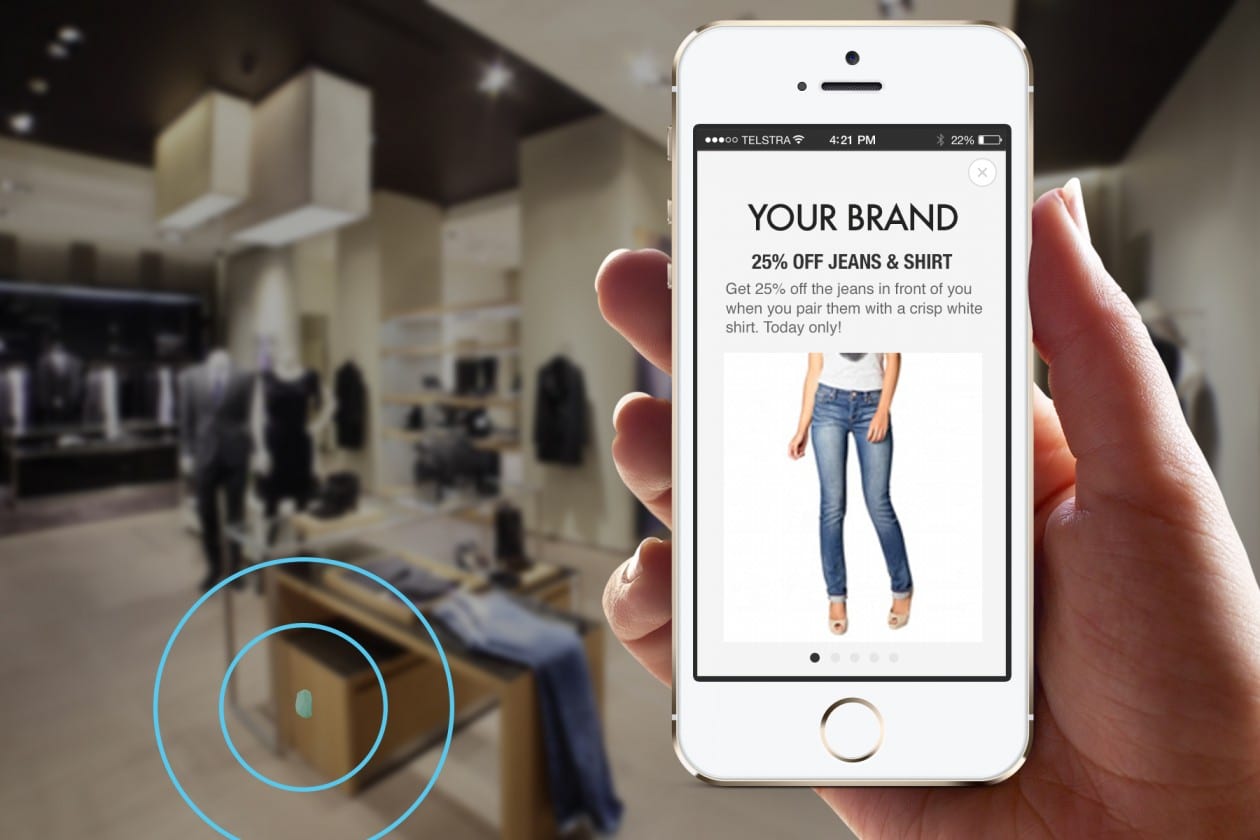
    Picture the following scenario: You walk into your favourite apparel store and your smartphone beeps with a push notification “Welcome back Linda! Only for today, we are giving you a 20% discount on all skirts”. You decide to finally get that blue skirt you have your eyes set on for weeks and decide to take a stroll through the accessories section when you stop to admire a particular necklace, after a few seconds of contemplation, your smartphone beeps again with the message “Hey Linda! Get a necklace to match your outfit, we’ll throw in a 30% discount on any necklace of your choice”. You leave the store with a new skirt and necklace at a bargain.

    You end up a happy customer, and the apparel store makes additional sales –  a win-win situation for all involved.

    The above situation may sound like a utopian future where the Internet of Things (IoT) have become a reality. However, the future is closer than we know it with the arrival of iBeacons by Apple in 2013 and Google unveiling Eddystone Beacons in July 2015.

    What Are Bluetooth Beacons?

    Beacons are transmitters which have the ability to sense nearby portable smart devices and “talk” to them via push notifications. Beacons are the most accurate form of locational based tracking device and may work with existing GPS and WiFi tracking capabilities to further enhance location tracking via triangulation.

    How Do They Work?

    Beacons use Bluetooth Low Energy (BLE) proximity sensing to broadcast universally unique identifiers (UUID) which are picked up by compatible apps and operating systems (OS). This means that users will need to have beacon-compatible apps (a relatively simple process can enable any app to be beacon-compatible) installed and have their Bluetooth switched on in order for their smartphones to interact with these beacons.

    Why Would Users Leave Their Bluetooth Switched On?

    This is a question which frequently surfaces during discussions with potential beacon adopters. It is true that a majority of smartphone users never and might even hesitate to turn on or leave their Bluetooth switched on due to the concern that the Bluetooth would contribute to a huge drain on their battery life.

    That is until 2011 when the new BLE technology were incorporated into the new iPhone 4S smartphones and subsequently, all smartphones released after that period. With the new Bluetooth Smart standard, worries of Bluetooth drainage on phone battery life were a thing of the past as the power needed to power Bluetooth is now so low that it is negligible.

    Other than that, most smart devices that are making their way into our everyday life such as smart wearables (e.g. FitbitJawboneApple Watch), Bluetooth-enabled car audios, and smart kitchen appliances require the use of Bluetooth-enabled smart devices.

    With over 10,000 Bluetooth-enabled products listed with Bluetooth SIG along with the immense growth (>100% in 2014) of the Smart Home, Consumer Electronics and Beacons markets, coupled with the growing number of users coming to understand the new Bluetooth technology as well as the growing need of users to have Bluetooth-enabled to run their everyday smart lifestyles, 24/7 Bluetooth-enabled devices will soon be a lifestyle choice much like the 24/7 WiFi-enabled devices which are part of everyday life now.

    What It Means For Retail Businesses

    With the ability to understand what interests consumers and know when they are in the proximity, brick and mortar retailers can now interact digitally with potential customers to encourage more foot traffic into their outlets and achieve higher sales conversion by sending the right message, to the right people, at the right time.

    However, the use of beacons in retail businesses does not stop at pushing promotional messages and general information. With beacons, retailers are also able to provide a personalised shopping experience to each individual customer as seen in the aforementioned story above. Depending on the nature of the business, beaconised businesses will have a a plethora of uses for beacons such as, helping customers navigate a store and providing in-store concierge services by utilising the tracking abilities of beacons. Think shopping on Amazon or Zappos, but in real life.

    press-beacon-product-2.ae0092e2

    The longer a retailer adopts the beacon technology, the more they will begin to understand their customers – who they are, what their preference is, where they like to shop, are they high or low spending customers. This is all possible as more and more data on these users are collected and analysed -allowing businesses to produce individualised ads and engage in behavioural retargeting.

    With the arrival of beacon technology, retailers with physical outlets will finally be able to gather data on their customers in real life in real time and run the most effective and efficient campaigns to target the most relevant consumer segments while providing a highly personalised shopping experience. The future of retail globally, especially here in the South East Asian region and in Malaysia, is in beacons and any retailer slow to adopt this breakthrough tech as part of their arsenal will be at a huge disadvantage moving into the future.