Tag: air

  • Apple teases a new Air device

    Apple teases a new Air device

    Anticipation is reaching peak levels today as Apple has hinted at a new “Air” device launching this week, and while a MacBook Air refresh seems probable, many are hoping for an iPad or even an iPhone version. A brief social media post from Apple CEO Tim Cook, featuring a cryptic video and the phrase “There’s something in the air,” has fueled this anticipation.

    Though analysts like Mark Gurman from Bloomberg suggest updated 13-inch and 15-inch MacBook Air models, powered by the M4 chip, are the most likely candidates, the desire for a new iPad or iPhone Air persists. This is especially true given recent reports of Apple clearing out existing iPad Air inventory, a common precursor to a new product launch. The timing aligns with past releases, as Apple introduced the M3 MacBook Air around this time last year.

    The possibility of a new iPad Air would enhance features and design improvements in Apple’s tablet line. Given how much many users enjoy the iPad, this would be a welcome change.

    The more distant, but still tantalizing, possibility is a new iPhone “Air” model. Although it is generally believed that this is too soon, the thought of a new iPhone model is still exciting. This iPhone rumor, while less likely, adds an element of surprise to the unfolding narrative.

    The focus on the M4 chip, if it does pertain to a MacBook, indicates Apple’s continued push for performance and efficiency in its laptop series. However, the prospect of a refreshed iPad or even a new iPhone “Air” model offers a different kind of excitement, especially with the focus on thin devices that smartphone OEMs seem to be heavily focused on lately. The clearing of iPad inventories adds some weight to this hope, even if the MacBook refresh is the most likely outcome.

    Personally, I’m hoping for the iPad Air. While the MacBook is always welcome, a new iPad Air would be a nice change for those who like tablets. A new iPhone would be even better, but that seems like a long shot.
  • Aux enters Vietnam’s air conditioning market with new innovations

    Aux enters Vietnam’s air conditioning market with new innovations

    Aux Air Conditioning has officially entered the Vietnamese market, marking its debut with two major dealer conferences in Ho Chi Minh City and Hanoi.

    The events attracted industry experts, distributors, and media representatives, signaling the brand’s commitment to the country’s growing demand for efficient and innovative cooling solutions.

    Miyaba, an expert from the Japan R&D Center, stated that Aux conducted extensive market research before launching in Vietnam, aiming to meet consumer expectations beyond just cooling.

    “Consumers’ demands for air conditioning go beyond just cooling; they aspire to have air conditioners that operate quietly, exhibit exceptional energy efficiency, and adapt to local conditions,” Miyaba noted. The C-Series air conditioners, explicitly developed for Vietnam, aim to fulfill these expectations.

    Vietnam’s high humidity and coastal environment pose unique challenges for air conditioners. To address this, the C-Series models feature double-sided anti-corrosion protection for the evaporator and gold fin technology, enhancing durability and resistance against moisture and corrosion.

    With 4D airflow technology, Aux air conditioners distribute air evenly in four directions, overcoming the limitations of traditional units that focus on localized cooling. Additionally, the UVC sterilization function and PM2.5 filtration system help remove bacteria, allergens, dust, and hair, ensuring clean and healthy indoor air.

    To maintain consistent noise levels even after transportation, including when carried by motorcycles, a common mode of delivery in Vietnam, the C-Series models incorporate multiple design innovations. The units underwent extensive testing to ensure stable performance under various challenging conditions.

    Aux has developed a new-generation low-noise air duct system and optimized control logic to reduce noise from compressors and fans. Additional features, such as double-layer soundproof materials and shock-absorbing foot pads, ensure a stable and quiet user experience.

    The C-Series models also incorporate a high-efficiency 8-level compressor, designed to maintain stable performance while minimizing noise levels. The installation process has been simplified with a removable bottom panel and easy-to-detach single-lock device, giving technicians more flexibility when connecting indoor units to wall-mounted pipes.

    To enhance customer confidence and support, Aux has introduced a 365-day “1-Exchange-1” policy. In 2025, customers purchasing eligible Aux air conditioners will be eligible for a free product replacement if the unit experiences quality issues related to manufacturer defects or technical problems.

    Aux Air Conditioning has established itself as a global leader in air conditioning innovation, securing over 12,000 patents as of December 2024 and earning recognition through international awards such as the iF Design Award and Red Dot Design Award.

    See more information here.

    With its expansion into Vietnam, Aux aims to combine advanced technology, energy efficiency, and customer-focused service to meet the evolving needs of Vietnamese households and businesses.

  • Austrian Airlines takes off with sharkskin

    Austrian Airlines takes off with sharkskin

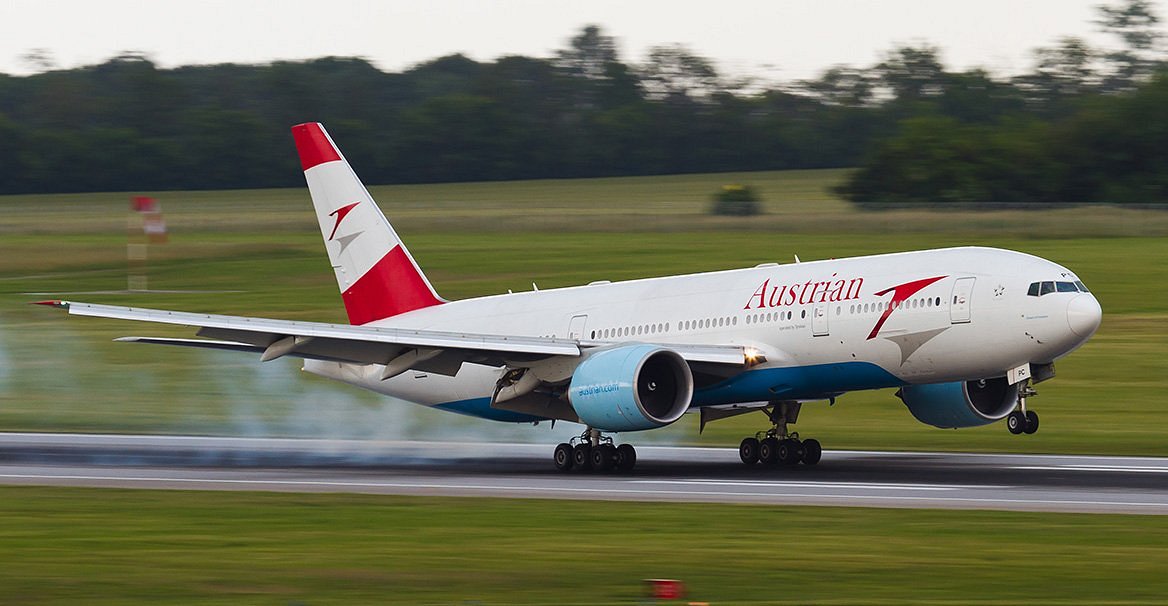
    Austrian Airlines will be the first airline globally to equip their Boeing 777-200ER aircraft with innovative “AeroSHARK” surface technology. On a total of four Boeing 777-200ERs the fuselage and engine nacelles will be covered with the “sharkskin” film developed by Lufthansa Technik and the company BASF. The significantly reduced frictional resistance resulting from the film will reduce the CO2 emissions of Austrian Airlines’ long-haul fleet and fuel consumption.

    By applying a total of 830 square meters of Riblet film per aircraft to the surface of the fuselage and engine nacelles, a saving of around one percent of the total fuel consumption per flight can be achieved. Applied to four B777s, the technology can achieve savings of around 2,650 tons of fuel and over 8,300 tons of CO2. This corresponds to around 46 flights from Vienna to New York.

    “We take our responsibility seriously and take every possible step to reduce CO2 emissions within our flight operations. At one percent, the sharkskin’s efficiency potential may not sound like much, but in total it will save thousands of tons of CO2 per year on long-haul flights,” says Austrian COO Francesco Sciortino. “Even though our B777s are in their final years of service, we take this investment to get one step closer to our CO2 reduction targets.”

    “The fact that we are rolling out the fuel-saving sharkskin technology on another aircraft type with Austrian Airlines is also good news for other Boeing 777-200ER operators,” emphasizes Harald Gloy, COO at Lufthansa Technik. “These are the first of hopefully many more aircraft of this type that will have lower fuel consumption and an improved carbon footprint thanks to AeroSHARK.”

    AeroSHARK is a surface technology jointly developed by Lufthansa Technik and BASF, which consists of transparent ribs around 50 micrometers in size – the so-called riblets. It imitates the properties of particularly aerodynamic sharkskin and thus optimizes aerodynamics in relevant areas of the aircraft.

    Austrian Airlines will successively equip four of its six Boeing 777-200ER long-haul aircraft with surface technology from December 2024. The application to all four aircraft will be completed by March 2025.

    The sharkskin technology is another important building block on Austrian Airlines’ CO2 reduction path. Together with the Lufthansa Group, Austrian aims to reduce its CO2 emissions by 30.6% by 2030 compared to 2019.

  • Korean Air to order up to 50 widebody Boeing aircraft

    Korean Air to order up to 50 widebody Boeing aircraft

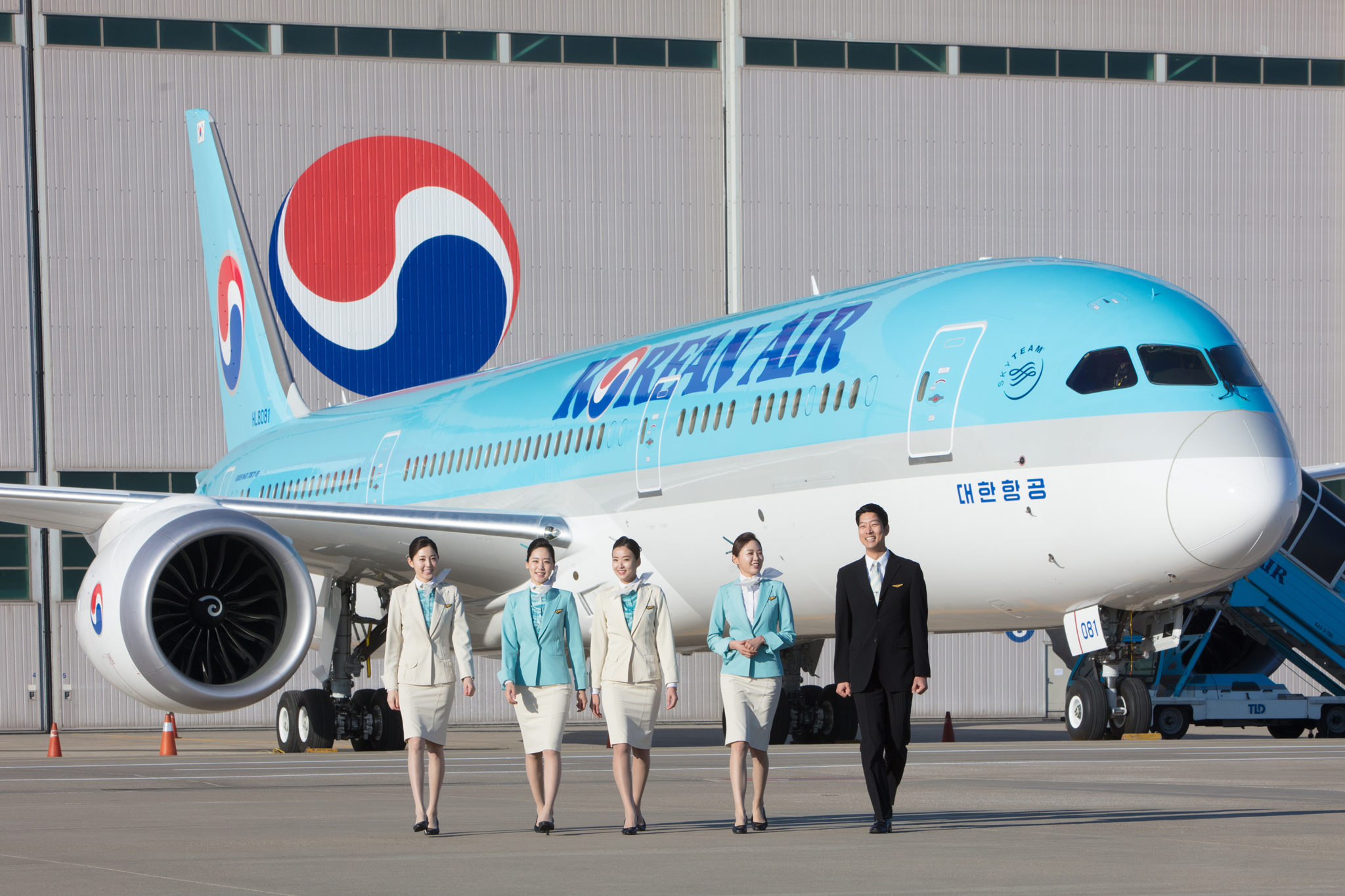
    Korean Air signed a Memorandum of Understanding with Boeing on July 22 at the Farnborough International Airshow to upgrade and expand its widebody fleet. The airline has announced its intent to procure 20 Boeing 777-9s and 20 Boeing 787-10s with options for 10 more of the largest 787 Dreamliner variant.

    The signing ceremony was attended by Walter Cho, Chairman and CEO of Korean Air, and Stephanie Pope, President and CEO of Boeing Commercial Airplanes.

    The 777-9s and 787-10s, with their capability of long-haul flights to regions such as North America and Europe, are expected to play an important role after Korean Air’s merger with Asiana Airlines.

    The 777-9 is known as the most reliable and efficient airplane in the 777 series. The new carbon-fiber composite wings are longer than the previous 777 family airplanes, enabling the airline to achieve an improved fuel efficiency of more than 10%. With a range of over 13,000 kilometers, the 777-9 can provide direct services to all U.S. destinations from Incheon International Airport. The 777-9 has the longest fuselage in the 777 series, with a typical seating capacity of 400 to 420 seats.

    The 787-10 is the largest variant in the 787 family, capable of carrying 15 percent more passengers and cargo than the 787-9 currently in service. It is also more fuel efficient compared to similar-sized aircraft with reduced carbon emissions of over 20%.

    “The addition of the Boeing 777-9 and 787-10 aircraft marks a significant milestone in our strategic objective to expand and upgrade our fleet,” said Walter Cho, Chairman and CEO of Korean Air. “This investment underscores our commitment to providing a best-in-class flying experience. These new airplanes will elevate passenger comfort and enhance operational efficiency, while significantly reducing carbon emissions, supporting our long-term commitment to sustainable aviation.”

    “We are honored Korean Air has selected two of our largest, most efficient widebody airplanes to add capacity to their global network,” said Stephanie Pope, president and CEO of Boeing Commercial Airplanes. “Boeing airplanes have played an integral role in the growth of Korean Air over the past 50 years, and we are confident the 777X and 787 Dreamliner will support the airline’s long-term sustainability goals and continued growth.”

    With the addition of the Boeing 777-9s and 787-10s, Korean Air plans to have a total of 203 next-generation, eco-friendly aircraft in its fleet by 2034, including 33 A350s, 50 A321neos and 20 Boeing 787-9s.

  • MacBook Air M2 laptop price falls then rises

    MacBook Air M2 laptop price falls then rises

    The retail price of the MacBook Air M2 laptop dropped by VND2.1-3 million (US$89-127) to VND25 million in April and has risen back to VND28 million in May.

    The manager of an Apple distributor in Vietnam said retailers might have hiked the price because currently Air M2 inventories in the country are very low.

    “If the demand … surges retailers … will have to wait for eight to 10 weeks for the product to be shipped to Vietnam.”

    Large retailers such as The Gioi Di Dong, FPT Shop, and CellPhoneS had sold the Air M2 with the minimum configuration, the best-selling version, for VND28 million in early April, VND25.9 million in mid-April, and VND25 million in late April.

    The laptop first sold for VND32.9 million when launched in Vietnam in July last year, but its price declined sharply partly due to competition among retailers to get a larger share of the pie, according to a manager of a The Gioi Di Dong store.

    “Prices of technological products always tend to decrease gradually after launch. However, the continuous up and down with a large amplitude of several million dong in a short period of time shows the instability of the market,” said Nguyen Van Cong, a veteran trader of Apple products.

    According to the manager of The Gioi Di Dong, the big discount of MacBook Air M2 is part of its price competition campaign.

    In early April, during a shareholder meeting, Nguyen Duc Tai, Chairman of The Gioi Di Dong (Mobile World), said: “The price at The Gioi Di Dong was sometimes million dong higher than that at other retailers. However, this phenomenon will stop. We will not let the price difference become an advantage for competitors.”

    Refusing to give the reason for their price fluctuations, managers of CellPhoneS and FPT Shop said MacBook prices have been “actively updated by the stores based on business strategies and the general situation in the market.”

    In fact, the top three Apple device retailers in Vietnam, The Gioi Di Dong, FPT Shop and CellPhoneS, have changed the laptop’s prices frequently in recent days and the prices are almost the same.

    At some Apple stores, it is one of the two best-selling laptops along with the MacBook Air with the M1 chip.

  • MacBook prices drop with new model launch

    MacBook prices drop with new model launch

    The price of MacBook Pro 2021 laptops has decreased by 11.2% leading into the launch of the new model next week.

    Apple authorized resellers in Vietnam said a MacBook Pro 2021 sells for VND42.9 million ($1,813), down 11.2% since January and 18.9% from December 2021 when it was officially distributed in the Vietnamese market for the first time.

    They will start selling MacBook Pro 2023 laptops and Mac minis in mid-March.

    According to Pham Tuan Anh, a manager of electronics retail chain ShopDunk, the MacBook Pro 2021’s market share is less than 10% at the moment.

    Consumers with over VND40 million to spend on a computer tend to buy MacBook Pros or Airmodels running the M2 chip with higher configurations, instead of picking up a 2021 MacBook Pro without the M2 chip.

  • Air cargo transport plunges

    Air cargo transport plunges

    Aviation cargo transport passing through Vietnam’s airports dropped 28.2% year-on-year in the first two months of 2023 to 168,000 tons, according to the Civil Aviation Authority of Vietnam (CAAV).

    Industry insiders say that the spreading global economic recession has led to a decline in consumption. Although China has reopened its economy, the delivery of Chinese materials and goods to other countries has not fully resumed yet.

    Do Xuan Quang, deputy CEO of Vietjet Air, said that the ongoing Russia-Ukraine war is also limiting global deliveries even though shipping costs have dropped.

    Vietjet Air has seen its cargo transport fall from nearly 100,000 tons in previous years to around 65,000 tons last year, Quang told VnExpress.

    Vietnam Airlines Group transport in the first two months also declined from the same period in recent years. The company did not reveal by how much.

    A representative of an air cargo transportation company, who asked not be identified, said that in the first two months of the year delivery from Vietnam to Japan plunged 20% year-on-year.

    Other routes that the company operates still have not recovered from Covid-19.

    Data from the CAAV shows that domestic cargo in the first two months rose slightly year-on-year to 51,000 tons, while international cargo fell 37.3% to 117,000 tons.

    Domestic airlines delivered only 42,500 tons in the period, down 14.2 % year-on-year.

    The Vietnam Logistics Association (VLA) expects air cargo transport in Vietnam to recover later this year, but slowly as there are many uncertainties in the global market.

    This is shown by transportation data from local logistics companies. The industry is capable of delivering 1.5-2 million tons a year but currently they are shipping only nearly 1 million tons.

    The busiest route in the country, HCMC to Hanoi, is operating at only one-third of cargo capacity.

    Dang Anh Tuan, a media representative of Vietnam Airlines, said that there is still a niche market for aviation transport, such as delivering high-end tech equipment.

    Vietnam’s cargo transport market is dominated by foreign airlines. There are 29 international carriers which are specialized in delivering cargo and they account for over 80% of market share.

    Vietnamese companies, however, are seeking to change that.

    Vietravel Airlines last year launched its own cargo carrier Vietravel Airlines Cargo in partnership with HCMC-based Asean Cargo Gateway.

    Earlier this year Bamboo Airways established Bamboo Airways Cargo.

  • Vietnam firm reluctant to launch cargo flights, foreign carrier eager

    Vietnam firm reluctant to launch cargo flights, foreign carrier eager

    Local IPP Air Cargo has axed plans to become Vietnam’s first cargo airline, but Germany’s Lufthansa Cargo has expanded operations.

    In late October, IPP Air Cargo canceled its application to launch what would have been the nation’s first cargo airline. However, the company had already completed the procedures to lease four Boeing Converted Freighters 737 800BCF.

    Jonathan Hanh Nguyen, chairman of the airline’s parent company Imex Pan Pacific Group (IPPG), said that global air cargo demand was declining due to current turmoil.

    “We have decided to end our plan to avoid causing more damage to carriers that are already incurring losses,” he said, adding that the company aimed to reinstate the plan when the market stabilizes.

    Last month, Lufthansa launched its first direct flight from Frankfurt to Hanoi.

    The carrier had previously run two weekly flights from Germany to HCMC before diverting operations to Thailand.

    CCO Ashwin Bhat said his airline could not ignore the Vietnamese market, where 30% of exported items are electronics and high-tech goods.

    Vietnam’s plentiful bilateral trade agreements with major markets, especially Europe, were attractive to Luftnasa, said Bhat.

    He added that the country’s rapid economic recovery from the Covid-19 pandemic had also interested the dominant European airline.

    According to government statistics, the total volume of goods transported by air in Vietnam has increased 2.5 times over the last ten years. The number is forecasted to surge to 4.1 million tons by 2030.

    According to the Vietnam Logistics Business Association (VLA), Vietnamese airlines hold an international freight forwarding market share of only 12%, while nearly 30 foreign carriers hold the rest.

    VLA president Le Duy Hiep said the withdrawal of IPP Air Cargo from the market was a pity because domestic logistics enterprises are in dire need of Vietnamese cargo airlines.

    According to Hiep, Vietnam’s massive amount of total imports and exports were worth over $700 billion in 2022, with over half being exports. Over two million tons of goods are exported by air from Vietnam each year.

    Analysts have said that these factors have made the potential of the Vietnamese cargo market plain to see for Lufthansa Cargo.

    Hiep said Vietnam should be home to cargo airlines with larger market shares, but noted that this would require much more investment and a wider network of agents and customers.

  • MacBook Air M1 prices up by over $40 in Vietnam

    MacBook Air M1 prices up by over $40 in Vietnam

    Apple authorized resellers in Vietnam have increased the prices of MacBook Air M1 by over VND1 million (more than $40) against late July when promotion campaigns were on.

    In late July, the laptop’s selling prices were VND21.7-23 million, lower than the list price in the U.S. market.

    Now, the selling prices are VND23-24 million, with VND22.8 million the lowest price offered by some resellers.

    An unnamed manager with a reseller told local media that demand for electronic devices, including laptops and tablets had decreased several months ago, so Apple, distributors and resellers launched big promotion campaigns. Prices of MacBook Air M1 in July fell to the lowest.

    Retailers including CellphoneS and Di Dong Viet said MacBook Air M1 prices have climbed up now because of the dollar value rising against the dong and the promotion campaigns coming to an end. However, purchasing power remains high in the market, they said.

    “Among our total sales of MacBook models, MacBook Air M1 accounts for some 40%,” said the manager of a The Gioi Di Dong store who did not want to be named. CellphoneS has reported the corresponding figure at 30-35%.

    At ShopDunk, MacBook Air M1 sales over the past month rose 20% against July. “It is the cheapest among Mac models, while its M1 chip’s performance and efficiency is still very good,” said manager Pham Tuan Anh.

  • Full flight load to Langkawi signals strong rebound for domestic air travel

    Full flight load to Langkawi signals strong rebound for domestic air travel

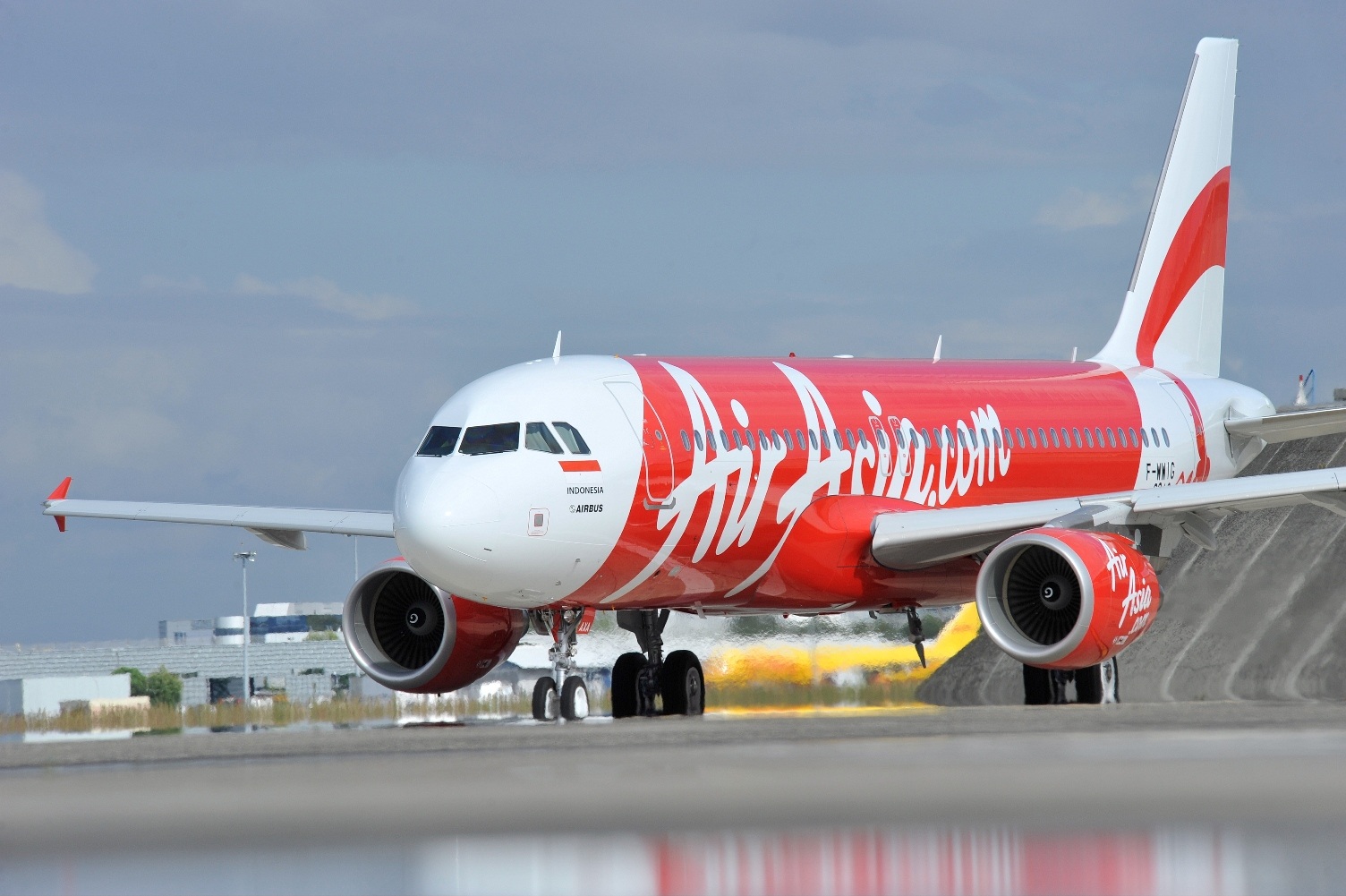
    AirAsia’s inaugural service from Kuala Lumpur to Langkawi on Thursday (Sept 16) morning under the travel bubble recorded a 100% flight load, the carrier says, signifying a strong rebound for domestic air travel.

    The low-cost carrier said the maiden flight, the first of nine scheduled daily flights from Kuala Lumpur, left KLIA2 at 9.50am utilising an Airbus A321neo.

    “Aside from Kuala Lumpur (63 flights weekly), AirAsia also has flights to Langkawi departing from Penang (14 times weekly), Johor Baru (seven times weekly), Ipoh (three times weekly) and Kota Baru (three times weekly), making a total of 90 weekly flights,” it said in a statement.

    AirAsia Malaysia chief executive officer Riad Asmat said over 200,000 seats to Langkawi were sold in less than a week.

    “To facilitate this movement, we have prepared extensively and implemented robust and comprehensive health and safety protocols to ensure all of our guests can travel safely, with our 100% vaccinated crew and frontliners.

    “After months of preparation, we are thrilled to get the country flying again and are ready to scale up our operations to meet overwhelming demand.

    “We hope more travel bubbles will be established across the country soon in line with the accelerated vaccination roll-out, and eventually across the region when it is safe to do so,” he added.

  • Elon Musk Considers Tesla Making An HVAC To Advertise Car Air Purification Systems

    Elon Musk Considers Tesla Making An HVAC To Advertise Car Air Purification Systems

    Elon Musk often does weird things and the latest one is him considering making a Tesla-branded HVAC system leveraging the work Tesla has done to develop one for its cars. He also believes the system is so good that it could act as an advertisement for the system that Tesla has implemented in its cars which breaks his no-ad rule.

    Tesla was one of the first car manufacturers to improve the air quality inside the car. It was one of the first to implement a HEPA filter into the HVAC system of its higher-end electric cars. Tesla claims the system can theoretically remove 99.97 percent of the dust, pollen, mold, bacteria, and airborne particles which are of the size of 0.3 microns. All these things, the Tesla HVAC systems handle very well.

    While talking up the HVAC system on the new Model S and also talking about an update that’s inbound for the HVAC system which makes it more silent Musk also talked about how it could be scaled up for home use.

    “Oh man, home HVAC that is super energy efficient, quiet & purifies the air would be great. We developed it for the car, but it can be scaled up for home use,” said the billionaire.

    This is not the first time Musk has talked up the HVAC. He once claimed it was 10 times better than one on any other non-Tesla car. “Most people have no idea just how good the Tesla air purification system is. Literally, 10X better than any other car. Maybe we should advertise informationally just so people know stuff like this exists,” he said a while ago.

  • Hanoi-HCMC world’s second busiest domestic air route

    Hanoi-HCMC world’s second busiest domestic air route

    The Hanoi-HCMC route is the world’s second-busiest in November after South Korea’s Jeju-Seoul, according to British aviation analysis company OAG.

    The flight route connecting Vietnam’s two largest cities, which takes around two hours, has nearly 893,000 seats scheduled for November, while the route between South Korean capital Seoul and Jeju Island has 1.3 million.

    The route between Chinese capital Beijing and Shanghai’s Hongqiao Airport is third with 768,184 seats, followed by the two routes in Japan –Sapporo-Tokyo Hanenda and Fukuoka-Tokyo Hanenda.

    Of the top 10 busiest domestic routes in November, China and Japan have four each.

    “International flights have felt the impact most acutely due to border controls and mandatory quarantine requirements, domestic routes are starting to recover as people are generally able to move more freely within their countries,” OAG said.

    Asia is a standout, home to all 10 of the world’s busiest domestic routes this month, the company added.

    Vietnam has reopened six international flights to mainland China, Japan, South Korea and Taiwan from September 15, followed by Laos, Cambodia from September 22. It had suspended all international routes in March to contain the Covid-19 outbreak in the country.

  • Vietnam air travel demand surges 12 pct

    Vietnam air travel demand surges 12 pct

    Airports across Vietnam served near 116 million passengers this year, up 12 percent from 2018, with Vietnam Airlines Group and Vietjet dominating the market.

    About 64 percent, or 74 million passengers, were domestic, up 11 percent from last year, according to Airports Corporation of Vietnam (ACV).

    The remaining 41.7 million foreign travelers grew by 13.6 percent from last year, with Noi Bai International Airport, Da Nang International Airport and central Cam Ranh International Airport near Nha Trang experiencing the highest traffic growth.

    Vietnam Airlines Group accounted for over 50 percent of the market share. It comprises national flag carrier Vietnam Airlines, low-cost arm Jetstar Pacific and Vietnam Air Services Company (VASCO).

    Budget carrier Vietjet accounted for 41.9 percent of the market.

    ACV Chairman Lai Xuan Thanh said overload will be a challenge next year as red tape in aviation infrastructure and investment constrains upgrade and expansion projects, like at Tan Son Nhat International Airport, which handles 30 percent of the country’s air passengers.

    Another concern is slower growth in foreign passenger numbers, which dropped from over 20 percent in 2016-2018 to 13.6 percent, he added.

    ACV forecasts the number of air passengers would rise by 10 percent to 127 million next year.

  • DHL Expands For Temperature Sensitive Shipments

    DHL Expands For Temperature Sensitive Shipments

    The WMX service in Mexico will expand by early Q2 2019 into 17 new origin cities, including Zapopan, Toluca, Cuernavaca, Cuatla, Pachuca, Saltillo, Aguascalientes, Puebla, Celaya, San Luis Potosi, Torreon, Morelia, Leon, Guanajuato, Jalapa, Orizaba and Durango.

    The integrated transportation solution, which DHL launched in Mexico in July 2018, facilitates the delivery of Mexico-based patient samples to U.S. central labs in less than 24 hours. This reduces transit times for these urgent temperature sensitive shipments from primary cities (beyond Mexico City) by an additional day.

    “Sponsor pharmaceutical companies have told us that the enhanced transit times have delivered significant improvements during prospective sample analysis, and improved testing results – particularly for Biomarkers and Flow Cytometry Assays,” says Brian Bralynski, Director Life Sciences Healthcare for DHL Express Americas. “Those types of gains are highly impactful and a direct benefit to patients requiring such treatment or sample analysis.”

    DHL can provide improved transit times, in part, due to its asset-based air-network and ability to export from multiple gateways in Mexico. DHL operates direct daily flights from Mexico City, Guadalajara and Monterey, linking to its regional hub at Cincinnati/Northern Kentucky International Airport (CVG), and then connecting to most U.S. cities and central lab locations the next morning and in less than 24 hours from patient draw time.

    For Mexico origins, exporters of record (typically sponsors or Clinical Research Organisations / CRO’s) will administer a one-time administrative change process, in order to authorise DHL to export samples on their behalf from three export points.

    “DHL Medical Express continues to meet the needs of the pharmaceutical industry and clinical research sectors with forward-thinking, intelligent healthcare solutions, while also expanding our wide range of services in Mexico,” said Mike Parra, CEO of DHL Express Americas. “At DHL, we focus on connecting healthcare stakeholders, deeply caring about the ultimate link of the chain – the patients, and to do so, we ensure we strictly comply with every regulation – global or local, and innovate in every front. A combination of responsiveness, transparency and cost-effectiveness will enable this service to be advantageous to all clinical trial stakeholders and, most importantly, clinical trials’ patients.”

    Qualified customers for the service receive a choice of temperature options (ambient, chilled and frozen) through specialised thermal packaging. Pre-determined contingencies circumvent delays, and DHL quality control centres monitor the shipments 24/7. The service is suitable for transporting laboratory kits and medical devices, biological samples, research products, vaccines and drugs for commercial and non-commercial use.

  • AirAsia X fits Fukuoka as destination into its network

    AirAsia X fits Fukuoka as destination into its network

    AirAsia X launched its fourth Japanese route from Kuala Lumpur (KUL) on 28 February, beginning a four times weekly service to Fukuoka (FUK). The carrier already flies from the Malaysian hub to Osaka Kansai, Sapparo Chitose and Tokyo Haneda in Japan. The airline will operate the 4,545-kilometre route using its fleet of A330-300s, with it being the only carrier to fly the airport pair.

    “More than 156,000 seats per year will be available on this new route, providing guests with the opportunity to book low-cost travel to yet another amazing destination in Japan,” commented Benyamin Ismail, CEO of AirAsia X.

    “This new service signifies our commitment to accelerating our growth story in Japan, and we’re confident the route will deliver a significant boost to the local economy. We wish to thank our airport, tourism and local government partners and authorities for making this new route a reality.”