Tag: airasia

  • AirAsia X Boosts roKKi System With Inmarsat’s GX Aviation

    AirAsia X Boosts roKKi System With Inmarsat’s GX Aviation

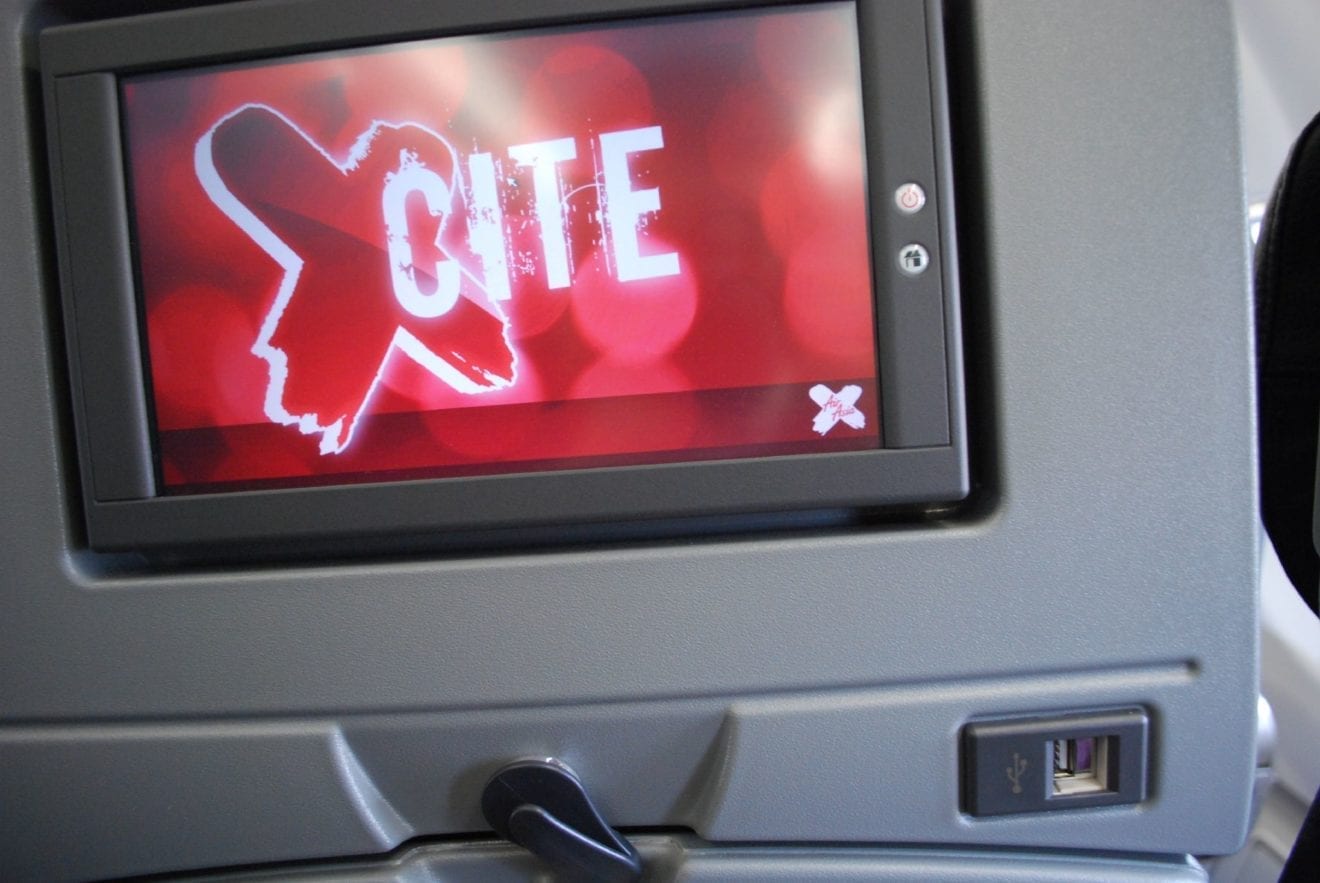
    AirAsia X announced that it will upgrade in-flight connectivity for its roKKi in-flight entertainment system using Inmarsat’s GX Aviation, with plans, not only to boost Internet speeds and provide seamless streaming, but to increase passenger spend on board.

    AirAsia X CEO Ben Ismail was at Aicraft Interiors Expo in Hamburg this afternoon to announce it would be upgrading its roKKi in-flight entertainment platform with Inmarsat’s GX aviation. The upgrade will bring faster Internet speeds for browsing, video streaming and social media.

    “Today marks a significant milestone for AirAsia and roKKi. This next-generation connectivity solution represents a major infrastructure upgrade that signals a long-term commitment in transforming AirAsia into a truly digital airline,” Ismail said.

    “This next-generation connectivity solution represents a major infrastructure upgrade that signals a long-term commitment in transforming AirAsia into a truly digital airline.” — AirAsia X CEO Ben Ismail

    “AirAsia is a really important win for us,” says Frederik van Essen, SVP, Strategy and Business Development, Inmarsat Aviation. “AirAsia has the attitude that we share of making things happen, not accepting the status quo. Once they take the decision to move, they want to move quickly.”

    The memorandum of understanding with Inmarsat covers AirAsia X’s A330 and A320 fleets, subject to final contracts. Installations begin later this year with GX Aviation connectivity expected to go live first on the A330s in 2018.

    “Connectivity is something desired by all passengers.” — Frederik van Essen, Inmarsat Aviation

    Aside from upgraded connectivity, Ismail says GX Aviation will help to drive ancillary revenues on board. “Currently our ancillary spend is about $60 US per passenger, and I think with this coming in, it’s going to drive that sales up to $80 or $90,” Ismail explained, adding that the average passenger flies four to eight hours on an AirAsia flight.

    “In Asia, showing this attitude with a low-cost carrier demonstrates that these are not only systems for premium carriers that want to offer this to first- or business-class passengers. Connectivity is something desired by all passengers,” van Essen said.

    “GX is different from the other offers out there. We own and operate satellites. We are seeing the fruits of that as we roll out the service next year,” said Leo Mondale, president, Inmarsat Aviation.

  • AirAsia is official airline partner for SEA Games 2017

    AirAsia is official airline partner for SEA Games 2017

    Budget airline AirAsia Bhd has lent its support to Malaysia’s hosting of the 29th Southeast Asian Games from Aug 19 to 31, 2017 and 9th Asean Para Games from Sept 17 to 23, 2017.

    As a Gold Sponsor, AirAsia will be providing flights for the Malaysia Organising Committee (MASOC) officials within the airline’s Asean network for the purpose of organising both sporting events.

  • Big points for AirAsia’s animal shelter

    Big points for AirAsia’s animal shelter

    One  of the joys of coming home after a long day of work is to greet, and be greeted by, your pets. Seeing them jump in excitement, or brushing up against your legs, or demanding your attention is surely a mood booster that melts away the worst part of the day.

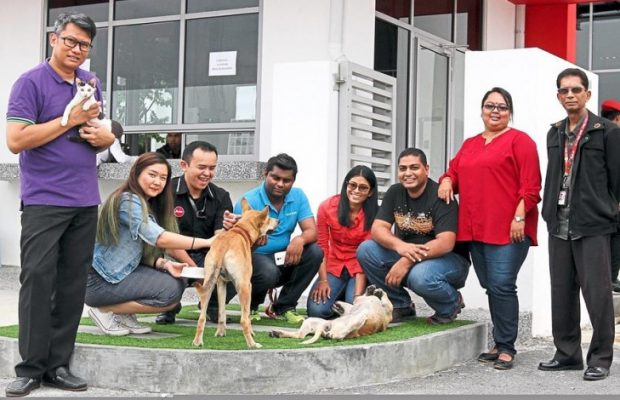
    For AirAsia staff, however, this joy and happiness awaits even before they get to their work stations. Waiting for them at RedQ, AirAsia’s headquarters in Sepang, Kuala Lumpur, are the four dogs they recently adopted and now consider as part of their work family.

    In fact, these dogs have occupied the area next to KLIA2 longer than most of the workers there. Every morning, with tails wagging, the dogs run up excitedly to the familiar faces, especially the ones they have formed a close bond with, and of course, those who come bearing doggie treats.

    “We found the dogs, when they were still puppies, at the construction site of RedQ. Even then, some of our staff members fed them and played with them. They let the dogs roam the area, and ensured that they didn’t harm themselves, or posed a threat to others. When we moved to RedQ last year, the dogs were still here, and there was talk of sending them to shelters,” says AirAsia People Department executive Ahmad Faizul Ahmad Rusli during an interview at RedQ.

    Airasia

    A group of animal-loving colleagues then decided to approach their boss, AirAsia group chief executive officer Tan Sri Tony Fernandes, with a plan that benefits the dogs and them.

    “They asked if they can keep the dogs, and I immediately said yes. The dogs literally grew up in RedQ. We should not just keep them, but build a proper home for them,” says Fernandes in a text message.

    Quickly, a taskforce dedicated for the caring of the animals was formed and interested staff members were encouraged to join. Around 10 people – the number increases by the day, by the way – pledged to care for the dogs. As a joke, they say that any work relating to the dogs starts only at 6.01pm, after working hours, so that it doesn’t interfere with their day-to-day operations.

    The first thing they did as a committee was to get licenses for the dogs from their local municipal council but found out that they weren’t issued to dogs staying in a company building. Faizul nevertheless says that they would apply again and find a way to get proper licenses for the dogs as they do not want them to be forcefully taken away.

    “We then came up with a blueprint for the dog shelter and found contractors to do the job. A corner of RedQ’s parking lot was then decided as the best and turned into a shelter that could fit the four dogs.

    “Besides that, we had to come up with a working plan that includes the cost of keeping the dogs. This should cover their food, medication, and other miscellaneous expenses,” explains AirAsia Government Relations head Vijaya Priya Ananthan.

    Airasia

    AirAsia DogQ’s committee members Kumaravel Subramaniam and Melissa Fok take turns to feed and walk the dogs.

    Once again, Fernandes proved his generosity when he offered to personally cover the expenses for the construction of the shelter – which he dubbed the DogQ – as well as pledged monetary support for the cause. Although they prefer not to disclose the exact amount that was given by Fernandes, they share that it costs approximately RM3,000 yearly to care for each dog.

    “We took them to the vet to have them spayed and get the necessary immunisation,” shares Faizul. Members of the DogQ committee also actively do their part by taking turns to purchase food and treats, and keep the dogs engaged with fun activities.

    “We feed and play with them, and the dogs follow some of us for after-work hiking sessions. Most of the time, they follow the security guards on their rounds. They really have formed a bond with them,” says Priya.

    Faizul adds: “We do have staff members who are afraid of dogs or who cannot interact with dogs, but they are not complaining. That’s because the dogs do not threaten them in any way, and everyone is just happy to go about their ways like they normally do.”

    Ahmad Faizul Ahmad Rusli (left) and Vijaya Priya Ananthan say that the DogQ project has brought together AirAsia staff members from different departments.

    Ahmad Faizul Ahmad Rusli (left) and Vijaya Priya Ananthan say that the DogQ project has brought together AirAsia staff members from different departments.

    The dogs have yet to be named, as the committee has decided to run a contest and let the big bosses pick the winning names.

    “The poor dogs are quite confused as each one of us has a nickname for them. But they still come to us when we call them,” says Faizul, with laugh.

    The dogs are undergoing obedience training and therefore can respond to simple commands. “We’re not training them to become commando dogs. We just want them to listen to us when we call them or tell them not to go somewhere,” adds Priya.

    Security is of utmost importance to the DogQ committee as they do not want the dogs to interfere with KLIA2’s operations nearby. The dogs are not allowed to roam beyond certain areas, and the ever-present security personnel keep an eye on the dogs to ensure that they do not wander into restricted sections.

    “They cannot enter the airport and the office building. Other than that, the dogs are free to go wherever they want. Their shelter will only be used when they are sick, or when they need to be isolated – like when we have big events with guests,” she further explains.

    Faizul would also like to avoid the misconception that the public can come and drop their unwanted animals at the shelter.

    The AirAsia DogQ committee members take it upon themselves to care for the four abandoned dogs that grew up within AirAsias headquarters compound in Sepang, KL.

    The AirAsia DogQ committee members take it upon themselves to care for the four abandoned dogs that grew up within AirAsias headquarters compound in Sepang, KL.

    “We are keeping just the four dogs. They are our dogs. We don’t plan to turn DogQ into a shelter – at least not yet – because firstly, we don’t have the expertise. But, under special circumstances, we would care for any animal that finds its way here and we will try to find a new home for them. We also have two cats that we’re taking care of right now, and we are trying to find people who would take them in,” says Faizul.

    AirAsia staff members are used to undertaking big and tough projects, but Faizul and Priya say that the DogQ is one that has united them all – bringing together people from different departments who otherwise wouldn’t have a reason to work together.

    “I always say that AirAsia is less of a company and more of a family. We are a company that looks after everyone – our guests, our staff and our partners. Now, we have four new ‘staff members’ to look after,” says Fernandes.
  • AirAsia Mega Sale: Two Days Left To Avail Big Discounts

    AirAsia Mega Sale: Two Days Left To Avail Big Discounts

    AirAsia India is offering all-inclusive fares starting from Rs. 1,249 for domestic travel while its Malaysian parent AirAsia is selling tickets from Rs. 1,999 for international travel as part of the “Mega Sale” scheme, which is open till April 9, 2017. Some of the domestic routes covered by AirAsia India include Guwahati-Imphal (all-inclusive fare from Rs. 1,249), Bengaluru-Hyderabad (Rs. 1,619), Kolkata-Ranchi (Rs. 2,249), Bengaluru-Goa (Rs. 1,719) and New Delhi-Ranchi (Rs. 2,699), as per the AirAsia website. The AirAsia India sale is applicable for travel till September 30, 2017, the airline said on its website.
    AirAsia is also offering discounts on international flights under the same offer to South-Asian countries, including Bhubaneswar – Kaula Lumpur (Rs. 1999), Bhubaneswar -Phuket (Rs. 3,739) and Bhubaneswar-Penang (Rs. 3,633). With the summer holidays just around the corner – traditionally the time when most Indian families go on vacation – airlines have taken to lucrative discounts and schemes to corner market share.

    Another airline Vistara had announced a Holi sale in March with fares starting as low as Rs. 999 while other airlines have also announced discounted fares to attract customers ahead of the summer rush.

    India’s aviation sector has witnessed a spurt of growth in the past few years with a 16 per cent rise in passenger traffic in February on year-on-year basis, data from aviation regulator DGCA (Directorate General of Civil Aviation) showed.

  • AirAsia joint venture’s prospects uncertain

    AirAsia joint venture’s prospects uncertain

    Talking to VIR, an official from the Department of Enterprise Management under the Ministry of Transport said that AirAsia has yet to submit an official application to establish a joint venture with Gumin and Hai Au Aviation.

    Civil Aviation Authority of Vietnam said the first time it heard of the news was from the media.

    “Hai Au, Gumin, and AirAsia. None of them has applied for a certificate to do business in air transport,” said Vo Huy Cuong, deputy director of CAAV.

    Hai Au has a license to provide general air transport for commercial purposes, with a fleet of four amphibious airplanes.

    Gumin, which operates in management consultancy, has only started operation on March 29.

    Official information is forthcoming only from Thien Minh Group.

    According to the company’s website, the new airline is going to start operation in 2018 after being ratified by the Vietnamese government.

    The new airline is going to provide “high-quality service at affordable prices.”

    An expert said that it is currently unclear whether this airline is going to be a new entity or part of Hai Au.

    However, given the time that it normally takes to obtain a license to fly commercially, the joint venture is unlikely to get a license by the end of 2018.

    Vietstar One-member Co., Ltd., which applied for a license to provide air transport services in July 2016, is still waiting.

    Narrow window

    This is AirAsia’s third attempt in 10 years to join hands with a Vietnamese partner to set up an airline.

    Earlier, Air Asia made an agreement with Vinashin (now Vietnam Shipbuilding Industry Corporation) in 2007 and with Vietjet in 2010 to set up the second foreign-invested airline in Vietnam after Jetstar Pacific.

    For one reason or another, these plans failed to materialise.

    At the moment, AirAsia has two airlines that fly frequently to Vietnam, Thai AirAsia (FD), which flies from Thailand, and AirAsia Berhad (AK) which flies from Malaysia.

    There was also Indonesia AirAsia which used to fly from Indonesia, but at the moment this activity has been suspended.

    The Vietnamese aviation market sees ripe competition from Vietnam Airlines and SkyViet/VASCO, as well as two low-cost airlines, namely Vietjet and Jetstar Pacific, the former of which is considered to be on par with big regional airlines, such as AirAsia, in terms of capital and governance ability.

    The growth in demand still outpaces the growth in supply. However, in the first quarter, demand  showed signs of slowing growth.

    Moreover, the price of airplane fuel is increasing sharply, affecting the profit of airlines.

    The average price in January this year was $65.15 per barrel, up 1.57 per cent compared to December 2016.

    CAPA Centre for Aviation expects that the profit margin for global air transport will decrease from 8.3 per cent in 2016 to 7.4 in 2017 and further to 6.6 in 2018, due to the increasing price of fuel and the surplus in airplanes as airlines have been buying too many of them recently.

    “AirAsia is very late to the party in Vietnam and as a result faces huge challenges,” said Brendan Sobie, Singapore-based chief analyst at CAPA Centre for Aviation at a recent interview with Bloomberg on the issue.

    “The market is now well served by two low-cost carriers, VietJet and Jetstar Pacific. The rate of growth will likely slow in the coming years as the market is now more mature.”

  • AirAsia sets up low-cost airline in Vietnam

    AirAsia sets up low-cost airline in Vietnam

    Malaysian budget airline AirAsia Berhad plans to start a low-cost carrier in Vietnam, co-operating with local businesses to enter the country’s booming travel market, company representatives told Retail News.

    AirAsia signed a shareholders’ agreement with Vietnam’s Gumin Company Limited, Hải Âu Aviation Joint Stock Company and Trần Trọng Kiên, the owner of these two companies, to form the venture last Friday, which the airline announced in a statement to Malaysia’s stock exchange.  

    The carrier, expected to start flying at the beginning of 2018, will need an investment of VNĐ1 trillion (US$44 million), of which AirAsia will hold 30 per cent stake and Gumin will hold 70 per cent.

    Vietnam is the latest country to lure Malaysian billionaire Tony Fernandes, head of AirAsia, who is aspiring to build a low-cost airline network covering Asia, as the 28 per cent growth inVietnam’s aviation market triples the rate in other Southeast Asian countries.

    Vietnam is also the fifth biggest aviation market in the region, after Indonesia, Thailand, Malaysia and Singapore, with a passenger volume that has doubled since 2013 thanks to a middle class population accounting for 25 per cent of the total population by 2010.

    In recent years, AirAsia has established affiliates in Indonesia, Thailand, India and Japan. The airline is betting on low cost airline models for international travel through its AirAsia X subsidiary. Fernandes has also ordered hundreds of Airbus aircraft worth billions of dollars to meet his ambition of growth, and he is in the process of selling a subsidiary specialising in leasing aircrafts to raise cash.

    However, Brendan Sobie, CAPA Centre for Aviation’s analyst, told that AirAsia would face huge challenges, because it entered the Vietnamese market too late. “The market is currently well served by two carriers, VietJet Air and Jetstar Pacific. The growth rate will slow down in the coming years, as the low-cost market is now more mature. ”

    Vietjet Aviation Joint Stock Company shares have grown 52 per cent since its listing on HCM Stock Exchange in February 28.

    According to a report released by ACB Securities in December last year, passenger traffic inVietnam will continue to grow at double digit rates over the next decade, after an annual growth of 17 per cent in the last decade.

  • AirAsia X in talks with South Korea’s Jeju over Kuala Lumpur service

    AirAsia X in talks with South Korea’s Jeju over Kuala Lumpur service

    AirAsia X is in talks with Jeju’s provincial government about direct flights between Kuala Lumpur and the South Korean resort island.

    Jeju officials said discussions were held last week in Kuala Lumpur about frequencies in the absence presently of direct flights. “We hope that we will have flights by the end of this year,” said Seo Hye-jin, a provincial official. “We have been marketing in Southeast Asia since last year.” She declined to speculate on possible frequencies while discussions are ongoing.

    China accounted for almost 96% of the island’s inbound flights in March, according to Jeju tourism officials. There were over 5,000 arrivals from Malaysia in January, making it the second largest source market after China with over 184,000.

    Observers expect Malaysia’s presence in Jeju to increase after the curtailing of Chinese arrivals in the wake of deployment of a new U.S. missile defense system in South Korea.

    China opposes the Terminal High Altitude Area Defense system because of concern about related U.S. surveillance. Seoul and Washington maintain that their sole purpose is to defend against North Korean missile strikes.

    According to travel agencies in China, tours to South Korea were curtailed from Mar. 15 under official pressure, posing a serious threat to the industry there.

    AirAsia X is an AirAsia subsidiary offering long-haul services to 23 destinations in Asia-Pacific, the Middle East, and Africa.

  • AirAsia steps up broadband co-operation with Inmarsat

    AirAsia steps up broadband co-operation with Inmarsat

    AirAsia has signed a tentative deal with Inmarsat to provide broadband access on Airbus A320s and A330s through the satellite communications specialist’s GX Aviation service.

    The airline currently uses Inmarsat’s SwiftBroadband service. It says the new service will provide improved broadband access with “reliable, seamless high-speed global coverage”.

    Passengers will be able to stream films, music and games through AirAsia‘s Rokki in-flight entertainment and connectivity platform, the carrier says. Installations are scheduled to begin in late 2017, with the service set to become available in 2018.

    At a media briefing during the Aircraft Interiors Expo in Hamburg today, AirAsia X chief executive Benyamin Ismail indicated that the system would initially be installed on the group’s A330s, with supplemental type certification for the widebody targeted for November. He adds that the new service will be rolled out “over time” across the entire fleet.

    Inmarsat Aviation president Leo Mondale says the partnership is of strategic importance and describes AirAsia as a “leading digital airline in Asia” as well as “one of the most important airlines in the world”.

  • AirAsia plans Vietnam venture on Southeast Asia travel boom

    AirAsia plans Vietnam venture on Southeast Asia travel boom

    AirAsia, the low-cost carrier headed by Malaysian tycoon Tony Fernandes, plans to start a Vietnamese carrier in a local partnership, as cheap fares and rising incomes fuel a travel surge in the Southeast Asian nation.

    The region’s largest budget airline will partner Gumin Co., Hai Au Aviation Joint Stock Co. and businessman Tran Trong Kien for the venture, which is expected to start flying early next year, AirAsia said in a statement to the stock exchange. Gumin will own about 70 percent of the new venture, with AirAsia holding the rest.

    Vietnam is the latest country to lure Fernandes, who is seeking to build a pan-Asian budget airline, as the 28 percent growth in passenger traffic was triple the pace in other Southeast Asian nations. The fifth-biggest market in the region has seen domestic traffic double since 2013, and the middle-class will comprise close to a quarter of its population by 2010, AirAsia said.

    Shares of AirAsia climbed 1.3 percent to 3.14 ringgit in Kuala Lumpur on Friday. They have gained 37 percent this year.

    AirAsia has over the years established affiliates in Indonesia, Thailand, India and Japan, and is betting on a low-cost, long-haul model for international travel through its AirAsia X unit. It has ordered hundreds of planes worth billions of dollars from Airbus SE to meet its growth ambitions, and is in the process of selling a plane-leasing unit to raise more cash.

    Marketing stunts

    VietJet Aviation Joint Stock Co., known for marketing stunts like bikini-clad flight attendants, listed its shares on an exchange last month, and has gained 52 percent since. Vietnam will continue to see a double-digit gain in passenger numbers in the next decade, after annual growth of 17 percent in the past decade, according to ACB Securities in December.

    “AirAsia is very late to the party in Vietnam and as a result faces huge challenges,” said Brendan Sobie, Singapore-based chief analyst at CAPA Centre for Aviation. “The market is now well served by two low-cost carriers, VietJet and Jetstar Pacific. The rate of growth will likely slow in the coming years as the market is now more mature.”

    AirAsia’s Vietnam venture will need investments of 1 trillion Vietnamese Dong ($44 million), and AirAsia will contribute 30 percent of that after raising internal funding, according to the filing.

    Kien is the chief executive officer of Hanoi-based Gumin, which was founded March 29, according to Vietnam Planning and Investment Ministry’s website. He is also the chairman and CEO of Thien Minh Group, or TMG, which owns Victoria Hotels & Resorts in Vietnam and Laos. Hai Au Aviation is a unit of TMG.

  • AirAsia to connect Pontianak with Kuching in June

    AirAsia to connect Pontianak with Kuching in June

    Budget airline AirAsia is set to open a new direct route from Pontianak in West Kalimantan to Kuching in Sarawak, Malaysia, starting on June 5.

    The carrier currently serves only one route from Pontianak to Malaysia. Its planes fly to Kuala Lumpur. The new service also marks its first direct flight from Indonesia to Kuching.

    AirAsia Berhad commercial head Spencer Lee said that the move aimed to contribute to the development of local tourism, economics and trade in the two cities.

    Available once a day, the flight from Pontianak to Kuching is scheduled to depart at 12:10 p.m. and the one from Kuching to Pontianak at 11:55 a.m.

    To celebrate the new service, AirAsia is currently offering promotional tickets for flights taken between June 5 and Sept. 30 for starting prices of Rp 249,000 (US$19) for bookings made through its mobile app by April 2.

  • AirAsia, AirAsia X offer 3-day promotion

    AirAsia, AirAsia X offer 3-day promotion

    AirAsia and AirAsia X will offer a three-day promotional campaign, “#AirAsiaDanceToFly”, to all destinations, offering fares from as low as RM499 for one-way all-in fares. It is inclusive of taxes and fees.

    In a statement, AirAsia X said the promotion was valid for booking from March 31 to April 2 and for travel from March 31 to Sept 30.

    It said the campaign was inspired by one of AirAsia X’s cabin crew, Assraf Nasir, who became an overnight online sensation after a dancing video of him onboard an empty A330 aircraft went viral.

    Chief executive officer Benyamin Ismail hopes for all guests to catch this contagious fun spirit onboard and grab the low fares to fly with AirAsia X fun crew.

    “The world has enjoyed his sassy video and now it’s your turn to show us your moves,” he added.

    In conjunction with the promotion, AirAsia X will award the most creative video entry that best emulates the dance moves of Assraf with a pair of return free flights to Honolulu, Hawaii, through a social media contest from April 3-9.

    It said the winner would be awarded with a pair of return flights from Kuala Lumpur to Honolulu, Hawaii via Osaka, excluding taxes, fees and optional services.

    To participate, the public must create a 15-second non-audio dance video, upload it to Instagram with the hashtag #AirAsiaDanceToFlyMY by 11.59pm April 9, with a caption saying why they deserve to win.

    The winner will be named on AirAsia’s official social media channels.

  • AirAsia to start Vietnamese carrier

    AirAsia to start Vietnamese carrier

    AirAsia, the low-cost carrier headed by Malaysian tycoon Tony Fernandes, plans to start a Vietnamese carrier in a local partnership, as cheap fares and rising incomes fuel a travel surge in the South-east Asian nation.

    The region’s largest budget airline will partner Gumin, Hai Au Aviation Joint Stock and businessman Tran Trong Kien for the venture, which is expected to start flying early next year, AirAsia said.

    Gumin will own about 70 per cent of the new venture, with AirAsia holding the rest.

    Vietnam is the latest country to woo Mr Fernandes, who is seeking to build a pan-Asian budget airline, as the 28 per cent growth in passenger traffic was triple the pace in other South-east Asian nations. The fifth-biggest market in the region has seen domestic traffic double since 2013, and the middle-class will comprise close to a quarter of its population by 2010, AirAsia said.

    AirAsia has over the years established affiliates in Indonesia, Thailand, India and Japan, and is betting on a low-cost, long-haul model for global travel via its AirAsia X unit. It has ordered hundreds of planes from Airbus, and is selling a plane- leasing unit to raise more cash.

    Vietnam will continue to see a double-digit gain in passenger numbers in the next decade, said ACB Securities in December.

  • South Korean group in advanced talks to buy into AirAsia leasing unit

    South Korean group in advanced talks to buy into AirAsia leasing unit

    A little-known South Korean group is in advanced talks to acquire a stake in AirAsia Bhd’s aircraft leasing unit, according to three people familiar with the matter.

    Two of the people said a deal would value AirAsia’s fully-owned unit, Asia Aviation Capital, at roughly $900 million.

    Privately-owned KOTAM, or Korea Transportation Asset Management, has been picked as the preferred bidder, the people said, with one adding that state lender Korea Development Bank (KDB) was tapped to provide funding, though it was not clear whether the bank had agreed to back the deal.

    Philippines AirAsia CEO Dexter Comendador (3rd from left), Clark International Airport Corporation (CIAC) President-CEO Alexander Cauguiran (4th from left), and Central Luzon Regional Tourism Director Ronaldo Tiotuico (2nd from right) are flanked by flight attendants during the send-off ceremony for the inaugural flight of AirAsia from the Clark International Airport (CRK) to Kalibo in Aklan, one of the routes to the world-famous Boracay. A total of 146 passengers took the inaugural flight going to Kalibo. The Kalibo flight arrives at 1:10 p.m. and departs from the Clark airport at 1:35 p.m. every Mondays, Tuesdays, and Wednesdays.

    Philippines AirAsia CEO Dexter Comendador (3rd from left), Clark International Airport Corporation (CIAC) President-CEO Alexander Cauguiran (4th from left), and Central Luzon Regional Tourism Director Ronaldo Tiotuico (2nd from right) are flanked by flight attendants during the send-off ceremony for the inaugural flight of AirAsia from the Clark International Airport (CRK) to Kalibo in Aklan, one of the routes to the world-famous Boracay. A total of 146 passengers took the inaugural flight going to Kalibo. The Kalibo flight arrives at 1:10 p.m. and departs from the Clark airport at 1:35 p.m. every Mondays, Tuesdays, and Wednesdays.

    KOTAM is part of Kukje Maritime Investment Corp., known as KMarin, which was founded in 2005 and has a fleet of 46 ships, according to its website.

    KOTAM, KDB and AirAsia did not have immediate comment.

    A successful deal would mark South Korea’s biggest move into the $256-billion global aircraft leasing sector, which has attracted others in Asia, including Industrial and Commercial Bank of China, BOC Aviation, China’s acquisitive HNA Group, and Japanese banks.

    KOTAM and AirAsia are negotiating final terms of the purchase of a majority stake in the leasing unit, one of the sources said. Asia’s biggest budget airline has sought buyers for its subsidiary since last year, and has said it aimed to close a sale early this year.

    A deal with KOTAM could still fall through, and two sources said that Air -Asia has not closed the door to a deal with a Chinese bidder.

    The sources declined to be identified as the negotiations are ongoing and confidential.

    South Korean insurers, asset managers and securities firms are attracted to aviation finance as aircraft leases offer fixed returns and are often seen as relatively safe transactions.

    Paid for in US dollars, aircraft are comparatively easy to release to various airline operators across the world.

    Reuters reported in December that AirAsia had received strong interest from North Asian firms, besides many Chinese companies.

    One of the sources said AirAsia was becoming concerned about Chinese buyers’ ability to close a deal due to China’s recent measures to tighten controls on money moving out of the country.

  • AirAsia ready to make Clark International Airport its operations center again

    AirAsia ready to make Clark International Airport its operations center again

    Five years ago today, the Filipino subsidiary of Southeast Asia’s largest low-cost carrier graced the skies of the Clark International Airport with its signature red planes en route to the island of Kalibo, Aklan.

    A year after however, it decided to leave the north, and focus on the capital to support its then-newly acquired company’s dwindling operations.

    Now that its top line is stabilizing—thanks to years spent in increasing efficiencies, cost rationalizations and a management revamp—it is ready to go back to its birthplace, and once again help spur tourism and trade in the north.

    “We are thrilled to be painting Clark’s skies red again,” Philippines AirAsia CEO Dexter M. Comendador said during the inaugural flight of its Clark-Kalibo route on Monday. “We are now building Clark again.”

    He said his group, born in Clark in 2012, sees the airport as the only area left where it could expand its operations near Manila, whose main international gateway is riddled with slot constraints and air-traffic congestion.

    “AirAsia believes in Clark. We established our base of operations here, and launched commercial flights in 2012 with only two planes, and now, we have a fleet of 14 jets. We aim to expand and grow our operations here in the next five years,” Comendador said. “We can only expand here in Clark.” After launching thrice-weekly flights from Clark to Kalibo, the airline will also start flying to Davao from Clark on April 22.

    “AirAsia was with us in the past, but it decided to move to Manila in recent years. During its stay here, it contributed a lot in terms of passenger volume, specifically in 2013, when we posted a record of about 1.3 million passengers,” Clark International Airport Corp. President Alexander S. Cauguiran said. “I hope it could stay for good here at Clark. Hopefully, AirAsia will not only be flying domestic here, but also to major cities in Asia.”

    Comendador vowed to connect Clark to other major Philippine destinations, like Cebu and Puerto Princesa, when the time is ripe. The company will also launch international services to East Asia.

    “I will try to connect to our present international destinations, like Taipei, China and Korea,” he said. “We are growing the airport to prepare it as one of our central hubs.”

    Clark is seen as the immediate saving grace for the Ninoy Aquino International Airport, which has been operating at overcapacity for almost two years now.

    But local carriers have shied away from launching flights or expanding their operations in Clark due to the lack of full-service facilities, its distance from the capital and the dearth in mass transit going to Manila, among others.

    The government has programmed a P2.8-billion budget for the expansion of the airport, which will open its new terminal four years from now.

    Several groups have offered to develop Clark through unsolicited proposals.

    Claiming its P187-billion offer is “fully compliant” with the requirements of the build-operate-transfer law, the consortium of Filinvest Development Corp. and JG Summit Holdings Inc.’s proposal involves the modernization of the airport under a five-decade concession, and will start with an initial capacity for 8 million passengers per year.

    Its proposal, based on the Aeroport de Paris master plan prepared for Clark in 2015, also allows the airport to expand its terminals and runways to easily accommodate for traffic growth over the next 50 years.

    The P250-billion proposal of GMR-Megawide Cebu Airport Corp. involves the development of the airport in six phases, leading to a total annual passenger capacity of 100 million per year.

    Under a 50-year development plan, it aims to build two terminals and three runways, two of which will be independent in an 850,000-square-meter land. The plan also involves the construction of an integrated railway connection from Manila, similar to the one in Delhi, India.

    This unsolicited offer is at no cost to the government, will not require any subsidy, guarantee or mandatory movement of airlines from Naia to Clark.

    Instead, the proponent “committed to pay the government annually a share of the airport revenues over the concession period.”

    Metro Pacific Investments Corp. is also readying its own unsolicited proposal, even as it waits for a public tender to take place.

    The government wants to place contract to develop Clark under public bidding. It will be done through the Public-Private Partnership (PPP) scheme. The website of the agency, however, did not enumerate the specific details of the contract.

    Clark Civil Aviation Complex, located within the Clark Freeport Zone in Pampanga, covers an area of approximately 2,367 hectares with a 3,200-meter long runway and associated taxiways, aircraft parking apron, a passenger terminal building and related facilities. It has two runways in parallel configuration.

    The airport logged in a total of 6,205 international and domestic flights with 950,732 passengers for local and foreign routes in 2016.

    Although underutilized, Clark has a local catchment area with an estimated population of 23 million. It also serves passengers from Manila, and those with connecting flights from Cebu, Davao, and other local destinations.

  • AirAsia: Reaching a new digital high

    AirAsia: Reaching a new digital high

    AirAsia reaches out for fresh ideas on digital transformation. A program called Aviato, which uses machine learning to profile user interests, won first prize at AirAsia’s inaugural Airvolution 2017 hackathon.

    The Singaporean team, which goes by the same name, won the grand prize of RM25,000, 100,000 AirAsia Big points and five return flights to any of the ­airline’s destinations.

    “Aviato is able to profile a user’s interests and extract ­keywords based on the images posted on an Instagram account,” says team leader Durwin Ho Hsu Tian, 27.

    The rest of the team – made up of Choo Yan Sheng, 28, John Goh Choo Ern, 27, and Kevin Kwa Leung Boon, 33 – said they didn’t come up for the idea for Aviato till late night on the first day.

    “Back home, we had already prepared around 30 to 50 ideas based on the three challenges given by AirAsia a couple of months before the hackathon,” said Ho.

    “We roughly knew what we wanted to do and once we had nailed down the idea, everything just fell into place.”

    image: https://www.thestar.com.my/tech/tech-news/2017/03/27/reaching-a-new-digital-high/~/media/cdf8132c01034d979f1afd0c8f4df1a8.ashx

    Contestants rushing against time at the two-day hackathon held at AirAsia’s RedQ headquarters.  — AZMAN GHANI/The Star

    Contestants rushing against time at the two-day hackathon held at AirAsia’s RedQ headquarters.  — AZMAN GHANI/The Star

    Ho says AirAsia has a huge chunk of raw data which Aviato can process so that the company can know its customers better so that it can offer targeted ­promos.

    For instance, Aviato is able to profile whether a person loves the outdoors by running an image recognition algorithm on his or her Instagram account. If a person likes photos related to mountains and forests, the ­program could, for instance, made to push a notification offering flight promotions to Kota Kinabalu.

    Given more time, Aviato will be able to pull data from other social media platforms such as Facebook and Twitter, he says.

    Digital transformation

    The hackathon was part of the company’s ongoing efforts to turn AirAsia into a digital airline this year, says AirAsia group CEO Tan Sri Tony Fernandes.

    However, this is not something new as technology and digital innovations have always been at the core of the airline since its early days, he says.

    “Our roots are digital. We started with the Internet and we are now a very social media based airline,” he says.

    Fernandes is hoping to get the airline’s level of digitisation to around 70% by 2018. — RICKY LAI/The Sta

    Asked on how “digital” the company is right now, Fernandes puts it around 20-30%, adding that there is a huge potential for further digitisation moving forward.

    “It sounds like we are not so digital but others are way behind,” says Fernandes.

    Today, he’s more focused on ­getting the staff to think digital. “I can take someone to drink water but I can’t force him to drink,” he says.

    However, he is confident that the company will be able to push the level of digitalisation to around 70% by the end of 2018.

    The digitalisation process will see the company focus on three key areas, namely commercial, customer experience and operations.

    On the commercial front, the company is looking to offer ­personalised and targeted ­promotions by taking advantage of its large amount of data.

    To improve customer experience it is looking to phase out check-in desks by using biometric tech such as fingerprint and facial recognition but this is dependent on getting approval from regulatory bodies.

    “On the operations side, we want to digitalise all the engineering, pilot flight and even human resource data to improve efficiency,” he says. This will help the airline to cut costs, say, by improving fuel efficiency.

    On why the company decided to host a hackathon for the first time ever, Fernandes says, “I think we are not moving fast enough. We can’t do everything in-house.”

    “There is no way we can do it all alone. We want to get ideas from people who fly with us and know us to help us build this new digital airline and what better way to start it off than with a hackathon.

    “We believe the digital revolution will take AirAsia to another level in terms of making it easier to fly, easier to sell and giving our customers the products they really want.”