Tag: airasia

  • Reprieve for AirAsia

    Reprieve for AirAsia

    No further risk to IAA’s licence but bigger re-rating depends on ability to become sustainably profitable

    IT has been a topsy-turvy time for AirAsia Group Bhd’s share price.

    After investor sentiment was rocked by a damaging report by GMT Research report on June 10 that questioned the financials of the low-cost airline, AirAsia’s share price came under pressure when Indonesia threatened to pull back its licence in its 49% owned unit, Indonesia AirAsia (IAA), if its finances and that of 12 other airlines are not improved by July 31.

    Indonesia’s Transport Ministry wants the 13 airlines to shore up their shareholders’ equity to 500 billion rupiah if they operated 70 seater planes by July 31 or face being stripped of their licence.

    That punitive measures were later softened with the ministry changing its mind.

    On Thursday, the ministry issued a statement saying it would “assist and support” the 13 airlines with negative shareholders’ equity to improve their equity positions if they were unable to meet the July 31 deadline.

    “The wording suggests that the ministry has performed a gentle face-saving U-turn and the airlines’ licences will not be at risk after all. With no further risk to IAA’s licence, the recent share price sell-off may partially reverse, although a bigger re-rating depends on IAA’s ability to become sustainably profitable,’’ says CIMB Research senior analyst Raymond Yap.

    AirAsia share price has thus far rebounded and closed on Friday at RM1.34, marginally up from Wednesday’s close of RM1.30, which was the recent low.

    From the beginning of this year, it has lost RM4.11bil in market capitalisation and both the GMT report and the Indonesian directive were much of the culprits for the drop.

    Maybank Investment Bank senior analyst Mohshin Aziz described the ruling as “unexpected surprise.’’

    “About half of the airlines globally have negative equity and anyone in the airline industry knows that safety is not about negative equity. It is about discipline, cashflow and enforcement,’’ he adds.

    An airline executive felt that the ruling was not enforceable, adding that “do you honestly think Indonesia will close an airline which hires 2,000 people and brings in most tourists?’’

    According to World Bank data, international tourism receipts totalled US$10bil for Indonesia for the 2010-2014 period.

    But Shukor Yusof, the founder of Endau Analytics, felt that the Indonesian Transport Minister is making a concerted effort to overhaul and clean up the domestic aviation.

    “A good number of Indonesian carriers can barely stay solvent, with the exception of the major ones like Lion Air group and Garuda. But it is unlikely they will shut them (the 13 players) down though.’’

    Apart from IAA and Rusdi Kirana’s Batik Air (a unit of Lion Air Group), the others affected by the new ruling are Cardig Air, Trans Wisata Prima Aviation, Istindo Services, Survei Udara Penas, Air Pasifik Utama, John Lin Air Transport, Asialink Cargo Airline, Ersa Eastern Aviation, Tri MG Intra, Nusantara Buana and Manunggal Air.

    Indonesia is the world’s fourth most populous nation with demand for air travel growing every quarter. From 2010 to 2014, about 95 million passengers took to the skies. There are 65 domestic airlines in the country.

    AirAsia has a 49% stake in IAA and its share of the Indonesian market is below 10%, though IAA has the largest market share in international air travel segment in Indonesia. The market is controlled by Garuda and Rusdi Kirana’s Lion Air group.

    Despite the threat of suspension, AirAsia boss Tan Sri Tony Fernandes says the airline is not pulling out of Indonesia.

    This can be explained as the market potential is huge and an initial public offering (IPO) is being planned for IAA, which operates with 29 planes in Indonesia.

    According the International Air Transport Association (IATA), by 2034, Indonesia is expected to be the sixth largest market for air travel. By then, some 270 million passengers are expected to fly to, from and within the country. That’s three times the size of today’s market.

    Short-term reprieve

    Though IAA got a reprieve, affected airlines in Indonesia will still have to improve their balance sheet if they want new routes. New routes are important for low-cost carriers as growth in traffic comes with more destinations.

    All the 13 players also need to submit their business plan by month end.

    Fernandes was reported to have said that “We were going to comply anyway. We have already set that process in motion.”

    As at end March this year, IAA had a negative equity position of 3 trillion rupiah (RM860mil) and paid-up capital of 180 billion rupiah. Hong Leong Research estimates that IAA needs at least RM1bil injection and this includes the additional paid-up capital of 320 billion rupiah or RM90mil.

    Yap of CIMB points out that the fundamental issue of IAA’s long-term future will still weigh heavily on investors minds.

    “At the moment, IAA is still some distance away from securing the subscribers for its proposed US$100mil-US$150mil convertible bonds.”

    Even if those are secured, most likely with a guarantee issued by AirAsia, it would only buy AirAsia two years of time. IAA will need to be reasonably and sustainably profitable before AirAsia’s share price can recover convincingly.

    But Fernandes told that “we have resolved and have no worries about our licences and we are confident of a profitable airline in Indonesia.’’
  • Indonesia AirAsia gets letter on positive equity position

    Indonesia AirAsia gets letter on positive equity position

    AirAsia Bhd’s 49% affiliate PT Indonesia AirAsia (IAA) has received a letter from Indonesia’s Transport Ministry laying out terms for it to ensure a positive equity position by July 31.

    In a filing with Bursa Malaysia yesterday, the low-cost carrier said it was going through the letter and intended to meet with the ministry.

    It said the letter had no immediate effect on the Indonesian operations and that the airline would at all times continue to operate within the ambit of Indonesian laws.

    A recent report by The Jakarta Post said 13 airlines in Indonesia had until July 31 to move their balance sheets into positive figures, in order to avoid having their operating permits suspended.

    The ministry discovered that these airlines had negative equity, which occurred when the value of an asset used to secure a loan was less than the outstanding balance on the loan.

    Indonesia’s Transportation Minister Ignasius Jonan was reported recently as saying it was important for airlines to maintain positive equity, as it affected an airline’s financial ability to maintain safety standards.

    Under the new regulations, planes with a capacity of 70 seats or more must have a paid-up capital of 500 billion rupiah (RM143.4mil).

    Credit Suisse aviation analyst Muzhafar Mukhtar said this development would raise the local capital injection into IAA by 25%, and limit the potential forms in which it may come.

    “AirAsia has been working on raising for IAA US$86mil in equity from local partners and US$100mil in convertible bonds from new investors. IAA’s negative equity is US$230mil. The convertible bonds can be replaced with convertible preference shares.

    “AirAsia could also convert amounts owed to it into equity; locals need to stump up the remaining to maintain majority local ownership. Either way, capital required from locals is higher than previously thought,” said Muzhafar in a report.

    He also warned that if IAA’s operating permit was suspended, it might mean the closure of the airline.

    However, Muzhafar opined that a closure of IAA should be very positive for AirAsia shareholders in the longer run, although there would be a period of transition – keeping sentiment negative (up to 75 sen per share of amount due from IAA could be written off; reported profits would decline as lease income from IAA disappeared).

    Maybank Kim Eng Research analyst Mohshin Aziz said it was unlikely that Indonesian regulators would force abrupt compliance with the equity regulation, and cause the loss of thousands of jobs.

    “Which government wants to do this (cut thousands of jobs)? Out of the 13 affected airlines, I believe more than half would find it very difficult to comply. The Indonesian regulators are likely to give some concessions with regards to compliance,” said Mohshin, who also opined that equity should have no bearing on airline safety.

    “Of course, an equity positive company would give a better feeling of comfort. But in reality, safety rather depends on the airline’s discipline, procedures, etc, etc.”

    Another bank-backed aviation analyst said he believed IAA had a good chance of fulfilling the Indonesian regulation on positive equity.

    “It is just a question of pumping in money, and IAA management has been optimistic.”

    However, the analyst was less certain about IAA’s plans on its financial turnaround.

    “The Indonesian market is unique – there is relatively much less access for consumers via the Internet, and it is not easy to manage seats,” said the analyst.

    AirAsia closed unchanged at RM1.49 yesterday, with a market capitalisation RM4.15bil.

  • AirAsia plans IPO for Indonesia and Philippines units

    AirAsia plans IPO for Indonesia and Philippines units

    AirAsia Bhd announced on Wednesday a corporate exercise which includes potential new equity for Indonesia AirAsia (IAA) and Philippines AirAsia (PAA) via a convertible bond issuance.

    AirAsia pointed out the company has a solid footing, strong balance sheet, rich in assets and good business outlook, as it unveiled new equity plans for IAA and PAA as it sought to reduce AirAsia’s inter-company loans.

    The first step was to raising share capital to about US$100mil each for IAA and PAA from the present level of US$13.81mil and US$13.28mil respectively.

    “The management is now in the final stages of discussions with the local partners to raise share capital to around US$100mil for IAA and PAA from the present level of US$13.81mil and US$13.28mil respectively.

    “Part of the cash raised will be used to pay down AirAsia Bhd’s interco,” it said.

    Under the second step under the pre-IPO, it said plans were to raise a minimum of US$100mil from new investor(s).

    AirAsia said it is finalising the structure of the Pre-IPO exercise which is targeted to take place in the near term.

    “Through this exercise, there will be new investor(s) that will come in for both IAA and PAA. The new investor(s) will inject at least US$100mil for each associate by subscribing to convertible bonds (CB) issued by IAA and PAA respectively.

    “The CB will have a low coupon with a two-year maturity period. The CB can be converted at a rate to be determined, tentatively discounted from the valuation of the companies in 2017. As investor(s) exercise the CB in 2017, AAB will match by capitalising our debt to ensure our shareholding remains at 49% in IAA and 40% in PAA.

    “Part of the cash raised in the CB subscription will be used to pay down AAB’s interco, while the remainder will be kept in the business for working capital.

    Under the third step, the IPO will have a valuation of about US$700mil for IAA and US$600mil for PAA

    The target to IPO both associates will be in 2017, with valuation of approximately US$700mil for IAA and US$600mil for PAA.

    “The company targets to float 20% of the shares raising minimum of US$150mil. At IPO all shareholders will be diluted proportionately. Part of the IPO proceeds will be used to pay down AAB’s interco,” it said.

  • AirAsia X cuts frequency to optimise capacity

    AirAsia X cuts frequency to optimise capacity

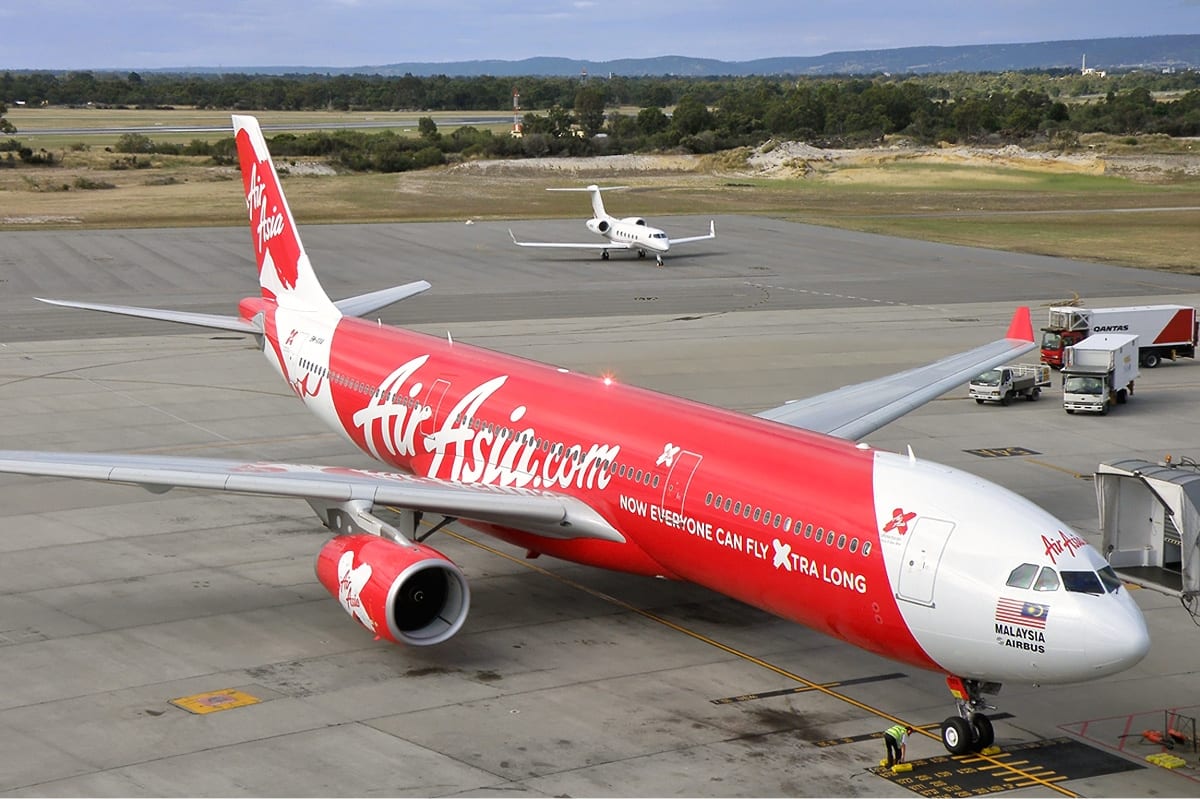
    AirAsia X Bhd (AAX), the long-haul, low cost airline affiliate of the AirAsia Bhd flew a total of 914,970 passengers in the first quarter, down 15% from 1.08 million passengers in the same quarter in 2014.

    According to AAX’s preliminary operating statistics released yesterday, the carrier recorded a load factor of 74% for the first quarter ended March 31, down 12 percentage points from a year ago.

    AAX said it had implemented frequency cut on certain routes, mainly China and Australia, and concurrently terminated loss-making routes – Adelaide and Nagoya – to optimise capacity in line with its turnaround strategy.

    It said the excess capacity from capacity management had been re-deployed to short-term wet lease and charter operations, to maximise revenue.

    AAX said its passenger traffic, as measured by revenue-passenger-KM (RPK), declined 17% year-on-year to 4,431 million in the first quarter from 5.34 billion in the same quarter last year, while available-seat-KM (ASK) capacity decreased by 3% to 6.02 billion.

    This was due to capacity management and slowdown in marketing activities during the first three months of this year with respect to the QZ 8501 incident in December 2014.

    “Consequently, year-on-year load factor during the quarter dropped 12 percentage points to 74% against 86% in the same period last year.

    “Current bookings trends are in line with expectations for a recovery in the second half of 2015,” the carrier said.

    In terms of fleet movement, AirAsia took deliveries of two A330-300s on operating lease during the quarter, bringing its total number of A330-300s to 25, compared with 19 a year earlier.

    On the associate companies, Thai AirAsia X registered strong loads of 82% for its first quarter, with 155,961 passengers carried, implying continued positive pick-up for the popular routes between Thailand, Japan, and South Korea.

    Thai AirAsia X currently operates 3 A330-300s while Indonesia AirAsia X has two A330-300s serving Bali-Taipei and Bali-Melbourne respectively.