Retail News CRM

Tag: airasia

  • AirAsia Flight Airplane Gets Stuck In Mud After Skidding Off Runway At Malaysian Airport

    AirAsia Flight Airplane Gets Stuck In Mud After Skidding Off Runway At Malaysian Airport

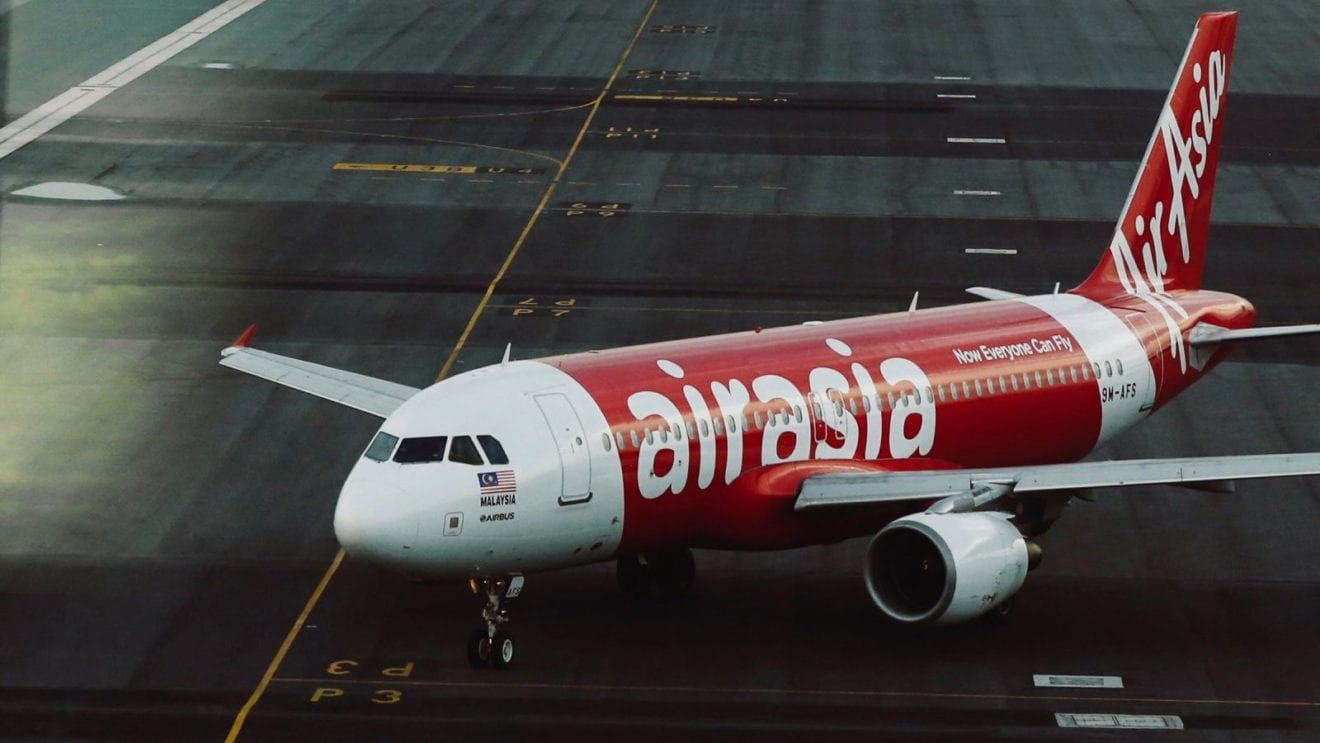
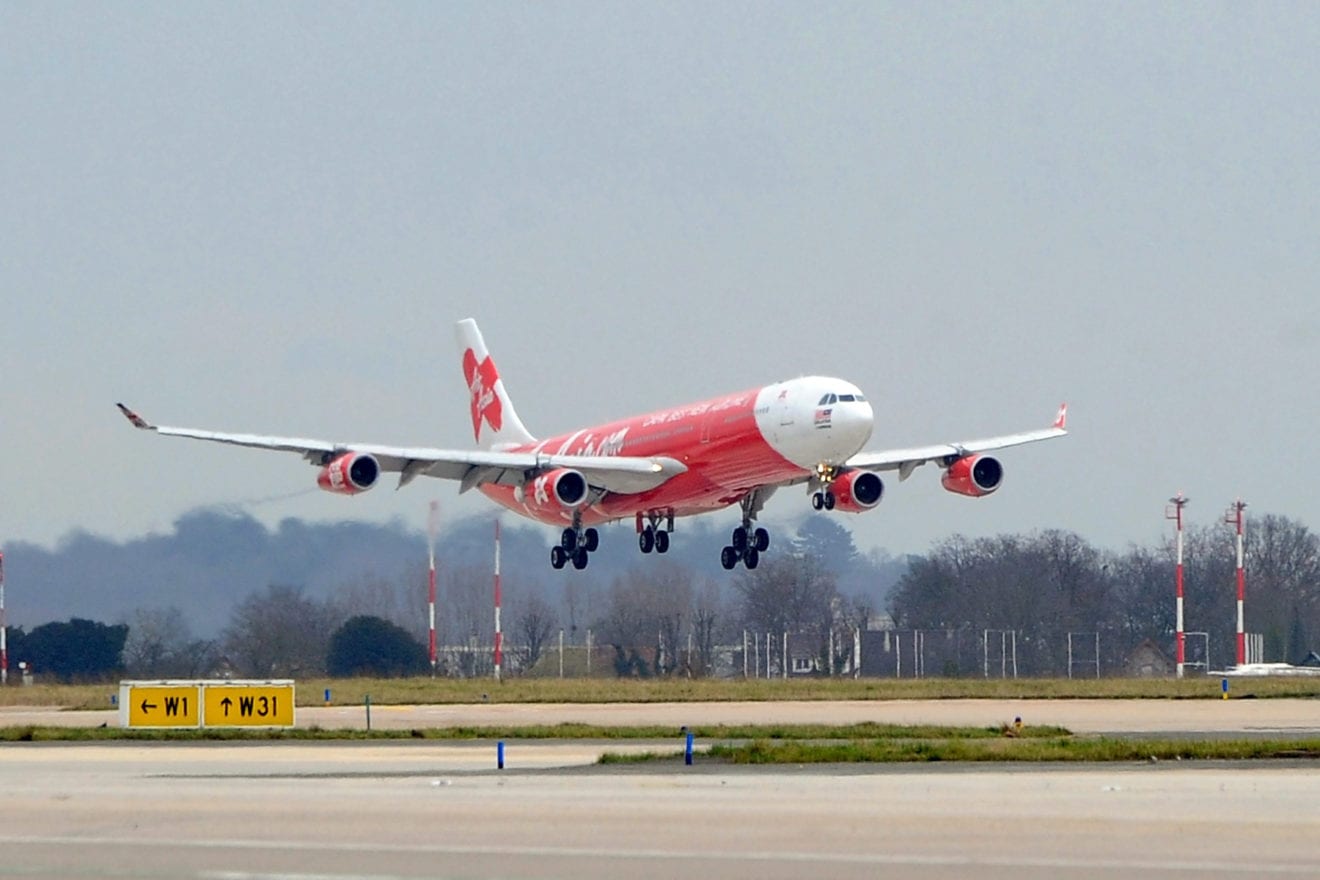
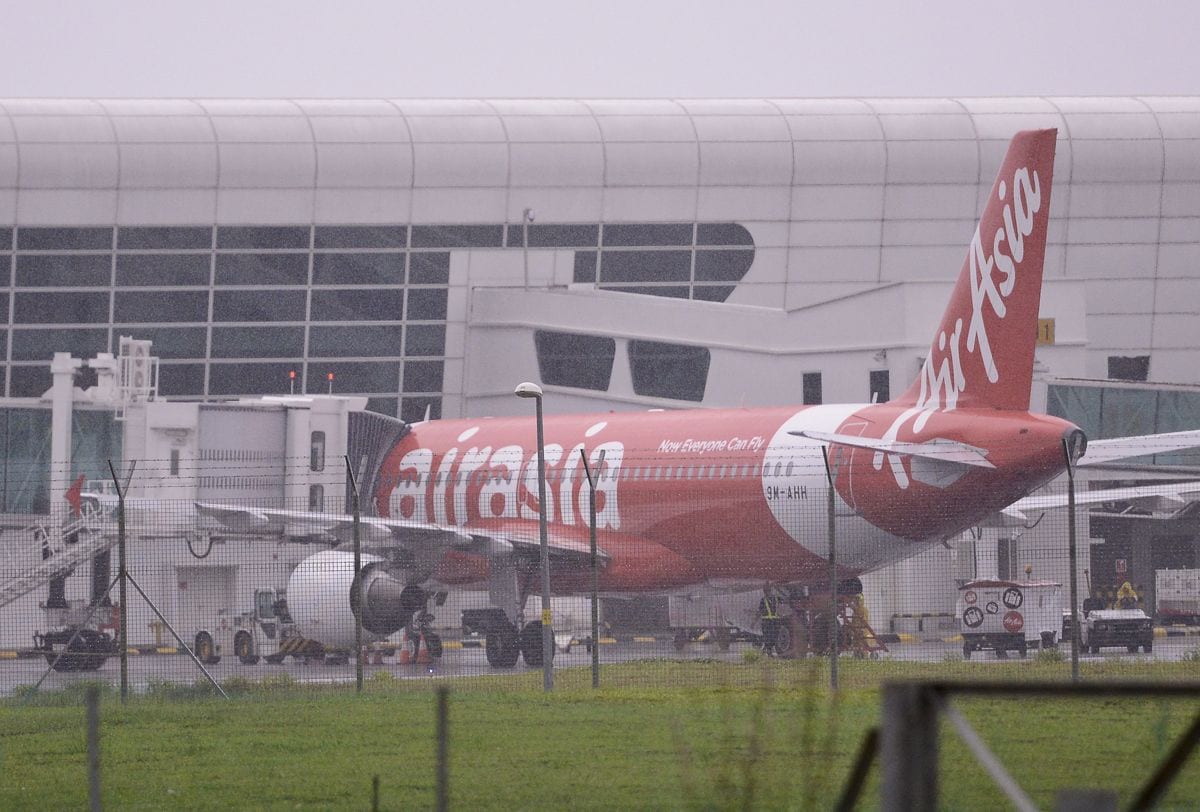
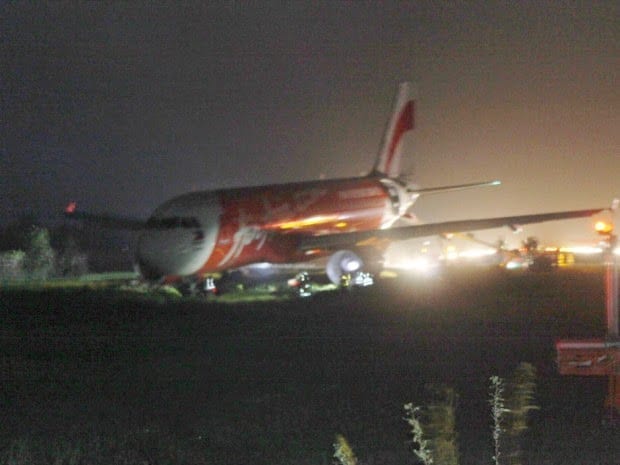
    Hundreds of passengers were left stranded at a Malaysian Airport after a plane skidded off the runway during take-off. AirAsia Flight AK6443 was preparing for take-off from Sultan Ismail Petra airport.

    The AirAsia aircraft was preparing for take-off on Tuesday evening when two of its three landing gears slipped off the edge of the runway and became lodged in the grass and mud.

    Flight AK6443, which was scheduled to fly to Kuala Lumpur, and was making a U-turn, when the nose and left landing gears slid off the runway.

    Airport manager Ramzi Ahmad told that the aircraft, which was due to depart at 10.25pm, was towed away at 5.45am the next day.

    The accident temporarily put the runway at Sultan Ismail Petra airport out of use, which in turn impacted several other flights.

    Three flights that were scheduled to land at the Kota Bharu airport were forced to turn back, according to the report.

    Passengers were asked to disembarked the plane and go back to the airport to wait for their flight. Many passengers were still stranded at Sultan Ismail Petra Airport at 1.30am.

    “AirAsia confirms that flight AK6443 scheduled to depart from Kota Bharu to Kuala Lumpur yesterday night was involved in an incident while taxiing on the runway at Sultan Ismail Petra airport. All guests and crew on board the flight are safe and no injuries have been reported. All guests were attended to and all necessary assistance were provided. All AirAsia flights are operating normally from Sultan Ismail Petra airport today.”

    Flight AK6446 finally departed from the airport bound to its destination. It flew at 9:00 am the next day.

  • AirAsia Indonesia Gets ISO Certificate

    AirAsia Indonesia Gets ISO Certificate

    Indonesia AirAsia and Indonesia AirAsia Extra have obtained the quality management system certificate ISO 9001: 2015 for their performance in handling domestic flight delays.

    The certificate was awarded by TÜV Rheinland Indonesia, a certification agency based in Cologne, Germany, which has certification experience for more than 140 years in 69 countries.

    The certification process for Indonesia AirAsia and Indonesia AirAsia X lasted from February to June 2016. The results were issued on August 29.

    “This certificate is a prove of AirAsia Group’s real action and strong commitment in Indonesia to always provide the best service to customers,” AirAsia Indonesia Group CEO Dendy Kurniawan said in Jakarta, Thursday, October 13th.

    TÜV Rheinland Indonesia director Edmundus Wiharyono said that audit results showed that AirAsia Indonesia has well-implemented, good procedures for handling flight delays.

    “With the ISO 9001: 2015 quality management system certificate, we hope AirAsia can continue to improve their future performance and increase customers’ loyalty,” Wiharyono said.

    The certificate was given to AirAsia’s nine terminals in Jakarta, Medan, Surabaya, Denpasar, Pekanbaru, Palembang, Bandung, Yogyakarta, and Solo, which operate AirAsa Group Indonesia’s domestic flights.

  • AirAsia’s Tune Labs, rewards program startup ZAP form JV

    AirAsia’s Tune Labs, rewards program startup ZAP form JV

    The partnership will see AirAsia BIG, the loyalty program for AirAsia and the Tune group of companies, leverage on ZAP’s platform to allow BIG members to earn and redeem points from daily purchases at physical stores with just a mobile number.

    Based in Kuala Lumpur, Malaysia, Tune Labs was launched last April 2015 as a startup incubator and accelerator program aimed mostly at the Southeast Asia region. Its goal is to identify, fund and nurture early stage companies in the travel, finance and retail sectors.

    The advanced AirAsia BIG loyalty program will be launched in the third quarter of this year tartegeting over 100 partner establishments in Kuala Lumpur, Malaysia before expanding to neighboring countries in Southeast Asia. Partners will include restaurants, services, and retail shops in commercial centers.

    AirAsia BIG has over 17 million members across the Asia-Pacific region and was recently named Loyalty Programme of the Year at the 2016 Loyalty & Engagement Awards.

    AirAsia BIG CEO Eddy Leong said customer loyalty is a large part of AirAsia’s success and the joint venture is part of their retail strategy.

    “ZAP is the tech partner to help AirAsia BIG achieve our goal of having loyal customers earn BIG points and redeem for their flights faster and easier than ever, by rewarding members’ everyday life,” Leong said.

    According to ZAP CEO Dustin Cheng, the partnership will fast-track ZAP’s expansion through the region.

    “The joint venture allows us to leverage on millions of AirAsia’s customers,” Cheng said. “Our goal in ZAP has always been to empower merchants of all sizes with an easy-to-use loyalty and CRM platform.”

    Founded in 2012, as a mobile number-based loyalty program for brick-and-mortar merchants, ZAP is one of 26 digital tech startups funded by Kickstart Ventures Inc, a wholly-owned venture capital subsidiary of Globe Telecom Inc.

    ZAP today caters to over 300,000 members and works with close to a thousand partner establishments within Metro Manila in the Philippines.

    Kickstart president Minette Navarrete said the ZAP co-founders have the high energy and agility to expand across the region, and the joint venture capitalizes on AirAsia BIG’s scale and ZAP’s growth momentum.

    “AirAsia and the Tune group of companies are among Southeast Asia’s success stories, with an ethos we truly admire. The ZAP founders have proven their ability to effectively drive customer and revenue growth, and adoption of a technology platform in a high-touch retail environment,” Navarrete said.


  • AirAsia to lease two aircraft from Indonesia AirAsia Extra

    AirAsia to lease two aircraft from Indonesia AirAsia Extra

    AirAsia Bhd has entered into a wet lease agreement with PT Indonesia AirAsia Extra (IAAX) to lease two Airbus A330 widebody aircraft for US$12.9mil (RM52.5mil).

    In a filing with Bursa Malaysia on Tuesday, AirAsia said one aircraft would be leased from Sept 16, 2016 till March 15, 2017 for US$9.8mil (RM39.9mil).

    The other’s lease would be from Oct 1, 2016 till Nov 30, 2016 for US$3.1mil (RM12.62mil), it said.

    AirAsia said the leasing was due to operational requirements.

    “The lease of the aircraft is in the form contained in the agreement which shall include the flight crew, all maintenance of the aircraft and insurance,” it said.

    AirAsia said the agreement provided up to additional six crew sets daily to AirAsia’s manpower supply.

    “Additionally, extra capacity from the A330s allows AirAsia to rationalise its network by reducing flight frequencies, which results in lesser crew requirement,” it said.

    It said the additional capacity from A330s will also allow for AirAsia to overcome slot constraints in some airports as well as enable AirAsia to better manage its network.

    “For routes with low load factor, AirAsia could reduce frequency, thus reducing fixed costs required to operate them. Whereas additional capacity could be added for routes with high load factor to capitalise on the high demand,” it said.

  • AirAsia Stops Bandung-Pekanbaru Route

    AirAsia Stops Bandung-Pekanbaru Route

    AirAsia Indonesia has stopped its Bandung-Pekanbaru flight route starting on August 1, 2016, as a part of a network reconstruction effort.

    The official information has been conveyed to all the affected passengers via email.

    As the compensation, the company has informed the customers who have booked tickets for the route after July 30, that they can select one of the options offered by AirAsia as follows:

    1. Reschedule to Bandung-Pekanbaru (roundtrip) departing before August 1, 2016, without additional charges and subject to seat availability.

    2. Credit shell deposit in AirAsia worth the paid ticket/product price that can be used to purchase ticket or other AirAsia products. Credit shell is valid for six months (180 days) since the issuance date.

    3. Full refund worth of ticket/product that have been paid, in accordance with the payment mechanism.

    For further information and assistance, customers can contact: AirAsia Indonesia call center at 0804 1 333/ +6221 2927 0999, online form at www.airasia.com/id/en/e-form.page, AirAsia live chat (available via Ask AirAsia), and AirAsia Customer Service Center available in the airport.

    Passengers are advised to always update their email address and active mobile phone number (included with the country code) on their membership profile on AirAsia website to receive the latest information on flights.

  • AirAsia may launch sale of leasing arm, valued at RM4b

    AirAsia may launch sale of leasing arm, valued at RM4b

    AirAsia Bhd, Asia’s biggest budget airline, will kick off the sale of its leasing unit this month, seeking to cut debt with a deal that could value the business at about US$1bil (RM4.04bil), people familiar with the matter told Reuters.

    A successful deal would help group CEO Tan Sri Tony Fernandes, one of Asia’s best-known entrepreneurs, to bolster AirAsia’s finances and spur growth.

    At an overall valuation of US$1bil, the sale would be significant for a carrier with a market value of US$2bil (RM2.08bil).

    AirAsia is looking to sell a majority stake in the leasing unit, Asia Aviation Capital (AAC) but is also open to a full sale, sources said, adding that the final valuation could change depending on talks with potential buyers.

    They said AirAsia was considering paying a special dividend from the proceeds. The people declined to be identified because the discussions were confidential. AirAsia declined to comment.

    The carrier planned to tap potential suitors including the leasing units of China’s HNA Group, China Merchants Bank, and the aviation leasing company backed by Hong Kong billionaire Li Ka-shing for the sale, the people familiar with the matter said.

    China Merchants Bank, HNA Group and Li’s Cheung Kong Infrastructure Holdings Ltd did not respond requests for comments.

    Fernandes, who built up AirAsia into multi-billion dollar business from a two-plane operation in 2002, is cashing in on a booming leasing sector after AirAsia ordered hundreds of Airbus planes at bargain prices in recent years and emerged as one of Airbus’ biggest customers.

    AirAsia responded to a critical research report last year by Hong Kong-based GMT Research saying it stood by its accounts.

    “This is a landmark transaction if Tony manages to pull it off,” said Shukor Yusof, founder of Malaysian aviation consultancy Endau Analytics, adding that AirAsia could use the funds to invest in its businesses in India, Indonesia and Japan.

    Sources said AirAsia was expected to approach about a dozen suitors including infrastructure and pension funds to bid for the leasing company.

    “Aircraft are good US-dollar denominated, cross-border assets to own,” said Shukor.

    AirAsia has a fleet of some 170 jets operating across Thailand, the Philippines, India, Indonesia and Malaysia and competes with the likes of Indonesia’s Lion Group, Singapore Airlines, Qantas Airways, Malaysian Airlines and some of their budget affiliates.

    Deal making is picking up in the US$228bil global plane leasing sector, with Asian lessors grabbing a bigger share, buoyed by the growth in China.

    “This is a way to unlock the value of the aircraft orders while also managing AirAsia’s balance sheet,” said one person familiar with the matter.

    In a regulatory filing in May, AirAsia said it had received preliminary interest for AAC.

    AirAsia has hired Credit Suisse, BNP Paribas and RHB Bank to handle AAC’s sale and expected to complete it by early next year, the people familiar with the matter said.

    BNP Paribas and RHB Bank declined to comment, while Credit Suisse did not respond to Reuters requests for comments.

    Though AAC has only 55 planes, primarily leased to AirAsia affiliates outside Malaysia, it expects to get more aircraft from the airline and lease them to other airlines. — Reuters

  • AirAsia seeks governement support to explore more Indonesian destinations

    AirAsia seeks governement support to explore more Indonesian destinations

    AirAsia Group CEO Tony Fernandes shares his views on his company’s Indonesian unit and his business strategy.Once an ailing airline struggling with debt, Malaysia-based budget carrier AirAsia has successfully transformed itself to become one of the most successful airlines in the region while working to achieve its noble vision: democratising air travel by offering low fares and high quality service. Despite a market slowdown, AirAsia has so far become the world’s best-performing airline stock this year.

    In Indonesia, the company manages two units – Indonesia AirAsia (IAA), which operates a fleet of 29 Airbus A320s, and Indonesia AirAsia X, the country’s first long-haul, low-cost carrier – and has become a serious competitor for major local low-cost airlines, including Lion Air and Citilink. Last week, AirAsia Group CEO Tony Fernandes invited The Jakarta Post’s Farida Susanty to his office in Kuala Lumpur to discuss the company’s business strategy, his vision for the company’s Indonesian units and his response to the recent launch of the world’s biggest alliance of low-cost airlines to challenge the company’s stronghold in the business. The following are excerpts of the interview.

    You keep saying that Indonesia is more than just Bali. How do you envision the country’s aviation industry in the next few years?

    Tony Fernandes: We want to invest more in Indonesia. That’s why we’re after a change in Indonesian regulations. We think that domestic flights are already well-covered as Citilink, Lion Air and Sriwijaya Air are doing a good job. We also contribute a little. However, our strength is in international flights and this is the reason why our international flight to Bandung West Java, Indonesia’s fourth most-populous city is always full. No one flew to Bandung before us. So we want to do more Bandung [flights]. We have 55 million international passengers that we can bring to Indonesia. So, what do we need? Well, we need the regulations on ownership to change. We would like taxes for leasing and fuel to be more market-driven. We would like the Indonesian government to look at smaller airports. I said to the Indonesian government, for small airports that have no international flights, why don’t they bring down the charges for airlines, so at least we can try some direct flights from Thailand, Malaysia, Singapore or even China?

  • AirAsia, budget carrier set to soar in Asean open skies

    AirAsia, budget carrier set to soar in Asean open skies

    Low-cost airline groups and manufacturers of smaller passenger aircraft will be among the main winners after Southeast Asia’s open skies agreement finally came into effect last month, although airport capacity constraints could limit the benefits.

    Ratification of the Association of Southeast Asian Nations (ASEAN) open skies agreements by Indonesia and Laos in April lifts restrictions on capacity and competition, allowing airlines to launch unlimited flights from their home to any point in the region subject to airport slot availability.

    Hubs like Singapore, which have a clear expansion plan, could gain from an increase in air services, as will budget carriers which are ideal for a region where no two points are more than a few hours apart, say analysts.

    “Airlines can launch any number of international flights as the market can support,” said Alan Tan, an aviation law professor at the National University of Singapore. “Travellers can thus look forward to more flights at more competitive prices.”

    Dominant low-cost airlines like Malaysia’s AirAsia , Indonesia’s Lion Air, and Philippine carrier Cebu Pacific plan to do just that.

    AirAsia, for example, wants more international flights from the Philippines and Indonesia, a spokeswoman said. This will help its affiliates, which have found it tough to break into the domestic market in those countries.

    “Improved connectivity in the region will be a boon to tourism and strengthen ASEAN as an economic union,” the spokeswoman said.

    Full service airlines like Thai Airways, Garuda Indonesia and Philippine Airlines, which have lost market share to budget carriers over the last decade, say they plan to use their long-haul network to connect passengers to their Southeast Asia services.

    The Singapore Airlines group has an additional advantage, given its ability to operate services using two premium brands and two low-fare subsidiaries, analysts say.

    The opening up of regional destinations can also boost manufacturers of 70-130 seater aircraft, like Brazil’s Embraer , Canada’s Bombardier and ATR, a joint venture between Airbus and Italy’s Finmeccanica.

    These planes can serve some routes more profitably than the larger Airbus A320s and Boeing 737s, they say.

    “Many of the region’s airlines are beginning to recognise the potential advantage of right-sizing and the ratification of ASEAN open skies, we feel, will simply accelerate the process,” said Mark Dunnachie, who leads Embraer’s aircraft sales in the Asia-Pacific.

    HUBS LIMIT GROWTH

    While there will clearly be winners from the open skies deal, the full gains could be limited by airport constraints.

    Bangkok’s Suvarnabhumi Airport, Ninoy Aquino International Airport in Manila, and Jakarta’s Soekarno-Hatta International Airport serve Southeast Asia’s three biggest domestic markets of Thailand, the Philippines and Indonesia respectively.

    All have reached full capacity with congestion and delays the norm, creating spillover problems for smaller airports in those countries as well.

    “Unlimited flight capacity is meaningless if airport and slot congestion remains unaddressed by governments,” Tan said.

    Singapore’s Changi Airport is the exception. Despite having relatively little domestic traffic, it has three terminals which can handle 66 million passengers and served 55 million in 2015, the most in Southeast Asia. Work has begun on two more terminals.

    Such long-term national aviation policies are needed due to the lengthy gestation period for terminals and runways, said Vinoop Goel, Asia Pacific director for airports at the International Air Transport Association (IATA), a global airline trade body.

    IATA estimates that ASEAN countries can add almost 25 million jobs and $298 billion to the region’s GDP by 2035 if they invest in aviation infrastructure. This is up from 11.6 million jobs and $144.4 billion to GDP in 2014.

    “Clearly, failing to tackle airport infrastructure will have an economic cost,” Goel said.
  • AirAsia Indonesia to end Bali-Kota Kinabalu services

    AirAsia Indonesia to end Bali-Kota Kinabalu services

    AirAsia Indonesia will end its thrice weekly Bali-Kota Kinabalu services, effective June 23.

    In a statement, AirAsia Bhd chief executive officer, Aireen Omar, said this was due to the stagnant market growth and insufficient revenues to offset the costs.

    “The operational costs have also increased quite substantially for AirAsia’s operations at Terminal 1 Kota Kinabalu International Airport,” she said.

    Following the termination of the services, the low-cost carrier said it would offer three options for the affected customers.

    The passengers could reschedule their journey with the latest flight on June 21, 2016, depending the availability of seats, it said.

    “They could also opt for creditshells which can be used as payment towards any AirAsia tickets or products and they are valid for six months or 180 days from the date of issuance,” it said.

    AirAsia said it would also offer a full refund of the amount equivalent to customer’s booking.

  • Indonesia AirAsia to Go Public

    Indonesia AirAsia to Go Public

    Budget airliner PT Indonesia AirAsia—the subsidiary of Malaysian AirAsia Berhad—is preparing to hold an initial public offering on the Indonesia Stock Exchange in late 2017 or early 2018. Before going public, the airline will seek to improve its finances.

    “We are improving our financial performance. We cannot say yet what the improvements are,” president director Sunu Widyatmoko told yesterday.

    He did say that the IPO proceeds will be used to increase AirAsia’s number of fleet and flights.

    Based on the financial statements of AirAsia Berhad, which owns 49 percent stake in Indonesia AirAsia, the subsidiary posted negative performances last year with revenues dropping 37 percent to Rp5.02 trillion.

    The main reason for the income decline was a decrease in passengers’ volume by 22 percent.

    In December 2015, Indonesia AirAsia recorded a loss of Rp885.2 billion and a net loss of Rp2.33 trillion. It was an even bigger loss compared to 2014, when the company noted a loss of Rp635.8 billion and a net loss of Rp883.5 billion.

    The airliner also recorded a foreign exchange loss of Rp1.27 trillion last year, which prompted its Malaysian parent company to inject an additional capital of Rp2.05 trillion in quarter three, in the form of perpetual capital securities.

    Sunu said that another cause for last year’s major loss was the Flight QZ8501 disaster. The plane crashed while en route from Surabaya to Singapore, claiming the lives of 155 passengers and seven crew members.

    AirAsia Berhad CEO Tony Fernandes said the two main reasons why Indonesia AirAsia needs to become a listed company is to improve transparency and corporate management, and to allow Indonesian investors to own the airliner’s shares.

    Fernandes also said in Jakarta earlier this week that Indonesia AirAsia had gone through rough times last year, but the company now aims to leave that past behind and focus on business expansion.

    In mid-2015, Indonesia AirAsia is one of 13 airlines ordered by the Transportation Ministry to raise capital due to its negative equity. At that time, Indonesia AirAsia’s equity was minus Rp1.32 trillion, with liabilities amounting to Rp6.15 trillion and an assets value total of Rp4.83 trillion.

  • AirAsia pushes new regional schedules, secondary hub growth

    AirAsia pushes new regional schedules, secondary hub growth

    Malaysia-based low cost carrier AirAsia Berhad plans to launch its latest direct flight between tier-two Chinese city Guangzhou and Langkawi, Malaysia at the end of January 2016.

    The choice of tourist destination Langkawi for the group’s latest international route underlines the company’s strategy to develop services on less heavily serviced routes. The schedule will see 4X-weekly Airbus A320 departures.

    AirAsia CEO Aireen Omar said the airline is focused on expanding its connectivity into China, especially second-tier cities such as the recently launched Changsha-Kuala Lumpur service.

    This secondary city approach is echoed by the AirAsia Group’s introduction of flights from Changsha-Bangkok operated by Thai AirAsia; a Krabi (Malaysia)-Guangzhou (China) service by AirAsia; and a Wuhan (China)-Kota Kinabalu (Malaysia) service, also by AirAsia.

    Additionally, the Thai subsidiary has introduced new international schedules from its newest regional hub at Thailand’s U-Tapao International Airport to Macau, Singapore, and is reportedly looking at new routes to India.

    “We will continue to add more aircraft orders as we go further because we are not only growing in Malaysia, but also in Thailand, Indonesia, the Philippines, India and hopefully in Japan,” Omar said.

    AirAsia is scheduled to take delivery of its first Airbus A320 neo aircraft from the 2016 second half, which Omar said will be used to expand existing regional business as well as act as fleet replacements.

  • AirAsia X to resume Delhi flights

    AirAsia X to resume Delhi flights

    AirAsia X will relaunch flights to Delhi in February 2016, four years after it suspended the service. The Malaysian low-cost carrier has confirmed that it will start operating four weekly direct flights between Kuala Lumpur and India’s capital on 3 February.

    Flights will depart KLIA every Monday, Wednesday, Friday and Sunday at 1900, arriving in Delhi at 2200. The return services will then leave the Indian capital at 2315, arriving back in KL at 0730 the next morning. The flight time is approximately five and a half hours.

    Like all other AirAsia X flights, the Delhi service will be operated using a 377-seat Airbus A330-300 aircraft, offering flat-bed seats in business class.

    AirAsia X pulled out of India in 2012, suspending its Delhi and Mumbai routes due to high operating costs. It will now compete with Malaysia Airlines and Malindo Air on the KL-Delhi route.

  • AirAsia recognised for contribution towards Sabah tourism

    AirAsia recognised for contribution towards Sabah tourism

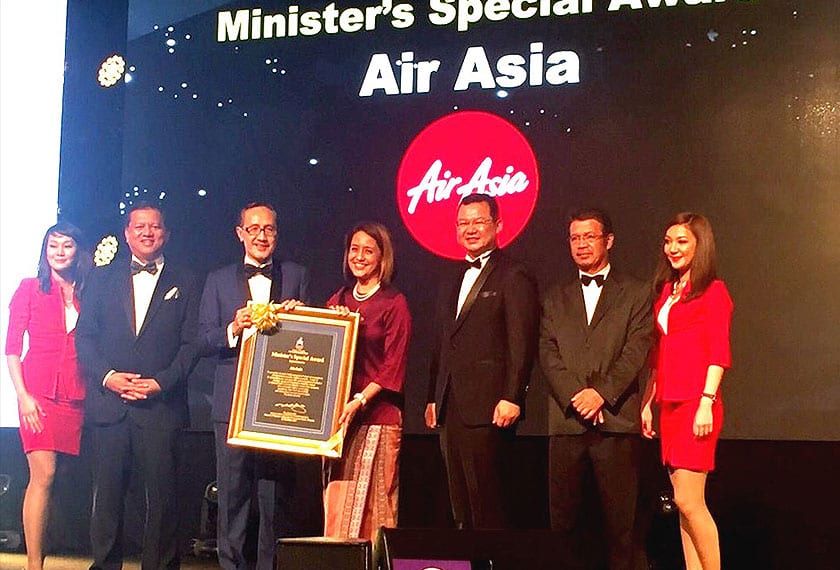
    AirAsia has been named ‘Best Airline’ and received ‘Minister Special Awards’ at the recent Sabah Tourism Awards 2015.

    AirAsia Berhad CEO, Aireen Omar received the award on behalf of the airline from Sabah Minister of Tourism Culture and Environment, Datuk Seri Panglima Masidi Manjun.

    The ‘Best Airline’ category recognised AirAsia’s contribution to Sabah’s tourism industry in terms of connectivity and bringing the highest number of visitors to Sabah over the past two years.

    The ‘Minister Special Awards’ was given to AirAsia for its bold expansion of direct air connectivity to Sabah both internationally and domestically with a total of 23 destinations and growing.

    On top of that, the airline also fully optimised Kota Kinabalu’s strategic geographical position, enabling visitors to discover and experience Sabah’s world-class attractions, apart from developing business opportunities in Sabah.

    In a press statement, Aireen thank the Sabah Tourism Board for recognising their hard work and contribution to the state of Sabah with two prestigious awards.

    “We have invested substantially in developing Sabah into becoming a key AirAsia hub and are very pleased that our efforts have paid off with the ever-growing numbers,”

    “We have big plans for Sabah and look forward to growing the current 3 million passengers per annum to at least 12 million passengers,” she said.

    She added that the company is confident in reaching this target with a proper low cost carrier terminal in place in Kota Kinabalu.

    “Sabah has tremendous potential to be a key regional hub and we want to make this a reality,” she said.

    AirAsia has flown over 8.4 million people in and out of Sabah in the past two years and currently serves 698 weekly flights to and from Kota Kinabalu, Tawau and Sandakan in Sabah.

    The airline has also seen a growing trend of guests travelling from the Asian region and Australia into Kota Kinabalu through AirAsia’s Fly-Thru service.

    Bangkok, Beijing, Shanghai and Perth are the top cities with people connecting into Sabah for the past year, and AirAsia currently has 24 Fly-Thru routes into Kota Kinabalu, providing easy access and convenience for visitors across the region to travel to the state of Sabah.

  • AirAsia launches all-new mobile app

    AirAsia launches all-new mobile app

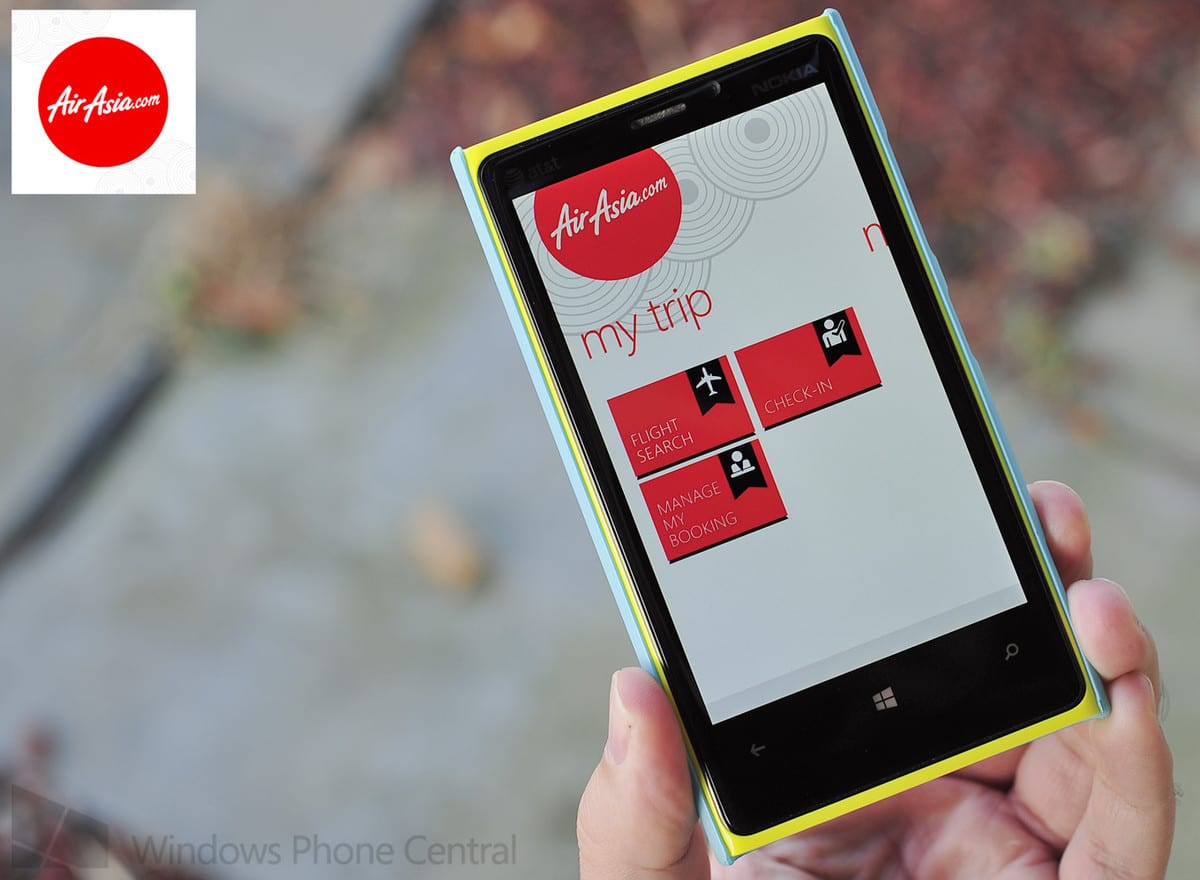
    AirAsia has launched its all-new mobile application offering innovative new features, smoother functionality and an improved interface to provide guests with an enhanced and seamless flying experience.

    In a statement today, AirAsia said its mobile app has been nominated as the “World’s Leading Low-Cost Airline App’ at the upcoming World Travel Awards.

    AirAsia Group Chief Commercial Officer Siegtraund Teh said the company constantly invests in technology and innovation to make flying easier and more enjoyable for guests.

    “There have been over nine million downloads of the AirAsia mobile app on both iOS and Android platforms, and we hope that more people will discover the convenience of our new and improved mobile app,” he said.

    The new app’s features include “Add to Calendar”, which automatically links upcoming flights to the calendar; faster and simpler flight booking process; and improved mobile check-in and Manage My Booking experience where guests can easily include various add-ons to their flight bookings.

  • Matta welcomes shifting of AirAsia’s operations to Terminal 1

    Matta welcomes shifting of AirAsia’s operations to Terminal 1

    The shifting of AirAsia’s operations to Terminal 1 next month will certainly be welcomed by passengers, said Malaysian Association of Tour and Travel Agents (Matta) vice president (inbound) Datuk KL Tan. He said the Terminal 2, which the low-budget-carrier is operating now, has poor ventilation, lack of check-in counters, immigration and goods and services tax refund counters, poor toilet facilities, among others.

    The terminal at the Kota Kinabalu International Airport (KKIA) has also exceeded its passenger capacity of two million passengers per annum (ppa), as last year its actual passenger volume was 3.6 million ppa. “This has been a long tussle for some years and we are glad AirAsia Group chief executive officer Tan Sri Tony Fernandes has realised we need to be law-abiding citizens. “Matta Malaysia wishes to thank Prime Minister Datuk Seri Najib Razak for giving the final directive to AirAsia to move to Terminal 1,” he said in a statement.

    The Prime Minister, who officiated the RM1.7 billion Terminal 1 on Sept 16, had delivered an ultimatum to AirAsia to move its operations from Terminal 2, stating the airline had exceeded its timeframe. AirAsia has been involved in disagreements with Malaysia Airports Holdings Bhd since the airline was asked to move its operations back in 2011, with the last deadline being on Aug 1 this year.