Retail News CRM

Tag: airasia

  • AirAsia India mulls A320 aircraft option for UDAN

    AirAsia India mulls A320 aircraft option for UDAN

    Keen to expand its domestic presence, AirAsia India is evaluating the proposition of operating regional flights with A320 planes under the government’s UDAN scheme. The ambitious UDAN (Ude Desh Ka Aam Naagrik) scheme aims to connect unserved and under-served airports in the country while participating airlines would get various incentives, including viability gap funding and other financial concessions.

    AirAsia India, which currently has eight A320 planes, expects to have a fleet of 10 aircraft by end of this fiscal. According to a senior airline official, options of participating in UDAN are being evaluated and a decision would be taken depending on the commercial viability of the regional routes.

    “We are evaluating which routes can be served by A320. If it is viable, we will certainly look into it,” the official told PTI. Manufactured by Airbus, A320s are single-aisle planes that can have up to 180 seats depending on the configuration opted for by the carriers.

    Fares would be capped at Rs 2,500 for one-hour flights under UDAN and the first flight under the scheme is expected to take off in January 2017. Along with increasing its fleet size to 10 planes, AirAsia India also expects to have a headcount of around 1,000 by the end of March next year.

    In the three months ended September 2016, the budget carrier saw its loss marginally narrow to Rs 62.18 crore from Rs 63.14 crore in the year-ago period. However, revenues increased 31 per cent to Rs 175.11 crore in the latest September quarter. The same stood at Rs 132.95 crore in the same period a year ago.

    AirAsia India, now a joint venture between Tatas and Malaysia’s AirAsia Berhad, began operations in June 2014. Tata Sons owns 49 per cent stake while two of the airline’s directors — S Ramadorai and R Venkataramanan –have 2 per cent shareholding, and the remaining is with AirAsia Berhad.

    Meanwhile, Malaysia’s AirAsia Berhad has invested additional funds to the tune of Rs 115 crore in AirAsia India.

  • AirAsia starts flying Philippines-Taiwan

    AirAsia starts flying Philippines-Taiwan

    The low-cost carrier’s Philippine subsidiary started flying direct from Manila to Taipei on 21 November, and then on 25 November it commenced flights between Cebu and Taipei.

    “We are aiming to go further across Asia by strengthening AirAsia’s presence in Taiwan. Today heralds… brighter and much closer ties between two countries to improve trade and tourism,” said Philippines AirAsia’s CEO, Dexter Comendador. He added that the new services would cater to “travellers, overseas Filipino workers and Taiwanese tourists”.

    The new Manila-Taipei route will operate daily with late night flights, while the Cebu-Taipei service will run three times a week (Wednesdays, Fridays and Sundays) with early morning departures from the Philippines.

    The AirAsia Group also operates direct flight to Taipei from Kuala Lumpur and Kota Kinabalu.

  • AirAsia to launch end-of-year promo fares

    AirAsia to launch end-of-year promo fares

    AirAsia is set to hold its last “free seats” promo for the year with almost 3 million seats up for grabs.

    Starting Monday until November 20, customers can book all-in, one-way fares for as low as P202 for trips between May 1, 2017 until February 6, 2018.

    The promo covers local trips and international destinations like Shanghai, Taipei, Singapore, Hong Kong, Macau, Korea and Malaysia.

    It also extends as far as Mauritius, Maldives, and Delhi via Fly-Thru.

    On Sunday, members of AirAsia BIG as well as BIG Prepaid Mastercard and AirAsia-Citi Credit Card holders will be given priority access to the promo seats.

    Bookings can be made on airasia.com and the AirAsia mobile app.

  • Malaysia’s AirAsia and AirAsia X fly back into profit in third quarter

    Malaysia’s AirAsia and AirAsia X fly back into profit in third quarter

    Malaysia’s AirAsia swung to a profit in the third quarter from a net loss a year earlier, mainly driven by an increase in aircraft operating lease income that boosted revenue during the quarter.

    A 22 per cent tumble in the average fuel price to Us$62 per barrel from $79 per barrel a year earlier also contributed, the airline said.

    Net profit for the three months ended September 30 was 353.9 million ringgit (Dh292.4m), versus a net loss of 405.7m ringgit a year earlier. Revenue rose 11.2 per cent to 1.69m ringgit, the company said.

    The results were underpinned by a seat load factor of 89 per cent, a measure of how full planes are, up 7 percentage points from the same period last year.

    The number of passengers carried rose 5 per cent, although capacity fell 3 per cent year-on-year, AirAsia said.

    AirAsia X Berhad, AirAsia’s long-haul budget sister carrier, also recorded a net profit in the third quarter versus a year-ago loss as more capacity on flight routes led to a higher number of passengers for the airline.

    AirAsia X, which is expected to report a profit for this year after two straight annual losses, embarked on a business and organisational restructuring in 2015. It has been adding capacity in Australia and increasing frequency on selected existing routes where demand is high to shore up its results.

    For the third quarter ended September, it reported net profit of 11.03m ringgit, versus a net loss of 288.2m ringgit a year ago.

    Revenue climbed 23.9 percent to 982.4 million ringgit, driven by increases in seat capacity, ancillary revenue, aircraft operating lease income and freight and cargo revenue, the company said in a statement.

    Operations are benefiting from a weaker ringgit that has prompted customers to look at Malaysia “as a value-for-money holiday destination”, said the chief executive Benyamin Ismail.

    The company recorded a passenger load factor of 78 per cent in the third quarter, 3 percentage points higher year on year, AirAsia X earlier said.

    The airline increased its passenger carrying capacity by 34 per cent year on year over July to September.

    “Strong demand from North Asia prompted AirAsia X to add frequencies to Beijing, Shanghai and Osaka while the Australian sector continued to improve with additions warranted for Gold Coast and Sydney,” MIDF Research said.

    The company’s capacity expansion primes the airline for the peak travel season at the end of the year, it added.

    “Based on the current forward booking trend, the expected number of passengers to be carried in the fourth quarter remains promising. Forward loads and average fares are trending better than the previous year,” AirAsia X said.

    Parent AirAsia Group’s chief executive, Tony Fernandes, has said he wants AirAsia X to expand into new destinations in Europe, the United States and Africa.

  • AirAsia X chasing Europe; open to other aircraft types

    AirAsia X chasing Europe; open to other aircraft types

    AirAsia X wants to relaunch services to Europe “as quick as possible”, and is looking at aircraft other than Airbus A330s to get there.

    Speaking to FlightGlobal,the chief executive of AirAsia X‘s core Malaysian operation, Benyamin Ismail, says that its fleet plans have changed.

    The carrier had not planned to take delivery of any aircraft in 2017, but is now speaking with “some parties to see what aircraft are available”.

    “If we can get the aircraft we need… when the A330neos arrive, the focus for them will be to grow frequencies in our current markets, like China and North Asia,”

    Earlier in the year, Benyamin said that the carrier would not re-enter the European market until it starts receiving the A330-900s from the second half of 2018 onwards.

    On the A330-900 seat configuration, AirAsia X expects to confirm the details “in the next couple of months”, but could install more business class seats on those units initially planned to take on European routes.

    “We are working with Airbus to get the assurance that the A330neos can get us direct to Europe (from Kuala Lumpur).”

    Asked whether AirAsia X might take on A350s that may be available in the short-term, Benyamin re-iterates that the carrier “is open and has various options”, but would not confirm if it has held talks with lessors.

    Flight Fleets Analyzer shows that AirAsia X has 66 A330-900 and 10 A350-900s on order. It currently operates 22 A330-300s.

  • Air Asia Philippines cuts net loss to P1.2b

    Air Asia Philippines cuts net loss to P1.2b

    The Philippine unit of Southeast Asia’s largest budget airline said it reduced  net loss by 12 percent in the third quarter on higher passenger traffic.

    Air Asia Philippines said net loss amounted to P1.2 billion in July to September, down from the P1.4-billion loss it reported a year ago.

    Revenues increased 24 percent to P2.57 billion in the third quarter from P2.07 billion in the same period last year.

    “The increase in revenue can be attributed to higher passenger volumes which increased by 8 percent year-on-year and the increase in average fare by 21 percent year-on-year,” Air Asia Philippines said.

    Passengers carried by AirAsia Philippines increased 8 percent to 976,765 from last year’s 901,957, while load factor went down by 1 percentage point to 83 percent from 84 percent.

  • AirAsia X may relaunch London in 2017

    AirAsia X may relaunch London in 2017

    Malaysia’s AirAsia X is considering the lease of A350s or 777-300ERs in 2017 to accelerate its return to Europe. A new widebody type will add cost and complexity but is necessary if the medium/long haul low cost airline is to meet its objective of relaunching London as soon as possible.

    AirAsia X had been planning to wait until it receives A330-900neos before relaunching London and commencing other European routes. However the airline prefers not to wait until 2H2018, when its A330-900neo deliveries are slated to begin, and using another aircraft type in the interim mitigates the impact of a potential delay with the A330neo variant required for Kuala Lumpur-London.

    AirAsia X could also use a new aircraft type – most likely A350-900s – to support new routes to the US. It plans to launch services from Japan to Hawaii in Jun-2017 using A330ceos, but also has longer-term plans for longer routes from Japan to Las Vegas, Los Angeles and San Francisco – and potentially ultra-long haul routes from Malaysia to the US.

  • AirAsia plans IPO of ASEAN airline holding company

    AirAsia plans IPO of ASEAN airline holding company

    Asia’s biggest low-cost airline AirAsia Bhd plans an initial public offering of a holding company that will house all its Asean operations, group CEO Tony Fernandes said on Thursday.

    ASEAN Holding Co will be listed in Hong Kong, Fernandes said in a statement without giving a timeline. AirAsia will also list its flight crew training centre in Kuala Lumpur, he said, following the company’s third-quarter results.

    Fernandes did not say how much the IPOs will raise.

    He has in the past expressed a desire to combine the airline’s operations in its home country Malaysia with those in Indonesia, Thailand and the Philippines.

    “The plan is to list Indonesia and Philippines first by next year before looking at ASEAN Holding Co to be listed,” a company spokesman told Reuters.

    AirAsia is also looking to divest some of its non-core businesses. It already has its aircraft leasing arm on the market and aims to complete the sale in early 2017 following bids that are due in December, Fernandes said, adding that he valued the unit at about $1 billion.

    Reuters reported in August that AirAsia was looking to sell a majority stake in its Asia Aviation Capital leasing operation, or possibly the entire business, which the carrier values at 4.1 billion ringgit ($922.38 million).

    Last month, AirAsia said it had received good interest in the sale.

    AirAsia also said on Thursday it swung to a profit in the third quarter, from a net loss a year ago, driven mainly by an increase in aircraft operating lease income and lower oil prices.

    Net profit for the three months ended Sept 30 was 353.9 million ringgit, versus a net loss of 405.7 million ringgit a year ago.

    Revenue rose 11.2% to 1.69 million ringgit, the company said.

    The results were underpinned by a load factor of 87%, a measure of how full planes are, up 6 percentage points from the same period last year.

    The number of passengers carried rose 11%, ahead of an increase in seat capacity of 2% year-on-year, according to AirAsia’s statement.

    AirAsia expects average load factor for its Malaysia business to remain at 89% in the following quarter, riding on strong demand due to year-end holidays and festivities.

    It forecasts load factors of more than 80% for its operations in Thailand, Indonesia and the Philippines for the fourth quarter.

    On Tuesday, the group’s long-haul unit, AirAsia X Bhd swung to a net profit of 11.03 million ringgit.

    Revenue was higher at 982.4 million ringgit.

    Shares of both AirAsia X and its parent have more than doubled this year, after sharp losses in 2015.

  • AirAsia launches daily Manila-Taipei service

    AirAsia launches daily Manila-Taipei service

    Travellers from the Philippines now have more options when flying to Taiwan after Philippines AirAsia started its daily Manila-Taipei service last Monday.

    Philippines AirAsia chief executive Captain Dexter Comendador himself piloted the Airbus A320 to mark the budget airline’s maiden voyage from Manila to Taipei.

    “Today heralds a brighter and much closer ties between two countries to improve trade and tourism,” he addressed the passengers midway through the flight.

    “We have introduced amazing connections for our guests to enjoy and we are aiming to go further across Asia by strengthening AirAsia’s presence in Taiwan,” Comendador added.

    The flight touched down at the Taoyuan International Airport after midnight to a welcome water barrage from firetrucks.

    The Taipei-Manila route was officially launched Tuesday at a press conference at the Grand Sheraton in Taipei, which was attended by Philippines AirAsia chair Maan Hontiveros and AirAsia North Asia CEO Kathleen Tan.

    A thrice-weekly Cebu-Taipei service was also announced with performances from Sinulog dancers. Taiwanese celebrity travel blogger Patty Woo also regaled guests with her beach adventures during her recent trip to Cebu.

    Starting Friday, Philippines AirAsia will begin regular flights from Cebu to Taipei on Wednesday, Friday and Sunday.

    Taiwanese tourist arrivals in the Philippines have reached 157,517 from January to August this year. Taiwan is currently the country’s sixth top visitor market after Korea, the United States, China, Japan and Australia.

    “Taiwan and the Philippines share a strong affinity with one another. They enjoy robust economic ties, many Filipinos live and work in Taiwan and more and more Taiwanese are visiting the many beautiful islands in the Philippines. We are honored to be able to bring the countries even closer together,” Tan said.

    Taiwan is known for night markets, tourist attractions like Taipei 101, and foodie adventures with its diverse culinary offerings

    Philippines AirAsia has teamed up with TourMeAway Walking Tours to make exploring Taipei more fun. From now until November 30, Philippines AirAsia travelers to Taipei may join the Hunger Game Walking Tour or the Taipei Chillout Tour for free.

  • Thai AirAsia has plans to expand its fleet in China

    Thai AirAsia has plans to expand its fleet in China

    Low-cost carrier (LCC) Thai AirAsia has plans to expand its fleet in China, revealing that it is planning to add five to six aircraft per year over the next few years.

    Thai AirAsia CEO Tassapon Bijleveld told that half of the additional aircrafts would be allocated to China, its largest international market.

    China has accounted for 26 percent of the carrier’s total international capacity to date. Thai AirAsia currently, has 38,880 weekly seats across 14 routes in the Thailand-China market.

    CAPA–Center For Aviation stated that China accounts for 13 of the combined 35 international destinations to which Thai AirAsia/Thai AirAsia X flies.

    Thai AirAsia currently serves 11 destinations in mainland China. Its sister medium/long haul LCC Thai AirAsia X serves another two Chinese destinations.

    The airline, a joint venture between the Malaysia’s AirAsia and Thailand’s Asia Aviation, is keen to grow its base at U-Tapao near the city of Pattaya, which opened in September 2015 and is linked to Macau.

    The expansion on the U-Tapao/Pattaya base would enable new routes to China.

    The low-cost airline has two A320s based at U-Tapao operating three domestic and four international routes – including the two mainland Chinese routes, Macau and Singapore.

    According to Bijleveld, all the U-Tapao routes “are doing very well”, and the Pattaya market is promising.

    The carrier is also considering launching routes from Hat Yai to Hong Kong, Macau and Singapore.

    Through the first three quarters of 2016, Thai AirAsia’s passenger numbers increased by 19 percent to 12.86 million.

    Thai AirAsia plans to add five A320 neos aircraft in 2017. Under its current five-year fleet plan it envisages a fleet of 71 aircraft by the end of 2020.

    Further, Thai AirAsia is also expanding in India, which it referred to as a logical growth market for Thailand.

  • AirAsia India Sells Tickets From Rs 799 On Advance Bookings

    AirAsia India Sells Tickets From Rs 799 On Advance Bookings

    Budget-carrier AirAsia India has announced a promotional offer with all-inclusive fares starting from Rs 799 on travel next year.

    The AirAsia India offer is valid till November 20 and is applicable on travel from May 1, 2017 to February 6, 2018. The Rs 799 promotional offer is applicable on the Guwahati-Imphal route.

    Also, there is a Rs 999 offer, which is applicable on Kochi-Bengaluru and Hyderabad-Bengaluru routes. Ticket prices on Bengaluru-Goa, Pune-Bengaluru, Bengaluru-Visakhapatnam routes start from Rs 1,299, Hyderabad-Goa Rs 1,599, Kochi-Hyderabad Rs 1,999 and Delhi-Bengaluru Rs 2,499, among others.

    Promotional offers by airlines have spurred a strong demand for air travel in India, which is among the fastest growing aviation market in the world.

    AirAsia India flew 5.89 lakh passengers in three months ended September, 2016, a 42 per cent increase from the number of passengers who flew with the airline in the corresponding period a year ago.

    During the quarter, the airline added three new destinations in its route network – Bengaluru-Guwahati, Bengaluru-Hyderabad and Hyderabad-Goa.

  • AirAsia moves into new open-space headquarters

    AirAsia moves into new open-space headquarters

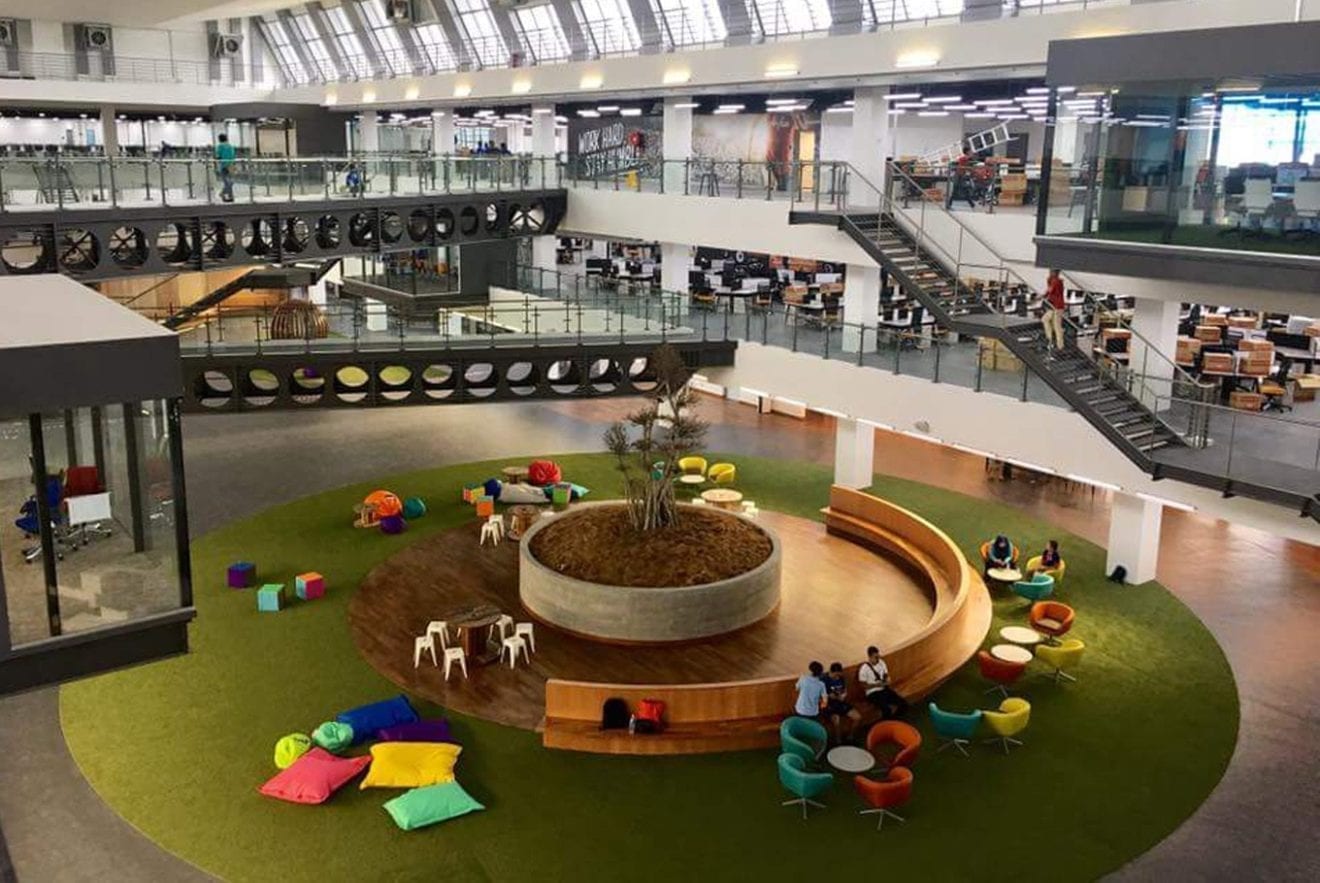
    After announcing that it would relocate to a new office in 2014, budget carrier AirAsia finally moved into its new space in Sepang, Malaysia, on Monday.

    The office, dubbed RedQuarters, is located on an 18,000-square-meter plot beside Kuala Lumpur International Airport 2 ( KLIA2 ). It is reportedly set to house 2,000 AirAsia employees.

    With features like indoor grass and colorful, stylish furniture, the huge open-plan office breaks away from conventional office stereotypes. AirAsia told that the design was intended to reflect the company’s determination to become Malaysia and the region’s best airline, “while incorporating elements showcasing the professional, fun and friendly attitudes.”

    The company threw a celebratory opening party at the new headquarters featuring local entertainers SonaOne and Joe Flizzow.

  • AirAsia launches Santan Combo Meal

    AirAsia launches Santan Combo Meal

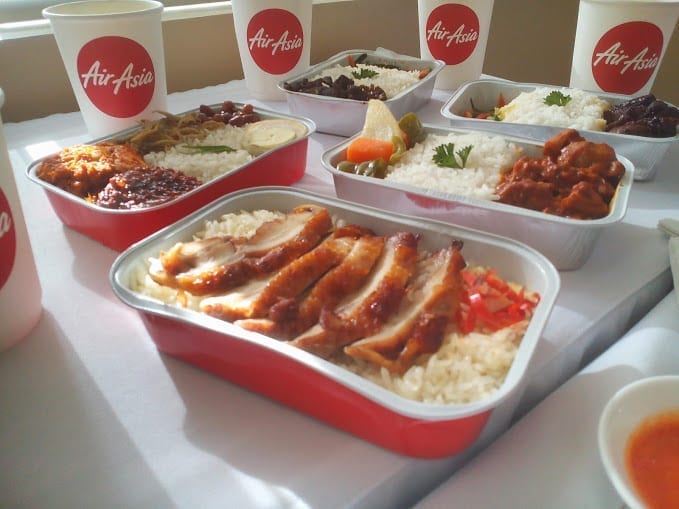
    AirAsia has launched its latest Santan Combo Meal, available for pre-booking, from RM10 on AirAsia Bhd (AK) flights and from RM15 on AirAsia X Bhd (D7) flights.

    In a statement today, AirAsia said the Santan Combo Meal has a selection of 15 meals ranging from local Asean delights to international cuisines.

    “Guests who pre-book the combo meals can choose from a selection that includes coffee (only available for flights above 90 minutes), carbonated drinks and mineral water,” it said.

    AirAsia Commercial Head Spencer Lee said guests would be happy to know that the new price offers a RM5 discount off the in-flight ticket price.

    “When they pre-book their meals online, not only they enjoy discount prices and have a wider selection of meals to choose from, but also have the privilege of being served first,” he said.

    Lee said among the new items on the menu was the festive Christmas treat of Southwest Stuffed Chicken Meal on AK flights for RM10.

    “This meal consist of roasted chicken breast stuffed with capsicum and onions and served with a special jalapeno cream sauce on a bed of roasted potatoes,” he said.

    Meanwhile, those travelling on D7 flights can enjoy the new combo meal of Grandma’s Chicken Pie for RM15, which is minced chicken baked with a layer of creamy mashed potatoes, complemented with broccoli and carrots.

    Guests can pre-book their meals up to 24 hours before their scheduled departure time on www.airasia.com via the Manage My Booking tab.

  • Airasia to serve Kuala Lumpur-Jakarta-Labuan Bajo route

    Airasia to serve Kuala Lumpur-Jakarta-Labuan Bajo route

    The Malaysia-based low cost carrier AirAsia will soon serve the Kuala Lumpur-Jakarta-Labuan Bajo route, according to East Nusa Tenggara Tourism and Creative Economy Office Chief Marius Ardu Jelamu.

    “There has been an agreement with the central government and the airline company that AirAsia will serve this new route starting from next year,” Jelamu said here on Wednesday.

    He said the AirAsias new route will have a positive impact on the flow of tourists to the province of East Nusa Tenggara through the entry gate of Labuan Bajo.

    “This new service of AirAsia will enable more foreign tourists to visit the leading destinations in East Nusa Tenggara,” he said, adding that tourism progress is dependent on smooth air transport connectivity.

    Jelamu said that in addition to the Kuala Lumpur-Jakarta-Labuan Bajo route, his party is also trying to accelerate the implementation of Kupang-Dili-Darwin route.

    “In addition to air connectivity from the west, the one from the south, namely from Australia to East Nusa Tenggara, also has its share of attractive markets for linking the three countries,” he said.

    Jelamu expressed hope that the Kupang-Dili-Darwin route, which had been halted since 1990s, can be reopened soon to support the advancement of tourism in the island province.

    “We hope that the Ministry of Transportation will quickly agree on the proposed route service with the airline,” he said.

    Further, Jelamu said he appreciated the efforts of the Ministry of Transportation to have opened the Jakarta-Kupang and Jakarta-Labuan Bajo routes, served by Garuda Indonesia.

    However, he said the flight path from the south also has attractive market potential related to the flow of tourists and expressed hope that the Kupang-Dili-Darwin route would be reopened soon.

  • Mirus adds 1.5″ to AirAsia knee room, aims high with new options

    Mirus adds 1.5″ to AirAsia knee room, aims high with new options

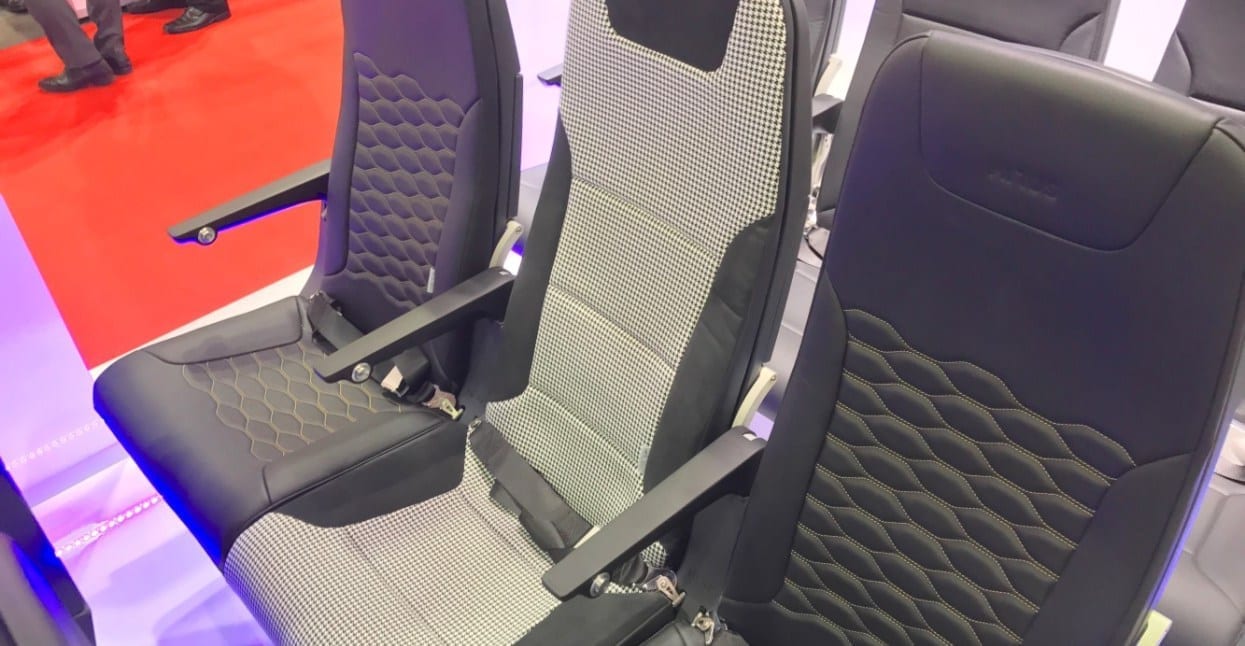
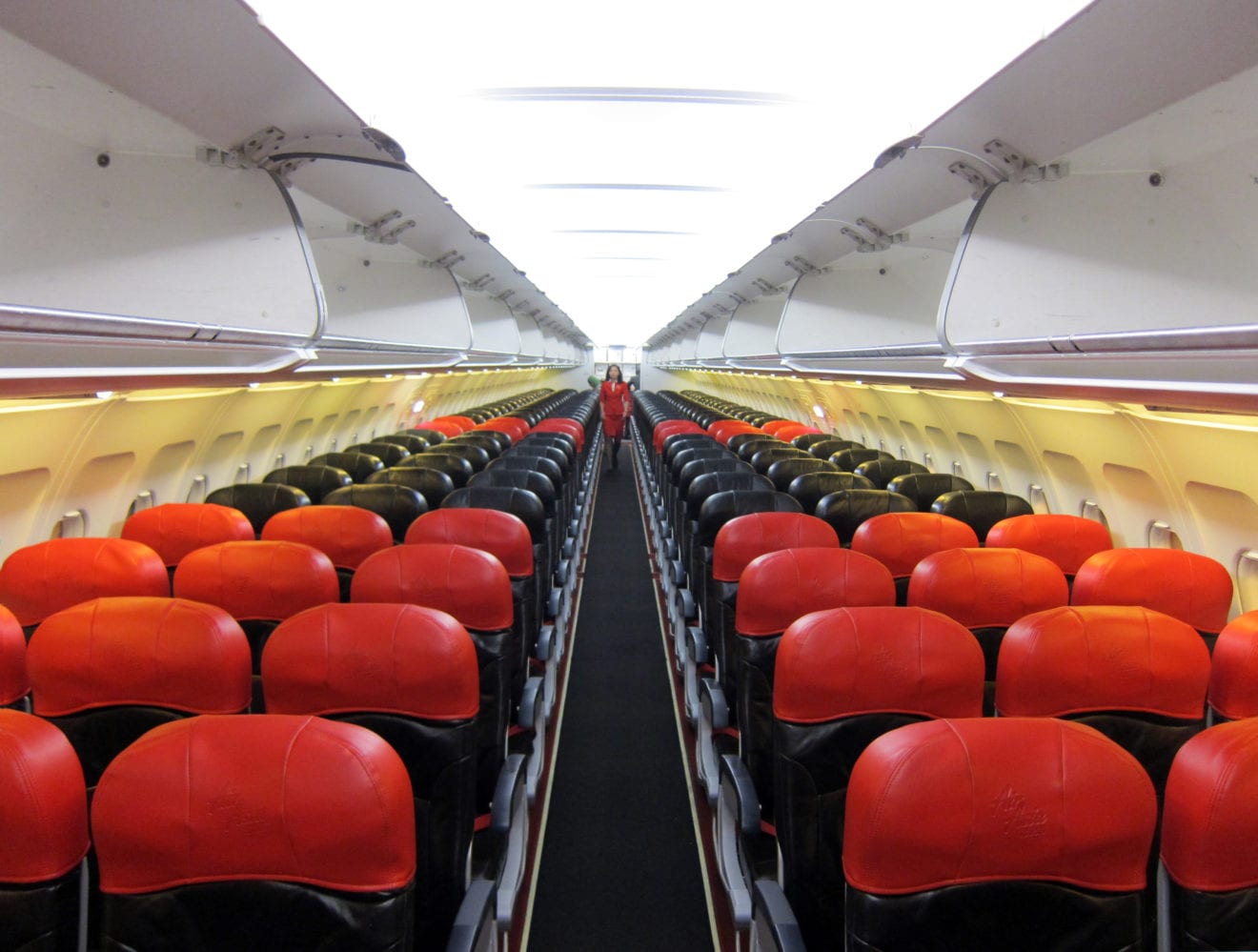
    AirAsia’s seatmaker Mirus made headlines even before the recent Aircraft Interiors Expo Asia started by announcing a partnership with digEcor and IFPL to add USB power to the armrest of its slimline seating. But Mirus isn’t just driving a step-change in the passenger experience for shorthaul LCCs. It’s also offering more fully featured seat options, one including a headrest inspired by a luxury car, which seems appropriate given the company’s automotive heritage. And, perhaps most crucially for the AirAsia passenger experience, it’s using smart design to carve out over an inch and a half of extra knee room — a full five percent extra on AirAsia’s tight seating.

    “This show, we’ve got some different variants of the seat,” Mirus CEO Phil Hall explained as he showed Runway Girl Network around the company’s AIX Asia stand. “We’ve got an entry-level seat, we’ve got a nominal AirAsia spec, and we did a heritage throwback line inspired by a 1970s Porsche. All these airlines have been around a long time, they’ve got a lot of heritage and they should be proud of it, and we’re trying to visualise some of that in the dress covers.”

    Most interesting, though, was the headrest, a snap-on, snap-off cushion. “That’s the S-Class inspired headrest. We’ll roll that out on AirAsia’s Hot Seats. Tony Fernandes said to me, ‘I really love the headrest on the S-Class Mercedes’,” Hall explained. “This is not production final, but I think we’re about 90% of the way there. There’s a small adjustment — you just un-velcro it and lift it up. It’s a similar type of feature to Emirates in their business class. We dressed it with Alcantara highlights just to mix up the textures a little bit, mix up the dress covers, and differentiate the brand. It’s a nice material, a tactile material, and it changes the appearance of the seat a little bit. This is more of a design and styling focus in terms of what we can do.”

    With a simple popper design for attachment, the headrest adjusts using velcro. Image: John Walton

    With a simple popper design for attachment, the headrest adjusts using velcro.

    “We’ve got production versions of the armrests here, and the aisle bumpers are our production spec,” Hall said. “We’ve changed the design language quite significantly, to a more dynamic looking seat. In Hamburg we didn’t have these available. What’s not on these seats is the production version of the backrests. We took a hit on the programme because we found quite a significant benefit to passenger space on the seatback, below the seatback area. Because we have a carbon-fibre frame, it allows us to mould the shape into whatever we want, because the carbon-fibre gives us the strength and the stiffness we need, and gives us the mobility. So we took a period of time to fully exploit that fact. We showed it to AirAsia, and they’re pitching at 28”, 29”, so it’s quite squeezy on there, and it was a genuine benefit to the passenger. That’s not on show here, but we’ll have that in Hamburg. It’s about an inch and a half. It was worth us taking the hit and offering a more competitive product.”

    “We’re looming up to certification and getting the seats in the air,” Hall added. “That’s our main target. All of our tooling has been commissioned, and the first production parts are now coming in. We built the certification seats from those parts. We’ve done all the precertification testing with non-production tool components, so we have a very good confidence level when we go into certification. The flam booth is there. The self-sufficiency aspect of the whole thing is coming together quite nicely. It’s all converging on a point.”

    “We did all the preliminary testing, pre-certification testing — 16G, 4G side, 9G static, 14G down — primarily to test the strength of the product but also to correlate all the virtual simulation that we do,” Hall said, noting that Mirus has succeeded with its head injury criterion (HIC) testing at pitches from 28” to 35”. “We’ve heavily invested in virtual prototyping and virtual product development, both software and process. We do another series of sub-assembly testing to validate those models as well.”

    It’s clear from the company’s level of hardware and testing investment that Mirus isn’t content simply to supply three hundred shipsets of A320 seats for AirAsia: the company wants to be much, much more than that. If Mirus was a seatmaker to watch six months ago when it burst onto the interiors scene, it’s doubly so now.