Tag: airasia

  • AirAsia named “Most Influential Airline in China” at Beijing awards ceremony

    AirAsia named “Most Influential Airline in China” at Beijing awards ceremony

    AirAsia was named The Most Influential Airline in China at the 2016 New Power of Travel Awards held in Beijing on Friday.

    The awards, hosted by Sina Travel and Youku Travel websites, review the development and trends of China’s travel industry.

    In statement today, AirAsia said Sina is the world’s largest Chinese-language web portal, while Youku is one of China’s top video and online streaming platforms.

    “The two websites evaluate travel-related companies and products based on the content and readership by over 800 million people who visit it.

    “The awards honour outstanding companies and products as voted by users, and provide travel guides on airlines, hotels and destinations for travellers.

    “The awards committee said AirAsia had influenced free and independent travellers in China with its young, passionate and creative brand image since entering the market,” it added.

    Meanwhile, AirAsia North Asia President Kathleen Tan said the airline is focused on presenting the very best content on Chinese social media, as the country is a very important market for it.

    “China is an incredibly dynamic market and we want to deliver an even better travel experience to our fans in China. This includes information on where to find the best food, hidden gems and great travel destinations where amazing memories can be made.

    “In line with this, we are working hard with our travel tourism partners and local governments to bring the world to China and vice versa,” she added.

  • After Soaring, AirAsia Hits Some Turbulence

    After Soaring, AirAsia Hits Some Turbulence

    Malaysia’s AirAsia, which operates budget flights across Southeast Asia, had a stellar 2016. But the catalysts that fueled the airline’s ascent by as much as 130% by August are no longer there. This stock could fall another 20%.

    AirAsia is a play on the Malaysian ringgit. Its share price started to slip in late August, coinciding with the ringgit’s decline. Since then, the ringgit has fallen some 11%, to $4.50, and AirAsia has tumbled more than 30%. The stock still managed to return over 80% in 2016, however.

    A weaker ringgit hurts AirAsia’s operating margins. Deutsche Bank ’s Joe Liew estimates that half of the airline’s operating costs last year were related to the dollar, in part because 90% of its debt is denominated in greenbacks. The airline says that two-thirds of its dollar debt was hedged at about 3.23 ringgits to the dollar. Still, Deutsche estimates that for every 5% decline in the ringgit, AirAsia’s operating profit falls by 7.1%.

    More importantly, over half of AirAsia’s shareholders are foreigners, who are more likely to unload the stock when Malaysia’s currency policy gets unsteady. The ringgit “keeps us awake at night,” says Credit Suisse’s strategist Tan Ting Min, because China is Malaysia’s largest exporter and the currency is viewed as a yuan proxy. It’s also sentiment-driven because foreigners hold about half of Malaysian government bonds, 50% more of which are maturing this year. In addition, Malaysia’s central bank unnerved investors during the Trump tantrum—the selloff of emerging market bonds and currencies after the U.S. election—by asking foreign banks to stop trading ringgit in the offshore nondeliverable forwards market, a popular way for foreigners to hedge against its decline.

    There are other head winds. Fuel prices have begun to rise. At the end of December, jet fuel was trading at $67 a barrel, 48% above a year ago, according to Platts. While AirAsia hedges 74% of its jet-fuel costs at $60 a barrel, expensive fuel still affects its earnings. Deutsche says that for every 5% rise in jet-fuel prices, AirAsia’s net profit falls by 6.6%.

    COMPETITION IS ALSO HEATING UP

    Again in Malaysia. Malindo, which started operations only in 2013, bought 16 new aircraft in 2016 and operates 42 in total, about a third the size of AirAsia Malaysia. Meanwhile, market leader Malaysia Airlines, which has been in cost-control mode for the past two years after the crash of the MH 370 in March 2014, is looking to expand again. It is starting nine new routes to China this year.

    AirAsia said in August it would divest itself of Asia Aviation Capital, which provides aircraft-leasing services to the airline. AirAsia said the unit could fetch $1 billion. At the end of September, Asia Aviation had only $59 million in equity on its balance sheet. “We struggle a little to understand how that [$1 billion] number is derived, given the balance-sheet numbers,” wrote Deutsche in a note last week.

    Deutsche Bank last week downgraded AirAsia to Sell with a price target of 1.75 ringgit, or another 20% downside. It values AirAsia at five times enterprise value to earnings, in line with full-service airlines Cathay Pacific (293.Hong Kong) and Singapore Airlines(C6L.Singapore). Both of these airlines are suffering from excess capacity, and Deutsche is betting that AirAsia will be operating in a similar environment a year from now.

  • AirAsia comes under CBI lens

    AirAsia comes under CBI lens

    A month after Enforcement Directorate registered a case of foreign exchange violations against AirAsia India, the Central Bureau of Investigation on Thursday claimed that it is also examining the matter in which there are allegations of fraudulent transactions of Rs 22 crore involving non-existent entities in India and Singapore.

    Sources in the CBI said that they have not registered a preliminary enquiry or regular case (FIR) in the matter but they are looking into the matter to see if it calls for registering a criminal case. “We are scrutinising the AirAsia documents right now,” said the CBI officer. When contacted, an AirAsia India spokesperson said, “AirAsia India has not heard from the CBI. Should we receive a call from CBI, AirAsia India will furnish all information that they seek. As you are aware, the airline has already put it in the public domain that it is pursuing the ongoing investigation. AirAsia India subsequently filed a private complaint with the Bangalore police in this regard.”

    The issue was flagged by ousted chairman of Tata Sons Cyrus Mistry soon after he was replaced on October 24. He wrote in his let ter to Tata Sons board and trustees of Tata Trusts that, “Board members and trustees are also aware that in the case of AirAsia, ethical concerns have been raised with respect to certain transactions as well as the overall prevailing culture in the organization. A recent forensics investigation revealed fraudulent transactions of Rs 22 crore involving non-existent parties in India and Singapore.”

    Presently, ED is probing the matter under FEMA (foreign exchange management act) and has already sought documents from the company. It is looking into a specific transaction of over Rs 12 crore, out of Rs 22 crore, made to a Singaporean firm.

     Mistry had alleged that “executive trustee Mr Venkataraman, who is on the board of Air Asia and also a shareholder in the company , considered these transactions as non-material and did not encourage further study”. It was only at the insistence of the independent directors, one of whom immediately submitted his resignation, that the board decided to belatedly file a FIR, Mistry had said in his letter.
    He claimed it was Tata who had completed negotiations with AirAsia, but early in his tenure as the chairman of Tata Sons he (Mistry) was asked to table a proposal for the JV with AirAsia at a Tata Sons board meeting. In 2013, Tata Sons had joined hands with Malaysian carrier AirAsia and Arun Bhatia’s Telestra Tradeplace to start low cost carrier AirAsia India. The carrier had to wait for nine months before taking off.
  • Special dividend in the offing for AirAsia investors?

    Special dividend in the offing for AirAsia investors?

    Two days after Deutsche Bank Group called a “sell” on AirAsia that led to a slight dip in its share price, two local brokerages have issued research reports maintaining a “buy” call on the airline.

    The rationale for the sell call is essentially stiff competition that will push passenger yields down over the next 12-18 months, overcapacity, the weaker ringgit and higher jet fuel prices.

    It also questioned how the US$1bil price tag was derived for its leasing unit, Asia Aviation Capital (AAC) that AirAsia plans to sell in the middle of this year.

    Maybank IB Research senior analyst Mohshin Alias is more bullish about AirAsia’s fortunes.

    He maintains a buy on the stock and predicts a special dividend of 40-50 sen a share from the sale of AAC to investors.

    “Coupled with the customary 20% dividend payout which is roughly 7 sen in 2017, AirAsia could be your biggest dividend yield stock in 2017,’’ said Mohshin.

    Kenanga Research has brushed off overcapacity and other issues and has a 12-month target price of RM3.82 a share.

    Its rationale was based on higher ancillary income with a target of RM60 per passenger in the long-term, healthy loads of about 85% led by strong travel demand coupled with fleet expansion.

    It says even though fuel cost was rising, but it will be mitigated as AirAsia has hedged 74% of its fuel requirements for 2017 at US$59 per barrel.

    Mohshin expects unit costs to improve on the entry of new Airbus A320 NEOs and believes the fourth quarter 2016 financial results to be “spectacular and says “don’t be surprised if they churn out RM400-500mil of net profit.’’

    He adds that “apart from that, it is trading at only 7x 2017 PER with stellar 15% ROEs.’’

    His 12 month target price is RM3.17 a share. AirAsia closed 6 sen lower in yesterday’s trading at RM2.17 a share.

    Deutsche in its report said “weaker ringgit will filter through to higher costs, and higher fuel prices will also hurt. We have cut our core net profit forecast for 2017-2018 estimates by 1.3% and 16.2% over 2017-2018 estimate respectively.

    As at third quarter 2016, associates in the Philippines, India and Japan were still losing money. In Indonesia, AirAsia is converting its debt into perpetual capital securities to comply with local regulations,’’ Deutsche said.

    It adds that as the market becomes aware of the earnings decline that AirAsia is expected to see over 2017-2018E, we expect the stock to de-rate to the lower end of its historical valuation range.

    Our target price (12 month – RM1.75 a share) is based on an adjusted EV/EBITDAR of 5 times for the Malaysian operations, which is similar to other full service carriers (Cathay Pacific and Singapore Airlines) in the region who are battling similar yield pressures.

    But Deutsche also expects a lift if there is less intense competition in the market, pushing up yields to levels higher than expected, the sale of AAC resulting in a higher-than expected exceptional profit and this results in a positive sentiment lift for the stock, currencies in South-East Asia appreciating against the US dollar, especially the ringgit, and a significant decline in jet fuel prices.

  • AirAsia’s Philippine Affiliate Eyes India Market

    AirAsia’s Philippine Affiliate Eyes India Market

    Low-cost carrier Philippines AirAsia is seeking to operate flights to India from the Philippines. A regulatory filing showed Philippines AirAsia has filed an application for designation as official Philippine carrier and for the grant of allocation of flight entitlements to India.

    In particular, Philippines AirAsia wants to be able to operate seven weekly flights on the Manila – Bangkok – New Delhi route.

    The carrier’s request is being made in accordance to the existing air services agreement between the governments of the Philippines and India.

    A hearing is scheduled on Jan.10 at the office of the Civil Aeronautics Board in Pasay City to enable the government to decide on Philippines AirAsia’s petition.

    Philippines AirAsia is a joint venture company between Filipino investors Antonio Cojuango, Alfredo Yao, Michael Romero, Marianne Hontiveros and Malaysia’s AirAsia Berhad.

    It operates domestic and international flights out of Manila, Cebu and Kalibo.

    In November last year, the carrier expanded its operations by offering direct flights to Singapore from Cebu, as well as direct flight services to Taipei in Taiwan from Manila and Cebu.

    In the third quarter last year, Philippines AirAsia trimmed its net loss by 12 percent to P1.20 billion from P1.36 billion in the same period in 2015 amid higher revenues and passenger volume.

    AirAsia Group CEO Tony Fernandes earlier said Philippines AirAsia is on track with its turnaround plan.

    “We will take PAA (Philippines AirAsia) into the black by end-2017 on double-digit topline growth and a lower cost base from a more efficient fleet and keeping staff costs to below 10 percent of revenue,” he said.

    “We will go further by working on increasing ancillary revenue to above P500 per passenger,” he added.

  • AirAsia Philippines wants flights to India

    AirAsia Philippines wants flights to India

    Budget airline Philippines AirAsia wants flights to India and has sought the Philippine government’s approval for the right to launch a route to New Delhi.

    Philippines AirAsia, the domestic unit of Malaysian budget carrier giant AirAsia Berhad, filed an application with the Civil Aeronautics Board (CAB) last month, a regulatory filing showed.

    According to the filing, the airline was seeking an allocation of seven weekly flights to New Delhi’s Indira Gandhi International Airport, via Bangkok, Thailand. This was in accordance with the existing air services agreement between the Philippines and India, it said.

    The move was in step with a strategy to broaden its market share in the Philippines for both domestic and international markets.

    Philippines AirAsia, which took over Zest Airways, controls about 10 percent of the Philippine commercial aviation market, which is still dominated by Philippine Airlines and Cebu Pacific Air.

    AirAsia Bhd Group CEO Tony Fernandes said last month he remained bullish on their prospects in the Philippines. Philippines Air Asia, which has yet to post a full-year profit, would be back in the black by 2017, the airline said in a financial filing.

    Fernandes noted that the carrier would soon be able to finance its own expansion plans.

    He said Philippines  AirAsia would accelerate plans to hold an initial public offering in the Philippines, originally eyed in 2018, to next year. He said this would raise over $200 million.

    Philippines AirAsia, which still relies on AirAsia Bhd for financial support, has a fleet of 15 Airbus A320s, which it uses for domestic and regional routes.

    Philippines AirAsia reported a net operating loss of P914.8 million, lower by 2 percent, while net loss after tax narrowed 12 percent to P1.2 billion for the third quarter of 2016, a filing with the Malaysian Stock Exchange showed.

    The airline continued to grow, with revenues up 24 percent to P2.57 billion. Philippines AirAsia said this was due to an 8 percent increase in passenger volume, and increase in average fares by 21 percent to P2,245.

  • AirAsia X increasing more Teheran flight

    AirAsia X increasing more Teheran flight

    Airasia X Bhd, the long-haul low-cost arm of budget carrier AirAsia, is adding more flights to Teheran from Kuala Lumpur six months after resuming its flight to the capital of Iran. AirAsia X’s chief commercial head Arik De said the airline had received positive response from travellers and seen a steady increase in the Kuala Lumpur-Teheran route load factor.

    He said the airline had recorded 80 per cent average load factor on the route with strong forward bookings trend, especially towards Nooruz celebration in March. “We will raise frequency starting next month onward with four times weekly direct flights to Teheran from Kuala Lumpur,” said Arik. The improved connectivity’s timing will also benefit from Malaysia’s plan to boost bilateral trade and investment ties with Iran.

    Last month, International Trade and Industry Minister Datuk Seri Mustapa Mohamed said the Cabinet had given its approval to embark on bilateral free-trade agreement talks with Iran to take advantage of the potential growth of two-way businesses since trade sanctions were lifted.

    Bilateral trade so far has been small with about US$700 million (RM3.14 billion) in 2015. Malaysia hopes to boost exports to Iran, especially palm oil. Both the governments agreed during a visit by Iranian President Dr Hassan Rouhani in October to double the trade volume. Mustapa said with a population of 80 million, Iran was one of the largest markets in the Gulf region and already businesses were making a beeline to tap potential since sanctions were lifted in January last year.

    Arik said almost a quarter of AirAsia X’s passengers travelled to Tehran via AirAsia’s FlyThru service from the airline’s long- and short-haul networks. The airline resumed its direct flight to Teheran on June 21 last year after suspending the destination in October 2012 following sanctions against Iran.

  • Thai AirAsia X Awaits ICAO Approval

    Thai AirAsia X Awaits ICAO Approval

    Thai AirAsia X (TAAX) will suspend route expansions until at least mid-2017, after Thailand’s aviation industry receives international safety approval.

    The long-haul, low-cost carrier sees a good chance to launch new routes after the International Civil Aviation Organization (ICAO) has decided to remove the red flag imposed on Thailand for its aviation safety shortcomings.

    “A good timing for our new route launch will come only after [ICAO’s] red flag is off, maybe in mid-2017,” TAAX chief executive Nadda Buranasiri told the Bangkok Post.

    The Civil Aviation Authority of Thailand (CAAT) has earlier this month expressed hopes that it will pass the next ICAO audit in June next year, thus clearing the major impediment to the country’s aviation industry put in place in June 2015.

    Mr Nadda declined to name specific countries TAAX wants to fly to and whose governments frown upon the flights of carriers registered in countries on the UN agency’s blacklist.

    The essence of ICAO’s red-flagging means that Thai-registered airlines are not allowed to open new routes, nor raise the frequency of existing flights to foreign countries, nor change aircraft types already deployed for current services.

    But it is up to individual countries to follow the ICAO ruling. Some such as Japan, South Korea and Australia, are known for strictly following the rulings, while others like China use their own judgement whether to allow Thai-registered airlines.

    But Mr Nadda said countries in Eastern Europe and Down Under are under study for future coverage.

    TAAX will spend time over the next six months to look at the ideal routes.

    In that period, the airline will make use of its spare aircraft capacity, resulting from the termination of its Tehran and Muscat services, on Dec 5 and Jan 19 next year respectively, for charter purpose.

    TAAX has already shifted some the spare capacity for charter flights between China and Thailand, he said.

    There are six Airbus 330-300 wide-body jets, each configured with 377 seats, in TAAX’s current fleet and, there is no plan for additional aircraft acquisitions next year.

    He affirmed that TAAX’s core services from Bangkok’s Don Mueang airport to Tokyo and Osaka, Seoul and Shanghai continue unabated.

    While the clampdown on inbound Chinese tourist scams hurt business in the past three months, Mr Nadda said TAAX’s Chinese flights are back on track.

    TAAX expects to finish 2016 with 8 billion baht in revenue, 1.1 million in carried passengers with a load factor of 82-85%.

  • AirAsia moving full steam ahead

    AirAsia moving full steam ahead

    With slow economic growth, reduced passenger yields, overcapacity, rising jet fuel costs and unfavourable foreign currency movements, 2017 looks set to be another tough year for the aviation sector. But far from signalling the end of the world, AirAsia Bhd group chief executive officer (CEO) Tan Sri Tony Fernandes believes there’s an opportunity in every crisis.

    He continues to be bullish on a variety of potential developments, pointing out that sitting on his hands is not an option.

    “Rather than burying our heads in the sand, we see these [challenges] as an opportunity to drive more tourism. With the right support from the tourism and culture ministry and airports, we can turn these negative elements into positive,” he told The Edge Financial Daily in a phone interview.

    The low-cost carrier’s (LCC) stellar earnings this year have sent its share price soaring 79% year-to-date to close at RM2.31 last Friday and Fernandes is convinced AirAsia will perform better in the coming year.

    “We are looking good. The year 2016 is set to be a record year and we will build on it [in the coming year]. We have hedged 80% of our anticipated fuel use in 2017, while most of our aircraft purchases are hedged against the US dollar with fixed interest rate loans. So, our risks are mostly covered,” he said.

    The airline returned to profitability in the nine months ended Sept 30, 2016 (9MFY16), posting a net profit of RM1.57 billion compared to a net loss of RM13.37 million a year ago. This was helped by an increase in aircraft operating lease income and a 22% reduction in the average fuel price to US$62 (RM277.14) per barrel in the third quarter ended Sept 30, 2016 (3QFY16), from US$79 per barrel in 3QFY15. Revenue was also 21% higher at RM5 billion in 9MFY16, from RM4.14 billion in 9MFY15.

    “I am very bullish about our business outlook for 2017. Amid the slow growth environment, airlines such as ours will benefit [as more passengers choose to fly with LCCs],” he added.

    Fernandes pointed to the weaker ringgit against the US dollar, saying it is helping draw more tourists to the country. “These factors support air travel,” he said.

    While concerns are mounting about an overcapacity in the Asian markets next year, Fernandes thinks otherwise as he expects demand to grow at a faster pace. AirAsia Group itself is deploying an additional 28 aircraft for its system-wide operations in 2017, a 15.9% increase to 204 from 176.

    “AirAsia is an Asian airline and [our] capacity is spread across the region. The markets need more capacity. The ringgit depreciation and economic conditions have driven people to stay closer to home and take shorter trips. It is time to drive our very strong advantage with growing market share,” he said, adding that AirAsia’s cost structure and ancillary income will enable it to grow market share. In 3QFY16, its ancillary income per passenger remained consistent at RM46 year-on-year.

    “Asean is still booming. We have started operations in India (in 2014) and we still have China to go.

    “A great part of our growth is also coming from connectivity. More people are travelling through Kuala Lumpur to go to other destinations such as Australia and China,” he observed.

    Thus, unlike its full-service counterparts, AirAsia is moving full steam with its expansion plans.

    “Depends on where you are in the cycle, we have been cautious in the last two years. Two years ago, we stopped growing, tightened our belt [and] refocused. We fixed AirAsia Philippines and Indonesia AirAsia and now we are going to grow, while other airlines are still trying to understand what they are,” said Fernandes.

    Fernandes, a major shareholder of AirAsia with an 18.6% stake, also took what appeared to be a jab at Malaysia Airlines Bhd, saying: “Unlike AirAsia, some of the full-service carriers in the industry are still confused about their target market.

    “And that is the problem, which is why they are destroying capital. They really should stick to what they are. If you are focused, this is a great industry to be in. People have to fly, disposable income is growing in Asia, and people want to have more holidays and short breaks,” he said.

    “So, we like a crisis. We always grow better in times when other companies are worrying about the future. We see an opportunity to grow,” he added.

    For one thing, the airline is looking to build an Asean holding company and create an Asean stock.

    “We are making representations to various leaders and stock exchanges, and it is going well. That would provide much more liquidity to our stock. We want to be seen as one airline economically, but have different AOCs (air operator’s certificates),” said Fernandes.

    Shukor Yusof, founder of aviation research firm Endau Analytics Sdn Bhd, described 2017 as a “true test” of an airline’s mettle.

    “Everyone (airlines) was doing well in 2016 as low fuel prices helped keep costs down, but the true test will come next year,” he said. Shukor sees currency exchange movements as a key factor that will affect airlines’ profitability.

    “We are not disputing that passenger growth would go higher, but volume itself is not necessarily going to help you make more money. And with the stronger US dollar, airlines’ yield is going to be affected by it,” he explained.

    Shukor also pointed to the competitive fares and increasing capacity from Malindo Airways Sdn Bhd, which will be another crucial factor that will affect the Malaysian aviation sector.

    “The market hasn’t been paying much attention to Malindo Air, but it is going to be very competitive and AirAsia is going to feel most of the pressure coming from their (Malindo Air’s) expansion,” he said.

    In a recent interview, Malaysia Airlines’ group managing director and CEO told The Edge weekly that the second half of next year would probably see the greatest battle in low-cost travel history take place in Malaysia as about 40 aircraft come onto a market.

    Meanwhile, Affin Hwang Capital Research aviation analyst Aaron Kee expects AirAsia’s earnings in FY17 to normalise from its peak this year.

    “Yield is going to be low as oil prices trend higher. We have a ‘hold’ call on AirAsia and we look forward to the injection of RM1 billion capital from its founders and the disposal of the group’s aircraft leasing arm,” he said.

    “As for AirAsia’s long-haul affiliate AirAsia X Bhd (AAX), it has turned around its loss-making position and for 2017, a sustained turnaround story would rejuvenate investors’ interests,” Kee added. AAX’s share price had doubled year-to-date to close at 36 sen last Friday.

  • Thai AirAsia X ends Middle East service

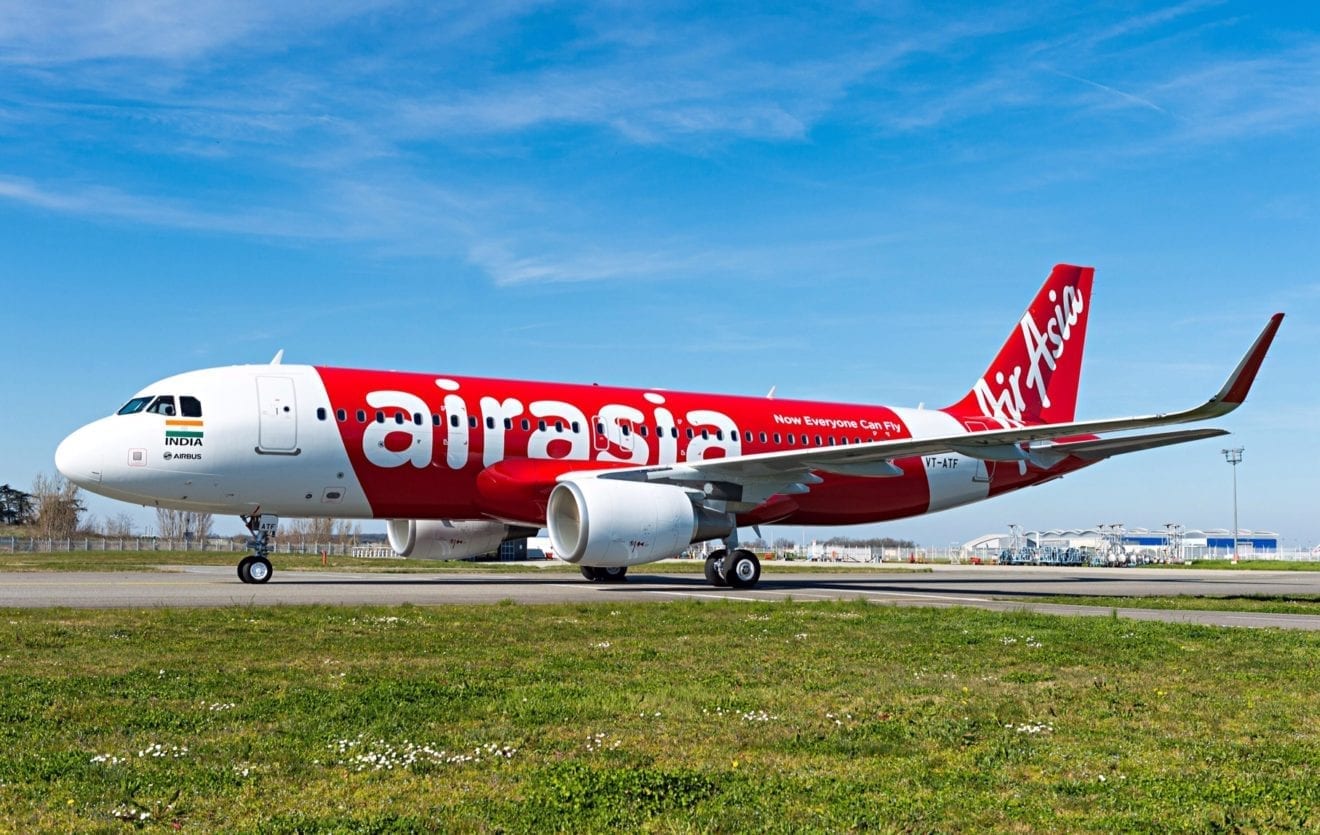
    Thai AirAsia X has completely pulled out of the Middle East, a market that appears unready for TAAX’s long-haul, low-cost business model. The airline, part of Asia’s biggest no-frills airline group, is axing Bangkok-Muscat and Bangkok-Tehran routes launched in June this year, due to poor traffic demand at both ends of the each of the routes.

    The termination of Bangkok-Muscat takes effect on Jan 19 and the suspension of Bangkok-Tehran flights became effective on Dec 5, according to insiders. TAAX has struggled to keep the two routes afloat by rationalising capacities to match actual demand. In November, the carrier reduced the frequency of service on both routes to two flights a week, the minimum level acceptable by the market, down from three flights a week at launch.

    TAAX deploys Airbus 330-300 wide-body jets configured with 377 seats on all its routes. The arrangement did not work out well, leading TAAX to terminate Middle East flights altogether. When TAAX inaugurated its Tehran flight on June 22 and Muscat service on June 28, the airline became the first low-cost carrier to offer regular non-stop services on those routes. TAAX’s departure means that all connections between Bangkok and the two Middle Eastern capitals will be handled by full-service airlines. Bangkok-Tehran flights are operated by Iran-based Mahan Airlines and Thai Airways International (THAI), which commenced service in October. The non-stop Bangkok-Muscat flights are flown by Oman Air, while Thai Airways offers regular services to the Omani capital with a stopover in Karachi.

    Insiders said the poor performance by TAAX was in sharp contrast with a rosy outlook perceived earlier this year. TAAX chief executive Nadda Buranasiri said in May the lifting of economic sanctions against Iran in January had turned Tehran into a new economic frontier and an emerging tourism market.

    “There seemed to be strong initial demand for both routes, but it tapered off to become unsustainable eventually,” said an insider who asked to remain anonymous.

    In a release, TAAX apologised for ending its Middle Eastern services and offered full refunds for affected passengers.

  • AirAsia to deploy 84 more flights this CNY

    AirAsia to deploy 84 more flights this CNY

    There’s good news for travellers with more flights servicing selected domestic and international routes ahead of the Chinese New Year festive period.

    AirAsia Berhad will deploy an additional 84 flights from Jan 25 to Feb 1.

    “We would like to encourage travellers to book their flights early for the upcoming festive season,” said AirAsia’s head of commercial Spencer Lee in a statement.

    “These flights will have an added capacity of 15,000 seats to facilitate the high demand of air travel during that period.”

    Among the routes are from Kuala Lumpur to Singapore, Penang, Sibu and Tawau, as well as from Penang to Singapore and from Johor Baru to Miri and Sibu.

    “Whether it’s a family reunion or a quick getaway, we hope that these additional flights with everyday low fares will help everyone to have a memorable Chinese New Year celebration,” Lee added.

    Travellers are advised to book their flights early at airasia.com or through the airline’s mobile app on the iPhone and android devices.

  • AirAsia’s New Year offer: Fly at Rs 917 onwards

    AirAsia’s New Year offer: Fly at Rs 917 onwards

    No-frills carrier AirAsia under a New Year offering is selling an all-inclusive tickets starting from Rs 917 onwards, NDTV reported on Monday.

    The Malaysia headquartered carrier’s offer is open till January 1 next year and is valid on travel from March 1 to October 31 in 2017.

    The airline presently flies to 11 destinations with its two hubs in bengaluru and New Delhi covering Chandigarh, Jaipur, Guwahati, Imphal, Pune, Goa, Vizag, Kochi and Hyderabad.

    GoAir is also offering tickets starting Rs 1,057 on specified sectors. The fares are applicable till December 31, GoAir said on its website. The Rs 1,057 fare is applicable on Delhi-Jaipur route.

  • AirAsia injects RM1b into Indonesia ops

    AirAsia injects RM1b into Indonesia ops

    AirAsia Bhd has injected US$227mil or RM1.01bil into its associate PT Indonesia AirAsia (IAA) to address the latter’s negative equity position.

    The low-cost carrier said  its board had approved the subscription of the US$227mil or 3.042 trillion nominal value of perpetual capital securities issued by its 49% owned Indonesian operations.

    AirAsia had on Friday entered into a perpetual security purchase agreement with IAA to formalise the issuance and terms and conditions between IAA and AirAsia for the subscription.

    To recap, on Sept 29, 2015, AirAsia had subscribed to 2.058 trillion rupiah nominal value, which was 49% of the perpetual capital securities issued by IAA.

    The move then was to comply with the directive received from the Directorate General of Civil Aviation (DGCA) of the Republic of Indonesia to resolve the negative equity position for financial year 2014.

    On May 10, 2016, the Indonesian DGCA had again instructed IAA to increase its capital to address the negative equity balance.

    Subsequently, IAA offered to issue 3.042 trillion rupiah of new perpetual capital securities to AirAsia.

    “The subscription is to enable IAA to attain positive equity position as directed by the DGCA in compliance with the directive.

    “Failure to address the capital shortfall carries the risk that the Minister of Transportation of the Republic of Indonesia would deny IAA’s requests for new route approvals or even impose a suspension of operations,” it explained.

    AirAsia said the Subscription would help reduce IAA’s gearing without any need for AirAsia to inject further funding or capital to IAA as it entailed converting the amount owed to the company into equity of IAA.

    “Indonesia is a crucial market for AirAsia. International Air Transport Association forecasted that Indonesia is expected to be the sixth largest market for air travel by 2034 with 270 million passengers.

    “The risk of suspension of IAA would not only affect the AirAsia brand but also affect the network and future growth of AirAsia Group,” it said.

    AirAsia said the perpetual capital securities carry an initial periodic distribution rate of 2% per annum for the first 12 months and subsequently 8% per annum on outstanding principal amount to the perpetual capital securities until the first call date.

    It will then be stepped up to 13% per annum on outstanding principal amount of the perpetual capital securities post the first call date thereafter.

    “Perpetual in tenure with no fixed maturity date, with IAA having a call option to redeem the perpetual capital securities at the first call date, which is at the end of the seventh year from date of issuance and on each subsequent periodic distribution date thereafter at their principal amount.

    “The periodic distribution rate will step-up by 5% if the perpetual capital securities are not redeemed at the first call date,” it added.

  • AirAsia targets to launch IPO in 2017

    AirAsia targets to launch IPO in 2017

    AirAsia Philippines, the local arm of Asia’s biggest budget carrier AirAsia Berhad, is ramping up plans to launch an initial public offering in 2017, its chief executive officer Tony Fernandes said.

    AirAsia Philippines continues to enjoy strong demand despite seeing a net operating loss of P915 million in the third quarter of this year, Fernandes said.

    Bulk of the company’s loss in the period was due to extraordinary costs.

    Fernandes aims to move a planned equity sale to raise as much as $200 million from an IPO.

    Most proceeds will finance expansion to increase the local unit’s current fleet of 15 Airbus 320s.

  • AirAsia India adds more direct flights connecting Bengaluru to Goa and Pune

    AirAsia India adds more direct flights connecting Bengaluru to Goa and Pune

    AirAsia India has announced an additional flight connecting Bengaluru to Goa and Pune starting December 18. The airline currently operates one daily flight between Bengaluru and Pune, and with this additional flight, the airline will operate two daily flights connecting the two cities.

    AirAsia India will also operate its fourth daily connection between Bengaluru and Goa starting December 18. Speaking about the additional frequency, AirAsia CEO and MD Amar Abrol said, “Our flights from Bengaluru to Pune are doing extremely well, and so are our three existing connections to the party city of India. We see immense demand in this sector. We are constantly working towards providing our guests the most convenient options for them to pick from. We are confident that this new connection is going to be well received by our guests.”

    AirAsia India currently flies to 11 destinations with its two hubs in Bengaluru New Delhi covering Chandigarh, Jaipur, Guwahati, Imphal, Pune, Goa, Vizag, Kochi and Hyderabad.

    AirAsia (India) Ltd is a joint venture between Tata Sons Limited and AirAsia, with AirAsia Investment Limited holding 49%, Tata Sons Limited holding 49% and Mr. S. Ramadorai (Chairman) and Mr. R. Venkataramanan, two directors of the company in their individual capacity holding 0.5% and 1.5% shareholding respectively in the airline.