Tag: airlines

  • Singapore Airlines warns of scams touting free First Class tickets

    Singapore Airlines warns of scams touting free First Class tickets

    Singapore Airlines has warned of contests, emails and calls claiming to be from the company, informing recipients of free air tickets before proceeding to request for their personal data.

    “To appear more authentic, such callers are also able to modify their caller ID to imitate our official telephone numbers,” it added on an advisory posted on the Singapore Airlines website.

    Over the weekend, one such scam has been circulating on messaging app WhatsApp.

    The message read: “Hello, Singapore Airline is giving away 2 Free FirstClass Tickets to celebrate it’s 45th anniversary, Now you can get your tickets too !” followed by a link that closely resembled the airline’s official website.

    Upon clicking on the link, people were directed to a website asking them to share the promotion with 20 friends or groups via WhatsApp and enter their address details to claim their tickets.

    As of Monday, the website appeared to have been taken down.

    The scam comes days after Singapore Airlines unveiled its new first class suites, among other cabin offerings on its revamped Airbus 380s.

    To verify websites, emails and calls claiming to be from Singapore Airlines, customers can send the airline details via its website, the carrier said in the Facebook post.

    “Singapore Airlines also wishes to advise customers to be cautious of social media posts and phishing websites that appear similar to our official website singaporeair.com,” it added.

  • Singapore’s Changi Airport Retains The Megahub Title In Asia

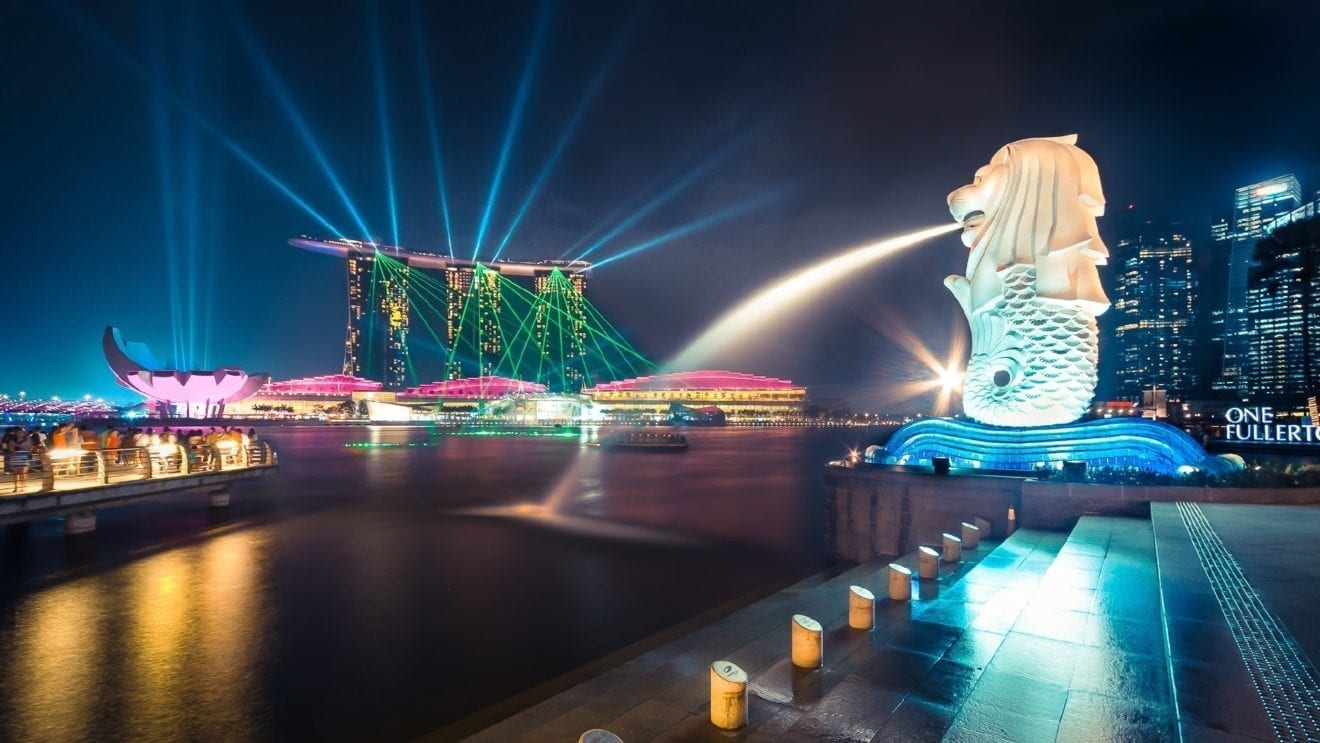
    Singapore’s Changi Airport Retains The Megahub Title In Asia

    Based on connections and destinations served, Singapore’s Changi gains the megahub title in Asia, according to the latest OAG Megahubs International Index 2017.

    If you are looking for an airport that offers the maximum connections and destinations, then of all the 16 airports in Asia that figured in the OAG top-50 annual index, Singapore led the way.

    Singapore was the top ranked Asian airport and in the global-50 list it was placed 6th with a connectivity index of 257.

    In the global rankings, London Heathrow (LHR) was the single most connected international megahub in the world by a clear margin. On a single day in July, there were over 72,000 possible international connections between flights arriving at LHR and flights departing within a six-hour window.

    Frankfurt Airport (FRA) and Amsterdam Airport (AMS) were ranked second and third, ensuring that the top three places went to European hub airports.

    There were some surprises in Asia.  Despite claims that Bangkok is the major aviation hub in the region, the rankings showed it trailed behind three other airports when connections and destinations were considered. Singapore ranked first in Asia, Jakarta second and Kuala Lumpur third.

    Bangkok was the fifth highest in Asia, with a connectivity index of 226, while globally it stood at 13th, trailing Hong Kong that came in at fourth regionally  ( 12th on the global list) with a connectivity index of 233.

  • Malaysia Airlines moves fully to the cloud

    Malaysia Airlines moves fully to the cloud

    Tata Consultancy Services has implemented an industry-first transformation project to migrate Malaysia Airlines’ data center to a 100% hybrid cloud model.

    To better enable a competitive-edge and future readiness for the airline, TCSorchestrated the large and complex project to migrate the airline’s core mission-critical data center infrastructure and myriad applications to a hybrid-cloud model operating 80% on Microsoft Azure and 20% on a private cloud.

    The pioneering move makes Malaysia Airlines the world’s first full-service airline to completely replace its existing data centers and adopt full-scale cloud solutions for its entire range of nearly 200 applications running mission critical commercial, operations and corporate systems.

    “We set out with an ambitious goal to digitally transform core IT operations to an as-a-service model, to achieve a quantum leap in cost savings, scalability, efficiencies, agility, and other key factors,” Malaysia Airlines CIO Tan Kok Meng said.

    The cloud-centric model is achieving exemplary results, including a 51% cost reduction forecast over the a 5-year period from mid-2016; productivity improvements up to 80% for core applications; application delivery times accelerated from days to hours in some cases; enhanced security and compliance capability and reporting.

    TCS Asia Pacific president Girish Ramachandran said this industry-first transformation not just drives improved value and enhanced operational efficiencies, but equally important, it enables Malaysia Airlines to deliver a better customer experience that results from a digitally-reimagined all-cloud IT model.

    As primary service partner, TCS collaborated with Microsoft, SAP, and numerous other vendors to ensure Malaysia Airlines’ current phase of digital evolution is seamless and cost-efficient and delivered without business disruption.

    The project scope included re-platforming of legacy applications for cloud compatibility and network service provisioning for large and complex airline operations. See the cloud transformation story in a single snapshot here.

  • Japan Airlines and Vietjet Launch Comprehensive Partnership

    Japan Airlines and Vietjet Launch Comprehensive Partnership

    Japan Airlines (JAL) and Vietjet today reached a formal partnership agreement that offers greater customer convenience and better quality of operations and services while enhancing the corporate value of both companies.

    The two airlines have held a series of discussions on expanding their networks in response to the travel needs of people in neighboring Asian countries next to Vietnam, in addition to meeting the growing demand for air travel between Japan and destinations in Vietnam. With the rapid economic growth in Vietnam, demand for air travel between the two countries has been growing strongly. JAL is already operating daily non-stop services between Tokyo (Narita) and Ho Chi Minh City and Hanoi respectively, as well as between Tokyo (Haneda) and Ho Chi Minh City.

    Vietjet, the first privately owned airline in Vietnam, began its flight services in 2011. It now operates an expanding network that covers all Vietnam and most parts of Asia. Offering convenient and friendly services with reasonable fares, Vietjet has succeeded in creating new travel demands in Vietnam. And as a new-age carrier, it has evolved to offer higher-class service “SkyBoss”, which has been very well received among passengers expecting quality service.

    As a first step, JAL and Vietjet have agreed to start a code-share cooperation for all flight services between Japan and Vietnam as well as the domestic flights of both airlines. Vietjet’s domestic flights, as well as flights between Vietnam and the other Asian countries will also be included. These   add-ons are expected to create more customer convenience. The two airlines will further explore opportunities to develop partnerships in various areas, including a frequent flyer partnership, aircraft operations and maintenance as well as ground handling services and training.

    “The launch of this partnership with Vietjet represents a significant milestone for the two airlines to provide customers with better access to destinations between Japan and Vietnam and beyond, and we believe it will contribute to generate more passenger and cargo traffic between the two countries and open up commercial opportunities on the two airlines’ international networks,” said Tadashi Fujita, JAL Executive Vice President.

    Luu Duc Khanh, Managing Director of Vietjet, said: “Through the agreement signed with JAL today, Vietjet once again affirms the airline’s commitment to innovation, leading market trends, and offering new services following the global integration and international standards. Japan is our key market as we expand the airline’s flight network in the Asia-Pacific region. The partnership between Vietjet and JAL will diversify our air transportation products and the market segment while stimulating the movement of people between the two countries as well as developing the two airlines’ relationship in line with our international commercial operation capabilities in the coming time.”

    More details will be announced at a later date on both airlines’ websites.

    Together with Vietjet, JAL will be striving to deliver greater conveniences and variety of choices to customers with a more comprehensive network in Asia.

  • SIA’s digitalisation efforts take off amid operating challenges

    SIA’s digitalisation efforts take off amid operating challenges

    Singapore Airlines (SIA) is investing significantly in its digital initiatives as it seeks to boost revenue as well as enhance operations and customer service amid increasingly crowded skies.

    The airline group is channelling “several hundreds of millions” of dollars over a five-year span as part of wide-scale efforts to digitalise its operations.

    “It’s increasingly difficult for companies to stand out from others,” SIA’s senior vice-president (sales & marketing) Campbell Wilson said in an interview with The Business Times. “SIA has been able to stand out from others for a long time by virtue of history, service reputation (and) the Singapore Girl. We can’t rest on these laurels.”

    One key part of its ongoing digital revamp is building a holistic database on its passengers, from which it will leverage data analytics and algorithms to derive insights on each passenger. Such insights will enable the airline group to offer tailored products and services to individual consumers via channels such as its website or electronic direct mailers (EDMs).

    “What technology allows us to do is to present the right combination of products, services and price that .best suits (a) person’s profile,” added Mr Wilson, stressing that this enables the airline group to differentiate itself from low-cost carriers and other full-service carriers that may not be able to put together similar packages.

    The aim is to convert existing website traffic to a transaction and ultimately, revenue. While increasing conversion is the “lowest hanging” fruit, it would also be the “biggest mover of the needle”, he noted. “A lot of people get to our website and don’t actually complete through the transaction.”

    One example of a personalised offer for the silver generation could include promising a meet-and-assist service on arrival and a seat near the front of the cabin – services that may not cost extra, but could provide value to a passenger. Personalising the sales experience is increasingly important as more and more consumers let their fingers do the shopping by going online, Mr Wilson went on to highlight.

    Some of these efforts are starting to pay off. Thanks to data analytics, SIA has been able to drive a 20 per cent greater uptake in sales of preferred seats – which come at a fee – to selected passengers. This can be expanded to other areas of ancillary revenue such as duty free products, insurance and cabin upgrades.

    This comes as legacy carriers such as SIA and Cathay Pacific grapple with an increasingly competitive industry, with the Gulf and Chinese carriers expanding aggressively on routes, often at cutthroat fares. For FY16/17, SIA posted a 55 per cent slump in full-year earnings to S$360.4 million, weighed down in part by declining yields.

    The airline is working on improving operations by rolling out apps for its pilots and ground staff, while its engineering division is leveraging predictive maintenance for the upkeep of aircraft. To this end, it is working with tech giants such as IBM as well as startup firms. Its cabin crew already have an app to help them better serve passengers onboard, as well as to enhance operational processes.

    From mid-June, its pilots will have access to apps on company-issued iPads giving them flight-related updates, which will allow them to go straight-to-the-gate without having to stop at the control centre. The app covers pre-flight through post-flight operations – such as the flight plan and pilot rosters – and also cuts down on paperwork.

    “That saves a lot of time and improves productivity for pilots,” pointed out George Wang, SIA’s senior vice-president of information technology. In the interest of security, data in the app is protected with encryptions and access controls; pilots will also only be able to access information relating to their own flights.

    Similarly, an app will be made available for ground services staff by year end so they can work more efficiently, while giving them access to more data which will help with decision-making and serving customers, Mr Wang added.

    Meanwhile, other features are due to be introduced for SIA’s website and app, namely tie-ups with Samsung Pay, Apple Pay and ride hailing service Grab. A one-touch payment option is also on the agenda for added convenience.

    On the back-end, the group is “re-wiring” its underlying technical framework so that improvements and new features can be rolled out more swiftly on its website and app. The first phase is slated for completion by the beginning of next year.

    Other airlines are also turning to various forms of digitalisation to keep costs low, increase revenue and improve customer satisfaction. It was reported that low cost carrier AirAsia, for example, plans to analyse passenger data to find ways to enhance passenger experience.

    Digitisation aside, SIA chief Goh Choon Phong has set up a transformation office as part of a broad review so that the airline can position itself better for long-term growth. This will include taking a hard look at ways to generate additional revenue, reduce costs, exploit synergies and improve businesses processes.

    “SIA has done more to respond and adapt than most of its peers,” noted Centre for Aviation (CAPA) analyst Brendan Sobie, commenting on the transformation efforts in a recent report. “However, the industry is changing at an even faster speed and competition has never been so intense,” he went on to say, adding that SIA may still need to push the envelope even further.

  • Vietnam Airlines targets nearly $4 bln in revenue for 2017

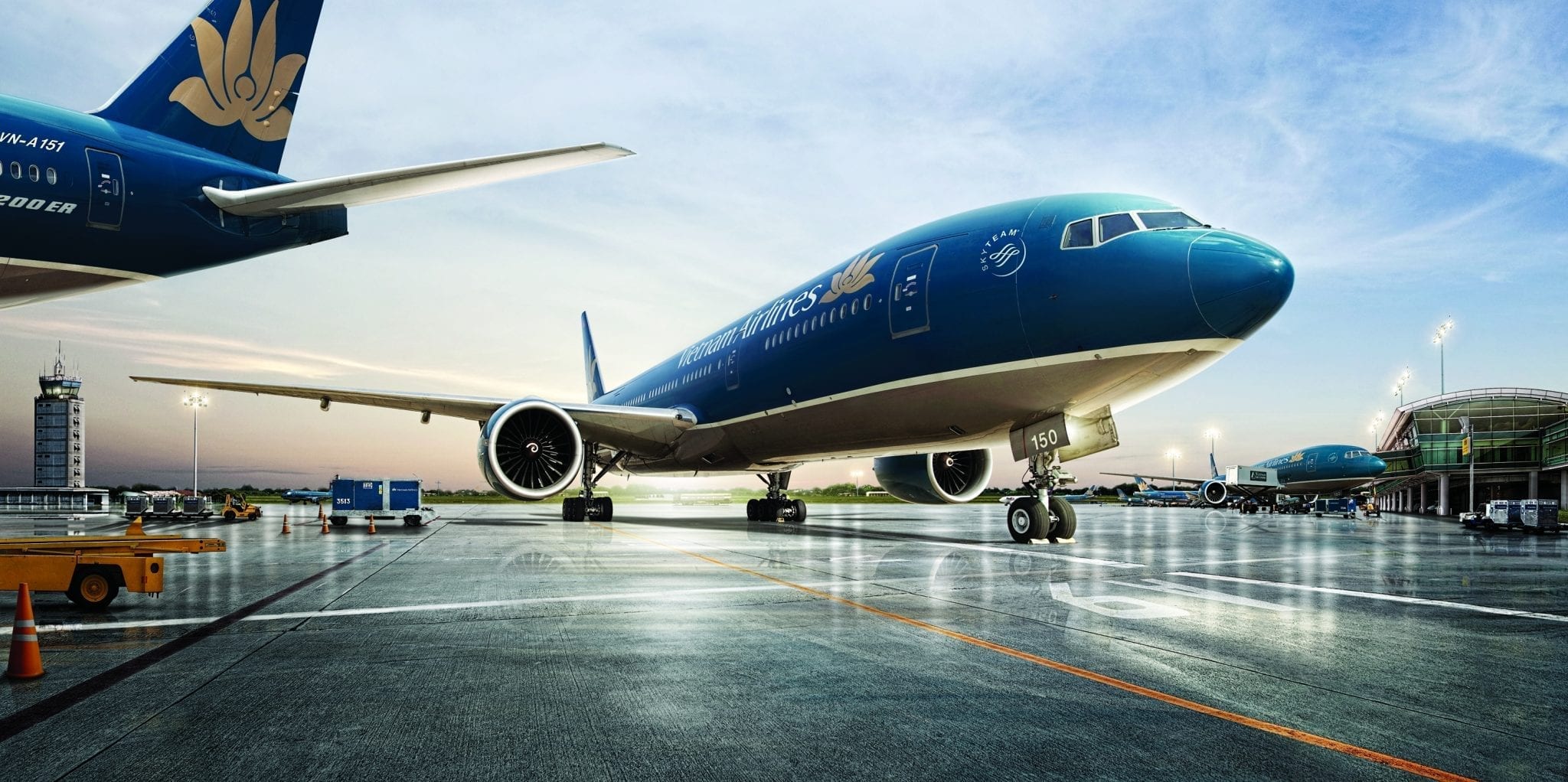
    Vietnam Airlines targets nearly $4 bln in revenue for 2017

    A high salary bill and increased competition dragged on the carrier’s income last year. Vietnam’s national flag carrier Vietnam Airlines (VNA) has set a revenue target of VND87.9 trillion (nearly $4 billion) for 2017, up 22.7 percent from last year.

    A report to be submitted at VNA’s annual shareholder meeting on June 20 shows that 2016 was a difficult year for the carrier due to increased competition from budget airlines on international and domestic routes.

    In 2016, VNA’s revenue hit VND71.6 trillion, eight percent below its target. That was partly due to a salary bill for 6,199 workers that cost VND2.7 trillion.

    Pilots’ salaries rose 4.7 percent on average to VND115.3 million per month, while flight attendants enjoyed a rise of 10.9 percent from last year to VND25.5 million.

    According to the airline, the Vietnamese economy remains unpredictable due to foreign currency and fuel price fluctuations, as well as fiercer competition.

    At the upcoming meeting, VNA will ask shareholders to for approval to issue 191 million new shares to existing stakeholders at a starting price of VND10,000 in order to increase its charter capital.

    If the proposal is adopted, the shares will be issued in the fourth quarter of this year, bringing the airline’s charter capital to VND14.2 trillion.

    The money will be used to buy more Boeing Dreamliners and Airbus A350s.

  • Aviation infrastructure overloaded

    Aviation infrastructure overloaded

    The heavy investment made recently by the Airports Corporation of Vietnam (ACV) to upgrade airports and develop new infrastructure still cannot satisfy the increasingly high travel demand.

    The additional parking lots set up by ACV recently do not mean much if compared with demand, while airlines still have to scramble for the locations to park their aircrafts. Noi Bai and Tan Son Nhat Airports had many meetings to discuss the allocation of parking lots but they were not useful.

    Giao Thong quoted a high ranking executive of Vietnam Airlines as saying that the carrier’s fleet has 10-15 new aircraft every year while it has put next-generation aircrafts into operation. In 2015, Vietnam Airlines had 83 aircrafts, while the figure is expected to increase to 120 by 2020. This leads to a higher demand for parking lots and the upgrade of technical service areas.

    Nguyen Thi Phuong Thao, CEO of Vietjet Air, has repeatedly asked for more aircraft parking lots at the Tan Son Nhat, Noi Bai and Da Nang Airports. In 2016 alone, the air carrier needs at least 44 parking locations.

    According to Tran Van Thang, ACV’s deputy CEO, ACV has arranged 11 new parking locations at Noi Bai, raising the total number of licensed locations to 70.

    At Tan Son Nhat Airport, four new locations have been arranged for ATR72 aircrafts. The figures are 8 at Da Nang and 16 at Cam Ranh. However, he admitted that the additional supply still cannot satisfy the high demand from airlines.

    Head of the Civil Aviation Authority of Vietnam (CAAV) Lai Xuan Thanh confirmed the lack of parking lots for aircrafts. He said all the four large airports including Noi Bai, Tan Son Nhat, Da Nang and Cam Ranh need to have their parking areas expanded to satisfy the demand.

    A CAAV report showed that in the first six months of 2016, airlines provided more than 128,000 flights, 15.8 percent of which were delayed while the canceled flights amounted to 0.6 percent.

    About the reasons behind the delayed and canceled flights, the report pointed out that airlines’ technical problems were the direct reason of 10.3 percent of delayed flights, while the lack of equipment at airports caused the delay of 6.2 percent, or 1,250 flights.

    Meanwhile, the problems in flight control at the departure airports were the reason behind the late arrival of 11.3 percent of total delayed flights.

    Thanh from CAAV said that until the Long Thanh Airport is built and put into operation, the overloading at Tan Son Nhat would still not be settled.

  • Vietnam to have more airlines

    Vietnam to have more airlines

    On May 31, the FLC Group announced that they will set up Viet Bamboo Airlines with VND700bn (USD31m) in charter capital. Viet Bamboo Airlines will also invest in the real estate and other sectors. The capital is just enough to allow FLC Group to join both local and international transportation markets with 10 planes. The money will be frozen to prove the investor’s financial capacity.

    As of now, three firms have announced their plans to establish and expand new airlines are Viet Bamboo Airlines, Vietstar Airlines and a joint-venture carrier by Malaysian AirAsia Group and Hai Au Aviation JSC.

    Vo Huy Cuong, Deputy Director of the Vietnam Civil Aviation Administration, said he hadn’t received registration documents from FLC Group or Hai Au Aviation JSC and AirAsia Group. Vietstar Airlines’ registration has been halted while the government tries to deal with overloading at Ho Chi Minh City’s Tan Son Nhat Airport.

    Cuong said they would receive and check the documents before submitting to the Ministry of Transport. However, if the airlines will also operate at Tan Son Nhat Airport, the investors are warned that they won’t be given permit before the new airport planning is completed.

    Hai Au Aviation JSC first started their seaplane services in Ha Long Bay in 2014. The company’s representative said they were completing legal procedures in order to establish an airline. They will submit the documents in the next two months for 2018’s operations.

    “Our plan is related to Tan Son Nhat Airport’s expansion so it won’t be affected, unlike other projects,” he said.

    According to Hai Au Aviation JSC, they will open completely new routes. In the first phase, they will invest in routes from Hanoi and Danang to other Asian countries.

    Meanwhile, Vietstar Airlines has decided to cut half of its fleet from 23 to 10 planes to suit Tan Son Nhat Airport’s capacity so that they can begin operations in 2018.

    Many private firms asked to set up new airlines between 2005-2010. But due to lack of financial capacity, they suffered losses and went bankrupt such as the Indochine Airlines and Air Mekong. Vietjet Air was given a permit in 2007 but had to wait until 2011 before officially entering operation.

    The situation is different now as the average growth of the South East Asian aviation market is over 16%. The growth of the local market could reach 30%. Vietnam has a prime position and can allow narrow-body aircraft to go to most major cities in North Asia, South East Asia and India within five hours.

    The number of passengers in Vietnam is low, yet the demand is still higher than the supply. Vietnam has seven licensed airlines but only four have public transport services. Vietnam Airlines and Vietjet Air top the list with over 40% of market share.

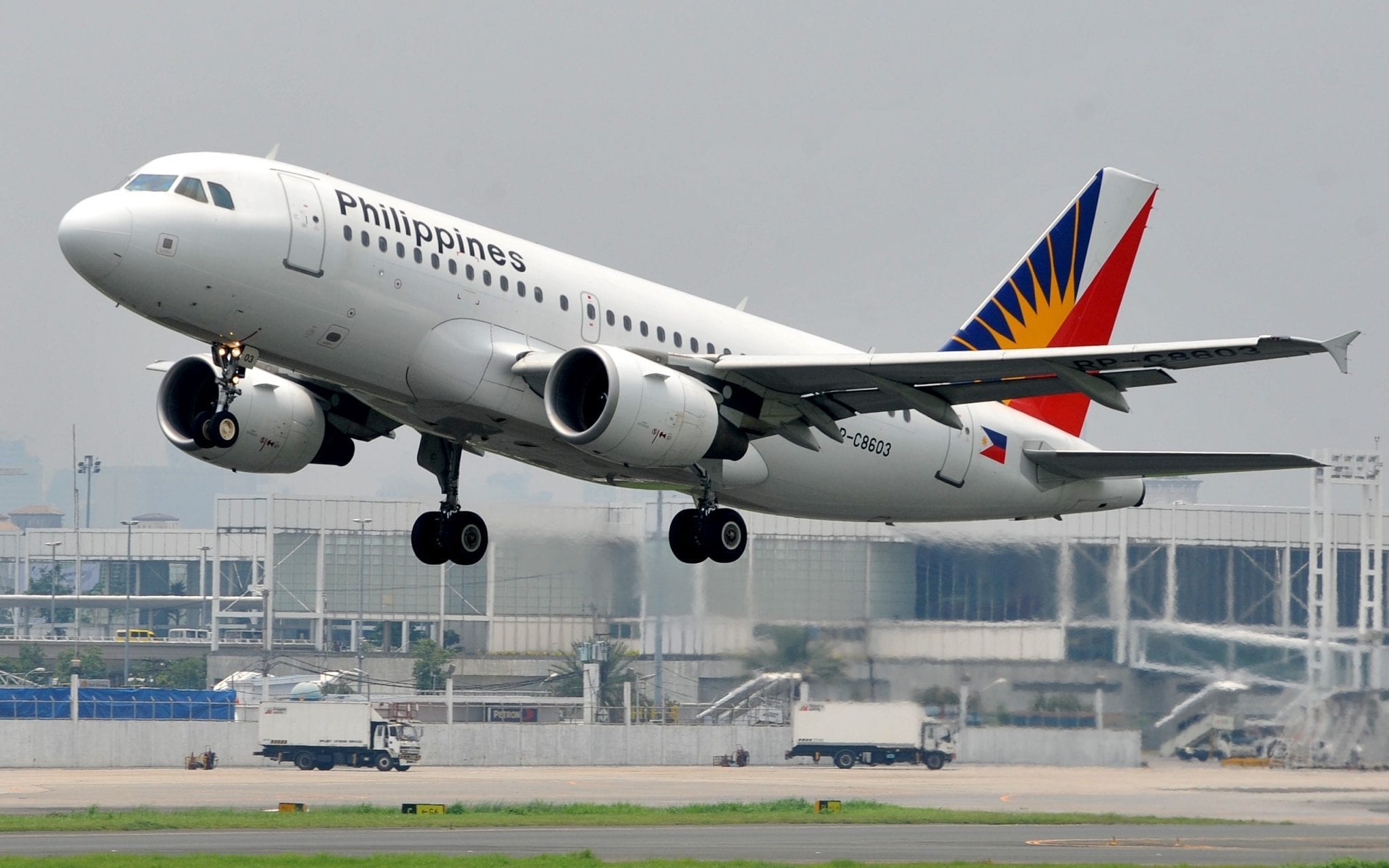
  • PAL suspends Cebu-Los Angeles service

    PAL suspends Cebu-Los Angeles service

    THE Philippine Airlines (PAL) announced Monday, that it will “temporarily suspend” its Cebu-Los Angeles service effective May 30. In its advisory, the airline company said “the suspension of the Cebu-Los Angeles service is being carried out as PAL rationalizes capacity on the route.”

    “PAL is seeking the kind understanding of affected passengers as the airline implements these operational adjustments,” it said. PAL said passengers with tickets of the Cebu-Los Angeles flights dated May 30 and onwards may re-route and/or rebook their flights to Cebu-Manila-Los Angeles flights.

    Those with Los Angeles-Cebu flights may re-route and/or rebok their flights to Los Angeles-Manila-Cebu. The company added that it can also refund the cost of tickets of those affected passengers. “Affected passengers are advised to avail themselves of any of these options within 30 days from original flight dates, with rebooking/refunding charges waived,” PAL said. It said it will “communicate with affected passengers via email notification and call-out.”

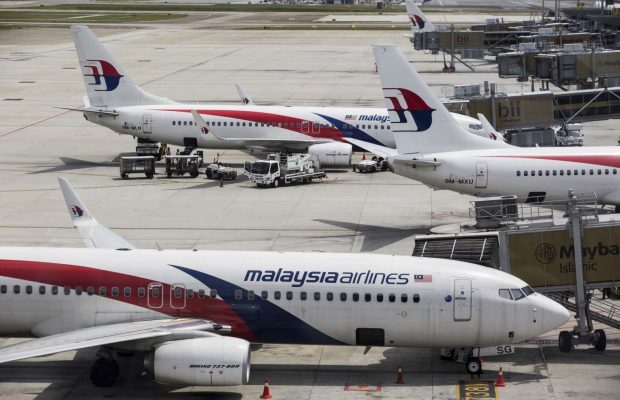
  • Malaysia Airlines offers to lease A330s from Alitalia

    Malaysia Airlines offers to lease A330s from Alitalia

    Malaysia Airlines has offered to lease Airbus A330 jets from Alitalia if the struggling Italian airline is wound up, the Asian carrier’s chief executive told on Wednesday.

    Alitalia is preparing for special administration proceedings after workers rejected its latest rescue plan, making it impossible for the loss-making airline to secure funds to keep its aircraft flying. Workers are hoping the Italian government will step in with an alternative rescue deal.

    Malaysia Airlines could take between six and eight Airbus A330s from Alitalia, CEO Peter Bellew told in Dubai.

    An Alitalia spokesman declined to comment.

    Malaysia Airlines is emerging from a turnaround after twin tragedies since 2014, when flight MH370 disappeared in what remains a mystery, and flight MH17 was shot down over eastern Ukraine.

    Its load factors – or how full its planes are – averaged around 80% in the three months to March 31, Bellew said.

    Malaysia Airlines wants to lease between six and eight A330s or Boeing 777s for use from 2018 and a further seven to nine for 2019, he said.

    This is an increase on the six for 2018 and six for 2019 he told last month he was interested in.

    “The world really is awash right now” with large aircraft, Bellew said. “There are really good deals out there at the moment. It’s a buyer’s market right now.”

    Bellew also said he planned to make a decision on an order for 30-35 new Airbus A330neo or Boeing 787-9 widebody planes in the next four to six months to replace its A330s from the end of 2019.

    “If the prices are good … we will do an order,” he said. “But if the price isn’t right, we won’t do it.”

  • Growing flight frequency of Mideast airlines to benefit Bali tourism

    Growing flight frequency of Mideast airlines to benefit Bali tourism

    The Bali branch of the Indonesian Association of Tour Operators (Asita) said increase in the flight frequency planned by major Mideast airlines – Qatar Airways and Emirates Airlines between Middle East and Bali would significantly contribute to the islands tourism growth.

    Qatar Airways said through its Instagram it would increase flights to three times between Doha to Bali starting May 7, 2017.

    “Now there will be more reasons to see the yet untouched beauty of Bali,” the airline wrote in its social media account that drew more than ten thousands of comments.

    Earlier this month, another major airline from that region, Emirate Airlines of the United Arab Emirates already announced plan to increase flight frequency to twice everyday from Dubai to Bali starting July 2 this year.

    The increase in the flight frequency by the two world class airlines would further draw foreign tourists to Bali, Chairman of the Bali branch of Asita Ketut Ardana said here on Monday.

    Ardana said the recent holidaying visit of Saudi King Salman bin Abdulaziz Al Saud to Bali has added to the attraction of Bali for tourists from Middle East.

    “Bali is already attractive but with the visit of the Saudi King and his large entourage made Bali more attractive for holiday makers from Middle East,” he said.

    The increase in the flight frequency by the two airlines would facilitate the transport of tourists from that region to Bali, he added.

  • Singapore Airlines locks in daily Airbus A350 for Melbourne

    Singapore Airlines locks in daily Airbus A350 for Melbourne

    Singapore Airlines is locking in its advanced Airbus A350 jet for a year-round schedule between Melbourne and Singapore starting May 11, 2017.

    The sleek jetliner has made a number of short-term appearances on the route, but later this year it’ll be running daily as Melbourne-Singapore flight SQ208 and the SQ207 return leg.

    Travellers at the pointy end can relax in the Star Alliance member’s latest business class seat, evolved from that of the  Boeing 777-300ER flagship.

    It’s an “evolutionary, not revolutionary” approach, reported AusBT’s Suzanne Wu from one of the first SQ A350 flights – “and that’s not a bad thing. Not a whole lot was broke, so not a whole lot needed fixing.”

    Melbourne’s SQ218/SQ217 is also running on an A350 until June 30, after which it will revert to the Airbus A380 superjumbo.

    Asian rival Cathay Pacific already has one Airbus A350 on the Melbourne-Hong Kong route as CX104/105, with a second slotting into CX134/135 from October 29, while Thai Airways says its own on-again off-again Melbourne A350 flights should launch before the year’s end.

    April sees Singapore Airlines celebrate 50 years of flying to Australia, and is tipped to debut its newest Airbus A380 – fitted with next-generation first class suites and business class seats – on the Singapore-Sydney route in October 2017.

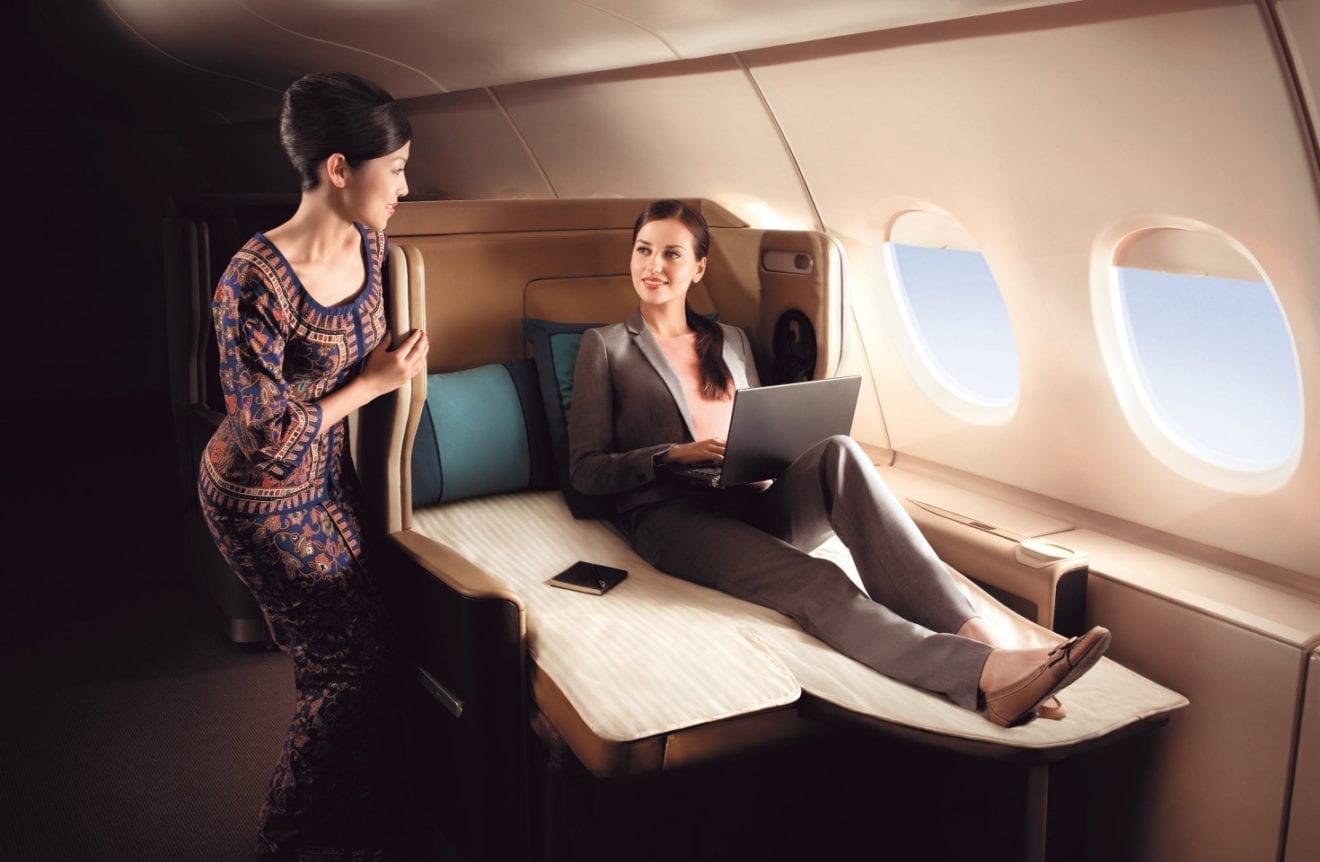
    The redesigned first class suites will be fewer in number – down the current superjumbo’s 12 to between six and eight – but much larger in footprint, and have been relocated to the upper deck.

    Next year will see Singapore Airlines restart direct flights between Singapore and the USA, with both New York and Los Angeles in line for an ultra-long range version of the A350 dubbed the A350ULR.

    This long-legged jet will carry all-new business class seats compared to the Melbourne A350, but only around 170 seats – some 80 less than the airline’s regular A350-900s – in order to minimise fuel burn and maximise range for the 18-19 hour journey.

  • Airlines to increase airfares

    Airlines to increase airfares

    The national flag carrier Vietnam Airlines increased tickets for business class on for domestic flights by 100,000 – 500,000 VND per leg; and economy class 40,000 – 300,000 VND.

    The airfare adjustment will be applied from April 1 for specific flights.

    However, Vietnam Airlines will maintain around 10 low-cost prices for each domestic flight, and keep unchanged prices for some specific routes.

    Vietjet Air also increased service fees from 100,000 VND to 140,000 VND per domestic leg and from 120,000 VND to 160,000 VND per international leg from March 22.

    Meanwhile, Jetstar Pacific announced to increase management fees from 100,000 VND to 130,000 VND per leg from March 15.

    The adjustment of airfare is based on the market demand and regulations of the Civil Aviation Authority of Vietnam and Ministry of Transport, a representative from Vietnam Airlines said.

    It also aims to ensure healthy competition in the aviation sector, a representative from Vietjet Air said.

    The Civil Aviation Authority of Vietnam in early this month sent a proposal to the Ministry of Transport to raise several aviation service charges in order to reduce peak-hour overloads and raise money for infrastructure development.

    Under the proposal, take-off and landing service charges at major airports, including Noi Bai and Tan Son Nhat, would be raised by 15 percent during rush hours and reduced by 15 percent during off-peak hours.

    The Civil Aviation Authority is also proposing a hike in security charges of 0.5 USD per passenger for international flights, and 18,181 VND (0.9 cents) per passenger for domestic flights – double the current charge.

    A hike of 40,000 VND in passenger service charges is also being proposed, raising them to 90,909 VND for arrivals and departures at type A airports, and 72,727 VND at type B airports.

    The increase is explained by the upgrading of many airports and passenger service quality.

  • See Singapore from $445 return flying Singapore Airlines

    See Singapore from $445 return flying Singapore Airlines

    With budget airlines such as Scoot now flying to Singapore, cheap flights to the Asian nation are a dime a dozen. However, if you’re searching for luxury on that long-haul journey, Singapore Airlines is one of the best carriers to take you there.

    The luxury airline currently has discounted fares to Singapore from $445 return, for flights departing from Perth.

    The last time we saw Singapore Airlines’ fares drop along these routes was in November 2016, where fares started from $515 return.

    These sale flights are for travel on select dates between 8 May and 21 October 2017. This includes select dates in June, which is an ideal time to visit Singapore as it’s the dry season and outside of the school holiday period.

    Sample fares in this sale include $552 return from Darwin, $600 return from Melbourne and $613 return from Sydney.

    Singapore Airlines is an all-inclusive carrier. These fares include checked-in luggage, in-flight entertainment and on-board meals.

    These fares are not part of any particular promotion and are available until sold out.

  • China Southern Airlines issues open invitation to brands

    China Southern Airlines issues open invitation to brands

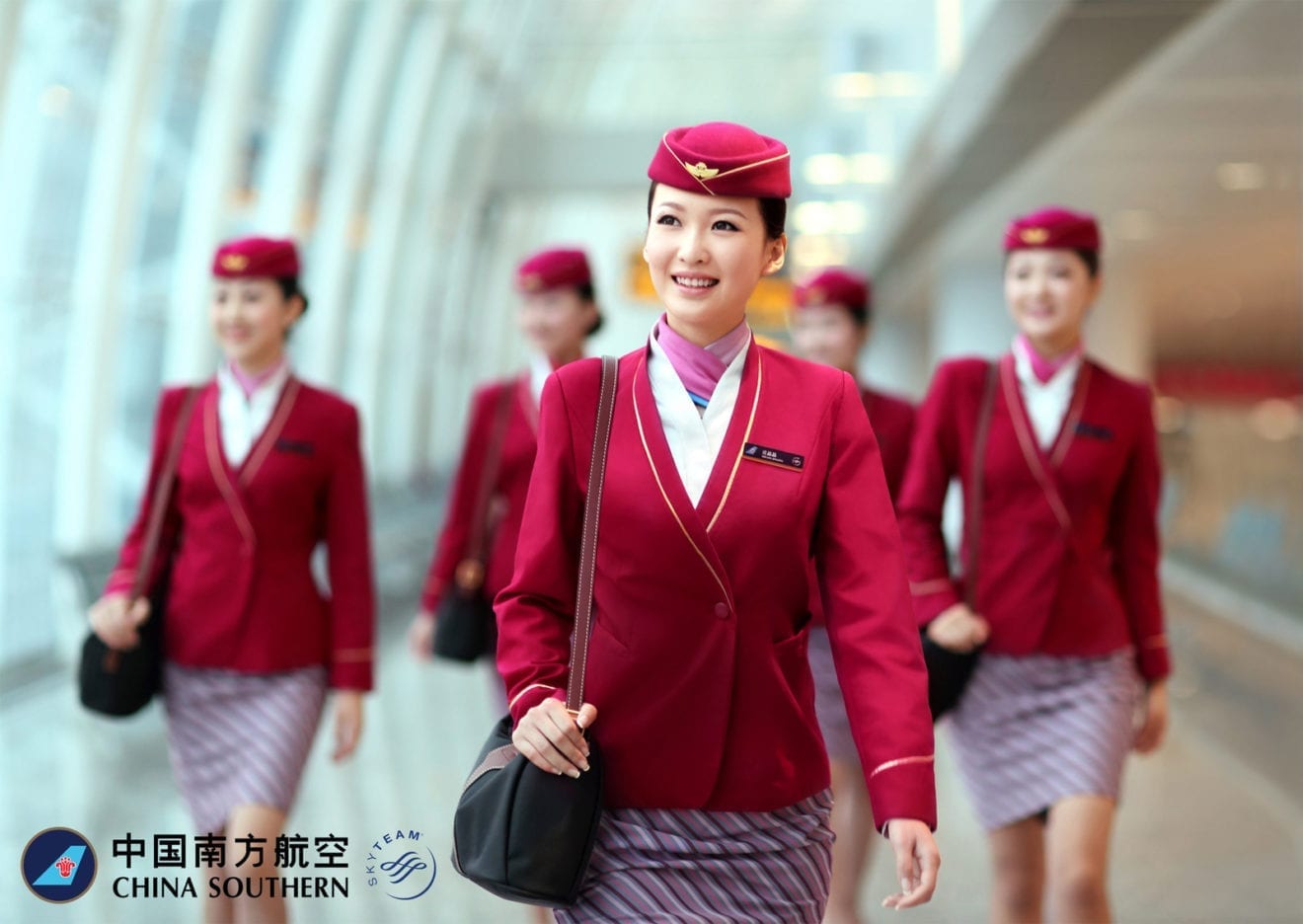
    Li Jianhua, President and CEO, Guangzhou China Southern Airlines (CSN) Inflight Duty Free says it has enjoyed double-digit sales growth in recent years driven by innovation in its product portfolio as well as the introduction of duty free exclusives and a pre-order service.

    “We have redeveloped our products and pricing for specific buyer groups,” said Jiianhua. “But we still need more luxury brands to enter the market to appeal to a new generation of consumers in China.”

    She also implored brand owners in the audience to come forward to begin conversations with CSN, whilst promoting the huge potential of the China inflight market.

    Jianhua charted the company’s rise to success to become ‘the largest airline in Asia by fleet and passengers’ as the carrier claims. Jiianhua highlighted that CSN launched its first inflight retail programme in 2001 and it very quickly began to play a very important role for the airline, not just from a customer engagement perspective, but from a revenue generation standpoint.

    She pointed out that the company wants to extend its global reach, identifying that Southeast Asia represents 31% of the company’s current route quota and with Japan & Korea accounting for 28%.

    She also pointed out that she believes the company has great potential, especially considering that Chinese overseas visitors reached 122m in 2016. As the company expands its route reach and takes advantage of the growing number of passengers Jianhua insists that inflight retail will be available on ‘every international flight’.

    Skincare represents 30% of China Southern’s inflight business.

    She noted that research from Fortune Character suggests that Chinese consumption continues, but has slowed down in recent years and high-end consumers now tend to make more ‘rational’ decisions.