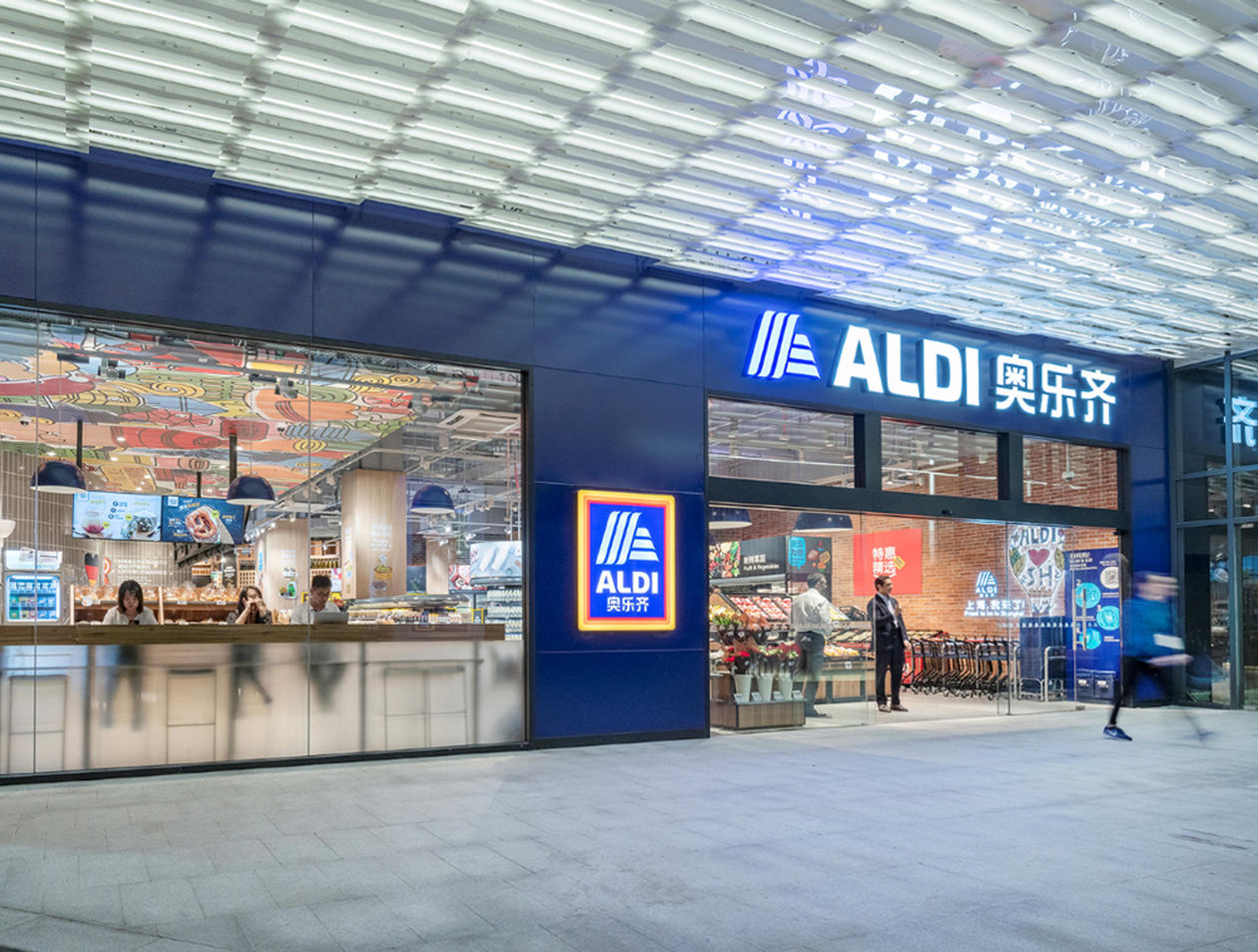
Aldi is doubling its store expansion pace in China to reach 150 outlets nationwide by the close of 2026. The German hard-discount chain expects to launch around 60 locations this year, roughly twice its annual total from earlier years, China chief executive Jacqueline Chen said in an interview published this week.
Expanding from Shanghai into Jiangsu
The company operates more than 70 stores in Shanghai and over 50 across the southern region of Jiangsu province. Most locations run on a compact footprint of roughly 1,000 square meters, carrying about 2,000 stock-keeping units. Over 90 percent of those goods are private labels, allowing the retailer to bypass third-party distributors and strip out wholesale markups.
To support that density, Aldi recently brought online its third major warehouse in East China, located in Nanjing. Supply chain capacity must be built before entering a new market, Chen said, pointing out that the distribution hub will let the company launch regional branches faster while balancing logistics costs, speed and inventory resilience.
The Psychology of the Ten Yuan Anchor
Price architecture drives the operational model. Between a quarter and a third of all products on Aldi shelves in China sell for less than CNY10 (USD1.49). Merchandise buyers identify the band between CNY9.90 and CNY12.90 as the critical psychological threshold to secure impulse basket additions, with shopper conversion dropping steeply once single-item pricing crosses CNY13.
Domestic rivals including Kinglomo, Mart Fresh and Sanjiang Shopping Club are competing aggressively around the same ten-yuan price point. Across Chinese retail, discount formats and membership warehouse clubs remain the sole grocery models gaining share in an otherwise strained consumer environment. Warehouse clubs serve mid-to-high-income households buying in bulk, leaving discount supermarkets to mop up high-frequency foot traffic with low-cost daily necessities.
Supplier Margins and Format Risk
Aldi is betting that intense urban density inside the Yangtze River Delta can insulate it from the deflationary price battles hurting conventional hypermarkets. Big-box grocery chains across eastern China have struggled with large physical footprints and costly vendor fees, creating opportunities for smaller neighborhood stores. By leaning on local manufacturing for proprietary labels, the chain protects gross margins that traditional grocers lose to national brand allowances.
The risk sits in category depth and supplier stickiness. Regional domestic operators have copied the limited-assortment private-label model with faster localized sourcing cycles, while suppliers face shrinking margins under Aldi’s cost-plus purchasing contracts. If identical ten-yuan staple goods saturate local wet markets and convenience chains, retaining customer traffic will require constant product rotation rather than price cuts alone.
Building Out East China Footprint
Aldi entered the Chinese mainland market in 2019, initially using cross-border e-commerce before setting up physical neighborhood locations across Shanghai. Over the subsequent five years, it calibrated its assortment from imported European specialty foods toward domestic hard discount, steadily pushing out of Shanghai’s central wards into secondary cities across Jiangsu.
The immediate benchmark is the completion of the 2026 expansion schedule, which requires delivering the remaining pipeline of the planned 60 openings to hit the 150-store fleet total before the close of December.