Retail News CRM

Tag: aldi

  • Aldi enters TV cooking space

    Aldi enters TV cooking space

    Supermarket chain Aldi has signed up to its first TV cooking show sponsorship deal as the German retailer escalates its market share fight with local behemoths Coles and Woolworths.

    Aldi will feature its pantry on Channel Seven’s new production, Hell’s Kitchen, hosted by celebrity chef Marco Pierre White.

    White is a former guest judge on rival Ten Network program, MasterChef, which has had a partnership deal for the past nine years with Coles.

    Aldi’s deal with Hell’s Kitchen follows its sponsorship of Nine Network renovation show, The Block, in 2015.

    The discount retailer has stepped up its media strategy, with new a branding campaign launched in May adding to sponsorship of kids’ soccer.

    In May Aldi said it had almost 10 per cent of Australia’s $80 billion plus supermarket sector.

    In the past 12 months, Aldi has also increased its range by about 100 new products and spent more than $75 million on lowering grocery prices during the first months of 2017.

    More recently, the German giant signed up to the Australian Government’s voluntary Tax Transparency Code (TTC).

    The discount supermarket retailer said it has ‘consistently maintained an open and positive working relationship with the Australian Taxation Office,’ and that since achieving profitability in the Australian market, has paid on average 31 per cent of pre-tax profits to the ATO.
  • Aldi enters Chinese retail market

    Aldi enters Chinese retail market

    The German retailer has a unique retail model that has captured market share around the globe, but it’s entry in China will be a little bit different.  On April 25 the company announced it had launched its Chinese presence through a collaboration with online retailer TMall Global.

    The collaboration was announced at a fashion show organized by the two companies, where models were wearing clothes from the retailer.

    “In recent years, retailers from different countries have put Tmall Global as a top choice when considering entering the Chinese market, and have achieved astounding sales,” Tmall Global general manager Alvin Liu was quoted as saying on Kejilie.com.

    “Tmall Global is very honored that we can collaborate with Aldi this time to explore new retailing opportunities together, and we believe that Aldi, known for its top-quality products, will be able to better meet the demand of Chinese consumers.

    The story reported Aldi China CEO Christoph Schwaiger as describing the collaboration as the start of Aldi’s journey in China.

    “We will try our very best to fulfil the promise to provide Chinese consumers with premium lifestyle products, and will proactively boost the growth of China’s retail scene and consumer spend,” he was quoted as saying.

    Since March 20 when Aldi did its first trial on the Tmall platform, hundreds of SKUs (stock keeping units) have already been put online to complement the usual spending habits of consumers in China’s first and second tier cities.

    During the trial period, products such as milk powder (for adults), honey and mixed nuts were bestsellers, and even ran out of stock. To solve the problem, Aldi was forced to ship in new stocks from Australia.

  • Aldi China opening store on Tmall

    Aldi China opening store on Tmall

    Aldi China plans to open a flagship store on Tmall, Alibaba’s B2C marketplace platform, within the next few months.

    The German supermarket chain has just launched a corporate website in China to signal its upcoming entry into Asia. This features a market-specific logo and Chinese name 奥乐奇, with the slogan “Handpicked for you”.

    Aldi shares which product categories it will offer the Chinese market: breakfast, snacking, wine, organic and cooking. Some of these products will be directly imported from Aldi’s suppliers in Australia.

    It was initially thought Aldi would launch its own independent website, reports Retail Analysis. Other grocery retailers that sell through Tmall include Sainsbury’s and Waitrose from the UK. Waitrose sells through Royal Mail’s Tmall site.

    While China’s online market is competitive, Aldi’s approach will give it time to understand Chinese shoppers and adapt its offer if necessary. And though many products will come from Australia, Aldi has a strong focus on local sourcing in many of its other markets.

  • German supermarket Aldi opens online store in China

    German supermarket Aldi opens online store in China

    The soft opening of a bricks and mortar store meanwhile is scheduled for 20 March and the official grand opening will be held in Shanghai in April, the company said in a statement on its website.

    Most of the products will be sourced from its existing Australian suppliers to serve the China market with a focus on value.

    “For decades, the Aldi’s own brands have enjoyed the reputation of providing excellent value for money,” said Christoph Schwaiger of Aldi. “We are convinced that Chinese customers are also very interested in the quality and the reasonable prices we can offer them.”

    Terry von Bibra, general manager Europe of Alibaba Group, commented: “The name Aldi is a concept in many countries of the world and like Alibaba, the company is a pioneer in its industry. We are very pleased to support Aldi Sud at the Chinese market with Tmall Global, one of the largest e-commerce platforms for consumers in China, and to work as a strategic partner with Aldi  in other areas, such as B2C, B2B and marketing.”

    “Alibaba’s e-commerce platforms reach not only the approximately 443 million active users, but also serve the strongly growing interest of the Chinese middle class in products Made in Germany. The products of Aldi South will undoubtedly be very popular among consumers. ”

  • Aldi poised to sell wine in China

    Aldi poised to sell wine in China

    The discounter has been rumoured to be mulling a launch in mainline China since 2014, when it was reported by the Guardian, however a report in German trade publication Lebensmittel Zeitung announcing the online-only move last week has been confirmed to the Australian media by Aldi.

    The Aldi spokesman said the discounter had been researching the market and undertaking feasibility studies for several years and was now ready to launch an e-commerce site in mainland China during the early part of 2017.

    “In the second quarter of 2017, Aldi will commence selling a carefully selected range of everyday grocery items to Chinese consumers,” a spokesman was reported as saying.

    The statement noted that Aldi had enjoyed a strong and long lasting relationships with many of its Australian suppliers since its first stores opened in 2001 and the Australian business had grown rapidly and would benefit from continued investment to expand. “Our growth across the country has provided increased business for these suppliers, allowing them to invest this back into their own operations and contributing to their success. We look forward to further expanding these relationships as we develop further opportunities in Asia,” it said. “We know there is a strong demand among Chinese consumers for Australian manufactured products and our goal is to provide a competitively priced alternative for shoppers seeking quality groceries. We believe our unique offer of high-quality Australian products at unbeatable prices will be an attractive proposition for Chinese consumers.”

    The move will use Aldi’s Australian retail business to supply China, and will concentrate on wine, and ambient groceries.

    There is huge demand for wine in China, and Australia has enjoyed a boom in sales to Chinese consumers. Last year, China overtook the US as Australia’s most valuable market, rising 51% to AUS$474 million during 2015, while last month, the China Association for Imports & Export of Wines & Spirits released figures showing the country imported more than 354 million litres of wines between January and September 2016 – an increase of 19.06% on the same period last year.

    Aldi launched its first UK e-commerce operation in January this year focusing on wine sales, and sold more 3,000 cases on its first day. The team said the it had continued to be  extremely popular, growing sales in key areas of the South of the UK and London, where there are currently fewer stores.

  • Aldi in Asia launch

    Aldi in Asia launch

    German discount supermarket Aldi is set to enter China, and broader Asia, using Australia as a springboard.

    Aldi in Asia will initially sell groceries and wine online to China in the first half of next year, with stores expected to open later, reports the Sydney Morning Herald.

    The site will sell shelf-stable groceries and wine, with most products sourced from the group’s Australian suppliers, says a spokeswoman.

    German retail blog Lebensmittel Zeitung, however, says Aldi intends to create “a truly local assortment” with German products as a “topping”.

    In Australia, the spokeswoman says there is a strong demand among Chinese consumers for Australian-made products.

    “Aldi has been active in the China market for several years undertaking detailed feasibility studies regarding potential market-entry options. This work has resulted in the decision to start retail operations in the China market initially with an eCommerce offering.”

    She says Aldi will start selling a “carefully selected” range of everyday grocery items to Chinese consumers via an online retailing platform, with products delivered to their homes.

    With a presence already throughout Europe as well as Australia, Britain and the US, Aldi is turning to Asia to maintain growth.

  • Aldi targeted by Clean Clothes Campaign

    Aldi targeted by Clean Clothes Campaign

    German discounter Aldi is taking the heat from the latest campaign over fair working conditions at suppliers to major retail brands.

    The Clean Clothes Campaign is lobbying both Aldi and the Bangladesh government to take immediate action to ensure more than 1000 workers employed at the Swan Garment and Swan Jeans factories are provided with months of unpaid wages and bonuses they were allegedly deprived of following “the sudden and illegal closure of the factory” in April.

    Swan workers have been engaged in a sit-in outside the Dhaka Press Club since July 11 to demand action from the Bangladesh government and are due to meet with the Minister of Labour later this week to discuss their demands.

    The CCC says Swan Garments and Swan Jeans are both owned by the Swan Group, who also own a further three factories in the Dhaka area. The Swan Group websites lists a number of European brands as long term buyers from the Group including Lidl, Next, Bestseller, Dunnes and Walmart. Workers claim they were producing for Aldi, Piazza Italia and Motivi in the months prior to closure.

    “After almost three decades of operating in Bangladesh it appears the Swan Group started facing difficulties in 2014, when many of its long term buyers pulled their orders and the factories began to rely on subcontracting to maintain their business. In January 2015 the factory suddenly stopped paying salaries,” CCC said in a statement.

    “The Chinese owner of Swan Group, Ming Yuen Hon (Toby), attempted to flee the country on April 9, but was prevented from doing so by workers who confronted him at the airport and brought him back to the factory. This action forced Hon to pay one month salary to the workers, but on April 10 the two factories were illegally declared closed. According to his family Hon committed suicide some time in the following weeks.

    Workers have been engaged in various demonstrations since April 19 to demand their salaries and the reopening of factories.

    “Concerned that their fate will be the same as the Tuba Group workers who last year were forced to go on hunger strike to demand the wages and bonuses they were owed, several hundred Swan workers have been participating in a permanent sit down protest outside the Dhaka press club since July 12, and a number of workers have been injured by police using force to attempt to disperse protesters. In response the Ministry of Labour and the BGMEA have been promising that steps would be taken to resolve the issue of unpaid wages, but as the Eid holiday passed workers continued to wait for the money they are owed.”

    Joly Talukder, joint general secretary of the Garment Workers Trade Union Centre in Bangladesh said, the government is ignoring the protest, and the state of workers, and has not taken any step to meet the genuine legal demand to pay the arrears.

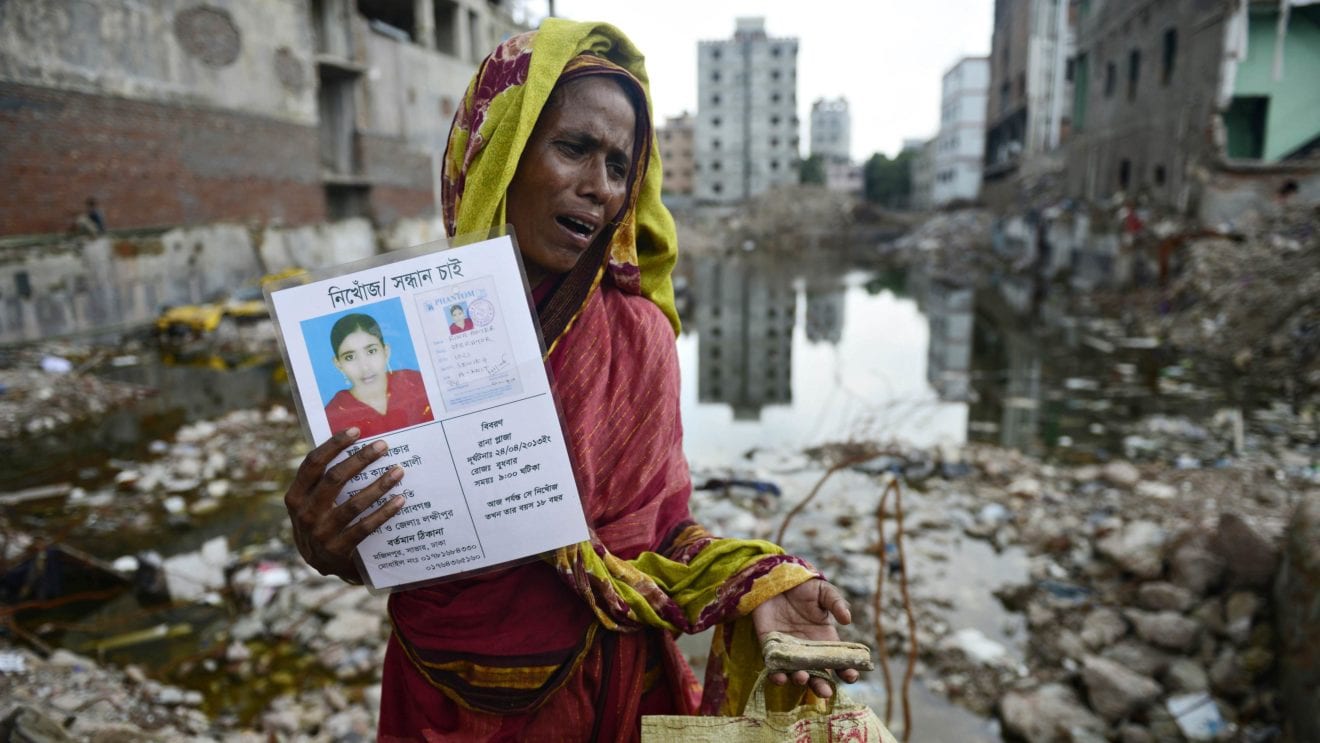
    CCC says the problem of sudden and illegal closures of garment factories is growing in Bangladesh, in part due to changes in the industry triggered by the Rana Plaza collapse.

    “These closures are leaving thousands of workers unemployed and deprived of their legally owed severance pay. To date little action has been taken by the Bangladesh government or international brands and retailers to ensure workers are not left without the wages and benefits they are owed.

    “Swan Garments is one of many factories that has closed illegally in Bangladesh over the last year. As in the majority of cases it is workers who are left with nothing – not even the wages and severance payments they are owed” says Samantha Maher of the Clean Clothes Campaign. “It is unacceptable that once again workers are being left to pay the price for bad factory management, impossible buyer demands and government inaction and we urge Aldi and the Ministry of Labour to ensure justice for the Swan workers.”

    The CCC did not define a “legal closure” of a factory, or explain where they expected the money to come from if the company was insolvent.

  • Aldi under fire on disclosure of credit card, tap-and-go fees

    Aldi under fire on disclosure of credit card, tap-and-go fees

    The corporate regulator is expected to grill Aldi over its failure to consistently notify customers of fees for using credit cards and ‘tap and go’ cards, six months after the discount supermarket promised it had done so.

    Aldi told the Australian Securities and Investments Commission it would improve its disclosure of the 0.5 per cent surcharge by October last year, it is understood. It said it would do so through signs at the entrance of the stores and the registers, and by ensuring its cashiers notified shoppers before payments were made.

    But Aldi supermarkets visited by Fairfax Media have not consistently disclosed the surcharge, leaving customers disappointed and irritated. Fairfax Media spoke to Aldi customers outside Melbourne stores on Wednesday and none knew about the fee or were informed by their cashier.

    The store in Prahran does not have signs at the entrance. Instead, like many stores, it displayed the warning in tiny print on a sticker at the register.

    The Aldi store in Box Hill South put up signs in recent weeks, while the Balaclava store had none as at February.

    Aldi customer and German citizen Claudia Scent said, “I didn’t know before now, lucky I paid in cash. I come from Germany and there’s no surcharge at Aldi there.”

    St Kilda East resident Claire had just paid for some groceries with her credit card. “It would be nice to know. I’d like a bigger sign or for them to tell you,” she said.

    Aliska Angyal-Kvalic, of Greensborough, said, “They should probably let people know.  If you had a sign people could read you wouldn’t need to tell people.”

    A spokeswoman for Aldi said the supermarket had conducted an audit last year to ensure its stores had appropriate signs and stickers.

    “If for any reason an Aldi store does not have the required signage, we will ensure that this is corrected immediately,” she said.

    Aldi is the only supermarket chain to apply the surcharge on credit card and tap-and-go purchases. Woolworths, Coles, Costco and IGA supermarkets do not.

    Under the ASIC Act, a failure to adequately disclose surcharges, or creating the impression that surcharges do not apply, may be misleading or deceptive.

    But because Aldi’s was a voluntary undertaking, it’s understood there was no deadline for ensuring the signs were in stores, and there are no real consequences for failing to comply. ASIC can resume talks with Aldi, however, if it believes Aldi has not complied with its commitment.

    Aldi has 367 supermarkets throughout Australia and is eyeing 15 per cent market share through expansion into Western Australia and South Australia, and double-digit store openings each year on the east coast.

  • Aldi comes to the party as grocery code tabled

    Aldi comes to the party as grocery code tabled

    Australian Small Business Minister Bruce Billson has won support for the grocery industry code of conduct from discounter Aldi but is disappointed that wholesaler Metcash has agreed to adopt elements of the code rather than sign up in full.

    The code, which was tabled in Parliament on Monday and takes effect on Tuesday, prohibits certain types of unfair conduct by retailers and wholesalers in their dealings with suppliers and provides a clearer framework for retailer and supplier negotiations.

    Aldi, which was originally reluctant to sign the code until it was confident it would not increase costs and push up prices for consumers, said on Monday it would sign up to the code as a party.

  • Aldi Australia vows to maintain pressure on rivals

    Aldi Australia vows to maintain pressure on rivals

    Discount retailer Aldi Australia has vowed to maintain pricing pressure on rivals in the AUD85 billion (USD69.58b) grocery market, after increasing sales by 13 percent in 2014, outpacing food and liquor sales growth at Coles and Woolworths almost three-fold.

    Aldi Australia’s sales reached AUD6 billion in the 12 months ending December 2014, compared with AUD5.3 billion in 2013. The growth was underpinned by strong same-store sales growth and 25 new stores.

    In comparison, Woolworths’ Australian food and liquor sales grew 4.7 percent to AUD41.7 billion in fiscal 2014 and Coles’ food and liquor sales rose 4.6 percent to AUD29.2 billion.