Retail News CRM

Tag: aldi

  • Aldi Australia targets food in drive to eliminate waste to landfill

    Aldi Australia targets food in drive to eliminate waste to landfill

    Aldi Australia has taken another step toward more sustainable local operations, announcing it is committing to zero waste to landfill by 2025.

    The plan, according to Aldi, is to first focus on reducing food waste to landfill by 2023 by expanding segregated waste collection at stores and doubling food donations across its business, while executing on closed-loop recycling opportunities within Aldi’s supply chain.

    The commitment follows Aldi’s plan to power its operations entirely with renewable energy, and trials of instore recycling services to help consumers to reduce their waste footprint for items such as coffee capsules and soft plastics, as well as harder to recycle items such as batteries.

    “Every present and future action is taken to achieve our zero-waste commitment has been carefully considered to ensure the solution is both viable and impactful,” said Aldi Australia corporate responsibility director Daniel Baker.

    “Our commitment will see the business reduce the amount of waste created and reuse or recycle materials to cease unnecessary waste from being sent to landfill. It is our intention that, collectively, these actions will make a difference.”

    Minister for the Environment Sussan Ley said she is hopeful Aldi’s commitment will have a flow-on effect across its supply chain and through to consumers.

  • Aldi growing three times as fast as competitors

    Aldi growing three times as fast as competitors

    Australians top priorities in grocery shopping are convenience, quality and pricing – with the latter surprisingly coming in third.

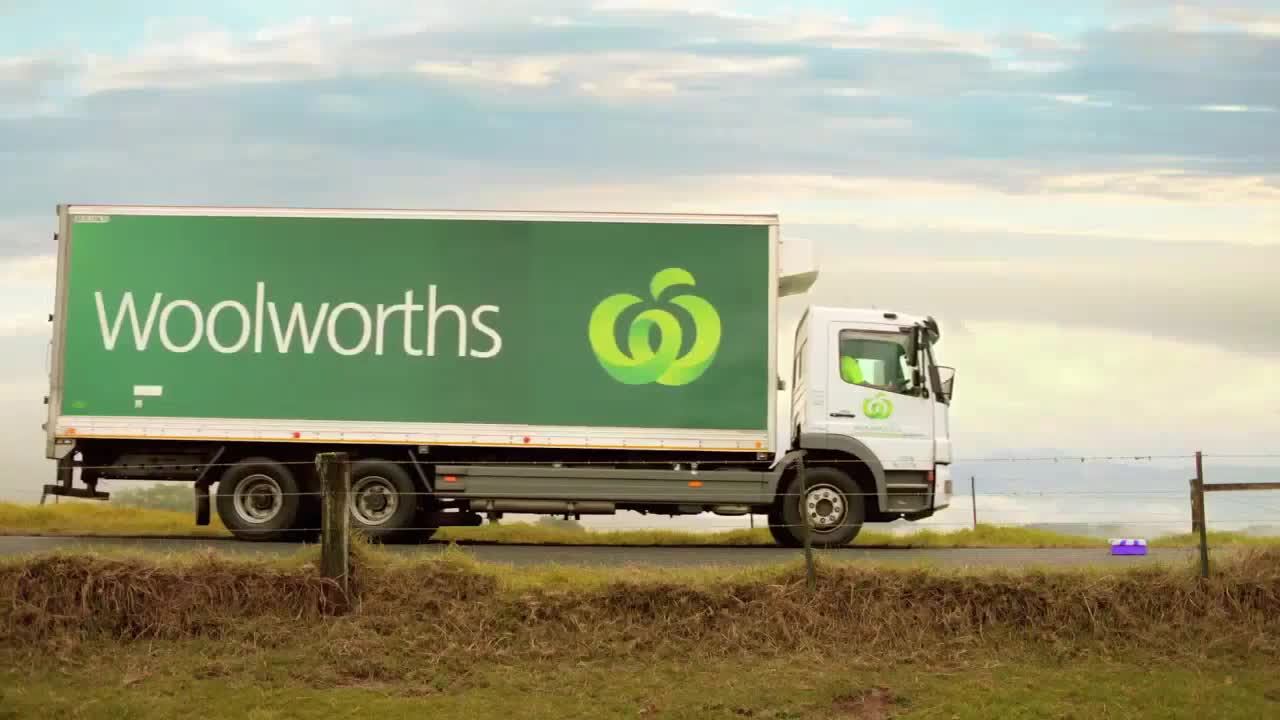
    Dunnhumby’s latest Australian Grocer Retailer Preference Index found that Woolworths is the go to “one-stop-shop” for wide product variety while rival Coles is the chosen grocery for promotions and rewards. However, discount grocer Aldi beats them both on price.

    “Aldi has built the strongest emotional connection with its customers by delivering consistently low prices, quality products and higher perceived ‘value’,”said Keri-Jane Jacka, commercial director ANZ, dunnhumby.

    “Further, our findings show Aldi customers are more likely to recommend the retailer to their friends and family and be sad if their nearest store closed.  This strong emotive response suggests that Aldi has really strong brand equity – a driver for long-term customer loyalty and continued success in the market.”

    Woolworths beats Coles as Australians’ preferred grocery retailer with an RPI score of 95 versus 91. However, Aldi is hot on the heels, described as an ‘accelerating threat’ with an RPI score of 69. The discount grocer is growing three times faster than its competitors, and can potentially double its market share in the next 10 years, dunnhumby said.

    “With Aldi outperforming on all price attributes and developing a real connection with its customers, in order to remain the preferred grocery retailers amongst shoppers, Woolworths and Coles must continue to invest in data-driven retail strategies to foster loyalty and build trust. They must offer lower prices across the board instead of focusing on discounts, and more convenient, easy shopping experiences that delight customers,”
    Jacka said.

    The index shows that the ‘big two’ supermarket giants, Woolworths and Coles, capture two-thirds of shopper visits. One third of shoppers buy at Woolworths, Coles and Aldi in the last month.

    The report found that Australian grocers face intense pressure from e-commerce and discounters that leverage customer data to engage and retain shoppers today. It’s the ‘new normal’ strategy for retailers to win and retain the modern shopper.

    “Retailers need to be far more strategic in their approach to pricing and promotions. To remain competitive, they need to think introspectively on how they can maximize personalization and create the most value for their customers by leveraging the huge amounts of customer data at their disposal,” Jacka said.

    Five primary customer pillars

    Dunnhumby reported that there are five primary customer pillars. These are convenience and quality; easy shopping experience; price; operations and drive time.

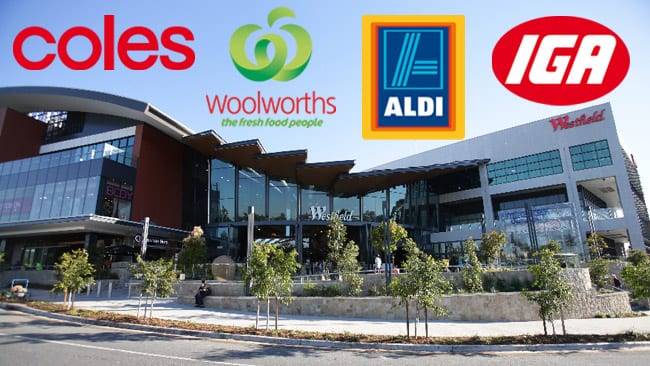
    It ranked the five retailers with Woolworths ahead of Coles. Aldi comes in third as the “dark horse in the race”, while IGA and 7-Eleven currently trailing.

    Convenience matters for Aussie shoppers

    Aussies value time so convenience, quality and easy-shopping experience are on the top of their priorities for overall preference driver. But for Woolworths and Coles customers, it is less important as long as they are satisfied with their items.

    Woolworths and Coles are the strongest on quality goods and convenience. IGA’s strongest in good customer service and clean stores. While Aldi offers also good quality products, but trails behind the two supermarket giants on convenience. 7-Eleven’s biggest issues are cleanliness and perishables, but the retailer wins in ready-to-eat items.

  • First two Aldi stores open in WA Westfield

    First two Aldi stores open in WA Westfield

    Scentre Group has announced the opening of two Aldi stores at its Whitford City and Stirling shopping centres, representing the supermarket’s first foray into Westfield shopping centres in WA.

    The new Aldi stores are expected to open next year.

    Scentre’s Stirling shopping centre, currently Innaloo, will undergo an $830 million redevelopment, which will start in the later part of the year. It will be renamed Westfield Stirling and will double in size, adding about 368 retailers once completed.

    “Once open, we look forward to offering shoppers at Westfield Whitford City and Westfield Stirling a supermarket experience that is like no other in Australia,” said Caroline MacPhail, Aldi managing director, Western Australia.

    “Since opening our first stores in Western Australia in 2016, we have grown to operate 41 stores and have further plans for expansion, including the opening of our first Westfield Aldi stores in Western Australia,” MacPhail said.

    Scentre Group currently has 18 Aldi supermarkets in its Westfield living centre platform across NSW, Victoria and Queensland, with the expansion into Westfield Whitford City and Westfield Stirling in WA bringing the total number to 20.

    “We’re dedicated to curating a retail mix for each of our living centres that caters to the needs and wants of the local community,” said Chris Barton, Scentre Group regional manager, Western Australia.

    “The addition of Aldi supermarkets at Westfield Stirling and Whitford City will allow us to bring our customers more choice and even better access to affordable, quality groceries.”

    The Aldi store in Westfield Whitford City is expected to open in early 2020.

  • Aldi China where Quality meets Value

    Aldi China where Quality meets Value

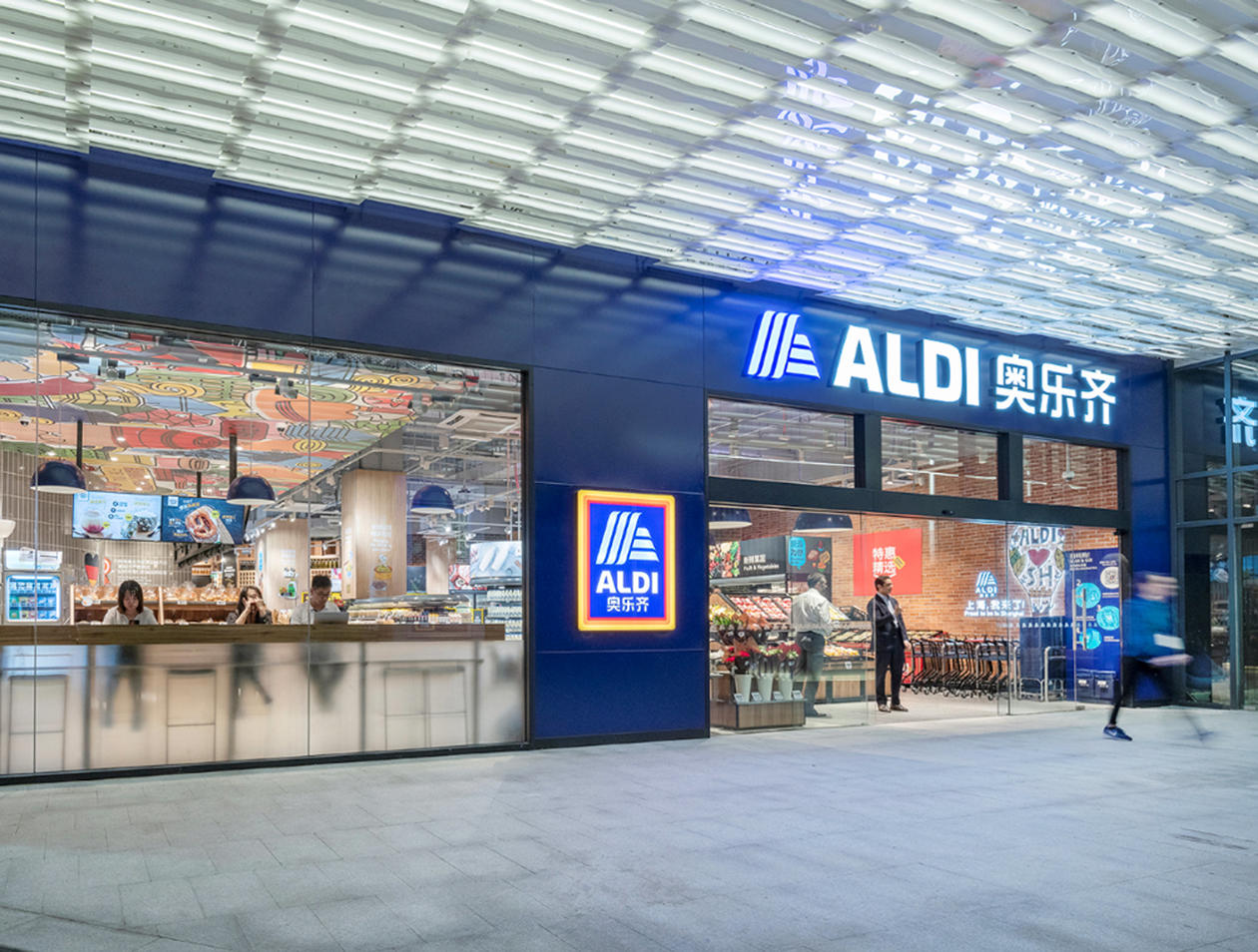
    The first professional photos have emerged of Aldi China’s two pilot stores in Shanghai, which opened weeks ago.

    Designed by Australian-headquarted Landini Associates for Audi Sud (South), the two stores are both about 336sqm in size. They feature a more upmarket look than Aldi’s European stores and are described by Landini as “an evolution of Landini Associates’ work for Aldi Australia, aimed at celebrating and conveying product quality and value”.

    The stores represent a new trading format for Aldi and are the first of up to 100 planned for the city. Aldi has been testing the Chinese market online for about two years, selling its own-brand products on Alibaba’s Tmall to gain an understanding of consumer buying preferences and acceptance to hitherto unknown brands.

    But as the photos show, the store is very obviously targeted not only at Chinese consumers, but the burgeoning expat community in the city – all signage is in English as well as Chinese.

    Landini highlights key differences in the scale, layout and tone of the Aldi China stores, compared to the latest designs implemented in Australia.

    “In line with Chinese consumer habits, where the preference is to visit multiple small shops per week, the stores are a much smaller format. The emphasis is on fresh produce and ready meals, with certain categories articulated for greater consistency, and key products placed at the entry of each aisle alongside messaging to appeal to and drive shoppers,” the company says.

    “Key departments developed were snacks, produce, bakery, alcohol, imported goods, health, and beauty. The most noticeable difference for the Chinese market is the development of an on-site Food Station, as well as the addition of ready meals to take away or consume at the in-store dining kiosk.”

    Low cost yet “real” materials were specified for the fitout, including locally sourced brick, terrazzo, an open concrete ceiling, warm timbers, and yellow accents which add to the perception of freshness throughout the stores.

    LED lighting reduces glare and running costs while improving ambience and colour rendering, changing from day to night. Landini says the lighting was designed to create a pleasant atmosphere and let the products speak, enhancing colour, texture, and freshness. Energy-saving LED has also been incorporated in the fridges and wine displays.

    Landini also designed an extensive series of messaging and graphic illustrations that are entirely unique to the Aldi China stores. More than 40 messaging boards were developed to communicate the brand ethos, product freshness, value, quality, and European and Australian products on sale.

    There is no signage or ticketing displayed from the ceiling. Instead, category signage around the store perimeter offers greater visibility across the stores and thus encourage cross-store shopping. A vibrant, colourful mural on the ceiling above the service counter and checkouts is a playful hero graphics feature.

    “Our two new stores are designed as pilot stores where retail approaches will be trialled and adjusted according to data and feedback from customers,” said an Aldi spokesperson. “This new store format has been customised and tailored specifically for the China market to better understand and interact with Chinese consumers.”

    Ben Goss, design director at Landini described the project as “a significant milestone for the brand”.
  • Aldi China Opened in Shanghai Last June 7th

    Aldi China Opened in Shanghai Last June 7th

    Aldi will launch in China a week from now opening the first of 11 stores initially planned for Shanghai. But the Aldi China store format will be considerably different to the German discount grocer’s shops in the other 11 offshore markets it has entered: sources in Germany report the stores will have a more upmarket feel, stocking cosmetics and a broader range of dairy products.

    The stores will carry the signature brand positioning line “Everyday value – hand picked for you”.

    The location of the first two stores are in “noticeably prosperous neighbourhoods,” reports Lebensmittel Zeitung.

    The first Aldi China store opens on Friday June 7, and has been described by Aldi insiders as “more modern than company stores in Europe”. They will stock shelf-stable goods imported from Europe and Australia and fresh produce sourced locally.

    Nick Miles, head of Asia-Pacific at IGD, said that while Aldi Sud (South) has been testing the Chinese market for some time, having launched on Alibaba’s Tmall Global platform in April 2017, China will be “a new challenge” for the discount retailer.

    “Aldi currently operates stores in Europe, Australia and North America. Trading in Asia, and particularly China, will be very different. Many international retailers have entered this market over the past 20 years and not succeeded, while discount is a grocery channel that doesn’t currently exist in China – or Asia – in any meaningful way. Discounter Dia sold its business in China in April last year, while Lidl has recently pulled back from selling products via online platforms in the market,” said Miles.

    Lebensmittel Zeitung reports that Aldi South has been working on a plan to enter China through its thriving Australian subsidiary. “The growing business contacts between these two countries mean that the no-frills retailer can also draw on Australian suppliers with considerable experience in exporting to China.”

    Miles, meanwhile, predicts a significant challenge for Aldi will be overcoming potential resistance to its own-label lines.

    “Brands are king in China, while Aldi relies heavily on its private-label ranges.”

    Another challenge is that online grocery retailing and digital technology in retail are “exploding in the market” while Aldi’s business model has traditionally been through physical stores.

    “Aldi will be aware of all these challenges and more but plans to position its stores so that they appeal to China’s rapidly growing middle class and their desire for high-quality, imported products. It has ambitions to open 50-100 stores in the medium term and will be aware to not spread its operations too wide – a mistake other retailers have made in the past.”

    Choosing Shanghai to launch Aldi China makes sense because of the city’s population of more than 30 million, the sophisticated supply-chain infrastructure in the city and the local population’s relatively higher level of income compared with other Chinese cities. It is also a major global logistics hub.

    Meanwhile, IGD forecasts China to overtake the US and become the world’s largest grocery market by 2023.

    “The opportunity for Aldi to be present in the market is therefore clearly significant, but it will not come without its risks,” added Miles.

  • Aldi food truck delivering Healthy Food to Football Clubs

    Aldi food truck delivering Healthy Food to Football Clubs

    Discount grocer Aldi is bringing its new food truck to MiniRoos football clubs across Australia to offer kids healthy food options.

    The Mighty Mini Chefs Food Truck has an accompanying app with interactive games for kids to create healthy lunch box based on their daily activities.

    From June 1, Aldi’s food truck will begin visiting 14 football clubs, from Yeppoon in Queensland to Wodonga in Victoria.

    “For the clubs that the truck visits, ALDI MiniRoos participants will be able to play on an app to learn about food and how it impacts their day-to-day lives,” the retailer said in a blog post on Friday.

    “For any kids that don’t get a chance to experience the Mighty Mini Chefs Food Truck, we have the MiniRoos Mighty Menu on hand to inspire parents and children to cook nutritious meals. Created in partnership with the Caltex Socceroos’ chef and nutritionist, Vinicus Capovilla, the seven day menu is full of easy, affordable and healthy meals. The MiniRoos Mighty Menu has been a mighty success, with families all over the country discovering that eating well doesn’t have to be hard work and that healthy foods taste great.”

    The supermarket giant’s three-year partnership with Australia’s largest football program for kids, the MiniRoos, has helped the retailer reach a broader section of the community. The discount grocer partnered with Football Federation Australia on creating fun ALDI MiniRoos sessions that will help kids develop new skills and meet new friends.

    The retailer recently added Sam Kerr, Westfield Matilda’s and Perth Glory player, as an Aldi MiniRoos ambassador.

  • Aldi takes Union to court over misleading Commercials

    Aldi takes Union to court over misleading Commercials

    Aldi has taken the Transport Workers Union to Federal Court, following what the supermarket claims is a string of false and misleading claims.

    The TWU has made a number of claims toward Aldi, including that its drivers have faced harassment when they have raised concerns over fatigue with management, with one driver quoted as being told, “Everyone else is doing it. You are the only one with a problem.”

    However, the supermarket has refuted these claims and said it will let the courts determine the matter.

    “The TWU has made a series of allegations against Aldi,” an Aldi spokesperson told. “We say these allegations are false.”

    According to the TWU, the supermarket’s alleged actions could have far-reaching consequences for those who raise concerns about safety in the workplace, environmental or rights abuses.

    “Transport workers are sending a clear message to Aldi to take road safety seriously and make sure its transport workers, the transport workers in its supply chain, and other road users can return home to their families in one piece,” Nick McIntosh, TWU national assistant secretary, said in a statement to Aldi over the Christmas period.

    “Coles and Woolworths have recognised their critical role in improving road safety. Aldi needs to stop attacking truck drivers and instead sit down in good faith and be part of the solution.”

  • Woolworths Heads First in Taking on Kaufland

    Woolworths Heads First in Taking on Kaufland

    Woolworths and Aldi have increased their share in Australia’s grocery market, while Coles and IGA have slipped slightly, according to the latest research from Roy Morgan.

    Woolworths remains Australia’s top grocery retailer, increasing its share of the market to 34 per cent in 2018, up 1.4ppts, while a newly independent Coles now has a share of 27.6 per cent of the total grocery market, down 1.6ppts on a year ago.

    Aldi grew its grocery market share to 11.4 per cent in 2018, up 0.5ppts from a year ago, while Other Supermarkets outside the ‘big four’ such as Foodland and Foodworks have increased their share to 9.1 per cent, up 1.2ppts. IGA’s grocery share was down 0.4ppts to 7.1 per cent.

    Woolworths’ dominance in key fresh food categories has helped its strong lead. The retailer holds the largest market share in dollar terms for fresh meat, fresh deli, fresh bread and fresh fruit and vegetables ahead of Coles, Aldi and IGA supermarkets. The big two currently dominate Australia’s fresh food markets holding over 50 per cent of each of the fresh food markets.

    Michele Levine, Roy Morgan CEO, said Woolworths’ impressive performance places it in a strong position to deal with the entry of German hypermarket Kaufland into Australia’s more than $100 billion grocery market.

    “The demerger of Coles Group from industrial conglomerate Wesfarmers in the December quarter of 2018 means Australia’s second largest supermarket chain now has the opportunity to refocus on its core business ahead of the imminent arrival of German retailer Kaufland,” Levine said.

    Kaufland is following in the footsteps of fellow German retailer Aldi with plans to open six hypermarkets in Victoria over the next two years and more stores Australia-wide in the future.

    Levine also expects the anticipated rollout of ‘Amazon Fresh’ in the Australian grocery market in the near future to further disrupt the market. The online retail giant launched a food and grocery segment (excluding fresh food) late last year.

  • Tesco set to open new discount Jack’s store to rival Lidl and Aldi

    Tesco set to open new discount Jack’s store to rival Lidl and Aldi

    British supermarket operator Tesco is set to unveil a new network of Jack’s stores: a budget grocery concept it hopes will take the fight directly to German discounters Aldi and Lidl.

    While the company has not made an official announcement, sources are reporting details leaked from multiple sources.

    In the first phase of a roll-out program, Tesco plans to open 60 Jack’s stores, initially in main cities. A Liverpool outlet will reportedly open its doors within five weeks and staff are being recruited for at least another three stores, suggesting an opening is imminent.

    A source revealed the chain will be called Jack’s and advertisements for staff refer to small teams in a new company that is operationally independent of Tesco.

    Analysts suggest Tesco will be able to use its recently acquired wholesaler Booker to help supply stores and Jack’s limited range and compact footprint would differentiate it from full-service Tesco stores with large product ranges and Booker’s cash-and-carry model which primarily targets business and the foodservice sector, selling in bulk.

    Some media have quoted inside sources saying the designs of Jack’s stores show “striking similarities” with Belgian chain Colruyt.

    Tesco trialled a discount format called Victor Value in the 1908s, but scrapped the concept after four years, fearing it would cannibalise sales of its main network. But in today’s UK grocery market with Aldi and Lidl already accounting for 13 per cent of the British grocery market and achieving year-on-year sales growth around 8 per cent, cannibalisation is less of a concern than losing sales to rival chains.

  • Aldi, Costco bring prices down of groceries

    Aldi, Costco bring prices down of groceries

    International grocery giants Aldi and Costco are driving down fruit and veg prices in Western Australia at a faster rate than anywhere else in the country, according to new research.

    Analysis conducted by Bankwest has found that Perth shoppers spent 6.9 per cent less on fruit and veg in the year to September 2017 than the previous year, signalling a step up in competitive intensity among Australia’s major supermarkets as discounters increase their investment in the state.

    Overall food and non-alcoholic beverage prices declined by one per cent in the twelve-month period, 0.3 per cent higher than the nationwide average decline of 0.7 per cent.

    Over the last three years prices have declined by 1.4 per cent in Perth, with average grocery basket price declining by 5.1 per cent from $177.7 to $168.6 in the year to June 2016.

    Richard Bator, Bankwest’s general manager of business banking in WA, said that discounters are rapidly growing their market share out west.

    “The supermarkets industry is now one of the most fiercely competitive industries in the nation due to the rapid growth of international retailers competing for a share of the $100 billion industry.”

    German entrant Aldi began its expansion into Western Australia in 2016 and has been investing heavily in the market, while American giant Costco unveiled plans for two Perth locations by the end  of 2019 in March.

    In the year to June 2016 the average price of a grocery basket in Western Australia declined by 5.1 per cent  from $177.7 to $168.6 – prices have declined 1.4 per cent over the last three years.

    Smaller retailers have been adversely impacted by the increase in competition, particularly as Coles and Woolworths move to improve their fresh offers to shore up their own operations.

    Bankwest found that the number of grocery retailers employing less than 20 staff fell by 10.6 per cent in the year to June 2016.

    The story is more positive for the overall market, Bankwest said, which is projected to grow by 9.3 per cent in the five years to June 2022.

  • Aldi Eyes Store Expansion In China

    Aldi Eyes Store Expansion In China

    Aldi South, the German discount supermarket giant, is planning to open up to 50 branches in China, as reported on Thursday.

    Aldi South, one of the leading low-budget supermarket chains in Germany, has put together a team for its expansion in China, the Lebensmittel Zeitung, a German weekly newspaper for executives in the food industry and in commerce. It will be one of the biggest expansion plans in the history of the company.

    Aldi South has already opened its first online shop in China on the platform of Tmall, which is run by Alibaba group in China.

    The company has not commented on the report.

    The discounter offers groceries including wine, snack, breakfast and organic food products at its flagship Tmall store through its Australian suppliers.

  • Tesco trolleys accused of sexism and gender apartheid

    Tesco trolleys accused of sexism and gender apartheid

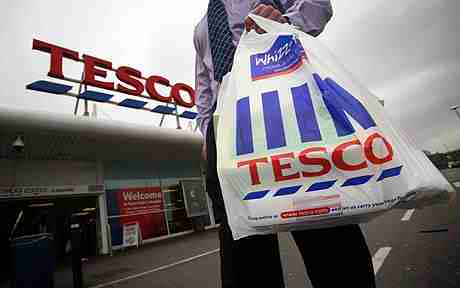
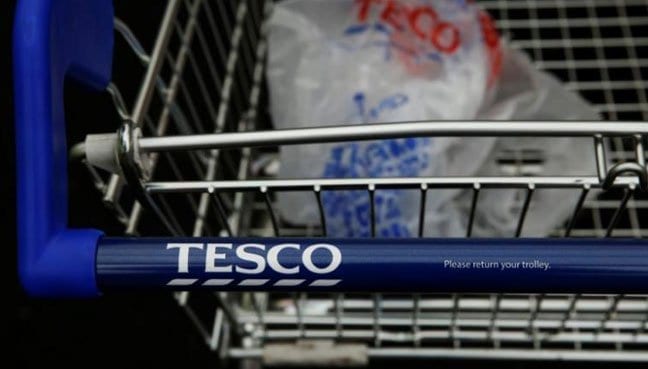
    Tesco is to introduce new safety warning stickers on its trolleys after a social media storm saw it accused of “gender apartheid”.

    The warnings feature drawings of a woman and a child demonstrating how to allow children to ride in trolleys safely. A Manchester woman took to social media complaining the warnings were sexist because they featured a woman and child, enhancing social stereotypes that it was a woman’s role to do the shopping.

    Matt O’Connor, from an organisation called Fathers4Justice, went even further, saying: “Tesco needs to stop this gender apartheid”.

    Using a hashtag ‘everyday sexism’, the original complainant Tweeted “Tesco, is it only women who do the food shopping and look after the kids?”

    Samantha Rennie, executive director at equality group the Rosa UK Fund for Women and Girls, told the Manchester Evening News: “It… plays a role in reinforcing stereotypical ideas of the woman being responsible for the weekly food shop.”

    However, newspaper readers took a saner perspective on the issue. An online survey of readers showed 90 per cent did not believe the trolley warnings were sexist, (although it did not disclose the number of votes).

    One local Manchester man Tweeted that the complaint showed “The world’s gone mad”.

    “The [Manchester] woman who complained needs to get a life. It may be a man dressed as a woman.”

    Tesco says it has ordered new warning signs featuring gender neutral characters which will be placed on the next 20,000 new trolleys to be put into service across the UK.

    Discount brand mooted

    Meanwhile, Tesco has not commented on reports it is planning a bare-essentials style grocery chain to tackle German rivals Aldi and Lidl head on.

    The Sunday Times newspaper has reported that Tesco will launch a separate brand where goods are price matched to Aldi and Lidl’s offer, to try to win back customers lost to the German brands over the last decade.

    The stores would likely stock around 3000 SKUs and the brand and store format would be designed to stand apart from Tesco so as not to cannibalise its main brand’s sales. A typical Tesco supermarket stocks up to 30,000 items.

    The discounters are continuing to eat into the market share of Britain’s so-called ‘big four’ chains. In the latest quarterly data published by Retail Gazette, Tesco’s sales rose 2.6 per cent while Aldi and Lidl reported 16.2 and 16.3 per cent increase respectively.

  • Aldi takes more market share from Metcash

    Aldi takes more market share from Metcash

    German discounter Aldi is taking a bigger share of the $100 billion Australian supermarket sector as IGA and Foodland fall further behind, new figures show.

    Industry market researcher IBISWorld has analysed the supermarkets’ latest revenue figures and has found IGA and Foodland supplier Metcash has lost more ground as Aldi continues to successfully expand into WA and SA.

    IBISWorld’s latest report on the supermarket industry, released on Wednesday, says Metcash has a 7.5 per cent market share, while Aldi now has 8.6 per cent.

    A year ago Metcash had a 7.2 per cent share and Aldi was at 7.9 per cent.

    IBISWorld senior industry analyst Nathan Cloutman says while Metcash’s portion of the market has increased, it will continue to fall further behind Aldi.

    “The collective revenue from Metcash-supplied supermarkets has declined in 2016/17 and is expected to decline in 2017/18,” Mr Cloutman said.

    “Aldi is rapidly expanding in the industry, in particular the company’s move into WA and SA in 2016 has helped the company boost its market share recently.”

    Cloutman said Coles was also feeling the pressure from an expanding Aldi and a more buoyant Woolworths during the 2017 financial year.

    Woolworths continues to lead with 36.8 per cent of the market, while Coles has a 30.9 per cent share.

    The report said Metcash’s attempts to increase revenue through advertising and discounting, including matching the prices of Coles and Woolworths on a core basket of goods, have had “minimal success.”

    “The chain’s profit margins have declined over the past five years, as price discounting strategies have lowered profit margins across many of its stores,” IBISWorld said.

    Competition is likely to further intensify after the German supermarket chain Kaufland confirmed it will expand into Australia, and on expectations Amazon’s pending arrival will eventually include its online supermarket business.

    Other players in the sector include Costco, which has an estimated two per cent market share, Foodworks chain owner Australian United Retailers which accounts for 1.8 per cent and SPAR Australia with 1.5 per cent.

    IBIS reckons Woolies will continue to gain share over 2017-18, moving to 36.8 per cent of the total market compared to Coles’ 30.9 per cent and Aldi’s 8.6 per cent.

    “[Coles] is likely to invest strongly in prices in 2017-18, which should see its market share remain relatively stable,’ IBISWorld’s senior industry analyst Cloutman said.

  • Aldi UK plans 70 new stores

    Aldi UK plans 70 new stores

    Aldi UK plans to open 70 new stores next year as it eyes 1000 by 2020.

    The German discount grocer says its sales increased by 13.5 per cent to £8.74 billion last year as it grew market share and continued to expand its store network.

    Gross profit, however, fell 7 per cent to £324.5 million due to investment in its distribution operations.

    Aldi UK currently has 726 stores.

    “Our growth is accelerating, thanks to the hundreds of thousands of new customers switching their shop to Aldi,” said Matthew Barnes, Aldi UK and Ireland CEO.

    “This is happening right across the UK and is all down to a simple, straightforward commitment – products comparable to the leading brands and supermarket premium ranges at the lowest prices in Britain.

    “We’re doing everything we can to insulate customers from those cost increases, making sure our prices are the lowest in the UK, every day of the year.

    “At the same time, we’ve been improving the quality of our range and introducing the new products our customers have asked for. The result is a carefully selected range of exclusive own-label brands and award-winning products.”

  • Aldi, Lidl and rivals to thrive as UK discount retail market soars

    Aldi, Lidl and rivals to thrive as UK discount retail market soars

    The UK Discount Retail market is set to soar by 36.1 per cent by 2022, reaching £32.5 billion by 2022 according to research by GlobalData.

    The company’s latest report UK Discounters 2017-2022 reveals discount retailers could gain an extra £9 billion slice of the total retail market as they become a more appealing destination for consumers looking for bargains as inflation continues to squeeze their disposable income.

    “This will be good news for Aldi, Lidl and B&M Bargains which dominate the channel, with a combined share of over 70 per cent of the discount retail market,” observes Molly Johnson-Jones, senior food & grocery analyst with GlobalData Retail.

    DIY & gardening, health & beauty and homewares will deliver the strongest category growth.

    About 89.4 per cent of the UK population have shopped at a discounter in the last 12 months with food & grocery (F&G), non-discretionary household goods and health & beauty (H&B) the most popular product categories with shoppers.

    “Our report findings confirm that discounters have done an exceptional job in gaining market share of frequently purchased items by changing the perception of discounter own label products in F&G while at the same time undercutting mainstream retailers on branded items in H&B and household. This combined approach has proven to be very disruptive in the market and has contributed to their success.’’

    Food & grocery is the sector with the highest market value, worth £15.7 billion in 2017, and will grow to £21.8 billion by 2022 – taking away another £6 billion from the mainstream grocers.

    “As perception and trust in own-label has been earned by the discounters in groceries, this is the sector which the mainstream retailers should be the most concerned about as the barriers to entry have already been overcome.

    “Food & grocery has enjoyed strong growth over the past decade as even when incomes have been more pressured by inflation and lower real wage growth, people still need to buy the same amount of food. The F&G discounters have taken advantage of this by extending their range to cater for all consumer needs and growing their premium and fresh ranges to ensure that they can be a one-stop-shop for the weekly shop.”

    GlobalData forecasts DIY & gardening and homewares will grow 46.6 per cent and 42.6 per cent respectively for the period 2017-2022, as discount retailers gain market share from mainstream DIY retailers by offering consumers lower cost solutions for household maintenance and upgrades.

    “Indeed, the rollout of larger out-of-town store formats has facilitated broader ranges, providing them with more authority in the home sectors,” says Johnson-Jones.

    “Consumers are likely to perform fewer and smaller upgrades on their homes during the forecast period due to declining disposable income. This will benefit discount retailers homewares sales as they continue to improve their shopper appeal by increasing their range and incorporating greater trend influence – while ensuring affordability which is crucial for driving impulse and gifting purchases.

    “The discounters have expanded their range in the DIY & gardening market at a time when consumers are seeking reduced cost solutions for doing up their homes and gardens – B&M will particularly outperform in this area as it adds garden centres to its retail estate over the next few years,” she concluded.