Tag: amazon

  • Why Ikea and Nike have walked away from Amazon

    Why Ikea and Nike have walked away from Amazon

    When major global brands like Ikea and Nike announce they are exiting a major global platform like Amazon, it is clear that a strategic shift is in the making

    What used to be a primary go-to-market strategy of brands by latching onto Amazon’s success seemed to have chipped away over the years: Amazon is now losing the grip on its throne and is no longer the “cool kid” everyone wants to play with.

    Welcome to the generation of the ‘hip indies’ where being “self-partnered”, transparent and ethical is the new status symbol – describing both the millennials and Gen Z groups, and the archetype of direct-to-consumer brands.

    Nike competes with itself

    Last month, Nike ceased its pilot partnership with Amazon after a two-year-long gig launched as a means to eject unlicensed distributors and knock-off items from the site. In a statement, Nike announced: “As part of our focus on elevating consumer experiences through more direct, personal relationships, we have made the decision to complete our current pilot with Amazon Retail”. The sportswear label sold a limited range on the marketplace however the control of the grey market it had hoped to regain never materialized. No did the strategy align with expectations.

    While Nike struggled to compete with counterfeits on Amazon, the sneaker giant will continue to sell through other third-parties. Globally it is narrowing the number of retail partners it works within favor of going direct to consumers using flagships and its own online sites.

    Ikea packs up

    In lesser-known and surprising news, just after Nike’s announcement, Swedish furniture and homewares giant Ikea followed suit in quitting Amazon US. The company had been selling a range of smaller products on the platform, taking advantage of Amazon’s speedy deliveries.

    However since the hiring of its new chief digital officer Barbara Coppola last year, the brand decided to revert back to direct selling without the aid of the marketplace. No explicit reasons as to why were released.

    Where Amazon fails, Tmall gains

    The benefits of pairing with a marketplace are obvious, quite aside from the reach and operational efficiencies such as Amazon’s infamous last-mile deliveries. In this case, analysts are split 50-50 on the decisions by Ikea and Nike to ditch Amazon. Some say the divorce will cause the brands to lose some of their market presence – perhaps to their competitors – while others are advocates of the new direct-to-consumer wave.

    However, the bigger issue lies with Amazon’s mundane marketplace and the lack of brand curation, in contrast to how Alibaba’s Tmall has been banking on international brands’ market entry into China.

    Nike’s featured page on the Chinese marketplace allows it to brand its page similarly to its own website, thus keeping its brand image intact – as opposed to the lacklustre stock images on Amazon. Nike has reaped success on Tmall, especially as being one of the top-selling fashion brands highlighted in this year’s Singles Day event.

    When Alibaba launched Tmall’s Luxury Pavillion, it allowed luxury brands such as Givenchy, Versace, Burberry and a string of others to entrust the marketplace with establishing its presence online – some, long before they had established their own direct e-commerce channels.

    Despite the historic association of China with fake goods – and on top of some long legal battles involving leading fashion conglomerates – Alibaba rebuilt its status by eradicating all counterfeits to quickly tap into the Chinese high net worth individuals with all the benefits of being the e-commerce giant in town.

    Being the David to the Goliath 

    Riding on the glorified success of brands like Warby Parker and Glossier, direct-to-consumer brands are hawked over by venture capitalists looking for a stake in ‘the next Unicorn’. The accomplishment of such brands has stemmed from their ability to truly capture the hearts of digital-savvy millennials and Gen Zers using authentic branding and cutting out the middlemen and corporate giants.

    These days, consumers are not necessarily looking to find the best price (money-conscious as they may be), rather they are looking to adorn themselves with brands that share the same values and beliefs.

    Ikea x Off-White collaboration

    Nike is a brand with a long-established and strong reputation for athleticism and its street game. However, in today’s cutthroat market where consumers side with which influencer wore what, brands need to reinforce their imagery, not only through their marketing, but also through their retail environment, whether that be experiential flagship stores or online channels.

    Ikea, for example, is looking to maintain an image as a trusted homewares brand – especially among the rising young millennial household-owner and new parent market segments. Ikea is achieving this by partnering with contemporary brands such as Hay and Off-White.

    The type of shoppers going to Amazon are no longer the type of core customer brands like Ikea and Nike are looking to reach. Therefore it makes sense such brands are choosing to take their own paths – paths they can control themselves.
  • Amazon Web Services Puts Mahindra Electric In Top Gear

    Amazon Web Services Puts Mahindra Electric In Top Gear

    With India planning to replace a significant portion of its conventional internal combustion engine fleet by electric vehicles (EV) in the next decade and target 30 percent of all cars on the road to be EVs by 2030, the segment leader Mahindra Electric is witnessing a robust uptick for its vehicles not just in metro cities but also tier-1 and tier-2 cities, its CEO Mahesh Babu told IANS on Wednesday. Mahindra, the biggest electric car seller in the country, terms its eVerito “India’s first electric sedan”.

    Its electric 3-wheeler range Treo and Treo Yaari — India’s first lithium-ion electric 3-wheelers — is also witnessing a great adoption.

    As the company sees the future of the mobility as both electric and digital, the daunting task of handling data and maintaining an agile, scalable and secure workflow — anticipating millions of connected electric vehicles soon on the Indian roads — is what concerns Mahindra Electric the most.

    Amazon’s Cloud arm Amazon Web Services (AWS), which is organizing its annual flagship conference “AWS re: Invent” here this week, fits the bill for them.

    “Electric vehicles are bringing in best of the technologies together. The rapid progress demands us to be agile, secure and quick. AWS has empowered us better with handling data,” Babu said.

    “We are using load balancers and services that can auto-scale as the load increases. Agility comes from their serverless architecture that helps us to innovate faster. AWS Managed Services are compliant and have built-in security measures that include security updates and patching, etc,” he elaborated.

    Driven by an urge to cut pollution in the cities, enhance national fuel security and make it a major global manufacturing hub for electric vehicles, India has announced several incentives this year to boost the EV sector, ranging from tax cut to allow sale of electricity as “service” for charging of electric vehicles in a bid to attract investments into charging infrastructure.

    The government has introduced an outlay of Rs 10,000 crore for Phase 2 of the Faster Adoption and Manufacturing of Hybrid and Electric Vehicles (FAME 2) scheme to boost electric mobility.

    According to Babu, With FAME 2 and other benefits, they have seen an uptake in the sales of electric three-wheelers and electric cars in the fleet segment.

    “We expect the demand to come from the mass mobility segment first (3-wheelers, 2-wheelers, buses and fleet cars) followed by personal segment. Mahindra’s electric vehicles are witnessing demand not only in metro cities but also tier-1 and tier-2 cities have shown strong acceptance to our electric three-wheeler Treo,” Babu told IANS.

    Close on the heels of the Union Budget providing tax relief for buying EVs, the GST Council in its 36th meeting in July cut the tax on EVs from 12 percent to 5 percent. The Council also slashed rate for EV chargers from 18 percent to 5 percent making electric vehicles affordable for the buyers.

    Road transport accounts for around 90 percent of the total emissions in the transport sector in India. Given the large import dependence of the country for petroleum products, it is imperative that there should be a shift of focus to alternative fuels to support our mobility in a sustainable manner, according to the Economic Survey 2018-19.

    The lithium-ion powered three-wheelers are set to be a natural progression for the industry and Mahindra Electric is looking to ramp up its efforts in the li-ion battery space.

    “Mahindra Electric was the first to bring in lithium-ion powered auto with the launch of Treo. We have an experience of our 170 million electric kilometres in this technology in India that has helped us to understand the economics around EVs,” informed Babu.

    In 2018, the company announced collaboration with LG Chem to bring in global Li-ion technology to India.

    “The company is further investing in a new EV manufacturing plant in Chakan (Pune) and a global R&D centre in Bengaluru that will enable us to achieve scalability and agility to roll out new products quickly,” the Mahindra Electric CEO added.

    Mahindra Electric, he said, is now better equipped and flexible to quickly scale up its EV and connected mobility goals.

    0Comments
  • Amazon opens on Pinduoduo pop up store

    Amazon opens on Pinduoduo pop up store

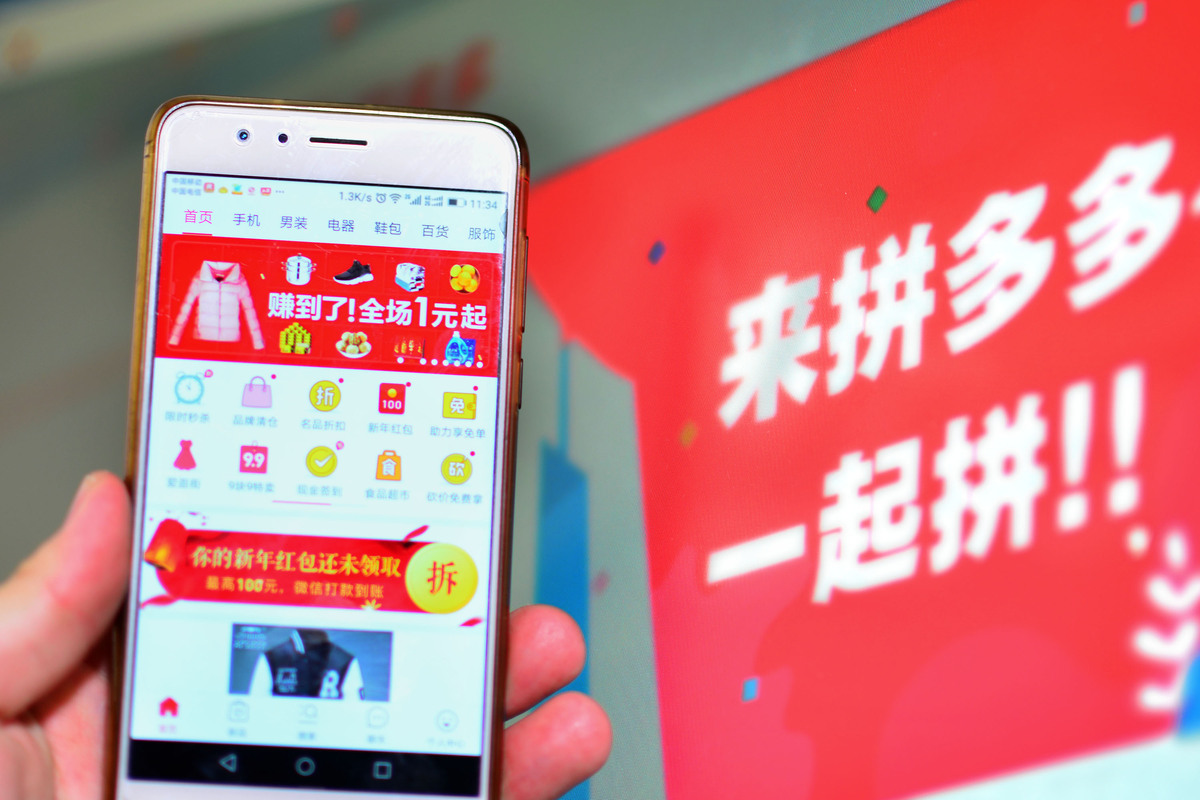
    Global online retailer Amazon is set to launch a Pinduoduo pop-up store.

    According to reporting in Reuters, the Pinduoduo pop-up store will run until the end of the year with around 1000 selected overseas products.

    Amazon recently closed its Chinese marketplace for domestic sellers and is shifting focus to products sold in the Chinese market by overseas producers, as well as offering its cloud server services.

    The decision to host its pop-up on Pinduoduo reflects the platform’s popularity with rural Chinese residents over the more established Alibaba and JD services.

    “The Amazon Pinduoduo pop-up store provides customers with a curated selection of about 1000 overseas products, with competitive prices, an authenticity guarantee and convenient shipping,” said an Amazon spokesperson.

    “We look forward to enabling customers to enjoy cross-border shopping through this store, in addition to more deals and tens of millions of products available on [amazon].cn.”

  • Amazon Hub launches to meet rising demand for flexible delivery

    Amazon Hub launches to meet rising demand for flexible delivery

    Amazon has launched a new service in Australia that allows customers to collect their parcels from hundreds of locations in shopping centres and on high streets in a bid to improve its delivery offer before the biggest online shopping days of the year.

    First launched in the US in 2011, Amazon Hub allows shoppers to ship parcels to convenient third-party locations, rather than their home address. The service includes a “counter” option, where shoppers can collect parcels from bricks-and-mortar retail partners such as convenience stores, and a “locker” option, where they can collect parcels from self-service kiosks in shopping centres, banks and other places.

    The marketplace has now partnered with more than 100 Commonwealth Bank of Australia branches, Victorian Authorised Newsagents Association locations and Stockland shopping centres to bring the service to Australia.

    Hundreds more Amazon Hub locations are due to launch by the end of the year, and thousands more will launch across the country in 2020, the company said in a statement.

    Patrick Supanc, global director of Amazon Hub, said the new service would extend Amazon’s “exceptional customer service” to the delivery experience.

    “Since launching Amazon.com.au in 2017, we’ve committed to making e-commerce rooted in low prices, vast selection and convenience a part of everyday life for Australian customers,” he said.

    “We’re excited now to partner with large and small businesses in Australia to extend Amazon’s exceptional customer service and innovations in delivery by offering a quick and simple pick-up experience.”

    Parcel pick-up on the rise

    The launch comes just one week before Black Friday and Cyber Monday, which are now the biggest online shopping days of the year in Australia.

    E-commerce purchases by volume were up more than 28 per cent year on year during Cyber Week in 2018, according to an annual online shopping report by Australia Post. The five weeks from November 11-December 15 accounted for 15 per cent of all e-commerce transactions that year.

    Australia Post on Monday announced the expansion of its own parcel pick-up service in partnership with fulfilment company Doddle. Booktopia and Peter’s of Kensington are among the first retailers to use the service, which lets customers send their online orders to IGA supermarkets, Priceline pharmacies, shopping centres and other locations.

    Nathan Huppatz, co-founder of ReadyToShip, a shipping platform that lets retailers select the best delivery options for each order and print labels, says parcel pick-up is gaining traction, though it’s not exactly new. Major retailers, such as eBay, The Iconic and Glassons, have offered it as a delivery option for some time through ParcelPoint.

    But Huppatz says consumer demand for flexible delivery times and advancements in the technology that allows retailers to integrate different delivery options at checkout is contributing to arise in pick-up services.

    Until recently, most of the volume going through ReadyToShip has been standard delivery, Huppatz said. But in the last 12 months, there’s been greater uptake of Australia Post’s new on-demand delivery options, including same-day evening and Saturday delivery.

    “There’s definitely a demand out there from consumers to have flexibility, and these days there are more and more solutions to enable that,” he said.

    Integration can be a hurdle

    This is mostly good news for retailers, though Huppatz says parcel pick-up can present problems if the carrier’s integration requires retailers to make too many changes.

    “As soon as a retailer has to start modifying the checkout process or their order or warehouse systems, that’s where it can be a hurdle to overcome,” he said. “If the integration is simple, or you can use an existing carrier, it becomes much easier.”

    Still, he expects to see more retailers offering parcel pick-up in the coming months and is considering how he can stay on top of consumers’ changing preferences.

    “We think over the next 12-24 months, we will see growing demand for access to crowdsourced delivery options, especially for local metro areas,” he said.

    But Huppatz, who also owns the e-commerce site Costumes.com.au, believes there’s another reason Amazon may have launched its parcel pick-up service in Australia.

    “EBay and Amazon are competing with each other quite strongly and are looking to plug any holes they can find in their customer experience,” he said, noting the marketplaces’ recent partnerships with Afterpay and Zip, respectively.

    “Amazon has a ruthless customer focus. Everything is designed to make buying, searching, basically anything to do with their platform better for the customer. If they see a need for customers to pick up their products, you can bet they’ll work on that.”

  • Amazon opening new warehouse in Perth

    Amazon opening new warehouse in Perth

    Amazon will open a new fulfillment center in Perth by the end of the year to keep up with increasing demand and offer fast delivery to more customers, the e-commerce company has said.

    The facility, which is expected to be operational in late 2019, is Amazon’s third warehouse in Australia. It also has warehouses in Melbourne and Sydney.

    “This expansion represents the investment and development of our growth strategy in Australia, following a steady and progressive increase in customer demand,” said Craig Fuller, director of operations at Amazon Australia, said in a statement.

    “We strongly believe that this further investment will benefit both customers and the local economy and give Western Australian (WA) customers quicker delivery of high demand items.”

    Located in the Perth Airport Business Precinct, the new facility is expected to give customers in WA access to the same delivery options as customers on the East Coast of the country.

    Amazon currently offers same-day delivery only to customers in eligible postcodes in Sydney and Melbourne. It costs $9.99 for those with Prime and $12.99 for those without.

    Customers in Sydney, Melbourne, Brisbane, Adelaide, and Canberra can also get free expedited delivery (1-2 business days) if they have Prime, or pay $5.99 if they don’t.

    But the fastest delivery option (1 business day) for customers in other metropolitan areas, including Perth and the Gold Coast, costs $9.99 – even for those with Prime. Those without currently need to pay $11.99.

  • Amazon Australia boosts grocery offering with launch of subscription service

    Amazon Australia boosts grocery offering with launch of subscription service

    Amazon Australia is further challenging the nation’s biggest supermarkets with the launch today of a subscription service which allows consumers to have household essentials delivered regularly at a 10 percent discount.

    Amazon’s ‘Subscribe and Save’, which has proven popular in international markets, offers free delivery on repeat purchases across pantry food and beverages, pet supplies, beauty and vitamins, and supplements.

    Customers can sign up for scheduled repeat deliveries on an unlimited number of products that they shop for on a regular basis, with no subscription fee and the option to cancel at any time.

    Shoppers also choose the frequency that they want products delivered, starting from a monthly basis to a six-monthly basis.

    Popular brands including Carman’s, Coca Cola, Fairy, Heinz, and Huggies are among the thousands of products offered through the new service.

    “Time and money are two of our most precious commodities and ‘Subscribe and Save’ gives Amazon customers a simple way to save on both,” Matt Furlong, country manager of Amazon Australia said in a statement on Wednesday.

    “There is nothing worse than running out of your favorite coffee, washing powder, nappies for your newborn, dog food, or toothpaste, and ‘Subscribe and Save’ will help make this a thing of the past.”

    From today, eligible products on the e-commerce site will display a ‘Subscribe and Save’ icon. While prices on individual items can fluctuate, customers receive an ongoing 10 percent discount and free delivery after the initial order.

    The most popular categories within the ‘Subscribe and Save’ program in the UK, US and Canada are groceries, household goods, pet supplies, and beauty.

    Amazon Australia confirmed its intention to launch the platform in Australia, in December 2018. Retail expert and professor at QUT’s business school Gary Mortimer said at the time that the move could impact consumer buying behavior.

    “The Subscribe and Save model is a really smart move from Amazon, and I genuinely think incumbent players should feel nervous…” Mortimer said.

    “We know subscription-based models tend to work because it’s very much a ‘set and forgets’.”

  • Amazon has no specific time frame for Vietnam website

    Amazon has no specific time frame for Vietnam website

    A senior Amazon official says the firm sees Vietnam’s potential but has not decided on a time to launch services for Vietnamese buyers.

    Bernard Tay, head of Amazon Global Selling Southeast Asia, Australia and New Zealand, said at an event Thursday that the global e-commerce giant sees Vietnam has a potential market.

    He noted that after launching Amazon in Singapore, they would look at opportunities to expand their services to more countries, including Vietnam.

    Amazon Thursday established a team of specialists in Vietnam to support Vietnamese sellers in taking their products to global customers. The company stated that it sees the majority of Vietnamese businesses are small and medium enterprises with large demand for global sales.

    Many Vietnamese leather, footwear, handmade and consumer goods items are selling well on Amazon’s website, Tay said.

    Vietnamese sellers can reach up to 300 million Amazon accounts in 185 countries and territories. Amazon also has 175 fulfillment centers worldwide, he added.

    Bui Kim Thuy, owner of a textile company whose products are being sold on Amazon, said that the e-commerce giant has strict criteria on product origin and quality which Vietnamese sellers will have to meet.

    An apparel product that suits Vietnamese customers might not suit Americans, therefore Vietnamese sellers need to make careful research for international sales, she added.

    Amazon launched a Singapore website last week, the first in Southeast Asia. Vietnamese shoppers can access Amazon.com, but many products are not available for shipping to Vietnam, and those that are available typically involve high shipping fees.

  • Amazon Music finally arrives on Apple TV

    Amazon Music finally arrives on Apple TV

    Amazon has announced that its music streaming service is finally available on Apple TV 4K and Apple TV HD running tvOS 12.0 and later. If you’re an Amazon Music subscriber, you can now download the Amazon Music app from the App Store for Apple TV.

    If you’re not a subscriber, you can still download the app and try out the service for 30 days before deciding whether or not it’s worth a monthly fee. The app allows listeners to browse and search for music from their favorite artists, access all purchased and imported music in their “My Music” library, and follow along with scrolling lyrics to their favorite music within the app.

    To get started say “Amazon Music” into the Apple TV Siri Remote or find the Amazon Music app in the Apple TV app store. The app should then display a 6-letter pairing code, which you must enter at https://amazon.com.code via your mobile browser or computer.

    Once that’s done, you’ll be able to stream millions of songs and thousands of playlists and stations on your Apple TV 4K and Apple TV HD. You’ll also get access to a host of global playlists like Pop Culture, which include some of the popular songs across the current pop music landscape.

    Currently, the Amazon Music app for Apple TV is available to customers in the U.S., UK, Australia, New Zealand, Brazil, Canada, France, Italy, Spain, Germany, Mexico, Japan, and India.

  • Amazon launches local online E-commerce store

    Amazon launches local online E-commerce store

    Amazon has launched Amazon.sg, a larger local online store in Singapore, to diversify its product offer and compete with rivals such as Lazada and Shopee.

    Fast delivery service through mobile app Amazon Prime Now was launched in Singapore in 2017. However, the initial product range was not broad enough to compete with other online shopping platforms.

    “With Amazon.sg, we want to provide what customers have been asking us for: the ability for everyone to shop on a desktop and mobile, more local and international selection from Amazon and trusted sellers, paired with fast and reliable delivery”, says Henry Low, country manager at Amazon Singapore. “And we are also adding even more benefits for Prime members.”

    Different to other e-commerce companies which focus on a marketplace model, Amazon allows small- and medium-sized Singapore businesses  (SMBs) to offer their products on Amazon.sg to reach more online customers and expand their business.

  • Amazon launches Kindle Kids Edition

    Amazon launches Kindle Kids Edition

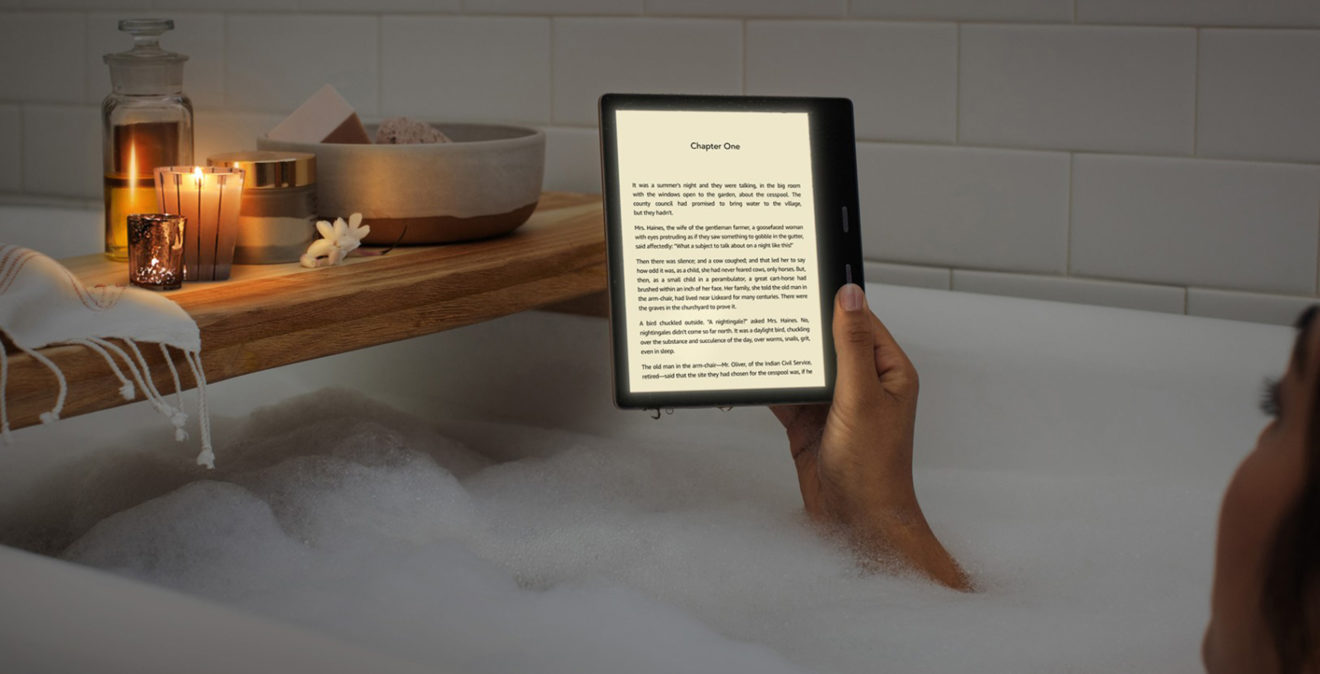
    Amazon just announced the Kindle Kids Edition, an e-reader geared towards children. Though the internet giant has sold Fire tablets marketed under the Kids Edition label, this is the first time Kindle e-readers have gotten the same treatment. The bundle is available for pre-order now.
    The Kindle Kids Edition comes with the base 10th-generation Kindle, along with one of four colorful, kid-friendly covers and a two-year replacement guarantee. The e-reader is a good match for kids with its portable size and month-long battery life. This model also comes with special software features for younger readers, such as Achievement Badges for reaching reading goals, Word Wise for automatic definitions of more difficult words, and an enhanced book search designed for kids.
    The bundle also includes one free year of FreeTime Unlimited, Amazon’s all-in-one subscription for children’s content. The subscription gives access to a curated selection of books, movies, TV shows, audiobooks, and more content, as well as powerful parental control features. Recently, Amazon also announced that the service will also start working on Echo devices, Fire TV sticks, and Fire TVs.
    Given that FreeTime Unlimited normally costs about $3 a month for Prime members, the free subscription adds a good deal of value for potential buyers. The Kindle Kids Bundle is set to start shipping at the end of October.
  • Thai Cafe Ama​zon opens first China outlet

    Thai Cafe Ama​zon opens first China outlet

    Thai coffee chain Cafe Amazon has launched its first outlet in China.

    The new cafe has opened at a Sinopec-branded petrol station in the Guangxi provincial capital of Nanning.

    Cafe Amazon is owned by Thai petrol firm PTT Oil and Retail Business (OR), which is aiming to expand the chain globally. The Chinese operator is OR subsidiary PTT OR China (Shanghai), which will roll out the chain at other Sinopec petrol stations nationally.

    China is the 10th market in which the brand has launched.

  • Amazon selling refurbished products in Australia

    Amazon selling refurbished products in Australia

    Amazon Australia has expanded the reach of its marketplace, now offering refurbished products through certified sellers under its ‘Renewed’ program.

    Products sold through this program will have a six-month selling partner-backed warranty and will be inspected and tested by suppliers to ensure they look and work as new.

    “Renewed provides Australian customers with great discounts on the good as new products, paired with the reassurance of a six-month warranty, and the convenience of having it delivered to their door,” Amazon Australia country manager Matt Furlong said.

    “Aussie shoppers are savvy, and we hope that Renewed gives them another way to get the products they want for an even better price.”

    Renewed products will be available across mobile phones, computers, tablets, headphones, and wireless speaker, with more categories to come soon. Certified resellers currently include Apple, Samsung, Microsoft, Lenovo, HP and Dell.

    Australian marketplace Kogan also offers refurbished products, though also offers a grading system to signify the item’s condition – from grade A to grade C.

    Grade A refers to a product that is in near-new condition, while grades B and C show further use and degradation.

    While Renewed products at present do not present this information on the store page, Amazon notes the refurbishment process typically includes a full diagnostic test, replacement of any defective parts, a thorough cleaning and inspection process, and repackaging by the seller or refurbisher.

    A growing economy

    According to Ahmad Elhawli, founder of sports marketplace Sportsfinda, the used goods industry is a $34 billion industry.

    “It used to be [these products] would sit at home or collect dust, nowadays they’re living in a sharing economy – it’s a lot more acceptable to share things with others or purchase products that were used by others,” Elhawli said.

    Swinburne University’s lecturer of marketing Dr. Jason Pallant said that, while this is still a relatively small chunk of the overall market, demand for second-hand and refurbished goods is growing.

    “Similar to general retail, online has facilitated this type of shopping, allowing consumers to find an expanded range of products whenever and wherever they choose,” Pallant said.

    However, unlike a more traditional marketplace offering, Amazon’s stricter control over how these goods are certified could lead to less discounting, meaning less incentive for consumers to shop refurbished.

    “On the surface, this provides some apparent benefits to consumers as Amazon are promising to tightly check the quality of both products and sellers, as well as offering warranties on certain items,” Pallant said.

    “However, these securities come at a price. Stricter requirements on sellers will likely be passed on to buyers through higher prices than might be found through other systems.”

    Why conscious consumers buy refurbished

    While buying new products typically comes with peace-of-mind, buying refurbished tends to not only come at a lower price point, but also at a lower impact environmentally – decreasing demand for manufacturing new products unnecessarily, as well as the effects of electronic waste.

    “Considering the speed at which new products are created, and the amount of waste this creates, it is good to see businesses of various kinds working into the idea of the circular economy, and trying to help products be reused and recycled,” Pallant said.

    According to the United Nations Environment Programme, humans produce as much as 50 million tonnes of e-waste per year, with only 20 percent of this recycled – the remaining 80 percent ending up in landfills to potentially contaminate soil and groundwater.

    “As consumers become more environmentally conscious, these types of initiatives are positive steps,” Pallant said.

  • Indian traders lobby for ban on Flipkart, Amazon sales

    Indian traders lobby for ban on Flipkart, Amazon sales

    The Confederation of All India Traders is asking the government to ban pending sales events to be held by e-commerce rivals Amazon and Flipkart.

    The confederation, which represents 500,000 merchants and traders within the country, claims that the heavily discounted online sales violate India’s restrictions on online retail for foreign firms.

    “By offering deep discounts ranging from 10 percent to 80 percent on their e-commerce portals, these companies are clearly influencing the prices and create an uneven level playing field which is in direct contravention of the policy,” read a letter from the retailer body to the federal trade minister.

    Both online firms have defended the sales festivals, claiming they offer best value for money to consumers and help small-scale retailers reach broader markets.

    India forbids foreign investors from direct involvement in inventory-driven models of e-commerce in order to protect the country’s retailers who are unable to compete on price.

  • Amazon adds important offline capabilities to Alexa Auto

    Amazon adds important offline capabilities to Alexa Auto

    Voice assistants are becoming more useful as companies like Amazon, Apple and Google are trying to penetrate as many markets and industries as possible. It’s great to have a car that allows you to make a call or ask for information concerning the weather without having to touch anything.

    Voice control has become a convenient way to do all these tasks while driving thanks to digital assistants like Amazon Alexa, Siri, and Google Assistant. The majority of the features offered by these assistants rely on connectivity, so when you’re driving through tunnels, parking garages or areas with a weak signal, these features are unavailable.

    To reduce the chance of being unable to access Alexa, Amazon launched something called Local Voice Control Extension, which is available in Alexa Auto SDK 2.0. The new feature enables offline access to Alexa in vehicles so that you can use music and radio, search and navigation, calling and messaging, as well as car control even when connectivity is intermittent or not available at all.

    With the latest version of Alexa Auto SDK, automakers will be able to add a lite version of Alexa’s cloud-based service to a car’s infotainment system, which kicks in when your car is no longer in an area with decent connectivity.

    The in-vehicle voice service will impact the purchasing decision of 59% buyers, and most (76%) people want continuity from their voice service at home to vehicle, Amazon claims. That’s why the name of the voice assistant vehicles offer could become a major selling point in the coming years.