Tag: amazon

  • Rivian’s Amazon Delivery Vans Hitting Mass Production

    Rivian’s Amazon Delivery Vans Hitting Mass Production

    Rivian is one of the hottest EV startups doing the rounds. It has deep pockets thanks to investments from Ford, Amazon, and many venture capital firms. Amazon’s investment in Rivian originally was $700 million which entailed the startup producing 100,000 electric delivery trucks. It was supposed to be delivering the first tranche of 10,000 vehicles by the end of 2022.

    Looks like Rivian is right on track with achieving the same. Its vehicles have already been popping up in cities like San Francisco, Denver, and Oklahoma – but these were prototype vehicles that were doing real-world testing.

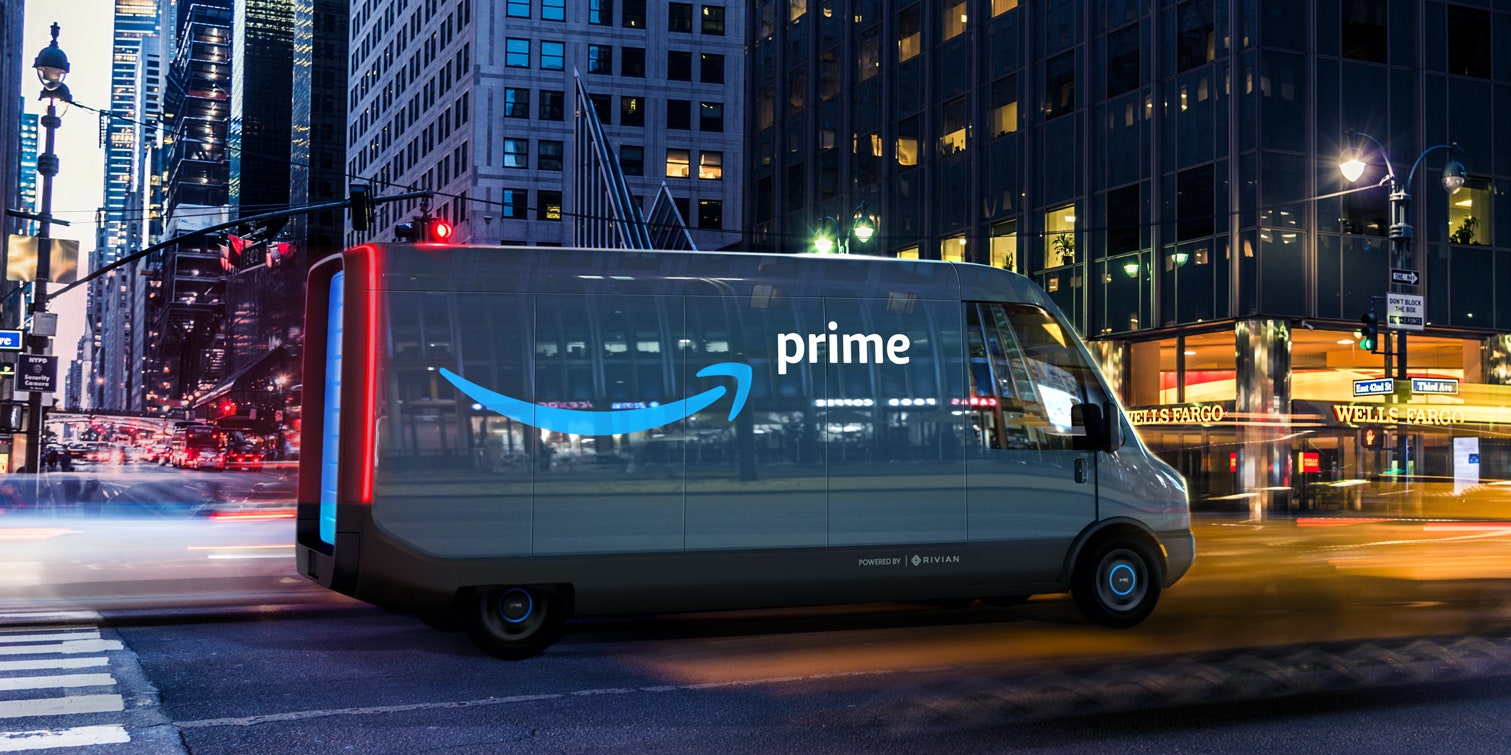
    Rivian CEO and co-founder RJ Scaringe has posted a photo of eight Rivian vans which look identical to the one that Amazon has been teasing which even feature the “Powered By Rivian” signage. He also shared tweeted videos that showed the initial production process.

    A lot of it is not known about these vans as they have probably been customized and tailored for Amazon’s logistics. These vehicles are obviously different from the R1T and R1S vehicles which Rivian are going on sale soon in July and August.

    The R1T has been even showcased in the Apple TV+ original “the Long Way Up” and is expected to duel with the likes of the Tesla Cybertruck and the Ford F-150 Lightning.

  • Amazon Australia will now service New Zealand customers as well

    Amazon Australia will now service New Zealand customers as well

    Amazon Australia has broadened its reach in the region, and is now officially offering its services to customers in New Zealand.

    While the online marketplace launched in Australia in 2017, Kiwis have long needed to purchase goods from the US marketplace, according to the business, and will now be able to access faster delivery times from Australia’s warehouses.

    “We are excited to offer Kiwis access to millions of products at great prices,” said Tony Austin, general manager for exports. Delivery will start at NZ$3.20, while parts of Auckland and Christchurch will have the option of expedited delivery for around NZ$7.49.

    This move should help New Zealand brands to access a wider range of the country, if they aren’t able to ship everywhere, by way of listing on Amazon Australia – and will allow more Australian brands to access the New Zealand market.

    It isn’t clear if New Zealand will be able to take part in certain Australian programs, such as the recently announced ‘Amazon Warehouse’ resale platform, or its on-demand paperback printing service ‘Print on Demand’, or if the New Zealand service will be limited to the business’ traditional marketplace offering.

    The service will certainly be able to take advantage of the business’ recently announced Western Sydney robotic fulfilment centre, which is set to “effectively double” Amazon’s operational footprint in Australia.

  • Amazon, Alibaba race to recruit Vietnamese merchants

    Amazon, Alibaba race to recruit Vietnamese merchants

    Global giants Amazon and Alibaba are racing to recruit more Vietnamese vendors on their platforms seeking to boost their share of a booming e-commerce market.

    Amazon saw the number of Vietnamese merchants exporting at least $1 million worth of goods from Vietnam triple last year. The surge was driven by demand for tools, kitchenware, handicrafts, home goods, and apparel.

    “Vietnamese sellers have enriched our global product selection,” Gijae Seong, head of Amazon Global Selling in Vietnam, told Nikkei Asia.

    Amazon Global Selling is a business set up to recruit more Vietnamese merchants on Amazon, seeking to boot e-commerce trade between Vietnam and its largest export market the U.S.

    The company opened a Hanoi office in March to train new sellers, adding to its Ho Chi Minh City branch.

    Seong said companies “have competitive advantages in manufacturing” in Vietnam, where a wave of factories have relocated from China to sidestep the trade war with the U.S. and to reduce other costs and risks.

    China’s Alibaba has also been making moves to have more Vietnamese sellers.

    In March, a company representative said that it planned to have over 10,000 Vietnamese small and medium-sized enterprises selling on its platform by 2025.

    It has been working with government authorities since last year to run training programs for Vietnamese vendors.

    As of March, over 300 companies have been provided consultancy in online cross-border sales.

    The competition between the two giants is heating up as e-commerce booms in Vietnam with rising demand for online shopping amid the Covid-19 pandemic.

    It’s e-commerce market expanded by 18 percent last year to $11.8 billion, the only country in Southeast Asia to record double-digit growth amid the Covid-19 pandemic, according to the Vietnam e-Commerce and Digital Economy Agency.

  • India to expedite Amazon, Flipkart antitrust probe

    India to expedite Amazon, Flipkart antitrust probe

    India’s antitrust watchdog plans to expedite a restarted probe into allegations of anti-competitive behavior at Amazon.com Inc and Walmart Inc’s Flipkart, as it intensifies scrutiny of big-tech firms, two people close to the matter said.

    The comments come as major U.S. technology firms including Twitter Inc and Facebook Inc are at loggerheads with the government over issues such as data privacy bills and policies some industry executives have called protectionist.

    The Competition Commission of India (CCI) initiated a probe in January last year on the basis of a complaint alleging Amazon and Flipkart promoted select sellers on their e-commerce platforms and that deep discounts stifled competition.

    The companies have denied wrongdoing.

    Near-immediate legal challenges from the pair stalled the probe for over a year until a court last week allowed it to resume, having dismissed arguments that the CCI lacked evidence.

    Though Amazon and Flipkart are likely to appeal, the CCI plans to demand information from them related to the allegations “as quickly as possible”, said one of the people, who declined to be identified due to the sensitivity of the matter.

    The investigation “will be expedited”, the person said. Such investigations in India typically take months to complete.

    Amazon declined to comment. Flipkart and the CCI did not respond to requests for comment.

    The CCI is speeding up all cases involving big technology firms, including by deploying additional officers for some cases and working to more stringent internal deadlines, said the two people, who are familiar with the watchdog’s thinking.

    “Cases involving digital firms are getting a priority at CCI as they can have a significant impact on the economy and Indian startups,” said one of the people.

    Last year, the CCI began reviewing allegations of Google abusing the position of its Android operating system in the smart TV market, and is likely to soon order a comprehensive antitrust investigation, the people said.

    Google declined to comment.

    Such a probe would be the third against Google, with the Alphabet Inc unit already battling cases relating to Android as well as its payment app.

    The CCI is also investigating practices at MakeMyTrip Ltd and privacy policy changes at Facebook’s WhatsApp.The probe into Amazon and Flipkart is restarting at a time when both are battling accusations from offline retailers that their complex business structures allow them to circumvent foreign investment rules for e-commerce.

    Amazon, which has said it “does not give preferential treatment to any seller”, told the court here it disagreed with the report.

    The antitrust body will examine the Reuters report and could use it as part of its investigation, one of the people said.

    “The CCI’s plan to move faster on such cases is in line with other antitrust regulators globally that are investigating digital markets like e-commerce and online search, which are dynamic and evolving fast,” said an Indian antitrust lawyer who represents tech firms.

  • Amazon launches Pharmacy subscription offer in US

    Amazon launches Pharmacy subscription offer in US

    Amazon.com Inc said on Tuesday it was now offering six-month prescriptions starting at $6 for medications of common health issues through its pharmacy.

    The company said prime members would get additional savings when paying without insurance. Customers can pay as low as $1 per month for select medications, including drugs to treat diabetes and blood pressure, and will get free two-day delivery.

    The e-commerce giant launched an online pharmacy in November for delivering prescription medications in the United States and stirring up competition with drug retailers such as Walgreens Boots Alliance, CVS Health and Walmart.

    Shares of pharmacy chains and drug wholesalers fell in morning trading as Amazon’s launch of online pharmacies has been a threat to brick-and-mortar pharmacies at a time when e-commerce has surged due to Covid-19 restrictions.

    Shares of Walgreens and CVS were down 1.2% each, and those of drug distributors AmerisourceBergen Corp and McKesson Corp fell 1% and 1.7%, respectively.

    Amazon is also looking at launching physical pharmacies in the United States, the Insider reported last month.

    Under the new offering, customers can search for their medication by name and find out if it’s eligible for a six-month supply and what the price it will be when using the Prime prescription savings benefit, the company said.

    It added that the supplies would be available only for customers who have a prescription from their healthcare providers.

    Amazon has been trying to enter the pharmacy market since its 2018 acquisition of PillPack, which is a platform used by customers who need pre-sorted doses of multiple drugs.

    Rival Walgreens offers free same-day and next-day delivery options for drugs.

  • Construction starts on Amazon Australia HQ in downtown Melbourne

    Construction starts on Amazon Australia HQ in downtown Melbourne

    Property company Charter Hall Group has begun the construction of the $1.5 billion 555 Collins Street precinct which will house online retailing giant Amazon’s new headquarters in Melbourne.

    Stage 1 of construction, scheduled for completion by early 2023, is worth $750 million and comprises a 48,000sqm premium office tower. A second office tower of 32,000sqm will include premium food and beverage retailers as well as a health and wellbeing hub.

    The company held the groundbreaking ceremony yesterday, attended by Victorian treasurer Tim Pallas, lord mayor Sally Capp, Amazon Web Services MD, ANZ, Adam Beavis, Charter Hall MD and group CEO David Harrison, Charter Hall Office CEO Carmel Hourigan and construction partner Lendlease GM Victoria Bill Alexandrakis.

    “Melbourne has a rich community of innovators, and we are looking forward to bringing Amazon’s growing local workforce to 555 Collins Street so we can continue to invent and innovate on behalf of customers across our Amazon and AWS businesses in Australia,” said Beavis.

    “555 Collins comes with a 6 Star Green rating and is constructed under a carbon neutral framework, which will contribute to helping us reach our goal of net zero carbon emissions by 2040.”

    Lord mayor Capp said the construction will provide 1500 jobs for Victorians. The city’s economy is recovering and the new project “will be a catalyst for further investment” in the CBD.

    “This is significant for Melbourne and incredible news for jobs and our highly skilled workforce – this investment will contribute billions of dollars to the Victorian tech economy in the next 10 years and cement our position as the home of innovation in the nation,” said Pallas.

    Charter Hall worked with architectural company COX Architecture and Gensler.

  • Amazon to let Whole Foods customers pay by palm print

    Amazon to let Whole Foods customers pay by palm print

    Amazon will let customers pay for their groceries at Whole Foods locations in Seattle with a swipe of their palms. The online shopping giant, which acquired Whole Foods in 2017, is rolling out pay-by-palm technology at some grocery stores near Amazon’s headquarters to make paying quicker and more convenient.

    The technology, called Amazon One, lets shoppers scan the palm of their hand and connect it to a credit card or Amazon account.

    After the initial setup, which Amazon claims take less than a minute, shoppers can scan their hand at the register to pay for groceries without having to open their wallets.

    Amazon first launched the technology late last year and at the time said the technology could be used at stadiums, office buildings and other retailers.

    So far, Amazon hasn´t announced any takers. The technology has been put into use in several of its cashier-less stores and Amazon said it has signed up thousands of users, but didn´t provide a specific number.

    Arun Rajan, senior vice president of technology and chief technology officer at Whole Foods, said the company is always looking to innovate.

    ‘At Whole Foods Market, we’re always looking for new and innovative ways to improve the shopping experience for our customers,’ he said.

    ‘We’re starting with an initial store at Madison Broadway in Seattle and look forward to hearing what customers think as we expand this option to additional stores over time.’

    Privacy experts have warned against the use by companies of biometric data, such as face or palm scans, because of the risk of it being hacked and stolen.

    Reuben Binns, an associate professor focusing on data protection at the University of Oxford, said last year that the technology raises privacy concerns since it is kept in the cloud which could make it accessible to hackers and the government.

    ‘The advantage is that it’s on you all the time, this isn’t something you can lose, but that’s also a disadvantage because you can never change it,’ says Binns.

    ‘You can never change your palm like you change your password or other identification tokens.’

    Amazon said it keeps the palm images in a secure part of its cloud and doesn´t store the information on the Amazon One device. The company said shoppers can also ask for their information to be deleted at any time.

    People walk out of an Amazon Go store, in Seattle. Amazon said Wednesday that it is rolling out its pay-by-palm technology to some of its Whole Foods supermarkets

    A Whole Foods store in Amazon’s hometown of Seattle started using the technology on Wednesday. Seven additional Whole Foods locations in the area will have it installed in the coming months.

    Whole Foods is headquartered in Austin, Texas. It was not immediately clear if locations in Texas will receive the rollout.

    Amazon declined to say if or when other locations might get it. There are about 500 Whole Foods stores across the country.

    The move shows how Amazon is bringing some of the technology already in use at its namesake brick-and-mortar Go and Books stores to the high-priced grocery chains.

    The deployment stops short of introducing Amazon’s cashier-less technology at Whole Foods, which critics have said would result in job cuts.

    Amazon One still requires scanning items at checkout, and the company said it will not impact jobs at Whole Foods.

    According to the Amazon One website, ‘no two palms are alike’ which means it ‘can’t be used by anyone but you.’

    ‘One reason was that palm recognition is considered more private than some biometric alternatives because you can’t determine a person’s identity by looking at an image of their palm,’ the website reads.

    However, fingerprints, also long believed to be unique to individuals, have recently come under fire in the criminal justice system.

    Judge Louis Pollack made headlines with a ruling fingerprint identification was not a legitimate form of scientific evidence in the January 2002 court case of United States v. Llera Plaza.

    Amazon also announced that starting this week, customers in Tulsa, Oklahoma, ‘will see local deliveries made in electric vehicles.’
  • Amazon acquires e-commerce platform Selz

    Amazon acquires e-commerce platform Selz

    Global e-commerce marketplace Amazon has bought up Sydney-based e-commerce platform Selz.

    The platform works in much the way as Shopify, providing an e-commerce-ready backend for small businesses to utilize when creating their websites.

    “We have signed an agreement to be acquired by Amazon and are looking forward to working with them as we continue to build easy-to-use tools for entrepreneurs,” said Selz chief executive Martin Rushe.

    The acquisition could signal a shift in how Amazon seeks to grow its position in the e-commerce industry – no longer aiming to get all sellers on its marketplace, and instead of working with them behind the scenes to provide a white-label shopping experience powered by Amazon’s platform.

    The option could be attractive for businesses looking to eschew Amazon’s commission and delivery fees, though the difference between the two options are currently unknown.

    An Amazon spokesperson confirmed the acquisition but didn’t disclose any terms.

  • Indian officials to examine Amazon after Reuters probe

    Indian officials to examine Amazon after Reuters probe

    India’s federal financial crime-fighting agency will examine findings in a Reuters report, which revealed that Amazon.com Inc has for years given preferential treatment to a small group of sellers on its India platform and used them to circumvent the country’s foreign investment rules, a senior agency source told Reuters on Thursday.

    It provided an inside look at the cat-and-mouse game Amazon has played with India’s government, adjusting its corporate structures each time the government imposed new restrictions aimed at protecting small traders.

    On Thursday, a senior Enforcement Directorate source told Reuters that “we will be examining findings” of the story. The subject matter “is not entirely new for us,” said the source, without elaborating. The source asked not to be identified.

    Amazon didn’t immediately respond to a request for comment.

    Amazon is already under investigation by India’s Enforcement Directorate for possible violation of foreign investment rules. Such probes typically take years in India, and in most cases, details aren’t made public. In the Reuters report published Wednesday, Amazon said it was confident of its compliance when asked about the agency’s probe.

    In tweets issued on Wednesday, Amazon criticized the Reuters report as “unsubstantiated, incomplete, factually incorrect,” without going into specifics. “In last several years, there have been (a) number of changes in regulations; Amazon has on each occasion taken rapid action to ensure compliance,” the company said.

    In an e-mail to employees on Thursday, Amazon’s India head Amit Agarwal addressed the Reuters story, saying he understood “such instances can be distracting.”

    The company was on “the threshold of creating a legacy,” he wrote in the e-mail, which was reviewed by Reuters. “It will require significant innovation, it will push our abilities, we will be misunderstood, but it will be fulfilling.”

    Indian retailers, who are a crucial part of Prime Minister Narendra Modi’s support base, have long alleged that e-commerce giants like Amazon and Walmart’s Flipkart flout federal regulations and that their business practices hurt small traders. The companies deny the allegations.

    The documents reviewed by Reuters revealed that Amazon helped a small number of sellers prosper on its India platform, giving them discounted fees and helping one cut special deals with big tech manufacturers such as Apple Inc. The company has also exercised significant control over the inventory of some of the biggest sellers on Amazon.in, the documents show, even though it says publicly that all sellers operate independently on its platform.

    Government rules announced in 2016 required that an e-commerce platform should “not exercise ownership” over sellers’ inventory.

    Gopal Krishna Agarwal, a national spokesman for Modi’s ruling party, said the findings in the Reuters story were “serious” and that “any predatory policy, deep discounting … will not be tolerated by the government. The party will take a stand on that.”

    Small businesses are “very important” for the party, he said. “Their concerns will be taken care of.”

    In a written response to the Reuters report published on Wednesday, Amazon said it “does not give preferential treatment to any seller on its marketplace,” and that it “treats all sellers in a fair, transparent, and non-discriminatory manner.”

    A leading group of Indian retailers urged the government to ban the local operations of Amazon and said it was considering taking legal action, after the Reuters story was published.

    The Confederation of All India Traders, which says it represents 80 million retail stores, said “the shocking revelations” are “sufficient enough to immediately ban operations of Amazon in India.”

    Amazon did not respond to a request for comment on the trader group’s statement.

  • Amazon’s Vietnamese partner reports surge in profit

    Amazon’s Vietnamese partner reports surge in profit

    Textile company Gilimex said its net profits almost doubled in 2020 thanks to a number of high-value contracts with international retailers.

    It reported record revenues of VND3.45 trillion ($150 million), up 36 percent from 2019, and net profits of VND308 billion for the year.

    Gilimex’s main products are handbags and backpacks.

    It tied up with Amazon, the world’s largest online retailer, in 2016 and seen average revenues grow at 20 percent a year since then.

    Its other large foreign partner is Swedish furniture retail giant IKEA with whom it has eight long-term contracts worth $16.2 million.

    The firm also develops new products for Dutch baby products maker Bugaboo and Puma, the German multinational that manufactures athletic and casual footwear, apparel and accessories.

  • Amazon brings Dark and Light modes to Alexa app on iOS devices

    Amazon brings Dark and Light modes to Alexa app on iOS devices

    An important update is now rolling out to Alexa app users on iOS devices. The update adds support for both Light and Dark modes, allowing users to switch between them on the fly, as well as Dynamic Type support.

    The update is meant to further improve Alexa’s accessibility features. Thanks to the newly added Dynamic Type support, iOS users will no longer have to choose the size of the text within the Alexa app. Instead, the app will now automatically choose the text-size set at a system level.

    As far as the new Dark/Light modes go, the new feature lets Alexa app users switch between them or let the app handle usage of the modes automatically. By default, the Alexa app will switch appearance at sunrise and sunset, but users can permanently set the app to either Light or Dark Mode from the iOS’s Settings menu.

    Previously, the Alexa app did have a dark mode, but it didn’t display a completely black background whereas the new one added in the update does a better job at mimicking the black color. The updated Alexa app has already been uploaded to the App Store, so feel free to download it to benefit from the recent changes.

  • Fighting Amazon over retail deal, India’s Future says staring at insolvency, hit to bank loans

    Fighting Amazon over retail deal, India’s Future says staring at insolvency, hit to bank loans

    If India’s Future Group cannot sell assets, $4 billion in bank loans and debentures will be at risk, pushing its retail unit into insolvency, the company said in a court filing on Wednesday against Amazon.com Inc, which wants to block the sale.

    A court in New Delhi blocked Future Group’s sale of retail assets to Reliance Industries on Tuesday after Amazon raised objections to the deal.

    The corporate battle has embroiled sprawling businesses led by two of the world’s richest men: Amazon’s Jeff Bezos and Reliance’s Mukesh Ambani.

    Amazon had argued that Future breached contracts by selling retail assets to Reliance. The court sided with the U.S. firm, saying an earlier order from an arbitrator that put the Future-Reliance deal on hold was valid.

    Future – which had argued the arbitrator’s order was not binding – on Wednesday filed a challenge against the court’s ruling, saying the company’s creditors would be at “significant risk” if the Reliance deal fails.

    Other than an estimated 300 billion rupees ($4.1 billion) hit to bank loans and debentures, the deal’s failure would also impact livelihoods of 50,000 employees and 6,000 small- and medium-sized vendors, it said.

    “It is inevitable that FRL (Future Retail) will go into liquidation … The magnitude of damage that may be caused to the public at large is unimaginable,” Future said the court filing, seen by Reuters.

    The appeal is set to be heard on Thursday before a bigger two-judge bench in New Delhi.

    Future, India’s second-largest retailer with more than 1,700 stores, and Amazon did not respond to a request for comment.

    Shares of Future Retail dropped 5% in early trading on Wednesday. Reliance Industries fell as much as 1.2%, but recovered later.

    The Delhi court on Tuesday asked Indian authorities to maintain status quo on the transaction, effectively putting the Future-Reliance deal on hold.

    Indian stock exchanges and the country’s antitrust watchdog had already cleared the deal, though it was awaiting approval from a law tribunal.

    Future in its appeal said Tuesday’s Delhi court order “rendered stillborn” the approvals.

    “The sole and sheer intent” of Amazon was to prevent Reliance – which is also venturing into e-commerce – from acquiring Future’s assets, the Indian firm argued in the filing.

    Amazon, which had its sights set on ultimately owning part of Future’s retail assets itself, has argued a 2019 deal it had with a unit of Future contained clauses prohibiting the Indian group from selling them to anyone on a “restricted persons” list, including Reliance.

  • Amazon’s Bezos to step down as CEO; quarterly revenue tops $100 billion

    Amazon’s Bezos to step down as CEO; quarterly revenue tops $100 billion

    Amazon.com on Tuesday (Feb 2) said founder Jeff Bezos will step down as CEO and become executive chairman, as the company reported a third consecutive record profit and quarterly sales above US$100 billion for the first time.

    This summer, Bezos, 57, will hand the keys of the world’s largest online retailer to Andy Jassy, head of its cloud computing division. The announcement ends a long-running question about who would succeed the world’s second-richest person at the company’s helm.

    Jassy, 53, joined Amazon in 1997 after Harvard Business School, founding Amazon Web Services (AWS) and growing it to a cloud platform used by millions, the company’s website said. He had been a clear contender for the top job since Amazon created two CEO roles reporting to Bezos, the other held by recently retired consumer CEO Jeff Wilke.

    Tom Johnson, chief transformation officer at Mindshare Worldwide, said Jassy’s promotion underscored the importance of web services to Amazon’s future.

    “Jassy’s background in steering AWS shows just how the top of mind those services are to Amazon’s business strategy. It’ll be interesting to see how that affects their strategy and balancing that priority with a growing ad business and the commerce behemoth,” he said.

    Jassy is known for understanding technical details, and he has regularly taken jabs at legacy player Oracle and cloud rival Microsoft, which AWS continues to exceed in sales.

    Under Jassy’s leadership, Amazon’s cloud business has signed major customers including Verizon, McDonald’s and Honeywell. The division’s quarterly revenue consistently rose by double digits, helping cement its position as the market leader.

    One contract AWS failed to win was the US$10 billion “JEDI” contract from the Pentagon, which was awarded to Microsoft.

    Jassy has bestowed a rock-star aura to keynotes at AWS’s annual Las Vegas conference, speaking before more than 60,000 attendees in 2019 after upbeat music preceded his talk.

    Bezos, who started the company 27 years ago as an Internet bookseller, said in a note to employees posted on Amazon’s website, “As Exec Chair I will stay engaged in important Amazon initiatives but also have the time and energy I need to focus on the Day 1 Fund, the Bezos Earth Fund, Blue Origin, The Washington Post, and my other passions.” Blue Origin is Bezos’ space company, and the Post is his private newspaper holding.

    Amazon’s net sales rose to US$125.56 billion as consumers turned to the world’s largest online retailer for their holiday shopping, beating analyst estimates of US$119.7 billion, according to IBES data from Refinitiv. Amazon shares were up less than 1 percent in after-hours trading.

    Jassy’s AWS, traditionally a bright spot, fell slightly short of expectations in the fourth quarter. While the cloud computing division announced deals in the quarter with ViacomCBS, the BMW Group, and others, it posted revenue of US$12.7 billion, short of the US$12.8 billion analysts had estimated.

    Amazon said it was not announcing an AWS replacement for Jassy at this time.

    Meanwhile, Amazon’s e-commerce business has never been as big. Since the start of the US coronavirus outbreak, consumers have turned to Amazon for delivery of home staples and medical supplies. While brick-and-mortar shops closed their doors, Amazon, recruited another 400,000 workers to keep up with demand.

    That has placed the Seattle-based company at the center of workplace tumult. More than 19,000 have contracted COVID-19 as of September, and some staff have protested and demanded facility closures. Others, at Amazon’s Bessemer, Alabama, warehouse, are seeking to be the first at the company to unionize in the United States, with an election to begin next week.

    Chief financial officer Brian Olsavsky told reporters on a conference call that costs associated with the pandemic in the first quarter are expected to total US$2 billion, down from US$4 billion in the fourth quarter as shopping volumes decrease. The company has taken an array of COVID-19 precautions and written government officials – including US President Joe Biden – saying it is eager to offer vaccine shots to staff.

    A boost in revenue came from moving Amazon’s marketing event Prime Day – usually in July – to October, lengthening the holiday shopping season.

    Net sales for the current quarter are expected to be between US$100 billion and US$106 billion.

  • Amazon, Enterprise Singapore to help small businesses venture offshore

    Amazon, Enterprise Singapore to help small businesses venture offshore

    Amazon announced today at the inaugural Amazon Southeast Asia Online Seller Summit 2021 additional resources and support for small and medium-sized businesses (SMBs) in Singapore to start selling online and expand globally through its stores. Amazon announced that it is extending the waiver of professional selling account subscription fees for new and existing sellers, until 30 June 2021. This support builds on Amazon’s current initiatives such as the online seller education series, Seller University, and over 225 free tools and services to help sellers grow their sales in Amazon’s stores in Singapore and worldwide.

    In addition, Amazon is teaming up with Enterprise Singapore (ESG) to help local retailers scale globally. Enterprise Singapore will support these efforts through the Market Readiness Assistance (MRA) scheme. Support will be capped at S$100,000 per new country, includes support for up to 70% of eligible costs for overseas promotion, overseas business development, and overseas country set-up, and gives SMBs the flexibility to expand across new countries at their preferred pace. This is one of several measures that local enterprises can tap on through ESG to grow and diversify their businesses.  More details can be found in ANNEX.

    “We will double-down on efforts to support our local businesses in gaining e-commerce capabilities and maximizing their growth opportunities from the digital economy. To help companies access customers in new countries, ESG has also been working with Amazon to onboard Singapore sellers to Amazon as a channel for international sales, such as in the US, Canada, and India. Support is available for Singapore companies that are looking to expand to these countries,” said Minister for Trade and Industry, Mr Chan Chun Sing.

    “Small businesses are an essential part of Amazon’s DNA. Through the Amazon Southeast Asia Online Seller Summit 2021, we aim to enable more local sellers to reach a global audience through our 20 stores worldwide. Whether they are just getting started or are an experienced seller, Amazon’s comprehensive programs and network will help SMBs overcome operational challenges to maximize growth opportunities globally,” said Henry Low, Country Manager, Amazon Singapore.

    The Southeast Asia Online Seller Summit, being held today and tomorrow, has drawn over 3,000 participants who are interested to understand how they can sell with Amazon, scale their businesses, and seize cross-border opportunities. Guest-of-Honour, Minister for Trade and Industry, Mr Chan Chun Sing, leaders of Amazon Singapore, industry experts, and local business owners selling on Amazon.sg came together on Day 1 to discuss local and regional retail trends and offer insights on how SMBs can ‘Start Local, Go Global’ with Amazon.

    Connecting sellers to exchange best practices.

    As part of the Summit, Amazon hosted a panel of SMB founders to share experiences of growing their business online and their journey with Amazon. Through the support of Amazon’s global network and its logistics and inventory solutions such as Fulfilment by Amazon (FBA), each of them has expanded to serve customers globally – all from the comfort and safety of their homes.

    “When I started Rui Smiths in 2014, selecting Amazon as the e-commerce store for my business was a no brainer. Amazon has been offering an unparalleled service that perfectly fits my needs, since my initial days as a new business owner, allowing me to expand internationally from the get-go. In just 4 years, with Amazon, we had hit S$200,000 in sales and were already selling in the US, UK, and Australia,” said Debbie Cai, founder, Rui Smiths. “I hope the insights and resources shared at the Summit will help many local sellers like myself grow their business not only in Singapore but also beyond shores for customers everywhere.”

    Local resources for sellers in Singapore to unleash and maximize global growth opportunities

    To date, Amazon has provided support to thousands of SMBs keen to sell online with Amazon.sg and its stores globally and continues to help many of them go digital and build thriving businesses. To shine the spotlight on more local retailers, Amazon continues to promote a dedicated “Shop Local” storefront on Amazon.sg, featuring local brands’ founding stories and a plethora of products in categories such as home and home improvement, electronics, kitchen and dining, health and personal care, toys and games, groceries and more.

    Other resources introduced include the Amazon Seller App for local sellers with accounts on Amazon.sg to track sales and manage their business via mobile, the Marketplace Appstore, a one-stop shop to discover third-party applications and services for automating tedious business aspects, and the Seller Forum, a resource for first-hand advice from fellow business owners on selling with Amazon. Sellers can also join the Sell on Amazon Singapore Facebook page to connect with the community of sellers on Amazon.sg.

    These initiatives are furthered by Amazon.sg’s ongoing collaboration with Infocomm Media Development Authority (IMDA) for the Digital Resilience Bonus, offering eligible SMBs a bonus of up to S$2,500 for selling on e-commerce channels like Amazon. The bonus is available to eligible local retailers until 30 June 2021.

  • Amazon tries to block Future’s retail asset sale, seeks CEO’s detention-filing

    Amazon tries to block Future’s retail asset sale, seeks CEO’s detention-filing

    Amazon.com Inc has requested an Indian court to block partner Future Group’s $3.4 billion deal to sell its retail assets and called for the Indian group’s CEO to be detained, a court filing seen by Reuters showed.

    In the U.S. giant’s latest effort to derail Future’s asset sale to Reliance Industries, it asked the High Court in New Delhi to enforce the decision of a Singapore arbitrator, which Amazon and Future had agreed to use in case of disputes, the filing showed.

    In October, the arbitrator issued an interim order saying Future’s deal with Reliance should be put on hold.

    Future has “deliberately” disobeyed the arbitrator’s order without challenging it, Amazon argued in its court filing, which is likely to be heard by the court in New Delhi later this week.

    Any violation of the arbitrator order invites the “same consequences” as a violation of an Indian court order would, Amazon argued, urging the court to also detain Future Group CEO Kishore Biyani, and some other respondents in the case, in a civil prison.

    Future, in a statement to India’s BSE and NSE stock exchanges, said it had been informed by Amazon lawyers about the court filing, and that it would defend the case.

    Future and a spokesman for Biyani, as well as Reliance, did not respond to Reuters’ requests for comment. Amazon declined to comment.

    Amazon has also asked the court to attach assets of Biyani to the case so they can’t be disposed of. Biyani is often dubbed India’s retail king for transforming the country’s retailing in recent decades.

    Amazon argues Future breached some pre-existing clauses by entering into a deal with Reliance, but the Indian group has maintained the arbitrator’s order is not binding and needs to be ratified by an Indian court.

    The U.S. group’s latest court move comes after Indian stock exchanges last week gave the go-ahead to the Future deal, after communicating with India’s markets regulator, the Securities and Exchange Board of India (SEBI).

    The Amazon filing also argued that Future should not rely on any regulatory approval it has received, in light of the arbitrator’s injunction.

    The dispute centers around Future’s decision in August to sell its retail, wholesale, logistics, and some other businesses to Reliance for $3.38 billion, including debt.

    Amazon argues that a 2019 deal it had with a Future unit had clauses saying the Indian group couldn’t sell its retail assets to anyone on a “restricted persons” list including Reliance.

    The outcome of the dispute embroiling Future, Reliance, and Amazon is seen shaping India’s retail landscape, especially in deciding who will occupy the top spot in the grocery market which could be worth around $740 billion a year by 2024, according to a forecast by Forrester Research.