Tag: amazon

  • Pandora has no plans to join platforms like Amazon or Farfetch

    Pandora has no plans to join platforms like Amazon or Farfetch

    Jewelry maker Pandora would prefer to invest in physical stores or its own online sales platform rather than join large e-commerce marketplaces like Amazon or Farfetch, its chief executive said on Wednesday.

    “If you’re a small and unknown brand, marketplaces offer a great opportunity, because they provide you with an audience. I already have an audience,” CEO Alexander Lacik said during an interview.

    Pandora, the world’s largest jewelry maker by production capacity, has found a niche between cheaper accessories sold by the likes of H&M and more expensive jewelry like that of Tiffany & Co .

    “Eight out of ten women globally are aware of our brand, so I don’t need to make you aware of me. What I need to do is to show you what I’ve got, and I can to this much better if I have a direct relationship with my customer,” he said.

    The $12.3 billion company, headquartered in Copenhagen, has increased investment in e-commerce during the pandemic. It is present on China’s T-mall platform but not on large global platforms like Amazon or Farfetch.

    “Marketplaces always have to make a compromise for all the clients they are serving. I don’t have to compromise,” he said.

    Pandora’s more than 2,600 physical stores remain the core of its business and accounted for 62% of global sales between July and September.

    “Nearly two-thirds of my customers are men buying jewelry for their girlfriends, wives, grandmothers, or children. And we know that men buying jewelry need help,” he said.

  • Visa’s Amazon spat shows power is shifting to retailers in fee battle

    Visa’s Amazon spat shows power is shifting to retailers in fee battle

    Amazon’s latest spat with Visa shows big retailers, armed with a growing array of payment options, are gaining the upper hand in their power struggle with card providers, but it’s not a crisis for the payment company.

    Amazon said last week that it would stop accepting Visa credit cards issued in the United Kingdom from Jan 19, 2022, saying that despite technology advancements the fees on such transactions remained high or in some cases were rising.

    While Amazon may yet back down on the UK front, where the company accounts for less than 1 percent of Visa’s credit card volume, according to an estimate by Piper Sandler analysts, the dispute is a bad sign for the card industry. Some analysts said it could presage a fight in the much bigger US market.

    “Amazon is treating this dispute with Visa as an experiment,” said Piper Sandler analyst Christopher Donat. “Our biggest concern is that Amazon seeks concessions from Visa in other geographies.”

    Visa Chief Financial Officer Vasant Prabhu told Reuters in an interview on Friday that he expected a resolution. “We’ve resolved these things in the past and I believe we’ll resolve them in the future,” he said. Amazon declined to comment.

    Credit cards dominated a third of North American e-commerce spending in 2020, according to payments giant WorldPay, but mobile payment options like Venmo and ‘buy now, pay later’ (BNPL) financing plans are chipping away at their market share.

    While alternative payments have been growing for years, the pandemic accelerated a downward trend in credit card applications boosting the popularity of BNPL financing, especially among younger consumers.

    Credit cards’ share of North American e-commerce spending declined 7 percent last year, according to WorldPay, while BNPL’s share increased 78 percent, making it the fastest-growing form of payment.

    In August, Amazon partnered with BNPL provider Affirm to offer an installment financing option on US Amazon purchases.

    “Credit cards are still dominant players for non-cash transactions, but they need to be aware of the growing competition,” Chris Dinga, a payments analyst at GlobalData, wrote on Friday.

    “BNPL is gradually being adopted by retailers as they see higher conversion and growth opportunity by providing it to their customers,” Dinga wrote, adding high credit card fees could accelerate BNPL adoption by retailers.

    Some analysts said past disputes suggested Visa may have to blink before Amazon, such as when U.S. restaurant owners stopped taking Amex cards in the 1990s, leading Amex to reduce its fees.

    “Visa may need to follow American Express’s example,” Evercore analysts said in a research note.

    Still, Visa has survived such fights and few other merchants have Amazon’s heft, said Prabhu.

    “Even a very large retailer like Amazon represents a relatively small portion of our payment volume,” he said.

    And Visa is not wedded to credit cards as the primary transaction source, he added.

    “If a merchant wants to offer credit in a different way, we’re agnostic. We will do both. The buy now, pay later business has been a positive for us.”

    Visa has been partnering with BNPL providers, including Sweden’s Klarna.

    Retailers also benefit from credit card issuers offering their customers cash rebates and rewards programs to encourage them to spend more than they otherwise would.

    Prabhu said he expected credit card spending to pick up now that borders are opening and affluent customers are spending more on travel, entertainment and eating out.

    And Amazon also needs a partner for its own co-branded credit card. The company is considering replacing Visa on US co-branded credit cards with either Mastercard or American Express, suggesting its UK fee dispute could be a negotiating tactic, said analysts.

    “It’s not necessarily a good idea for merchants to restrict consumer choice,” said Prabhu. “Amazon will have to think about that, too.”

  • Amazon and the pros of getting personal

    Amazon and the pros of getting personal

    if you want people to use your application and give you their money and information, you must provide them with speed, efficiency or time savings in exchange. The average user looks at his phone 150 times a day (and rising), but each of those interactions is growing shorter. Users perceive value when their technology interfaces enable them to get done what THEY need to do more efficiently.  Lingering on a screen, scrolling through options…these are not things most users like. But every user is different. You can model behavior, and you can create 80/20 rules to hit a majority of users, but there is nothing like an application or an experience that just gets you. For users, feeling known is no longer a nice-to-have feature: it is an expectation.

    My own experience with personalization pre-dates the modern mobile phone era.  I was wrapping up my college career just as the first Internet boom was winding down.  At the time, Amazon was not nearly the behemoth it is today, and clouds were still puffy collections of moisture in the sky. Personalization of content on the still nascent internet was limited, to put it nicely. In order to graduate college, I had to complete my senior project. I drew inspiration from my own career history as a restaurant manager, and decided to create a Restaurant Food Delivery service website, which allowed a user to order food from any number of area restaurants, and arrange for that delivery through a third party. The project was narrowly focused on the creation of the website, and the rest of the necessary workflow was completely fake, so no I did not create an early, cave-man version of DoorDash. But, the user experience screamed the need for some kind of personalization, some way to make reasonable recommendations to users about meals they may enjoy.

    Enter Amazon.com.  

    As a student and technologist, the access to the knowledge provided to me by Amazon, through purchasing and delivery of books, was astounding. And as I bought books, Amazon would recommend other books, and these recommendations would get better and better, and this became the inspiration for the recommendation engine I would implement in my senior project.  In my attempts to reverse engineer the algorithm that Amazon uses, I implemented a basic engine that looked across the items a person ordered and matched other food orders with similar items, and then selected an item not on the current user’s list as a recommendation. It was basic, but it did the trick…I was allowed to graduate.

    Years later, well into my career, I learned this method of recommendation is called Collaborative Filtering, and was in fact the approach used by the nascent Amazon.com shopping system to make recommendations. As an early pioneer in the online shopping space, Amazon had the data to sign up the game in personalized recommendations. The eCommerce space has been using recommendation engines for many years now. Shopping platforms like Magento have plugins and extensions to enable recommendations, and while these tools are great and perform a similar function to Amazon.com’s engine, they are domain and platform-specific.

    “The Cloud” expands the pure volume of data available for making recommendations. This expansion, with no other technology changes, brings an opportunity for better recommendations. But that is not where the Cloud stops. By expanding access to high-performance computation, high-speed data storage, and high volumes of data, The Cloud has enabled an explosion in machine learning and artificial intelligence. And this has brought the concept of personalization to a whole new level.

    With Personalize, Amazon takes advantage of all that has gone into building the largest Cloud on the planet, and all that was learned through Amazon.com and what started as a Collaborative Filtering approach, and expanded, matured, and brought it to the technology community as a general-purpose platform for personalization.

    Amazon Personalize sets out to empower us, as technologists, to meet the expectation with which our CCO has challenged us. It brings an easy-to-use, highly scalable platform to power recommendations, and more, across nearly any domain. By allowing you to define a schema + additional metadata, and apply an HRNN based Machine Learning algorithm to that data, Personalize is able to surface recommendations about clothing, news articles, doctors, and even food. The model that is used for training is your data, and can be updated as frequently as you choose. This allows you to create a feedback loop to regularly enhance your recommendations. It also provides for preferential ranking of content. Enabling you to surface the most likely needs for your users when performing searches.

    Typically, the barrier to entry for this kind of machine learning technology has always been the complexity of establishing the machine learning data pipeline and processing model, which would typically include these activities:

    • Build a machine learning engine
    • Train one or more models
    • Test those models and then retrain as needed
    • Design and implement a method of generating inferences from those models
    • Create the data pipeline to serve the model
    • Deploy the model with an integrated data pipeline
    • Etc…

    By building on their other technologies, AWS reduces this barrier significantly by providing the machine learning engine that trains the model from your curated data and an easily accessible RESTful API for generating inferences across this trained model by user or by item. This also allows for sorting a list of items in a way that is most useful to the individual. It does this all on top of the core AWS services, like SageMaker and IaaS capabilities, which allows this engine to run at scale servicing all of your consumer personalization needs.

    Amazon Personalize does not solve everything, however. It does not eliminate the need to know and understand your data. It does not replace your data science or development teams. Extracting, transforming, and loading data into Personalize is still something that needs to be done. Testing the validity of the trained model, and the accuracy of the recommendations is an absolutely necessary step you need to take, and Personalize does not change that.

    In addition to the concept of “fair exchange of value,”  another thing our CCO likes to talk about is the anxiety and fear users have when interacting with technology, and the importance of frictionless experiences to reduce that anxiety and eliminate that fear. The barrier to entry for many in the machine learning space is also anxiety and fear. It is anxiety about whether they can really build a machine learning pipeline, fear about both how long it will take and whether they will be finished just in time to miss this train of AI and machine learning-driven experiences. Amazon Personalize’s biggest accomplishment for technologists like us is the reduction of that anxiety and the elimination of that fear. It doesn’t solve all problems related to personalization, but it leaves space for data manipulation and reduces the problem space to something consumable and solvable.

    In a world where a user’s attention span is approximately 12 seconds, Personalize allows us to meet them where they want to be: in a precisely aligned window of time, with an interaction that is a fair exchange of value.

  • Rivian Open Up Sales For Its Electric Van In 2023

    Rivian Open Up Sales For Its Electric Van In 2023

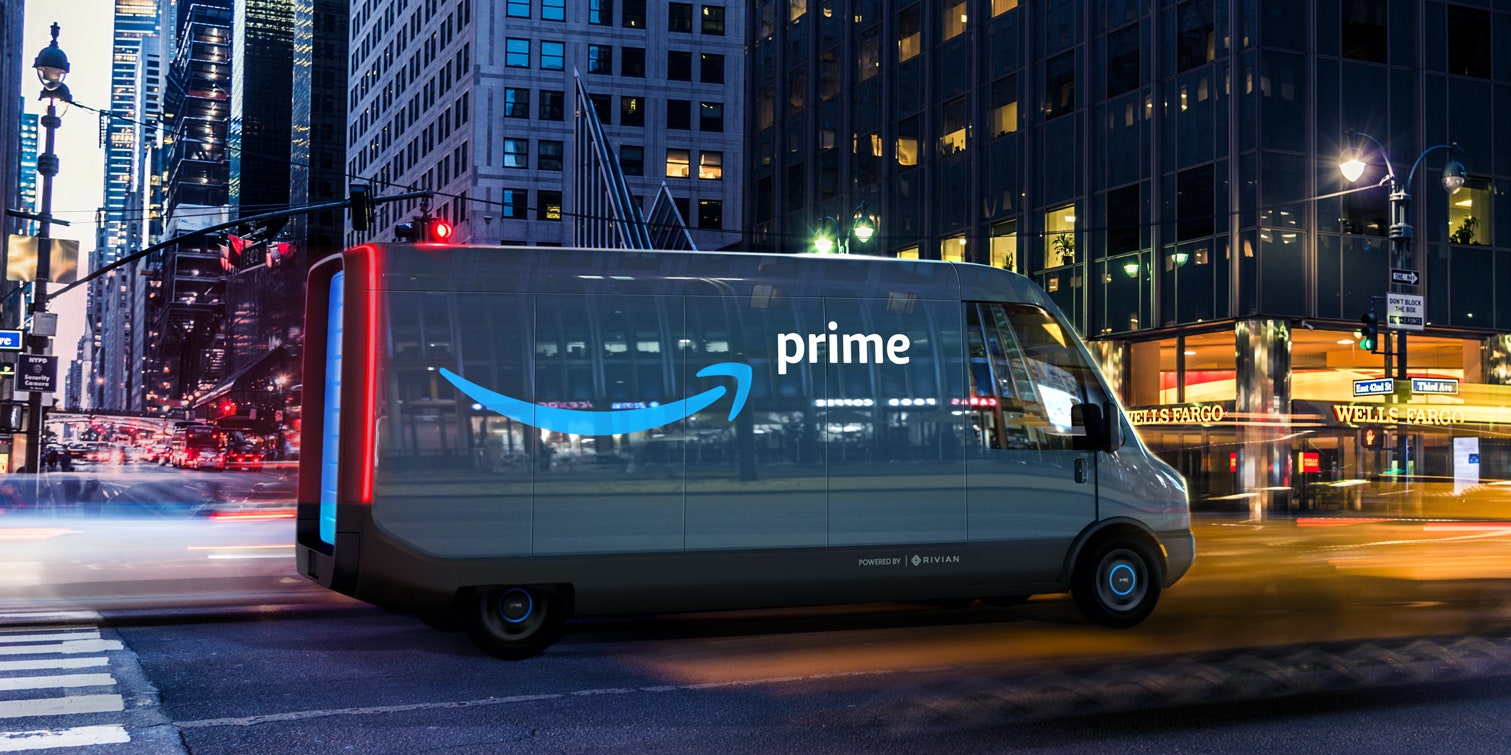
    Rivian which is one of the most well capitalized electric car startup’s has been making waves with its R1T and R1S electric pickup and SUV. But aside from this on the bedrock of a huge investment from e-commerce giant Amazon and Ford, Rivian has also been making an electric van which is meant for logistics operators that were originally meant just for Amazon. Now it has been revealed that it will be opening up sales for the electric van in 2023 after an order of 100,000 vans from the e-commerce giant.

    Rivian is slated to go public later this week with a valuation upwards of $60 billion. It quietly announced details about the plans for its fleet sales where it will even offer the R1T and R1S electric pickup and electric SUV and also has announced a new fleet management platform called FleetOS, alongside the electric van.

    Rivian is slated to be delivering 100,000 to just Amazon alone by 2024 as a part of its efforts to decarbonize its fleet. Amazon owns around 20 percent of Rivian after participating in multiple funding rounds and many had assumed the electric van was exclusive to Amazon, but seemingly that situation has changed which could allow Rivian to unlock more value.

    Rivian is slated to start production and deliveries of the electric van starting in December to Amazon.

    Apart from Amazon, FedEx has a deal with General Motors for EVs with its BrightDrop subsidiary. Even UPS has a deal with EV startup Arrival – so there is a trend that many logistics players are looking towards EVs which certainly is a big market for the EV players around the world.

  • Amazon, Ikea commit to using zero-carbon shipping fuels by 2040

    Amazon, Ikea commit to using zero-carbon shipping fuels by 2040

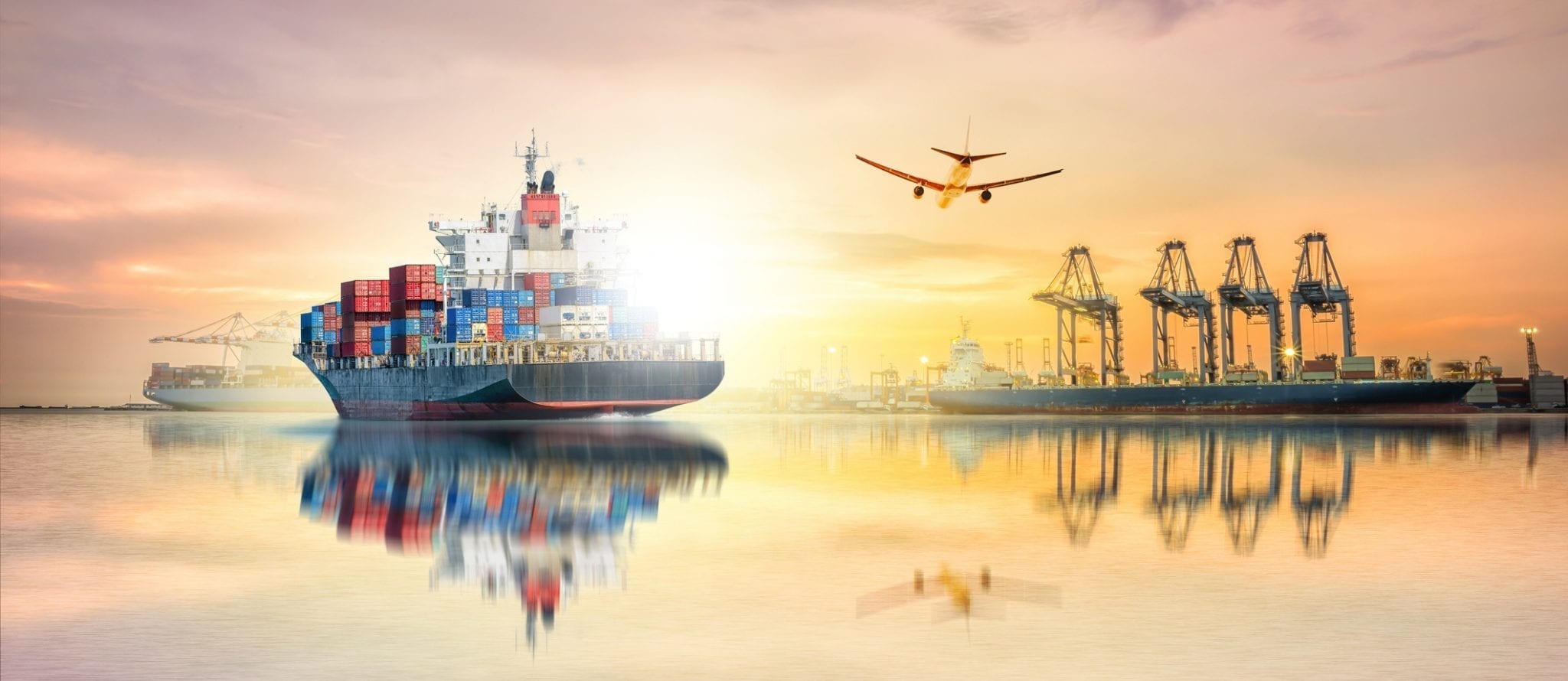
    Nine big companies including Amazon, Ikea and Unilever have signed up to a pledge to only move cargo on ships using zero-carbon fuel by 2040.

    They hope the “aggressive” target will push the heavily polluting shipping industry to decarbonize faster.

    Cargo shipping produces one billion tonnes of climate pollution each year – as much as the country of Germany.

    But critics say shipping firms are not doing enough to meet Paris Agreement goals on emissions.

    The Aspen Institute – the non-governmental Organization coordinating the campaign – expects other retailers and manufacturers that rely on maritime shipping to sign up.

    “Maritime shipping, like all sectors of the global economy, needs to decarbonize rapidly if we are to solve the climate crisis, and multinational companies will be key actors in catalyzing a clean energy transition,” said president Dan Porterfield.

    “We urge other cargo owners, value chain actors, and governments to join forces with us.”

    The companies pledging zero-carbon shipping by 2040 are:

    • Amazon
    • Brooks Running
    • Frog Bikes
    • Ikea
    • Inditex (owner of Zara)
    • Michelin
    • Patagonia
    • Tchibo
    • Unilever

    With about 90% of world trade moving by sea, maritime shipping accounts for 3% of all global emissions. That could rise to 10% by 2050 if the industry continues to rely on carbon-intensive fuels, experts say.

    The shipping industry also produces 10-to-15% of the world’s manufactured sulfur oxide and nitrous oxide emissions, which can cause respiratory illness.

  • The Competitive Landscape is Changing: What Amazon’s Physical Stores Will Mean for Asian Retailers

    The Competitive Landscape is Changing: What Amazon’s Physical Stores Will Mean for Asian Retailers

    The decline of brick-and-mortar retail has long been discussed in the industry, to the extent that some alarmists started to talk about its inevitable death. However, recent reports of Amazon’s plans to create a network of physical retail outlets demonstrates that in-store shopping is far from ending up on life-support. In fact, brick-and-mortar retail still remains strong among consumers, and for retailers it continues to be a critical way to connect with customers and drive sales.

    The ‘great disrupter’, Amazon, has revolutionised the way people shop online over the last twenty years to become one of the largest retail groups in the world. So, what does Amazon creating a physical store presence mean for retailers?

    Until now, established brick-and-mortar retailers’ primary defence against the eCommerce giant has been their local store presence. The ability to be close to shoppers and offer a physical shopping experience that allows consumers to interact in-person with retailers in real-time has for many stood out as a better customer experience. However, once the ‘moat’ (or point of differentiation of having physical stores) starts to be breached, defending the ‘castle’ against Amazon becomes much more challenging.

    Amazon is very good at what it does and bringing a digital-first approach to brick-and-mortar retailing will introduce new, creative and technology-centric options for the consumer. In addition to the purchase of Whole Foods and its partnership with Kohls, this latest move into the physical retail space by Amazon clearly validates that physical stores are a vital element of the omnichannel shopping experience.

    Amazon’s push to develop physical stores means that all retailers need to go ‘all in’ on omnichannel. To survive the next phase in Amazon’s evolution retailers should prepare their systems and processes for a new marketplace that will be dominated by those brands that are able to deliver seamless, personalised shopping experiences simultaneously across physical and digital channels.

    But what does this mean for Asian retailers today? How can they create omnichannel experiences that engage with and maintain customer loyalty in the face of new competition from Amazon?

    Modernise the customer journey

    The rise of online shopping, click and collect and the world of social media has transformed the buying experience. Customers have access to information, expertise, and validation at every step of their online journey, but today they want an in-store and offline experience that complements and meets the same standards of excellence they have already experienced online. Whether it’s an in-store associate tracking down stock in another store and organising delivery to the customer’s home, allowing a customer to return online purchases without complication in-store, or ringing the call centre to change an existing order mid-delivery – today’s consumers expect service excellence at every stage of the purchase cycle, including in-store and on the phone.

    The problem is, many retailers still perceive the customer journey to be one that is linear, when that’s not the case. Customers often flit between in-store and online, with social feedback, phone interaction and email for communication. Consumers do not always buy where they browse, instead looking in-store and then buying online or vice versa, and then if they change their mind they expect to be able to arrange a return via email, chat, phone or in-store. Retailers must be aware of this and provide solutions to meet customer expectations.

    Store associates today need applications that give complete command and control of the customer buying experience, as well as all store inventory and fulfilment functions. From mobile checkout to guided fulfilment and inventory location notification, when provided with the right technology store associates are made more efficient and are better able to serve customers and meet their needs.

    Seamlessly manage customer orders

    Never has omnichannel execution played such a significant role in determining a retailer’s brand image. Consumers now expect retailers to provide seamless, ‘buy and deliver or pick-up anywhere’ experiences. To compete with Amazon across all aspects of retail, brands need to consistently meet the delivery promises they make to customers and ensure that the turnaround between order and delivery is shorter than ever.

    To assist, new business-to-consumer distribution models are coming to market, with a core focus on the importance of ‘living’ the omnichannel customer experience, rather than just talking about it. One such model is Order Management Systems (OMS), which integrate all sales and distribution channels into one place, bringing absolute transparency and making it easier for retailers to manage customer orders. An OMS helps retailers to see what inventory they have where, what’s been allocated, what is in transit, what’s been sold, what is available, what needs to be replenished and what’s being returned.

    Manage business disruption, customer expectations with an OMS

    Innovation is occurring in the retail sector at an unprecedented pace and increased competition from Amazon will only speed the adoption of new systems to meet customer demand.

    Without this push towards efficiency-boosting technology, retailers risk being left behind the competition. With innovations like advanced OMS, retailers have been able to navigate disruptions caused by COVID-19 by reviewing the rules of stock allocation, temporarily giving priority to in-store stock over warehouse stock, thus, freeing up any trapped inventory confined within closed stores. This is a great advantage for the many retailers whose physical stores have been closed for long periods during lockdowns.

    Optimising order sourcing allows retailers to use the stock available in their entire network, wherever it is located. A smart OMS allows retailers to use the ‘pool’ of physical stores in large urban areas to offer same day, or next day delivery by couriers, whilst also favouring the warehouse stock for less immediate orders. This increased delivery efficiency will help build a stronger connection and more favourable brand perception amongst consumers.

    In addition to using store level inventory to ship orders to a customer’s home, it can also be deployed for click-and-collect orders. With new fulfilment options enabled by the store, consumers can click, collect, and return goods at their own convenience, which works to achieve satisfaction in the short-term, as well as long-term loyalty.

    If you can’t offer seamless shopping experiences, someone else will

    The importance of brick-and-mortar retail to the overall equation of profitable sales is (again) attracting renewed attention following the move by Amazon to create its own store network. In fact, it makes sense for Amazon to create a store presence, given that stores themselves create the conditions for a sale. The experience that consumers can be given in-store is often more immersive, tactile, and engaging. These more emotional connections can lead to immediate sales and an increase in long-term loyalty.

    However, the increased competition that will come from Amazon establishing their own in-store presence means that Asian retailers need to focus on meeting customer demands through technological innovation. Customers expect seamless, personalised shopping experiences across all physical and digital buying channels today and you can bet that if you can’t offer that, Amazon definitely will.

    By Richard Wright, Managing Director, SEA, at Manhattan Associates

    For more information on how your retail outlet can create seamless shopping experiences across multiple channels, please visit: https://www.manh.com/en-in/active/omni



  • Amazon developing new point-of-sale system to attract small businesses

    Amazon developing new point-of-sale system to attract small businesses

    Amazon.com is working on a new type of point-of-sale system that can be sold to third-party sellers.

    The new system can handle both online and offline transactions and can also link to other services including Prime and Flex, the report added, citing an internal document.

    The move will allow Amazon to compete with Canada’s Shopify and U.S. payments giant PayPal, which already offer POS systems for payments for small businesses, that have moved online during the pandemic to boost sales.

    Project Santos, created by an internal Amazon team to compete with Shopify, is leading the project, the report said.

    Amazon declined to comment.

  • Amazon Global Store launches in Korea

    Amazon Global Store launches in Korea

    Global online retailer Amazon and South Korean e-commerce platform 11st launched the Amazon Global Store on 11st on Tuesday.

    The move has made it easier to buy tens of millions of products available on Amazon’s US website, ranging from PCs, toys and fashion to electronics, with free shipping on orders over 28,000 won ($24).

    Though the service has been in operation in 12 other countries, it marks the first time Amazon is working with a local company for the launch. It also makes 11st the country’s “most extensive bookstore,” with millions of books now available.

    “Starting today, customers in Korea will be able to enjoy the most convenient way to shop global products, with free international shipping from the US,” said Somana Konganda, director of Amazon Global.

    Lee Sang-ho, CEO of 11st, said, “The launch of Amazon Global Store on 11st brings together the best of 11st’s local know-how and Amazon’s global retailing experience.”

    How does it work?

    Amazon Global Store was launched jointly with 11st, which means you have to sign up for 11st to place an order.

    You also need a personal customs clearance code, a 13-digit number starting with a P, for online international shopping. But foreign nationals living in South Korea can use either their passport number or alien registration number instead.

    After signing on to the platform, you can either search for a product you saw on Amazon’s US website or go to the main page for the Amazon Global Store to check out special deals and recommended items.

    Before your selected item goes into the basket, the website will show the price in Korean won and estimate how long it will take to be delivered, as well as how much the total cost will be including a customs clearance fee — which occurs when your order is worth more than $200, or $150 if certain items such as health supplements are included, for instance.

    ‘Universe Pass’

    On the same day the Amazon Global Store was launched, SK Telecom, which operates 11st, also unveiled the “Universe Pass Mini” and “Universe Pass All”

    Priced at 4,900 won, the more affordable version of the monthly subscription-based service offers free shipping to members regardless of the product’s price, though benefits are subject to change in the future, according to 11st.

    It also gives access to South Korea streaming platform Wavve, while the premium plan offers access to a wide range of subscription-based services including music streaming service FLO.

  • Amazon launches in South Korea on local platform 11st

    Amazon launches in South Korea on local platform 11st

    Global online retailer Amazon and South Korean e-commerce platform 11st launched the Amazon Global Store on 11st on Tuesday.

    The move has made it easier to buy tens of millions of products available on Amazon’s US website, ranging from PCs, toys and fashion to electronics, with free shipping on orders over 28,000 won ($24).

    Though the service has been in operation in 12 other countries, it marks the first time Amazon is working with a local company for the launch. It also makes 11st the country’s “most extensive bookstore,” with millions of books now available.

    “Starting today, customers in Korea will be able to enjoy the most convenient way to shop global products, with free international shipping from the US,” said Somana Konganda, director of Amazon Global.

    Lee Sang-ho, CEO of 11st, said, “The launch of Amazon Global Store on 11st brings together the best of 11st’s local know-how and Amazon’s global retailing experience.”

    How does it work?

    Amazon Global Store was launched jointly with 11st, which means you have to sign up for 11st to place an order.

    You also need a personal customs clearance code, a 13-digit number starting with a P, for online international shopping. But foreign nationals living in South Korea can use either their passport number or alien registration number instead.

    After signing on to the platform, you can either search for a product you saw on Amazon’s US website or go to the main page for the Amazon Global Store to check out special deals and recommended items.

    Before your selected item goes into the basket, the website will show the price in Korean won and estimate how long it will take to be delivered, as well as how much the total cost will be including a customs clearance fee — which occurs when your order is worth more than $200, or $150 if certain items such as health supplements are included, for instance.

    ‘Universe Pass’

    On the same day the Amazon Global Store was launched, SK Telecom, which operates 11st, also unveiled the “Universe Pass Mini” and “Universe Pass All”

    Priced at 4,900 won, the more affordable version of the monthly subscription-based service offers free shipping to members regardless of the product’s price, though benefits are subject to change in the future, according to 11st.

    It also gives access to South Korea streaming platform Wavve, while the premium plan offers access to a wide range of subscription-based services including music streaming service FLO.

  • Amazon: Exponential growth platform

    Amazon: Exponential growth platform

    Pattern recently hosted a virtual round table that focused on consumer behaviors, beliefs and actions when it comes to Amazon Australia. Since entering the Australian market in December 2017, Amazon has seen tremendous growth in both its gross revenue and their consumer following according to our 2021 Amazon Shopper Report.

    Hosted by Pattern Australia’s General Manager, Merline McGregor, our panel discussed the giant’s performance in the market, consumer perceptions and which categories best represent an opportunity to brands wanting to expand their exposure, sales opportunities, and customer following.

    “We know that Amazon is not just a platform to sell products, but also a platform to drive awareness, tell our brand story and even launch new products into the market”, says Hermann Jaaniorg, Senior Marketing Manager APAC for BIC who joined us as a panelist.

    Earlier this year, Amazon released its 2020 results. The company reported over $1.6 billion in gross sales which was more than double the previous year. Although marketplaces currently make up a small portion of online sales, Morningstar estimates that by 2030, 25 percent of the total in Australia will be via Amazon.

    Amazon Australia’s traffic grew by 23 percent in June 2021 over the year prior, driven primarily by Amazon Prime Day. Site traffic data provided by SimilarWeb also indicates that the platform is retaining the gains it made in the last year, with Amazon.com.au’s traffic for May 2021 up 12 percent on the same month a year ago. With 474 million annual site visits, it still trails eBay but is quickly gaining ground.

    Growth of Amazon Prime

    Another pivotal indicator of Amazon Australia’s success is the increase in online shoppers with access to Amazon Prime. In our August 2020 report, 19 percent of online shoppers said they had access to their own or someone else’s Prime account. By May 2021, this figure had jumped to 31 percent with an additional 15 per cent saying they are likely to become a Prime member over the next 12 months.

    “Amazon now has over 200 million Prime members globally and a Prime member will spend around 130 percent more on Amazon than a non-Prime member. In the US, Prime is the top reason consumers shop on Amazon. As more people become members of Prime in Australia, they will spend more of their money on Amazon,” says Dan Richardson, Pattern Australia’s Head of Business Development.

    Indicators of longer-term change

    For anyone selling online, these are the most salient statistics that were highlighted: 24 percent of shoppers expect to buy from different online stores and 20 percent will buy products online that they used to buy in stores. Equally importantly, although we’ve seen a dramatic shift to online spending, 40 percent of respondents don’t anticipate further changes to their ‘new normal’ – this is an 82 percent increase on the response during August 2020 when Australia was in a strict lockdown, and driven by the 60+ age groups.

    Our research demonstrates that the swing towards online has become embedded in consumer behavior. Brands in categories poised for growth including homewares, baby, clothing and skincare would do well to invest further in digital diversification, including marketplaces.

    According to Dan Richardson, it’s simple. “If you’re not on Amazon, get on Amazon. The best time to launch on Amazon was probably three years ago. The second-best time to do it is now.”

  • Amazon to test department stores in offline expansion

    Amazon to test department stores in offline expansion

    Now that it’s officially swallowed the lion’s share of online retail sales, Amazon is reportedly eyeing ways to corner our offline shopping, too. The e-commerce giant is drumming up plans to open “several” department-style stores in a handful of cities across the U.S. People familiar with the matter told the paper that these stores would help Amazon “extend its reach in sales of clothing, household items, electronics, and other areas.” It’s a smart move from Amazon, but also one that would end up being a privacy nightmare for a company that’s seen its fair share of scandals in the space.

    Per the Journal, the first states where these department stores are expected to open include Ohio and California. They’re planned to be mid-size, at around 30,000 square feet—smaller than your average Costco or Walmart, but way larger than the Amazon 4-star stores that generally clock in at around 4,000 square feet. Like those 4-star locations, sources told the Journal that Amazon’s private-label products would be featured front and center in these bigger locations, alongside wares from other “top consumer brands.”

    The alleged department store spaces are just Amazon’s latest foray into the brick-and-mortar world. In 2015, the company began experimenting with small bookstores: first on its Seattle home turf, before trickling out to a few other cities across the U.S. But for all sorts of reasons, sales in these bookstores have pretty much flatlined in the years since their debut. By 2019, the company decided to fold together these stores and the company’s then-struggling “pop-up” shops—essentially mall bodegas that sell Amazon-branded tablets and e-readers. Eighty-seven of those pop-ups closed essentially overnight. Other real-world retail efforts like Amazon Go Grocery met similar ends, either collapsing into larger big-box projects from the company or indefinitely closing for unspecified “renovations.” Even then, Amazon’s retail efforts have translated into millions of dollars taken from countless competitors that were already struggling to pitch themselves against the e-commerce juggernaut.

    But if the multiple ongoing federal probes into Amazon’s antitrust-y behavior have shown us anything, it’s that the company won’t be satisfied until it dominates every sale, not just most of them. Right now, the bulk of Amazon’s real-world retail dollars are coming from its myriad grocery chains, including Whole Foods. But the company still lags behind its brick and mortar brethren when it comes to selling high-end fashion, or basic cosmetics and health goods—think toothpaste or bottles of shampoo. In June, reports emerged that the company was mulling plans to open its own Amazon-branded physical retail pharmacies, which would help the company crater competitors like Walmart or CVS that currently rule the world of retail-ized healthcare

    Amazon’s department store push would also help the company compete with two of its tech giant pals: Facebook and Google, which together dominate more than half of the multibillion-dollar digital ad ecosystem. Amazon ranks in a distant third place by earning 10% of that spend, but that number’s skyrocketing fast—and a lot of that boom boils down to data.

    Amazon’s always collected data on its shoppers and sellers, but the past few years have seen the company make a serious push to woo advertisers away from platforms like Instagram and YouTube. And that woo worked because Amazon could offer what those platforms couldn’t: data about every purchase, every search, and every wishlist from every Amazon customer.

    But that still left the company with a pretty large blind spot: data from real-world, in-store purchases. Meanwhile, those real-world retailers—including names like Target, Walmart, and CVS—have started launching ad networks of their own, offering data from the real-world purchases happening outside of Amazon’s sight.

    An Amazon-branded department store would potentially bring those dollars back into Amazon’s pockets, and then some. Amazon’s past brick-and-mortar efforts have shown that the company isn’t afraid to collect as much data as possible from people who walk through its doors—even if that person doesn’t end up buying anything at all. Amazon knows the aisles you’re browsing, the items you’re picking up from a shelf, and whether your buys were influenced by an ad you saw on Amazon’s site. It knows how often you shop for groceries, whether you’re a vegetarian, and if you might be running low on eggs this week—which is great for Amazon and its advertiser partners, but a privacy nightmare for consumers that already have ample reason to be weirded out over Amazon’s data collecting practices.

    Right now, Amazon’s future plans in the real-world retail space are mostly confined to rumor—but they still paint a damning picture. A world where Amazon department stores and Amazon pharmacies are the norm is one where Amazon knows every prescription you take, not to mention all the purchases we might want to keep quiet from everyone—our pregnancy tests, bottles of hair dye, trashy magazines. If Amazon really wants to know how often I’m buying a box of “feminine hygiene” products or something equally classy, they’re welcome to try finding out. But I’d really rather keep those details to myself.

    We’ve reached out to Amazon about the Journal’s report and will update this post when we hear back.

  • Amazon, Indian seller Cloudtail end relationship amid regulatory heat

    Amazon, Indian seller Cloudtail end relationship amid regulatory heat

    Amazon and one of its biggest sellers in India, Cloudtail, have decided to end their relationship, following years of allegations from brick-and-mortar retailers that the seller received preferential treatment.

    A joint venture between Amazon and India’s Catamaran that controlled Cloudtail was coming up for renewal next May, and the two sides said in a joint statement they had mutually decided not to extend it beyond that date.

    The decision comes after a Reuters investigation in February based on Amazon documents showed the US company had given preferential treatment for years to a small group of sellers, including Cloudtail, and used them to bypass Indian laws.

    Amazon has said it does not give preferential treatment to any seller and that it complies with the law.

    In their joint statement, Amazon and Catamaran did not say why they had decided to end their joint venture, but said the partnership ran successfully for seven years and made “tremendous strides.”

    Cloudtail had been controversial, with Indian brick-and-mortar retailers for years accusing Amazon of giving it preferential treatment which hurt smaller retailers.

    It was formed when Amazon entered a joint venture with an entity formed by one of India’s most famous tech moguls, N R Narayana Murthy, which was then used to create Cloudtail, which began offering goods on Amazon.in after it was set up in August 2014.

    The Reuters investigation in February found Amazon publicly called Cloudtail an independent seller offering goods on its marketplace website, but internal company documents revealed the US company was deeply involved in expanding it and used it, among other sellers, to circumvent the country’s foreign investment laws.

    The story had triggered calls for a ban and an investigation of Amazon, and the financial crime-fighting agency was looking into its findings. The antitrust watchdog had said the story corroborated evidence it had against Amazon.

    Arvind Singhal, chairman of retail consultancy Technopak Advisors, told Reuters that Amazon and Catamaran’s decision appeared aimed at defending against any possible future scrutiny of their business models.

    “Before it comes under more scrutiny, they are basically disengaging themselves. But given the relationship has been there for years, this will still hang as a sword on their heads,” said Singhal.

    India is a key growth market for Amazon, where it has committed investment of $6.5 billion. But it’s one where it has faced several regulatory challenges, including stricter laws that apply to foreign e-commerce giants.

    The Reuters investigation in February found Amazon gave Cloudtail, and another seller named Appario, discounted fees.

    Amazon is also in talks with the parent of Appario to determine whether it wants to renew its joint venture next year, a source with direct knowledge told Reuters this week. Appario did not respond to a request for comment.

    The source added that multiple sellers in India were likely to take over Cloudtail’s share on Amazon India over time.

    “There will be challenges, but the company is fairly confident it will manage,” the source added.

    Separately, India’s Supreme Court on Monday ruled that Amazon and Walmart’s Flipkart will have to face antitrust investigations ordered against them in India, dealing a blow to the companies in their key growth market.

  • Amazon launches IMDb TV standalone mobile app for its free streaming service

    Amazon launches IMDb TV standalone mobile app for its free streaming service

    Amazon’s IMDb TV free streaming service has been running on various platforms for a few years now. Unfortunately, Android and iOS users could only access the service through the general IMDb app, at least on mobile.

    Earlier this week, Amazon announced that an IMDb TV standalone app is now available for Android and iOS devices in the United States. The new ecosystems add to an already large list of devices that support IMDb TV: Android TV, Chromecast with Google TV, LG Smart TVs, Roku, PlayStation 4, PlayStation 5, Xbox One, and Xbox Series X/S.

    Fire TV users are still getting Amazon’s IMDb TV streaming service via the free channel within the Prime Video app included on all Fire TV devices. Those who wish to try it out can download the IMDb TV app for Android and iOS through Google Play Store or App Store.

    Amazon IMDb TV offers a generous library of movies and TV shows, including iconic titles like All in the Family, Mad Men, Malcom in the Middle, Chicago Fire, and How to Train Your Dragon. It also streams originals from Amazon Studios like Leverage: Redemption, Alex Rider, and the upcoming Luke Bryan: My Dirt Road.

    Not to mention that after the deal between IMDb TV and Universal Filmed Entertainment Group, the free streaming service will get TV-window rights to Universal movies. Although it’s completely free IMDb TV runs ads during shows, but Amazon claims that its service has half the ads of traditional TV.

  • India court quashes Amazon, Walmart’s Flipkart bid to stall antitrust probe

    India court quashes Amazon, Walmart’s Flipkart bid to stall antitrust probe

    An Indian court on Friday dismissed appeals by Amazon.com and Walmart’s Flipkart that sought to stall an antitrust investigation into their business practices, dealing a major setback to the U.S. firms in a key market.

    The Competition Commission of India (CCI) last year ordered an inquiry after allegations from brick-and-mortar retailers that the U.S. firms promoted select sellers on their e-commerce platforms and used to business practices that stifle competition.

    The investigation was on hold for more than a year after companies challenged it, denying wrongdoing and arguing that the CCI lacked evidence, but a court allowed it to continue in June. On Friday, the High Court in southern Karanataka state rejected the U.S. firms’ appeals.

    “By no stretch of imagination can inquiry be quashed at this stage. The appeals are nothing but an attempt to ensure that action initiated by the CCI … does not attain finality,” a two-judge bench said while reading the decision in court. “The appeals are devoid of merit, and deserve to be dismissed.-

    The two firms are likely to appeal the decision at India’s Supreme Court, according to people familiar with the case. Amazon did not immediately respond to a request for comment.

    Flipkart said in a statement it would review the court’s order, adding that it remains in compliance with Indian laws.

    Abir Roy of Sarvada Legal, which filed the antitrust case against Amazon and Flipkart on behalf of a trader group, said the court’s decision “further reinforces that the CCI investigation should continue promptly.”

    The CCI investigation is the latest setback for Amazon and Flipkart, which are grappling with prospects of tougher e-commerce regulations and accusations from brick-and-mortar retailers that the companies circumvent Indian law by creating complex business structures.

    The companies face several allegations in the case, including exclusive launches of mobile phones, promotion of select sellers on their websites and deep discounting practices that drive out competition.

    Trade minister Piyush Goyal last month lashed out at U.S. e-commerce giants for filing legal challenges and failing to comply with the CCI’s investigation, saying “if they have nothing to hide … why don’t they respond to the CCI?”

  • AirPods Max hit a new all-time low price

    AirPods Max hit a new all-time low price

    The AirPods Max are Apple’s most expensive headphones, but if you’re a fan of the brand, you’re probably going to get them anyway. Luckily, Amazon is making the experience of purchasing a pair of AirPods Max headphones more gentle for your wallet by offering a nearly 15% discount.

    The only catch is that you’ll have to specifically choose the Space Gray model to save a bit more than $70. The other four color options – Green, Pink, Silver, and Sky Blue are on sale as well, but the discount is slightly smaller.

    A $70+ discount on a pair of headphones that costs $550 might not seem too much, but this is the best AirPods Max deal we’ve been able to track to date. Not to mention that Apple’s products rarely get massive discounts, especially so close after launch.

    In any case, if you’ve been eyeing Apple’s expensive AirPods Max, now would be a good time to make your purchase. Just keep in mind that prices at Amazon change all the time, so you might not get the highest discount we’ve spotted at the time of writing.