Tag: amazon

  • 17 million Vietnamese products sold on Amazon in 2023

    17 million Vietnamese products sold on Amazon in 2023

    he number of Vietnamese products sold on Amazon soared by 300% in the previous five years to 17 million in 2023.

    The value of the goods exported through the U.S. e-commerce platform increased by 50% during the period, Trinh Khac Toan, northern regional director of Amazon Global Selling Vietnam, which supports sellers, said at a forum Thursday.

    The number of Vietnamese sellers with annual sales of $1 million increased 10-fold between 2019 and 2023, while those who have legitimized their brands through the Amazon Brand Registry program increased by 35 times, he noted.

    The figures demonstrate the astonishing potential of cross-border e-commerce, he said.

    Amazon Global Selling forecasts cross-border e-commerce in Vietnam and Southeast Asia to grow at 20% annually until 2026.

    Bui Trung Kien, vice chairman of the Vietnam E-Commerce Association, said developing cross-border e-commerce is crucial to boosting Vietnam’s exports.

    But the country’s legal framework for businesses could pose a hurdle to this, he warned.

    Cao Cam Linh, a representative of the Vietnam Association for Logistics Manpower Development, said logistics need to be developed to support e-commerce.

    Toan said online businesses need to invest in market research to identify customer needs, improve their products and build their own brands with a long-term vision.

    In Vietnam, Amazon has collaborated with the E-commerce and Digital Economy Agency to train 10,000 people for the cross-border e-commerce industry.

  • Amazon Music takes on Spotify with Maestro, an AI-powered playlist generator

    Amazon Music takes on Spotify with Maestro, an AI-powered playlist generator

    Spotify’s AI DJ raised the bar for music streaming, and now Amazon Music is throwing its hat into the ring with Maestro. This new AI-powered playlist feature is currently rolling out in beta to select Amazon Music users in the US on iOS and Android.

    If you’re part of the rollout, you’ll spot Maestro either on your home screen after updating the app, or by hitting the plus button to create a new playlist. However, where things get interesting is how you create them. Maestro uses natural language, meaning you don’t need technical terms to build your playlists.

    With Maestro, everything starts with a simple prompt telling it what you want to hear. Want a playlist bursting with energy? Type “songs to get me pumped!” or maybe “upbeat summer jams”. Maestro even understands emojis, in case you’re struggling to find the words to describe your mood best.

    However, Amazon is clear: this is a beta feature. Maestro, like any new AI tool, will probably have some hits and misses as it learns what you like. They’ve even built-in safeguards to try to block offensive language or prompts that are just too inappropriate.

    As a brand-new feature, Maestro is currently accessible to a limited number of Amazon Music users across Free, Prime, and Unlimited tiers. If you’re in the beta, you’ll see the option front-and-center in the app. While Unlimited subscribers can instantly listen to and save their generated playlists, Prime and free-tier users get 30-second previews to help them decide if the playlist is a good fit.

    The battle for your ears is getting interesting. Spotify jumped ahead with its AI DJ, but Amazon’s Maestro signals that the competition isn’t far behind. Soon, generating playlists based on moods, vibes, or even bizarrely specific requests might become the standard way we listen to music.

  • Meet Rufus, Amazon’s new AI shopping assistant

    Meet Rufus, Amazon’s new AI shopping assistant

    Amazon is among the companies that has iterated a lot when it comes to artificial intelligence. The US-based giant continues to develop new AI tools, especially now that AI is the main buzzword in the tech world.

    The latest AI-powered feature introduced by Amazon is Rufus, an AI assistant that’s supposed to help users with their shopping sprees. As the biggest retailer in the United States, it’s only fitting for Amazon to launch such a product.

    According to Amazon, Rufus has been trained on its product catalog, customer reviews, community Q&As, as well as information from the web. The AI shopping assistant has been specifically designed to answer customer questions on a wide range of shopping needs and products. Rufus can even provide comparisons and make recommendations based on conversational context.

    Rufus is now available in beta, but Amazon will be starting to roll it out to customers in waves, beginning with a small subset of customers in the United States via the mobile app. Rufus will eventually be rolled out to the rest of the US customers in the coming weeks, Amazon says.

    If you’re interested in checking this one out, here are some of Rufus’ key features:

    • Learn what to look for while shopping product categories
    • Shop by occasion or purpose
    • Get help comparing product categories
    • Find the best recommendations
    • Ask questions about a specific product while on a product detail page

    To start using Rufus, simply start typing or speaking your question into the search bar in Amazon’s mobile app and the shopping assistant chat dialog box will pop up at the bottom of the screen. Keep in mind that this is only available for select customers in the US while it’s in beta.

  • Amazon tells its Prime Video subscribers that ads are coming on January 29th

    Amazon tells its Prime Video subscribers that ads are coming on January 29th

    Get ready for a dose of reality (and advertisements) between your binge sessions: Amazon Prime Video officially joins the ad-fueled streaming party. After announcing what was coming a few months back, Amazon has now confirmed via an email sent to its Prime members, that their favorite movies and shows will be punctuated by ads starting January 29, 2024.

    This shift significantly departs from Prime Video’s ad-free haven, a perk previously bundled with the $139/year (or $14.99/month) Prime subscription, known primarily for its free two-day shipping. But for those averse to mid-episode interruptions, Amazon is offering an option that will cost you: an ad-free tier for an additional $2.99/month, plus applicable taxes.

    Justifying the move, Amazon cites the need to fuel its ever-expanding content library. “This will allow us to continue investing in compelling content and keep increasing that investment over a long time,” their email reads, assuring us of “meaningfully fewer ads” compared to traditional TV.

    Interestingly, Amazon is already pre-selling the ad-free tier, giving Prime members a head start on securing uninterrupted viewing. This change, of course, does not apply to rented or purchased content from the streaming service. However, note that certain types of content, such as sports or Freevee titles, will continue to include ads even when the viewer is subscribed to the ad-free tier.

    While some appreciate the “investment in compelling content” reasoning, reactions by long time Prime subscribers show that they feel betrayed by the broken promise of ad-free streaming. The price hike adds fuel to the fire, leaving members questioning the true value proposition of Prime Video.

    Will Amazon’s ad-spiked strategy pay off? Only time will tell. But one thing’s certain: the golden age of ad-free streaming seems to be fading, leaving viewers with a choice – pay more, pay less with ads, or seek greener (and ad-free) pastures elsewhere.

  • Amazon books 244 per cent surge in net income

    Amazon books 244 per cent surge in net income

    Amazon has delivered a stunning 244 percent growth in third-quarter net income as – in the words of one analyst – it overrides the slight slowdown impacting the wider US consumer economy.

    The e-commerce giant booked a net income of $9.9 billion during the third quarter of FY23, which GlobalData MD Neil Saunders attributes to efficiencies the management implemented, such as responding to concerns of overcapacity and the reorganization of the fulfillment network to both reduce costs and improve services for customers.

    “It is very easy to look on these things as obvious steps after they have been implemented, but the level of thinking and planning required to implement them is very high and is a testament to Amazon’s entrepreneurial zeal and spirit,” said Saunders.

    “One of the factors that makes Amazon less susceptible to some of the challenges in the economy is that it has become a reliable and important partner to many in the consumer sector. When it becomes more difficult to reach customers and shoppers become a little more reticent to spend, many companies turn to Amazon and its various solutions from advertising to seller services.”

    Amazon reported a 13 percent increase in net sales to $143.1 billion, as sales grew 11 per cent to $87.9 billion in the North American segment and jumped 16 percent to $32.1 billion in the international segment.

    Its cloud service AWS reported an increase in sales of 12 percent to $23.1 billion.

    “We had a strong third quarter as our cost to serve and speed of delivery in our stores business took another step forward, our AWS growth continued to stabilize, our Advertising revenue grew robustly, and overall operating income and free cash flow rose significantly,” said Andy Jassy, Amazon CEO.

    For the fourth quarter, Amazon forecasts net sales of between $160 billion and $167 billion.

  • What Are People Buying on Amazon Right Now?

    What Are People Buying on Amazon Right Now?

    Amazon is the world’s largest retailer – online, offline, or otherwise. That means by studying the popular site’s revenue and sales statistics, you can get a pretty good feel for the larger global shopping trends. And here’s what’s most interesting: The hot product categories and trends tend to change on a yearly basis.

    In this article, we’ll take a deep dive into the biggest shopping trends on Amazon, focusing on the most popular product categories and what experts predict will be the next hot items.

    Amazon Shopping Statistics and Trends

    Did you know that shoppers spent a collective $513 billion on Amazon in 2022? That amounts to a jaw-dropping $977,898 per minute.

    Overall, Amazon’s revenue grew by 9.4 percent year-over-year in 2022, while 59.3 percent of Americans now have a Prime membership.

    In total, Amazon is believed to own 7.34 percent of the total U.S. retail market (and a whopping 37.8 percent of the total ecommerce market).

    To get an idea of how much product Amazon is moving, consider that net sales surpassed the $149 billion mark for Q4 2022 alone. 

    Unbeknownst to most people, 15.6 percent of Amazon’s sales revenue actually comes from Amazon Web Services, the company’s B2B service platform. 

    Beauty and Grooming

    The beauty and grooming category has always been popular, and it remains a top seller on Amazon. Consumers are increasingly interested in natural and organic products, with the demand for sustainable and ethical options growing. Skincare products, especially anti-aging products, are a significant trend, and hair care products are also in demand.

    According to Amazon’s 2021 Beauty Trends Report, top products in this category include collagen peptides, hyaluronic acid serums, and retinol creams. Korean skincare products, including sheet masks and essences, continue to be popular, with sales increasing by 85 percent.

    Sport and Fitness

    The COVID-19 pandemic has caused a surge in demand for home fitness equipment and products that can help individuals maintain an active lifestyle while practicing social distancing. As a result, the sport and fitness category has seen significant growth on Amazon.

    Yoga mats, resistance bands, and dumbbells have all seen an increase in sales, and fitness trackers and smartwatches remain popular. Health supplements, including vitamins and protein powders, are also in demand.

    Home and Kitchen

    As more people spend time at home, the home and kitchen category has seen significant growth on Amazon. Consumers are investing in products that make their homes more comfortable and functional, such as air purifiers and smart home devices.

    Cookware and kitchen gadgets are also in demand, with sales of instant pots and air fryers increasing. Sustainable home products, including reusable food wraps and bamboo utensils, are also popular.

    Toys

    The toy category is always a popular one on Amazon, especially during the holiday season. Electronic toys, including drones and remote-control cars, remain a significant trend, and board games and puzzles have also seen an increase in sales.

    STEM toys, which help children develop skills in science, technology, engineering, and math, are also in demand. Educational toys, such as science kits and building sets, have seen significant growth in sales.

    Electronics

    The electronics category is vast and includes everything from smartphones to headphones. Wireless earbuds, smartwatches, and laptops are all in demand, and gaming laptops have seen a significant increase in sales.

    Smart home devices, including voice-controlled speakers and security cameras, remain popular, and sales of 4K televisions continue to increase. As remote work and online learning become more prevalent, sales of webcams and monitors have also seen a surge.

    Fashion

    Amazon has made significant strides in the fashion industry, and the category is now a top seller on the site. Consumers are increasingly interested in sustainable and ethical fashion, and the demand for eco-friendly clothing is growing.

    Athletic wear and comfortable loungewear have seen significant growth, as more people work from home. Accessories, including jewelry and handbags, remain popular, and sales of face masks have also seen a surge.

    Tap Into the Power of Amazon

    The beauty of Amazon is that it’s set up for third-party sellers to thrive. In fact, third-party sellers account for 350 million of the nearly 362 million items listed on the site. So if you’re looking to take advantage of these trends, there’s never been a better time!

     

  • Amazon launches program to identify and track counterfeiters

    Amazon launches program to identify and track counterfeiters

    The company announced that Amazon launched its Anti-Counterfeiting Exchange (ACX), an initiative to help retail stores label and track marketplace counterfeits as part of the e-commerce giant’s efforts to crack down on organized crime on its platform on Thursday.

    Online marketplaces in the United States, including Amazon face hurdles in keeping counterfeiters off their platforms and fake merchandise from entering their warehouses. The new program mimics data exchange programs by the credit card industry to find scammers and identify their tactics.

    Stores and Amazon marketplace sellers can anonymously contribute information and records flagging counterfeiters to a third-party database or use the database to avoid doing business with the bad actors.

    “We think it is critical to share information about confirmed counterfeiters to help the entire industry stop these criminals earlier,” Dharmesh Mehta, Amazon’s vice president of selling partner services, said in a statement.

    The Seattle-based retail giant piloted the anti-counterfeiting initiative in 2021 with an undisclosed number of apparel, home goods and cosmetics stores, where counterfeiting is most common.

    As part of other anti-counterfeiting efforts, Amazon is also working with the U.S. Customs and Border Protection on a data pilot that helps the company identify and target low-value e-commerce shipments that may be counterfeit goods or break other regulations.

  • Amazon launches program to identify and track counterfeiters

    Amazon launches program to identify and track counterfeiters

    The company announced that Amazon launched its Anti-Counterfeiting Exchange (ACX), an initiative to help retail stores label and track marketplace counterfeits as part of the e-commerce giant’s efforts to crack down on organized crime on its platform on Thursday.

    Online marketplaces in the United States including Amazon face hurdles in keeping counterfeiters off their platforms and fake merchandise from entering their warehouses. The new program mimics data exchange programs by the credit card industry to find scammers and identify their tactics.

    Stores and Amazon marketplace sellers can anonymously contribute information and records flagging counterfeiters to a third-party database or use the database to avoid doing business with the bad actors.

    “We think it is critical to share information about confirmed counterfeiters to help the entire industry stop these criminals earlier,” Dharmesh Mehta, Amazon’s vice president of selling partner services, said in a statement.

    The Seattle-based retail giant piloted the anti-counterfeiting initiative in 2021 with an undisclosed number of apparel, home goods and cosmetics stores, where counterfeiting is most common.

    As part of other anti-counterfeiting efforts, Amazon is also working with the U.S. Customs and Border Protection on a data pilot that helps the company identify and target low-value e-commerce shipments that may be counterfeit goods or break other regulations.

  • Amazon CEO says job cuts to exceed 18,000 roles

    Amazon CEO says job cuts to exceed 18,000 roles

    Amazon.com’s layoffs will now stretch to more than 18,000 roles as part of a workforce reduction it previously disclosed, Chief Executive Andy Jassy said in a public staff note on Wednesday.

    The layoff decisions, which Amazon will communicate starting January 18, will largely impact the company’s e-commerce and human-resources organizations, he said.

    The cuts amount to 6 per cent of Amazon’s roughly 300,000-person corporate workforce and represent a swift turn for a retailer that recently doubled its base pay ceiling to compete more aggressively for talent.

    Jassy said in the note that annual planning “has been more difficult given the uncertain economy and that we’ve hired rapidly over the last several years.”

    Amazon has more than 1.5 million workers including warehouse staff, making it America’s second-largest private employer after Walmart it has braced for likely slower growth as soaring inflation encouraged businesses and consumers to cut back spending and its share price has halved in the past year.

    It began letting staff go in November from its devices division, with a source telling Reuters at the time it was targeting 10,000 job cuts.

    In number, its layoffs now surpass the 11,000 job cuts at Facebook-parent Meta Platforms Inc as well as reductions at other tech-industry peers.

  • Amazon taxes 10 million products in Vietnam

    Amazon taxes 10 million products in Vietnam

    Vietnamese vendors have sold nearly 10 million products on Amazon this year, totaling an export value over 45% more than 2021, according to a report by the American e-commerce giant.

    During the pandemic, there were “thousands” of Vietnamese vendors on Amazon, and their top-selling products were in the categories of kitchen ware, home appliances, garment and textile and healthcare.

    Several Vietnamese brands such as AnEco (maker of compostable garbage bags), Lafooco (cashew exporter), Sunhouse (home appliances manufacturer) and HMG (3D card manufacturer) have been hailed by Amazon for succeeding in their e-commerce initiatives and creating jobs for locals.

    Nguyen Le Thang Long, deputy director of An Phat, which makes AnEco products, said that sales through Amazon have surged nearly five times from 2021.

    Phung Minh Thuy, founder of HMG, said that her company receives hundreds of orders through Amazon each day.

    Vietnam ranks fifth among the top 10 markets globally in terms of e-commerce and retail sales growth at 19%, behind the Philippines, India, Indonesia and Brazil, according to market research firm eMarketer.

    Vietnam’s e-commerce exports revenue is set to rise 20% annually between 2021 and 2026, according to consultancy firm AlphaBeta.

    With a strong national policy to support exports, abundant production capacity, and rapid development of e-commerce, Vietnam is at a golden stage for online exports to take off, said Gijae Seong, managing director of Amazon Global Selling Vietnam.

  • Vietnamese firm sues Amazon for $280M

    Vietnamese firm sues Amazon for $280M

    Vietnamese company Gilimex Inc. is suing e-commerce giant Amazon for $280 million for allegedly cutting back on orders, leaving it with an excess inventory.

    Gilimex, a manufacturer of textile and other products based in Ho Chi Minh City, said in a filling in a New York state court on Monday that it has been partnering with Amazon from 2014 to 2022 and has invested tens of millions of dollars in manufacturing facilities to build the steel-and-cloth storage pods used to organize inventory in Amazon warehouses.

    Gilimex said the partnership was built on “trust,” with Gilimex relying on the accuracy of Amazon forecasts to make adequate investments to meet demand, including procuring materials and arranging factory capacity and manpower to meet the American company’s needs.

    But beginning in April, Amazon “immediately changed and reduced the projected demand” for the remainder of 2022 and 2023 to a small fraction of previous forecasts, according to the lawsuit.

    “Thus, while Amazon enjoyed unprecedented increases in revenue during the pandemic due in large part to the explosion of online ordering by consumers from the safety and comfort of their homes,” said the legal complaint, “Gilimex management and laborers literally risked their lives on a daily basis to make such record growth a reality.”

    The Vietnamese company said it employs 7,000 employees in multiple factories to produce more than 1 million warehouse storage units annually, adding that production for Amazon increased 20-fold during the eight-year relationship.

    Gilimex was established in 1982. Its main products include fabric storage organization, home textiles, laundry baskets, duffel bags, backpacks, and outdoor textile products.

    Around 85% of Gilimex’s export revenue has come from Amazon, which ordered $146.6 million worth of products from the company last year, according to Mirae Asset Vietnam Research.

    Gilimex earned a record revenue of VND4 trillion ($170.03 million) last year, up nearly 16% from 2020.

  • Amazon shares tumble after weak Christmas trading outlook

    Amazon shares tumble after weak Christmas trading outlook

    Amazon on Thursday forecast a slowdown in sales growth for the holiday season, disappointing Wall Street and warning that inflation-wary consumers and businesses had less money to spend.

    Amazon’s 12 per cent extended-trade stock drop erased about $140 billion in its market capitalisation, greater than the entire value of companies such as Morgan Stanley, Netflix and Lockheed Martin.

    For months, the world’s biggest online retailer has fought against troubling macroeconomic tides. It hosted not one, but two cornerstone sales events in a year: Prime Day in July, and the Prime Early Access Sale this month.

    For the summer event, it sold more items than ever before to its Prime loyalty shoppers, and, meanwhile, the company sought revenue from higher Prime subscription fees and a surcharge on some merchants.

    Net sales were $127.1 billion in the third quarter that ended Sept. 30, still a little lower than the $127.5 billion analysts expected, according to IBES data from Refinitiv.

    But the macro outlook has not brightened. In a call with reporters, Amazon Chief Financial Officer Brian Olsavsky said the company was bracing for slower economic growth.

    “We are seeing signs all around that, again, people’s budgets are tight, inflation is still high, energy costs are an additional layer on top of that caused by other issues,” he said. “We are preparing for what could be a slower growth period, like most companies.”

    European consumers in particular have spent less than their American counterparts, pinched by the war in Ukraine and higher fuel costs, which likewise increased Amazon’s expenses, he told reporters and analysts. The company’s international-segment operation loss widened to $2.5 billion in the third quarter from $0.9 billion a year prior.

    While Amazon would continue to fund earlier-stage businesses like its lucrative cloud-computing and advertising divisions, it would question costs elsewhere and proceed carefully on hiring, Olsavsky said.

    Wedbush Securities analyst Michael Pachter said, “It’s possible that retail sales will decline year-over-year. I don’t actually believe that will happen, but the market definitely doesn’t like it.”

    Amazon forecast net sales of between $140 billion and $148 billion, or growth as little as 2 per cent from a year earlier. Analysts were expecting $155.2 billion.

    Prior holiday quarter sales growth was 9 per cent in 2021 and 38 per cent in 2020.

    Across the retail sector, US online sales are expected to rise at their slowest pace in years this holiday season. Consumer goods company Unilever PLC likewise believes “sentiment in Europe is at an all-time low,” its chief financial officer said earlier.

    Results in the tech industry were just as poor this week for cloud-computing rivals Microsoft Corp and Alphabet Inc’s Google, adding to recession fears. US consumer confidence did a U-turn in October.

    “Big tech companies are not impervious to slowdowns in the economy, particularly if they are consumer driven,” said Rick Meckler, partner at Cherry Lane Investments in New Jersey.

    Amazon Web Services (AWS), the company’s lucrative data-storage and computing division serving enterprises, only helped so much. While it provided much-needed operating income, just like rival Microsoft’s Azure cloud, Amazon fell short of estimates.

    Amazon’s cloud sales growth has ticked down consistently in the past year. Net sales there grew 28 per cent in the July-September period versus 39 per cent a year earlier, when adjusted for changes in foreign exchange.

    Paolo Pescatore, analyst at PP Foresight, said, “With so much unpredictability there is huge concern, which is impacting confidence among enterprises to invest. In turn, it is hitting the broader cloud sector and companies such as AWS and Azure.

    Facing high inflation and receding consumer demand, Amazon’s Chief Executive Officer Andy Jassy has raced to control costs across the company’s vast array of businesses.

    Amazon has slowed warehouse openings and refrained from filling some open positions. It announced it would shut down its virtual healthcare service by year-end, and it is scaling back a long-touted effort to deliver goods via small autonomous sidewalk cars

    Still, worldwide shipping costs grew 10 per cent in the third quarter to $19.9 billion. Amazon’s net income also decreased to $2.9 billion in the third quarter, while beating analysts’ average estimate of a $2.2 billion profit, according to IBES data from Refinitiv.

    In a statement, Jassy said, “There is obviously a lot happening in the macroeconomic environment, and we’ll balance our investments to be more streamlined without compromising our key long-term, strategic bets.”

  • Amazon Signs Green Hydrogen Supply Deal With Plug Power

    Amazon Signs Green Hydrogen Supply Deal With Plug Power

    Plug Power Inc has signed a deal with Amazon.com Inc to supply liquid green hydrogen, the companies said on Thursday, sending the hydrogen fuel cell maker’s shares up over 12% in early trade.

    Green hydrogen is often touted as the future of energy, as the flexible and zero-emission fuel can be used for transportation and electricity generation.

    Amazon said Plug Power will supply 10,950 tons of green hydrogen every year starting 2025 that it will use to replace grey hydrogen, diesel, and other fossil fuels. The companies, however, did not divulge the supply pricing specifics.

    Grey hydrogen is made from natural gas, without the carbon sequestration, and makes up the bulk of the 90 million tonnes of hydrogen produced globally every year.

    The green hydrogen deal will provide enough annual power for 30,000 forklifts or 800 heavy-duty trucks, Amazon said.

    The world’s largest online retailer said that it uses hydrogen to power over 15,000 fuel-cell propelled forklifts, and plans to increase that number to 20,000 units in three years.

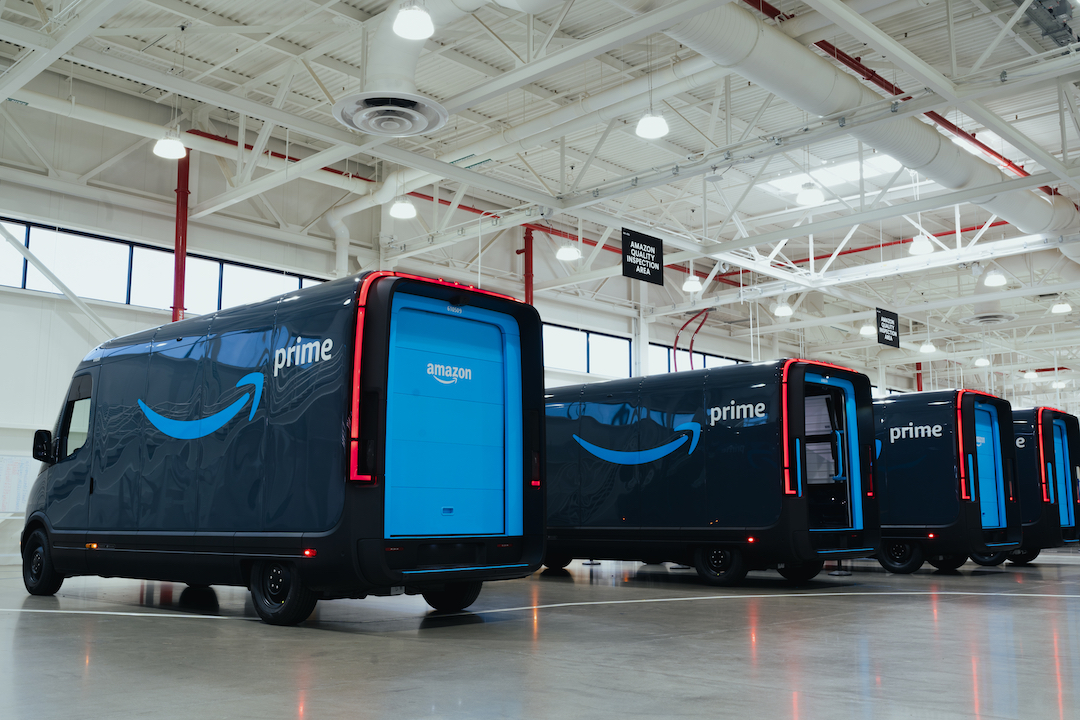
    The company also has an order for 100,000 electric delivery vehicles with Rivian Automotive Inc, in which it is the largest shareholder, according to Refinitiv.

    Plug said the Amazon deal will help the company grow towards its goal of $3 billion in revenue in 2025.

    It also said it has granted Amazon a warrant to buy up to 16 million of its shares at an exercise price of $22.9841 a unit for the first 9 million shares.

    Amazon would vest the warrant in full if it spends $2.1 billion over the seven-year term of the warrant across Plug products, it added.

  • Amazon to invest in Japanese beauty retailer Istyle

    Amazon to invest in Japanese beauty retailer Istyle

    Amazon.com will invest in istyle, the company behind the @cosme review and retail site, gaining access to the Japanese beauty product vendor’s trove of user reviews.

    Under the agreement announced Monday, istyle will issue 2.5 billion yen ($18.7 million) in convertible bonds as well as 11.5 billion yen in warrants to Amazon on Sept. 6. If these convertible bonds and warrants are turned into stock, Amazon would become the top shareholder with a 36.95% stake.

    Amazon will open a dedicated page, tentatively named @cosme Shopping, on its site, where istyle will provide the latest on beauty products to the e-retailer’s members and sell cosmetics from a wide range of brands.

    Istyle has been pushing to merge online and offline sales, setting up a brick-and-mortar store in Tokyo’s Harajusku district. Going forward, Amazon and istyle could collaborate in operating stores using digital tech. The partnership could boost Amazon’s presence in the cosmetic market, where drugs stores and department stores are also formidable players.

    Istyle will also issue convertible bonds to investors including leading trading house Mitsui & Co.

    Mitsui plans to position the cosmetics business as one of its key growth fields and wants “to broaden access to istyle’s customers and manufacturers,” according to a spokesperson. It intends to leverage its sales network to offer Japanese-made cosmetics in overseas markets.

  • Amazon has a plan to make Alexa mimic anyone’s voice

    Amazon has a plan to make Alexa mimic anyone’s voice

    Amazon is planning to come up with a way that will help Alexa voice assistant users to speak to their family members, even after they’ve died.

    As per TechCrunch, the online retailer announced its plan about developing a system to let Alexa mimic any voice after hearing less than a minute of audio during its annual re:Mars conference today in Las Vegas.

    “This required inventions where we had to learn to produce a high-quality voice with less than a minute of recording versus hours of recording in the studio.The way we made it happen is by framing the problem as a voice conversion task and not a speech generation path. We are unquestionably living in the golden era of AI, where our dreams and science fictions are becoming a reality,” Amazon’s Senior Vice President and Head Scientist for Alexa, Rohit Prasad said.

    After learning about this development, several netizens expressed their views. Many said the technology can be used for scams or to create false narratives about people.

    “I m so heartbroken, last month I deleted a bunch of voicemails from my phone because it was getting full, and a couple days later my dad died. His girlfriend had videos of him singing and playing guitar, so I have that. But now I’m afraid to delete voicemails ever,” a Twitterati wrote.

    “Funny thing is, they love introducing all this ‘new tech’ all cute and sweet and really they using it IN THE BACKGROUND for other devious bull shit,” another one wrote.

    “This (or similar) tech is already used in (mostly) corporate fraud. In ex someone calls the secretary sounding like its the boss who is calling, asking for an urgent bank transfer from the accountant….. I mean, for this product there must be a serious licence. Sad lobbypower,” a netizen commented.

    In a demonstration video, a child said, “Alexa, can Grandma finish reading me the Wizard of Oz? However, Amazon did not say when the feature will roll out to the public.