Retail News CRM

Tag: amazon

  • Amazon taxes 10 million products in Vietnam

    Amazon taxes 10 million products in Vietnam

    Vietnamese vendors have sold nearly 10 million products on Amazon this year, totaling an export value over 45% more than 2021, according to a report by the American e-commerce giant.

    During the pandemic, there were “thousands” of Vietnamese vendors on Amazon, and their top-selling products were in the categories of kitchen ware, home appliances, garment and textile and healthcare.

    Several Vietnamese brands such as AnEco (maker of compostable garbage bags), Lafooco (cashew exporter), Sunhouse (home appliances manufacturer) and HMG (3D card manufacturer) have been hailed by Amazon for succeeding in their e-commerce initiatives and creating jobs for locals.

    Nguyen Le Thang Long, deputy director of An Phat, which makes AnEco products, said that sales through Amazon have surged nearly five times from 2021.

    Phung Minh Thuy, founder of HMG, said that her company receives hundreds of orders through Amazon each day.

    Vietnam ranks fifth among the top 10 markets globally in terms of e-commerce and retail sales growth at 19%, behind the Philippines, India, Indonesia and Brazil, according to market research firm eMarketer.

    Vietnam’s e-commerce exports revenue is set to rise 20% annually between 2021 and 2026, according to consultancy firm AlphaBeta.

    With a strong national policy to support exports, abundant production capacity, and rapid development of e-commerce, Vietnam is at a golden stage for online exports to take off, said Gijae Seong, managing director of Amazon Global Selling Vietnam.

  • Vietnamese firm sues Amazon for $280M

    Vietnamese firm sues Amazon for $280M

    Vietnamese company Gilimex Inc. is suing e-commerce giant Amazon for $280 million for allegedly cutting back on orders, leaving it with an excess inventory.

    Gilimex, a manufacturer of textile and other products based in Ho Chi Minh City, said in a filling in a New York state court on Monday that it has been partnering with Amazon from 2014 to 2022 and has invested tens of millions of dollars in manufacturing facilities to build the steel-and-cloth storage pods used to organize inventory in Amazon warehouses.

    Gilimex said the partnership was built on “trust,” with Gilimex relying on the accuracy of Amazon forecasts to make adequate investments to meet demand, including procuring materials and arranging factory capacity and manpower to meet the American company’s needs.

    But beginning in April, Amazon “immediately changed and reduced the projected demand” for the remainder of 2022 and 2023 to a small fraction of previous forecasts, according to the lawsuit.

    “Thus, while Amazon enjoyed unprecedented increases in revenue during the pandemic due in large part to the explosion of online ordering by consumers from the safety and comfort of their homes,” said the legal complaint, “Gilimex management and laborers literally risked their lives on a daily basis to make such record growth a reality.”

    The Vietnamese company said it employs 7,000 employees in multiple factories to produce more than 1 million warehouse storage units annually, adding that production for Amazon increased 20-fold during the eight-year relationship.

    Gilimex was established in 1982. Its main products include fabric storage organization, home textiles, laundry baskets, duffel bags, backpacks, and outdoor textile products.

    Around 85% of Gilimex’s export revenue has come from Amazon, which ordered $146.6 million worth of products from the company last year, according to Mirae Asset Vietnam Research.

    Gilimex earned a record revenue of VND4 trillion ($170.03 million) last year, up nearly 16% from 2020.

  • Amazon shares tumble after weak Christmas trading outlook

    Amazon shares tumble after weak Christmas trading outlook

    Amazon on Thursday forecast a slowdown in sales growth for the holiday season, disappointing Wall Street and warning that inflation-wary consumers and businesses had less money to spend.

    Amazon’s 12 per cent extended-trade stock drop erased about $140 billion in its market capitalisation, greater than the entire value of companies such as Morgan Stanley, Netflix and Lockheed Martin.

    For months, the world’s biggest online retailer has fought against troubling macroeconomic tides. It hosted not one, but two cornerstone sales events in a year: Prime Day in July, and the Prime Early Access Sale this month.

    For the summer event, it sold more items than ever before to its Prime loyalty shoppers, and, meanwhile, the company sought revenue from higher Prime subscription fees and a surcharge on some merchants.

    Net sales were $127.1 billion in the third quarter that ended Sept. 30, still a little lower than the $127.5 billion analysts expected, according to IBES data from Refinitiv.

    But the macro outlook has not brightened. In a call with reporters, Amazon Chief Financial Officer Brian Olsavsky said the company was bracing for slower economic growth.

    “We are seeing signs all around that, again, people’s budgets are tight, inflation is still high, energy costs are an additional layer on top of that caused by other issues,” he said. “We are preparing for what could be a slower growth period, like most companies.”

    European consumers in particular have spent less than their American counterparts, pinched by the war in Ukraine and higher fuel costs, which likewise increased Amazon’s expenses, he told reporters and analysts. The company’s international-segment operation loss widened to $2.5 billion in the third quarter from $0.9 billion a year prior.

    While Amazon would continue to fund earlier-stage businesses like its lucrative cloud-computing and advertising divisions, it would question costs elsewhere and proceed carefully on hiring, Olsavsky said.

    Wedbush Securities analyst Michael Pachter said, “It’s possible that retail sales will decline year-over-year. I don’t actually believe that will happen, but the market definitely doesn’t like it.”

    Amazon forecast net sales of between $140 billion and $148 billion, or growth as little as 2 per cent from a year earlier. Analysts were expecting $155.2 billion.

    Prior holiday quarter sales growth was 9 per cent in 2021 and 38 per cent in 2020.

    Across the retail sector, US online sales are expected to rise at their slowest pace in years this holiday season. Consumer goods company Unilever PLC likewise believes “sentiment in Europe is at an all-time low,” its chief financial officer said earlier.

    Results in the tech industry were just as poor this week for cloud-computing rivals Microsoft Corp and Alphabet Inc’s Google, adding to recession fears. US consumer confidence did a U-turn in October.

    “Big tech companies are not impervious to slowdowns in the economy, particularly if they are consumer driven,” said Rick Meckler, partner at Cherry Lane Investments in New Jersey.

    Amazon Web Services (AWS), the company’s lucrative data-storage and computing division serving enterprises, only helped so much. While it provided much-needed operating income, just like rival Microsoft’s Azure cloud, Amazon fell short of estimates.

    Amazon’s cloud sales growth has ticked down consistently in the past year. Net sales there grew 28 per cent in the July-September period versus 39 per cent a year earlier, when adjusted for changes in foreign exchange.

    Paolo Pescatore, analyst at PP Foresight, said, “With so much unpredictability there is huge concern, which is impacting confidence among enterprises to invest. In turn, it is hitting the broader cloud sector and companies such as AWS and Azure.

    Facing high inflation and receding consumer demand, Amazon’s Chief Executive Officer Andy Jassy has raced to control costs across the company’s vast array of businesses.

    Amazon has slowed warehouse openings and refrained from filling some open positions. It announced it would shut down its virtual healthcare service by year-end, and it is scaling back a long-touted effort to deliver goods via small autonomous sidewalk cars

    Still, worldwide shipping costs grew 10 per cent in the third quarter to $19.9 billion. Amazon’s net income also decreased to $2.9 billion in the third quarter, while beating analysts’ average estimate of a $2.2 billion profit, according to IBES data from Refinitiv.

    In a statement, Jassy said, “There is obviously a lot happening in the macroeconomic environment, and we’ll balance our investments to be more streamlined without compromising our key long-term, strategic bets.”
  • Amazon Signs Green Hydrogen Supply Deal With Plug Power

    Amazon Signs Green Hydrogen Supply Deal With Plug Power

    Plug Power Inc has signed a deal with Amazon.com Inc to supply liquid green hydrogen, the companies said on Thursday, sending the hydrogen fuel cell maker’s shares up over 12% in early trade.

    Green hydrogen is often touted as the future of energy, as the flexible and zero-emission fuel can be used for transportation and electricity generation.

    Amazon said Plug Power will supply 10,950 tons of green hydrogen every year starting 2025 that it will use to replace grey hydrogen, diesel, and other fossil fuels. The companies, however, did not divulge the supply pricing specifics.

    Grey hydrogen is made from natural gas, without the carbon sequestration, and makes up the bulk of the 90 million tonnes of hydrogen produced globally every year.

    The green hydrogen deal will provide enough annual power for 30,000 forklifts or 800 heavy-duty trucks, Amazon said.

    The world’s largest online retailer said that it uses hydrogen to power over 15,000 fuel-cell propelled forklifts, and plans to increase that number to 20,000 units in three years.

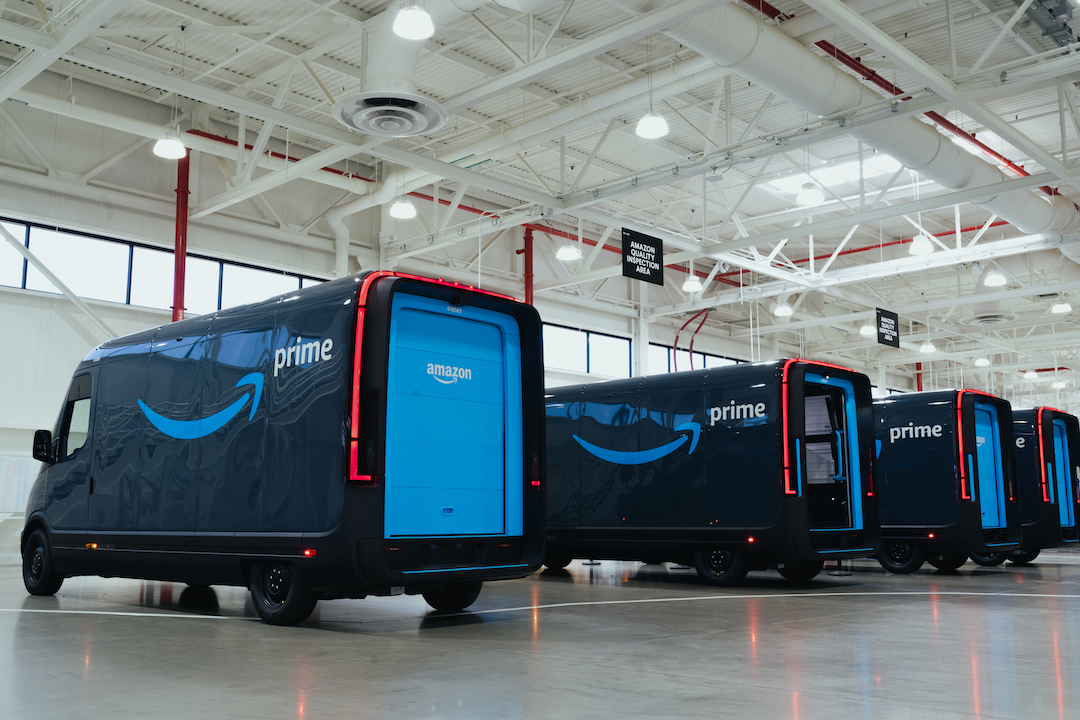
    The company also has an order for 100,000 electric delivery vehicles with Rivian Automotive Inc, in which it is the largest shareholder, according to Refinitiv.

    Plug said the Amazon deal will help the company grow towards its goal of $3 billion in revenue in 2025.

    It also said it has granted Amazon a warrant to buy up to 16 million of its shares at an exercise price of $22.9841 a unit for the first 9 million shares.

    Amazon would vest the warrant in full if it spends $2.1 billion over the seven-year term of the warrant across Plug products, it added.

  • Amazon to invest in Japanese beauty retailer Istyle

    Amazon to invest in Japanese beauty retailer Istyle

    Amazon.com will invest in istyle, the company behind the @cosme review and retail site, gaining access to the Japanese beauty product vendor’s trove of user reviews.

    Under the agreement announced Monday, istyle will issue 2.5 billion yen ($18.7 million) in convertible bonds as well as 11.5 billion yen in warrants to Amazon on Sept. 6. If these convertible bonds and warrants are turned into stock, Amazon would become the top shareholder with a 36.95% stake.

    Amazon will open a dedicated page, tentatively named @cosme Shopping, on its site, where istyle will provide the latest on beauty products to the e-retailer’s members and sell cosmetics from a wide range of brands.

    Istyle has been pushing to merge online and offline sales, setting up a brick-and-mortar store in Tokyo’s Harajusku district. Going forward, Amazon and istyle could collaborate in operating stores using digital tech. The partnership could boost Amazon’s presence in the cosmetic market, where drugs stores and department stores are also formidable players.

    Istyle will also issue convertible bonds to investors including leading trading house Mitsui & Co.

    Mitsui plans to position the cosmetics business as one of its key growth fields and wants “to broaden access to istyle’s customers and manufacturers,” according to a spokesperson. It intends to leverage its sales network to offer Japanese-made cosmetics in overseas markets.

  • Amazon has a plan to make Alexa mimic anyone’s voice

    Amazon has a plan to make Alexa mimic anyone’s voice

    Amazon is planning to come up with a way that will help Alexa voice assistant users to speak to their family members, even after they’ve died.

    As per TechCrunch, the online retailer announced its plan about developing a system to let Alexa mimic any voice after hearing less than a minute of audio during its annual re:Mars conference today in Las Vegas.

    “This required inventions where we had to learn to produce a high-quality voice with less than a minute of recording versus hours of recording in the studio.The way we made it happen is by framing the problem as a voice conversion task and not a speech generation path. We are unquestionably living in the golden era of AI, where our dreams and science fictions are becoming a reality,” Amazon’s Senior Vice President and Head Scientist for Alexa, Rohit Prasad said.

    After learning about this development, several netizens expressed their views. Many said the technology can be used for scams or to create false narratives about people.

    “I m so heartbroken, last month I deleted a bunch of voicemails from my phone because it was getting full, and a couple days later my dad died. His girlfriend had videos of him singing and playing guitar, so I have that. But now I’m afraid to delete voicemails ever,” a Twitterati wrote.

    “Funny thing is, they love introducing all this ‘new tech’ all cute and sweet and really they using it IN THE BACKGROUND for other devious bull shit,” another one wrote.

    “This (or similar) tech is already used in (mostly) corporate fraud. In ex someone calls the secretary sounding like its the boss who is calling, asking for an urgent bank transfer from the accountant….. I mean, for this product there must be a serious licence. Sad lobbypower,” a netizen commented.

    In a demonstration video, a child said, “Alexa, can Grandma finish reading me the Wizard of Oz? However, Amazon did not say when the feature will roll out to the public.

  • Apple and Amazon spoke with Electronic Arts about a potential acquisition

    Apple and Amazon spoke with Electronic Arts about a potential acquisition

    Gaming studios are being acquired left, right and center. Microsoft announced in January that it had reached a deal to acquire Activision Blizzard for $68.7 billion and Sony followed a couple of weeks later with a deal to acquire Bungie for $3.6 billion.

    Now, Electronic Arts — the studio behind The Sims, Battlefield, and FIFA — is actively seeking a potential buyer or merger that’ll unlock its full potential.

    NBCUniversal approached Electronic Arts CEO Andrew Wilson shortly after the Microsoft-Activision deal was announced. The idea would be to merge both companies, with Wilson as CEO of the combined entity. It’s claimed that the media and gaming giants negotiated the terms of such a deal over several weeks, and while discussions were advanced, the proposal fell apart within the last month or so.

    This hasn’t dissuaded EA from looking for a merger or buyer, though. In fact, Puck’s report notes that the company has become more determined than ever to reach a deal following Microsoft’s agreement to purchase Activision Blizzard.

    Among the potential suitors Electronic Arts has held talks with are Amazon, Disney, and Apple. It’s unclear how advanced these discussions became, but such a deal could be of significant interest to all three.

    In Apple’s case, acquiring Electronic Arts would grant it access to a huge library of gaming IP that could be used to boost Apple Arcade, position the brand’s upcoming AR/VR headset as a gaming powerhouse, and even give the brand’s Apple TV+ streaming service more IP to play with.

    The situation with Amazon would be quite similar thanks to the Amazon Luna cloud gaming server.

  • Amazon tipoff leads to Chinese seizure of counterfeit luxury belts

    Amazon tipoff leads to Chinese seizure of counterfeit luxury belts

    Chinese authorities have seized hundreds of counterfeit belts bearing the Salvatore Ferragamo brand with the aid of Amazon’s Counterfeit Crimes Unit (CCU).

    The belt is one of Ferragamo’s most known accessories – its link-shaped buckle is used by the brand as a logo for many other products – and it sells for more than US$320.

    The investigation was part of a worldwide probe by Amazon and Ferragamo in identifying bad actors who are trying to sell fake products. Amazon bans the sale of fake goods on its platform globally and in 2020 invested more than $700 million to reduce the incidence of it happening.

    The two companies reported the fake vendor to the Market Supervision and Administration (MSA) authority in Yiwu City, located in China’s Zhejiang Province.

    MSA and CCU said they subsequently seized hundreds of counterfeit belts and buckle accessories which may have been sold throughout retail channels around the world.

    Both companies say they will continue to focus on law enforcement and preventing counterfeit products from entering the global supply chain.

    “This should serve as a reminder that bad actors will be held accountable, as Amazon collaborates with both brands and law enforcement agencies around the world to stop inauthentic products from being sold across the retail industry,” said Kebharu Smith, head of Amazon’s CCU.

    Salvatore Ferragamo last year ran a series of offline and online anti-counterfeiting measures to protect its customers and its brand, removing more than 22,000 products and profiles on social media platforms and over 130,000 product listings on online shops.

    In February last year Amazon and Ferragamo jointly filed two lawsuits in the US against manufacturers who had allegedly used Ferragamo’s registered trademarks to deceive customers over the authenticity of the products.

    The Organization for Economic Cooperation and Development has estimated the global trade in counterfeit products was worth as much as $464 billion in 2019 and said a boom in e-commerce in 2020-21 led to massive growth in the supply of counterfeit goods online.

  • Amazon Music Unlimited’s monthly subscription price set to slightly increase

    Amazon Music Unlimited’s monthly subscription price set to slightly increase

    Every once in a while, major streaming services are adjusting their subscription prices, especially if they prove to be successful. Netflix, HBO, Hulu, Spotify and many other similar streaming service have had their prices increased a few times in the last couple of years.

    The latest on that list is Amazon Music Unlimited, which is expected to increase its monthly subscription price by $1. Many Amazon Music subscribers have started to receive notifications via email that confirmed the monthly Amazon Music Unlimited Individual Plan price will increase from $7.99 to $8.99 .

    Strangely enough, Amazon did not announce anything yet, but it’s probably just a matter of time before the move is officialized. According to the email, the new price for Amazon Music Unlimited will go live on May 5.

    On the bright side, the Amazon Music Unlimited Family Plan price has been kept the same, so anyone who currently pays the $14.99 monthly subscription will not be affected by the price hike.

    With access to more than 75 million songs in HD, as well as several important top-tier audio features, including Spatial Audio, Amazon Music Unlimited is one of the cheapest offerings on the music streaming services market. Despite the $1 price hike, Amazon Music remains a great deal for those looking for high-quality music content at a low price.

  • Amazon Singapore offers staff mental health support

    Amazon Singapore offers staff mental health support

    Amazon Singapore has today launched a new mental health benefits package that provides its employees and their families with personalised, convenient, and confidential mental health and well-being support. The new service provides holistic mental well-being support with services such as life coaching, legal and financial support, and mindfulness resources available in addition to the traditional Employee Assistance Program services such as counselling sessions.

    Access to mental health care has become increasingly important as we all continue to navigate different everyday challenges,” says Henry Low, Country Manager, Amazon Singapore. “Our intent is to remove barriers and unnecessary stigma around getting help and ensure our employees and their families feel safe and supportedIn providing a range of services, as well as regular dialogue with employees about mental health, we hope to help in every way we can.”

    Through the new Employee Assistance Program, Amazon employees and their families have access to several free resources:

    • Life coaching sessions with a certified wellness coach to help navigate life transitions and maximise personal and professional growth.
    • Access to webinars, personalised advise and resources on topics including career development, travel and leisure, parenting, healthy living, consumer tips, personal growth and coping following a natural disaster.
    • Interactive self-care programs, including computerised Cognitive Behavior Therapy, mindfulness resources, and courses that guide individuals through self-paced, evidence-based treatment for anxiety, stress, depression, substance use, sleep troubles, and more.
    • Free one-on-one counselling sessions for employees and their families, with access to three sessions per person, per topic with the option to be in-person, via phone, video, or text.
    • Crisis and suicide-prevention support and access to a licensed mental health clinician any time of day or night.
    • Work-life assistance for everyday needs, including help with referrals for child and elder care, movers, and other personal services.

    Amazon works closely with health and safety experts and scientists, and conducts thousands of safety inspections each day in the company’s buildings across the world. The company has also made hundreds of changes globally as a result of feedback from employees on how to improve their well-being at work.

    All Amazon permanent employees receive the same core benefits, regardless of their role, level, or position—from the company’s executives to front-line employees in fulfilment centres preparing orders for customers.

    For Amazon employee, Carissa Seah, having a single point of contact for mental health support for not only herself, but her loved ones too, gives her great reassurance.

    “It’s very comforting to know that I have a range of mental health resources available not just for me but for my entire family. I’m glad its not a one-size-fits-all solution and offers a genuine range of services for all of us,” says Carissa.

    This new mental health offering complements Amazon’s range of benefits that support employees and eligible family members, including domestic partners and their children. These comprehensive benefits include health care coverage, time-off, and other resources to improve health and well-being. Amazon offers medical, prescription drug, dental, and vision coverage to all full-time and part-time employees, regardless of their level, tenure, or position. When employees want to take time away from work, they have paid time-off for holidays, in addition to other leave benefits that are available for various life events.

  • Shareholders urge Amazon to boost tax transparency

    Shareholders urge Amazon to boost tax transparency

    Twenty-four Amazon investors are urging the tech giant to step up transparency in tax disclosures and adopt a new reporting standard, the Financial Times said on Sunday.

    Asset managers Nordea, Royal London, and several large European and U.S. pension funds are among those pushing for Amazon to issue a transparency report in line with Global Reporting Initiative (GRI) tax standard, the newspaper said.

    They want to bring a shareholders’ resolution demanding the new standard at the company’s annual meeting this year, it said, citing a letter to be sent this week to the U.S. regulator, the Securities and Exchange Commission.

    “Aggressive tax practices can expose a company and its investors to increased scrutiny from tax authorities, adjustment risks, and increase their vulnerability to changes in tax rules,” the investors said.

    These measures come at a time when nations are looking to protect their tax bases from deleterious practices, they added in the letter seen by the FT.

    The 100 groups that signed the letter included several environmental, social, and governance-focused, and religious funds, although not all were investors, the paper said.

    An Amazon spokesperson declined to comment on the resolution but pointed to last month’s no-action request when the company barred a similar shareholder proposal.

    “The proposal implicates exactly the type of ordinary business issues for which resolution should remain with the company’s management and board,” Amazon said.

    It would be impractical for shareholders to exercise direct oversight of such issues, it added.

    Amazon’s current extensive tax disclosures are in line with U.S. generally accepted accounting principles (“GAAP”), it said, adding that it has publicly reported tax payments in the United States, Britain, France, Italy, and Spain.

    A December shareholder proposal by the Greater Manchester Pension Fund and Oblate International Pastoral Investment Trust urged Amazon to adopt the new GRI tax standard, and make public breakdowns of financial, tax, and worker information by country.

  • Amazon to close physical bookstores

    Amazon to close physical bookstores

    Amazon is closing most of its physical stores, the company announced today, with all 68 of its Amazon Books, Amazon 4-Star, and Amazon Pop Up locations across the US and the UK set to close while the company refocuses on its grocery and fashion stores.

    Amazon Books was one of the primarily online storefront’s first physical retail experiences when the first location opened in Seattle in 2015. Amazon has since expanded to 24 bookstores across the US, all of which are now slated to be closed down.

    The company would go on to expand its retail efforts with Amazon 4-Star in 2018, with a more generally focused store that sold products with a four-star or higher rating curated from Amazon’s digital storefront, along with — of course — Amazon’s own first-party products (including Echo, Kindle, and Fire TV devices).

    Amazon Pop Up stores, on the other hand, were smaller, more focused mall experiences that offered to rotate themed products (March is a printer collaboration with Brother, for example).

    All of Amazon’s retail locations, however, helped serve as a physical contact point to return Amazon products, in addition to offering lower prices and perks to Amazon Prime subscribers.

    The news isn’t entirely shocking: Amazon’s retail ambitions have largely felt like small-scale trials compared to the massive scale of its online operations. And, the company’s physical locations have performed far worse than its digital storefront in recent years.

    Amazon isn’t exiting brick-and-mortar stores entirely. The company will continue to operate its Amazon Fresh and Whole Foods grocery stores, as well as its Amazon Go convenience stores. Amazon’s experimental “Amazon Style” clothing store is also sticking around, too.

    Amazon has yet to say when exactly it’ll be closing up its physical shops, although Reuters reports that timing will vary from store to store.

  • Amazon sues alleged fake review brokers AppSally and Rebatest

    Amazon sues alleged fake review brokers AppSally and Rebatest

    Amazon is suing two websites that allegedly used their networks of more than 900,000 users to post fake reviews to e-commerce marketplaces.

    AppSally and Rebatest operate as “fake review brokers,” Amazon said in an announcement. In AppSally’s case, the website allows merchants to buy Amazon reviews for as little as $20. Rebatest, on the other hand, asks interested users to first buy a product from Amazon; it’ll then refund the cost in exchange for a review.

    “The lawsuits aim to shut down two major fake review brokers, AppSally and Rebatest, who helped mislead shoppers by having their members try to post fake reviews in stores such as Amazon, eBay, Walmart, and Etsy,” according the Amazon.

    Together, the claim “to have more than 900,000 members willing to write fake reviews,” Amazaon said. Rebatest’s own homepage says over 818,000 members have used the site to save $11 million.

    In investigating Rebatest, Amazon allegedly found the site “will only pay people writing 5-star reviews after their fake reviews are approved by the bad actors attempting to sell those items.”

    Meanwhile on AppSally, merchants were allegedly shipping empty boxes to users willing to write fake reviews, likely as a way to fool Amazon systems into thinking the same users were verified buyers of the actual products. To make the fake reviews seem even more authentic, AppSally would also upload pictures that could be posted alongside the reviews.

    “While we prevent millions of suspicious reviews from ever appearing in our store, these lawsuits target the source,” Amazon VP for Customer Trust Dharmesh Mehta said in the announcement.

    AppSally and Rebatest did not immediately respond to a request for comment. AppSally is based in New Zealand. It’s unclear where Rebatest is located.

    Amazon didn’t say where it’s suing AppSally and Rebatest. But the lawsuits are part of an ongoing effort to stop inauthentic reviews from circulating on the company’s website and app. “Amazon receives more than 30 million reviews each week, and uses a combination of machine learning technology and skilled investigators to analyze each review before it is displayed,” the company added.

  • Amazon Luna subscribers can now start games directly from Twitch

    Amazon Luna subscribers can now start games directly from Twitch

    Amazon has done something that Google either couldn’t or subsequently decided not to do. That is to increase the integration between its cloud gaming service and its video platform by making the games on the gaming service directly accessible from the company’s video platform. As first spotted by Vet Cloud Gaming, then shared in a tweet by Bryant Chappel, Amazon has added a new “Play on Luna” button to Twitch.

    The “Play on Luna” button on Twitch will only appear if you have an active subscription to Amazon’s cloud gaming service, Luna. If you do have a Luna subscription, as demonstrated by Vet Cloud Gaming, you can go to Twitch and search for a game. If the game is accessible on Luna, you will notice a new “Play on Luna” button next to the Follow button when you open the searched game’s page on Twitch.

    When you click the “Play on Luna” button, you will see that Twitch will directly open the Luna app and start the game for you without the need to take any further action. You simply click on the “Play on Luna” button and play the game.

    Luna subscribers can already watch Twitch streams in Luna, and with the new “Play on Luna” button, Amazon fully fulfilled a promise that it made back in 2020 when it announced its Luna cloud gaming service. In 2020, Amazon stated, “Inside the Luna experience, players will see Twitch streams for games in the service, and from Twitch, they’ll be able to instantly start playing Luna games.”

    Google wanted to do the same thing that Amazon did with its “Play on Luna” button. When Google announced Stadia, its cloud gaming service, Google stated that it planned to introduce a way to start playing a game on Stadia directly from the game’s trailer on YouTube only by pressing a button on the video platform.

    Google also wanted to enable Stadia subscribers to join a multiplayer game via a streamer’s YouTube channel—but for Google, none of that ever happened, and now Amazon seems to have started picking up the slack.

  • M1 partners with AWS to improve customer experiences

    M1 partners with AWS to improve customer experiences

    M1 Limited (M1), one of Singapore’s leading Mobile Network Operators (MNO), announced its collaboration with Amazon Web Services (AWS), to launch Maxine, a VoiceBot for M1’s hotlines.

    Maxine is built on Amazon Connect, AWS’s omnichannel cloud-based contact center service that helps improve contact center agent productivity and end-user customer experiences. Powered by AWS Artificial Intelligence (AI) technologies such as automatic speech recognition and natural language understanding, Maxine is able to engage in more lifelike conversations with customers. Combined with M1’s Session Initiation Protocol (SIP) trunk services for high quality digital voice communication, Maxine will help improve end-user customer experiences by engaging them in open-ended conversations instead of menu-driven interfaces.

    Since Maxine’s rollout in the last quarter of 2021, M1 is seeing an improved performance to the existing call system with the VoiceBot performing sophisticated functions such as authentication of callers with a One-Time Pin (OTP), or sharing the customer’s position in the call queue and estimated waiting time. In comparison with December 2020, M1’s Net Promoter Score (NPS) for December 2021 has seen a marked 40% increase, largely attributed to Maxine’s ability to capture callers’ intentions which then improves call agent productivity by freeing them up to focus on more complex cases.

    The deployment of Maxine is part of M1’s continuous transformation journey to be a digital platform. As a cloud native solution, M1 is able to regularly develop and deploy new and incremental features and capabilities that enhance Maxine’s services.

    The easy to use and quick to deploy solution enables M1 to scale up and down in a short period of time. It also provides call center agents the flexibility they need to work remotely, without compromising the customer experience.

    M1 has its 1627 (Bespoke), 1622 (Business) and 1800-843-8288 (Prepaid) hotlines operating on the Amazon Connect platform. This will be progressively rolled out to other hotlines. M1 is also supporting other members of the Keppel Group that are making the transition to adopt Maxine, starting with Keppel Electric.