Retail News CRM

Tag: amazon

  • Cafe Amazon Retreats From Vietnam: Intense Competition Spurs Strategic Pivot For Centel

    Cafe Amazon Retreats From Vietnam: Intense Competition Spurs Strategic Pivot For Centel

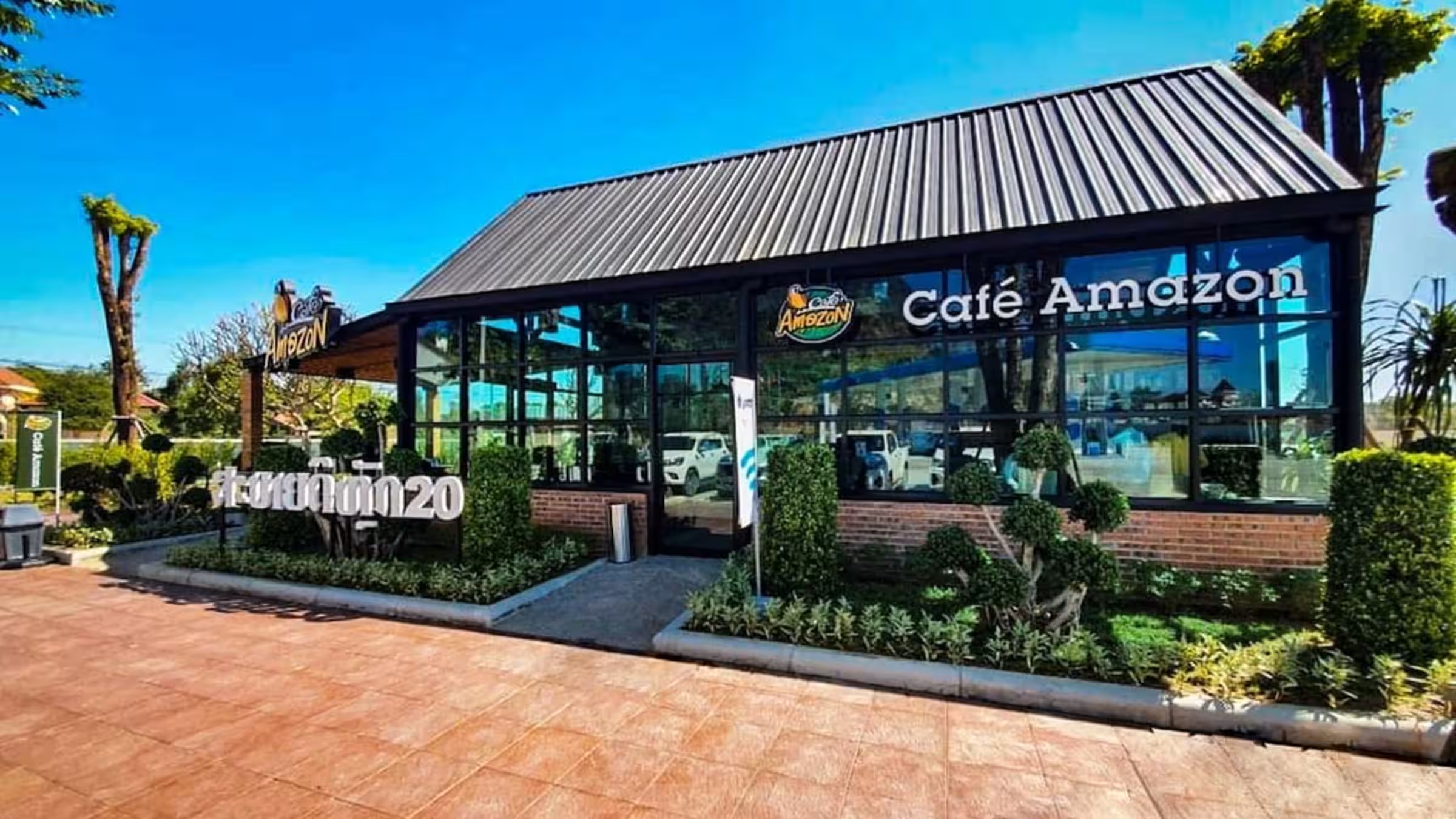
    Thailand’s Cafe Amazon seems prepared to bow out from the local market after a half-decade attempt to square up with local coffee chains. At the forefront of this decision is Central Plaza Hotel Public Company Limited (Centel), who will be stepping away from the Cafe Amazon joint venture in Vietnam. This move indicates a strategic pivot in response to the fierce competitive landscape in Vietnam’s coffee sector.

    Centel’s withdrawal implicates the dissolution of the ORC Coffee Passion Group Joint Stock Company (ORCG), the corporation responsible for the operations of Cafe Amazon within Vietnam. ORCG was a partnership between Centel’s indirect subsidiary, Central Restaurants Group (Vietnam), which owns a 40 per cent stake, and PTTOR International Holdings (Singapore), another subsidiary of the publicly-traded Thai firm PTT Oil and Retail Business, with a 60 per cent stake.

    In an official statement, Centel underscored the necessity to “realign business priorities” and adapt to the pressing challenges in the market. As of the end of August, the company’s investment in the venture amounted to THB 56 million (US$1.72 million).

    This decision marks the end of Centel’s involvement in Cafe Amazon’s expansion into Vietnam, an ambitious initiative that was launched in 2020 with the goal of becoming a top global coffee brand. Unfortunately, the stiff competition from both international and local chains proved to be too daunting.

    Questions & Answers

    What is the primary reason for Cafe Amazon’s exit from Vietnam?
    Intense competition from local and international coffee chains is the main reason behind Cafe Amazon’s exit from the Vietnamese market.

    What percentage of ORC Coffee Passion Group Joint Stock Company (ORCG) does Central Restaurants Group (Vietnam) hold?
    Central Restaurants Group (Vietnam), an indirect subsidiary of Centel, holds a 40 per cent stake in ORCG.

    When did Cafe Amazon originally plan its expansion into Vietnam?
    Cafe Amazon initiated its ambitious expansion into Vietnam in 2020, with the goal of becoming a top global coffee brand.
  • Amazon Settles For $2.5 Billion With FTC: Prime Subscribers To Benefit While Market Dominance Remains Unaffected

    Amazon Settles For $2.5 Billion With FTC: Prime Subscribers To Benefit While Market Dominance Remains Unaffected

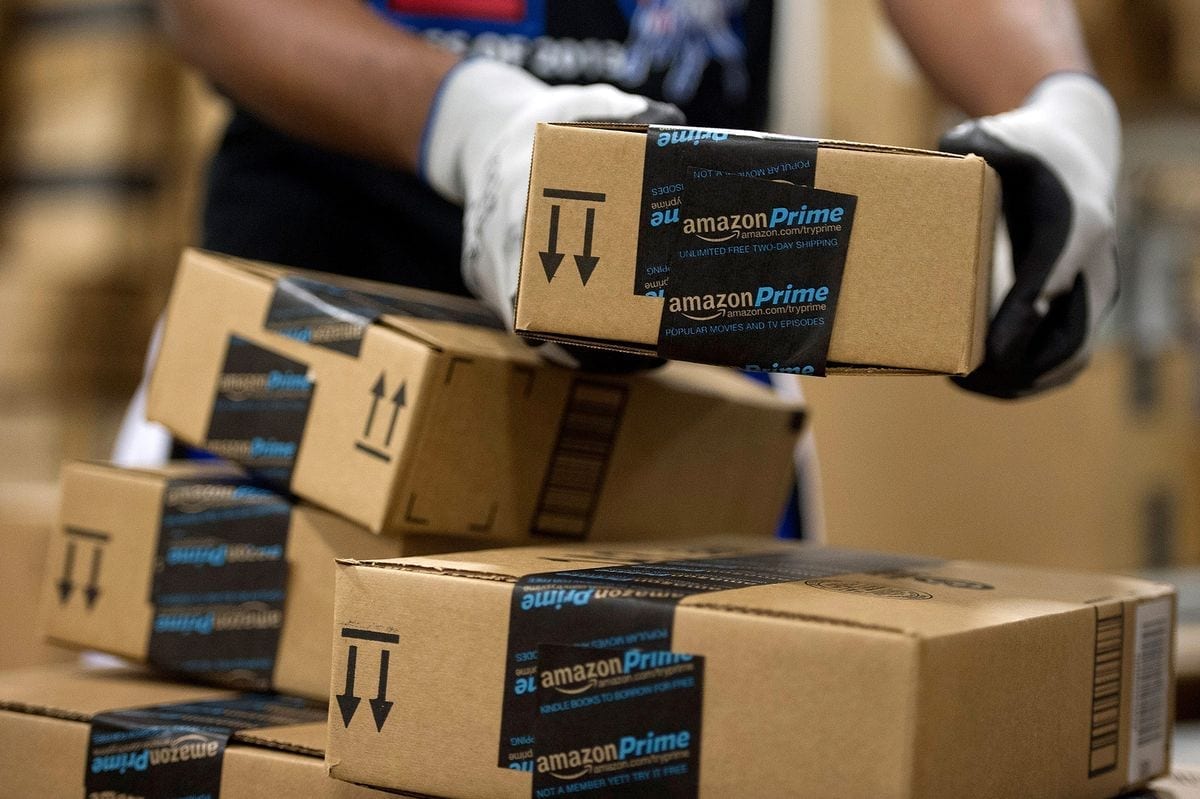
    Amazon has agreed to a settlement of $2.5 billion with the Federal Trade Commission (FTC), following allegations of misleading customers to increase subscriptions. The settlement, however, is unlikely to significantly impact Amazon, given that the company generates approximately the same amount every 33 hours. Amazon’s share value remained relatively stable following the news of the settlement.

    Prime Subscribers To Receive Reimbursements

    Approximately 35 million Prime subscribers are eligible for a share of a $1.5 billion fund established by Amazon as part of the settlement, with the remaining $1 billion to be paid as a fine to the FTC. A key point to note is that Amazon has not accepted any wrongdoing in relation to the settlement.

    Prime subscribers who signed up between 23rd June 2019 and 23rd June 2025 via certain offers, and utilised few of the associated benefits, will automatically receive $51 according to the terms of the settlement. In addition, those who attempted and failed to cancel their Prime subscription during this period will be able to submit claims for payment.

    Amazon’s Statement on Settlement

    Amazon released a statement indicating that the settlement will allow the company to continue to prioritize its customers. The company emphasized its commitment to ensuring that subscribing and unsubscribing to Prime is straightforward and that the service provides significant value to its millions of loyal members worldwide.

    As a requirement of the settlement, Amazon will be making changes to its Prime subscription process. This will include the introduction of a clear and conspicuous button to decline a Prime subscription and to facilitate easier cancellation. The company will also be more transparent with the terms and conditions of subscriptions during enrollment and will engage an independent supervisor to oversee compliance.

    Amazon maintains that most of the required actions are already in progress, with little need for additional changes. However, in the FTC’s case, it alleged that Amazon executives disregarded recommendations to clarify the subscription and cancellation procedures between 2017 and 2022.

    FTC’s Tough-on-tech Victory

    The settlement is seen as a significant success for the FTC’s stringent tech regulation policy, marking the second-largest restitution in the history of the agency. FTC Chair, Andrew Ferguson, hailed the settlement as a monumental win for the millions of Americans frustrated with deceptive subscriptions that are challenging to cancel.

    The settlement arose during an FTC trial in Seattle federal court, where it was argued that Amazon sought to enroll members indiscriminately. The agency suggested that Amazon’s subscription and cancellation practices were deceptive, citing internal discussions referring to the methods as “‘a bit of a shady world” and “an unspoken cancer.”

    Impact on Prime’s Market Dominance

    Despite the settlement, the market dominance of Prime, a key growth driver for Amazon, is not expected to be significantly affected. Prime, introduced in 2005 at $79 per year, rose to $139 in 2022 and generated $23.9 billion in subscription revenue in the first half of 2025.

    Although Amazon has committed to amending certain practices as part of the agreement, analysts do not anticipate these changes to affect Prime’s popularity. Zak Stambor, an Emarketer analyst, points out that despite the changes facilitating easier cancellation, the program remains deeply embedded in most American households.

    Questions & Answers

    What is the total sum of the Amazon-FTC settlement?
    The settlement totals $2.5 billion, with $1.5 billion set aside as reimbursements for Prime subscribers and the remaining $1 billion being paid as fines to the FTC.

    What changes is Amazon expected to implement as part of the settlement?
    The company will introduce a clear and conspicuous button for declining Prime subscriptions and simplify the cancellation process. It will also work on improving the transparency of subscription terms and conditions during enrollment.

    Will the settlement affect the market dominance of Amazon Prime?
    While Amazon will make changes to some of its practices as part of the settlement, analysts don’t forecast these changes to significantly affect Prime’s market appeal.

  • Amazon, Temu, and Shein Surge in Australia, Leaving Local Retailers Struggling to Compete

    Amazon, Temu, and Shein Surge in Australia, Leaving Local Retailers Struggling to Compete

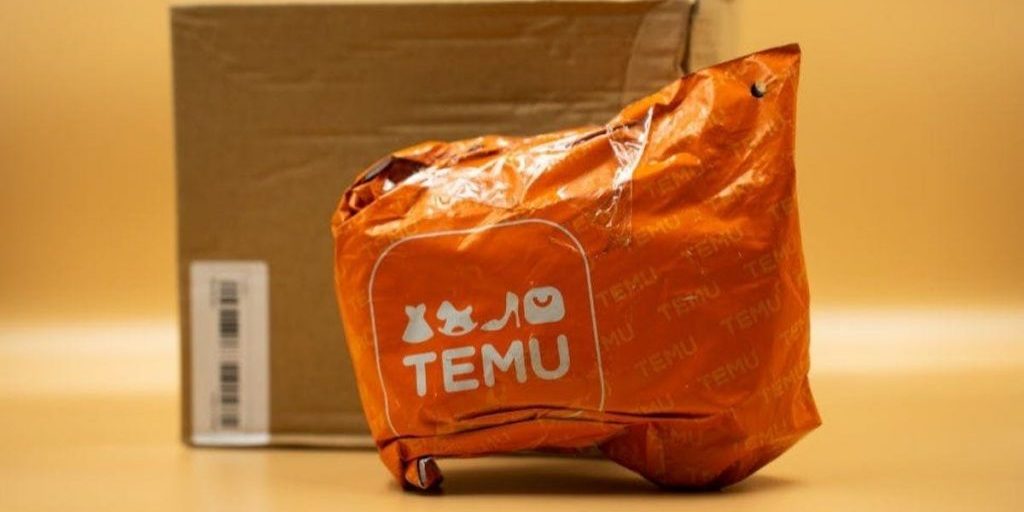
    Online retail giants Amazon, Temu, and Shein have made remarkable strides in capturing the hearts—and wallets—of Australian consumers, according to fresh insights from Roy Morgan. As traditional retail players struggle to maintain their foothold, these digital marketplaces are flourishing, shaking up the industry in ways we never expected.

    Amazon Tops the Charts

    Leading the charge is Amazon, boasting a staggering 8.8 million Australian shoppers making purchases at least once a year. This figure marks an impressive rise of 900,000 customers compared to the previous year, translating into an 11% growth rate. It’s clear that the online retail behemoth has solidified its presence in the Australian market.

    Temu and Shein: Rising Stars

    Meanwhile, Temu has emerged as a formidable contender, attracting 4.7 million shoppers—an increase of 900,000 or 24% growth in just one year. Shein isn’t far behind, pulling in 2.6 million buyers, up by 600,000, which equates to a 27% rise in its customer base. Combine this with Temu and Shein’s growth, and you’ve got a retail revolution that’s generating billions in additional sales.

    The Financial Impact

    The impact of this growth is nothing short of staggering. Together, Temu and Shein have added an impressive $1.3 billion to their collective sales over the past year. Temu’s sales are soaring, now hitting approximately $2.6 billion annually in Australia, a substantial increase from $1.6 billion just a year prior. Shein, with its trend-driven appeal, has also seen its sales swell to $1.3 billion, climbing from $1 billion.

    A Shrinking Landscape for Traditional Retailers

    In stark contrast, several well-established retailers have faced steep declines in customer numbers. Companies like eBay, Kogan, The Reject Shop, and Best & Less are struggling to maintain their market presence. It’s been a tough year for fashion retailers as well, with names such as Millers, Rivers, Noni B, Katies, Autograph, Crossroads, Rockmans, and Wittner exiting the market entirely.

    The Shift in Consumer Expectations

    Catherine Jolley, Roy Morgan’s head of retail and consumer products, notes that this swift transformation is reshaping the industry. “As discount platforms reset consumer expectations, established retailers, especially those that have relied on a low-cost position, must grapple with their standing in this new retail order,” she explains. It’s a tough lesson for traditional players, who might have once thought they were invincible.

    As this saga unfolds, it’s evident that the retail landscape in Australia is not just changing; it’s being revolutionized. So, watch out – the only constant in this digital age seems to be relentless growth and unexpected outcomes in the online space.

    Questions & Answers

    What recent figures highlight Amazon’s growth in Australia?
    Amazon now boasts 8.8 million Australians shopping on its platform at least once a year, reflecting an 11% increase from the previous year.

    How have Temu and Shein performed over the past year?
    Temu’s customer base grew by 900,000 to reach 4.7 million, while Shein increased by 600,000 to 2.6 million, showcasing growth rates of 24% and 27%, respectively.

    What challenges are traditional retailers facing?
    Many established retailers, including eBay and Kogan, are seeing significant declines in their customer bases, with several fashion brands exiting the market entirely.

  • Amazon Launches New AWS Cloud Region in Asia Pacific, Boosting New Zealand’s Tech Landscape

    Amazon Launches New AWS Cloud Region in Asia Pacific, Boosting New Zealand’s Tech Landscape

    Amazon’s announcement of the AWS Asia Pacific (New Zealand) Region marks a significant expansion of its global cloud framework, bringing new opportunities to developers, startups, enterprises, and nonprofits across various sectors including retail, education, and government. With the launch of this new location, users can now enjoy greater flexibility to run applications and engage their audiences through data centers firmly rooted in New Zealand.

    A Long-Term Investment in New Zealand’s Digital Future

    In a move that signals its long-standing commitment to New Zealand, Amazon plans to invest over NZD 7.5 billion into the construction, connection, operation, and upkeep of its data centers. Initial plans for the AWS Asia Pacific (New Zealand) Region include three Availability Zones, adding to a robust global tally of 120 Availability Zones across 38 regions, revealing a cloud network so extensive that even a flock of sheep might get lost in it — and that’s quite a feat in New Zealand!

    Enhancing AWS’s Role in Cloud Computing

    In addition to the new Kiwi expansion, AWS has ambitious plans to introduce ten more Availability Zones and establish three additional regions in Chile, Saudi Arabia, and its forthcoming European Sovereign Cloud. Designed with sovereignty at its core, the New Zealand region will provide secure and compliant cloud infrastructure, allowing customers to access a comprehensive suite of AWS services, including analytics, computing, content delivery, databases, generative AI (GenAI), machine learning (ML), networking, and storage.

    Empowering the Next Generation of Cloud Professionals

    To address the growing demand for cloud technology throughout the Asia Pacific, Amazon is also focusing on digital skills development, launching initiatives such as AWS Academy, AWS Educate, and AWS Skill Builder. Under a memorandum of understanding with the New Zealand government, AWS has pledged to train 100,000 individuals in cloud competencies, with over 50,000 already equipped with these essential skills. Moreover, AWS intends to hire and develop additional local talent to support this new region, further underscoring its dedication to New Zealand’s digital evolution and economic progress.

    Questions & Answers

    What are the key features of the AWS Asia Pacific (New Zealand) Region?
    The new AWS region will initially host three Availability Zones and will provide a wide range of services including analytics, computing, generative AI, and machine learning, tailored to secure and compliant cloud infrastructure.

    How much is Amazon investing in New Zealand’s cloud infrastructure?
    Amazon plans to invest over NZD 7.5 billion, focusing on the construction and operation of its data centers, reflecting a long-term commitment to the region.

    What initiatives is Amazon implementing to develop local cloud skills?
    Amazon has committed to training 100,000 individuals in cloud technology through programs like AWS Academy, with over 50,000 already trained, demonstrating a serious dedication to enhancing local expertise in the tech sector.

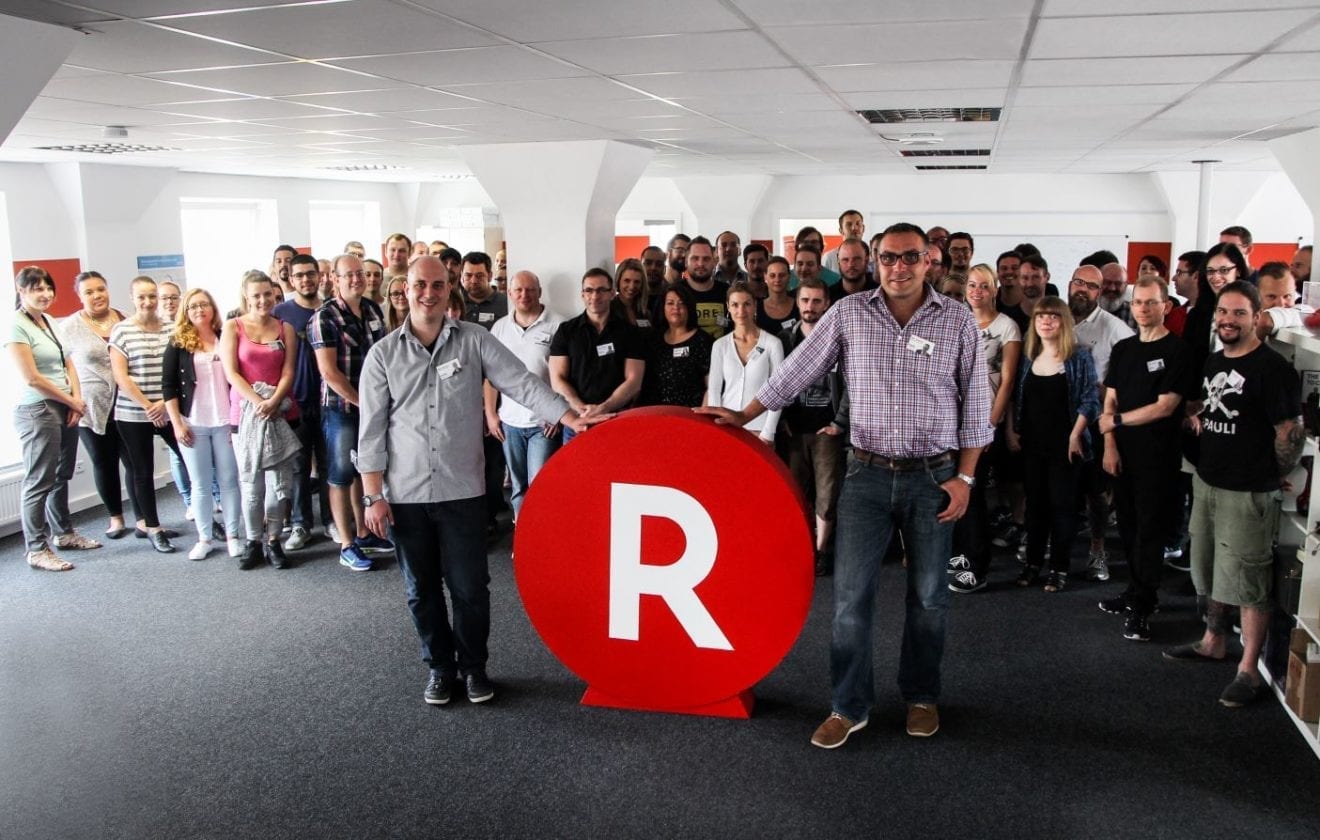
  • Rakuten and Amazon Join Forces to Take on Starlink in Japan’s Satellite Market

    Rakuten and Amazon Join Forces to Take on Starlink in Japan’s Satellite Market

    Japan’s satellite communications landscape is on the brink of transformation as Rakuten Group and Amazon gear up to launch their own services, challenging the long-standing dominance of SpaceX’s Starlink. With operations expected to begin as early as next year, this competition promises to reshape the market and improve connectivity for consumers across the country.

    Starlink, spearheaded by Elon Musk’s SpaceX, has established itself as the go-to satellite service in Japan, especially through partnerships like KDDI, which allows for direct smartphone-to-satellite connections. This capability has proven invaluable in rural locations and areas prone to natural disasters, where traditional infrastructure is often lacking.

    In a significant move to diversify the market, Japan’s Ministry of Internal Affairs and Communications (MIC) has initiated work on new spectrum regulations that are set to pave the way for increased competition by 2025. This regulatory shift will create opportunities for Rakuten and Amazon to enter and thrive in the satellite communications arena.

    Rakuten’s Bold Ambitions

    Rakuten Mobile is wasting no time in making its mark, with plans to roll out its satellite service between October and December 2025. Collaborating with U.S. startup AST SpaceMobile, Rakuten’s initial offering will focus on text messaging. But that’s just the beginning—plans are afoot to expand services to include money transfers and video streaming. The company emphasizes that this initiative aims to enhance connectivity in underserved areas while providing a reliable backup during emergencies—a win-win for users reliant on stable communication.

    Amazon’s Satellite Strategy

    Not to be outdone, Amazon is preparing to launch its Project Kuiper satellite network in Japan, which aims to deploy over 3,200 satellites by 2029. This ambitious project aligns with the MIC’s plans to amend regulations after April 2025, ensuring that Amazon can compete in this burgeoning market. The retail behemoth’s foray into satellite communications underscores a broader trend of tech giants expanding their reach beyond traditional digital services.

    As Japan stands on the threshold of this new era in satellite communications, the impending rivalry between these giants has all the makings of an exciting battle for connectivity supremacy—let’s just hope consumers don’t have to wait on hold for years while they hash it out!

    Questions & Answers

    What changes can consumers expect in Japan’s satellite communications market?
    Consumers can anticipate increased competition, primarily from Rakuten and Amazon, which will enhance connectivity options, especially in rural areas and during emergencies.

    When are Rakuten and Amazon expected to launch their services?
    Rakuten plans to debut its satellite services between October and December 2025, while Amazon’s Project Kuiper is set for a rollout, targeting more than 3,200 satellites by 2029.

    How might these new services impact existing providers like Starlink?
    The entry of Rakuten and Amazon is likely to intensify competition, potentially leading to improved services and pricing options for consumers who currently rely on Starlink.

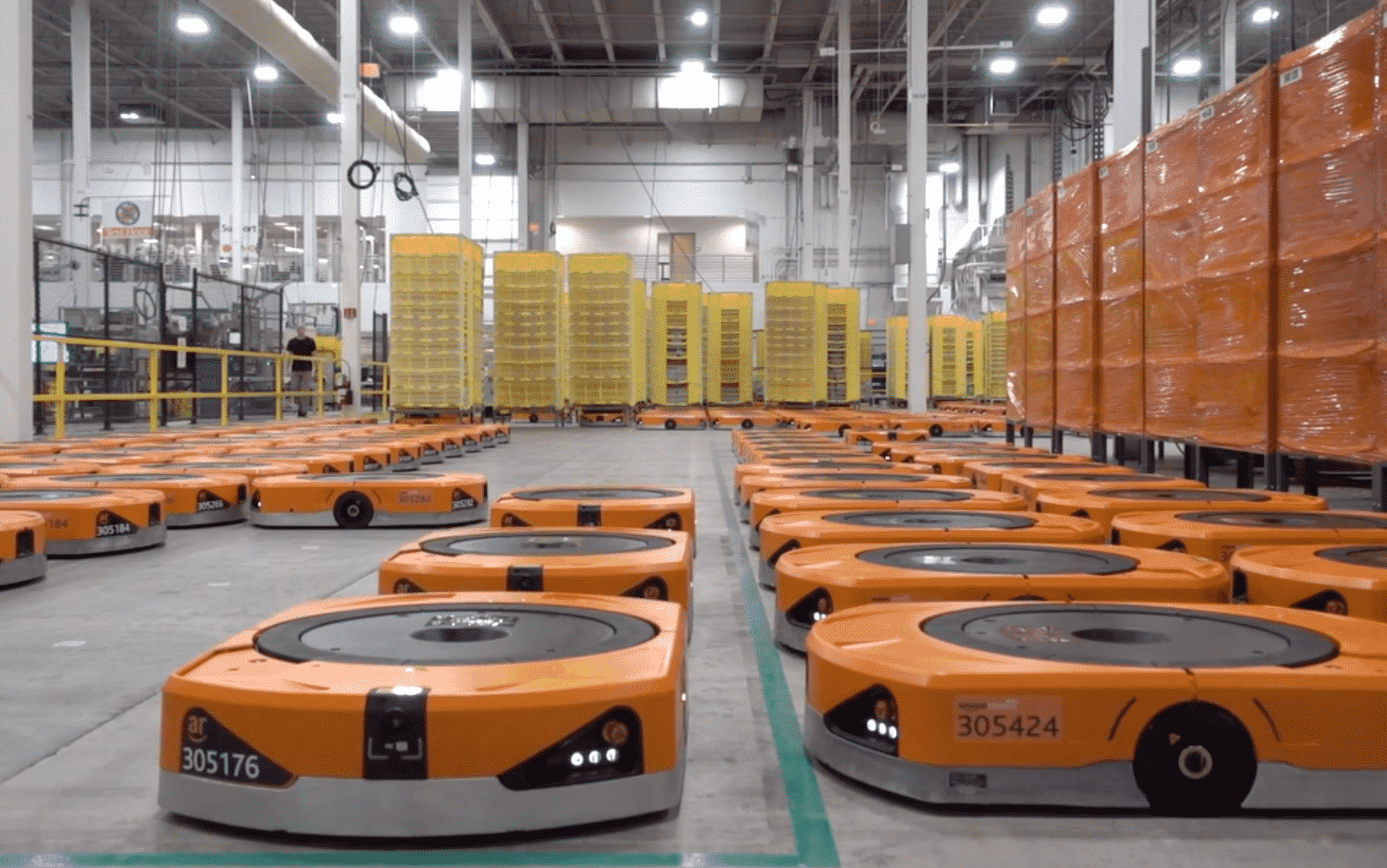
  • Amazon Reaches Milestone: 1 Million Robots Now Match Workforce in Warehouse Operations

    Amazon Reaches Milestone: 1 Million Robots Now Match Workforce in Warehouse Operations

    Amazon’s relentless quest for automation has reached a remarkable milestone, as the number of robots deployed in its Japanese warehouses has soared to one million. This achievement underscores the company’s commitment to revolutionizing logistics and factory operations while positioning Japan as a critical hub in its global strategy.

    These robots work in tandem with Amazon’s workforce, which exceeds 1.5 million human employees worldwide. In fact, the robotic workforce is also on track to match that figure, approaching a remarkable 1.5 million units worldwide, illustrating an unprecedented synergy between human ingenuity and machine efficiency.

    Currently, Amazon has integrated robots into over 300 facilities across the globe, forming an increasingly sophisticated automated delivery network that redefines efficiency in the retail space. Imagine a robotic ballet, orchestrating the flow of products with precision as they navigate their bustling warehouse environments.

    Adding to this innovation is Amazon’s introduction of DeepFleet, a cutting-edge generative AI model designed to enhance the performance of its robotic fleet by an impressive 10%. This advancement optimizes their movements throughout fulfillment networks, ultimately leading to faster deliveries and lower operational costs.

    But Amazon’s ambitions extend far beyond warehouse duties. This milestone is just the beginning, as the company eyes future developments that will encompass delivery solutions and even home robotics, further integrating technology into daily life.

    Questions & Answers

    What milestone has Amazon achieved in Japan?
    Amazon has reached one million robots deployed in its warehouses across Japan, highlighting its commitment to advanced automation in logistics.

    How does the number of robots compare to human workers at Amazon?
    The number of robots is nearing the 1.5 million mark, which closely matches Amazon’s global workforce of over 1.5 million human employees.

    What is DeepFleet and how does it benefit Amazon?
    DeepFleet is a generative AI model designed to enhance the efficiency of Amazon’s robotic fleet by 10%, optimizing product movement through the fulfillment network to speed up deliveries and lower costs.

  • Cafe Amazon Drives Record-breaking Quarter For Thailand’s Ptt Oil And Retail Business

    Cafe Amazon Drives Record-breaking Quarter For Thailand’s Ptt Oil And Retail Business

    PTT Oil and Retail Business (OR), the lifestyle and retail subsidiary of Thailand’s PTT Group, has announced a record-breaking financial performance for the first quarter of this year. This success is largely attributable to its leading brand Cafe Amazon, which experienced a period of significant expansion throughout Southeast Asia.

    Noteworthy Performance

    Cafe Amazon sold over 112 million cups of coffee during the first quarter, emphasizing the strength of the brand. With 391 stores now in operation outside of Thailand, the cafe chain has become a key driver of OR’s earnings growth. The company’s total revenue hit an impressive US$5.6 billion, with net profits increasing by 46 per cent from the last quarter to approximately $134 million. This represents a 17.6 per cent growth year-on-year.

    ML Peekthong Thongyai, CEO of OR, credited the robust performance to the resilience of the business model. “Our strong performance this quarter underscores our long-term strategic direction. We are expanding with a clear purpose, delivering value for individuals, contributing to community prosperity and demonstrating our commitment to environmental responsibility.”

    Global Expansion

    Cafe Amazon’s reach extends to nine markets. These include Cambodia, Laos, Vietnam, the Philippines, Malaysia, Oman, Saudi Arabia, Bahrain, and Japan.

    The cafe chain is part of OR’s wider Global Business segment. This segment reported a 30.8 per cent year-on-year increase in sales volume together with an 81.5 per cent rise in EBITDA.

    Peekthong reiterated the company’s mission beyond monetary profit. “We’re not just about selling fuel or coffee. Our goal is to build platforms that strengthen local economies, encourage entrepreneurship, and facilitate long-term, sustainable growth.”

    OR oversees 415 PTT Stations and 391 Cafe Amazon outlets across Asia and the Middle East.

    Questions & Answers

    What factors contributed to OR’s record-breaking financial performance?
    The company attributes its success to the significant expansion of Cafe Amazon, which sold over 112 million cups of coffee in the first quarter.

    What markets does Cafe Amazon currently operate in?
    The cafe chain operates in nine markets, including Cambodia, Laos, Vietnam, the Philippines, Malaysia, Oman, Saudi Arabia, Bahrain, and Japan.

    What is OR’s greater mission beyond selling products?
    OR aims to build platforms that strengthen local economies, promote entrepreneurship, and facilitate sustainable, long-term growth.

  • Prime Day Phenomenon: How Amazon’s Mega Sale Is Reshaping The Retail Calendar

    Prime Day Phenomenon: How Amazon’s Mega Sale Is Reshaping The Retail Calendar

    The Evolution of Prime Day

    In the United States, Black Friday has long been seen as the ultimate shopping event. However, Amazon’s Prime Day has been increasingly gaining momentum among consumers since its inception. Launched on June 15, 2015, as part of Amazon’s 20th-anniversary celebrations, it initially offered a 24-hour window of exclusive deals to Prime members.

    Over the past decade, Prime Day has evolved from a one-day sales event to a multi-day shopping frenzy, significantly reshaping the US retail calendar. Melissa Minkow, Global Director of Retail Strategy at CI&T, observed that Prime Day has become an exceptional event where consumers feel inclined to splurge due to the impressive marketing around the event as a significant savings opportunity.

    This year, Amazon extended its Prime Day sale to four days, from July 8th to 11th, making it the longest sale in the company’s history. It is estimated that in 2024, Amazon achieved record sales of $14.2 billion during the 48-hour event, increasing 11 per cent year-over-year. This year’s extended Prime Day event is projected to drive $23.8 billion in spending, a rise of 28.4 per cent compared to the previous year.

    An Adobe spokesperson likened the event to “two Black Fridays,” which brought in $10.8 billion in online spending during the 2024 holiday shopping season. However, Amazon isn’t the only retailer capitalizing on this alternative “Black Friday” shopping season.

    Impact on Other Retailers

    Prime Day has become a pivotal date in the retail calendar, according to Neil Saunders, MD of GlobalData. He noted that many consumers eagerly anticipate the event to secure deals and bargains.

    To keep up with Amazon, other retailers such as Best Buy and Target have devised competing events like ‘Black Friday in July’ and ‘Target Circle Week.’ These events aim to attract consumers already excited by Amazon’s Prime Day.

    Recent data revealed that during Prime Day, 53.4 per cent of consumers intended to explore retailers other than Amazon. Furthermore, a 2024 survey revealed that 35 per cent of Prime members also shopped during Target Circle Week, another 35 per cent participated in the Walmart Deals event, and 12 per cent took part in Best Buy’s ‘Black Friday in July.’

    In response to Amazon’s Prime Day extension, competitors like Walmart and TikTok Shop have also extended their sales events. However, as noted by Daniel Reid, Senior Insights Analyst at Similarweb, merely extending the duration of discount periods isn’t enough to maintain competitiveness. Retailers must also provide a unique and credible value proposition that consumers cannot find elsewhere.

    The Competitive Landscape

    Many retailers, including Target, have adopted strategies such as releasing different deals each day to keep customers engaged and curious about what’s coming next. This year, retailers introduced new promotions to further attract consumers, such as Target allowing its Circle 360 members early access to Circle Week deals, TikTok Shop offering cash back to customers who watch ‘Deals For You Days’ live streams and find a lower price for a featured product elsewhere, and Walmart hosting its Deals event both in-person and online for the first time.

    While it’s unlikely that these retailers will match the sales numbers achieved by Prime Day, it’s evident that they must continue innovating to capture consumers’ attention during this busy shopping period.

    Questions & Answers

    How long was Amazon’s Prime Day event this year?
    Amazon extended its Prime Day event to four days, from July 8th to 11th, marking the longest sale in the company’s history.

    What strategies are other retailers adopting to compete with Amazon’s Prime Day?
    Retailers like Best Buy and Target are creating rival events, while others are extending their discount periods to match Amazon’s. Some are also releasing new deals daily to keep customers engaged and curious.

    What new promotions are retailers offering this year to attract consumers?
    Retailers are offering new promotions such as early access to deals for members, cashback offers, and hosting events both in-person and online.

  • Pandora and Amazon Join Forces to Dismantle Major Counterfeit Jewelry Network in China

    Pandora and Amazon Join Forces to Dismantle Major Counterfeit Jewelry Network in China

    Pandora has made significant strides in the battle against counterfeit jewelry, successfully collaborating with Amazon to dismantle a sprawling network of fake products across Europe. This initiative culminated in a criminal conviction in China, marking a pivotal achievement for both companies in their commitment to combating counterfeiting.

    Investigation Sparks Action

    The investigation commenced in 2020 when Pandora’s Intellectual Property and Brand Protection team detected suspicious customs seizures. By partnering with Amazon’s Counterfeit Crimes Unit, they traced these counterfeit activities back to two China-based sellers orchestrating a large-scale operation.

    Raids and Convictions

    In a decisive move, Chinese authorities, with support from both Pandora and Amazon, conducted a raid that led to the seizure of thousands of counterfeit items. The two sellers were subsequently sentenced by a Shanghai court in March 2025 to five years in prison, accompanied by hefty fines. Justice, it seems, is best served with a side of bling.

    Remarkable Market Impact

    In 2024 alone, Pandora facilitated the removal of over 500,000 online listings touting fake products, a remarkable 215% increase from the previous year, fueled by the utilization of AI tools. The company also played a vital role in the global seizure of approximately 100,000 counterfeit items, a testament to its proactive approach in safeguarding its brand.

    Pandora’s Retail Strategy

    While Pandora does not sell its products on Amazon, it collaborates with the platform to eradicate the circulation of counterfeit goods. With a presence in over 2,700 stores worldwide and sales through its official website, pandora.net, the company remains dedicated to upholding brand integrity.

    Addressing a Global Challenge

    Counterfeiting poses an ongoing challenge worldwide, with the OECD estimating that fake goods represent a staggering 2.3% of global trade. In response, Pandora has pledged to continue its investments in enforcement and strategic partnerships to protect its brand and the interests of its customers.

    Questions & Answers

    What prompted the investigation into counterfeit Pandora products?
    The investigation was sparked by suspicious customs seizures identified by Pandora’s IP & Brand Protection team in 2020, leading to a collaboration with Amazon’s Counterfeit Crimes Unit.

    What were the outcomes of the raid conducted in China?
    The raid resulted in the seizure of thousands of counterfeit items, and the two sellers involved were sentenced to five years in prison along with significant fines.

    How has Pandora’s approach to combating counterfeiting evolved in recent years?
    Pandora has significantly increased its efforts by leveraging AI tools, leading to the removal of over 500,000 fake product listings in 2024, and is committed to ongoing investment in brand protection.

  • Amazon To Inject $233m Into India Operations: Aims For Infrastructure Expansion And Enhanced Delivery Safety

    Amazon To Inject $233m Into India Operations: Aims For Infrastructure Expansion And Enhanced Delivery Safety

    By 2025, Amazon is planning to inject more than 20 billion rupees (equivalent to US$233 million) into its operations in India. This significant investment will be used to enhance and widen the scope of its operational infrastructure, as well as devise innovative technology for its product fulfillment networks and augment delivery safety procedures.

    The Aim of the Investment

    This substantial financial commitment comes in continuation of Amazon’s previous investments aimed at constructing a comprehensive operations network that can cater to all serviceable postal codes within the nation.

    A key player in the Indian e-commerce market, Amazon competes with other heavyweights such as Walmart’s Flipkart and Reliance Retail, owned by billionaire Mukesh Ambani. The corporation had previously announced that by 2030, its total investment in the Indian market would reach $26 billion, however, the specifics regarding this allocation were not disclosed.

    Investment Implementation

    The new funding will be allocated toward the establishment of new sites and modernization of existing facilities across its fulfillment and delivery network to enhance processing speed and capacity.

    In addition to infrastructural developments, Amazon also has plans to incorporate technology that will ensure the safety of its delivery associates. This includes implementing systems that will notify associates of unsafe speeds and enable the equitable distribution of delivery routes.

    Investing in Employee Welfare

    Part of the funding will also be directed toward initiatives designed to improve the health and financial stability of Amazon’s employees. This showcases the company’s commitment to not just expand its market presence, but also to enhance the welfare of its workforce.

    Earlier this year, it was announced that Amazon’s cloud services provider, Amazon Web Services, was earmarked to invest approximately US$8.2 billion in India.

    Questions & Answers

    What is the purpose of Amazon’s planned investment in India?
    The investment is intended to expand and modernize Amazon’s operational infrastructure, develop new technology for its product fulfilment networks, and boost delivery safety.

    How will Amazon’s new investment benefit its delivery associates?
    Amazon plans to implement technology that will alert delivery associates about unsafe speeds and ensure fair distribution of delivery routes, enhancing their safety and work experience.

    What commitment has Amazon made towards the welfare of its employees?
    Amazon has pledged to allocate a portion of its new investment to initiatives aimed at improving the health and financial well-being of its employees in India.

  • Amazon Extends Prime Day To Four Days: New Features Introduced For Personalized Shopping Experience

    Amazon Extends Prime Day To Four Days: New Features Introduced For Personalized Shopping Experience

    Amazon is expanding its yearly Prime Day event from two to four days, providing exclusive offers to Prime members from July 8 to July 14 in 22 markets worldwide. Notable markets include the United States, United Kingdom, Canada, Germany, Australia, Singapore, and Japan.

    Length of Prime Day in Different Markets

    While the duration of Prime Day has been extended in most markets, it has been shortened by two days in Singapore, where the event lasted for six days in the previous year.

    Jamil Ghani, Vice President for Amazon Prime, emphasized that the extended sales period allows Prime members more opportunities to access deals across a variety of categories. These include fashion, pantry essentials, home improvement, personal care, toys, school supplies, and premium goods.

    “Prime Day is dedicated to celebrating our members by offering them remarkable savings and expedient delivery,” Ghani remarked. He further announced that this year’s event would also feature exclusive deals like fuel discounts.

    New Features and Personalized Experience

    Amazon is introducing a new feature named ‘Today’s Big Deals.’ These daily themed offers will start at midnight, and special deals will be released every five minutes during selected periods throughout the event.

    Moreover, Amazon aims to leverage its AI capabilities to provide a more personalized shopping experience. Prime members can utilize Amazon’s AI shopping assistant, Rufus, to investigate product categories and identify relevant deals. Other tools, including ‘Interests’ and ‘Buy Again’ lists, enable users to monitor discounts on items they have previously purchased or frequently viewed.

    Prime Day’s Global Reach

    Prime Day will commence on July 8 in numerous countries including Australia, Austria, Belgium, Canada, Colombia, France, Germany, Italy, Ireland, Japan, Luxembourg, the Netherlands, Poland, Portugal, Singapore, Spain, Sweden, Turkey, the United States, and the United Kingdom. Prime members in Brazil, Egypt, India, Mexico, Saudi Arabia, and the United Arab Emirates will have the chance to shop Prime Day deals later this summer.

    Questions & Answers

    When will Amazon Prime Day take place in 2022?
    Amazon Prime Day will take place from July 8 to July 14.

    What are the new features introduced by Amazon for Prime Day 2022?
    Amazon has introduced ‘Today’s Big Deals,’ a feature that provides themed offers daily, and Rufus, an AI shopping assistant to help members find relevant deals.

    Which countries will have the opportunity to shop Prime Day deals later this summer?
    Prime members in Brazil, Egypt, India, Mexico, Saudi Arabia, and the United Arab Emirates will have the opportunity to shop Prime Day deals later this summer.

  • Amazon extends hourly wage bump for warehouse workers in light of the coronavirus

    Amazon extends hourly wage bump for warehouse workers in light of the coronavirus

    Amazon is extending the hourly wage increase that it announced previously to support workers during the coronavirus pandemic. The company had added $2 for each hour worked on top of the minimum hourly wage of $15. In the UK and European countries, the increase amounted to £2 per hour and €2 per hour respectively. For Canada, it was C$2 per hour worked. These revised rates were to last through the end of this month initially.

    Under the new announcement, the increased rate will apply through May 16. Moreover, the company has also extended double overtime pay in the US and Canada.

    Amazon says that this extension will increase its investment in pay during the outbreak to around $700 million. While this sure sounds great, it is also worth highlighting here that unlike most other companies, Amazon’s business is not suffering because of COVID-19. In fact, sales have apparently skyrocketed, and the company is also on a hiring spree, which goes on to show that demand for its services has increased during the pandemic.

    Unlike corporate office employees, warehouse workers cannot work from home. And thus, it makes sense to provide them an incentive so they keep working during these testing times. An Amazon warehouse worker has already died because of the virus, and many have tested positive.

    The e-commerce giant is also giving flexibility with leave of absence options. However, it hasn’t said if it will also extend the unlimited unpaid time off policy that was announced last month. This policy enabled workers to take some unpaid time off without having to worry about any consequences such as penalties. However, it seems like beginning next month, workers who wish to stay home will have to use their accrued time off i.e. the leaves they have remaining or ask for a leave of absence, which will be granted if a worker has an existing health condition or lives with someone who does. That’s because such individuals are more susceptible to coronavirus. Other workers will apparently have to get back to work.

  • Amazon Australia launches B2B store it says will help businesses cut costs

    Amazon Australia launches B2B store it says will help businesses cut costs

    Amazon Business, a new platform designed to streamline operations and decrease expenses for organizations of various sizes, has been introduced by Amazon Australia. The platform will feature focused sections for kitchen and pantry goods, cleaning and sanitation products, alongside stationary, IT commodities, and maintenance solutions.

    Addressing Business Needs

    Amazon Business aims to cater to the specific needs of business buyers, offering them tailored features for convenience. These include exclusive business pricing and volume discounts on eligible items. The platform also provides options for single or multi-user business accounts, Business Prime, and dedicated customer service.

    The introduction of this platform comes at a critical time when inflating expenses have been impacting small-to-medium-sized businesses (SMBs) in Australia. Research reveals that 92% of these SMBs have experienced a rise in operational costs over the past three years. Consequently, 83% of them have been compelled to transfer these expenses to their customers.

    Furthermore, the same research unveiled that over 80% of Australian SMBs have had to increase their prices by an average of 13% due to the escalating cost pressures.

    Gearing Up for Expansion

    Lena Zak, Country Manager of Amazon Business Australia, expressed excitement about the new platform. Zak emphasized the benefits of Amazon Business, stating that this development would be highly advantageous for the numerous SMBs operating across Australia. Zak further highlighted that Amazon Australia has substantially invested in enhancing its operations network to facilitate a smooth, speedy, and reliable shopping experience for its customers.

    With this latest launch, Australia becomes the eleventh country to offer Amazon Business, joining the ranks of countries like the U.S., U.K., Germany, Japan, among others. Since its debut in 2015 in the U.S., Amazon Business has expanded its customer base to over 8 million worldwide. The platform reportedly generates approximately $35 billion in annual gross sales.

    Questions & Answers

    What is Amazon Business?
    Amazon Business is a platform designed to simplify operations and reduce costs for organizations. It provides business-only pricing, quantity discounts, and options for single or multi-user business accounts, among other features.

    What does the launch of Amazon Business imply for Australian SMBs?
    The launch comes at a time when rising operational costs have been impacting Australian SMBs. It aims to offer them a streamlined, cost-effective way of procuring necessary items, thereby helping them manage their expenses.

    How has Amazon Business performed since its inception?
    Since its launch in the U.S. in 2015, Amazon Business has grown to more than 8 million customers globally. The platform reportedly generates approximately $35 billion in annualized gross sales.

  • Amazon Australia Expands Workforce: 600 Seasonal Jobs for Mid-Year Sales

    Amazon Australia Expands Workforce: 600 Seasonal Jobs for Mid-Year Sales

    As the mid-year sales season approaches, Amazon Australia plans to hire 600 seasonal workers across its fulfillment centers and logistics sites. This recruitment drive is aimed at enhancing operations in anticipation of the highly-anticipated Prime Day event in July.

    Roles Focused on Order Fulfillment

    The seasonal positions will predominantly involve picking and packing orders to ensure that customer demand is met efficiently. With a significant increase in online shopping, particularly leading up to Prime Day, these new hires will play a crucial role in maintaining the swift, free delivery services that Prime members expect.

    Competitive Pay and Opportunities for Growth

    “These roles offer competitive pay, a safe and inclusive work environment, and the chance to build valuable skills in a fast-paced, technology-driven workplace,” stated Jacqui Marker, HR Director of Operations at Amazon Australia.

    In addition to attractive compensation, these seasonal positions have the potential to transition into permanent roles. Employees may enjoy benefits such as life insurance, income protection, and subsidized private health coverage for their families, making these opportunities appealing for those seeking long-term employment in retail.

    Prime Day: What to Expect

    Prime Day promises exclusive discounts on a vast array of products, spanning everyday essentials to the latest electronics and home goods. The event has become a cornerstone of Amazon’s retail strategy, drawing in millions of eager shoppers.

    Amazon’s proactive approach to staffing with these seasonal roles reflects broader consumer trends in the retail sector. As more shoppers turn to online platforms, companies like Amazon are investing in their workforce to enhance customer satisfaction and operational efficiency. This wave of hiring not only underscores the booming e-commerce market but also has the potential to positively impact local economies by providing job opportunities and fostering growth within the retail landscape.

  • Amazon’s last-second bid to buy TikTok is not being taken seriously

    Amazon’s last-second bid to buy TikTok is not being taken seriously

    By law, short-form video app TikTok has until this Saturday, April 5th, to be divested by its current owner ByteDance, or else face banishment in the U.S. The legislation requires ByteDance to find a buyer for the popular app that is not a Chinese company. TikTok has been accused of stealing users’ personal data, and disseminating propaganda from China and the Chinese Communist Party to U.S. viewers.

    It looks like an American company, as American as Apple Pie, has thrown a last-second bid for TikTok into the ring. An unnamed U.S. administration official said today that Amazon has made a bid to acquire TikTok, which had about 1.5 billion monthly active users early this year. Last week, Reuters reported that private equity firm Blackstone was looking at joining a group made up of TikTok’s non-Chinese stockholders Susquehanna International Group and General Atlantic to bid for the app.

    Another U.S. company believed to be interested in buying TikTok from ByteDance is Oracle. The firm is already involved with TikTok as it is designated as the app’s “trusted technology provider” in the U.S. and its servers are used to store the personal data of U.S. TikTok users.

    The New York Times reported today that Amazon’s bid for TikTok came in the form of a letter sent from the company to Vice President JD Vance and Commerce Secretary Howard Lutnick. However, the Times story says that various parties are not taking Amazon’s bid seriously. The value of Amazon’s bid as well as those of competing bids are unknown. The online retailer had previously attempted to copy TikTok by launching a similar feature inside its app called Inspire. However, Inspire was considered a failure and was removed from the Amazon app earlier this year.

    Meanwhile, President Donald Trump is reportedly hosting a meeting in the Oval Office on Wednesday to discuss TikTok and the possible suitors for the app. You might recall that in 2020 during Trump’s first term, he tried to broker the sale of TikTok to American firms that showed interest including Oracle, Walmart, and Microsoft. This time, there is legislation involved as a bill to ban TikTok in the U.S. was signed by then-President Joe Biden last April.

    The bill forced ByteDance to divest its holdings in TikTok by January 19th or get banned in the U.S. President Trump signed an executive order on January 20th, his inauguration day, that prevents the Justice Department from taking action against TikTok until the April 5th deadline.