Tag: APAC

  • Openet names Regan marketing development VP for APAC

    Openet names Regan marketing development VP for APAC

    Openet has appointed Tony Regan as vice president of market development for the APAC region, the BSS firm announced earlier this week.

    In his new role, Regan will run Openet’s market development team in APAC, working closely with regional sales VP and sales team to drive the company’s continued expansion in the region, the company said.

    Prior to joining Openet in 2016, Regan held various senior roles within the Telefonica group in Ireland, Spain and Latin America. In his previous role at Openet, Regan ran the company’s consulting division, advising operators on strategy development and execution.

    Regan will be based in Openet’s APAC headquarters in Kuala Lumpur, Malaysia.

    Openet was established in Kuala Lumpur in 2006 and has grown to provide regional service and support, managed services and software development for all of Openet’s APAC customers. The company employs over 180 people in Malaysia.

    Eric Updyke to take helms at Spirent Communications

    Spirent Communications has appointed a new chief executive officer. Eric Updyke, a former Amdocs executive, has started working for the company on April 1, and will take up the CEO role on May 1.

    Updyke will succeed retiring CEO Eric Hutchinson, who will step down on May 1. The company had announced last November that Hutchison planned to retire after 37 years of working for Spirent. He has held the CEO position since being appointed in 2013.

    In a statement, Spirent said Updyke “has extensive experience in international business management with a strong technical understanding of the markets in which Spirent operates.”

    He has worked in various sections of the industry over the last 30 years and has led transformative growth programs on a global scale.

    Updyke joins Spirent from Amdocs, where he most recently served as president of the company’s services group, with responsibility for its managed services, testing and system integration businesses.

    Prior to joining Amdocs, Updyke held executive roles at Nokia Siemens Networks and AT&T.
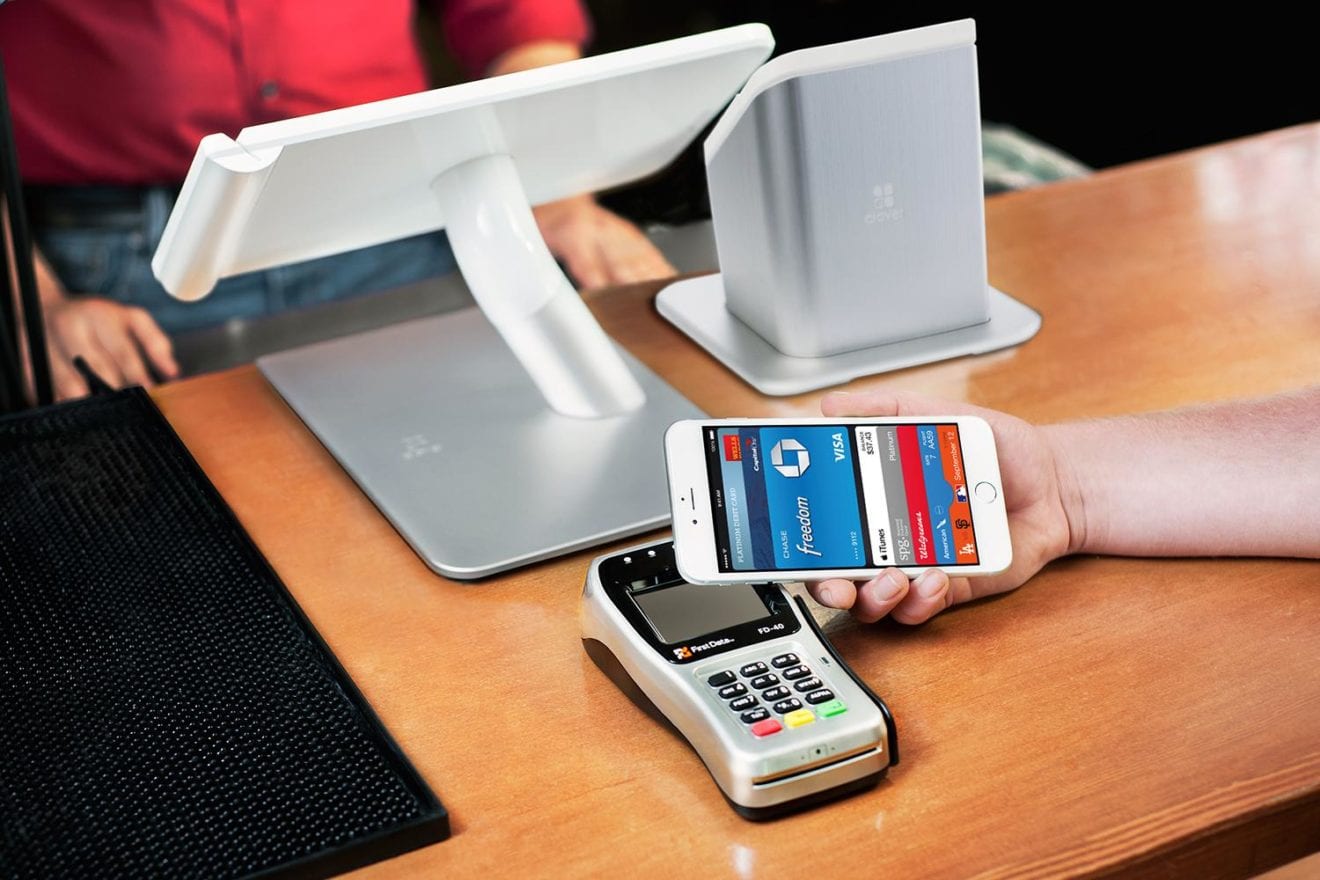
  • Westpac introduces Apple Pay in New Zealand

    Westpac introduces Apple Pay in New Zealand

    Westpac New Zealand customers can now use Apple Pay wherever contactless payments are accepted.

    This reflects the findings of a recent study by Allied Market Research, which found that younger consumers appreciate the simplicity of mobile payments.

    The mobile payment market is expected to reach $4.5 trillion by 2023, according to the research firm, which also notes the market is growing with a “lightning-fast” rate in Asia-Pacific.

    However, even mobile payments are beginning to be superseded.

    The report noted that near field communication (NFC) and QR technology is fast becoming standard in various parts of Asia-Pacific, and various market players are already investing in this new technology.

    Westpac is celebrating the launch of Apple Pay by donating $2.50 for every customer who uses Apple Pay five times before May 2, 2019, to charity. Each customer will also receive a one-off payment of $10.

    “It is yet another reason for our customers to get excited about Apple Pay,” Shane Howell, Westpac’s chief experience officer, said.

    The four charities that will benefit from the initiative are the Mental Health Foundation, Shine, Sustainable Coastlines, and New Zealand’s rescue helicopter services.

  • Consolidation to accelerate in APAC pay TV market

    Consolidation to accelerate in APAC pay TV market

    The Asia-Pacific pay TV market is set to experience a period of accelerated consolidation in the face of deteriorating subscriber and revenue growth, according to research from Media Partners Asia.

    The latest edition of the research and consulting group’s Pay TV Networks Channel Database finds that aggregate revenues across 13 of Asia’s major pay TV networks grew by a mere 1% in 2018 to around $4.9 billion. This compares to a 5% growth in 2017.

    Meanwhile aggregate ebitda across the 13 operators declined by 5% for the second straight year to $900 million.

    “Consumer demand for traditional pay-TV has been impacted forever by high-speed broadband, which is driving rapid increases in online video consumption as well as piracy,” Media Partners Asia executive director Vivek Couto said.

    “These trends have intensified downward pressure across Asia’s pay-TV ecosystem, especially in Southeast Asia, led by Singapore and Malaysia, alongside secular shifts in

    Australia and New Zealand. This will accelerate consolidation as well as major shifts in how channels and content are marketed and sold.”

    The company is predicting that a wave of consolidation will sweep Asia-Pacific over the next year.

    “Future consolidation and rationalization will be defined by global moves and M&A possibilities involving large assets in India,” Couto said.

    “Major players such as Discovery, CBS, Viacom, A+E, Sony and Universal are now competing for the consumer wallet with an increasingly scalable Disney and a newly integrated WarnerMedia within AT&T.”

  • 4 in 5 APAC operators plan to deliver 5G for sport events

    4 in 5 APAC operators plan to deliver 5G for sport events

    More than four in five (81%) operators in Asia-Pacific plan to deliver 5G services to major live sports and esports event organizers, according to research conducted by Ovum for Amdocs.

    The research found that operators in the region view sports events such as the Tokyo 2020 Olympic Games as an opportunity to create new enterprise services grounded in 5G communications.

    As well as 5G, 81% of APAC operators plan on offering IoT-related technology and services to stadium owners and tournament organizers to create efficiencies in stadium management, and 56% plan to offer services that will improve fan experiences, such as introducing the ability to order food and beverages over mobile devices.

    Operators anticipate new commercial opportunities from supporting major sporting events with 5G. Around 44% of operators in the region believe 5G will drive growth in terms of ARPU and 32% believe it will boost their enterprise business.

    Meanwhile 50% of Asia-Pacific operators believe that 5G will drive growth in sports TV subscribers, and 43% believe it will drive mainstream adoption of virtual reality services.

    To capitalize on these opportunities, 81% of operators plan on creating new partnerships with broadcasters and OTT service providers.

    The same proportion are planning to create new partnerships with device manufacturers, 64% are seeking direct partnerships with sports venues, and 56% want partnerships with social media and video game companies.

    But operators are also anticipating network related challenges regarding new 5G services for sports and esports. When asked about the biggest expected challenges, 69% cited issues with delivering the required levels of capacity and connectivity to support live HD video, and 56% cited indoor coverage to stadiums.

    “Operators see both short-term benefits in supporting sports with 5G, including growth in ARPU and their media business line, as well as longer-term benefits, such as enhanced brand appeal among younger demographics,” Amdocs CMO Gary Miles said.

    “Furthermore, working with new types of partners on 5G and sports will give operators a vital role in a new digital business ecosystem. Out of a multitude of potential 5G use cases, our research shows that sports and esports is certainly among the most compelling.”

  • Brands say customers are to blame for bad CX

    Brands say customers are to blame for bad CX

    There is a significant disconnect between the way brands and customers perceive trends in the customer experience, according to a recent survey by InMoment.

    While 36 per cent of brands believe their customer experience is definitely improving, only 13 per cent of customers felt the same way.

    The survey also found that brands are failing to take responsibility for their CX shortcomings, with 40 per cent of brands saying customers are “very” responsible for creating better experiences in-store, and 11 per cent saying customers are “completely” responsible.

    On the other hand, customers believe a good CX is a shared endeavour.

    “It’s evident that there’s a significant divide in Australia between how brands and customers rate the experience they are delivering and receiving, respectfully,” InMoment vice president of APAC Claire Fastier said.

    “This gulf in perception should be ringing alarm bells for brands who need to better understand customer expectation and deliver strong CX.”

    According to the report, the simplest way to solve this disconnect is to ask customers what they want directly – nearly 78 per cent of customers said this was the most important method of improving customer experience, while only 43 per cent of brands agreed.

    “Open channels for direct feedback between you and your customers,” the report reads.

    “Make it as easy as possible for them to tell you how they feel about your brand. Don’t shy away from asking them the important questions, and be sure to weigh both asking and listening wisely.”

    Additionally, retaining a human element is incredibly important, with half of customers stating that better service from staff was the most important thing brands can do to improve the customer experience. This is at odds with the brand perception, with only 29 per cent ranking this first in importance.

    Personalising service with purpose, neglecting customers without an intent to purchase, and taking constructive criticism as a positive metric are all further ways that brands can improve customer experience moving forward according to the report.

  • One in Three Entrepreneurs in APAC Rely on M&A

    One in Three Entrepreneurs in APAC Rely on M&A

    In Asia Pacific, one in three entrepreneur leverages on merger or acquisition as means to grow or expand their businesses, according to a recent report by BNP Paribas. A high proportion of entrepreneurs (33%) in the region rely on merger or acquisition to grow their businesses compared to their counterparts in Europe, GCC and USA, according to the 2019 BNP Paribas Global Entrepreneur Report.

    38 percent of Hong Kong business owners have undergone either a merger or acquisition in the past.

    Disruption and Development

    Over 50 percent of Indonesian entrepreneurs focus on contributing to growth of the local economy as their business goals in five years, while the entrepreneurial ambition in Taiwan is gravitated towards contributing to innovation and development in their chosen sectors. For Taiwan entrepreneurs, 38 percent are disruptors – their business goal is to permanently change the status quo with a new product or concept within five years.

    In India, it is for the next generation of their families to have meaningful careers.

    Use Of Credit Solutions

    Globally, 44 percent of elite entrepreneurs have used credit solutions to develop their business.  In Asia, 55 percent of entrepreneurs have sought to borrow to invest in their own businesses. This rises to six in every ten entrepreneurs in China, India and Indonesia.

    61 percent of Chinese entrepreneurs use credit or lending products to finance their business.  54 percent of Indonesian entrepreneurs have used structured products for credit or lending.

    Respondents

    The report is based on the responses of 2,763 Asian elite entrepreneurs handling a total net worth of USD16 billion, spanning 23 countries across Europe, Asia, the United States and the Middle East. It also unveils the different stages of maturity of their entrepreneurial journey, the impact on their private wealth and their need for family governance.

    Sampling of the Asia respondents include 830 elite entrepreneurs covering China, Hong Kong, India, Indonesia, Singapore and Taiwan. The average primary company revenue was $7.2 million.

  • APAC mobile advertising market booming

    APAC mobile advertising market booming

    The Asia Pacific region is leading in mobile ad request with a growth of 44%. This is almost twice the average growth of the Americas and EMEA regions, both of which are pegged at 23%.

    This was the conclusion of the Global Trends in Mobile Advertising H2 2018 report by Smaato, which offers programmatic insights designed to help publishers and advertisers with their decision-making on ads.

    Among others, the report investigated in-app growth, advertising spending, mobile video and advertising fraud.

    The mobile ad market is healthy, according to Smaato, with significant growth across all key advertising metrics, including ad request volume and eCPMs. Demand and supply both increased year-over-year, as advertisers direct more money into mobile advertising.

    In the APAC, India stood out from the pack with a 425% growth in mobile ad requests. This was more than twice the growth rate of the fastest growing markets in EMEA and the Americas, which were led by Spain at 152% and the USA at 170% respectively.

    Smaato says India’s meteoric ad request growth is characteristic of an emerging mobile market in which the number of mobile device owners, their time spent on mobile, and overall app downloads all rise quickly.

    When it comes to the top countries for eCPM growth, Singapore (154%), Japan (125%), Australia (111%), Hong Kong (99%) and Indonesia (96%) topped the charts. As comparison, eCPMs increased in the United States by 79% and in Canada by 70%, while Switzerland (92%) and the United Kingdoms (66%) topped the chart in the EMEA.

    “The impressive ad request and eCPM growth in APAC are driven by app developers finding new ways to better monetize their content even as consumers are spending more time on apps. Advertisers from all verticals are realizing that apps are where consumers are — and they are directing more funds into this channel,” Smaato APAC managing director Alex Khan said.

    “With app usage increasing across the region, there will also be more monetization opportunities for mobile publishers.”

    The full report can be downloaded here (free registration).

  • Cashmaster Launches QR-Connect in APAC – New Integration Software Solution for Cash Management

    Cashmaster Launches QR-Connect in APAC – New Integration Software Solution for Cash Management

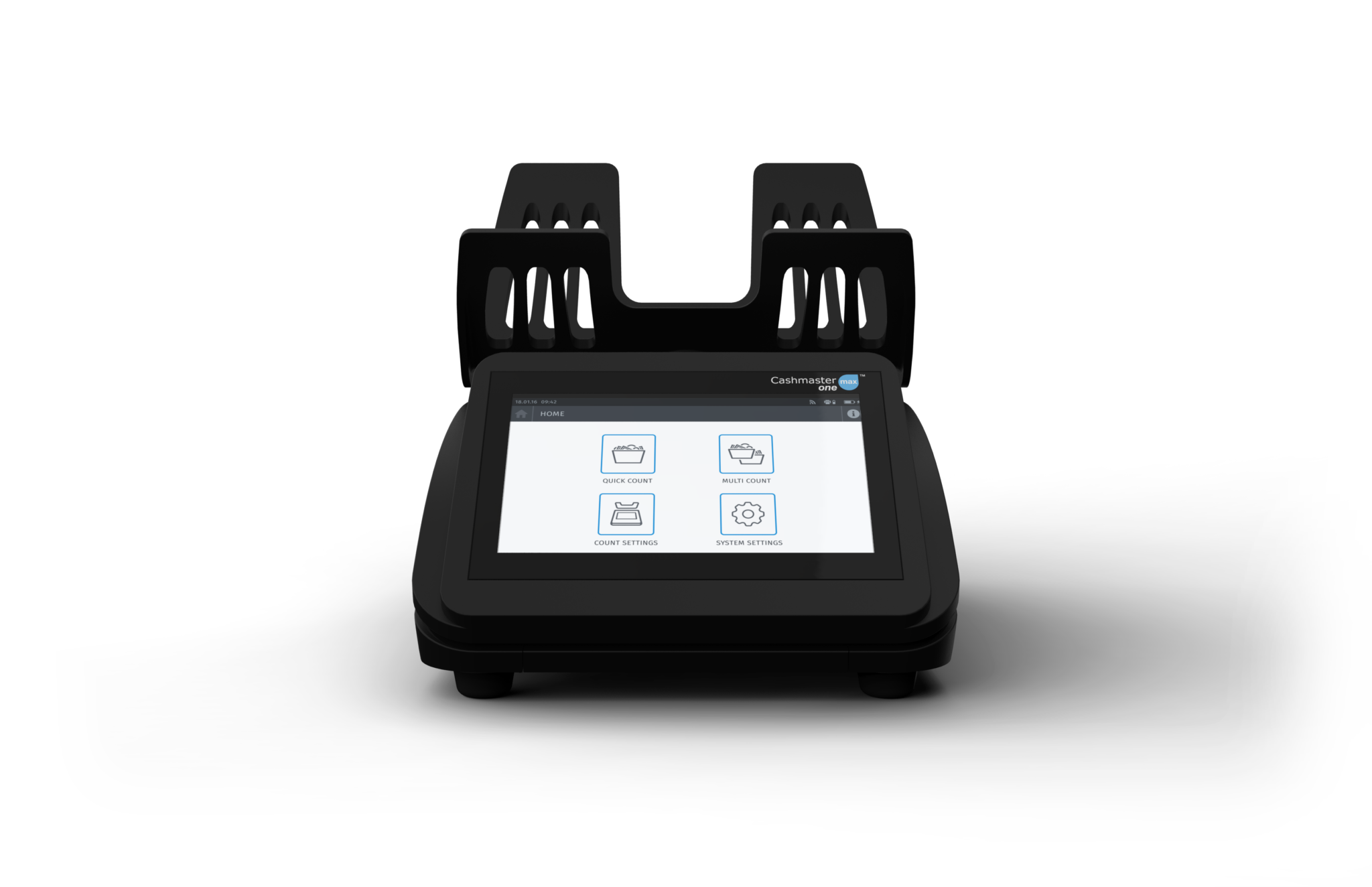
    Cashmaster Asia today announced the Introduction of Cashmaster QR-Connect, a QR code application providing enhanced software functionality for its Cashmaster One range of count-by-weight cash counting devices that offers an innovative, simple solution to integrating with back office or POS systems. When installed, count data is presented as a QR code on the display of the Cashmaster One device that can be scanned by a standard POS scanner or the camera of a mobile/tablet device.

    The count data is instantly transferred to the POS or other system. The QR code avoids the need for USB or ethernet cable connectivity between the POS and the Cashmaster Cash counter – effectively providing wireless transfer of the cash count (including vouchers/coupons in addition to notes and coins) as well as other information for process traceability, such as cashier ID and till ID.

    In a connected world, a deeper level of integration and seamless transfer of data to the POS is a growing requirement for Cashmaster’s clients. Its customers are looking to remove multiple levels of manual processing of data across their businesses in order to: reduce opportunities for errors; speed up the processing of data; give more real-time information that businesses can use to make better, faster decisions; and provide greater accuracy and accountability to their enterprises. Integration can be seen also as a key component in a loss prevention strategy.

    No matter the level of operation, these solutions provide data in a format that can be easily digested by cash management and analytics programs for big, medium or small companies. As competition increases, the rewards of deploying Cashmaster One and Cashmaster QRConnect can show directly in bottom line improvements. Gordon McKie, Group CEO of Cashmaster, commented, “Companies are under intense pressure to maximise income and improve efficiencies, while at the same time motivating staff. It’s a complex dynamic that Cashmaster understands; it has also been a powerful imperative for us in designing the intuitive technology for cash management that helps clients achieve those goals.

    “Solutions can be tailored to customers’ specific needs, from simple off-the-shelf tools requiring minimal customer resources to implement, to working with customers’ IT teams in providing more complex solutions. With a proven quick return on the initial investment to boot.”

    Cashmaster is a global company that specialises in the design and manufacture of count-by-weight cash counting devices using the most advanced touch-screen technology. The company has more than 30 years’ experience in creating innovative and reliable cash handling solutions for a wide range of international clients including supermarkets, convenience stores, retail, banking, fast-food restaurants and coffee shops.

    Website: www.cashmaster.com

    All trade enquiries for Cashmaster One:

    Tel (Hong Kong): +852 9334 8578; E-mail: jcheung@cashmaster.com

    Tel (UK): +44 (0) 1383 416 098; enquiriesasia@cashmaster.com


  • APAC telcos to have 477m 5G subs by 2023

    APAC telcos to have 477m 5G subs by 2023

    Asia-Pacific’s mobile operators are expected to have a combined 477 million 5G subscriptions by 2023, according to GlobalData.

    In a new report,  the research firm said that it expects the first 5G service launches by operators in the region next year.

    Total mobile users in Asia-Pacific are meanwhile on track to reach 2.87 billion by the end of the year, growing to 3.3 billion by the end of 2023, for a CAGR of 2.8%.

    Subscription growth will be driven by the expansion of wireless networks in underserved markets, GlobalData predicted.

    Meanwhile 4G will become the dominant mobile technology by share of subscriptions this year, outnumbering 2G for the first time.

    The total LTE market share is on track to nearly double by the end of the forecast period in 2023 driven by continuous expansion of LTE networks by operators in the region.

    Data services revenue is meanwhile predicted to account for 60.3% of total mobile service revenue generated by operators in the region between 2018 and 2023.

    GlobalData has also estimated that MVNOs in Asia-Pacific have around 194 million subscribers, accounting for 4% of the total market.

  • DHL Hong Kong Air Trade Leading Index Q2 2018

    DHL Hong Kong Air Trade Leading Index Q2 2018

    The DHL Hong Kong Air Trade Leading Index has published its results for Q2 2018.

    Highlights of the DTI Q2 2018 include:

    • The overall trade outlook for Q2 2018 had a slight downward adjustment

    amid concerns over escalating trade conflict between the United States and

    China. Despite this, the latest DTI survey found that there are limited concerns

    about air trade and overall outlook for air trade is more positive, compared to

    the same period last year.

    • Outlook on air imports remains optimistic despite a modest dip from the

    previous quarter.

    • Air exports index dropped and is predicted to encounter challenges. Market demand has gained strength and turned positive in the Americas, but is countered by issues in Asia Pacific and Europe. • The Hong Kong government is planning to use its financial surplus to improve residents’ livelihoods. It is generally believed that this development will boost air import demand

    The DHL Hong Kong Air Trade Leading Index report is available at u.hkpc.org/dti_eng.

    The first indicator of its kind in Hong Kong, commissioned by DHL Express Hong Kong and compiled by the Hong Kong Productivity Council, the DHL Hong Kong Air Trade Leading Index aims to provide a forward looking perspective on overall air export and import trade volumes by analyzing key attributes of business demand.

  • APAC cloud video collaboration market booming

    APAC cloud video collaboration market booming

    New business models and advances in cloud computing capabilities are driving adoption and expansion of the Asia-Pacific cloud video collaboration market, according to Frost & Sullivan.

    Cloud video conferencing services grew a strong 43.1% in 2017, and the total video collaboration market is on track to grow at a CAGR of 11.3% over the next five years, the research firm predicts.

    But while newer and agile cloud services are allowing providers to fuel the direction of next-generation video conferencing, a complete overhaul of business models will be required for video conferencing device vendors to match pace with evolving market trends.

    “Cloud, mobility, and innovative use cases are set to drive new growth opportunities within the Asia-Pacific video collaboration market with cloud penetration rates to be around 30% by 2022,” Frost & Sullivan Research Manager Jesse Yu said.

    “Vertically customized solutions and video analytics will become strong areas for differentiation and new growth opportunities.”

    Yu recommends cloud vendors looking to gain a competitive advantage focus on product innovation to support compatibility with Skype for Business or Cisco Spark and offer a flexible approach to cloud services.

    Providers should adopt agile business models that can target SMEs and mid-market customers, pursue collaborations with local telecoms operators on specific industry verticals and use cases and move to reduce bandwidth usage, complexity and costs to improve the user experience.

    “Furthermore, players should explore different strategies to enter the market; for example, local channel partnerships, all-in-one UC/collaboration bundles, freemium deals, eCommerce, and free trials. This will enhance their customer base and reinforce the advantages of video conferencing,” Yu said.

  • Singtel, VMware to accelerate DX in APAC

    Singtel, VMware to accelerate DX in APAC

    Singtel has entered a partnership with VMware International to set up a Digital Transformation Foundry in Singapore.

    The new facility will be designed as a virtual sandbox for customers to conduct proof-of-concept experiments aimed at bringing digital solutions to market more quickly.

    Enterprises will be able to test their solutions in a hybrid cloud environment before deploying them across the organization.

    The companies will initially focus on providing a suite of four cloud services aimed at allowing customers to modernize their data centers, integrate public and private clouds, improve information security and develop cutting edge digital workspaces.

    These include a private cloud service that aims to provide similar agility and scalability to public clouds, a hybrid cloud service designed to facilitate seamless application mobility, disaster recovery and migration across multiple clouds, and a multi-cloud managed security service.

    Singtel and VMware also plan to establish similar cloud foundries in Australia and Hong Kong in the future.

    “Digitalization lies at the heart of most companies’ transformation. Many companies share the need to migrate to and operate in the cloud, get their networks software-driven in order to create workplaces of the future,” Singtel CEO group enterprise Bill Chang said.

    “The Foundry will empower customers to implement an integrated cloud solution with ease. We will help them design, secure and deploy cloud-enabled solutions, in short, customize the flexible infrastructure they need to accelerate digital transformation, adopt new and disruptive technologies, and boost competitiveness.”

  • APAC companies reaping the benefits of IoT

    APAC companies reaping the benefits of IoT

    Companies across Asia-Pacific are already seeing the benefits of IoT, according to a new report conducted by Forbes Insights.

    Sponsored by Hitachi Vantara, the report found that 76% of APAC companies are operating IoT programs that generate revenue while 60% agree that IoT programs are generating data that is very useful to their business. As a result, 88% expect to see increases in their IoT budgets over the coming fiscal year.

    “Across the Asia Pacific region, it is clear that executives see the value in IoT initiatives,” Forbes Media chief insights officer Bruce Rogers said.

    “With 70% stating that they see IoT as either important or very important to their business, it is fast becoming a competitive differentiator that will affect almost every industry.”

    The report also reveals that 70% of companies in the region believe IoT is important or very important to their current business, and 87% believe IoT will be important to the future of their business. Of all emerging technologies, executives in Asia Pacific believe IoT, artificial intelligence (AI) and robotics will be the most important.

    Nearly three quarters (72%) of respondents say their company has significant or pilot IoT programs in operation, and 11% say that IoT programs are already a major contributor to their business.

    When building out IoT capabilities, companies say their greatest challenges are keeping the IoT secure (31%), ensuring cross-department cooperation (31%) and availability of skilled staff (31%). The inability to present a compelling return on investment (30%) and integration of disparate data (28%) are other significant challenges.

  • Mobile now preferred channel for Citi APAC clients

    Mobile now preferred channel for Citi APAC clients

    Citi has announced that mobile banking has become the preferred channel for its consumer clients in Asia Pacific.

    The bank said that during 2017 mobile banking overtook other digital channels to become the preferred channel used by Citi’s Asia Pacific clients. Mobile use at Citi has surged by 48% in the last 12 months, making it the fastest growing digital channel at Citi.

    Digital is also growing rapidly as a source of new business at Citi. Digital acquisition in Citi’s Credit Cards and Loans business grew 57% year-on-year, and digital lending now accounts for 40% of total consumer loans fulfilled by Citi in the region.

    This growth has been underpinned by Citi’s digital investments and growth in partnerships on leading digital ecosystems.

    “At Citi our goal is to deliver remarkable banking experiences to our clients wherever they are. We have been transforming our business to be simpler, faster, scalable and digital. The growth we are seeing in mobile and digital underlines the progress we are making in being increasingly relevant where are clients need us to be,” Citi said head of global consumer banking Asia Pacific and EMEA Anand Selva said

    Citi has digital credit card partnerships with leading players in the region including Amazon, Grab, Lazada, Expedia, and Airbnb. Citi also recently partnered with Facebook to launch its first banking chatbot on the Facebook Messenger platform in Singapore. Giving customers real-time information on their accounts, transaction details and rewards points balances, Citi’s chatbot will be rolled out across the region over the next few months.

    The bank is already active in a number of leading social messaging platforms in Asia Pacific including WeChat in China and LINE in Thailand. Citi also recently reached a major milestone with three million customers having registered to use its voice biometric authentication.

    Across the region, Citi’s digital banking channels and servicing capabilities continue to see strong growth in customer engagement.

    The Asia Pacific Global Consumer Bank’s focus on transforming its business continues to yield positive results. For the third quarter of 2017, the business reported a 5% increase in revenue year-on-year to $1.87 billion, representing its fifth consecutive quarter of revenue growth in the region and making it the fastest growing consumer business for Citi globally.

    A total of 17 out of Citi’s 19 Consumer Banking markets globally are now located in the Asia Pacific and Europe, Middle East and Africa (EMEA) regions.

  • APAC leading global online payments boom

    APAC leading global online payments boom

    Asia Pacific is at the forefront of a global trend toward increasing complexity in the online payments market, according to research from payments company Worldpay.

    The research found that consumers across APAC increasingly prefer to pay online via alternative payment methods such as e-wallets, bank transfers and cash on delivery. The annual Global Payments Report states that the Asia Pacific e-commerce market will grow by an average of 12% annually, and is set to be worth $2.1 trillion by 2021.

    Alternative payments are cementing their place at the heart of online shopping in this region – echoing a global trend toward fragmentation in online payments, as options like mobile wallets, pre-paid cards and bank transfers continue to steal market share from more traditional payment methods like credit and debit cards.

    The report found that in China – the world’s largest e-commerce market – most consumers prefer to pay with an e-wallet such as Alipay, Tenpay or WeChat Pay. E-wallets now account for 62% market share in China. Meanwhile credit cards are currently the second most popular payment method for online shoppers (10%), and bank transfers are set to overtake credit cards by 2021, increasing their market share to 14%.

    This growing preference for alternative payments can be seen amongst online Asian shoppers:

    • In Hong Kong, e-wallets are catching up to credit cards, and are set to make up more than a quarter of the online payments market (28%) by 2021.
    • In Singapore, while credit cards are overwhelmingly the payment method of choice in 2017 (66% market share), by 2021 both bank transfers and e-wallets are set to nearly double in share; from 11% to 21% and 13% to 21%, respectively.
    • In Australia, bank transfers are set to overtake credit cards by 2021, increasing 23.3 percentage points to become the most popular payment method, with a whopping 43% of the market.
    • In India, e-wallets (26%) and bank transfers (24%) are already the most popular payment methods, and by 2021 credit cards are expected to decline from 12% to 8% market share.

    Phil Pomford, general manager for Asia Pacific at Worldpay, commented that consumers are leading the charge in demanding more opportunities to use alternative payment methods online.

    “While there are significant variations in how consumers in different Asian markets prefer to pay, a constant is that they are shifting away from more traditional options like credit and debit cards, and instead choosing e-wallets, bank transfers and cash on delivery,” he explained.