Tag: app

  • Fitbit partners with Snapchat to make Apple Watch owners jealous

    Fitbit partners with Snapchat to make Apple Watch owners jealous

    Fitbit may have joined the “true” smartwatch game a bit late compared to Samsung or Apple, but after a somewhat slow start in this potential-brimming market, the Versa seems to have put the company on the right track. The world’s second-largest smartwatch vendor took quite a risk by developing its wearable software from scratch rather than adopting Google’s Wear OS, but this proprietary platform continues to grow at a healthy pace in terms of capabilities and ease of use.

    Of course, everyone needs high-profile partners to boost the appeal and trendiness of today’s wearable devices, and Fitbit’s newest ally in its fight against Apple and Samsung is as high-profile as they come. We’re talking about Snap, the company behind one of the world’s most popular social networks.

    Snapchat users who just so happen to own a Fitbit Versa, Versa Lite, or Ionic as well can now connect their Bitmoji account to their smartwatch to display their “personal emoji” on their wrist. For those unfamiliar with the Bitmoji app, we should probably mention the experience is very similar to what Apple offers with Memoji and Animoji on iPhones and Samsung’s own AR Emoji experiments for recent high-end Galaxy handsets.

    Obviously, the main difference is you can have fun with Bitmoji on both Android and iOS, as well as on Fitbit devices starting today. Your cartoon avatar will show up on the “first-ever” Bitmoji clock face (once you download it from the Fitbit App Gallery, that is), aiming to motivate you to be more active, help you create healthier habits, and celebrate personal achievements.

    While unlikely to be as expressive as its smartphone counterpart, your wrist Bitmoji promises to support more than 50 fun clock face variations, changing throughout your day to reflect your activity and progress towards your fitness goals. For instance, your personal emoji will wave hello to start your day, dance with your alarm clock to annoy help you wake up in a better mood, throw confetti after you hit your daily step objective, meditate when you’re totally relaxed and zen, carry an umbrella if there’s a chance of rain, and much more.

    That definitely sounds like something Apple Watch and Samsung Galaxy Watch owners could also appreciate, but for the time being, all we can do is wait and see if there are any Memoji or AR Emoji expansions planned for the near future.
  • WhatsApp Business officially rolling out for iPhone

    WhatsApp Business officially rolling out for iPhone

    We reported two weeks ago that WhatsApp Business might be finally coming to iOS devices, as many users from several countries found the app listed in the App Store. Initially launched on Android, WhatsApp Business is now officially rolling out for iPhone, the company announced in a blog post

    Of course, the app is available for free via App Store, but you’ll have to create an account before you can take advantage of all the business-centric features it has to offer. Keep in mind that WhatsApp Business will first be available in Brazil, Germany, Indonesia, India, Mexico, the UK, and the United States, but WhatsApp said the app will be made available worldwide in the coming weeks.

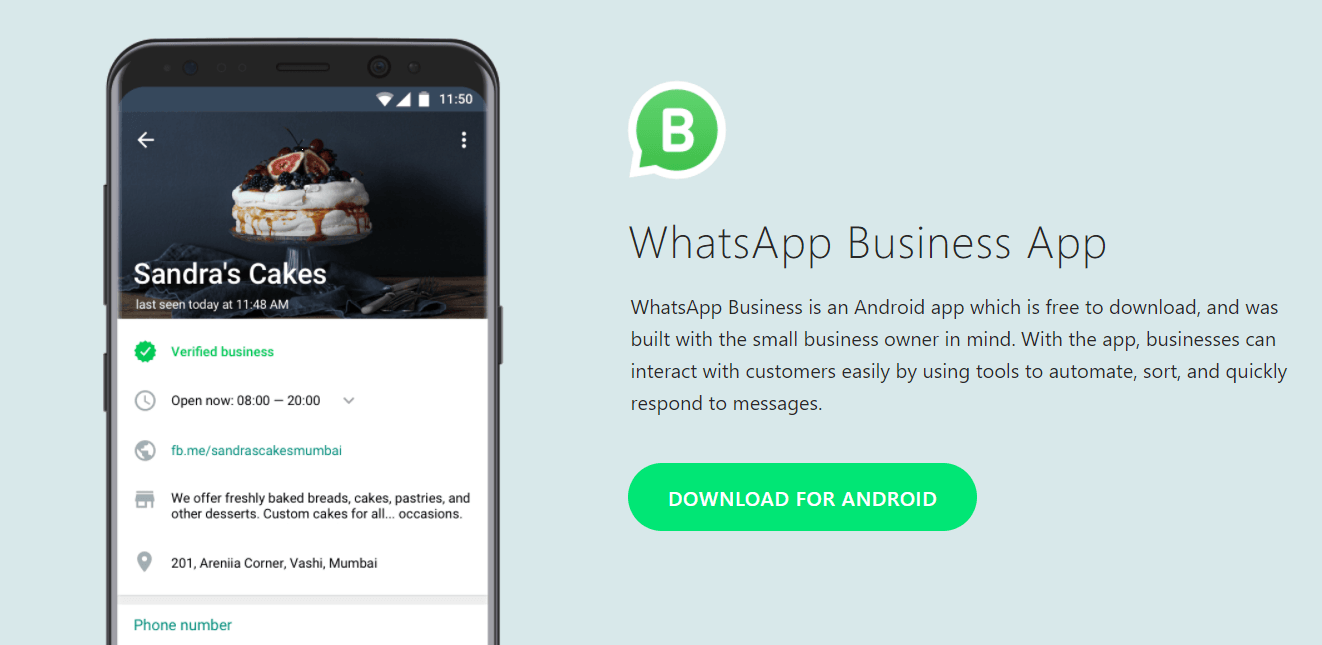
    With WhatsApp Business, you’ll be able to share useful information about your business, including its description, email and store addresses, as well as website. Also, thanks to the integrated messaging tools, you’ll be able to respond to customers very easy via quick replies, greeting messages, and away messages.

    Last but not least, WhatsApp Business is a cross-platform service, which means you’ll be able to chat from your desktop to manage conversations and send files to customers, not just from your iPhone or Android smartphone.

  • Skype automatically answers calls on Android due to a bug

    Skype automatically answers calls on Android due to a bug

    If you’re using Skype for your day to day communication with friends, co-workers or business partners, there’s a high chance that you’ve been affected by a nasty bug that makes the app automatically answer all calls on Android devices.

    Microsoft is probably the only one that can tell for sure when exactly the issue started to manifest for the first time, but reports go back as far as January, probably soon after the developers updated the app. Sadly, it appears that the issue now affects even more users, as we’re seeing lots of recent reports posted on Microsoft’s support forum.

    For the time being, there’s no workaround to prevent Skype from answering calls that you want to ignore, so the only way to avoid the issue is to uninstall the app until Microsoft fixes it. Not even having the “Answer incoming calls automatically” option disabled will not stop Skype from doing just that.

    The good news is Microsoft has already identified the issue and managed to patch it, but only in the latest Skype preview app. If you want to continue to use the app without being affected by the bug, you can download the beta until the final version gets updated later this month.

  • Caltex putting digital foundations in place via App

    Caltex putting digital foundations in place via App

    Caltex Australia is investing heavily in new technology to make transactions at its petrol stations and convenience store sites more simple and seamless and enhance the customer experience as it expands into new areas, such as fresh food, healthy fast food, parcel collection and other services. The convenience retailer on Tuesday laid out a vision for the business that includes enabling customers to pay for fuel and pre-order coffee via app and updating prices and promotions in-store using digital signage. It is also testing use cases for payment via facial recognition and number plate recognition.

    Caltex believes these innovations will give it a competitive advantage in the lucrative $8 billion and growing convenience market going forward.

    The company’s innovation team, based out of the “C-lab”, was able to deliver a prototype of mobile checkout and mobile payments within weeks of the visit to China, and is now working on selecting appropriate sites for live trials, Da Ros said.

    This is just one example of the digital-first mindset the company has embraced through its work with technology partner, Microsoft.

    “It’s not about isolating a digital lab or a digital strategy, but instead it’s about ensuring seamless connectivity between key systems, processes, operational workflows and customer touchpoints – everything is connected,” Da Ros said about the company’s approach to innovation.

    This customer-first approach has led Caltex Australia to consider how it might enter new areas, as including fresh food, healthy fast food, parcel collection and a range of other services, as Australian demographics shift to two-income, time-strapped households.

    “The customers of the future will log in to their Caltex app, arrange to pick up the dry-cleaning and select something for dinner. They then drive into the Caltex site and an attendant will come to the car with everything the customer has ordered – including their favourite coffee,” Caltex CEO Julian Segal told.

    The technology investment comes as Caltex undergoes a significant transformation to position itself for growth in the highly competitive convenience market. This includes buying back hundreds of franchisee retail sites, growing retail and convenience revenues, strengthening fuel loyalty and embedding a digital-first mentality across the entire organisation.

  • Google yanks controversial app from the Play Store

    Google yanks controversial app from the Play Store

    Axios revealed last week that Google has removed the Living Hope Ministries app from the Google Play Store. Those who installed the app could listen to recordings of sermons and view texts of devotionals for men, women, parents and their children. However, despite the Ministry’s denial, the app was also known for offering gay conversion therapy. This is a controversial method that some (including Vice President Mike Pence) believe will convert gay and bisexual men and women to a heterosexual orientation. The conversion is done by a brainwashing-like technique that uses psychology and religious belief to pound messages into subjects over and over again. Some say that this technique is harmful, ineffective, and could lead to depression, drug use and suicide.

    Meanwhile, Google’s action came after 142,212 people signed a petition on Change.org that called for the app’s removal. Several LGBTQ organizations also demanded that the app is removed. But Google did not respond immediately; it took months of protesting before the company finally followed the lead of other tech firms that had already removed the app from their storefronts such as Apple, Microsoft and Amazon.

    “It took months of activism by Truth Wins Out and Change.org, and today Human Rights Campaign, to get Google to pull a conversion therapy app. I called Google out in the press about this in January. They took no action. Credit is due for finally acting — but Google now needs a serious internal audit examining why it delayed so long.”-Sen. Brad Hoylman.

    “After consulting with outside advocacy groups, reviewing our policies, and making sure we had a thorough understanding of the app and its relation to conversion therapy, we’ve decided to remove it from the Play Store, consistent with other app stores.”-Google

    Before the Human Rights Campaign fought for the removal of the app, it had given Google a perfect 100% score for its annual Corporate Equality Index. The score was based on Google’s offering of health benefits for same-sex couples, and for providing health care to Transgender employees. However, the organization pulled its support for Google because it would not originally remove the Living Hope Ministries app.

  • Two execs quit ride-hailing firm Go-Viet

    Two execs quit ride-hailing firm Go-Viet

    Go-Viet has confirmed that its general director and deputy general director have quit their positions. General director Nguyen Vu Duc and deputy general director Nguyen Bao Linh have resigned from their positions, the Vietnamese ride-sharing firm announced Friday.

    The two would continue to work as advisors for Go-Viet and its Indonesian counterpart Go-Jek from Vietnam, while the management of Go-Viet’s day-to-day work will be handled by the company’s remaining leaders, it said.

    Phung Tuan Duc, Go-Viet’s managing director, said the company would continue working closely with Duc and Linh to help develop the platform.

    According to Deal Street Asia, the news of Duc and another of Go-Viet’s senior directors resigning was already announced internally earlier this week. The news site also claimed the two had demanded large sums of money in compensation upon resigning, but the company did not comment on this.

    Nguyen Vu Duc graduated from Harvard University, the U.S., with a master’s degree in business administration and worked for nearly a decade at a major bank in Vietnam. In 2014, he helped deploy ride-hailing firm Uber’s services in Vietnam and went on to launch a fintech firm in 2015-2018.

    Duc eventually returned to the ride-sharing market as co-founder and CEO of Go-Viet, which began operations last August. At press meetings, he has said that Go-Viet was a Vietnamese startup with funding and technology support from Go-Jek.

    Duc and Linh’s resignations have come at a time when Go-Viet has been stagnating in all its services – ride-sharing, food delivery and package delivery. Since the start of this month, the company has cut its drivers’ revenue to 20 percent, prompting many drivers to consider switching to another ride-sharing service.

    Meanwhile, its main competitor Grab has been expanding its food delivery service and its cashless payment service GrabPay by Moca, which now has new features allowing users to pay electricity, water and phone bills.

    The Be Group, the latest ride-sharing market entrant in Vietnam, has announced it has recruited over 15,000 drivers in just three months and is planning to expand its presence to 22 provinces and municipalities this year.

  • Subway Launching online ordering platform

    Subway Launching online ordering platform

    Fast food chain Subway is planning to launch a mobile app and website to support online ordering by mid-2019. A Subway spokesperson told that the company is in the final stages of testing the platform before launching it in Australia.

    “Our app will allow our guests to order their favourite sub, salad or wrap from the convenience of their office or home, for collection at their local Subway restaurant,” the spokesperson said.

    “We are also looking at further opportunities to integrate our ‘Fresh’ sites with both social media and our app in the near future.”

    Subway recently unveiled a brand refresh to modernise its offerings and a new website that highlights key supplier stories and educates customers about the chain’s fresh ingredients. According to Subway, the “Real Fresh” website aims to give guests a look behind the scenes at some of the 80 local growers and suppliers who support the business from all over Australia.

    Ben Miles, senior manager for brand marketing at Subway, said the sandwich chain is a strong supporter of Aussie produce.

    “We’re committed to supporting farmers, growers and producers around the nation,” Miles said.

    “We wanted to shine a light on the incredible work they do, bringing the fresh factor to our restaurants multiple times a week.”

    Miles said many of the company’s customers are unaware that their fresh vegetables are sliced and prepared in-restaurant before serving, so this information is also shared on the site.

    “Subway was the pioneer of freshly prepared sandwiches,” he said. “We estimate we’re one of the largest national purchasers of fresh produce in Australia.”

    “Our guests understand that the provenance of our ingredients is important, and we’ve been making considerable changes to our menu to deliver the best possible quality ingredients for our subs, salads and wraps.”

    Subway supply partners include local Echuca tomato business, Kagome and Minto-based bakery, Suprima. It has also partnered with South-East Queensland farms.

    Subway’s Real Fresh website was recently awarded a Gold Ava Digital Award, an international competition recognising excellence in website design.

  • Majority of online shoppers check brands on Amazon

    Majority of online shoppers check brands on Amazon

    Most online shoppers compare a brand or retailer’s site to Amazon before purchasing something, according to a study released by Episerver.

    Episerver’s third annual Global Consumer Study shows that 87 per cent of online shoppers compare what they find on a brand or retailer’s site to Amazon before completing a purchase. Ninety-seven per cent won’t complete a purchase if they see incorrect or incomplete content on a brand’s website and/or mobile app.

    “Product education, personalised content and site search, purchasing ease, promotions on multiple channels, peer reviews and performance of the site itself can all make a difference,” said Ed Kennedy, senior director of Commerce at Episerver.

    According to Episerver, marketplaces like Amazon reign supreme due to their wide variety of price options, product selections and shipping features.

    The study, which surveyed 4500 online shoppers in eight countries, also showed that nearly half of online consumers, 46 per cent, said having too many options online has prevented them from making any purchase at all.

    Almost half of the people surveyed start their online purchase journey at an online marketplace, Amazon included, Kennedy said.

    Sixty per cent of consumer prefer marketplaces for their price options and over half, 58 per cent, for their product selections.

    “Knowing only a small fraction of customers do not use Amazon to compare products can certainly be a cloud over a retail operation seeking engagement and conversions on their digital properties,” Kennedy said.

    “However, knowing consumers’ mindsets that casual swiping can turn into committed shopping, retailers can drive interest and ultimately, sales, by lessening the burden of choice and doubling down on experience-driven commerce.”

  • Vietnam ride-hailing app FastGo to hit Singapore streets

    Vietnam ride-hailing app FastGo to hit Singapore streets

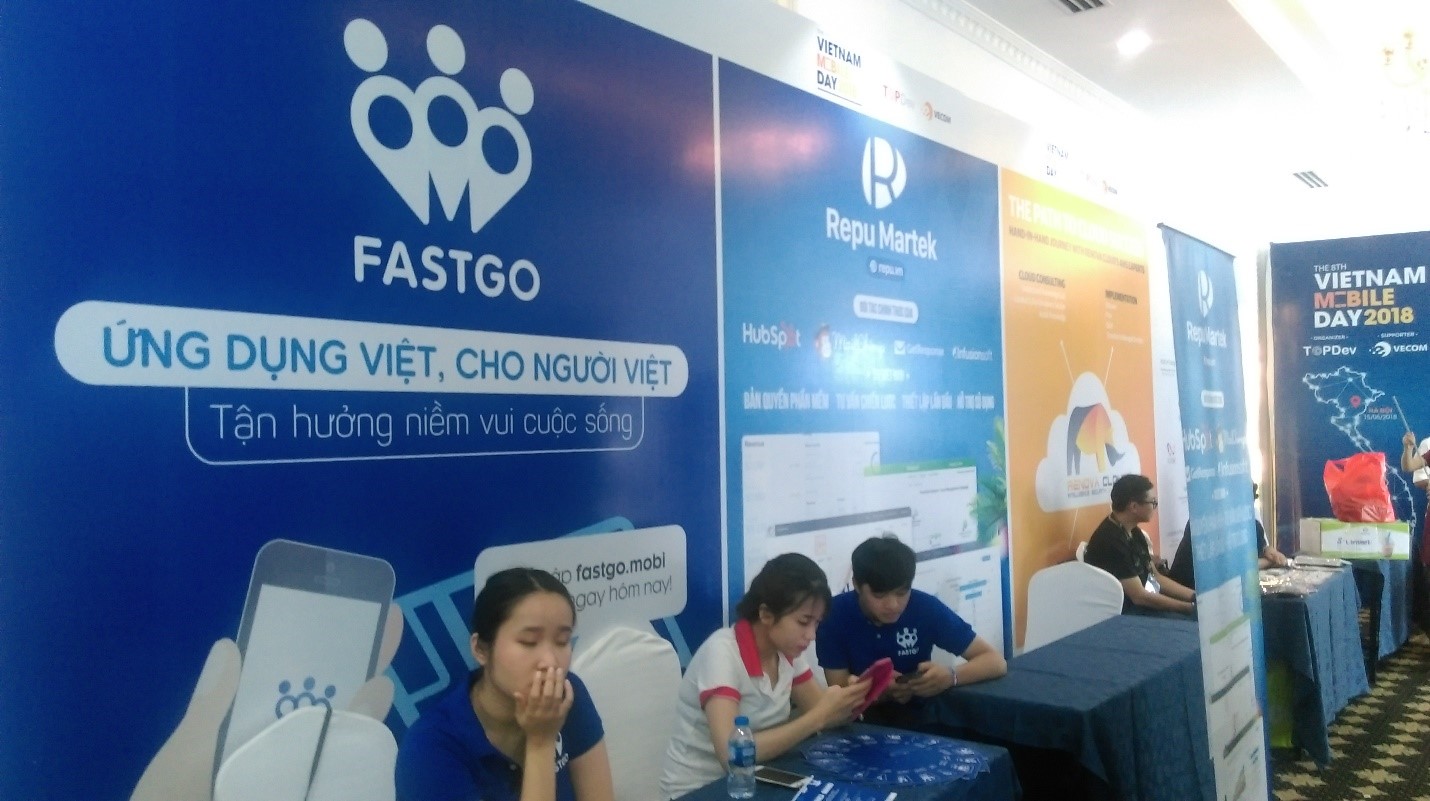
    Vietnamese ride-hailing firm FastGo is set to launch Singapore operations in April as part of its regional expansion plans. The nine-month old Vietnamese start-up has announced that drivers will be able to register on its ride hailing application from April 1, and customers can use the service from April 30. Diep Nguyen, country manager for FastGo Singapore, said the company’s fleet size will be at least 3,000 cars.

    Singapore is the third country in which FastGo will operate, after Vietnam and Myanmar. The firm is expected to face fierce competition from market incumbents including  Singapore’s Grab, Indonesia’s Go-Jek, as well as local startups Ryde and TADA.

    FastGo, which is part of Vietnamese technology startup NextTech Group, has plans to launch in five other countries in the region, including Indonesia and the Philippines, by the end of 2019.

    While FastGo has not yet publicised fares, but the ride-hailing app will not charge peak period surcharges, and customers can tip drivers. FastGo aims to undercut competitors like Grab and Go-Jek, who collect 20 percent of ride fares from drivers, by charging them a fixed daily subscription fee of $5 if a driver’s income exceeds $30 a day.

    However, an associate professor at the Singapore University of Social Sciences, as saying “another small entrant” will not make a difference to the local ride-hailing market, unless the new player is financially backed by a strong sponsor or a well-known Singaporean firm.

    “Other than GoJek and Grab, the other (existing) players have very small market share and have difficulty making much impact locally. The market is easy to enter but it’s very hard to get a substantial market share,” he said.

    Founded in April 2018, FastGo Vietnam JSC launched its service after Uber’s exit from Southeast Asia last June. With almost 60,000 drivers onboard, the company claims to be the second most popular ride-hailing firm in Vietnam, following Grab. After receiving an undisclosed sum in a Series A investment from venture capital platform VinaCapital Ventures in August last year, FastGo is aiming to raise another $50 million in its Series B investment round over the next few months.

    According to the company’s statements, FastGo will diversify its services to include food delivery and financial services.

  • Grab now has more rivals than ever before in Vietnam

    Grab now has more rivals than ever before in Vietnam

    From an e-hailing app, Grab has made great steps forward, providing many different services. Most recently, it started the payment service GrabPay and lending service Grab Financial. The consumer lending market in South East Asia is very large. As estimated by the World Bank, about 2 billion people in the world cannot access bank services, and most of them are in Asia Pacific.

    The non-cash payment market, according to Grab, is worth $500 billion in South East Asia. An analyst commented that Grab is wise taking a ‘roundabout’ approach to consumer lending (it conquered the transport market first before aiming for the consumer credit market).

    Consumer lending is a fertile business field for Chinese e-commerce firms. The firms offer online payment apps to users to ‘learn’ about their financial capability.

    Grab, as an app, quickly attracted users, especially investors. Just within six years, Grab became an unicorn company, i.e. an unlisted technology firm with valuation of $1 billion and higher, in South East Asia. Analysts estimate that Grab is valued at $6 billion.

    The challenges

    The total number of Grab downloads has reached 95 million all over South East Asia. This could serve as the launch pad for it to conquer the consumer lending market.

    “GrabPay e-wallet will be used for both transport and food delivery services, two of the most used services in South East Asia,” said Jerry Lim, director of Grab Vietnam.

    However, the analyst said, by expanding its business, Grab would have to compete with more rivals who are ‘powers’ in their fields. In online payment, for example, it will have to compete not only with AirPay (Sea) and Alipay (Alibaba Group), but also with local firms such as ZaloPay (VNG) and MoMo.

    In Indonesia, Grab bought an e-commerce platform, Kudo, in April 2017. Grab believes that this is the factor which can help expand GrabPay. However, in Vietnam, Grab’s two big rivals – Sea and Alibaba — both have strong support from two popular e-commerce floors – Shopee Vietnam and Lazada Vietnam.

    Similarly, GrabFood has rivals in the food delivery sector, where Sea’s Now, which inherited the large custom from Foody, is the leader.

  • Instagram users can now buy items from ads inside the App

    Instagram users can now buy items from ads inside the App

    Instagram is taking its Shopping ads one step further by making it possible for people to buy the products in the ads without leaving the app.

    The feature, called Checkout on Instagram, is currently being tested in a closed beta program by nearly two dozen businesses and is only available to users in the US.

    Retail News has asked for details about if and when the feature will be available outside the US but had not received a reply at the time of this writing.

    Adidas, Burberry, Dior, H&M, Michael Kors, Nike, Outdoor Voices, Uniqlo and Zara are among the 23 fashion, beauty and accessories brands now rolling out the feature. Others will be added in future, according to Instagram, which is owned by Facebook.

    When users tap on a product in a Shopping ad from one of these businesses, they now see a “Checkout on Instagram” button. By tapping the button, they can select the size and colour of the item they want and enter their payment and shipping details to purchase.

    Users receive notifications about shipment and delivery within the Instagram app, and the platform saves all their information for future purchases.

    In the past, if users wanted to purchase a product linked to a Shopping ad, they were redirected to the brand’s website. The new feature removes this step and – crucially for Instagram – keeps consumers in the app.

    “Social selling is really taking shape both in Australia and globally and it’s great to see Instagram leading the way through the next stage of the social selling journey. Giving consumers the option to complete a purchase right then and there in the app will simplify the shopping process and allow brands to connect more easily with shoppers,” said Jordan Sim, group product manager at BigCommerce, an e-commerce platform that has been active in offering integrations with Shopping on Instagram to its users.

    “We’ve seen our merchants both globally and locally in Australia have a great deal of success using BigCommerce’s integration with Shopping on Instagram and are looking forward to unlocking the power of this new integration for our Aussie retailers in the near future. We know the value of simplifying the checkout process to drive sales and this new function on Instagram will facilitate just that.”

    Many brands have said that Shopping ads drive sales, but there’s a trade-off: visibility and control over their customer data. As Instagram continues to make the purchasing process more seamless – that is, takes control of the process – some businesses will undoubtedly question whether the trade-off is worth it.

    It is unclear whether the Checkout feature applies to Shopping posts in Instagram Stories, or only to posts in the feed. Last June, Instagram revealed that of the 500 million people using Instagram every day, 300 million use Stories every day.

  • Relax with CooTek’s Breeze app amidst soothing sounds

    Relax with CooTek’s Breeze app amidst soothing sounds

    That riot of a trend for soul-soothing sights and sounds from our electronic devices has given birth to underload like Cardi B.’s autonomous sensory meridian response (ASMR) videos but also to a universe of apps that help us relax and sleep better. Enter Breeze, CooTek’s revamped Relax Music app that brings about a complete set of tools for your chill-out vibes or midday meditation session in the office bathroom. White or pink noises are just the beginning, as Breeze categorizes its soul trips by activity, be it traveling, trying to focus, or simply trying to nap.

    From crunchy steps in the snow through bird chirping to wheat rustling in the wind, the app’s set offers a rich variety of nature sounds tailored to your preference or specific activity. The guided meditation sessions can get you from chants to singing bowls and improve your relaxation technique further. CooTek has put significant effort in upgrading the Breeze experience from sound sets to narrated sessions tailored to specific needs which are fittingly called “Courses”.

    There are entries that teach you how to meditate if you do it for the first time, with soothing voices of English actors, in addition to female-specific relaxation techniques, next to an inventive ASMR list that includes such morning staples like a hair dryer or kitchen cleaning sounds. Breeze ran a chill-out campaign providing meditation booths at the MWC expo, and plenty of folks took the chance to relax from the show floor madness by just sitting or lying down and listening to the relaxing narrators for daydreaming guided meditation.

    Now, don’t outsource your parental responsibilities to an app, but you can also supplement tucking your offspring in with the bedtime stories category, too. It does what it says on the tin by playing fairy tales or sweet lullabies all the while you are sitting by your kids’ bed watching the process.

    All basic sections of Breeze are free and ad-supported while getting to the Premium level for a few bucks opens all sounds, removes ads and above all, gives you access to all of the guided relaxation programs that the app offers. Check Breeze out if you are in the mood for de-stressing.

  • Telenor Myanmar extends non-stop roaming to Malaysia, Singapore

    Telenor Myanmar extends non-stop roaming to Malaysia, Singapore

    Telenor Myanmar has expanded its unlimited international data roaming service to Malaysia and Singapore, one month after the launch of the new service in Thailand.

    The company’s non-stop data roaming pack offers unlimited data in the three international markets for total fees of 999 kyats ($0.65) for three days of service. Speeds are uncapped for the first 1GB per day, and then shaped to 512kbps.

    Prepaid and postpaid customers can activate the service on the MyTelenor APP, sending a message to a dedicated number, or dialing a different number.

    “We are amazed by the support we have seen on our latest roaming product for visitors to Thailand. So we decided to extend this popular service to Malaysia and Singapore which we know as the other two most frequently visited countries in Southeast Asia,” Telenor Myanmar CMO Amaresh Kumar said.

    “We have made international roaming affordable for everyone and we welcome our customers to experience the only worry-free data roaming packs that users can get in Myanmar.”

    Thanks to the connections of parent company Telenor from Norway, Telenor Myanmar now offers roaming services with 171 partner operators in 125 countries, with its 4G roaming service currently available in China, Thailand, Malaysia, Singapore, Japan, UAE, Canada, Macau, Taiwan, New Zealand, Sweden, Belgium and Norway.

    Meanwhile subscribers to 227 operators from 134 countries can use their overseas SIMs with the Telenor network in Myanmar.

  • Spotify says Apple Music has unfair advantages

    Spotify says Apple Music has unfair advantages

    The founder and CEO of Spotify, Daniel Ek, announced today in a blog post that Spotify has filed a complaint against Apple with the European Commission (EC). The executive says that when it comes to Apple Music and the App Store, the company gives itself an unfair advantage, violating EC antitrust regulations. Ek says that Apple does this through the “Apple Tax.” That is the 30% of monthly subscription fees that Apple takes on subscriptions made through its payment system.

    Ek says that because Spotify is forced to pay the “Apple Tax,” it has to raise its price in the App Store above that of Apple Music. Right now, both music streaming platforms have the same prices. That would be $9.99 a month for individuals, $14.99 a month for families with up to six members, and $4.99 a month for verified students. However, if you choose to pay your subscription fee through Apple (an in-app payment), Spotify charges $12.99 a month for individuals, $16.99 a month for families and $7.99 a month for verified students.

    Apple has released a statement criticizing Spotify for using the App Store to help it grow over the years without making any contributions to that marketplace.” The company refutes some of Spotify’s claims. For example, Apple says that it has allowed Spotify to update the app over 200 times. Apple says it rejected updates when Spotify didn’t follow the App Store rules. Apple also points out that 84% of the apps in the marketplace don’t pay it a dime, and accuses Spotify of wanting all the benefits of a free app without being free.”

    Additionally, the executive says that if it bypasses Apple’s payment system, Apple will limit Spotify’s communications with its subscribers. For example, Ek says that in some cases Apple won’t let it send emails to Spotify users who use the service on an Apple device. He states that “Apple also routinely blocks our experience-enhancing upgrades. Over time, this has included locking Spotify and other competitors out of Apple services such as Siri, HomePod, and Apple Watch.”

    “It’s why, after careful consideration, Spotify has filed a complaint against Apple with the European Commission (EC), the regulatory body responsible for keeping competition fair and nondiscriminatory. In recent years, Apple has introduced rules to the App Store that purposely limit choice and stifle innovation at the expense of the user experience—essentially acting as both a player and referee to deliberately disadvantage other app developers. After trying unsuccessfully to resolve the issues directly with Apple, we’re now requesting that the EC take action to ensure fair competition.”-Daniel Ek, founder, CEO, Spotify

    All Spotify wants, says its founder, is to be treated the same as apps that don’t pay the 30% tax such as Uber or Deliveroo. The executive says that all apps should be able to compete fairly, and Apple Music shouldn’t get an advantage because Apple owns the App Store. He adds that all App Store users should have a choice of payment systems, and not be locked into using Apple’s platform. And Ek says that all app stores should not be allowed to control communications, including marketing and promotions, between services like Spotify and its customers.

    If Apple is eventually found to have violated anti-trust regulations in the EU, it can be slapped with a fine and be forced to make some changes to the App Store.

  • The Google app hits an impressive milestone in the Play Store

    The Google app hits an impressive milestone in the Play Store

    Remember when the Google Play Store was called the Android Market? Google changed the name on March 6th, 2012. Twenty-six months later, Gmail became the first Android app to reach 1 billion installs. Since then, two other apps in the Play Store have been installed over 5 billion times-that is, until today. Google Maps and YouTube have been joined in the exclusive club by the Google app.

    Video streaming site YouTube was the first Android app to hit 5 billion downloads, and was followed this past weekend by navigation app Google Maps. Now, the Google app itself  has joined the club. Technically, there are four members if you include Google Play Services, but this is a systems app that allows an Android phone to update Google developed apps and apps from the Google Play Store.

    The three apps, YouTube, Google Maps and Google, are not only must-haves for every Android user, they are also pre-installed on every Android phone that comes with Google Play Services out of the box. When an app is pre-loaded onto an Android device, that is included in the total number of installations.

    Google has worked on expanding the features offered by each of the three apps in the 5 billion installs club. Besides offering streaming videos from amateurs, the site now includes trailers from movies and clips taken from television shows. In addition, YouTube now offers its own original programming for paid subscribers. Google Maps has added several new navigation based items, including the ability to report a crash or speed trap, a speed limit reminder, and more. It also has moved into the lifestyle category by showing places of interest to visit in your home town and locations you travel to.

    The Google app, which helps users search for websites, also reports news, sports and weather of interest to the user. A summary of the user’s schedule for the day can be seen thanks to Google Calendar integration, and a list of stock prices can be monitored. All three apps do have iOS counterparts in the Apple App Store.