Tag: app

  • Naver says its Green Dot is the future of searching

    Naver says its Green Dot is the future of searching

    Naver’s iconic green search bar may one day be a thing of the past – at least in the mobile app.

    Korea’s most popular portal site is experimenting with a new tool called the Green Dot that allows users to search for information not only by text, but also by voice, location and photos.

    The Green Dot was first unveiled last month. It is what the company calls an “interactive search” button located at the bottom of Naver’s app.

    When touched, the button opens a small window that offers various search functions like voice recognition, music recognition and recommendation on trending restaurants and bars nearby. The user can also add short-cuts to frequently used Naver services, from blogs to shopping.

    “Naver’s green search bar was developed at a time when searching online through PCs was about keywords and being linked to [web pages with] text information,” said Kim Seung-eon, the portal giant’s design head, at the Naver Design Colloquium held Friday in Dongdaemun, central Seoul. The annual event invites Naver designers to share their strategies and design insight.

    “But now with mobile, [portals] aren’t just about new information; we listen to music, reserve restaurants and use services that are closely linked to our daily lives. There are so many usages now and ways to input information. The Green Dot integrates all these; it’s the start of a new way to search and connect.”

    Kim added that the Green Dot will be the new design identity of Naver and a core function related to services coming in the future.

    The portal giant also shared the results of its first page overhaul on its mobile app.

    Last month, Naver introduced a new first page of its mobile app that left out news and trending keywords, leaving nothing but the search bar, weather information and the Green Dot.

    Its explanation was that the change was purposed to put a larger emphasis on searching, which accounts for 60 percent of why users turn on the Naver app. The change was available as a beta service.

    According to Naver, some users felt that the blank space was awkward, but the beta service had also showed meaningful results: the amount of time users spent on the app increased 15 percent and the number of searches rose 20 percent.

  • The sharp rise of Pinduoduo – What is the secret?

    The sharp rise of Pinduoduo – What is the secret?

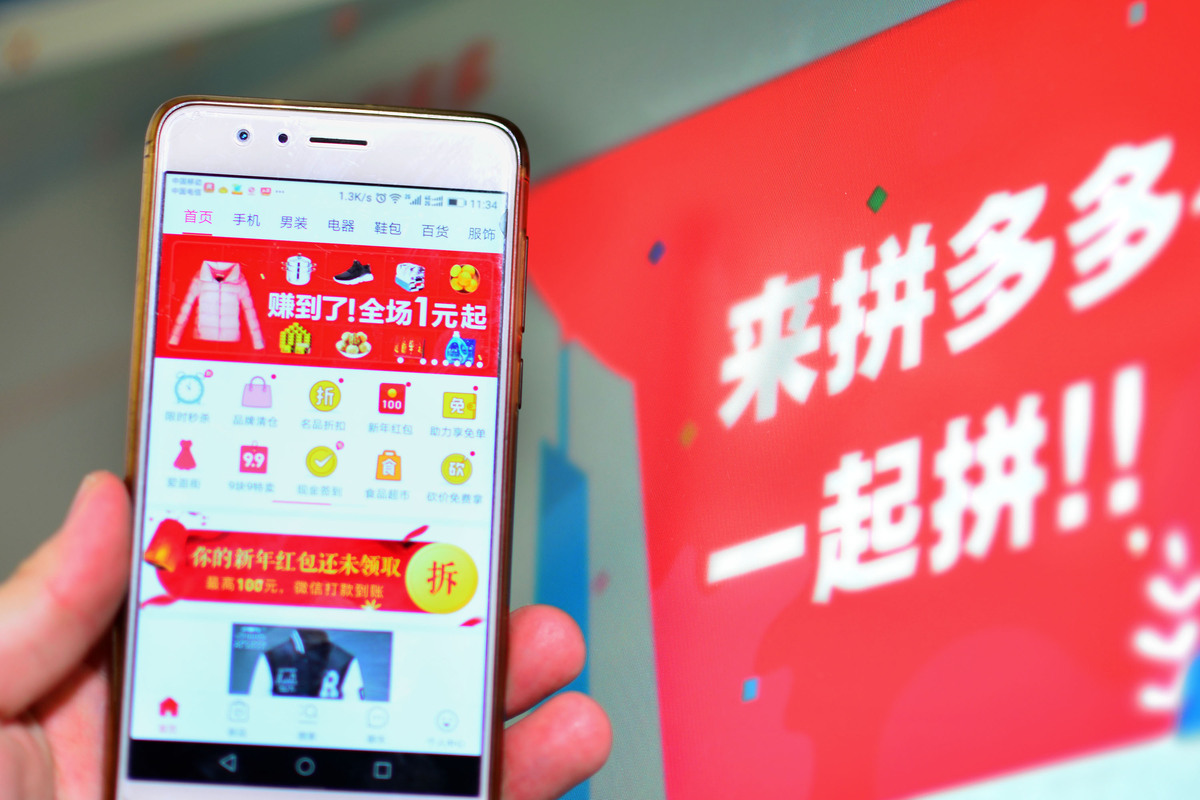
    Pinduoduo, also known as PDD, founded by the Ex-Googler Colin Huang, is currently the fastest growing app in the history of the Chinese Internet and the leading Chinese App for social e-commerce. Pinduoduo is reported to have raised a US$3 billion investment round led by Tencent Holdings, at a valuation of US$15 billion. A significant point here is the collaboration with Tecent’s WeChat app (The Chinese analogy to WhatsApp), which plays the most significant role in the functionality of the app and the way it works.

    The app has a list of techniques to push the users share it with their friends and to keep them actively using it after. Pinduodo allows users to participate in-group buying deals with their friends, mostly via Wechat. Pinduoduo can be described best with the words, viral, quick, addictive, attractive, and convenient. Also, probably the most contemporary version to online shopping, bringing into integration the most powerful tools of nowadays communication- messaging and group chats.

    The app, often used through WeChat messaging service, offers merchandise at times 20 percent cheaper than market price by letting consumers buy directly from manufacturers, cutting out middlemen, advertising and acquisition costs. Huang and his developers also used their experience to add gaming elements to the shopping experience, offering coupons and rewards.

    At the end of December 2017, PDD had more than 156.5 million users. PDD gives people a different experience than at traditional e-commerce sites like Amazon.com or Alibaba. PDD is like a digital version of shopping at the mall with friends.

    The strongest asset of PDD is that it is doing extremely well in small cities. Most of the users are price-sensitive women above 40 years old, living in small cities in China. Which gives us a clear picture – frequent purchases for the whole family.

    Pinduoduo has got a few main features:

    1. Group Buying. In order to get discounted price, find a friend to join the group buy deal.
    2. Free products. If you get enough new users to follow the Pinduoduo Official Account, install the App and sign up via WeChat login.
    3. Buy it now coupons. Unlike other coupons in China, PDD offers coupons for two hours only. Which means the user has to take action immediately.
    4. “Bargain” with friends. Each time a friend volunteers to help you “bargain”, the price decreases a bit. You can even succeed getting the product free.
    5. Get cash rewards for inviting friends.
    6. Use of lotteries. Invite friends to join within a specific period of time and win the product for less than 10% of the cost.
    7. Automatic payment. PDD uses automatic WeChat payments. After allowing “password-less payments” by default at the end of your first purchase, you will not have to enter your password anymore and you will be able to pay with one-click payments.

    Pinduoduo has a strong asset over other online retailers and it is in offering cheap deals. To maximize this, Pinduoduo makes the best out of its own users. You may ask how? Very simple, to get the best bargains, users have to invite more buyers, which helps the company maintain the low prices.

    What are the reasons for the fast growth?

    The first point to highlight is the “social shopping” that PDD offers. WeChat has a monthly active user base of over 1 billion. It allows purchases as a group through which users can receive a group discount for purchasing as a group. Users get a product link that they can share with their WeChat friends. The will of users to get a good deal, it is what makes them want to share the app, with as many as possible people. In 2016, when people did not think it was impossible to exponentially grow user traffic, Pinduoduo accumulated one hundred million users through the above method.

    The second smart move of Colin Huang, the Founder of Pinduoduo is the fact that he knew that he must know his market. To understand Pinduoduo, we must understand the users behind Pinduoduo. Comparing Pinduoduo and JD.com’s user distribution, we see that 65% of Pinduoduo users are from third tier cities or more rural areas, while half of JD.com users come from first plus second tier cities, and half from the rest of China. Pinduoduo has achieved unprecedented growth by targeting the low-income population who are also new internet users with its value game.

    Last but not least key move of Huang was giving more profit for the merchants.  Pinduoduo attracts merchants by charging zero fees for selling on their platform. Advertising is achieved through users sharing to social media. As the number of Pinduoduo users grows, the app has formed an ecosystem of user-generated product promotion, allowing merchants to reach the 300 million users directly. By this, satisfying the survival needs of the mid-tail merchants. Colin Huang gave the small merchant a dream opportunity to grow big. And stories such as “Girl born after 1980 achieves 5 million yuan in sales after four months on Pinduoduo”, and “Selling 260 million packs of napkins in two years with three cents of profit per pack” began to appear on the news.

    Along with that, Huang does not compromise on the quality and makes sure that users know that the rapid rise of PDD is not accidental. After some users being dissatisfied with the poor quality, speed of delivery, inconsistencies between product and photo, and failure to receive refunds after waiting for a long time. To address these problems, a customer protection fund was set up by PDD. It helps consumers deal with after-sales disputes and claims. By this focusing on maintaining returning customers and not one time excitement, that will be the end of the customers’ interaction, with the app.

  • Aber ride-hailing service hits the road in Hanoi

    Aber ride-hailing service hits the road in Hanoi

    The ride-hailing market has seen new entrants after Uber’s departure, including Vietnamese firm FastGo, GoViet – a subsidiary of Indonesia’s Go-Jek, and the latest Aber. Aber estimates it will attract 5,000 taxi drivers and 5,000-10,000 motorbike drivers in Hanoi this year. In HCMC, the company is working with 7,000 drivers serving  more than 60,000 customers. Aber general director Huynh Le Phu Phong said the company was not afraid of major competitors such as Grab because it offers a wide variety of transport services.

    The firm will offer similar rates as other competitors, but give better benefits to its drivers, he said.

    “We do not force drivers to only work for Aber. They can also work for other companies to increase their income and improve their lives,” Phong said.

    In its latest update, Aber has added new features including a navigation system and accurate positioning to each alley, village, district and province in Vietnam.

    Vietnamese engineers designed the software.

    Next year, the company will focus on expanding its services, including Aber Express for delivery services, Aber Track for freight services, Aber Business for companies and Aber Travel for travel services, Phong said.

    Aber focuses on serving individual customers to help them save money, as well as drivers, when their vehicles are vacant, he added

    Instead of having to drop off items at the post office or delivery centers, drivers will come and pick things up right at the customer’s house.

    Current market dominator Grab has expanded its service to include GrabFood and GrabCar Business, the latter targeting the corporate sector. These moves pose further challenges for local long-standing taxi firms like Mai Linh, Taxi Group and Vinasun.

  • Go-Jek launches fuel delivery service

    Go-Jek launches fuel delivery service

    Go-Jek, in partnership with Indonesia’s oil major Pertamina, has launched an on-demand fuel-delivery service. Called Go-Pertamina, it brings fuel to users from the nearest Pertamina gas station. The service is available in South and Central Jakarta from 8 a.m. to 8 p.m. daily. It does not serve orders on toll roads, basements, or other enclosed areas. Given that Go-Jek has a large network of drivers who need to top up their fuel regularly, they could become some of Go-Pertamina’s biggest users.

    Go-Pertamina is part of the Indonesian ride-hailer’s Go-Life app, which offers on-demand massages, cleaning, haircare, and more. Go-Jek also recently launched a daily deals marketplace.

    Go-Jek has been expanding regionally. It has launched in Thailand and Vietnam and is set to launch in Singapore within a month. Its expansion into the Philippines, however, has hit a regulatory snag.

    It has raised about US$2.1 billion from investors, even as Grab has claimed to have outpaced Go-Jek in Indonesia’s ride-hailing market.

  • Qnect rebrands to Get and raises $2.5m

    Qnect rebrands to Get and raises $2.5m

    Singapore-based campus social marketplace Get has closed a US$2.5 million funding round led by Vertex Ventures, the VC arm of Singapore sovereign wealth fund Temasek. Existing angel investor Click Ventures also joined in. Get will use the funds to further develop its product, build teams in the city-state, Hong Kong, and Australia, as well as expand to other markets. Launched in 2017, the app facilitates payments for stuff like merchandise, memberships, and events by university clubs and societies. More than 400 organizations with 220,000 members use Get across its three markets.

    The app has undergone a rebranding exercise – it was previously known as Qnect. The name change brings the startup “closer to its mission of helping students get their hands on the things they want,” says 23-year-old co-founder and CEO Daniel Liang.

    “Often, the things they want are heavily inspired and dictated by the actions of their peers, which is why the social aspect underpinning this platform is so important,” he adds.

    Vertex Ventures’ managing partner Joo Hock Chua believes Get’s social element is the missing gap in the online marketplace space.

    He says: “The younger [consumers] are inherently social, and Get is one of the few services that leverage this insight as the basis for a payments platform. This generation wants to buy what their friends are buying, and being able to provide that level of transparency on a scalable digital platform is incredibly powerful.”

  • Online lending booms in Vietnam, but lack of regulations

    Online lending booms in Vietnam, but lack of regulations

    It is easy these days to find a site for online lending and borrow quickly with simple procedures. Companies have entered the peer to peer (P2P) online lending realm that directly connects borrowers, whether individuals or companies, with lenders, and get up to 2,000 customers a day, Can Van Luc, chief economist of the state-owned creditor BIDV, said.

    This lending format does not require the involvement of an intermediary. It is flourishing because there are always people who have need for loans or want to lend money, and the rapid growth of technology precludes the need to go through intermediary financial institutions, he said.

    “This model has several strong points, including low cost and quick disbursement time, but the worry is it is easy for investors to make use of it for other purposes. There are many lenders who come to the P2P platform not to find borrowers but to invest in other fields and the relationship between the suppliers of the platform, borrowers and lenders is unclear due to the lack of a legal framework.”

    And because of this, lenders have been using gangs to recover their loans and put up their interest rates much higher than the legal cap set by the State Bank of Vietnam.

    Luc said there is a risk for both borrowers and lenders.

    He said authorities need to create a legal framework for this model soon to meet the strong demand in the market for credit.

    Economist Nguyen Tri Hieu argued authorities should create legal regulations related to contracts, interest rate, fees, and other aspects to avoid problems.

    Nguyen Thi Hong, Deputy Governor of the central bank, told a government meeting early this month that online lending has more or less turned into loan sharking.

    It is a no-go area for the central bank but it would monitor and make recommendations to the government to regulate the market, she said.

  • Vietnam’s FastGo app looks to speed across borders

    Vietnam’s FastGo app looks to speed across borders

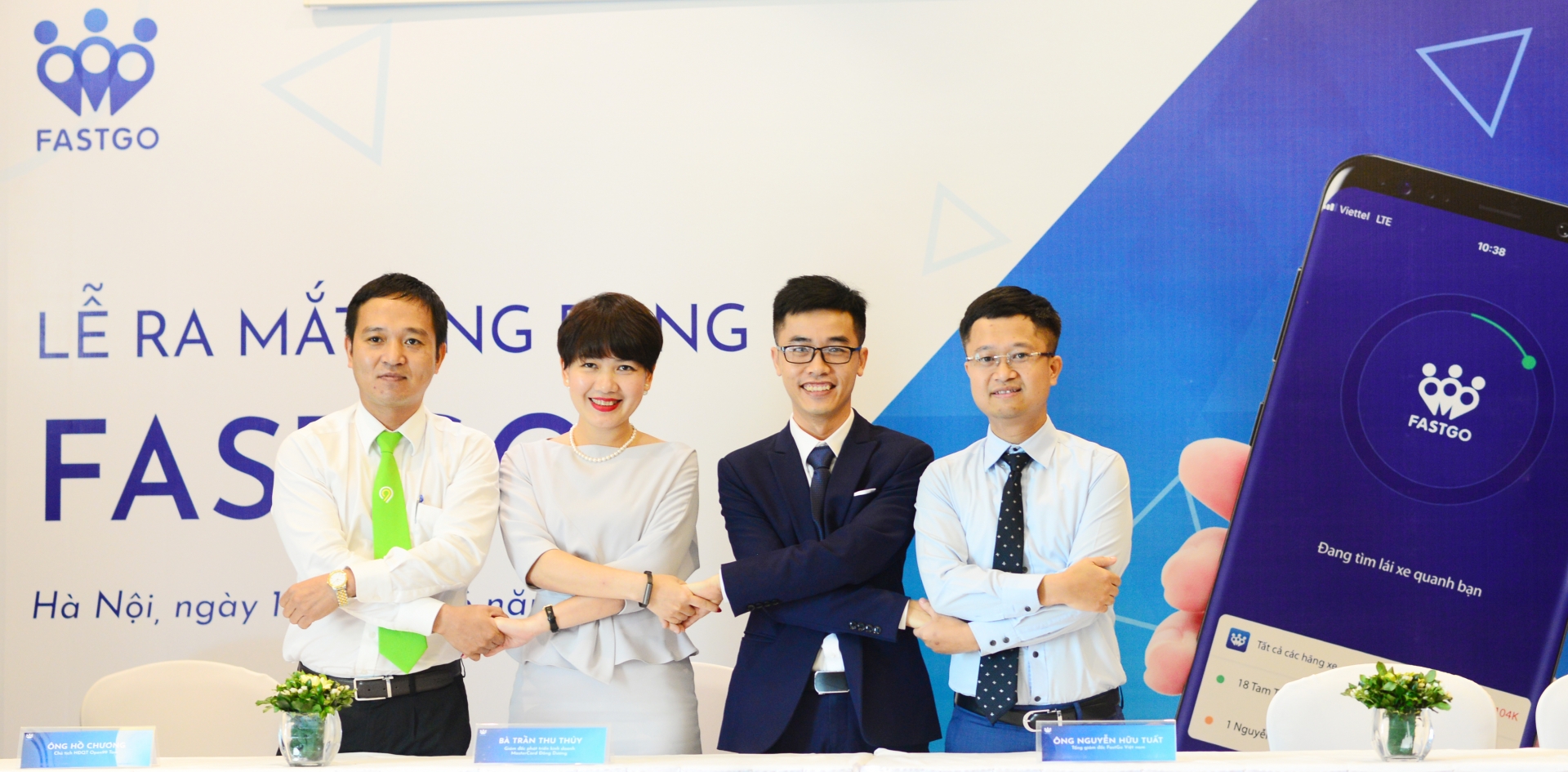
    FastGo CEO Nguyen Huu Tuat told on Friday that the app will have its own payment system and will “personalize” promotion deals that will match customers’ interests.

    “Our goal is to reach 30 percent of the market share after six months in these two countries,” he said.

    Explaining the choice of these two countries for the company’s first overseas expansion, Tuat said he wanted to start with the easiest neighboring countries to tap.

    “After looking at their national policies as well as the market’s current competitiveness, we believe that Indonesia and Myanmar would be the perfect destinations,” he said.

    “We also have strategic partners, networks and business strategies for us to be successful in these countries.”

    The company is in the process of hiring staff and renting facilities.

    After launching in Hanoi on June 12, the app is now available in Da Nang and Saigon.

    FastGo last month said it has 15,000 taxi and motorbike partner drivers in Hanoi and Ho Chi Minh City, but they are still not a common sight on the streets, unlike the ubiquitous red and green uniforms of Go-Viet and Grab drivers.

    Tuat said he wants FastGo to become one of Southeast Asia’s top 3 ride-hailing apps in the future.

    The company hopes to make its service available in 20 cities in Vietnam and five other Southeast Asian markets, including the Philippines, Cambodia and Thailand, by the end of next year.

  • Vietnam’s first car-hailing app FastGo heads overseas

    Vietnam’s first car-hailing app FastGo heads overseas

    FastGo, a Vietnamese ride-hailing app, plans to launch its service in Indonesia and Myanmar in December as it hopes to become one of the top companies in the field in Southeast Asia.

    This move abroad comes just five months after it launched in Vietnam, positioning itself as the company’s answer to Singapore-based Grab, the biggest player in Southeast Asia, and Indonesia’s Go-Jek, which launched its first overseas operation in Vietnam last month, GoViet.

    FastGo offers a private car and taxi service in Hanoi, Danang and Ho Chi Minh City. As of early October, it claimed to have reached 20% of the local market with some 30,000 drivers registered on its system. The app was developed by MPOS Vietnam Technology, a tech startup created by FastGo’s co-founder and chief executive Nguyen Huu Tuat. MPOS set up Vietnam’s first mobile payment solution in 2013 and has links with many local partners including banks and insurers.

    “Although the Southeast Asian ride-hailing sector is dominated by Grab and Go-Jek, FastGo has strategic partners, networks and relevant strategies for the Indonesia and Myanmar markets in place,” Tuat told in an interview on Thursday.

    Tuat said this background would allow FastGo to expand in both domestic and regional markets and balance the ride-hailing market. This is currently dominated by the two big names who are busy expanding their ecosystems. FastGo is aiming to reach 30% market share in Malaysia and Myanmar after six months, Tuat said.

    MPOS has some experience in the ride-hailing business, providing the technology and platforms used by two taxi companies — Mailinh in Vietnam and Blue Bird in Indonesia — since 2016.

    “FastGo is not a competitor of taxi companies but a partner. We provide technical solutions and the platform to both taxi companies and private car owners, while giving more options for consumers,” Tuat explained.

    FastGo does not collect commission from its drivers, but charges them 30,000 dong ($1.30) each if they earn more than 400,000 dong per day.

    FastGo is committed to keeping passenger tariffs unchanged, but suggests they offer tips (ranging from 10,000 dong to 100,000 dong) to drivers to help secure a ride during peak hours. FastGo’s target passengers are white-collar workers and young people who are willing to use credit cards or mobile payment, but it also accepts cash.

    Tuat said the company’s main revenue and profit would not come from ride-hailing but from planned services including deliveries and finance lending.

    Hanoi-based FastGo is a member of NextTech Group, formerly known as PeaceSoft, with sister companies pioneers in financial technologies, e-commerce, e-logistics and investment across Southeast Asia. The group operates in eight countries and serves more than 12 million customers and 40,000 enterprise partners.

    The 35-year-old founder of FastGo has more than 15 years’ experience working in the Vietnam technology industry and has co-founded three startups, including PeaceSoft. Tuat led these companies through fundraising rounds from investors such as data group IDG, Japanese tech company SoftBank, online retailer eBay, Malaysia-based MOL AccessPortal and U.K. fund ACTIS.

    NextTech is also behind one of Vietnam’s first e-marketplaces, ChoDienTu, e-payment platform NganLuong and mobile wallet Vimo. It is also involved with two cryptocurrency trading platforms.

    FastGo will focus on working with existing partners and clients in each of NextTech’s current markets.

    “Unlike Grab or Go-Jek, the two biggest players in the region which built ecosystems from their ride-hailing services, the FastGo app is a value-added service to NextTech’s existing ecosystem and we will optimize all the advantages of that system,” Tuat added.

    FastGo secured at least $3 million from the tech-focused venture arm of private equity group VinaCapital in its first round of fundraising in August. The company is hoping to raise $50 million in the next round — scheduled for the first quarter of 2019 — to help accelerate regional expansion. FastGo plans to raise funds every six months.

    It hopes to make its service available in 20 cities in Vietnam and five other Southeast Asian markets, including the Philippines, Cambodia and Thailand, by the end of next year.

  • Grabbing Grab’s share a tough question in Vietnam

    Grabbing Grab’s share a tough question in Vietnam

    Local ride-hailing firms lack deep pockets needed to out-incentivize market leader Grab. After Uber Technologies Inc sold its ride and food-delivery businesses in Southeast Asia to bigger regional rival Grab last March, Vietnamese firms have tried to chip away at Grab’s dominance.

    A number of ride-hailing apps have been introduced recently, like Aber, which was developed by a group of Vietnamese students studying in Europe; FastGo, an affiliate of NextTech Group; and MVLchain – a Singapore-based transportation startup; VATO; Didi; and MaiLinhBike.

    Besides competing in the bike- and car-hailing businesses with dominant player Grab, the new entrants also plan to offer good delivery, car rentals and long-haul ride services.

    But, for the moment, none of them have shown the ability to fill the gap left by Uber or to threaten Grab’s supremacy, because they have not differentiated themselves from the competition.

    Newcomers did look for some “killer features” that are absent from previous apps to lure customers. For instance, VATO allows users to bargain with the driver for the most competitive price and Mai Linh Bike says it will collect lower commissions from its drivers and will not increase ride prices during peak hours.

    But such measures are not enough because ride-hailing is a cash burn business and only those with strong financial resources can endure, experts say.

    EasyTaxi has probably learned how tough this fight is. The Brazil-based company came to Vietnam at the end of 2013, six months before Grab and Uber’s presence in this market. Despite being the first comer, it withdrew from the market just two years later. Money, or the lack of it, was the reason, industry insiders say.

    Cash burn strategy

    Even big players like Grab and Uber have reported heavy losses in Vietnam. According to the General Department of Taxation, Grab, with a total registered capital of only VND20 billion ($881,057), has incurred losses of nearly VND1 trillion in three years of operating in Vietnam.

    But this cash burn strategy is how Grab and Uber are eating up traditional taxi firms’ market share. In 2014-2015, they launched intense promotional programs including free rides and discounts to lure customers. They also expanded their driver networks by providing them with subsidies and big rewards based on performance.

    Limited funding limits the budding competitors’ ability to offer incentives the way the big players can, so the former are always playing catch up. They can’t offer discounts, and can’t expand their network of drivers in order to offer faster, better rides.

    In a price-driven market, customers are always looking to choose the cheapest possible ride. And they have complained that it is not easy to book a ride with the new apps even in downtown areas.

    Duc Huy, a senior student at the Academy of Journalism and Communication in Hanoi, told VnExpress that he found it difficult to get a ride on MaiLinhBike as there are not many drivers around North Tu Liem District where he lives.

    “I have to wait for 10 minutes to get on a MaiLinhBike ride because the river is 2-3 km away,” he said.

    Drivers too see Vietnamese ride-hailing platforms as backup options. They are not ready to switch despite Grab cutting back on drivers’ incentives.

    Taxi driver Duy Ngoc said he operates on both Grab and VATO apps, but gets just two or three rides booked on the VATO platform a day.

    “So, I mainly drive on the Grab platform to ensure my income,” he said.

    “New apps do not have a large customer base. Drivers just sign up to get incentives, so their main driving service remains the previous one (Grab),” said 25-year-old Grab motorcycle driver Quoc Anh.

    Market niches

    With Go-Jek about to set foot in Vietnam with its Go Viet app, competition is only get tougher for local firms. The Indonesian ride-hailing firm is a heavyweight competitor to Grab in the Southeast Asian region. Will local apps stand a chance? The answer is, unlikely, in a head-to-head fight.

    “Capital shortfall is a disadvantage for Vietnamese ride-hailing apps, so they should not enter the cash burn race,” said Dr Nguyen Duc Thanh, head of the Vietnam Institute for Economic and Policy Research.

    He said going head-to-head with bigger rivals is not the right path to follow. There are other ways to succeed, he added.

    “They can enter niche markets like good delivery, car rentals or long-distance ride services. Instead of trying to divide market share in the beginning, newcomers should think of a long-term strategy to build a solid foundation,” Thanh added.

    It was not a fluke that even a well funded Uber lost to a more localized opponent, he said.

  • Southeast Asian online shoppers are big spenders via apps

    Southeast Asian online shoppers are big spenders via apps

    Southeast Asian online shoppers are leading the world when it comes to spending on shopping apps, according to research by tech company Criteo.

    Across Asia Pacific, 54 per cent of all online transactions are made in-app, 18 per cent on mobile web and 28 per cent on desktop.

    In its Q1 2018 Global Commerce Review (South East Asia), for which the company analysed browsing and purchasing data from more than 5000 retailers in more than 80 countries, Criteo also says shoppers in Southeast Asia are moving across multiple browsing environments before making a purchase.

    “Native mobile-shopping apps are now a prerequisite for success in retail and customer engagement,” said the Criteo report.

    “Our latest data reinforces how it is no longer just about having multiple channels available to consumers, but about how those channels are connected to offer a comprehensive and consistent shopping experience,” said Alban Villani, GM Southeast Asia, Hong Kong and Taiwan at Criteo.

    “Compared to other regions, the Asia-Pacific region now has the highest share of transactions on shopping apps – a natural progression from regional consumers’ mobile-first mindset. To engage shoppers, especially in countries like Indonesia and Vietnam, retailers must make mobile apps the centrepiece of their omnichannel strategies and integrate data across channels, at scale, to personalise content for consumers and drive sales,” said Villani.

    “It is crucial for retailers in the region to invest in the optimisation of shopping apps to effectively drive online and offline sales. This includes integrating native mobile-shopping apps into in-store shopping experiences and enabling mobile payments and customer loyalty programs within the app.”

    As they move to apps, Southeast Asian online shoppers are buying less on PCs. Year-on-year, online shopping on smartphones has grown 38 per cent while purchases via computers have fallen by 12.5 per cent in the region.

    Additional highlights

    The report also found:

    • Conversion rates on shopping apps in Asia Pacific are five times higher than on mobile websites.
    • Omnichannel consistency is key: Southeast Asian omnichannel customers generate 27 per cent of all sales, despite representing only seven per cent of all customers.
    • Southeast Asian omnichannel retailers that combine their online and offline data can apply more than four times as much sales data to optimise their marketing efforts.
    • Globally, 67 per cent of marketing leaders say that creating a connected customer journey across all touchpoints and channels is critical to the success of their overall marketing strategy.
    • In Southeast Asia, 62 per cent of customers worldwide check reviews or ratings before visiting a store.
    • The proportion of transactions made on smartphones and tablets in Southeast Asia increased from 28 per cent to 37 percent between last year and this year.
    • In Asia Pacific, 72 per cent of all online transactions are made on mobile devices. While desktop usage still dominates in online sales during working hours, mobile wins during nights and weekends.
  • JakEVO app to simplify Jakarta business permit issuance

    JakEVO app to simplify Jakarta business permit issuance

    The Jakarta administration launched at City Hall on Monday a new smartphone app named JakEVO to simplify the procedures for obtaining business permits (SIUP) and registration certificates (TDP).

    Jakarta One-Stop Integrated Service Agency (PTSP) head Edy Junaedi said with the app, both of the permits can be obtained in less than an hour, without requiring applicants to visit the PTSP office or service points to get their SIUP and TDP.

    “The applicants only need to upload required documents, tag their location and approve of the terms and conditions within the app. In around 30 minutes, they will receive the permits in an email,” Edy said.

    JakEVo can be downloaded for free from the Google Play Store and the App Store.

    The city administration expressed hope that the initiative could help the country achieve a rank of 40 on the Ease of Doing Business index compiled by the World Bank. The country is currently ranked at 72, a jump of 19 places from its previous rank of 91.

    In the World Bank publication “Doing Business 2017: Equal Opportunity for All”, Indonesia jumped 15 places to 91 from 106.

  • Blockchain-based ride-hailing app to arrive in Vietnam

    Blockchain-based ride-hailing app to arrive in Vietnam

    MVL says drivers will not have to pay commission, and the company will make a profit from selling data. A blockchain-powered ride-hailing app which requires no commission fee from drivers will be arriving in Vietnam this July in the wake of Uber’s departure last month following Grab’s acquisition of the firm’s Southeast Asian operations.

    MVL from the Singapore-based startup MVLchain is going to recruit its first batch of drivers in Vietnam this month.

    The upcoming app utilizes blockchain technology, and is the first ride-hailing app in Vietnam to do so, said CEO Kay Woo during a conference held in Ho Chi Minh City last Saturday.

    Blockchain technology utilizes a growing list of digital records which are linked and secured using cryptography. That means a blockchain system can act as a secure, open and transparent distribution ledger to record transactions between two parties efficiently and verifiably. Blockchain technology can be applied to manage assets, contracts and global payments.

    “Our data is stored using blockchain technology. That means all data belong to all suppliers in the system, which provides transparency,” said Woo. Fellow ride-hailing apps Grab and Uber instead store all their data in servers, said Woo.

    MVL will also not require its drivers to pay a commission. Instead, the firm will sell data generated from its daily operations to insurance and market survey companies to make a profit.

    The firm hopes to attract more drivers this way, aiming to eventually acquire 25 percent of all four-wheel and two-wheel vehicles currently operating in Vietnam.

    MVL will have to compete with Grab, the largest ride-hailing app currently operating in Vietnam. Once all the legal procedures are completed, MVL is expected to go live in Vietnam this July.

    Grab has raised suspicions about creating a monopoly in Vietnam now that its biggest rival Uber is gone, despite an official from the Ministry of Transport saying Grab is unlikely to do so, considering how there are other apps competing with Grab, including ViVu, Mai Linh Bike and Go-Jek.

    MVLchain was founded in 2012 by a group of Korean investors. It currently operates in South Korea, Taiwan, Hong Kong and Singapore.

  • Kinofy app opens door to 1 billion Chinese consumers on WeChat

    Kinofy app opens door to 1 billion Chinese consumers on WeChat

    Singaporean brands have been promised access to more than 1 billion Chinese consumers through a new cross-border e-commerce app which runs on the WeChat ecosystem.

    Kinofy Group has launched its plug-and-play, cloud-based, platform which is designed to allow international brand owners and small- and medium-sized businesses to sell goods and services in China.

    The platform offers merchants a single view of their business and customers across sales channels and enables them to manage products and inventory, process orders and payments, build customer relationships and leverage WeChat’s analytics and reporting. From a legal perspective, the Kinofy platform enables merchants to export and sell their products seamlessly across different sales channels through an official product registration and importation channel. The platform integrates multiple channels: e-commerce, social selling tools and operational management of product registration, importation, warehousing and logistics, last-mile delivery and overseas-payment settlement into a single platform, allowing brands to enter the Chinese market faster and more efficiently. Kinofy also offers warehousing and logistics solutions at the Ningbo Free Trade Zone (NFTZ) giving businesses infrastructure to reach China’s 613 cities.

    Leveraging the platform, brands can accelerate their entry into the fast-growing Chinese market – reducing entry time to three months with official product registration approval.

    Singapore trade and industry minister S Iswaran officially launched the platform to an audience of 300 guests including some of Singapore’s top brand owners.

    Kawee Chong, CEO of Kino Biotech Group and co-founder of Kinofy Group, said the opportunity for Singaporean brands in China is immense – and Kinofy being smart, simple and seamless makes market entry frictionless.

    “We are proud to welcome brands like Naturext, Health Domain, Yohmo Tonic, GreenLife, Lipaddict, SkinSoul, SWANZ, Kinohimitsu, Fitwhey and Esthemedica to the Kinofy family and look forward to inviting more of our fellow Singaporean brands to join us on this exciting journey.”

    Kinofy is a pre-approved solution supported by the SkillsFuture Singapore grant. The partnership enables local companies to construct digital business channels and grow sales plus revenue through cross border trade. Local small and medium enterprises will enjoy a 70 per cent subsidy for their first year subscription to the Kinofy platform through SkillsFuture Singapore. Training is also provided at 90 per cent subsidy from SkillsFuture Singapore. The Kinofy Group also works extensively with Enterprise Singapore to conduct outreach efforts in markets like the US, Germany, Korea, and Thailand.

  • AirAsia looks at Tinder to find travel lovers

    AirAsia looks at Tinder to find travel lovers

    Low-cost airline AirAsia is hoping New Zealanders will swipe right and fall in love with Malaysia.

    The Kuala Lumpur-based airline is launching the “Meet Malaysia” campaign on Tuesday.

    Anyone who chooses to match with the destination will go into the draw to win a trip to Malaysia for two people and tickets to the Borneo Jazz Festival or Rainforest World Music Festival.

    The campaign, which the airline has described as “cheeky”, is aimed at attracting those who may want to try something new. Something that may be common on Tinder, but perhaps not for an airline.

    AirAsia hopes the campaign will attract potential travellers on the app who were thinking about spending time in places like Indonesia, Thailand or Vietnam that could be swept off their feet by the Malaysian experience.

    AirAsia operates seven flights per week from Auckland to Kuala Lumpur with connections to 15 cities in Malaysia.

  • Amazon shopping app launches with a brand new ‘International Experience’

    Amazon shopping app launches with a brand new ‘International Experience’

    Amazon has launched what it calls “the International Shopping Experience” within its Shopping App, allowing customers to browse and shop more than 45 million eligible items that can be shipped to their country from the US.

    The new service works only on mobile browsers and within the Amazon shopping app for iOS and Android devices.

    It comes in five languages, including Simplified Chinese and English and the ability to shop in 25 currencies.

    Amazon says the International Shopping Experience displays clear pricing, shipping costs, and import duty estimates, with Amazon coordinating with courier services for customs clearance on behalf of the customer so there are no surprises at the time of purchase or delivery.

    Customers will be able to browse and shop for products across categories including electronics, books, clothing, shoes and toys. They can choose from different shipping options and delivery speeds, depending on how quickly they want their package to arrive.

    “We are always innovating on behalf of our customers, and with today’s launch, we are making the shopping experience on mobile devices even better and more convenient for our customers who live outside the US,” said Samir Kumar, VP of Amazon exports and expansion. “Customers have been asking for a way to easily find and shop only for products available to be shipped to them. The International Shopping Experience solves this customer need and makes it simple to browse, shop and ship more than 45 million products to over a hundred countries around the world.”

    Customers who download the Amazon Shopping App from the Apple App Store or Google Play Store will automatically be placed into the International Shopping Experience. Customers who already have the Amazon Shopping App need to go into their settings within the app, choose the ‘Country & Language’ option and select ‘International Shopping’ in the country picker.

    Customers can then set their language and currency of preference to enjoy a customised shopping experience, and can change their location at any time to automatically see products that are eligible to be shipped to their selected delivery location.