Tag: app

  • Facebook’s massive outage helped a rival app gaining millions of new users

    Facebook’s massive outage helped a rival app gaining millions of new users

    If you’re bothered by Facebook’s notoriously shady data harvesting methods and various other controversies surrounding the privacy and security of the social networking titan’s user base, it’s probably not a good idea to switch to Instagram. But there are actually many competing services and platforms on the market that Mark Zuckerberg does not own.

    One instant messaging app that has been growing at a pretty impressive pace for the past few years noticed a particularly large boost to its user numbers yesterday. According to its founder, Pavel Durov, a whopping 3 million people signed up for new Telegram accounts “within the last 24 hours.” It’s safe to assume that doesn’t happen every day for an IM and VoIP service that boasted a grand total of 200 million monthly active users around a year ago.

    While Durov doesn’t spell it out for us on his personal Telegram channel, the surge in sign-ups is naturally believed to be connected with Facebook’s most recent worldwide outage. A massive number of Facebook, Instagram, and WhatsApp users reported problems logging in to their accounts yesterday, and incredibly enough, the main social networking platform is still down for some people.

    Even though that seemed to boost the action (and jokes) on Twitter, where Facebook itself confirmed the issues, Pavel Durov suggests his app may have had more to gain thanks to its “true privacy and unlimited space for everyone.” Then again, Telegram had its fair share of scandals and controversies back in the day as well, disappearing from the iOS App Store at one point due to suspicions of rampant child pornography content spreading.

    The app is also banned in countries like Russia and China, although the reason for that might actually convince more people in the Western Hemisphere to switch from Facebook or WhatsApp to Telegram. Namely, a strict policy on sharing user information with government authorities.

  • APAC mobile advertising market booming

    APAC mobile advertising market booming

    The Asia Pacific region is leading in mobile ad request with a growth of 44%. This is almost twice the average growth of the Americas and EMEA regions, both of which are pegged at 23%.

    This was the conclusion of the Global Trends in Mobile Advertising H2 2018 report by Smaato, which offers programmatic insights designed to help publishers and advertisers with their decision-making on ads.

    Among others, the report investigated in-app growth, advertising spending, mobile video and advertising fraud.

    The mobile ad market is healthy, according to Smaato, with significant growth across all key advertising metrics, including ad request volume and eCPMs. Demand and supply both increased year-over-year, as advertisers direct more money into mobile advertising.

    In the APAC, India stood out from the pack with a 425% growth in mobile ad requests. This was more than twice the growth rate of the fastest growing markets in EMEA and the Americas, which were led by Spain at 152% and the USA at 170% respectively.

    Smaato says India’s meteoric ad request growth is characteristic of an emerging mobile market in which the number of mobile device owners, their time spent on mobile, and overall app downloads all rise quickly.

    When it comes to the top countries for eCPM growth, Singapore (154%), Japan (125%), Australia (111%), Hong Kong (99%) and Indonesia (96%) topped the charts. As comparison, eCPMs increased in the United States by 79% and in Canada by 70%, while Switzerland (92%) and the United Kingdoms (66%) topped the chart in the EMEA.

    “The impressive ad request and eCPM growth in APAC are driven by app developers finding new ways to better monetize their content even as consumers are spending more time on apps. Advertisers from all verticals are realizing that apps are where consumers are — and they are directing more funds into this channel,” Smaato APAC managing director Alex Khan said.

    “With app usage increasing across the region, there will also be more monetization opportunities for mobile publishers.”

    The full report can be downloaded here (free registration).

  • Grab now has more rivals than ever before in Vietnam

    Grab now has more rivals than ever before in Vietnam

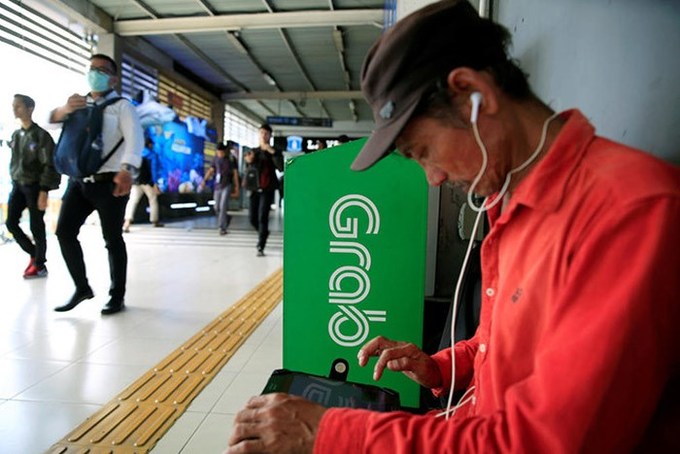
    From an e-hailing app, Grab has made great steps forward, providing many different services. Most recently, it started the payment service GrabPay and lending service Grab Financial.

    The consumer lending market in South East Asia is very large. As estimated by the World Bank, about 2 billion people in the world cannot access bank services, and most of them are in Asia Pacific.

    The non-cash payment market, according to Grab, is worth $500 billion in South East Asia.

    An analyst commented that Grab is wise taking a ‘roundabout’ approach to consumer lending (it conquered the transport market first before aiming for the consumer credit market).

    Consumer lending is a fertile business field for Chinese e-commerce firms. The firms offer online payment apps to users to ‘learn’ about their financial capability.

    Grab, as an app, quickly attracted users, especially investors. Just within six years, Grab became an unicorn company, i.e. an unlisted technology firm with valuation of $1 billion and higher, in South East Asia. Analysts estimate that Grab is valued at $6 billion.

    The total number of Grab downloads has reached 95 million all over South East Asia. This could serve as the launch pad for it to conquer the consumer lending market.

    The challenges 

    “GrabPay e-wallet will be used for both transport and food delivery services, two of the most used services in South East Asia,” said Jerry Lim, director of Grab Vietnam.

    However, the analyst said, by expanding its business, Grab would have to compete with more rivals who are ‘powers’ in their fields. In online payment, for example, it will have to compete not only with AirPay (Sea) and Alipay (Alibaba Group), but also with local firms such as ZaloPay (VNG) and MoMo.

    In Indonesia, Grab bought an e-commerce platform, Kudo, in April 2017. Grab believes that this is the factor which can help expand GrabPay. However, in Vietnam, Grab’s two big rivals – Sea and Alibaba — both have strong support from two popular e-commerce floors – Shopee Vietnam and Lazada Vietnam.

    Similarly, GrabFood has rivals in the food delivery sector, where Sea’s Now, which inherited the large custom from Foody, is the leader.

  • Razer launches country HQ in Malaysia, looks to groom next gen tech talent

    Razer launches country HQ in Malaysia, looks to groom next gen tech talent

    Shortly after it announced the construction of a new Southeast Asia headquarters, Razer has unveiled its new country headquarters in Malaysia which will house over 280 employees. The investment strengthens Malaysia as Razer’s regional center of fintech innovation, e-sports excellence and talent development.

    Razer aims to position itself as a fintech leader in Malaysia, with one of its initiatives being a partnership with property development company UOA Group to digitise and integrate its carpark payment system into the Razer Pay app. Upon completion, carpark users can settle their parking fees using the Razer Pay app without waiting in queues. It is also working with merchants in Bangsar South to accept Razer Pay

    As part of its e-sports initiatives, Razer will share its expertise in the field with the Malaysian gaming community. This includes coordinating with industry partners to drive gaming events in the country, bringing the gaming community together and looking to support Team Malaysia for esports at SEA Games 2019.

    Razer will also work with the government and industry partners to develop the next generation of tech talent in Malaysia. It will collaborate with institutes of higher learning, provide training and mentorship programs and offer exchange programs across the regional Razer offices.

    The world now demands a high level of innovative thinking and entrepreneurial mindsets, and Razer will help nurture the future technology leaders of Malaysia.

    “Razer will be investing in Malaysia as a hub for our fintech efforts in Southeast Asia,” says Min-Liang Tan, co-founder and CEO of Razer. “It is the first country in the world to be ready for Razer Pay, and we see the Razer Malaysia office as a natural springboard for our fintech efforts in the region.”

    Last year, Razer launched its e-wallet app for youth and Millennials in Malaysia and claimed to have signed up 500,000 users in less than a week. This month, Razer Pay has been expanded with major new features such as in-app coupons, instant messaging, and an enhanced e-wallet experience.

    Razer has collaborated with Malaysia’s household brands to bring exciting offers to consumers. 7-Eleven is offering RM5 coupons and Kenny Rogers Roasters will offer RM10 coupons to Razer Pay users. U Mobile will also organize weekly contests with prizes such as the Razer Phone 2. Merchants operating in Bangsar South will also start accepting Razer Pay. These merchants will also begin to offer rewards programs enabled by Razer Pay, such as coupons and flash sales to help customers save time and money.

  • Entrepreneur looks to replace corporate travel agents

    Entrepreneur looks to replace corporate travel agents

    Auckland-based entrepreneur Hiten Parbhu has launched an online corporate travel booking app that makes finding and booking flights easier for small business owners, personal assistants and admin staff.

    The online app Rogue Travel, which launched today after a few months of beta testing, will “take the pain out of corporate travel booking”, Parbhu said.

    “The big travel amalgamators like Skyscanner make finding flights easy, but that’s about it. They give you lots of options, but then leave you on your own when it comes to the really tedious thing: entering passenger details.”

    “Plus, they send you all over the web to various providers instead of keeping all your bookings in one central place.”

    Rogue Travel, Parbhu said, does that and more.

    The web app keeps an organisation’s passenger details, like names, date of birth, passport numbers, frequent flyer memberships and so on, on the one platform.

    Users will simply search, just as they would on other travel websites, to find the cheapest and most convenient flights and hotels.

    They then select on the who’s travelling tab and all passenger details are automatically added.

    Parbhu said this would save hours of chasing individual people up for updated passport numbers and so on.

    Payment is made directly through the site and all trip details are kept through the one platform.

    “We’ve built a tool which effectively removes the need for a corporate travel agent.”

  • Best Mart 360 launches loyalty app for customers

    Best Mart 360 launches loyalty app for customers

    “Leisure-food retailer” Best Mart 360 Holdings has launched a member mobile app.

    The new app is offering a range of promotions, member privileges and a reward points scheme, and enables members to view the group’s latest product information anytime and anywhere.

    The group, which operates 88 retail stores in 18 districts in Hong Kong, established its membership scheme in April 2015 in order to promote consumer loyalty, stimulate sales at retail stores and further expand its customer base. As of December, the group had more than 1 million members.

    “We intend to further expand our member base by offering additional member benefits and enhance our communication channels with our members,” said Best Mart 360’s CEO Hui Chi Kwan.

    “We believe that by expanding our member’s coverage, we are in a favorable position to secure recurring business and maintain sustainable growth of our business. Our membership scheme also allows us to collect purchasing information and data of our frequent customers for surveying and analysing customers’ purchasing preferences, needs and habits that are significant for enriching our product portfolio, determining our pricing strategy for individual products and providing better customer services.”

    The new app aims to enhance members’ consumer experience by providing information on latest promotional offers, selective products, the retail shop network, member privileges and reward points record, as well as accumulating e-coupons for future purchases.

  • Apps race to attract customers with sweet deals

    Apps race to attract customers with sweet deals

    E-wallets, food-delivery and online shopping apps are offering a range of Tet (Lunar New Year Festival) promotions to widen their customer base. On January 21, e-wallet cashless payment platform MoMo experienced a temporary freeze of its network shortly after launching a promotion that gives customers a chance to receive gifts when using the app to send money.

    Shortly after the promotion was launched, MoMo recorded an additional 500,000 downloads and registrations of its app, forcing the platform to upgrade its capacity immediately.

    At the time of the freeze, MoMo reported a record of over 1 million customers who had logged on at the same time for a chance to receive something from MoMo’s pool of gifts worth over VND100 billion ($4.32 million).

    About 2 days later, ZaloPay, another e-payment platform also entered the race by encouraging users to make deposits, payments and money transfers to receive bonus points and redeem vouchers from a pool of VND10 billion ($431,995).

    The promotion heat has also spread to the food delivery industry, where Grab, the Singaporean-based ride hailing and food delivery app, has announced its expansion to an additional 12 provinces and cities, to make “food ordering easier during Tet“.

    Tet, or Lunar New Year Festival, will be celebrated from February 2-10 this year.

    Demi Yu, GrabFood regional director for Thailand, Malaysia, Vietnam and Philippines, revealed that the number of GrabFood orders increased has increased 25 times since it was launched in Vietnam last October.

    “With our extensive driver partner network, we’ve been able to lower average delivery time to 20 minutes in central Hanoi and HCMC, making us the fastest food delivery service in Vietnam,” she said.

    A survey published by Vietnamese market research firm GCOMM earlier this month showed that 99 percent of those surveyed said they used online food ordering services at least 2-3 times per month. 39 percent said they ordered through these apps 2-3 times a week.

    According to this survey, the 6 most popular apps are GrabFood, Foody, GoFood, Lala, Vietnammm and Lixi. However, because of the fierceness of competition, just a few days before the study was announced, Lala withdrew from the food delivery market to focus on providing software solutions to restaurants.

    “Demand for delivery is growing in Hanoi and HCMC. I think in the next 5 years, it will thrive in the 10 largest cities. There are about 100,000 delivery orders each day in HCMC and Hanoi combined, whereas there was virtually no demand for this service 3 years ago.

    The delivery market is now worth $500 million, but is expected to grow to $2 billion in 5 years,” said Luong Duy Hoai, founder of GHN, a courier service with over 7,000 staff.

    According to a recent report by South Korean commercial giant Lotte, the number of orders and visits by online shoppers rose by 80 percent and 200 percent respectively in 2018.

    Kim Kyou Sik, general director of Lotte.vn, the group’s online outlet, said: “Late 2019 will be a major battle for all e-commercial sites to establish market share. We aspire to become one of Vietnam’s top 4 e-commerce sites by the end of the year.”

    According to research by Nielsen Vietnam, with 53 percent of the population using the Internet, nearly 50 million numbers registered on smartphones, most online shoppers being from 25-29 years old, the e-commerce market in Vietnam is full of potential despite growing at 22 percent per year.

    The e-Conomy SEA 2018 report by Google and Singaporean investment firm Temasek also revealed that e-commerce, along with three other areas, namely online advertising, online travel and ride hailing dominate Vietnam’s Internet economy.

    In 2018, the Internet economy had an estimated total worth of $9 billion. Earlier this year, the two companies collaborated in a report which revealed that gross merchandise volume of Vietnam’s Internet economy amounted to 4 percent of its GDP.

  • Johnson & Johnson, Apple collaborate for healthcare

    Johnson & Johnson, Apple collaborate for healthcare

    Apple and Johnson & Johnson are teaming up on a study to determine whether the latest Apple Watch, in conjunction with an app from the pharmaceutical company, can accelerate the diagnosis of a leading cause of stroke. Atrial fibrillation, or AFib, is an irregular and often rapid heart rate that causes about 130,000 deaths and 750,000 hospitalizations each year in the U.S., Johnson & Johnson said. Up to 30 percent of cases go undiagnosed until life-threatening complications occur. Worldwide, about 33 million people have the condition.

    The controlled, randomized multi-year Johnson & Johnson study will start later this year and be limited to U.S. adults ages 65 years and older who wear the Apple Watch Series 4. Specific details on how to participate will be released later.

    The Apple Watch Series 4, which costs $399 or more, has an irregular heart rhythm notification feature, as well as an FDA-cleared ECG app, both of which are designed to detect AFib.

    “We are receiving thank you letters daily from Apple Watch wearers who are discovering they have AFib,” said Apple Chief Operating Officer Jeff Williams. “We want a deeper understanding about outcomes and prevention associated with early detection. We are excited to work with Johnson & Johnson, which has a long history and expertise in cardiovascular disease.”

    Paul Stoffels, Johnson & Johnson’s executive vice president and chief scientific officer, said “the goal is to identify early on AFib and prevent stroke by combining the physical know-how from Apple and what we have from the medical and scientific know-how.”

    Cardiologist Paul Burton, Johnson & Johnson’s vice president of medical affairs for internal medicine, added the watch has a good detection rate for the condition, but there can be false positives.

    If an AFib reading appears, patients are directed to seek a formal diagnosis from their medical provider. Johnson & Johnson’s goal is to collect aggregate data from study participants, rather than tracking individual patients.

    “When we do clinical trials, we always respect the privacy of patients,” Stoffels says.

    Burton believes “the study has the potential to show that there is a lot more atrial fibrillation out there in the real world in older people than we ever imagined, and if you use a tool like an Apple Watch to detect and funnel people to care, you can really drive down stroke risk in those patients.”

    Apple CEO Tim Cook recently talked about Apple’s ambitions in the health space. “I think you’ll be able to look back at some point in the future and Apple’s greatest contribution will have been to people’s health. I think it’s that big.”

    In November 2017, Apple teamed up with the Stanford University School of Medicine on an Apple Heart Study app that uses the heart rate sensor inside the Apple Watch to collect data on irregular heart rhythms. That study is ongoing.

    Apple also hopes iPhone owners will store medical records inside the Health app.

    Stoffels says wearable technology will continue to take on increased importance in the health field, from monitoring whether patients take medications to measuring sleep. “Digital and data will become part of everything we do.”

  • Tinder sees Korea as stepping stone to region

    Tinder sees Korea as stepping stone to region

    Korea is the test bed for Tinder services in the rest of Asia, the dating app’s CEO said during his first press conference in the country on Tuesday.  “South Korea is an important market for us because of the market itself, but also because of the cultural influence it has over the broader Asia region,” said Tinder CEO Elie Seidman. Seidman previously served as the CEO of OkCupid, another popular American dating service.

    “Not only do most Koreans have smartphones and use social media, but the country wields a lot of influence in Asia through K-pop and the Korean wave.”

    Korea’s potential to raise the brand awareness of Tinder across Asia has already been demonstrated, according to the app’s regional director.

    “We once worked together with Korean celebrities Kim Jong-kook and Haha to have them use Tinder during a trip in Vietnam” for a reality TV show, said Lyla Seo, regional director, East Asia. “We saw a huge surge in Tinder users in Vietnam following the program.”

    Seo, who is Korean, oversees the dating service’s business in Korea, Japan and Indonesia. Seo worked as a marketing manager for Google Korea before joining Tinder.

    “Tinder has the so-called passport service, which allows people to view and match with users from other countries. The top five countries that used the passport to meet Koreans were Singapore, Japan, Thailand, Indonesia and Malaysia, reflecting the popularity of Korean culture,” she added.

    In Korea, the dating app first launched in 2015 and has been growing rapidly since. Tinder in Korea reported over 2.5 times more downloads last year compared to 2016. The service is especially popular among women, and over 80 percent of the users here are millennials.

    According to Tinder, the three biggest reasons Koreans use the app are to meet new types of people from different backgrounds, find users with similar hobbies and meet users in the same area.

    Users in Korea are most active on the app around 10 p.m. on Monday after they come back from work or school, Tinder also said.

    Tinder’s plan in Korea this year is to draw in more college-aged students and promote the idea that the app can be used to meet friends under the “Find a friend on Tinder” campaign.

    “In Korea, we are planning to introduce more marketing activities targeting college students and contribute to society by launching a scholarship program,” Seo said.

    Tinder, founded in 2012, has around 4.1 million paying users and generated $800 million in revenue last year worldwide.

  • Tech startup Blinq to focus on Southeast Asia

    Tech startup Blinq to focus on Southeast Asia

    Tech startup Blinq is targeting Southeast Asia with software which allows users to virtually try on and purchase designer apparel and accessories from online luxury and contemporary fashion retailers globally. “Blinq uses AR and algorithmic patterns to provide users with the latest trends and personalised fittings from their digital devices,” explains entrepreneur and Blinq founder Bob Chua.

    “It also allows users to choose how they would like to consume fashion, which may not necessarily be to buy, but to also rent, subscribe, or pay later for latest luxury designs from major and upcoming brands across Southeast Asia.”

    A rental-subscription model provides users the option of renting designer apparel and accessories, while the back-end automated warehousing operation enables brands to fulfil their products throughout the Asia-Pacific region.

    Citing McKinsey’s global fashion report, Chua says the personal luxury market is predicted to grow to US$500 billion by next year, with close to 44 per cent coming from Asia.

    “There is clear retail disruption happening everywhere, and e-commerce adoption in the luxury space is growing at a staggering rate here in Asia. We see a major opportunity.

    “In a way we are fusing the successful models of Asos, Farfetch, Rent-the-Runway and The Real Real into a single platform, while targeting affluent Asians.”

    Chua says the company plans to monetise its platform by white-labelling its virtual changing room AR features to other e-commerce sites, which will ultimately reduce returns and increase purchasing propensity for retailers.

    He says Blinq has secured significant seed funding and is currently en route to a next fundraising round.

  • SimplyBrand blockchain platform launches token pre-sale

    SimplyBrand blockchain platform launches token pre-sale

    SimplyBrand, the world’s first blockchain-based e-commerce verification platform, launched a token pre-sale this week with strategic partner Cobinhood, a cryptocurrency service platform. By integrating blockchain, AI and crowdsourcing, SimplyBrand aims to end online counterfeiting through a safe and trustworthy digital commerce ecosystem.

    With the expansion of e-commerce, brands are finding it more difficult to trace counterfeit goods and prove authenticity in the highly fragmented internet space, leading to massive revenue losses and often damaging brand reputation. In addition, consumers continue to suffer from fraudulent traders of copied products.

    “For the past years, SimplyBrand has used data intelligence to successfully protect brand image and drive business results for Fortune 500 and renowned clients, including Asus and popular luxury brands,” said Shanghai-based Kaufman Chang, the founder and CEO of SimplyBrand.

    “As we usher in a new era powered by blockchain and AI technology, we believe the whole retail economy will benefit from this organic platform, which truly makes every purchase matter.”

    Chang says SimplyBrand is already a well-established company with a proven business model and trusted customers using big-data anti-counterfeiting services. Now it is expanding its expertise in machine learning and AI to a more innovative, comprehensive solution.

    “We are able to identify and verify products sold on all the major e-commerce platforms with high efficiency based on data including images, prices, locations, product description, etc. An immutable “blacklist” of counterfeit product will then be created on the blockchain for public reference.”

    Chang says this allows brands to remove offending product pages responsively and continuously help to improve AI accuracy. Within this ecosystem, crowdsourced participants who report fake products through the SimplyBrand app can earn token rewards to purchase brand privileged items or sell them on exchange, while brands can buy tokens from the exchange and use them to buy brand-protection services.

    “As a result, a virtuous cycle of loyal consumers, companies and other enforcement agencies will be created to eradicate the online scourge of counterfeit products for good.”

    SimplyBrand was co-founded by Chang and Ronnie Ng, both alumni of University of Chicago Booth School of Business. Chang is a startup entrepreneur with ventures in cloud computing software and big data security software and Ng is an entrepreneur and marketing specialist.

  • More Chinese seniors embrace WeChat

    More Chinese seniors embrace WeChat

    The ubiquitous WeChat is continuing to expand its reach across all age groups – especially among people aged 55 and above. According to the 2018 WeChat Data Report released at the WeChat Open Class Pro 2019 event in Guangzhou this week, seniors recorded the fastest growth of any age group last year. WeChat says more people are sharing more content on the platform: users are sending more messages, making more voice and video calls, and posting more frequently on their WeChat Moments timelines.

    Figures for September show WeChat had 1.082 billion monthly active users and 45 billion messages were sent daily on the app, up 18 per cent on the previous year. The number of calls daily – 410 million – was double the previous year’s number. From 2015 to last year, the volume of text messages rose 110 per cent, voice messages rose 212 per cent, image volume by 255 per cent and videos by a massive 1900 per cent.

    WeChat Pay is taking an increasing share of payments at retailers, with monthly transactions up 150 per cent in September, compared with the previous year. Transactions by consumers aged 55 and above in department stores rose by 320 per cent year on year.

    More people are using WeChat for work and more businesses are using WeChat to connect with customers and staff, according to the report.

    The company said WeChat Mini Programs, launched two years ago, has been widely adopted by users and businesses with more than 600 million people using Mini Programs at least once a week on services or products from more than 200 industry segments. The number of transactions (by volume) increased sixfold last year.

    In a statement, WeChat said it would continue to create more advanced tools, open APIs and enhanced cloud services so developers can help businesses build Mini Programs more efficiently.

    During the past year, WeChat has introduced features such as Scan-to-Buy enabling users to pay without queueing at cashiers and Smart Recommendations based on users’ past purchases to help merchants increase conversion and operational efficiency, grow their membership programs, reduce manpower costs and deliver more personalised services to customers.

    The WeChat Open Class Pro event is for merchants and developers. The photos accompanying this story are from the event.

  • Restaurant association questions deep discounts on Swiggy, Zomato

    Restaurant association questions deep discounts on Swiggy, Zomato

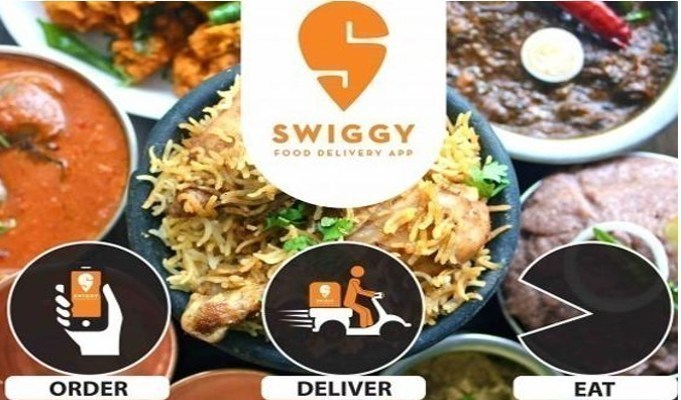
    The National Restaurant Association of India (NRAI) on Tuesday said it has raised concerns over deep discounting and data masking by food ordering and delivery startups such as Swiggy, Zomato and Ola’s Foodpanda. According to a report, The restaurants’ body said it flagged issues regarding misuse of dominant position, in a meeting with the app-based food ordering and delivery startups.

    “NRAI delivery task force had its first meeting with Swiggy, Zomato, Uber Eats and Foodpanda today (Tuesday). Concerns of the standalone and chain business operators regarding deep discounting, data masking, right to use own logistics, private labels and ad hoc campaigns were put forth,” NRAI president Rahul Singh said in a statement.

    Stating that the “concerns have been well taken”, he said, “we aim to continue these meetings on a bi-monthly basis for communicating feedback from the restaurant industry to the aggregators to ensure a healthy business environment for all stakeholders.” NRAI is the apex body of the Indian restaurant industry, representing over one lakh restaurants across the country.

  • Uber Eats appoints Alia Bhatt as India brand ambassador

    Uber Eats appoints Alia Bhatt as India brand ambassador

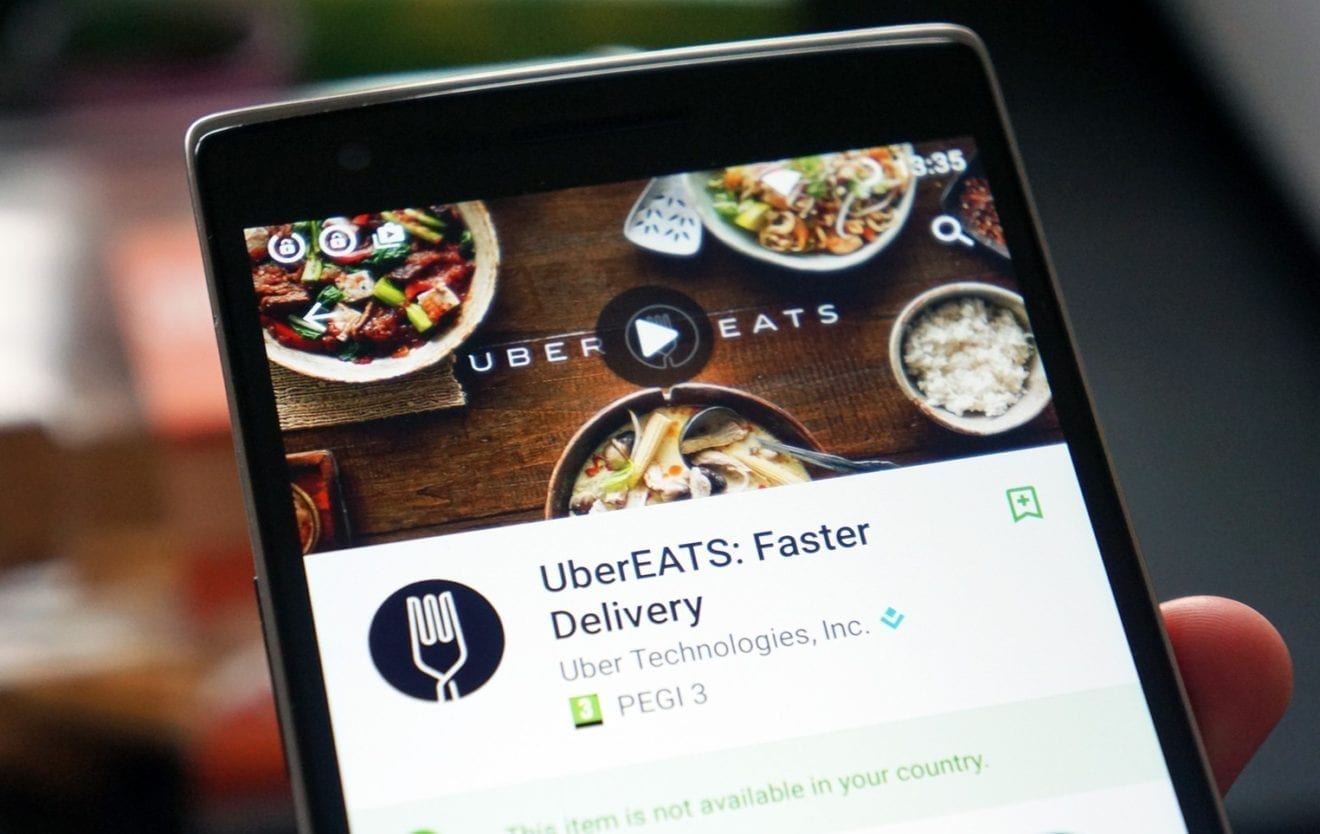
    Uber Eats, the food delivery arm of ride-hailing major Uber, Thursday said it has appointed actor Alia Bhatt as its brand ambassador in India. India is the first country for Uber Eats globally where the company has appointed a brand ambassador, Uber Eats said in a statement.

    “Alia is an inspiration to Indian millennials and we are thrilled to have her on board. The youth today relates to her easy-going, carefree and energetic personality. “She is known for her unique style and agility as an actor – the same qualities are an integral part of the Uber Eats DNA; thus making her the perfect fit to represent our brand in India,” Bhavik Rathod, India and South Asia Head, Uber Eats said.

    Uber Eats was launched in India in May 2017. The food delivery service is available across 37 cities compared to 31 cities where the American company operates its rides business. Uber Eats started in 2014 as a small delivery pilot in Los Angeles and was launched as a separate application in Toronto in December 2015. It is now available as a stand-alone app in over 350 cities globally.

    The US-based company has been aggressively investing in its Uber Eats business globally. Earlier this month, Uber said gross bookings from Uber Eats grew more than 150 percent in September quarter to US$ 2.1 billion (excluding Southeast Asia and Russia) over the year-ago period.

  • 8 Easy Startup Ideas For Asia

    8 Easy Startup Ideas For Asia

    We live in the times of so many possibilities. Therefore starting a new business to earn some extra money could be very easy and done very quickly wherever you are – it could even be Asia. People are really into new technologies there at the moment, especially mobile payments through various apps, so you could use the benefits of  this trend for your business idea.

    If you love the idea of making some money on your own, here you’ll find some original ideas you could use for your startup and maybe even start today.

    Specialist Of Education Progress Tracking

    Every parent wants their kid to do well at school and gain the best education possible. That’s why there are so many freelance tutors that help kids and students learn the subjects that they are failing at.

    An education progress tracking will help you reach the best result possible. This is done by tracking the progress of your child and comparing it to other students who are moving up to a similar goal. For example, the same degree in business management or biotechnology. Many criteria need to be evaluated and compared, like grades, honors, certificates, additional skills, and so much more.

    Develop An App For Coworking

    Coworking apps are in demand both for teams in creative and non-creative agencies and also for study groups. Therefore if you are not completely new to coding, you could build an entire network where people could work together on a digital platform. Surely there are already some apps that allow you to share, comment files, and work on projects together, but you can always research your competitors and make an even better product. Simply detect what’s lacking in these apps.

    Print On Demand Business

    Print on demand businesses are getting really popular lately. That is because it doesn’t require any investments and therefore is a perfect startup idea for young people like students. The best part is that you don’t need to be responsible for keeping items in stock, producing it or putting logos on it.

    One of the most popular forms of print on demand business is selling t-shirts. All you’ll need to do is come up with the design. If you want to learn more about how to sell t shirts online – there are POD platforms like Printify that are very easy to use and offer you articles that help improve your business.

    App For Acting

    This could be a similar idea to SnapChat or Instagram Stories, but with a completely different concept. Friends would be able to create short videos with specific timing, for example, 20 seconds. And other friends would have to continue the story. After finishing a story, you could watch it as a single movie clip. To access a group, you should have a special code, link or different kind of key to access. Some groups could be open to everyone thought.

    Job Interviews On Video

    Image credit: Seth Doyle

    Wasting time always means wasting money. Companies and their hiring specialist waste tons of time trying to find the best candidates for one or another job position. It’s hard to imagine, how many time has been wasted on candidates that weren’t a good fit for the company.

    And you could be the one to offer these companies a solution and create a platform with already prepared video interviews. They would be short and very specific – candidates would be asked a few questions and answer it on camera. This could be a really good filter for the hiring specialists.

    Local Social Media Network

    Social media is extremely popular nowadays. But what if you were to create a new platform that would be based only on location? You would be capable of connecting with people, see events and other information related only to the place you are currently in. This would filter out a lot of unnecessary information that we see on our Facebook every day.

    Create An App For Recycling

    Image credit: Paula Brustur

    A lot of people today care about nature and recycling, but really lack knowledge about ecology and how it works. It’s hard to determine what is truly toxic for us and our environment and sometimes we just don’t know how to properly utilize specific products.

    If you were to create a recycling app, it could help people understand recycling more, especially with all the pollution is Asia. For example, if someone would be thinking how to recycle one or another item the right way, they could type the product in your apps search and quickly find an answer.

    Sell Your Own Crafts

    If you have some skills for crafting, you should know that it’s a very trendy thing to do at the moment. Especially things like handmade jewelry and gifts. You could sell your crafts on Etsy, but you can also create your own e-store. All you need is to buy a domain, choose the design and add all needed forms for orders and contacting.

    To save some money, don’t pay the programmers for creating the forms for you, simply use CaptainForm wordpress form plugin that will offer you all the forms your website might need.