Tag: apple

  • Apple iPhone’s Implodes in China Stock Crash

    Apple iPhone’s Implodes in China Stock Crash

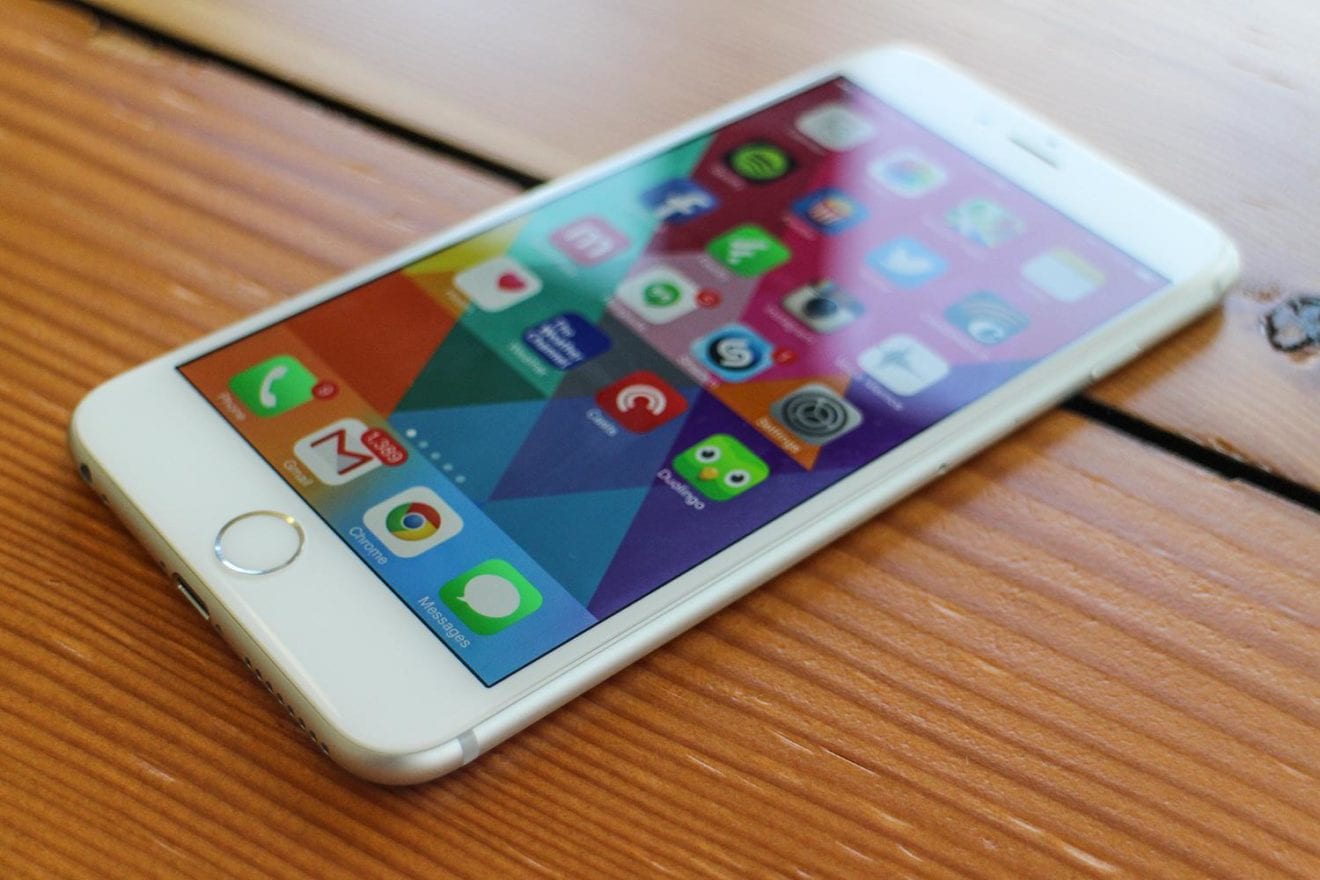
    Apple iPhone sales appear to be in big  trouble, despite iPhone being on track to post a 40 percent year-over-year unit sales gain through the second quarter.

    Having lost the top position in U.S. smartphones sales to Samsung in May, virtually all of Apple’s positive sales momentum has been coming from the China. But after losing $3 trillion in the markets, and with their wealth frozen, a hundred million Chinese no longer need an iPhone.

    Apple is reported to be growing about five times faster than Samsung, despite excellent reviews of Samsung’s new Galaxy S6/Edge. Analysts’ positive opinion of Apple was reaffirmed when Samsung reported in May that it only achieved a 15 percent rise in profit to $6.1 billion on a 2 percent quarter-to-quarter revenue growth, to $43 billion.

    A close look at Apple’s numbers show that first quarter revenue from “Greater China” grew by 71 percent year-over-year, to $16.8 billion. The iPhone sales growth in China accounted for over 56 percent of Apple’s total revenue growth for the quarter.

    Analysts expect Apple to post another extraordinary sales report for the second quarter ending June, with over 50 million iPhone unit sales and revenue of $48 billion.

    Kantar Worldpanel Com Tel’s Carolina Milanesi published a comment last week that after losing U.S. market leadership to Apple in the three-month period through April 2015, the latest data shows that Samsung was again number one in U.S. vendor rankings in the first full month of Galaxy S6 availability.

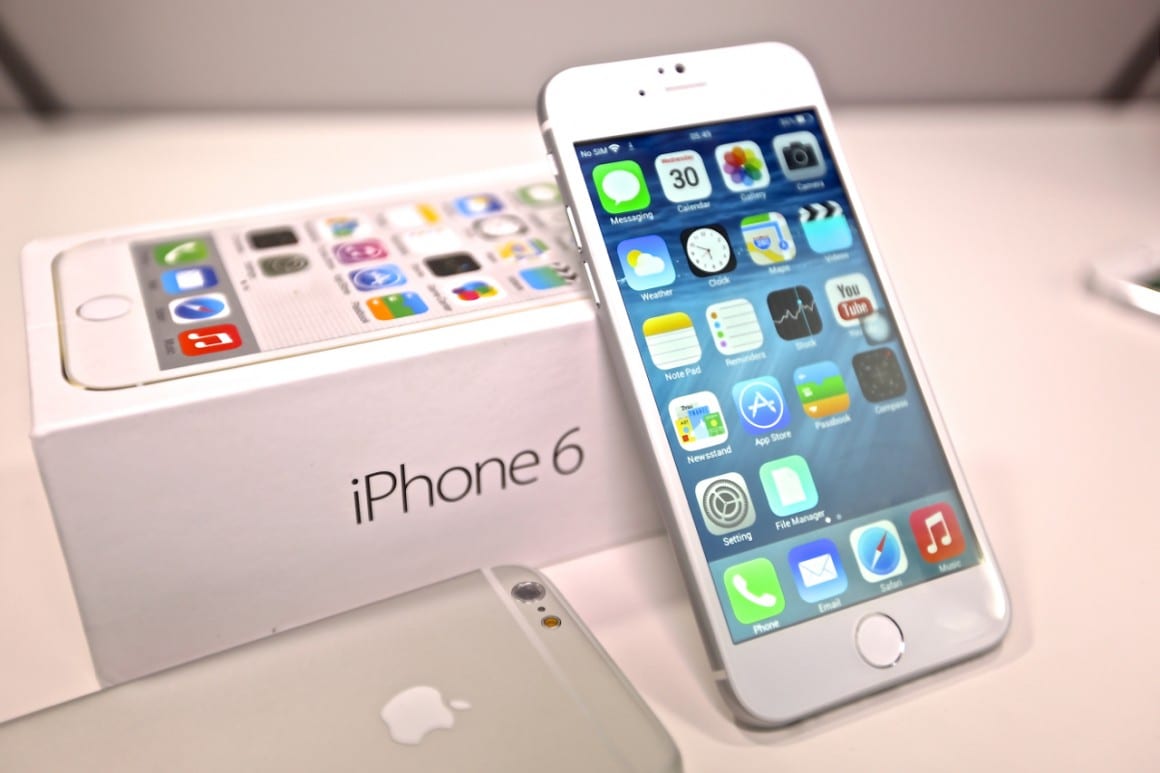
    The iPhone 6 remained the best-selling smartphone in the U.S., and the iPhone 6 Plus was the fifth-most-popular for the period ending May 30. But Samsung’s Galaxy S5 held the second spot, and the Galaxy S6 held third place. As a result, for the three months ending May, Apple’s U.S. iPhone sales U.S. actually declined by 5 percent from the previous year.

    Kantar also exposes Apple’s Iphone poor performance in India and the three big Latin America markets of Mexico, Brazil and Argentina. Apple’s best penetration of these rapidly growing markets is Mexico, with only a 6.4 percent market share.

    Such a shocking turnabout would be a disaster.

    For the three months ending in May, China unit sales were up by 46.26 percent.The Apple’s growing dominance in the “Red Dragon” has been due to a concerted effort by Apple’s management to make iOS and Mac OS X easier for Chinese language users. Many of the upgrades at this year’s Apple Worldwide Developers Conference 2015 were optimized specifically to target Chinese users, including new tools for developers to respond to the unique challenges associated with Chinese language.

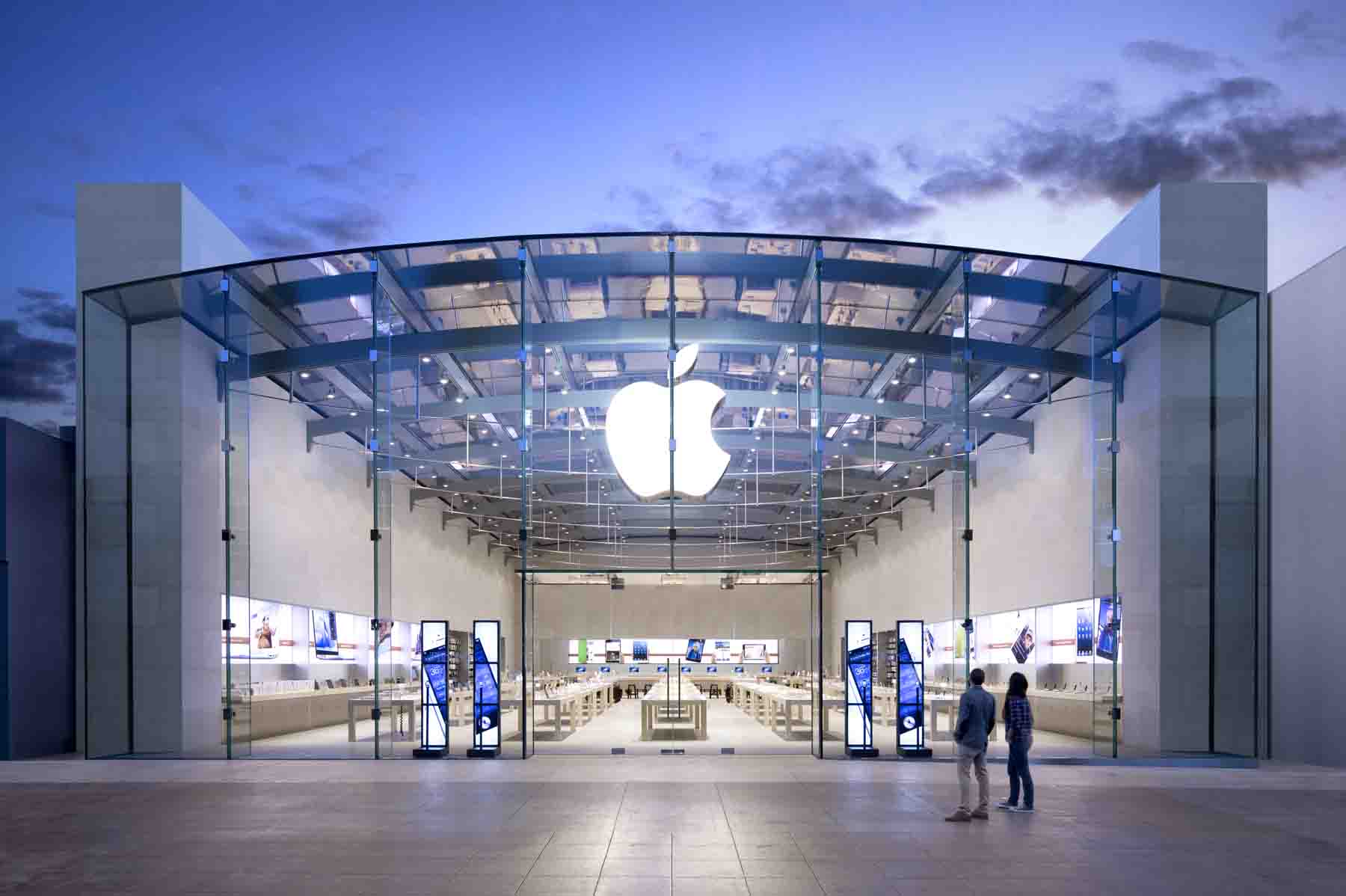
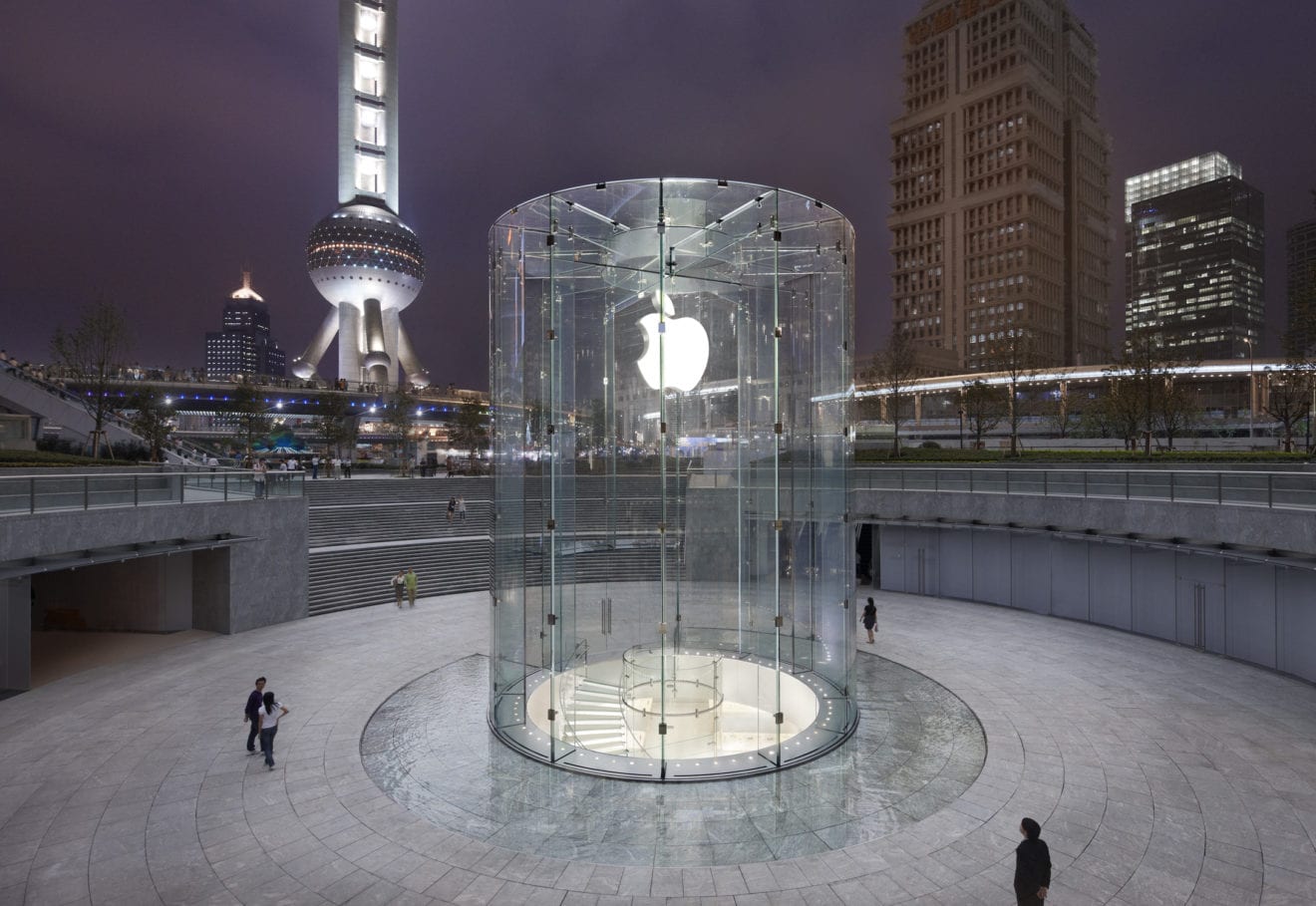
    Apple has also won praise for the effectiveness of its retail stores and “Genius Bar” help desks in China. Apple’s’ head of retail stores, Angela Ahrendts, recently announced that the company opened 5 additional stores in February and is scheduled to expand from 15 to 40 stores over the next two years. Located in premium retail space, Apple’s retail stores in China are meant to distinguish the brand as aspirational.

    But all this good news for Apple was through the month of May, when the Chinese stock market was up over 150 percent for the year. Patriotically following China President Xi Jinping’s late 2013 call for “Silk Road” domestic reforms aimed at expanding consumption by taking public hundreds of state-owned-enterprises, the number of Chinese stock brokerage accounts for small individual investors exploded from 20 million to about 100 million. The ultimate sign of status became watching live stock prices on the iPhone 6.

    But after the Chinese stock markets lost $3 trillion in just 16 days of trading, the communist government on Thursday stepped in and suspended over half of the 2800 stocks in China for up to 6 months. Large holders are not allowed to sell stock and company insiders have been told to buy immediately.

    China’s stock market boom had been a wealth machine until it shockingly bankrupted tens of millions of Chinese in just a few weeks. With their capital frozen, demand for more iPhones to check suspended stocks seems ready to plummet.
  • iBox opens new outlet in Indonesia

    iBox opens new outlet in Indonesia

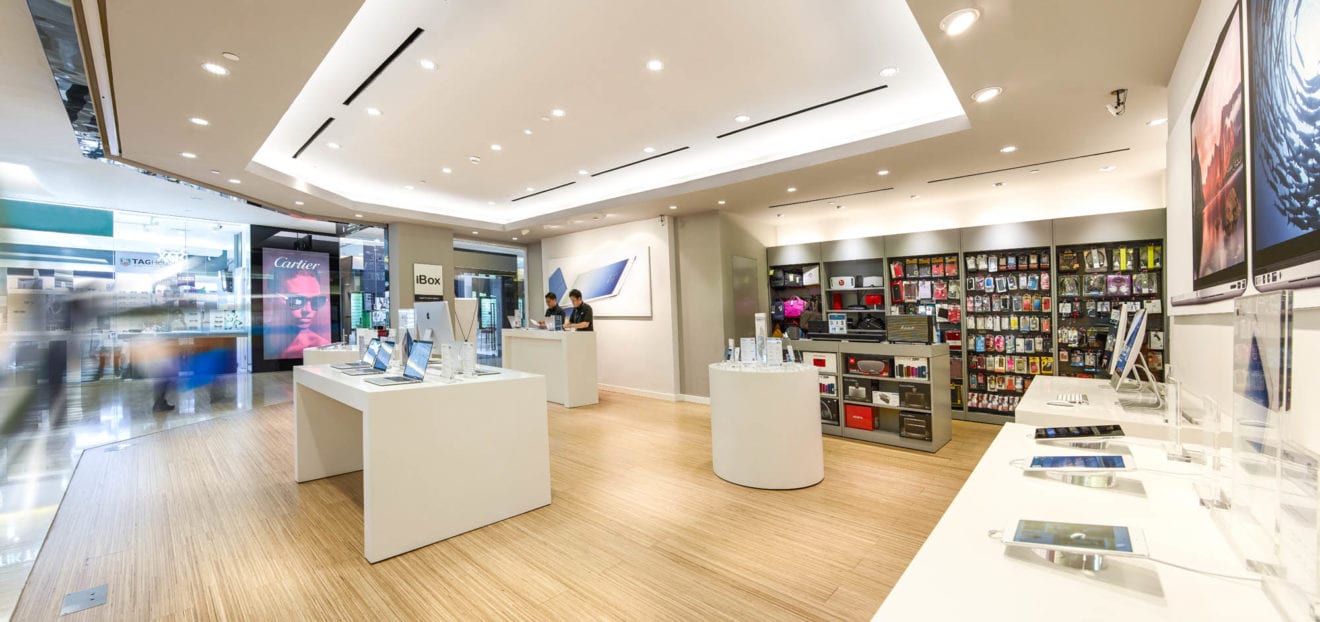
    iBox, the leading Apple Premium Reseller (APR) in Indonesia, recently opened a new store in Bandung, West Java. The new store, located in Bandung Electronic Centre (BEC), is the third iBox in the city, joining existing branches in Dago and Palace Plaza. In total, iBox operates more than 40 outlets across Indonesia as well as multiple Apple service centres. iBox is a business unit of Erajaya Group.

    iBox outlets offer a wide range of Apple products, plus software and accessories, delivering a one-stop-shop digital lifestyle retail experience, according to the company. iBox was the Apple partner in Indonesia to become a premium service and provider and is the country’s only Apple authorised training centre.

    The new iBox BEC Bandung will demonstrate a full range of Apple products with trained staff on hand to explain how the products can enrich consumer lives. iBox positions itself as the local Apple expert for consumers across Indonesia.

    Erajaya Group was established in 1996 and has grown to become a major distributor and retailer of mobile devices, accessories, computers and consumer electronics. Erajaya Group’s mission is to position itself as a leading distributor with direct integrated access to consumers and retailers, and to provide a complete range of mobile products and solutions.

  • Singapore greets Apple Watch with a shrug

    Singapore greets Apple Watch with a shrug

    In tech-savvy Singapore, new Apple products typically trigger snaking lines spanning multiple blocks, but the Apple Watch got short shrift.

    When stores on the city’s Orchard shopping district opened their doors at 9am, a group of around 40 had gathered at the iconic ION mall. Across the street, around 15 people were milling outside Paragon’s iStudio store while a crowd of around 25 lined up outside luxury watch store The Hour Glass.

    Because Singapore doesn’t have an Apple retail store, only select authorized re-sellers are allowed to carry the Cupertino giant’s products.

    “I was expecting a much longer queue, so this is good news for me,” exclaimed Mario Dinata, a mobile engineer waiting in line at iStudio.

    Indeed, the turnout pales in comparison to previous Apple launches in the wealthy Southeast Asian city-state. Last September, hundreds of fans queued for the iPhone 6 days before the official launch after slots for online pre-orders vanished in mere minutes.

    The smartwatch only becomes available on Apple Singapore’s online store on Friday afternoon and phone inquiries have been minimal in the past week, according to employees at the iStudio store.

    As an app developer, Dinata says he’s often first in line for the newest Apple toys so he can test it out before his competitors. “This is definitely much smaller than previous lines,” he said, smiling.

    None of the stores were able to provide a sales update by mid-morning, but judging by a brief survey of people in line, the Apple Watch Sport was by far the most in demand out of the three models.

    The 38mm Sport retails for $349, versus $549 for the Apple Watch. Local pricing of the third option, the luxury Apple Watch Edition crafted from 18-karat gold, remained unconfirmed by Friday morning.

    “If I had the money, I would buy the Edition model any day over a luxury Swiss watch,” remarked 56-year old Mrs. Li, who declined to give her first name. “I’m buying the Sport today since it’s the cheapest one available. I’m an Apple fan, so I have to get the Watch. I have all their other products.”

    The device has already hit the market elsewhere in the region following an April launch in Japan, China and Hong Kong. Aside from Singapore, the watch also goes in sale in six other countries Friday, including South Korea and Taiwan.

    Rob Enderle, president and principal analyst at technology advisory Enderle Group, doesn’t expect much hype going forward.

    “The Watch has one problem the iPhone didn’t have. Kids have stopped using watches some time ago, so Apple has to undo this perception that watches are for old folks and out of date,” he told CNBC. “This will likely go through three versions before reaching its stride, if it ever does.”

    Apple CEO Tim Cook has remained silent on global sales thus far, but 2.8 million units may have been sold since its April debut, Slice Intelligence told Reuters earlier this month.

  • Apple Fitness Director Jay Blahnik Hosting Special Events at Asia-Pacific Retail Stores

    Apple Fitness Director Jay Blahnik Hosting Special Events at Asia-Pacific Retail Stores

    Apple’s Director of Fitness and Health Technologies Jay Blahnik is touring the Asia-Pacific region this week to host live Q&A sessions with popular personal trainers and other well-known icons at Apple Stores in Australia, China and Japan. The special events focus on the intersection of health, fitness and technology, such as how to live a better life by maintaining a healthy body and mind.

    Jay Blahnik Sydney Instagram

    Blahnik sat down with Australian personal trainer Michelle Bridges for a live Q&A session at the Apple Store in Sydney, Australia on May 29 before heading to the Omotesando Apple Store to speak with technology journalist Nobi Hayashi in Tokyo, Japan earlier today, as noted by Macotakara. Blahnik will now travel to Beijing for an event with Chinese action filmmaker Donnie Yen at the Apple Store in China Central Mall on June 3.

    Prior to joining Apple in July 2013, Blahnik was a Nike FuelBand consultant for almost 20 years and an award-winning fitness instructor and personal trainer. As health and fitness director at Apple, he has played an instrumental role in development of the Apple Watch, working in the company’s top-secret health and fitness lab where it has collected over 18,000 hours of health and fitness data from employee workout sessions.
  • Singapore, Taiwan, Korea to get Apple Watch

    Singapore, Taiwan, Korea to get Apple Watch

    Singaporeans, Taiwanese and South Koreans will be capable of purchase the Apple Watch from later this month.

    “The response to Apple Watch has surpassed our expectations in each approach, and we’re thrilled to convey it to extra clients around the globe,” stated Jeff Williams, Apple’s senior vice chairman of Operations. “We’re additionally making nice progress with the backlog of Apple Watch orders, and we thank our clients for his or her endurance. All orders positioned via Might, with the only exception of Apple Watch 42 mm Area Black Stainless Metal with Area Black Hyperlink Bracelet, will ship to clients inside two weeks. At the moment, we’ll additionally start promoting some fashions in our Apple Retail Shops.”

    Apple says the Apple Watch might be obtainable in Singapore, South Korea, Taiwan, Italy, Mexico Spain and Switzerland from Friday, June 26 from the Apple On-line Retailer, Apple’s retail shops and chosen authorised resellers.

    The world’s developer group has already created hundreds of apps for Apple Watch with new apps for patrons to discover and uncover. Apple Watch wearers can already hold monitor of a Singapore Airways flight, keep in contact with associates in South Korea with KakaoTalk, discover the close by YouBike station in Taiwan and entry film tickets with Cinepolis in Mexico.

  • Apple watch to be available in Singapore from June 26

    Apple watch to be available in Singapore from June 26

    Apple Watch will be available in Singapore from June 26, according to a press statement on Apple’s website on Thursday.

    Fans will be able to buy the smartwatch from Apple’s online and retail stores, and selected authorised resellers.

    Selected models of the Apple Watch will also be available from boutique store Malmaison by The Hour Glass in Singapore.

    The watch will also be available in six other countries on June 26 – Italy, Mexico, South Korea, Spain, Switzerland and Taiwan.

  • Apple re-crowned world’s prime model—however watch Alibaba, Fb

    Apple re-crowned world’s prime model—however watch Alibaba, Fb

    Apple has reclaimed its crown because the world’s most dear model, value a staggering $247 billion, in line with WPP and Millward Brown.

    The tech behemoth triumphed within the promoting businesses’ annual prime 100 most respected international manufacturers report, revealed on Wednesday. The report ranked model worth by taking a look at views of potential and present consumers of a model, plus monetary knowledge.

    “Apple is obvious on what it stands for, and by no means stops refreshing its message to maintain the distinction that makes it so fascinating,” stated Doreen Wang, Millward Brown’s international head of BrandZ, within the report.

    Regardless of the recognition of the Apple Watch, Wang and colleagues stated that the iPhone 6 was the primary driver of Apple’s 67 % year-on-year bounce in model worth.

    “Apple continues to ‘personal’ its class by innovating and main the curve in a method that generates actual advantages for shoppers,” stated Wang.

    Apple’s success pushed Google again into second place, with its model worth rising 9 % over the yr to $174 billion.

    Fb was the fastest-growing model, attaining 99 % progress on account of its success in buying and integrating different platforms corresponding to Instagram and WhatsApp.

    West to East shif

    Chinese language e-commerce chief Alibaba made its first look within the BrandZ rankings, with its model value $66 billion. This put it aboveAmazon, the subsequent most useful retail model, and Walmart.

    Apparently, the world’s two most respected retail manufacturers each lack bodily shops.

    “Europe’s model powerhouses stagnate as Chinese language manufacturers develop and U.S. manufacturers make a comeback,” stated the BrandZ report.

    Learn ExtraThe Shopper Electronics Present heads to Shanghai

    This yr, 14 Chinese language manufacturers ranked within the prime 100, up from only one in 2006. A lot of the manufacturers that have been pushed out the rankings have been from Europe, stated the BrandZ report, with simply 24 European manufacturers remaining.

  • Apple China circumstances not so dangerous, exec says

    Apple China circumstances not so dangerous, exec says

    Apple’s working circumstances in China are enhancing, and have been by no means as dangerous as media studies instructed, in line with senior government Jeff Williams.

    “I could not be prouder of the work the group is doing ensuring individuals who work there are handled pretty,” Williams, a senior vice chairman, stated Wednesday in an on-stage interview on the Code Convention in Rancho Palos Verdes, California. “Individuals are constantly getting paid extra. Yearly gross sales are growing. We pay greater than common charges within the space.”

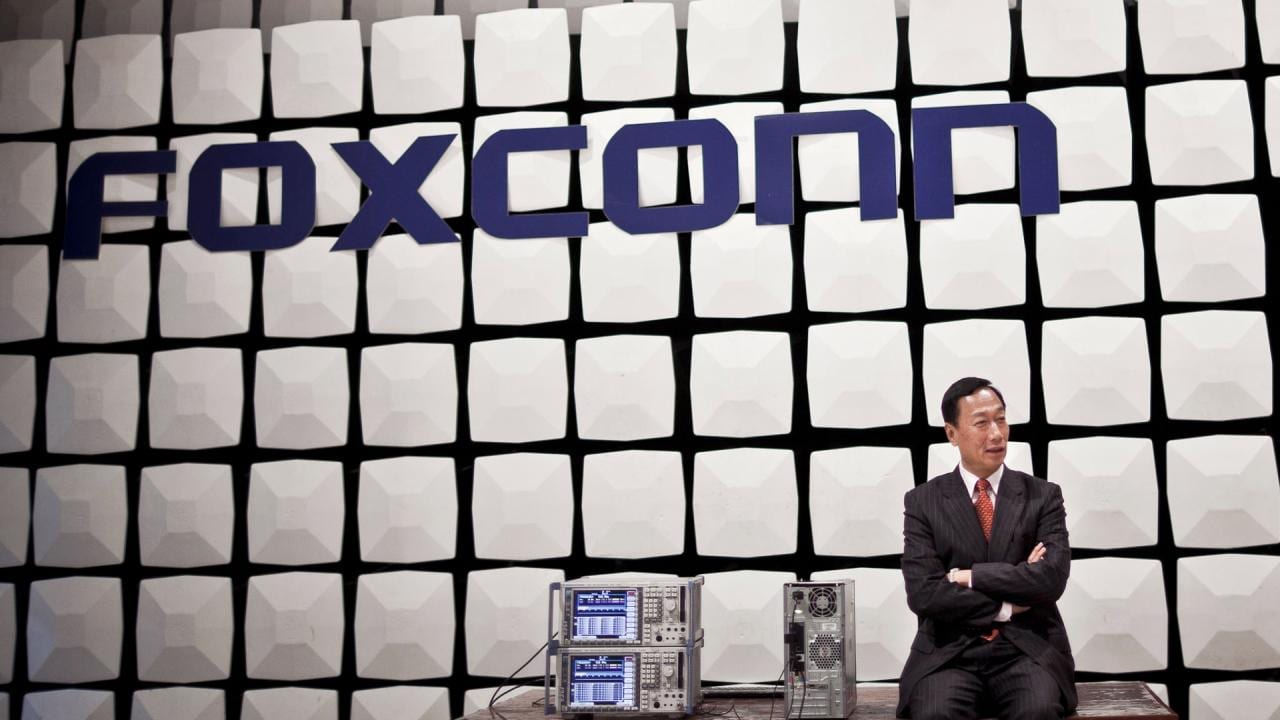
    Williams stated that Apple’s investigation of suicides through the years at amenities run by Foxconn, its outdoors producer, indicated that they weren’t associated to working circumstances.

    Moreover, he stated there weren’t that many on a relative foundation. When suicide charges have been at their highest, they have been decrease than at any level within the U.S.

    “By that definition, it might be the happiest place on earth,” he stated.

    Apple has for years been underneath hearth for the remedy of manufacturing unit staff in China.

    A string of suicides from 2010 to 2012 caught the eye of mainstream media retailers, and led to tales highlighting the extraordinarily lengthy hours, low pay, tough circumstances and younger age of many guide labourers serving to assemble iPhones and different units.

    Apple co-founder Steve Jobs addressed the difficulty 5 years in the past on the D: All Issues Digital convention, the predecessor to Code.

    As for different merchandise that the world’s most dear firm has within the works, Williams was as cagey as some other Apple when discussing the longer term. Particularly, Williams was requested how the corporate will spend a number of the mountains of money on its stability sheet.

    He provided one trace: “The automotive is the last word cellular gadget.”

    Apple has been rumoured to be within the auto recreation for some time, however the firm hasn’t confirmed that it is engaged on something past the related automotive software CarPlay.

  • China powers Apple profit surge

    China powers Apple profit surge

    Apple’s China sales revenue soared 71 per cent to US$16.8 billion in the first three months of this year, putting Greater China ahead of Europe as the tech giant’s second largest market.

    It was the main driver of a sharp 33 per cent increase year-on-year in quarterly Apple profit – to a massive US$13.6 billion.

    In product terms, much of the growth came from the iPhone of which the company sold 61 million during the quarter – or roughly 678,000 phones every day. iPhone sales rose 40 per cent year-on-year.

    Apple’s total sales revenue increased 27 per cent to US$58.01 billion.

    CEO Tim Cook says the company was thrilled by the continued strength of the iPhone, Mac and App store especially.

    “We’re seeing a higher rate of people switching to iPhone than we’ve experienced in previous cycles, and we’re off to an exciting start to the June quarter with the launch of Apple Watch.”

    The massive profit has boosted Apple’s cash reserves to more than US$193 billion, prompting a ramping up of the share buy-back program and a 50 cent per share dividend to shareholders.

    The key to Apple’s improvement was the launch of the larger screen model which has helped lure sales back from Samsung and other brands.

    The only blemish, if you could call it one, was a 23 per cent drop in sales of the iPad to 12.6 million units, with revenues down 29 per cent.

  • Apple plans China iPhone trade-in program with Foxconn

    Apple plans China iPhone trade-in program with Foxconn

    Apple Inc plans to introduce a trade-in program for iPhones in China in association with the Foxconn Technology Group, Bloomberg reported, citing people familiar with the effort.

    Under the program, consumers will be able to exchange older iPhones at Apple stores in China for credit against the company’s products starting 31 March, Bloomberg reported.

    Chinese demand for larger-screen iPhones helped fuel Apple’s record profit of USD18 billion in the final quarter last year.

  • Apple Watch knock-offs hit China stores

    Apple Watch knock-offs hit China stores

    Apple’s new Watch range won’t be on sale until late next month.

    But Chinese consumers whose appetite for the wrist-mounted communications technology has been whetted by the high profile Apple Watch launch last week can already buy similar products at a fraction of the price.

    Apple Watch real and copy 315One is real, the other is a copy. Can you tell which is which? Answer at the end of the story.

    Knock-offs, copies, imitations, fakes – it’s hard to categorise the new breed of rival products hitting retail store shelves. For sure, some are blatant copies of the Apple Watch and their makers are likely to find themselves on the receiving end of litigation from Cupertino. But others fit into a large grey field of the retail landscape: conceptually they may be similar, they may even look alike (a watch is a watch, right?) but some operate on Google’s Android operating system making it extremely difficult to dub them fakes.

    The official Apple Watch goes on sale in three styles, ranging in price from US$350 to $17,000.

    But already Alibaba’s Taobao is selling a watch called the AW08 for $59 which can be connected to devices running Google Android and delivered within 24 hours. Other similar products cost as little as $39.

    According to tech news website Geekwire.com, other “knock-offs” branded D-Watch, Airwatch A8 and Ai Watch are also available on Taobao at prices substantially below the Apple Watch and “designed to look just like the Apple Watch”.

    Some commentators question whether the knock-off phase will damage Apple, in a nation where image and status is of growing importance, or if all the hoopla will actually help Apple’s brand and product awareness, driving sales of the ‘real McCoy’.

    “Most people who buy them will do so knowing they are not Apple’s real Watch,” Matthew Forney, president of the business consultancy Fathom China, told the BBC.

    “Apple products are very popular in China, and it’s possible that Chinese consumers will want to be seen to be the first person on their block to wear its Watch. However, I think most of those consumers are aware that there has been an issue with fakes and copycats on Taobao and would be highly suspicious of the devices.”

    Others are worried about the damage such businesses do to brands in general.

    “These guys are specialists,” Laurent Le Pan, founder and CEO of the Omate smartwatch maker told CNN Money.

    “The speed at which they can bring copies on the market is amazing. The hardware is not the big challenge – the hard part is on the software and the application side. In the end, you sometimes need to be an expert to tell the difference between real and fake.”

    For now, Apple might own the Watch space with the perception it is the first to market – other brands have already released smart watches of their own, but to date few if any connect to smartphones, their features largely limited to exercise measuring and physical fitness monitoring. But that won’t hold for too long, with Apple’s second wave of competition coming from established genuine brands rather than the armada of copycats.

    Swatch, the world’s largest watchmaker, plans to launch a smart watch to undercut Apple and other legitimate rivals featuring Near Field Communication (NFC) chips later this year, which will allow payments by watch, among other features.

    Rival manufacturers will have to be compatible with iOs or Android, so most will focus on Android given the likely barriers Apple will place on sanctioning direct competitors on its own OS.

  • China, Japan first to get Apple Watch

    China, Japan first to get Apple Watch

    The much anticipated Apple Watch has been unveiled – and China, Hong Kong and Japan will be among the first 10 markets globally in which it will go on sale.

    From April 10, the Apple Watch range will be available for preview, fitting and ordering in Australia, Canada, China, France, Germany, Hong Kong, Japan, the UK and the US and on the Apple Online Store. On April 24, Apple Watch will be available to purchase online or by reservation in Apple’s retail stores and in China and Japan through selected Apple authorised resellers. Customers who purchase online or in-store from Apple will be offered Personal Setup to customise and pair Apple Watch with their iPhone.

    Apple describes the Apple Watch as its “most personal device yet” – an “incredibly accurate timepiece, an intimate and immediate communication device and a groundbreaking health and fitness companion”.

    “Highly customisable for personal expression, Apple Watch also brings an entirely new way to receive information at a glance and interact with the world through third-party app experiences designed specifically for the wrist.”

    Apple says the watch will keep time to within 50 milliseconds of UTC, the universal time standard. Its face can be customised by the user, with a traditional analog look, an “information-rich Modular face” or animated butterflies and jellyfish.

    “Apple Watch begins a new chapter in the way we relate to technology and we think our customers are going to love it,” said Tim Cook, Apple’s CEO. “We can’t wait for people to start wearing Apple Watch to easily access information that matters, to interact with the world, and to live a better day by being more aware of their daily activity than ever before.”

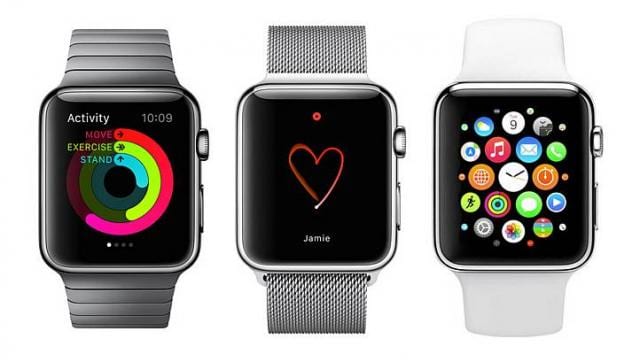
    Apple Watch 3 models

    Its touch screen can differentiate between touch, tap and swipe and the watch ‘taps’ the wearer’s wrist if new information is received.

    Features include email, the ability to answer phone calls from your wrist (the device must be wirelessly connected to an iPhone 5 or later running on iOs 8.2, downloadable from today), Apple Pay (where markets and retailers accept this payment mechanism), communication through social media apps and monitoring your health and fitness.

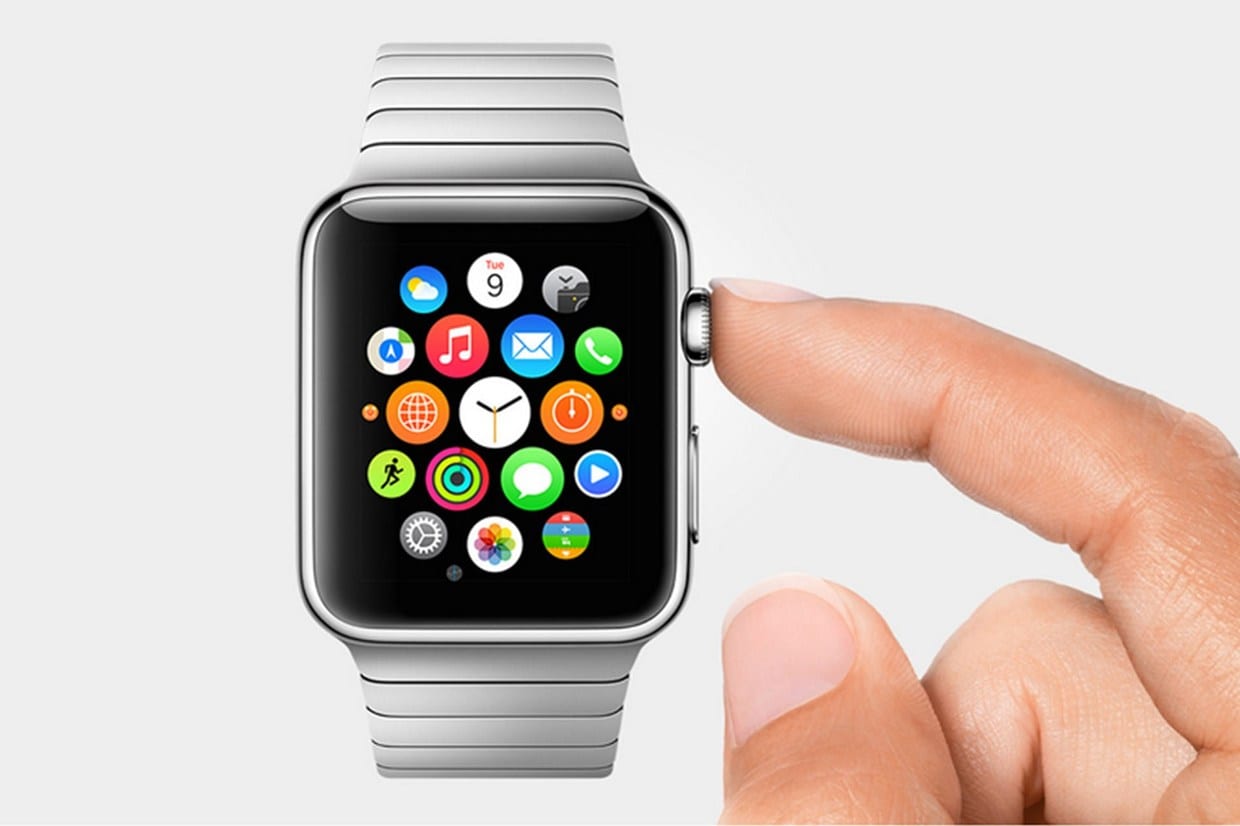
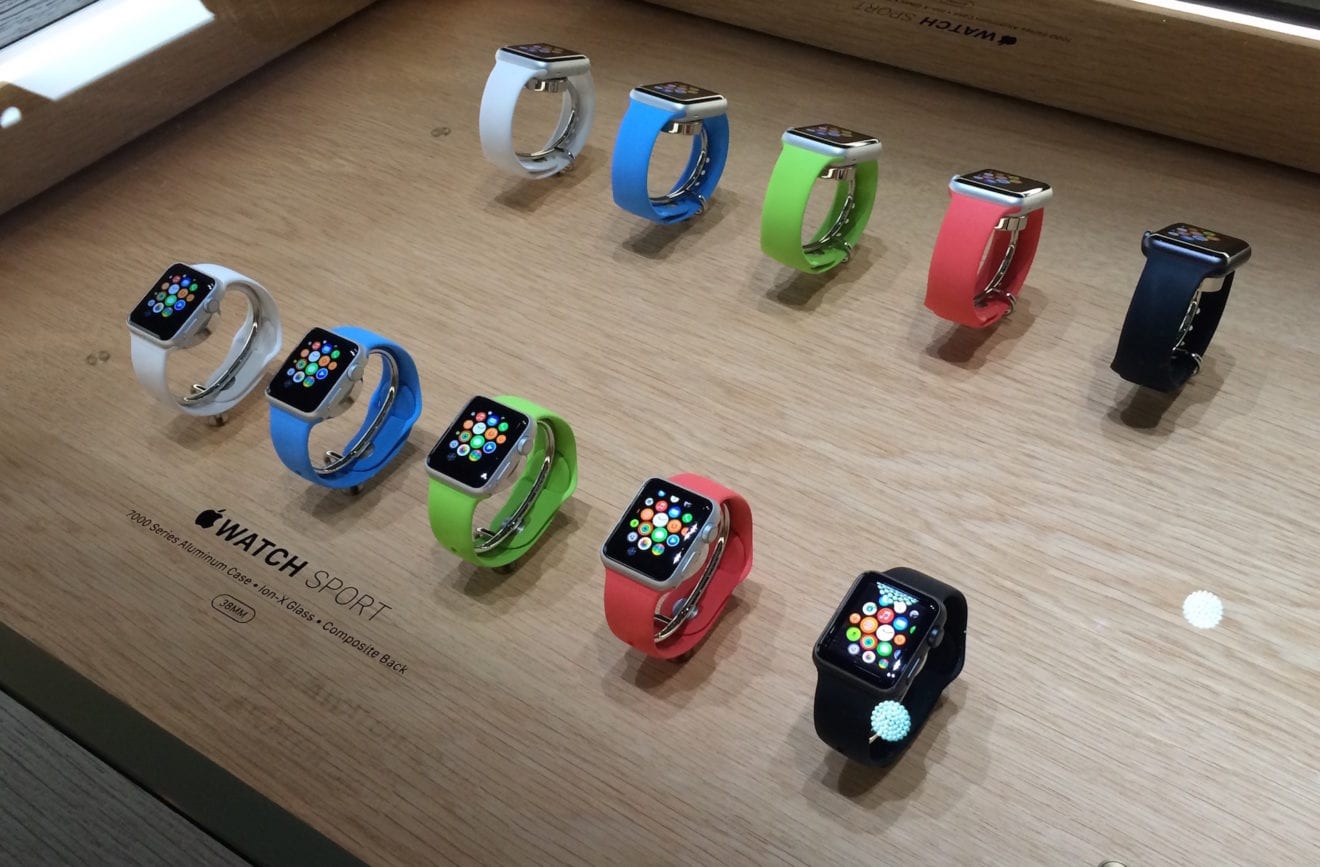
    Apple Watch is available in two different sizes, 38 mm and 42 mm, and in three distinct collections –  Apple Watch Sport, Apple Watch and Apple Watch Edition. Apple Watch Sport features a lightweight anodized aluminum case in silver and space gray with a Retina display protected by strengthened Ion-X glass and matching high-performance fluoroelastomer Sport Band in five colors.

    The Apple Watch collection features highly polished stainless steel and space black stainless steel cases with a Retina display protected by sapphire crystal. The Apple Watch collection comes with a choice of three different leather straps, a stainless steel link bracelet and Milanese loop, and a black or white Sport Band.

    Apple Watch Edition features cases specially crafted from custom rose or yellow 18-karat gold alloys developed to be twice as hard as standard gold, a Retina display protected by polished sapphire crystal and a choice of uniquely designed straps and bands with 18-karat gold clasps, buckles or pins.

    Apple Watch Sport is priced at US$349 and $399 and Apple Watch, from $549 to $1099. The Apple Watch Edition, crafted from custom rose or yellow 18-karat gold alloys, starts at US$10,000.

    In line with its luxury brand positioning, Apple will also put the Apple Watch on show at selected department stores around the world.

    Apple Watch will also be available to preview or try on at Galeries Lafayette in Paris, Isetan in Tokyo and Selfridges in London on April 10 and for sale on April 24. It will also be sold from boutiques in major cities, including Colette in Paris, Dover Street Market in London and Tokyo, Maxfield in Los Angeles and The Corner in Berlin.

  • Apple to revamp its stores

    Apple to revamp its stores

    Apple is in the process of redesigning its stores, drawing on the design expertise of Jony Ive.

    Ive, Apple’s head designer, revealed he’s working with retail boss Angela Ahrendts on a revamp of its stores in a lengthy profile with the New Yorker magazine.

    As Apple’s senior vice-president of design, Ive has emerged as the company’s creative soul, continuing an aesthetic tradition set by co-founder Steve Jobs. Ive was responsible for the build and the finish of the iMac, the MacBook, the iPod, the iPhone, the iPad, and the forthcoming Apple Watch.

  • LG unveils “luxury” smartwatch in Apple challenge

    LG unveils “luxury” smartwatch in Apple challenge

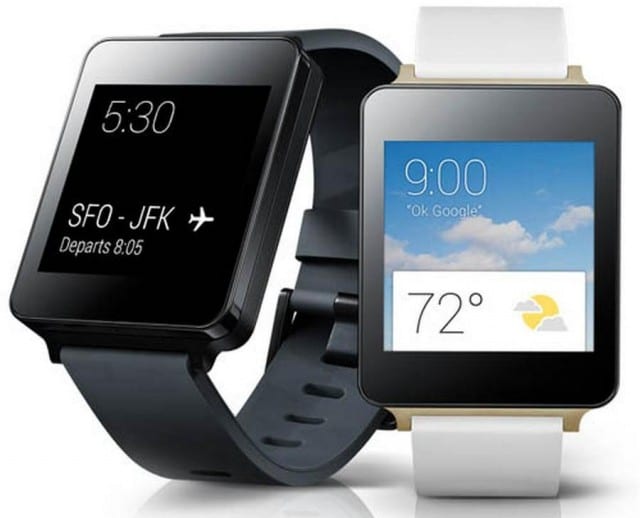
    South Korea’s LG has unveiled an “all-metal luxury smartwatch” in an attempt to broaden the appeal of its wearable devices as a fashion item and steal a lead on the hotly-anticipated Apple Watch.

    The LG Watch Urbane has a 1.3 inch plastic touchscreen display and runs on Google’s Android Wear operating system. The stainless steel body comes in gold and silver with a leather strap.

    The South Korean electronics giant has billed the device as a “luxury timepiece” and the “perfect fashion accessory” for men and women.

  • Apple standout winner in China’s luxury slowdown

    Apple standout winner in China’s luxury slowdown

    Chinese corporates and wealthy consumers are taking gift-giving down a notch this Lunar New Year, opting for iPhones instead of Birkin bags or Louis Vuitton wallets.

    The annual holiday, which falls on February 19-20 this year, is a time of gift exchange between family, colleagues and business contacts.

    “The iPhone 6 has replaced luxury items as a key gift this Chinese New Year,” Shaun Rein, founder and managing director of the China Market Research Group told CNBC. “Corporates, for example, used to buy luxury products to give their high performing employees, now they are giving iPhones because they more reasonably priced and still considered premium enough,” he said.