Tag: apple

  • Apple, Inc.’s Retail Push Into India Is Under Way

    Apple, Inc.’s Retail Push Into India Is Under Way

    Much of the attention surrounding Apple‘s iPhone is focused on the company’s two most important markets: the U.S. and China. And rightly so — Apple brings in the most revenue from its U.S. sales, while China is the company’s largest smartphone market.

    But mobile device makers are focusing their attention on India’s fast-growing mobile market as well. And if new information about Apple proves true, the iPhone maker is in the midst of establishing a bigger retail presence there as India moves toward becoming the second-largest smartphone market in the world.

    What Apple’s doing
    According to information from NDTV Gadgets, Apple has selected about 100 new reseller retail locations in India, with the goal of adding 500.

    The stores aren’t owned by Apple, but they will sell the company’s mobile devices — part of a larger Authorized Mobility Resellers (AMR) program Apple has set up in the country. So far, 12 cities have reportedly been selected for the AMR program, and individual resellers are still being selected based on their past Apple product sales numbers.

    Why expand further into India?
    It’s no secret that India is quickly becoming a major market for smartphone makers, and Apple is likely trying to position itself to benefit from the country’s trends.

    According to Strategy Analytics, India will become the second largest smartphone market in the world in the next two years. China will continue leading the way, while the U.S. will be pushed down to the No. 3 spot.

    Earlier this month, Strategy Analytics’ Linda Sui said that China’s smartphone growth is slowing a bit and India is “fast becoming the next major growth wave.” That growth is fueled by the country’s low smartphone penetration and a burgeoning middle class. According to research by McKinsey, India’s middle class will expand from about 50 million people right now to 583 million by 2025, which will encompass 41% of the population.

    Apple’s big hurdle
    With its new reseller locations, Apple will be poised to capitalize on India’s projected smartphone growth. But there’s one thing the company has to look out for: local vendors and low selling prices.

    Indian device makers, particularly Micromax, are producing smartphones with good specifications for much lower prices than Apple. The NDTV Gadgets article notes that Apple may allow the reseller stores to sell devices below the official retail prices. We’ll have to wait and see if Apple actually goes through with that, or how deep the discounts are.

    Just as it did in China, Apple will have to balance its premium brand persona with the fact that many smartphone users won’t be able to afford an iPhone for a while. The average selling price of an iPhone is $660, while Micromax sells phones ranging from $50 to $300. And other non-Indian device makers, like China-based Xiaomi, sell devices in the country for about $100.

    Moving forward
    Even if these 500 resellers pan out, it’ll likely take a while (think a few years, rather than months) for Apple to be a major smartphone player in India. Right now, the company has just 2% market share in the country.

    Apple is playing the long game in India, just as it has in China. The company faced some of the same hurdles in China that it will confront in India, yet China has become Apple’s most important smartphone market, and is quickly becoming one of its largest revenue markets as well. If things play out similarly in India, Apple’s small moves right now could pay off in big ways in a few years.

    The next billion-dollar Apple secret
    Apple forgot to show you something at its recent event, but a few Wall Street analysts and the Fool didn’t miss a beat: There’s a small company that’s powering Apple’s brand-new gadgets and the coming revolution in technology. And its stock price has nearly unlimited room to run for early-in-the-know investors!

  • Fake iPhone maker shut down

    Fake iPhone maker shut down

    A Chinese manufacturer of fake iPhones has been shut down after authorities learned it had produced a stunning 41,000 handsets.

    Nine people have been arrested including the husband and wife couple behind the venture,

    reportedly aged in their early 40s.

    The factory was raided after a tipoff from US officials which had seized some of the fake iPhones after they had been landed in America.

    So sophisticated was the operation that many of the workers at the plant genuinely believed they were making the real thing.

    The factory, located on the northern edge of Beijing, was actually discovered and raided back in May, but the event was only revealed by Chinese authorities over the weekend.

    According to the BBC, “hundreds” of staff were employed in the ruse, which included repackaging used smartphone parts in new iPhone cases.

    It took just four months for the company to make 41,000 phones, all of which were exported, with sales topping US$19 million. By our calculations, that values each fake iPhone at US$463.

    All of which rather makes Hong Kong Customs’ weekend seizure of 88 smartphones being smuggled across the border into the Mainland pale into insignificance. Photos suggest those phones were iPhones, although likely to be gray imports.

  • Apple’s India test: how to gain volume and meet aspiration

    Apple’s India test: how to gain volume and meet aspiration

    With only a tiny share of the world’s fastest-growing major smartphone market, Apple Inc is stepping up its push into India, with a first targeted TV advertising campaign, expanded retail network and promotional financing schemes.

    For years, India has been a low priority for Apple as spending power is weaker than in China, where the company’s iPhones swiftly became must-have devices after their 2007 launch.

    But Apple is now looking to build on a 93 percent increase in its iPhone sales in India in April-June, which for the first time outpaced growth in China, of 87 percent – albeit from a low base. Apple has just a 2 percent share of India’s smartphone market, while South Korean rival Samsung Electronics accounts for around one third of volume sales with its range of Android phones.

    The India push coincides with Apple missing elevated expectations when it reported earnings earlier this week, prompting some investors to question how long double-digit growth can continue.

    “Apple is consciously expanding its distribution in India and pushing its products aggressively. The marketing spend too is a part of that,” said Jaideep Mehta, managing director for India and South Asia at tech research firm IDC.

    Executives at several electronics retail chains and Apple distributors said the Cupertino-based firm was chasing shelf space to make its gadgets more visible, and has more than doubled the number of distributors to five.

    Apple has also brought in a new senior executive to take charge solely of the Indian market, industry sources said, and has placed advertisements for a policy adviser to help it work with New Delhi’s bureaucracy.

    The company declined to comment on its India strategy.

    “Apple’s single-minded focus for India is on volume,” said a senior executive at an electronics chain store, who declined to be named. “They have increased distributors and want to reach out to smaller cities.”

    BALANCING VOLUME, ASPIRATION

    Analysts say much of the high growth in iPhone sales in India has come from earlier models such as the 4S, 5S and 5C, which are sold more cheaply.

    “Apple is an aspirational brand. They will (have to) balance their volume push with that to get growth,” said IDC’s Mehta.

    That could be tough in a market where you can buy around eight basic-level smartphones for the upwards-of-50,000 rupee (US$785) price of a new iPhone.

    Taking to Indian TV screens for the first time, Apple plays up the aspirational appeal of its phones, showing a glamorous Indian bride using Facetime, Apple’s video calling feature, to send coy flashes to her groom of a henna-ed hand or skirt hem before their wedding.

    In addition, Apple offers financing schemes where buyers of its latest iPhone 6 can pay in monthly instalments, and has launched Apple Music, a cloud-based music streaming service, for just 120 rupees (US$1.88) a month in India – a fifth of the price in the United States.

    The company has offered easy financing schemes in India before, but retailers say the focus on operations and marketing show Apple is now more seriously targeting the market.

    And there’s plenty of market for it to aim at.

    “The premium smartphone market will be close to 8 million units in 2015,” said Neil Shah, analyst at Counterpoint. “Apple has a lot of room to grow and capture a significant share of that,” he added, noting Apple sold just over a million iPhones in India in the year to April.

  • Reliance in 1000-store telco deal

    Reliance in 1000-store telco deal

    India’s Reliance Industries is to build a network of 1000 stores, the consumer face of a new 4G mobile phone network.

    The new mobile phone network will be launched in December with 1000 stores branded ‘Jio Centers’. The network itself will be called Jio.

    The store network will sell Jio-branded mobile phones and be backed up by 500,000 licenced connectivity outlets and one million recharge outlets. These customer contact points will be operational by December, when the network – undergoing beta testing from next month – will boast 80 per cent coverage of India.

    The stores will also sell Samsung, Apple, Huawei and Xiaomi phones for connection to its network.

    “Reliance Digital would be a catalyst by making available entry level to ultra premium 4G LTE smartphones… in driving the device ecosystem in India for Jio,” the company said in a statement.

    Reliance Industries operates in a number of sectors, although its base is in energy and retailing. It is headed by Mukesh Ambani, India’s richest individual.

  • Apple China sales double

    Apple China sales double

    Apple China sales doubled in the three months to June 27 – but that wasn’t enough to pacify analysts whose reactions drove the tech giant’s stocks downwards.

    Apple says its quarterly profit leapt 38 per cent to US$10.7 billion on surging iPhone sales as turnover jumped 33 per cent to US$49.6 billion. It now has a massive $203 billion in cash reserves.

    But those figures weren’t enough to please analysts. The company’s stock price fell six per cent after the figures were released. Doomsayers fear Apple’s iPhone sales will come under pressure in Mainland China as consumers there reel in their spending – this despite the almost undentable local passion for Apple as a brand.

    “We had an amazing quarter,” Apple CEO, Tim Cook, insisted, noting that iPhone revenue was up 59 per cent from the same period a year earlier.

    But analysts expected higher sales – and some latched on to rumours the Apple Watch sales have tanked after launch and the fact iPad sales fell for the sixth straight quarter, this time by 18 per cent to 10.9 million. Mac sales increased 9.5 per cent to 4.8 million.

    Apple sold 47.5 million iPhones in the quarter, with sales up 85 per cent in Greater China – Mainland, Taiwan, Hong Kong and Macau – where the company’s overall revenue more than doubled to US$13 billion, according to Apple CFO Luca Maestri.

    But further analysis shows Apple’s Greater China revenue fell 21 per cent quarter on quarter, to US$13.2 billion, down from US$16.8 billion.

    Apple did not detail specifics on sales of its newly-launched smartwatch, instead folding the figure into an “other” category that rose 49 per cent to US$2.64 billion.

    Cook said during an earnings call that sales of iPhone, iPad, Apple Watch and Macintosh computers “topped internal expectations”.

    Nearly three months after the launch of Apple’s fashionably smart wrist wear, some analysts say it’s not a mainstream hit. But others see promise in its popularity with internet-savvy younger people.

    A recent study by research firm Slice Intelligence suggested that, based on a large sampling of email receipts in the US, orders for Apple Watch have plunged 90 per cent since the week that the wearable computing gadget made its debut.

  • Apple Is Building A New Store In Hong Kong

    Apple Is Building A New Store In Hong Kong

    As part of a huge push to own the Chinese market, Apple is opening up a new store in Hong Kong.

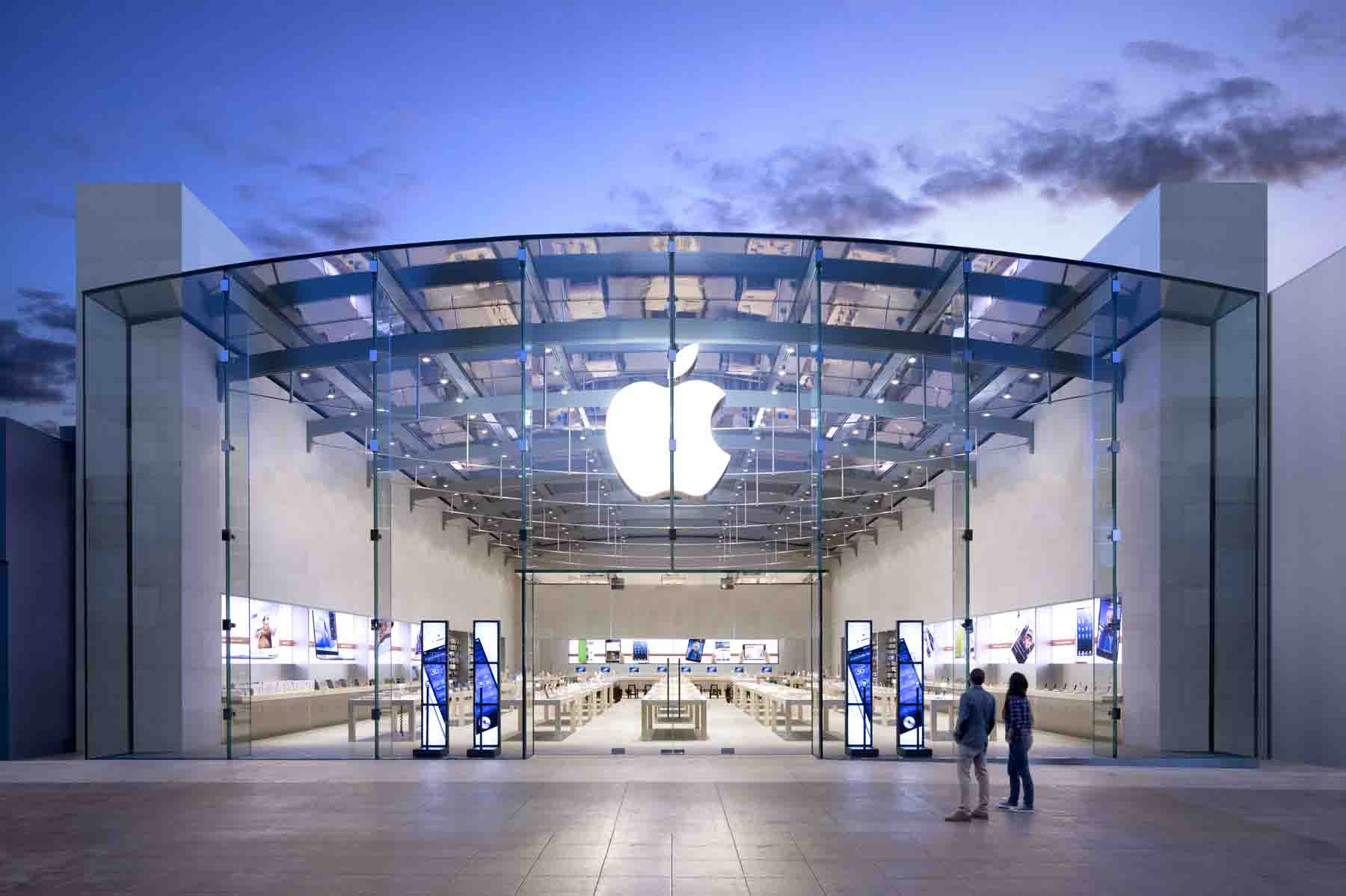
    It will be located on Canton Road, which is known for shopping, on the Kowloon side of Hong Kong. The company has yet to announce an opening date, but work is already underway behind the barricade pictured above.

    Apple currently has 19 stores in China, and the Hong Kong location will be its 20th in the country, and the fourth in that region. Shanghai, Beijing, Tianjin, Chengdu, Wuxi, Hangzhou, Shenyang, Shenzhen, Zhengzhou, and Chongqing already have at least one Apple store.

    Hong Kong is one of the more shopping-focused markets in China, and Apple currently has three stores in the area. Canton Road, however, is one of the more highly trafficked shopping streets in China and the world, and the new store should prove to be one of the biggest on the island.

    Apple has been heavily focused on building out its presence in China.

    First quarter earnings in 2015 showed that China represented sales of $16.144 billion, which is an increase of 157 percent from the quarter before and 70 percent from the previous year. Retail is a huge part of that push, and a store in Hong Kong only makes sense.

    Apple has no word on when the store will open, but you can likely expect to see more and more of a retail push in China as Apple continues to climb the charts in that market.

  • Apple iPhone’s Implodes in China Stock Crash

    Apple iPhone’s Implodes in China Stock Crash

    Apple iPhone sales appear to be in big  trouble, despite iPhone being on track to post a 40 percent year-over-year unit sales gain through the second quarter.

    Having lost the top position in U.S. smartphones sales to Samsung in May, virtually all of Apple’s positive sales momentum has been coming from the China. But after losing $3 trillion in the markets, and with their wealth frozen, a hundred million Chinese no longer need an iPhone.

    Apple is reported to be growing about five times faster than Samsung, despite excellent reviews of Samsung’s new Galaxy S6/Edge. Analysts’ positive opinion of Apple was reaffirmed when Samsung reported in May that it only achieved a 15 percent rise in profit to $6.1 billion on a 2 percent quarter-to-quarter revenue growth, to $43 billion.

    A close look at Apple’s numbers show that first quarter revenue from “Greater China” grew by 71 percent year-over-year, to $16.8 billion. The iPhone sales growth in China accounted for over 56 percent of Apple’s total revenue growth for the quarter.

    Analysts expect Apple to post another extraordinary sales report for the second quarter ending June, with over 50 million iPhone unit sales and revenue of $48 billion.

    Kantar Worldpanel Com Tel’s Carolina Milanesi published a comment last week that after losing U.S. market leadership to Apple in the three-month period through April 2015, the latest data shows that Samsung was again number one in U.S. vendor rankings in the first full month of Galaxy S6 availability.

    The iPhone 6 remained the best-selling smartphone in the U.S., and the iPhone 6 Plus was the fifth-most-popular for the period ending May 30. But Samsung’s Galaxy S5 held the second spot, and the Galaxy S6 held third place. As a result, for the three months ending May, Apple’s U.S. iPhone sales U.S. actually declined by 5 percent from the previous year.

    Kantar also exposes Apple’s Iphone poor performance in India and the three big Latin America markets of Mexico, Brazil and Argentina. Apple’s best penetration of these rapidly growing markets is Mexico, with only a 6.4 percent market share.

    Such a shocking turnabout would be a disaster.

    For the three months ending in May, China unit sales were up by 46.26 percent.The Apple’s growing dominance in the “Red Dragon” has been due to a concerted effort by Apple’s management to make iOS and Mac OS X easier for Chinese language users. Many of the upgrades at this year’s Apple Worldwide Developers Conference 2015 were optimized specifically to target Chinese users, including new tools for developers to respond to the unique challenges associated with Chinese language.

    Apple has also won praise for the effectiveness of its retail stores and “Genius Bar” help desks in China. Apple’s’ head of retail stores, Angela Ahrendts, recently announced that the company opened 5 additional stores in February and is scheduled to expand from 15 to 40 stores over the next two years. Located in premium retail space, Apple’s retail stores in China are meant to distinguish the brand as aspirational.

    But all this good news for Apple was through the month of May, when the Chinese stock market was up over 150 percent for the year. Patriotically following China President Xi Jinping’s late 2013 call for “Silk Road” domestic reforms aimed at expanding consumption by taking public hundreds of state-owned-enterprises, the number of Chinese stock brokerage accounts for small individual investors exploded from 20 million to about 100 million. The ultimate sign of status became watching live stock prices on the iPhone 6.

    But after the Chinese stock markets lost $3 trillion in just 16 days of trading, the communist government on Thursday stepped in and suspended over half of the 2800 stocks in China for up to 6 months. Large holders are not allowed to sell stock and company insiders have been told to buy immediately.

    China’s stock market boom had been a wealth machine until it shockingly bankrupted tens of millions of Chinese in just a few weeks. With their capital frozen, demand for more iPhones to check suspended stocks seems ready to plummet.

  • iBox opens new outlet in Indonesia

    iBox opens new outlet in Indonesia

    iBox, the leading Apple Premium Reseller (APR) in Indonesia, recently opened a new store in Bandung, West Java. The new store, located in Bandung Electronic Centre (BEC), is the third iBox in the city, joining existing branches in Dago and Palace Plaza. In total, iBox operates more than 40 outlets across Indonesia as well as multiple Apple service centres. iBox is a business unit of Erajaya Group.

    iBox outlets offer a wide range of Apple products, plus software and accessories, delivering a one-stop-shop digital lifestyle retail experience, according to the company. iBox was the Apple partner in Indonesia to become a premium service and provider and is the country’s only Apple authorised training centre.

    The new iBox BEC Bandung will demonstrate a full range of Apple products with trained staff on hand to explain how the products can enrich consumer lives. iBox positions itself as the local Apple expert for consumers across Indonesia.

    Erajaya Group was established in 1996 and has grown to become a major distributor and retailer of mobile devices, accessories, computers and consumer electronics. Erajaya Group’s mission is to position itself as a leading distributor with direct integrated access to consumers and retailers, and to provide a complete range of mobile products and solutions.

  • Singapore greets Apple Watch with a shrug

    Singapore greets Apple Watch with a shrug

    In tech-savvy Singapore, new Apple products typically trigger snaking lines spanning multiple blocks, but the Apple Watch got short shrift.

    When stores on the city’s Orchard shopping district opened their doors at 9am, a group of around 40 had gathered at the iconic ION mall. Across the street, around 15 people were milling outside Paragon’s iStudio store while a crowd of around 25 lined up outside luxury watch store The Hour Glass.

    Because Singapore doesn’t have an Apple retail store, only select authorized re-sellers are allowed to carry the Cupertino giant’s products.

    “I was expecting a much longer queue, so this is good news for me,” exclaimed Mario Dinata, a mobile engineer waiting in line at iStudio.

    Indeed, the turnout pales in comparison to previous Apple launches in the wealthy Southeast Asian city-state. Last September, hundreds of fans queued for the iPhone 6 days before the official launch after slots for online pre-orders vanished in mere minutes.

    The smartwatch only becomes available on Apple Singapore’s online store on Friday afternoon and phone inquiries have been minimal in the past week, according to employees at the iStudio store.

    As an app developer, Dinata says he’s often first in line for the newest Apple toys so he can test it out before his competitors. “This is definitely much smaller than previous lines,” he said, smiling.

    None of the stores were able to provide a sales update by mid-morning, but judging by a brief survey of people in line, the Apple Watch Sport was by far the most in demand out of the three models.

    The 38mm Sport retails for $349, versus $549 for the Apple Watch. Local pricing of the third option, the luxury Apple Watch Edition crafted from 18-karat gold, remained unconfirmed by Friday morning.

    “If I had the money, I would buy the Edition model any day over a luxury Swiss watch,” remarked 56-year old Mrs. Li, who declined to give her first name. “I’m buying the Sport today since it’s the cheapest one available. I’m an Apple fan, so I have to get the Watch. I have all their other products.”

    The device has already hit the market elsewhere in the region following an April launch in Japan, China and Hong Kong. Aside from Singapore, the watch also goes in sale in six other countries Friday, including South Korea and Taiwan.

    Rob Enderle, president and principal analyst at technology advisory Enderle Group, doesn’t expect much hype going forward.

    “The Watch has one problem the iPhone didn’t have. Kids have stopped using watches some time ago, so Apple has to undo this perception that watches are for old folks and out of date,” he told CNBC. “This will likely go through three versions before reaching its stride, if it ever does.”

    Apple CEO Tim Cook has remained silent on global sales thus far, but 2.8 million units may have been sold since its April debut, Slice Intelligence told Reuters earlier this month.

  • Apple Fitness Director Jay Blahnik Hosting Special Events at Asia-Pacific Retail Stores

    Apple Fitness Director Jay Blahnik Hosting Special Events at Asia-Pacific Retail Stores

    Apple’s Director of Fitness and Health Technologies Jay Blahnik is touring the Asia-Pacific region this week to host live Q&A sessions with popular personal trainers and other well-known icons at Apple Stores in Australia, China and Japan. The special events focus on the intersection of health, fitness and technology, such as how to live a better life by maintaining a healthy body and mind.

    Jay Blahnik Sydney Instagram

    Blahnik sat down with Australian personal trainer Michelle Bridges for a live Q&A session at the Apple Store in Sydney, Australia on May 29 before heading to the Omotesando Apple Store to speak with technology journalist Nobi Hayashi in Tokyo, Japan earlier today, as noted by Macotakara. Blahnik will now travel to Beijing for an event with Chinese action filmmaker Donnie Yen at the Apple Store in China Central Mall on June 3.

    Prior to joining Apple in July 2013, Blahnik was a Nike FuelBand consultant for almost 20 years and an award-winning fitness instructor and personal trainer. As health and fitness director at Apple, he has played an instrumental role in development of the Apple Watch, working in the company’s top-secret health and fitness lab where it has collected over 18,000 hours of health and fitness data from employee workout sessions.
  • Singapore, Taiwan, Korea to get Apple Watch

    Singapore, Taiwan, Korea to get Apple Watch

    Singaporeans, Taiwanese and South Koreans will be capable of purchase the Apple Watch from later this month.

    “The response to Apple Watch has surpassed our expectations in each approach, and we’re thrilled to convey it to extra clients around the globe,” stated Jeff Williams, Apple’s senior vice chairman of Operations. “We’re additionally making nice progress with the backlog of Apple Watch orders, and we thank our clients for his or her endurance. All orders positioned via Might, with the only exception of Apple Watch 42 mm Area Black Stainless Metal with Area Black Hyperlink Bracelet, will ship to clients inside two weeks. At the moment, we’ll additionally start promoting some fashions in our Apple Retail Shops.”

    Apple says the Apple Watch might be obtainable in Singapore, South Korea, Taiwan, Italy, Mexico Spain and Switzerland from Friday, June 26 from the Apple On-line Retailer, Apple’s retail shops and chosen authorised resellers.

    The world’s developer group has already created hundreds of apps for Apple Watch with new apps for patrons to discover and uncover. Apple Watch wearers can already hold monitor of a Singapore Airways flight, keep in contact with associates in South Korea with KakaoTalk, discover the close by YouBike station in Taiwan and entry film tickets with Cinepolis in Mexico.

  • Apple watch to be available in Singapore from June 26

    Apple watch to be available in Singapore from June 26

    Apple Watch will be available in Singapore from June 26, according to a press statement on Apple’s website on Thursday.

    Fans will be able to buy the smartwatch from Apple’s online and retail stores, and selected authorised resellers.

    Selected models of the Apple Watch will also be available from boutique store Malmaison by The Hour Glass in Singapore.

    The watch will also be available in six other countries on June 26 – Italy, Mexico, South Korea, Spain, Switzerland and Taiwan.

  • Apple re-crowned world’s prime model—however watch Alibaba, Fb

    Apple re-crowned world’s prime model—however watch Alibaba, Fb

    Apple has reclaimed its crown because the world’s most dear model, value a staggering $247 billion, in line with WPP and Millward Brown.

    The tech behemoth triumphed within the promoting businesses’ annual prime 100 most respected international manufacturers report, revealed on Wednesday. The report ranked model worth by taking a look at views of potential and present consumers of a model, plus monetary knowledge.

    “Apple is obvious on what it stands for, and by no means stops refreshing its message to maintain the distinction that makes it so fascinating,” stated Doreen Wang, Millward Brown’s international head of BrandZ, within the report.

    Regardless of the recognition of the Apple Watch, Wang and colleagues stated that the iPhone 6 was the primary driver of Apple’s 67 % year-on-year bounce in model worth.

    “Apple continues to ‘personal’ its class by innovating and main the curve in a method that generates actual advantages for shoppers,” stated Wang.

    Apple’s success pushed Google again into second place, with its model worth rising 9 % over the yr to $174 billion.

    Fb was the fastest-growing model, attaining 99 % progress on account of its success in buying and integrating different platforms corresponding to Instagram and WhatsApp.

    West to East shif

    Chinese language e-commerce chief Alibaba made its first look within the BrandZ rankings, with its model value $66 billion. This put it aboveAmazon, the subsequent most useful retail model, and Walmart.

    Apparently, the world’s two most respected retail manufacturers each lack bodily shops.

    “Europe’s model powerhouses stagnate as Chinese language manufacturers develop and U.S. manufacturers make a comeback,” stated the BrandZ report.

    Learn ExtraThe Shopper Electronics Present heads to Shanghai

    This yr, 14 Chinese language manufacturers ranked within the prime 100, up from only one in 2006. A lot of the manufacturers that have been pushed out the rankings have been from Europe, stated the BrandZ report, with simply 24 European manufacturers remaining.

  • Apple China circumstances not so dangerous, exec says

    Apple China circumstances not so dangerous, exec says

    Apple’s working circumstances in China are enhancing, and have been by no means as dangerous as media studies instructed, in line with senior government Jeff Williams.

    “I could not be prouder of the work the group is doing ensuring individuals who work there are handled pretty,” Williams, a senior vice chairman, stated Wednesday in an on-stage interview on the Code Convention in Rancho Palos Verdes, California. “Individuals are constantly getting paid extra. Yearly gross sales are growing. We pay greater than common charges within the space.”

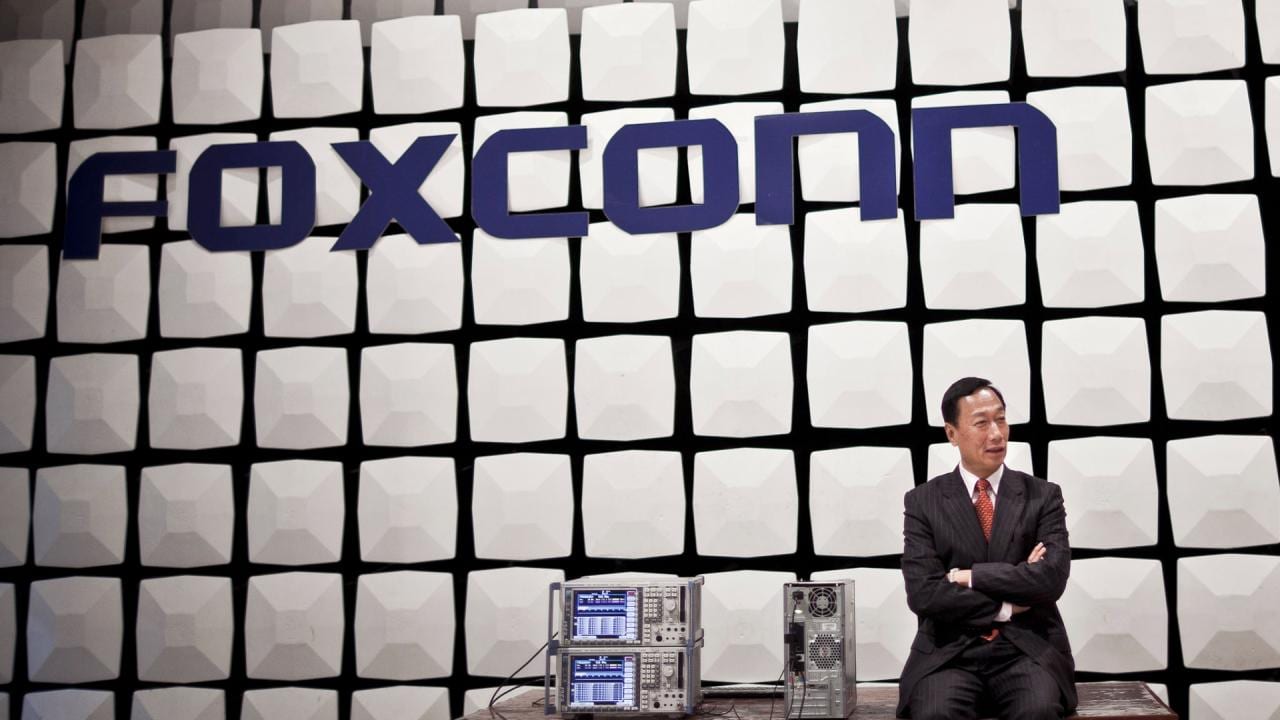
    Williams stated that Apple’s investigation of suicides through the years at amenities run by Foxconn, its outdoors producer, indicated that they weren’t associated to working circumstances.

    Moreover, he stated there weren’t that many on a relative foundation. When suicide charges have been at their highest, they have been decrease than at any level within the U.S.

    “By that definition, it might be the happiest place on earth,” he stated.

    Apple has for years been underneath hearth for the remedy of manufacturing unit staff in China.

    A string of suicides from 2010 to 2012 caught the eye of mainstream media retailers, and led to tales highlighting the extraordinarily lengthy hours, low pay, tough circumstances and younger age of many guide labourers serving to assemble iPhones and different units.

    Apple co-founder Steve Jobs addressed the difficulty 5 years in the past on the D: All Issues Digital convention, the predecessor to Code.

    As for different merchandise that the world’s most dear firm has within the works, Williams was as cagey as some other Apple when discussing the longer term. Particularly, Williams was requested how the corporate will spend a number of the mountains of money on its stability sheet.

    He provided one trace: “The automotive is the last word cellular gadget.”

    Apple has been rumoured to be within the auto recreation for some time, however the firm hasn’t confirmed that it is engaged on something past the related automotive software CarPlay.

  • China powers Apple profit surge

    China powers Apple profit surge

    Apple’s China sales revenue soared 71 per cent to US$16.8 billion in the first three months of this year, putting Greater China ahead of Europe as the tech giant’s second largest market.

    It was the main driver of a sharp 33 per cent increase year-on-year in quarterly Apple profit – to a massive US$13.6 billion.

    In product terms, much of the growth came from the iPhone of which the company sold 61 million during the quarter – or roughly 678,000 phones every day. iPhone sales rose 40 per cent year-on-year.

    Apple’s total sales revenue increased 27 per cent to US$58.01 billion.

    CEO Tim Cook says the company was thrilled by the continued strength of the iPhone, Mac and App store especially.

    “We’re seeing a higher rate of people switching to iPhone than we’ve experienced in previous cycles, and we’re off to an exciting start to the June quarter with the launch of Apple Watch.”

    The massive profit has boosted Apple’s cash reserves to more than US$193 billion, prompting a ramping up of the share buy-back program and a 50 cent per share dividend to shareholders.

    The key to Apple’s improvement was the launch of the larger screen model which has helped lure sales back from Samsung and other brands.

    The only blemish, if you could call it one, was a 23 per cent drop in sales of the iPad to 12.6 million units, with revenues down 29 per cent.